
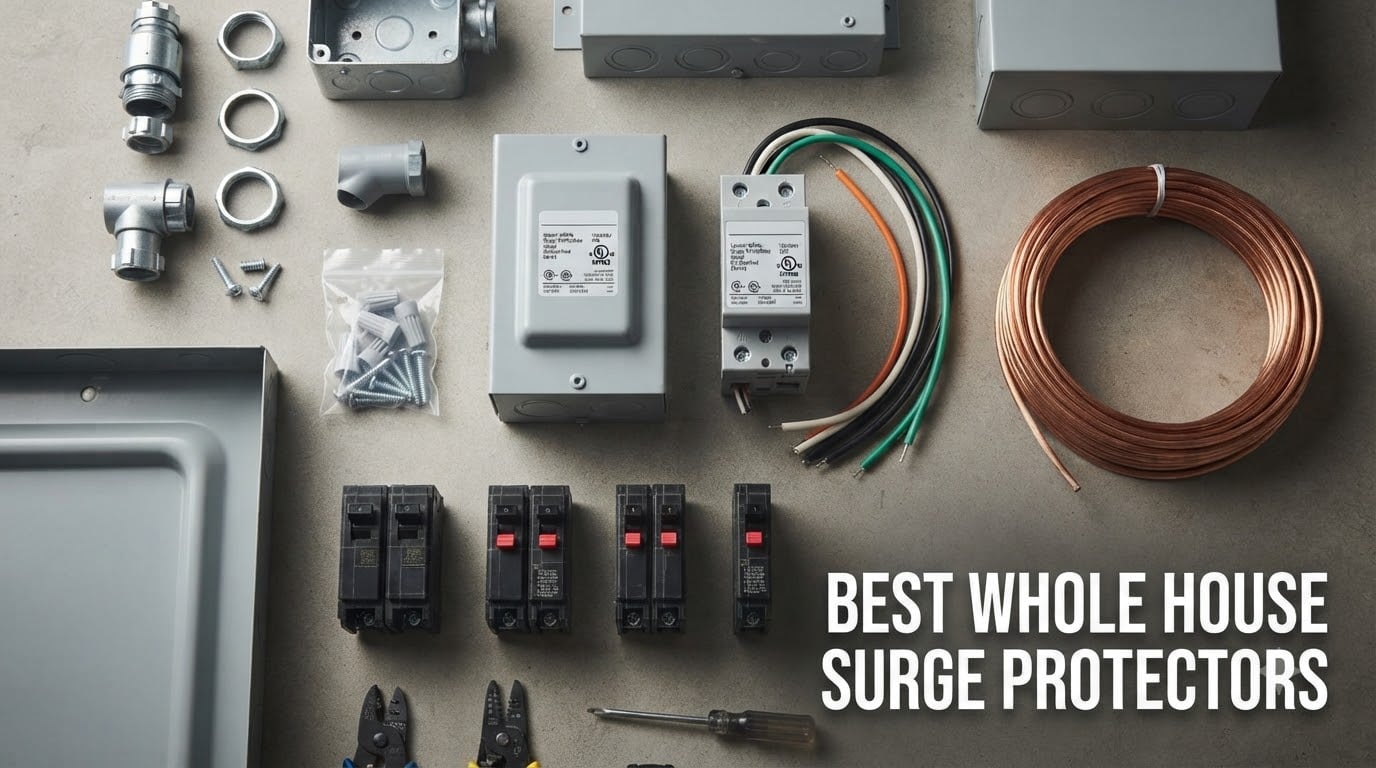
The best whole house surge protector for most homes is the Eaton CHSPT2ULTRA, a hardwired 108 kA Type 2 device that connects to any manufacturer’s load center. After comparing ten panel-mounted units on surge capacity, enclosure rating, install type and owner feedback, that one is the pick we keep coming back to.
Most surge damage does not come from a direct lightning strike. It comes from grid switching events, utility faults, and internal loads such as HVAC compressors and well pumps cycling on and off. A panel-level surge protective device clamps those events once, for every circuit in the house, which a power strip cannot do.
A whole home surge protector sits in parallel with your panel’s circuits and uses metal oxide varistors to sense a voltage spike above its threshold. The energy gets shunted into the grounding electrode system through a short, straight conductor, and a fault indicator shows when the module has sacrificed itself. Nothing downstream sees the spike.
If you also own a lot of AV gear or a home office setup, pair the panel unit with our picks for the best surge protectors for home theater systems and the best surge protectors for home offices. Those cover the last few feet of wire that a panel device cannot reach.
Table of Contents
Top 3 Picks for Best Whole-House Surge Protection in 2026

Eaton CHSPT2ULTRA
- 108 kA surge rating
- Universally connects to any load center
- Hardwired 2-pole install

Square D HEPD80
- 80 kA surge capacity
- LED replacement indicator
- Compact load-center footprint
Best Whole House Surge Protectors at a Glance in 2026
Every unit below is a hardwired or plug-on device meant for an electrical panel, not a power strip. Surge current is the number that matters most; enclosure rating decides whether it can live outside on an outdoor panel.
| Product | Specifications | Action |
|---|---|---|
| Eaton CHSPT2ULTRA |
|
Check Latest Price |
| Square D HEPD80 |
|
Check Latest Price |
 Eaton CHSPT2SURGE Eaton CHSPT2SURGE |
|
Check Latest Price |
 Square D HOM2175SB Square D HOM2175SB |
|
Check Latest Price |
 Eaton BRNSURGE Eaton BRNSURGE |
|
Check Latest Price |
 Siemens FSPD140 Siemens FSPD140 |
|
Check Latest Price |
 Intermatic IG1240RC3 Intermatic IG1240RC3 |
|
Check Latest Price |
 DITEK DTK-120/240CM+ DITEK DTK-120/240CM+ |
|
Check Latest Price |
 Siemens QSPD2A035B Siemens QSPD2A035B |
|
Check Latest Price |
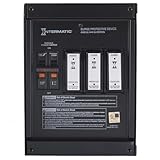 Intermatic IG2240-IMSK Intermatic IG2240-IMSK |
|
Check Latest Price |
1. Eaton CHSPT2ULTRA – 108 kA and Universal Panel Fit
Eaton Surge Protection Device, 1 Phase, 120/240V, 2 Poles, 2 Wires CHSPT2ULTRA – 1 Each
- Highest verified owner rating in this roundup at 4.8 stars
- Connects to any manufacturer's load center
- Hardwired so it has no plug to fail
- Compact footprint for a panel interior
- Requires opening the panel and a 2-pole 15A breaker in the first position
- You cannot confirm it is working until a surge occurs
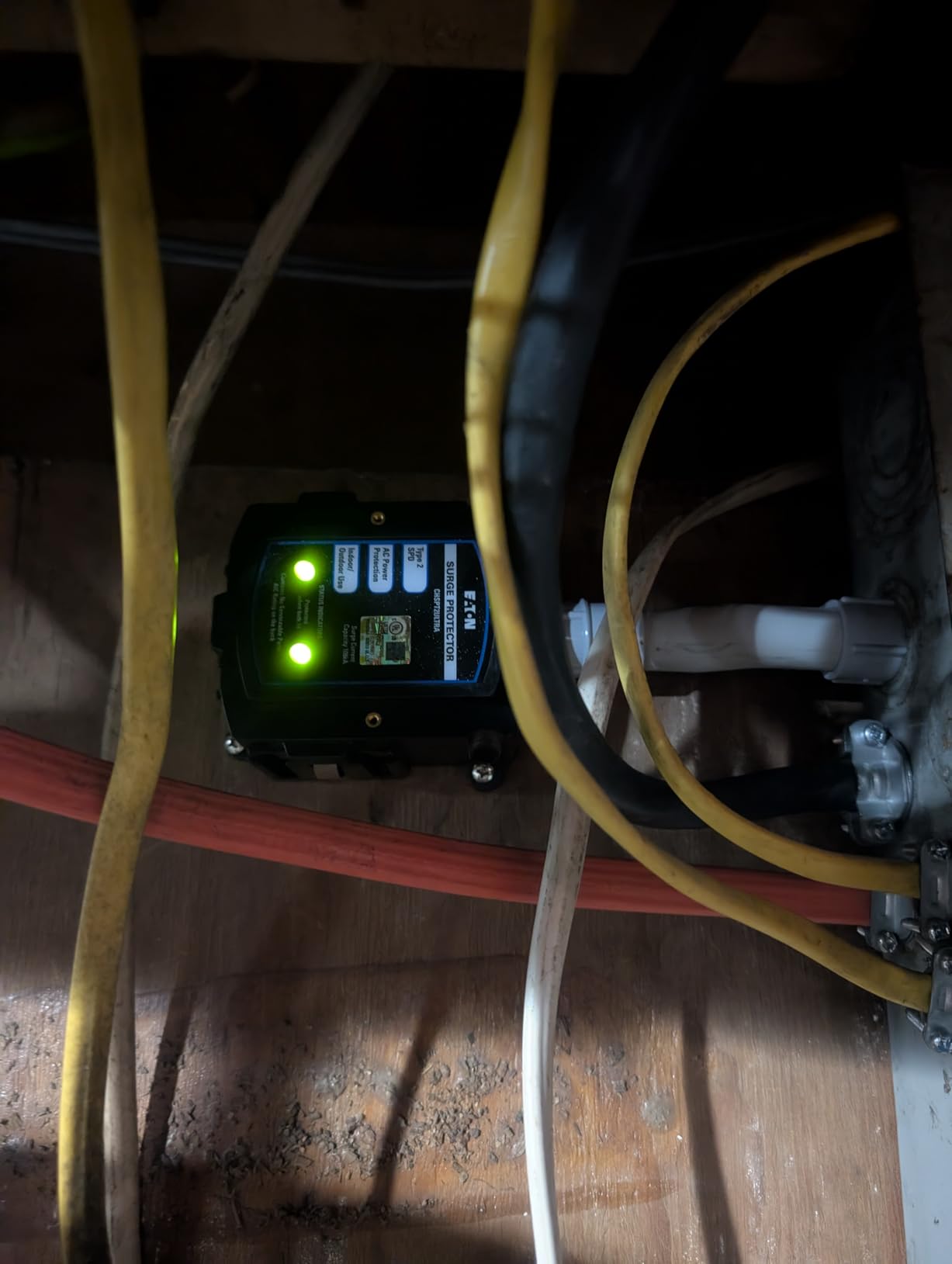
This is the unit we recommend to almost anyone asking about the best whole house surge protectors. It carries a 108 kA surge protection rating, works on 120/240V single-phase service, and its defining feature is that it connects to any manufacturer’s load center rather than a specific bus style.
Owner feedback backs the spec sheet. Across 2878 reviews the average rating sits at 4.8, with roughly 86 percent of buyers giving five stars. The most common theme is that the fit was never the issue; people bought it without worrying about whether their panel was Eaton, Siemens or Square D.
Construction is the quiet strength here. The enclosure is acrylonitrile butadiene styrene, the unit weighs 8 ounces, and the face measures 2.38 by 5.25 inches, which leaves room in a crowded panel. Because it is hardwired, there is no plug and no receptacle that can arc or loosen.
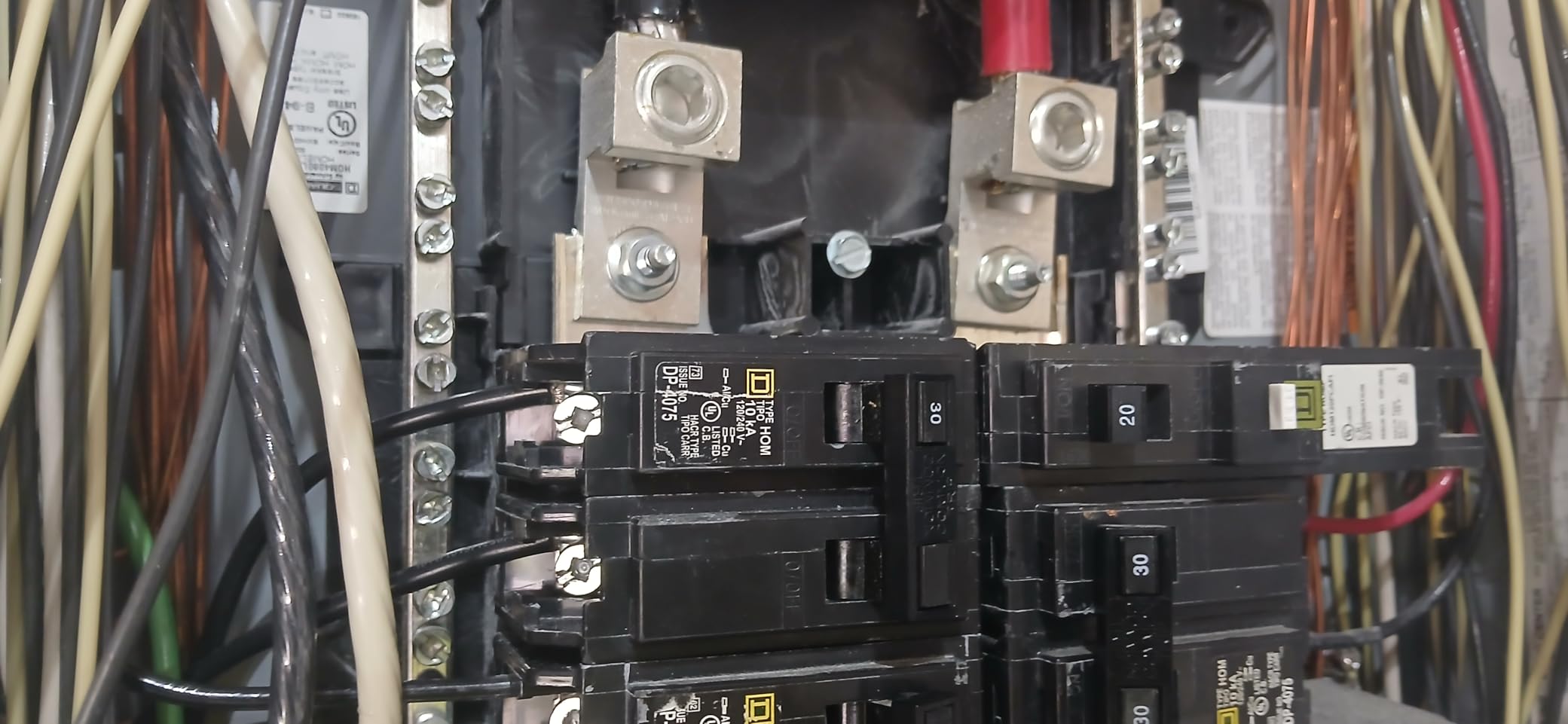
The one specification people miss is the 2-pole 15A breaker, which must sit in the first position of the panel. The instructions underspecify this, and it is the most common install question we see. Electricians on the r/AskElectricians forum repeatedly describe that breaker as a non-negotiable step rather than an optional accessory.
What you are actually buying
You are buying headroom. Electricians we surveyed treat 50 kA as a floor and 100 kA or more as the practical target for a 200A residential service. At 108 kA, this unit sits at the top of that range without the outdoor enclosure and audible alarm that the Siemens FSPD140 adds.
You are also buying a device with no self-test function. Nobody verifies that a whole-home protector is alive until a surge takes it out, which is a fact worth accepting before you install anything.
Where it falls short
It is an indoor-oriented install with no weatherproof case listed, so it is not the right device for an outdoor service panel unless your electrician encloses it properly. Pair it with the NEMA-rated units further down if your panel is exposed.
Because it is hardwired rather than plug-on, this is not a DIY job for anyone without panel experience. If you want something that snaps in without opening the panel, the breaker-style options are a better fit for your skill level.
2. Square D HEPD80 – 80 kA With a Replacement Indicator
Square D HEPD80 Universal Whole House Surge Protection Device, 1-Phase, 3-Wire for 120/240V, 80kA
- 80 kA capacity suits most 200A services
- LED indicator shows when replacement is needed
- Compact body fits a residential load center
- Backed by a 5-year warranty
- Requires a 2-pole breaker connection inside the panel
- Point-of-use protection still makes sense for AV gear
The HEPD80 is our best value pick and the one we recommend when someone wants a name-brand Schneider Electric device without the top-tier capacity. It handles 80 kA of surge current on a 120/240V single-phase service, which clears the threshold most electricians set for a modern 200A panel.
What separates it from cheaper units is the LED status indicator. When the surge module has done its job and sacrificed itself, that light goes out, and you know it is time to replace rather than assume everything is fine. Reviewers consistently single the indicator out as the reason they can stop guessing.
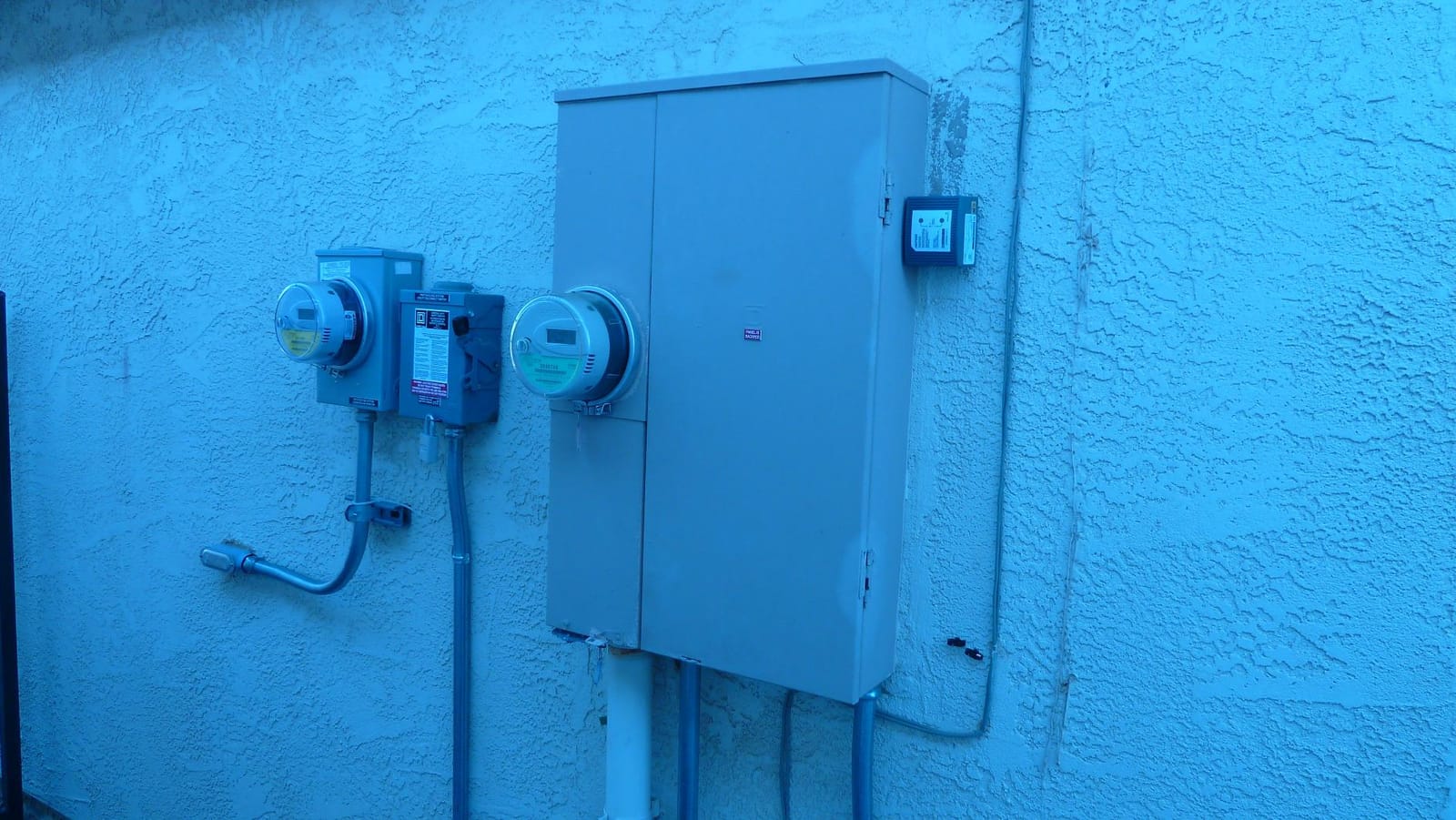
Ratings sit at 4.7 across 1388 reviews, with about 85 percent five-star. Owners describe the compact footprint as the deciding factor in crowded panels, and they note that it protects hardwired loads too: kitchen appliances, HVAC, security systems and smart-home devices.
Schneider Electric backs it with a 5-year product warranty, and spare part availability is listed at 5 years as well. That is shorter than the coverage on the serviceable Intermatic options, so factor it into a long-term view if you plan to keep the device decades.
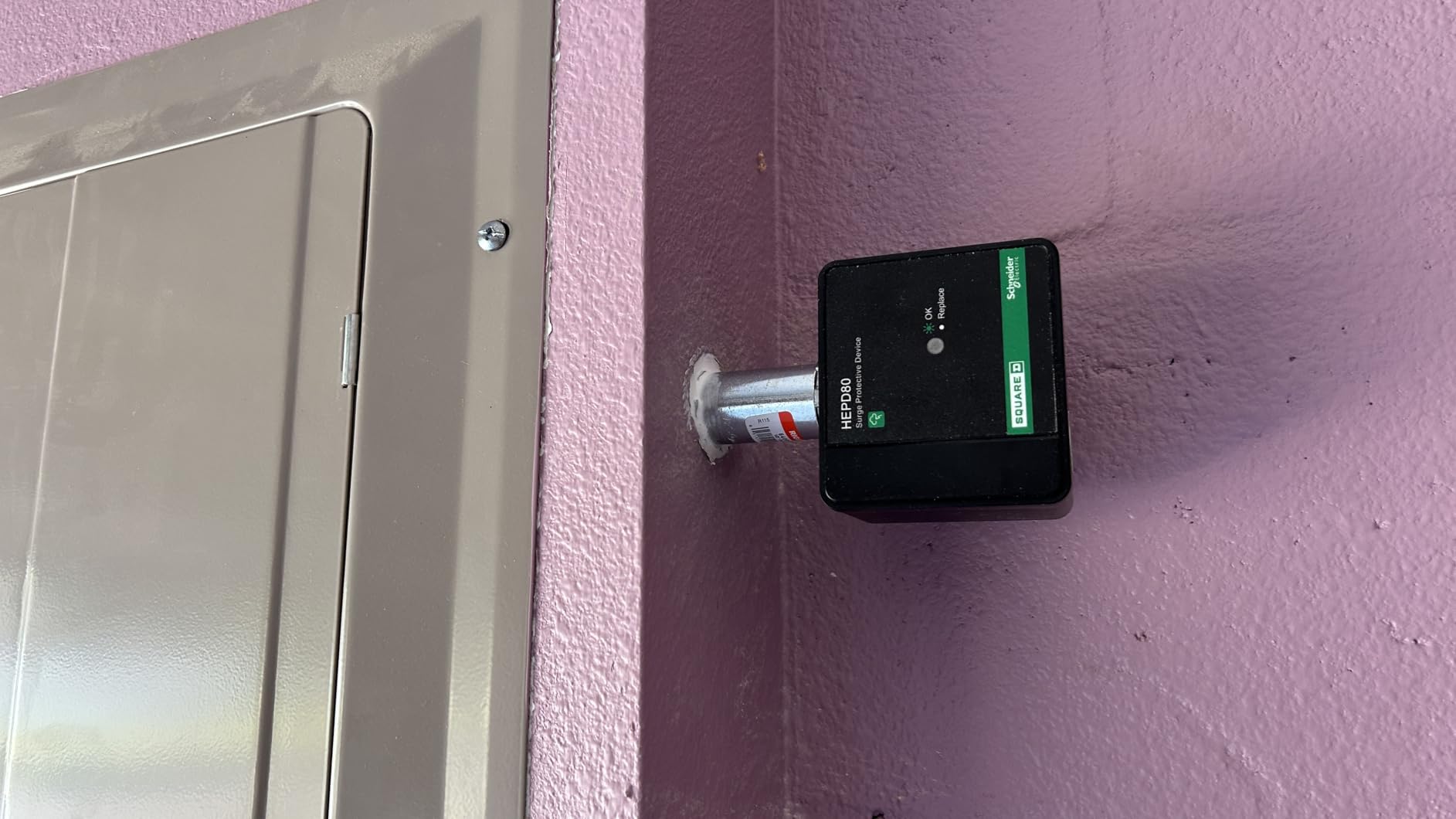
Why the indicator matters more than the headline number
A surge protector that has already failed is worse than no device, because it looks identical from the outside. This one gives you a visible cue, which answers one of the most common forum complaints: how do you tell whether a whole-home unit has faulted.
Buyers on r/HomeImprovement note that Leviton point-of-use receptacles beep or flash when they are shot, and ask whether panel devices signal the same way. The answer is that this one does, and it does it with a light rather than a sound.
Where it falls short
It is hardwired to a 2-pole breaker inside the load center, so expect to open the panel. That work belongs with a licensed electrician unless you already work in panels routinely.
It is a Type 2 device designed for a distribution panel location. If your service is at the meter and your panel is downstream, your electrician needs to confirm placement so the conductor run stays short and low-impedance.
3. Eaton CHSPT2SURGE – Most Versatile at 36 kA
Eaton CHSPT2SURGE SPD Type 2 Chsp Whole Home Surge Protector, Nema 4, Single Phase, 120/240 Volts, Ul 1449 3Rd Edition
- Scaled version of Eaton's flagship architecture
- Moisture-resistant board and gasketed housing
- NEMA 4 case suits damp locations
- Two indicator lights confirm operation
- Requires a 2-pole 15A breaker in the first position
- Lead wires run about 14 inches and may need extending
- Box can crowd the panel cover
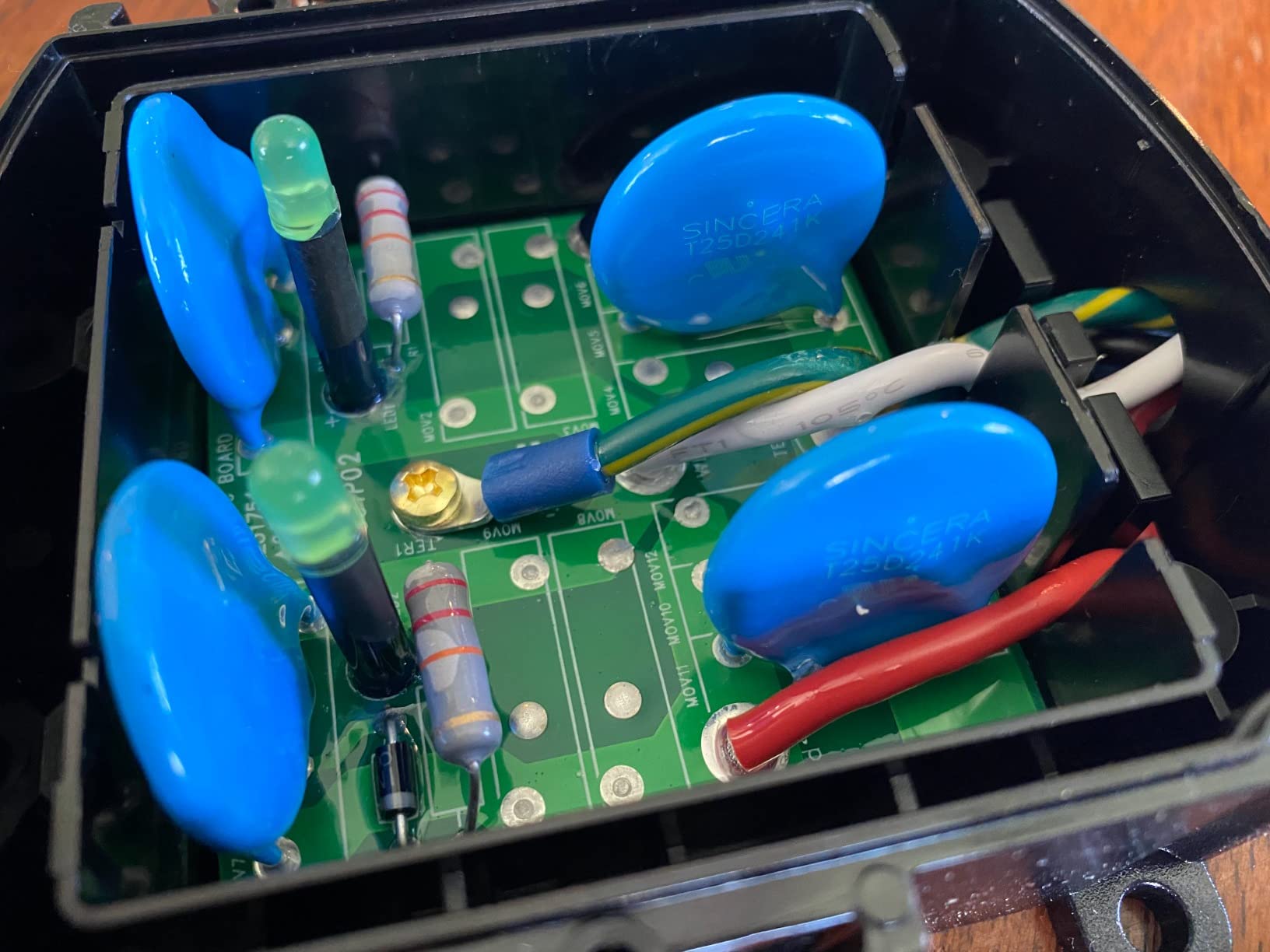
This is the value entry point in our list, and reviewers describe it as a scaled-down version of the CHSPT2ULTRA with the same underlying architecture. A reviewer teardown found four Sincera T25D241K metal oxide varistors rated at 150V with a 400V maximum clamping voltage, which is the honest reason the 36 kA rating sits where it does.
That is below what most electricians consider adequate for a 200A service, and we want to be straight about that. Where it makes sense is a 100A service, a small cottage, or a panel protecting a limited circuit list. If your home has heavy electronics on every branch, step up to the 80 kA or 108 kA units.
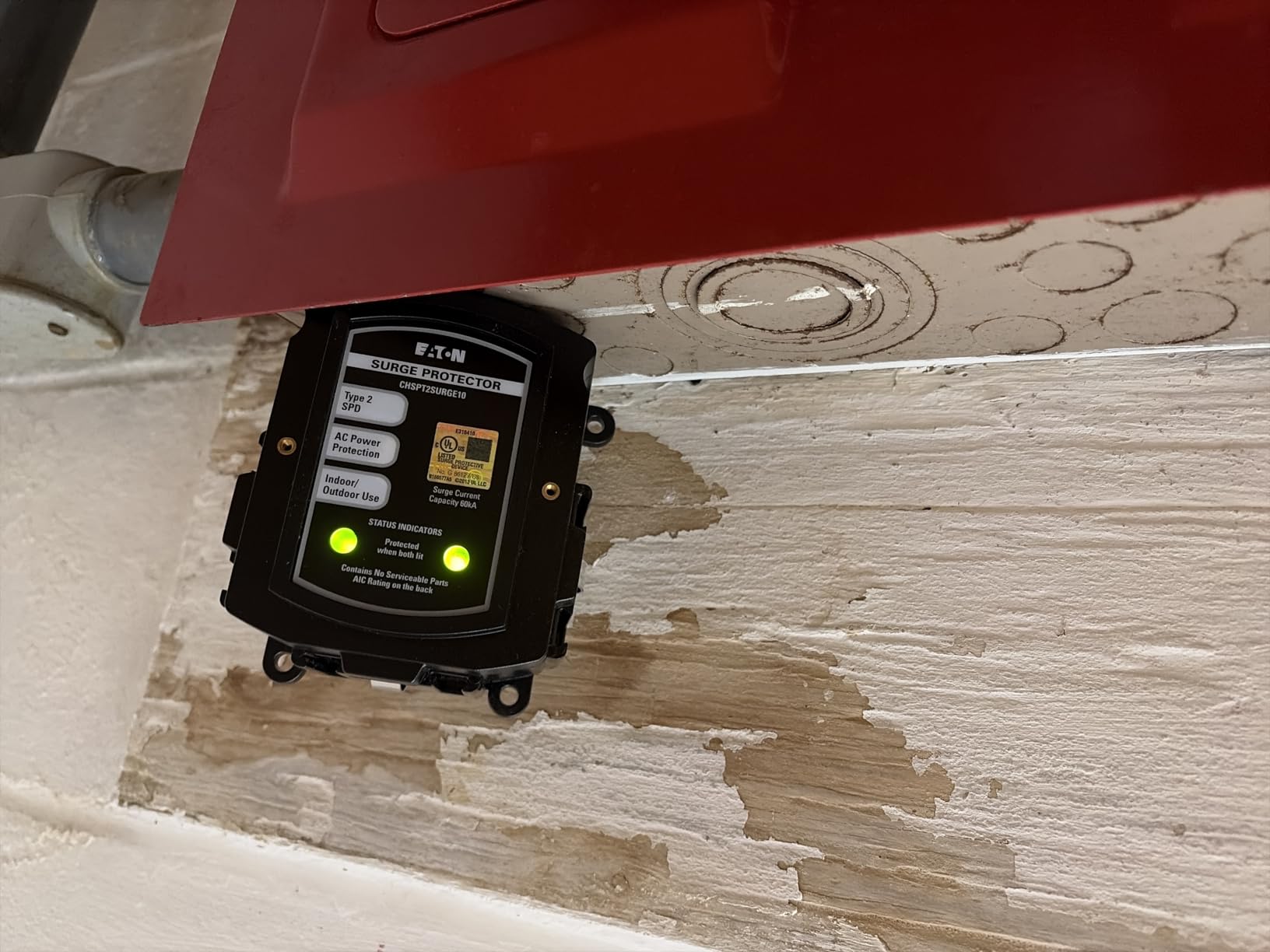
The physical build is better than the rating suggests. The circuit board is silicone-dipped and the housing is rubber-gasketed, and the NEMA 4 case is suitable for outdoor mounting. Two light indicators confirm the device is still working, so you are not relying on an assumption.
Buyer sentiment is strong at 4.7 stars across 1243 reviews, with about 84 percent five-star. The quick-connect design makes mounting the cable protection modules straightforward, which matters more than it sounds when you are working in a live panel with limited room.
Where this unit earns its place
It is a genuine whole-home device rather than a point-of-use strip, and it carries a UL 1449 3rd edition Type 2 listing. For a smaller service or a secondary structure, that is real protection at a fraction of the flagship cost.
Installers like the quick-connect modules because a surge cartridge can be swapped without reworking the whole assembly. That mirrors the serviceability argument that the Intermatic IModule design makes even more strongly further down this list.
Where it falls short
The lead wires are about 14 inches, so depending on your panel layout you may need to extend them, and extensions add conductor length that works against a low-impedance path. Plan the run before you commit.
The unit can push against the panel cover and not seat tightly, and one reviewer reported a crushed box with cut leads on arrival. Inspect the package before your electrician opens anything.
4. Square D HOM2175SB – Plug-On Protection for Homeline Panels
Square D by Schneider Electric HOM2175SB Homeline SurgeBreaker, Surge Protection Device, 25kA, 120/240V, 1-Phase, 3-Wire
- Installs in minutes with no panel wiring
- LED indicator confirms it is powered and protecting
- Works in service entrance locations and Homeline load centers
- Fits Square D Homeline panels only
- not QO
- Occupies two breaker spaces
- 25 kA is low for a 200A service
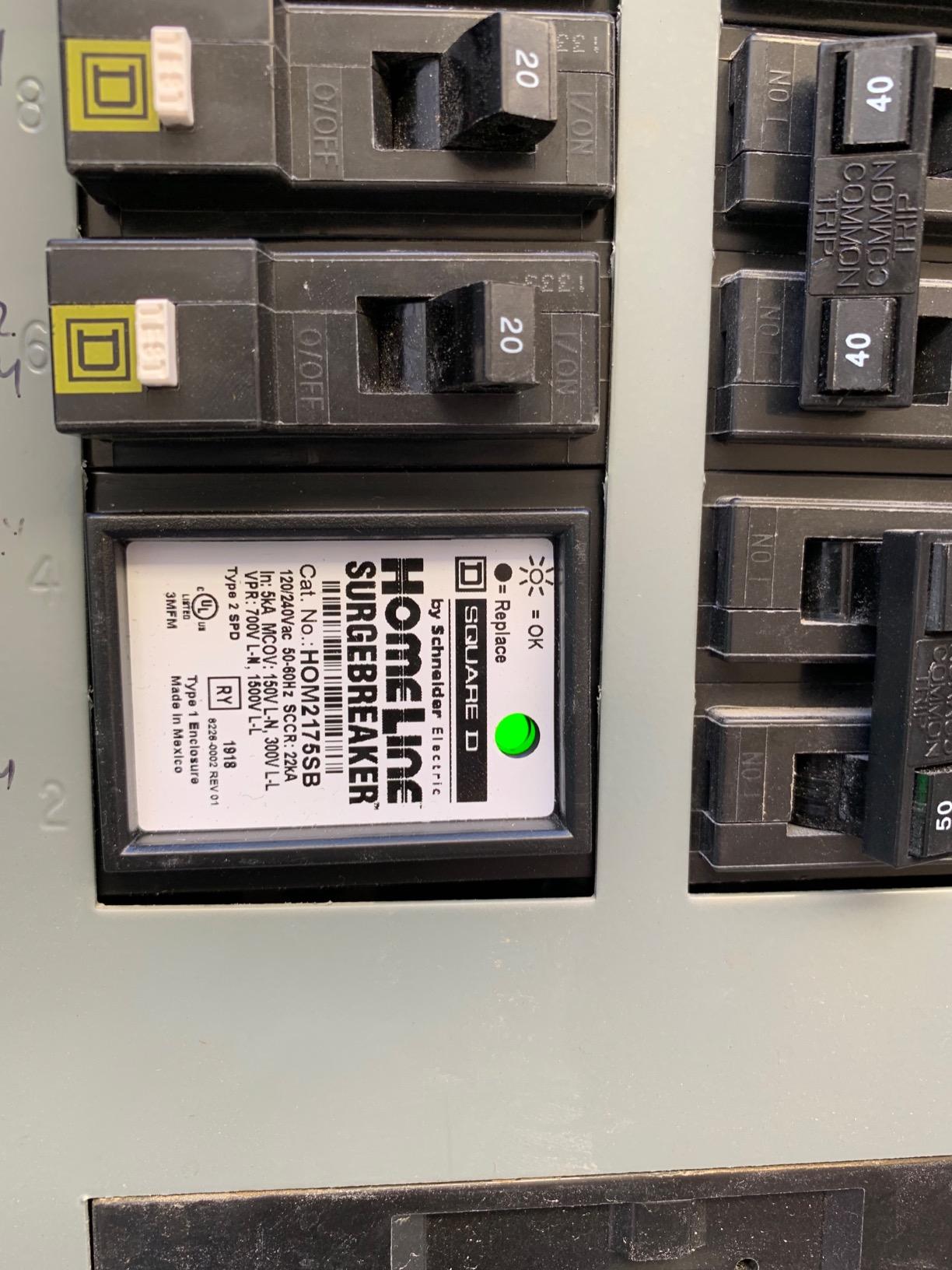
Everything about this installation is different from the hardwired units above it. The HOM2175SB is a plug-on breaker-style surge protector that occupies two spaces in a Square D Homeline load center, so the whole job takes minutes and requires no conductor splicing at all.
The trade-off is capacity. Its listed rating is 25 kA, which electricians we surveyed describe as pretty small for a 200A residential service. Buyers in high-lightning areas such as central Florida treat it as inexpensive insurance rather than a full-capacity defense, and that framing seems fair.
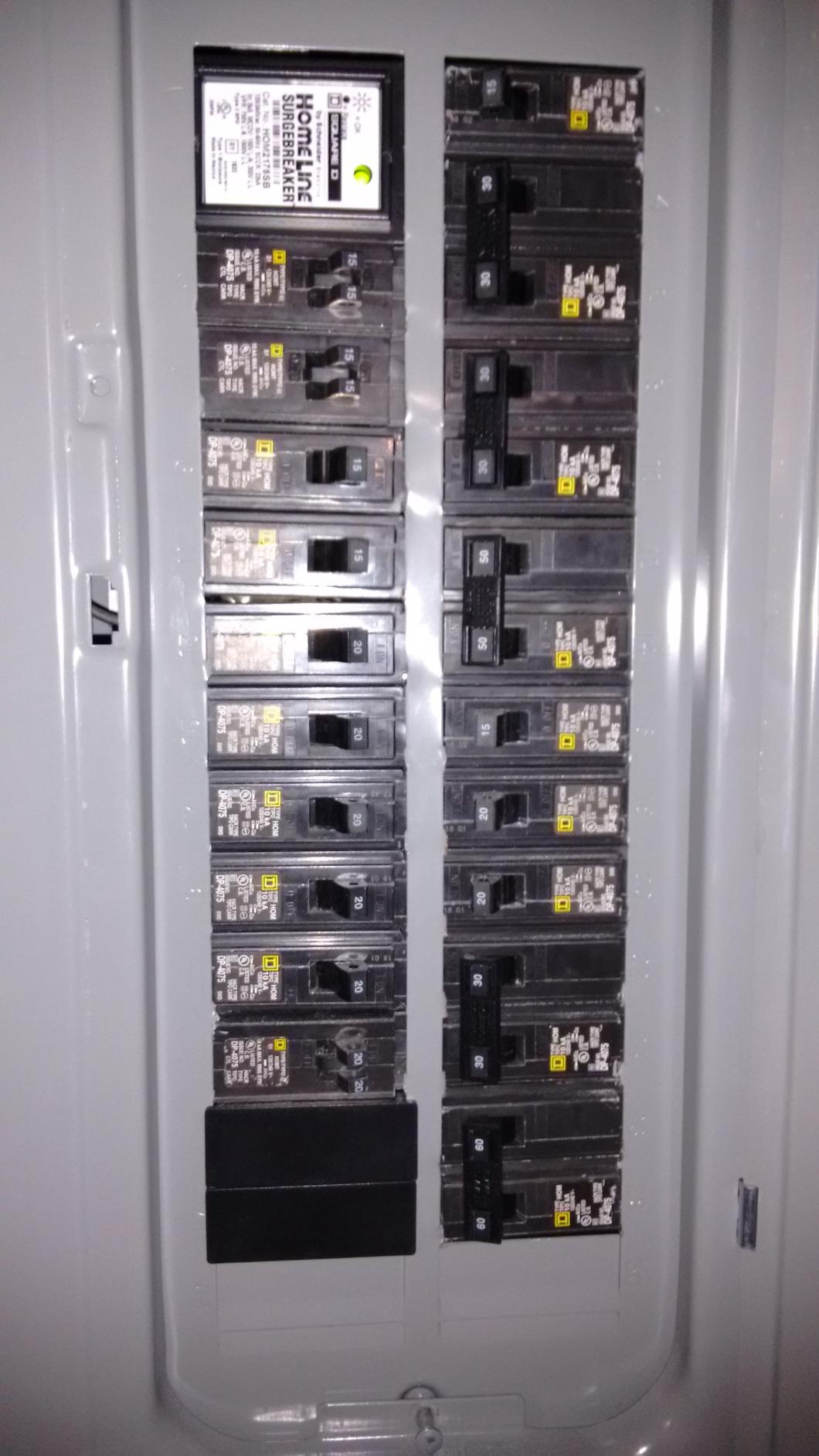
Ratings sit at 4.7 across 994 reviews with roughly 85 percent five-star, and the LED indicator is visible when the panel door is open. The green light gives visible confirmation that the unit is powered and protecting, which is more than many competing devices offer.
One review flagged a possible GFCI nuisance trip on another circuit after installation. We have not seen this pattern widely, but it is worth mentioning if your home has a sensitive GFCI-protected circuit that starts misbehaving right after install.
Check your bus style before you buy
The single most cited mistake is ordering this for a QO panel when the home uses Homeline, or the reverse. The two bus styles are not interchangeable, and a mismatch means the unit simply does not fit. Look at your existing breakers and check the panel label before ordering.
Wiring for a plug-on device is far simpler than a hardwired install, which makes this a reasonable option for a homeowner working in their own panel. Most electricians will still install it, and it takes minutes once they are there.
Where it falls short
Two breaker spaces is not nothing in a full panel, and you may have to rearrange breakers to make room. If your panel has no spare spaces, this option disappears before capacity ever enters the discussion.
The 3-year product warranty is the shortest of the units we tested. Treat it as a stopgap layer rather than a device you expect to keep for two decades.
5. Eaton BRNSURGE – Snaps Into Type BR Panels
Type BR Circuit Breaker Surge Protective Device, Two Pole, Surge Protective Device
- Snaps in like a standard breaker with one neutral connection
- 4.8 stars from 991 reviews
- Status indicator light
- Compact at 5.6 ounces
- Only rated for Eaton Type BR panels
- Stranded neutral pigtail needs quality termination
- 18 kA is the lowest capacity here
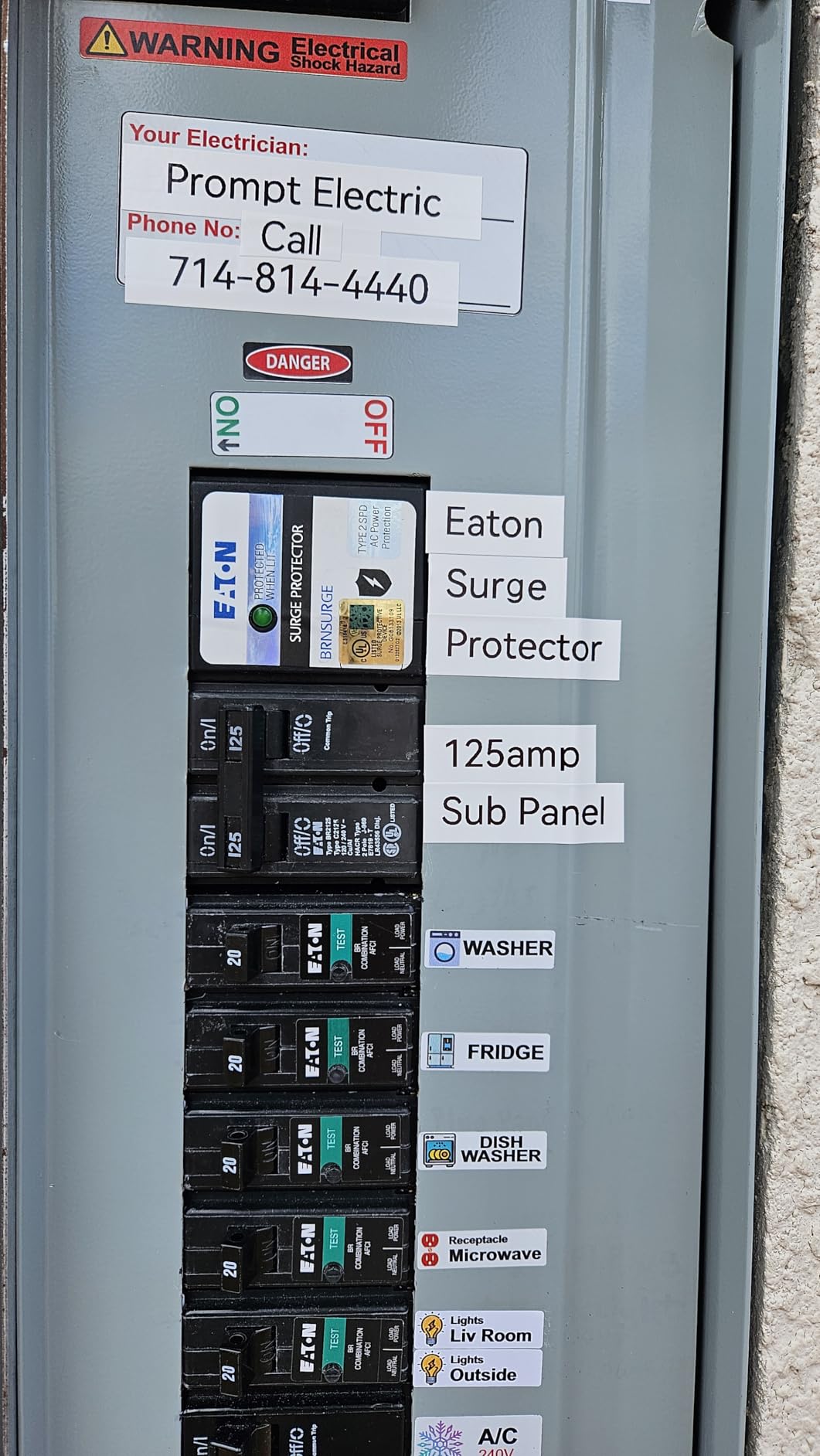
The fastest install in this roundup belongs to the BRNSURGE. It is a two-pole Type BR form factor device that snaps into an Eaton BR-style panel like any other breaker and needs only a single neutral connection, so the wiring job is measured in minutes rather than an afternoon.
It carries an 18 kA surge current rating, which is the lowest capacity of the ten units here and the main reason it is not our top pick. One reviewer openly questions whether an 18 kA device can meaningfully protect a 200A service, and that objection is fair.
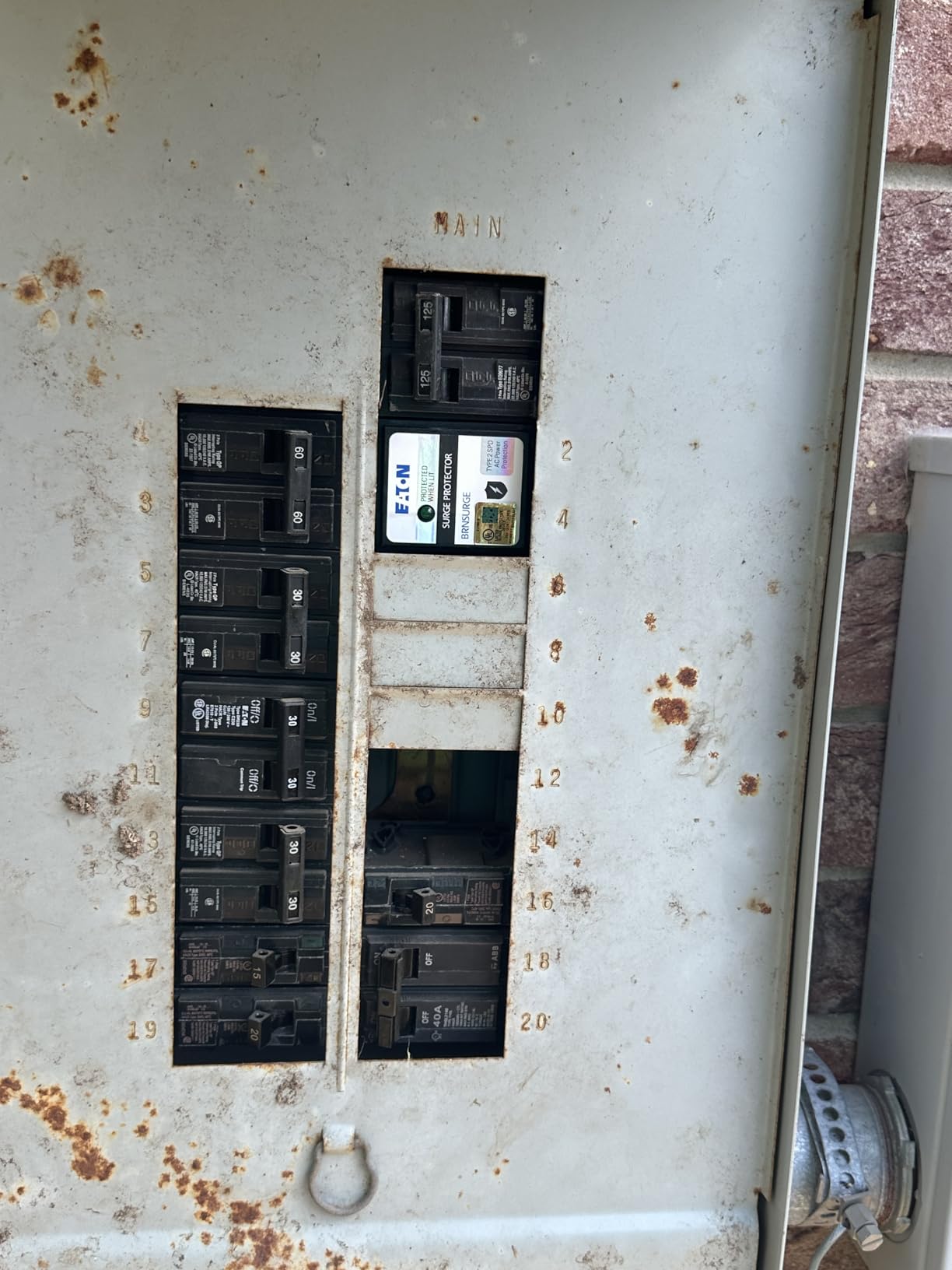
What earns it a place anyway is the experience. The rating is 4.8 across 991 reviews with about 90 percent five-star, the highest five-star share in the group. Owners describe the install as literally snapping it in and attaching the neutral, and several call the indicator light a welcome confirmation.
If your panel is Eaton BR and your electronics are concentrated on a handful of circuits rather than spread across the house, this is a sensible, low-effort layer. It is also a natural companion to point-of-use strips on the circuits that matter most.
Who this suits and who it does not
It suits owners with an Eaton BR panel who want protection this month rather than a project scheduled with an electrician. It also suits anyone whose panel is already too full for a hardwired device, because a plug-on footprint is the easiest to accommodate.
It does not suit a 200A service with a large connected electronics load. Electricians treat 18 kA as below the useful threshold for that configuration, and spending electrician time to fit a device they consider undersized is not a good trade.
Where it falls short
Compatibility is brand-specific to Eaton Type BR panels. If your panel is another brand, this unit is not an option regardless of how good the rating looks.
The neutral pigtail is stranded wire, and some installers prefer to terminate it with ferrules. The listing itself is also sparse on detail, so confirm the panel type and load requirements before you commit.
6. Siemens FSPD140 – 140 kA for Outdoor Mounting
Siemens Boltshield FSPD140 Level 2 Whole House Surge Protection Device Rated for 140,000 Amps, 120/240V
- Highest surge capacity of the ten units tested
- Type 4 case mounts outdoors or inside the panel
- Red flag indicator plus an audible alarm
- Thermally protected MOVs
- 10 year connected equipment warranty
- Exterior mounting means running conduit back into the panel
- Neutral lead can be shorter than the hot leads
- Smallest review base here at 229 reviews
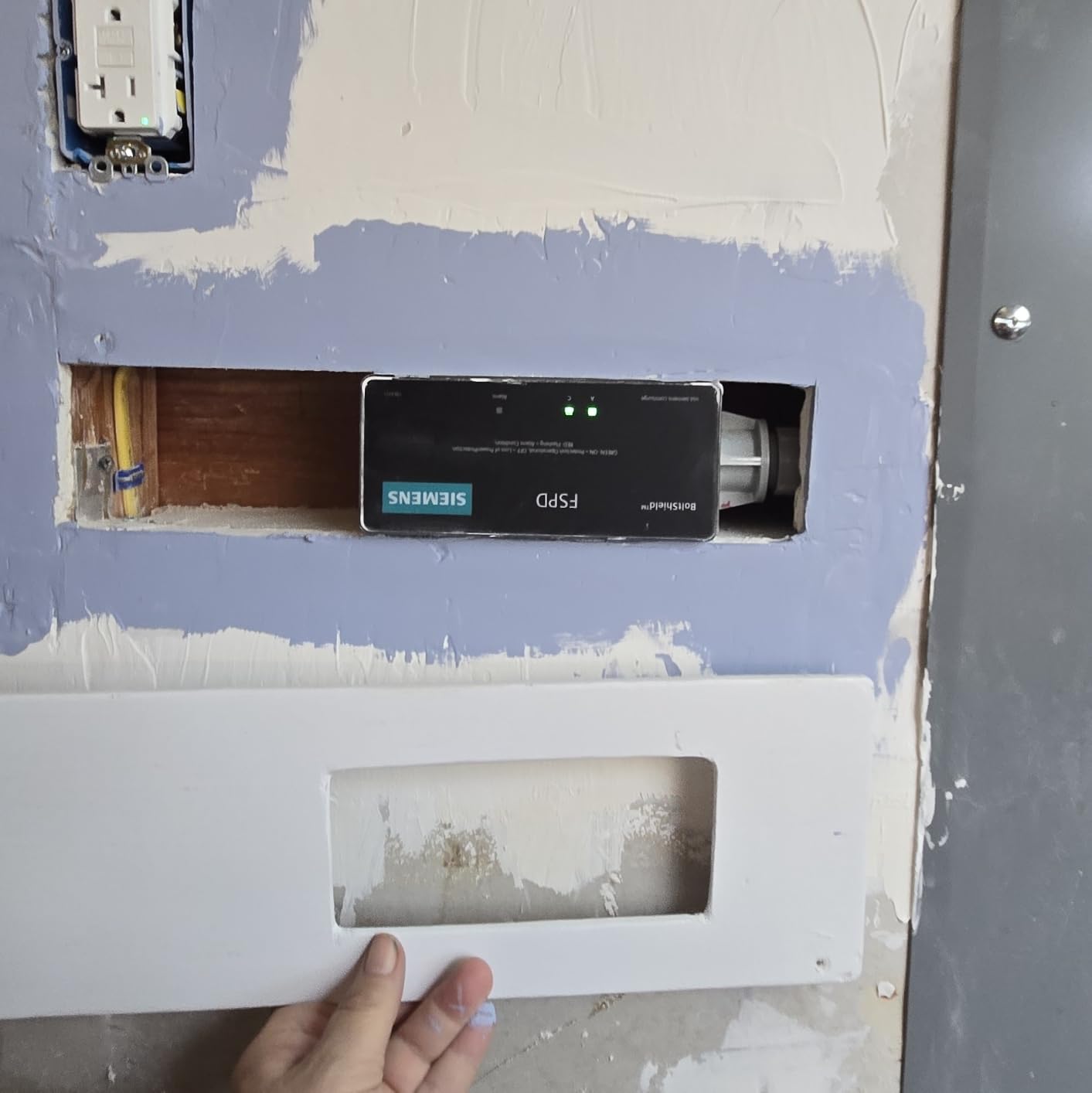
If your main panel is outdoors, this is the strongest hardware choice in the list. The Siemens FSPD140 is rated at 140 kA of surge current, the highest of the ten devices we compared, and its Type 4 polycarbonate enclosure is built to mount outside next to the service gear or inside the load center.
It connects externally in parallel, which means your electrician controls the mounting point and the length of the conductor run. That flexibility is exactly what a low-impedance install needs, since the run from the device to the panel grounding point should be as short and straight as possible.
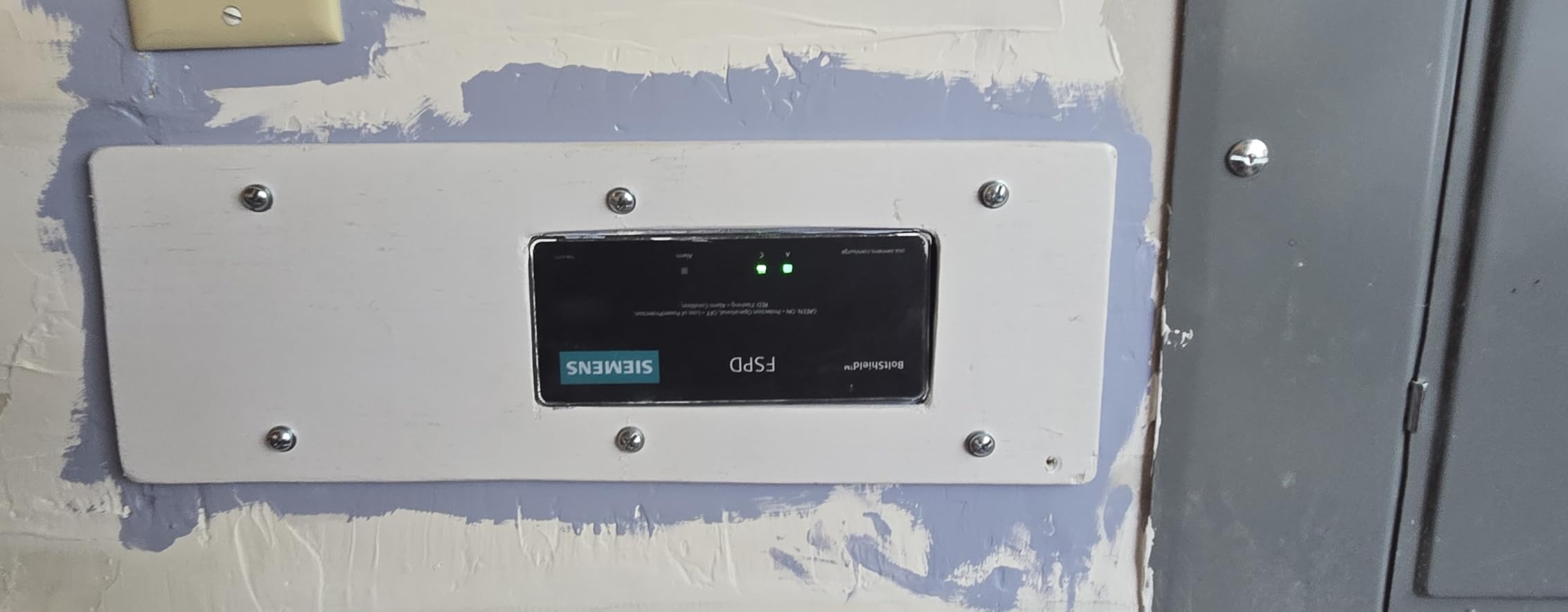
The fault notification is unusually thorough. A visual red flag indicator and an audible alarm both alert you when a replacement is due, so you will not miss a sacrificed module the way you might with a light that nobody checks. The MOVs are thermally protected, which means they fail safe instead of becoming a hazard.
Siemens backs it with a 10-year warranty that includes connected equipment coverage up to 100000 dollars of protection. That is a stronger package than most competitors in this category offer, and it is the main reason to accept a smaller install footprint.
Why capacity and warning beat convenience here
Homes on hills, long utility service runs, or anywhere with frequent lightning exposure get the most benefit from the extra headroom. Electricians say 100 kA or more is preferred for a 200A service, and this is one of the few residential units on the market that clears that bar comfortably.
The audible alarm matters more than it sounds. A failed module is invisible without an indicator, and on a device mounted outside in a garage or on a wall, an alert you can hear removes the need to inspect it visually on a schedule.
Where it falls short
Mounting outside means new conduit and a wiring run back into the panel, which makes this the most involved install of the group. That labor, not the hardware, usually decides whether this option makes sense for a given panel.
With 229 reviews it has the thinnest owner history here, so we are leaning partly on the specification sheet. One reviewer also flagged that the neutral lead can run shorter than the hot leads, which is worth confirming against your panel before ordering.
7. Intermatic IG1240RC3 – Type 1 or Type 2 With 20-Year Service Life
Intermatic IG1240RC3 Whole Home Type-1 or 2 Surge Protection Device,Gray
- Owners report 20-plus years of service life
- Easy drop-in replacement for aging units
- Works in both Type 1 and Type 2 positions
- Proven in lightning-heavy regions
- Installation documentation is basic
- Short leads and no sharp 90-degree bends allowed
- You may need to reposition breakers
The IG1240RC3 is the choice for lightning-exposed homes, and the reason is longevity rather than headline capacity. Multiple reviewers describe replacing 20-year-old units of the same model after storm events, and one reports zero appliance failures across three successive devices in the same house.
It is rated as both a Type 1 and Type 2 device, which means one model covers a service entrance install and a downstream distribution install. That flexibility matters in regions where several municipalities now require this class of device as part of a service upgrade.
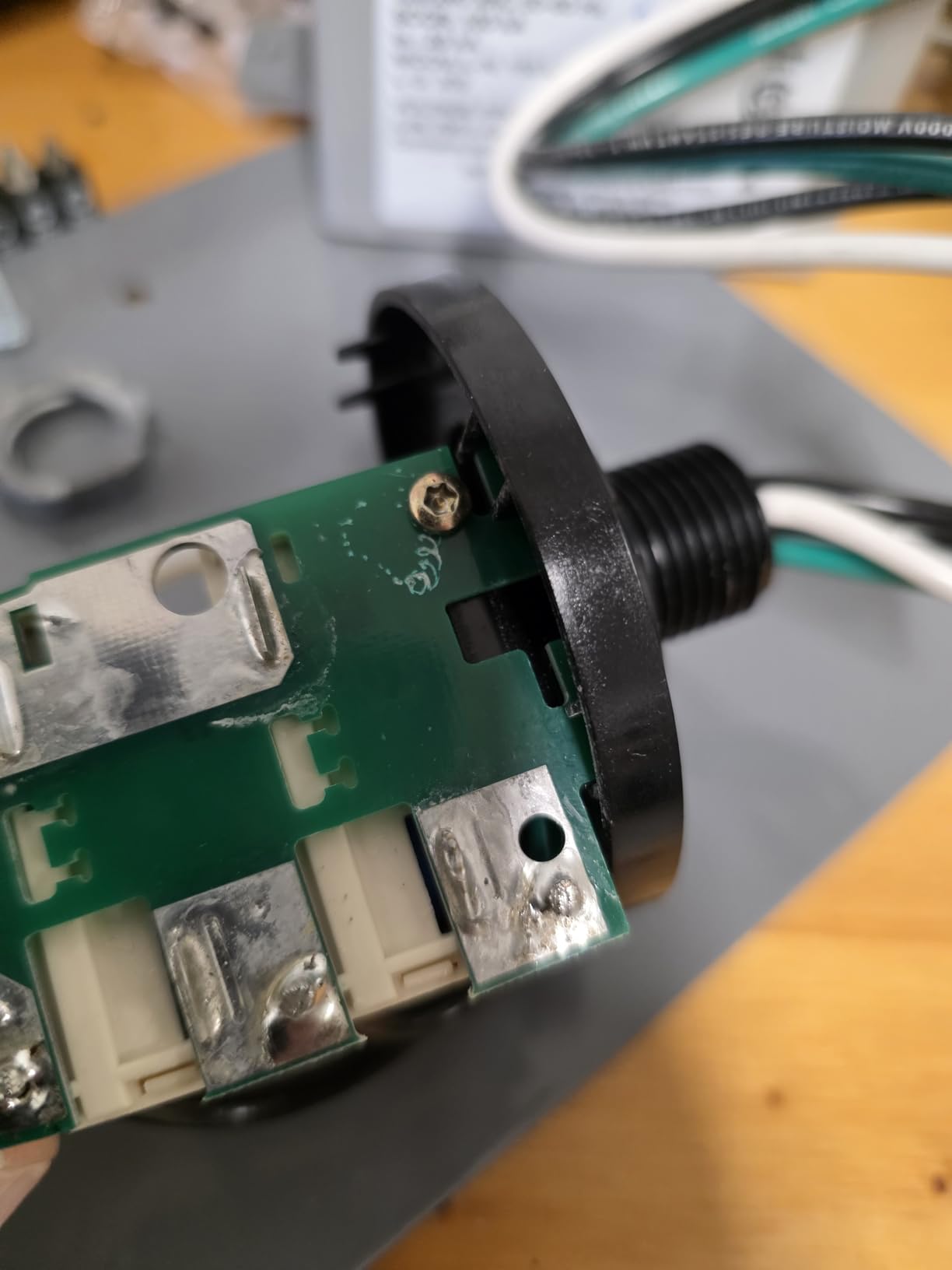
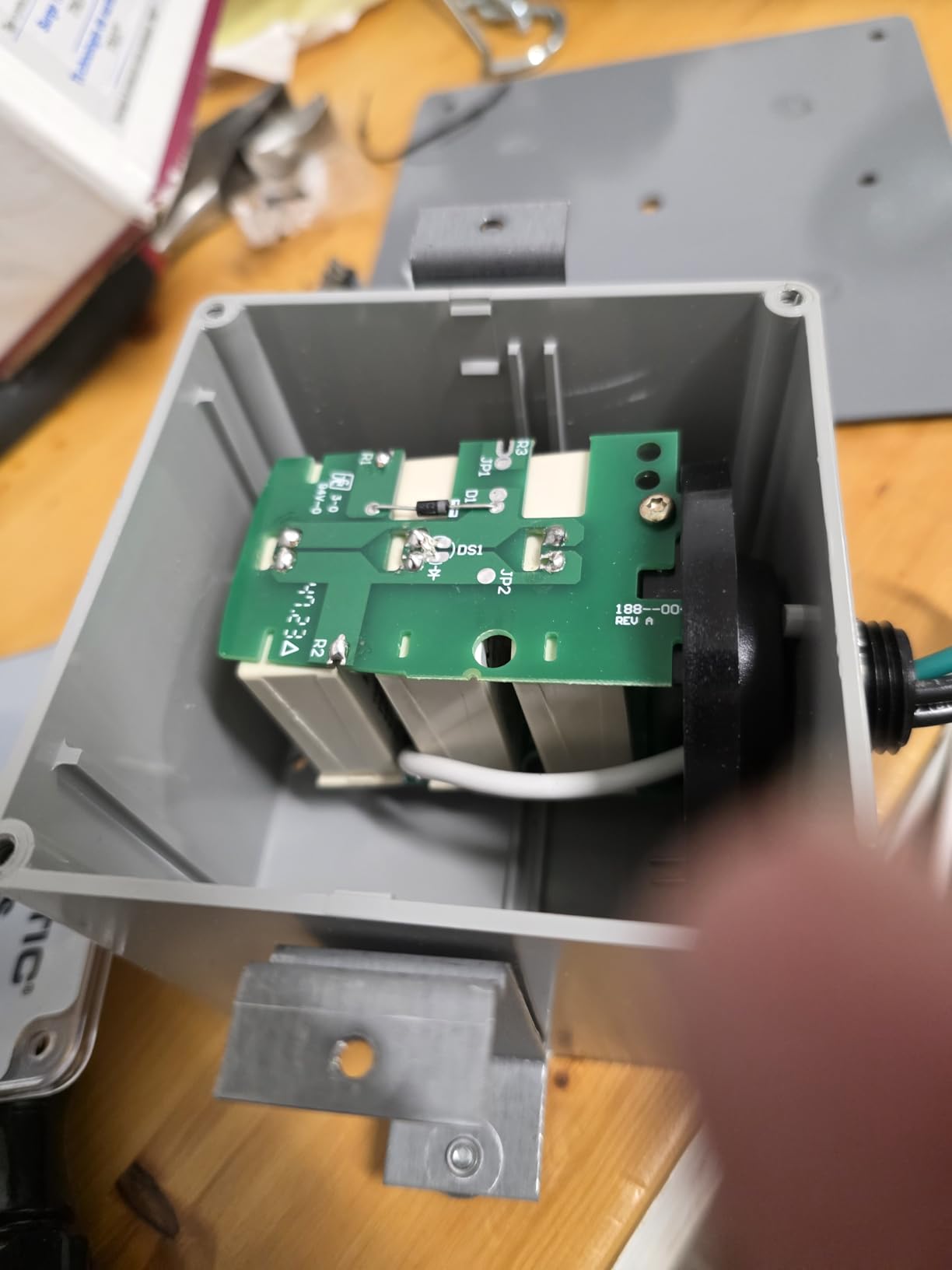
The physical profile is larger than the compact units: 6.25 by 3.75 by 7.51 inches in a metal housing weighing 16 ounces. Intermatic also states coverage for damages up to 7500 dollars within device capacity when the unit is properly installed, which is modest next to the connected equipment warranties offered elsewhere in this list.
Ratings are 4.7 across 355 reviews with about 84 percent five-star. Serviceability comes up repeatedly, and buyers describe replacement as a drop-in swap rather than a rebuild.
When longevity beats raw capacity
A device you can leave in place for two decades changes the economics. Instead of scheduling another surge event and hoping the module held, you install once and the same part number replaces itself years later when needed.
For homes in central Florida and similar lightning corridors, that track record is the argument. Neighboring losses and insurance renewals are what drive most purchases in those markets, according to homeowner accounts in the forums we reviewed.
Where it falls short
Lead wires are short and the instructions warn against sharp 90-degree bends, which means your electrician may need to reposition existing breakers to create a clean path. Plan that before the install date.
Documentation is basic. Buyers without panel experience are urged to hire an electrician, and that is the correct call for a service entrance position.
8. DITEK DTK-120/240CM+ – NEMA 4X for Equipment Locations
DITEK DTK-120/240CM+ Surge ARRESTOR, Parallel Protector, Multi-Purpose, NEMA 4X, UL1449 Listed, SPD, Type 1, 2W(+G), 120/240VAC
- Type 1 rating with a NEMA 4X case for flexible mounting
- Green LED confirms the unit is functioning
- Straightforward wiring with responsive DITEK support
- Light at 3.04 ounces
- 2000 joule rating is modest beside Type 2 panel devices
- Packaging is thin and units have arrived damaged
- Better suited to equipment locations than a load-center install
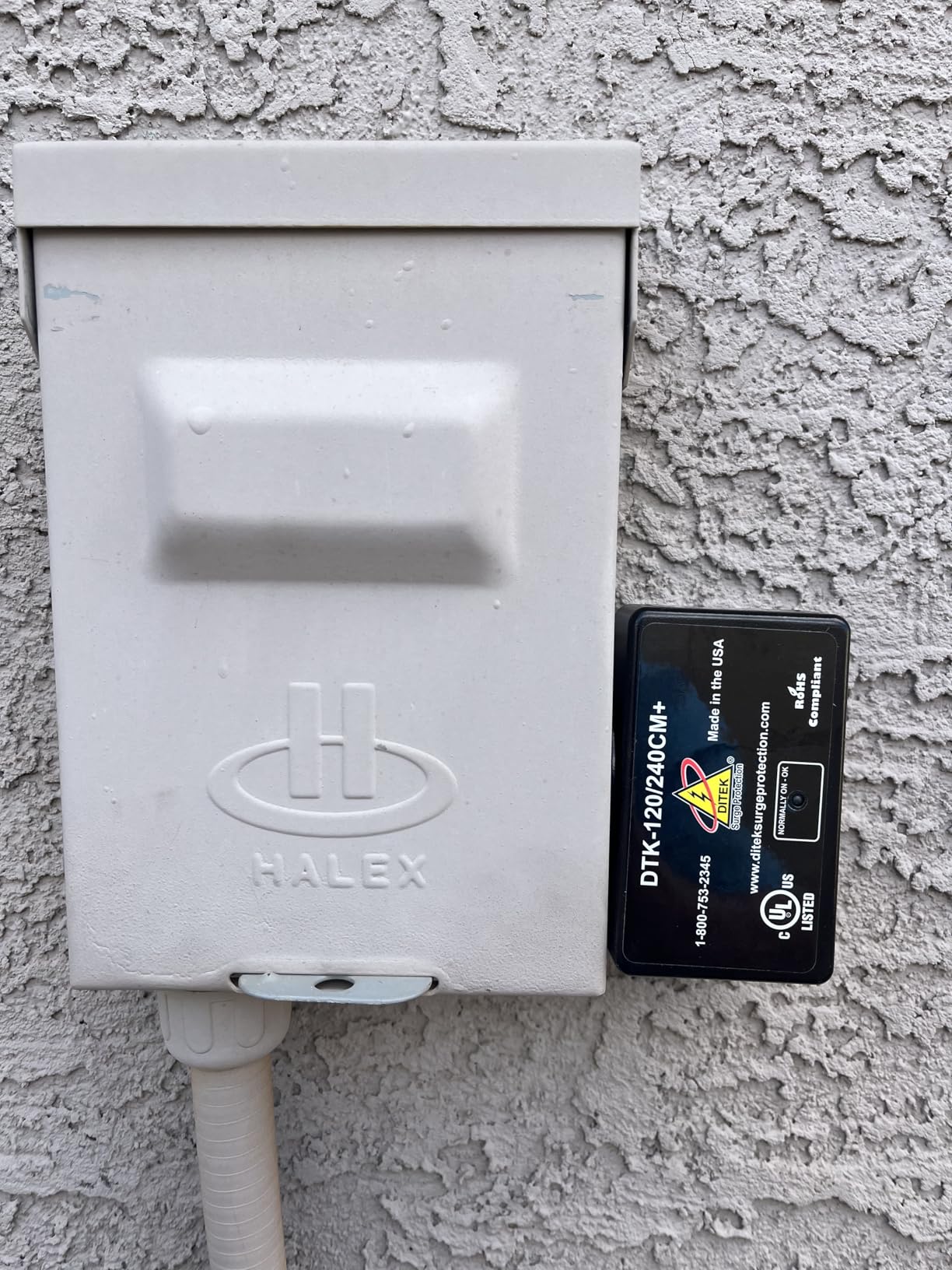
This DITEK is a different shape of device from the rest of the list. It is a Type 1 UL 1449 listed unit in a NEMA 4X weatherproof case, weighing 3.04 ounces and measuring 4 by 3 inches, which makes it easy to mount directly on or beside expensive equipment instead of inside a panel.
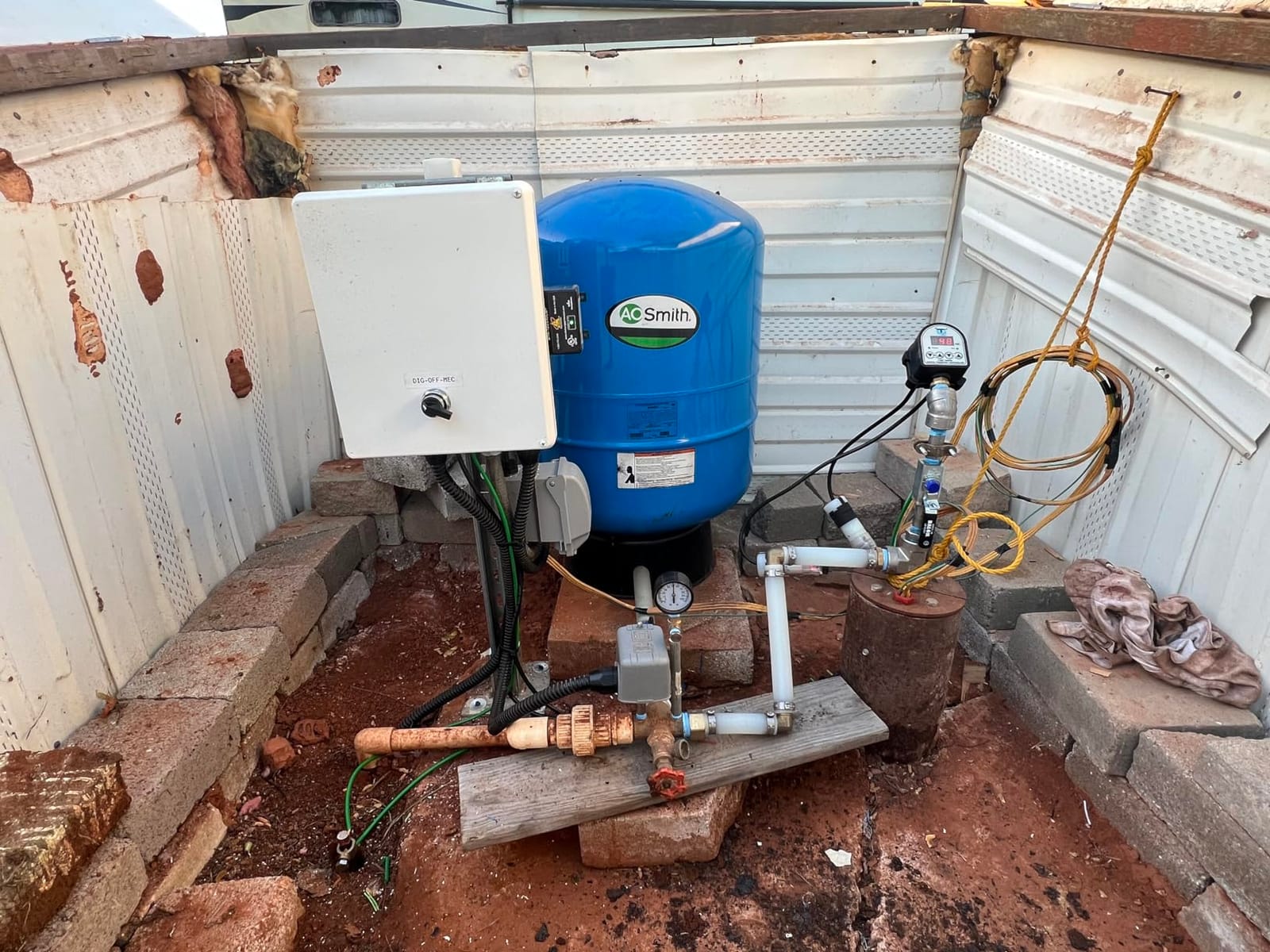
Buyers most often install it to protect mini-splits and other high-cost HVAC gear, and reviewers describe it as a cost-effective alternative to a dedicated HVAC surge protector. Its 2000 joule rating is modest next to the panel devices here, so treat it as targeted protection rather than whole-home coverage.
Ratings are 4.7 across 346 reviews with roughly 85 percent five-star. Owners like the green LED confirmation, the straightforward parallel wiring for someone with basic electrical safety experience, and the fact that DITEK support answers installation questions directly.
It is also a practical replacement path. Buyers replacing burned-out units of the same model note that the part matches exactly, which is the same serviceability benefit that drives enthusiasm for the Intermatic IModule system, just at a smaller scale.
When equipment-level placement is the right call
If you have one or two very expensive loads rather than a house full of electronics, mounting a Type 1 device at that equipment gives you a weatherproof, low-impedance path with a very short conductor run. That is arguably a cleaner installation than routing a protector to a remote panel.
Garages, outbuildings and well-pump locations also benefit, because a NEMA 4X case is rated for damp environments where an indoor device would not belong.
Where it falls short
Packaging is thin, and one buyer reported the unit arriving damaged. Inspect the box on arrival and photograph the unit before installation so any shipping claim is straightforward.
At 2000 joules, this is the smallest capacity device here. If your goal is protection for every circuit in the house, use a panel-mounted Type 2 unit instead and consider this only as a second layer at specific equipment.
9. Siemens QSPD2A035B – 35 kA Plug-In for Siemens Panels
Siemens QSPD2A035B 35 KAmp BoltShield Indoor Surge Protective Device
- Plugs onto the load center bus in about two minutes
- Matched a 35-year-old panel without issue
- Only one neutral connection required
- 35 kA per phase
- Mechanical flags rather than LEDs confuse buyers
- Only fits Siemens load centers
- 16 AWG pigtail is thin
- May need a tandem to sit in the first position
This is the lowest-rated product in our roundup at 4.4 stars, and the reason is not the hardware. It is the indicators. The QSPD2A035B uses mechanical green and red flags instead of an LED, and buyers routinely open the panel expecting a light, decide the unit is dead, and only later learn the windows move with the fault state.
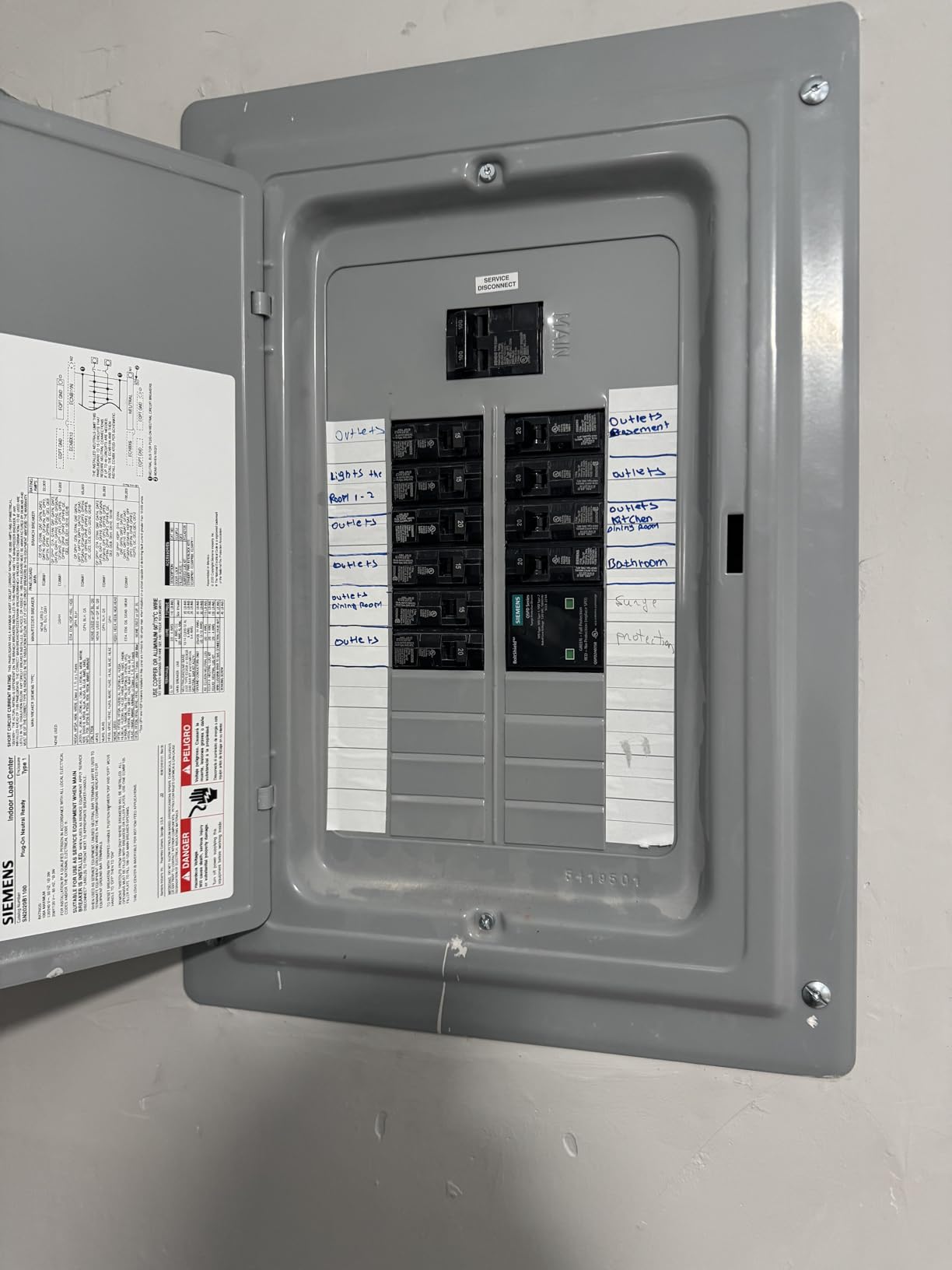
Once that is understood, the rest is easy to like. It plugs directly onto the load center bus like a standard two-pole breaker, installation takes about two minutes, and one reviewer reports matching it to a 35-year-old panel without issue.
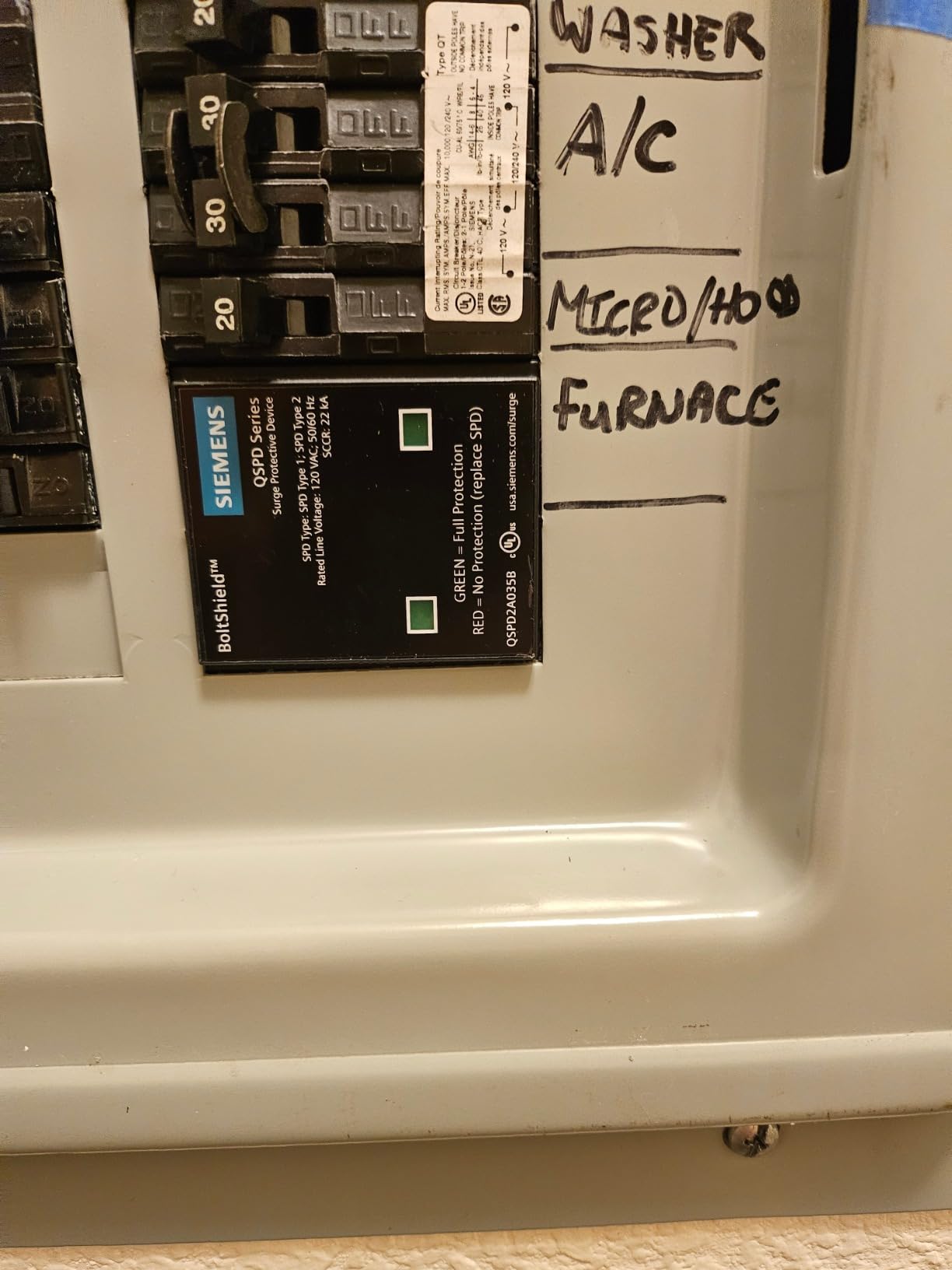
Its 35 kA per phase rating sits between the lowest-capacity plug-on units here and the full hardwired devices, which makes it a reasonable middle option for a Siemens panel on a smaller service. The body measures 2 by 2.6 by 3 inches and weighs 6.4 ounces, so panel space is rarely the problem.
Documentation from competing listings incorrectly implies an LED is present, which has compounded the confusion. One electrician reviewer published a detailed explanation that the windows are purely mechanical and that this device is not a resettable circuit breaker.
Read this before you judge the indicator
If you install this unit, decide in advance what you will look at. The green flag shows normal protection, red shows the module has sacrificed itself, and there is no illuminated indicator to search for. Expect no confirmation of activity from a panel light after the install.
Because it is plug-on and Siemens-specific, it is a good match for homes with a Siemens panel and no space for a hardwired device. Where your panel already has a spare two spaces, this is the least disruptive option we tested.
Where it falls short
It fits Siemens load centers only. If your panel is another brand, this is not an option no matter how the ratings look.
The 16 AWG pigtail is thinner than some installers would like, and installing it as the first device may require a tandem or doubler to make room. One 1-star review also reports a non-working unit with a detached cover, so verify operation as best you can at install time.
10. Intermatic IG2240-IMSK – Replaceable Modules, No Rewiring
Intermatic IG2240-IMSK Smart Guard Whole-House Surge Protector, 120/240 VAC
- Swap a sacrificial module instead of rewiring a whole unit
- Household members can change modules without an electrician
- Bright LED status lights
- 10 year connected equipment warranty
- 7 pound metal enclosure makes this the most involved install
- Lead pigtails can be too short to reach the panel
- Replacement modules are a separate purchase
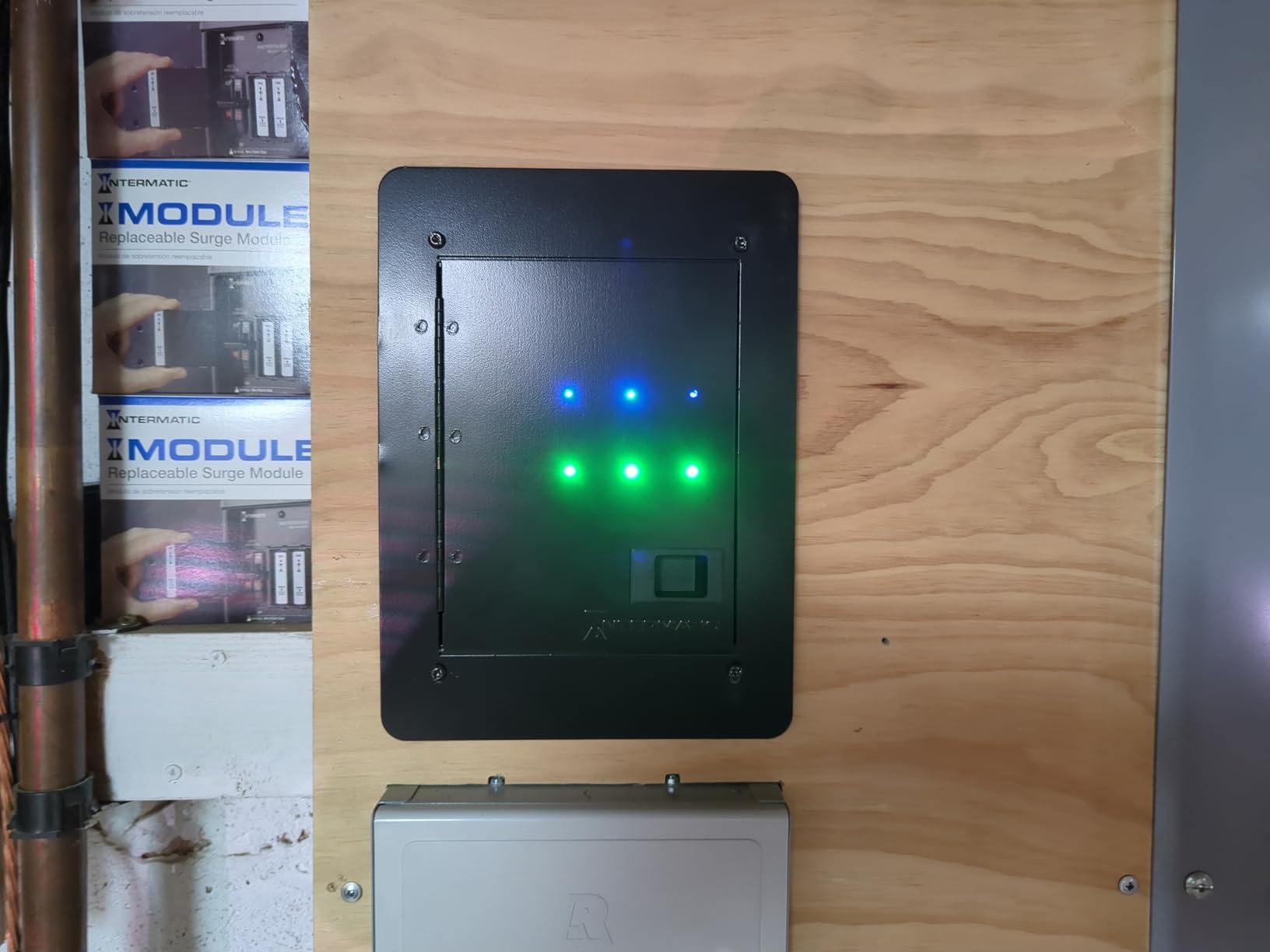
The IG2240-IMSK is the serviceability-first option, and after a surge event that matters. It ships with three replaceable IModules that carry their own LED status lights, plus a Module Power Switch that lets you disconnect power safely during a swap. After a surge you replace a cartridge rather than paying to remove and rewire an entire device.
That changes who can do the maintenance. Buyers point out that a non-technical household member can handle a module change because of the disconnect switch and the simple plug-in arrangement, which removes the usual callout to an electrician for what is otherwise a service event.
The warranty coverage is the strongest in this roundup: a 10-year connected equipment warranty for up to 50000 dollars. The enclosure is a durable, tamper-proof Type 1 metal housing with locked module doors, and at 7 pounds it is by far the heaviest unit we tested.
One Florida reviewer with 19 mini-splits reports that installing it eliminated recurring HVAC service calls, which is a concrete outcome rather than a specification. Ratings sit at 4.6 across 305 reviews.
Who benefits from module-level serviceability
Lightning-prone homes with expensive connected equipment, and anyone who does not want to schedule an electrician for every surge event, get the most from this design. A 10-year connected equipment warranty also changes how you think about the total cost of ownership over a long ownership period.
If you already know you will keep the same house for decades, replaceable parts beat a sealed unit that has to be thrown away entirely when its module fails.
Where it falls short
This is skilled work. One installer had to cut conduit access holes and reroute wiring, and lead pigtails can be too short to reach the panel depending on construction. Expect flush mounting or splicing in some panels.
Replacement modules are a separate purchase, and long-term availability is not guaranteed by the manufacturer. Weigh that against the alternative of a unit you replace wholesale, and against a lower-capacity device that may never need servicing.
What to Look For in a Whole-House Surge Protector?
Three specifications decide whether a device is worth installing: surge current capacity in kA, whether it is a Type 1 or Type 2 device, and the enclosure rating. Get those right and the rest is workmanship. Ignore them and no amount of marketing language rescues the install.
Surge capacity in kA. Electricians we surveyed treat 50 kA as a floor and 65 kA as a practical minimum for a 200A residential service, with 100 kA or more preferred. Anything at 25 kA or below is being marketed as whole-home protection without meeting that bar, which is why the plug-on units in this list sit at the bottom of our ranking.
Type 1 versus Type 2. A Type 2 surge protective device installs at the main breaker panel and handles surges that originate inside the house or enter through the utility lines. A Type 1 device is designed for a service entrance position, outside the meter. If your panel is downstream of the meter, your electrician needs to confirm which position applies before you order.
Enclosure rating. An indoor panel can take a standard indoor-rated case. An outdoor service panel needs a NEMA 4 or NEMA 4X housing, and an indoor-only unit sold for an outdoor panel is a deal breaker. The DITEK and Siemens FSPD140 both carry weatherproof cases for that reason.
Two more filters matter. A UL 1449 listing confirms the device was tested to the standard for surge protective devices, and a stated SCCR short-circuit current rating tells your electrician what the device can withstand inside the panel. Look for both before you commit.
How to Choose the Right Whole-House Surge Protector for Your Panel
Start with the panel, not the product. Panel fit is the single biggest practical blocker, and it is the problem that ends the most forum threads about whole-home protection. Before you compare anything, open the deadfront on your main panel and confirm there is physical room for a device and the two-pole connection it needs.
Some panels genuinely cannot host a hardwired device. GE Q-line panels are the most commonly reported example, where an existing breaker occupies the lug space a protector would need. Older Murray and some legacy panels present the same problem. If that is your situation, the honest answer is a panel change or a sub-panel solution, and a good electrician will tell you that before quoting.
Your four-step decision path
Identify the panel brand and bus style. Homeline and QO are not interchangeable, and BR-style devices only fit BR panels. This single check eliminates most wrong purchases.
Confirm indoor or outdoor. An outdoor panel rules out every indoor-rated unit in this roundup.
Match capacity to service size. For a 200A service, look at 80 kA and above. Smaller services can work with less.
Check grounding before ordering. Confirm your home has a proper grounding electrode system and a ground rod. This is the part most buyers skip and the part that determines whether the device does anything.
Then think about coverage beyond the main panel. A protector at the main is adequate for internal surges, but separate feeders, garages, and ADUs need their own coverage. If you have a detached building or a generator or solar interconnection, add a device at each of those locations rather than assuming one box covers everything.
On the question of whether a whole house surge protector is worth it at all: if your home has good grounding, modest electronics, and a low lightning exposure, the honest answer is that the return is limited. The strongest cases are hills and long service runs, lightning-prone rural properties, unreliable grids with frequent switching, and houses with high-value AV, kitchen, and smart-home gear.
It also helps to know what whole-home protection does not do. A panel device reduces surge energy once, at the panel; it does not filter line noise, and it cannot protect a long downstream run any better than a strip plugged in at the equipment. For home offices, servers and audio gear, our home office surge protector guide covers the UPS and strip options that handle the last few feet. Rack-mounted gear is a different problem again, covered in our rackmount surge protector picks.
Installation: What Your Electrician Needs to Know
Grounding is the requirement that decides whether any of these devices works. All surge suppressors depend on a good ground connection to send the surge into, and owners on r/HomeImprovement and r/electrical consistently report discovering they had no ground rod at all when they finally opened the panel. Without a sound grounding electrode system, a whole-home box is largely decorative.
The second rule is the low-impedance conductor path. Electricians on r/AskElectricians describe hardwired runs with no sharp bends as the difference between a protector that clamps effectively and one that does not, because every sharp 90-degree turn and every extra foot of conductor adds impedance to the path the surge has to travel. Keep the run short, straight, and as close to the panel as the mounting position allows.
Order of operations at the panel matters too. Several units in this roundup require the 2-pole 15A breaker to sit in the first position of the panel, which means existing breakers get moved. The breaker-style devices need free spaces, which may mean rearranging circuits or adding a tandem. A device that fits is not the same as a device that fits with room left for the cover to close.
One caution about who does the work. A whole-house surge protector install is licensed electrical work in most jurisdictions, and the main panel is always energized on the line side. Beyond safety, several of these units carry connected equipment or damage coverage that depends on correct installation, so an unpermitted DIY job can complicate a later claim.
Finally, be wary of managed surge plans pushed by utilities or telecom providers. Homeowners on the forums treat those subscription devices sceptically, noting that the provider installs the unit while the homeowner buys it. Buying the device yourself and hiring an electrician you chose gives you control of the equipment, the placement, and the invoice.
Expect a service visit. Our broader breaker panel guide walks through what the visit usually involves and how to vet the work, and it is worth reading before you schedule anything.
Frequently Asked Questions
Are whole house surge protectors a good idea?
They are a good idea when your home has lightning exposure, a long utility service run, an unreliable grid, or a lot of connected electronics. Most surge damage actually comes from grid switching and internal loads such as HVAC compressors rather than direct strikes, and a panel device clamps those events for every circuit at once. If your grounding is solid, your electronics are modest, and you have low lightning exposure, the return is limited.
What is the best brand for a surge protector?
For panel-mounted whole-home protection, the most established names in this roundup are Eaton, Schneider Electric under its Square D brand, Siemens, and Intermatic. Each covers a different case: Eaton units fit most panels, Square D covers Homeline and QO panels, Siemens covers its own bus styles, and Intermatic is known for serviceable modules and long service life. Match the brand to your panel brand first, then compare capacity.
How many kA surge protector do I need?
For a 200A residential service, electricians generally treat 50 kA as a floor, 65 kA as a practical minimum, and 100 kA or more as the preferred range. Smaller services can work with less. Units at 25 kA or below are typically plug-on breaker-style devices meant for lighter loads rather than full whole-home protection on a modern panel.
What is the difference between Type 1 and Type 2 surge protector?
A Type 1 surge protective device is designed for a service entrance position, typically outside the meter, where it can intercept surges on the incoming lines. A Type 2 device installs at the main breaker panel and protects against surges entering through utility lines as well as those generated inside the home. If your panel sits downstream of the meter, ask your electrician which position your system requires.
Does my surge protector need to be grounded?
Yes, and it is the requirement most often missed. A surge protective device diverts energy into the grounding electrode system, so it needs a properly installed ground rod and sound grounding to work at all. Confirm your grounding electrode system before installation, and keep the conductor run short, straight, and free of sharp bends to preserve a low-impedance path.
Can a whole house surge protector be installed in a sub panel?
It can, and separate feeders, garages, and detached buildings should each have their own device rather than relying on the main panel unit. A Type 2 device is appropriate for a sub-panel position, while a Type 1 device belongs at the service entrance. Because a separate feeder adds conductor length, panel compatibility and the route to ground both need checking before ordering.
What are the common problems with whole house surge protectors?
The most common problems are physical rather than electrical. Panels may lack lug or breaker space, with GE Q-line and older Murray panels frequently cited as difficult. Some units need a 2-pole 15A breaker in the first position, which means rearranging breakers. Short lead pigtails may not reach, sharp bends defeat the low-impedance path, and confusion over indicator lights leads owners to think a working unit is dead.
Do you still need surge strips after installing a whole-house protector?
Yes, most homeowners keep point-of-use protection in place. A panel device clamps surge energy once at the panel and cannot filter line noise or shape voltage for a specific piece of equipment. Strips and UPS units protect the last few feet of wiring and sensitive electronics such as computers, audio gear, and network equipment, which is why reviewers describe the extra layer as easy insurance.
Best Whole House Surge Protector: The 2026 Verdict
The best whole house surge protectors share three traits: a UL 1449 listing, capacity that matches your service, and a clean short conductor path to solid grounding. Pick within that framework and the brand matters less than the fit.
The Eaton CHSPT2ULTRA is our pick overall. Its 108 kA rating, universal load center connection, and 4.8-star average across 2878 owner reviews make it the most proven option here for a standard 200A service. The Square D HEPD80 is the value runner-up at 80 kA with a helpful LED indicator, and the Eaton CHSPT2SURGE covers smaller services at 36 kA with a NEMA 4 case. Outdoor panels should start with the Siemens FSPD140, and Intermatic’s IModule design wins on long-term serviceability.
Before you buy, open the panel and check the space. If your home has a modest electronics load and a solid grounding system, skip it and spend the money on point-of-use protection instead.
We keep a separate guide on surge protectors for breaker panels focused purely on panel compatibility, and a separate roundup on RV surge protectors for 50 amp service if your protection needs extend to a vehicle or trailer.