

The most common DIY problem in the house is also the most misunderstood one. Most people grab the cheapest pen they can find, wave it near the outlet, see no beep, and start unscrewing the cover plate. That single assumption is where a lot of near-misses come from. If you want the best voltage testers for homeowners in 2026, the deciding factor is not the beep count on the box. It is whether the tool tells you the truth when a circuit is genuinely dead, and whether it tells you when it is not working at all.
That is the core rule this whole guide is built around. A voltage tester tells you a circuit is live. It never, under any circumstances, tells you a circuit is safe. Professionals never rely on a non-contact pen alone, and neither should you. The technique they all use is called two-point verification: use the non-contact tester to find the hot conductor, then confirm with a meter that you are about to touch. We use that rule repeatedly here, because it is the single most useful thing a homeowner can learn about this category.
We spent several weeks putting eight of the most-reviewed voltage testers and tester kits through the jobs homeowners actually have: dead kitchen outlets, a bathroom GFCI that keeps tripping, a ceiling fan swap, finding a breaker in a half-lit basement, and tracing a break in attic cable. Each pick below is rated and copied exactly as listed by buyers, so you can match it to the job in front of you. If you also want to round out the toolbox, our ladder picks for homeowners and cable testers for electricians cover the other two tools that show up on every job list.
Table of Contents
Top 3 Best Voltage Testers for Homeowners in 2026
These three cover the widest range of homeowner jobs. The Fluke is the most trustworthy pen, the Klein is the one most people should start with, and the AstroAI multimeter is the instrument you reach for when you need an actual number instead of a beep.

Fluke 1AC II VoltAlert
- 90-1000V AC range
- Continuous self-test
- Red tip glow plus audible beeper

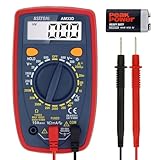
AstroAI AM33D Multimeter
- AC/DC voltage and DC current
- Backlit LCD with data hold
- Double-fuse protection
Best Voltage Testers for Homeowners in 2026: The Full Comparison
Every tester below detects the presence of AC voltage, but they differ in how much they can tell you about it. The four pens answer yes or no. The multimeters and the clamp kit answer with a number, which is what you need when a circuit reads dead but the outlet still has power somewhere.
| Product | Specifications | Action |
|---|---|---|
| Fluke 1AC II VoltAlert NCV Pen |
|
Check Latest Price |
| Klein Tools NCVT1P Voltage Tester Pen |
|
Check Latest Price |
 Southwire 40116N NCVD Tester Southwire 40116N NCVD Tester |
|
Check Latest Price |
 AstroAI VTS1000H Tester with Screwdriver AstroAI VTS1000H Tester with Screwdriver |
|
Check Latest Price |
 Klein Tools CL120VP Clamp Meter Test Kit Klein Tools CL120VP Clamp Meter Test Kit |
|
Check Latest Price |
| AstroAI AM33D Digital Multimeter |
|
Check Latest Price |
 Sperry STK001 NCV and GFCI Kit Sperry STK001 NCV and GFCI Kit |
|
Check Latest Price |
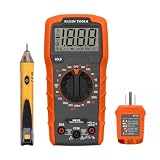 Klein Tools 69149P Three Piece Kit Klein Tools 69149P Three Piece Kit |
|
Check Latest Price |
1. Fluke 1AC II VoltAlert: The Best Voltage Tester for Accuracy
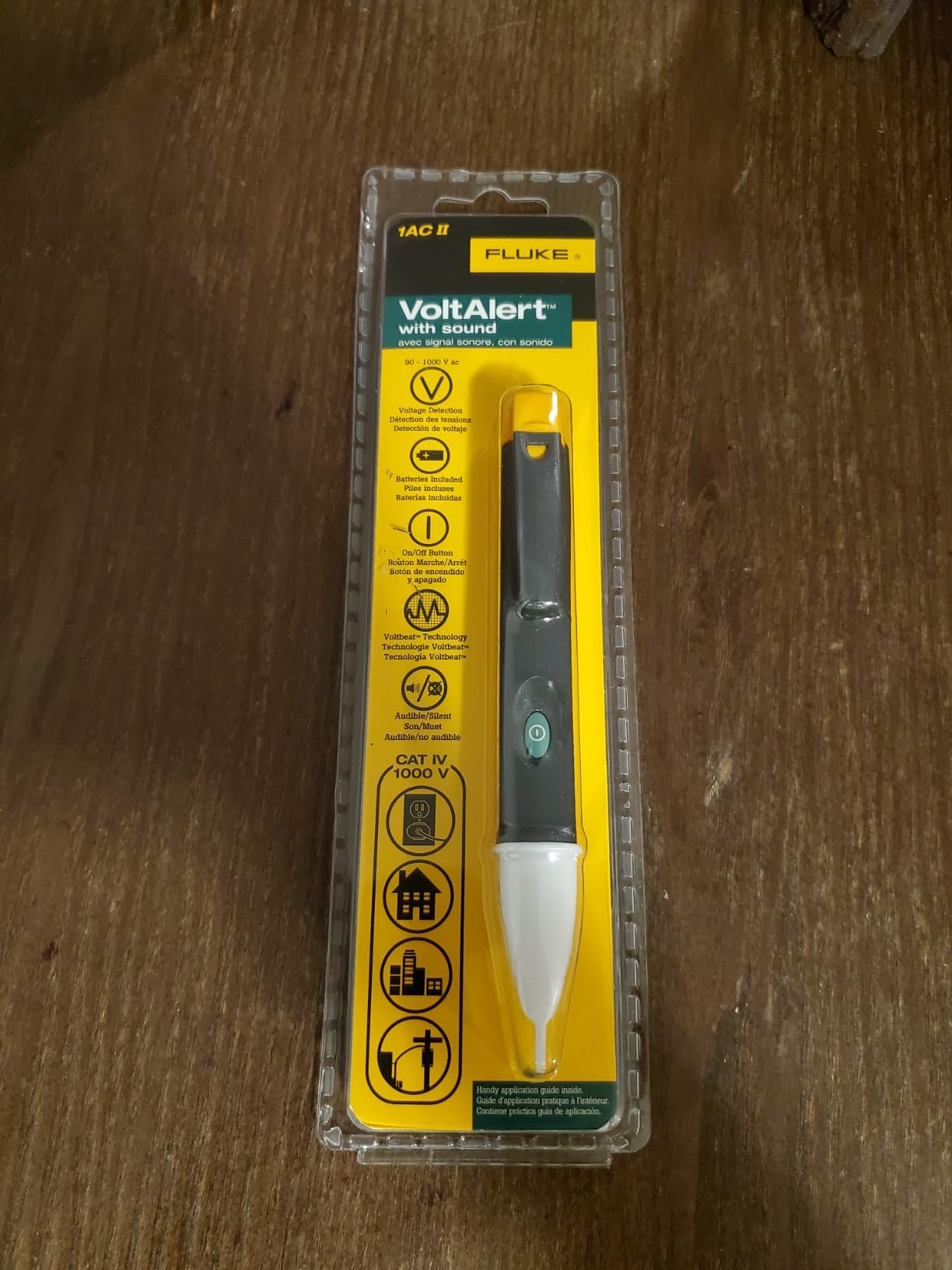
Fluke 1AC II VoltAlert Non-Contact Voltage Tester, Pocket-Sized, 90-1000V AC, Audible Beeper, CAT IV Rating
- Accurate with no false beeps on neutral conductors
- Continuous self-test confirms the tester is working
- Red tip glow plus audible alert
- One owner reports a first unit lasting over fifteen years
- Short detection range requires close proximity
- 90V minimum threshold misses low-voltage work
- No flashlight or numeric readout
The Fluke 1AC II is the reference point for every other pen in this list, and the reason is narrower than you would expect. It is not the most sensitive tester here. It is the one that does the least dramatic thing: it stays quiet when there is nothing to report. Buyers repeatedly describe reliable short-range discrimination between the hot and the neutral conductor inside a junction box, which is exactly the discrimination that matters when you have a screwdriver next to your knuckles.
The continuous self-test is the feature that changes behaviour rather than specs. The tool is continuously checking itself, so a silent tester means the tester is functioning and no voltage is present. Pens without that feature can sit dead in a drawer for a month on flat batteries and still look like a clean circuit when you sweep them over a live outlet.
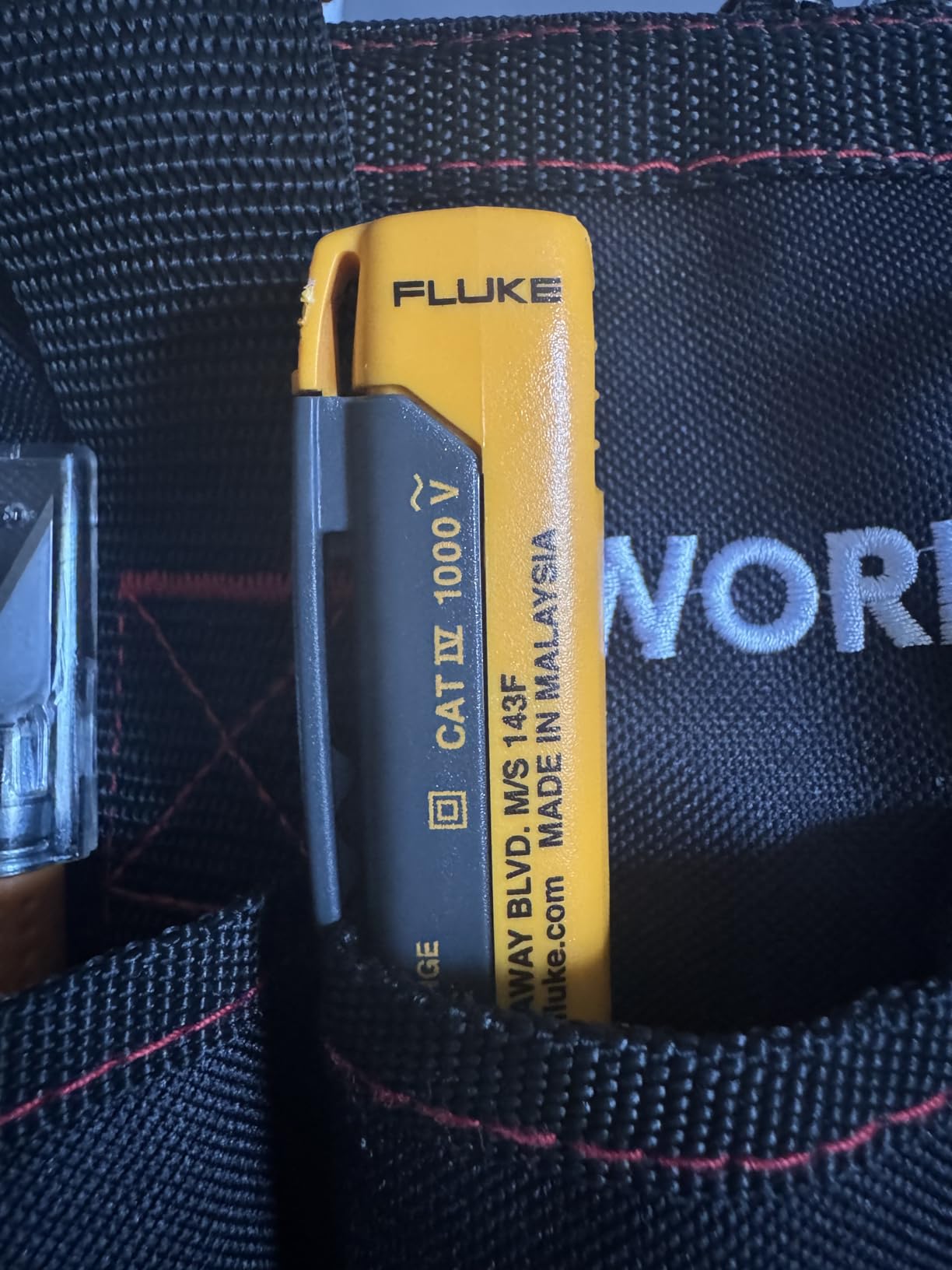
Buyers also value the audible and silent mode switch. The silent mode with the red tip glow gives you a visual confirmation without a beep that wakes up the house at two in the morning, which matters more than it sounds when you are working under a sink or in a crawlspace.
One reviewer described tracing a broken wire in attic cable with it and avoiding a service call, and that is a fair summary of where this tool earns its reputation. It gives you enough confidence to open a box, which is more than most cheap pens do.
What it gets right where cheaper pens fail
The false negative is the dangerous failure mode. A pen that beeps constantly on nothing is annoying. A pen that stays quiet on a live conductor is how people get hurt. The 1AC II’s sensor sits close to the tip by design, which is why owners insist you push the tip firmly into the slot and hold it right against the conductor rather than waving it from a distance.
That trade is worth making here. You give up reach and gain predictability, and predictability is the property that matters when the box you are opening is live. For a homeowner working receptacles and switches, a short range that reliably tells the truth beats a long range that occasionally lies.
Where the Fluke falls short for a homeowner
The 90V minimum operating voltage is the real limitation, and it is why this is not a wire-tracing tool for landscape lighting or doorbell circuits. The thick tip also takes a little forcing to seat in a tight receptacle. Neither is a dealbreaker for household 120V work, but if your house has a lot of low-voltage runs, the AstroAI VTS1000H further down this list covers a wider band.
2. Klein Tools NCVT1P: The Best Value Voltage Tester Pen
- Lowest 50V minimum catches more circuits than most pens
- Lightweight 22.68 g body with a secure pocket clip
- 6.6 foot drop protection for tool-bag life
- Auto power-off conserves batteries
- Not designed for tamper-resistant outlets
- No flashlight or backlit display
- Indicator-only output with no numeric reading
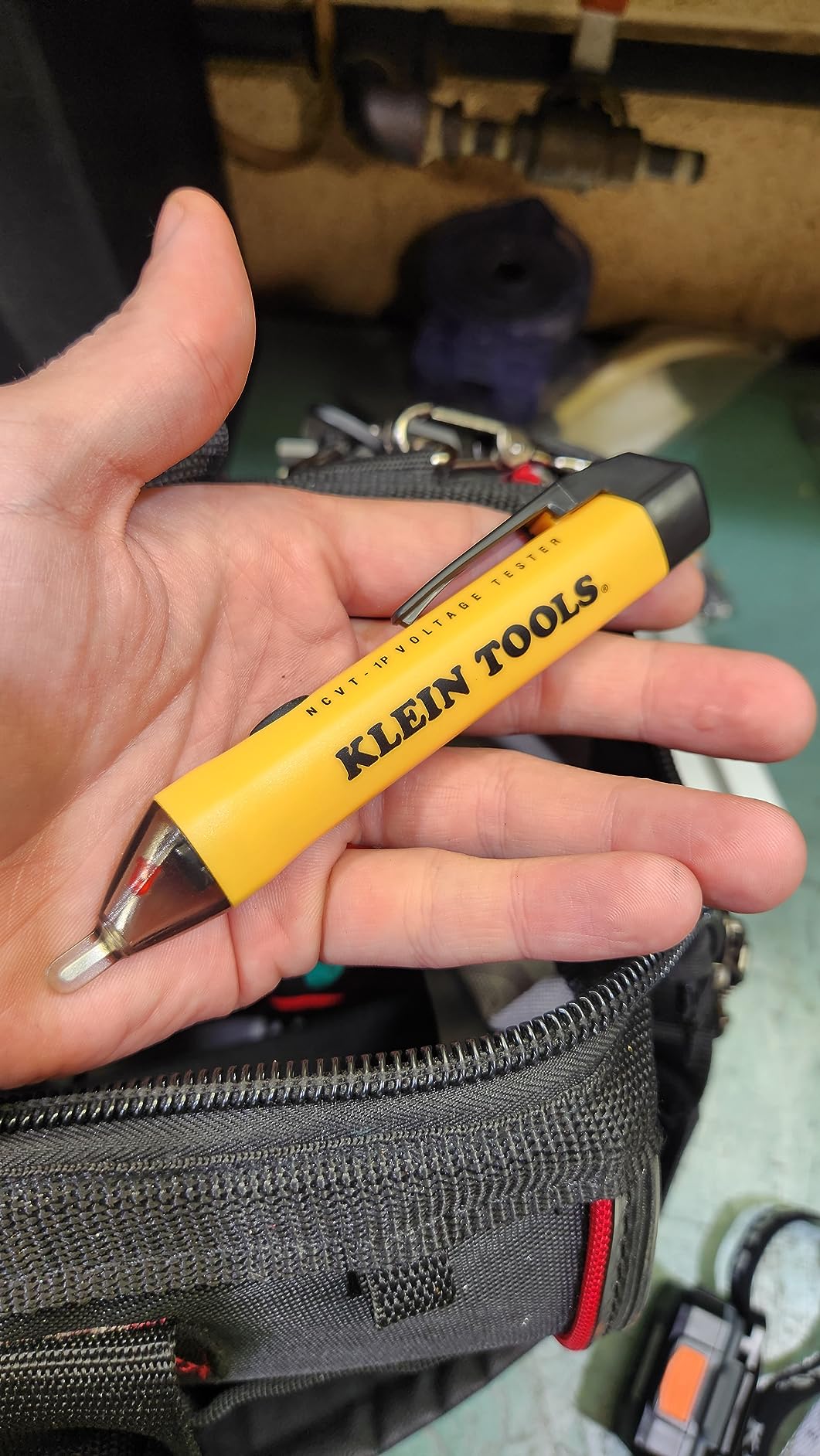
The NCVT1P is the pen most homeowners should buy first. It detects down to 50V, lower than any other pen in this roundup, so it catches circuits that a 90V or 100V floor would skip, and it carries a CAT IV 1000V safety rating at a price that reads more like an accessory than a meter.
The indication is unambiguous. A green LED shows the tester is powered and ready, and when it finds voltage the LED flashes red with an audible alert. In a basement or an unlit attic, seeing the flash from a foot away is genuinely useful, and buyers mention the bright indication as the first thing they liked.
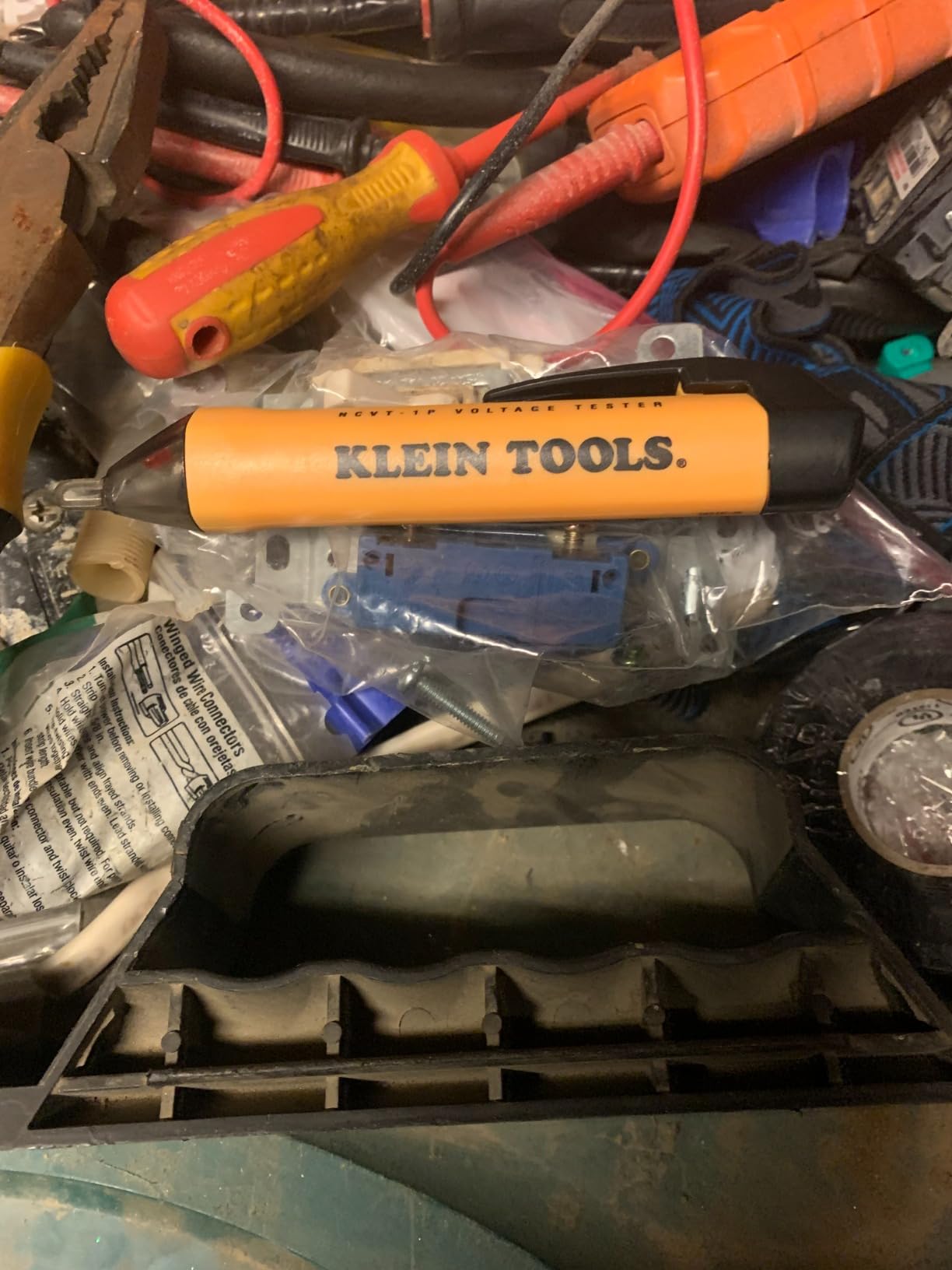
At 22.68 g with a pocket clip, it is the one pen here you will actually carry. Durability claims centre on the 6.6 foot drop protection rating, and the CAT IV 1000V marking means it is rated for work at the service entrance, not just at a receptacle. Auto power-off stops the batteries dying between jobs.
The catch is tamper-resistant receptacles. The most frequently repeated caveat across reviews is that this pen is not engineered for TR outlets, and homeowners with modern receptacles are steered toward the NCVT-2P or NCVT-3P. If your house was built in the last twenty years, check what your outlets are before you buy.
Why most homeowners should start here
It hits the two things that matter for a first tool: a low detection floor and a high safety rating. You also get a physical pocket clip, which sounds trivial until you count how many cheap pens end up loose in a toolbox drawer because they are too bulky to carry. Forum consensus for homeowner-tier tools repeatedly names Klein and Southwire as cheap meters with good safety features, and this pen is the strongest example of that.
What it cannot tell you
It gives you no number. If a receptacle reads dead but the tester stays quiet, you have learned that there is no field, not that the circuit is at zero volts. That gap is where phantom voltage bites, and it is exactly why this pen should be paired with a multimeter rather than trusted alone. The Klein 69149P kit later in this guide does that pairing in one box.
3. Southwire 40116N NCVD: The Best Budget Pen for Dark Panels
- Built-in flashlight for dark breaker panels
- Auto power-off after 5 minutes of inactivity
- UL and CUL listed with CAT IV 600V rating
- Light at 2.56 ounces
- 100V minimum misses lower-voltage circuits
- Not designed for tamper-resistant outlets
- Indicator-only with no adjustable sensitivity
The Southwire 40116N solves a problem the others mostly ignore: working in the dark. Most of what you will do with a voltage tester happens in a basement, a garage subpanel, or behind a washer where the light switch does not reach. The built-in flashlight is the reason reviewers keep singling this pen out.
A green LED signals ready for use, and you get audible and visual indication of AC voltage from 100 to 600V. It is UL and CUL listed with a CAT IV 600V safety rating and carries a two-year warranty, which is unusual at this end of the market.
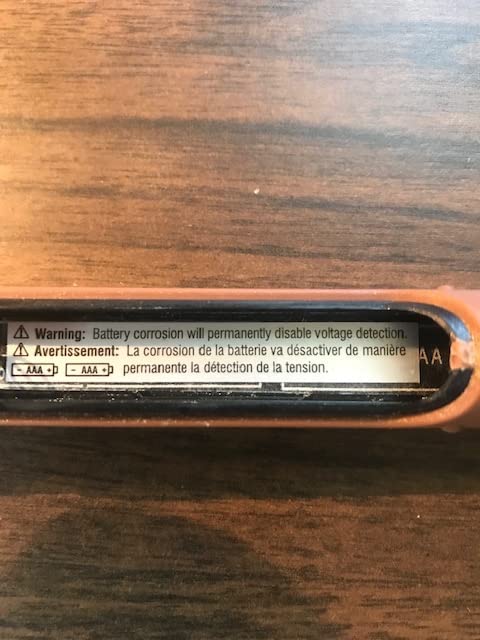
Auto power-off after five minutes of inactivity is a small thing that quietly saves the batteries. Combined with the flashlight, it makes this the pen you want in the panel cupboard rather than the one on your belt.
Buyers describe it as simple, reliable live-wire confirmation at outlets, breakers, switches, and fixtures. That is an accurate summary of what a pen in this class does well and where it stops.

Where the flashlight earns its place
Two-point verification is far easier when you can see what you are doing. If you are confirming a reading with a meter in the same hand as the light, this pen saves you from juggling a flashlight by the breaker box. Having a light source built into the pen is the difference between a thirty-second check and a five-minute one.
What the lower ceiling costs you
The 100V minimum operating voltage is higher than the Klein and the Fluke. On standard 120V household circuits you will never notice. On doorbell transformers, landscape lighting, or older incandescent fixtures on dimmers, you can sweep a live conductor and get nothing. There is also no adjustable sensitivity switch, so you cannot turn the gain up to hunt for a weak signal.
4. AstroAI VTS1000H: The Best Tester for Low-Voltage Circuits
- Only tester here with a 12V low range and an LCD readout
- Integrated steel screwdriver for removing covers
- Two sensitivity modes switch between household and control circuits
- Backlit screen plus flashlight
- Storage bag and spare batteries included
- Light construction per some owners
- Readings shift with probe distance
- Auto power-off beep startles first-time users
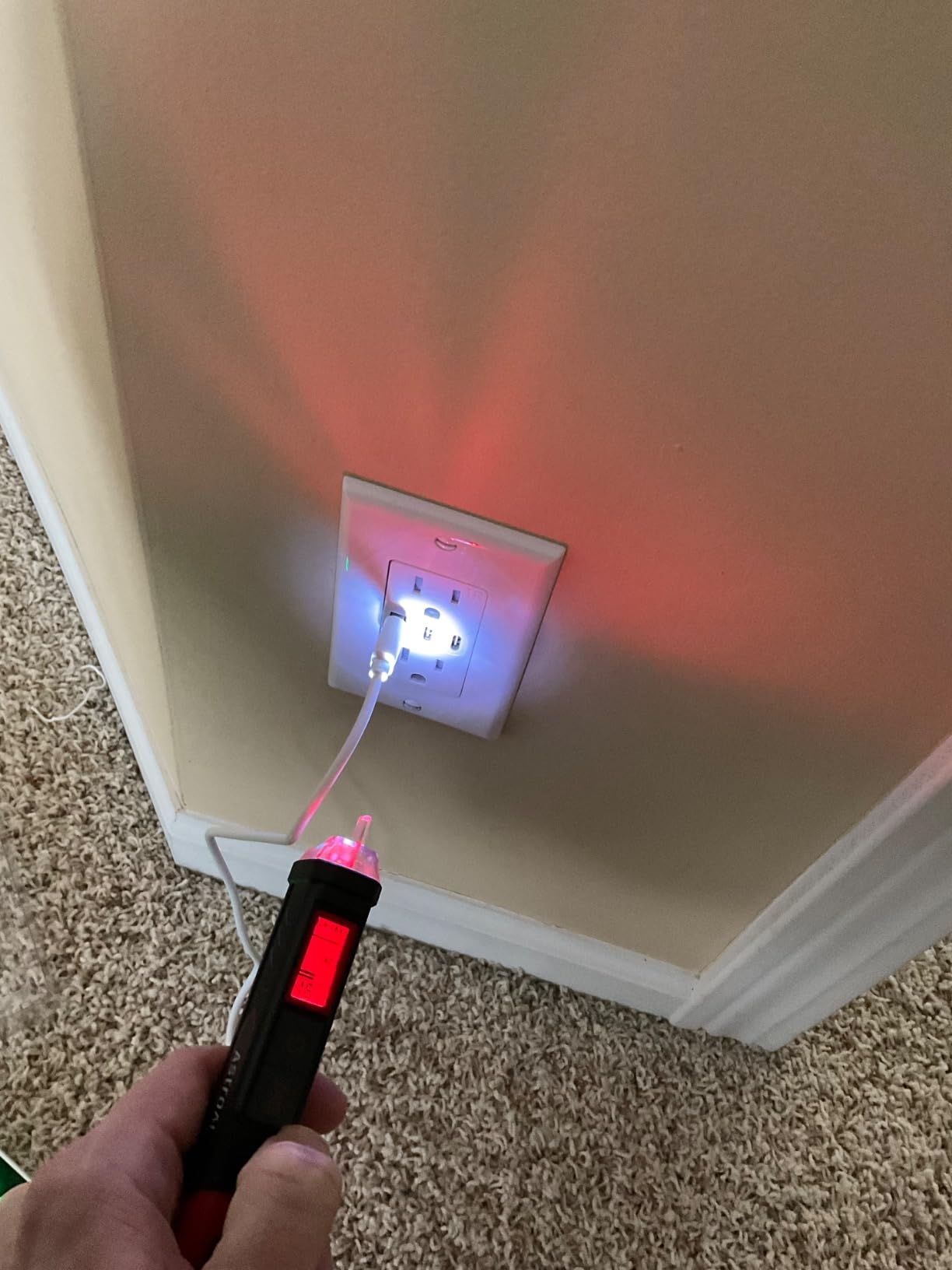
That is the only tester here with two selectable sensitivity ranges and a screen. The high range covers 12V to 1000V and the low range covers 70V to 1000V, switched with the button on the body. That means the same pen that confirms a 120V hot can also pick up a doorbell transformer or a low-voltage control circuit that a 90V or 100V floor would miss entirely.
The LCD changes how you use it. Instead of a binary beep you get a red tip light, a red screen backlight, a rising analog bar, and a percentage value. On a run of cable through an attic, that gradient tells you whether you are getting closer to the break.
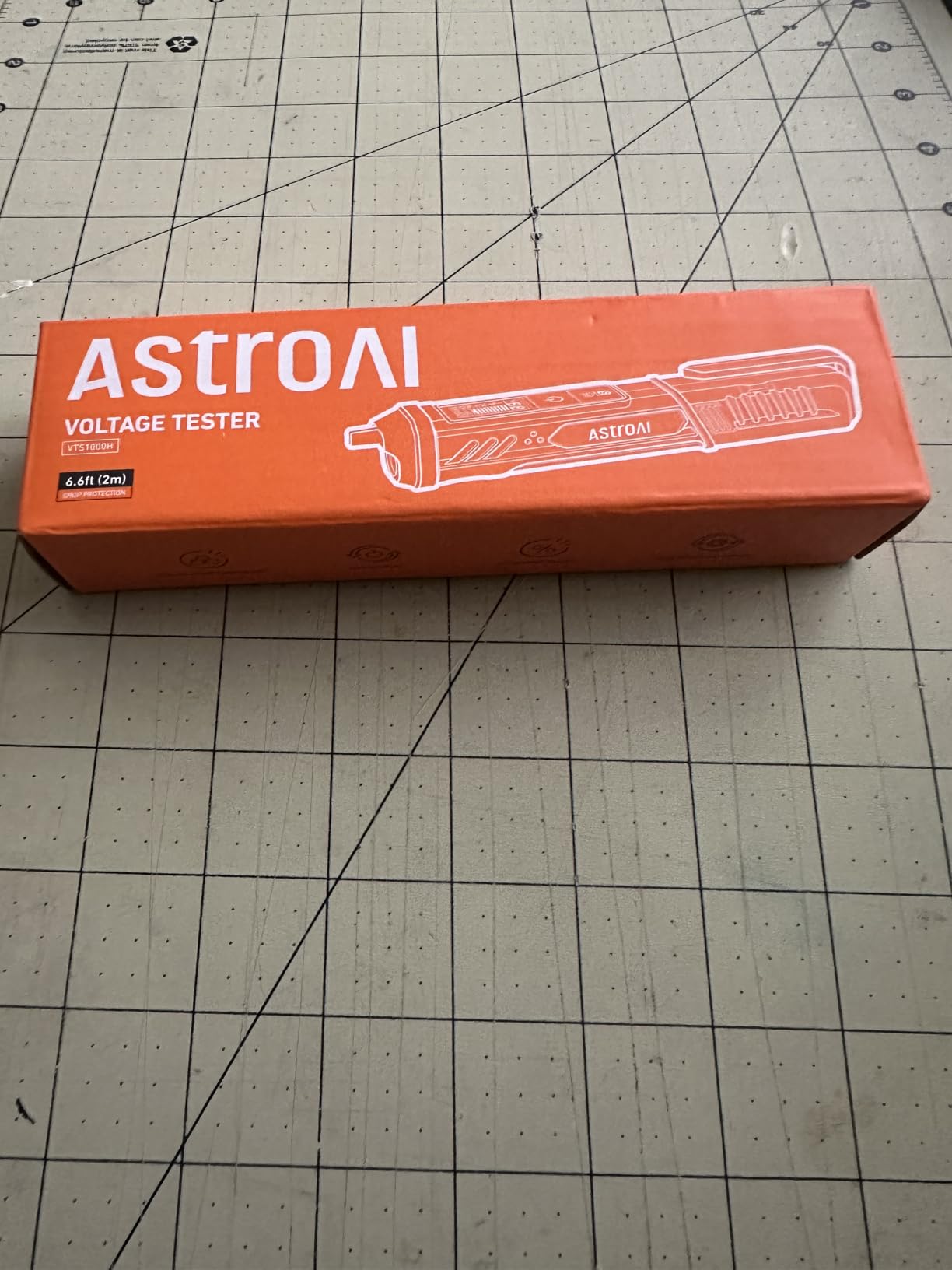
The tail unscrews to reveal a high-strength steel screwdriver. That is a strange thing to praise on an electrical tester until you spend twenty minutes trying to open an outlet cover with a flat blade. Buyers describe using it to confirm power is off before swapping light switches and fixtures, and one notes it saved the cost of hiring an electrician.
A storage bag and spare AAA batteries are in the box, along with a backlit screen and flashlight. Auto power-off after five minutes without signal keeps the cells alive between jobs.
What the dual range actually unlocks
Most pens stop at 50V or 100V because the job is household 120V. That is also why this pairs well with low-voltage outdoor work rather than competing with the Fluke for panel duty. If you are working on transformer-fed lighting, our guide to low voltage landscape lighting kits covers the runs this tester is built to trace.
The 12V floor is the practical win. A doorbell transformer, a garage door opener, or a smart-home relay module will not register on a 90V pen, so you end up opening boxes blind. This one narrows that search before you touch anything, which is exactly the sequence we would rather you follow.
Where the trade-offs show up
The most cited drawback is light construction. It does not feel like a tool rated to survive being dropped out of a truck bed, and owners say the readings shift with probe distance, so you still need to interpret the percentage rather than treat it as a measurement. The auto power-off emits a loud beep that startles people the first time, and the listing’s power source field does not match the battery reality of the device.
Treat the percentage as a relative signal rather than a number you can log and compare. If you need an actual volts reading for a decision, that is the multimeter’s job, and the AstroAI AM33D below covers it.
5. Klein Tools CL120VP: The Best All-in-One Kit
- Most complete kit with clamp meter plus receptacle tester plus NCVT
- Highest average rating in the group at 4.8 stars
- Test lead holder and optional magnetic hanger
- Owners describe the build as solid and accurate
- Batteries included
- No capacitance or DC current measurement
- Carry pouch is small and offers little protection
- Inner packaging needs cutting open
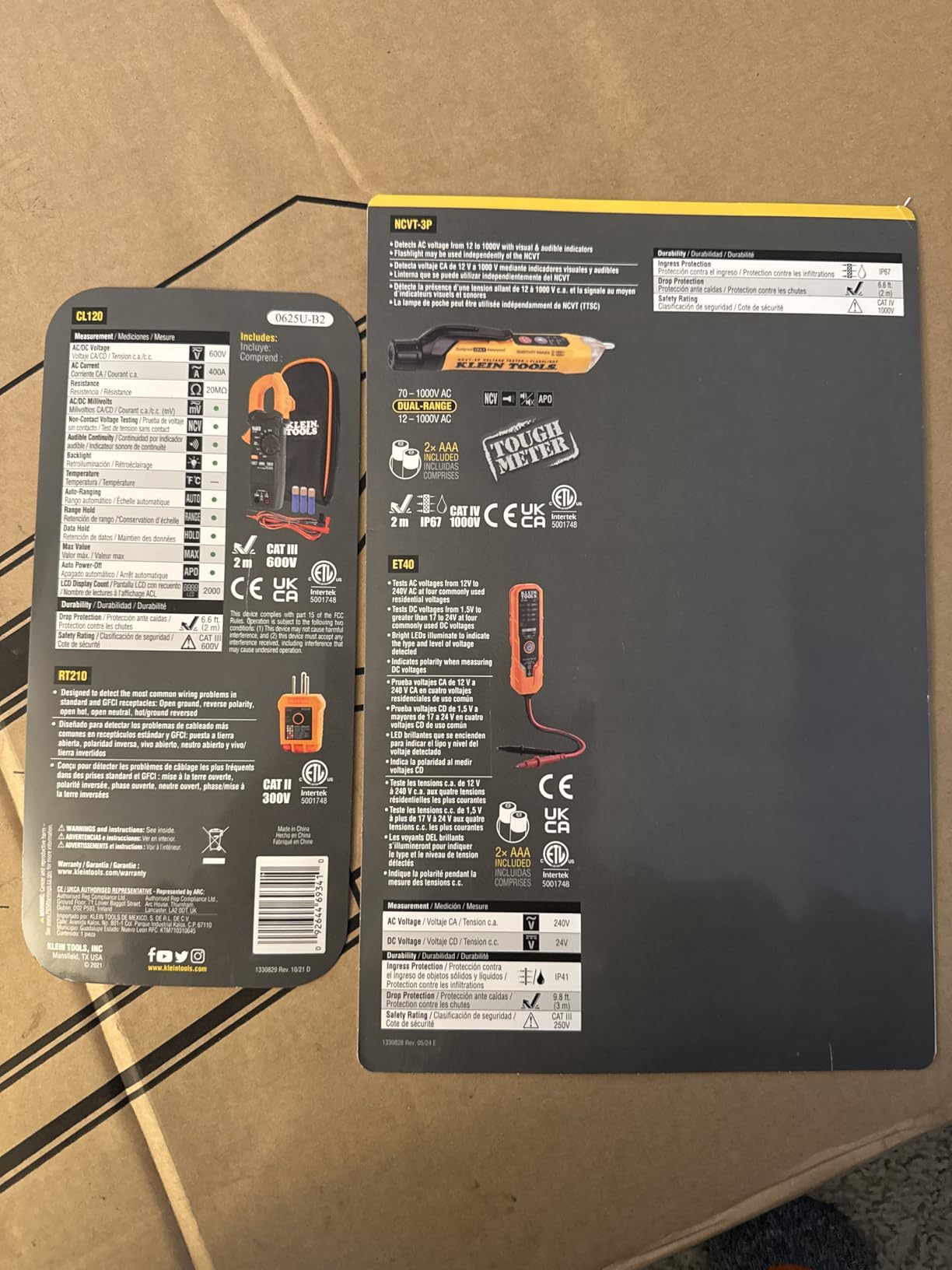
The CL120VP is the only product here that covers three different homeowner jobs in one pouch: the CL120 auto-ranging clamp meter, the NCVT3P dual-range non-contact detector, and the RT210 GFCI receptacle tester. If you are replacing a fixture, diagnosing a tripped breaker, and checking a bathroom outlet in the same afternoon, this is the box that stops you from owning three separate tools.
The clamp measures AC current and does non-contact detection through the jaw, while the test leads handle AC and DC voltage, resistance, and continuity. Auto-ranging picks the measurement range for you, which removes the single most common beginner error on a manual dial.
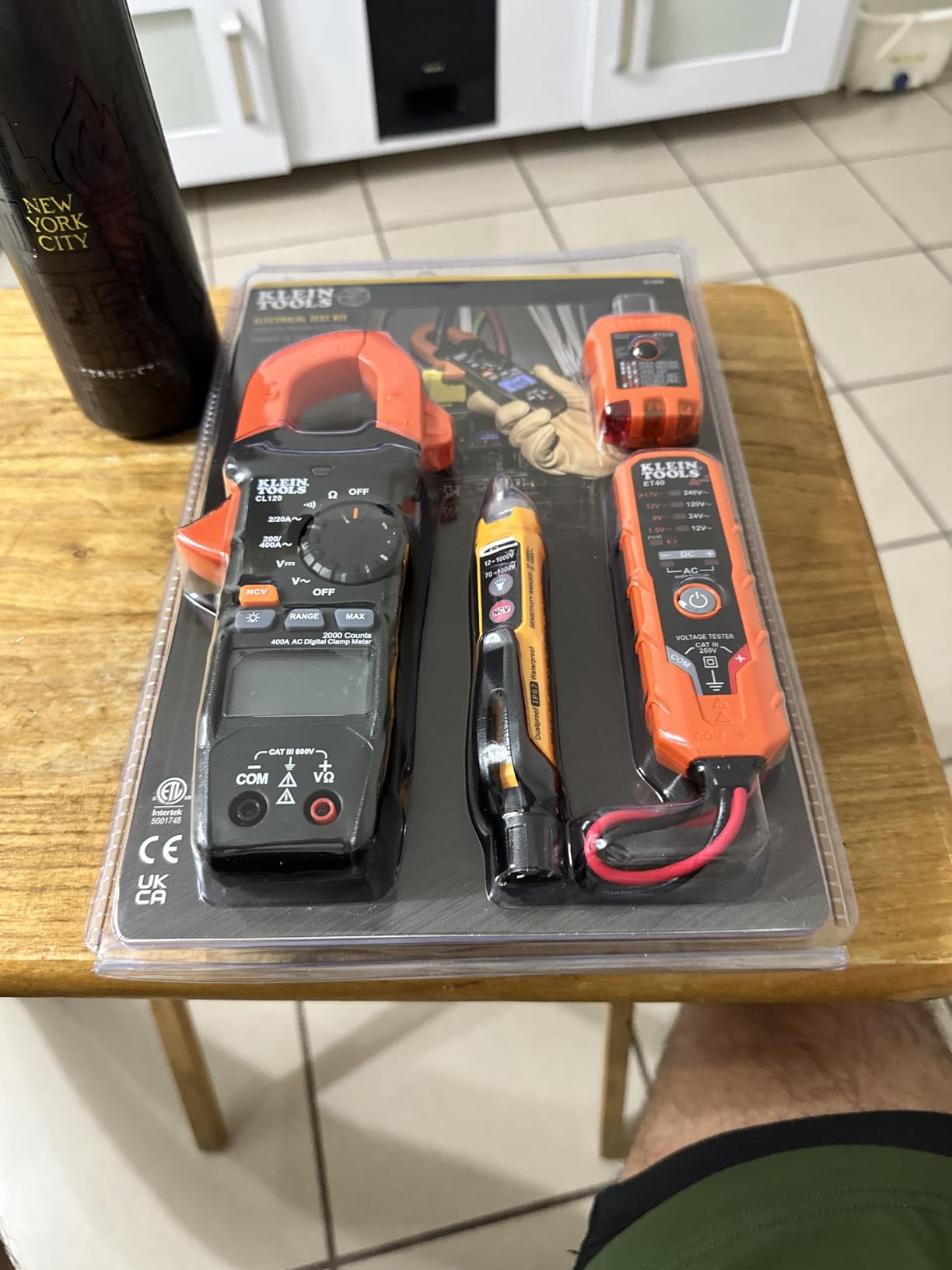
The 4.8 star average across roughly 4000 ratings is the highest in this group. Owners consistently describe the build as solid and accurate, and several point to the test lead holder on the side of the clamp plus the optional magnetic hanger for hands-free work as the details that make it feel professional.
Batteries are included, so it works out of the box. The whole kit is 1.8 pounds in a 13 by 8.5 inch pouch, which is a lot to carry if you are only checking one outlet.
What the clamp jaw actually gives a homeowner
Measuring current through the clamp means you clamp around a single conductor without disconnecting anything, which is how you find an overloaded circuit or a motor drawing too much. Nobody expects a homeowner to do this often, but the one time you need it, the alternative is shutting off power and cutting a wire. The clamp also means you are not touching a conductor while taking a current reading, which is a real safety advantage over in-line measurement.
What you give up for the bundle
There is no capacitance and no DC current, and it costs more than any single tool on this list, which matters if you only need a pen. The pouch is small and does not protect the tools much, and the inner packaging is hard to open enough that reviewers say you need a sharp tool to cut into it. If your needs are narrow, buying one tool well beats buying four tools outright.
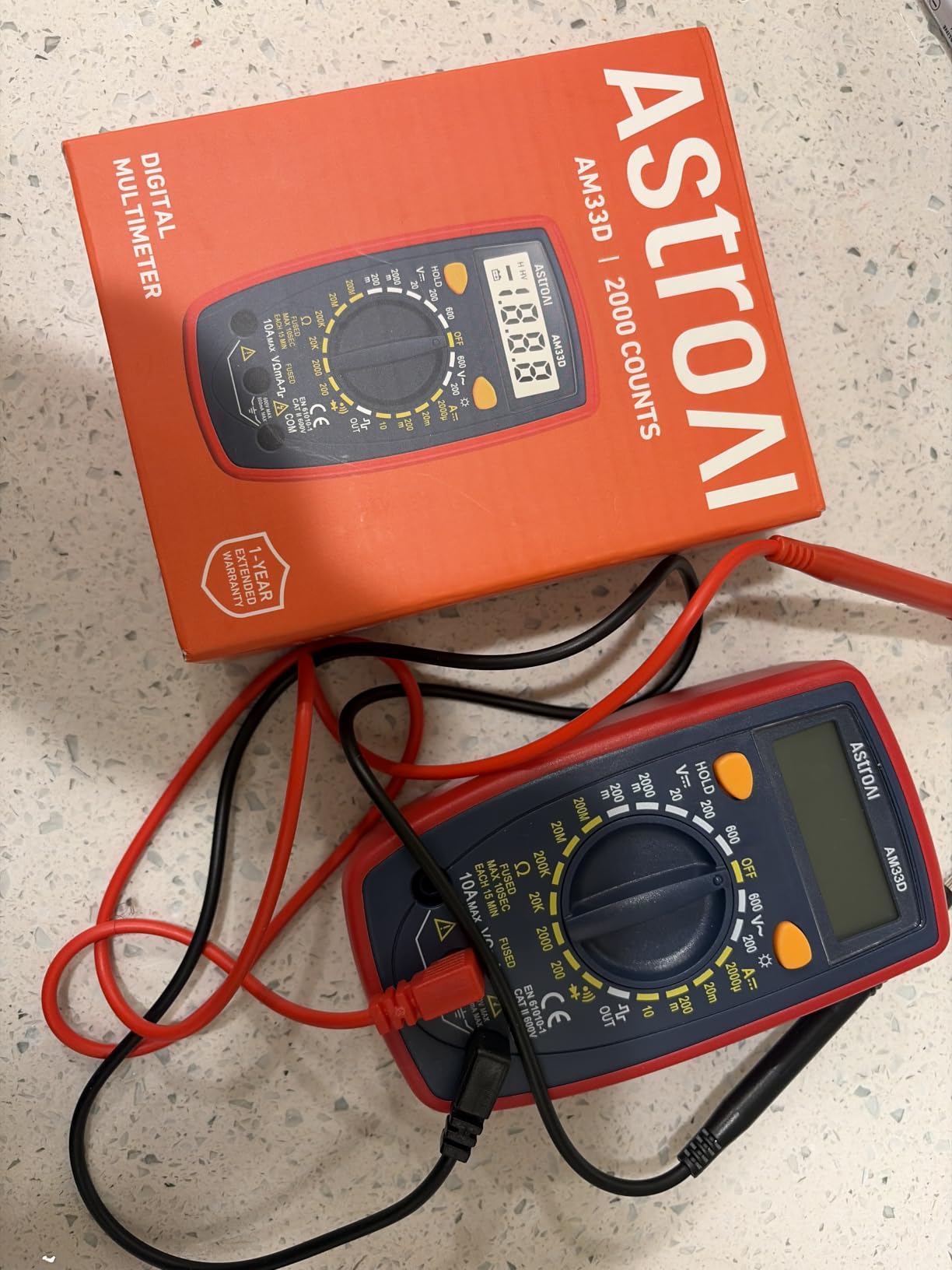
6. AstroAI AM33D: The Best Digital Multimeter for Confirming Voltage
- Over 56000 ratings
- the most proven tool in this group
- Measures AC/DC voltage plus DC current resistance continuity and diode
- Backlit LCD with data hold and continuity buzzer
- Double-fuse anti-burn design with silicone cover
- Battery leads and manual included
- Manual rotary switch instead of auto-ranging
- 500V maximum is low for household service work
- Cannot measure AC current or AC voltage below 100mV
This is the confirmation tool. Every pen in this guide answers whether voltage is present, and this one tells you how much, which is the number you need to settle a phantom voltage reading or to check that a fixture is actually getting 120V. With more than 56000 ratings, it is also the most proven product here by a wide margin.
It measures AC and DC voltage, DC current, resistance, continuity, and diode. The 3.5 digit 1999 count display is 0.6 inch with a backlight and two samples per second, and data hold plus a continuity buzzer make it workable in a dark panel.
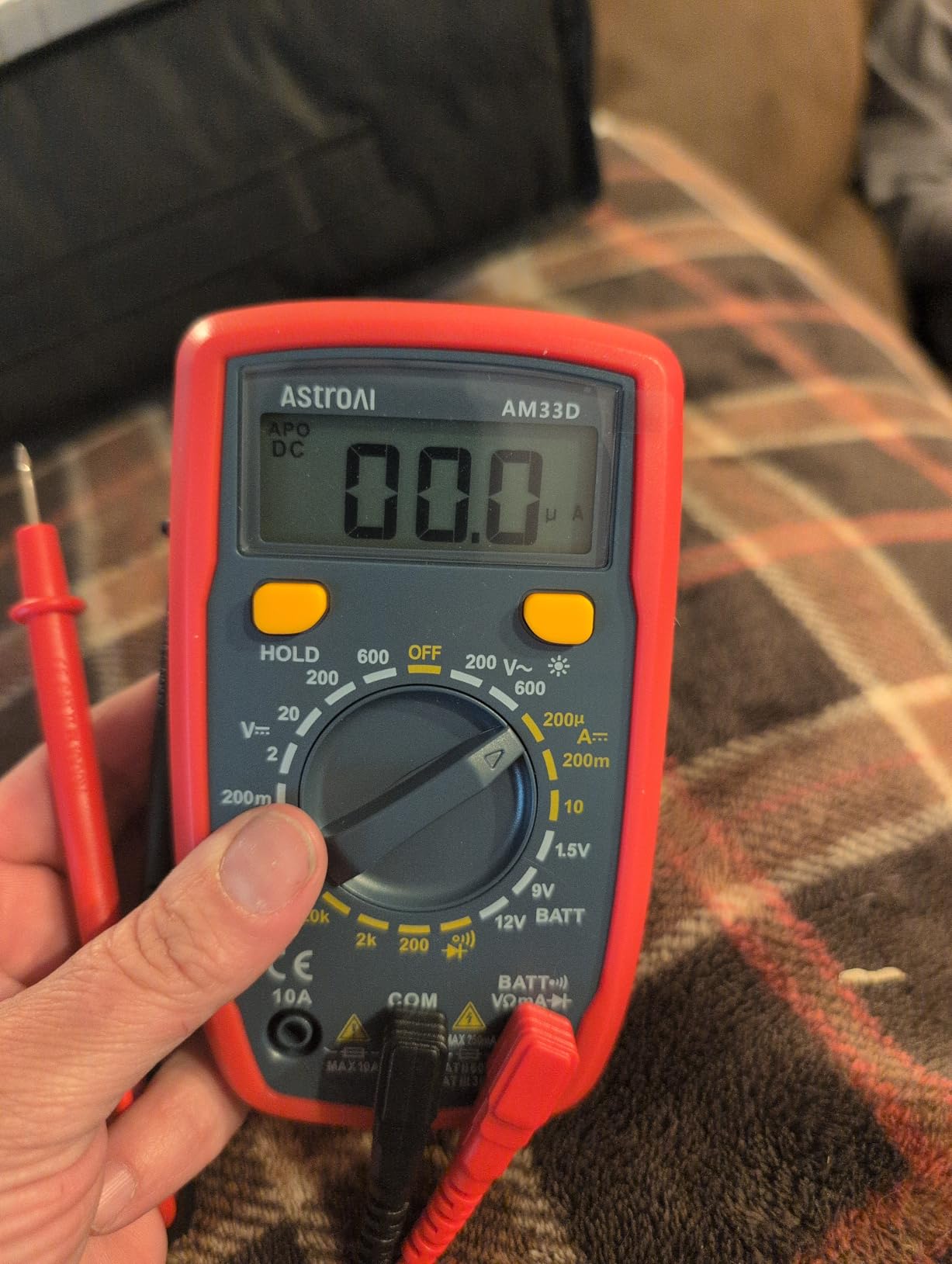
Protection is the part that matters when you are new. It uses a double-fuse anti-burn design with a silicone protective cover and a low battery indicator, it includes a 9V battery along with leads and a manual, and the manufacturer backs it with a three-year warranty.
Owners favour it for basic household troubleshooting of outlets, fuses, batteries, and automotive circuits. If you have ever wondered whether a battery or a car fuse is the problem, this answers it directly.
Why a number beats a beep
Here is the phantom voltage trap in concrete terms. On a de-energized circuit that shares a neutral, a digital multimeter can still display around 120V because the meter itself completes a path through the ground or neutral wiring. An experienced electrician recognises this instantly. A beginner sees 120V on a dead circuit and assumes the house is back-fed from somewhere. Knowing what a real reading looks like versus a phantom one is the entire value of owning a meter, and that skill is what lets you tell the difference without calling anyone.
Where the manual dial will frustrate you
There is no auto-ranging, so you set the rotary switch before every measurement and a wrong position gives you a blank or nonsensical reading. Owners report exactly that, and the manufacturer addresses it directly in the product notes. The 500V maximum is low for household service work, and it cannot test AC current or AC voltage below 100mV. Buy this for outlet and fixture troubleshooting, not for panel work.
7. Sperry Instruments STK001: The Best Kit for GFCI Outlet Troubleshooting
- Pairs a non-contact detector with a real GFCI receptacle tester
- Patented battery self-test on the pen
- Bright color-coded lights read GFCI results at a glance
- Hi-impact ABS housing with rubber grips
- Limited lifetime warranty
- No clamp meter multimeter or numeric readout
- Receptacle tester is only CAT III 300V
- Listed weight of 4.54 g looks unreliable for a two piece kit
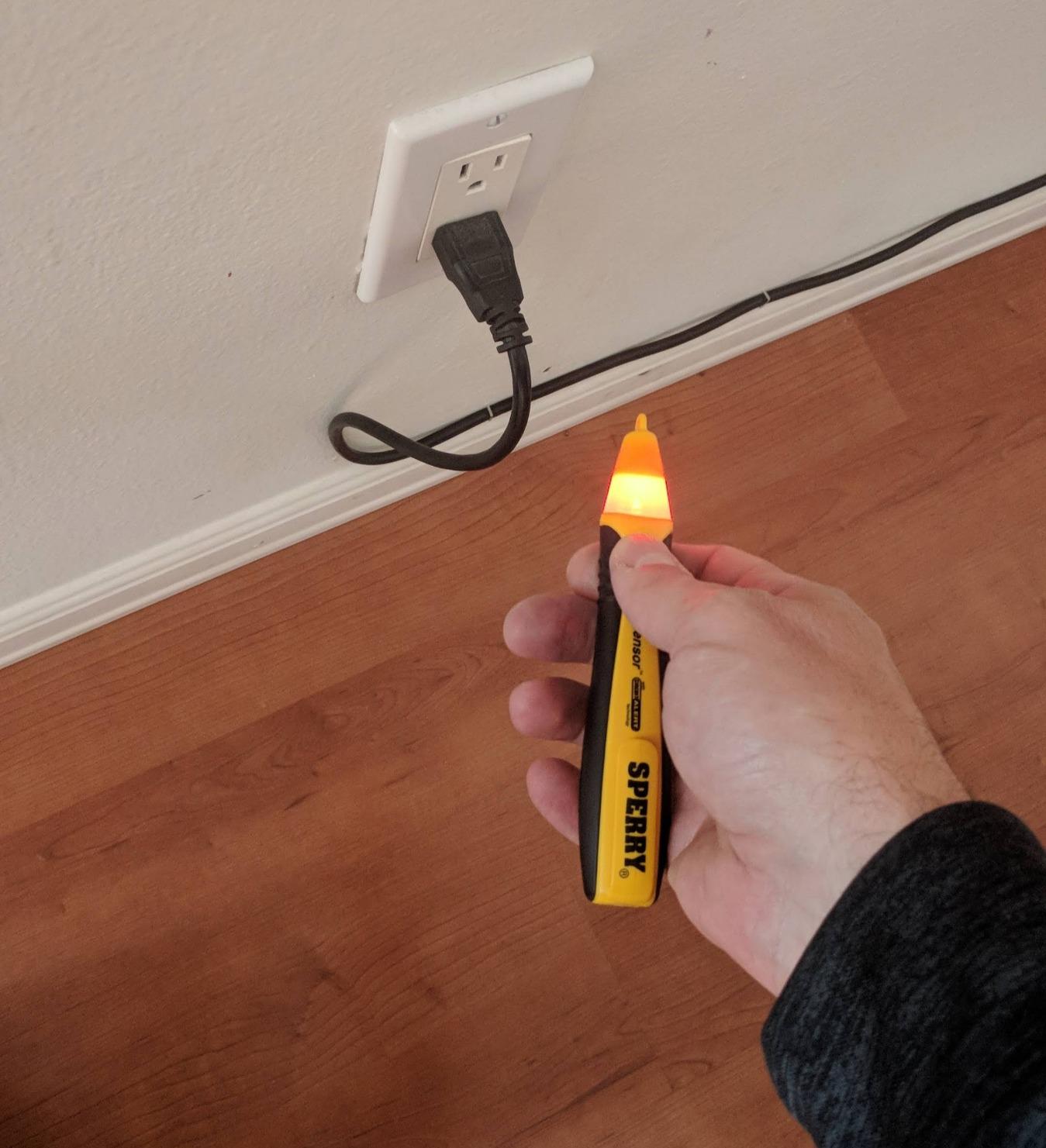
The STK001 solves a specific homeowner problem that almost no other single tool does: telling you whether an outlet is wired correctly, not just whether it is live. The VD6504 handles 50 to 1000V AC non-contact detection with 360-degree visual and audible indication, and the GFI6302 is a genuine GFCI receptacle tester with bright color-coded neon lights.
The receptacle tester is what makes this worth it. A pen cannot tell you that the neutral and ground are reversed, that a hot wire is on the wrong terminal, or that your GFCI will no longer trip. This one can, and the color coding means you can read the result without a manual in a dim bathroom.

The pen carries a patented battery self-test, so the same trust question that dogs cheap pens is answered here. Buyers praise both the self-test and the legibility of the GFCI lights for quick outlet diagnostics.
Build is hi-impact ABS with soft over-molded rubber grips, and the kit carries a limited lifetime warranty, which is the strongest warranty commitment of these picks.
Bathroom, kitchen, and garage use cases
If your complaint is a GFCI that trips every few days, or an outlet that stopped working after someone replaced a receptacle, this is the right tool. Push it into the receptacle, read the lights, and you know whether the wiring is at fault or the device itself has gone bad. A non-contact pen cannot answer that question at all, which is why this pairing has no real equivalent in a single pen.
Where it stops short
There is no measurement function of any kind. No clamp, no multimeter, no numeric readout, so you cannot confirm a voltage value. The receptacle tester is rated CAT III 300V, lower than the detector in the same kit, and the listed item weight of 4.54 g looks unreliable for a two-piece kit. Treat the lights as a diagnosis, then confirm with a meter.
8. Klein Tools 69149P: The Best Three Piece Starter Kit
- Three piece kit covering multimeter pen and receptacle testing
- MM320 handles up to 600V AC/DC 10A DC and 2MOhms
- RT110 flags common wiring faults
- UL listed with Klein build quality
- Leads and batteries in the box
- Manual-ranging multimeter needs the dial set each time
- NCVT1P in this kit is not rated for tamper-resistant outlets
- Heavier at 15.04 ounces than a pen style tester
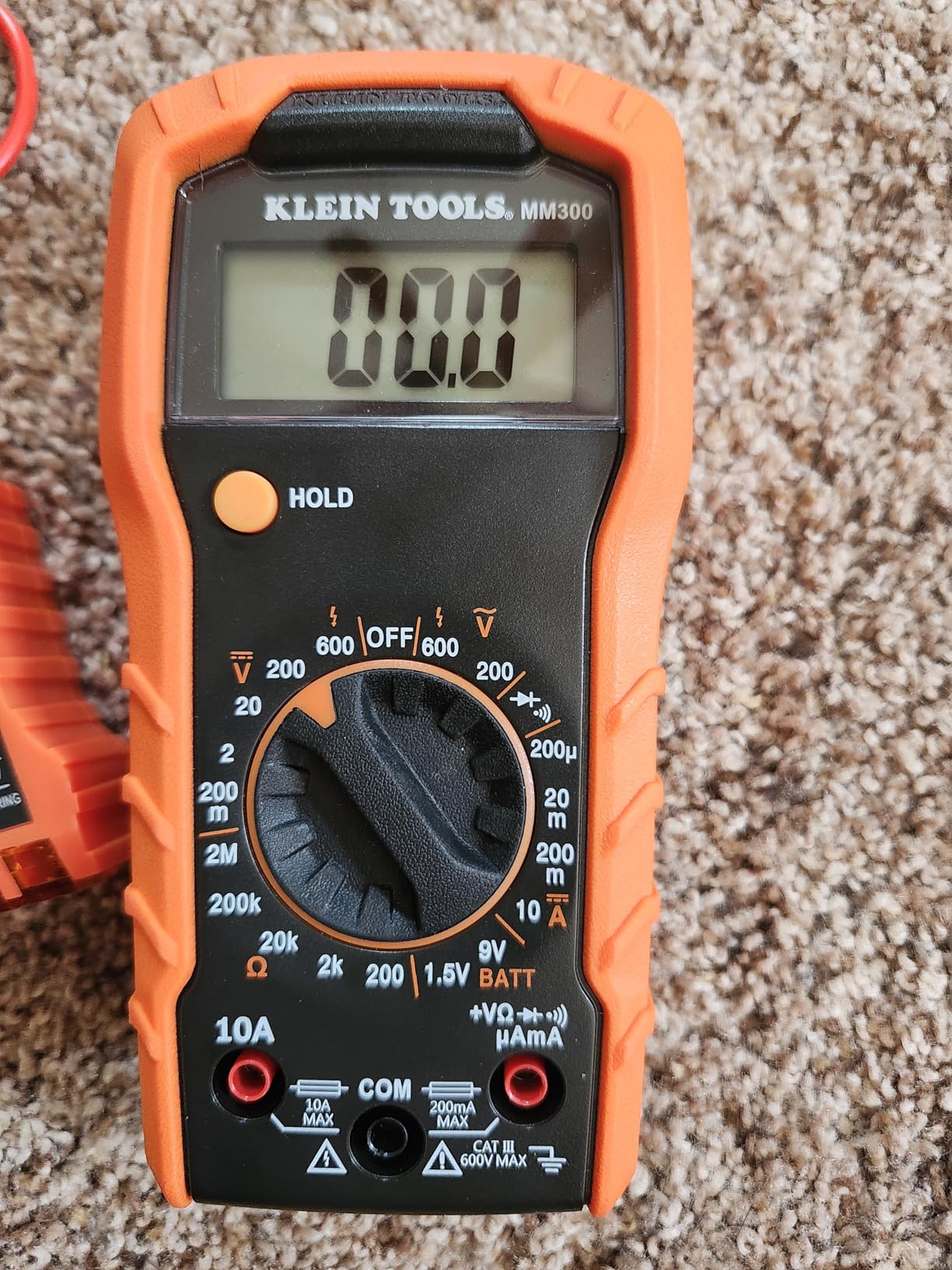
The 69149P is the tidy answer to the question we hear most often on homeowner forums: which one do I actually buy. It bundles the MM320 manual-ranging multimeter, the NCVT1P non-contact pen, and the RT110 receptacle tester, with leads and batteries included.
The MM320 handles up to 600V AC and DC voltage, 10A of DC current, and 2MOhms of resistance, with visual and audible continuity indicators. The RT110 detects wiring configurations and identifies common faults in standard outlets. That is a complete diagnostic set for a homeowner who will never touch a panel.
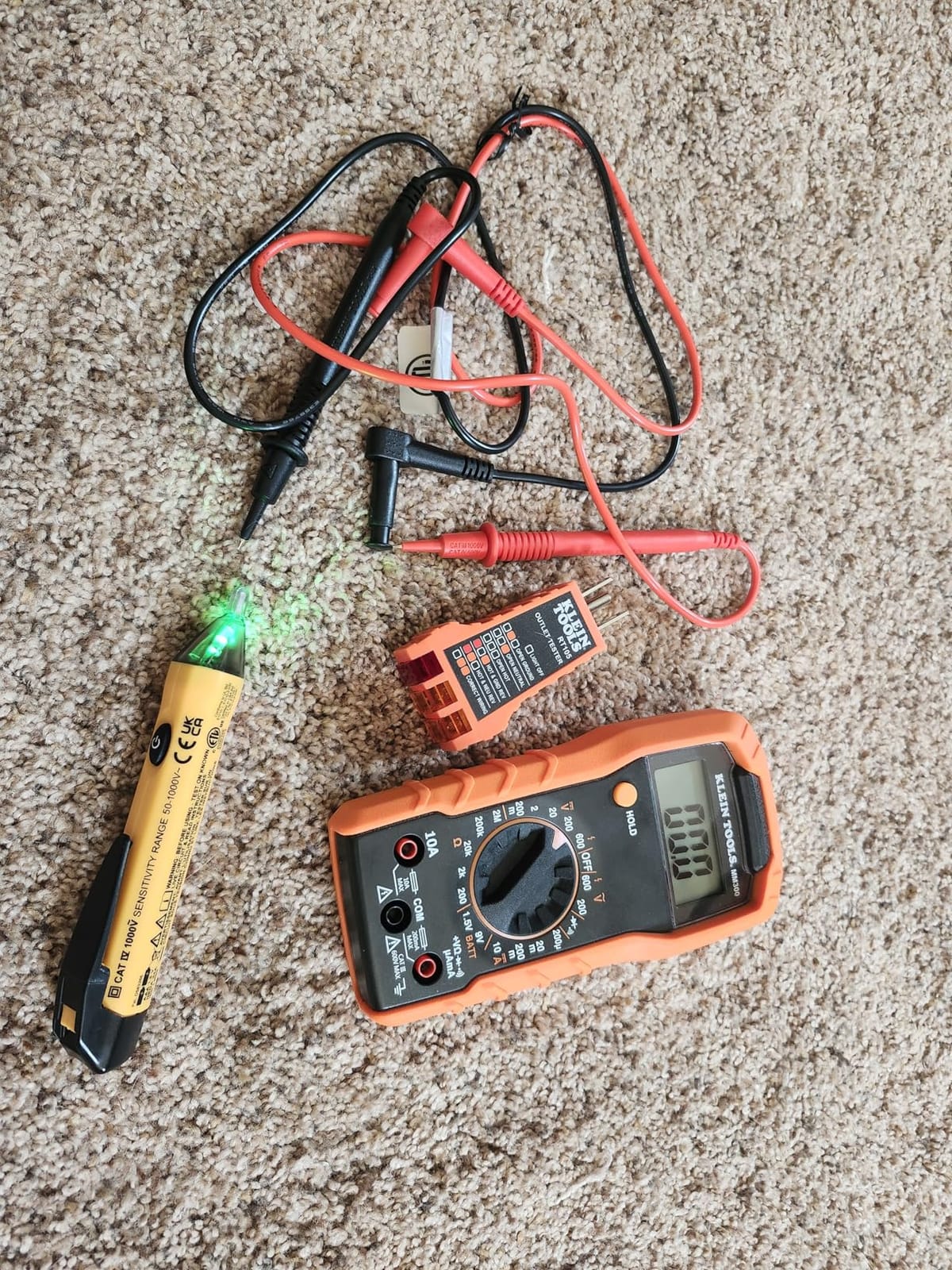
Reviewers buy this as a well-rounded starter kit and frequently cite Klein build quality as the reason they chose it over cheaper no-name meters. It is UL listed, and the whole kit is 3.5 by 0.9 by 6 inches.
The honest caveat is weight. At 15.04 ounces this is not a pocket tool. It lives in a drawer or a belt pouch, and the NCVT1P component is the part you would grab for a quick sweep.
When one box beats three purchases
You get a real meter for confirming voltage, a pen for scanning, and a receptacle tester for outlets. That is the two-point verification workflow with nothing left to buy. If you are outfitting a first house or a rental, this covers the overwhelming majority of calls you will make: dead outlets, a fixture swap, a GFCI that needs resetting, and finding the breaker that feeds the problem.
What to know before you buy it
The MM320 is manual-ranging, so the rotary switch has to be set before each measurement, and that is the most common source of confusion for first-time users. The NCVT1P included here shares the tamper-resistant receptacle limitation of the standalone pen. And unlike the CL120VP, there is no clamp for current, so if a motor or an HVAC unit is involved, that kit covers you better.
Voltage Tester vs Multimeter: What Is the Difference?
A voltage tester tells you whether voltage is present. A multimeter tells you how much voltage is present, and measures resistance, continuity, and current as well. The pen senses the small electromagnetic field around a conductor without touching it. The multimeter sends a tiny current through the circuit and measures the difference between two probes in volts, which is why it can distinguish a real 120V from a phantom reading.
Homeowners need both, and the reasoning is simple. The pen is fast, pocketable, and good for scanning a bundle of wires in a box to find the hot one. The meter is the instrument that confirms what the pen suggested. Professionals follow the same order every time, and on car battery and load testing the same logic applies in reverse: a quick tester first, then an instrument that gives you the number.
A clamp meter is a third category. It measures current by closing around a conductor without disconnecting it, which is how you find an overloaded circuit or check a running motor. It is worth owning if you own an air handler or a workshop, and less useful if you mainly replace fixtures.
How to Use a Voltage Tester Safely?
None of these tools makes a circuit safe. They make a circuit known, and knowing is what stops the accident. This is the sequence we use every time.
Test the tester first. Before you trust any result, confirm the tool detects voltage on an outlet you already know is live, such as a kitchen receptacle you use daily. If it stays quiet there, the batteries are flat or the tool is broken and your results mean nothing.
Locate with the pen. Sweep the non-contact tester slowly along the conductor, cable, or device. Move the tip along in small increments rather than jabbing at one spot, because the detection field is narrow.
Confirm with a meter. Set the multimeter to volts, put the leads across the conductor, and read the number. If the pen beeped and the meter reads zero, you had a false positive. If the pen was quiet and the meter reads 120V, you had a false negative and you were one step from a serious mistake.
Verify across every conductor. Test the hot, the neutral, and the ground separately. A de-energized circuit means all three read zero.
Only then start work. If a reading looks wrong or the circuit behaves oddly, stop and get a second opinion rather than trusting a tool you do not fully understand.
That third step is the whole point. A positive NCV reading is a prompt to check with a meter, not permission to open a panel, and forum consensus across electrician and DIY communities is that these tools are never used alone.
When to Stop and Call a Licensed Electrician
Some jobs are not DIY, and knowing which ones is part of owning these tools. Stop and call a professional if you need to work inside the breaker panel, if your home has aluminum or knob-and-tube wiring, if you smell anything burning, if a switch feels warm or a fixture flickers with a warm faceplate, if the same breaker keeps tripping, or if the job involves any rewiring or new circuit work.
There is also a personal limit. If you cannot get a clean meter reading on a circuit that should be dead, you do not have enough information to work on it. A meter showing 120V on a circuit you believe is off is a reason to investigate with professional equipment, not a reason to start cutting wire.
Buying Guide: What to Look for in a Voltage Tester
Start with the job, not the tool. Finding a hot wire in a junction box needs a pen. Swapping a ceiling fan needs a pen plus a meter so you can confirm dead before you touch the wires. A bathroom outlet that will not reset needs a GFCI receptacle tester. A motor or an air handler that trips its breaker needs a clamp meter. Match the tool to the diagnostic, and most homeowners end up wanting two things rather than eight.
Decide between presence detection and measurement. A non-contact tester answers one question and does it fast. A digital multimeter answers many questions and takes slightly longer to learn. For most homeowners the answer is both: a cheap pen for scanning and an auto-ranging or well-made manual meter for confirming.
Check the minimum detection voltage. This number decides what you can find. At 90V to 100V you will cover household 120V and 240V circuits and nothing lower. At 50V you add thermostat and control wiring. At 12V you can trace outdoor low-voltage runs, garage door openers, and doorbell transformers. Homeowners doing outdoor and smart-home work should prioritise the lower floor.
Understand the CAT safety rating. CAT II covers plug-in loads and household receptacles. CAT III covers distribution panels and fixed installations. CAT IV is rated for the service entrance, which is where the mains conductors enter the building. Every tester recommended here carries CAT III or CAT IV, which is the honest reason to pay more than the price of the cheapest no-name pen: the rating reflects internal construction that survives a fault.
Prefer auto-ranging, but do not fear a manual dial. Auto-ranging removes the single most common beginner error, which is setting the dial wrong and reading nonsense. The Klein CL120VP and the AstroAI AM33D show the trade-off clearly: one picks ranges for you, the other has the largest review base in this roundup. If you buy the manual meter, practice on a battery before you need it on a live circuit.
Look for a self-test or a trusted brand. The Fluke 1AC II runs a continuous self-test and the Sperry VD6504 has a patented battery self-test, and both solve the same problem: proving the tool is alive before you trust its silence. Forum sentiment is heavily weighted toward Fluke and Klein and sharply negative toward unbranded pens, and that reputation is built on decades of field failures that did not happen.
For non-contact accuracy, plan the two-point method. False positives are common on unshielded or parallel-run wiring, where a pen beeps at a conductor that carries no current. False negatives are rarer but far more dangerous, and forum users report pens that occasionally miss a genuinely live wire. Neither failure mode is fixable with a better pen, which is why every recommendation in this guide is framed as step one of a two-step check. If you want the underlying explanation, our beginner-friendly tool guides follow the same pattern: the tool narrows the search, an instrument confirms it.
Consider the whole-home budget. Two tools cover the large majority of homeowner electrical work. A pen and a multimeter is a complete diagnostic setup, and adding a GFCI receptacle tester takes it to complete coverage of outlet faults. Beyond that you are buying for specific problems, not general readiness.
Frequently Asked Questions
What is the best voltage checking machine for home use?
A non-contact pen for scanning and a digital multimeter for confirming together cover almost everything a homeowner does. The Fluke 1AC II is the most accurate pen, the Klein NCVT1P is the best value first tool, and the AstroAI AM33D is the most proven multimeter with the largest review base.
Should I get a voltage tester or a multimeter?
Get both. The pen finds the hot conductor in seconds without touching it, and the multimeter gives you the number that confirms what the pen suggested. Using a pen alone is the mistake that causes false confidence.
Are non-contact voltage testers accurate?
They are good at detecting the presence of AC voltage and unreliable as a sole source of truth. False positives happen on unshielded or parallel-run wiring, and false negatives happen too. Always confirm a pen result with a meter before touching a conductor.
Which voltage tester is better, Fluke or Klein?
Fluke builds the more accurate, more discriminating pen, and the 1AC II has the largest review base of any tester here. Klein offers the better value and covers a lower minimum detection voltage at 50V. Choose Fluke for accuracy, Klein for range and cost.
What kind of voltage tester should I buy?
Start with a CAT III or CAT IV rated pen with a low minimum detection voltage, then add an auto-ranging multimeter with a backlit display. Add a GFCI receptacle tester if you have bathroom or kitchen outlets that misbehave.
What is a phantom voltage and why does my meter read 120V on a dead circuit?
On de-energized circuits that share a neutral, a digital multimeter can display around 120V because the meter itself completes a path through the wiring. It is a measurement artifact, not real power. Load the circuit with a real appliance or test with a low-impedance mode and the reading collapses.
Is there a difference between a voltage meter and a voltage tester?
A voltage tester tells you whether voltage is present, usually without touching the conductor. A voltage meter, typically a digital multimeter, tells you how much voltage is present and can also measure resistance, continuity, and current.
Can I use a non-contact tester to decide whether it is safe to open a panel?
No. A negative reading from a non-contact pen does not prove a de-energized circuit, and a tester with dead batteries will read dead on a live wire. Confirm with a meter across every conductor before you touch anything.
Which Voltage Tester Should You Buy in 2026?
Start with the Fluke 1AC II VoltAlert. It is the most accurate pen in this roundup, it is rated CAT IV, and its continuous self-test means a silent tester is a tester that works. It is our editor’s choice for good reason, and it is the safest single purchase for a homeowner who wants one tool they can trust.
Then add a multimeter. The AstroAI AM33D carries more than 56000 ratings and handles voltage, resistance, continuity, and DC current, which makes it the confirmation half of the two-point verification rule. If you would rather have the pen, the meter, and a receptacle tester in one box, the Klein Tools 69149P does exactly that.
Whatever you buy, remember what the tool is for. A voltage tester tells you a circuit is live. It never tells you it is safe, and no beep, LED, or reading is a substitute for testing on a known live source first and confirming with a meter before your hands go anywhere near a conductor.