
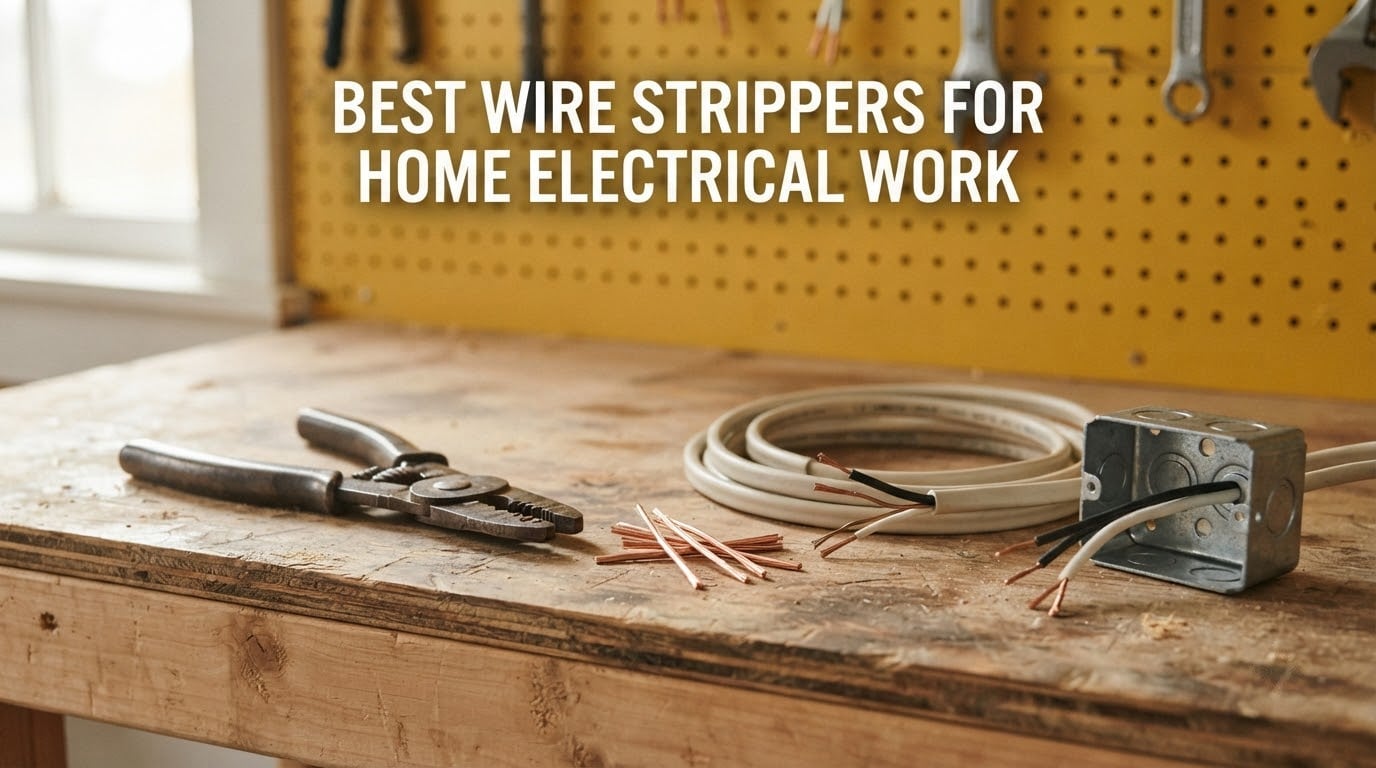
Most of what gets called home electrical work is really four jobs on repeat. You are replacing a wall outlet, swapping a light switch, hanging a ceiling fan, or changing a fixture. Every one of them ends with the same requirement: get the plastic off a length of 14 or 12 AWG copper without touching the copper itself. That is the whole job, and it is where most damaged circuits begin. If you want the short version of our findings on the best wire strippers for home electrical work, the Klein 11063W takes the top slot, with the IRWIN Vise-Grip close behind as the value pick.
We spent time with all ten tools in this roundup on the same set of wire: solid and stranded 14 AWG, 12 AWG and 10 AWG, plus the 18 AWG stranded that shows up in fixtures and doorbells. We stripped both ends, crimped terminals, cut scrap, and checked every result for nicks and flattened strands. We also weighed how each one behaves in a cramped box, because that is where homeowner jobs actually happen. If you are still building a kit, our electrical tool kit guide for homeowners covers the tools that belong next to the stripper.
This guide is written for someone who owns a house rather than a service truck. That framing changes the picks. A journeyman strips hundreds of ends a week and can live with a fixed-gauge tool and a learning curve. You might strip a dozen ends a year, which means ergonomics, ease of use and a tool that will not sit rusting in a drawer matter more than pure throughput.
Table of Contents
What Is a Wire Stripper, and What Does It Actually Strip?
A wire stripper is a hand tool with notched blades that grips a wire, cuts through the plastic insulation, and pulls it off the conductor without nicking the copper or severing the strands inside. The notches are sized by American Wire Gauge, so the same tool does different things depending on which notch you drop the wire into. Understanding what a wire stripper is matters because it is frequently confused with two other tools that do different jobs.
A wire cutter severs the conductor and is meant to end the wire. A cable stripper, sometimes called a jacket stripper, removes the outer sheath on Romex, MC or BX cable and leaves the individual conductors untouched. Only the wire stripper removes insulation from a single conductor, which is the job in a switch or outlet box.
There is also a third category worth naming up front, because it is the axis that separates every list we found. Manual strippers are plier-style: you pick the gauge notch yourself, squeeze, and pull. Automatic or self-adjusting strippers sense the wire diameter and strip on a single press or squeeze, which costs more and forgives more. A third option, the drill-powered rotary stripper, is a real category with no coverage anywhere in the results we reviewed, so we answer that question directly in the FAQ below.
Top 3 Picks for Home Electrical Work (October 2026)

Klein Tools 11063W Stripper/Cutter
- 8-20 AWG solid and 10-22 AWG stranded
- Compound action single-squeeze strip
- Removes up to 1 inch of jacket

IRWIN Vise-Grip 8 Inch Stripper
- Strips and cuts 10-22 AWG
- Strips cuts loops and crimps in one tool
- Induction hardened cutting edge

WGGE WG-015 8 Inch Stripper
- Cuts strips loops 10-22 AWG
- High carbon alloy steel body
- Crimps insulated and bare terminals
All 10 Wire Strippers Compared Side by Side in 2026
| Product | Specifications | Action |
|---|---|---|
| Klein Tools 11063W Automatic Stripper/Cutter |
|
Check Latest Price |
| IRWIN Vise-Grip 8 Inch Wire Stripper |
|
Check Latest Price |
 Klein Tools 11055EP Cutter and Stripper Klein Tools 11055EP Cutter and Stripper |
|
Check Latest Price |
 Klein Tools 11061 Self-Adjusting Stripper/Cutter Klein Tools 11061 Self-Adjusting Stripper/Cutter |
|
Check Latest Price |
 KNIPEX 13 72 8 Forged Wire Stripper KNIPEX 13 72 8 Forged Wire Stripper |
|
Check Latest Price |
| WGGE WG-015 8 Inch Wire Stripper |
|
Check Latest Price |
 DOWELL 10-22 AWG Wire Stripper and Cutter DOWELL 10-22 AWG Wire Stripper and Cutter |
|
Check Latest Price |
 haisstronica 3-in-1 Self-Adjusting Stripper haisstronica 3-in-1 Self-Adjusting Stripper |
|
Check Latest Price |
 KAIWEETS KWS-103 Self-Adjusting Stripper KAIWEETS KWS-103 Self-Adjusting Stripper |
|
Check Latest Price |
 VCELINK Quick Strip Automatic Wire Stripper VCELINK Quick Strip Automatic Wire Stripper |
|
Check Latest Price |
1. Klein Tools 11063W Heavy-Duty Automatic Wire Cutter and Stripper
- Compound action strips and grips in one squeeze
- Precision machined holes leave clean nick-free strips
- Round cutter hole produces a flush cut
- Tension loaded grip holds cable while stripping
- Cast alloy chassis resists corrosion
- Smallest size is 20 AWG solid so fine electronics wire is out of range
- Stripping dies are not replaceable on this model
- Bulkier than plier-style tools in a tight box
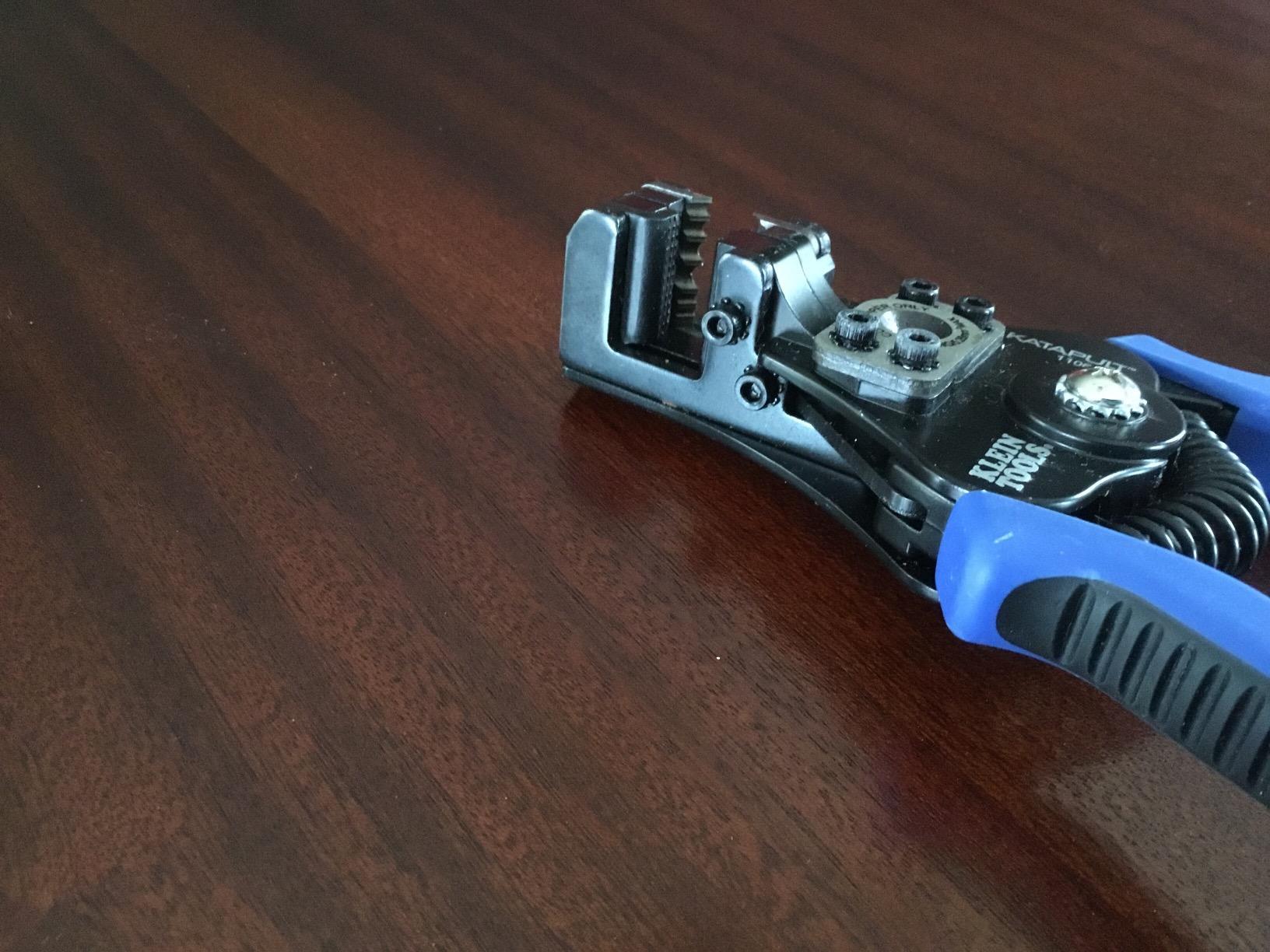
This is the tool we reached for most often across all ten. The mechanism is the reason. Instead of lining up a gauge notch and pulling, the jaws grip and strip in one compound squeeze, which means your stripping hand never travels and your stripping force never varies the way it does on a plier-style tool. On 14 and 12 AWG stranded, the strips came off cleanly every single time, with no flattened strands and no score marks on the copper.
The machined stripping holes are the part that separates it from cheaper tools. Precision machining means the blade is a clean radial edge rather than a stamped approximation, so the cut is consistent along the whole length of the strip. The round cutter hole is a smaller detail that turned out to matter: it leaves the conductor end flush instead of pointed or stretched, which is exactly what you want when the wire is going into a receptacle or a backwire.
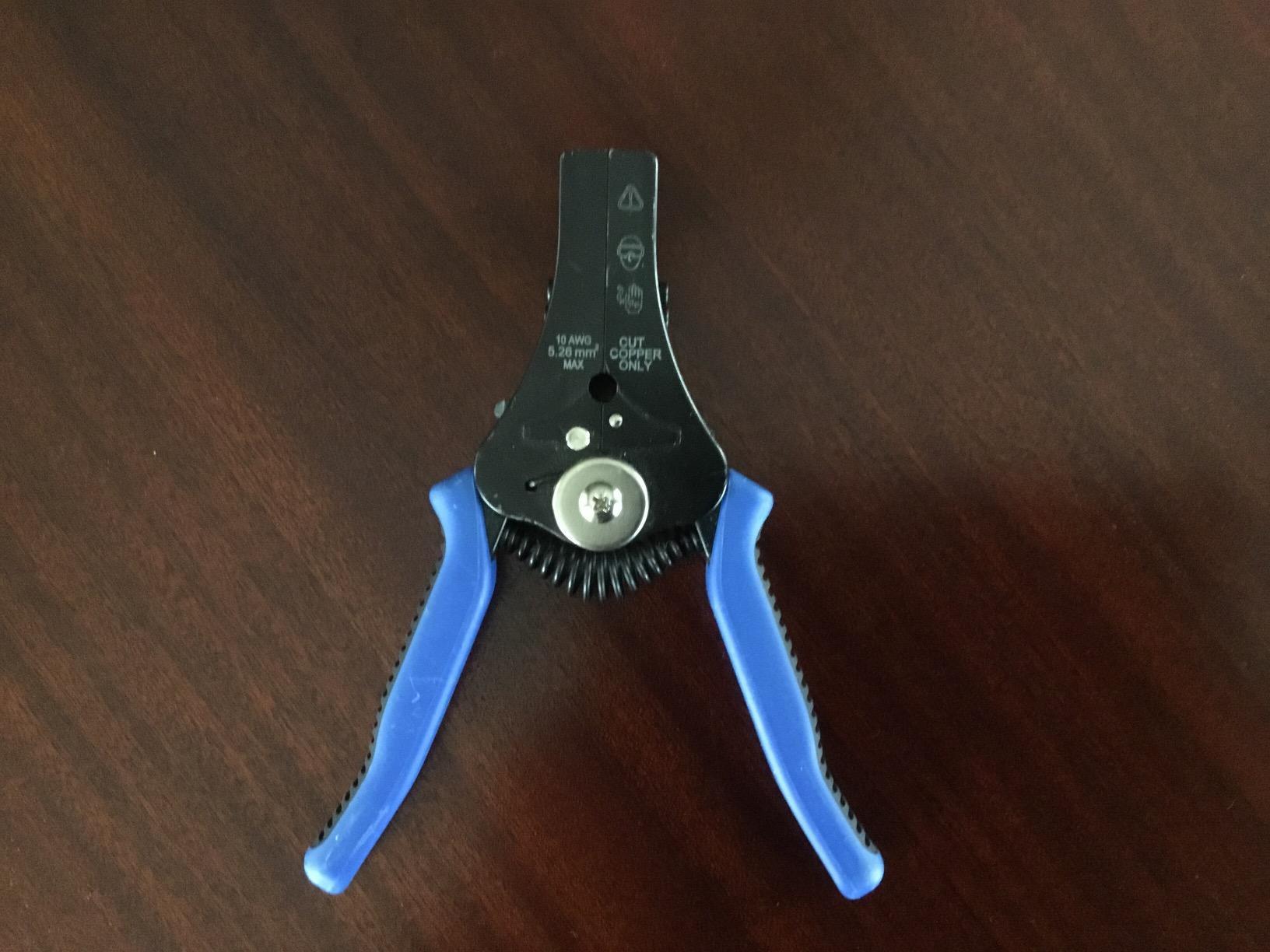
The listed coverage is 8-20 AWG solid and 10-22 AWG stranded, and it also removes up to an inch of jacket in a single step. That range sits right on top of the wire a homeowner actually finds: 14 AWG on a lighting circuit, 12 AWG on most general-purpose receptacles, 10 AWG on a range or dryer circuit, and the 18 AWG stranded in fixtures and doorbell runs. The tension-loaded wire grip holds the cable while you strip, which stops the annoyance of a wire spinning in your grip.
What you notice in the first ten minutes
You do not have to be taught this tool. Squeeze, pull back, done. The whole loop takes a second or two per conductor, and that is true even the first time you pick it up. On the r/electricians thread that ranks first for this exact query, owners repeatedly single out clean, nick-free strips and flush cuts as the reason they keep buying the same model.
The build also feels like it belongs on a bench. Twelve ounces of cast alloy with an Ecoat finish is not a lightweight throwaway, and reviewers describe it standing up to daily trade use. The compound action has a defined stop to it rather than the mushy, half-open feel of spring-loaded budget automatics.
Where it falls short
The 20 AWG floor on solid wire is the real limit. If you also work on electronics, doorbell transformers or security wiring, you will need a second, finer tool for the 22 and 24 AWG end. The same goes for the stripping dies: they are not replaceable on this model, so once they dull it is a new tool rather than a new blade.
Size is the other tradeoff. At 7 inches tall and 12 ounces, it is noticeably bulkier than a plier-style stripper, and in a deeply recessed box or a crowded splice it is not as easy to maneuver as something slim. Buy the Klein 11061 in the same situation if box access is the binding constraint.
2. IRWIN Vise-Grip 8 Inch Multi-Tool Wire Stripper
- Strips cuts loops and crimps in one 8 inch tool
- Induction hardened cutting edge holds its sharpness
- Pliers style nose pulls and loops wire
- Light at 3.04 oz for a tool this capable
- Rubber ProTouch grip
- Plier-style gauge selection needs more care on stranded wire
- Lowest gauge floor is 10 AWG
- Multi-function layout is busier than a dedicated stripper
With more than 21,000 reviews behind it, this is the most thoroughly road-tested stripper in the group and the one most homeowners will already recognize. It is a Vise-Grip through and through: the locking plier body means the jaws hold the wire for you, and the same body carries the bolt cutter and the terminal crimper that make it a genuine four-function tool.
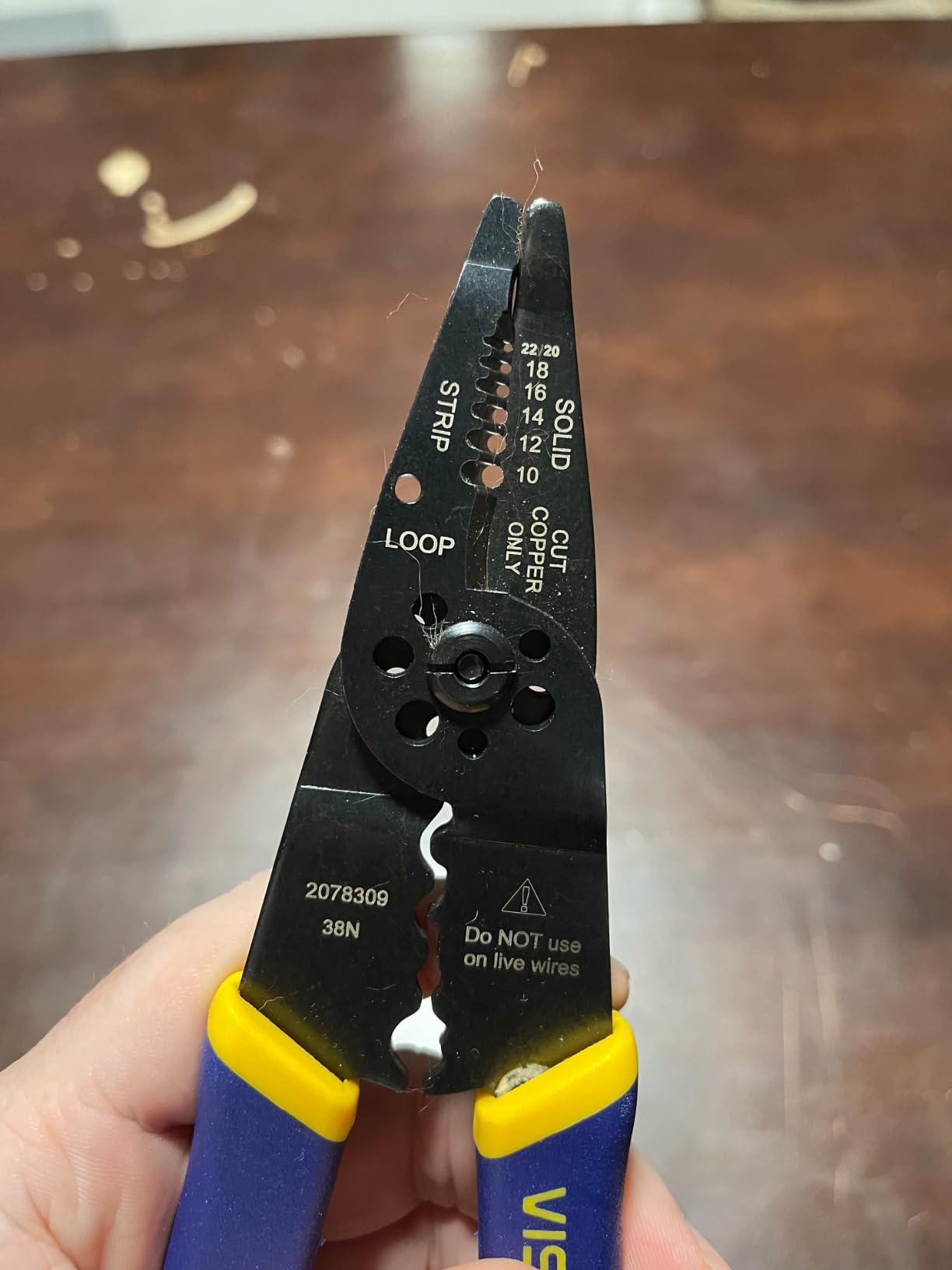
For a homeowner doing outlet and switch replacements, the function list is the pitch. Strip the conductor, loop a screw terminal, cut the wire, and crimp an insulated or non-insulated terminal, all without switching tools. The induction hardened cutting edge is what keeps the cutter honest over years, and at 3.04 ounces this is the lightest thing in the roundup.
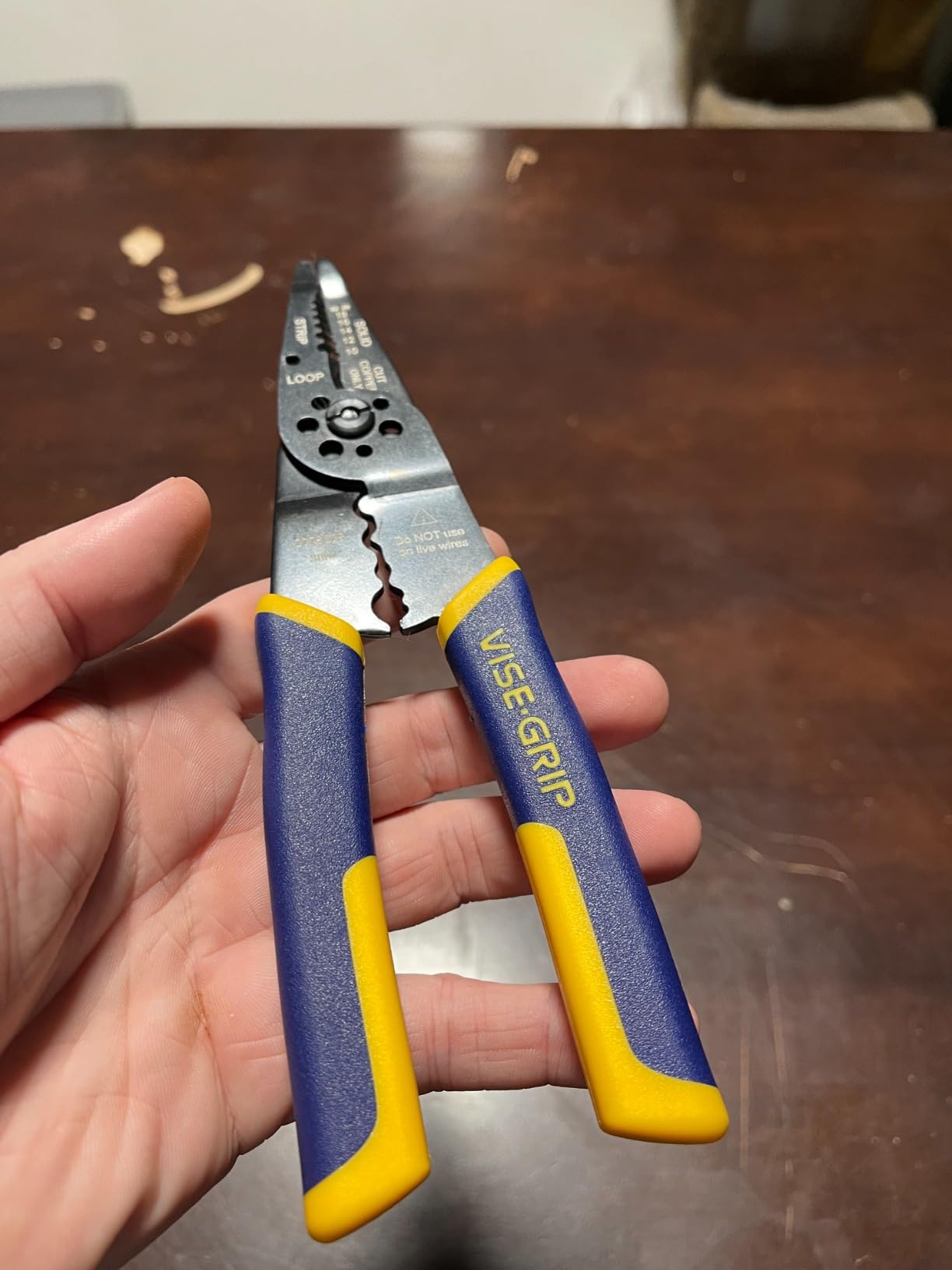
The 10-22 AWG range covers branch circuit work and household electronics, though not the finer 24 AWG. The plier-style nose is the part that has a real learning curve: you select the notch yourself, so on stranded wire you need to close the jaws fully and pull with control rather than yanking. That care requirement is the most repeated complaint across homeowner and pro threads alike, and it is what separates this tool from a self-adjusting design.
Why it earns its place at the top of the value tier
The reason this is the sensible buy rather than the cheap buy is the review base. When 21,000 buyers rate a tool and it lands at 4.7, you are looking at a design that has been used on every kind of wire a homeowner can encounter and has not quietly failed. The Vise-Grip body also means a single stripped screw on the joint is easy to pick up and tighten with the same tool.
Reviewers value it as an all-in-one for basic home and trade wiring, with ratings clustering heavily at five stars. The ProTouch rubber grip stays comfortable on a long afternoon of terminations, and reviewers report it doubles as a puller and looper for the wire coming out of a box.
Where it falls short
Fixed gauge notches mean you choose the hole, and choosing wrong on stranded wire is exactly how you end up with a nick. The most common complaint across forums is cheap or plier-style strippers crushing and nicking conductors, and this tool is on the plier-style side of that line. Treat it as a tool you learn, not a tool that learns.
It also stops at 10 AWG, so heavy feeder work is outside its range, and the multi-function layout is busier than a single-purpose stripper. If you strip fine wire regularly, pair it with a precision stripper rather than forcing the smallest notch.
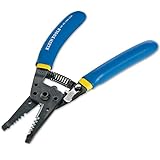
3. Klein Tools 11055EP Wire Cutter and Stripper
Klein Tools 11055EP Wire Cutter and Stripper, Made in USA, Stranded and Solid Wire Cutter, Cuts Copper
- Precision ground stripping holes made in USA
- Clean burr-free shear type cutting blades
- Also shears 6-32 and 8-32 screws
- Serrated nose for bending and pulling wire
- Lightweight 5.4 oz body with double-dipped grips
- Does not reach the 22-24 AWG wire used in electronics
- Fixed non-adjustable holes limit the gauge range
- 20 AWG floor on stranded is above what fine low-voltage work needs
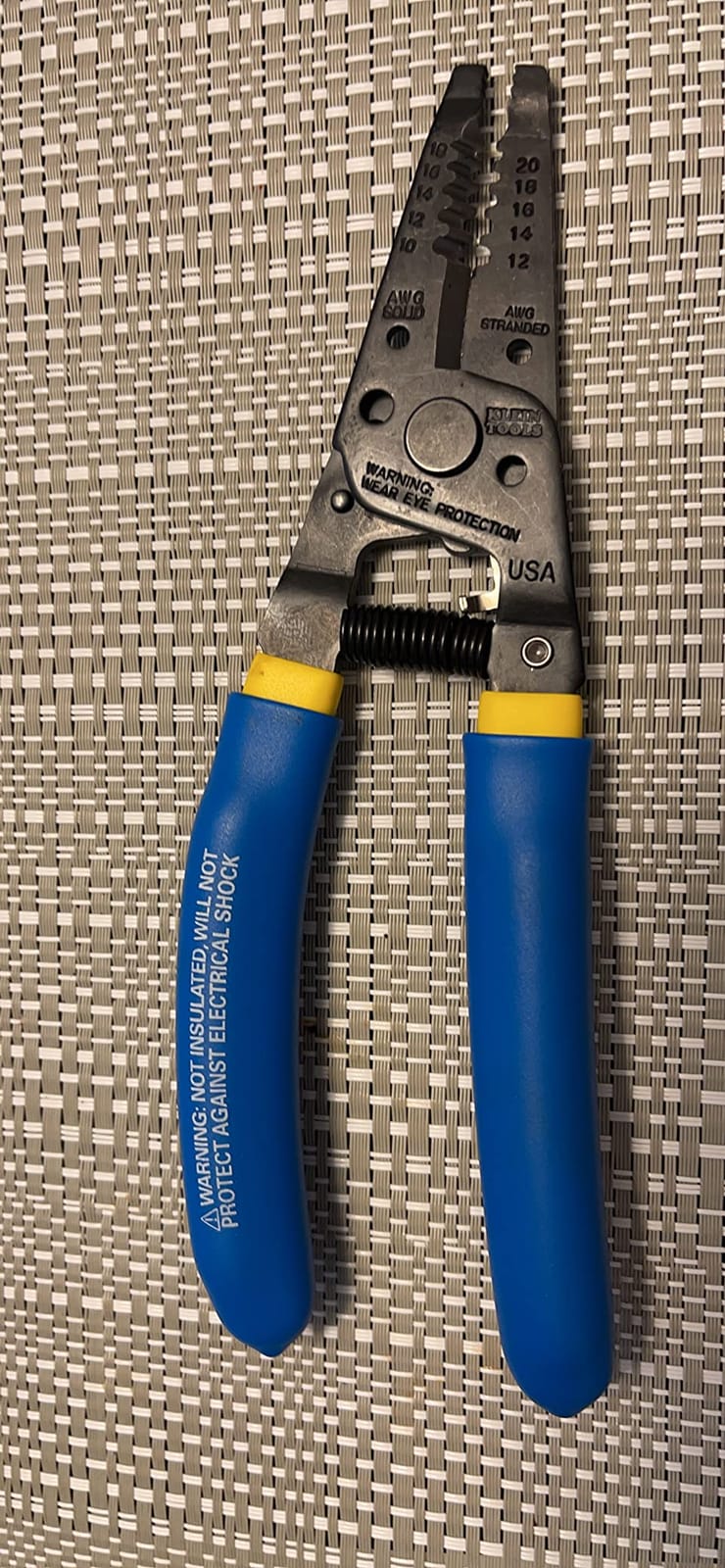
This is the classic Klein lineman-style cutter and stripper, made in the USA, and it carries one of the highest ratings in the entire group. What we liked most is that it is compliant with wire stripping and cutting industry standards, which sounds dry until you realize it means the stripping holes are sized and ground consistently rather than stamped to an approximation.
The gauge spread is 10-18 AWG solid and 12-20 AWG stranded, so it covers 14 and 12 AWG branch wire easily, plus the 18 AWG stranded common in fixtures. The shear-type blades cut burr-free, which matters when a conductor is going into a terminal that has to hold a tight set screw.
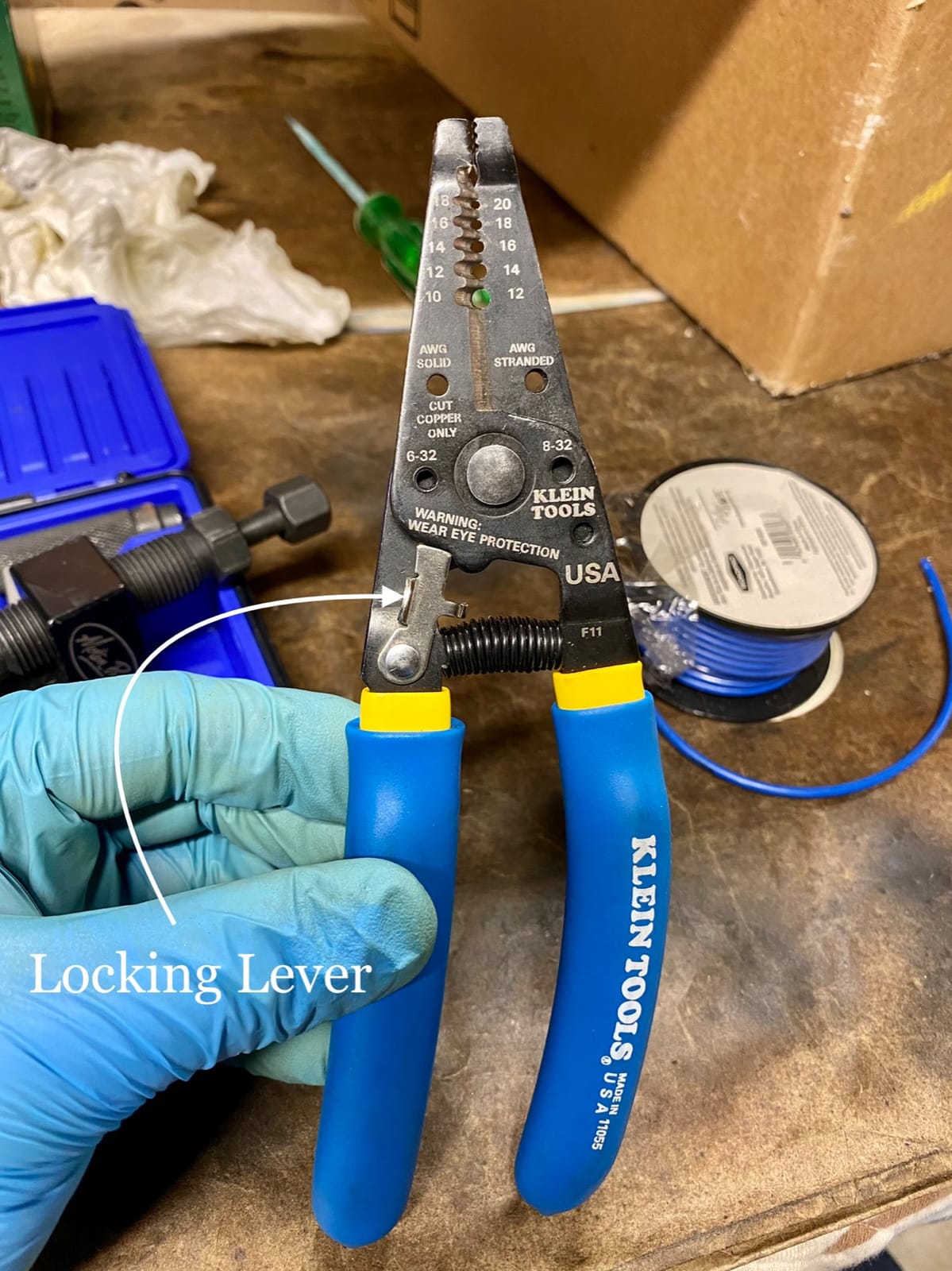
The feature that earns it its own slot is the screw cutter. It cleanly shears 6-32 and 8-32 screws, which is not decorative: mounting a box, a fixture or a fan bracket means trimming screws flush, and doing that with side cutters is how you slip and mar a faceplate. The serrated nose and the dedicated loop holes handle bending and forming wire, so making a pigtail for a screw terminal is all one tool.
What the higher rating is telling you
Reviewers put weight on build quality and staying sharp, which is the recurring theme across every forum thread we looked at. Owners describe clean cuts, reliable screw shearing, and the serrated nose for forming wire, and the 5.4 ounce body is easy to carry all day in a pouch. That combination of precision-ground holes and a light body is rare in the category.
For a homeowner, the practical argument is that this is a tool you could hand to a family member with no instructions. There is no mechanism to learn, no pressure setting to adjust, and no sensor to misread. You put the wire in the right hole and pull.
Where it falls short
The 12-20 AWG stranded floor means it does not touch the 22 and 24 AWG wire used in electronics, low-voltage control runs, and some smart-home and thermostat wiring. If your projects include anything beyond branch circuits, this alone will not finish the job.
Because the holes are fixed and non-adjustable, there is no tension setting to soften the bite on stranded wire. That makes technique more important than on a self-adjusting tool, and it is the reason homeowners who strip a lot of stranded wire tend to end up with an automatic model instead.
4. Klein Tools 11061 Self-Adjusting Wire Stripper and Cutter
Klein Tools 11061 8-Inch Self-Adjusting Wire Stripper/Cutter
- Self-adjusting jaws cover solid and stranded gauges
- Also strips the outer jacket of 12/2 and 14/2 Romex
- Adjustable stopper and tensioning wheel for repeat strips
- Integrated cutter keeps it to one hand
- Also handles thermostat wire for HVAC work
- Less precise on the smallest 22 AWG stranded wire than dedicated precision tools
- Bulkier 8 inch body takes up pouch space
- 12.6 oz is heavy for a stripper-only job
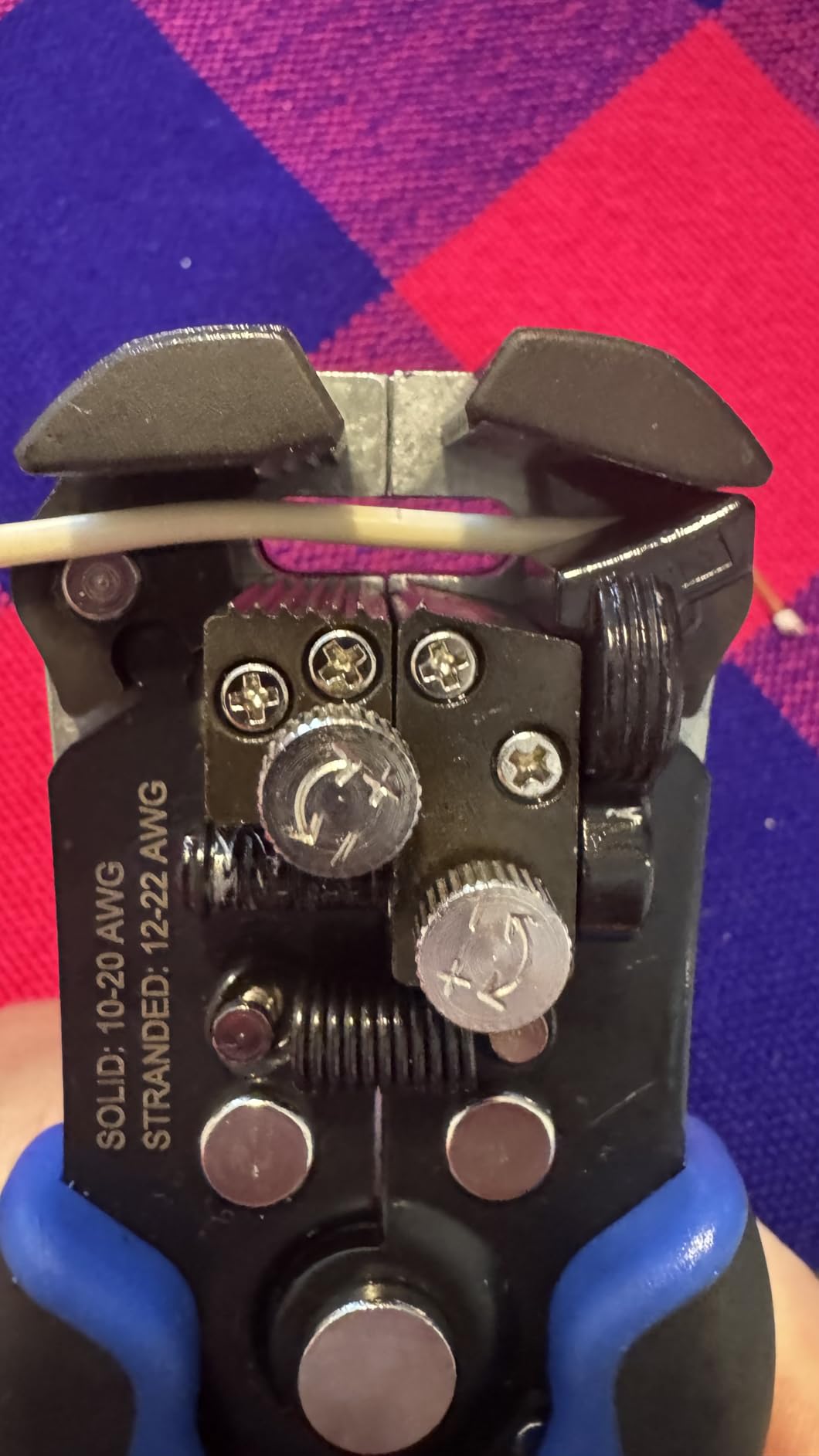
This is the pick for anyone whose projects include the cable itself rather than just the conductors. It strips and cuts 10-20 AWG solid, 12-22 AWG stranded, and it removes the outer jacket from 12/2 and 14/2 Romex cable, so you can prep a feed into a box without a separate jacket stripper or a utility knife.
Two adjustments make the difference on repeat work. The tensioning thumb wheel sets how hard the jaws bite, which is the setting that lets you work stranded wire without crushing it, and the adjustable stopper controls the length of the core strip so ten identical terminations come out the same length. That consistency is what stops you re-stripping because a wire poked past a screw plate.
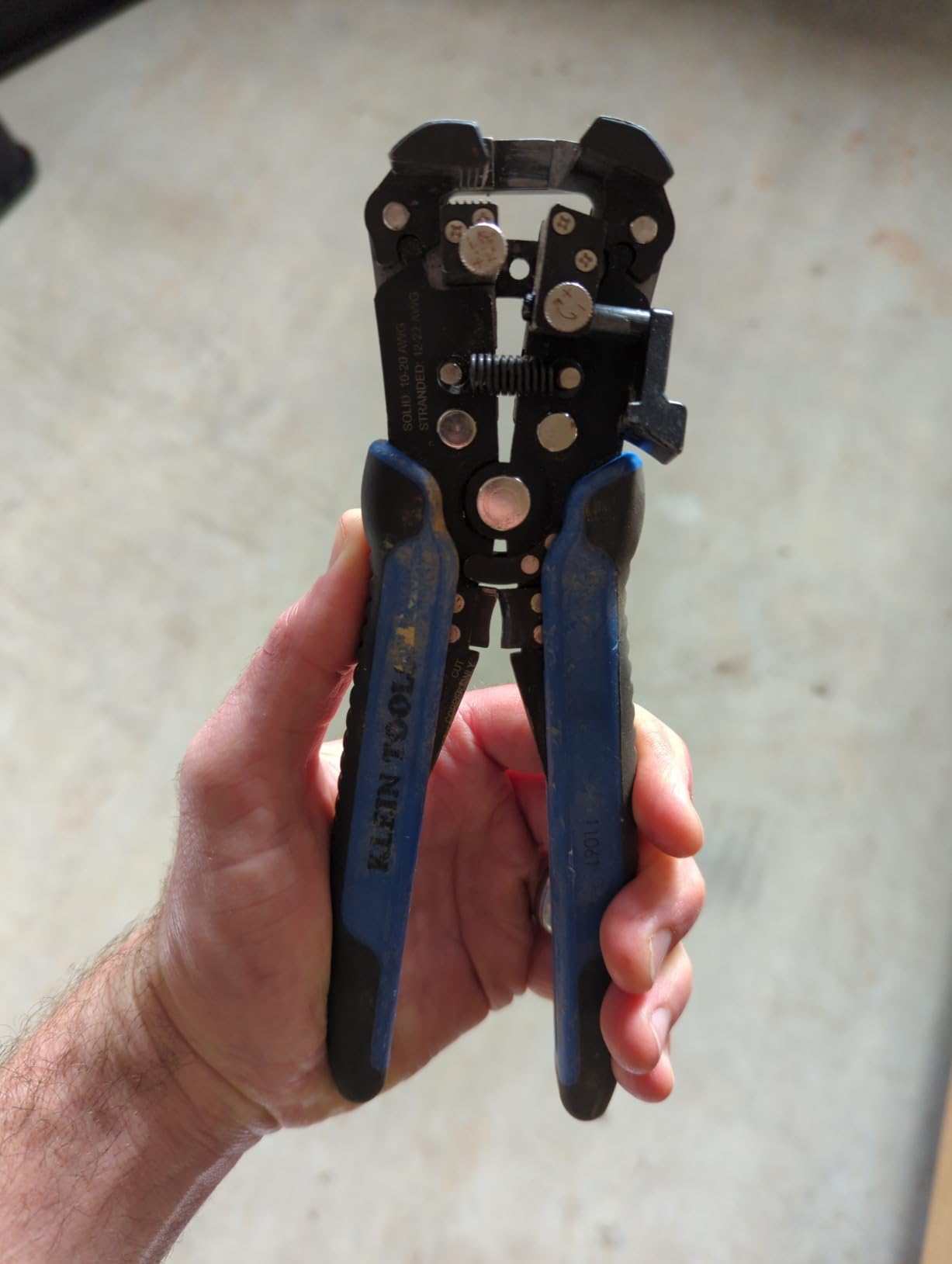
The grooved ergonomic handles reduce hand fatigue, which matters more than it sounds when you are on a ladder working a ceiling box. Reviewers also flag the thermostat wire capability, since stripping the outer jacket from low-voltage HVAC wire is a genuine household need and this tool handles it without a second implement.
When the self-adjusting design earns its extra cost
The honest answer is that it earns it when you strip more than a few ends, or when stranded wire is your default. Self-adjusting jaws size themselves to the conductor, so the accuracy stops depending on you picking the right notch. On our 12 AWG stranded the strips were consistent without the trial-and-error a fixed-hole tool asks for.
Professionals reach for this class of tool for exactly that reason, and homeowner threads describe it as a mainstream choice for residential work. The Romex jacket capability is the specific feature that separates it from every other self-adjusting model here.
Where it falls short
It is the least precise of the group on the smallest gauge. Reviewers note it does not strip 22 AWG stranded as cleanly as dedicated precision tools, so if you are doing fine electronics work, this is the wrong instrument. The 8-inch body at 12.6 ounces is also bulky for a deep box or a crowded splice.
And while the tension wheel solves most crushing problems, it still needs a deliberate adjustment to find the right bite for a given wire. It is more forgiving than a fixed-hole stripper, not automatically forgiving.
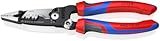
5. KNIPEX Tools 13 72 8 Forged Wire Stripper
- Precision ground holes strip without nicking or severing strands
- Shear blades cut heavy cable MC and BX smoothly
- Forged construction stays sharp for years
- Shear capacity roughly 50 percent above typical competition
- Screw cutter for 6-32 and 8-32 from front or back
- Highest price in the group by a wide margin
- Stranded wire in the solid hole can tear insulation on some gauges
- Screw cutter stops before cutting screws fully flush
- Narrow tip is not crosshatched so twisted ends can splay
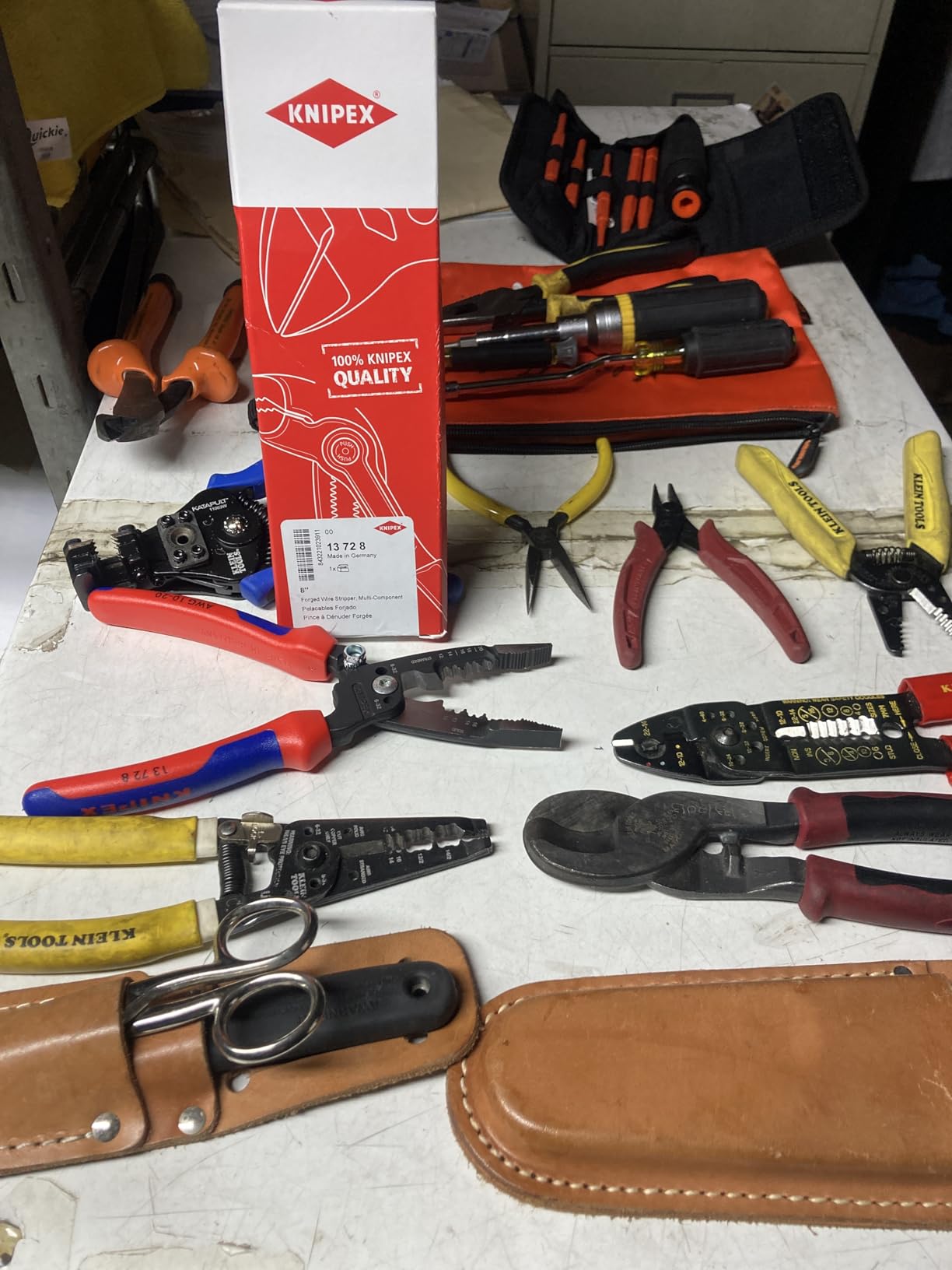
The KNIPEX is the one tool here that is explicitly forged rather than stamped, and that difference shows up in the stripping holes. They are precision ground so the blade shears the insulation radially and leaves the conductor whole, and reviewers describe this as the stripper that reliably does not slice strands off stranded wire.
The shear cutting blades are the second headline. Rated at roughly 50 percent more cutting capacity than typical competing cutters, they go through cable, wire, NM-B, BX and MC without the crushing that scissor-action cutters leave behind. That makes it the tool for a homeowner with armored or metal-clad cable in the walls, which plier-style strippers and cutters handle poorly.
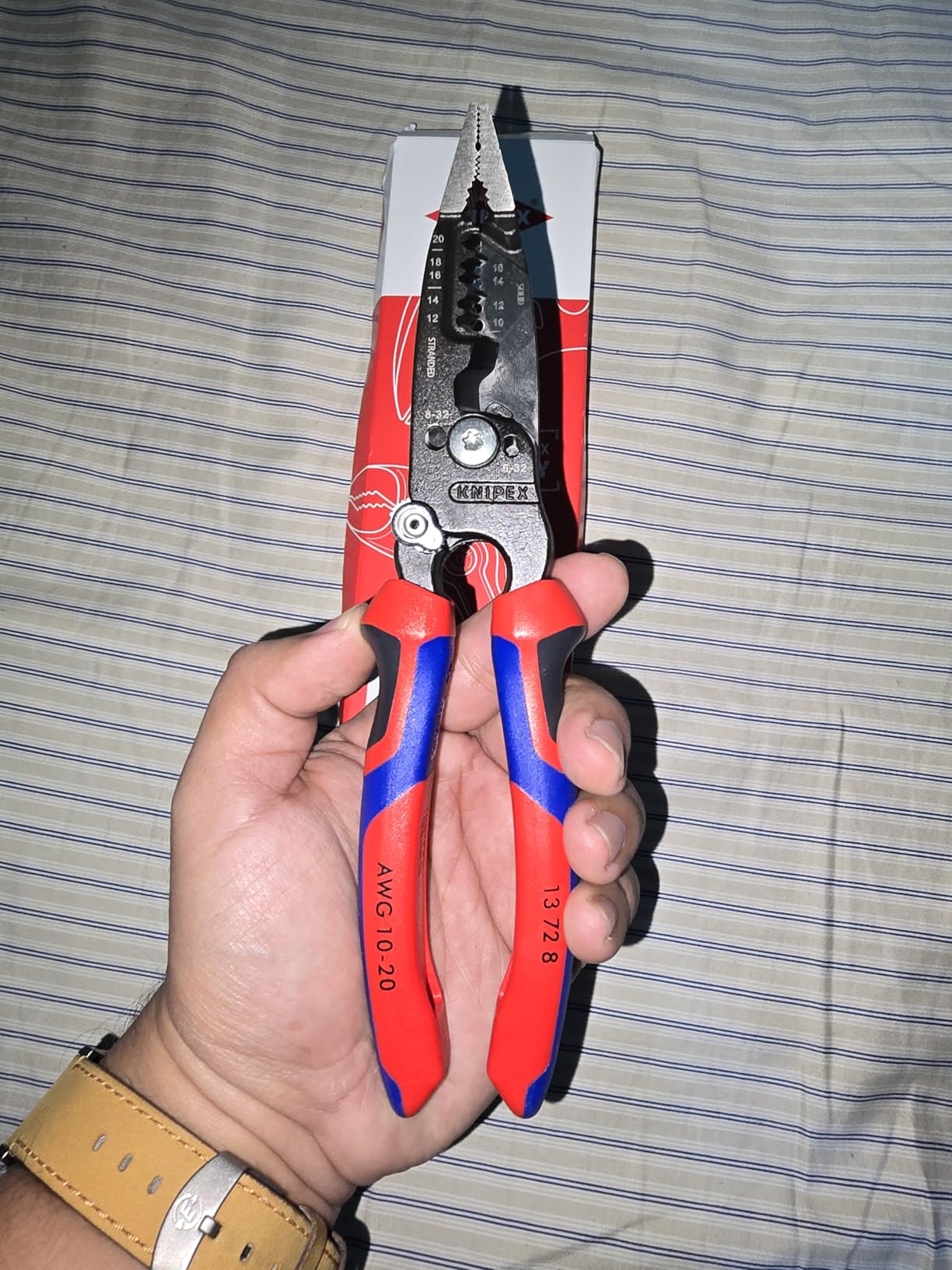
The screw cutter handles 6-32 and 8-32 from either end without threading the screw, and the locating ridges let you find the correct stripping hole by feel alone in a dark box. The nose doubles as serrated pliers for pulling and twisting, and the multi-component comfort grip reduces fatigue on repetitive work.
Whether the premium is aimed at you
Honestly, partly. This is the most expensive tool in the roundup by a wide margin, and one recurring forum complaint is exactly that: paying premium prices for a tool whose benefit is aimed at professionals doing high volume. But forum users also repeatedly call it a close second to Klein and describe it as the best stripper they have used.
Where the price is hardest to justify is a once-a-year outlet swap. Where it justifies itself is stripping MC or BX, handling stranded wire without any strand loss, or a tool you expect to still have in a decade. The forged construction and the claim that the edges stay sharp for years are the reasons owners defend the cost.
Where it falls short
Reviewers flag that using stranded wire in the solid-wire hole can tear the insulation on some gauges, so the hole still has to match the conductor. The screw cutter stops before the screw is fully flush, which is a small thing that will bother a perfectionist the first time.
The narrow tip is not crosshatched, so twisted wire ends can splay rather than staying neat. And at 8 inches this is not a lightweight tool, so it does not disappear into a box the way a slim plier-style stripper does.
6. WGGE WG-015 8 Inch Professional Wire Stripper
WGGE WG-015 Professional Wire Stripper, Wire Cutter and Wire Crimper 8-inch
- Top rank in the Wire Strippers category by sales volume
- High carbon alloy steel gives accurate durable stripping
- Non-slip curved rubber handle reduces hand fatigue
- Crimps insulated and non-insulated terminals
- 24 month warranty with 24/7 customer service
- Plier-style stripping requires manual gauge selection rather than automatic stripping
- 10 AWG floor excludes heavier feeder conductor
- 8 inch frame is bulkier than a compact stripper
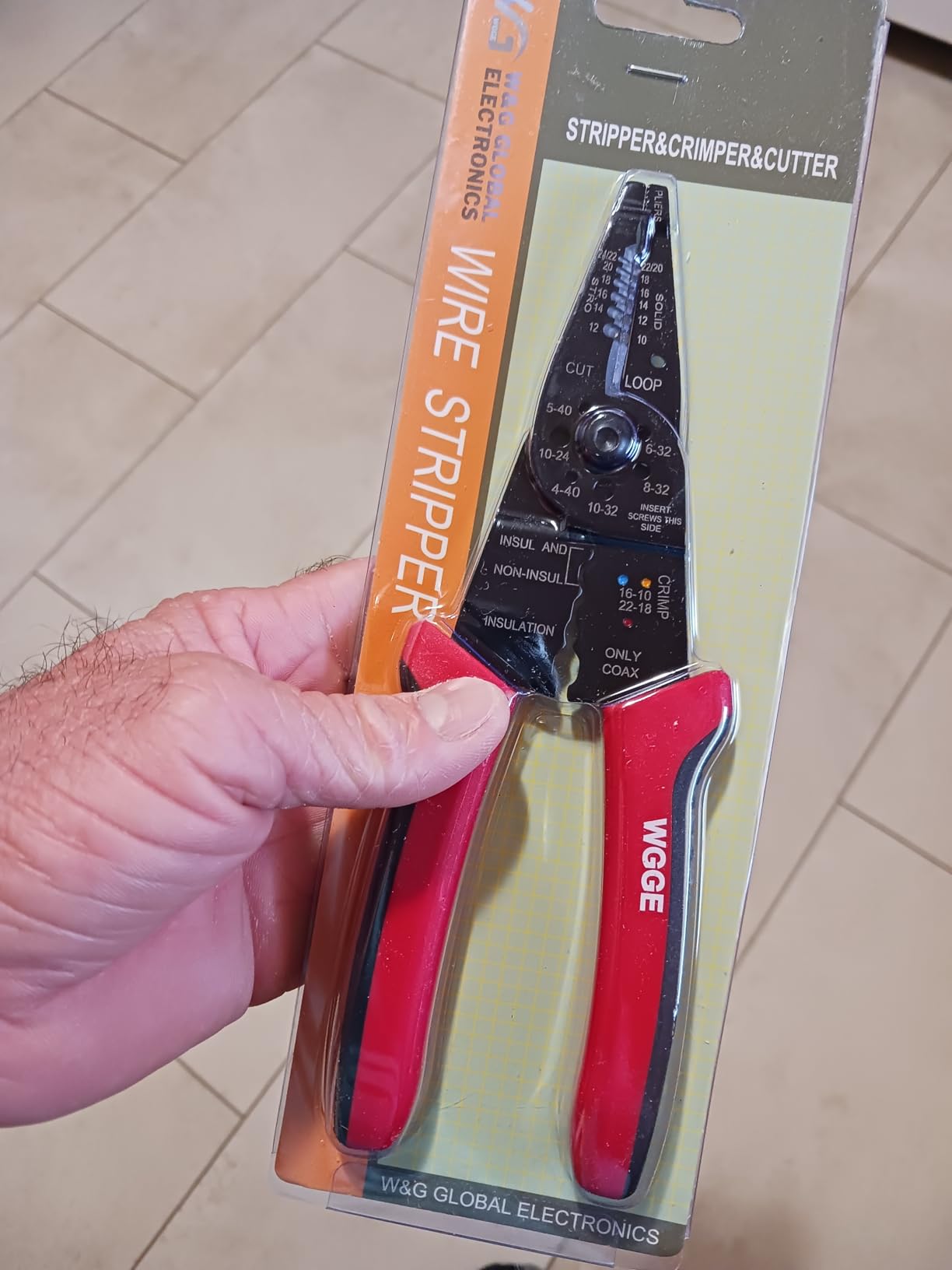
The WGGE is the value answer to a question most roundups ignore: do you need the name brand, or do you need the function. It cuts, strips and loops 10-22 AWG solid copper or aluminum cable, crimps both insulated and non-insulated terminals, and it has held a top sales rank in the Wire Strippers category with close to 17,000 reviews behind it.
The body is high carbon alloy steel rather than stamped plate, which is the specification that matters most for edge retention. In practice the stripping came out clean and repeatable on 14 and 12 AWG, and the induction of the steel is what keeps it that way after a year in a damp garage.

The curved non-slip rubber handle is shaped to keep hand fatigue down over longer jobs, and reviewers single that out. For a homeowner replacing a switch and an outlet in an afternoon, that comfort matters more than any spec on the sheet. The 24 month warranty with 24/7 customer service also gives you somewhere to go if something goes wrong that does not exist on most tools at this level.
What the sales rank really tells you
A very high sales volume in a tool category is its own kind of evidence. Thousands of people bought this expecting a professional-grade result, and the 4.6 average says most of them got one. That matters for a homeowner because it means failures, if there are any, would have surfaced loudly in the reviews.
Reviewers describe it as an inexpensive three-function tool for DIY and light trade work, which is a fair summary. A small share of buyers rate durability or consistency below the top tier, so if this is the only stripper you own and you strip a lot, know that you are buying capability rather than heirloom construction.
Where it falls short
It is a plier-style stripper, which means manual gauge selection and the same technique requirement as the IRWIN. That is the single most repeated complaint in homeowner threads: fixed-hole strippers need more care on stranded wire, and care is the thing you cannot buy.
The 10 AWG floor also excludes heavier conductors, and the 8-inch frame is bulkier than a compact 7-inch tool in a recessed box. Treat it as the do-the-job tool, not the heirloom.
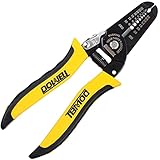
7. DOWELL 10-22 AWG Wire Stripper and Cutter
DOWELL Wire Stripper, 10-22 AWG Wire Cutter, Stripping Tool
- Very low cost for a 10-22 AWG stripper and cutter
- Stainless steel body with a comfortable TPE handle
- Safety lock keeps the blades closed when stored
- Handles stripping and cutting in one compact tool
- Light at 120 g and easy to carry
- Manual gauge selection makes repeat work slower
- No crimping function included
- 10 AWG floor excludes heavier conductor
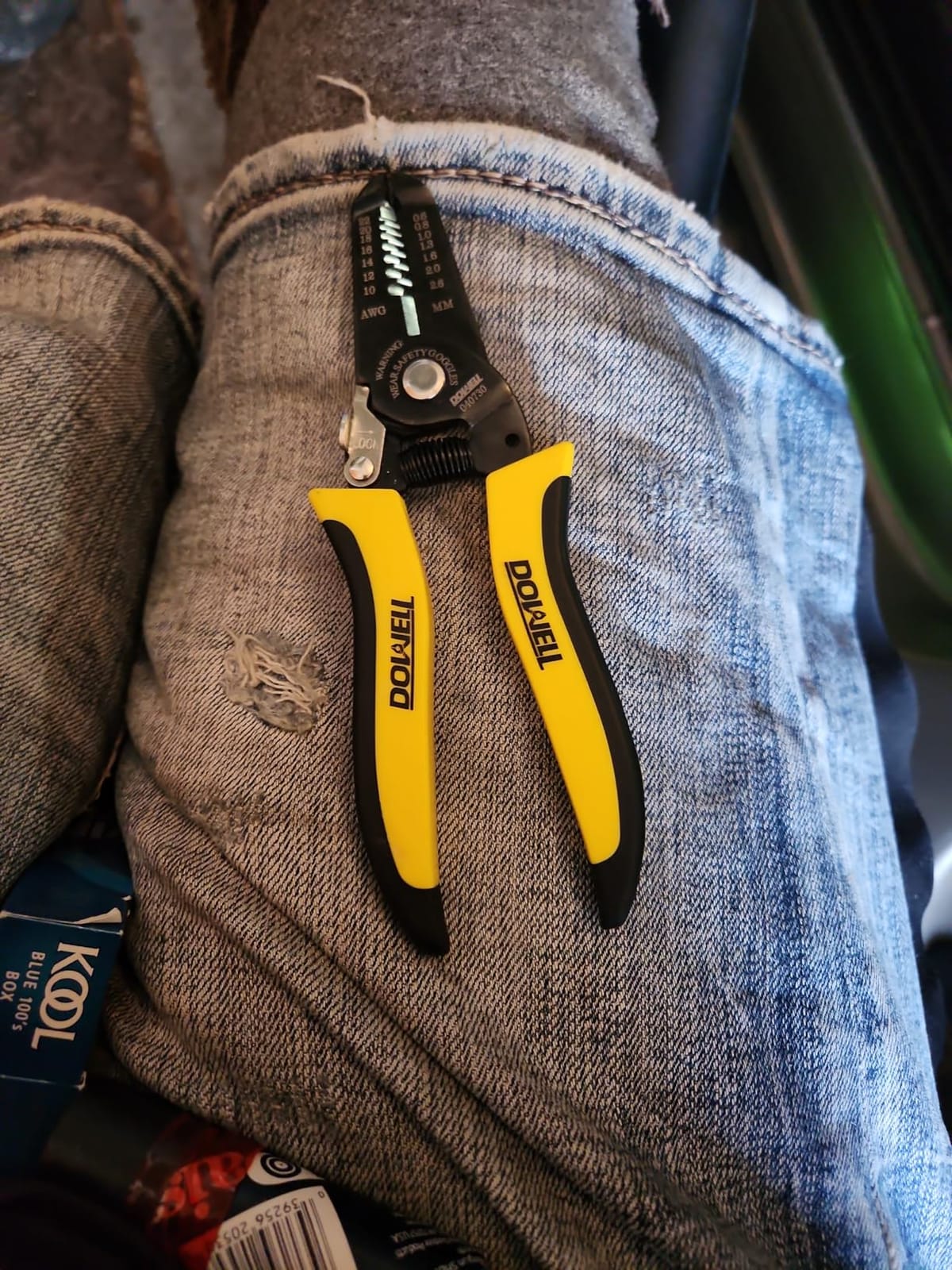
The DOWELL is the compact option, and compactness is the reason to buy it. At 7 by 2.32 inches and 120 grams it is among the lightest tools here, which matters if you are working inside a junction box behind a drywall cut with a flashlight clamped in your teeth. The stainless steel body and TPE comfort handle give it a feel that is closer to the mid-tier tools than the price suggests.
It strips insulation from 10-22 AWG and has an integrated cutting function for copper and fine iron wire. For household tasks like trimming a thermostat lead, prepping a speaker run, or re-terminating a fixture, that is the whole requirement list, met by a tool that takes up almost no room in a drawer.
The safety lock is the detail we did not expect to care about and then did. It holds the blades closed when the tool is not in use, which matters if the tool lives in a shared toolbox or a vehicle where a loose open blade is a hazard to whoever reaches in next. Reviewers mention it alongside the grip as the two things they like most.
Where it beats the more expensive tools
On lightness and on small-gauge reach it wins outright. A 22 AWG floor on the stripper, combined with the compact frame, means this is the tool that fits where a 12-ounce automatic simply will not. For smart-home wiring, doorbell chimes, and landscape lighting runs, that combination is the actual job requirement.
Reviewers consistently praise the price-to-capability ratio, the safety lock and the comfortable grip, with only a small minority noting it is not a professional-grade tool. That is exactly the profile you want in a secondary tool that lives in a kitchen drawer rather than on a bench.
Where it falls short
There is no crimping function. If you are installing pigtails with butt connectors or spade terminals, you will be crimping elsewhere, and crimping is the step where a loose connection actually causes problems.
Manual gauge selection also makes repeat work slower than an automatic tool, and the 10 AWG floor rules out heavier conductor. Buy it as a companion to a main stripper rather than as the only one you own.
8. haisstronica 3-in-1 Self-Adjusting Wire Stripper
haisstronica 3 in 1 Self-Adjusting Wire Stripper, AWG 24-10 Tool
- One tool covers stripping cutting and crimping from 24 to 10 AWG
- Heat-treated polished black-oxidized blades resist corrosion
- Adjustable strip length for repeatable results
- Ergonomic rubber handle for one-handed work
- Handles copper cable coaxial hot wire and aluminum
- Heaviest tool in the group relative to its capacity
- Crimping capacity is narrower than the stripping range
- 0.35 kg is a lot of weight for a stripper-only task
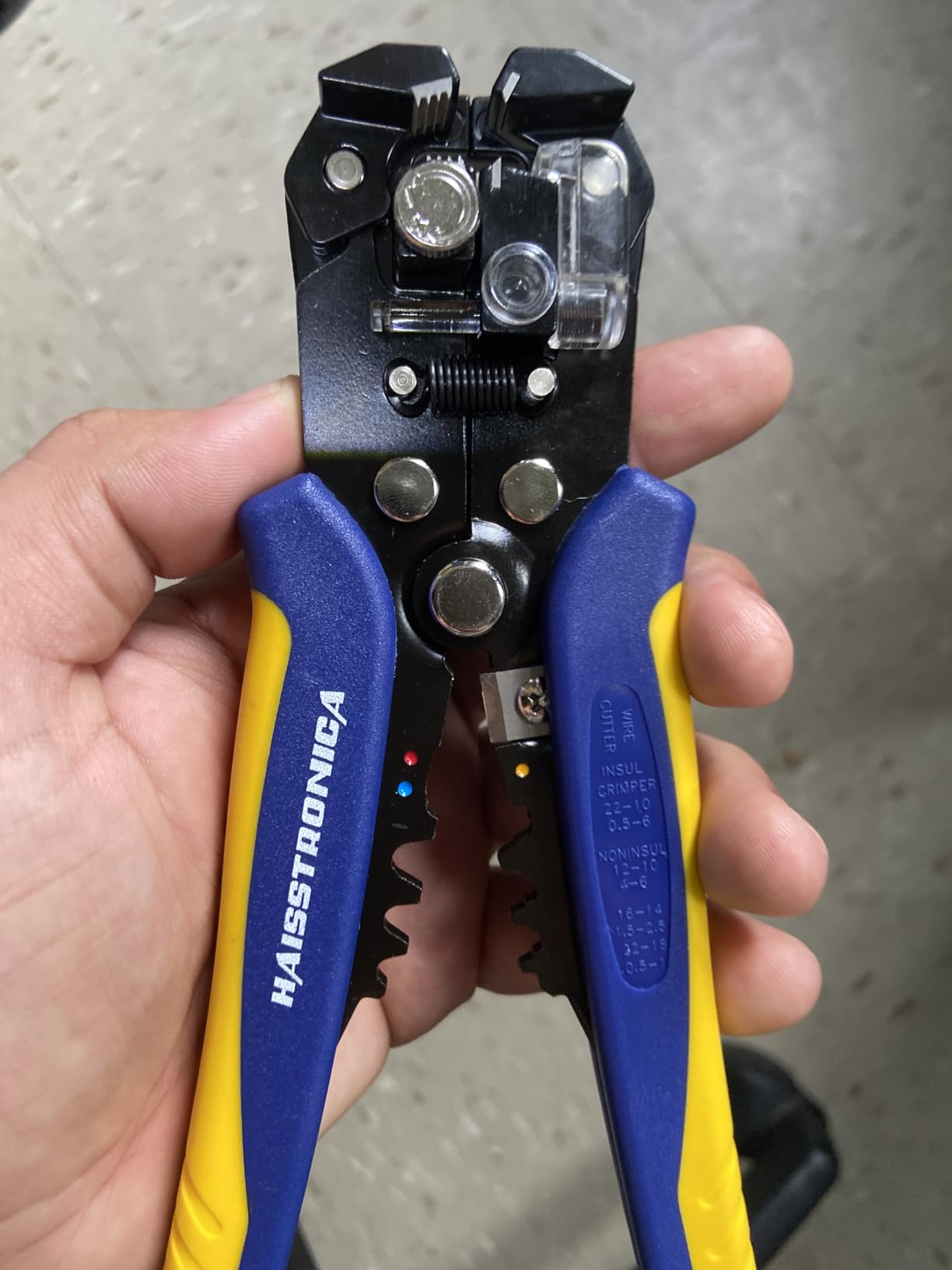
The haisstronica covers the widest gauge spread of anything in this roundup. Its stated coverage is 24-10 AWG, broken into 22-18, 22-10, 16-14 and 12-10 wire, which spans from fine electronics conductors all the way to the heavy end of household branch circuits in one tool.
The blades are heat-treated, polished and black-oxidized alloy steel, and that finish is doing real work. Black oxide resists corrosion, which matters for a tool that lives in a garage through a wet winter rather than on an electrician’s belt. Buyers consistently cite the broad AWG coverage and the alloy blades as the reasons to buy.
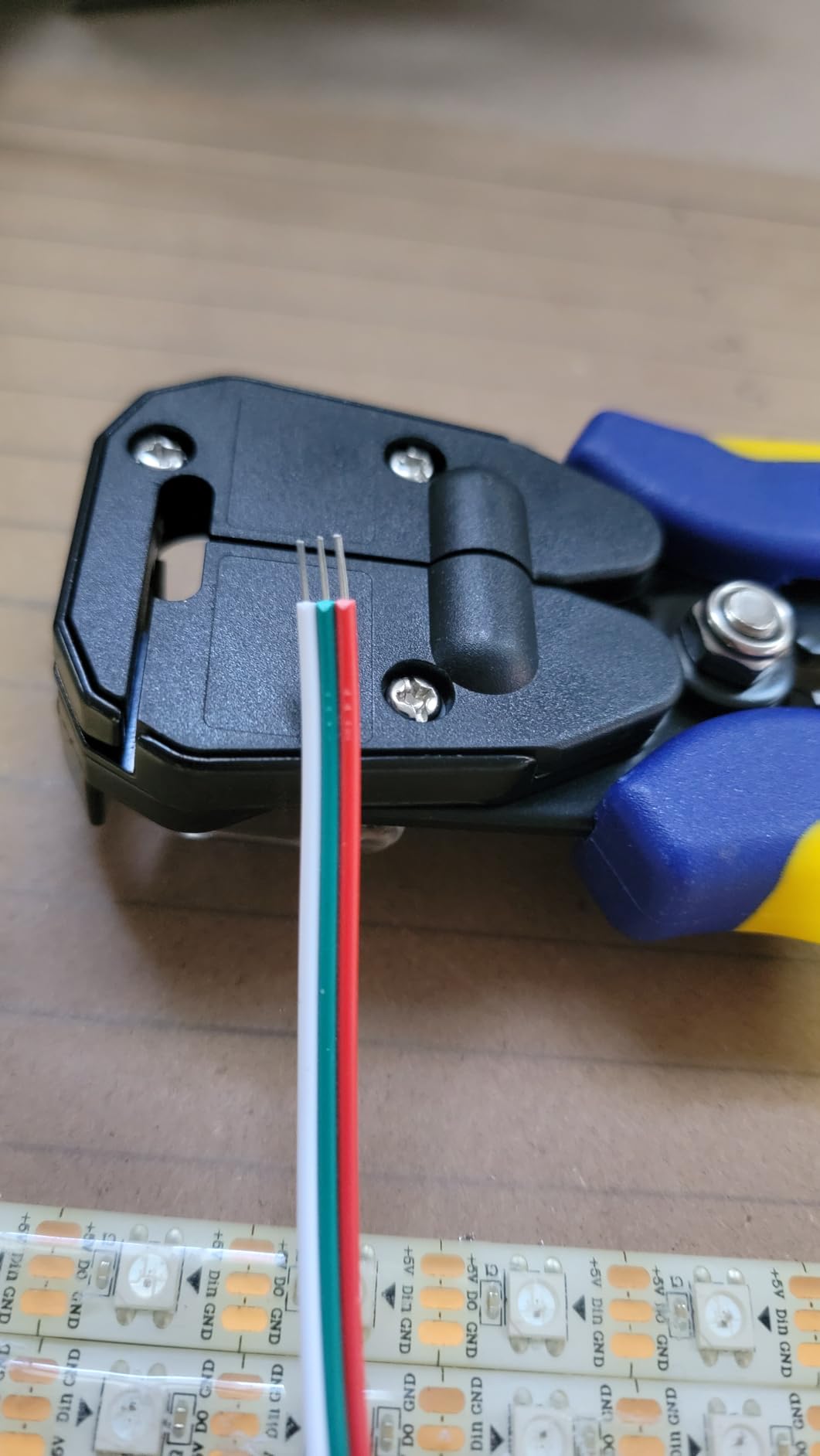
The 3-in-1 format is strips, cuts and crimps, and the adjustable strip length gives you repeatable results on terminals. The rubber handle is shaped for quick one-handed work, which is the right ergonomic target for someone stripping a handful of conductors in a switch box, not doing production work.
Whether the self-adjusting mechanism is worth learning
The auto-sizing jaws are the point here. Once they are set, the tool stops asking you to identify the gauge, which removes the single most common cause of a nick on a fixed-hole stripper. For a first tool that a new user will reach for on every small job, that forgiveness is worth more than an inch of extra precision.
It also handles cable, coaxial, hot wire and aluminum, which broadens it well past residential branch work. If your projects include anything under a deck, around an outdoor lighting system, or inside a consumer electronics repair, the material list here is unusually wide for a home tool.
Where it falls short
Weight. At 0.35 kg it is the heaviest tool in the group relative to what it does, and in a confined panel or above a ceiling that is a real annoyance rather than a spec-sheet detail. If you are working overhead for an afternoon, look for something lighter.
The crimping capacity is also narrower than the stripping range, so do not assume the two functions cover the same wire. And the tool ranks high in the category by sales, which does not guarantee the mechanism is as refined as a dedicated Klein or KNIPEX automatic.
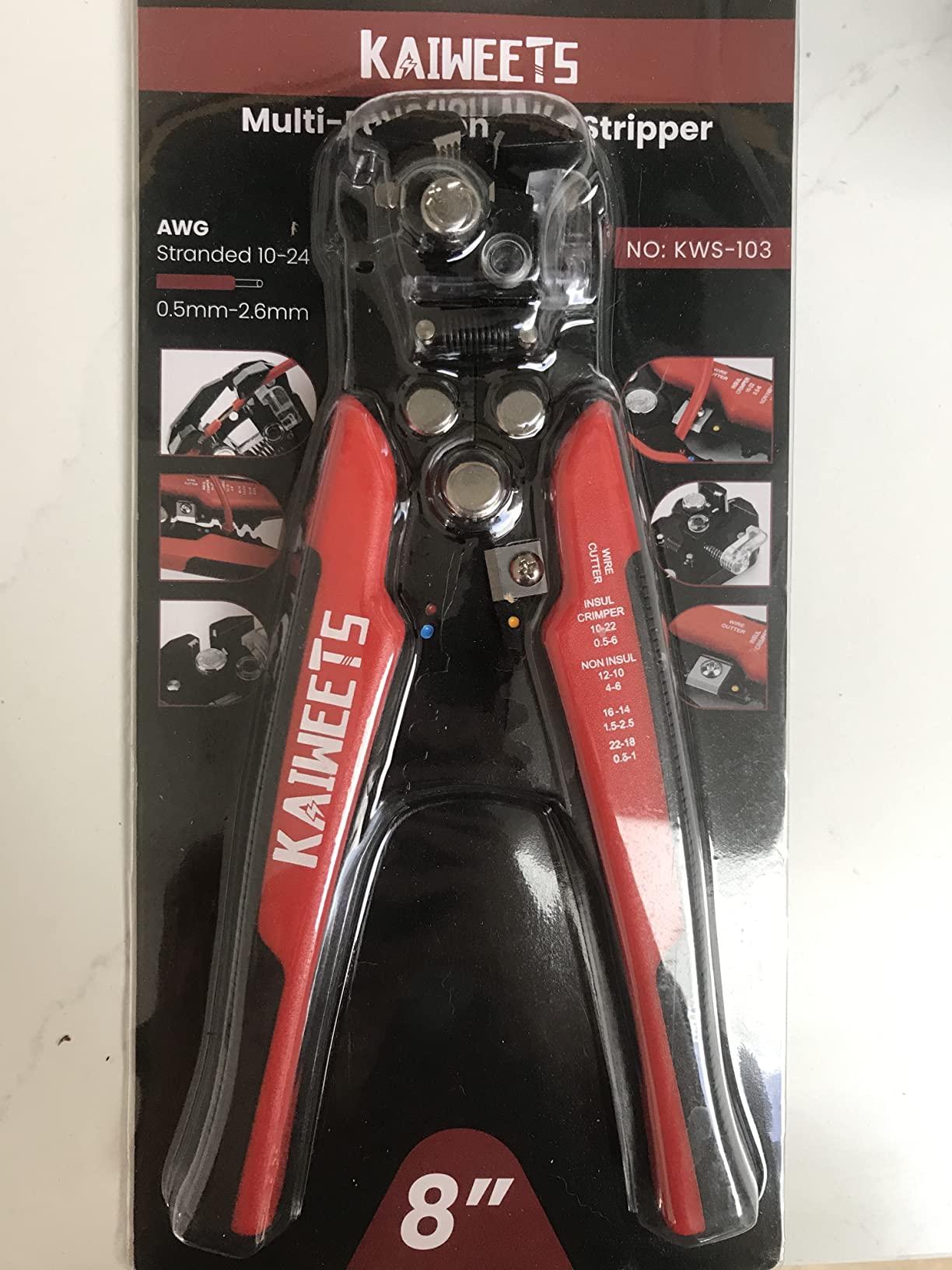
9. KAIWEETS KWS-103 Self-Adjusting Wire Stripper
KAIWEETS Self Adjusting Wire Stripper – 3 in 1 Heavy Duty Automatic Wire Stripping Tool | 10-24 AWG Wire Cutter for Electrical Cable Cutting, Crimping Tool
- Self-adjusting jaws adapt to 10-24 AWG without manual setup
- Three functions in one tool: strip crimp and cut
- TPR handle stays comfortable on repeated use
- Handles copper aluminum and sheathed cable
- Suitable for appliance lighting and household electrical work
- Heavier and bulkier than plier-style strippers
- Stripping action needs a firm consistent squeeze on stiff wire
- Weight makes it tiring for high-volume work
The KAIWEETS is aimed squarely at the homeowner. Its stated purpose is electrical repair and maintenance, residential use and professional use, and the three functions it combines are the three a house actually needs: stripping 24-10 AWG, crimping 22-10 AWG, and cutting copper, aluminum and sheathed cable.
The self-adjusting jaws cover a 10-24 AWG span without manual setup, so the tool sizes itself to whatever conductor you feed it. That range includes the 18 AWG stranded you will meet in fixtures and doorbells as well as the 12 and 14 AWG branch conductors, so one tool covers the whole residential spectrum without a companion piece.
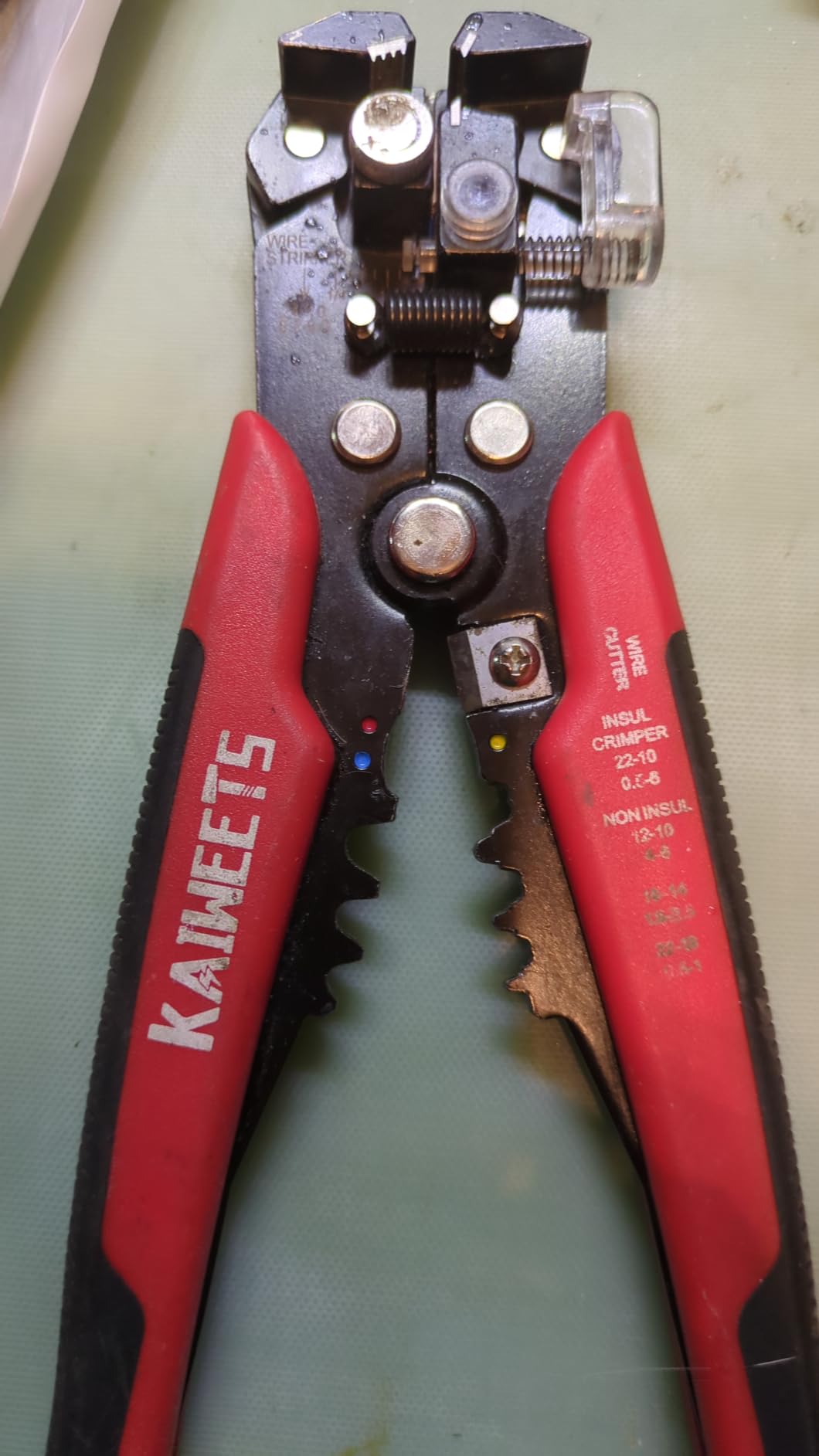
The TPR handle is the other half of the pitch. Reduced hand fatigue on repeated use matters when you are on your knees behind an outlet doing four terminations at a time, and reviewers rate the tool solidly positive overall while flagging the usual gripes about weight and the learning curve on the automatic jaws.
What makes it a fit for the occasional homeowner
Three functions plus a self-adjusting mechanism plus a 10-24 AWG range is a lot of capability in a single purchase, and that combination is what makes it attractive if you are buying one tool rather than a kit. It covers appliance repair, household lighting and electronics work, which are the projects a homeowner actually schedules.
It also comes with 3-year customer service and lifetime technical support, which matters more than it sounds when you are learning a mechanism you have never used before and need someone to ask. The sheathed cable cutting ability is a genuine convenience for garage and outbuilding runs.
Where it falls short
The stripping action needs a firm, consistent squeeze on stiff wire, which is the learning curve reviewers keep mentioning. It is not the tool you can hand to a first-time user with no guidance and expect a clean strip on the first try.
It is also heavier and bulkier than a plier-style stripper, so for a long session of fine work the slim tools win on control. If your projects are almost entirely branch circuits rather than fine wire, the wider 24 AWG reach will not earn its weight.
10. VCELINK Quick Strip Automatic Wire Stripper and Cutter
VCELINK Wire Stripper and Cutter, Quick Strip Automatic Wire Stripper
- Strips 14-24 AWG solid and stranded plus flat ribbon cable
- Spring-loaded handle strips with a gentle press
- Metal pressure adjustment knob rather than a plastic part
- Eagle nose design reaches narrow spaces
- Includes angled wire cutters
- Metal body makes it heavier than plastic automatic strippers
- No crimping function on this model
- No instructions included and the depth adjuster is hard to move
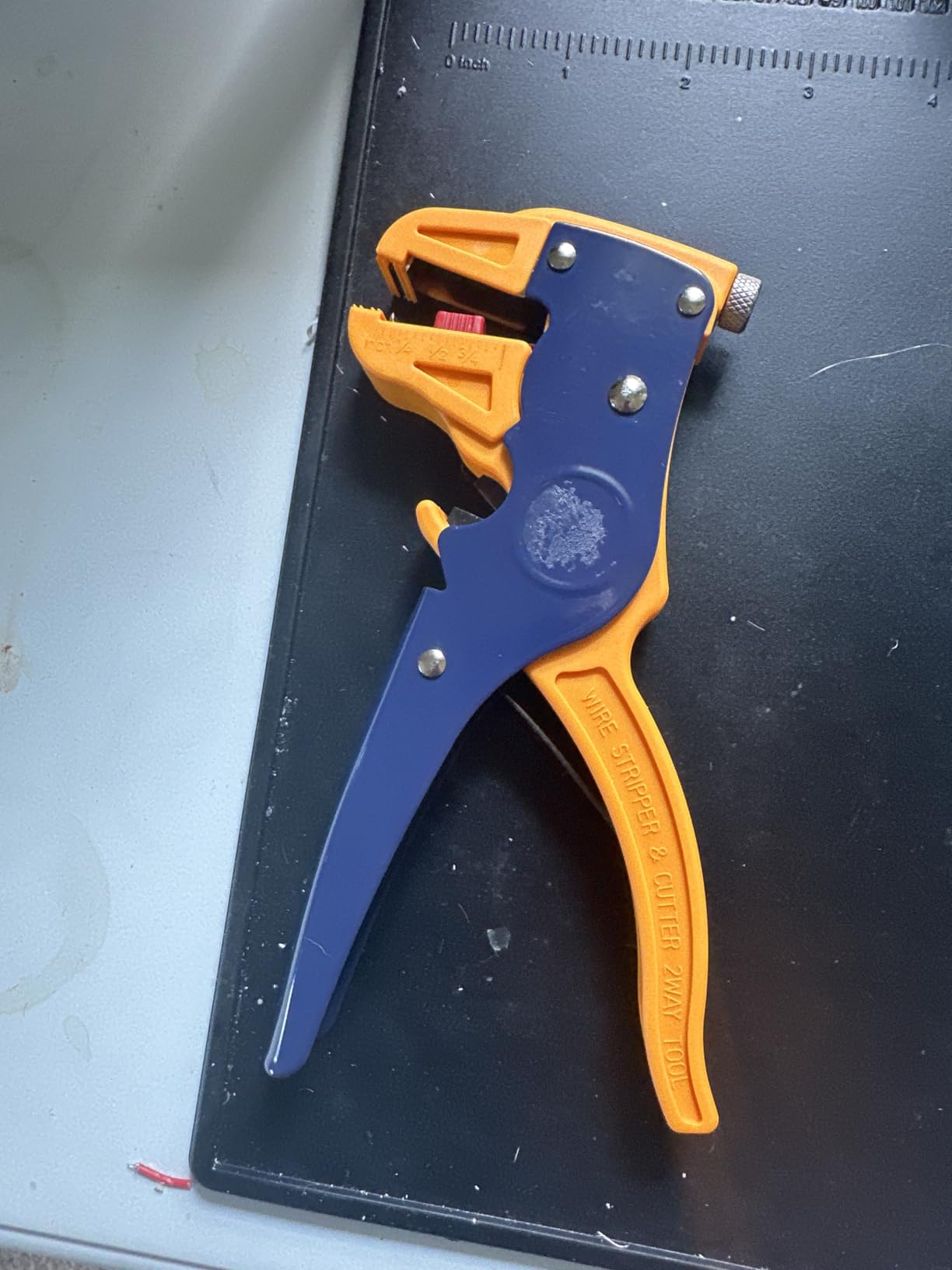
The VCELINK is the tool for the two situations that defeat everything else: a cramped box and a wire thinner than 20 AWG. It strips 14-24 AWG solid and stranded wire plus flat ribbon cable, and the eagle nose profile is short and narrow enough to get into a junction box where nothing else fits.
The spring-loaded handle strips the wire with a gentle press rather than a hard squeeze, and the pressure adjustment knob matches stripping force to wire thickness so you are not crushing a 24 AWG lead to strip a 16 AWG one. That knob is metal rather than plastic, which reviewers specifically call out at this level.
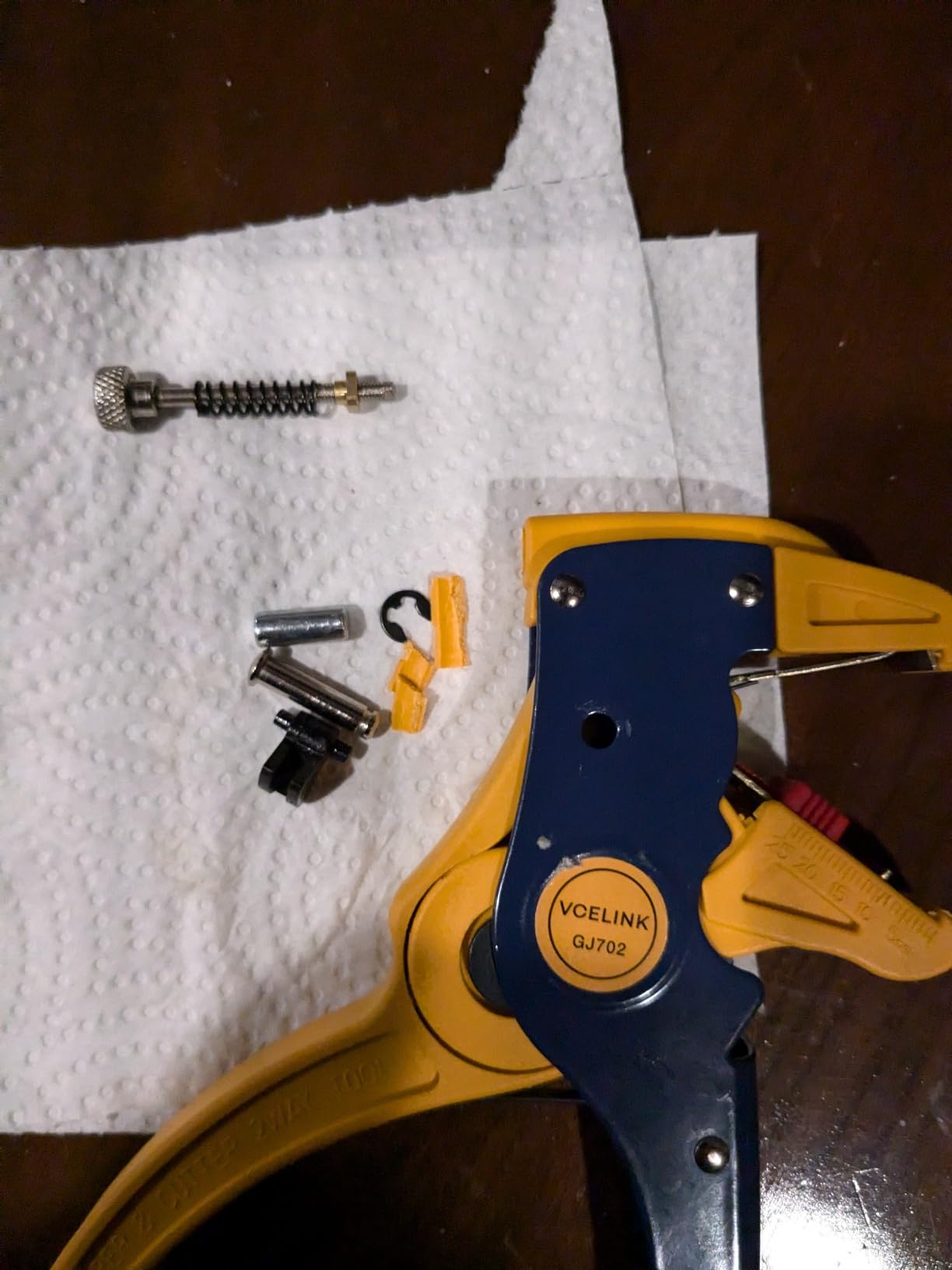
A length adjuster controls how much insulation comes off, and angled wire cutters are included rather than bolted to the handle, so the angled approach is available for tight geometry. Reviewers consistently call this the best value in automatic stripping for hobbyist and light-trade electronics work, praising build quality and blade longevity.
Where it beats the name brands
Two places. The 24 AWG fine-wire reach, with an included ribbon cable capability that no other automatic in this list offers. And the tolerance of the metal parts: reviewers report tight tolerances at a fraction of name-brand prices, and one owner notes the manufacturer replaced worn blades outside the return window.
That combination makes it the pick for smart-home wiring, thermostat and doorbell runs, outdoor lighting, and electronics repairs. If your projects are small-gauge rather than branch-circuit, this is the tool whose range actually matches the job.
Where it falls short
The metal body makes it heavier than plastic automatic strippers, which matters for high-volume work. There is also no crimping function on this basic model, so terminal work goes elsewhere.
No instructions are included, and the depth adjuster is stiff and hard to move, which is a poor combination for a first-time user trying to set a strip length. Learn the tool with a scrap piece of wire before you use it on a live conductor.
How to Choose a Wire Stripper for Home Electrical Work?
Start with gauge range, because it eliminates more wrong purchases than anything else. A homeowner working in branch circuits needs 10-14 AWG solid and stranded covered, and that is the floor for eight of the ten tools here. Add 18 AWG stranded for fixtures and doorbells, and you need the range to reach at least 20-22 AWG. Only the compact and automatic options extend down to 24 AWG, which is what smart-home and electronics wiring requires.
Manual or automatic: which mechanism suits your volume
Manual plier-style strippers ask you to choose the gauge notch yourself. They are lighter, cheaper, easier to inspect, and they do exactly one thing. Automatic and self-adjusting strippers size themselves to the wire and strip on a press or a compound squeeze, which costs more and forgives more.
Our rule of thumb: if you expect to strip a dozen or fewer ends a year, a manual tool is entirely sufficient and you will do better learning on one. If you plan repeated terminations, run cable, or want the tool to stop depending on your technique, the automatic class is the better buy. The drill-powered rotary category exists for very high volume, and no tool in this roundup competes with it.
Handles, insulation marking and build
A 1000V marking on the handle means the tool is rated for use on energized conductors up to that voltage, provided you have clean, dry hands and the insulation is intact. Look for the mark molded or printed near the grip, not just a brand name. It is a meaningful signal on any stripper you carry in a panel, though the correct procedure is still to de-energize and verify.
Grip matters more for a homeowner than most spec sheets suggest. Rubber or thermoplastic elastomer over-molding, a curved profile, and grooved handles all reduce hand fatigue over an afternoon of terminations. Forged stainless steel outlasts stamped plate, which is why the KNIPEX holds its edges longer and why cheaper tools dull first.
Combo functions and cable capability
A stripper that also cuts, loops and crimps saves you tool switches, and on a small job that convenience is real. The crimper matters most if you use butt connectors or spade terminals. Cable jacket stripping is a separate capability entirely: only the Klein 11061 removes the outer jacket of 12/2 and 14/2 Romex, and the KNIPEX handles heavier MC and BX.
One caution on 6-in-1 and 8-in-1 tools generally. Forum discussion of these is consistently unimpressed, because the stripping function is usually the weakest part of an over-featured tool. Buy a tool that does one or two things well rather than eight things adequately.
Brand trust and counterfeit clones
Klein, Milwaukee, Knipex, IDEAL and Wiha dominate professional discussion and carry a resale and reputation premium that a cheap clone cannot match. Counterfeits of the big names are common in the marketplace, so check the machining finish, the weight in the hand, and whether the brand and model markings are crisp rather than fuzzy. If a Klein feels dramatically lighter than you expected, that is the first thing to verify.
That said, tool-brand tribalism is a real problem in forums, where buyers get questioned for choosing something less expensive. For an occasional homeowner, a well-reviewed mid-tier tool that handles your gauge range correctly is a better purchase than a flagship you will leave in a drawer.
Pairing note: whichever stripper you choose, it works best next to needle-nose pliers, a set of screwdrivers and a voltage tester. Our homeowner electrical tool kit guide covers that pairing, and if your project involves low-voltage runs rather than branch circuits, the jumper wire kits guide covers the fine-gauge end of the spectrum.
How to Strip Wire Without Nicking the Conductor
The best way to strip electrical wire is to let a correctly sized notch do the cutting: set the gauge, bite only the insulation, and pull the tool straight off the wire in one smooth motion while the jaws stay closed. The blades shear the insulation radially and leave the copper untouched. Slicing insulation off with a utility knife, or stripping it with your teeth, is the fastest way to damage a conductor, and a nick in 12 or 14 AWG becomes a hot spot and a fire risk once the circuit is energized.
Kill the breaker and verify. Switch off the breaker, then confirm the circuit is dead with a tester you have just checked on a known live circuit. Never rely on the label.
Identify the conductor. Confirm it is copper rather than aluminum, and note whether it is solid or stranded. Aluminum needs its own tooling and compatible connectors.
Size the notch to the gauge. Match the wire to its AWG marking and drop it into the matching hole. Too small a hole shears the conductor; too large tears the insulation unevenly.
Bite the insulation only. Close the jaws fully so they engage the plastic. On stranded wire, use the tension or pressure adjustment if your tool has one.
Pull with control. Draw the tool straight back along the wire in one smooth movement. Twisting or jerking is what causes partial cuts and score marks.
Inspect before connecting. Look at the copper under good light. If you see a nick, a flattened strand, or a bright cut, cut back and restrip to clean conductor.
If you do nick a conductor, cut it back and restrip rather than hoping. There is no safe way to leave a nicked conductor under a terminal, because the reduced cross-section concentrates current and heat at exactly the point where it is clamped. On stranded wire, any strand visibly pulled out is the same situation in miniature. For 12 and 14 AWG branch circuits, restripping costs seconds; replacing a run of wire costs hours.
Two habits worth keeping. Do not oil the blades, and do not file them, since either one changes the geometry that makes a clean radial cut. And do your stripping with the circuit dead even if your tool is marked for live work.
Frequently Asked Questions
Do I need an automatic wire stripper as a homeowner?
Usually not. A manual plier-style stripper with a correctly sized notch handles 10-14 AWG branch circuit work fine, and it is lighter and cheaper to replace. An automatic or self-adjusting model earns its place when you strip many ends a year, work mostly with stranded wire, or want the tool to size itself rather than depend on your technique.
What does 1000V insulated mean on a wire stripper?
It means the tool is rated for use on conductors up to 1000 volts, provided the handle insulation is intact and your hands are clean and dry. Look for the marking near the grip. It is a useful signal when you are working in a live panel, but the correct procedure is still to shut off the breaker and verify the circuit is dead with a tester.
Can I use a wire stripper on Romex?
On the conductors, yes. Most strippers handle the individual 14 or 12 AWG conductors inside the cable once the jacket is off. Removing the outer jacket is a separate job, and only some tools do it. The Klein 11061 strips 12/2 and 14/2 Romex jacket directly, while the KNIPEX 13 72 8 is built for heavier cable including MC and BX.
What is the difference between a T-stripper and a self-adjusting stripper?
A T-stripper has fixed notched holes and you choose the gauge, then squeeze and pull. A self-adjusting stripper senses the wire diameter and strips in one press or compound squeeze without you selecting anything. The fixed type is lighter and cheaper to learn on, while the self-adjusting type is faster and much harder to use incorrectly.
How do I know if I nicked the wire?
Look at the stripped conductor under good light. A nick shows as a bright cut or a flattened section, and on stranded wire it shows as strands pulled out of the bundle or splayed at the end. If you see either, cut back and restrip to clean conductor. Do not install a terminal on a nicked conductor, because the reduced cross-section creates a hot spot under load.
What size wire stripper do I need for home electrical work?
For most homes, look for a tool covering 10-22 AWG for solid and stranded wire. Branch circuits are typically 14 AWG, 12 AWG and occasionally 10 AWG, and fixtures and doorbells add 18 AWG stranded. If you also run smart-home, thermostat or outdoor lighting, extend the range down to 24 AWG so the same tool covers the fine wire too.
Is there a DIY drill-powered wire stripping machine worth it at home?
For a single homeowner, no. Powered rotary strippers make sense when you are stripping cable continuously, as a scrap metal dealer or an electrician would. For outlet, switch and fan work, a hand stripper covers the same gauges faster than the time you spend setting up a drill adapter. The term machine also describes industrial equipment, not hand tools, which is why ratings for it rarely apply to a home purchase.
The Verdict for 2026
The Klein 11063W takes our overall recommendation for a reason: it carries the highest rating in this group alongside more reviews behind it than any other pick, its compound action strips without nicking, and its round cutter leaves a flush end. If you want one tool and you want it to be the one you reach for on every outlet and switch job, that is the pick.
Buy the IRWIN Vise-Grip instead if you want strip, cut, loop and crimp in a light 8-inch body, or the Klein 11061 if you want a single tool that also handles Romex jacket and thermostat wire. For MC, BX or heavy cable, the KNIPEX 13 72 8 is the one that will not let you down, provided you accept the premium. The WGGE WG-015 covers the core job at a fraction of the flagship cost, and the DOWELL and VCELINK cover the fine-wire end of the spectrum.
Whatever you choose, that is our 2026 guide to the best wire strippers for home electrical work. Strip with the power off, verify with a tester, and check every conductor before you terminate it. For bigger projects, our campervan conversion electrical kit guide covers the wiring work that comes with a full build.