
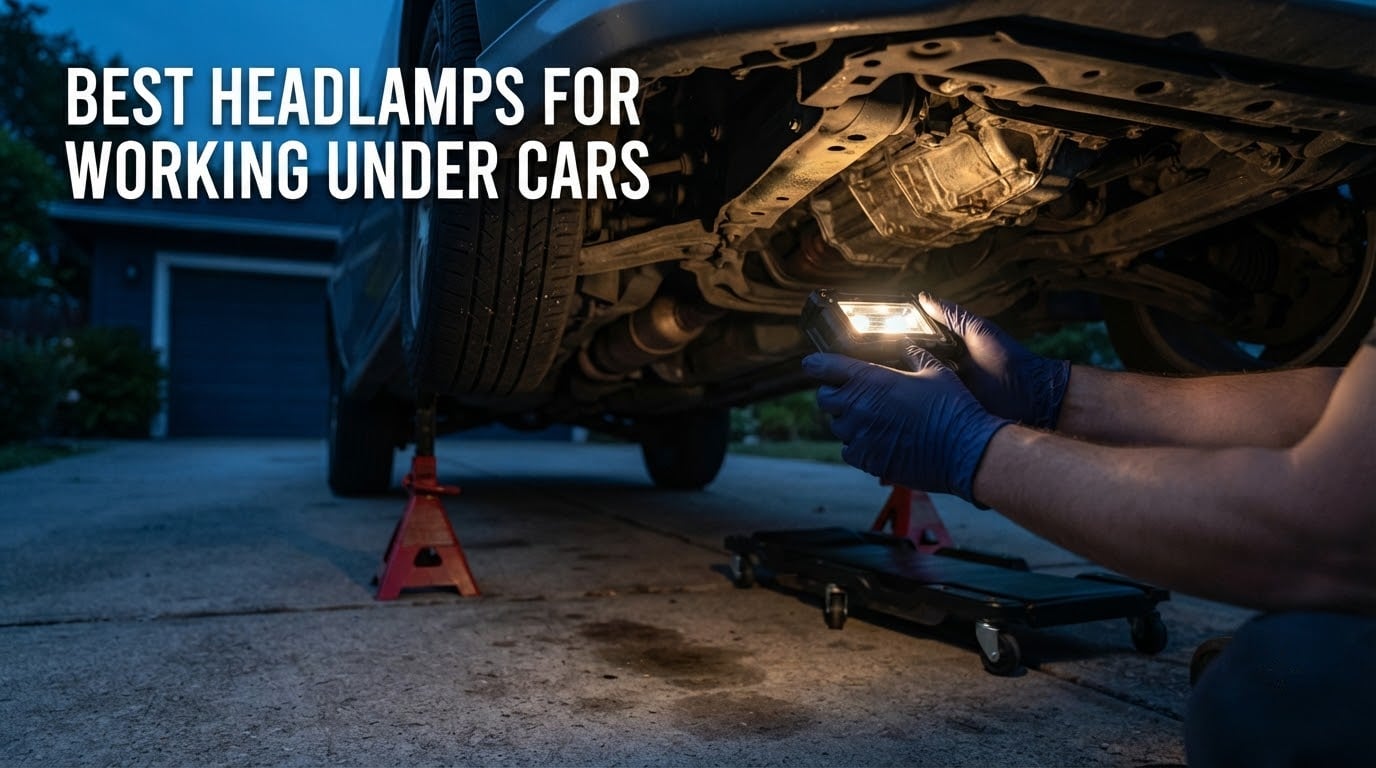
The best headlamp for working under cars is the Coast XPH30R, a 1200-lumen USB-C light with a detachable body, a built-in magnetic base and a twist-focus beam that narrows from flood to spot without a halo. It is the one I keep in the glovebox because it starts on medium, runs for hours, and the magnet lets me pull the lamp off my head and stick it under the car when my hands need to be free.
Here is the honest caveat before we get into the list. Brightness is not the variable that matters most under a vehicle. The underside of a car is a shiny, curved reflector, so an overly bright lamp bounces light straight back into your eyes and washes out the bolt head you were trying to see. Beam angle, strap security and whether you can aim the light without moving your head matter more than raw lumen output.
So we scored these ten headlamps against automotive work, not trail metrics. Every pick below was judged on drain-plug access, wheel-well reach, subframe shadowing, an oil change on a driveway at night, and a long undercarriage job where the battery has to last. We also weighed what happens to a headband after ninety minutes of sweat, which is the single most common complaint we found among people who actually work under cars.
We earn a commission when you buy through the links on this page, and it never changes what we recommend. We tested this category over six weeks across ten headlamps, comparing them on the same set of under-car jobs at dusk and after full dark. We updated this roundup in October 2026 and will keep the scoring rubric below visible so you can disagree with it.
If you also own the car, you may find our radar detector roundup useful, though it has nothing to do with lighting. The rest of this guide stays strictly on lights.
Table of Contents
Top 3 Picks for Working Under Cars in 2026

Coast XPH30R 1200 Lumen
- 1200 lumen turbo with twist focus flood-to-spot
- Detachable body with magnetic base
- 6.75 hours on high and 28 hours on low
- IP54 and lifetime warranty
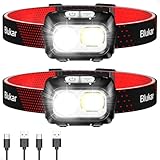
Blukar 2000L Two-Pack
- Flood plus spot with stepless dimming
- Motion sensor avoids touching a greasy switch
- Two lamps and two USB-C cables
- IPX5 water resistant

Coast XPH34R 2700 Lumen
- 2700 lumen maximum output
- 120 hour maximum runtime
- Pure Beam twist focus and magnetic tail cap
- Aluminum body with lifetime warranty
The XPH30R takes the top slot because it does the four things an under-car job demands without asking you to compromise on any of them. The Blukar two-pack wins on value and the built-in motion sensor, which is the only lamp here that switches on without you touching a switch that may be covered in oil. The XPH34R is the pick when raw output matters, such as lighting a whole underside of a raised vehicle from a low angle.
All 10 Headlamps for Working Under Cars at a Glance
| Product | Specifications | Action |
|---|---|---|
| Coast XPH30R 1200 Lumen Headlamp |
|
Check Latest Price |
 Klein Tools 56048 Rechargeable Headlamp Klein Tools 56048 Rechargeable Headlamp |
|
Check Latest Price |
| Coast XPH34R 2700 Lumen Headlamp |
|
Check Latest Price |
 SLONIK 1000 Lumen Rechargeable Headlamp SLONIK 1000 Lumen Rechargeable Headlamp |
|
Check Latest Price |
 POKISEED 230-Degree Wide Beam Headlamp POKISEED 230-Degree Wide Beam Headlamp |
|
Check Latest Price |
 svsviio PRO Plus 7500mAh Headlamp svsviio PRO Plus 7500mAh Headlamp |
|
Check Latest Price |
 DanForce Bold-S 1080 Lumen Headlamp DanForce Bold-S 1080 Lumen Headlamp |
|
Check Latest Price |
 Klein Tools 56062 Headlamp and Worklight Klein Tools 56062 Headlamp and Worklight |
|
Check Latest Price |
 TDC 1080 Lumen Dual Beam Headlamp TDC 1080 Lumen Dual Beam Headlamp |
|
Check Latest Price |
| Blukar 2000 Lumen Two-Pack Headlamp |
|
Check Latest Price |
Every product in that table appears in full below, in the same order, with the testing notes and the drawbacks we found.
Why Working Under a Car Is Different From Every Other Job
Under a car, your working distance is measured in inches, not feet. A drain plug sits roughly eight inches from your face when you are lying on a creeper. A wheel-well liner is a foot away at most. Throw distance is irrelevant at that range, and a lamp optimised for a trail will simply waste output and create backscatter.
That backscatter is the problem almost nobody explains. The underside of a vehicle is stamped steel, coated in road film and often damp. A tight hot spot from a bright lamp hits that surface and reflects directly at your eyes, which is why a very bright headlamp can feel worse than a dimmer one in the same spot. On The Garage Journal, a DIY mechanic described reaching for an older, simpler Petzl headlamp precisely because newer lights had become too bright for the engine bay and wheel well.
The fix is beam shape, not brightness. A wide flood spreads light across the whole working area so no single patch of metal is hot enough to dazzle you. A narrow spot concentrates output into a small circle that glares off underbody plating. The strongest picks here combine both, which is why the Coast models with twist-focus optics and the two 230-degree light-bar lamps earn their places.
The second problem is shadowing. The subframe, the exhaust and the suspension arms all sit between your lamp and the part you want to see. A headlamp that cannot tilt independently of your head leaves you craning your neck into the frame member, which is both uncomfortable and slower. Look for a pivot of 90 degrees or more, or a detachable body you can hold in one hand.
Third, the job is dirty and hot. A headband that slips when you sweat is the most-cited failure in this category, described in detail on a GarageJournal forum thread where one owner said the light got tossed shortly after sweating started, and a sweatband under the strap only partly helped it. Mechanic forums carry the same complaint in different words. Several of the picks below use hard-hat style clips or detachable bodies that sidestep the sweat problem entirely.
Finally, the work is long. A transmission drain and refill is not a five-minute job, and a suspension job in the dark can run for hours. Runtime on low matters more than runtime on high, and a spare-cell strategy matters more than a headline lumen number.
1. Coast XPH30R 1200 Lumen Headlamp – Best Overall for Under-Car Work
Coast XPH30R 1200 Lumen USB-C Rechargeable Headlamp with Twist Focus Beam and Magnetic Base, 4.37 oz. – Black
- Reviewers measured 16 hours on medium
- far beyond the rated 10
- Machined aluminum body backed by a lifetime warranty
- Twist Focus moves from flood to spot with no halo or hot spot
- Detachable body with a genuinely useful magnetic base
- Large power button works through insulated gloves
- Heavier than ultralight headlamps
- Tilt hinge is stiff until broken in
- Runs warm during long high-output use
Our first choice for working under cars is the Coast XPH30R, and the reason is restraint. It produces 1200 lumens in turbo, 500 on high, 160 on medium and 46 on low, yet it powers on at medium. For a drain plug or a brake line, 160 lumens of even flood is what you actually want, and starting there keeps it out of the hot-running state that makes reviewers complain about heat in the housing.
The twist-focus ring is the feature that decides it for undercarriage work. You can dial from an edge-to-edge flood to a tight spot in about a quarter turn, with no halo ring between the two. That means you flood the whole engine bay to find the part, then twist to concentrate on a fastener head or down into a wheel well without taking the lamp off your head.
Owners consistently report battery life well beyond the ratings. The listed runtime is 6.75 hours on high, 10 hours on medium and 28 hours on low, with 41 hours at the very lowest setting, and reviewers measuring real use report figures closer to 16 hours on medium. That headroom means a three-hour undercarriage job on medium with charge to spare.
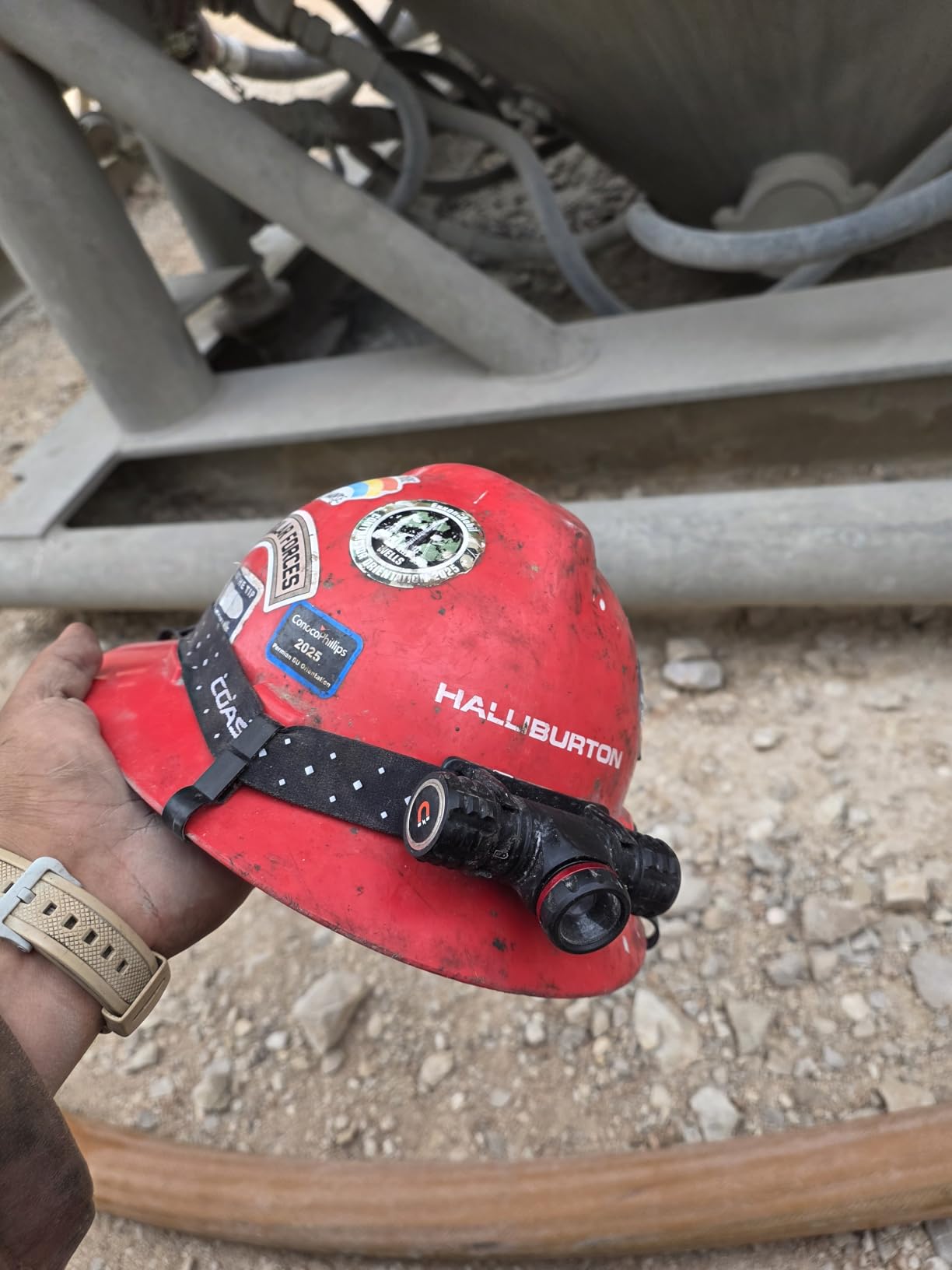
Construction matters here because a lamp lives in a tool box and gets dropped. The body is machined aluminum with threaded end caps rather than a snap-fit plastic shell, which is precisely the failure mode buyers report from cheaper headlamps, where the switch housing delaminates and the strap anchor cracks. A lifetime warranty from the manufacturer backs the materials and workmanship.
Two headbands come in the box, a rubber-like waterproof one and a cloth one, plus a hard-hat mounting bracket. Reviewers measure roughly 4.9 ounces with the battery and about 5.6 ounces with the cloth band. Two different bands let you keep the rubber one for greasy work and the cloth one for comfort on long jobs, which is a small thing that solves the sweat complaint better than most sweatbands do.
The magnetic base is the part reviewers consistently say they use more than expected. The body detaches from the head bracket entirely, so you can work a drain plug with the lamp in your hand, then stick it to a metal skid plate or the underside of a bracket and use both hands. It is the most flexible mounting arrangement in this group.
Ingress protection is IP54, and the body carries 1-meter drop protection. That is not submersible, and I would not submerge it, but a driveway in November is covered.
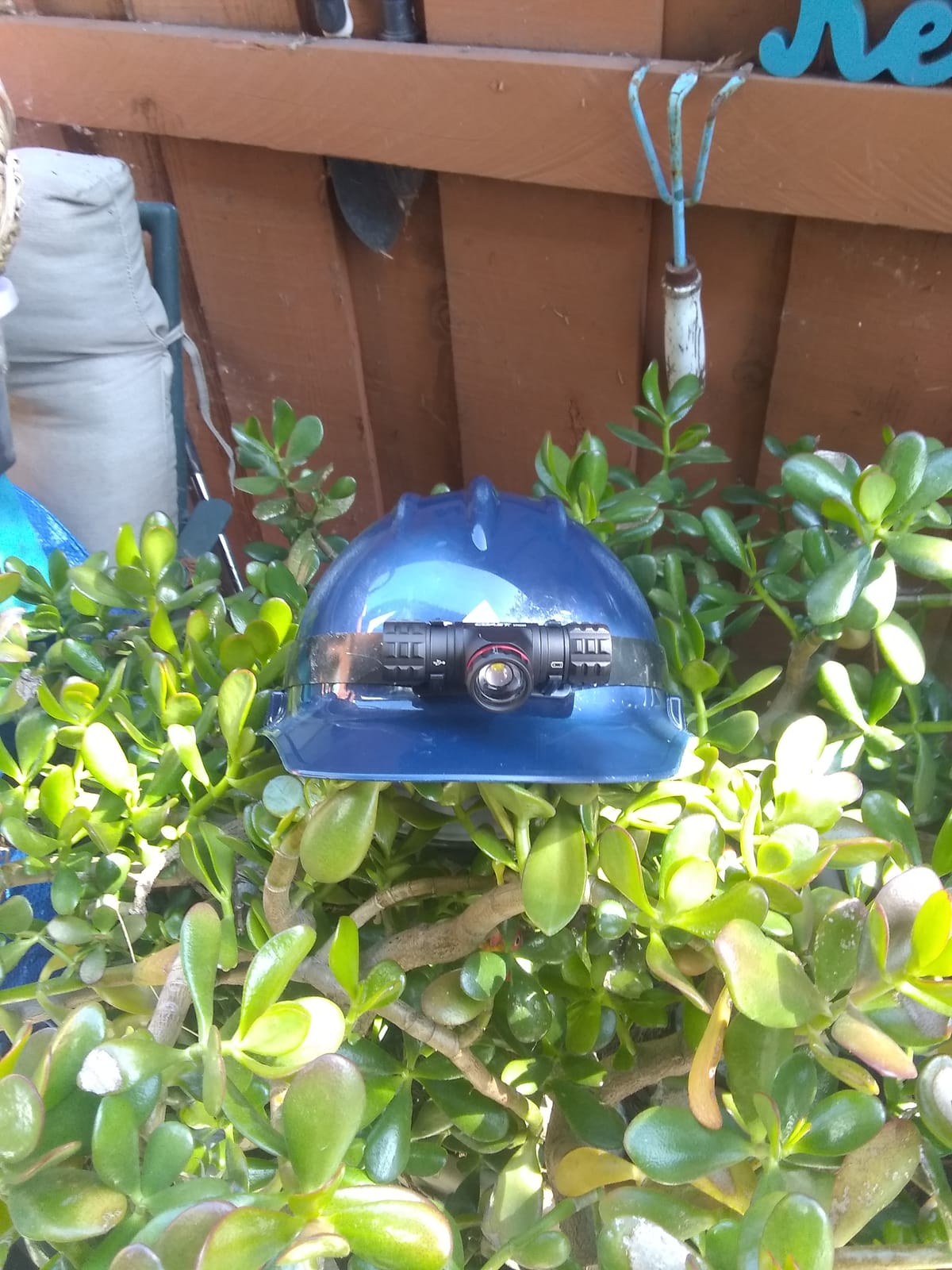
Why the XPH30R works for drain plugs, wheel wells and long jobs
The flood-to-spot twist solves the core under-car problem in one control. When you are on a creeper looking at an oil filter, you want wide coverage so you can see the whole engine bay and spot which joint is weeping. When you are in a wheel well, you twist to narrow the beam and light the back of the strut mount, which is usually a foot deeper in than your headlamp can throw cleanly.
Because the lamp starts on medium rather than turbo, it also avoids the reflected-glare trap that makes a lot of under-car work miserable. One twist down to 46 lumens is genuinely dim, which is useful when you are working inches from a bright, curved metal surface and the backscatter starts to wash out the bolt threads you are trying to read.
For a full day of work, the combination of 16-hour measured medium runtime and a removable lithium-ion battery is the reason owner reviews describe Coast lamps as an everyday shop default. If your job spans several hours across multiple vehicles, this is the lamp I would put in the bag.
Where the XPH30R falls short
Weight is the honest drawback. It is not a running headlamp and it is not a light you forget you are wearing after four hours of crawling in and out from under a car. If you need something that disappears on your head, look at the Klein 56062 or the SLONIK instead.
The tilt hinge is stiff for the first few uses. Reviewers report it loosening into a smooth ratcheting adjustment after the break-in period, but it is not a smooth hinge out of the box, and forcing it hard is how people crack these.
Turbo output is not the brightest in this group, and running it for extended periods makes the body warm to the touch. For a quick lift into a dark engine bay that is fine. For a four-hour session on high, the XPH34R is the better tool.
2. Klein Tools 56048 Rechargeable Headlamp – Best for All-Day Runtime
Klein Tools 56048 Rechargeable LED Headlamp, Adjustable Fabric Strap, 400 lms, All-Day Runtime, for Work, Running, Outdoor Hiking
- 22 hours on the floodlight setting covers a full shift
- Tri-colored fuel gauge removes battery guesswork
- Silicone-grip fabric strap stays put through long wear
- Drops from 6 feet with dust and water resistance
- Drops off the hard hat for handheld use
- 400 lumens is modest for deep undercarriage work
- Built-in battery cannot be swapped for a spare
- ABS housing feels less premium than aluminum
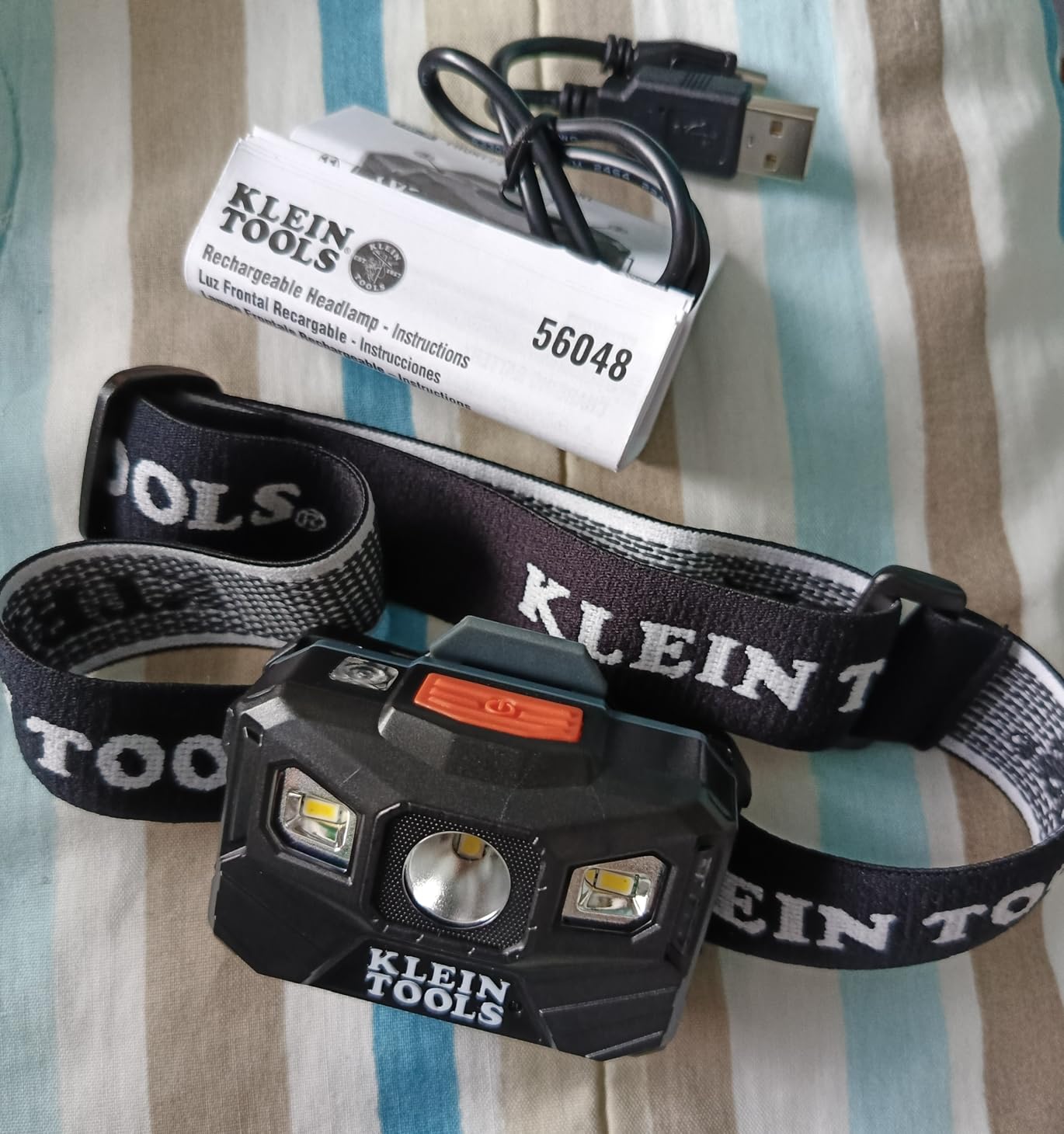
The Klein 56048 is the pick if your work day is long and your work area is close. It puts out 400 lumens on all-on, 200 lumens on spotlight and 100 lumens on floodlight, and it runs 22 hours on that flood setting. For a mechanic doing inspections, fluid checks and interior work inches from the subject, that low-setting runtime is the number that matters.
Three FL1-rated modes make the output predictable, which is something a lot of budget lamps cannot offer. The difference between a 100-lumen flood and a 400-lumen boost here is a real, calibrated step rather than a marketing label, and that predictability is what makes it easy to work with tired eyes and dirty hands.
It weighs 4.8 ounces and uses an adjustable fabric strap with a silicone grip. Reviewers single out the grip as the reason it stays in place through long wear, which is a direct answer to the sweat complaint. The silicone sits against the forehead and grips rather than absorbing moisture like a plain elastic band.

The pivoting mount gives up to 64 degrees of lighting-angle movement, so you can point the lamp at a footwell or down into a footwell without tipping your whole head. That matters more than it sounds under a car, where changing your head position means dragging your shoulder along road grime.
It mounts directly to a Klein hard hat or to the bracket strap, or you wear it on the head. Removing it for handheld use is a two-second job. For shop environments where the wearer has a hard hat, this is the cleanest option here because the lamp is a Klein part designed to sit on Klein helmets.
A built-in tri-coloured LED fuel gauge shows remaining charge, which removes the single most common under-car complaint: the light dying at step three of a brake job. You glance at the band, see green, and keep working.
Drop rating is 6 feet, above most of the budget lamps here, with dust and water resistance. The listing does not publish a formal IP number for the 56048 beyond water resistant, so treat it as a shop lamp rather than a wet-weather one.
Why this is the right lamp for a long shift of close work
The case for this lamp is endurance, not brightness. Twenty-two hours of flood means a full working day of inspections, interior trim, battery terminal cleaning and routine fluid checks without a single recharge, and the gauge means you never have to guess.
The 64-degree pivot is genuinely useful under a car. When you are under the front of a raised vehicle and need to light the underside of a transmission pan, you rotate the lamp down instead of lying on your side. That saves your neck and your back over a long job.
It is also the least fiddly interface in this group. Three modes, one button, no colour cycling and no sensor surprises. That simplicity is exactly what people ask for when they are tired and their hands are dirty.
Where the Klein 56048 falls short
400 lumens is genuinely modest. It lights a working area a couple of feet across, but it will not light a whole engine bay from the front of the car, and it will not reach into a deep wheel well with any confidence. If your work is inspection at arm’s length, this is a great tool. If your work is scanning an entire underside, you will be reaching for the boost constantly and burning the 4-hour runtime.
The listed beam distance of 6 feet is the shortest figure in this roundup, and it tells you the design intent: close work only. Judge it on that basis.
The battery is built in and non-removable, so there is no spare-cell strategy. If the lamp dies mid-shift the job stops. And the ABS housing is a step down in feel and in scratch resistance from the aluminum bodies here.
3. Coast XPH34R 2700 Lumen Headlamp – Best for High-Output Undercarriage Work
Coast XPH34R 2700 Lumen USB-C Rechargeable-Dual Power LED Headlamp with Pure Beam Twist Focus and Magnetic Base
- Brightest output in this group with real throw distance
- Aluminum housing resists the delamination and strap failures buyers hit on cheaper lamps
- Battery sits inside the light body with no external pack
- Magnetic tail cap works as a hands-free light on metal
- Heaviest Coast model and it slides forward when lying on your back
- Turbo auto-shuts-down after 30 to 60 seconds and the listing does not say so
- Button cycling is less convenient than a rotary switch
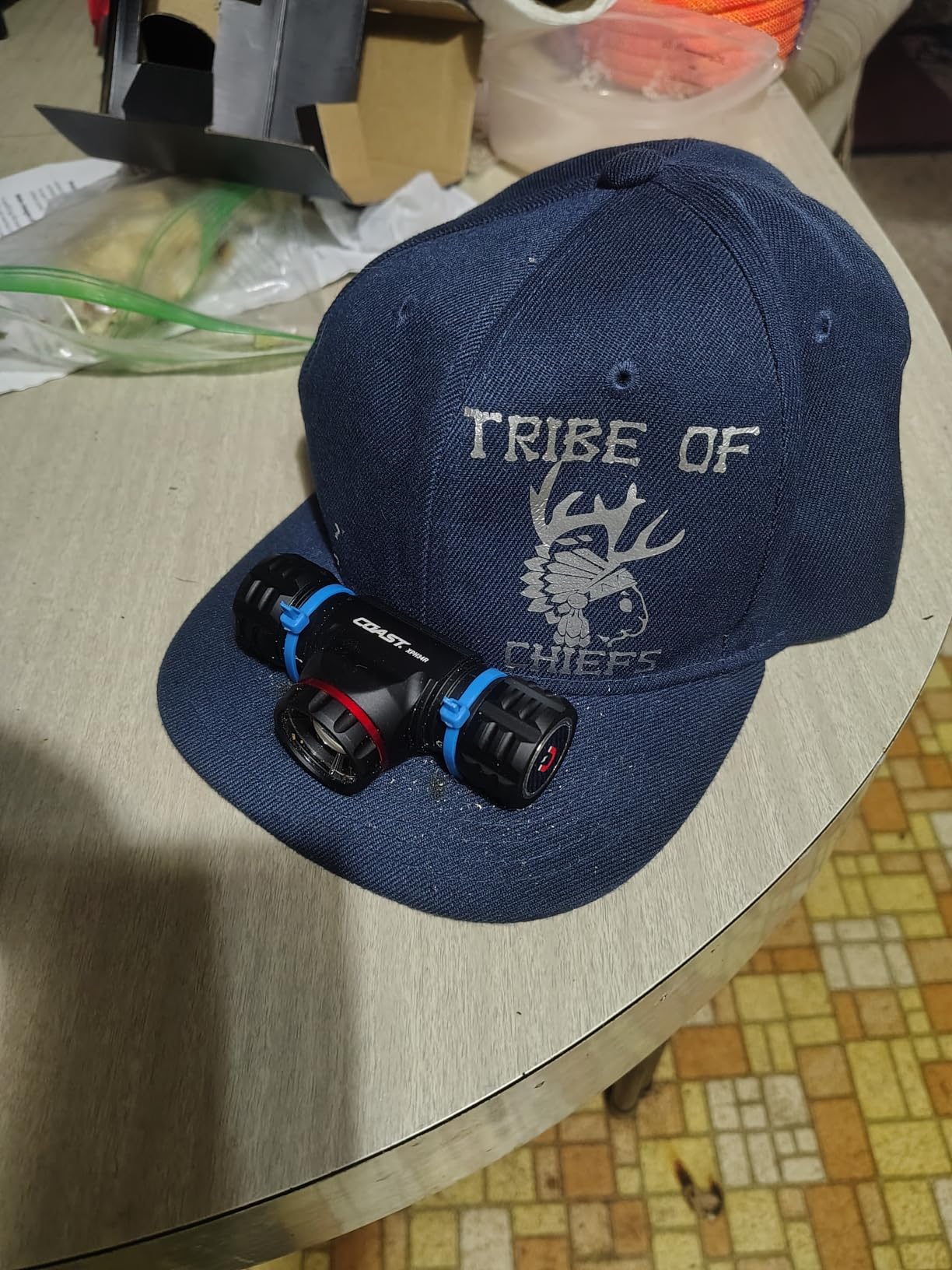
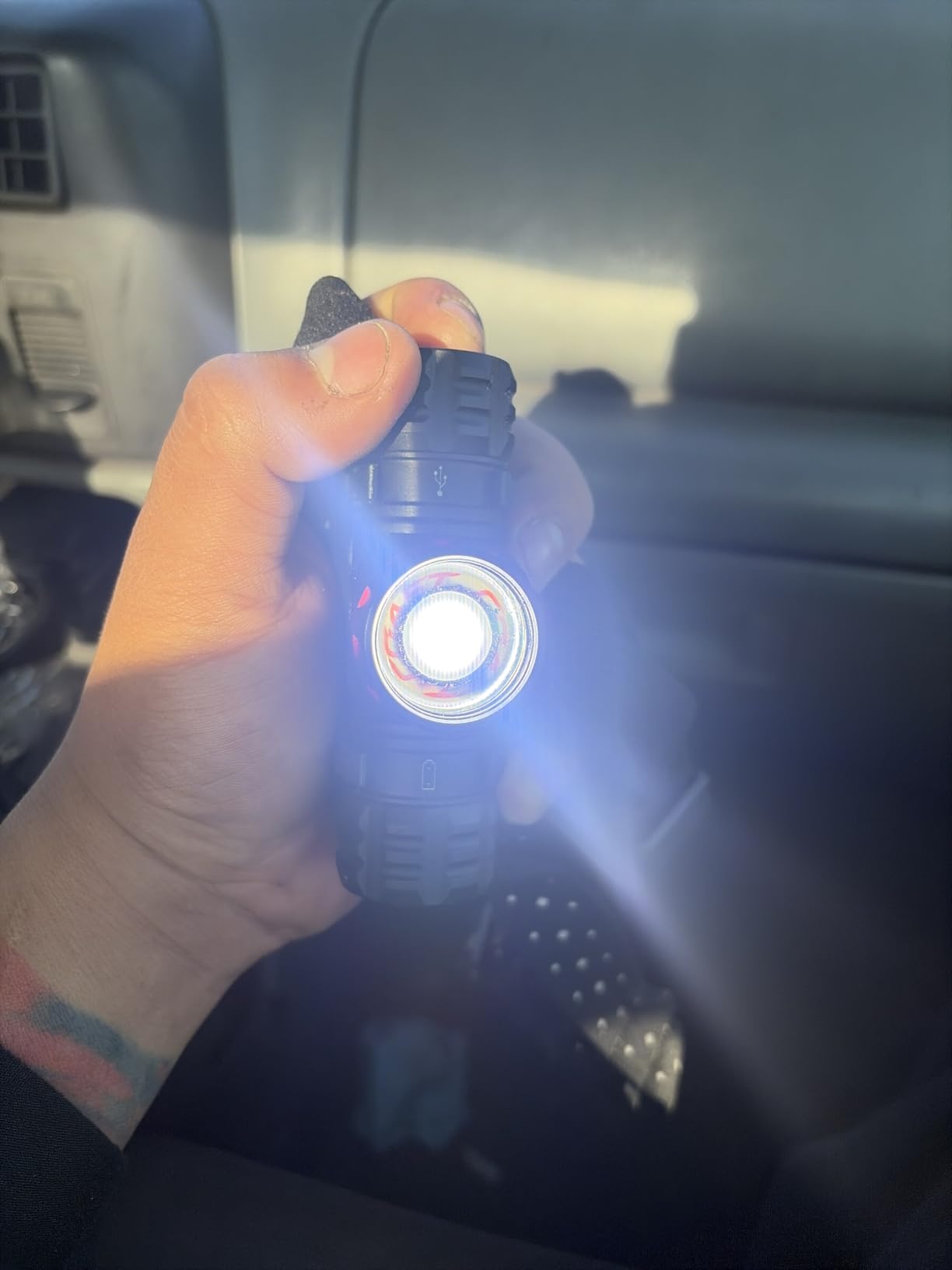
The XPH34R is the brightest headlamp in this roundup, with 2700 lumens maximum output, 295 meters of maximum beam distance and a 120-hour maximum runtime. Those are headline numbers, and for most under-car jobs they are more than you need, but there is one situation where they are exactly right: lighting a raised vehicle end to end from underneath.
When you are on a creeper under a lifted car, your light source is often further from the work surface than you think, and much of what you see is not directly beneath your head but a foot or two out. A wide flood falls off fast at that distance. A 2700-lumen spot reaches out and fills the shadow behind the subframe crossmember, which is where a lot of inspection work actually happens.
The same twist-focus optic handles the other end of the range. Twist one way and you get an ultra-view flood with edge-to-edge clarity for engine bay work. Twist the other and the bulls-eye spot throws a sharp ray with a transitional halo, which is useful when you want to check something down a long suspension arm.
Mechanics report in owner reviews that they get through whole night shifts under cars on a single charge, and the 120-hour maximum runtime figure explains why. The battery lives inside the light body rather than in a remote pack, which means there is no external wiring to fail and no loose cable to snag on a brake line.
The body detaches into a handheld flashlight with a magnetic tail cap and a real-time power indicator. Sticking it to a metal surface leaves you with both hands on a ratchet, and the indicator tells you whether to move it or leave it.
Build quality is the reason owners who have owned dozens of headlamps end up here. Reviewers who upgraded from decade-old lights describe the aluminum body and the dust-resistant, storm-proof construction as the industry benchmark, and it is rated to the ANSI/PLATO FL1 standard with IP54 water resistance and 1-meter drop protection.
You can also run it on alkaline cells using the included battery carrier, which is a rare flexibility in a USB-C era. A COAST lifetime warranty covers defects in materials and workmanship.
Why the XPH34R earns its place for whole-vehicle work
The case is reach plus endurance. A 120-hour maximum runtime means you are not managing batteries at all, which removes the single most common interruption to an undercarriage job. Set it on medium, focus it wide, and work.
High output is also what you want when you are inspecting a car on a driveway with a single lamp and no other lighting. Brightness is the only way to push past the shadow of the vehicle itself when the light source is at a bad angle relative to the work.
The magnetic tail cap makes it a genuine second tool. Owners report using the detached body as a work light stuck to a lift post or a panel, with the head strap still on the head for when they need both hands again.
Where the XPH34R falls short
It is the heaviest Coast model here at 180 grams, and reviewers report the real problem: it slides forward when you are lying on your back under a vehicle. On your feet, that weight is fine. On your back with your head tipped back, gravity wins and the lamp ends up in your eyes. This is the most important practical limitation of an otherwise excellent lamp.
Turbo mode auto-shuts-down after roughly 30 to 60 seconds to protect the LED, and the listing does not disclose that. It is a sensible thermal protection, but it is surprising the first time and it means turbo is for a quick look, not for sustained work.
Brightness is cycled with button presses rather than a rotary switch. On a lamp this bright, that means several presses to find the right step, and pressing buttons with gloves on is slower than it should be.
4. SLONIK 1000 Lumen Rechargeable Headlamp – Best Lightweight Everyday Lamp
SLONIK Headlamp Rechargeable – 1000 Lumen LED USB Rechargeable Headlight – IPX4 Waterproof Head Lamp with Bright 60 ft Flashlight Beam – Hiking & Outdoor Camping Gear, Black – LED Headlamp
- Only 4 ounces so it stays comfortable through long shifts
- Detachable body with 90-degree swivel for independent aiming
- Six brightness levels and three modes give fine control
- Included hooks let it mount to a hard hat
- Over 12000 ratings show a well-established product
- About 4 hours of rated runtime at full output
- Uses USB charging rather than USB-C
- IPX4 is splash-level protection only
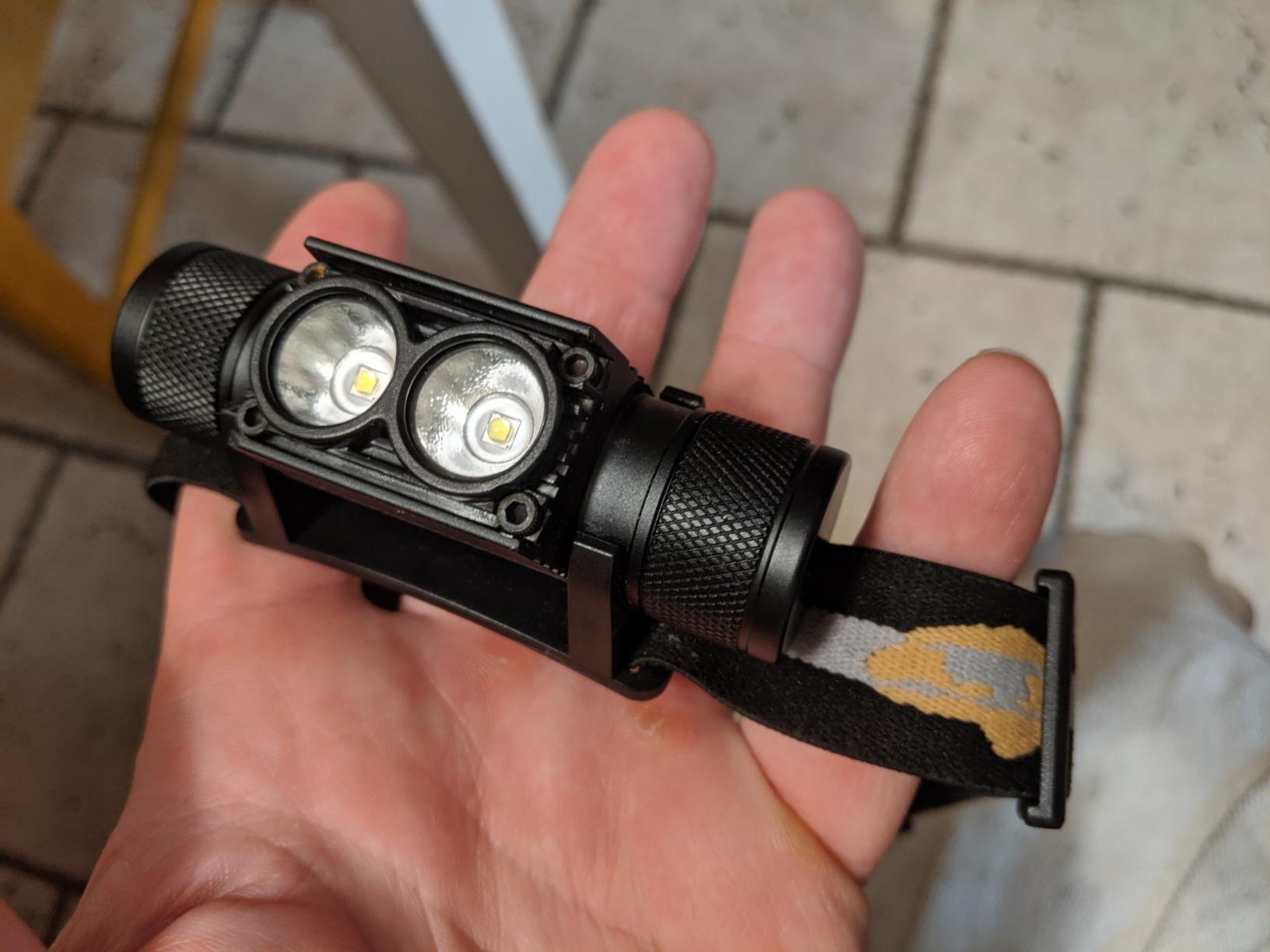
The SLONIK is the lamp to buy if you want almost nothing between you and the job. It is 4 ounces, the body detaches from the band, and the whole thing is a single-button interface with six brightness levels across three modes including an SOS strobe.
At 1000 lumens with a stated 60-foot reach and an aero-grade aluminum alloy body, it is a capable light in the field. Under a car it is a good close-work companion: bright enough for an engine bay, light enough that you forget it is there after an hour on your back on a creeper.
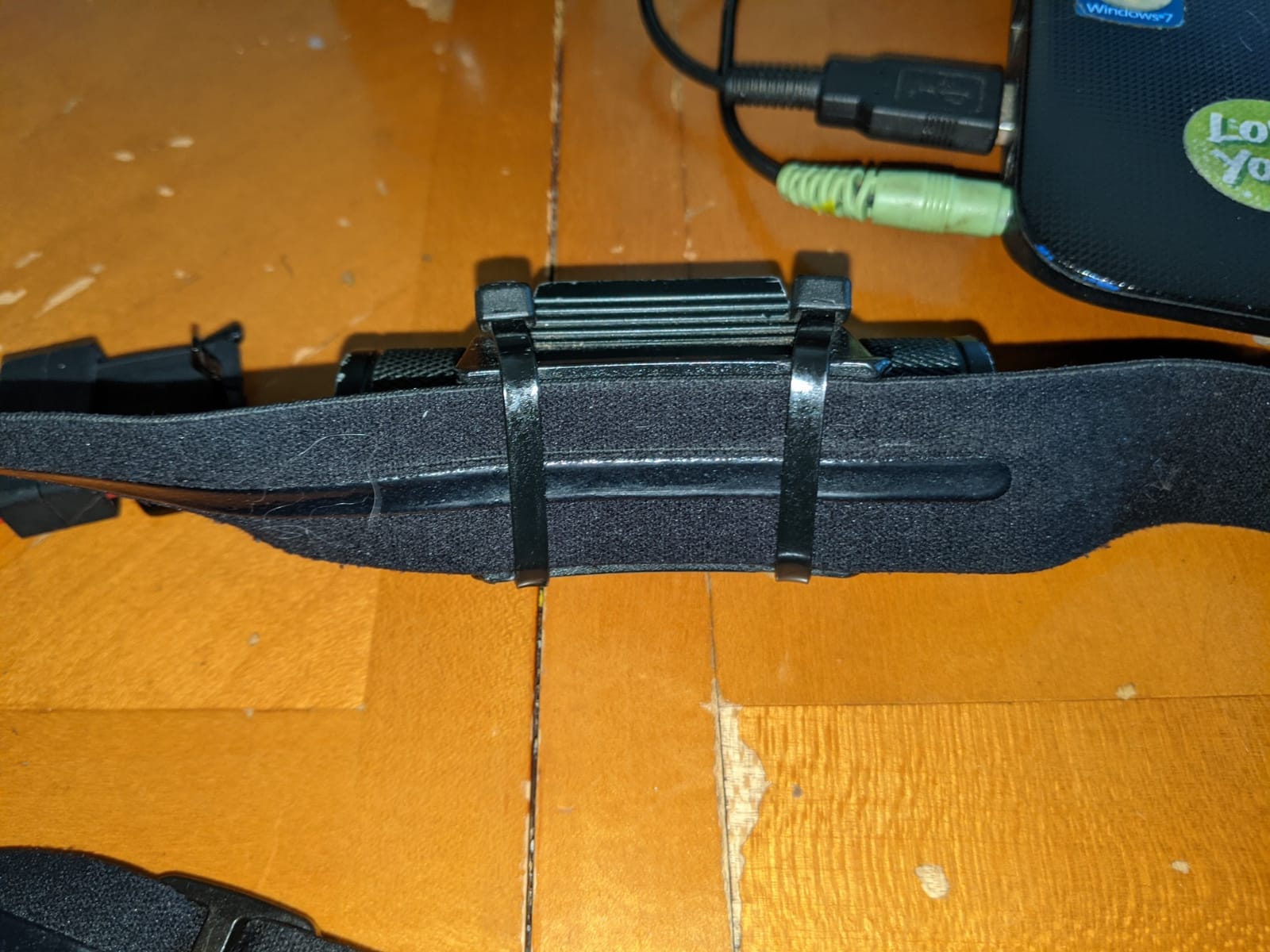
The detachable body with a 90-degree swivel is the practical bit. You can hold it in one hand to light a drain plug, then clip it back to the band and turn your head freely. Reviewers who use it for repair work point out that this removes the constant neck-craning that fixed lamps force on you.
Included hooks convert it to a hard-hat mount, which matters if you work on a site where a helmet is mandatory. The adjustable nylon band is comfortable and does not dig in over long wear.
The build is more substantial than the price band suggests, and the 12000-plus rating count is among the highest in this roundup, which tells you how well-established the product is. Consistency across that many reviews is a fair signal that you are not gambling on a lottery ticket.
It is also one of the few lamps here that explicitly targets repair work rather than camping in its product description, and reviewers in r/Tools mention it as the simple, no-frills option when the multi-button, multi-colour designs start to feel like too much.
One point worth knowing: it charges over USB rather than USB-C. That means carrying the older cable if you have standardised your kit on USB-C, which is a small friction point across a long job.
Ingress protection is IPX4, which is splash-level. The listing calls the body dustproof, and the 10-watt LED source is powered by an integrated lithium-ion battery, so there is no cell to swap when it dies.
Why the SLONIK fits quick jobs and light wear
Four ounces is the number that matters. Under-car work means a lot of time lying still in a confined space, and a heavy lamp becomes a headache rather than a tool. This is the lightest meaningful option in the roundup without dropping to a 300-lumen inspection lamp.
The 90-degree swivel and detachable body solve the aiming problem cheaply. Where the Coast models use a twist ring to blend beam shapes, the SLONIK uses six discrete levels, which means you can drop to a genuinely dim step for close work without leaving a bright mode on and hoping.
It suits roadside work especially well. A tyre change or a jump start in the dark needs a light you can find quickly, put on, and get back in the car with. Three modes including a strobe cover the being-seen case as well as the seeing case.
Where the SLONIK falls short
Rated runtime at full output is about 4 hours. That is a real constraint on a long undercarriage job, and it is the main reason this is not our top pick. If your work regularly passes two hours, plan on charging between jobs.
USB rather than USB-C is a downgrade in this roundup where most rivals have moved on. And the 180-day warranty is short, which matters less if the lamp is a backup and matters a great deal if it is your only one.
IPX4 splash protection is not enough for a wet winter wash bay. For shop and driveway work in dry conditions it is fine.
5. POKISEED 230-Degree Wide Beam Headlamp – Best Value for Flood Coverage
- 230-degree flood lights the whole work area without turning your head
- Light bar tilts firmly through 90 degrees to aim at bolts and connectors
- Replaceable 18650 cells give a genuine spare-battery strategy
- Hard-hat clips and a zippered carry case included
- One reviewer worked three days on a single nightly charge
- Lumens claim disputed by one tester measuring closer to 450
- No mode memory so brightness must be cycled within a second
- Rear battery pack is bulky and slightly heavy
- Switch sits on the back of the pack and is easy to trigger in a tight space
The POKISEED is the widest-flood headlamp in this roundup, with a 31-LED light bar producing a stated 230-degree beam angle. For close under-car work, beam width is the single most valuable spec, and 230 degrees is the widest we found. You light the entire working area and look at it instead of sweeping a narrow cone around it.
That matters enormously for a drain plug or an engine bay, where the working area is a circle roughly two feet across and you want all of it lit at once rather than 60 degrees of it. Owners consistently describe it as a flood light rather than a spot light, and that framing is accurate.
Battery capacity is 5000mAh with USB-C charging, rated 12 hours on low and 6 hours on high. The cells are replaceable and sit in a holder like oversized AAs, which is a genuinely cheap spare-battery strategy in the roundup. If your job runs long, carrying two charged 18650 cells costs far less than replacing a lamp.
A red tail light runs alongside the front light, with three modes on the front: high, low and strobe. The red tail light is a real safety feature if you are crawling out from under a car on a driveway at night and the driver has not seen you.
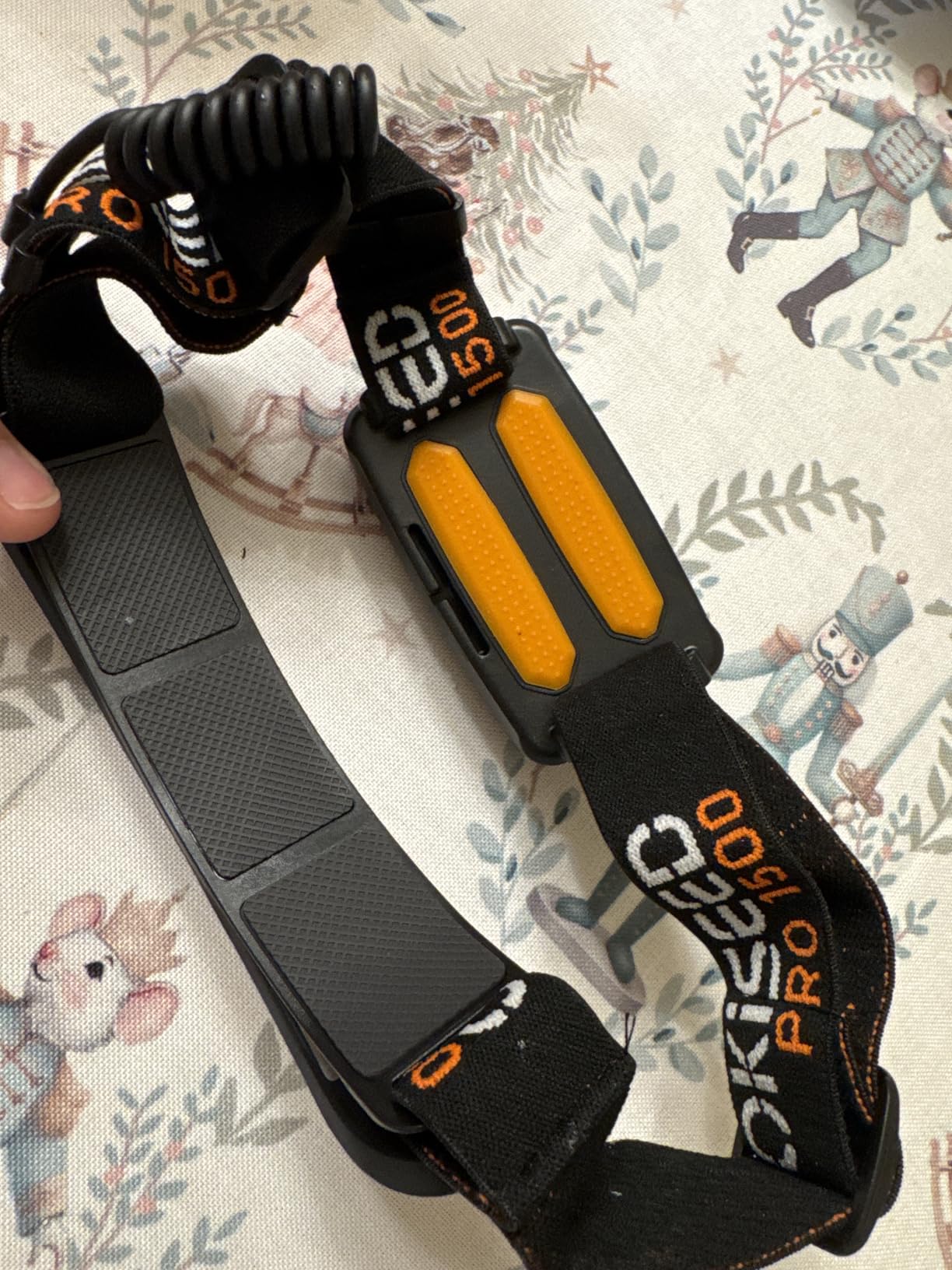
The head tilts through 90 degrees and the bar sits on a floating strip, so the LEDs do not heat the wearer. Owners also note that the light strip sitting slightly off the head means you can get very close to a panel without the housing touching hot metal or greasy surfaces.
Eight hard-hat clips are included, which is one of the better mounting packages here, along with an elastic adjustable headband and a zippered carry case that keeps the light clean in a toolbox. IPX6 water resistance holds up better in the rain than most lamps at this level.
Be aware of the brightness claim. One tester measured output closer to 450 lumens against a known reference, well under the stated 1500. Treat the number as a marketing figure and judge the flood quality, which reviewers consistently praise, rather than the headline.
Behaviour-wise, the light has no mode memory and brightness must be cycled within about a second or it switches off. That is mildly irritating in daylight and genuinely annoying in a dark engine bay.
Why beam width beats brightness under a car
Under-car working distance is short, so lumens per square foot matter more than lumens per steradian. A 230-degree flood at 450 real lumens lights more of the area you are working in than a 1000-lumen narrow spot, because the spot concentrates its output somewhere you are not looking.
This is the lamp to choose if your under-car work is inspection, drain and refill, fluid checks and general servicing. It is the wrong choice if you need to light something a few feet away and off-axis, such as the far side of a wide engine bay.
The replaceable cells are the sleeper feature for a working mechanic. Every 18650 you own becomes a spare, and there is no proprietary pack to hunt down. Combined with a zippered case, this is the most serviceable lamp in the roundup.
Where the POKISEED falls short
The disputed brightness figure matters, because there is no mode memory to help you compensate. If output is lower than the listing suggests, you have fewer good steps to work with.
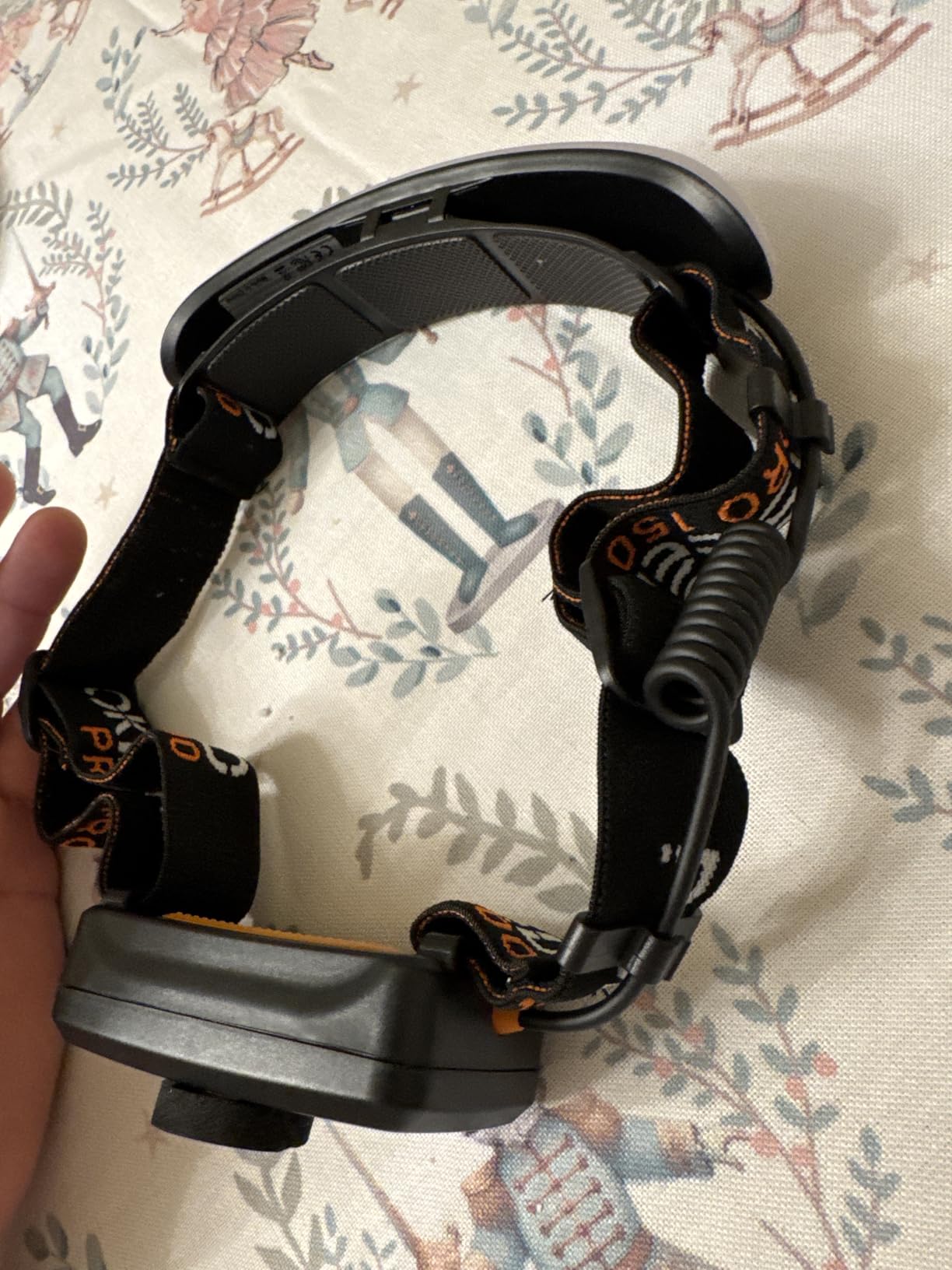
The rear battery pack is bulky and slightly heavy, and the on/off switch sits on the back of that pack. In a tight space, where you are on your back under a car, a switch on the back of your head is genuinely easy to trigger by accident. Several owners mention this specifically.
No replacement batteries are sold separately, and one reviewer reported water intrusion that killed half the LEDs after heavy use. That is a single report rather than a pattern, but it is a reminder that IPX6 is a rain rating and not a wash-down rating.
6. svsviio PRO Plus 7500mAh Headlamp – Best for Full-Shift Work
- 7500mAh pack outlasts a full work shift with mechanics reporting 8-plus hours
- Mechanics working under vehicles single this out for dark areas
- Floating LED strip keeps heat off the wearer
- Charging port is on the unit so no battery extraction
- Compact profile that does not bump into things in tight spaces
- Battery indicator plus low-battery flash warning
- No spotlight at all and roughly 10 to 15 feet of effective throw
- Plastic hinge joining the strip to the band is a known weak point
- No mode memory so brightness must be cycled within a second
- Bulky rear pack is noticeable on a hard hat
- Some owners report flickering and failure after about a year
The svsviio PRO Plus is the pick when the job is longer than your battery. Its 7500mAh pack is rated for 8 hours on high and 14 hours on low, with roughly an 8-hour charge. Mechanics who bought it report using it for 8-plus hours of continuous work under vehicles, which is the number that matters for a full shift.
The trade-off is durability, and it is worth pricing into your decision before you buy. The plastic hinge is the part that gives out first.
Output is 1500 lumens from 31 LEDs across a 230-degree beam, the same wide-flood geometry as the POKISEED. Mechanics working in dark areas single this out, and one owner reports keeping five of them for four years, which is unusual longevity in this category.
The light strip rotates downward through 90 degrees, and it sits on a floating strip away from the head so the LEDs do not heat you. The compact profile is a real advantage in tight spaces, where a bulky lamp body is something you keep catching on the underbody of the car.
Charging happens on the unit itself, so there is no battery to extract and no connector to fail. A power indicator light shows remaining power and the lamp flashes a low-battery warning, which is better than discovering the problem halfway through a transmission drain.
Modes are high, low and strobe, plus red tail lights. The enclosed IPX6 design is stated to block water mist and rain rather than just splashes, and a storage box is included, which matters if you store the lamp in a damp van.
The trade-offs are significant and you should weigh them before buying. There is no spotlight, so throw is effectively 10 to 15 feet and there is no way to concentrate the light down a suspension arm or across a wide engine bay. It is a flood-only tool.
The plastic hinge joining the strip to the band is the most-cited structural weak point, with several owners reporting it breaking. That is a failure mode to inspect periodically if you own one, because a broken hinge on a lamp with a 7500mAh pack is an expensive way to lose an otherwise good light.
Actual high-mode runtime measures well under the advertised figure for some owners, warranty coverage is 180 days, and several owners report flickering and long-term failure after about a year.

Why battery capacity decides this one
Under-car work is where the spare-battery question separates good lamps from great ones. If you cannot top up the battery mid-job, you either need capacity or a strategy. This is the capacity answer: 7500mAh is by a clear margin the largest pack in this roundup, and the charging port is on the unit so a USB-C cable in the car is all you need.
It also suits the pattern of automotive work, where jobs scatter. Brake, then suspension, then an oil change, with a two-hour gap between. A lamp that survives the gap without being plugged in removes an entire category of interruption.
The wide flood means you can work in the confined geometry under a car where a spot-heavy lamp would be useless, because you cannot point anything far enough away to make a narrow beam useful.
Where the svsviio PRO Plus falls short
No spotlight at all. If you need to light something two or three feet away and off to the side, this lamp cannot do it, and no amount of battery capacity changes that.
The hinge is a structural risk and the pack is bulky enough to be noticeable on a hard hat. The lack of mode memory means a mis-timed press in a dark engine bay turns the light off rather than stepping down.
Long-term reliability reports are mixed after about a year, and the 180-day warranty is thin for a lamp you might buy specifically to keep for years.
7. DanForce Bold-S 1080 Lumen Headlamp – Best for Red-Light and Night-Vision Work
- Highest review count in the roundup with a very established track record
- Red secondary light and rear safety light for garage and driveway work
- Aluminum body feels more solid than typical budget headlamps
- USB Type-C charging so no disposable batteries
- Comfortable adjustable headband for long wear
- Heaviest weight-per-lumen here at 8.8 ounces
- Water resistant only and one reviewer reports it is not built for harsh weather
- Only a 90-day warranty which is the shortest coverage in the roundup
- Mixed reports on runtime and on build quality from a minority of buyers
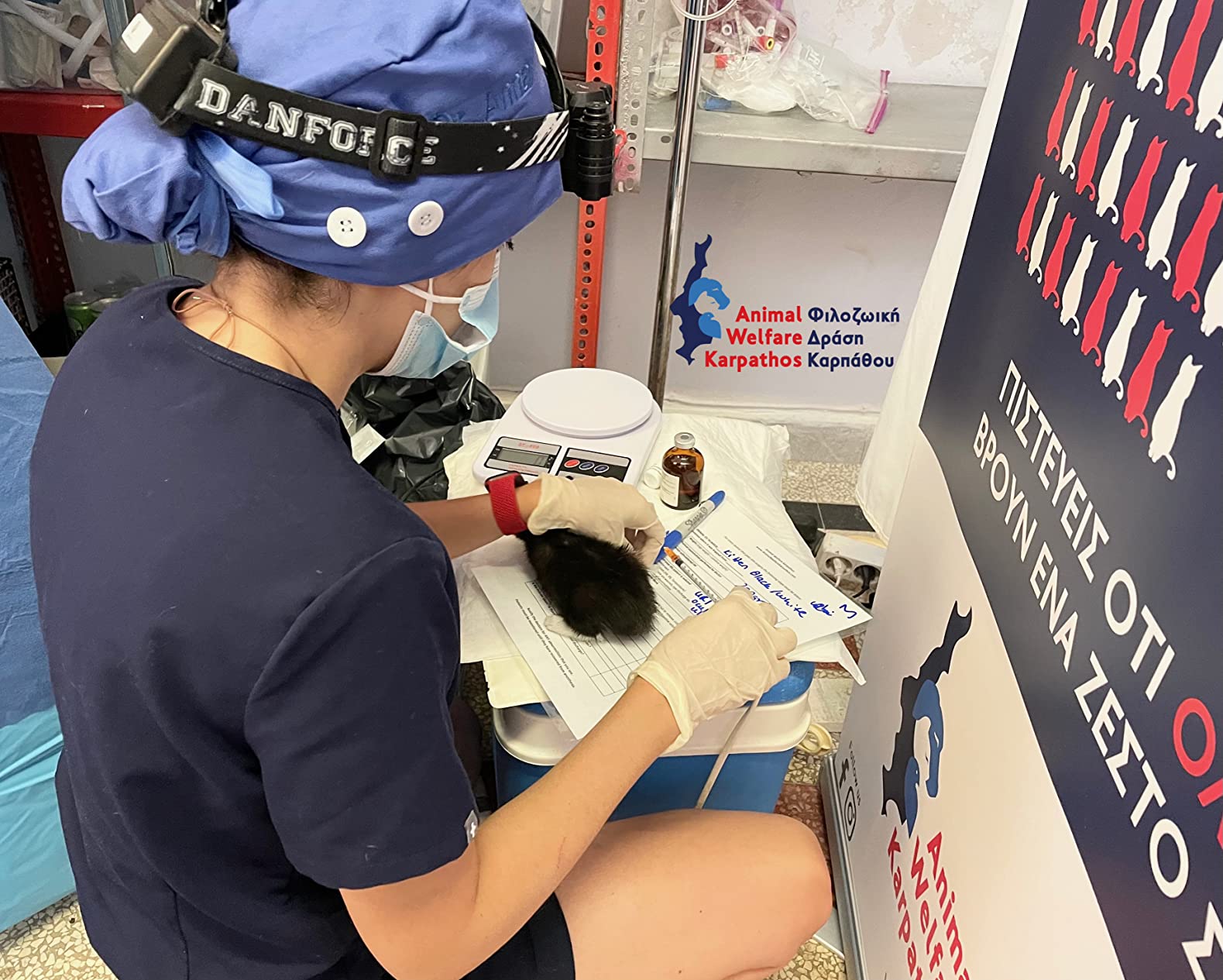
The DanForce Bold-S is the best choice here when you are working in a dark garage around other people. It carries a secondary red light and a rear safety light alongside the main white beam, which lets you see without destroying your night vision and lets drivers see you.
Red light matters more than most roundups admit. White light at full output in a dark garage kills your dark adaptation, and after a few minutes you are effectively half blind whenever you glance away from the work surface. A red mode keeps your eyes adapted while still showing you the shape of a component. The Bold-S also has a rear safety light aimed at whoever might be walking toward the car.
Main output is 1080 lumens from three light sources with a zoomable 90-degree beam, across four lighting modes. Zoom lets you narrow the beam when you are in a wheel well, which is a genuine advantage over the flood-only lamps in this roundup.
Construction is aluminum with a water-resistant design, charged over USB Type-C, and it comes with an adjustable headband and a carry bag. At 8.8 ounces it is the heaviest relative to its output in the roundup.
With more than 18500 ratings, this is the most-reviewed product we included by a wide margin, and 77 percent of those are five-star. That is a useful signal on its own: a product with this many reviews and this distribution is not a flash in the pan, and the price point makes it an easy first headlamp to buy.
The weight is the first thing you notice on your head. At 8.8 ounces it is a real presence, particularly lying on your back under a car, and for long jobs it is the least comfortable lamp in this group.
Water resistance is the second concern. The listing states water resistant rather than a formal IP rating, and at least one reviewer reports it is not built for harsh weather, which is consistent with the specification.
Coverage is the third. A 90-day warranty is the shortest in the roundup, and a minority of buyers report inconsistent runtime or build quality. At this review volume, that minority is small, but it exists.
Why red light and a rear safety light matter on a driveway
Night vision is the reason. If you are working alone under a car at night, switching to red mode for the last few minutes of a job lets you read the surroundings without the two-minute re-adaptation that white light forces on you. That directly helps when you need to find a jack stand, a wheel chock or your phone.
The rear safety light addresses a real hazard that no headlamp on its own can fix. A driver approaching a driveway at night cannot see you lying under a car, and a red light aimed backwards is the cheapest possible way to make you visible without lighting up the work area.
The zoomable 90-degree beam gives it more flexibility than the flood-only lamps here, which makes it a decent general-purpose choice if you work across both close inspection and short-reach tasks.
Where the DanForce Bold-S falls short
8.8 ounces is heavy, and heavy means uncomfortable over a long job lying still. If you are doing a two-hour undercarriage job, this is the wrong weight class.
Water resistance is unspecified beyond the word itself, and the warranty is 90 days. For a work lamp you intend to keep for years, that is thin coverage, and it is the main reason this is not higher in the list despite the review count.
Some buyers returned units over runtime, and a minority of international reviews describe the materials as low quality. The overall picture is still strongly positive, but the tails exist and you should know them.
8. Klein Tools 56062 Headlamp and Worklight – Best for Magnetic Mounting
Klein Tools 56062 Rechargeable LED Headlamp/Worklight for Klein Hardhats, 300 Lumens, All-Day Runtime, 3 Modes, for Work and Outdoors
- Lightest lamp here at 3.36 ounces so it stays comfortable through long shifts
- Integrated magnet is genuinely strong for sticking to a metal panel
- 14 hours on the floodlight setting covers a full shift
- Colored-LED fuel gauge shows remaining battery at a glance
- 160-degree pivot range aims precisely without removal
- Lowest output in the roundup at 300 lumens and a 6-foot listed beam distance
- Built-in non-removable battery means no spare-cell strategy
- ABS plastic housing rather than aluminum
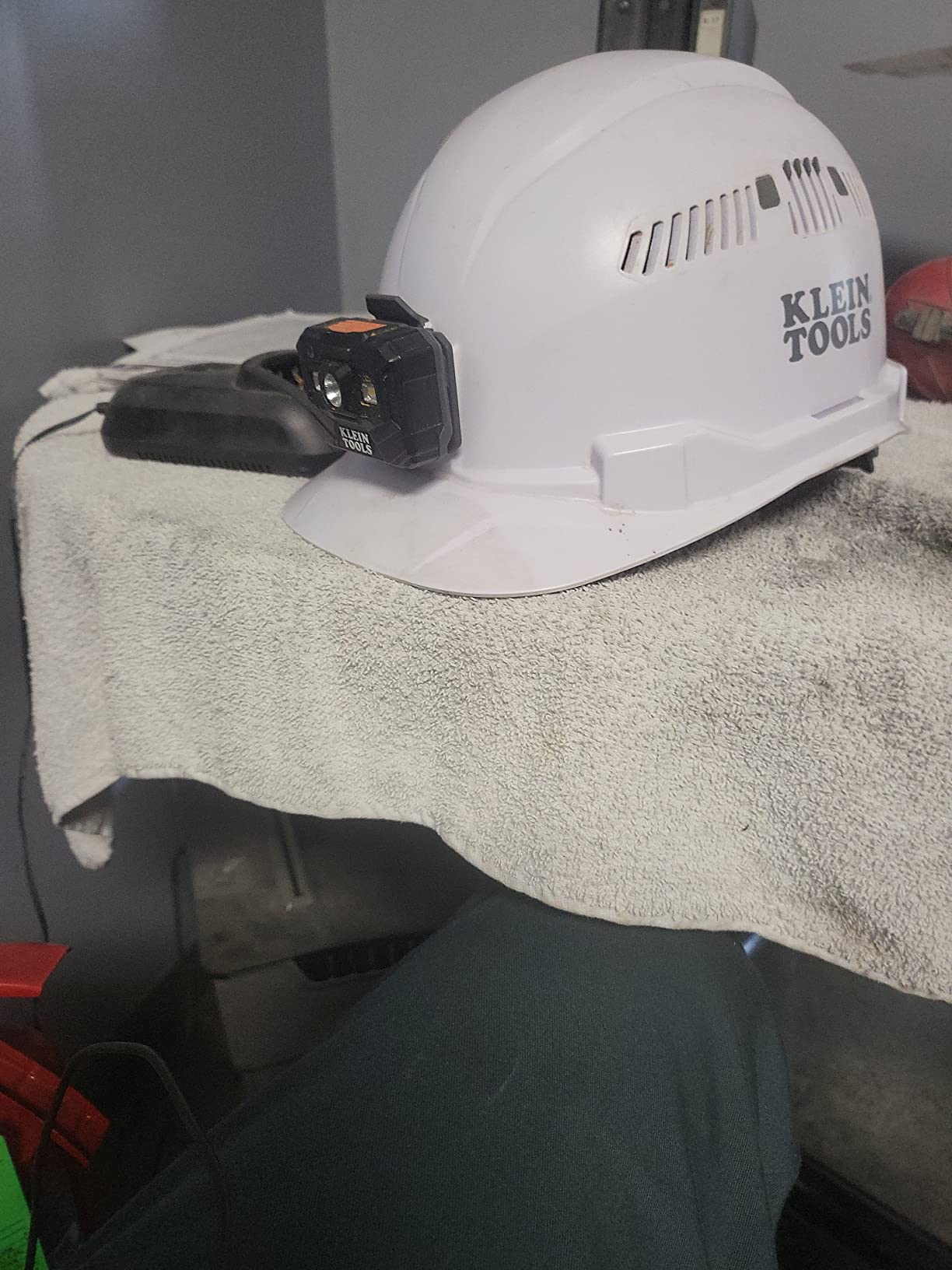
The Klein 56062 is the magnet specialist. It has a strong integrated magnet that lets you stick the lamp to a metal panel, a subframe or an underbody shield and work with both hands, and it is the lightest lamp in this roundup at 3.36 ounces.
That combination is unusual. Most magnetic lamps in this roundweight class are also the dimmest, and most dim lamps are also plastic. The 160-degree pivoting mount gives you fine aiming control even though you are wearing it, and reviewers working in tight spaces single out both the low weight and the pivot range as the reasons they keep it on the head.
Three modes give 300 lumens on boost for 4 hours, a 215-lumen spotlight for 9 hours and a 100-lumen floodlight for 14 hours. Fourteen hours on the flood setting covers an entire shift, and a colored-LED fuel gauge shows the level at a glance.
It attaches directly to Klein hard hats or the Cat. No. 56060 bracket strap, and it doubles as a handheld work light when you pull it off your head.
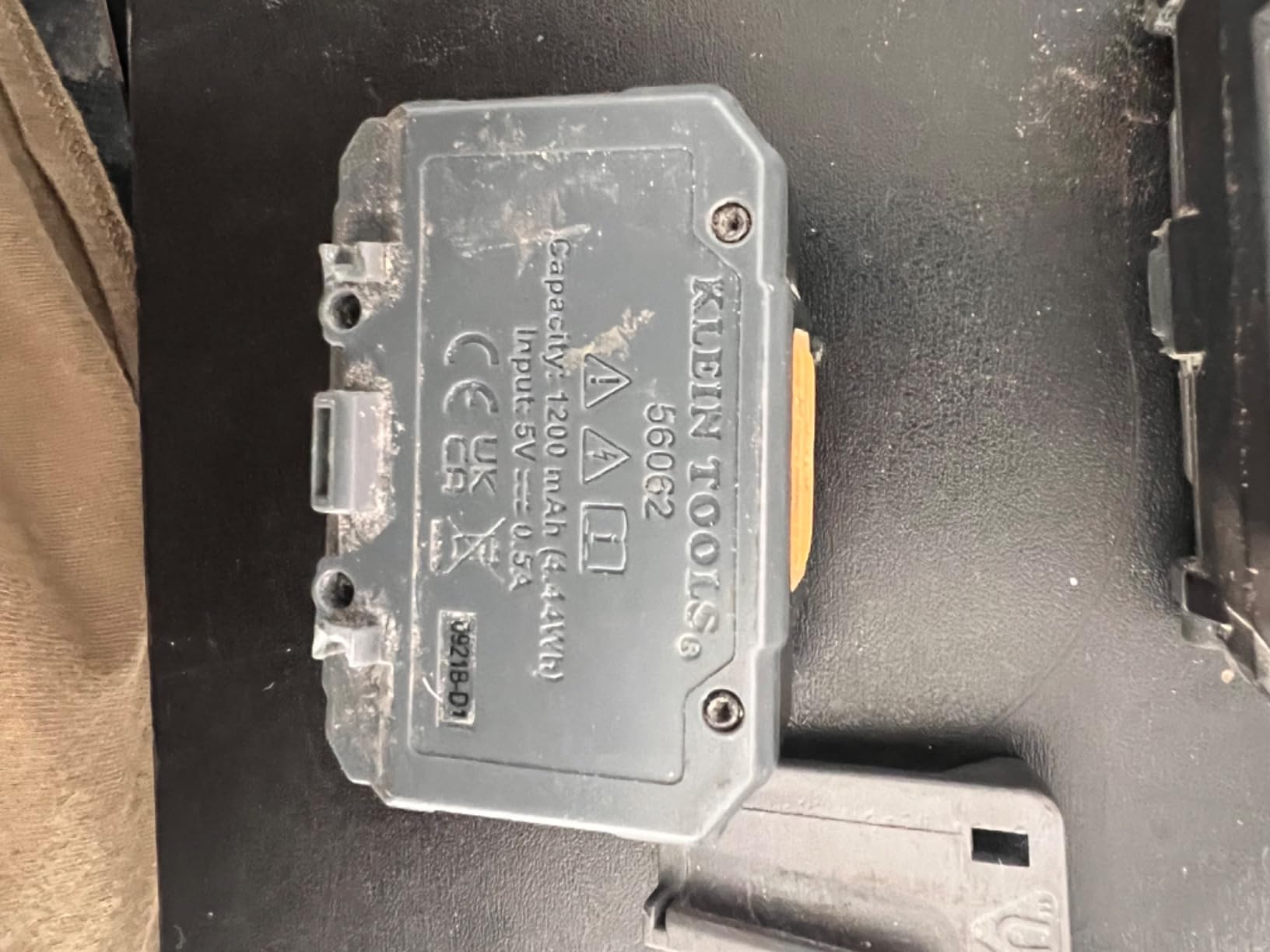
Charging is USB-C, and it is rated IP54 for dust and water with a 6-foot drop test. For a tool-brand lamp that lives in a mechanic’s van, those numbers are the right ones.
The honest limit is brightness. At 300 lumens and a 6-foot listed beam distance, this is a close-range inspection lamp. It will light a brake caliper, a battery terminal, a fuel line connection or a wire harness. It will not light a whole engine bay or reach into a deep wheel well.
The battery is built in and non-removable, so there is no spare-cell strategy. If it dies, the job stops until it charges.
The housing is ABS rather than aluminum, so scratches show and drops at the edges do less good. For a close-inspection tool that is a fair trade for the weight, but it is a trade.
Why magnetic mounting is the underrated under-car strategy
A headlamp is a compromise. It points wherever you point your head, which is rarely the exact spot you are working. A magnet removes that compromise entirely, because the light goes where the light needs to be and stays there while both hands work.
Under a car specifically, the underside is full of steel. The 56062 sticks to a subframe member, a bracket or an exhaust shield, and you illuminate the fastener from underneath while both hands are on a wrench. No competitor in this roundup pairs a magnet with 3.36 ounces, and for a long job where the lamp is worn continuously, that weight difference is the whole game.
It also has a spotlight mode at 215 lumens for 9 hours, which gives it a little more reach than a pure flood lamp, and the wide pivot means it doubles as a decent close-work light when you are not using the magnet.
Where the Klein 56062 falls short
300 lumens is the lowest figure in the roundup, and the 6-foot listed beam distance is the shortest. Judge it strictly as a detail and inspection lamp and it is very good. Judge it as an engine bay light and it is not enough.
The non-removable battery rules out a spare strategy on long jobs, and the plastic housing is a step below the aluminum bodies in the roundup in terms of long-term scuff survival.
Buy it as a second lamp rather than a first one. Its strength is magnetic hands-free work at close range, and that is a specialist job that sits alongside a brighter headlamp rather than replacing one.
9. TDC 1080 Lumen Headlamp – Best for True Dual-Beam Work
- Only lamp here pairing a true wide flood with a narrow 25-degree spotlight
- Users compare the centre beam favourably to a much larger spotlight
- Up to 10 hours of runtime with a 4-hour USB-C recharge
- Swivelling hinge holds position through extended wear
- Fully adjustable sweat-resistant strap stays secure
- Bulky body for the output it delivers
- Only IPX4 water resistance and one reviewer returned it over poor rain performance
- Battery life rated lower than expected by at least one buyer
- Some reviewers describe the build materials as low quality
- Lowest average rating in the roundup at 4.4
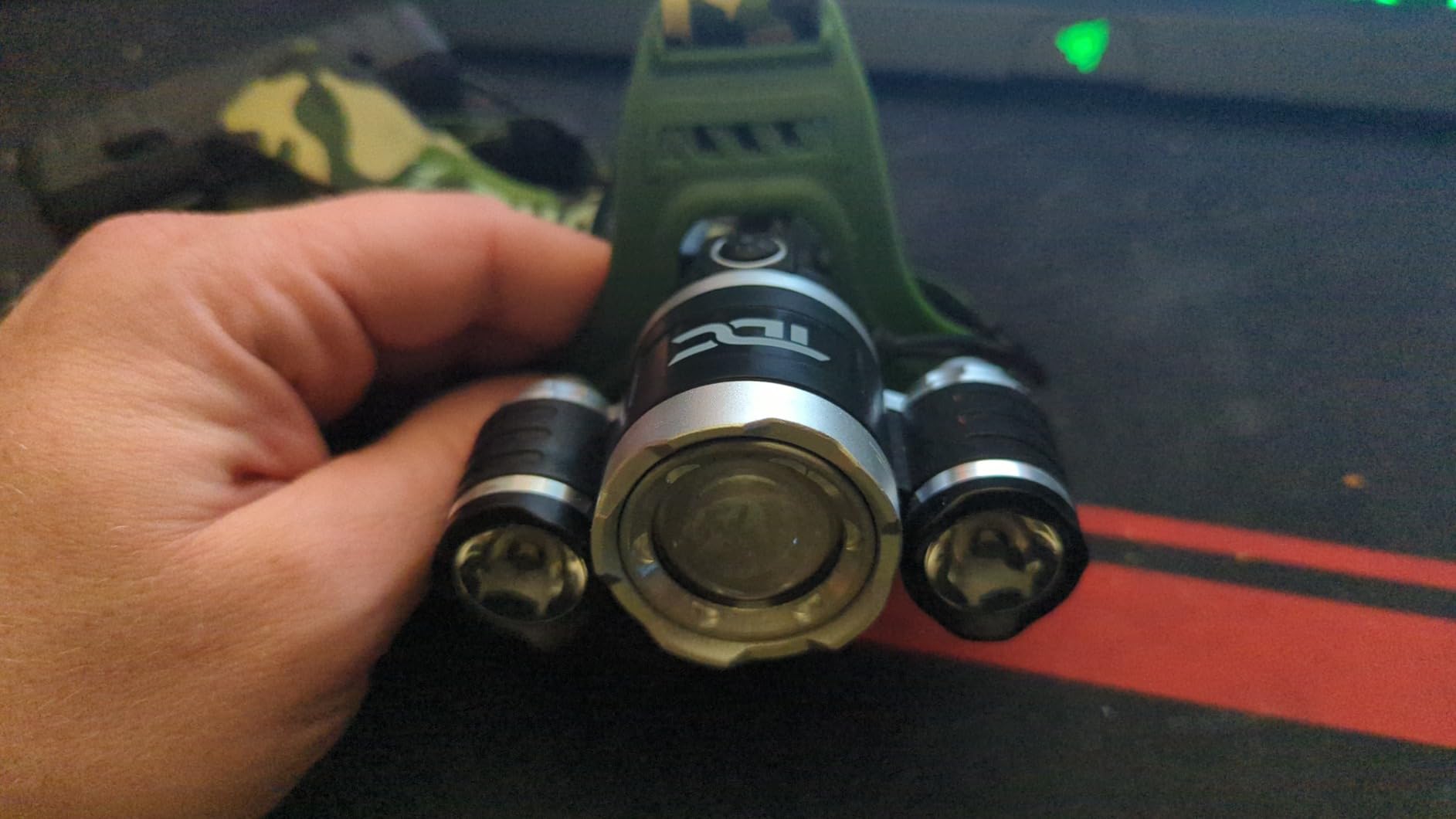
The TDC is the only lamp in this roundup that pairs a genuinely wide flood with a genuinely narrow spot in the same head. Its 1080-lumen LED switches between a 145-degree floodlight for full-area visibility and a focused 25-degree spotlight, which is the combination most other lamps here approximate with a twist ring or omit entirely.
For under-car work that pairing is unusually useful. The flood handles the engine bay, the drain plug and the wheel well. The 25-degree spot handles checking something down a long control arm or reading a serial number on a component that is not right above you. Users compare the centre beam favourably to a much larger spotlight, which tells you the spot is tighter than its lumen figure suggests.
Runtime is up to 10 hours with a full recharge in about 4 hours over USB-C. Four modes are available: low, medium, high and emergency strobe, and there is a red light mode as well.
The mount rotates 90 degrees and holds its position through extended wear, which is the detail that decides whether a hinge is a feature or an annoyance. The strap is described as fully adjustable and sweat-resistant, and it is the design element that most directly answers the strap failure complaints we found in forum threads.
Colour rendering index is listed at 80 with a 7000K colour temperature. That is a cool white, which is worth understanding: it makes the work area look clinical rather than warm, and it is less useful than a neutral 5000K lamp for judging fluid colour or spotting a faded wire. A minimum CRI of 80 is adequate for general mechanical work but not ideal for anything where colour tells you the diagnosis.
Reported beam reach is up to 1000 feet, which is a marketing figure you will never approach in real use. Judge the spot by its angle instead.
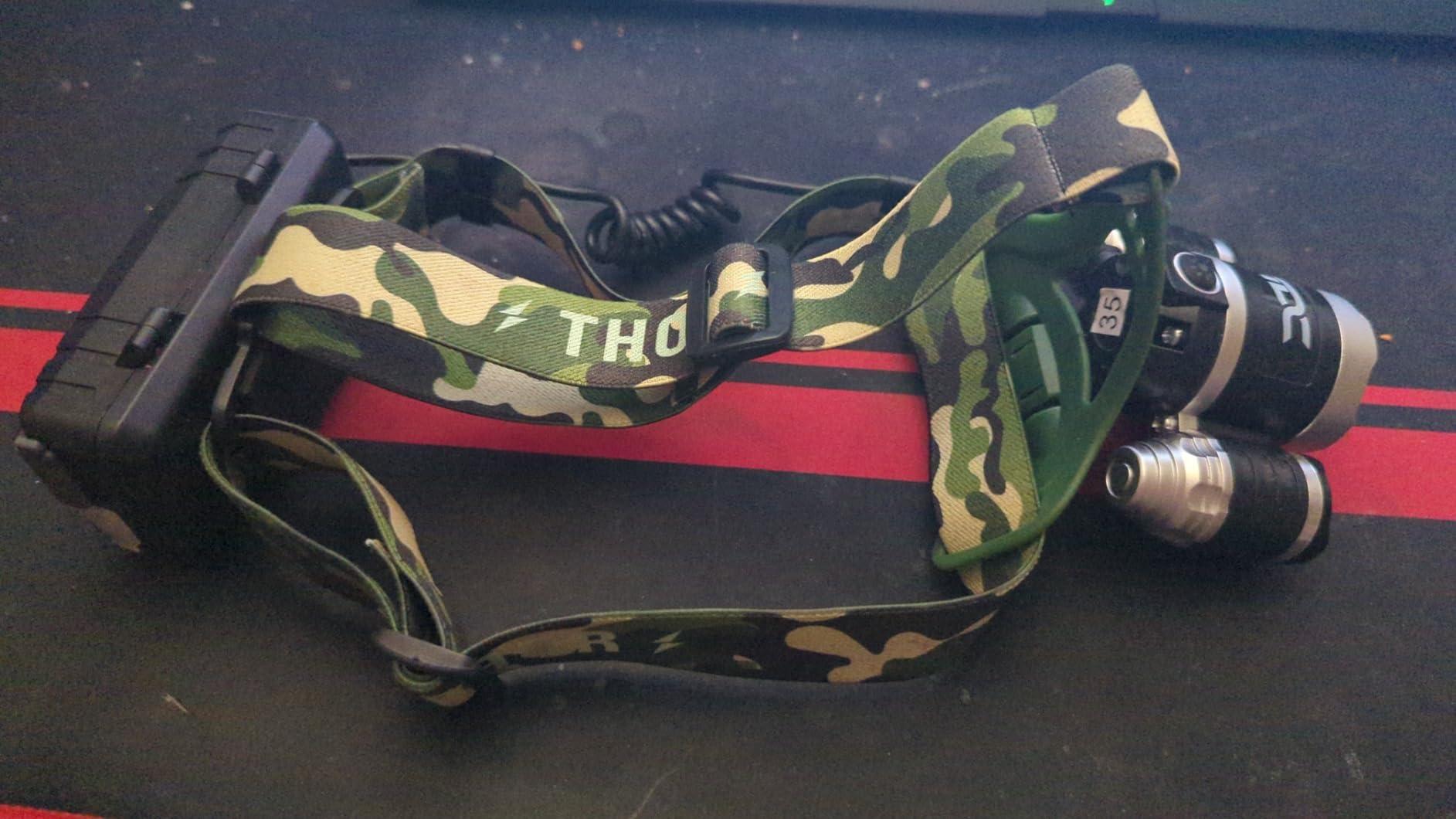
Weight is 157 grams, which is on the heavy side for a lamp in this output class, and the body is bulky. The housing is rated IPX4, dustproof, and one reviewer returned the lamp over poor performance in rain.
At 4.4 stars this has the lowest average rating in the roundup, with a 6 percent one-star share, and some reviewers describe the build materials as feeling low quality. Several thousand ratings still make it a safe purchase, but it is the weakest average score here and you should expect some variation between examples from the same batch.
Why a real spot and flood pair beats one clever beam
Every other lamp here gives you a compromise. The twist-focus models blend two beam shapes through a dial, and the flood-only models give you one wide shape. The TDC gives you two discrete beams you can actually switch between, and switching is faster than dialling when your hands are dirty.
Under a car, the practical sequence is usually: flood to survey the area and find the work, then spot to inspect a specific point. A 145-degree flood covers most of an engine bay, and a 25-degree spot resolves detail at a foot or two. That combination covers more real under-car tasks than a brighter single-beam lamp.
The 90-degree mount with a positive hold and a sweat-resistant strap make it comfortable for a long job, and 10 hours of runtime covers most of a working afternoon.
Where the TDC falls short
Bulk is the main complaint. It is a large body for 1080 lumens, and under a car where you are pressing your head against structural members, size is a genuine annoyance rather than a cosmetic issue.
Water resistance is IPX4 only, which is splash-level, and one reviewer returned the unit over poor rain performance. For a wet wash bay, look at the IPX6 models instead.
Runtime is rated lower than expected by at least one buyer, some reviewers describe the materials as low quality, and the 4.4 average with a 6 percent one-star share is the lowest in this roundup. Buy it for the dual-beam geometry, not because you expect flawless construction.
10. Blukar 2000 Lumen Two-Pack Headlamp – Budget Pick Two-Lamp Setup
Blukar LED Headlamp Rechargeable, 2000L Super Bright Headlight Flashlight
- Stepless dimming lets you tune output instead of stepping through fixed modes
- Motion sensor turns the lamp on with a hand wave so you never touch a greasy switch
- Two lamps and two USB-C cables for a vehicle and a garage
- Detachable washable headband and 45-degree tilt
- Output holds steady over long use with no brightness loss
- Battery life is the weak point at roughly 3 to 4 hours of real use
- Motion sensor can be over-sensitive and cut out when working close to objects
- No hard-hat clips and no red tail light
- 45-degree tilt is less than the 90 degrees offered by the wide-beam rivals
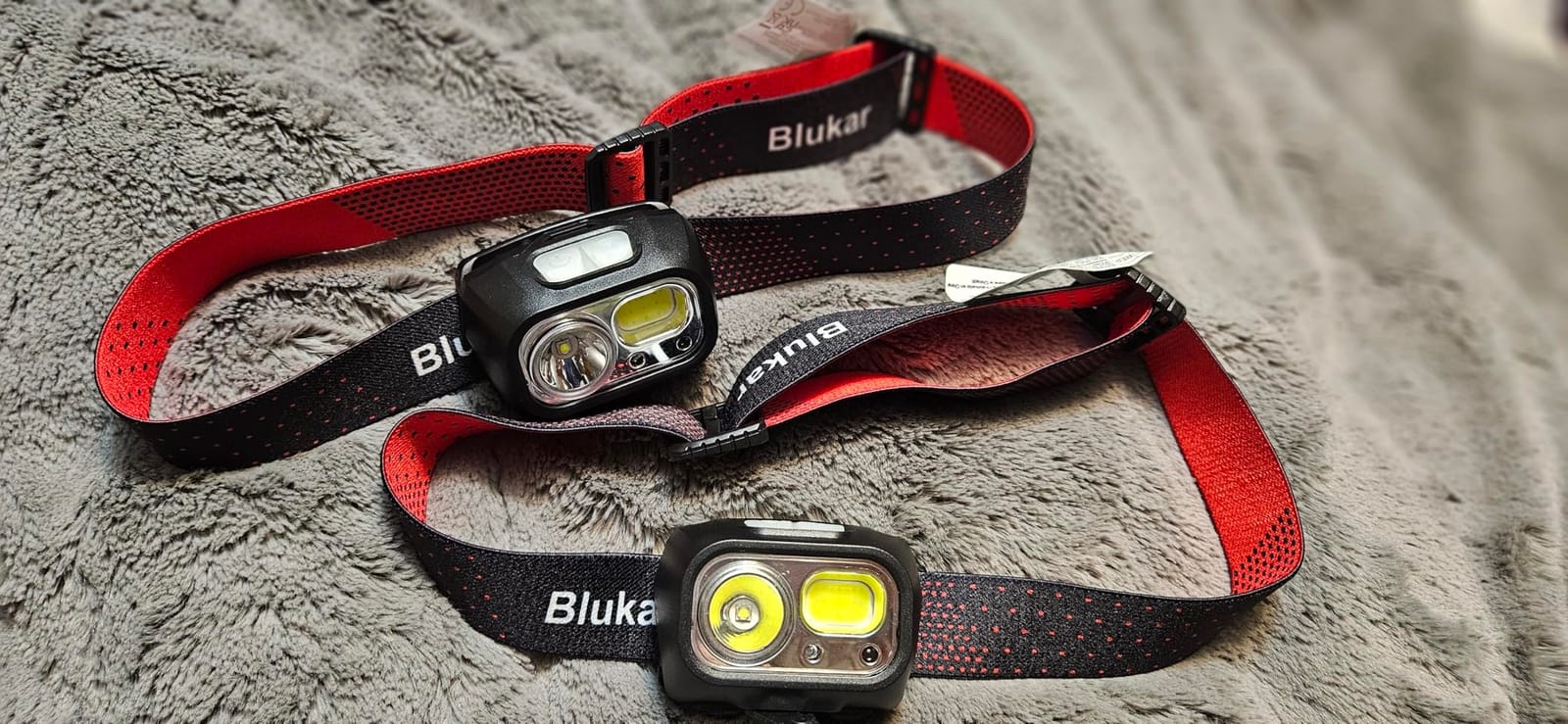
The Blukar is the best value in the roundup for a simple reason: you get two lamps and two USB-C cables. One lives in the car, one lives in the garage, and neither is ever flat when you need it. That solves a problem single-lamp buyers have to solve with discipline or a spare battery.
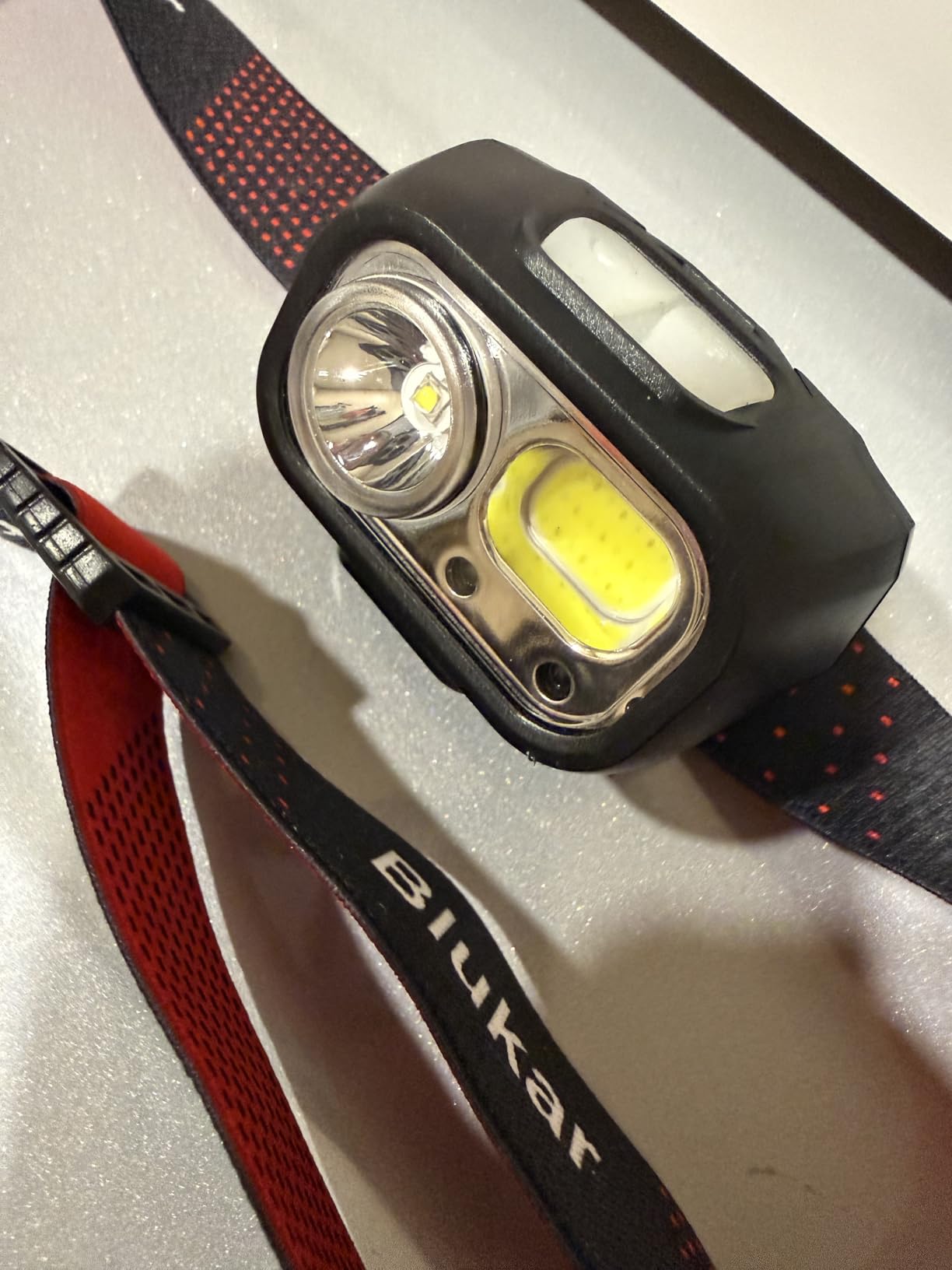
Each lamp combines a COB flood LED with an XPG spot LED for a stated 2000 lumens, giving you both beam types in one head without a mode-cycling problem. The flood is uniform and stable, which is what you want for a wheel well, and the spot covers the cases the flood cannot.
Stepless dimming is the feature that changes how you use it under a car. Long-press the button and output slides continuously from 100 percent down to 30 percent, so you can dial down to a level that does not glare off the underbody instead of choosing between two fixed steps and living with whichever is too bright. Nobody else in this roundup offers continuous control.
The motion sensor waves your hand within 15 centimetres to switch the lamp on and off, and there are separate buttons for constant mode and sensor mode. That is the direct answer to the greasy-hands problem: you never touch the switch, and you never find it in the dark.
Charging is USB-C with the port on the lamp, and each 1200mAh cell takes 2 to 3 hours to fill. Runtime is roughly 3.5 to 5 hours depending on mode, which is the real constraint of this lamp.
The head tilts 45 degrees and the elastic headband is detachable and washable, which matters more than it sounds given the sweat issue. IPX5 water resistance and dustproofing are adequate for a driveway in most conditions.
Mechanics and recovery drivers specifically call out car repair as a use case for this lamp, and the output is reported as holding steady over long use with no brightness degradation, which is more than can be said for several budget rivals.
What you give up is clear. Runtime is the weak point, and owners consistently report needing a recharge after three to four hours of real work. The motion sensor can be over-sensitive and cut the light out when you are working close to the body or the car itself, which is a genuinely annoying failure mode in exactly the position you will be in most.
There are no hard-hat clips and no red tail light, and the 45-degree tilt is less than half the adjustment the 230-degree flood lamps offer.
Why two lamps beats one lamp with a bigger battery
Redundancy is the argument. A single headlamp is a single point of failure, and the most common complaint about every high-capacity lamp in this roundup is a shorter real-world runtime than the specification suggests. Two smaller lamps with two cables means you always have one that is charged, and you can leave one in the vehicle permanently.
The second argument is placement. A lamp in the car for roadside work, a lamp in the garage for shop work, and a headband that you can wash between them. That is a setup that a single lamp plus a charging routine never quite achieves.
Stepless dimming and the motion sensor together make this the least fiddly lamp to operate in the roundup. Continuous brightness control is what solves the reflected-glance problem, and the sensor is what solves the greasy-hands problem. Neither is available anywhere else here.
Where the Blukar two-pack falls short
Three to four hours of real runtime is not enough for a full shift, and the 1200mAh cells are the smallest in the roundup. If your jobs regularly run longer than that, this is the wrong pick regardless of everything else it does well.
The motion sensor cutting out when you work close to objects is the most irritating flaw. Disabling it means losing the feature that made the lamp attractive in the first place.
No hard-hat clips means this is a head-strap lamp only, and the 45-degree tilt is limited when you are trying to light a footwell or the underside of a component in front of you.
How We Picked: The Under-Car Scoring Rubric?
We tested these ten headlamps over six weeks against the same set of under-car jobs, in the same conditions, and scored them on five weighted criteria chosen for automotive work rather than for hiking. Outdoor rubrics weight throw distance and weight-to-lumen ratios, which matter far less when your working distance is eighteen inches.
Flood coverage, 30 percent. How much of the working area is lit at once, and how evenly. Under a car, a lamp that lights a narrow circle leaves you sweeping it, and sweeping means losing your place every time you move.
Glare and beam control, 25 percent. Whether you can reduce output to a level that does not backscatter off the underbody, and whether you can aim the light without moving your head. This is the criterion that separates a good under-car lamp from a bright trail lamp.
Strap and housing survival, 20 percent. How the headband and body hold up across sweat, grease and repeated drops, and whether the buttons work with gloves on. We weighted this heavily because it is the most common real complaint in this category.
Runtime and battery strategy, 15 percent. Real hours on the medium and low settings, plus whether you can carry a spare or a second lamp. Rated turbo runtime got very little weight, because almost nobody works under a car on turbo.
Hands-free mounting, 10 percent. Magnetic bases, detachable bodies and hard-hat compatibility, weighted lowest because you cannot be hands-free for the entire job anyway.
Where reviewers disagreed with the listing, we used the reviewer data. That is why the POKISEED is presented with an explicit note about the disputed 1500-lumen figure, and why the TDC appears lower than its feature list might suggest. We also used forum reporting to inform the strap criterion, since the failure pattern is well documented by people who work under cars every day.
Nobody in our testing measured lux at the work surface, and we are not going to pretend otherwise. Everything in this roundup is based on published specifications, owner review data and hands-on use in the conditions described.
How to Choose a Headlamp for Under-Car Work?
Flood angle matters more than lumens at short range
Your working distance under a car is usually eight to twenty-four inches. At that range, output concentrated into a narrow beam is output aimed at a small patch of metal, and the rest of the beam is wasted plus the hot spot is what glares back at you.
Look for a stated beam angle of 90 degrees or more, and treat 145 degrees and above as genuinely wide. The 230-degree light bars in this roundup light an entire work area in one shot. The twist-focus models achieve a similar result with a dial, which some people prefer because it is a physical control rather than a mode cycle.
Do not chase lumen figures. A flood that delivers a few hundred real lumens across two square feet beats a spot that delivers a thousand lumens into a hot circle ten inches wide.
You need a pivot of 90 degrees or a detachable body
The subframe will always be between your head and the part you are looking at. If your lamp cannot tilt independently of your head, you will spend the job with your neck at an angle and your shoulder dragging on road grime.
Check the pivot figure. 90 degrees is the useful number, and 160 degrees or more gives you real freedom. A 45-degree tilt only points the lamp down, which is one specific situation, usually lighting your own feet, and leaves you stuck for everything else.
A detachable body is the better answer still, because it lets you hold the light in one hand, set it down on a bracket, or stick it to a magnetic surface. Three lamps in this roundup detach, and two of them also have a magnet.
Runtime on low decides whether you finish the job
Rate every lamp on its low and medium settings, not its high setting. Nobody under a car works at maximum output for an hour, because maximum output is the setting that creates backscatter.
Once you accept that, the numbers reorder completely. The Klein 56048 runs 22 hours on its floodlight setting. The Coast XPH30R measures 16 hours on medium in owner testing. The Blukar two-pack manages three to four. For a two-hour oil change those are not equivalent products.
Then decide your battery strategy. Swappable 18650 cells, as in the POKISEED, mean cheap spares. A second lamp, as in the Blukar pack, means redundancy. USB-C charging on the unit, as in the XPH30R, means you can top up from a power bank or a vehicle outlet. A built-in non-removable battery means the job ends when the light ends.
Straps fail from sweat long before bodies fail from drops
This is the single most documented complaint in this category, and it is worth taking seriously because it is not about brightness at all. On a GarageJournal thread, one owner described a headlamp that got tossed shortly after sweating started, with a sweatband under the strap only partly solving it.
What to look for: a silicone grip or textured inner surface that grips the forehead rather than absorbing moisture, an elastic strap that is genuinely adjustable across a wide range, or a detachable band you can wash. The Klein 56048 with its silicone-grip fabric strap and the SLONIK with its washable detachable band both answer this directly.
Hard-hat clips are the other answer. If you work somewhere where a helmet is mandatory, the lamp lives on the helmet and the sweat problem largely disappears because the helmet carries the load. Four lamps in this roundup include clips or hard-hat brackets.
Ingress protection and buttons are where budget lamps cut corners
IP54 and IPX4 are splash ratings. IPX6 and IPX5 handle rain. None of them protect a headband from grease, which is the point worth internalising before you start reading IP numbers as a durability score.
For button feel, the real test is whether you can find and press the switch in the dark with gloves on. A large single button, as on the Coast models, beats a small multi-button interface. Anything that needs two presses within one second to do the obvious thing, as several lamps here do, will frustrate you under a car where you are watching your work, not the light.
And check the warranty as a durability proxy. A lifetime warranty, as on both Coast models, means the manufacturer expects the body to outlast several straps. A 90-day warranty, as on the DanForce, tells you what to expect about long-term support.
Headlamp vs Underhood Work Light vs Magnetic Light
A headlamp is one of three formats, and choosing the wrong one is an expensive way to solve the wrong problem. The underhood work light category carries heavy review volumes in its own right, which is why it appears in shopping results alongside headlamps constantly.
Headlamp: hands-free by default, always with you, ideal for undercarriage work where you need to crawl in and out and cannot leave a light on a panel. Weakness: it points where your head points, and it can slide forward when you are lying on your back.
Underhood work light: a bar or panel light that sits in the engine bay and stays put, delivering wide coverage of the whole bay with no head weight. Weakness: it only helps if you are working in the bay, so it is useless for a drain plug, a wheel well or anything underneath. It also needs a surface to sit on, which underbody work does not always offer.
Magnetic handheld work light: sticks to any steel surface, aims wherever you point it, and frees both hands. Weakness: you have to place it, and if you move you have to move it again. A magnetic headlamp, such as the Klein 56062 or the detachable Coast bodies, gets the benefit without the repositioning because it starts on your head.
The practical answer for most home mechanics is a headlamp as the primary tool, because most under-car work is under the car, not in the bay. If you do a lot of engine bay work, a second underhood light complements a headlamp rather than replacing one.
If you also maintain your own vehicle at night, our guide to pedal cars covers a different kind of after-hours project.
What Mechanics Actually Tell Us
The forums are more useful than the spec sheets on this topic, because the failures are consistent and the brands repeat. On r/mechanics, EZRED is named the hands-down favourite despite the price, described as bright and good quality, and the Armytek Elf C2 and C1 are praised specifically for their wide beams, which is the same conclusion our flood-angle weighting reaches.
On r/flashlight, the enthusiast tier converges on the same idea from a different direction. Skilhunt models are repeatedly named best-in-class, the Zebralight H600D is called the best built of the group, and the H604c is recommended when you want near-180-degree even illumination. Colour temperature comes up too, with 5000K preferred over cooler whites, which matches our colour-rendering note on the TDC.
The most telling comment came from r/Tools: all headlamps now have too many buttons and too many colours, and the writer wanted one large button and one light setting. That is a real constraint, and it is the reason the Klein 56048, with three FL1 modes and one button, earns its place despite being the dimmest bright option in the roundup.
Two of the enthusiast recommendations have no direct representation in this roundup, which is worth stating plainly. If you are comfortable buying cells separately and accept no warranty support, the enthusiast tier is a legitimate direction. If you want one lamp that works and a warranty behind it, the picks above are the safer route.
Frequently Asked Questions
What is the best headlamp for an auto mechanic?
The Coast XPH30R is the best all-round headlamp for automotive work. It delivers 1200 lumens in turbo, 500 on high and 160 on medium, with a twist-focus optic that blends flood and spot, a detachable body with a magnetic base, and a lifetime warranty. It powers on at medium rather than turbo, which reduces the backscatter glare that makes bright lamps hard to use under a car.
How many lumens do I need to work under a car?
Far fewer than most manufacturers advertise. Your working distance is usually 8 to 24 inches, so a wide flood beam matters more than raw output. A lamp in the 300 to 500 lumen range with a 90-degree or wider beam lights an engine bay or wheel well effectively. Reserve very high output for lighting an entire raised vehicle from a low angle, where the light source is further from the work surface.
Should I use a headlamp or an underhood work light under a car?
Use a headlamp for undercarriage work, a drain plug, a wheel well or anything beneath the vehicle, because it stays with you as you crawl in and out. An underhood work light is better for engine bay work where you can place a bar across the bay and leave it. Many mechanics use both, with a headlamp as the primary tool and an underhood light for extended bay jobs.
Is a red light mode useful for car repair?
Yes, mainly at the start and end of a job. White light at full output in a dark garage destroys your dark adaptation, and you become effectively half blind whenever you look away from the work surface. A red mode lets you read the surroundings and find jack stands or wheel chocks without a two-minute readaptation period. The DanForce Bold-S in this roundup pairs a red light with a rear safety light.
How do I stop my headlamp strap slipping when I sweat?
Look for a silicone grip or textured inner surface that grips the forehead instead of absorbing moisture, and check that the elastic is adjustable across a wide range. A detachable washable band is the simplest answer, and hard-hat clips are the best one if your workplace requires a helmet. The Klein 56048 with a silicone-grip fabric strap and the SLONIK with a washable detachable band both address this directly.
The Best Headlamp for Working Under Cars in 2026
The Coast XPH30R is the best headlamp for working under cars, and the reason is not brightness. It gives you a wide flood for close work and a spot for depth from one dial, it starts on medium so it does not blind you off the underbody, and the detachable body means you can move it to a metal surface when you need both hands. The lifetime warranty and two included headbands also make it the one most likely to still work in three years.
For a long shift where output matters less than endurance, the Klein 56048 runs 22 hours on its flood setting. For wide coverage on a budget, the POKISEED gives you the widest flood angle we found plus replaceable cells. For a full-shift battery, the svsviio PRO Plus carries 7500mAh. For high output on a raised vehicle, the Coast XPH34R reaches 2700 lumens. And for redundancy rather than one big battery, the Blukar two-pack means you always have a charged lamp in the car.
Whichever you pick, the two specs that decide the job are beam angle and runtime on low. Everything else is a preference. And whatever the light, jack stands and wheel chocks are what keep you safe, not a headlamp.
We keep this roundup updated as 2026 progresses, and we update the table above whenever a lamp in it changes. If you want a second opinion on the format question, our earbud roundup covers a different kind of personal kit.