
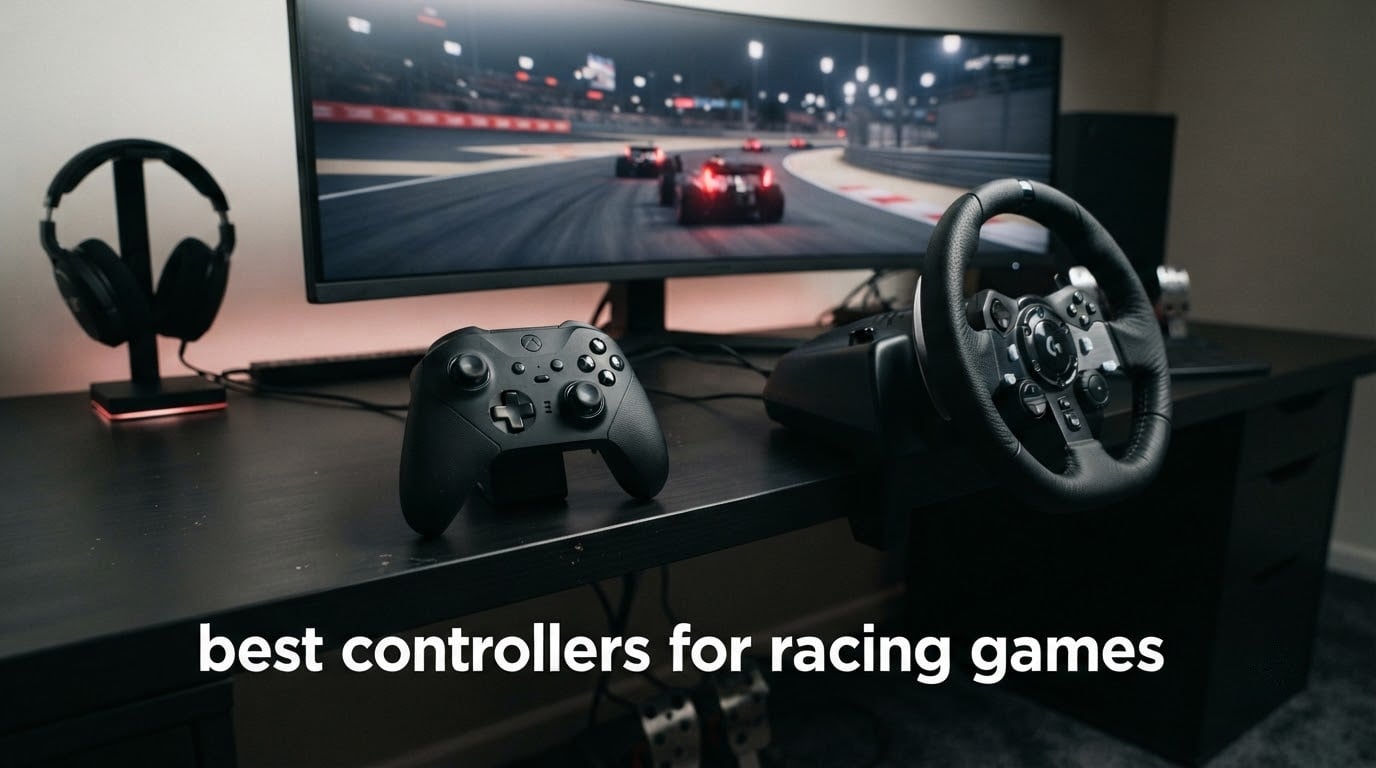
Racing is the one genre where a cheap input device shows up in your lap times. Every corner entry, every trail-brake, every countersteer correction goes through a thumbstick and a pair of analog triggers, and if those parts are vague, springy or drifting, you are braking late before you ever touch the brakes. We spent weeks putting ten of the most talked-about pads and wheels through the same corner of the same circuit to work out which ones actually deserve your money in 2026.
What makes the best controllers for racing games different from the best controllers for shooters is mostly vertical. You need a stick that tracks a small, precise movement and returns dead centre every time, proportional triggers you can feather instead of snap, and a connection that does not add a frame of delay at the moment you need to catch a slide. Paddle shifters and adjustable trigger stops matter here in a way they never do in a platformer.
We also think the search for the best controllers for racing games has been done badly by the wider web. Most roundups mix up first-party pads, budget pads and pro-level paddles without saying which of them are for arcade racers and which are for sim racers. So we split them, named the platform each one fits, and told you plainly where a controller stops being enough. If you are still deciding between a pad and a wheel, skip to the gamepad versus wheel section further down. It is the shortest useful answer we can give.
Table of Contents
Top 3 Picks for the Best Racing Controllers in 2026

Xbox Elite Series 2
- Adjustable stick tension
- Hair trigger stops
- Four rear paddles
- 3 saveable profiles

DualSense Edge
- Adjustable trigger travel
- Swappable back buttons
- Swappable stick modules
- Quick-swap profiles

GameSir G7 SE
- Hall Effect sticks and triggers
- Lockable rear paddles
- Wired USB-C
- On-board profiles
Those three cover the three questions we get most: which pad is the most complete, which one is right for a PlayStation, and which one costs the least for what it does. Everything else in the list fills in the gaps around them.
All 10 Racing Controllers Compared Side by Side in October
| Product | Specifications | Action |
|---|---|---|
| Xbox Elite Series 2 |
|
Check Latest Price |
| PlayStation DualSense Edge |
|
Check Latest Price |
| GameSir G7 SE |
|
Check Latest Price |
 8BitDo Ultimate 2C 8BitDo Ultimate 2C |
|
Check Latest Price |
 8Bitdo Ultimate 2 8Bitdo Ultimate 2 |
|
Check Latest Price |
 Logitech G29 Wheel and Pedals Logitech G29 Wheel and Pedals |
|
Check Latest Price |
 GameSir Nova Lite 2 GameSir Nova Lite 2 |
|
Check Latest Price |
 SCUF VALOR PRO SCUF VALOR PRO |
|
Check Latest Price |
 Turtle Beach Rematch Core Turtle Beach Rematch Core |
|
Check Latest Price |
 Logitech G F310 Logitech G F310 |
|
Check Latest Price |
1. Xbox Elite Series 2: Best Overall Racing Controller with Adjustable Sticks and Paddles
- Stick tension you can dial in to your steering weight Hair trigger stops for fast braking taps Four paddles plus three saveable profiles Works on Xbox Series X
- S Xbox One and Windows PC
- Face buttons still use soft rubber-dome switches
- Grip covering can peel after months
- Minority of units hit stick drift early and need warranty work
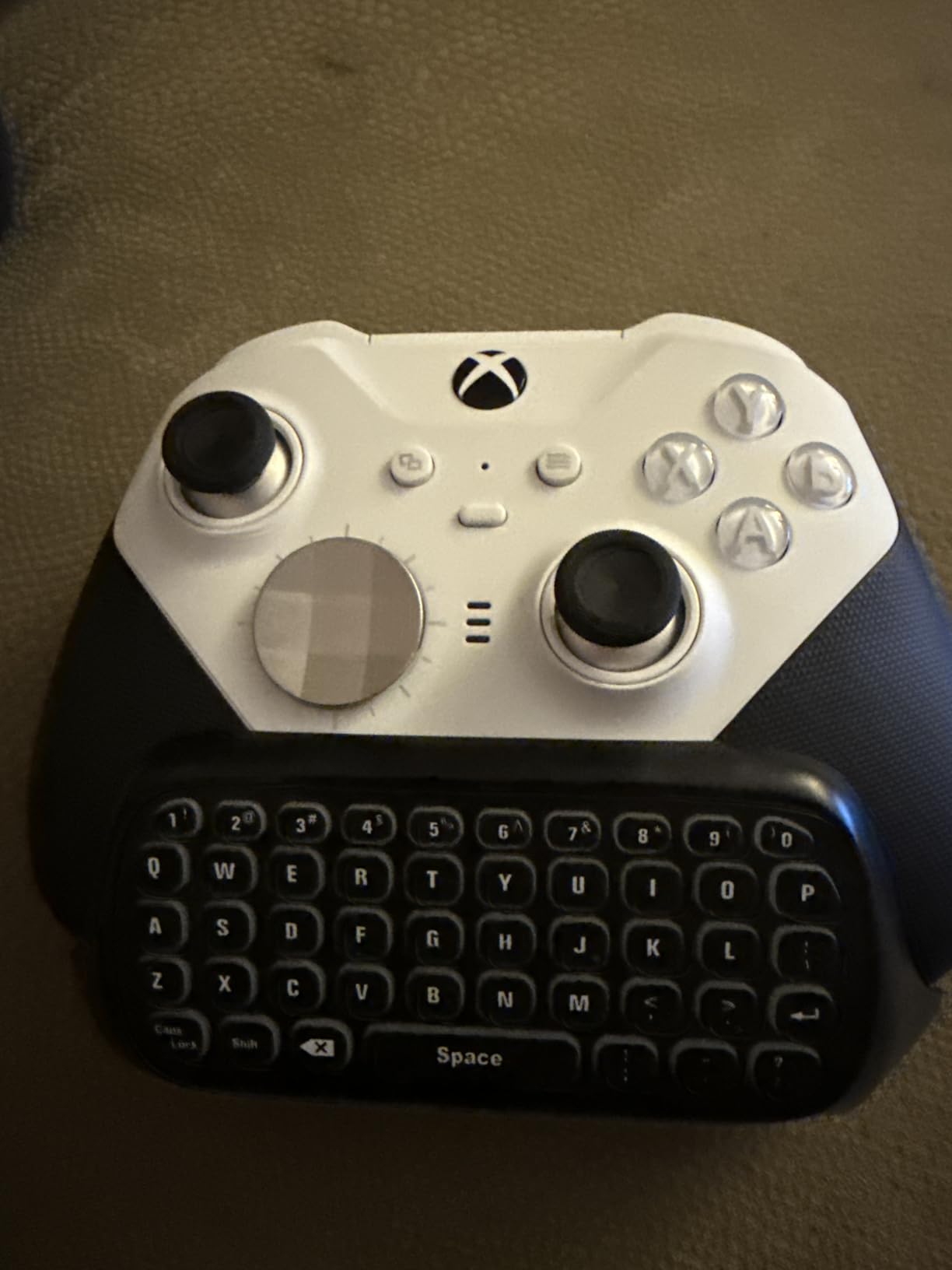
This is the pad we keep coming back to. In a car game your thumbs do two different jobs at once, and the Elite Series 2 is the only controller here where both jobs are adjustable on the hardware itself. The stick tension rings let you stiffen the steering stick so a small flick holds its line through a fast chicane, or soften it for slow technical sections. Most pads force one compromise for the whole game.
Then there are the trigger stops. Three steps of adjustable pull distance sit behind the face buttons, and the shortest setting turns a full pull into something closer to a hair trigger. For trail-braking, where you feather the brake while turning in, that shorter travel is the difference between a stab and a controlled input. The four rear paddles underneath are the obvious home for shift up and shift down, so your thumbs never leave the sticks.
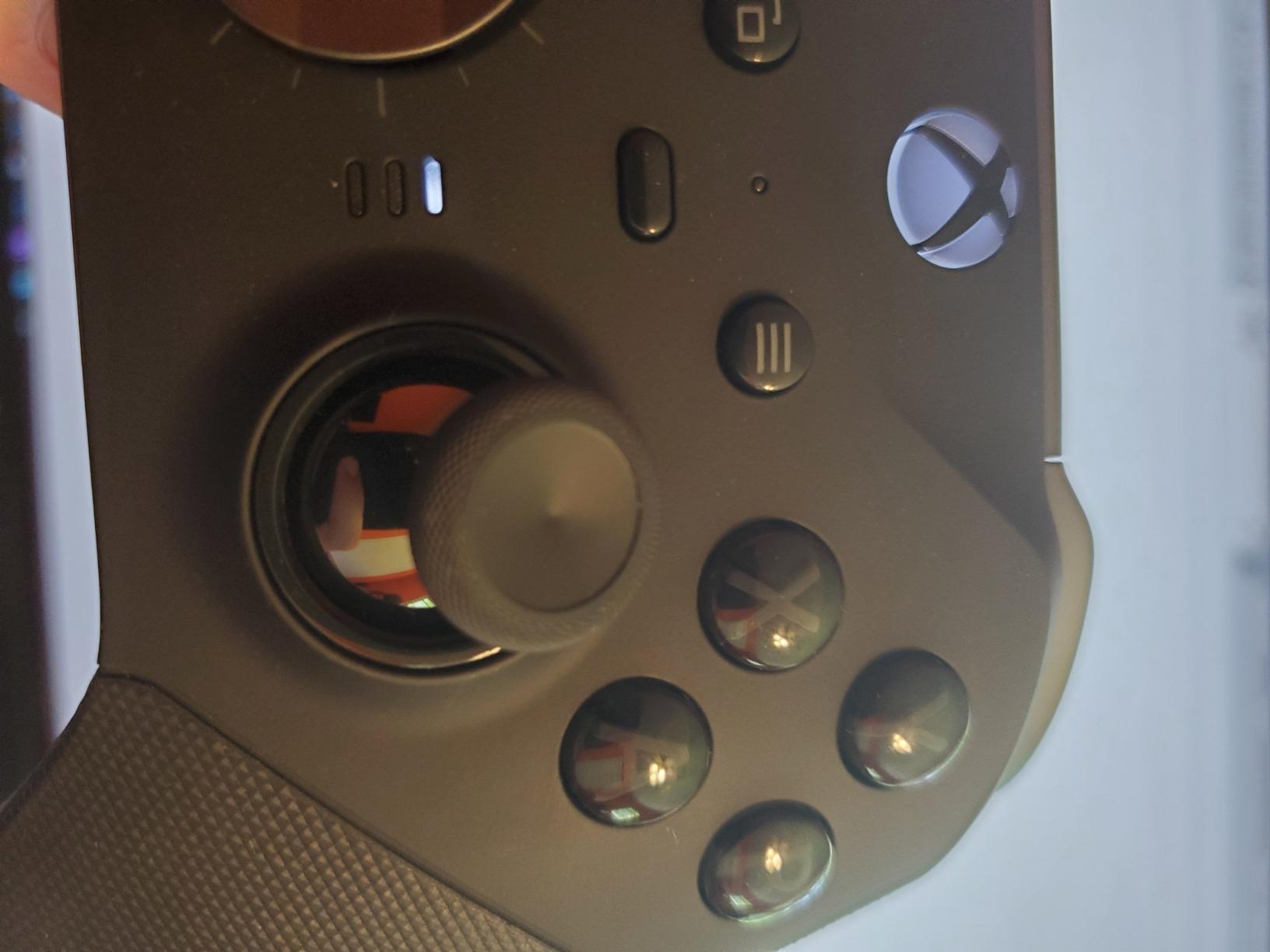
What we noticed most in long sessions was the grip and the weight distribution. The wraparound rubberized grips fill the palms rather than sitting in them, and the 16-ounce body stays put through a twenty-minute race without your hands sliding. Up to 40 hours of rechargeable battery with the included dock means a week of evening racing between charges.
The honest weaknesses are build quality, not feel. Owners consistently report that the face buttons still use soft rubber-dome switches, which is a strange choice on a pad at this tier, and the rubberized covering is reported to peel away after several months of use. There is also a recurring minority complaint about premature stick drift and dead buttons that sends units back through warranty. None of that appeared in our testing, but it is common enough in reviews that we would keep a backup pad on hand.
Who should buy the Elite Series 2
Buy it if you play on Xbox Series X|S or on PC and you want the deepest control options without moving to a wheel. It is the safest recommendation in this list for a reason: it works on current consoles, older consoles and Windows, so it survives a platform switch.
It is also the pick for anyone who genuinely wants to shift manually. Four paddles plus a remappable face set means you can run sequential or H-pattern style layouts, and the three saved profiles mean you can keep an arcade setup for open-world racers and a precise setup for sim-style titles without reconfiguring every time.
Who should skip it
Skip it if you play on PlayStation, because it does not speak the DualSense language natively. Skip it too if you are on a strict budget or if you are sensitive to mushy face buttons, since that is a fair criticism from owners rather than a preference question.
If you want the paddles but not the premium tier, the SCUF VALOR PRO further down does four paddles and Hall Effect sticks for considerably less, and the GameSir G7 SE does two lockable paddles and a wired connection with no wireless lag at all.
2. PlayStation DualSense Edge: Best Controller for PS5 Racing with Adjustable Trigger Travel
- Trigger travel physically extends for fine throttle control
- Swappable stick modules keep input fresh
- Back buttons map to any other input
- Highest rating in this lineup
- PlayStation 5 only with no PC or Xbox support
- Costs more than the standard DualSense while adding complexity most players never touch
The headline feature for driving is the trigger. The Edge lets you physically lengthen or shorten the throw of both triggers, and the maker calls out the long setting for precise throttle control while racing. In practice that means you can set a long, slow accelerator travel for smooth roll-outs and load up the brake to a short, sharp pull for trail-braking. Most pads lock that in software, where a dead profile can reset it without you noticing.
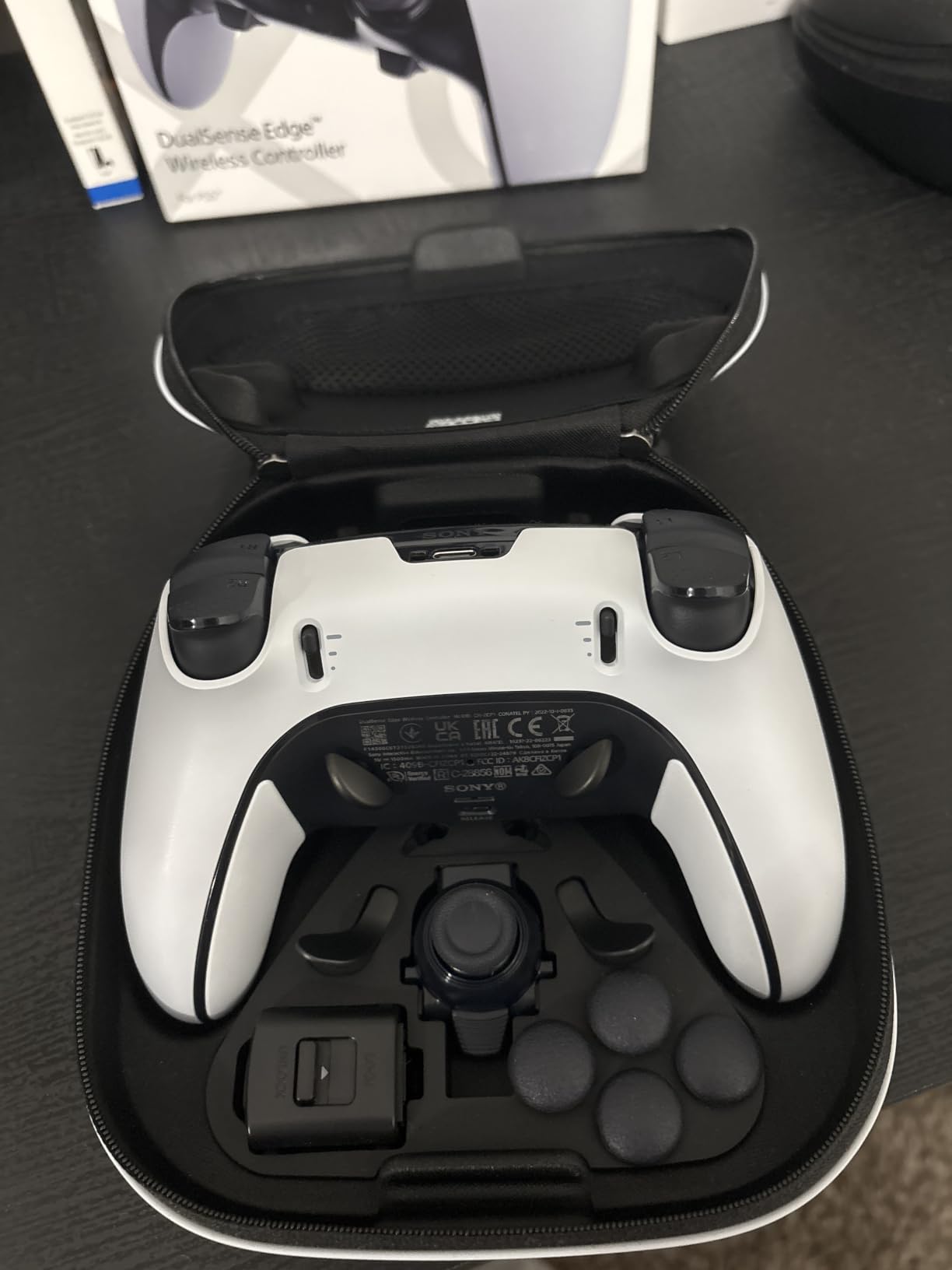
The swappable back button sets are the part most racers will actually use day to day. Two sets ship in the box, and each can be mapped to any other button input, which makes them a natural place for shift up, shift down and a look-behind button without touching the face layout. The stick modules are also swappable, with three types of changeable stick caps, so you can move from a domed cap for precision to a larger cap for a bigger surface.
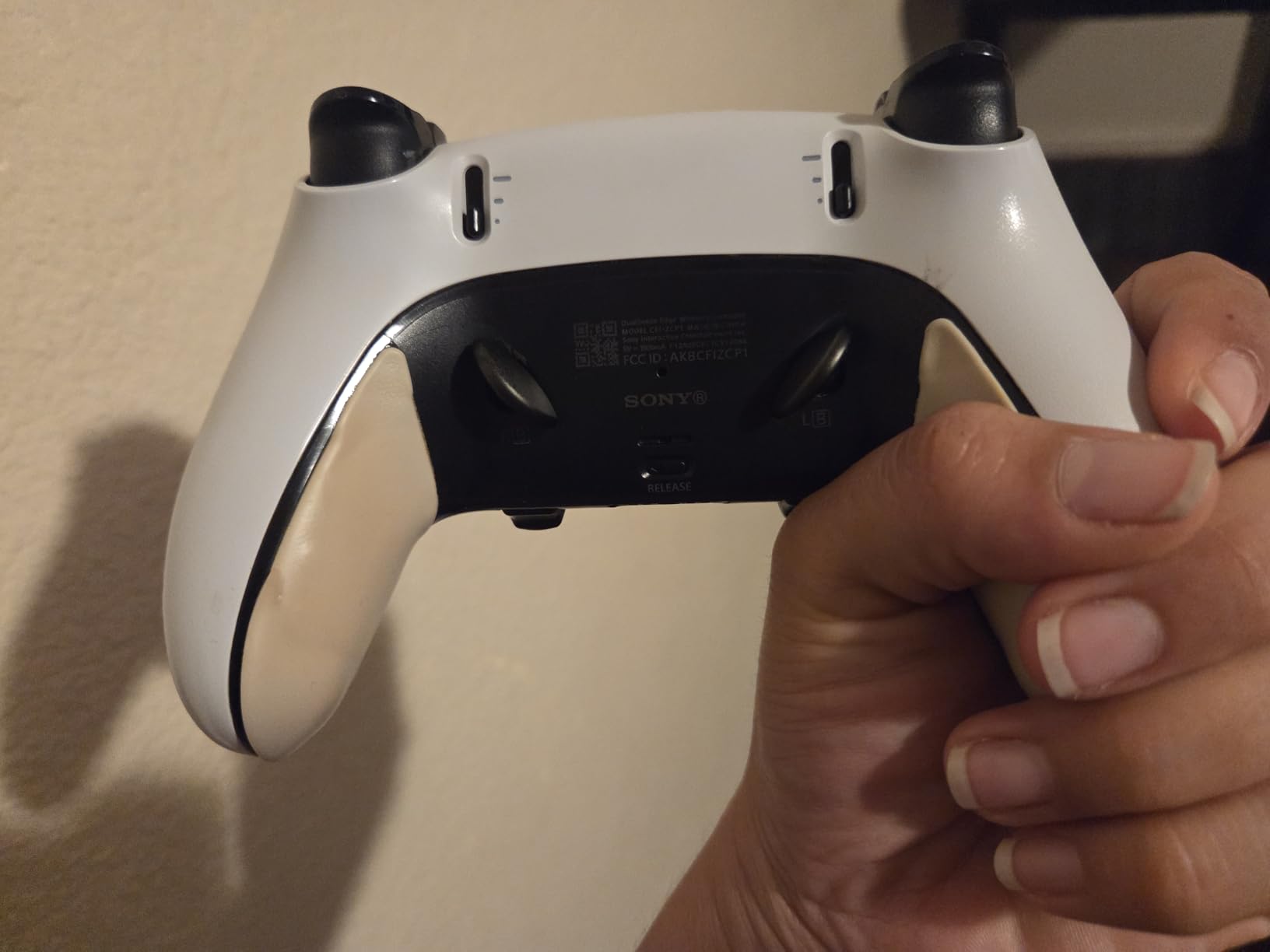
Our read on the tuning is that the trigger travel adjustment is the quiet winner. On a pad without it, brake modulation is entirely about how much you move your finger, which limits you to binary trigger states at short travel. Adding physical length changes the gearing of that movement, and you can feel the difference through a long corner entry where you are holding partial brake for several seconds.
It also carries the highest rating in this roundup, with roughly 81 percent of owners handing out five stars. The reservations are structural rather than mechanical: this is a PlayStation 5 pad with no Xbox or PC support, and it costs more than the standard DualSense for features most casual players never switch on. If you only play racing games now and then, the base DualSense still steers well and you keep the money.
Who should buy the DualSense Edge
Buy it if PlayStation 5 is your platform and you have noticed that your braking feels too abrupt to control. The adjustable trigger travel is a genuine mechanical answer to that problem, and the back button sets give you a clean place to put shift up and shift down.
It also suits players who swap between racing and shooters, because short-throw triggers and swappable caps cover both cases without a second pad. The quick-swap profiles mean a race setup and a shooter setup can sit side by side on the pad itself.
Who should skip it
Skip it if you race on PC or Xbox, or if you want a wireless paddles setup, since the standard back buttons here are small bumpers rather than four fingers-and-a-thumb paddles. Also skip it if the platform-specific cost feels steep for what is a feel refinement rather than a capability jump.
If your PC racing is where the time goes, the 8Bitdo Ultimate 2 gives you a trigger mode switch and rear paddles for much less, and the 8BitDo Ultimate 2C gets you Hall Effect sticks with 1000Hz polling for even less.
3. GameSir G7 SE: Best Value Racing Controller with Hall Effect Sticks and Lockable Paddles
- Hall Effect sticks that essentially remove drift
- Wired connection so there is no wireless lag
- Back buttons have a physical lock against accidental presses
- Nexus app stores remaps and dead zones on the pad
- 3.5mm audio jack has reports of intermittent contact issues
- Single-piece D-pad can pick up unintended menu inputs
- Higher polling firmware options are flagged work in progress
The G7 SE is the one we recommend to anyone who wants a serious racing pad without paying a serious racing pad price. Hall Effect joysticks and Hall triggers mean the stick position is read magnetically rather than through a potentiometer wiper, so there is no physical contact surface to wear and no gradual drift as the pad ages. For a twenty-minute race where you are making tiny corrections, that reliability is the headline feature.
The second feature worth calling out is the back button lock. Both custom back buttons can be physically disabled rather than merely remapped, which stops them registering when your ring hand grips the pad hard during a slide. Owners switching from cheaper paddles frequently praise this, because an accidental shift mid-corner is expensive. The Nexus app stores up to three profiles directly on the controller, so your remaps, dead zones and vibration levels travel with the pad.
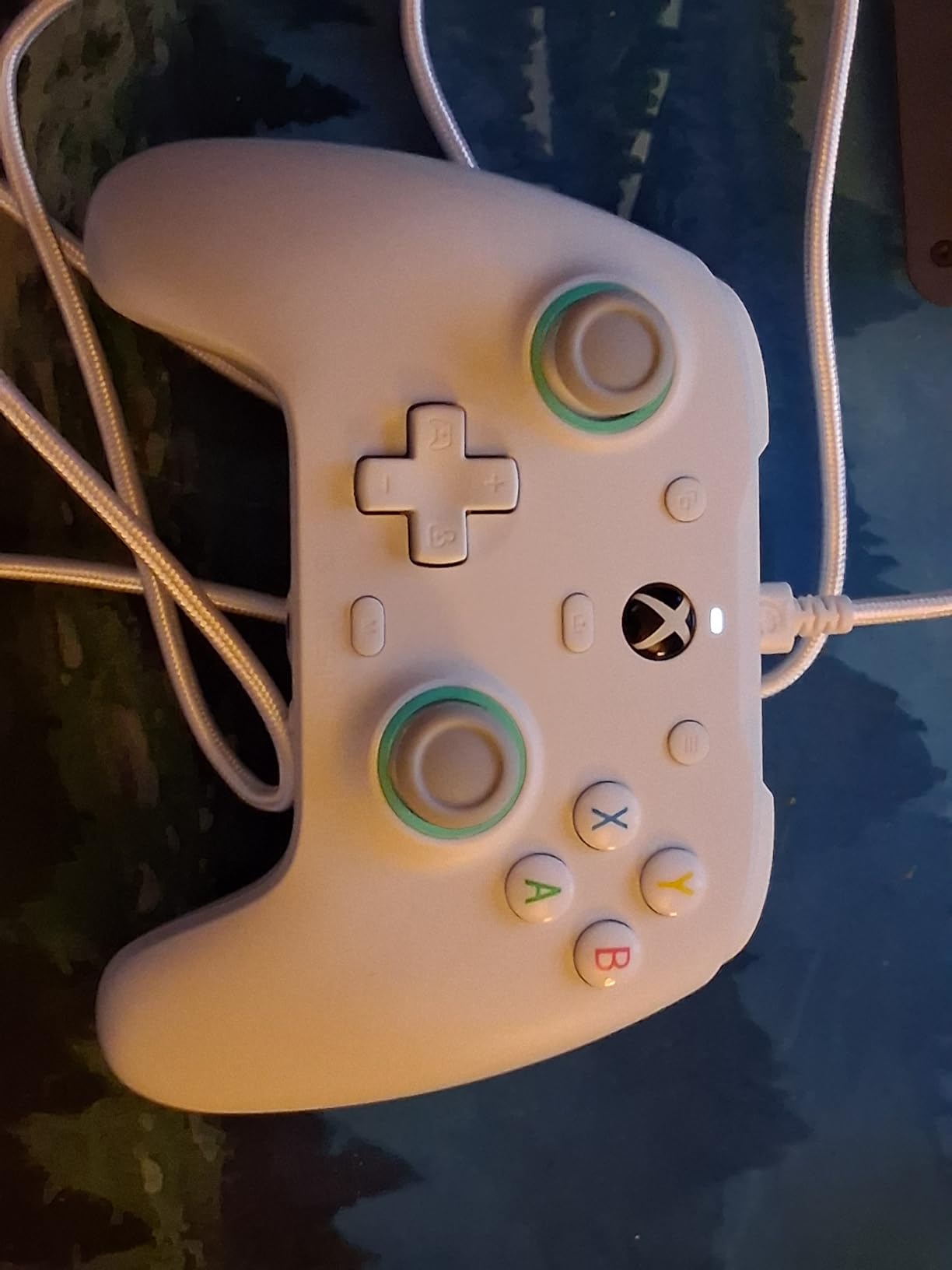
Feedback is handled unusually well for the tier. A pulsating vibration trigger gives you a distinct throttle pulse you can feel through the trigger finger, and an asymmetric grip motor produces a stronger low-end rumble than most pads manage. The laser-engraved handle texture is fine rather than aggressive, which keeps grip without the sweat build-up that rougher surfaces produce over a long session.
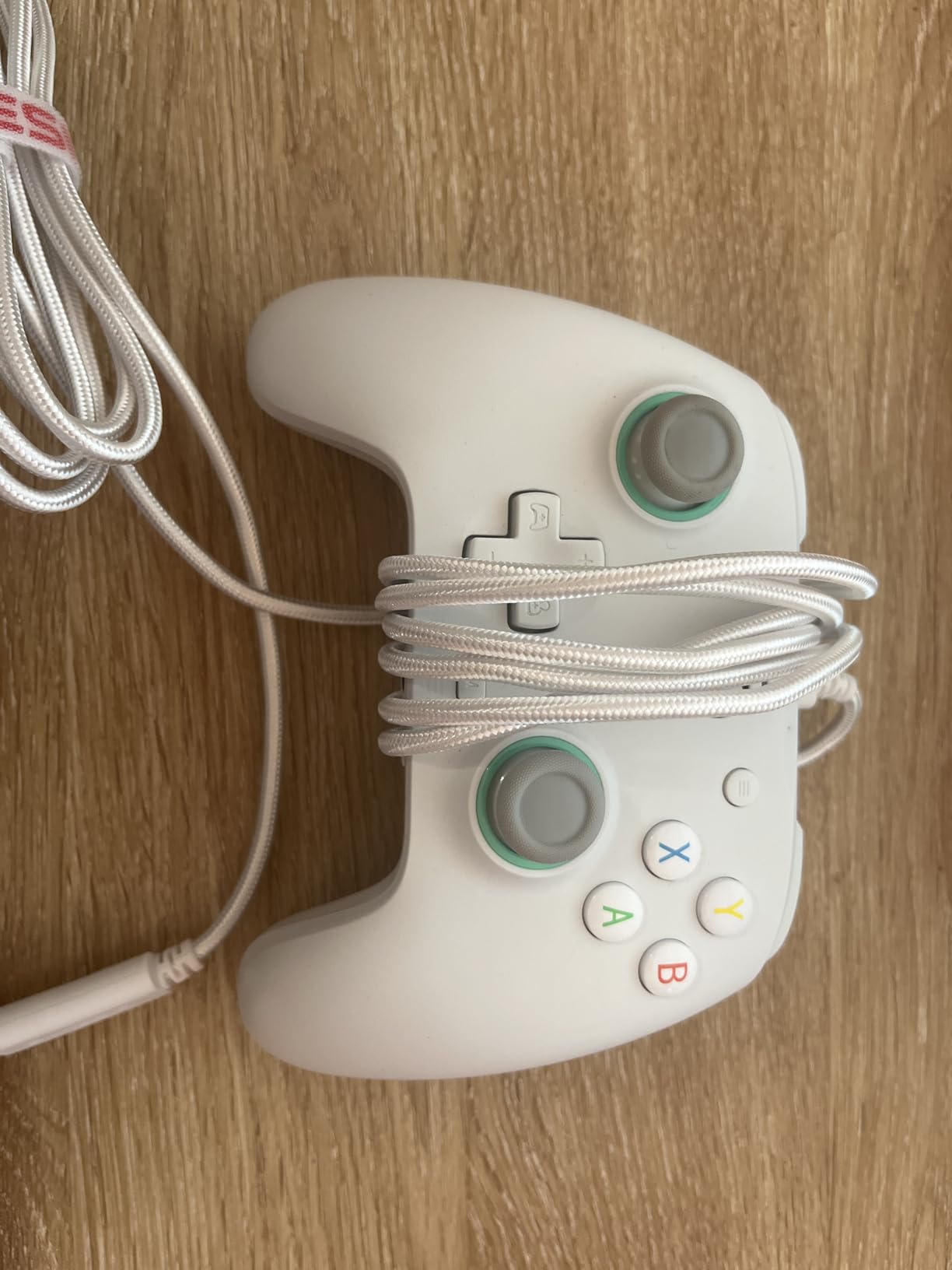
The cable is removable and braided, and long enough to run from a couch, which removes the wireless question entirely. That is a deliberate choice for racing rather than a limitation: competitive players often prefer wired for consistent latency, and owners report the pad registering faster and more precisely than the first-party Microsoft controller.
Who should buy the GameSir G7 SE
Buy it if you race on Xbox Series X|S, Xbox One or PC on Windows and your main complaint about your current pad is stick drift. This is the one wired pad in the list that pairs Hall Effect sticks with rear paddles you can lock against accidental presses, and the wired connection means no pairing ritual before a session.
It is also the pick for online play where consistency matters more than convenience. Two lockable paddles mapped to shift up and shift down give you manual shifting without the accidental press problem, and the Hall triggers give proportional brake control without a firmware setting.
Who should skip it
Skip it if you need rear paddles on a console that maps them differently, because titles that ignore the back buttons entirely will leave them dead. The reviews are clear that some games simply do not register them, and the single-piece D-pad also registers unintended directions in some menus.
Also weigh the audio jack. Several owners report intermittent contact with headsets and poor chat mic performance through the 3.5mm port. If you rely on a wired headset for team communication, check that first. If you race on Switch or need wireless, the GameSir Nova Lite 2 later in this list is the better fit.
4. 8BitDo Ultimate 2C: Best Budget Racing Controller for PC with 1000Hz Polling
- Reports no perceptible input delay at 1000Hz
- Hall Effect sticks with wear-resistant metal rings
- Remappable extra bumpers without needing software
- Long battery life on a single USB-C charge
- No 3.5mm headset jack so audio needs a separate solution
- Face buttons feel cheaper and louder than the bumpers and D-pad
- Only the R4 and L4 buttons can be remapped
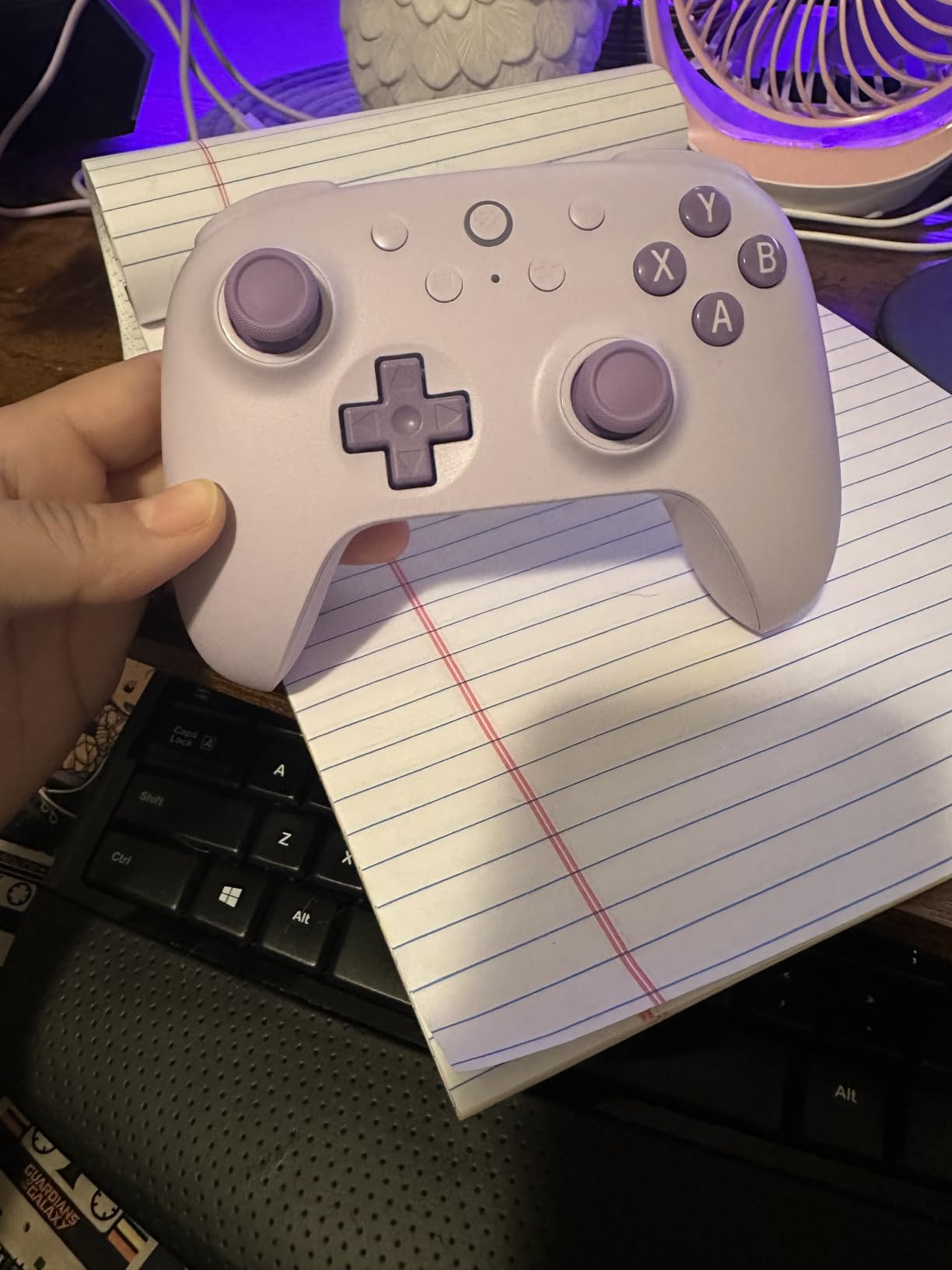
This is the only pad here that combines Hall Effect sticks, a mechanical hair trigger option and rear paddles mapped for shifting, at a tier where most pads give you one of those three. Owners describe the result as no perceptible lag, which for competitive play matters more than any rumble feature. The Hall Effect joysticks and Hall triggers come with wear-resistant metal rings and anti-friction rings around the stick housing, which cuts the scratchiness that makes cheap sticks feel imprecise.
For shifting, it does not have rear paddles. Instead it adds extra R4 and L4 bumpers that can be remapped, and the mapping can be set on the pad without opening software, plus a turbo function you can toggle the same way. That is less elegant than four paddles, but it is more than most entry pads offer and it costs nothing to configure.
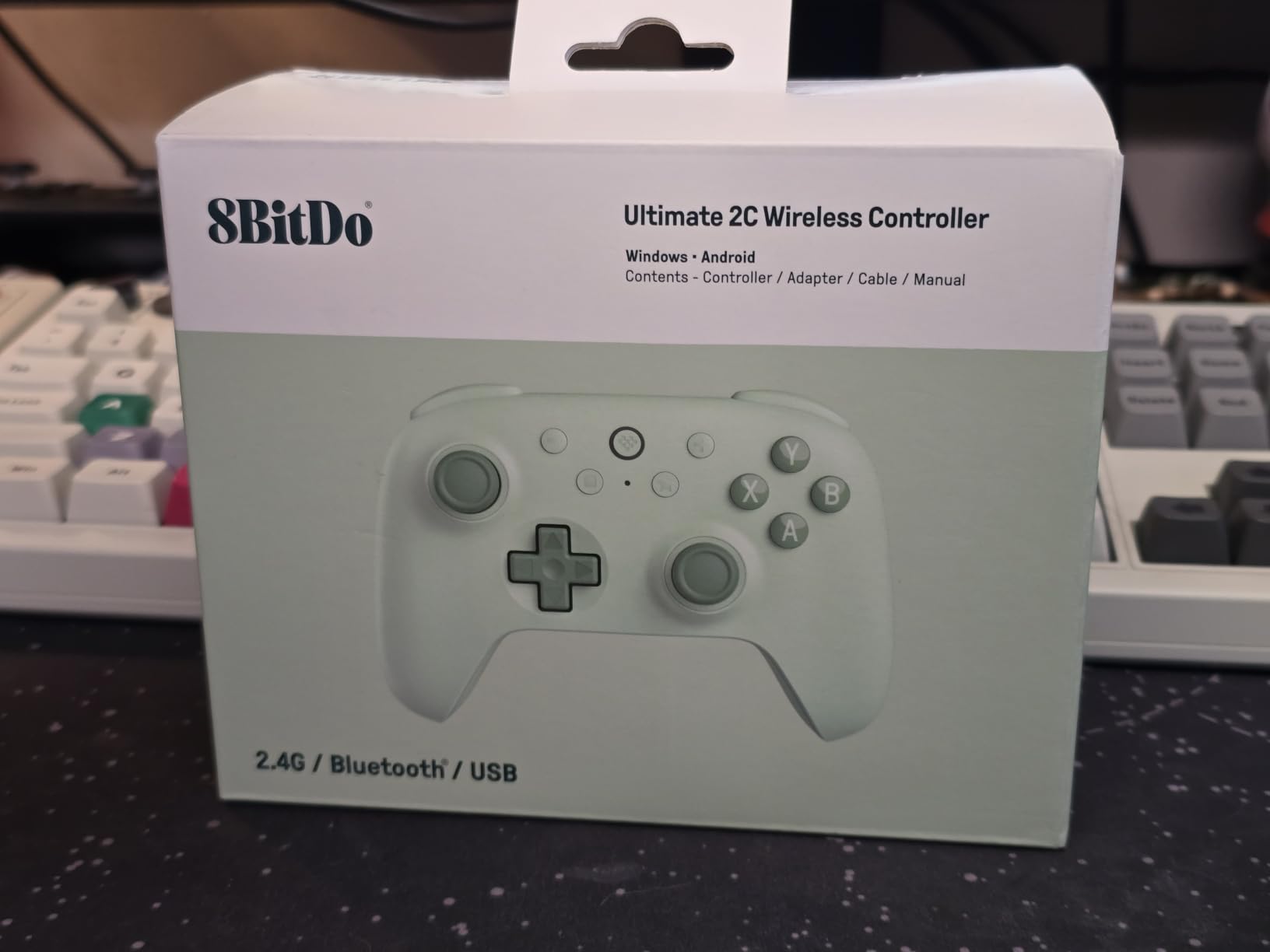
Build details are better than the tier suggests. The bumpers are described as refined and clicky, and the D-pad is tactile in a way that most pads at this level are not. It works out of the box on PC with the included dongle and over Bluetooth on Android, which makes it a reasonable pick if you move between a desktop and a handheld.
Buyers repeatedly frame it as the best value PC controller available, comparing it to pads costing two or three times as much. The omissions are real though. There is no 3.5mm headset jack, so audio needs another solution, and the face buttons are a step below the rest of the pad in both feel and volume. The upward D-pad direction is also easy to catch accidentally during hard diagonal inputs.
Who should buy the 8BitDo Ultimate 2C
Buy it if PC racing is your main platform and you have never found a pad that reports both drift-free sticks and a high polling rate at this end of the market. It also suits anyone who wants a wireless pad that will not add latency, since both the 2.4G and wired modes hit the same polling figure.
It is a strong second pad for a household too. It works on PC and Android, pairs without fuss, and owners report days of play on one USB-C charge, which is more convenient than the battery anxiety of many wireless alternatives.
Who should skip it
Skip it if you need rear paddles for manual transmission, or if you race on Switch, because the platform list here is Windows and Android. If you play with a headset plugged into the controller, the missing 3.5mm jack is a dealbreaker rather than a nuisance.
If your budget stretches slightly further, the 8Bitdo Ultimate 2 adds real rear paddles, TMR sticks, a charging dock and a trigger mode switch, which covers nearly everything this pad leaves out.
5. 8Bitdo Ultimate 2: Best Racing Controller with TMR Sticks and a Trigger Mode Switch
8Bitdo Ultimate 2 Wireless Controller for PC, Apple, Steam & Android, Black
- TMR sticks give finer sensitivity than typical potentiometer sticks
- Trigger mode switch lets you pick linear or tactile feel
- 8Speed 2.4G wireless reports under 1ms latency
- Dock doubles as the 2.4G receiver passthrough
- No headphone or microphone port
- Front face buttons cannot be remapped
- Not compatible with Xbox consoles
TMR sticks are the reason this pad exists for racers. Tunneling magneto-resistance sensors track the stick position through a magnetic field, which means higher sensitivity and greater precision than a typical potentiometer stick with no contact wear. Owners regularly compare this pad to the Xbox Elite and the DualSense Edge at a fraction of the cost, and the sensitivity claim is the part they keep coming back to: small steering inputs register cleanly instead of disappearing into the bottom of the stick’s travel.
The trigger mode switch is the feature nobody else in this list has. One setting gives you linear Hall effect triggers, where pressure maps proportionally across the whole travel. The other gives you non-linear tactile triggers with a defined click point. For drifting games and rally titles the linear mode makes throttle input more readable; for open-world arcade racers the click gives you a repeatable shift-up point without looking at the trigger.
Wireless is handled unusually well. The 8Speed 2.4G connection reports latency under 1ms across a 10 metre range with strong anti-interference, and the polling rate is 1000Hz over both 2.4G and wired. The charging dock doubles as a 2.4G receiver passthrough, so you only occupy one USB port, and it charges the pad at the same time.
The build takes drops, according to owners reporting survival through multiple falls with no chipping. Vibration strength is another commonly praised point. The most common piece of advice attached to this pad is to use the 2.4G mode rather than Bluetooth on Windows, because Bluetooth pairing on PC is reported as unreliable and the 2.4G path is the consistent one.

Who should buy the 8Bitdo Ultimate 2
Buy it if you race on PC, play across PC and Steam or Apple devices, and want the fine steering resolution of TMR sticks plus two pro rear paddle buttons. It is the most complete pad in this roundup on paper for the money, and the paddle mapping is more capable than the extra bumpers on the cheaper 2C.
It also suits anyone who plays two different styles. The trigger mode switch means the same pad serves a drifting title and an arcade racer, and the dock means you are not juggling a charging cable and a receiver adapter every time you sit down.
Who should skip it
Skip it if you race on Xbox, because it does not connect to Xbox consoles at all. Also skip it if you need a headphone or microphone port, since there is no 3.5mm jack, and note that the front face buttons cannot be remapped, with paddles limited in what they will map to.
The thumbstick tops are reported as slick and the sticks feel slightly loose rather than firm, which matters if you like a very precise centre. If you want a firmer stick feel instead, the Xbox Elite Series 2 lets you set the tension physically.
6. Logitech G29 Wheel and Pedals: Best Wheel Step Up for Console and PC Racing
- 900 degrees of rotation matches real F1 steering lock
- Force feedback conveys road texture and wheel centering
- Three pressure-sensitive pedals with adjustable faces
- Stainless steel paddle shifters and 14 on-wheel buttons
- Pedal base slides on hard floors without bracing or a rig
- Wheelbase uses only two mounting contact points
- No gear shifter included so shifting is paddles only
- Noticed a dead zone at the centre of the wheel
This is the wheel on the list, and it is here because at some point the gamepad ceiling becomes the problem. The 900-degree lock-to-lock rotation is the headline number: at a realistic steering lock angle, the amount of hand movement needed to turn the wheel is dramatically higher than a thumbstick, which is exactly what real cars demand. Owners describe the wide-turn feel as genuinely closer to an open-wheel car.
Force feedback is delivered through helical gearing with a hand-stitched leather rim cover. In titles like Assetto Corsa and PCARS2, owners report it conveys road texture, curb strikes, wheel slip and wheel centering, which are the four cues you need to know where the car is. The brakes, throttle and clutch are all pressure-sensitive and non-linear with adjustable pedal faces, so you can set the brake bite point to match your rig.
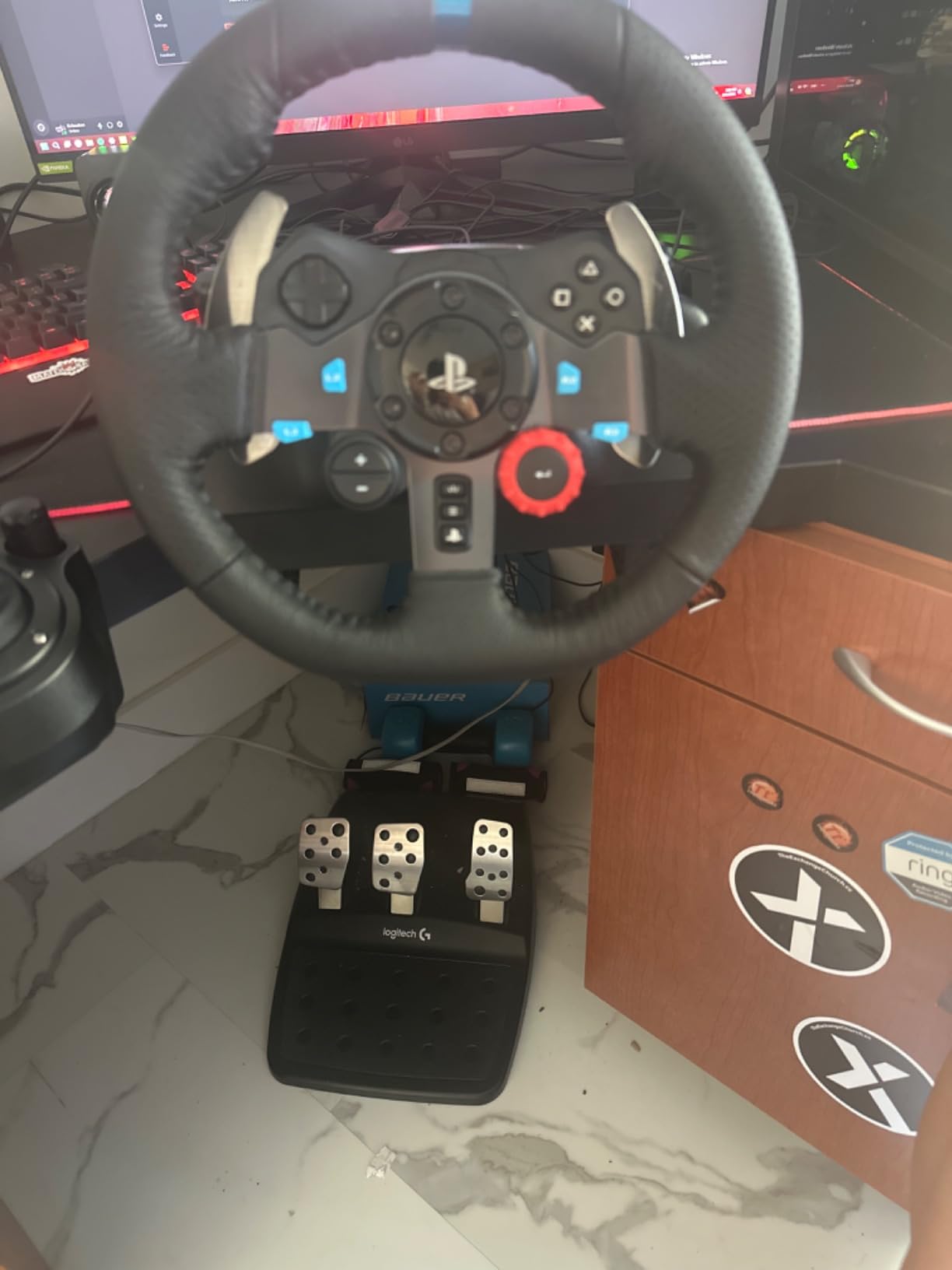
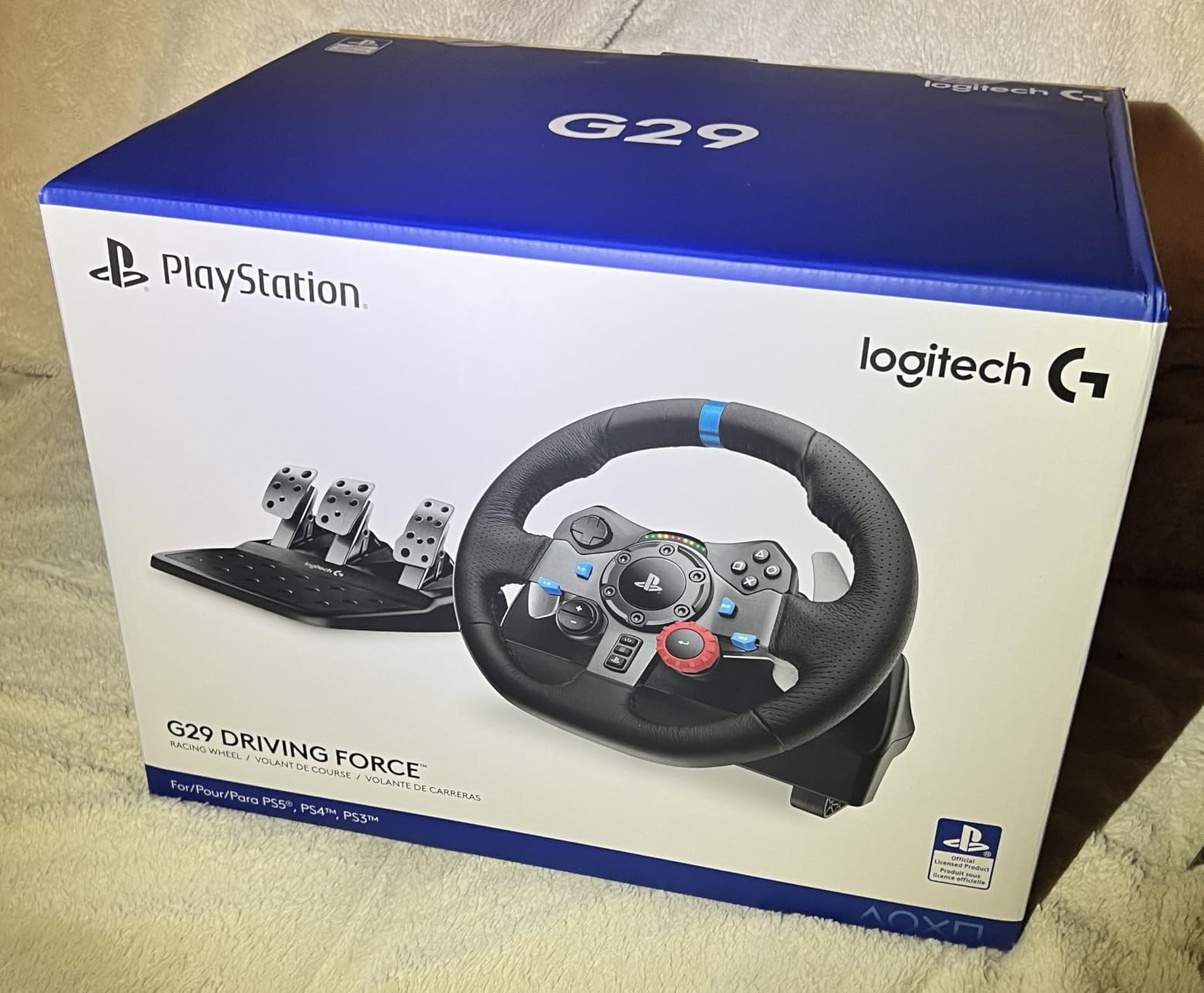
Compatibility is broad for a wheel. It is listed for PS5, PS4 and PC, and owners report plug-and-play native support in the majority of wheel-enabled racing titles. The stainless steel paddle shifters sit behind the rim and feel like proper metal levers rather than plastic, and there are 14 on-wheel buttons plus a D-pad and rotary dial for in-car adjustments.
It is also light enough that younger players can use it safely, which matters more than it sounds when a wheel is bolted to a desk. If you like the wheel idea but want a bigger rim or a stronger motor, our guides to the best racing wheels for gaming and the best direct drive racing wheels for sim racing cover the next tier up, including the PlayStation-specific options in our best racing wheels for PS5 breakdown.
Who should buy the G29
Buy it if you have moved past arcade racers into titles where wheel angle and clutch work matter, or if you are frustrated by how little steering lock a thumbstick offers. Three pedals with a clutch also unlock manual transmission driving that no gamepad can replicate, which is the single clearest reason sim racers buy a wheel.
It also suits console players who want a wheel without a rig. A desk and a sturdy chair is enough to get started, and the broad platform list means you are not replacing hardware when you change console generation.
Who should skip it
Skip it if you only play open-world arcade racers and kart games, where a pad is faster to pick up and the force feedback adds nothing. Also weigh the physical setup problems owners report most: the pedal base is not bolted down and slides on hard floors, and the wheelbase has only two mounting contact points that can loosen in intense sessions.
There is a noticeable dead zone at the centre of the wheel before forces register, the helical gearing has some cogging, and overall the feel is lighter than high-end direct drive units. No gear shifter is included either, so shifting is paddles only unless you add one.
7. GameSir Nova Lite 2: Best Racing Controller for Switch, PC and Android
- Hall Effect sticks with anti-friction rings and no drift
- Two-way trigger lock plus a separate hair trigger mode
- Two back buttons support single-button mapping and macro recording
- Works across Switch
- Switch 2
- PC
- Android and iOS
- 600mAh battery gives roughly 4 to 6 hours and cannot be replaced
- Bluetooth re-pairing to a new device is awkward
- Face buttons feel mushy next to the crisp D-pad
If any of your racing happens on a Nintendo Switch, this is the pad to look at first, and the connectivity story is the reason. It works across Switch, Switch 2, PC, Android and iOS over Bluetooth, a wired cable and a wireless dongle, which makes it the only pad here that covers every device family apart from Xbox. The GameSir app and GameSir Connect handle firmware, dead zones, vibration intensity and button testing.
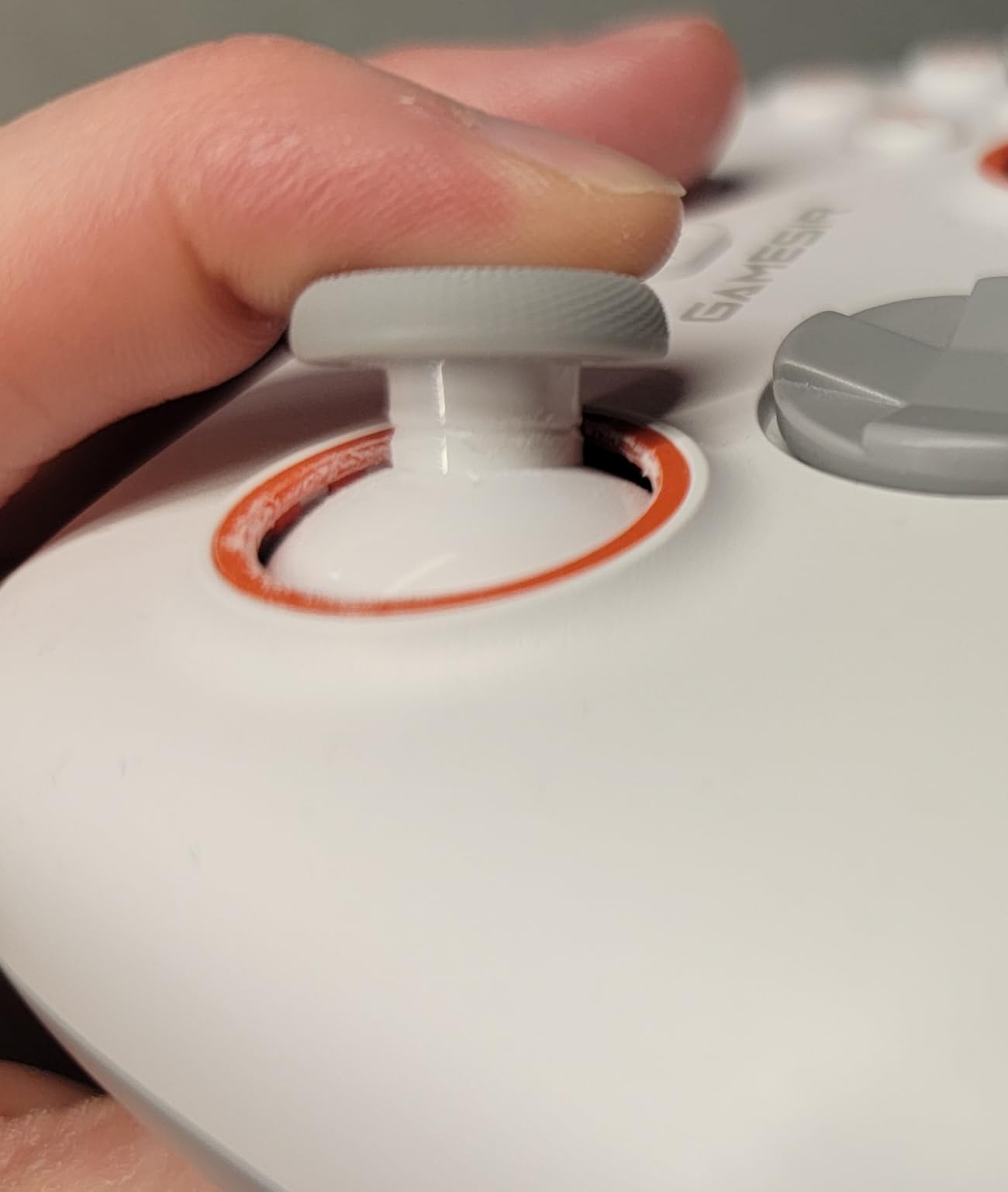
Hall Effect joysticks with anti-friction rings keep the steering accurate and drift-free, and the polling rate is 1000Hz across both the 2.4G and wired modes. The trigger lock is two-way, meaning you can shorten the pull, and there is a separate hair trigger mode on top of that. Two back buttons support single-button mapping and macro recording, which is enough to put shift up and shift down on the pad even without four paddles.
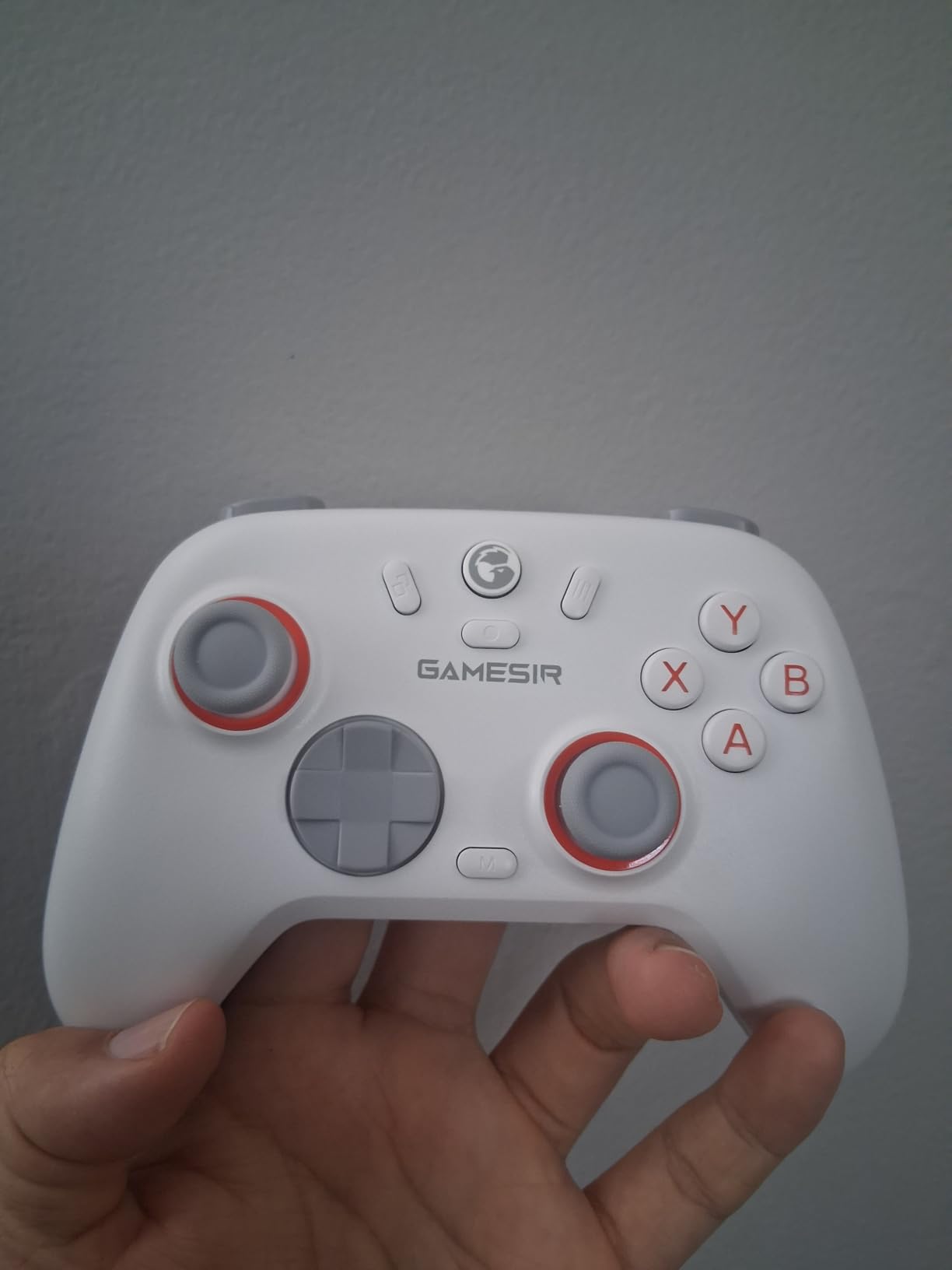
Some details are unusually good for the tier. The D-pad is a mechanical circular unit that reviewers describe as feeling like an arcade button, and the dual asymmetric motors deliver both strong and subtle vibration rather than one flat buzz. Owners treat the pad as delivering near-first-party responsiveness at a budget price.
The weakness everyone mentions is battery. The 600mAh cell gives roughly four to six hours per charge and is not user-replaceable, which is short enough that a long endurance race can outlast it. Reviewers also note that Bluetooth re-pairing to a new device is a difficult process once paired, and the face buttons feel mushy compared with the crisp D-pad and bumpers.
Who should buy the Nova Lite 2
Buy it if you split time between a Switch and PC, or if you race on Android or iOS. It is one of the few pads here that covers all of those without a converter, and the dongle plus cable options mean you are never relying on one flaky connection.
It also suits anyone who wants trigger stops and hair trigger behaviour on a handheld, since the two-way lock is a physical change rather than a profile setting. The macro-capable back buttons are a genuine bonus for arcade racers with complex button combos.
Who should skip it
Skip it if you race on Xbox, since there is no Xbox support, and skip it if you play long endurance events where six hours of battery is not enough. If you want four paddles or adjustable stick tension, this pad does not offer either.
There is also no battery level indicator on the controller itself, and some owners report occasional wireless dropouts. If you need a headset port or a dock, the omissions here are more noticeable than on the wired alternatives.
8. SCUF VALOR PRO: Best Racing Controller for Rear Paddles and Trigger Stops
- Four embedded paddles configurable to up to 16 functions
- Instant Triggers give the shortest possible pull
- Hall Effect sticks resist drift
- Wraparound bumpers give a larger
- snappier press surface
- USB-C port has reports of failing after several months
- Stock stick tension is weak for some players
- Wired only so it needs cable management
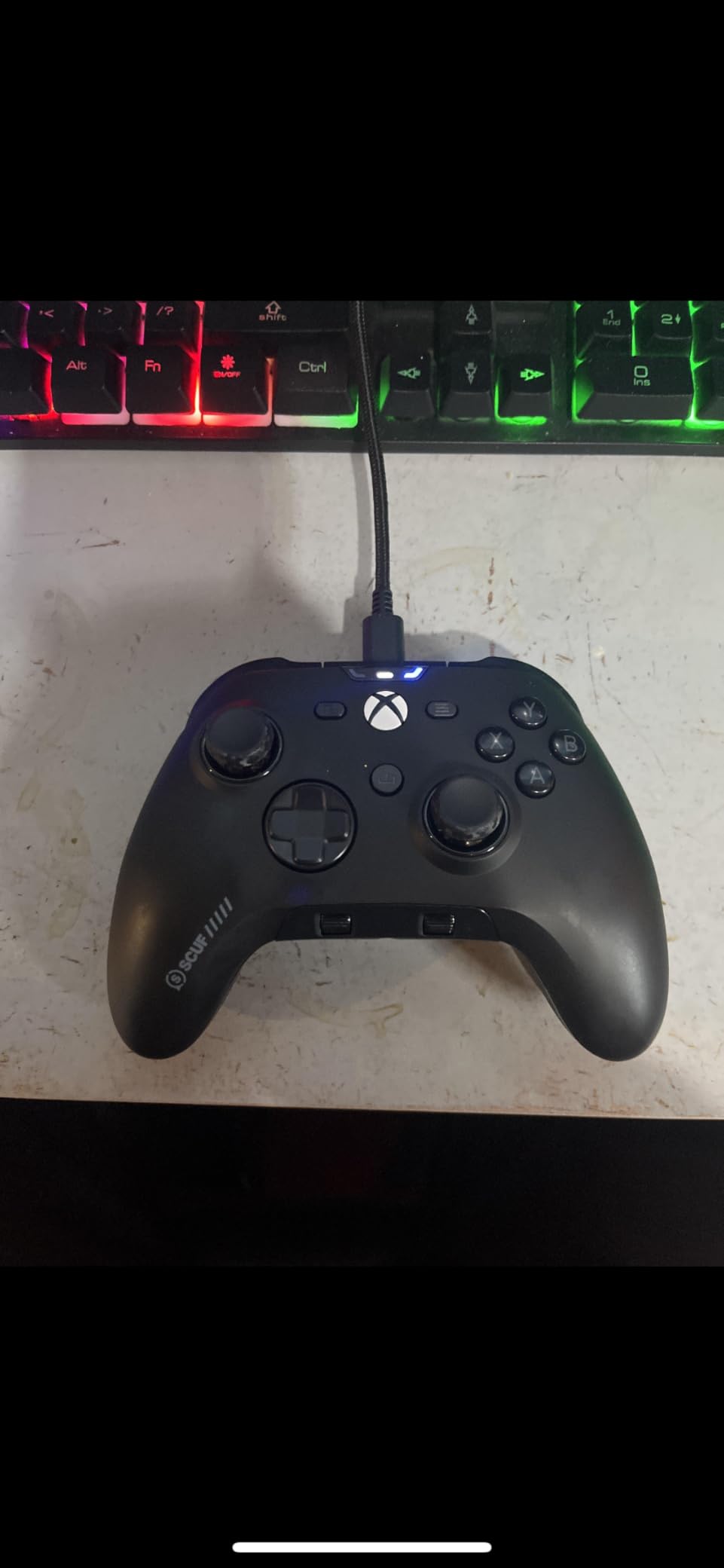
This is the dedicated paddle pad in the lineup, and the paddles are genuinely different from a bumpers or trigger stop. Four embedded rear paddles sit under the grips where all four fingers rest, each configurable to up to 16 functions, so you can run separate layouts for shifting, look-behind and any game-specific extras. Owners who switched from drifting Elite controllers report measurable competitive improvement once they got used to the layout.
Instant Triggers are the second headline. They are a mechanical change rather than a firmware toggle, shaving the trigger pull so a braking input registers with as little finger travel as possible. Combined with the wraparound bumpers, which have more surface area than standard bumpers, the pad feels fast in the hands. Hall Effect thumbsticks round it out and resist the drift that makes paddles useless when the car wanders on a straight.
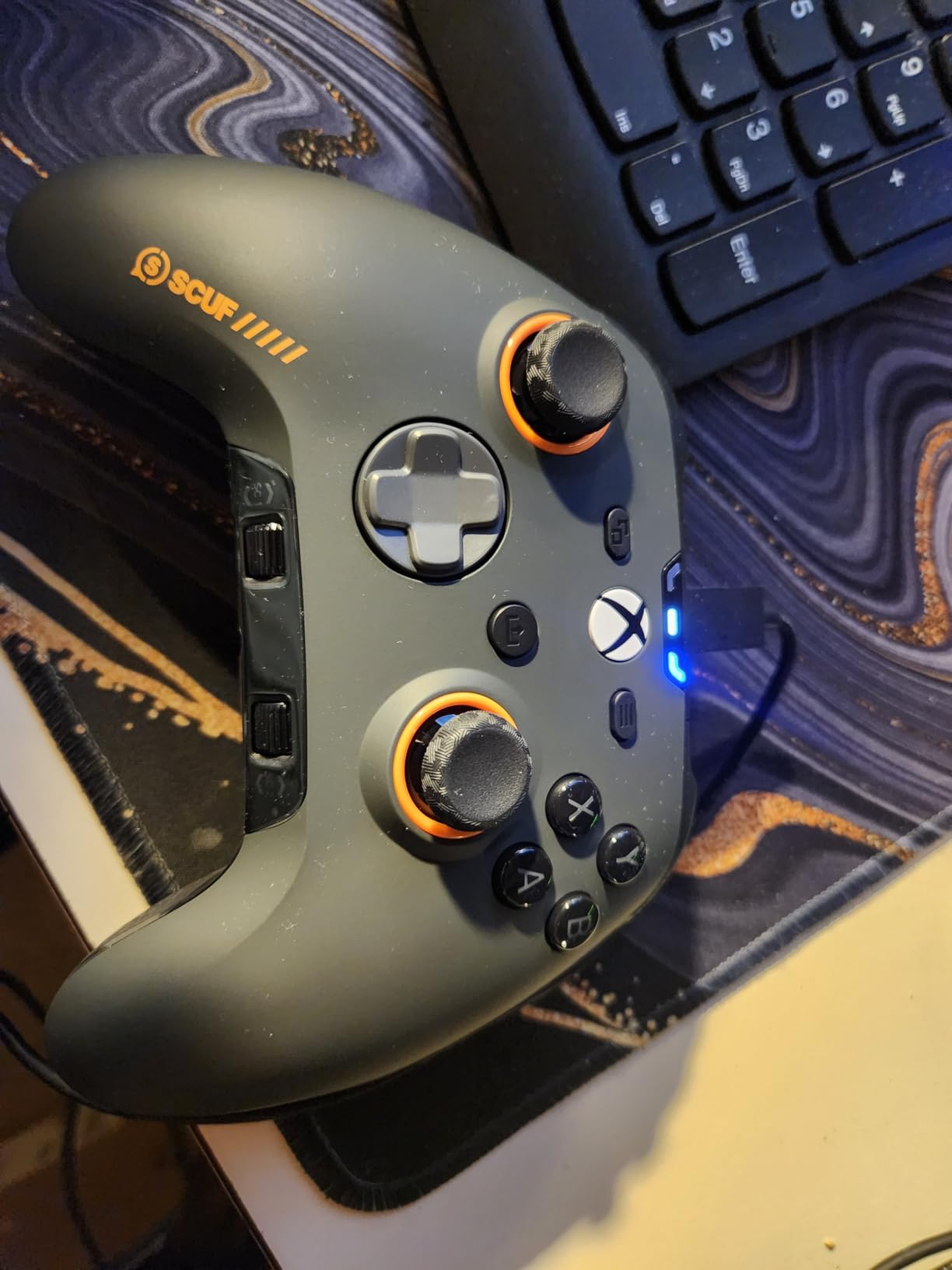
The audio control system is a nice touch for longer sessions, giving on-the-fly volume plus three remappable configurations saved through a flip switch. Faceplate and thumbstick caps are swappable too, and the non-slip silicone performance grip is built on long-standing expertise in the category.
It is also the most polarising pad we tested, sitting at 4.0 stars with 14 percent one-star ratings. The dominant negative theme is the USB-C port on the controller failing after several months of normal use, which causes constant disconnects and degraded headset audio and microphone at the same time.
Who should buy the SCUF VALOR PRO
Buy it if manual shifting is central to how you race and you want four fingers mapped rather than two. It covers Xbox Series X|S, Xbox One and Windows PC, and the three saved configurations make it easy to keep a shifting layout and a button-mashing arcade layout side by side.
It is the pad for players who have already outgrown a trigger stop. If you have used a hair trigger on a cheaper pad and still find braking inputs vague, the mechanical Instant Trigger change is a bigger step than another software profile.
Who should skip it
Skip it if longevity on a wired port matters to you. The USB-C failure reports are frequent enough in reviews that they dominate the negative feedback, and they take the headset audio and mic down with them. It is also wired only, so you need to plan cable routing rather than playing from the couch.
If you prefer firmer sticks, the stock tension here is reported as weak for some players, which makes fine aim control difficult. And if you want the same paddle layout without the reliability questions, the Xbox Elite Series 2 covers the same ground with adjustable tension you can change yourself.
9. Turtle Beach Rematch Core: Best Plug-and-Play Wired Racing Pad for Xbox and PC
Turtle Beach Rematch Core Wired Gaming Controller, Xbox Series X|S, PC
- Hall Effect thumbsticks remove drift at no extra cost Impulse triggers give crisp pedal feedback On-board controls for chat mix volume and mic mute Works immediately on Xbox Series X
- S and PC
- Wired only so there is no wireless option
- No rear paddles so shifting must be mapped elsewhere
- Lightweight plastic build typical of the budget tier
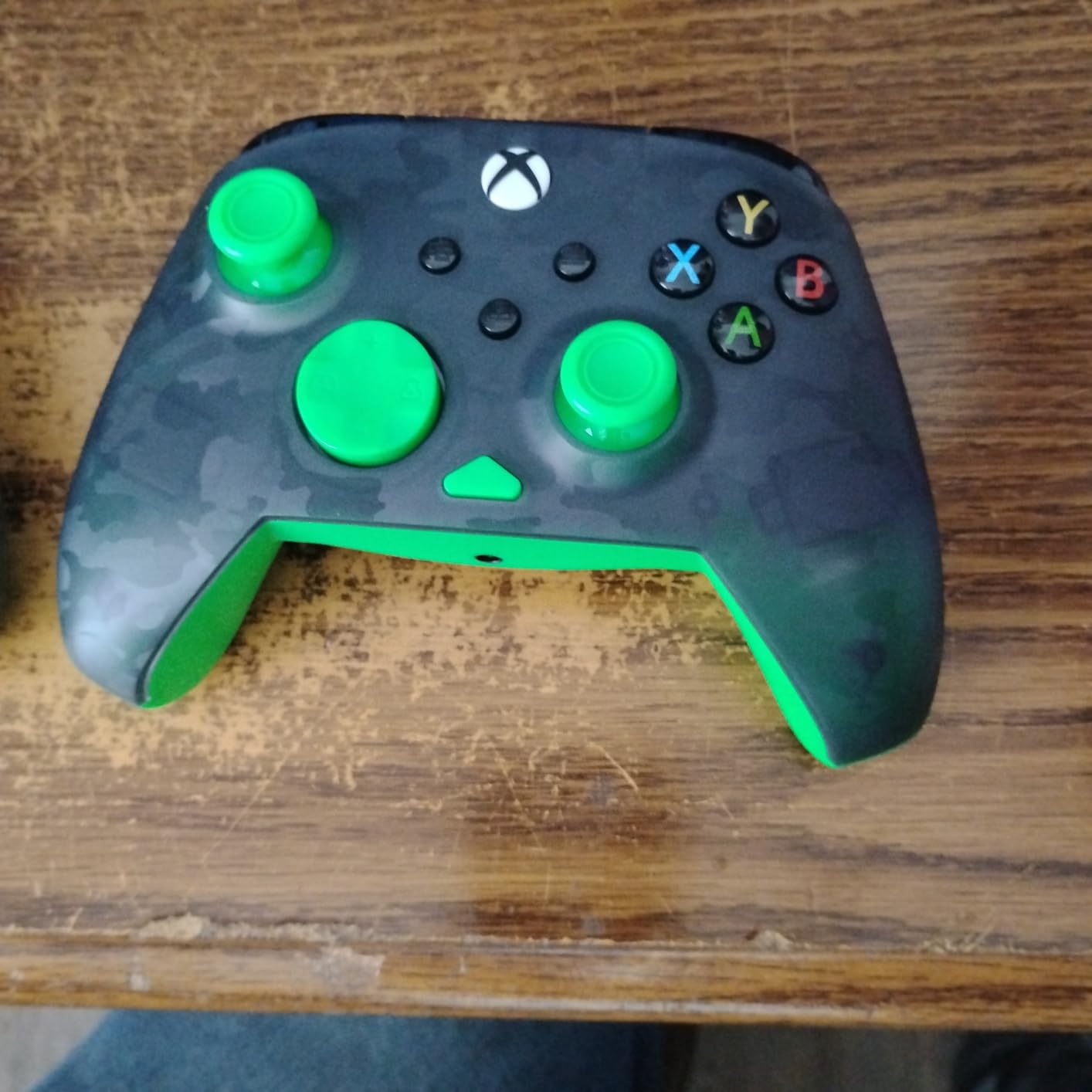
The Rematch Core is the simplest recommendation on this list for anyone who just wants the obvious upgrade over a stock pad. Its Hall Effect thumbsticks remove the single most common complaint about budget controllers, which is that the car wanders on a straight because the stick reports a false centre input. That alone changes how a car feels compared with a cheap potentiometer pad.
Impulse triggers give the braking input a distinct click as it travels, and dual rumble motors add low and high frequency feedback so you can feel kerbs and grip changes rather than one flat buzz. For online racing with a team, the on-board controls for game and chat mix, master volume and mic mute are more practical than they sound, because they mean you are not alt-tabbing to fix audio mid-race.
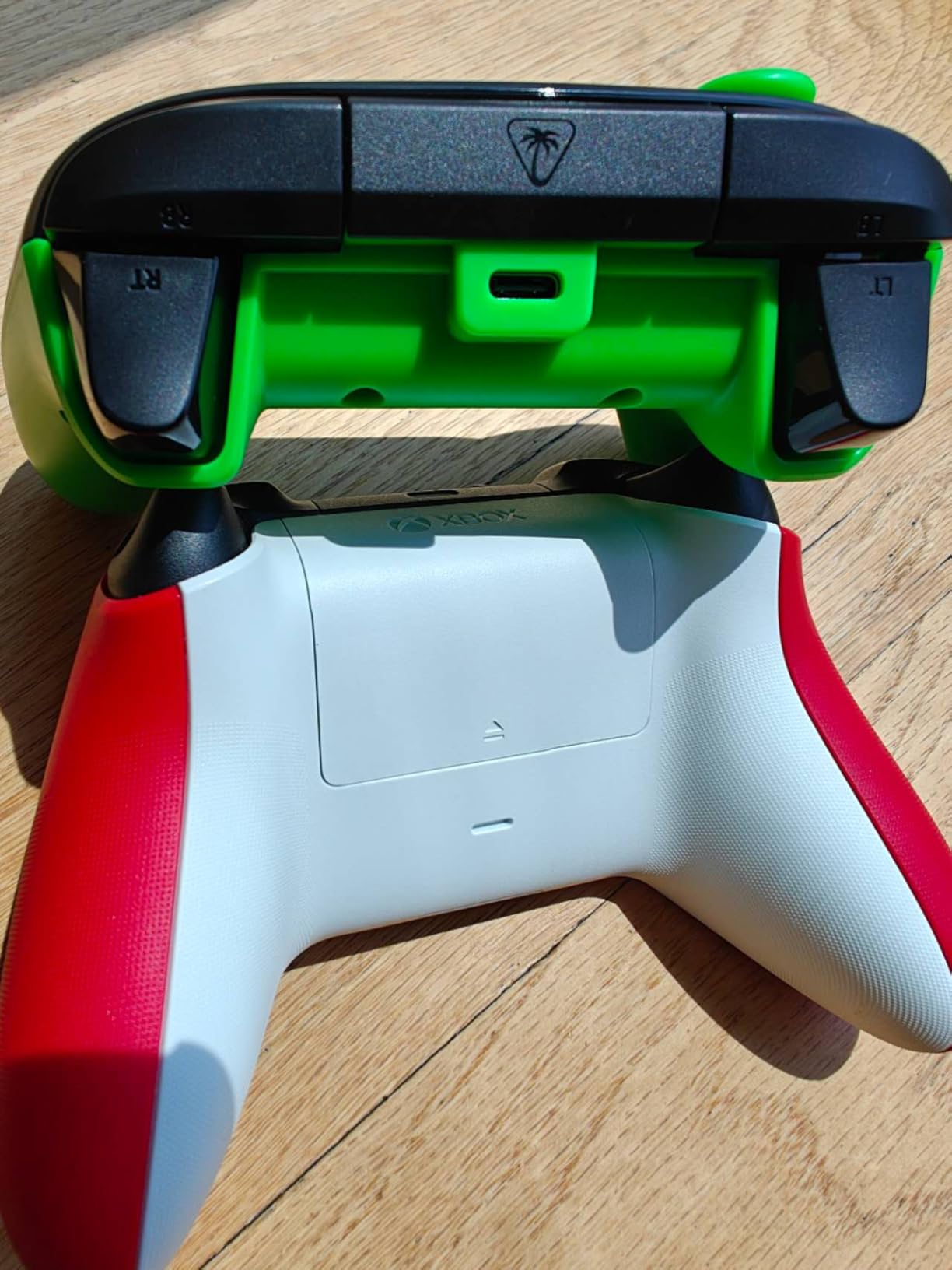
It is a wired pad over USB A or USB C with no pairing step, which removes latency as a variable. The Control Hub companion app handles configuration and diagnostics, so you can check button state and adjust the pad from PC. The shaped grips are designed for extended comfort rather than short bursts.
Be aware this listing carries no written customer review text, so our read is drawn from the stated feature set and the rating distribution, which sits at 65 percent five stars and 11 percent one star. Buyers rate it above average for a wired budget pad thanks to the Hall Effect sticks and audio controls, and the mixed lower ratings reflect the usual compromises at this level.
Who should buy the Rematch Core
Buy it if you race on Xbox Series X|S or PC, you want zero setup time, and your current pad drifts. The Hall Effect sticks are the reason to pick it, and the wired connection means you never wonder whether the connection dropped mid-lap.
It is also a good family or shared-console pad. The volume, chat mix and mic mute controls sit on the pad itself, which is exactly what you want when two people share a room and one of them is on a voice call.
Who should skip it
Skip it if you want rear paddles for manual transmission, since shifting has to be mapped to face buttons or bumpers instead. Skip it if you play on the couch and need wireless, because this model is wired only.
At this tier you are accepting the standard budget trade-offs in construction weight and a feature set with nothing exotic in it. If you want paddles as well, the GameSir G7 SE gives you two lockable back buttons at a similar level, and if you want higher polling rates, the 8BitDo Ultimate 2C reports 1000Hz.
10. Logitech G F310: Best No-Frills Wired Pad for Casual Racing and Simplicity
Logitech G F310 Wired Gamepad Controller Console – Blue/Black
- Sticks have not drifted after 100 or more hours of use
- Six-foot cord gives lag-free play with nothing to charge
- Recognized as an Xbox 360 controller on Windows
- Profiler software can rebind buttons
- No rumble motors at all
- No headset or microphone connection
- Analog stick layout is dated with a large dead zone
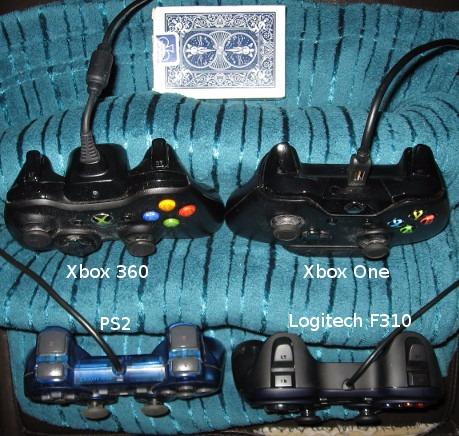
Sometimes the best answer is the pad that does nothing clever. The F310 has been sold for years and owners consistently report no stick drift and buttons that still feel crisp after a hundred hours or more. The six-foot cord means no pairing, no charging and no lag, and on Windows it is recognised as an Xbox 360 controller, which is the layout most PC racing games expect.
The floating D-pad rests on four separate switches rather than a single pivot, so direction changes register fast and cleanly, and the layout matches an Xbox 360 pad so there is no learning curve. Logitech Profiler can rebind buttons or map them to keyboard and mouse commands, and an XInput and DirectInput toggle on the back covers older software.
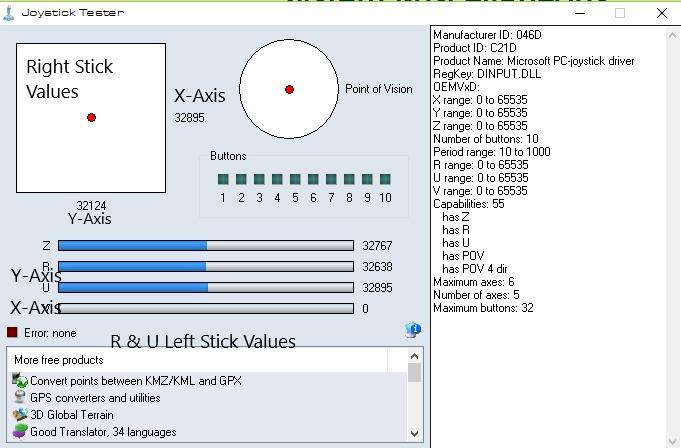
It is the most widely compatible pad in this roundup for good reason. It works out of the box on PC, and owners report it also works on Linux without drivers and on cloud gaming services, which is exactly why the recommendation keeps coming up in PC racing communities as a reliable cheap option.
What you give up is significant, so read this list properly. There are no rumble motors at all, which removes engine and surface feedback entirely. There is no headset or microphone connection, so audio needs another route. The ABXY buttons lack touch sensitivity, and the analog stick placement is the dated PS3-style layout where the movement area is offset and the dead zone is large.
Who should buy the F310
Buy it if you race casually, you want something that works on every PC you touch without drivers, and you do not care about vibration because you use headphones and external speakers anyway. For a kart racer or an older arcade title, this pad is more than enough.
It is also the right pick for a cloud gaming or shared-PC setup where a driver-free, battery-free device is worth more than feature depth. The long cord is genuinely practical for seated play at a desk.
Who should skip it
Skip it if you play sim-style racers, because the lack of any rumble means you lose the feedback that tells you the car is sliding. Skip it if you need to chat with teammates, because there is no microphone connection.
The stick placement and the large dead zone also mean fine steering adjustments are harder than on any modern pad, and the light plastic construction can crack after repeated drops. If any of that matters, the Turtle Beach Rematch Core keeps the wired simplicity and adds Hall Effect sticks, impulse triggers and audio controls.
How to Choose a Racing Controller: the Specs That Actually Matter
Stick sensors decide whether your steering stays honest. Potentiometer sticks use a physical contact wiper to sense position, and that wiper wears over time and eventually reports a slightly false centre, which is the drift everyone complains about. Hall Effect sticks read the stick position magnetically instead, and TMR sticks use a magnetic field with finer resolution and higher sensitivity again. Any of the three beats a stick that drifts, but Hall Effect and TMR are the reason several picks here have no drift complaints at all.
Triggers matter more than most buyers expect, because analog triggers are what let you trail-brake. A digital trigger is a switch. An analog trigger maps pressure across its travel, so half pressure is half braking. Trigger stops and hair trigger modes shorten that travel so a full press arrives faster, which changes the gearing of the movement rather than just the delay. The DualSense Edge goes further and physically lengthens the travel, which makes slow throttle control easier for the same reason.
Paddles exist so your thumbs never leave the sticks. On a gamepad without paddles, shifting means lifting a thumb, and if the game only accepts shifting on the face buttons you are genuinely slower. The Elite Series 2 gives you four paddles, the SCUF VALOR PRO gives you four configurable to 16 functions each, and the 8Bitdo Ultimate 2 gives you two pro paddles.
Connectivity is a race input, not a convenience preference. Wired USB-C has no pairing step and no compression, which is why the G7 SE, the Rematch Core and the F310 are all wired. A 2.4GHz dongle is close behind and better than Bluetooth, because Bluetooth adds compression and reconnection behaviour that can be felt. Bluetooth is the wrong choice for competitive online racing.
Adjustable stick tension is rarer than you would expect, and it is the one feature that changes the pad day to day. Stiffen the steering stick and small flick inputs hold their line; soften it and slow corners become easier. The Elite Series 2 is the pick here that gives you physical tension control rather than a software profile.
Platform fit is the last filter, and it eliminates more options than price does. Anything with no Xbox support is out for Xbox Series X|S. The DualSense Edge is PlayStation 5 only, with no PC or Xbox support. The Nova Lite 2 covers Switch, PC, Android and iOS but not Xbox. The G7 SE and the Elite Series 2 are the two broadest options, covering Xbox and PC together.
Gamepad vs Racing Wheel: Which One Should You Buy?
A controller beats a keyboard for racing because analog triggers give proportional brake and throttle input, while a keyboard is binary, and steering on a stick is finer than holding an A or D key. That said, keyboard plus mouse can still win on raw lap time in PC sim racers, where precision is measured in milliseconds and the steering axis is continuous.
The honest comparison is this. A gamepad wins on accessibility, cost and the number of games you can pick up and play immediately. A wheel wins on steering lock, clutch work, pedal feel and immersion. Community consensus in sim-racing circles is consistent on the crossover: a good gamepad beats a cheap entry-level wheel for arcade and semi-sim titles, and a wheel only pays off once you move to true sims where clutch and steering angle are the game.
Console players have less choice here in practice. If your racing lives on a console and you want a wheel, read our best racing wheels for PS5 guide next, and if you play fighting games on the same PC, our best PC controllers for fighting games breakdown covers the pads that prioritise face buttons instead of triggers.
The Best PC Racing Games to Play With a Controller
These are the PC titles with the strongest native controller support, roughly in the order most pad players should try them.
Forza Horizon 5 – Pressure-sensitive analog triggers and a wide assist range make it the friendliest place to learn throttle and brake modulation.
Assetto Corsa – Deep gamepad support with configurable assists, and the usual destination for anyone moving from a pad toward a wheel.
Le Mans Ultimate – Sim-leaning endurance racing where pad assists matter, and where a wheel starts to make more sense.
Gran Turismo 7 on PC – Full wheel and pad support with a wide car roster and licensed tracks.
F1 – Brake-by-wire style inputs reward trigger modulation and short throws.
EA Sports WRC – Pace-noted stages that suit both a pad with rear buttons and a budget wheel.
Dirt Rally – Analog throttle control is the whole game, so linear triggers matter more here than paddles.
Grid Legends – Arcade-leaning handling with generous assists and a straightforward pad control scheme.
How to Configure a Controller for Racing Games
Setting up a pad properly takes about fifteen minutes and does more for your lap times than any upgrade. Work through these in order.
Map the paddles. Assign one rear paddle or extra bumper to shift up and the other to shift down, then check that the game you play actually registers them. Titles vary in how much they support rear inputs, and a few ignore them entirely.
Set the trigger stops or hair trigger mode. Use the hardware switch or app setting rather than a firmware profile where possible. Shorter travel suits competitive braking taps.
Tune the dead zone. Most pads ship with a dead zone large enough to hide drift but small enough to eat your finest steering inputs. Reduce it until the car stops wandering on a straight, then stop.
Pick a response curve. Linear gives proportional pressure across the whole trigger travel. Non-linear gives you a defined click point. Choose linear for drifting and sim titles, click for arcade racers.
Save a separate profile per game. The Elite Series 2 holds three profiles and the GameSir Nexus app stores three on the pad, so an arcade layout and a precise layout can sit side by side.
Set vibration before a race, not during. On PC, Steam Input lets you configure per-game, and the GameSir app covers dead zones, vibration intensity and button testing. Do it while loading.
Frequently Asked Questions
Is a controller better than a keyboard for racing games?
Yes, for almost every player. A controller’s analog triggers give proportional brake and throttle input, so you can feather the brake through a corner, while a keyboard is binary. Steering on a thumbstick is also finer than holding A or D. The exception is PC sim racers chasing pure lap time, where keyboard plus mouse can still win.
Do racing games support rear paddles?
Support varies by title, which is the single most common complaint from people who buy a paddle controller. Arcade and open-world racers often map rear inputs directly. Sim racers usually let you assign them manually. Before buying a paddle pad, check that your specific game lets you remap them, and verify in-game after setup rather than assuming.
What controller has the lowest input lag for racing?
Wired USB-C connections remove wireless latency entirely, and among these picks the GameSir G7 SE is the wired option with Hall Effect sticks and rear paddles. Among wireless pads, the 8BitDo Ultimate 2 reports under 1ms on its 2.4GHz connection and 1000Hz polling, and the 8BitDo Ultimate 2C reports 1000Hz over both 2.4G and wired. Bluetooth adds the most delay.
Will a drifting controller ruin my racing?
It makes fast driving inconsistent rather than impossible. A drifting stick reports a slightly false centre, so the car wanders on straights and you correct constantly through long races. Hall Effect and TMR sticks are magnet-based and do not wear like potentiometer wiper designs, which is why every drift-free pick in this roundup uses one or the other.
What is the best PC controller for GTA 5?
Any standard Xbox-layout pad with remappable triggers works well, since GTA 5 is not a driving-focused sim. If you also play racing titles, pick one of the racing picks here instead so one pad covers both. For racing specifically, the GameSir G7 SE and the 8BitDo Ultimate 2C are the strongest all-rounders for PC.
Final Verdict: The Best Controllers for Racing Games in 2026
The Xbox Elite Series 2 is our top pick overall, and the reason is simple: adjustable stick tension, three-step hair trigger stops and four rear paddles are the three things a racing pad needs, and it is the only controller here with all three under hardware control. It runs on Xbox Series X|S, Xbox One and Windows, so it also survives a platform change better than anything else on the list.
On PlayStation 5, the DualSense Edge is the answer, and its adjustable trigger travel is the feature that changes braking feel more than anything else you can add later. If your racing happens on PC and you want the deepest control per unit of money, the 8Bitdo Ultimate 2 combines TMR sticks, a trigger mode switch and two rear paddles. If you want to spend as little as possible and still avoid drift and lag, the 8BitDo Ultimate 2C gets you Hall Effect sticks and 1000Hz polling, and the GameSir G7 SE adds lockable paddles on a wired connection.
When a pad stops being enough, the Logitech G29 is our wheel recommendation, with 900 degrees of rotation, force feedback and three pressure-sensitive pedals. Before you buy anything, spend fifteen minutes on the configuration steps above, because mapping your paddles and cutting your dead zone will improve your lap times more than any upgrade we have listed here. Check the live listing on each card for current availability, and then go find an empty corner to practise in.