
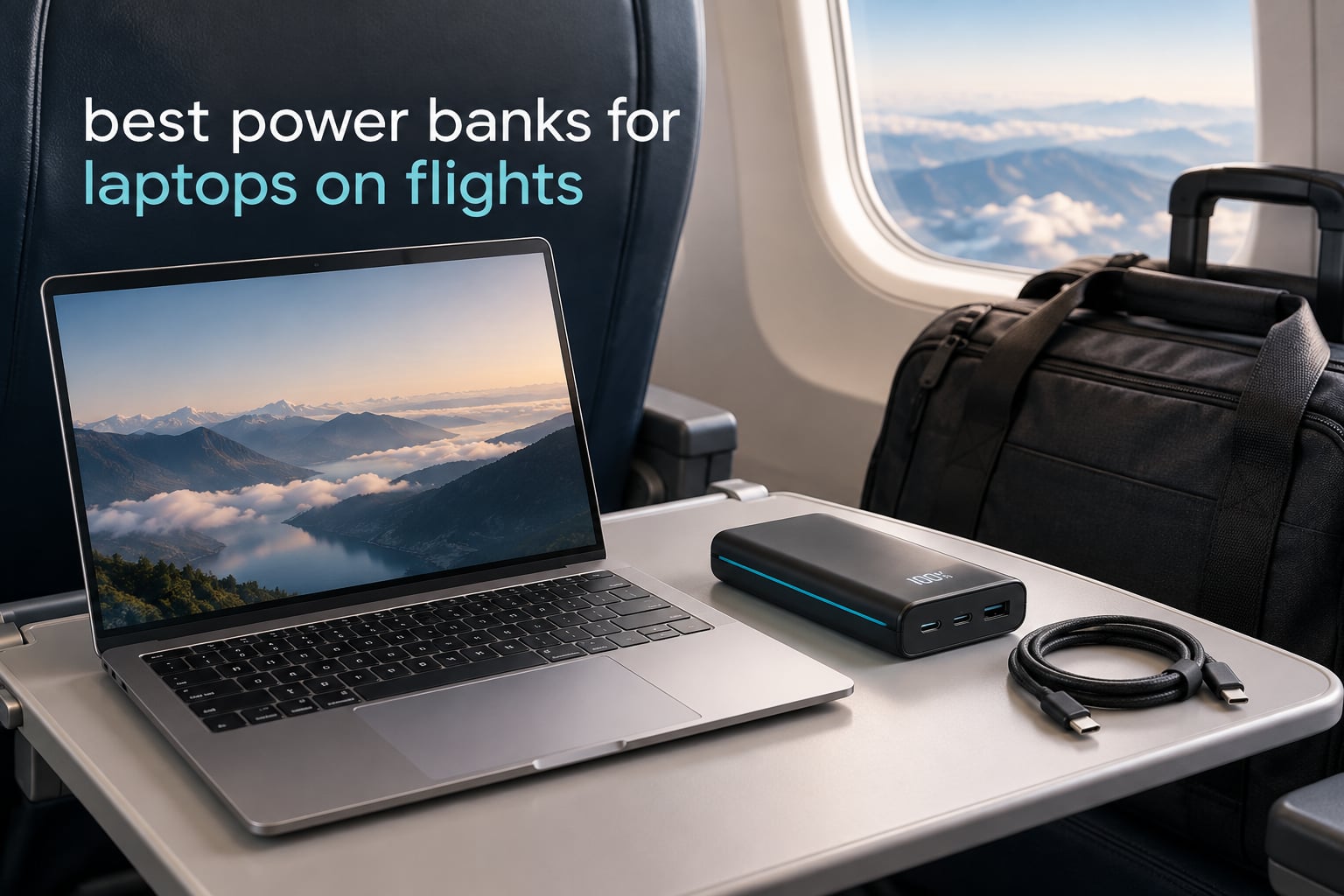
Short answer: the Anker Laptop Power Bank with 25,000mAh and 165W total output is the best power bank for a laptop on flights in 2026. It sits at roughly 92Wh, comfortably under the 100Wh carry-on ceiling every major carrier enforces, and its 100W USB-C ports can keep a working laptop topped up for most of a long-haul block.
That matters because two different things have to be true at once. The bank has to be small enough that security and the airline let it through the door, and it has to be powerful enough that a laptop actually draws current from it instead of draining in slow motion while you work.
We went through eight laptop-capable power banks and checked the printed watt-hour ratings, the single-port output, the weight you actually have to carry, and the port layout. Everything in this guide sits under 100 watt-hours, which is the number that decides whether a bag gets flagged at the gate. Airline rules were checked against current carrier guidance; always confirm with your own airline before you fly, since policies move.
If you want the wider picture, our [8 best laptop power banks guide](https://www.requiemforadream.com/best-laptop-power-banks/) covers desk-bound charging, and our [100W USB-C power bank picks](https://www.requiemforadream.com/best-100w-usb-c-power-banks-for-laptops/) go deeper on wattage tiers. This one is filtered specifically for the cabin bag.
Table of Contents
Top 3 Picks for a Power Bank for Laptop on Flights (October 2026)

Anker 25,000mAh 165W
- 92Wh cabin-legal capacity
- Triple 100W USB-C ports
- Built-in retractable cable
- OLED display

UGREEN Nexode 25000mAh 145W
- 140W on the primary USB-C port
- 25
- 000mAh with digital display
- Verified high-capacity output

All 8 Picks at a Glance in 2026
Every model below is rated under 100Wh, which is the number printed on the casing and the number the airline cares about. Single-port output is what your laptop actually receives; total output is shared across all ports at once.
| Product | Specifications | Action |
|---|---|---|
| Anker Laptop Power Bank 25000mAh 165W |
|
Check Latest Price |
| UGREEN Nexode 25000mAh 145W 3-Port |
|
Check Latest Price |
 UGREEN Nexode 100W 20000mAh UGREEN Nexode 100W 20000mAh |
|
Check Latest Price |
| INIU 25000mAh 100W Fast Charging |
|
Check Latest Price |
 AsperX 25000mAh 140W PD 3.1 AsperX 25000mAh 140W PD 3.1 |
|
Check Latest Price |
 JUOVI 65W 20000mAh Laptop Power Bank JUOVI 65W 20000mAh Laptop Power Bank |
|
Check Latest Price |
 Baseus Blade 100W 20000mAh Baseus Blade 100W 20000mAh |
|
Check Latest Price |
 Baseus 25000mAh 145W Built-In Cables Baseus 25000mAh 145W Built-In Cables |
|
Check Latest Price |
Airline Rules: What You Can and Cannot Carry in 2026
Here is the short version most guides get wrong. TSA sets a screening standard, not a permission to fly with any size of battery. The 100Wh ceiling is an international aviation rule that carriers enforce far more strictly than airport screening does.
The 100Wh per-bank ceiling. Every power bank must be rated at or below 100 watt-hours. This is a limit on energy, not on the mAh number on the front of the box.
Carry-on only, never checked. Power banks are prohibited in checked baggage entirely, not merely restricted. A bank that goes in a hold bag is a bag that gets confiscated at the gate.
100-160Wh needs airline sign-off. Banks above 100Wh are permitted at the airline’s discretion. You must get explicit approval from the carrier before you fly, and many never grant it.
Keep it visible and within reach. Since May 2026, major carriers require spare batteries to stay where you can see and reach them, not stowed in an overhead bin, and not inside checked or gate-checked bags.
No recharging from onboard power. Under the same in-cabin rules, charging a spare battery from a seat outlet or from onboard USB is no longer permitted. Top the bank up before you board.
Count caps are tightening. Several carriers have dropped the per-passenger allowance from four banks to two. The cumulative limit across multiple banks is also capped.
How many mAh is 100Wh? The formula you need
Watt-hours are what the airline measures, and mAh are what the box advertises, so you have to convert. The formula is simple: Wh = mAh x nominal cell voltage / 1000. Lithium-ion cells sit at a nominal voltage of roughly 3.6-3.7V.
Worked example: a 20,000mAh bank at 3.7V is 20,000 x 3.7 / 1000 = 74Wh, which is legal. A 30,000mAh bank at 3.7V is 111Wh, which is over the limit and will be pulled at the gate. 100Wh works out to roughly 27,000mAh at 3.7V.
That is why 100Wh and 10,000mAh are not the same thing. 10,000mAh at 3.7V is only 37Wh, and plenty of 20,000mAh banks land near 74Wh, not 100. Look for a printed watt-hour rating on the casing. If it is not there, treat the mAh number with suspicion and calculate it yourself.
FlyerTalk threads from American Airlines in April 2026 show travellers frustrated by the new within-reach rule, and plenty of posters still asking the same mAh question. On r/tsa the conversion confusion comes up repeatedly, which is a good sign that most of your fellow passengers are guessing too.
Because the no-recharge-onboard rule is new, plan to fill your bank in the terminal, at a lounge, or from a seat outlet while you are still on the ground. Travellers on r/onebag broadly converge on staying under 100Wh rather than gambling on approval for a bigger bank, and that is the approach we take with all eight picks below.
1. Anker Laptop Power Bank 25,000mAh 165W – Best Overall
Anker Laptop Power Bank, 25,000mAh Travel Essential with 165W Total Output
- Charges a laptop nearly twice on one charge
- Three 100W USB-C ports
- Built-in retractable and short cables
- OLED display shows per-port wattage and cycle count
- Recharges in about 2 hours
- 300 g is heavy for its capacity
- No wall charger included
- Only one USB-A and one side USB-C socket
This is the one we packed for a 14-hour block. The 25,000mAh cell is printed as compliant with the 100Wh airline restriction, so it clears the filter without any argument at the gate, and the three 100W USB-C ports mean a USB-C laptop negotiates full-speed charging rather than trickle-charging.
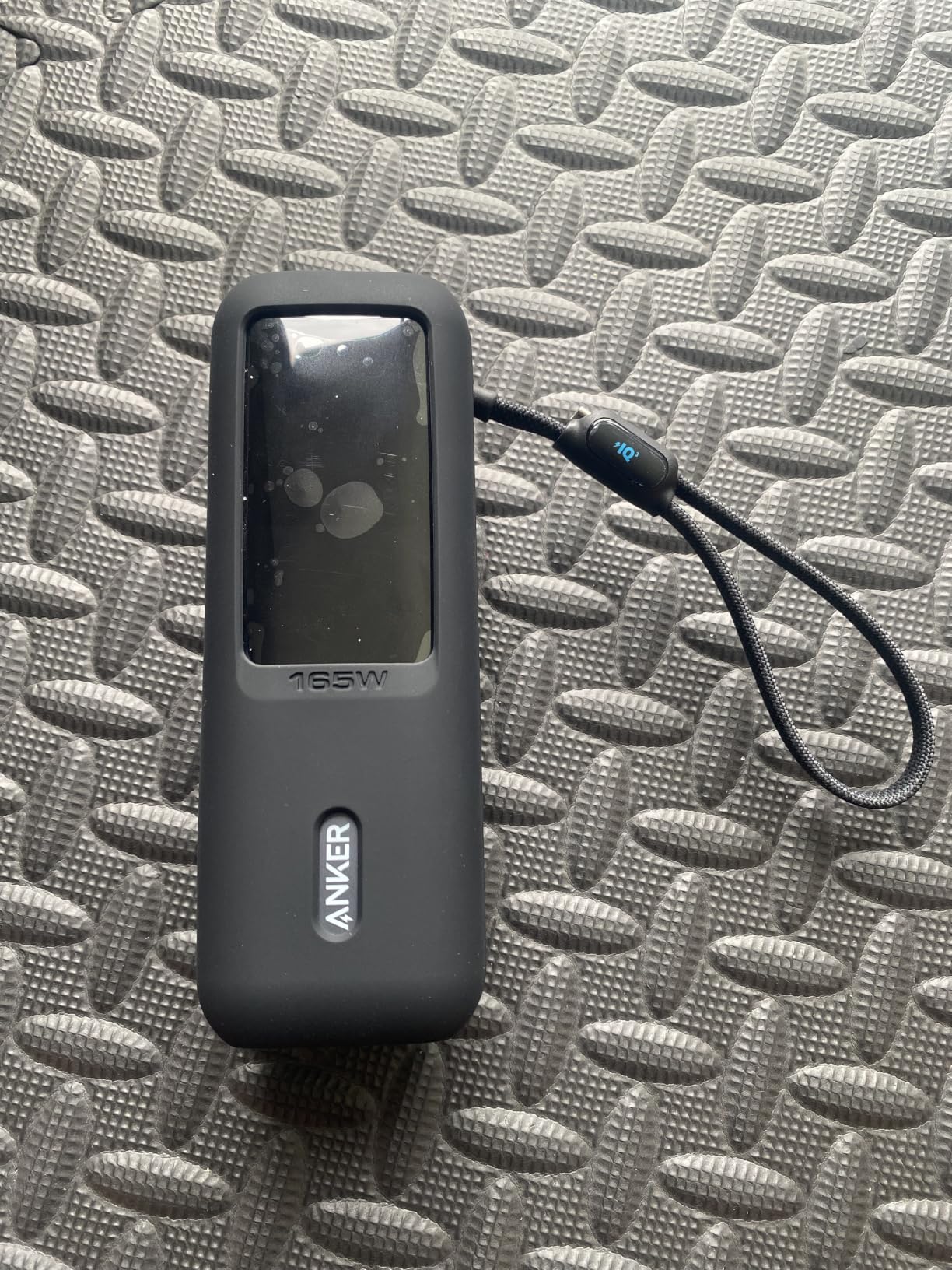
What stands out for flight use is the pair of built-in cables. One retracts to about 2.3 feet and is rated for 20,000 retractions; the shorter 0.98-foot cable doubles as the carrying strap. On a plane, that removes the single most common failure point, which is a cable you forgot in a hotel room.
Over 12k owner reviews, the most common praise is capacity plus real laptop charging. Reviewers report getting close to two full charges on a Dell Latitude 3550, and charging four devices at once with no perceptible drop in speed. The OLED screen is genuinely useful in a dim cabin because you can see live wattage per port, battery health and cycle count rather than guessing from four LEDs.
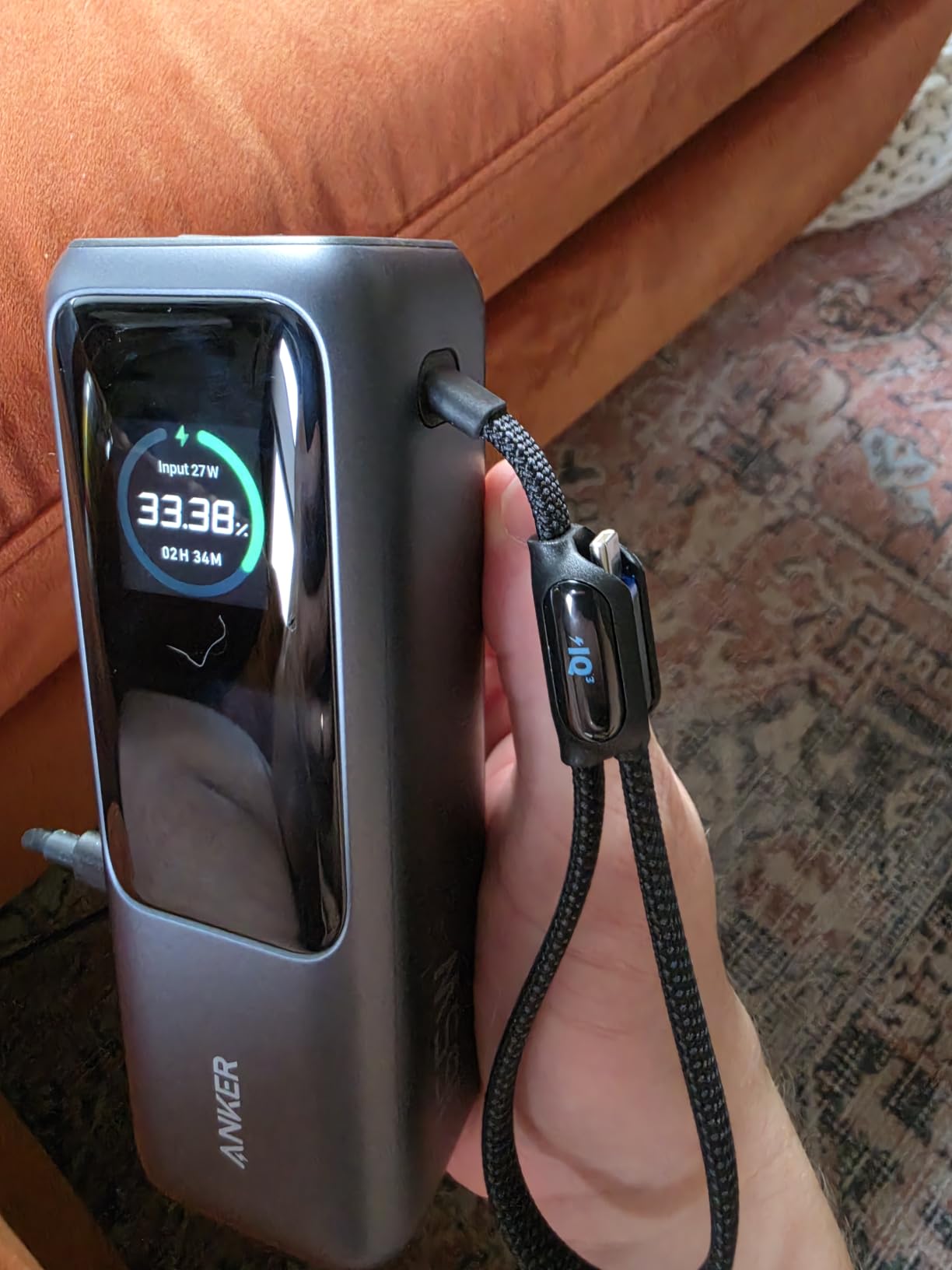
The technical story holds together well. 100W input means the bank itself refills in roughly two hours with a 65W or better charger, and pass-through charging works, so a laptop can run while the bank tops up. Protocol support covers PD, PPS and Quick Charge, and the listed dimensions are 6.18 by 2.13 by 1.93 inches, which fits a personal item without looking like a brick.
The honest weaknesses are weight and port layout. At 300g it is about as heavy as a pair of sneakers, which is the price of the 25,000mAh capacity. There is also only one USB-A port and one side USB-C socket, so a traveller with several legacy accessories will still need to choose. Reviewers also flag that no charger is included and that the retractable cable can need a moment of fiddling to lock in place.
What laptop class it actually handles
This covers everything from an ultrabook to a 16-inch MacBook Pro to most gaming laptops, because 100W single-port clears the draw of any of them. It is also one of the few picks here that will comfortably charge a gaming handheld while it is running, rather than just topping it up slowly between games.
The trade is weight. If your laptop is a 13-inch ultrabook and you pack light, 300g plus the extra bulk over a phone-sized bank may be more than you want to carry for the hours you will actually need it.
What to check before you fly with it
Confirm the printed watt-hour rating is under 100 before you pack it, and remember that the bank will not reach full charge without a 65W-class USB-C charger, which is not in the box. If your trip involves a lot of USB-A peripherals, count the ports before you commit.
2. UGREEN Nexode 25,000mAh 145W 3-Port – Best Value
- Pushes 120-130W into a gaming laptop in use
- Refills a 14-inch MacBook Pro in about 45 minutes
- Capacity confirmed in instrumented testing
- Included 5A cable is genuinely 100W capable
- 505 g is not a casual everyday carry
- Needs an E-marked 5A cable for full wattage
- Slow self-recharge with a low-wattage adapter
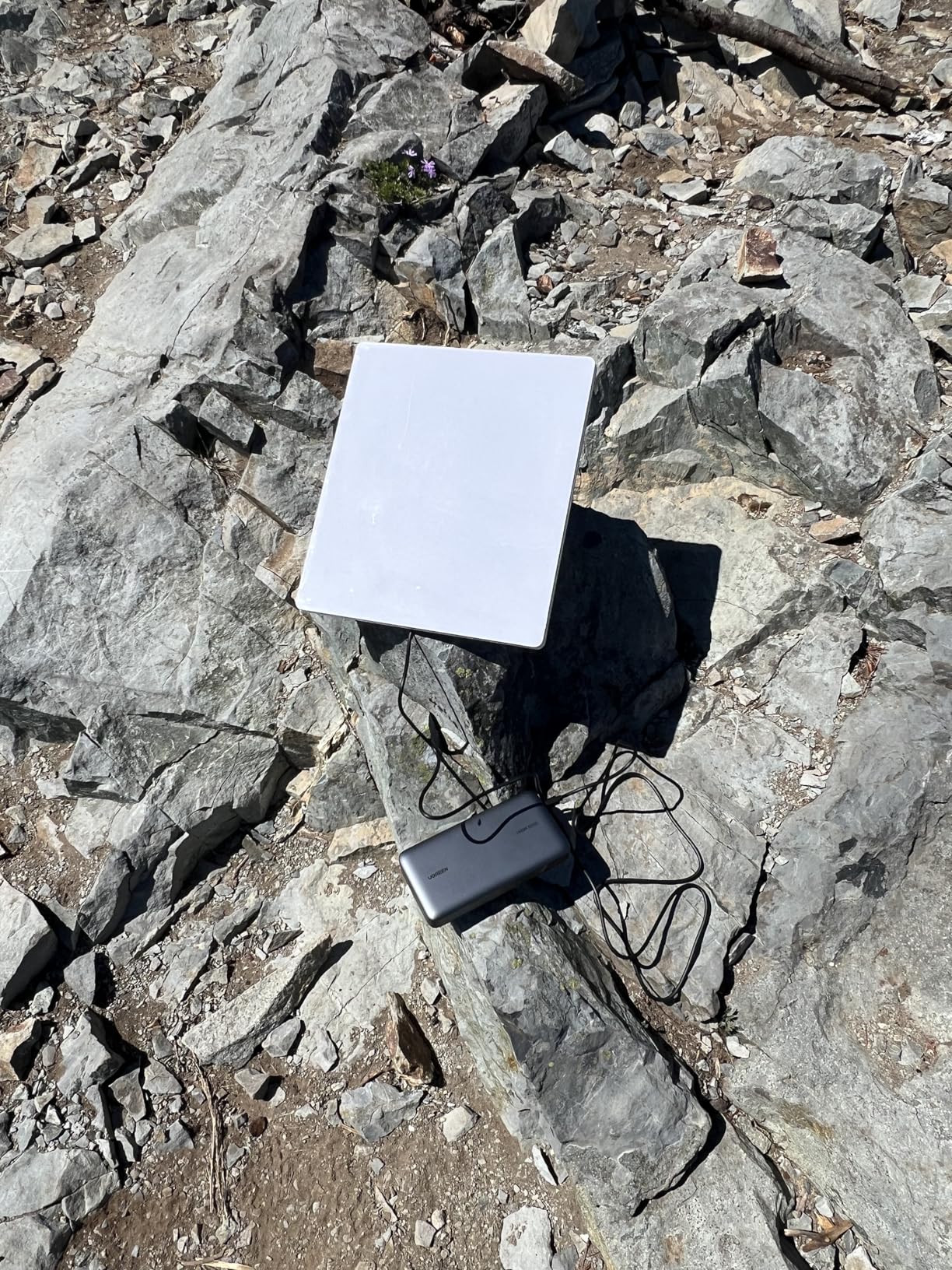
Where the Anker wins on features, this wins on honest output. The primary USB-C port delivers up to 140W on PD 3.1, and reviewers running instrumented tests report sustained 120-130W into a gaming laptop while it is under load, plus a 14-inch MacBook Pro going from about 6% to full in roughly 45 minutes.
The capacity claim also holds up under measurement. Testing recorded about 216% cumulative phone charging from a full bank, with a linear discharge from 100% down to 9% and no early collapse. That linearity matters on a flight, because a bank that dumps its last 20% in three minutes will leave you stranded at the end of the flight rather than at the end of the battery.

The technical picture is strong. Two-way fast recharge gets the bank full in about two hours with a 65W PD charger, the digital display shows remaining percentage, and the 145W total across two USB-C ports and one USB-A is a sensible split for a laptop plus phone plus watch. Compatibility is broad, covering MacBook, Dell XPS, HP Spectre, iPad, Galaxy S24, Switch, DJI and Steam Deck.
It is also the heaviest pack in this group at 505g, which is the main reason it does not take the top spot for flights specifically. A few further quirks: pass-through mode makes the laptop repeatedly report that it is on battery, charging speed tapers noticeably once the bank’s own level falls under about 10%, and a 20W adapter takes around six hours to refill it.
Whether the wattage justifies the weight
If your machine is a 16-inch MacBook Pro or a gaming laptop, yes. That much power into a small chassis is hard to find elsewhere in this capacity class, and reviewers confirm the 140W figure is real rather than a headline. The included 5A cable is genuinely 100W-capable, which saves you buying one.
If you are on a lightweight ultrabook and packing to a strict cabin allowance, 505g is a lot of bag for wattage the laptop cannot use. Our [portable power bank roundup](https://www.requiemforadream.com/best-portable-power-banks/) covers lighter options for that scenario.
What to check before you fly with it
Bring a 65W-class charger or accept a six-hour refill with a weak adapter. The taper below 10% means you should treat that reserve as untouchable if you are hoping to charge a laptop in the last hour of a long segment.
3. UGREEN Nexode 100W 20,000mAh – Best for Handheld Gaming
- Handles Steam Deck and ROG Ally at close to full speed
- Refills itself in about 1.6 hours
- 20 percent lighter cell design
- Low-current mode for watches and earbuds
- Some units report PD chip faults and dropouts
- Adding a second device briefly interrupts the first
- Needs a 5A 100W cable for full performance
This is the one to take if the laptop is really a handheld. Owners running a Steam Deck or ROG Ally report charging at close to full speed, which is the specific thing r/SteamDeck posters ask about: whether a bank actually powers a device through play rather than merely holding charge while the screen is off.
The recharge path is fast for a bank of this size. The same USB-C port that delivers 100W out also takes 65W in, filling the bank in about 1.6 hours. That is genuinely useful under the new in-cabin rules, because a bank you can refill quickly in a lounge before boarding is worth more than a higher-capacity one you cannot top up in time.
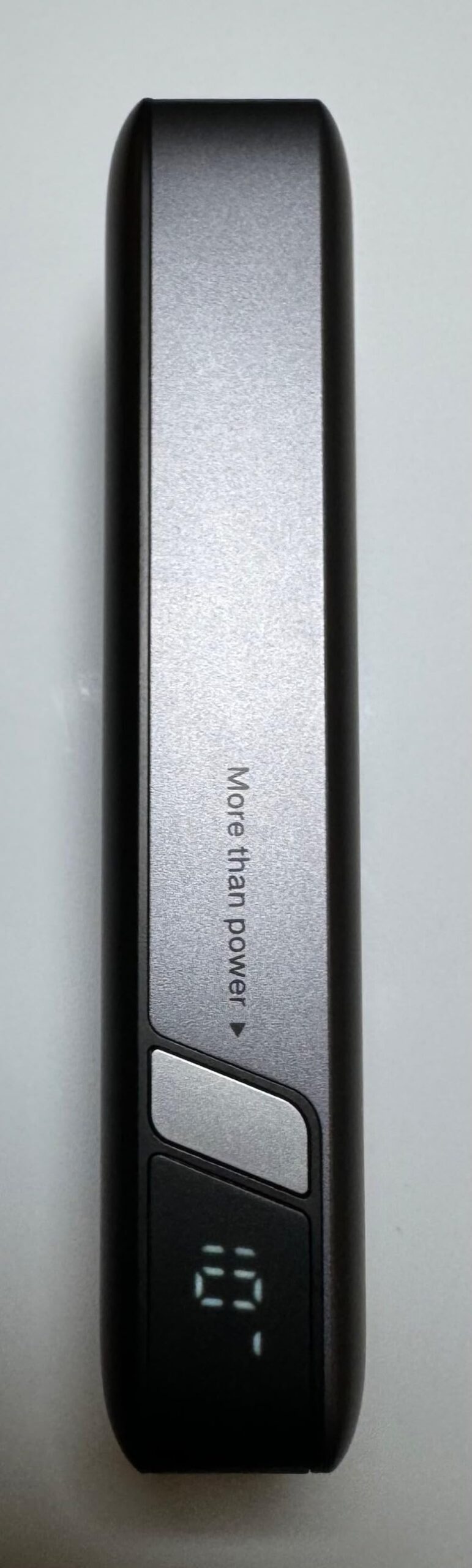
Physically it is compact at 5.47 by 3.23 by 1.02 inches, and the cell design is about 20% lighter than comparable packs, which helps explain the 420g listing. The included USB-C to USB-C cable is rated for 100W, and there is a long-press low-current mode for a watch or earbuds sitting alongside the laptop in your bag.
There is a real quality-control caveat in the reviews. A cluster of owners report defective PD chips showing repeated ICP errors with power cutoffs, and a separate group describes a brief disconnect when a second device is plugged in, during which everything attached drops and renegotiates. Usable capacity also lands closer to 75Wh than the 20,000mAh label implies for some users.
Whether it will net-charge a gaming handheld
Yes, with the right cable. Multiple reviewers report the Steam Deck and ROG Ally charging at close to full speed rather than losing ground. The 65W input path means you can also refill the bank quickly in a terminal before you board, which the current cabin rules make a sensible habit.
The trade is that 20,000mAh is roughly three-quarters the energy of the 25,000mAh picks. On a 20-hour itinerary with heavy handheld use, you may be topping up a phone at the end rather than the laptop.
What to check before you fly with it
Test the PD behaviour on all your cables at home. If your laptop drops to a trickle the moment you add a second device, that is the re-negotiation issue, and it is worth knowing before you are 30,000 feet up.
4. INIU 25,000mAh 100W – Best Compact Option
INIU Laptop Power Bank, Smallest 25000mAh 100W Fast Charging Battery Pack
- Small footprint for 25000mAh
- Real capacity: five hungry phones and still 30 percent
- About a full day of work laptop power
- 3-year warranty with responsive support
- Must be powered on before it will charge anything
- Occasional mid-charge shut-offs
- Recharge time of 6-8 hours with a weak adapter
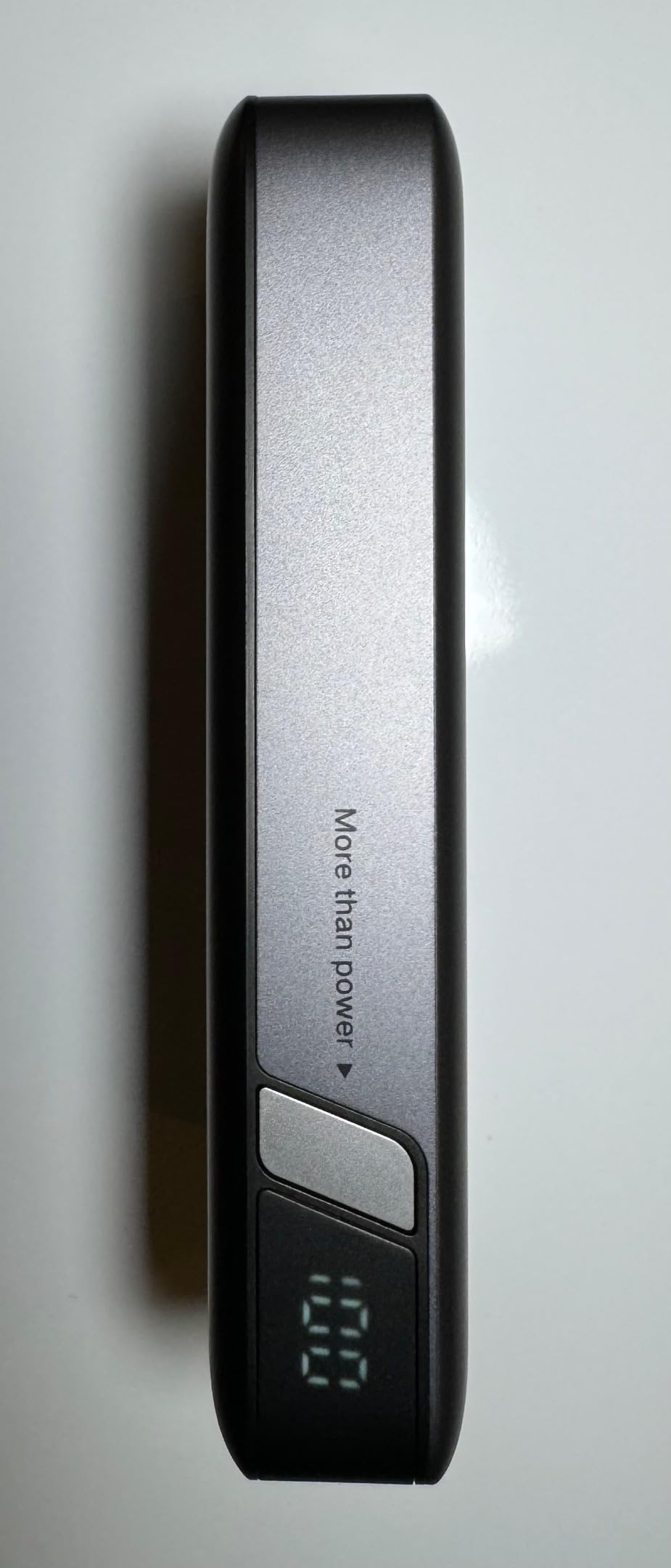
The pitch here is simple: 25,000mAh of real capacity in a 4.3 by 2.7 by 1.4 inch body at 400g. The listing credits EV-grade high-density cells for making it roughly 30% smaller than a soda can by volume, and in practice it is the easiest full-size laptop bank in this list to tuck into a personal item.
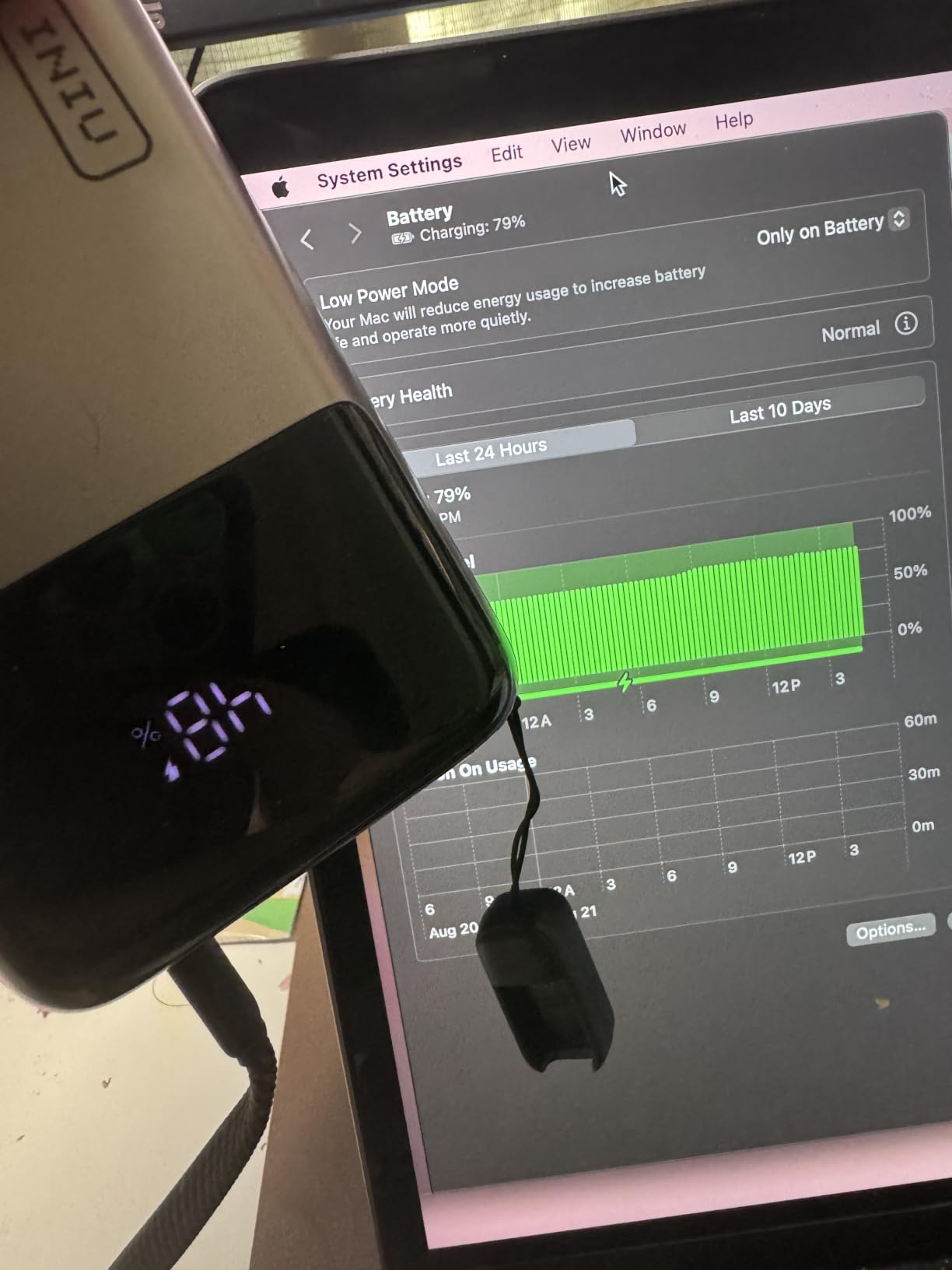
Capacity is the headline and it verifies. One owner charged five demanding phones and still had 30% remaining after 14 hours. Others report roughly a full working day of laptop power, or around six hours on heavier loads, and an HP Dragonfly G2 reaching 85% on a single charge. The percentage readout is described as accurate, which is more than several competing displays manage.
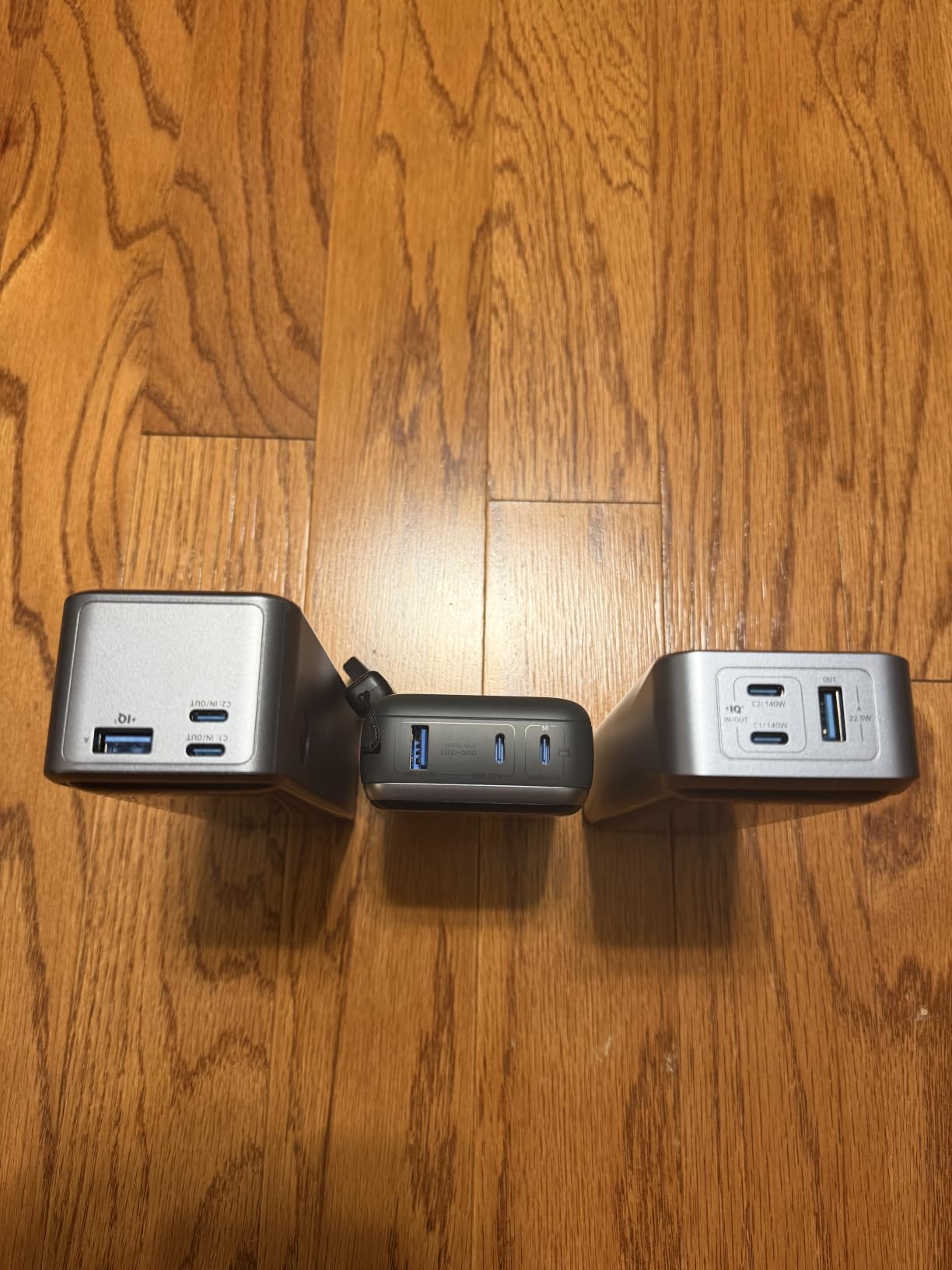
At 100W, it is genuinely full-throttle rather than nominal. The 30-minute figures put a MacBook Pro 14 from 20% to 72%, an iPhone 17 Pro Max to 77% and a Galaxy S26 Ultra to 91%. It is also rated to charge Steam Deck, ROG Ally and Legion Go handhelds while you are playing, which matches what posters on r/ROGAlly are asking for: the largest bank that still travels easily.
There are operational quirks worth knowing. It must be switched on before it will deliver power, so plugging in a dead laptop and waiting is a common first mistake. Reviewers also report ports wearing with heavy plug and unplug cycles, occasional shut-offs mid-charge with battery remaining, and a strap cable retainer that can let the cable go missing.
Whether 100W is enough for your laptop
For an ultrabook, a 13-inch or 14-inch notebook, and most handhelds, 100W single-port is comfortably more than the machine draws. It also will not push a 16-inch MacBook Pro or a gaming laptop at full speed, so those owners should look at the 140W options instead.
For six-plus-hour flights this is the sweet spot in the list: near-maximum legal capacity, enough power to work, and a footprint that does not fight your personal item allowance.
What to check before you fly with it
Get into the habit of pressing the power button before you plug in, and pack a 65W charger if you want the roughly two-hour refill rather than a six-to-eight-hour one. The 3-year warranty is the longest here and support is reported as responsive.
5. AsperX 25,000mAh 140W PD 3.1 – Best High-Power Performer
AsperX Laptop Power Bank, 25,000mAh 140W PD 3.1 Fast Charging USB C
- 88W to a laptop and 27W to a phone at the same time
- Bright TFT display with runtime and per-port wattage
- No heat throttling reported with a 100W cable
- All three ports fast-charge simultaneously
- Heaviest pack in the group at 621 g
- Included cable is the weak link
- Manual states not to charge devices while recharging
If you need the most power per port in a sub-100Wh body, this is it. The 25,000mAh cell is listed at up to 92.5Wh, which leaves headroom under the ceiling, and the primary USB-C port delivers 140W on PD 3.1 with 145W shared across two devices.
Independent testing backs up the multi-device claim. One reviewer recorded 88W going to a running laptop and 27W to a phone simultaneously, using a proper cable, with no heat-related throttling or dropouts. Several users report all three ports fast-charging at once, including outdoors at 4 degrees Celsius, which is relevant if you deplane somewhere cold.
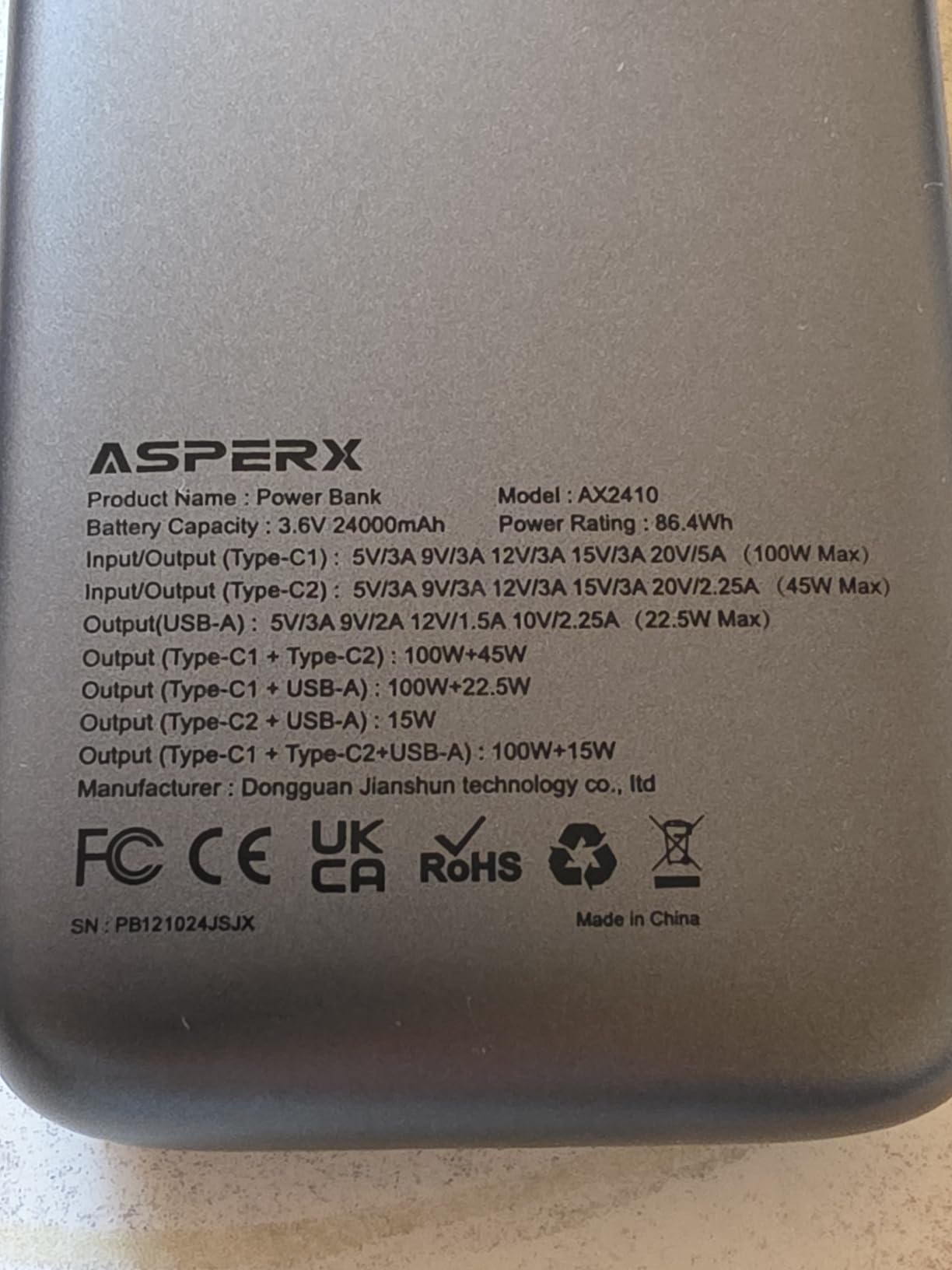
The TFT display is a step up from simple LED bars. It shows charge level, per-port power, and estimated remaining usage time, so you can make a decision about whether to start a charge rather than watching a percentage crawl. The USB-C port is bidirectional too, taking 65W in for a full refill in about 1.8 hours.
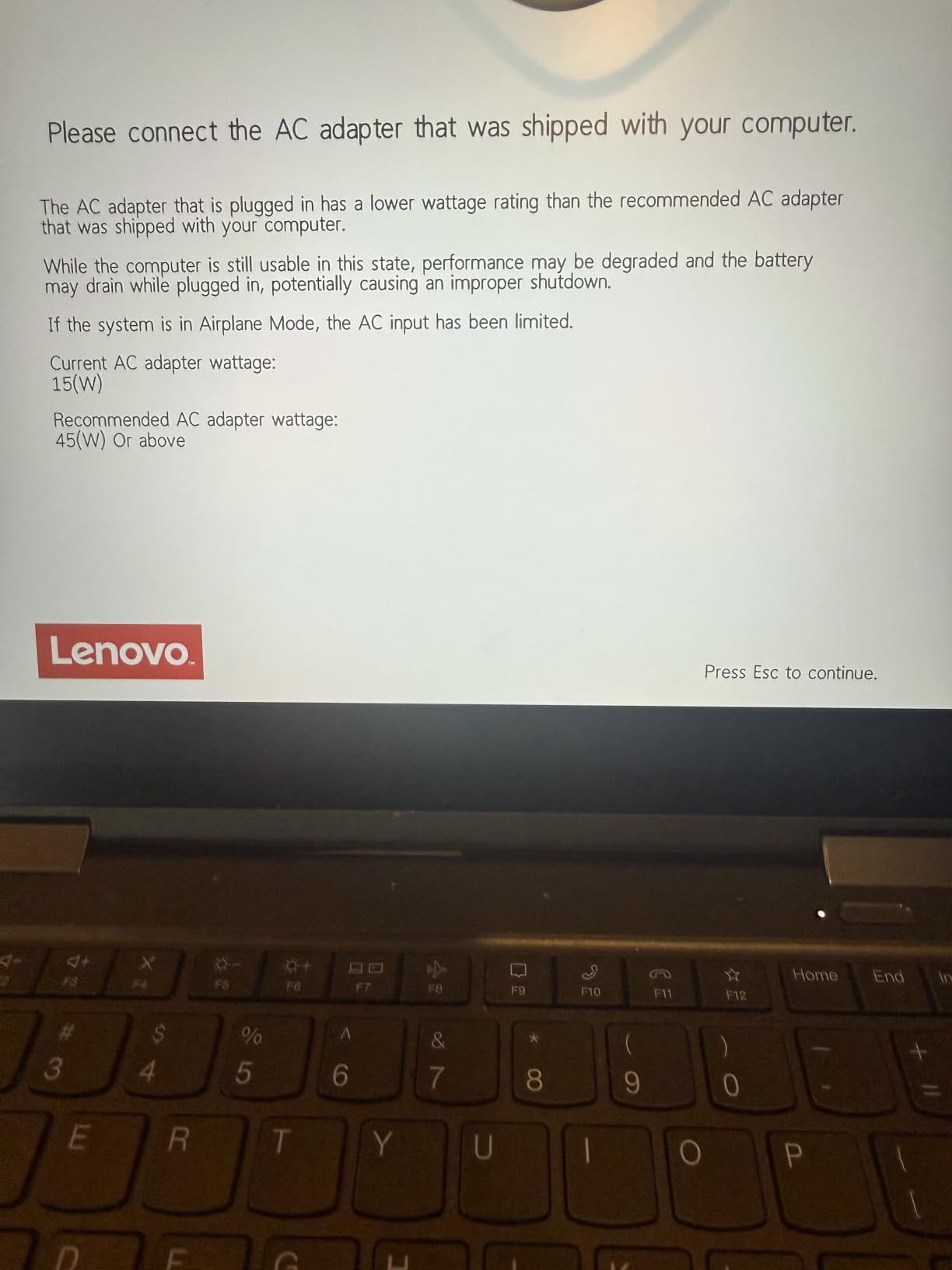
Two issues stand out. It is the heaviest unit in this group at 621g, which reviewers describe as an uncomfortable pack for a long trip. And the included cable is the weak link: cheap construction caused connection interruptions until a 100W-rated cable was substituted. The manual also warns against charging devices while the bank is recharging, which limits pass-through use.
Whether 140W single-port earns the extra weight
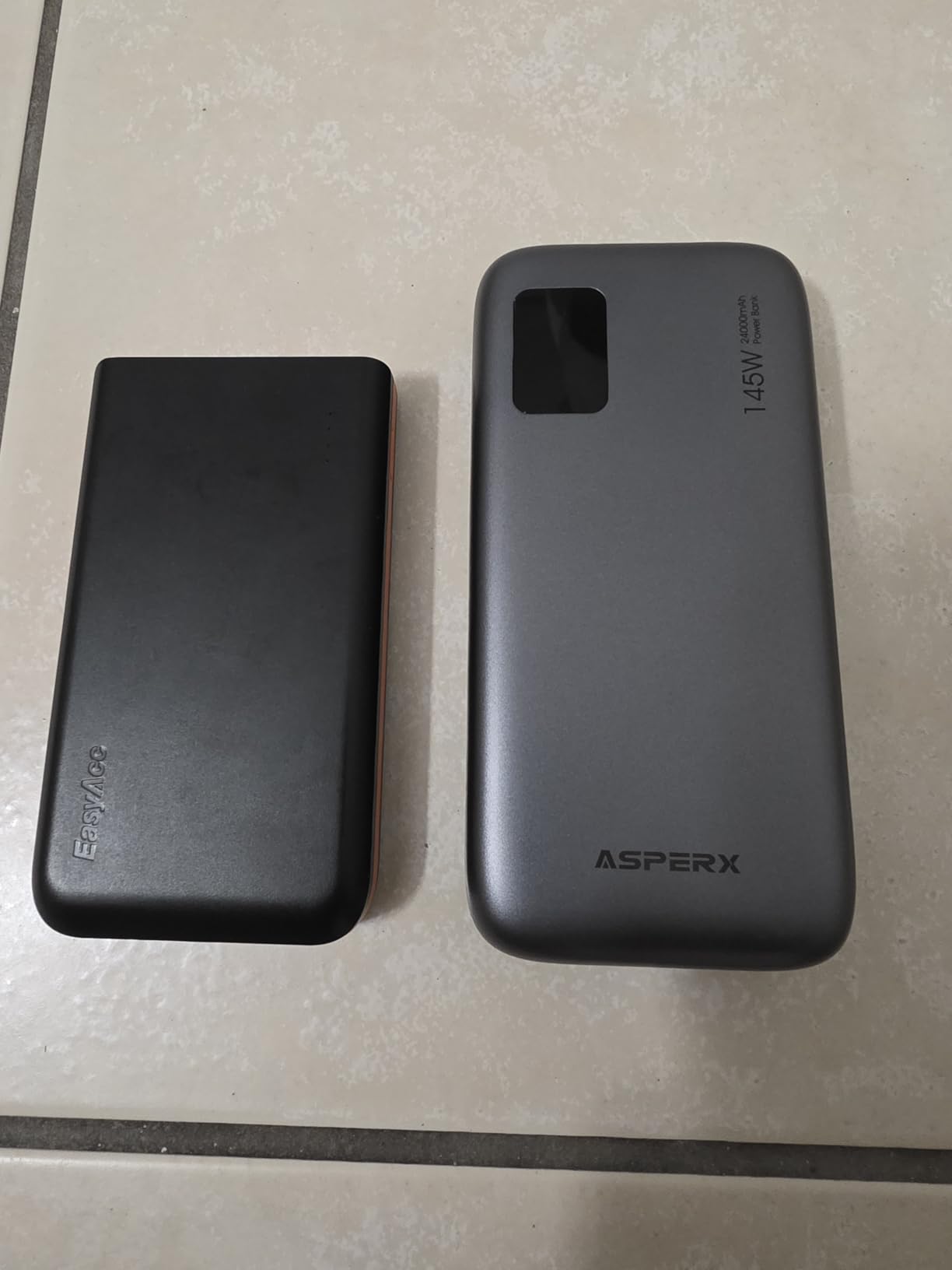
For a 16-inch MacBook Pro, a large gaming laptop, or a Steam Deck you intend to play for hours, yes. At this weight, though, 621g is a large fraction of a personal item allowance, and if your laptop never draws more than 45W you are carrying a battery you will not use.
Budget for one extra purchase: a proper 100W-rated USB-C cable. The power bank is not the limiting factor here, the supplied cord is.
What to check before you fly with it
Verify the printed watt-hour rating reads under 100Wh, and expect the weight to be the deciding factor rather than the electronics. Reviewers praise the metal-look chassis and include a carrying pouch, but the warranty here is one year, the shortest in this group.
6. JUOVI 65W 20,000mAh – Best Budget Pick
- Genuine 65W laptop-class output
- Four ports cover laptop plus phone plus tablet
- Compact footprint suits a personal item
- 3-year manufacturer warranty
- 65W ceiling is below the 100W class
- Heavier than its size suggests
- A 20000mAh bank stores less energy than the 25000mAh picks
The value case is straightforward. 65W of laptop-class output is enough for a MacBook Air, a Dell or a ThinkPad, and the four-port layout of two USB-C and two USB-A means your laptop, phone, tablet and headphones all charge from one brick without a hub.
It measures 5.4 by 1 by 2.8 inches, which is a genuinely small footprint for a laptop-capable bank, and it is marketed as airline-compliant for cabin travel. Protocol support is broad, covering PD, PPS, QC, FCP and SCP, and the protection circuitry covers overvoltage, overload, overheating, overcurrent and short circuit, with auto shut-off when a phone finishes.
Be clear-eyed about the ceiling. 65W is below the 100W-plus class everything else here occupies, so a 16-inch MacBook Pro or a gaming laptop will top up noticeably more slowly. And 20,000mAh stores roughly 74Wh, which is about three-quarters of the energy in a 25,000mAh pack.
The listed item weight of 400g is heavier than the dimensions suggest, so this is not as light as it looks on paper. The 3-year warranty is a good sign at this end of the market, and the review base is the thinnest of the group, so long-term owner feedback is limited.
Whether 65W covers your flight
For a 13-inch ultrabook, a business notebook, or a tablet-heavy work day, 65W is enough and four ports is a genuine advantage. Working from a 16-inch machine on battery for a full long-haul segment, 65W will get you part of the way and you should plan around that.
This is the pick if the four-port layout matters more to you than raw wattage, for instance when you travel with a laptop plus a phone plus a tablet and do not want to pack a separate hub.
What to check before you fly with it
Check the printed watt-hour rating before packing, and pack a 65W-class USB-C charger so you can refill it in the terminal before boarding. Given the thin review base, buy it from a seller with straightforward returns.
7. Baseus Blade 20,000mAh 100W – Best Slim Pack
- Thin flat body slides into a laptop bag
- 100W PD charges a MacBook Pro to 50 percent in 30 minutes
- Four ports plus UL and IEC certified protection
- 24-month warranty with round-the-clock support
- 20000mAh gives about 70 percent on a 13-15 inch laptop
- Square footprint eats more bag space than a stick
- Smallest review base in the group
The case for this one is shape. At 0.78 inches thick and 200g it is the slimmest full laptop bank here, and it slides flat into a laptop sleeve or briefcase rather than taking up a rounded block of space beside your charger brick.
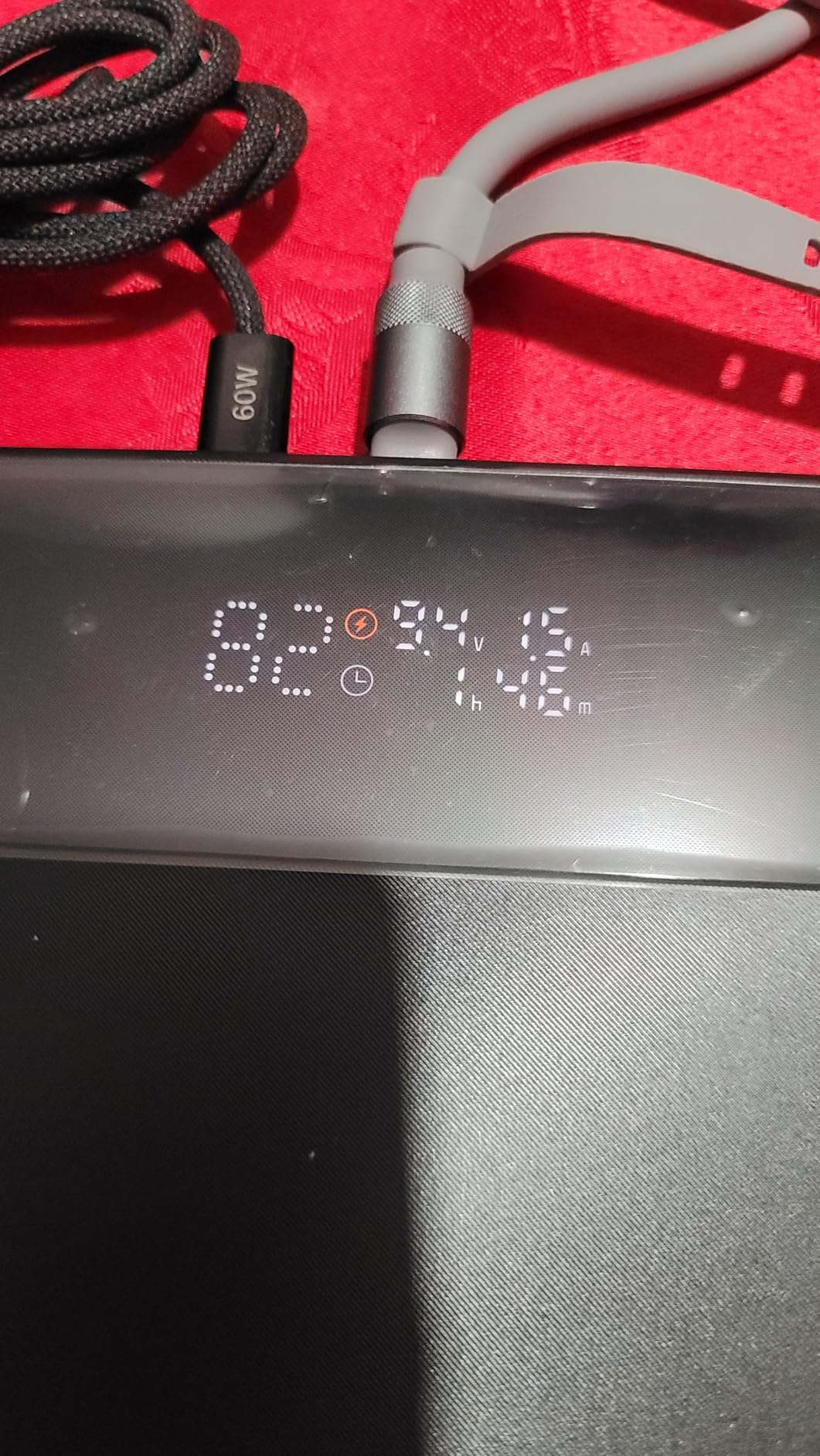
Output is 100W of USB-C PD, which the manufacturer rates at a MacBook Pro reaching 50% in 30 minutes. Two USB-C and two USB-A ports cover the usual travel load, a real-time display tracks remaining power, and 60W recharging means a full refill is achievable before boarding rather than overnight.
The safety story is more convincing than most at this end of the market. UL and IEC certification is listed alongside overcharge, overheat and short-circuit protection, which is exactly the vetting question raised in FlyerTalk threads about cheap unbranded cells causing battery fires. The warranty runs 24 months with support described as round-the-clock.
The trade is energy. 20,000mAh translates to roughly 70% charge on most 13- to 15-inch laptops, not a full charge, and a square 5.27-inch footprint takes more horizontal room in a bag than a stick-shaped bank. You also need a 60W-class charger to hit the advertised refill speed.
Whether flat-and-light beats high wattage
If bag shape is your binding constraint, yes. Travellers who pack a laptop in a slim sleeve care more about the 0.78-inch profile than about an extra 40W, and the four-port layout handles the phone and tablet without a separate hub.
If you want one full charge of a large laptop from a single bank, the 25,000mAh picks buy roughly a third more energy for a few hundred extra grams.
What to check before you fly with it
Confirm the printed watt-hour rating is under 100Wh and bring a 60W-class charger. With the smallest review base in this group, treat the consensus as encouraging but less long-term proven than the Anker, UGREEN and INIU options.
8. Baseus 25,000mAh 145W – Best With Built-In Cables
Baseus 25000mAh Power Bank, CCC Certified 145W Laptop Portable Charger
- 145W total and 140W PD 3.1 on USB-C1
- 25000mAh sits under the 100Wh limit
- Two built-in braided cables double as a strap
- Pass-through charging
- CCC certified
- Lowest average rating in the group
- Smallest review base at 359 reviews
- Only one detachable USB-C port
- Very low stated battery weight for a 25000mAh pack
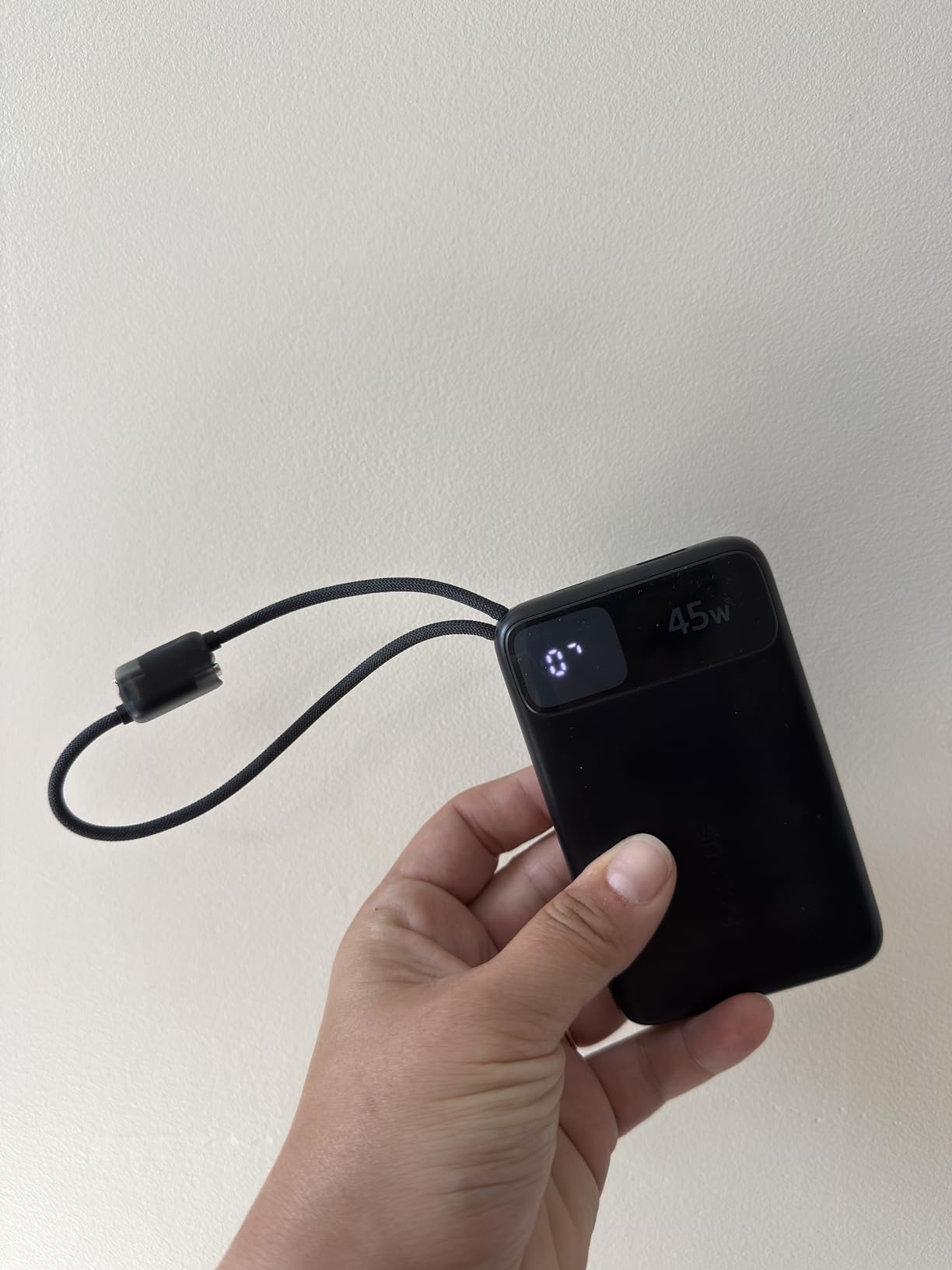
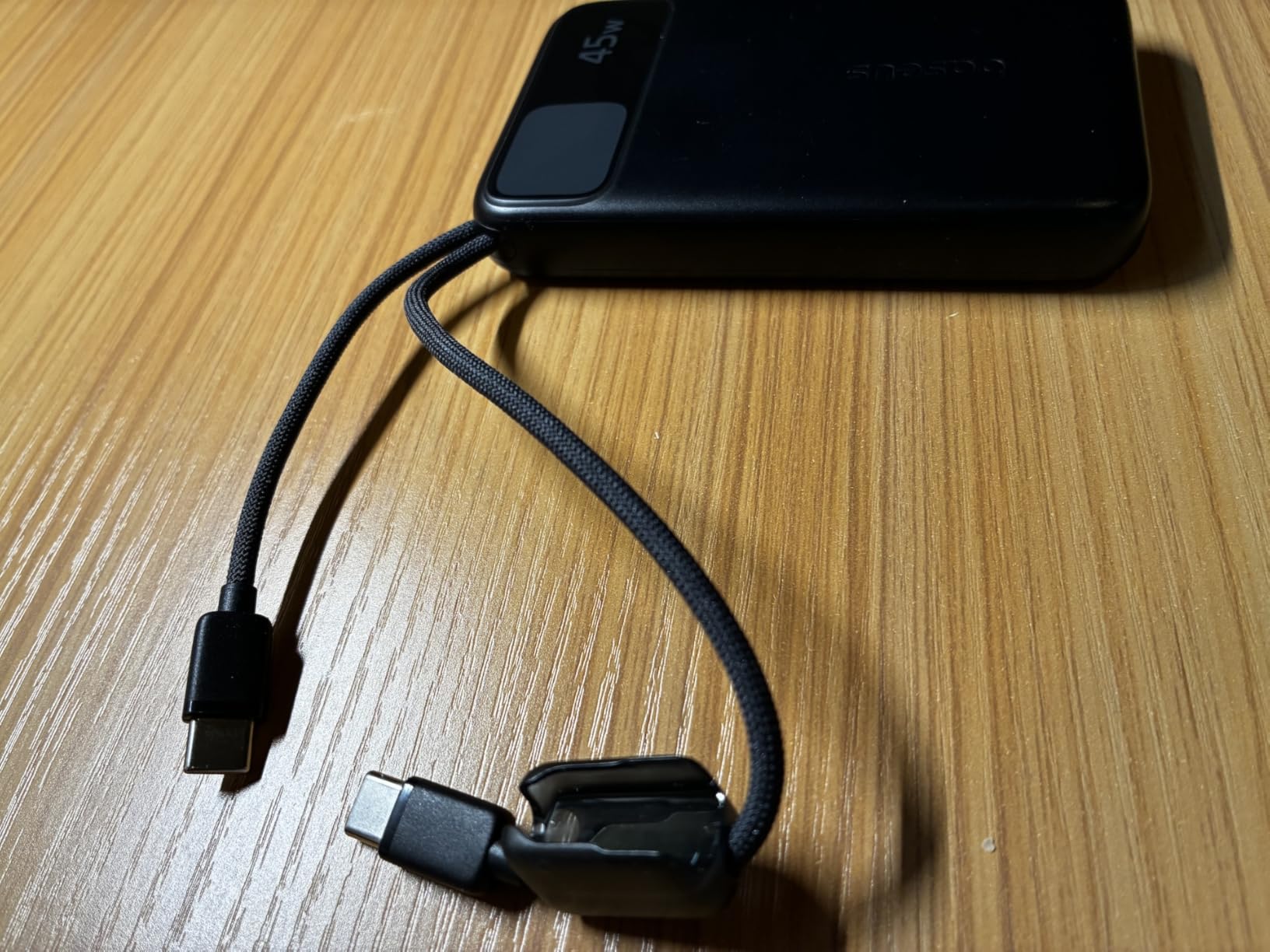
On paper this is the most complete spec sheet in the group. 145W total with 140W on the primary USB-C port, 25,000mAh listed at 91.25Wh so it sits under the airline ceiling with room to spare, and two integrated braided USB-C cables that double as a carrying strap, which removes the single most common travel failure point.
Performance figures back it up. The 140W port takes an iPhone 17 Pro to 68% and a 13.3-inch MacBook Air to 50% in 30 minutes, and it supports up to four devices at once with pass-through charging so a laptop can keep running while the bank refills. The body is a genuinely thin 4 by 2.6 by 0.5 inches, and it is CCC certified with a two-year warranty.
What gives us pause is the track record. This is the newest listing here, with 359 reviews and a 4.2 average including 9% one-star feedback, the weakest showing of the eight. Anyone reading the 91% positive split learns very little, and a thin owner history is exactly the situation where cell-quality problems would not yet have surfaced in review text.
There is also a specification oddity worth raising: the listed battery weight is 125g for a 25,000mAh pack. For a battery of that energy, that is a strikingly low figure, and a body that thin holding that much capacity will need a long charge time regardless of what the input rating says. Verify the real capacity yourself rather than taking the label on trust.
Whether the built-in cables justify the shorter history
For a traveller who has lost a USB-C cable the morning of a flight, two integrated braided cables that double as the strap are a real convenience, and the 91.25Wh rating means you do not have to think about compliance. The 140W port handles a 13.3-inch MacBook Air or a phone at full speed.
For anyone planning to rely on this as a sole long-haul laptop bank, the 359-review history and the 4.2 average are a reason to prefer one of the better-proven picks above, all of which carry five figures’ worth of owner feedback.
What to check before you fly with it
Read the printed watt-hour rating and the real weight directly off the unit, and check it has charged to full on a known cable before you depend on it. If you want the same built-in-cable idea with a far longer track record, the Anker 25,000mAh at the top of this list does the same job.
How to Choose a Flight-Friendly Laptop Power Bank?
Start with wattage, because it is the specification that decides whether a laptop charges or merely slows down. Match the bank’s single-port output to the machine’s demand, then check the capacity and the rules. A bank that is too small gets confiscated at the gate; a bank that is too low-wattage leaves you with a dying laptop at 40,000 feet.
Wattage targets by laptop class
Phones and small tablets need 10-30W and are not the constraint here. An ultrabook or a 13-inch notebook typically wants 45-70W, a 13- to 16-inch machine sits in the 65-100W range, and a gaming laptop or a handheld you intend to play on needs 100W or more. Buying above your class costs you weight you carry for nothing.
This is also where the total-versus-single-port distinction matters. A bank quoting 145W total may only deliver 140W to a single port, and that number falls once a second device is attached. A tester on the AsperX recorded 88W to a laptop and 27W to a phone at the same time, and similar splits appear across this category. Read the single-port figure, not the headline.
Capacity, conversion losses and real runtime
Only about 60-70% of stored energy reaches your device, so a 20,000mAh bank behaving like roughly 45-50Wh in practice is normal, not a defect. That is the second reason to prefer printed watt-hour ratings over marketing mAh. For a long-haul itinerary, a bank at or near 25,000mAh with a real 75-92Wh rating is the practical ceiling.
Runtime depends heavily on the machine. An ultrabook working on documents will run for many hours from a 74Wh bank, while a 16-inch MacBook Pro under video or build load drains far faster, and a gaming handheld being actively played can outpace a 65W bank entirely. Our [20,000mAh travel power bank picks](https://www.requiemforadream.com/best-20000mah-power-banks-for-travel/) cover that middle tier in more detail.
Weight bands and what they cost you
Under 200g suits a phone and a small tablet, rarely a laptop. The 200-400g band covers slim 100W banks and compact 25,000mAh packs like the INIU. The 400-550g band is where 25,000mAh at 100-145W usually lands, including the UGREEN Nexode. Above 550g, as with the AsperX at 621g, you are buying maximum power and paying for it in your shoulder.
Cables, chargers and the kit to pack
Bring an e-marked 5A USB-C cable rated for 100W. Several reviews in this roundup turned on exactly that point, including the AsperX where the supplied cable caused interruptions until a proper one was used. Also pack a 65W or 100W wall charger, since almost none of these banks include one and none will refill quickly from a 20W adapter.
A phone-only pack such as a MagSafe model is a useful second item if you also want to top up your handset without a cable, and our [MagSafe power bank picks](https://www.requiemforadream.com/best-magsafe-power-banks-for-iphone/) cover that. Keep any phone charging in your own bank rather than a seat-back USB port, since public ports carry a documented tampering risk.
Why your laptop might charge slowly from a power bank
Nine steps, in the order worth trying. First, use a 5A e-marked cable, because a three-conductor cable caps out well below 100W. Second, confirm the bank is switched on, which matters for the INIU. Third, plug the bank into the laptop before you apply power, not after. Fourth, check whether the laptop’s own charger is still connected, since it will not negotiate with a bank at the same time.
Fifth, check that you are on the port rated for full output, not the secondary one. Sixth, look for a second device drawing current and splitting the budget. Seventh, check the bank’s remaining level, because several units in this list taper output below roughly 10%. Eighth, let it sit, since a cold bank in a cold cabin negotiates slowly at first. Ninth, remove the case from your laptop, as thick cases can prevent a full-power handshake.
Heat, safety and storage between trips
Choose a brand with published certifications and a real warranty, and check for a printed watt-hour rating on the unit. That is the single best filter against the unbranded packs that forum posters repeatedly warn about. If a bank becomes unusually hot, swells, or smells of anything chemical, stop using it and do not pack it. Store it around half charge in a cool, dry place rather than at full or empty.
The pre-flight routine that avoids the new rules
Four steps. Check the printed watt-hour rating is under 100 before you leave the house. Refill the bank in the terminal or lounge from your own wall charger, since onboard recharging is no longer permitted. Keep the bank visible and within reach in the cabin rather than in an overhead bin, and keep the count within your carrier’s allowance, which several have cut to two. Then confirm you have a 5A cable and your charger in the same bag.
Frequently Asked Questions
Is a 20000mAh power bank allowed in flight by TSA?
Usually yes. A 20000mAh lithium-ion bank works out to about 74Wh at a 3.7V nominal cell voltage, which is under the 100Wh carry-on ceiling. It must travel in your cabin bag and never in checked luggage, and the watt-hour rating printed on the unit is the number that matters, not the marketing mAh figure.
Is 100Wh the same as 10000mAh?
No. Watt-hours and milliamp-hours measure different things. At a 3.7V nominal cell voltage, 100Wh equals roughly 27,000mAh, while 10,000mAh is only about 37Wh. That is why a 10,000mAh phone bank is comfortably legal but will not meaningfully charge a laptop.
How many mAh is 100Wh?
About 27,000mAh. The conversion is Wh = mAh x nominal cell voltage divided by 1000, so 100Wh divided by 3.7V gives roughly 27,027mAh. The same bank at 3.6V cells would be closer to 27,700mAh, which is why the printed watt-hour rating is the figure to trust.
Is a 160Wh power bank TSA approved?
Not automatically. Anything between 100Wh and 160Wh requires explicit approval from the airline before you fly, and many carriers decline. TSA screening does not grant permission to carry a larger bank. Note also that several carriers have now capped the number of spare batteries per passenger at two.
Can you fly with a 30000mAh power bank on a plane?
No. A 30000mAh bank at 3.7V is about 111Wh, which exceeds the 100Wh per-bank limit. It cannot go in carry-on baggage, and spare lithium batteries are prohibited in checked baggage entirely, so a 30000mAh pack cannot legally travel by air at all without carrier approval for the 100-160Wh band.
Why is my laptop charging slowly from a power bank?
The usual causes are a cable that is not e-marked for 5A and 100W, plugging a second device in and splitting the power budget, a bank whose own level has dropped below about 10% and is tapering output, or the laptop’s charger still being connected. A thick case can also stop the full-power handshake. Switch the bank on before plugging in the laptop and test with a 100W-rated cable first.
The Best Power Bank for Your Next Flight
The Anker Laptop Power Bank 25,000mAh 165W is our pick for the best power bank for a laptop on flights in 2026. It clears the 100Wh filter with room to spare, delivers 100W per USB-C port, recharges in about two hours, and its built-in retractable cable removes the accessory most likely to be missing on a travel day.
For raw power per port at the best value, the UGREEN Nexode 25,000mAh 145W is hard to argue with. If shape is your problem rather than power, the INIU 25,000mAh 100W gives near-maximum legal capacity in the smallest footprint, and the Baseus Blade 20,000mAh 100W is the flattest option for a slim laptop sleeve.
Before you fly, read the printed watt-hour rating on whatever you pack, confirm the number is under 100, and check your airline’s current page. Policies have moved more than once in the last year, and the difference between legal at screening and permitted on your specific flight is exactly where trips get interrupted.