
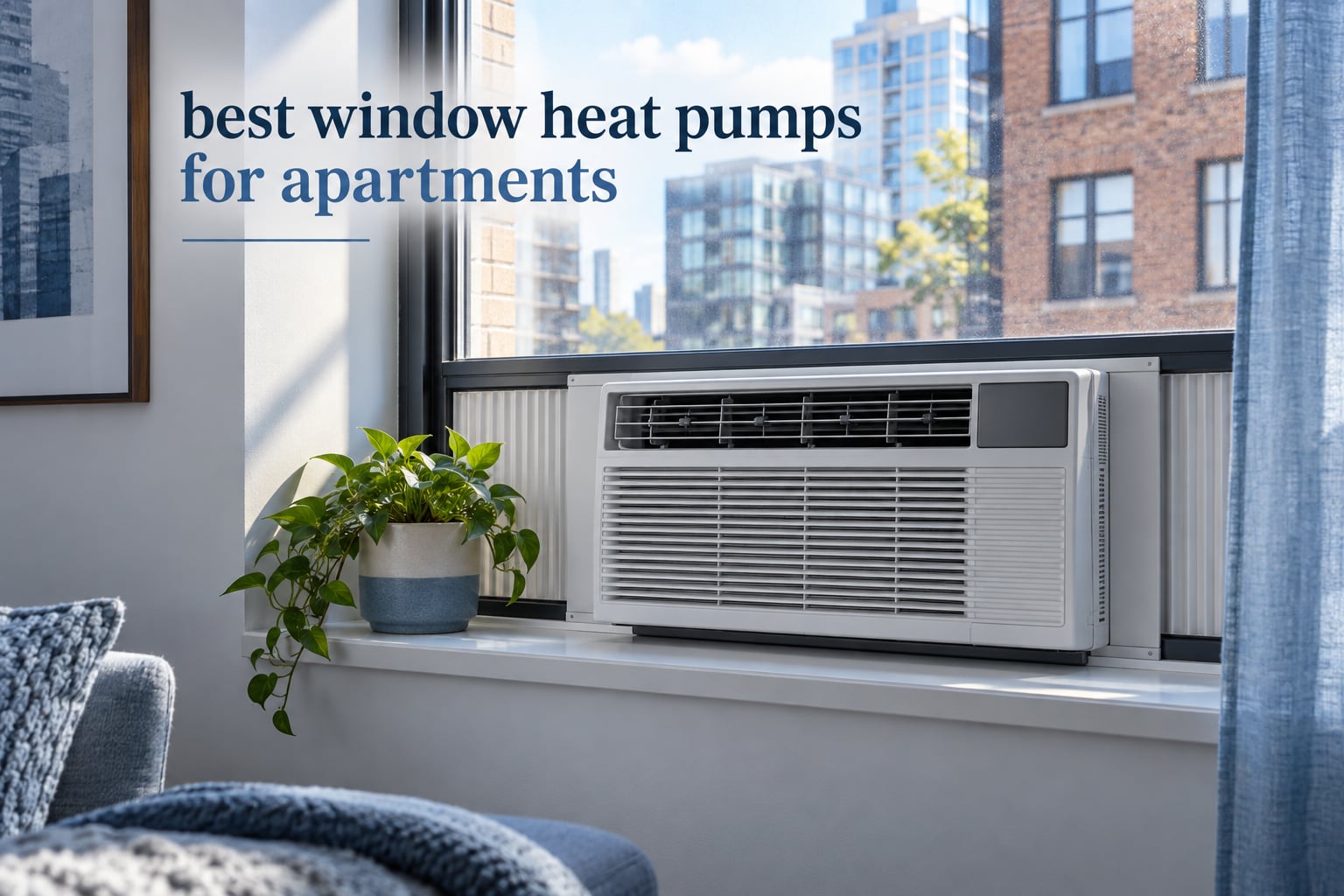
If you have ever scrolled past a window air conditioner listing because you assumed it only cools, you are in good company. A thread on r/hvacadvice asked the exact question that haunts apartment dwellers: there are window unit ACs and mini split heat pumps, so why are there so few window heat pumps? The answer is that they exist, they run on an ordinary 115V outlet, and most of them never show up in a search for the phrase people actually type. That is what this roundup fixes.
A window heat pump is a self-contained air conditioner with a reversing valve. The same compressor that pulls heat out of your room in July pushes heat into it in December, so a single box in the window covers both seasons without a wall penetration, a line set, or a landlord’s signature. For the best window heat pumps for apartments, that is the whole argument: it is the only year-round heating and cooling option a renter can install on a Saturday with a screwdriver.
We compared eight window units on the things that decide an apartment purchase: noise in decibels, whether the heat mode is a real reversing-valve heat pump or a resistance strip, whether it runs on 115V, the BTU a studio actually needs, and how the owners who already own them describe living with them. Two details decide most of these purchases before you even read a review, so we handle them up front. If you want the short answer, the window heat pump roundup we keep updated has the full list, and the NYC apartment window AC guide covers the building-specific headaches.
Table of Contents
Are window heat pumps worth it in an apartment?
Yes, for a renter on a 115V outlet who needs one room comfortable in both seasons, provided the unit keeps pumping heat below 40F instead of falling back on electric coils. Against a mini-split for a single room, the winter running cost is only marginally higher, so permission, circuit capacity and noise should decide the purchase before the sticker does. If your winter nights sit near freezing, keep reading: the 40F rule below matters more than any spec.
The trap is that retailers use “heat/cool” and “heat pump” almost interchangeably. A true window heat pump moves heat with the same refrigerant circuit, which costs a fraction of what electric coils cost per hour of heat. A unit with a resistance heat strip, a 3,500 BTU supplemental coil or a 4,200 BTU electric strip will warm a room just fine in October and then run at full electric rates all January. Reviewers call this out constantly, and it is the single most useful thing to check before you buy.
What a genuine window heat pump replaces in a rental:
A window AC bought every spring and stored every autumn.
A space heater that triples your winter power draw in one room.
An install quote for a mini-split you cannot legally cut into a rented wall.
A landlord conversation about drilling, line routing and a new 240V circuit.
The window itself, if you pick a saddle-style over-the-sill design.
One honest limit: a window heat pump is room comfort, not whole-unit comfort. It will not replace a building’s boiler or baseboard system on a cold night. On a long-running HomesteadingToday thread, owners describe running a window heat pump alongside baseboard heat, and that framing as supplemental comfort is the right one.
Top 3 window heat pumps for apartments right now (October 2026)
These are the three that fit a renter’s real constraints best: 115V power, a usable noise floor, and a heating mode that is honestly described.

Midea 8,000 BTU Smart Inverter
- Variable-speed inverter
- 45 dBA
- Energy Star
- 115V
- Heating above 41F


Soleus Air 10,000 BTU Saddle
- Over-the-sill design
- Heat pump to 34F
- 48 dBA
- Keeps window view
All 8 window heat pumps side by side in 2026
Every unit below runs cooling and heat on window AC hardware. The column that matters most is the heating mode, because that is where the difference between a real heat pump and a resistance strip shows up on your power bill.
| Product | Specifications | Action |
|---|---|---|
| Midea 8,000 BTU Smart Inverter Window AC with Heat |
|
Check Latest Price |
| ROVSUN 8,000 BTU Window AC with Heat, 4-in-1 |
|
Check Latest Price |
| Soleus Air 10,000 BTU Over-the-Sill Saddle Hybrid |
|
Check Latest Price |
 LG 7,600 BTU Window AC with Heat, Slide-Out Chassis LG 7,600 BTU Window AC with Heat, Slide-Out Chassis |
|
Check Latest Price |
 Keystone 8,000 BTU Window AC with Supplemental Heating Keystone 8,000 BTU Window AC with Supplemental Heating |
|
Check Latest Price |
 Frigidaire 8,000 BTU Window AC with Supplemental Heat Frigidaire 8,000 BTU Window AC with Supplemental Heat |
|
Check Latest Price |
 Friedrich Chill Premier 8,000 BTU with Slide-Out Chassis Friedrich Chill Premier 8,000 BTU with Slide-Out Chassis |
|
Check Latest Price |
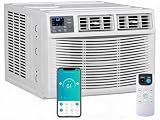 Patikuin 18,000 BTU Window AC and Heater Combo Patikuin 18,000 BTU Window AC and Heater Combo |
|
Check Latest Price |
1. Midea 8,000 BTU Smart Inverter Window AC with Heat: best overall for apartments
- Variable-speed inverter compressor
- 45 dBA is the quietest figure in this group
- Energy Star certified with 35% savings claim
- App plus Alexa and Google Assistant
- Cools up to 350 sq ft
- Heat pump mode stops working near 41F outdoor
- Temperature sensor can read outdoor temp
- Bass hum in heat mode
This is the unit we kept coming back to while working through the list. The 45 dBA figure is measured at low fan speed and it is the reason this model suits a bedroom, where a 52 dBA compressor becomes a sleep problem. The variable-speed inverter does not cycle on and off the way a scroll compressor does, which removes the thumping you hear from fixed-speed boxes.
Owner reviews of this model are the deepest pool we found, and the pattern is consistent. People install it in a weekend with the included kit, cool a bedroom or a small living room without drama, and like being able to start it from the phone before they get home. Several mention that if you keep it running through a mild cold snap, it keeps pumping heat well past the 41F number on the spec sheet, which is the compressor’s comfort limit rather than a cliff.
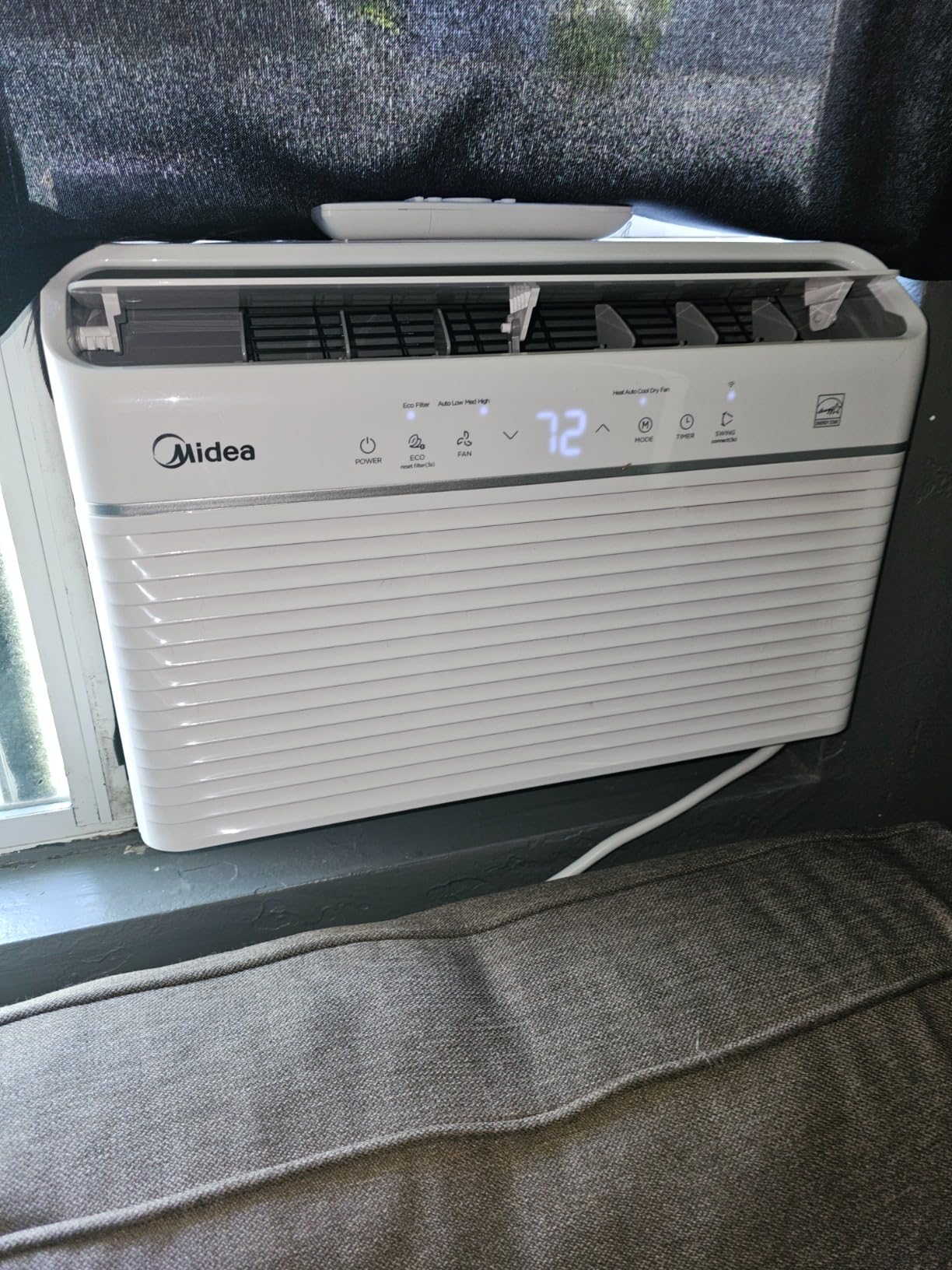
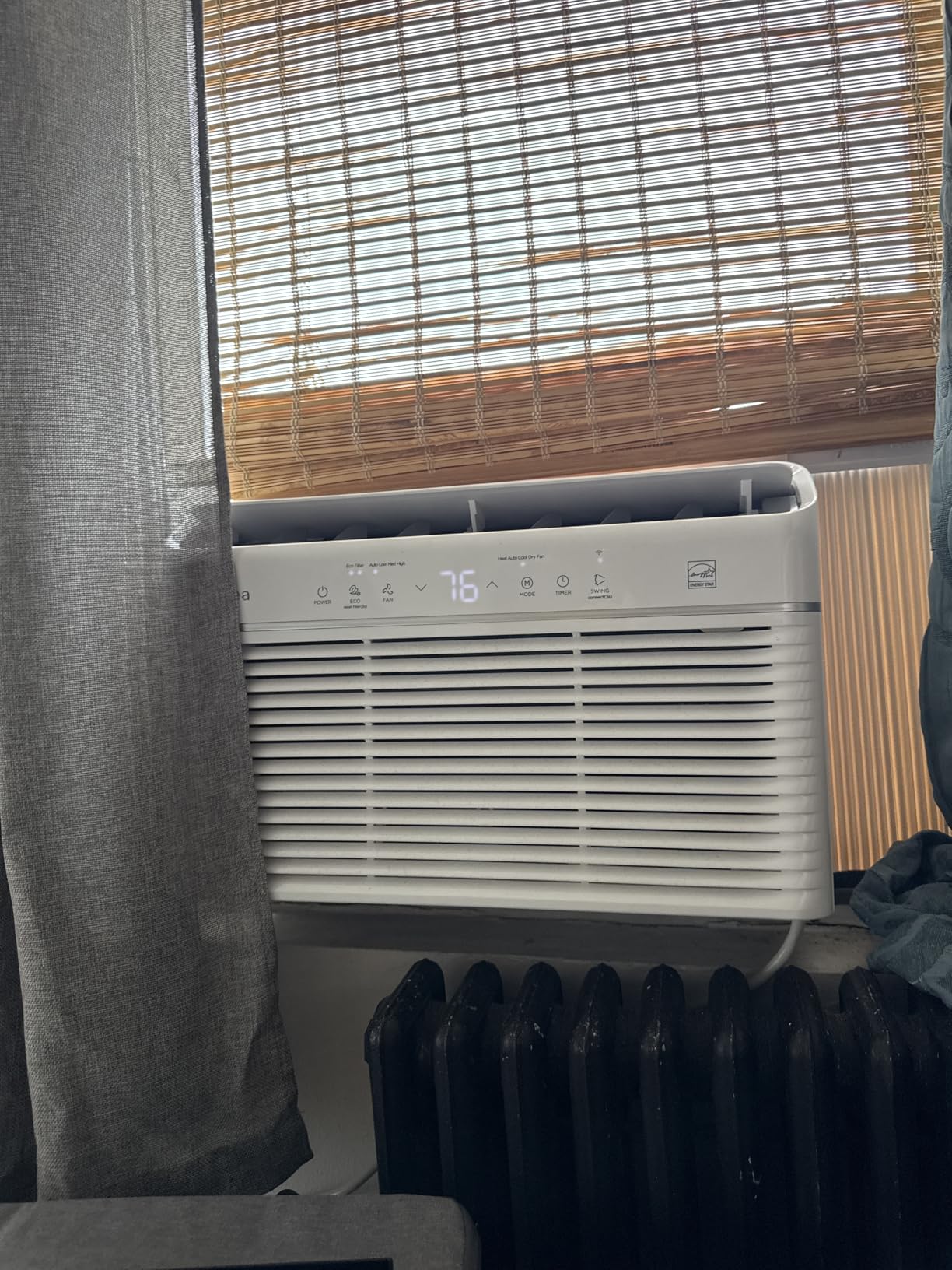
The complaints cluster around three things. The temperature sensor on some units is reported reading the outdoor air rather than the room, so the thermostat overshoots. Heat mode adds a low bass hum. And in genuinely cold weather the compressor shuts down and the unit becomes an ordinary air conditioner, which is exactly why we list the 41F limit above instead of burying it.
One piece of community context matters here. A renter in a 1,000 sq ft pre-war walk-up in Chicago posted on r/chicagoapartments asking how many window ACs they needed and what capacity, and the top reply recommended Midea U-shaped boxes by name precisely because they are heat pumps, quiet, and efficient, suggesting two 8,000 or 10,000 BTU models for the layout. That is the brand and format that apartment communities trust, and the model here is the same idea in standard non-U chassis.
Why this one works in a quiet apartment
A compressor inside your room is the only sound source in the room itself, so decibels decide more than capacity does. At 45 dBA this unit sits close to the level of everyday household background, which is why bedroom owners rate it so highly. The inverter ramps rather than bangs on and off, and soft start is what you hear most on the first minute of a cycle.
Two habits make it better still. A window bracket with vibration-absorbing foam cuts the low-frequency hum that travels through the frame into the wall, which is what neighbors actually notice in a thin-walled building. And running it on the lowest fan speed that still holds temperature keeps the number at its lowest.
Where the 41F limit bites
The 41F limit is the honest weak point. In a climate where outdoor temperature regularly drops below that, the heat mode stops being a heat pump and you are cooling only, so you would still want a space heater for the coldest stretch. Reviewers also report thermostat calibration drift, where the setpoint and the room temperature disagree by a few degrees.
At 8,000 BTU it covers 350 sq ft comfortably and stretches to maybe 450 in a shaded, well-insulated room. For a sun-exposed living room or an open floor plan, you would be better served by a larger capacity or two boxes, which is also the advice the Chicago thread gives.
2. ROVSUN 8,000 BTU 4-in-1 Window AC with Heat: the budget pick
- Four modes in one box
- Remote plus app control
- Installation kit included
- Cools rooms up to 350 sq ft
- Cools quickly once running
- Scroll compressor with no inverter
- 52-57 dBA is loud for a bedroom
- 80.2 lbs needs two people
Most renters want one appliance for four seasons and a modest outlay, and this is the version of that. Cool, heat, dehumidify and fan modes all live in the same chassis, it runs on standard 115V power, and the installation kit is in the box, which matters in a building where you are not chasing an electrician.
Owners consistently report fast cooling and straightforward setup, and the four-in-one framing is genuinely useful in a humid summer where dehumidify mode does more good than a lower thermostat setting. It is also the kind of box you can carry between buildings without a second thought, which no mini-split can offer.
The efficiency picture is where the compromises sit. The scroll compressor is fixed-speed, the SEER figure is 10.9, and the listed annual energy consumption of 876 kWh is roughly double what the inverter Midea uses. In a studio that runs 12 hours a day, that gap is a real line on the bill, and it is the reason this is a summer-and-mild-spring pick rather than a full-season one.
The 4,000 BTU of heating is described as supplemental. It is enough to take the chill off a room in the shoulder season, and it is not enough to be your only heat source on a cold night. If you run mild winters, that is genuinely all you need. If you do not, the 80.2 lb weight also means you will want a second person for the install.
Who should buy this
Studio renters, students, anyone in a building where the window is the only air path, and anyone who wants cooling plus shoulder-season warmth on a normal outlet. The mode list means dehumidify is one button away in a humid climate, and the remote plus app control covers the case where you want the room cool before you get home from a long day.
It is also the safest pick if you plan to move. A box that comes out of the window, goes back in a box and reassembles in the next place is the defining advantage of this whole category, and this model does it with no permanent bracket and no wall damage.
Where noise and heating capacity disappoint
Noise is the dealbreaker for bedrooms. The 52 to 57 dBA range puts it squarely in the fixed-speed category, and reviewers who moved it to a sleeping space found it noticeable on low. If the room you are cooling is the room you sleep in, spend up and go inverter.
Second, the heating is modest, and the compressor is not inverter, so a full winter of heating is where the running cost climbs. For a renter in a climate with real cold, that is a budget line that arrives every month until spring.
3. Soleus Air 10,000 BTU Over-the-Sill Saddle Hybrid: best for bigger rooms and keeping your window
- Saddle design keeps the window usable
- Inverter compressor with SEER 13
- Heat pump to about 34F
- No drilling or tools for install
- Wi-Fi app control
- 3.2 star average with reliability reports
- Reported loud in heat mode
- Sill must be up to 12.5 inches
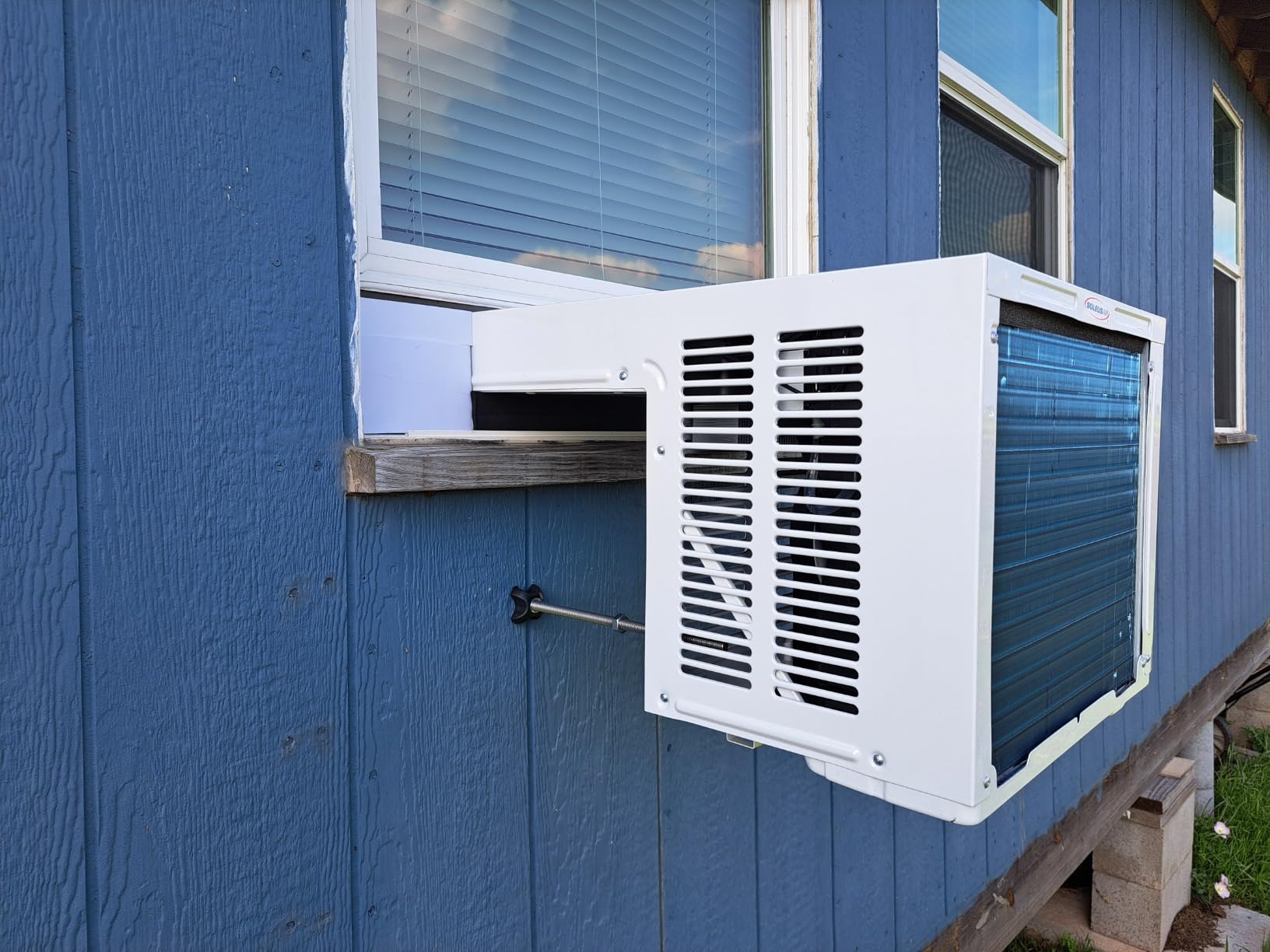
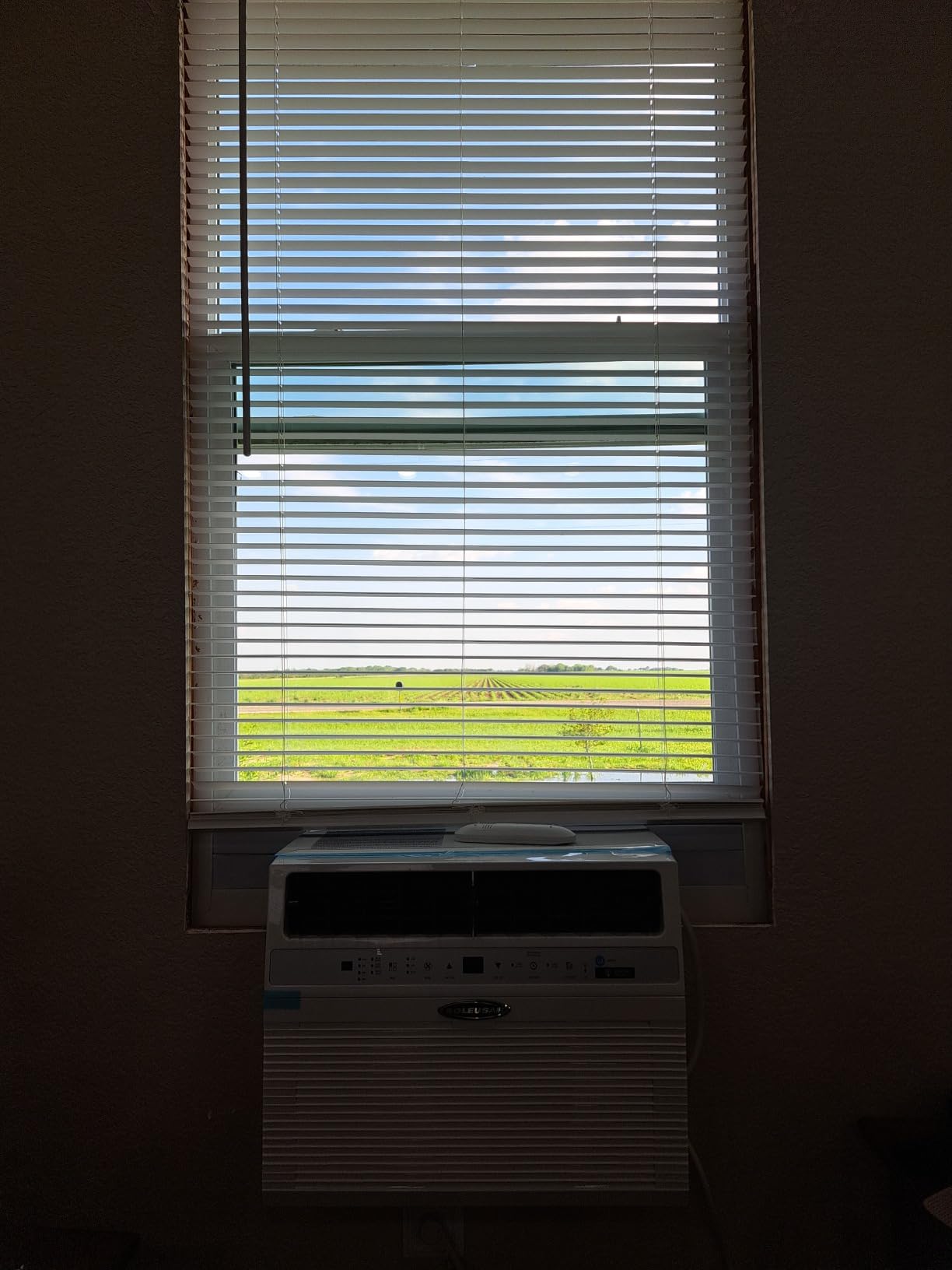
This is the only unit in our group designed around a specific apartment problem: losing the use of your window. The over-the-sill saddle design sits on the ledge with the sash still lowered, so you keep light, a view and sometimes a bit of airflow. That single feature makes it the answer for a home office, a bedroom you want to keep open, and any building where a blocked window is a rule violation.
The heating side is genuinely good. The inverter compressor runs the heat pump down to roughly 34F with a defrost cycle, which is a much lower floor than the 40F class. At 10,000 BTU it covers up to 450 sq ft, which is the largest true heat pump capacity here that still runs on 115V, and the 48 dBA figure is the second quietest we found.
The rating here is the lowest in our group, and the review text explains why. Owners report drainage problems that mean draining the unit by hand, compressor cycling and grumbling at low wattage, Wi-Fi connection failures, and several early unit failures. Heat mode is also described by several owners as noticeably loud, closer to a hard ramp than a hum.
We kept it in the roundup because the design solves a real renter constraint that no other unit here addresses, and the low-temperature heat pump performance is a genuine advantage. But this is a model to buy with your eyes open about the support experience, not a set-and-forget appliance.
Why the saddle format changes the decision
Almost every window AC turns a wall into a sealed hole for the season. A saddle unit keeps the glass mostly intact, which matters for egress, natural light and any building rule about window openings. The install needs no drilling and no tools beyond what is in the box, so it is also the fastest install in this roundup.
The trade is a hard requirement on the sill. It fits sills up to 12.5 inches wide, and if your ledge is narrower or your window is casement, this design simply will not work. Measure the sill before anything else.
Where the reliability reports get you
Reliability is the issue owners keep reporting, and the rating reflects it. Manual draining on a schedule is a real chore in a unit you might run for six months straight, and a Wi-Fi app that drops does not matter much to you unless you rely on it.
It is also the top of the price range in this roundup, and that premium buys you the saddle format and the 34F heat floor rather than better reliability. Buy it for the window, not for the brand.
4. LG 7,600 BTU Window AC with Heat: best for small studios and tight windows
- Slide-out chassis makes service easy
- Auto restart after an outage
- 50 dBA on low
- 1-year parts and labor warranty
- Fits 22 to 36 inch windows
- Heat weak below 40F outdoor
- No inverter and not Energy Star
- Only 21 reviews so far
The distinguishing feature is the slide-in, slide-out chassis. The entire unit slides out on its rails so you can reach the filter and the hardware without hauling a 69 lb box off the sill, which is the difference between cleaning the coil and never cleaning it. In an apartment where you cannot easily go up a ladder, that is a real quality-of-life gain.
At 7,500 BTU this is the smallest capacity in the group, sized for 320 to 330 sq ft, which lines up well with a studio bedroom or a single room in a one-bedroom. The 22 to 36 inch window range is also the most forgiving here, so it fits more sash widths than anything else on the list.
There is an honest limit on the evidence. Twenty-one reviews is a thin sample, and the long-term reliability picture is less established than the Midea’s 792. What owners who have had it report is good: solid build, effective cooling, auto restart after a power cut, and a 50 dBA reading on the low setting that is acceptable in a bedroom if the unit is not directly beside the pillow.
Why the slide-out chassis matters in a rental
Every window AC filter clogs, and a clogged filter throttles cooling and can raise power draw. On a fixed-chassis unit, cleaning means sliding the whole appliance out and dealing with 60 to 70 lbs of awkward weight. This one comes out on rails, so the monthly filter clean takes a minute and the chassis stays supported.
It also means a future repair does not mean a forklift. The serviceable part is reachable from inside the room, which is exactly the situation a renter is in when the unit stays in place year after year.
Where the supplemental heat runs out
The heating is supplemental and is reported by multiple owners to stop working in cold weather below 40F. With a rotary screw compressor and a SEER of 11.3, it is also not Energy Star certified, so summer running cost lands closer to the fixed-speed end of the group.
Two fan speeds is a small thing until you are trying to hold a set temperature quietly at 2am. If the room you care about is your bedroom, the quieter inverter options are the better spend.
5. Keystone 8,000 BTU with Supplemental Heat: best warranty and best thermostat
- I Sense remote measures real room temperature
- 4-year sealed system warranty
- Energy Saver and Sleep modes
- Filter light reminder
- 4-way swing louvers
- Heat limited to 23-76F outdoors
- 55 dBA is not bedroom quiet
- Single fan speed only
The warranty is the standout on paper: one year on parts and labor plus four years on the sealed system, and a sealed system is where compressor failures happen. For a renter who plans to leave a unit installed for five or six years, that is a more meaningful number than a longer warranty on plastic parts.
The I Sense remote is the sleeper feature. It measures actual room temperature where you are standing rather than relying on a fixed sensor in the chassis, which is the fix for a complaint that shows up on three different models in this roundup. Combined with the filter light reminder and four-way swing, this is a unit built around the small annoyances.
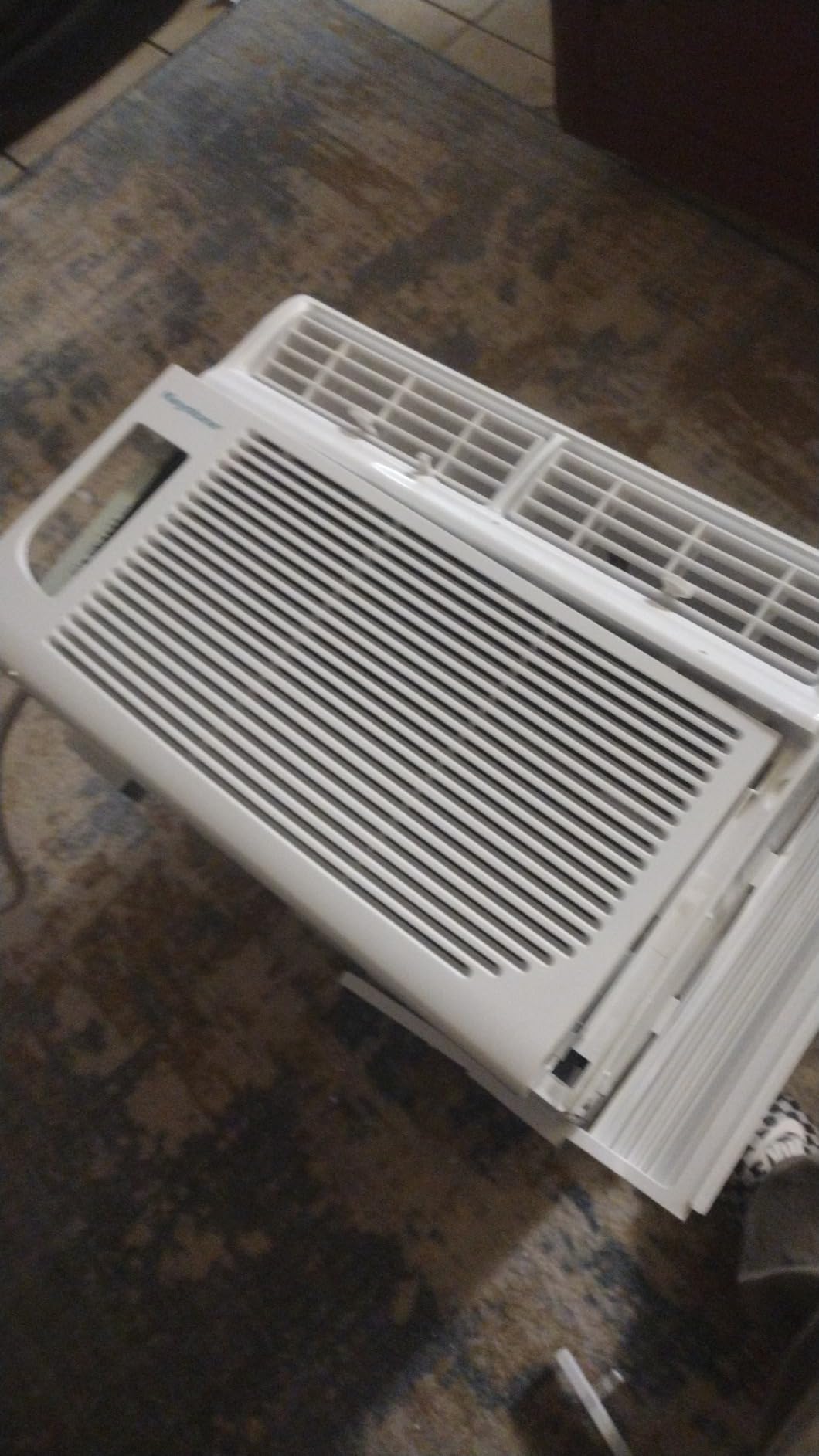
The 3,500 BTU supplemental coil and the 23 to 76F outdoor operating window are the constraints. This is shoulder-season heat for a mild climate, and it is not a cold-weather answer. At 55 dBA it sits at the loud end of this group, which is fine for a living room and poor for a bedroom.
Buying tip: the I Sense remote is bundled in the box rather than sold separately, so confirm it is in the carton before the installer leaves. A unit that arrives without the remote falls back to the fixed chassis sensor and loses the one advantage that justified the price step up from a plain fixed-speed box.
Where the warranty and the I Sense remote pay off
A sealed system warranty covers the compressor and refrigerant circuit, the components that make window units expensive to replace. Four years of that is longer than most of this category offers, and for someone who keeps a unit in the sill across several leases, it is the difference between a repair and a replacement.
The I Sense remote matters because window units are notoriously bad at reading the room. A sensor near the evaporator, next to a hot coil, drifts high and the box overshoots. Measuring at the remote fixes the symptom without a service call.
Where the single fan speed hurts
One fan speed is a real constraint in a room that gets warm in the afternoon and cool at night, and 55 dBA is audible in a quiet room. If your apartment is a studio where the cooling and the sleeping happen in the same square feet, those two facts narrow your choices.
The 23 to 76F heat range also means this is not a winter heating solution. If you run four-season comfort, look at the inverter units with a real heat pump cycle instead.
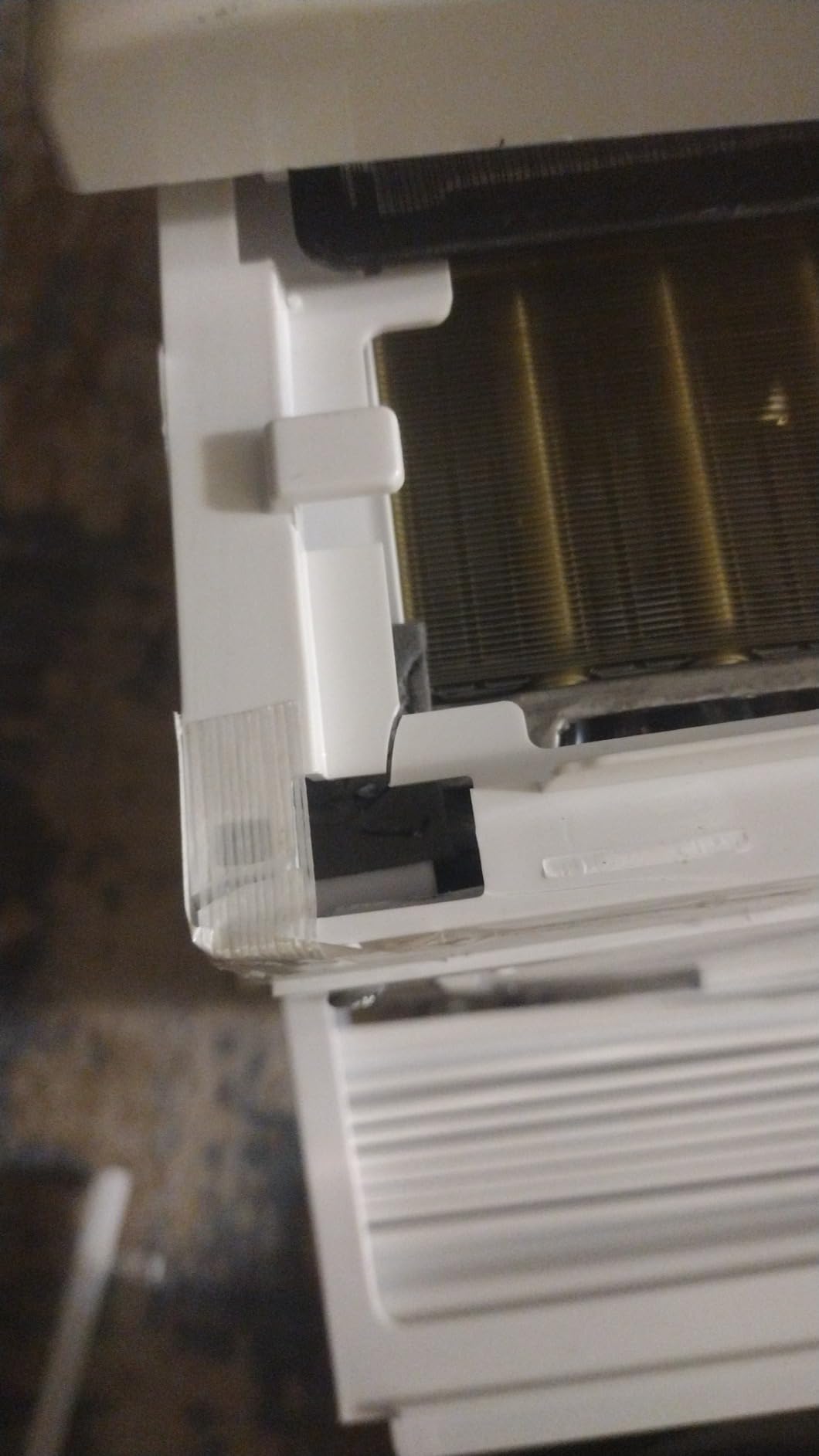
6. Frigidaire 8,000 BTU with Supplemental Heat: best for a cooling-first summer
- Eco and Sleep modes cut runtime
- Auto restart after an outage
- 53 dBA mid-range noise
- 6-way directional airflow
- Clean filter alerts
- Reports of the heat function failing
- No inverter and not Energy Star
- Window width on the listing is unclear
Frigidaire put the effort into the modes rather than the compressor. Eco mode trims runtime during a mild afternoon, Sleep mode ramps the setpoint gradually overnight, and the clean filter alert tells you when the coil needs attention. Together they are the most practical efficiency available if your only other option is leaving the thermostat alone for twelve hours.
At 8,000 BTU for rooms up to 350 sq ft, 53 dBA and 61 lbs, this is a middle-of-the-road summer box. The 6-way airflow control lets you aim the louvers at the part of the room that actually heats up, and auto restart means it comes back on after a building power cut without you being there.
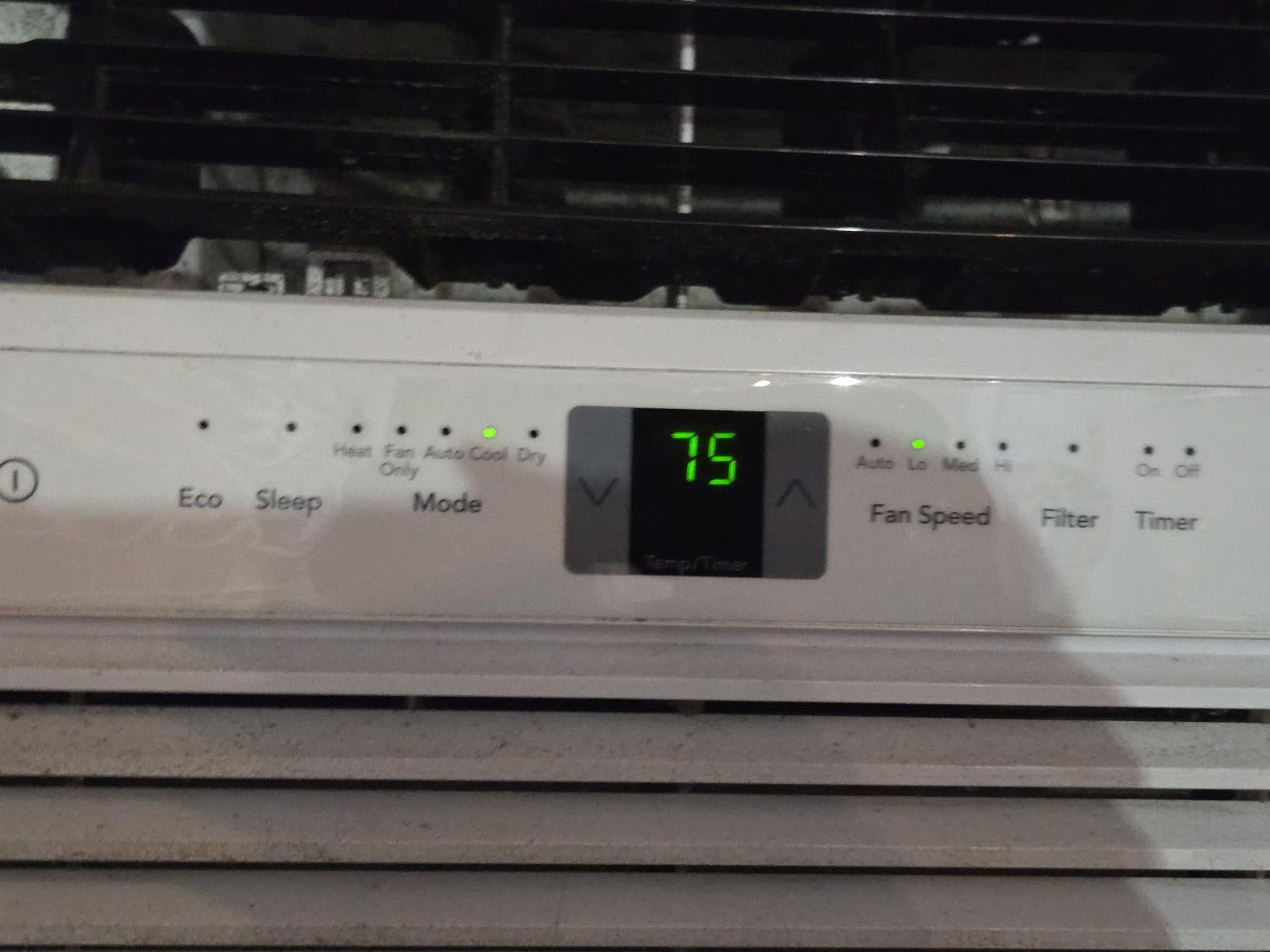
The 3.7 rating and the review text agree on one point: the heat function is the weak half. Multiple owners report it stopping in cold weather, and some received units with the heat function already faulty. Treat the heating here as a bonus for shoulder seasons, and think of this as a cooling-first purchase with a warm-weather extra.
It is worth knowing that the remote is the only full-featured control here. Several owners bought the unit and initially used the top panel buttons alone, which cannot reach Sleep mode or the six-way louver positions, then found the climate control frustrating until the remote was actually set up.
Why Eco and Sleep modes are worth more than they look
Window AC waste is usually a scheduling problem, not an equipment problem. Sleep mode handles the overnight half by widening the setpoint over a few hours so the room coasts rather than cycling, and Eco mode handles the variable part of a day when the building shades the sun off the facade.
Neither one changes the physics of a fixed-speed compressor, but both reduce how many hours you run at full pull. For a renter metering electricity per apartment, that is where the savings actually land.
Where the heat function disappoints
No inverter and no Energy Star certification mean this unit runs the summer the way a fixed-speed scroll always has, and 550 kWh of listed annual consumption says so plainly. The heat function reliability reports are the bigger problem for anyone buying it as a two-season machine.
One more practical check: the window width listed for this model reads as a single narrow dimension rather than a range. Confirm your sash opening against the sizing diagram before ordering, because a fit problem is the most common reason a window AC gets returned.
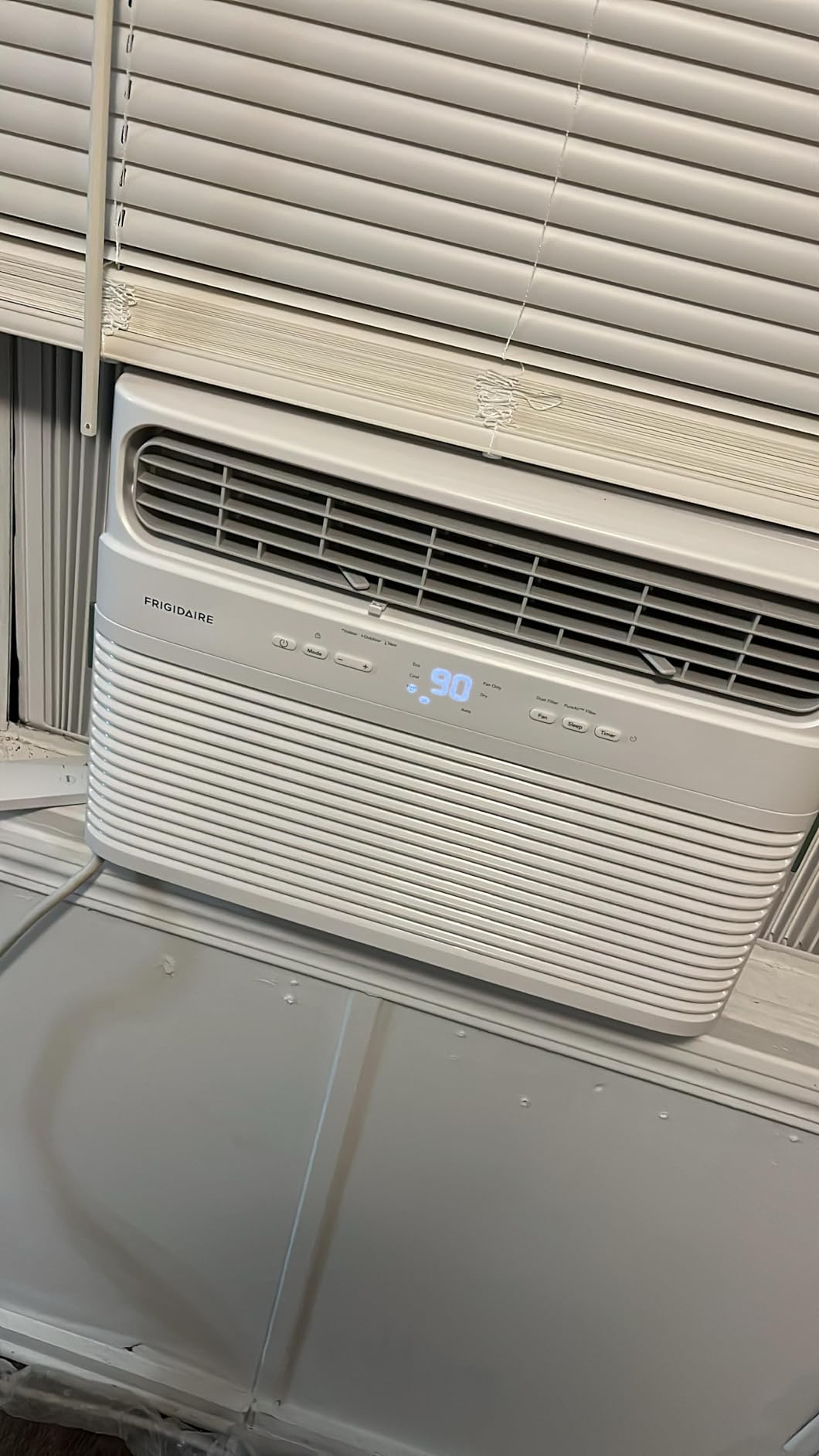
7. Friedrich Chill Premier 8,000 BTU: best for a permanent install
Friedrich Chill Premier 8000 BTU Cooling 4200 BTU Heating Air Conditioner with Slide-Out Chassis
- Commercial-grade build quality
- Slide-out chassis for permanent mount
- Friedrich Go Wi-Fi app
- 8-way airflow control
- Heavy-duty sound insulation
- Heat is a resistive strip not a heat pump
- Wi-Fi and Bluetooth issues reported
- R-410A refrigerant being phased out
- 3.8 star average
Friedrich builds this one the way it builds commercial equipment, and it shows in the details: heavy-duty sound insulation, a copper core, a rotary scroll compressor and a slide-out chassis designed for a chassis that stays in the window year after year. If you intend to install once and leave it, that construction is the appeal.
It also runs on 115V, covers up to 350 sq ft, and the Wi-Fi through the Friedrich Go app works with Alexa and Google Home, which is more smart-home integration than most of the category offers. Eight-way airflow control is a nice touch for directing air away from a desk.
Now the part that matters for this roundup: the 4,200 BTU heating is an electric heat strip, not a reversing-valve heat pump. The listing says heat, and the spec sheet says resistance. That distinction is the entire thesis of this article, and it is why this unit sits below the true inverter models no matter how good the chassis is.
What the construction buys you
A unit on a slide-out chassis in a frame you never remove has a different life from one you carry in and out every season. The insulation and copper core are aimed at sound and corrosion, and reviewers describe this as a sturdier object than most plastic-cased boxes.
For a renter who has already cleared a window unit with the building and plans to leave it, the fixed-chassis design is the more sensible long-term shape. App control also lets you pull the history when a window AC complaint comes up, which is not nothing.
Where the resistance strip costs you
The resistance strip is the dealbreaker for a winter buyer. Electric heat costs several times what heat pump heat costs per hour, so a renter running this through January is paying the most expensive kind of heat in the building. If you only need a few weeks of shoulder-season warmth, the strip is fine.
Connectivity problems and heating failures appear in the reviews often enough to note, and the 3.8 average with only 30 reviews means there is not a large body of long-term data. R-410A is the older refrigerant being phased down, which matters if you ever need a service call on the sealed system.
8. Patikuin 18,000 BTU Window AC and Heater Combo: best for very large rooms, if you have 230V
18000 BTU Window Air Conditioner & Heater Combo – APP & Remote Control
- 18000 BTU covers up to 1000 sq ft
- App plus Alexa and Google Assistant
- 3 fan speeds and a 24-hour timer
- Eco and Sleep modes
- Washable filter with clean alert
- Requires a 230V outlet not standard 115V
- 122.8 lbs needs two people
- Only a 30-day manufacturer warranty
- Smaller review base
We include this one for a specific scenario rather than as a general recommendation. At 18,000 BTU it cools up to 1,000 sq ft, which is far beyond any other unit here, and at a 4.2 average it carries the highest rating in the group. If you are in a large loft apartment with a 230V supply and a very wide window, this is the capacity you need.
The feature list is generous for the tier: three fan speeds, a 24-hour programmable timer, Eco and Sleep modes, app and voice control, and a filter cleaning alert. Cooling reviews are positive, and the 52 dBA figure is in the middle of the group for a machine this size.
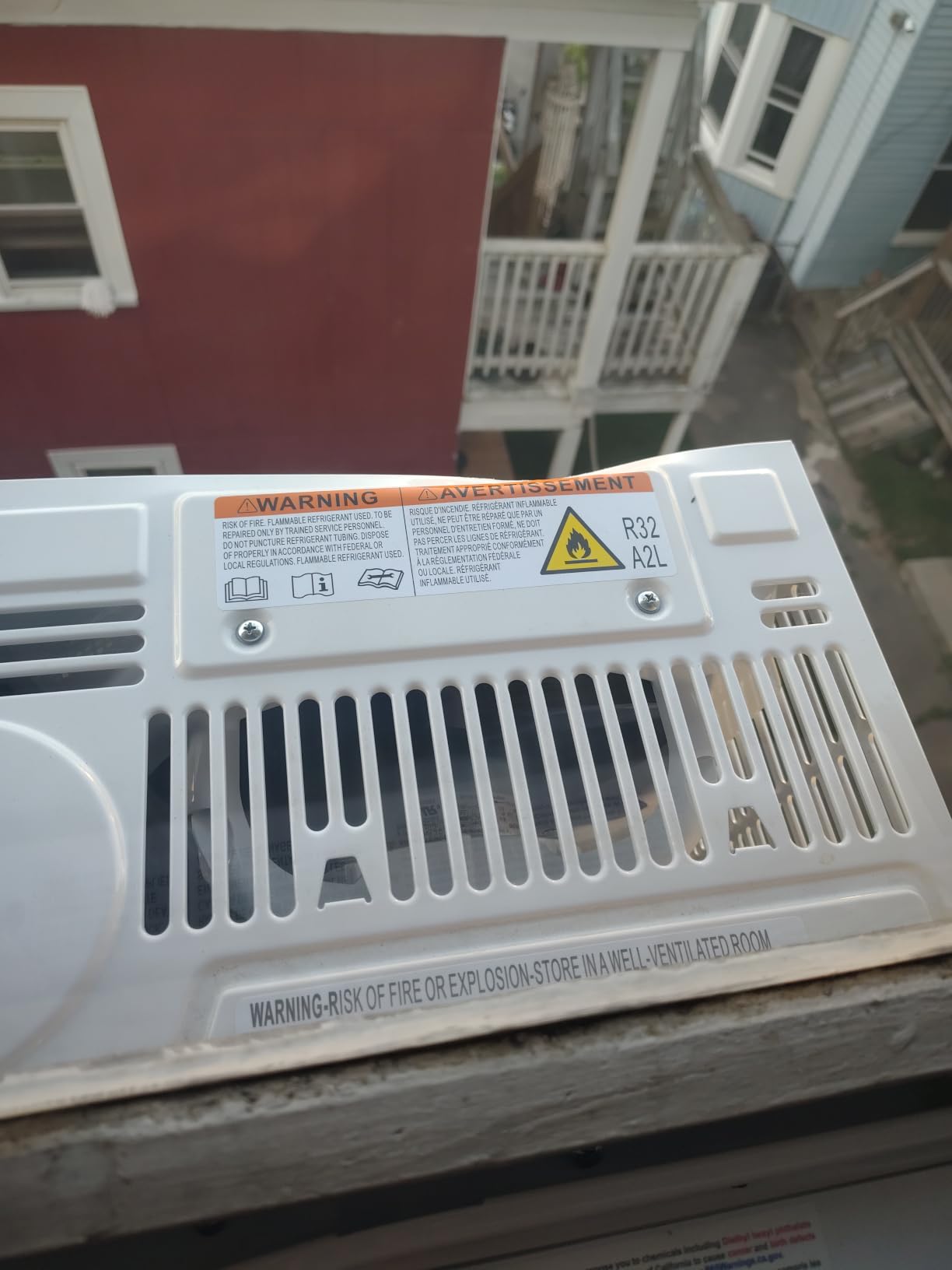
But the 230V requirement is the whole story for apartments. Most rental units in North America put a standard 115V receptacle in a window wall and nothing else, and sharing that circuit with an appliance or an extension lead is how breakers trip. If your building has a proper 230V appliance circuit at the window, this fits. If it does not, this is the wrong product and no review will change that.
The weight deserves its own mention because it changes the install. At 122.8 lbs this is roughly double a standard 8,000 BTU box, and the chassis is wide enough that it needs a partner on the sill. Budget for a two-person lift in the plan, because a solo install on an upper-floor window is how people end up with a dropped unit or a strained back.
When 18,000 BTU is the right answer
Very few apartment rooms need this much cooling. It makes sense in a converted loft, a top-floor unit under a west-facing wall, a sunroom that is legally a living space, or a large common area a resident controls. In those cases, no pair of 8,000 BTU window ACs will match the airflow of one unit this size.
It is also the only unit here rated for a 1000 sq ft space on window hardware, so if you have already worked out that two separate boxes cannot cover your layout, this is the branch of the decision tree that ends in one box.
Where the 230V requirement shuts it out
Three things to check before you even look at the window. The 230V outlet has to exist and be on a circuit that can carry the load. At 122.8 lbs, you need a second person and a solid sill. And the warranty is 30 days, which is by far the shortest here and leaves you carrying the risk on anything that fails in month two.
The review base is 67 ratings, so there is limited long-term evidence behind the capacity claim. For a large-room owner with the right power, the capacity is worth it. For everyone else on a 115V apartment circuit, skip straight past it.
How big a window heat pump do you need?
Size by room, not by apartment. You are cooling the bedroom, not the living room and the hallway. The working rule is about 20 BTU per square foot for a shaded room and 30 BTU per square foot for a sun-exposed one, and the coverage numbers printed on the box are the guide.
Bathroom-size or small bedroom under 150 sq ft: 5,000 to 6,000 BTU.
Studio main room, 250 to 350 sq ft, shaded: 6,000 to 8,000 BTU, which is where the Midea and the ROVSUN sit.
One-bedroom living room, 400 to 500 sq ft: 9,000 to 10,000 BTU, the Soleus Air’s band.
Large open layout or sun-exposed room, 550 sq ft and up: 12,000 BTU or two separate boxes.
Anything above 800 sq ft on one circuit: not a window AC job, look at a portable unit and a second room instead.
The Chicago walk-up example is the pattern that keeps coming up on r/chicagoapartments and r/hvacadvice. Someone with 1,000 sq ft spread across rooms was told two 8,000 or 10,000 BTU boxes rather than one huge one, and the reasoning is sound on two counts. Two smaller boxes give better air movement across separate rooms, and each is far quieter than one machine trying to move the same volume of air.
Undersizing is the common renter mistake, and it shows up as a unit that runs constantly and still never reaches the setpoint. Oversizing has the opposite failure: it cycles on and off, and the cold air dump is what people describe as loud. We cover the larger-capacity options in our 12,000 BTU window AC roundup for apartments for anyone whose layout is larger than a single room.
Apartment rules: what your lease, building and circuit actually allow
You can put a heat pump in an apartment, and the reason is practical rather than legal: a window unit needs no drilling, no line set and no dedicated circuit, so it leaves no permanent trace when you take it out. Before you buy, run three checks.
Check one: the rule that applies to you. Your lease, your building’s rules, or your HOA or condo board may restrict window units, restrict the number of units, restrict installation brackets, or ban them from the facade entirely. Some buildings require a screening panel. Read that before anything else, because a perfectly specced unit is useless if it is a lease violation.
Check two: the circuit. A window AC wants a dedicated 115V receptacle, ideally one already reserved for it. Plugging a 12,000 BTU unit into a shared outlet with a TV and a microwave is how a breaker trips at 6pm on a hot day. If your building has a single 15A circuit for the whole unit, talk to management before you buy, not after.
Check three: move-out. Photograph the sill and the interior wall before install, use a removable bracket rather than permanent fasteners, and drain the unit before you store it. Taking a window AC out is a ten-minute job and is where most rental disputes actually happen.
Two more practical details. Sash locks inside the window can stop the sash from closing far enough, so check the lock position against the unit’s required sash height. And if a window AC is on your lease’s prohibited list, a through-the-wall sleeve or a portable unit is the next rung, which is exactly what our mini split heat pump guide compares them against.
Sealing it for winter so cold air does not leak in around it
A window heat pump only pays off if the room stays warm, and the accordion side panels most units ship with leak badly. Renters report winter heat loss around the panels as the single most disappointing realization of the whole purchase. Five steps close it.
Fill the gap between the unit chassis and the side panels with foam gasket strips rather than leaving the accordion to flex.
Run a bead of caulk or weatherstrip tape along the top and bottom edges where the chassis meets the sill and the sash.
Slide a length of foam board or insulated panel into any unused part of the opening so the room is not losing air to the outdoor side.
Lock the sash down onto the unit or the bracket so the whole assembly is one rigid body, which is what quiets rattle.
Keep heat mode running through shoulder season, because the unit itself is a better insulator than the open gap it replaced.
The same foam approach that stops air leaking also absorbs vibration, which is the easiest noise improvement available to a renter with a thin wall between units.
Window heat pump vs mini-split, portable AC and through-the-wall unit
For one room on 115V, a good window heat pump costs only slightly more per winter than a mini-split, because both move the same heat and the window unit has no line set to lose energy in. For a room needing about 15 kWh a day, a mini-split runs in the mid-20s per month, a cold-climate inverter window heat pump in the low 30s, and a cheap unit that falls back to resistance heat near 40F can run 50 percent higher than the mini-split. The 2026 decision for a renter is not that monthly difference, it is whether you can legally cut a hole in the wall.
Portable units lose badly on efficiency, because the exhaust hose runs hot air back into the room. They are the fallback when a window is unusable, not the first choice.
Through-the-wall units are the same machine in a sleeve, which the long-running HomesteadingToday thread describes as functionally identical to what sits in a motel wall. They are quieter to install and better sealed, but the sleeve is a hole in the wall and that needs permission.
One more money fact for renters: the federal 25C heat pump credit has now ended for good. Look instead at your state program and your utility’s weatherization and demand-response offerings, which are where the remaining support lives.
Frequently Asked Questions
Are window heat pumps worth it?
Yes, for a renter on a 115V outlet who needs one room comfortable in both seasons, provided the unit keeps pumping heat below 40F instead of falling back on electric coils. Against a mini-split for a single room the winter running cost is only slightly higher, so permission, circuit capacity and noise should decide the purchase before price does.
Can you put a heat pump in an apartment?
Usually yes, because a window unit needs no drilling and plugs into a standard 115V outlet. Three checks before you buy: your lease or HOA rules on window units, whether the outlet is on a shared circuit, and whether you can remove the unit at move-out without losing your deposit.
What is the most efficient window heat pump?
Inverter compressor models rated at a seasonal COP around 2.5 or higher with a low minimum operating temperature for heat-pump mode. EER matters for summer efficiency and COP for winter. Ignore any listing that does not publish a minimum heat-pump-mode temperature, because that number tells you when your heating becomes resistance heat.
Which is cheaper to run, a mini-split or window unit?
The mini-split wins, but only slightly. For one room needing about 15 kWh a day, a mini-split runs in the mid-20s per month, a cold-climate inverter window heat pump in the low 30s, and a unit that drops to resistance heat near 40F can run about 50 percent higher than the mini-split. The window heat pump wins on installation because it needs no line set and no wall penetration.
Do window heat pumps work in freezing weather?
Only some of them. Cold-climate models with inverter compressors keep heating into the mid-30s, while many heat and cool units stop the compressor near 40F and switch to full-resistance electric coils, which is heat at the most expensive rate. Check the minimum heat-pump operating temperature in the spec sheet before you buy.
What size window AC do I need for my apartment?
About 20 BTU per square foot for a shaded room and 30 for a sun-exposed one. A 250 to 350 sq ft studio lands near a 6,000 to 8,000 BTU unit and a 400 to 500 sq ft living room near 10,000. For a large open layout, two boxes beat one oversized model on both airflow and noise.
How loud is a window AC in an apartment?
Standard fixed-speed window units run roughly 50 to 58 dBA with the compressor inside the room. Inverter models drop into the mid-40s. For a bedroom, treat anything above 50 dBA as disqualifying, mount the unit on a bracket with vibration-absorbing foam, and run the lowest fan speed that holds temperature.
Why don’t contractors like heat pumps?
Mainly install complexity and training. Heat pumps need correct sizing, refrigerant line routing and sometimes a new electrical circuit, so contractors price the labour risk higher. For a renter this matters little, because a window heat pump needs none of that work.
The verdict for best window heat pumps in apartments
The best window heat pumps for apartments are the Midea 8,000 BTU inverter if you want one box that cools and genuinely heats a studio or bedroom quietly on a normal outlet, and the Soleus Air saddle unit if keeping the window usable matters more than anything else. The ROVSUN 4-in-1 covers cooling plus shoulder-season heat for the least commitment, and the Friedrich is worth it only if you are installing permanently and can tolerate a resistance strip through the cold months.
Two numbers decide the rest. If your winter nights go below 40F, buy an inverter with a low heat-pump floor and expect to still use a space heater on the coldest nights. If they do not, almost any of these units covers you. Check your lease, check your circuit, and measure the window before the box arrives, because those three things eliminate more window heat pumps than the wrong BTU ever will.