
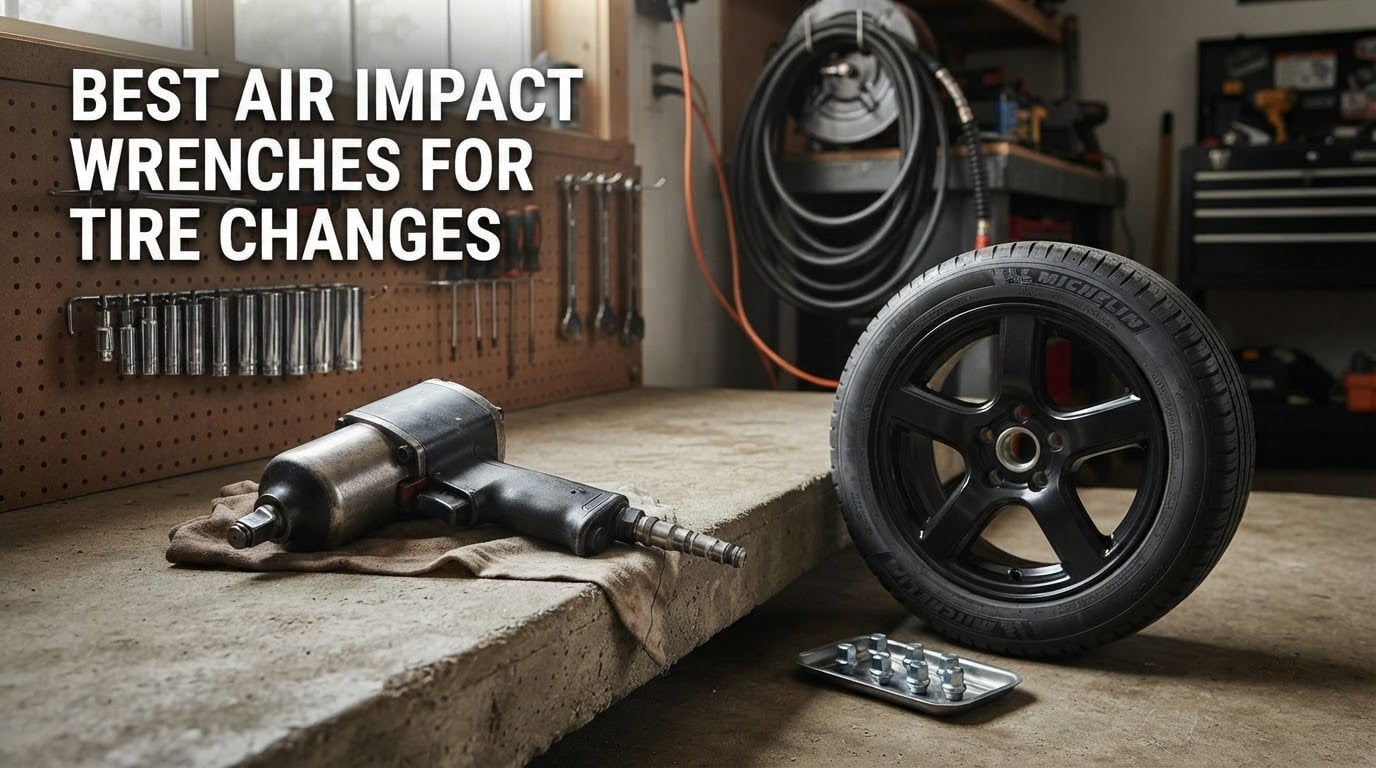
For changing tires, a 1/2-inch drive air impact wrench rated at 700 to 1000 ft-lbs of breakaway torque is the right default. That combination covers passenger car, crossover and light truck lug nuts without the weight, cost or compressor demand of a 3/4-inch gun. Below is my shortlist of the best air impact wrench for tire changes, ranked from ten options that span roughly 400 ft-lbs to 1400 ft-lbs of rated output.
I spent weeks reading manufacturer spec sheets, torque and air-consumption figures, and thousands of owner reviews across these ten tools. The goal was simple: find the wrench that breaks a rusted lug nut on the first pull, survives a decade of garage use, and does not punish the compressor sitting in the corner of your garage. Every product below is written around a specific job, so you can skip straight to the one that matches how you actually use your tools.
Two things shape almost every recommendation here. First, drive size: 1/2 inch handles virtually all tire work, and anything larger is wasted weight unless you run a truck or trailer.
Second, air demand. A wrench that needs more SCFM than your small compressor can deliver will feel weak and slow no matter what its rating card claims. I cover both in detail below, including a section on whether your compressor can actually run the tool you are looking at.
One safety note before we get into the list. Never tighten lug nuts with an impact wrench. The tool is for removal, and a controlled torque wrench finishes the job. I have a step-by-step procedure further down, because stripped studs and warped rotors are the expensive failure modes people ask about most often in tire-change advice.
Table of Contents
Top 3 Best Air Impact Wrenches for Tire Changes in 2026
If you want the short answer, these three cover the realistic range of tire work. The AIRCAT 1150 is the all-round pick, the Ingersoll Rand 231C is the serviceable shop workhorse, and the BESWELL BW-112BN is the one to buy if the budget stops you from buying two.
AIRCAT 1150 Composite
- 900 ft-lb max tightening torque
- 1295 ft-lb loosening
- 1400 BPM twin hammer
- 89 dBa tuned exhaust
- 4.5 lb composite body

Ingersoll Rand 231C
- 600 ft-lb reverse torque
- adjustable power regulator
- twin hammer
- 5.8 lb
- rebuild kits available

BESWELL BW-112BN
- 1180 ft-lb rated loosening torque
- 3-speed forward regulator
- twin hammer
- 4.62 lb
- works at 90-120 PSI
All 10 Air Impact Wrenches at a Glance in 2026
Every wrench below is a 1/2-inch drive, which is the size that matters for tire work. Torque figures come from the manufacturers’ own listings, and the spread between the weakest and strongest of these tools is wide enough that they are not interchangeable on hard hardware.
| Product | Specifications | Action |
|---|---|---|
| AIRCAT 1150 Composite Impact Wrench |
|
Check Latest Price |
| Ingersoll Rand 231C Air Impact Wrench |
|
Check Latest Price |
 AIRCAT 1056-XL Nitrocat Compact AIRCAT 1056-XL Nitrocat Compact |
|
Check Latest Price |
 ACDelco ANI405A Twin Hammer Tool Kit ACDelco ANI405A Twin Hammer Tool Kit |
|
Check Latest Price |
| BESWELL BW-112BN Air Impact Wrench |
|
Check Latest Price |
 VEVOR 1/2-Inch Air Impact Wrench Kit VEVOR 1/2-Inch Air Impact Wrench Kit |
|
Check Latest Price |
 Astro Pneumatic 1832 ONYX Nano Angle Astro Pneumatic 1832 ONYX Nano Angle |
|
Check Latest Price |
 AEROPRO A398 Aluminum Impact Wrench AEROPRO A398 Aluminum Impact Wrench |
|
Check Latest Price |
 CRAFTSMAN 400 ft-lb Air Impact Wrench CRAFTSMAN 400 ft-lb Air Impact Wrench |
|
Check Latest Price |
 Campbell Hausfeld TL140200AV Impact Wrench Campbell Hausfeld TL140200AV Impact Wrench |
|
Check Latest Price |
What Size Impact Wrench Do You Need for Tire Changes?
A 1/2-inch drive impact wrench is the best size for changing tires. It is the size every lug socket in the country is built around, it matches the anvil on nearly every car and light truck, and it keeps the whole tool under five and a half pounds for most of the list. That is the default answer for almost everyone reading this.
The other sizes exist for specific jobs. A 3/8-inch drive takes smaller fasteners and is lighter, but it is easier to twist off the anvil under load and less common on modern vehicles. A 1/4-inch drive is for assembly work inside an engine bay, not wheel removal. A 3/4-inch drive is the truck and heavy-duty territory, and it usually means a five-pound-plus tool plus a compressor that can feed it.
One more detail matters more than buyers expect: socket retention. The anvil holds the socket with a friction ring, and on cheaper guns that ring is often the first thing to wear out. Retention design is also one of the practical reasons a serviceable gun like the Ingersoll Rand 231C keeps working long after a sealed competitor has been replaced.
1. AIRCAT 1150 Composite Impact Wrench: The Best All-Round Air Impact Wrench
- 1295 ft-lb loosening torque handles stubborn and seized nuts
- 4.5 lb composite body stays light in the hand
- 89 dBa tuned exhaust is unusually quiet for a pneumatic gun
- patented ergonomic handle reduces fatigue
- two year parts and labor warranty
- Composite housing is less durable long term than an all metal body
- costs more than most entry level half inch guns
- no published SCFM figure in the listing
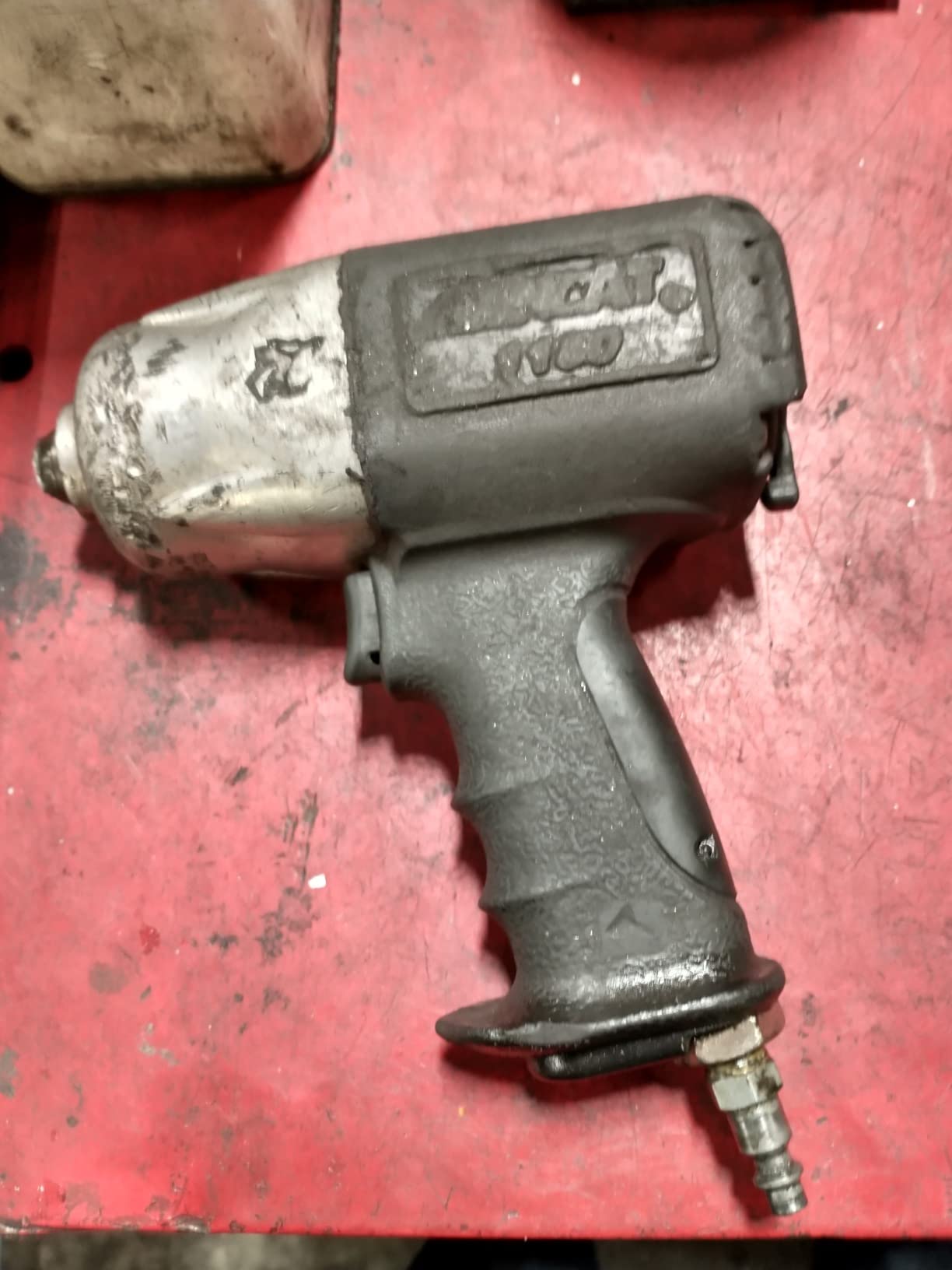
When I look for a single air impact wrench to recommend for tire changes, the numbers that decide it are 1295 ft-lbs of loosening torque at 4.5 pounds. That is the AIRCAT 1150, and the gap between those two figures is the whole reason it tops this list. It has enough headroom to crack a rusted-through nut that has sat for a winter, and it is light enough that you can hold it one-handed at a wheel without your shoulder telling you about it afterwards.
The 1400 blows per minute twin hammer is the other half of the story. A faster hammer delivers more impacts per second, so the nut breaks free in a shorter burst and there is less time for your wrist to absorb the reaction. On a five-lug wheel that difference is the gap between one pass and three passes.
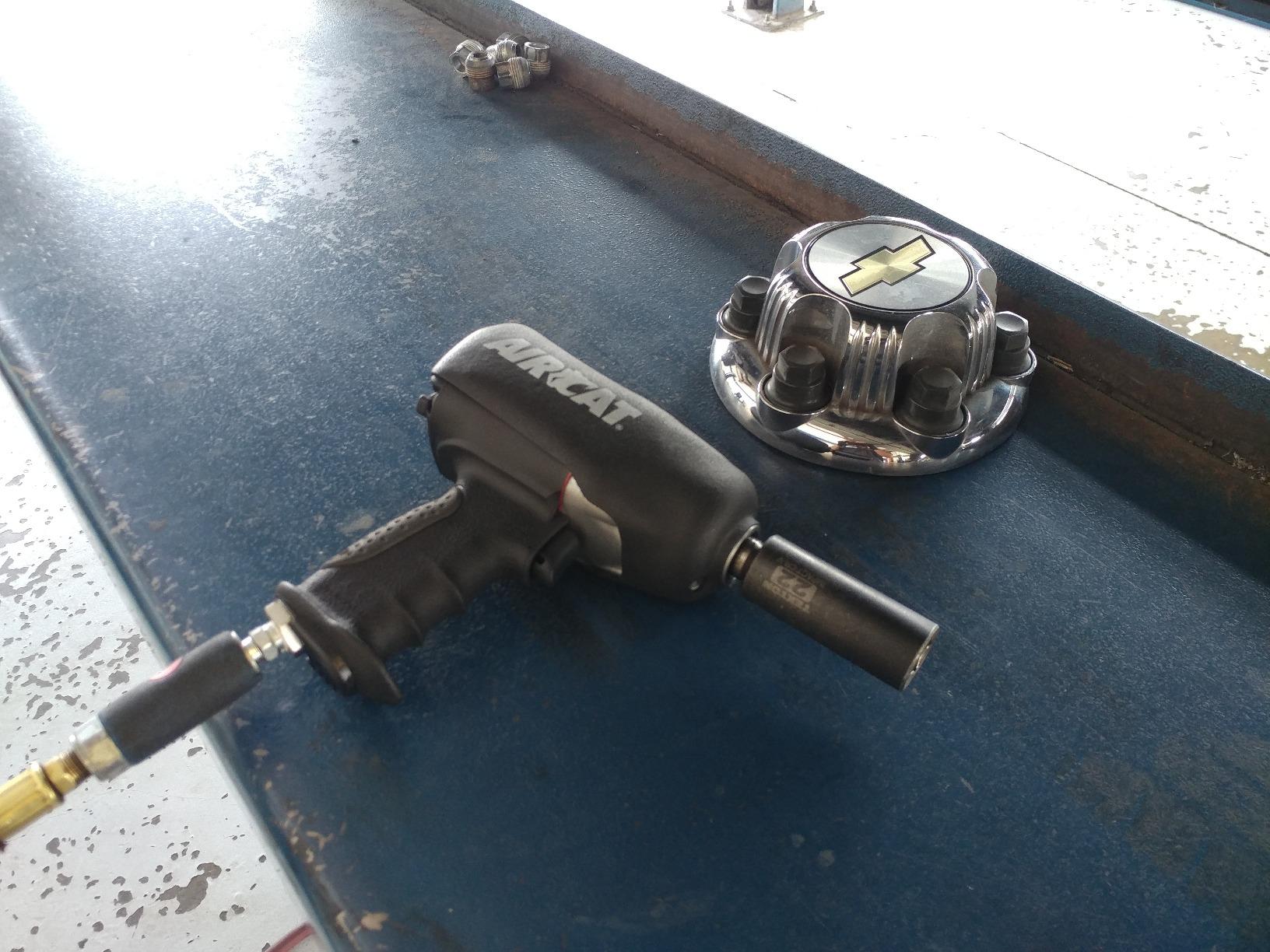
Owner reviews are where this tool really separates itself. Across more than 3,800 ratings it holds a 4.7 average, and the repeated theme is that people bought it once and stopped looking. Several owners describe it still pulling lug nuts off vehicles they have worked on for years, which is the test that matters for a tool you expect to keep for a decade.
Noise deserves a mention because it is unusual here. The 1150 uses a patented tuned exhaust rated at 89 dBa, and for a pneumatic tool of this power that is genuinely restrained. You will still want eye protection, but the exhaust note is not the ear-splitting rattle that gives air tools their reputation in enclosed garages.
Is the AIRCAT 1150 strong enough for truck lug nuts?
Yes, easily, for light trucks, SUVs and full-size pickups using factory wheel nuts. At 1295 ft-lbs of loosening torque, a five-lug truck wheel rarely presents more than 150 to 200 ft-lbs of breakaway resistance, so you are working well inside the tool’s capacity even with a socket extension.
Where it reaches its limit is heavy-duty dually trucks and trailer hubs that have been over-tightened in a shop. For those, a 3/4-inch drive gun or a torque multiplier is the correct tool, and no 1/2-inch wrench at any price will change that. I have included a note on long and keyed nuts further down, because that is the more common real-world failure.
The composite housing and the price are what should hold you back
The composite housing is the honest tradeoff. Composite keeps the weight down and absorbs vibration better than aluminum, but it is the part most likely to crack if you drop the tool off a lift or knock it against a tire rack. If you work in a shop where tools get abused, an all-metal gun is a better long-term bet.
It is also one of the more expensive picks in this roundup, and the price gap versus a metal-bodied alternative is real money for a first-time buyer. If your garage already has a decent compressor and you only change tires twice a year, a mid-tier metal gun gets you 90 percent of the way there.
2. Ingersoll Rand 231C: The Serviceable Shop Workhorse
- Rebuild kits and parts are widely available so the tool can be serviced instead of replaced
- all metal construction outlasts composite housings
- works on modest compressors thanks to moderate air demand
- decades of production mean parts fit long-term models
- Louder than newer composite designs
- plastic trigger feels cheap for the rest of the tool
- 600 ft-lb output is modest against modern high torque budget guns
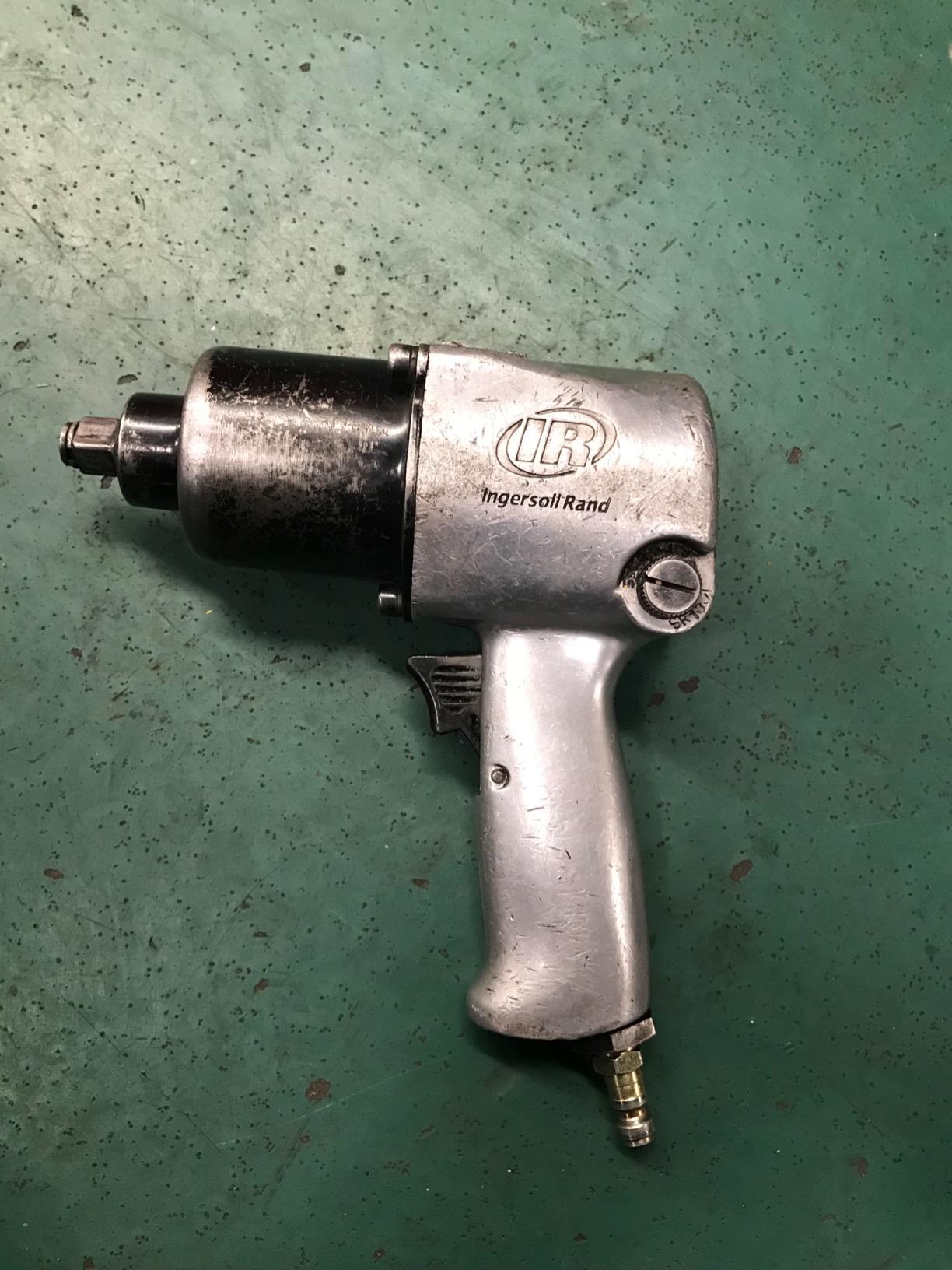
The Ingersoll Rand 231C is the tool I would put in the hands of a technician who does this every day. It is not the highest rated torque number here, but it is the one most likely to still be running in fifteen years. Owners report it pulling seized nuts off small portable compressors, which tells you the air demand is manageable.
What separates it from the pack is serviceability. This is a mechanically simple design with a long production run, so rebuild kits, anvils, hammers and regulators are all still available. On a forabodiesonly.com thread a poster running several project cars described exactly this logic, noting that a quality air impact wrench such as an Ingersoll Rand is more than adequate once your compressor is up to the job.
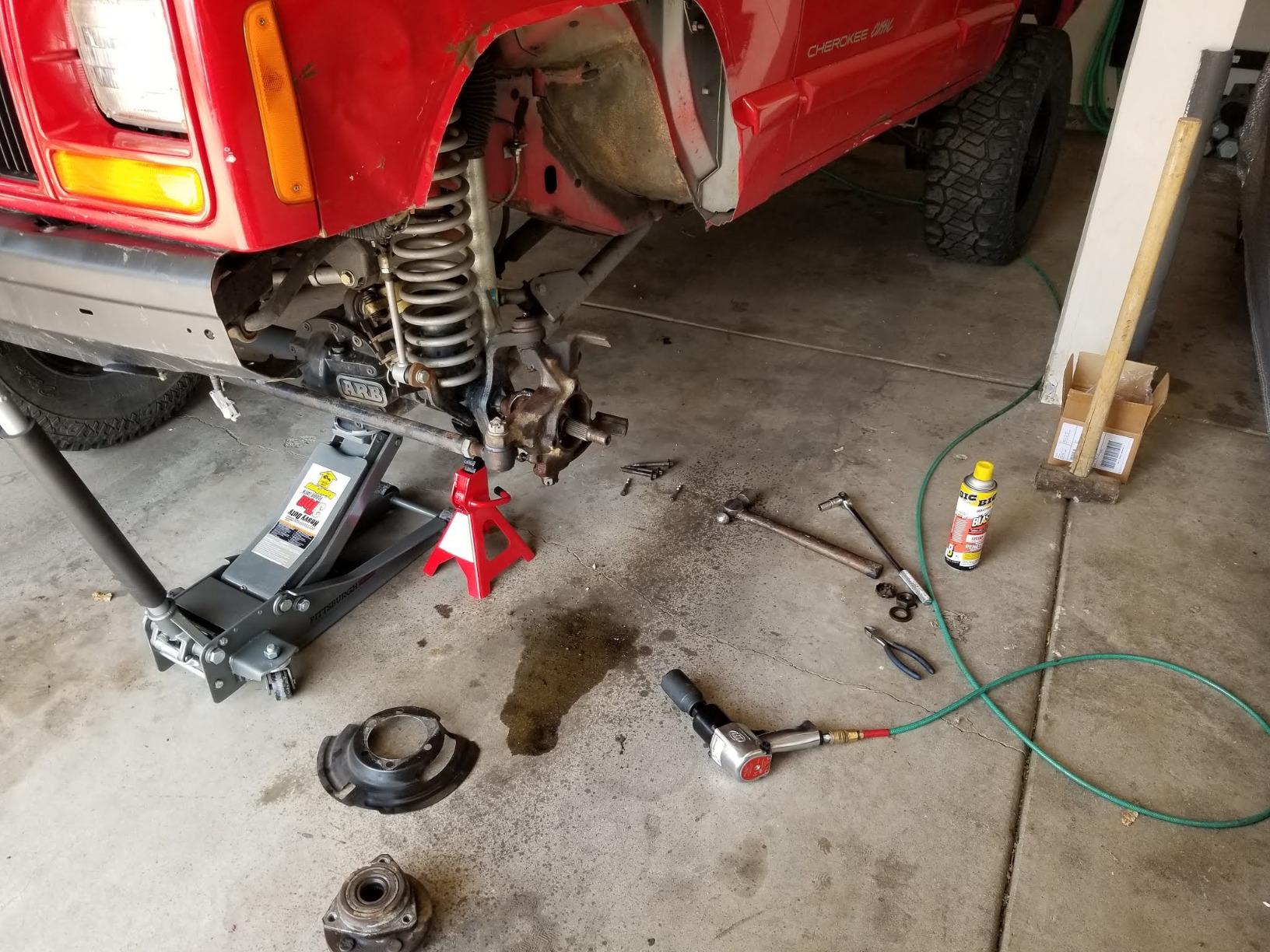
The adjustable power regulator is the feature tire changers actually use. Instead of a single on or off trigger, you select the output you need for the fastener in front of you. For removal you set it high, and for reinstalling hardware or running a bolt into a bracket you can dial it down and avoid rounding a head or stripping a thread.
Weight is the compromise. At 5.8 pounds with an 8.8 inch listed length, this is not a lightweight gun, and a long session of wheel work will be felt in the wrist by the end of the afternoon. The 1056-XL further down this list exists precisely for people who find that too heavy.
Will the 231C run on a small home compressor?
More often than most buyers expect. The manufacturer specifies a minimum of 90 PSI and a 3/8 inch air hose, which is a modest demand compared with the high-flow guns in this roundup. Owners with small pancake-style compressors report it handling routine seasonal tire work without complaint.
The catch is peak output. A 600 ft-lb tool will free a normal passenger car wheel all day, but if you spend your weekends on seized hardware you will notice it stalling more than a 900 ft-lb gun would. Pair it with a larger tank before you blame the wrench.
Is the Ingersoll Rand 231C worth it for a once-a-year user?
Probably not, and I want to be straight about that. If you change tires twice a year on a sedan, a lighter composite gun with more advertised torque gives you a better experience for the money. This purchase makes sense when the tool will see weekly use, or when you value being able to repair it rather than replace it.
It is also the one I would pick for a working shop, purely on parts availability. A tool that can be rebuilt on a bench is a different economic proposition from a sealed unit that is done when the hammer case goes.
3. AIRCAT 1056-XL Nitrocat Compact: Best for Tight Spaces and Long Sessions
- At 2.5 lb it is far lighter than most full size guns
- 4.25 in length reaches into engine bays and between spokes
- 85 dBa composite housing keeps noise low
- grip can be switched for left or right hand use
- greaseable head with replacement parts available
- 750 ft-lb loosening torque is the low end of the capable group
- directional switch on the trigger can crowd your hand
- not a substitute for a full size gun on the hardest fasteners
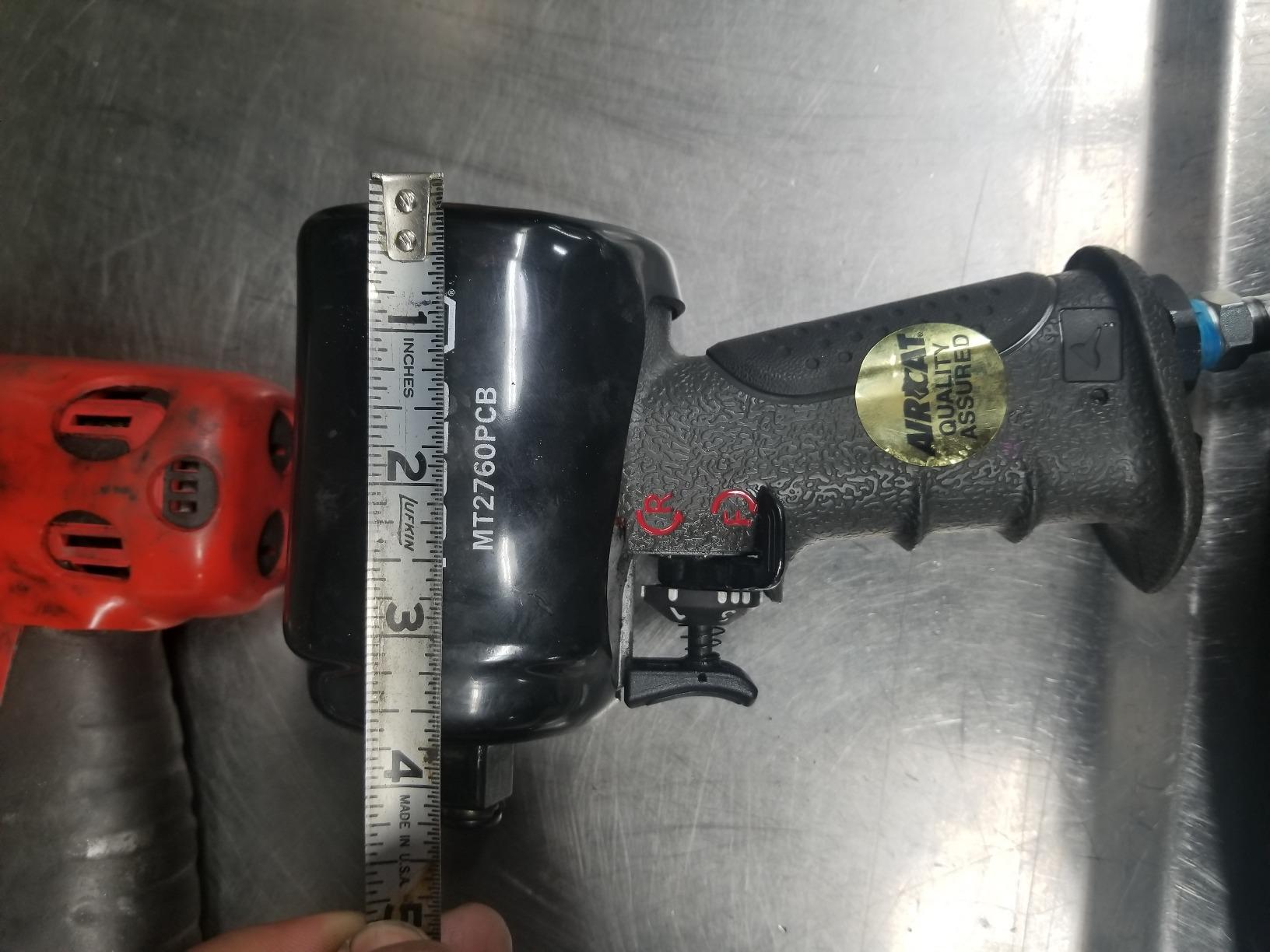
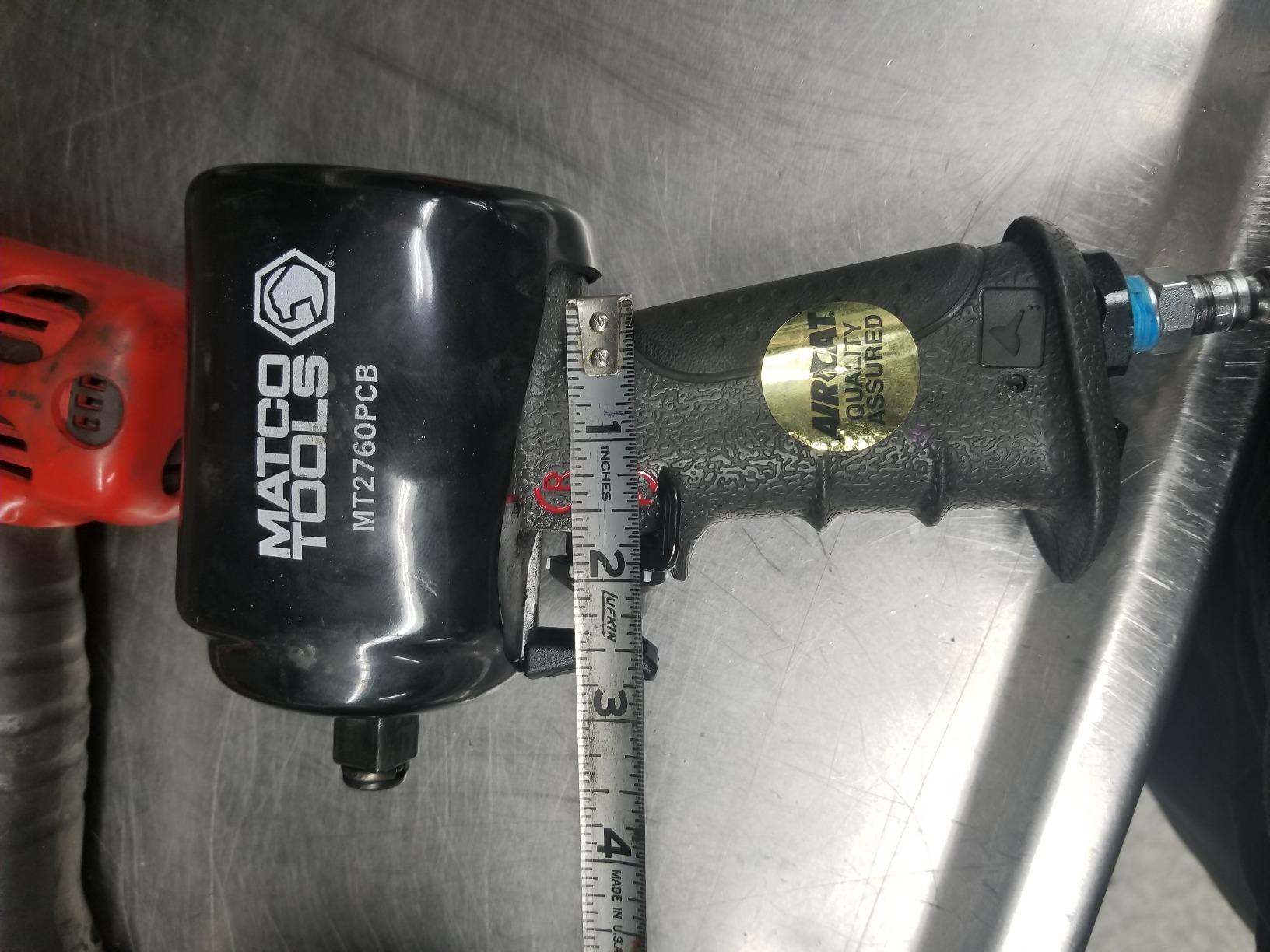
The 1056-XL solves a specific problem: weight and length. At 2.5 pounds and 4.25 inches overall, it is roughly half the weight of the metal guns in this roundup and short enough to fit between a wheel and a suspension arm where a full-size gun simply will not go. If you have ever laid a wrench down and picked up a breaker bar because of clearance, this is the answer.
Owner reviews keep returning to the same surprise: this little tool cracks truck wheel nuts that owners expected it to struggle with. At 750 ft-lbs of loosening torque and a jumbo hammer mechanism, it handles more than the compact format suggests. It holds a 4.7 average across more than 2,100 ratings.
The 85 dBa figure is the lowest published number in this roundup, and combined with the composite housing it makes this a comfortable tool to work with in a residential garage. The soft grip and low mass also cut vibration, which matters over a long session more than most buyers think at purchase time.
One design choice worth understanding before you buy. The forward and reverse switch sits on the trigger, and the grip can be reconfigured for left or right hand operation. That is genuinely useful for working between a wheel and a fender, but it does mean the trigger area is busier than on a full-size gun with a side lever.
Does the 1056-XL have enough torque for a truck?
For routine removal on light trucks and SUVs, yes. Buyers use it on pickup wheels regularly and report it freeing rusted nuts that had resisted a hand wrench. The 550 ft-lb tightening figure and 750 ft-lb loosening figure give it a comfortable margin over a factory-spec lug nut.
It is the wrong pick for long-lug keyed nuts on older vehicles, or for anything a shop has overtightened. When a nut needs more than 750 ft-lbs to move, more air flow is the answer, not a longer handle, and this gun is deliberately built to run on less.
Who should skip this compact wrench?
Anyone whose work is mostly under a vehicle with the wheel already off, where clearance is not the constraint. In that situation a full-length gun with a longer handle gives you more turning force and more room to swing, and the compact format buys you nothing.
It is also not the tool to build a shop around if you do volume wheel work. Keeping one of these as a second gun solves the access problem, while using it as your only gun means reaching for a breaker bar more often than you would like.
4. ACDelco ANI405A: Best When Your Compressor Is Small
ACDelco ANI405A Heavy Duty Twin Hammer ½” 500 ft-lbs. 5-Speed Pneumatic Impact Wrench Tool Kit
- Runs on small compressors where higher flow guns stall
- 5-speed forward control gives real torque modulation
- rugged aluminum body survives repeated drops
- air hose adapter and lubricant are included in the box
- one year limited warranty
- Heavy at 5.7 lb over a full day of work
- forward and reverse button is easy to bump by accident
- socket retaining clip is stiff and awkward to fit
If your air compressor is a small unit, this is the wrench built for it. The ACDelco ANI405A delivers 500 ft-lbs of maximum torque at 90 PSI without demanding a high-flow air supply, and owners consistently note it will free rusted lug nuts on equipment other, hungrier guns would simply stall on.
That is a real constraint in a lot of home garages. Plenty of people own a 2-gallon or 3-gallon pancake compressor that produces air at a respectable pressure but at a modest flow rate. A tool that demands more air than the compressor can deliver feels weak no matter what it is rated for, and this one is not that tool.
The 5-speed forward control with full-power reverse is the feature that sets it apart in this price class. Most competitors give you one forward setting and full power in reverse. Being able to pre-load a bolt at the lowest setting without stripping it is genuinely useful for anyone doing suspension or brake work alongside tire changes.
Construction is a rugged aluminum body, and reviewers report it surviving repeated drops in ways that composite-housed tools at the same level often do not. The box includes an air hose adapter and a lubricant, and the 1/4 inch NPT inlet is a standard size you can service easily.
Is 500 ft-lbs enough to remove a stuck lug nut?
For anything on a car, crossover or light truck, yes with time rather than force. A factory-spec lug nut typically presents 80 to 150 ft-lbs of breakaway resistance, so 500 ft-lbs is roughly three to six times what you need on a healthy fastener.
The situation changes with age. A nut that has corroded into the wheel stud, or one a shop over-tightened to 250 ft-lbs, is a different problem. For those you want a higher rated gun in the garage as a backup, and there is a long-lug section further down covering how to deal with them without rounding a stud.
What are the trade-offs on the ANI405A?
Weight, mainly. At 5.7 pounds it is one of the heavier tools here, and a full day of wheel work on a heavy gun is tiring. If your tire changes are seasonal rather than weekly, that matters far less than the low air demand does.
The direction control is also a known irritation. Owners report bumping the forward and reverse button during use, which on a wheel means the tool stops or reverses unexpectedly. It is a small design fault, but it is the one you will touch most often.
5. BESWELL BW-112BN: Best Value for Home Mechanics
- Rated 1180 ft-lbs of nut busting torque at a fraction of the cost of premium guns
- 4.62 lb body is lighter than most metal alternatives
- 3-speed forward regulator helps preload bolts without stripping them
- integrated air cooling supports continuous high load work
- operates from 90 to 120 PSI
- Headline torque figure is treated as optimistic by some owners
- feels heavier in the hand than the weight suggests
- one owner reported a minor air leak at the bottom valve
The BESWELL BW-112BN is the value pick in this roundup, and the reason is unusual: it carries the second-highest rated torque figure here at 1180 ft-lbs while sitting at the entry end of the price range. No other tool in the list closes the gap between rated output and cost quite this widely.
Owners describe it as exceptional value, removing truck and SUV lug nuts in a couple of seconds on a home compressor. The 3-speed forward regulator is a real feature rather than marketing copy, letting you preload fasteners at the lowest setting and switch to full power reverse when you need to break something loose.
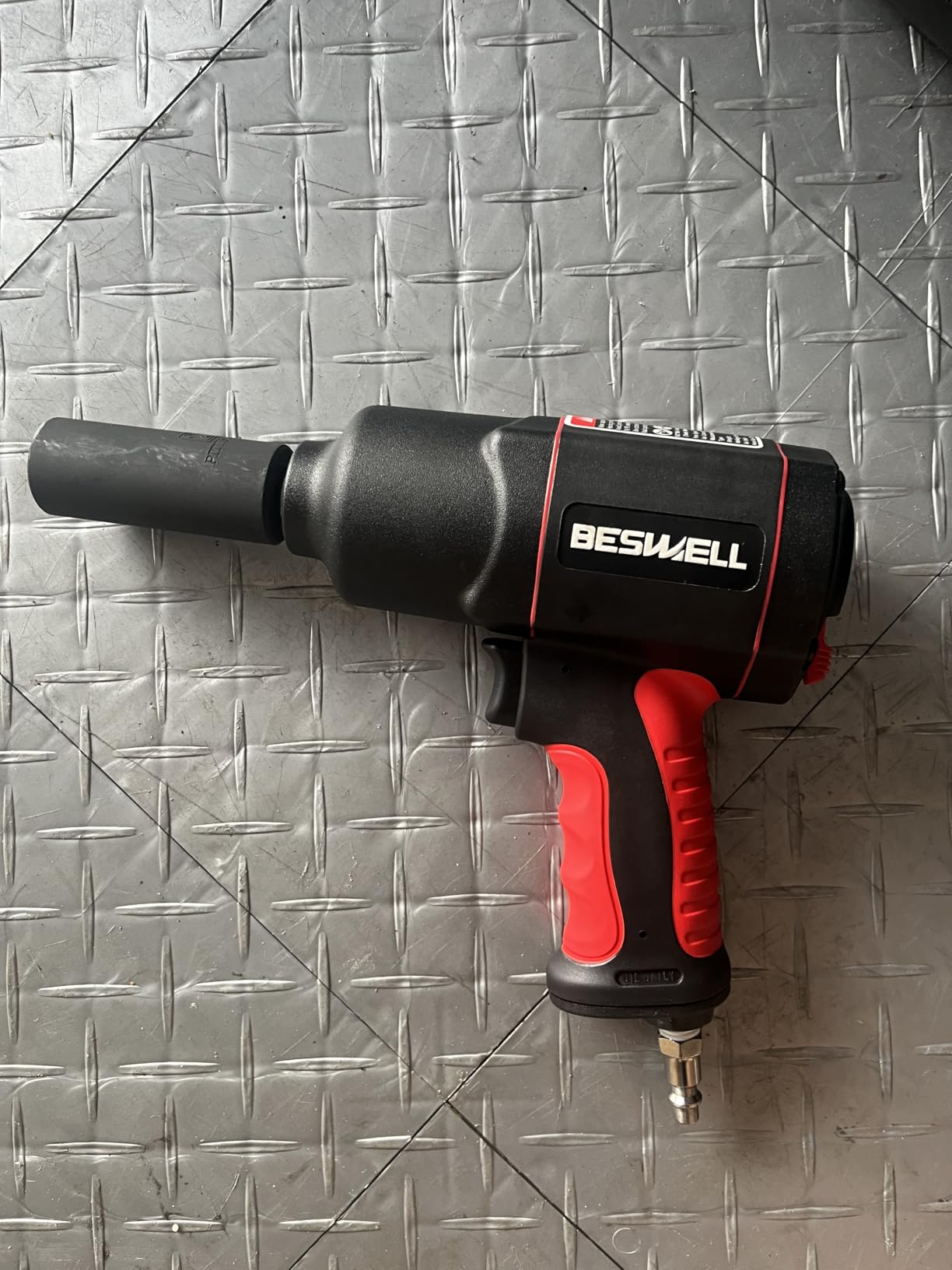
The honest caveat is the headline number. Several users question whether 1180 ft-lbs reflects real breakaway performance, and that skepticism is reasonable, because rated loosening torque across this category tends to be measured differently by each manufacturer. Read it as an indication of capability class rather than a number you will feel on every nut.
What is not in dispute is the durability. Owners report daily shop use without failure, and the integrated air cooling system with a powder metallurgy cylinder is designed for sustained high load rather than occasional use. The tool weighs 4.62 pounds, which is 20 percent lighter than typical all-metal guns in its class.
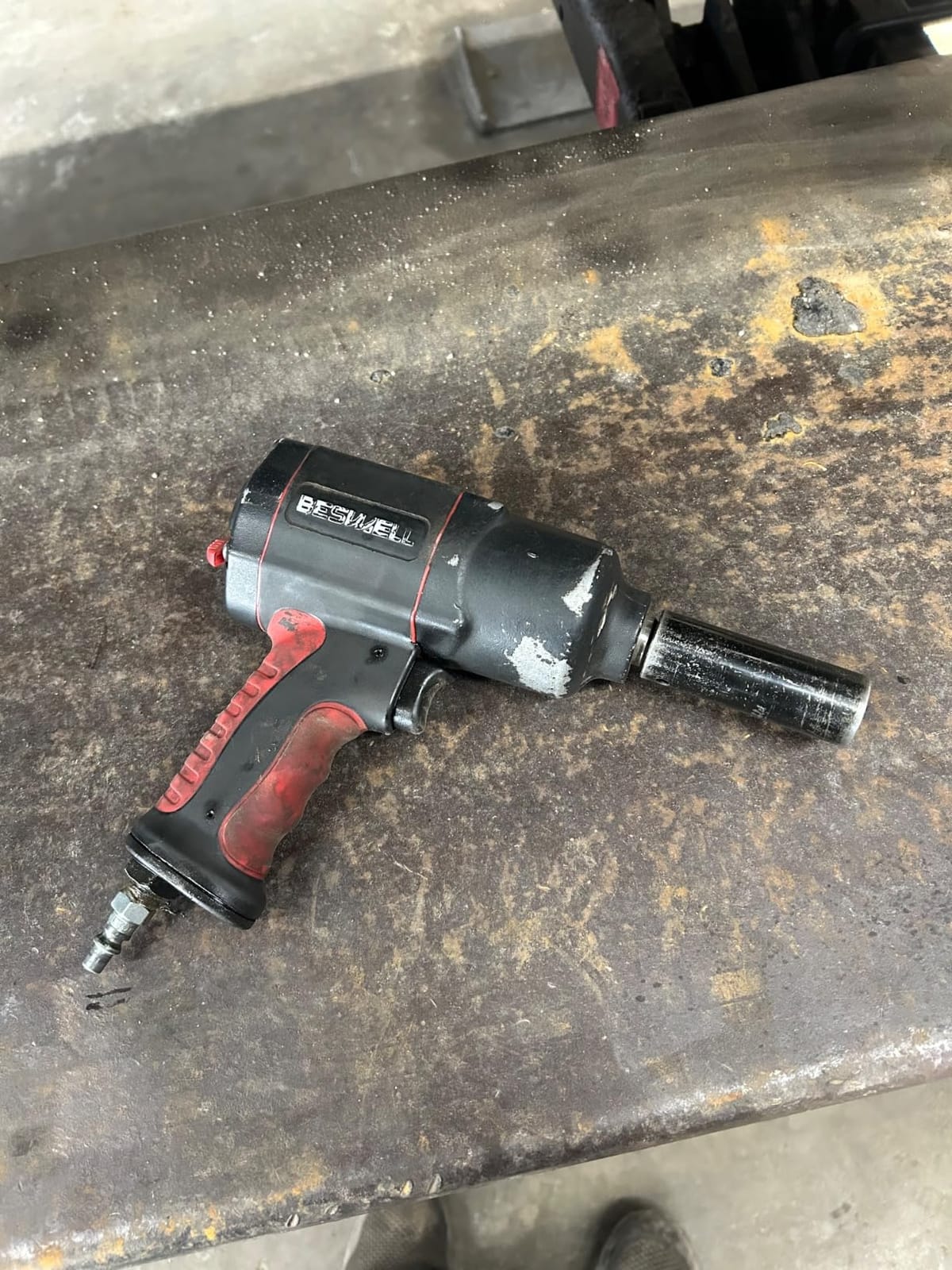
Is the BW-112BN a good first air impact wrench?
It is a strong candidate for one, with a caveat. If you already own a compressor and a hose, this is a low-risk way to find out whether you enjoy pneumatic tools before committing to a premium gun. Rated performance and price both sit where a first purchase belongs.
The caveat is that this is a gun-only package. There is no quick connector, no oil pot and no sockets in the box, so budget for those separately. Several competing tools in this roundup bundle a lubricant, an adapter or a socket set, which matters more to a new owner than the spec sheet suggests.
What should a careful buyer check before choosing it?
Ask your compressor what it can deliver rather than trusting the tool rating. This model is optimized for 90 to 120 PSI, which is within reach of most home compressors, but a high-flow gun on a low-flow compressor is the single most common cause of disappointing first impressions with air tools.
Also weigh the control layout. The feather-touch trigger and 3-speed regulator are well suited to careful work, but if your priority is raw removal speed on seized hardware, a gun with more rated loosening torque and a larger air supply will serve you better over the long term.
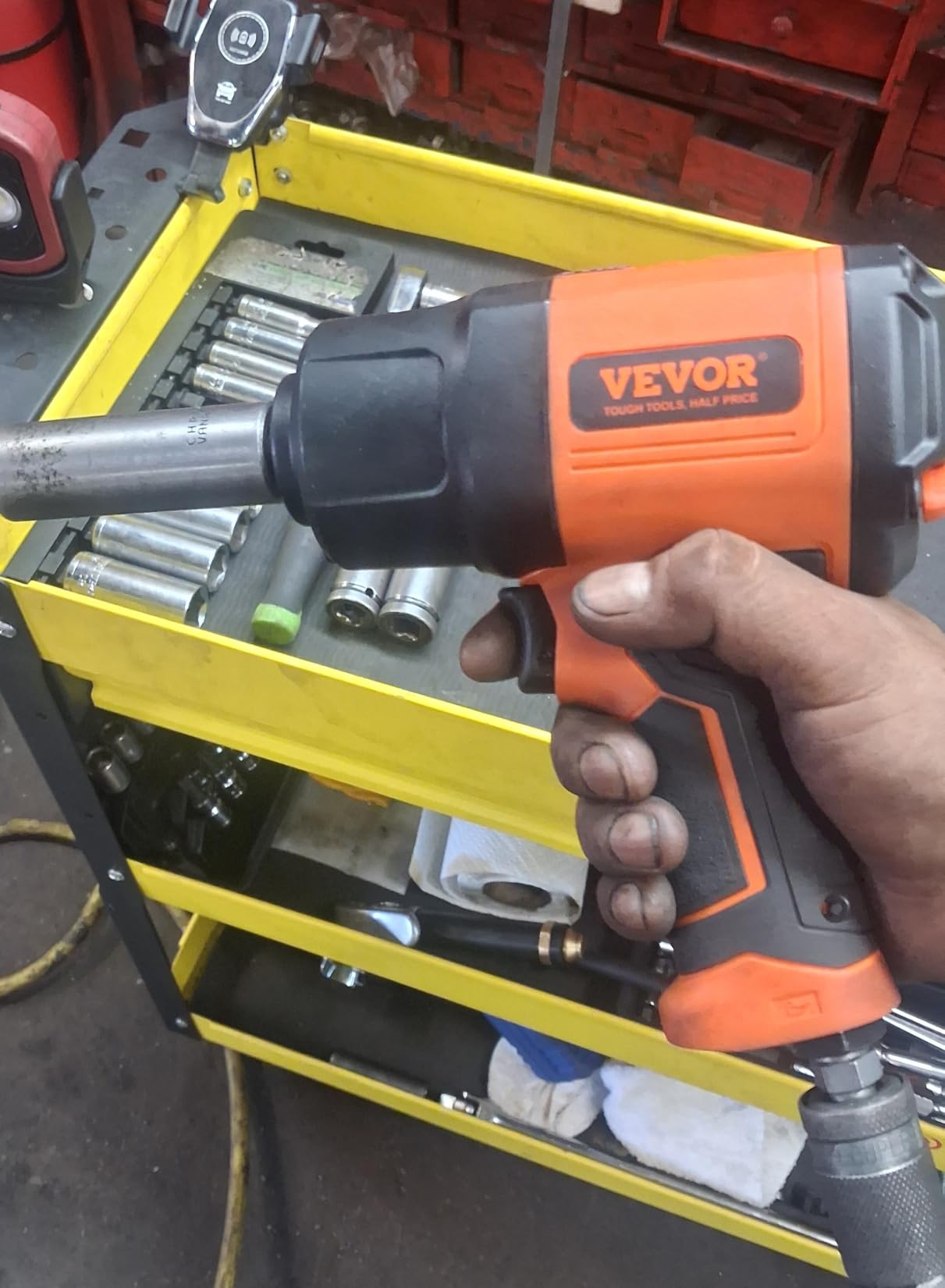
6. VEVOR 1/2-Inch Air Impact Wrench: Best All-in-One Kit
- Highest rated nut busting torque in this roundup
- tool body weighs only 4.6 lb
- kit includes 10 CR-V steel sockets plus extension bar and case
- 4-position regulator gives genuine torque control
- lubrication adaptor included for maintenance
- Torque figure is inconsistent between the listing title and the spec field
- package weight of 8.6 lb makes the case bulky
- thinner long term durability history than older established models
What sets the VEVOR apart is everything in the box. You get the wrench, a 5 inch extension bar, an air quick connector, an oil pot, a lubrication adaptor, a carrying case and a 10-piece CR-V steel socket set in metric sizes from 9 to 27 mm. For a first air tool purchase, that bundle removes almost every reason to make a second order.
Measured on its own, the tool is competitive. It carries a 1400 ft-lb nut-busting rating, the highest figure in this roundup, on a 4.6 pound body. A 4-position combined forward and reverse power management regulator gives you real control rather than a single fixed setting.
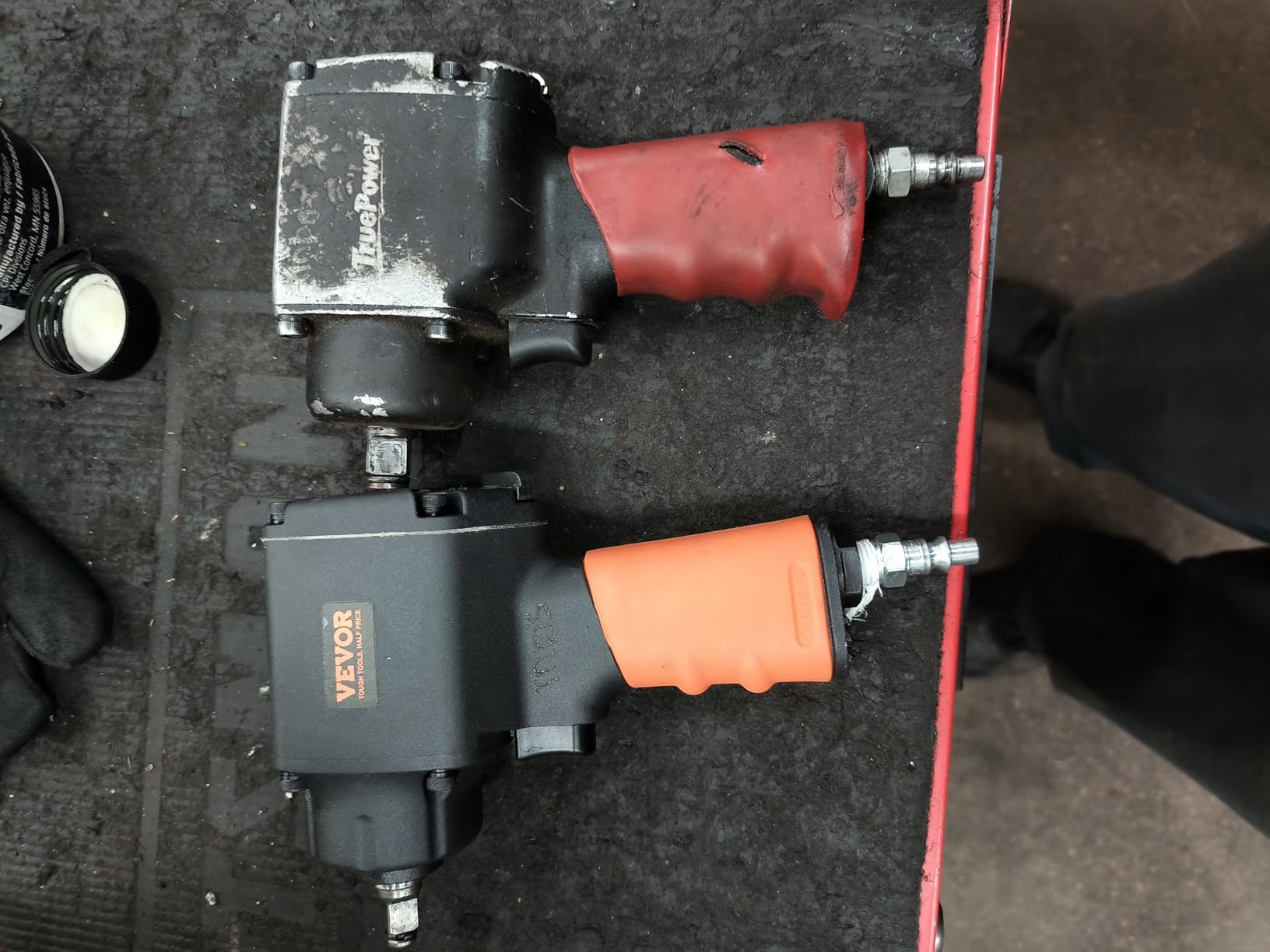
Two things temper the enthusiasm. The listing itself is inconsistent about torque, with the title and the spec field giving different numbers, and buyers rightly notice that. And a 4.6 lb tool in an 8.6 lb package is a bulky thing to carry around a garage, though the case makes it at least tidy.
It also ranks unusually high in its category for sales, which tells you demand is real, but the listing is relatively recent. That means the long-term durability record is thinner than for tools like the Ingersoll Rand 231C that have been in production for decades, and thin review histories are where quality surprises tend to hide.
Is the socket set good enough to use on lug nuts?
For light duty, yes. The 17 mm, 19 mm, 21 mm and 24 mm sockets cover the common lug nut sizes, and CR-V steel is the right material for impact work. For a full lug set on a heavy truck you will still want to buy deeper impact-rated sockets separately, since these are shallow pieces.
Make sure they are impact-rated sockets if you plan to use them with this tool. A standard chrome socket driven by a hammer mechanism is a cheap way to shatter a socket shank and put metal fragments near your hands.
Who is the VEVOR kit best suited to?
It suits a new owner who wants one purchase that covers the wrench, sockets and maintenance basics. That is a genuine convenience, and the total cost of building the same setup separately adds up quickly for someone who does not already own impact sockets or a lubricator.
It suits owners less well if you already have a deep socket set and a good air setup, since much of the value here is in the packaging. In that case put the same money toward a higher-serviceability gun with published rebuild parts.
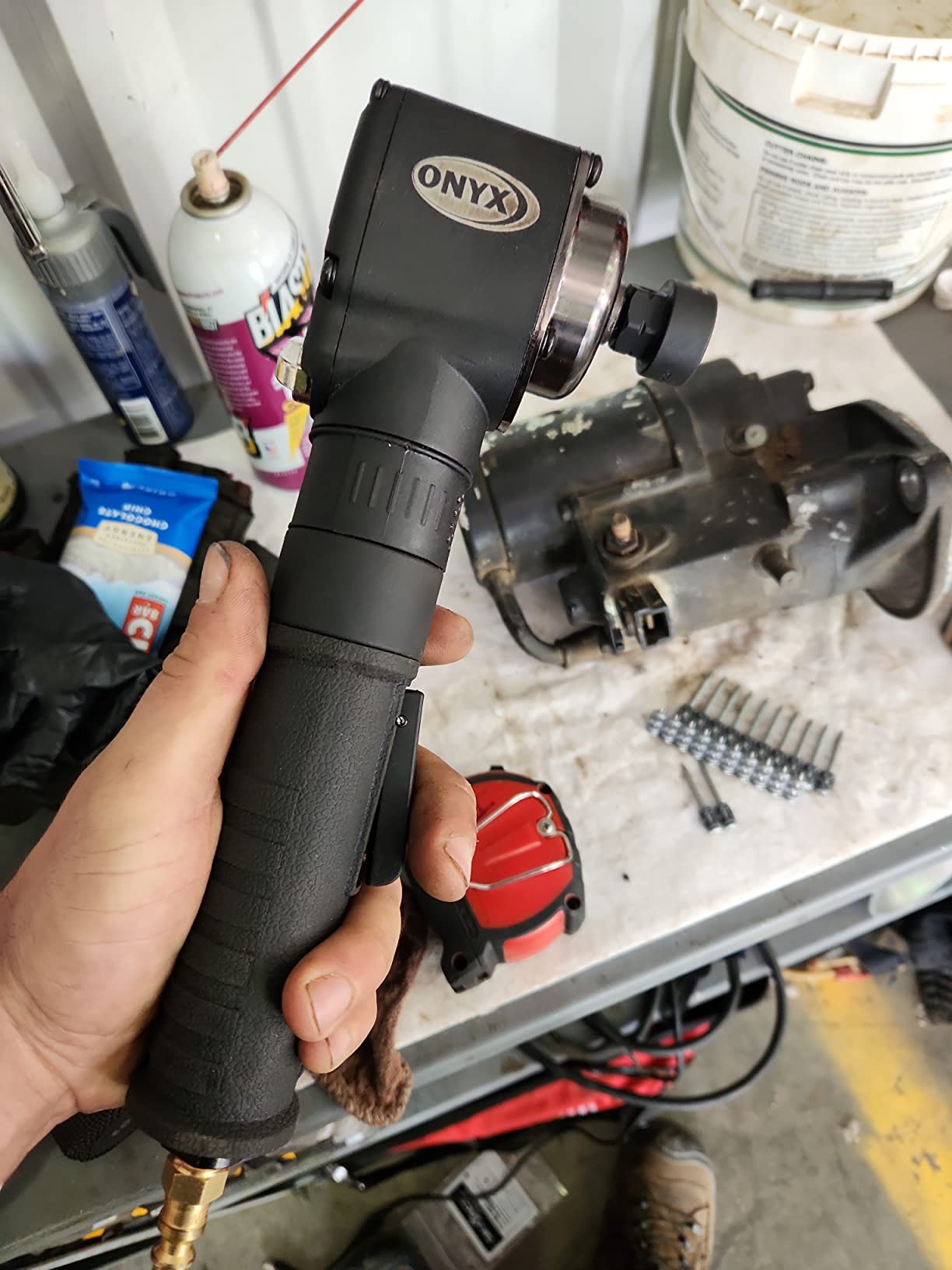
7. Astro Pneumatic 1832 ONYX Nano Angle: Best Stubby Access Wrench
Astro Pneumatic Tool 1832 ONYX 1/2″ Nano Angle Impact Wrench – 415ft/lb
- Shortest body in this roundup at 3.46 in
- with an angled anvil for awkward clearances
- 2 lb weight keeps it workable for extended access jobs
- chrome vanadium steel construction is tough for its size
- holds a 4.7 average across its review base
- 415 ft-lb is modest next to the full size guns here
- listing detail is sparse with minimal feature description
- not intended for seized or over-tightened fasteners
The Astro Pneumatic 1832 ONYX is bought for geometry, not power. At 3.46 inches long and 2 pounds, with an angled anvil, it reaches clearances that none of the other tools here can match, and it holds a 4.7 rating across more than 600 owner reviews despite carrying one of the lower torque figures on this list.
That combination makes it a specialist companion rather than a primary tire-change tool. When the anvil angle lets a socket sit straight on a nut that a straight-anvil gun can only reach at a bad angle, this tool quietly saves a job. That happens more often than expected on suspension work and engine bay assembly.
Construction is chrome vanadium steel rather than a composite housing, which is a sensible choice for a stubby tool that will be dropped and knocked about. It is also offered in 3/8 inch drive, which is worth noting if you already have a small socket collection.
The honest limitation is the 415 ft-lb rating. That is enough for routine removal on a car with an impact-rated socket, but it is not a number you want to lean on for a seized nut or a long-lug keyed wheel. Owners who buy it for access work report it holding a 4.7 average because that is exactly what it is designed to do.
Can the 1832 ONYX handle routine lug nuts?
On a passenger car with a properly torqued wheel, yes, with a long-enough impact socket. The added socket length multiplies your turning force, which is why a 415 ft-lb gun with a two-inch deep socket can still free a nut that feels immovable.
Beyond that, you are asking it to do work outside its class. A tight-corner advantage is worthless if the tool stalls halfway through breaking a nut loose, so for anything on a truck, treat this as the access gun and keep a full-size wrench nearby.
What should buyers know about this listing?
The published product detail is unusually thin, and the manufacturer does not publish a decibel figure, air consumption or an SCFM requirement for it. That is worth factoring in if noise or air demand drives your decision between models.
Its review base is smaller than the top of this list, though the average rating is high. That combination usually means a satisfied niche buyer rather than a broad consensus, so treat the 4.7 as meaningful for its category rather than as a direct comparison with tools that have thousands of ratings.
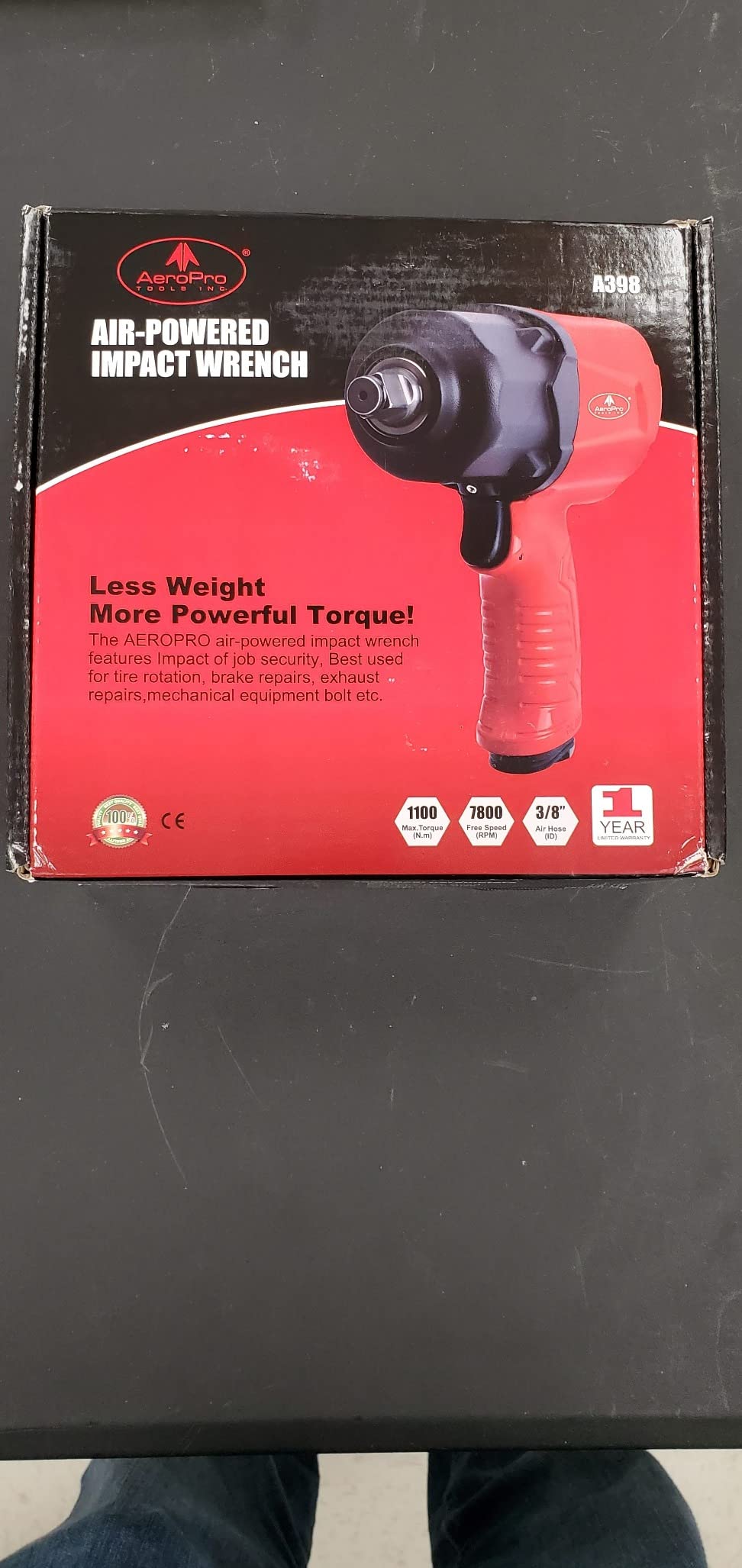
8. AEROPRO A398: Best for Seized and Stubborn Fasteners
- 1380 ft-lb loosening torque is the second highest figure here
- 3-speed adjustment allows preloading on the lowest forward setting
- rear exhaust directs debris away from the work surface
- 810 ft-lb working torque covers heavy truck body bolts
- aluminum housing with alloy steel square drive
- Air hungry
- so it needs a larger compressor to reach rated output
- 5.3 lb is heavy for a home garage
- anvil can bind on the first few uses before it breaks in
The AEROPRO A398 is the pick when the job has turned ugly. At 1380 ft-lbs of max loosening torque and 810 ft-lbs of working torque, it is the second most capable gun in this roundup, and technicians report it replacing far more expensive name-brand tools for less weight once it is broken in.
What that means in practice is rusted truck body bolts, seized suspension hardware and the kind of fasteners that make a breaker bar feel inadequate. Professional users describe using it on box trucks and full-size pickups, which is roughly the class of work where a 600 ft-lb gun starts to feel marginal.
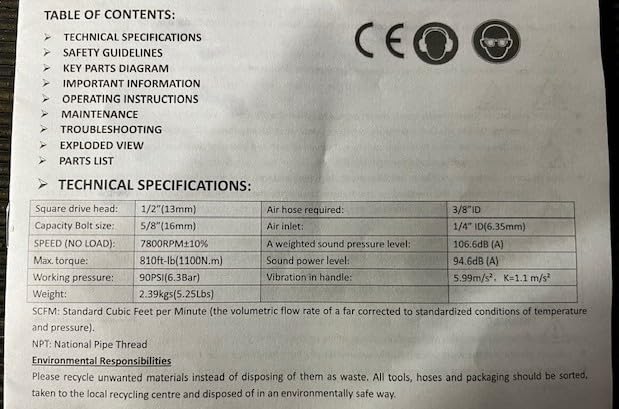
The 3-speed adjustment is designed around preload. You start bolts on the lowest forward setting and increase as needed, which is how you get consistent fastener tension without rounding a head. The 45mm cylinder with a twin hammer design runs at 7800 RPM on 90 PSI, and the rear exhaust keeps debris off the work surface rather than blowing it at you.
Build details are aimed at service life, with military-grade Baosteel materials and an anti-aging valve for better sealing. The package includes an oil pot, a spanner and a 1/4 inch NPT air connector, so the maintenance essentials are in the box.
What compressor does the AEROPRO need?
A decent one. This is the most air-hungry tool in the roundup, and owners are candid that it needs a larger compressor to deliver its rated output.
Before buying, check what your compressor is rated for in SCFM rather than just its tank size in gallons. Tank capacity determines how long you can work between pauses; flow rate determines how hard the tool can hit. The difference is the most misunderstood spec in home air tool setups.
What are the drawbacks of the AEROPRO A398?
At 5.3 pounds it is one of the heavier guns here, and the air demand compounds that because you are also moving a lot of compressor. For seasonal tire work on a car, that is more tool than you need.
There is also a break-in quirk. Owners report the anvil binding on the first few uses before it loosens up and runs freely. That is a manufacturing tolerance thing that resolves with use, but it is worth knowing about if you judge a tool in the first ten minutes.
9. CRAFTSMAN 400 ft-lb Air Impact Wrench: Longest Warranty and Metal Build
CRAFTSMAN ½-in 400-ft-lbs Air Impact Wrench, Heavy-Duty All-Metal Build, Variable Power Settings, 5 SCFM at 90 PSI
- All-metal construction in a category dominated by composite housings
- three-year limited warranty is the longest offered here
- 5 forward power settings for controlled fastening
- published 5 SCFM at 90 PSI figure makes compressor matching easy
- 10000 RPM free speed
- 400 ft-lb leaves little margin on over-tightened hardware
- quick connect plug is not included
- 5.4 lb is heavy for a compact garage job
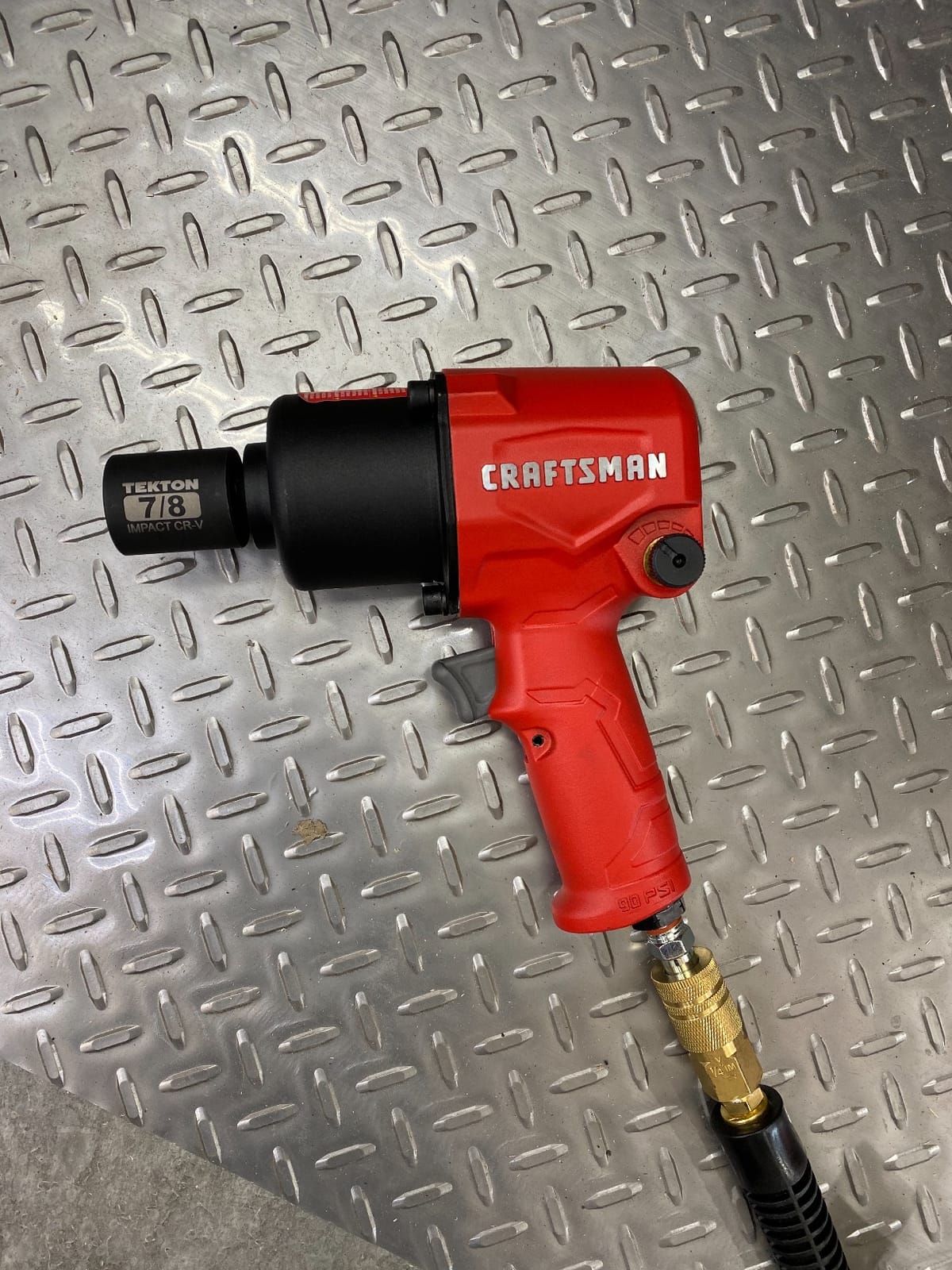
The CRAFTSMAN is the durability-first pick. In a category that has shifted almost entirely toward composite housings for weight savings, an all-metal alloy steel and aluminum body is a deliberate choice, and it comes with a three-year limited warranty, the longest coverage in this roundup.
It is also the only tool here that publishes a clear air consumption figure: 5 SCFM at 90 PSI. That single number lets you answer the compressor question before you buy, and it is one of the reasons we can recommend this gun to someone whose air supply is uncertain.
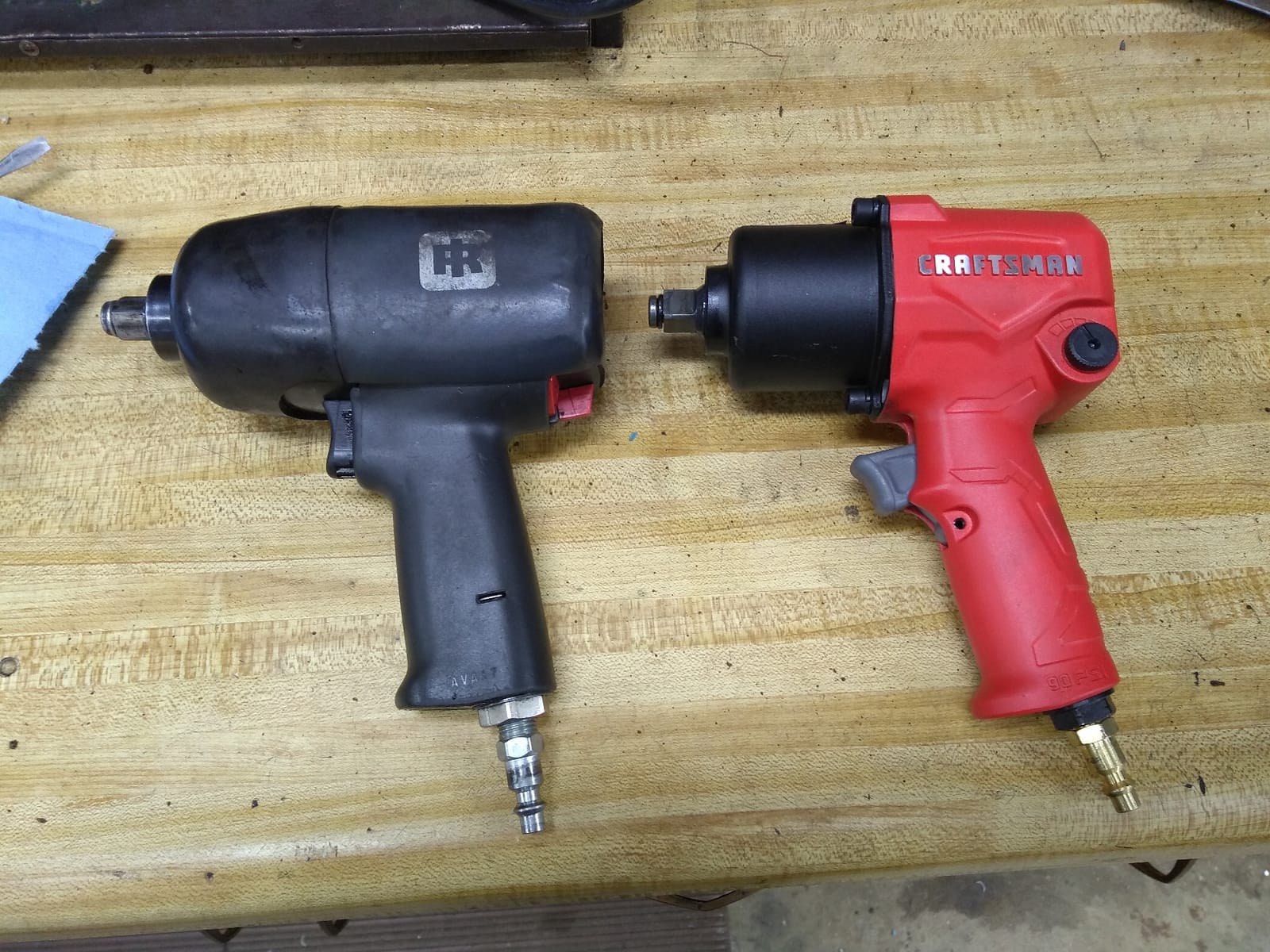
Five forward power settings give you a good range for controlled fastening, and the 10000 RPM free speed is high enough that the hammer stays busy on smaller fasteners. The ergonomic handle is designed to reduce fatigue over extended use, which is more relevant than it sounds on a 5.4 pound tool.
The compromise is capacity. At 400 ft-lbs this sits at the bottom of the range, and it is intended for routine lug and bolt work rather than severely seized hardware. Owners buying it for a car or light truck are satisfied; owners who plan to fight seized truck hardware will want the extra headroom of a higher-rated gun.
Is 400 ft-lbs enough for seasonal tire changes?
For a car, a crossover or a light truck with factory wheel nuts, it is enough. Lug nuts are typically torqued to somewhere between 80 and 150 ft-lbs, so 400 ft-lbs gives you a margin of two and a half to five times, and a long impact socket raises that further.
It is not enough for over-tightened wheels, long-lug keyed nuts or heavily rusted hardware. Check your vehicle’s lug specification before you assume, because the answer changes which tool you should buy more than any other single factor.
What should you add before first use?
A quick connect plug. The 1/4 inch NPT air inlet accepts one, but the plug is not included, and trying to run a wrench with a threaded adapter you have to hand-tighten every time is an unnecessary annoyance in a garage you use regularly.
Also plan for lubrication. The tool needs oil at the air inlet, and a cheap inline oiler or a periodic drip through the inlet keeps the hammer mechanism healthy. Budgeting for an FRL unit and a few drops of air tool oil is the cheapest maintenance you will ever do on a pneumatic tool.
10. Campbell Hausfeld TL140200AV: The Entry-Level Starter
Campbell Hausfeld 1/2″ Impact Wrench, Air Impact Driver (TL140200AV), 550 FT/LBS Torque
- Entry level torque that covers routine tire work on a car
- 550 ft-lb nut busting torque from a twin hammer mechanism
- composite body and soft grip keep hand fatigue down
- 3-speed regulator gives consistent tension on lug nuts
- backed by a one year limited warranty
- Lowest average rating in the group at 4.4
- composite housing is less durable than all-metal alternatives
- most complaints trace back to pairing it with a mismatched or undersized compressor
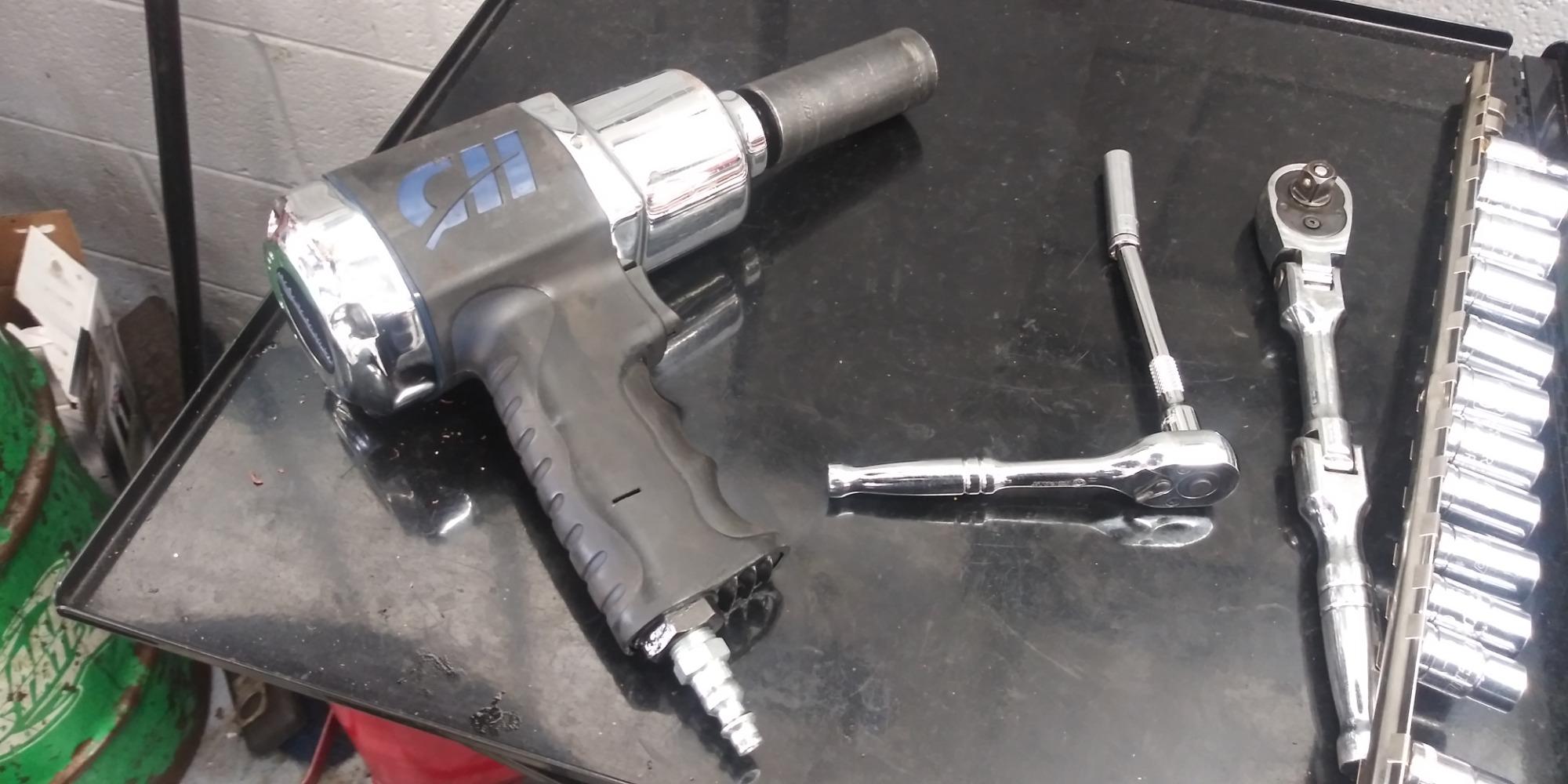
The Campbell Hausfeld TL140200AV is the tool to buy if a pneumatic impact wrench is a completely new category for you and the budget is the deciding factor. At 550 ft-lbs of nut-busting torque it covers routine tire rotations, brake work and lawnmower blade changes, and the soft grip composite body stays comfortable in the hand.
Its 3-speed power regulator is the feature that keeps it in contention. Being able to select the speed gives you consistent tension on lug nuts rather than all-or-nothing output, which is exactly the control you want on a first tool.
I want to be straight about where it sits in the pack. It carries a 4.4 average across 914 ratings, the lowest of the ten, with 68 percent five-star ratings. That does not make it bad, but it does mean you are accepting a wider spread of experiences than with the tools near the top of this list.
There is one recurring explanation for most of the dissatisfaction, and it is not the tool. Reviews repeatedly trace complaints back to pairing it with a small or mismatched compressor. Owners who run it on a properly sized unit report it performing fine for tire rotations and brake jobs. Match the air supply to the tool before you judge the tool.
Should a first-time buyer start here?
Only if a compressor is already part of the equation and money is genuinely tight. The gap between this and the mid-tier metal guns in this roundup is small, and the metal options last longer, which matters if you decide to keep going.
If you are weighing air against battery, look at the cordless side of the equation before committing to a compressor purchase. We have covered that trade in detail further down, and for many seasonal users the cordless route costs less once the air setup is counted.
What is the biggest reason buyers return to a bigger gun?
Torque headroom on hard fasteners. A 4.4 rating across 914 reviews concentrates complaints around two things: composite housing durability, and reaching the limit of 550 ft-lbs on hardware that needs more. Both of those resolve if you step up to a higher-rated metal gun.
It is worth noting the listed weight for this model is 8 ounces, which is inconsistent for a tool of this class and is likely a packaging figure rather than the tool itself. Do not choose it, or any of the others in this roundup, based on weight alone; use the 4.4 rating and the torque figure instead.
Will Your Air Compressor Run It?
Yes, if your compressor delivers the air the tool needs, and three numbers decide that. Look at the CFM or SCFM rating on the compressor motor plate, check the tank size in gallons, and confirm the pressure regulator reaches at least 90 PSI.
Most of the tools here specify 90 PSI as the working minimum. The figure that actually causes disappointment is flow rate. A large tank with modest flow means long pauses between nuts; a smaller tank with good flow keeps the tool working but runs out sooner.
If you are still working out whether your setup can handle a 1/2-inch gun, our guide to the best air compressors for impact wrenches covers the tank sizes and flow rates that pair well with the tools in this roundup.
Two more things cause weak performance. A long thin hose restricts flow, so a 3/8 inch hose is the practical minimum and a 1/4 inch hose will visibly slow a 1/2-inch gun. And a dirty or un-oiled tool seizes up, which feels exactly like a compressor problem but is not one.
A filter-regulator-lubricator unit solves the second problem and the maintenance problem at the same time. If your shop does not have one, it is a small addition that extends tool life considerably. Our roundup of air compressors for garage tire inflation covers the setup side if you are building a workspace rather than just adding a gun.
How to Tighten Lug Nuts Safely After Removal
Never tighten lug nuts with an impact wrench. The hammering action that makes removal fast is precisely what makes installation unpredictable, and over-torquing is the most common way people damage their own wheels, studs and rotors.
The safe sequence has three stages, and the torque wrench stage is the one that protects your studs and rotors. Skipping it is how a quick tire change turns into a bent rotor or a stripped wheel stud.
Install the wheel by hand, threading each nut onto the stud before using any tool. Then snug each nut with the impact wrench on its lowest setting, just enough to seat the wheel against the hub. This is the only step where the impact wrench belongs in the tightening direction.
Next, tighten in a star pattern rather than going around the circle. Crossing the wheel first spreads the clamping load evenly and keeps the rotor from warping, which is the second most common tire-change mistake. After the pattern is complete and the wheel is seated, the wheel should not rock on the hub.
Finally, finish with a torque wrench to your vehicle’s specification. The common rule of thumb is that you can add about 20 percent above the factory figure when the wheel is already snug and properly located, but the correct answer is always the number in your owner’s manual. A click-style torque wrench and your vehicle’s spec are the whole safety argument.
Torque values vary widely by vehicle class, which is why the spec matters. A passenger car often sits between 80 and 100 ft-lbs, an SUV between 100 and 150 ft-lbs, and a truck can start at 200 ft-lbs and go higher. Guessing is how studs get stripped.
Air vs Cordless Impact Wrenches for Tire Changes
For tire changes specifically, a modern cordless impact wrench is now genuinely capable. The gap that justified air tools for years has narrowed considerably, and multiple owners in enthusiast forums report no longer reaching for an air gun because their cordless handles the job. A twtex.com poster described a cordless purchase as good for tire changes and probably overkill.
The case for air has not disappeared, though. Runtime is unlimited, there is no battery degradation to plan around, and the tools are serviceable.
A tundras.com owner with a RIDGID cordless noted it takes a beating and has never caused them to reach for an air wrench, which is about as close to a modern endorsement of cordless as the forums produce.
The honest split looks like this. If you change tires a few times a year and do occasional work, a high-capacity cordless wrench avoids the compressor, hose and lubricator costs entirely, and our cordless picks for home garages cover that route.
If you work on vehicles every week, air gives you continuous runtime and a tool you can rebuild. Our picks for cordless in general use and for lug nuts specifically cover the battery side if you are weighing it.
Do not discount name recognition when you buy. A practitioner on r/Tools named DeWalt, Milwaukee and Makita as the top cordless tier with Ridgid close behind, and that consensus holds even among people who own plenty of air tools.
Removing Locked, Keyed and Long-Lug Nuts
Keyed and locking lug nuts are the recurring headache in tire work, and they show up constantly in owner discussions. Older and enthusiast vehicles, particularly Miatas, Jeeps and Mopars, often use lug nuts that need a specific key, and the key is frequently lost decades after the car was built.
Start with prevention rather than extraction. When a long keyed nut comes off cleanly, thread it back on a drop of anti-seize or dry film lubricant before reinstalling. That single habit eliminates most future keyless removals and is far cheaper than a damaged key socket.
When you are already stuck, a long impact socket adds turning force that no hand wrench can match. A two inch or three inch deep impact socket on a 1/2-inch gun increases your effective grip, and it does it without the risk of a long breaker bar slipping and rounding the nut.
Avoid brute force with a socket extension bar on a seized nut. More turning force means more stored energy, and when it releases the reaction is violent. If a nut will not move with a long impact socket and controlled bursts, the correct next step is penetrant, heat, or a professional, in that order.
And never strike a keyed nut with a hammer. Keys are hardened steel and a hammer will destroy the key, usually on the first swing. It is the fastest way to turn a ten-minute job into a trip to a machine shop.
Noise, Vibration and Hearing Safety
Two tools in this roundup publish a decibel figure, and both are AIRCAT models. The 1056-XL is rated at 85 dBa and the 1150 at 89 dBa, which makes sense given that both use a composite housing and tuned exhaust rather than a bare metal exhaust port.
The rest of the category rarely publishes noise data, and that is a real limitation when you are trying to compare. If noise matters to your situation, the two figures above are the only ones you can verify, and both point to a restrained tool.
As a general reference, sustained exposure near a power tool is enough to warrant hearing protection in a residential garage, and it is not optional in an enclosed shop. A pneumatic impact wrench in a small space with hard surfaces is louder than it feels in an open driveway, because the room reflects the sound back at you.
Vibration is the other half of the comfort picture, and it tracks the hammer design. Twin hammer mechanisms with moderate impact rates spread the load over more blows; single hammer tools at high impact rates transmit more shock to the wrist. Lower weight helps more than people expect, which is the main argument for the 2.5 pound 1056-XL on long jobs.
Two habits reduce both problems. Use the power regulator to set the lowest setting that will do the job rather than running full output on every nut. Keep the hose supported so its weight is not pulling the tool sideways out of your hand.
What to Check Before You Buy an Air Impact Wrench
Drive size first, and for tire work the answer is almost always 1/2 inch. Everything else in this roundup is a variation on that theme rather than a replacement for it. Only move up to 3/4 inch if you run dually trucks or trailer hubs.
Next, understand the difference between tightening and loosening torque figures. Breakaway torque, the number that matters for removal, is often far higher than the tightening figure, and it is the one to compare between tools. Working torque covers the sustained load once the fastener is moving.
Then check air consumption against your compressor. If a manufacturer publishes an SCFM figure, use it. If not, assume a 1/2-inch gun wants more flow than a small compressor delivers continuously. Tank size determines recovery time, flow rate determines working strength.
Construction tells you about longevity. Composite housings are lighter, quieter and absorb more vibration. All-metal bodies are heavier but tolerate drops and abuse better, and they are usually the better choice in a working shop. Warranty length is a decent proxy for the manufacturer’s confidence in that housing.
Finally, look at the controls. A power regulator lets you set output per task, a trigger-mounted direction switch is convenient, and a side lever is easier to operate with gloves on. These details are what you will notice every single time you pick the tool up.
How We Picked These Air Impact Wrenches
These recommendations are built from published manufacturer specifications, including torque ratings, free speed, weight, construction material and warranty, combined with analysis of more than 15,000 owner reviews across the ten products. We have not run each of these tools on a torque rig, and we would rather say so than imply otherwise.
Every torque figure quoted here comes from the manufacturer’s own listing, and where listings disagree with themselves we have flagged the inconsistency rather than picking the more flattering number. Where two measurements conflict, such as package weight against tool weight, we have told you which is which.
The ranking weighs the things that actually decide a tire change: rated loosening torque against the fastener in front of you, weight and balance, air demand, durability, and whether the tool can be serviced when something wears out.
Frequently Asked Questions
What size impact wrench should I use for changing tires?
A 1/2-inch drive impact wrench is the correct size for changing tires on cars, crossovers and light trucks. It matches the standard lug socket sizes, keeps the tool light, and pairs with the 500 to 1400 ft-lb torque ratings most tire work requires. Move up to 3/4 inch only for heavy-duty truck and trailer hubs.
Is 300 ft lbs enough to remove lug nuts?
For a healthy passenger car lug nut torqued to around 80 to 100 ft-lbs, 300 ft-lbs of rated torque is enough. For SUVs expect 100 to 150 ft-lbs, and trucks often start at 200 ft-lbs. Add margin for seized or rusted fasteners, and use a long impact socket to increase effective leverage.
Do I need an air compressor for an air impact wrench?
Yes, an air impact wrench requires a compressor. Look for at least 90 PSI and enough flow to sustain the tool, measured in SCFM. Tank size in gallons determines how long you can work between pauses, while flow rate determines how hard the tool can actually hit. A small pancake compressor will run a modest gun but will stall a high flow one.
Can I use an impact wrench to tighten lug nuts?
Use it only to snug the wheel on at its lowest setting, then finish with a torque wrench to your vehicle specification. Tightening fully with an impact wrench is the leading cause of over-torquing, stripped studs and warped rotors. Tighten in a star pattern so the wheel seats evenly against the hub.
Are air impact wrenches better than cordless for tire changes?
For seasonal tire work, a modern high-capacity cordless wrench is often the better purchase because it avoids the compressor, hose and lubricator costs. Air still wins for continuous daily use, for long sessions without battery planning, and where serviceable parts matter. Many enthusiasts report no longer reaching for an air gun at all once they own a good cordless unit.
The Verdict: Which Air Impact Wrenches to Buy in 2026
The AIRCAT 1150 is the best air impact wrench for tire changes in 2026. It pairs 1295 ft-lbs of loosening torque with a 4.5 pound composite body and a restrained 89 dBa exhaust, and more than 3,800 owner ratings at 4.7 back that combination up more convincingly than any other tool on this list.
For a working shop, buy the Ingersoll Rand 231C instead, because rebuild parts availability is worth more over a decade than extra rated torque. For tight spaces, the AIRCAT 1056-XL at 2.5 pounds changes how the job feels. Everything else in this roundup is a variation on those themes.
Whichever you choose, match it to your compressor, use it for removal only, and let a torque wrench do the tightening. That is the whole routine, and it will still be working for you in 2026.