
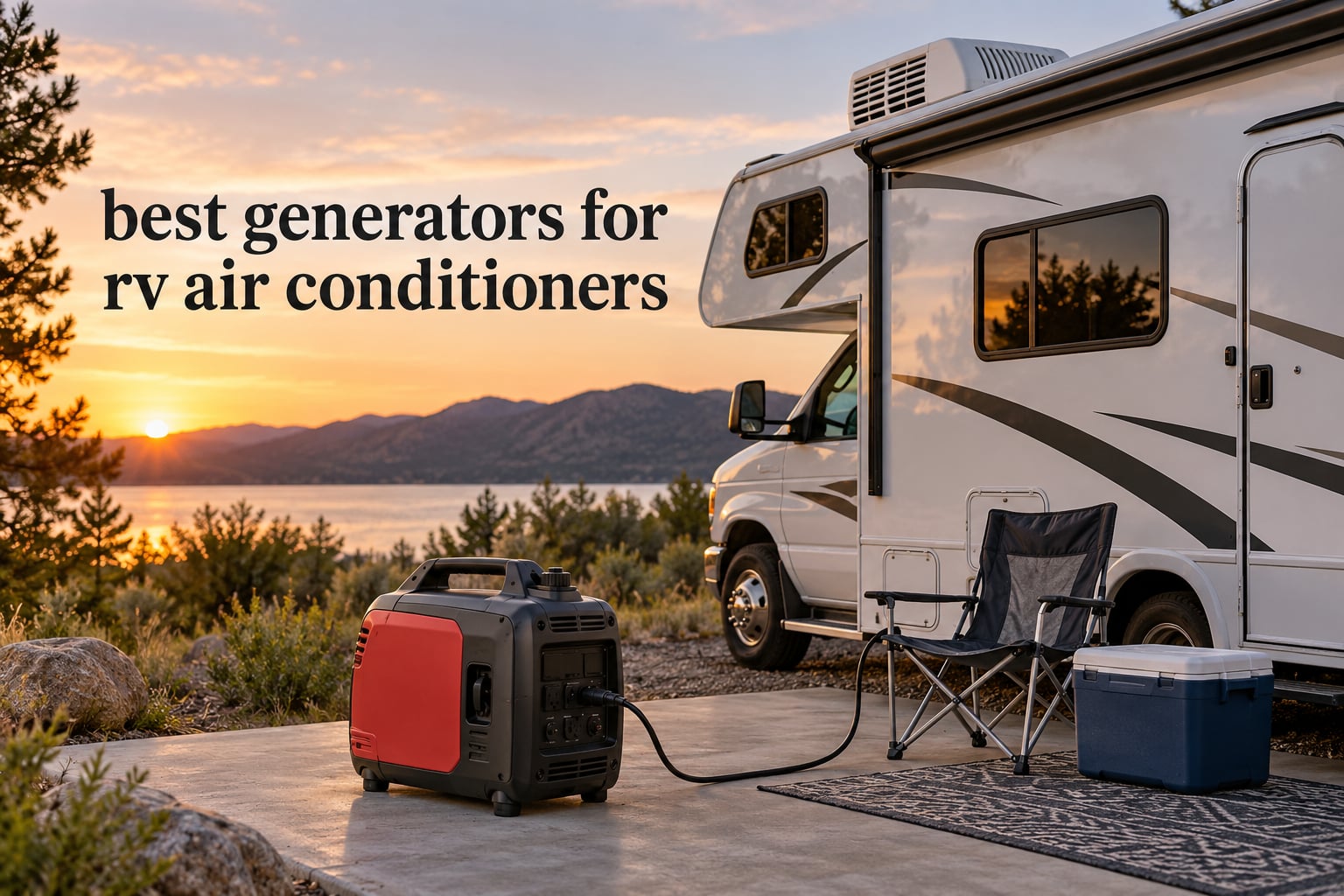
Finding the best generators for RV air conditioners comes down to one number that most spec sheets bury: the startup surge your rooftop compressor demands, not the wattage printed on the box. RVers who shop by nameplate wattage end up with a tripped breaker in the first hour of a July boondock. We went through eight units with published running watts, surge ratings and AC evidence from owners, and ranked them on what actually matters when a 13,500 BTU unit cycles on.
The failure mode is consistent across owner reports. The AC idles at roughly 1,800 watts, which almost any inverter will handle, then the compressor locks the rotor for a second or two and demands close to 2,800 watts. Add a 55 amp converter and a microwave at the same moment and a 2,000 watt unit gives up entirely. That is why every pick below states plainly whether it starts a 13,500 BTU rooftop unit or not.
We also accounted for the things that decide whether a generator survives a real trip: dry weight you can lift into a truck bed, fuel tank size for hours of cooling, a 30 amp RV outlet instead of adapter gymnastics, and measured noise rather than the unloaded figure on the box. If you want the broader category first, our portable generator picks for RV air conditioners covers the lighter duty options too.
Table of Contents
Top 3 Picks for Best Running an RV Air Conditioner in 2026
The three below cover the realistic decisions: the one with the longest owner history for starting a 13,500 BTU unit, the one that stretches a boondocking fuel budget furthest, and the one that puts the most watts into the lightest frame.
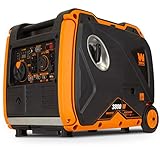
WEN 56380i 3800W Inverter
- 3400 running watts
- Native TT-30R RV outlet
- 99.2 lb dry weight
- Clean inverter output

PowerSmart 3800W Dual Fuel
- 3300 running watts on gas
- Propane and gasoline
- 59 dBA in Eco mode
- 50.7 lb dry weight

Oxseryn 4400W Open Frame
- 3400 running watts
- 4400 peak watts
- Dedicated RV port
- 56 lb dry weight
How Big of a Generator Do You Need to Run an RV Air Conditioner?
A 3,000 to 3,500 watt inverter generator is the practical minimum for a 13,500 BTU rooftop air conditioner, and 4,000 watts or more gives you headroom for lights, a fridge and the battery converter at the same time. Anything below 2,500 watts will start a small 12,000 BTU unit only with a soft-start device, and only for short runs.
The math has three layers. Running watts are what the compressor pulls once it settles, roughly 1,200 to 1,800 watts for most 12,000 and 13,500 BTU rooftop units. Startup surge is the spike at compressor start, measured by owner tests at about 2,800 watts for a 13,500 BTU unit. Locked rotor amperage sits behind that spike and is the figure a generator actually has to survive in the first two seconds.
Then add a 25 percent margin, because a unit running flat out in 100 degree desert heat with a hot radiator is already losing power. That margin is what turns a 3,000 watt machine into a 4,000 watt recommendation, and it is the difference between cooling for an afternoon and cooling until sunset.
12,000 BTU rooftop unit: about 1,200 running watts, roughly 2,400 watts at compressor start, minimum generator 2,500 to 3,000 watts
13,500 BTU rooftop unit: about 1,800 running watts, roughly 2,800 watts at compressor start, minimum generator 3,000 to 3,500 watts
15,000 BTU rooftop unit: about 2,000 running watts, roughly 3,200 watts at compressor start, minimum generator 3,500 to 4,000 watts
Two AC units plus normal RV loads: 5,000 watts and up, or two matched units on a parallel kit
You can run your RV air conditioner off a generator, with one condition: stage the loads. Turn the battery converter off and wait for the charger to drop to float, hold off on the microwave, then let the compressor start on its own. Most generators that would otherwise trip will hold steady if nothing else is drawing hard at that moment. Our general generator buying guide covers the rest of the electrical basics.
Best Generators for RV Air Conditioners at a Glance in 2026
All eight picks below, with the spec that matters most for AC duty in each row. Running watts decide whether the compressor stays running; peak watts decide whether it starts at all.
| Product | Specifications | Action |
|---|---|---|
| WEN 56380i Super Quiet 3800W RV-Ready Inverter |
|
Check Latest Price |
| PowerSmart 3800W Dual Fuel Inverter |
|
Check Latest Price |
 AIVOLT 4300W Inverter RV Generator AIVOLT 4300W Inverter RV Generator |
|
Check Latest Price |
 maXpeedingrods 4000W Inverter with App Monitor maXpeedingrods 4000W Inverter with App Monitor |
|
Check Latest Price |
| Oxseryn 4400W Open Frame Inverter |
|
Check Latest Price |
 Champion 4000W Dual Fuel RV Ready Inverter Champion 4000W Dual Fuel RV Ready Inverter |
|
Check Latest Price |
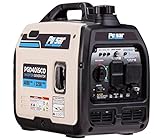 Pulsar PGD40ISCO 4000W Inverter Pulsar PGD40ISCO 4000W Inverter |
|
Check Latest Price |
 Champion 4500W Electric Start Dual Fuel Inverter Champion 4500W Electric Start Dual Fuel Inverter |
|
Check Latest Price |
1. WEN 56380i 3800W Super Quiet Inverter Generator – Best Overall for a 13,500 BTU Rooftop Unit
WEN Super Quiet 3800-Watt RV-Ready Portable Inverter Generator with Fuel Shut-Off and Electric Start (56380i)
- 3400 running watts with a native TT-30R RV receptacle
- 120V and USB outlets alongside the RV socket
- Clean inverter output for sensitive electronics
- Digital load and fuel display
- Fuel shutoff extends engine life
- Tied for the heaviest handling in this group at 99.2 lb
- Gasoline only with no propane capability
- Two-year warranty is shorter than the Champion units
This is the one we would put in the truck bed first. It starts a 13,500 BTU rooftop unit without drama, and once the compressor settles it is drawing roughly 1,800 watts, which leaves most of its 3,400 rated watts free for the converter, the fridge and lights at the same time.
What separates it from the cheaper 4,000 watt options is the outlet. The TT-30R receptacle is molded into the control panel, so there is no adapter between the generator and your RV’s shore power cord. Owners consistently describe the inverter output as clean enough for laptops, phones and CPAP machines without any concern, and the digital load display tells you how close you are to the ceiling before you switch something on.
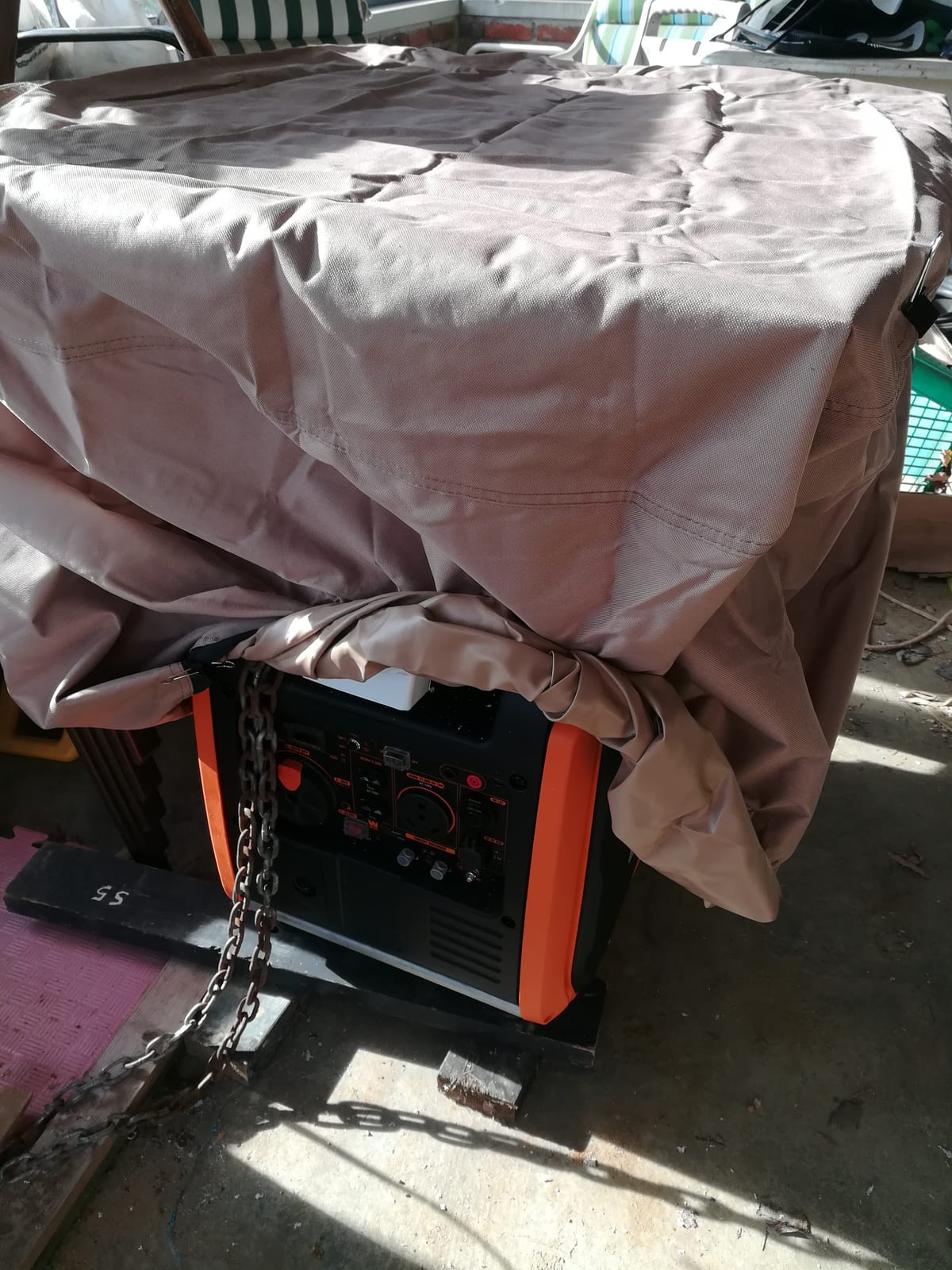
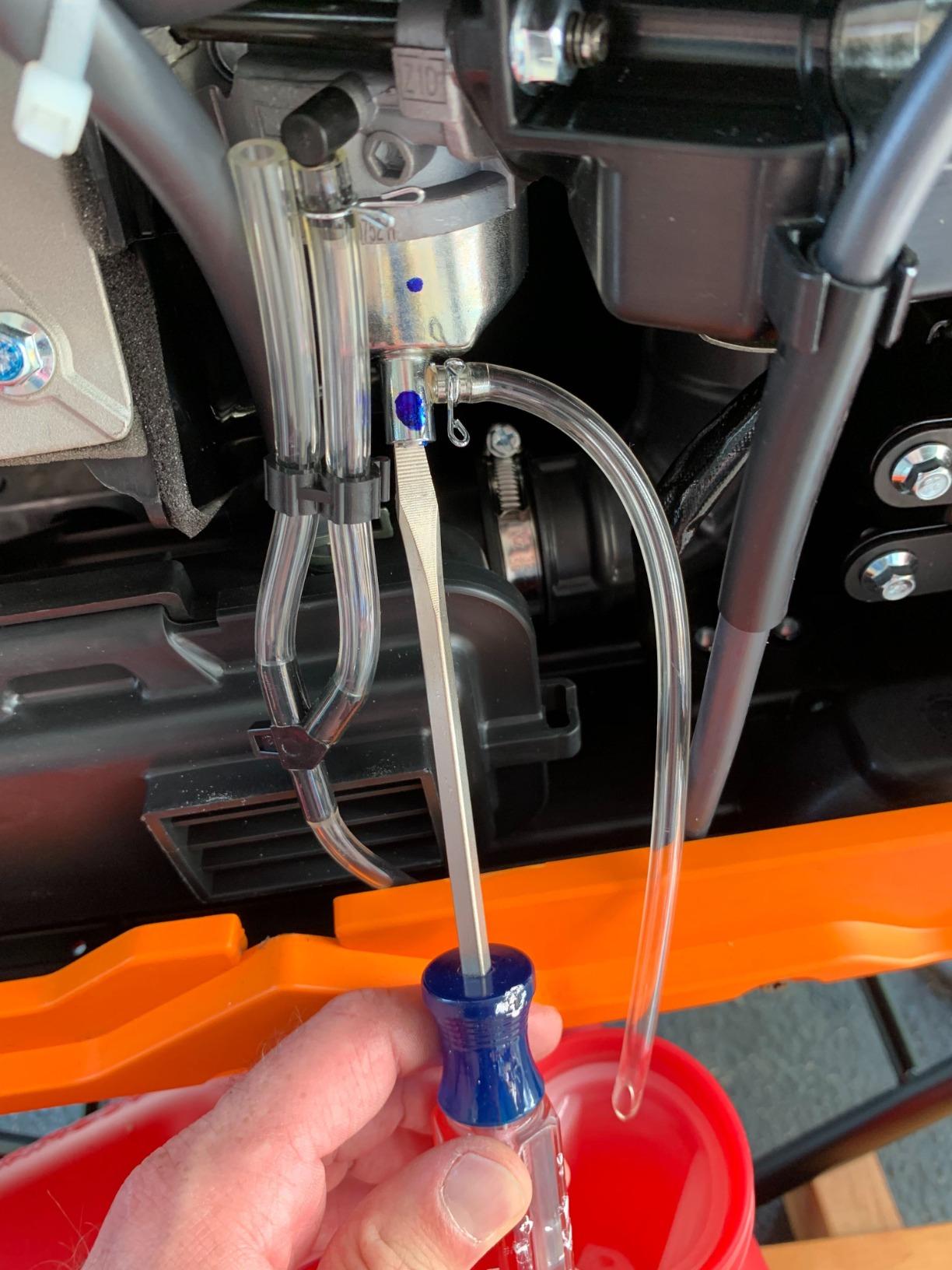
The fuel shutoff is a small detail that matters more than it sounds. Burning the residual fuel in the carburetor at shutdown keeps varnish from forming in an engine that may sit for a week between trips, and combined with the 2.2 gallon tank you get roughly 8 hours at half load, which covers a long afternoon of cooling without a fuel run.
The 212cc four-stroke under the hood is a step up from the 145cc and 149cc engines most of the lighter machines in this group run. Owners report straightforward starts in cool morning air, and the fuel gauge means you are not opening the tank to check.
How much AC headroom do you actually get?
Roughly 1,600 watts of spare capacity with a 13,500 BTU unit running at full blast. That covers a battery converter charging at full output plus a 12V fridge, which is the typical boondocking load stack once the AC is settled. Add a microwave and you should still stage it.
Is 99 pounds a problem to lift?
For anyone with a back issue, yes, and it is the single most repeated complaint in owner reviews. The chassis is steel with a wheel kit, so it rolls well once loaded, but getting it into a truck bed solo is the hard part. Buyers who cannot lift it easily should look at the 50 pound class machines further down this list.
2. PowerSmart 3800W Dual Fuel Inverter Generator – Best Value for Propane Boondocking
- Runs on gasoline or propane for flexible refueling
- 59 dBA in Eco mode at 25 percent load
- Up to 24 hours on a 20 lb propane tank
- 30A L5-30R twist-lock outlet for RV hookup
- CO sensor and low-oil shutdown
- Small 1.3 gallon gas tank for overnight runs
- Recoil start only with no electric or remote start
- Noise climbs noticeably above Eco mode
Yes, this one runs a 13,500 BTU rooftop unit on gasoline, with 3,300 running watts against a compressor that settles around 1,800. That is the number most buyers in this price bracket are missing, and it is why the unit holds the AC up without the low-frequency wobble cheaper open-frame machines show under a motor load.
The real differentiator is fuel choice. Owners running propane report up to 24 hours on a 20 pound tank, which changes the arithmetic of a week-long desert boondock where gasoline storage is the limiting factor. On gasoline the same machine gives about 8 hours at 25 percent load from a 1.3 gallon tank.
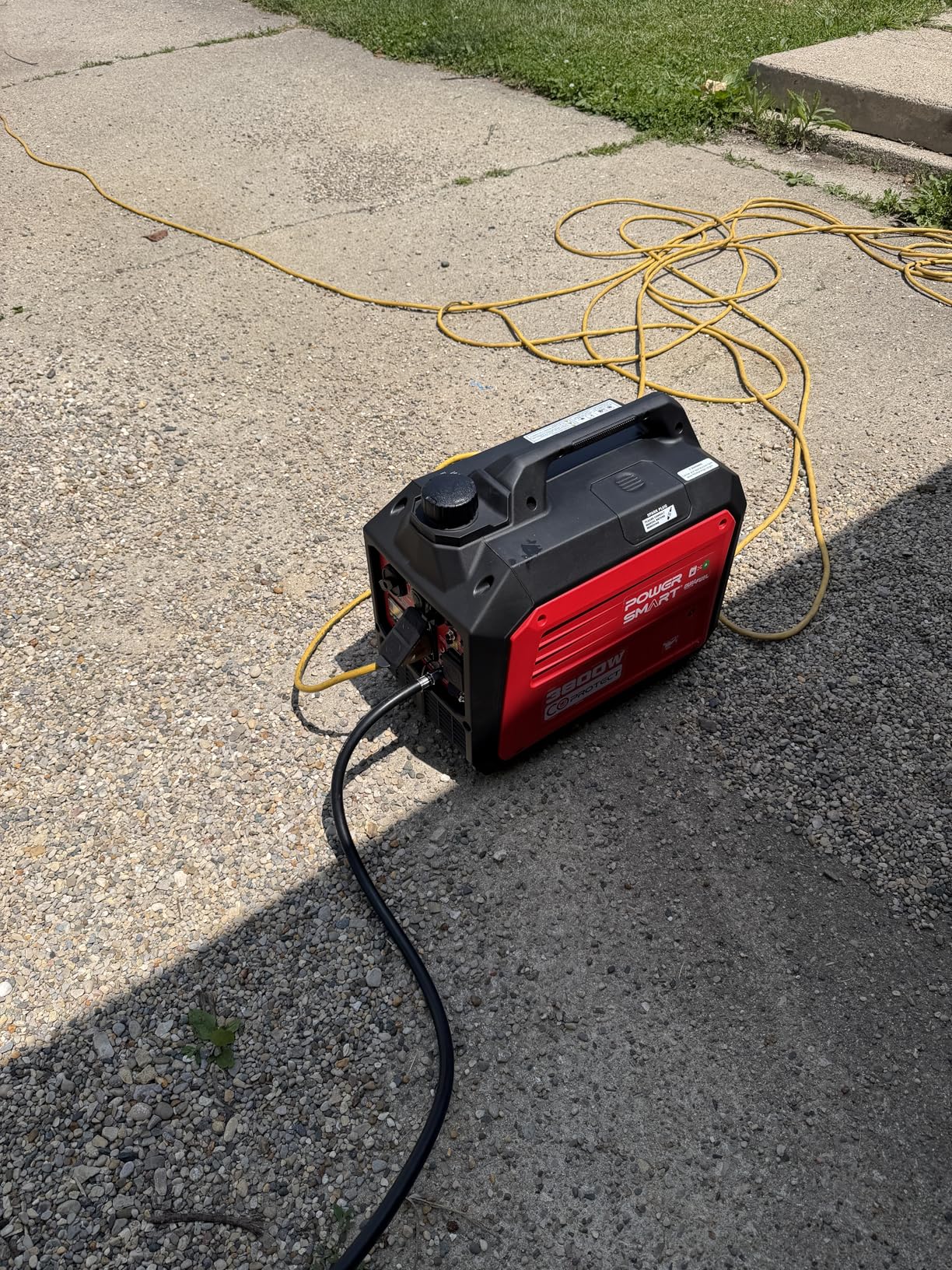
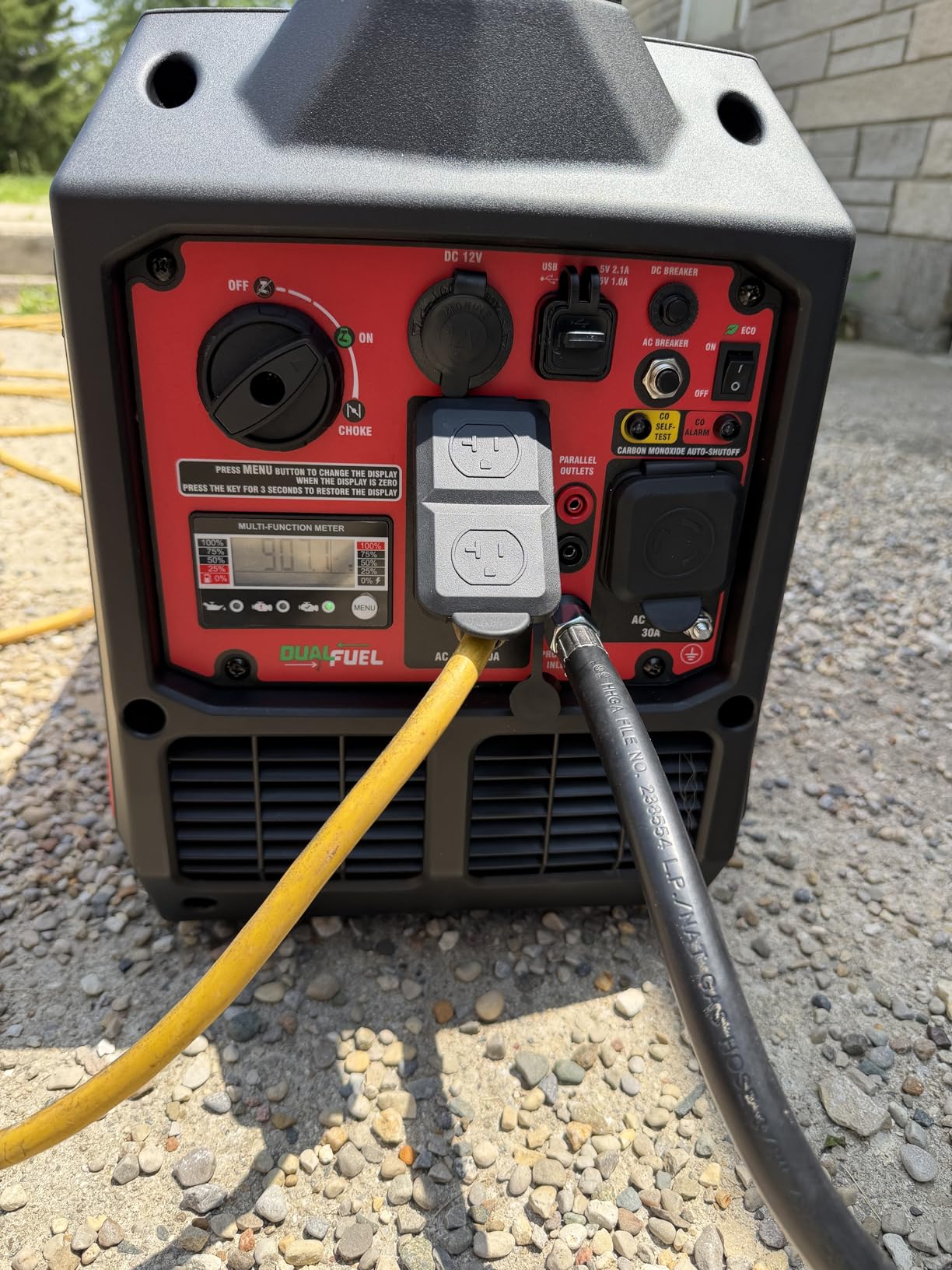
The 30 amp L5-30R twist-lock outlet is the RV connection most people expect from a unit in this class, and it plugs straight into the shore power cord without a separate adapter cable. Power stays clean enough for electronics, which is why some owners run a CPAP machine and laptops off it overnight while the AC cycles.
At 59 dBA in Eco mode the unit stays conversation-friendly, but reviews note the noise climbs sharply once the load climbs out of Eco range. On a rooftop compressor start you will hear it. Inside the rig at 2 AM, it is one of the quieter machines here.
Does propane mode have enough power for the compressor?
On propane the output drops to 3,100 running and 3,500 starting watts. That still clears a 13,500 BTU startup surge of roughly 2,800 watts, though with less margin than gasoline. If you plan to run a 15,000 BTU unit, stay on gasoline or step up a class.
What does the L5-30R outlet mean for your RV?
It is the same 30 amp twist-lock used on most portable generator panels, so your existing shore power cord connects directly. It is not a TT-30 receptacle, which is the older RV-only connector. If your rig has a TT-30 inlet, you need a short adapter, and this generator does not include one.
3. AIVOLT 4300W Inverter Generator – Best for 30 Amp Power in a Light Box
AIVOLT 4300W Inverter Generator Gas Powered Quiet RV Generator for Camping
- 4500 starting and 3450 running watts in a 50.7 lb frame
- 30A locking outlet plus included RV adapter
- Under 3 percent THD for sensitive electronics
- CO Alert auto shutdown with 5-in-1 LCD display
- Lowest 4.1 average rating in the group with a 12 percent one-star share
- Small 0.69 gallon tank limits runtime
- Engine oil not included and parallel kit sold separately
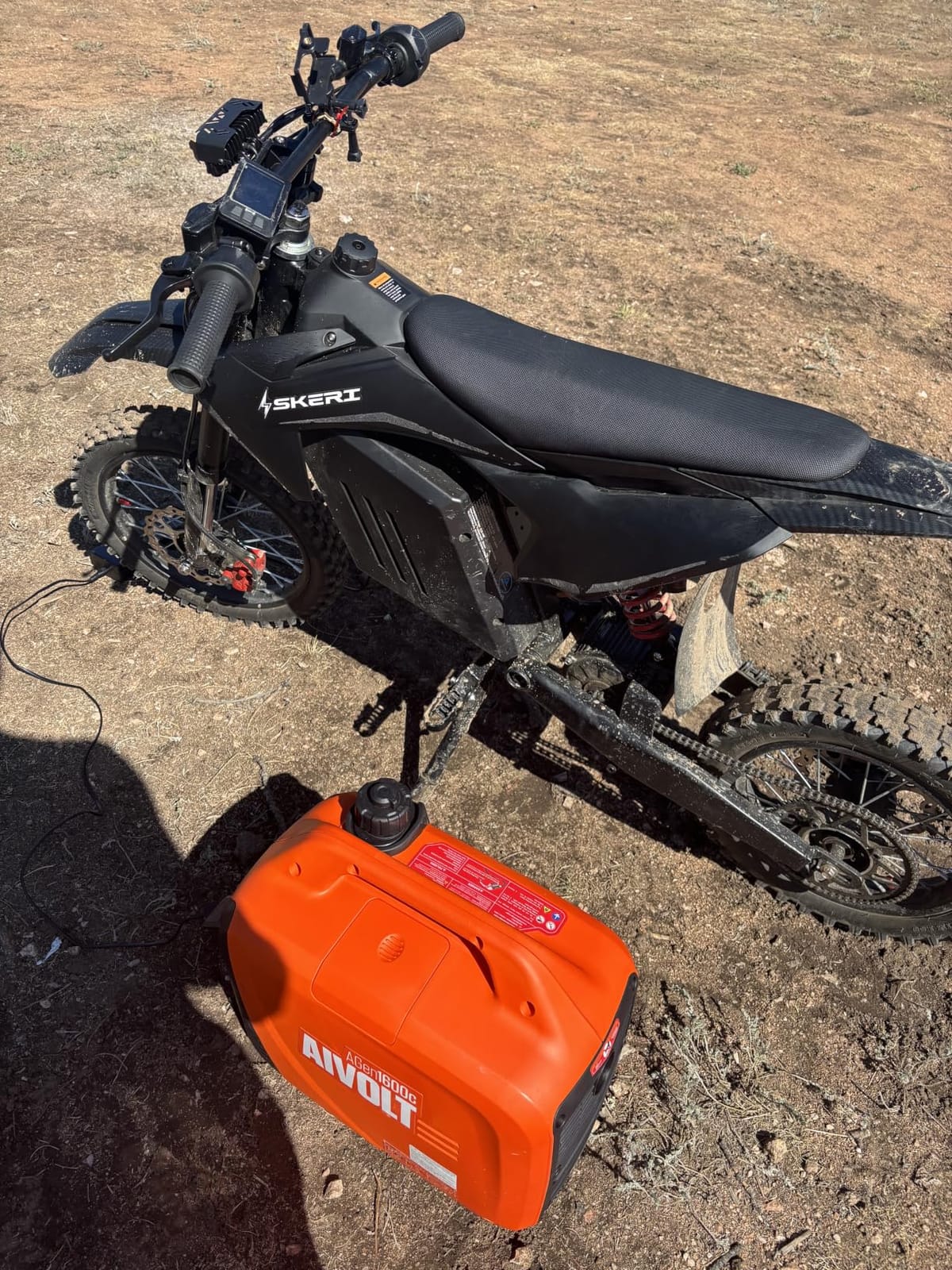
On paper this is the most AC-capable unit per pound in the group. It delivers 4,300 starting watts and 3,450 running watts from a 149cc engine in a 50.7 pound frame, which means a 13,500 BTU rooftop unit starts with about 1,500 watts of surge to spare and still leaves headroom for the converter afterwards.
Output sits below 3 percent total harmonic distortion, so it is safe for laptops, phones and other electronics that struggle on noisy power. The control panel carries a 20A household duplex, a 30A locking outlet, a 12V DC port and USB outputs, and a 30 amp RV adapter is included in the box.
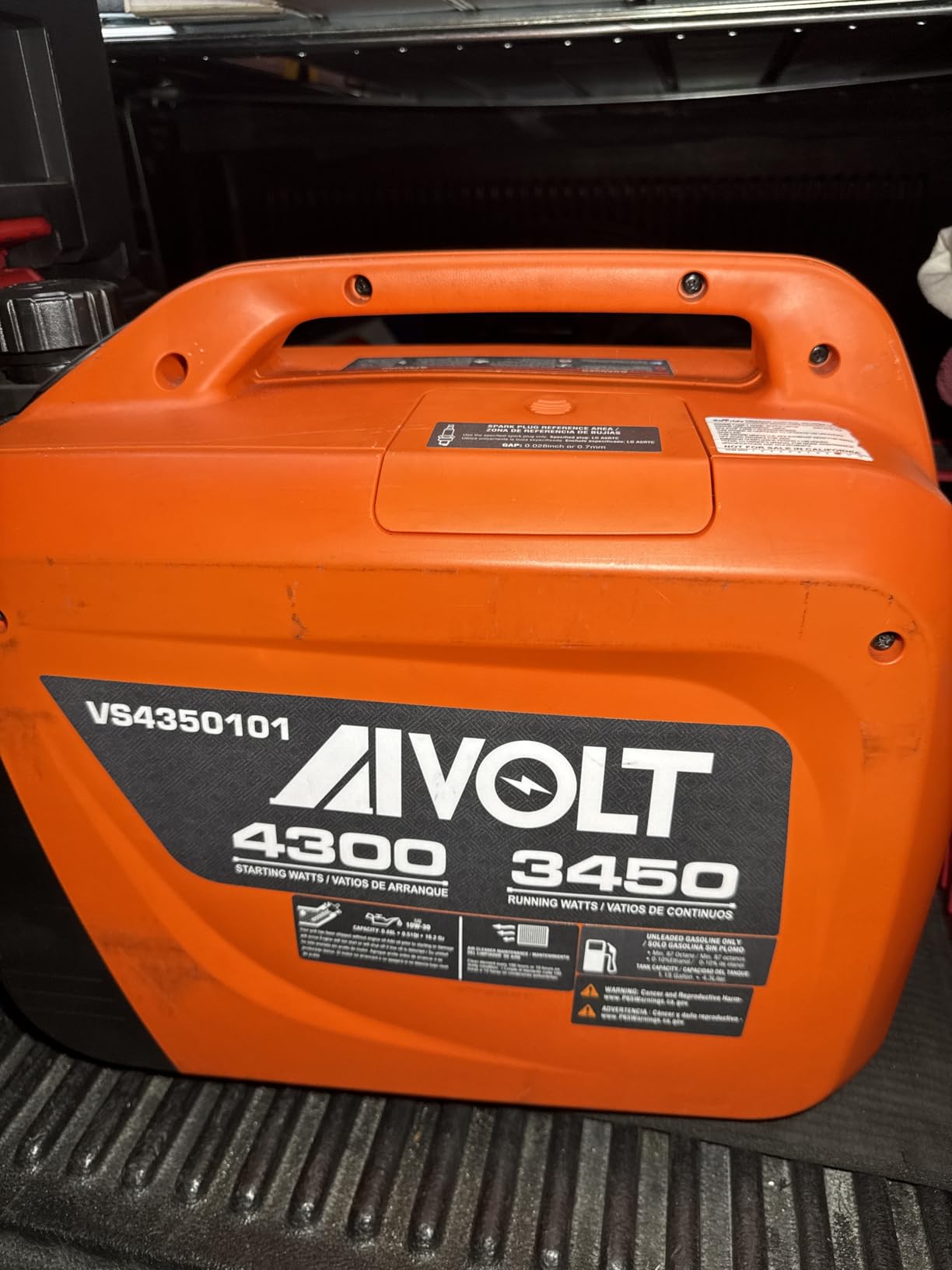
The 60 dBA rating at 23 feet is measured under a light load, so expect more once a compressor is cycling. The 5-in-1 LCD display shows load, fuel and running hours, and CO Alert shuts the engine down if exhaust readings climb, which is the safety feature that matters most at a desert campsite.
The weak point is the fuel tank at 0.69 gallons. Owners report roughly 5.5 hours at 25 percent load, which is fine for an afternoon of cooling and short on a full night without a fuel reserve.
Is the small fuel tank the dealbreaker?
For afternoon boondocks, no. For overnight cooling, yes, unless you carry a reserve can or switch to a unit with a larger tank. Plan one refuel stop into the middle of the day.
What does a 4.1 rating actually tell you?
It tells you quality control is uneven. The one-star share runs about 12 percent here versus single digits for the better-reviewed units, and owners who are happy describe exactly the machine the spec sheet promises. Treat this one as a strong statistical bet rather than a known quantity.
4. maXpeedingrods 4000W Inverter Generator – Best for App Monitoring from the Rig
maXpeedingrods 4000 Watt Inverter Generator, Bluetooth® App Data Monitor
- Only unit here with Bluetooth monitoring of output fuel voltage and hours
- App can toggle Eco mode from a phone
- 48.5 lb dry weight in a compact frame
- Includes parallel cables and an RV outlet adapter
- Recoil start only
- Runtime rating is the weakest in the group
- 13 percent one-star share
- Gasoline only with no propane option
It runs a 13,500 BTU rooftop unit, but with less margin than the leaders: 3,200 running watts against a compressor that settles near 1,800. The surge figure of 4,000 peak watts handles compressor start comfortably, and the remaining headroom covers lights, a small fridge or the converter running at a reduced charge rate.
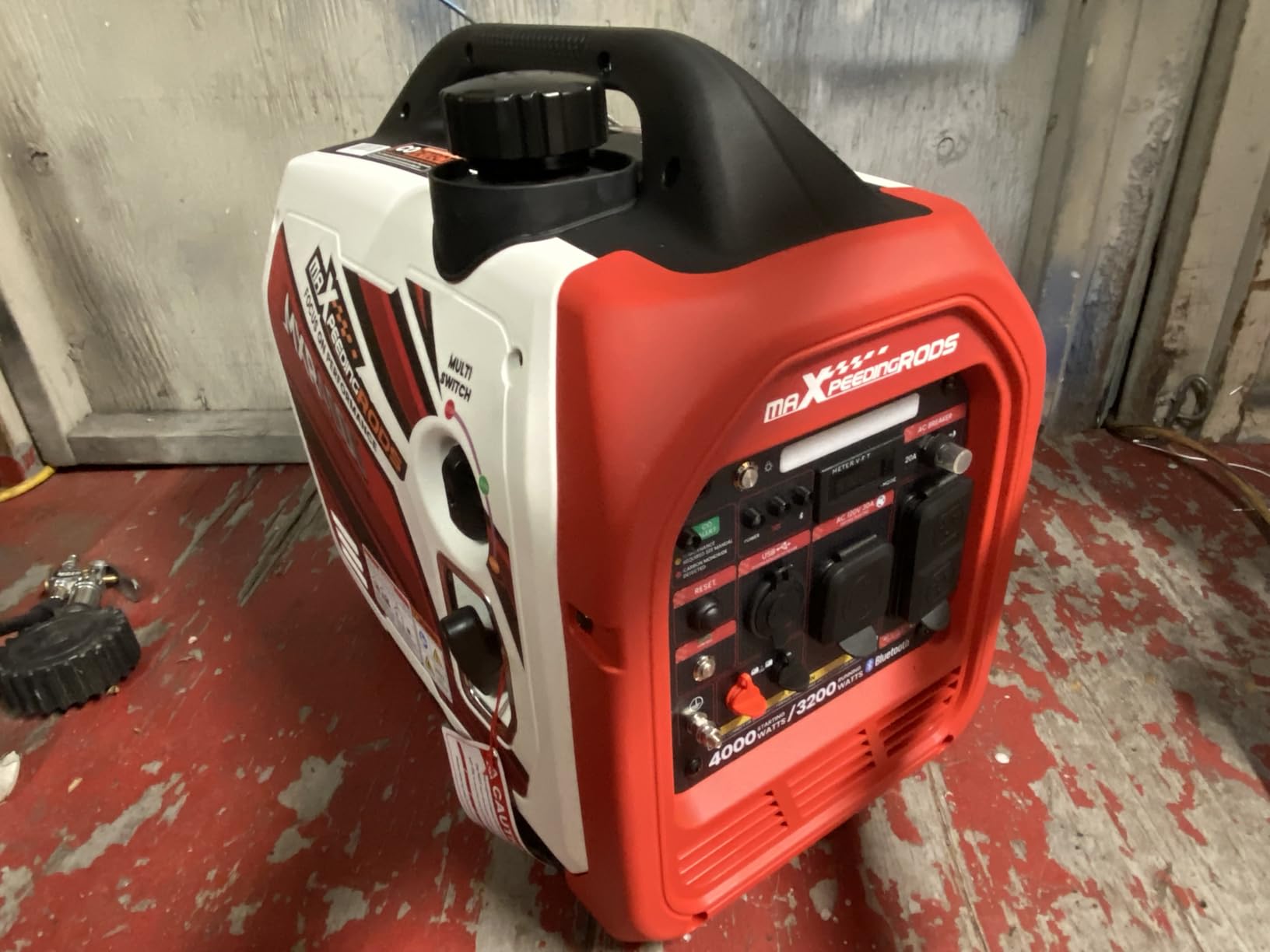
What separates it is the phone app. It reports power output, fuel level, voltage, frequency and cumulative run time, and it lets you switch Eco mode on or off without walking to the machine in the dark. For a generator sitting 30 feet behind the trailer, that convenience has no equivalent on the other units here.
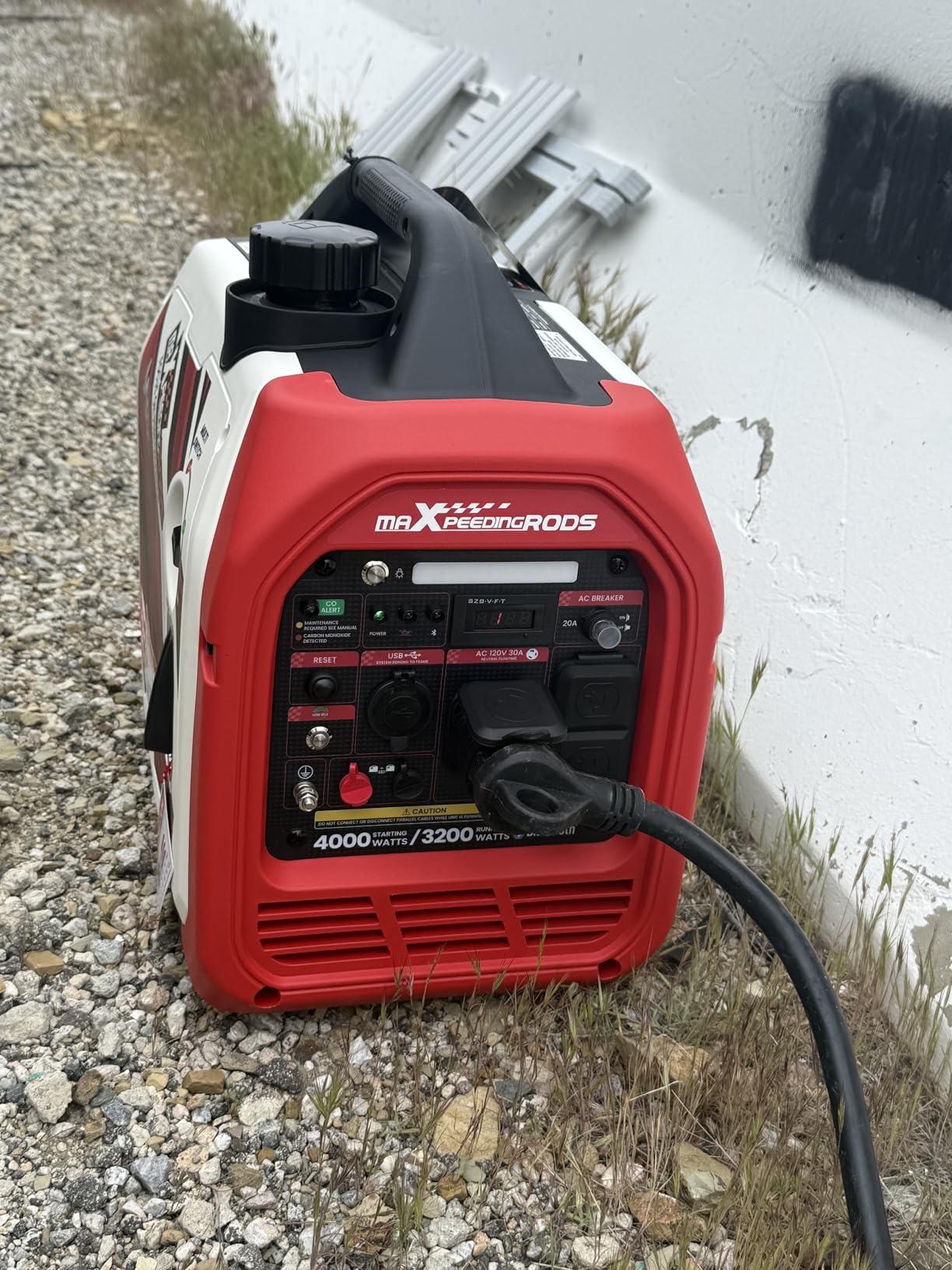
The RV hookup uses a NEMA L5-30R outlet with an adapter included, so a standard 30 amp shore power cord connects without buying an extra cable. Parallel cables ship in the box, which makes pairing with a second matching unit straightforward if you decide to double your output later.
At 48.5 pounds and 18.9 by 12 by 17.3 inches, this is one of the easiest machines here to lift into a truck bed, and the LED lighting on the panel helps at a dark campsite.
Does the app solve a real problem?
It does, mainly overnight. Knowing fuel level and accumulated run time from bed means you stop guessing whether the unit switched itself off on low oil or CO shutoff, which is the most common cause of a wake-up to a hot trailer.
How weak is the runtime rating?
The published figure is the lowest here, against a 4 liter tank that sounds generous. Owners describe it as adequate for daytime AC use rather than overnight running, so treat the tank size as the limit and the runtime claim as a marketing number.
5. Oxseryn 4400W Open Frame Inverter Generator – Best Budget Pick for Full-Time Boondocking
- 4400 peak and 3400 running watts at the entry tier of this roundup
- Up to 14 hours at 25 percent load on a 2 gallon tank
- Dedicated RV port alongside two 120V and one 12V output
- Fuel gauge and low-oil shutdown
- 56 lb dry weight
- Open frame design is louder than enclosed inverter units
- Only a 1-year manufacturer warranty
- Gasoline only
- Older 208cc engine for 4400 peak watts
It starts a 13,500 BTU rooftop unit with room to spare, and it handles a 15,000 BTU unit too. With 3,400 running watts and a 4,400 peak surge figure, this machine delivers output that several machines in higher tiers of this roundup do not reach at all.
The runtime figure is the headline here: up to 14 hours at 25 percent load from a 2 gallon tank with Eco mode on. Pair that tank size with that number and it is the reason full-time boondockers gravitate to this unit. The fuel gauge on the panel lets you check without opening the tank.
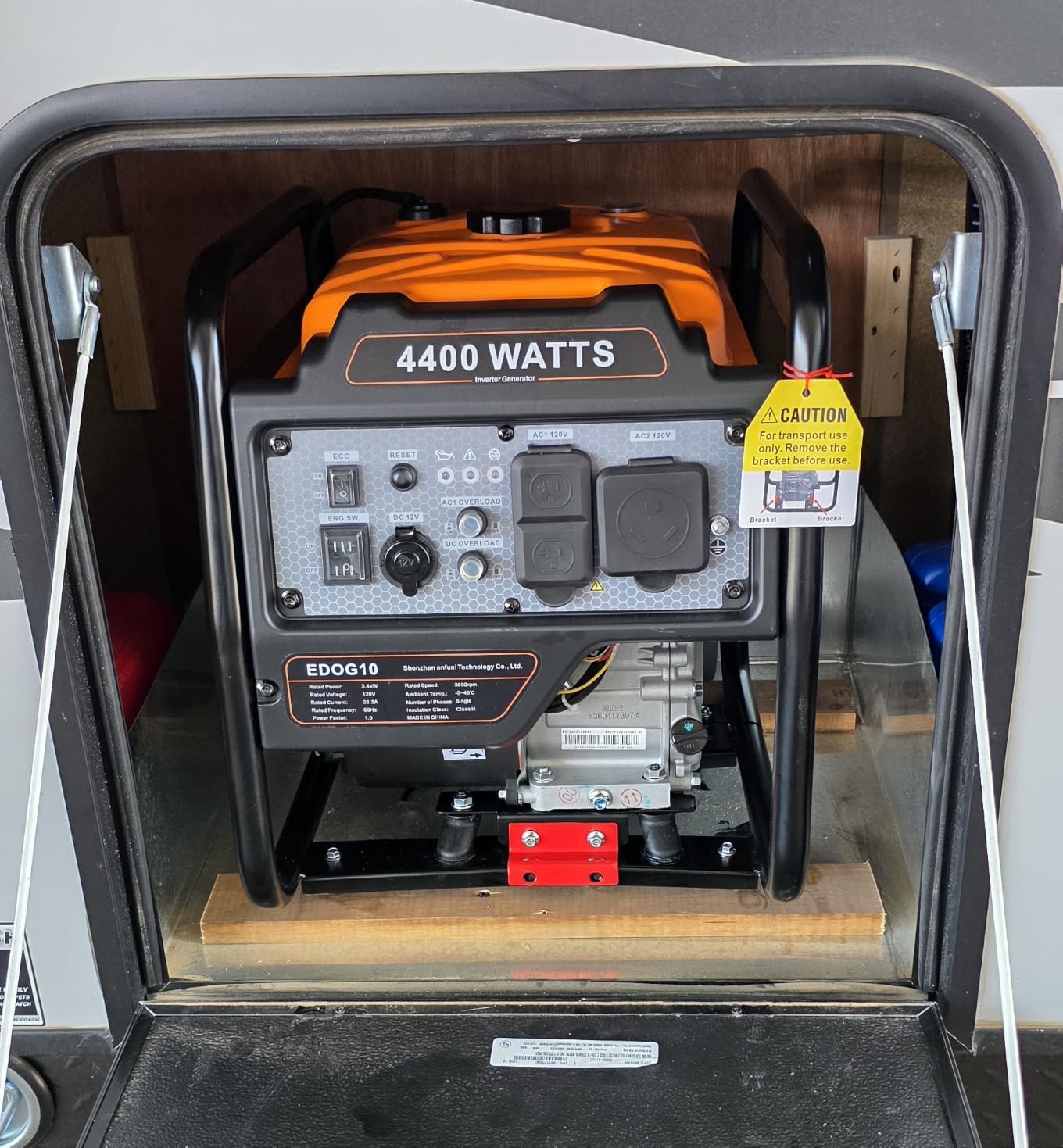
Outputs include two 120V AC ports, a 12V DC port and a dedicated RV port, so an RV shore power cord connects without an adapter. Low-oil shutdown and cold-start technology are both present, which matters if you start the machine at dawn in October.
The open frame is the trade. There is no acoustic enclosure, so the manufacturer rate is under 72 dBA at 23 feet, and that is with a light load. Sleep with it running four feet from the bed and you will hear every cycle.
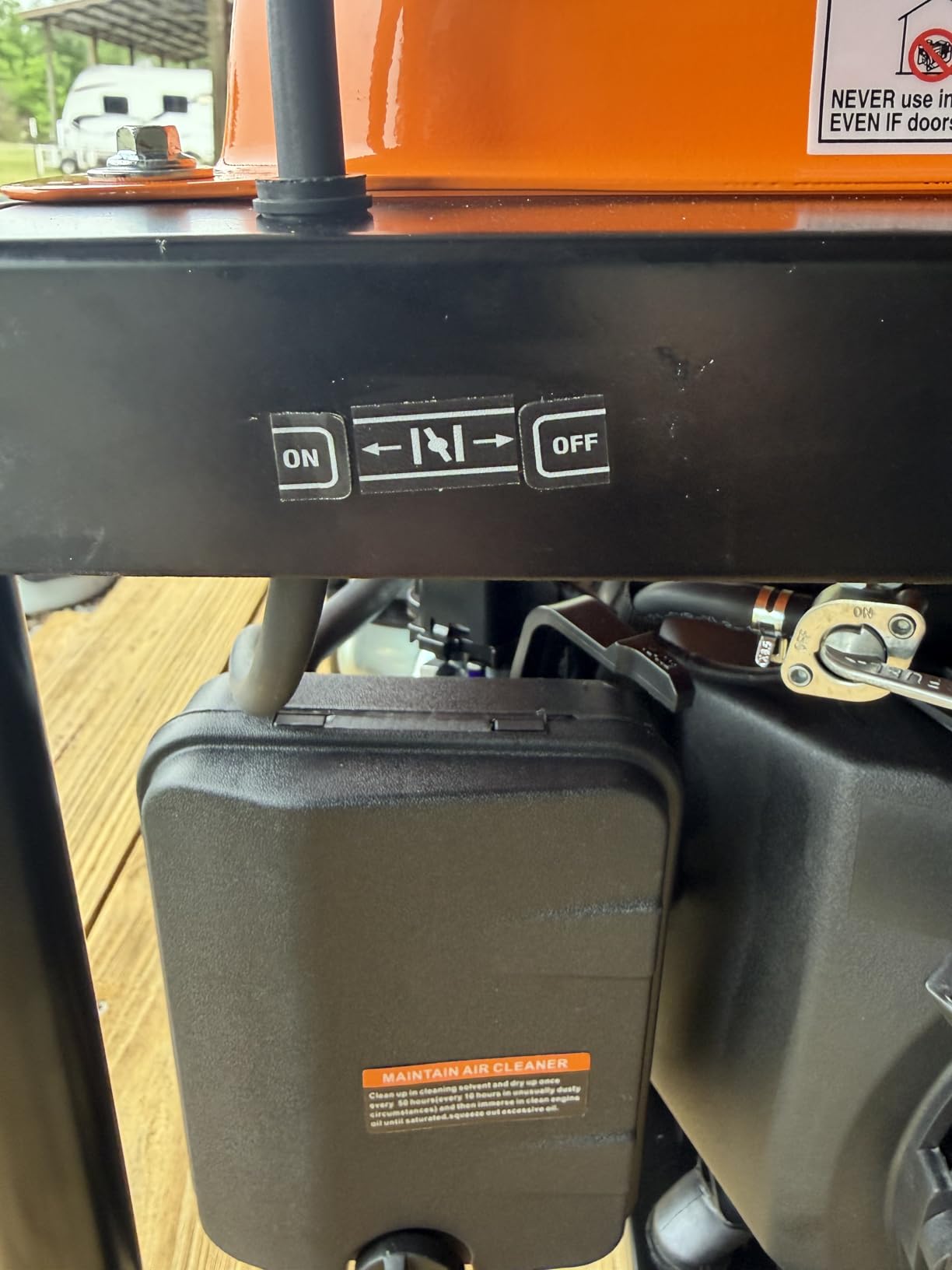
Is open frame noise a dealbreaker for sleeping?
At a distance it is acceptable. Beside the trailer or under a bed it is not, and that is why we did not make this the top pick. Campground quiet hours matter less once the sun goes down.
What does a one-year warranty mean for you?
It means less coverage than the three-year terms carried by the Champion units, which matters if the engine develops a fault in the second season. Read the terms before assuming the first year is representative of the whole relationship.
6. Champion 4000W Dual Fuel RV Ready Inverter Generator – Best for Proven RV Air Conditioner Duty
Champion 4000-Watt Dual Fuel RV Ready Portable Inverter Generator
- Multiple long-term owners ran 15000 BTU rooftop units on it for days
- Up to 10 hours on gasoline or 25 hours on propane
- TT-30R RV outlet plus 20A duplex and 12V outlets
- Overload reset instead of shutdown
- 3-year warranty
- Running watts drop to 2700 on propane
- Louder than Champion's smaller models at 64 dBA
- Recoil start only
- May need a gasoline break-in run before propane works
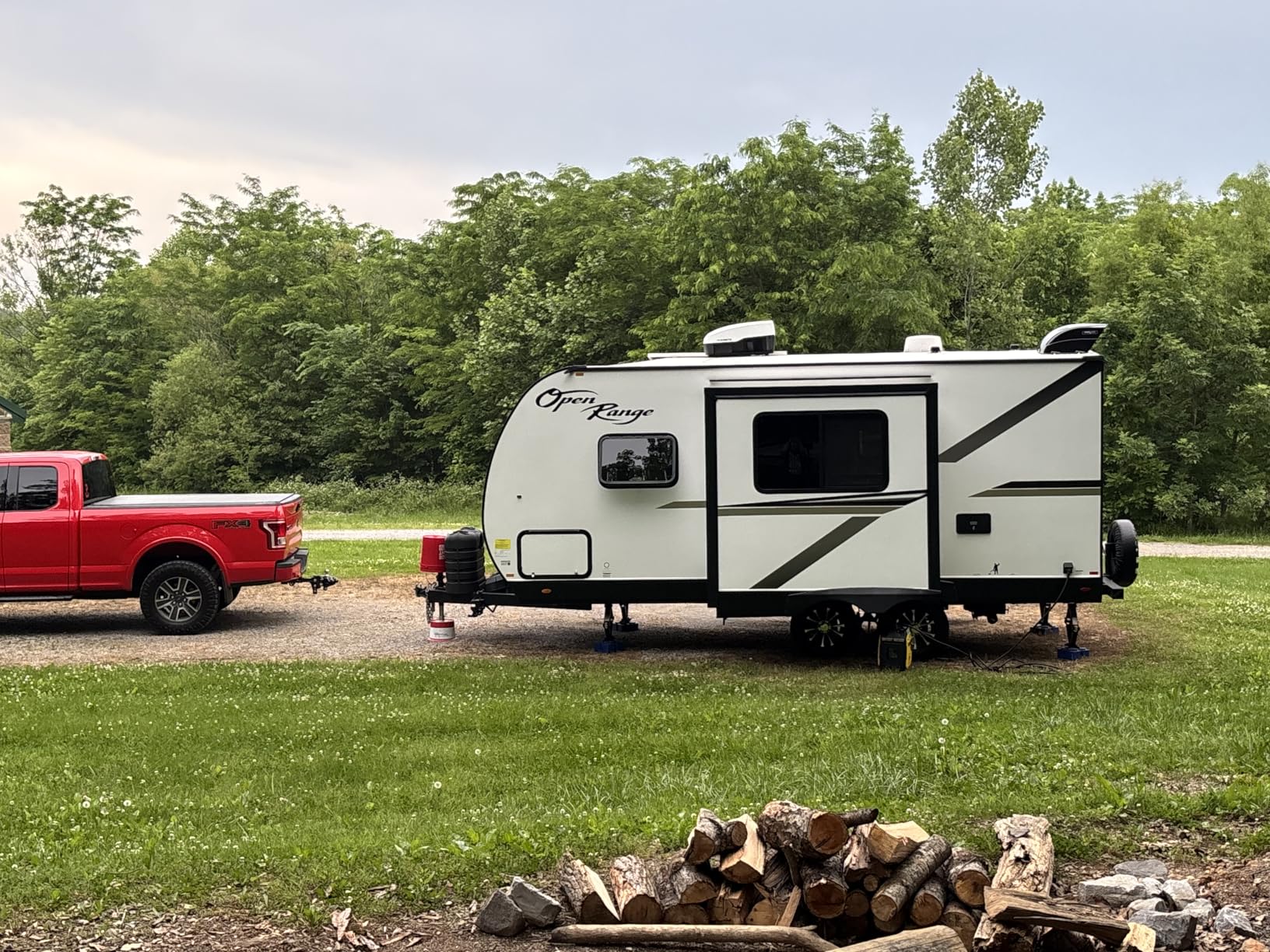
This is the pick with the longest body of owner evidence for air conditioner work specifically. Several owners report running Dometic 15,000 BTU rooftop units continuously for days on it alongside lights and a 12V RV fridge, which is harder evidence than any spec sheet.
On gasoline you get 3,000 running watts and 4,000 starting watts, which clears a 13,500 BTU startup surge of roughly 2,800 watts with margin. On propane the running figure drops to 2,700, which still works for a 13,500 BTU unit but leaves little room for the converter at the same time.
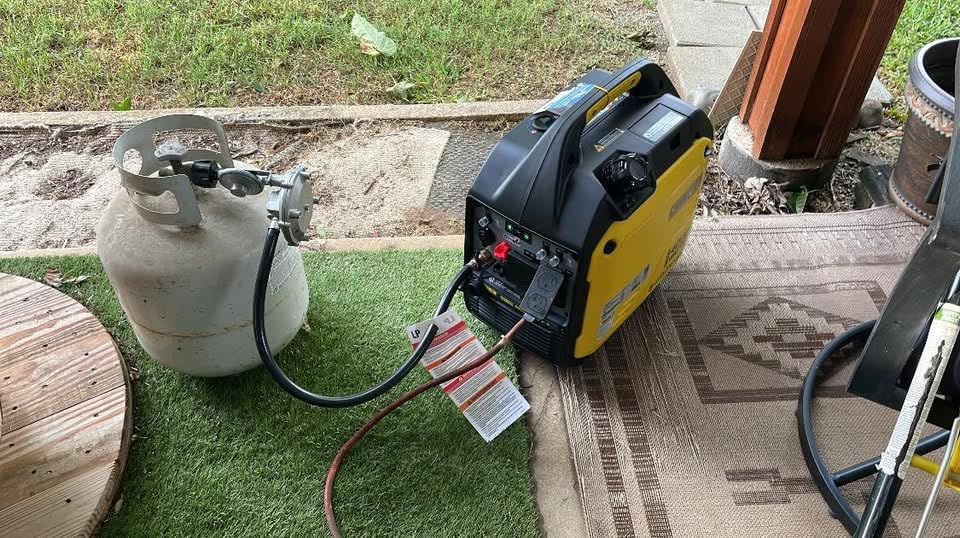
The outlet layout is the most RV-correct here: a 25 amp TT-30R receptacle, a 20 amp household duplex and a 12V automotive outlet. No adapter needed for a TT-30 inlet, and the parallel kit sold separately pairs it with another Parallel Ready Champion inverter or a power station.
One underappreciated feature is the overload reset button. Instead of killing the engine when a load spikes, the unit resets and keeps running, which is precisely the behaviour you want when a compressor kicks in unexpectedly.
Does the propane derate hurt AC starting?
At 2,700 running watts on propane the margin over a 1,800 watt compressor draw is about 900 watts. That is enough for a 13,500 BTU unit and not enough for a 15,000 BTU unit plus a converter. Run propane for long stretches, gasoline when you need cooling.
Is recoil starting a problem every morning?
Owners describe easy one-pull starts on a warm engine and report the unit needing a gasoline run before it will fire on propane out of the box. Budget one break-in cycle on the first trip and the daily routine is fine.
7. Pulsar PGD40ISCO 4000W Inverter Generator – Best for the Lightest Carry Weight
Pulsar PGD40ISCO Ultra Light Quiet 4000W Portable Gas Inverter Generator, white
- Manufacturer rates it for air conditioning units up to 13500 BTU
- Lightest unit here at 47.3 lb
- 59 dBA operating level
- Parallel ready for doubled output
- 3-year limited warranty
- Small fuel tank at 1 gallon for about 4 hours at half load
- Gasoline only with no dual fuel option
- No electric or remote start listed
Yes, this one runs a 13,500 BTU rooftop unit. The manufacturer rates the machine for air conditioning units up to 13,500 BTU, and the numbers back that up: 3,200 running watts against a compressor that settles near 1,800, with 4,000 peak watts for the start.
At 47.3 pounds it is the lightest machine in this roundup by a clear margin, and the 18.9 by 11.4 by 17.3 inch footprint is small enough for a truck camper compartment. For anyone who has hauled a 99 pound unit up a ramp too many times, that is the deciding factor.
The 59 dBA operating level keeps it among the quieter machines here, and it is parallel ready if you decide later that one unit is not enough for a second AC zone. A 3-year limited warranty is longer than most of the open-frame competition.
Running on gasoline only, it is a simpler machine than the dual-fuel Champions, and owners who switch to it from a propane setup do note the loss of that flexibility.
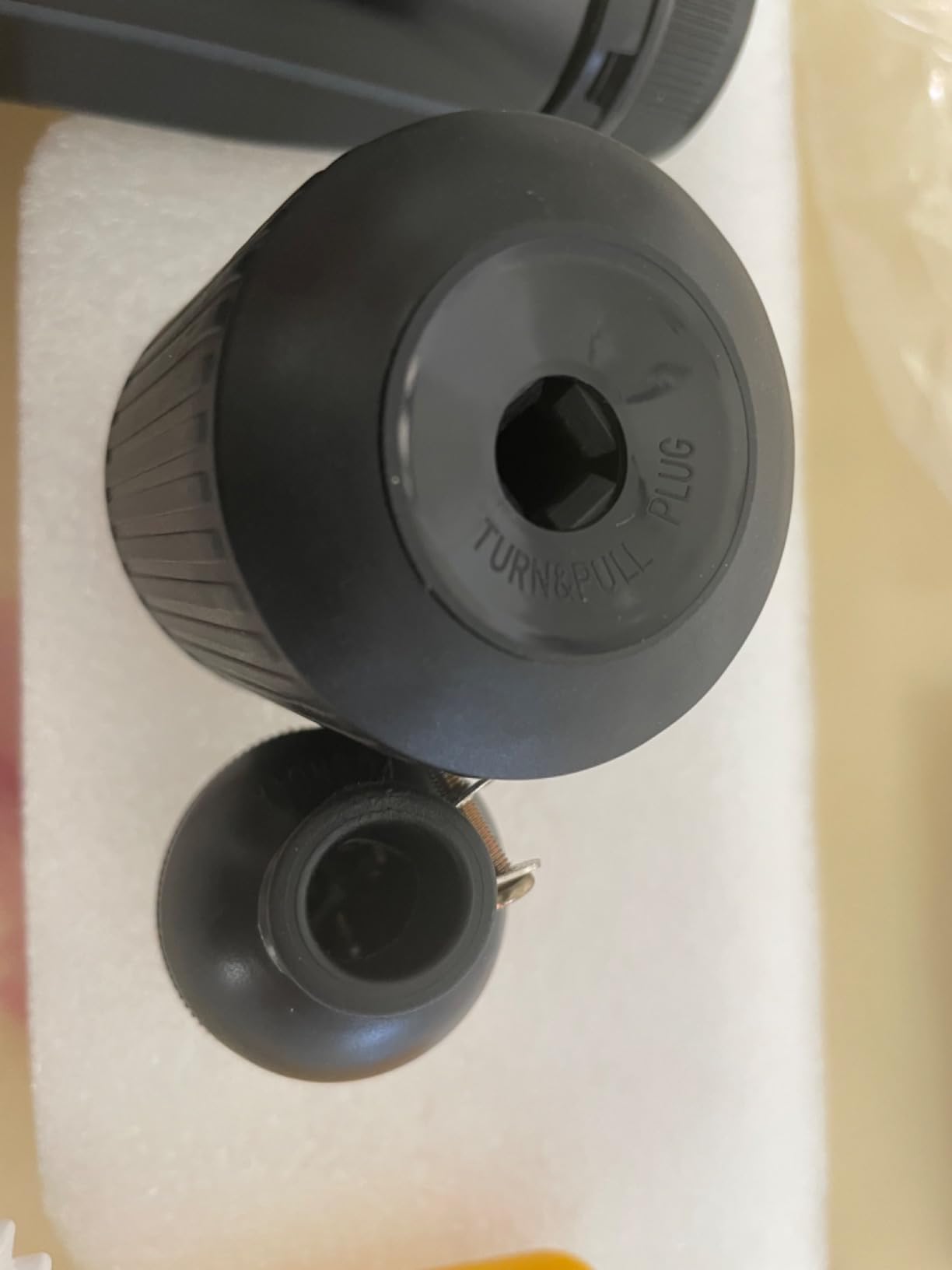
Is 47 pounds a real advantage on the ground?
It is the whole reason to pick this unit. A generator you can lift one-handed gets used more often, and a machine you dread unloading tends to sit in the garage while you cook through a heat wave instead of running the AC.
Four hours on a gallon, is that enough?
It covers an afternoon of cooling with a reserve left in the tank. For overnight running you would refill in the evening or carry a can. Set the RV AC to cycle rather than run continuously and the total hours stretch noticeably.
8. Champion 4500W Electric Start Dual Fuel Inverter Generator – Best for Bigger AC Units and Two-Zone Comfort
Champion 4500-Watt Electric Start Dual Fuel Portable Inverter Generator
- Highest output here at 4500 starting and 3500 running watts
- Electric start with an EZ Start dial instead of a pull cord
- Up to 14 hours on gasoline or 21 hours on propane
- 61 dBA quiet operation
- Intelligauge power meter tracks voltage and hours
- Tied for the heaviest unit here at 99.2 lb
- Running watts drop to 3150 on propane
- Parallel kit sold separately
- Setup requires adding oil and connecting the propane hose
This is the machine to buy if you have a 15,000 BTU rooftop unit, or a 13,500 BTU unit plus a battery converter running while you cool. At 4,500 starting watts and 3,500 running watts it delivers the highest continuous output in this roundup, with real buffer above the AC load rather than a few hundred watts of margin.
Electric start with the EZ Start dial is the feature owners notice most after the first week. No pull cord and no arm fatigue at 6 AM in the desert.
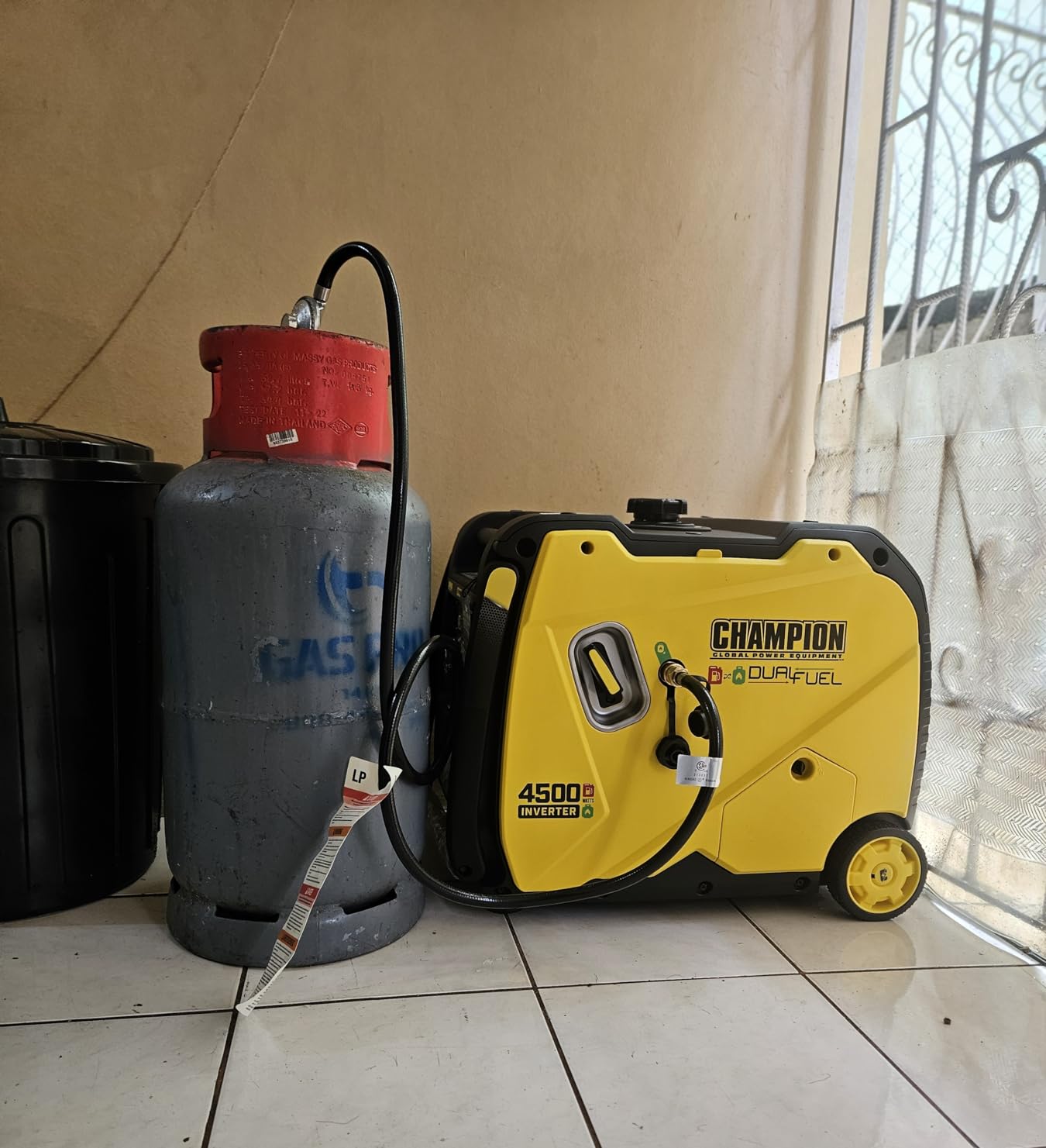
The Intelligauge with power meter tracks voltage, frequency and operating hours, which tells you whether the compressor start is pulling clean power or whether something is dragging the unit down. Runtime is up to 14 hours on gasoline from a 2.25 gallon tank and up to 21 hours on propane.
At 61 dBA it stays inside campground and national forest quiet hours while delivering more output than anything else here, which is the combination no other unit in this roundup matches.
Does electric start earn its place?
If you start the generator more than once a day, yes, and the difference is larger than it sounds. You start it from a standing position beside the control panel rather than crouching with a pull cord next to a hot exhaust.
Is 99 pounds the dealbreaker?
For most full-time boondockers who already have a wheel kit, no. For an older couple lifting a generator into a truck bed alone, it rules the unit out. The 47 pound options cover that case better than any amount of wattage.
How to Choose a Generator for an RV Air Conditioner?
The picking process comes down to four decisions in order: identify your AC unit, check the compressor current, add surge headroom, then add a margin for heat and altitude. Everything else, outlet type and fuel choice, is preference.
What size generator do you need for a 13500 BTU RV air conditioner?
Use the list earlier in this article: roughly 1,800 running watts, roughly 2,800 watts at compressor start, and a minimum generator of 3,000 to 3,500 watts. Add 25 percent for desert heat and altitude, which pushes a safe recommendation to the 4,000 watt class.
If you cannot find your unit’s BTU rating, open the exterior condenser panel on the rooftop unit and look for the data plate. It also carries the full load current, which is the number you actually need.
How many amps does a 13500 BTU RV air conditioner pull?
On a 120 volt circuit a 13,500 BTU rooftop unit typically pulls 12 to 16 amps running, and the locked rotor surge during compressor start is considerably higher for a second or two. A 30 amp circuit has headroom for it, a 20 amp circuit is tight, and that is why a 30 amp outlet is worth paying attention to.
Will a 2200 watt generator run an RV air conditioner?
Sometimes, and not reliably. A 2,200 watt inverter can sometimes carry a 13,500 BTU unit once it has started, but the startup surge leaves almost no margin and the engine will bog or trip on a hot day. Owners report the same stumble repeatedly: the unit works until the compressor cycles again.
Two matched 2,200 watt machines on a genuine parallel kit are the budget alternative. Parallel operation requires matched models and the correct kit; improvised jumper cables will not do it. Our boondocking generator roundup covers the units that pair properly.
Soft start: the cheaper fix for an undersized generator
A soft start device is a relay that ramps current into the compressor over a couple of seconds instead of slamming the full load on at once. That removes most of the locked rotor spike, and owners who installed one report the generator no longer stumbles at compressor start.
Size it by the compressor full load current on the data plate, not by the BTU number. Typically a 10 amp rated soft start covers a 12,000 BTU unit, and a 16 amp rated unit covers 13,500 to 15,000 BTU. It is a small part that adds capability to a generator you already own.
Inverter versus conventional open frame
Inverter generators use a smaller engine that varies its speed to the load, which produces lower noise, better fuel economy and cleaner output below 3 percent total harmonic distortion. Conventional open frame units run at full speed and cost less per watt.
For an air conditioner the inverter advantage is mostly noise and stability, since a motor load is handled acceptably by either. For electronics, CPAP machines and laptops, the inverter is worth the money.
Load shedding: why the compressor trips the breaker
Stage the loads. Turn the battery converter off first and wait for the charger to drop to float, then hold off on the microwave, coffee maker and hair dryer. Let the compressor start alone, then bring everything else back one at a time.
On a hot day the radiator is working harder and the engine has less to give, which is exactly when a marginal generator trips. Two more rules help: never refill a hot tank, and give the engine a couple of minutes at idle before switching on AC demand.
Parallel operation with two small units
Two matched parallel-ready machines can double your output, and many owners use that as the cheaper path to running AC. Start each one before connecting the load. Mismatched models share power unevenly and trip under load.
What RV-ready means and why the TT-30 outlet matters
RV-ready describes a generator with a wheel kit, a folding handle and a dedicated 30 amp receptacle on the control panel, so it connects to an RV shore power cord without an adapter. Some units fit a TT-30R, some fit an L5-30R twist-lock, and the two are not the same connector.
Check which one your RV inlet uses before buying. An adapter solves the mismatch in a few seconds, but buying the right receptacle saves the annoyance entirely.
Carbon monoxide and campsite safety
Run the generator outdoors, at least 20 feet from the rig, with the exhaust pointing away from open windows, awnings and slide-outs. Never run it inside a compartment or under an awning, and never in a garage or enclosed space.
Prefer a unit with a CO sensor and automatic shutdown; four of the eight here have one. Altitude also matters: gasoline engines lose roughly 3 percent of rated power per 1,000 feet, so a 4,000 watt unit in the Rockies behaves like a much smaller machine. A high desert boondock needs the same headroom as a hot one.
If the noise and fuel logistics of a generator are not for you, a room air conditioner and a solid battery bank cover part of the same need. Our picks for portable air conditioners for large rooms and for apartments cover the plug-in side of that comparison.
Frequently Asked Questions
How big of a generator do I need to run RV AC?
A 3,000 to 3,500 watt inverter generator is the practical minimum for a 13,500 BTU rooftop air conditioner, and 4,000 watts gives you headroom for lights, a fridge and the battery converter. Add a soft start device if you want to try a smaller unit.
Will a 2200 watt generator run an RV air conditioner?
Sometimes, but not reliably. A 2,200 watt inverter may carry a 13,500 BTU unit after it has started, yet the startup surge leaves almost no margin, so the engine bogs or trips on a hot day. Two matched 2,200 watt units on a parallel kit are a better budget path.
How many amps does a 13500 BTU RV air conditioner pull?
A 13,500 BTU rooftop unit typically pulls 12 to 16 amps on a 120 volt circuit while running, and locked rotor amps surge higher for a second or two at compressor start. That is why a 30 amp outlet gives real headroom and a 20 amp circuit is tight.
How many amps does RV AC use with soft start?
With a soft start relay installed, the compressor current ramps in over a few seconds instead of arriving as a single locked rotor spike. The steady running draw does not change, but the startup peak drops enough that a smaller generator often stops boggling down.
What size soft start do I need for my AC?
Match the soft start to the compressor full load current listed on the rooftop unit data plate rather than to the BTU rating. Typically a 10 amp rated soft start covers a 12,000 BTU unit and a 16 amp rated unit covers 13,500 to 15,000 BTU rooftop units.
Can I run my RV air conditioner and microwave on the same generator?
Only if the combined load stays under the running wattage, and you stage the start. Turn the battery converter off, let it reach float, start the AC compressor on its own, then bring the microwave back a few seconds later.
Which Generator Should You Buy for Your RV Air Conditioner?
For most rigs running a 13,500 BTU rooftop unit, the WEN 56380i is the pick. It is the strongest combination of rating and owner history in this group, with 3,400 running watts, a native TT-30R outlet and 2,459 reviews behind it. Our full comparison of the best generators for RV air conditioners is worth a second look if you are weighing a lighter alternative.
If you need propane flexibility for long desert boondocks, the PowerSmart 3800W gives you 24 hours on a 20 pound tank at roughly half the weight of the WEN. If you have a 15,000 BTU unit or run the converter alongside, the Champion 4500W is the only one here with real headroom. And if lifting a generator up a ramp is the deciding factor, the 47 pound Pulsar gets the job done in a package you can carry with one hand.
Whichever you pick, test it at home with the AC running before the trip.