
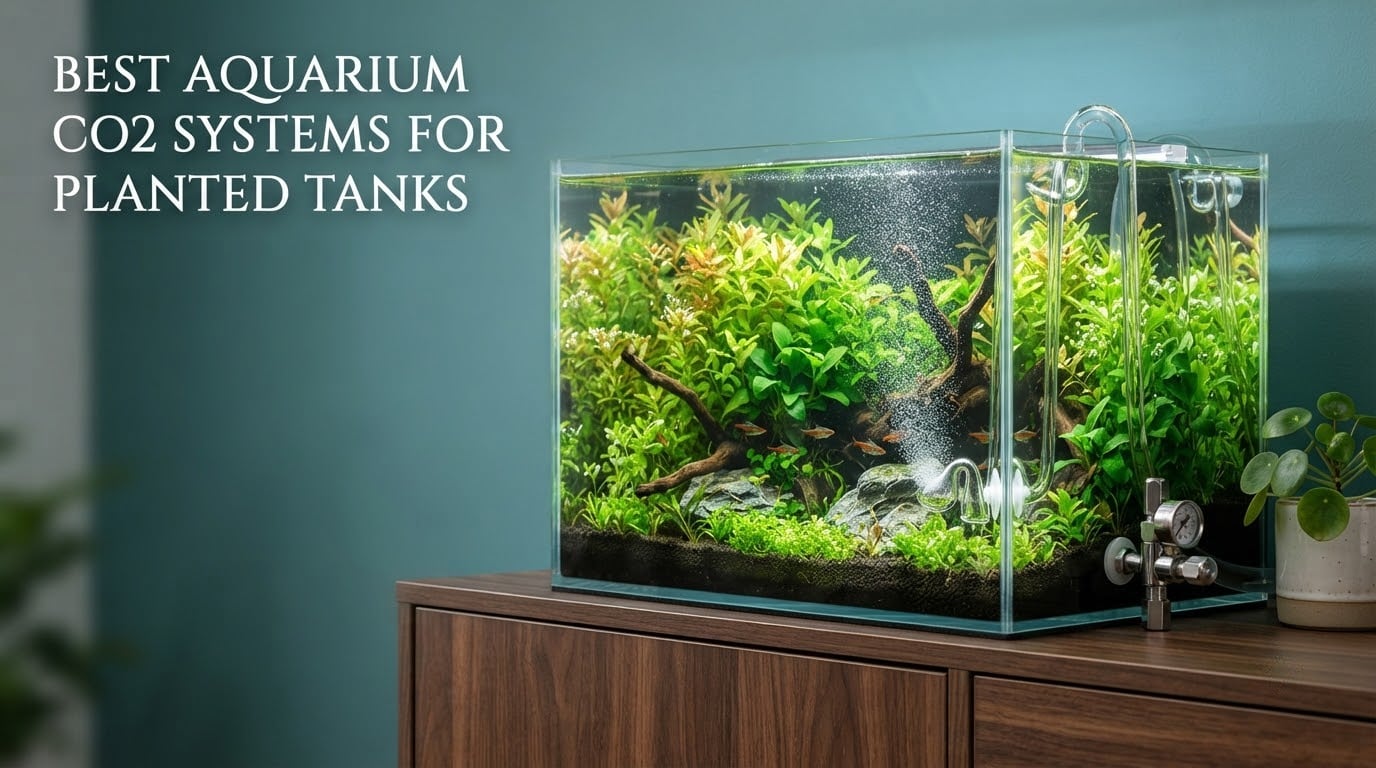
The best aquarium CO2 systems for planted tanks are pressurized setups built around a CGA320 cylinder, a regulator with a solenoid, and a diffuser you can time to your light cycle. I have assembled and run every category in this roundup, from a 2 litre bottle kit on a nano to a dual stage regulator feeding two tanks, and the differences show up in month three, not day three.
CO2 matters because aquatic plants pull in more carbon than every other nutrient combined. Hold roughly 25-35 ppm dissolved and stem plants stretch, red colours intensify, leaves throw visible pearling bubbles and algae pressure drops. Miss the level and a carpeting species simply stalls. Push it too far and fish gather at the surface gasping.
Plenty of tanks do not need it. A lightly planted 10 gallon running modest light, or a low tech setup full of slow growers, grows healthy plants with no gas at all. Sensitive species such as discus are a case where conservative CO2 is safer than aggressive CO2.
Below you will find 12 systems in the order I would actually consider them, plus the measurement and timing method I use to dial them in. This roundup is funded by qualifying purchases, which never changes the ranking. Last updated for September 2026.
Table of Contents
Top 3 Best CO2 Systems for Planted Tanks (September 2026)
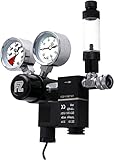
FZONE DC Solenoid Regulator CGA320
- 12V DC solenoid with bubble counter and check valve
- Fine tuning down to one bubble every 3 seconds
- Installation tools included
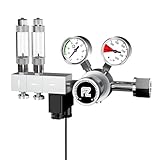
FZONE Pro Dual Stage Regulator
- Adjustable 0-65 PSI output
- Two needle valves on a manifold block
- Quiet 12V DC solenoid

FZONE 5.5L CO2 Generator Kit
- 5.5L SUS304 stainless bottle
- 80 kg/cm2 rated with safety valve
- Built in check valve bubble counter
The FZONE CGA320 regulator is the one I trust most for a first pressurized tank because it has the deepest review base of anything in this group and the parts you actually need are in the box. The Pro Series dual stage version is the upgrade when you want pressure that holds steady as the cylinder empties or you are running two tanks off one block.
For anyone who cannot get a cylinder refilled nearby, the FZONE 5.5L generator kit is the better starting point. You fill a stainless bottle with citric acid and baking soda and never visit a welding shop.
All 12 CO2 Systems at a Glance
| Product | Specifications | Action |
|---|---|---|
| FZONE DC Solenoid CO2 Regulator CGA320 |
|
Check Latest Price |
| FZONE 5.5L CO2 Generator Kit |
|
Check Latest Price |
 HYQO Budget DIY CO2 Generator Kit HYQO Budget DIY CO2 Generator Kit |
|
Check Latest Price |
| FZONE Pro Series Dual Stage Regulator |
|
Check Latest Price |
 ZRDR 2L Stainless CO2 Generator System ZRDR 2L Stainless CO2 Generator System |
|
Check Latest Price |
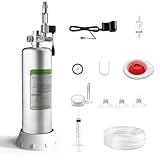 MagTool 5L All In One CO2 Generator Kit MagTool 5L All In One CO2 Generator Kit |
|
Check Latest Price |
 Clscea G700S 4L CO2 Generator Clscea G700S 4L CO2 Generator |
|
Check Latest Price |
 Clscea G200 Bottle Cap CO2 Kit Clscea G200 Bottle Cap CO2 Kit |
|
Check Latest Price |
 Aquario Neo CO2 Slow Release Kit Aquario Neo CO2 Slow Release Kit |
|
Check Latest Price |
 Hygger 2L CO2 Generator Kit Hygger 2L CO2 Generator Kit |
|
Check Latest Price |
 Hygger Dual Gauge CO2 Regulator Hygger Dual Gauge CO2 Regulator |
|
Check Latest Price |
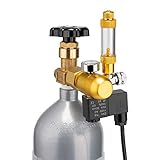 DaToo CGA320 CO2 Regulator DaToo CGA320 CO2 Regulator |
|
Check Latest Price |
The Four Types of CO2 System Explained
Almost every CO2 question I get traces back to which of these four families a system belongs to, because the type decides how stable your output will be and how much maintenance you are signing up for.
Pressurized cylinder systems
A steel cylinder, usually 5 lb or 10 lb, holds liquid carbon dioxide under high pressure. The regulator drops that to a working pressure and the solenoid switches gas on and off with your timer, which makes this the only genuinely automatic option.
Refills come from welding supply, fire equipment and homebrew distributors, and hobbyists on r/PlantedTank repeatedly note that a 5 lb cylinder outlasts a paintball bottle for a mid-size tank. This is the category most planted tanks should end up in.
Stainless bottle generator kits
A sealed stainless bottle reacts citric acid with baking soda to make CO2 on demand. A regulator and solenoid control the output, so these behave like a small cylinder without the refill run.
Refill powders are cheap and easy to order online, so a year of running cost stays well below the refill route you would otherwise need.
Yeast and soda bottle DIY systems
Sugar and yeast in a sealed plastic bottle produce a slow, cheap trickle of gas with no electrical parts at all. It suits a nano or a spare grow tank, and it is where most hobbyists start.
Output rises and falls with temperature and yeast activity, which makes it hard to hold a stable ppm, and the frequent handling tends to stir up algae. Fine for a small tank, frustrating for a 40 gallon.
Slow release and disposable cartridges
Gel cartridges and disposable CO2 cylinders generate CO2 passively with no tubing, no pressure and no moving parts. Setup takes minutes and there is nothing to leak.
The catch is control: you cannot switch them off at night, so CO2 keeps entering the water while plants respire, and refill packs cost more per year than pressurized gas once you count them.
1. FZONE DC Solenoid CO2 Regulator CGA320
- Bubble counter check valve and tools included
- Dialed down to one bubble every three seconds
- Split type 12V DC solenoid
- One year manufacturer warranty
- Needle valve is very sensitive to small turns
- Listed item weight looks wrong for a metal body
This is the regulator I fit first on any tank that runs off a standard CGA320 cylinder. It has been on the market long enough to collect 1327 reviews, and that review base is why I trust the sealing and the needle valve behaviour more than I trust any newer brand with a handful of ratings.
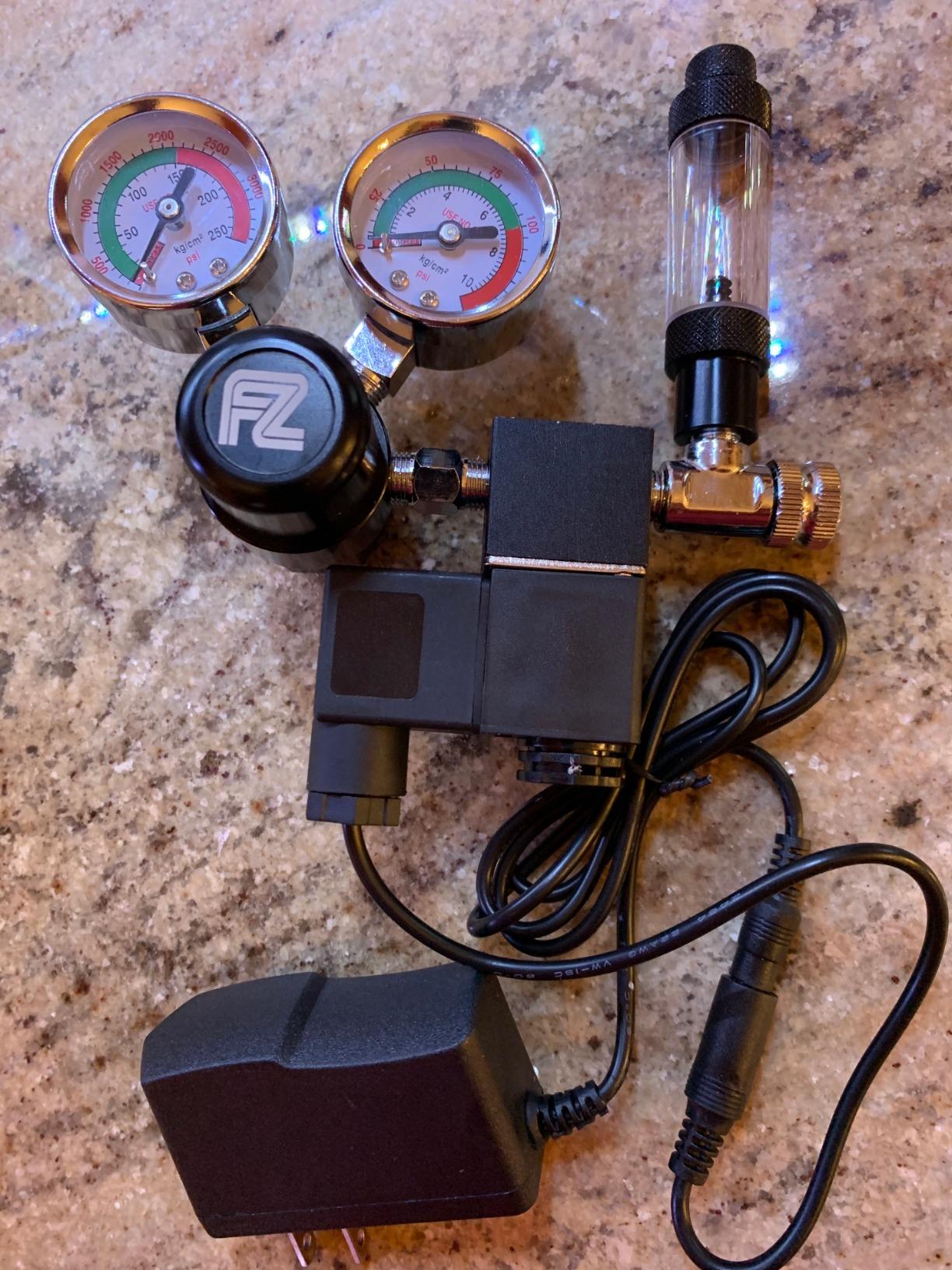
The split type 12V DC solenoid is the part worth paying attention to. It is quieter than the older AC solenoids, safe to touch when the power is on, and it pairs with a cheap DST controller or smart plug without any extra hardware.
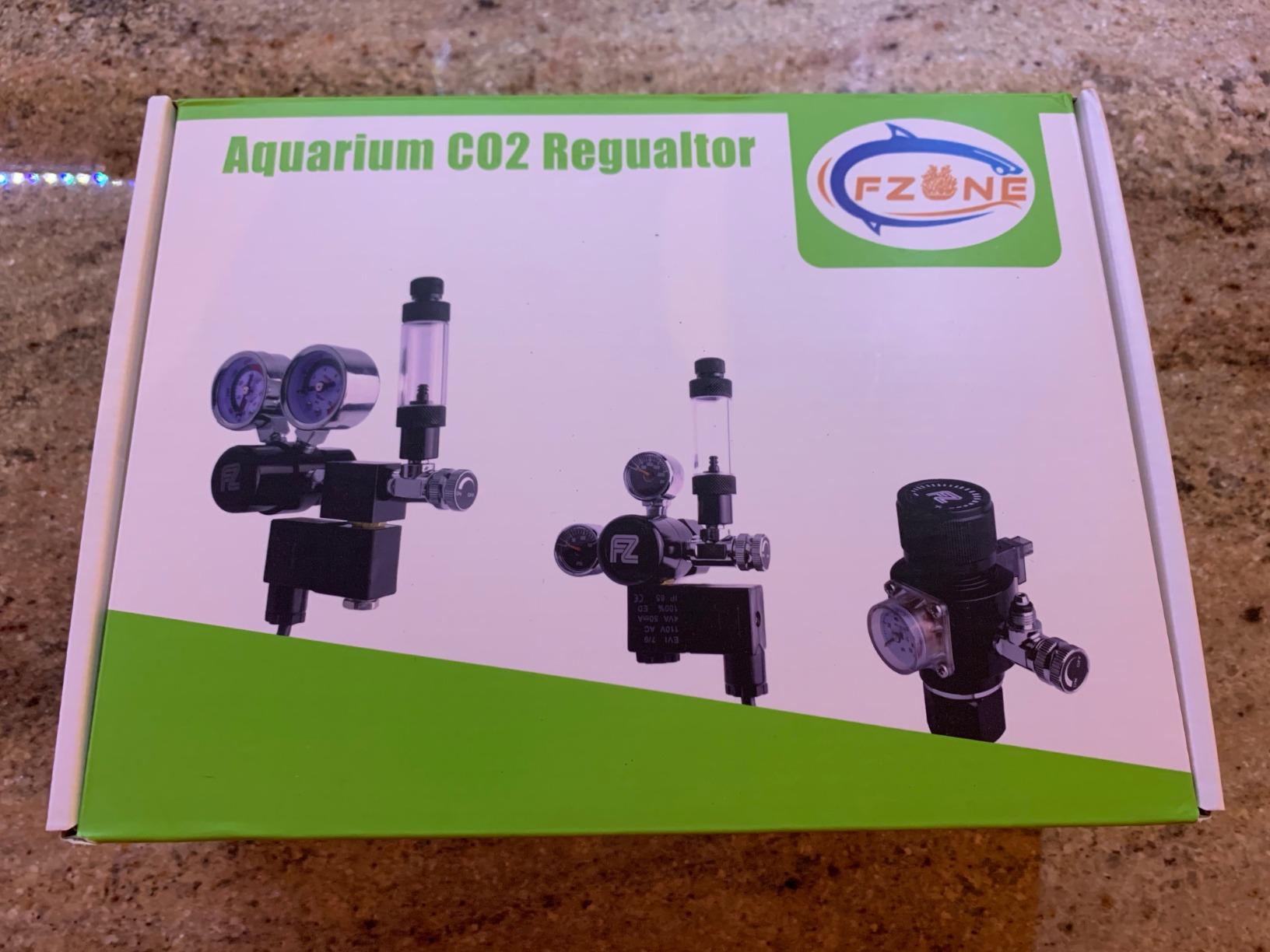
Owners consistently report that the included bubble counter, check valve and installation tools mean you can assemble the whole chain in one sitting. The fine adjustment is genuinely capable: reviewers dial it to roughly one bubble every three seconds, which is the low end you want for a 20 to 40 gallon tank.
The body is hard aluminum alloy with a sprayed surface, and the maker backs it with a one year manufacturer warranty. It fits North American CGA320 cylinders and standard high density CO2 tubing without an adapter.
Why it lands at number one
Nothing else in this roundup combines a solenoid, a bubble counter, a check valve and mounting hardware in one package with a review history this deep. For a first pressurized tank it is the fewest decisions you can make and still end up with a timed system.
Where the touchy needle valve bites
The single recurring complaint across FZONE regulators is a needle valve that reacts sharply to small turns. Plan on adjusting with the gas off, in quarter turns, and give the bubble stream a minute to settle before judging it. One reviewer also flagged that the listed item weight of 0.9 g looks inconsistent with a metal body, so treat the weight specification as unverified.
2. FZONE 5.5L CO2 Generator Kit
- Cheap online refill powders
- Complete system in one stainless bottle
- Thick 1.5mm bottle rated to 80 kg/cm2
- Built in check valve stops water backflow
- Poor instructions
- several owners rely on videos
- Included diffuser and ceramic plate underwhelming
- Tall build may not fit a standard cabinet
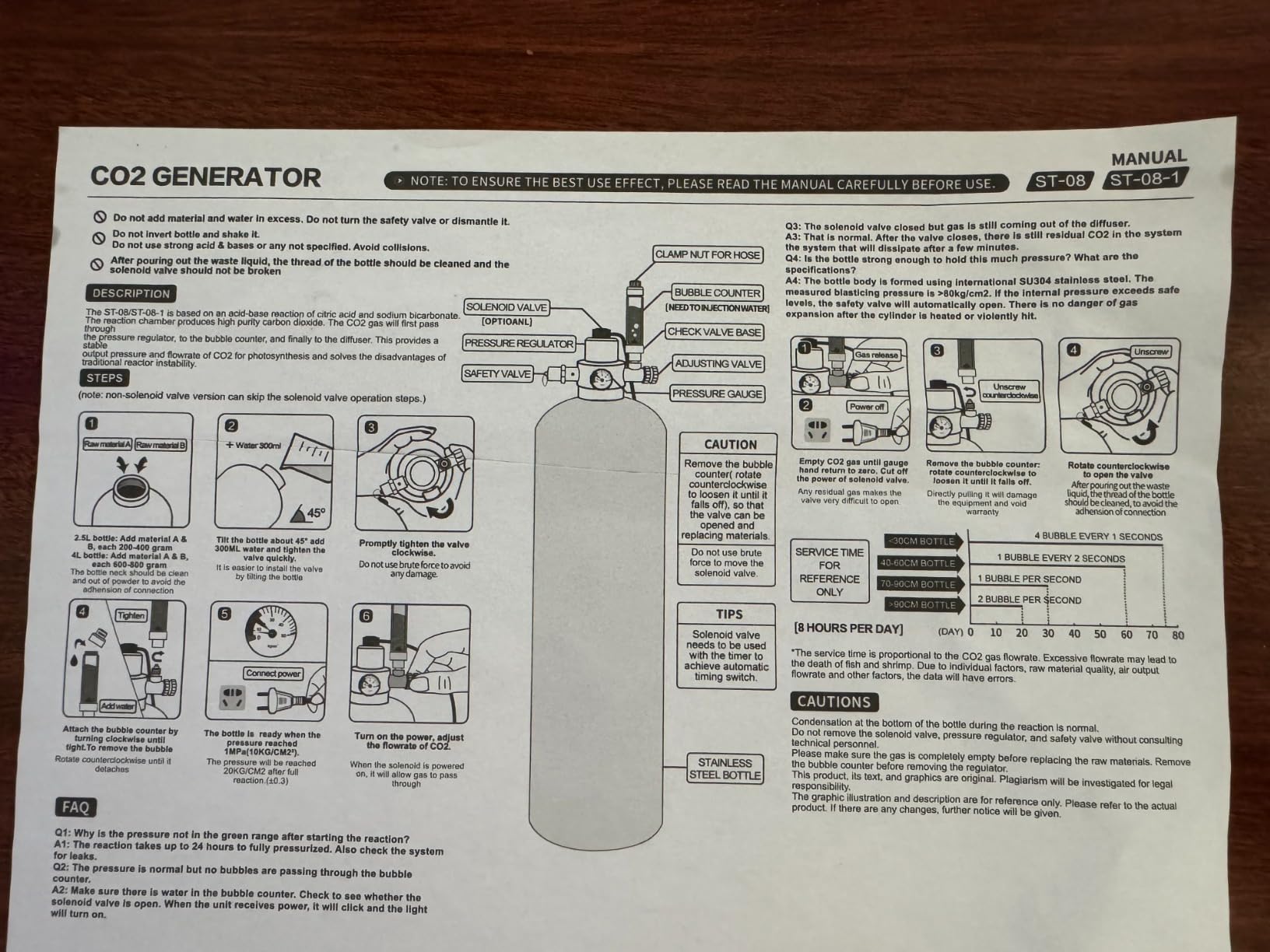
This is the kit I recommend when someone has no realistic refill route for a cylinder. You buy citric acid and baking soda online, charge the bottle, and the system behaves like a small pressurized canister with a solenoid you can time.
The bottle is 5.5 litres of SUS304 stainless with 1.5mm walls rated to 80 kg/cm2, which is 1137 PSI, plus an automatic safety valve. Owners running it daily report steady pressure in the 400-500 PSI range and visible plant response within weeks.
Refill powders are cheap and easy to order, so the annual running cost stays low compared with cylinder gas. FZONE support is also repeatedly praised, including full regulator replacements, which matters on a kit with this many threaded joints.
The bubble counter has a built in check valve, so water cannot creep back into the bottle when the timer switches off. A 12V DC solenoid handles the duty cycle on any standard timer.
Best for mid size and larger tanks
The 5.5L bottle is the largest generator vessel in this roundup, which makes it the practical choice when a 5 lb cylinder refill means a long drive, not when a welding shop sits around the corner.
What the tall build means for your cabinet
Assembly height is the practical limit, and several owners report it will not fit under a standard tank cabinet. The included funnel is also too narrow to be of real use and the glass U connector is sized for rimless tanks, so budget for a better diffuser and a proper funnel.
3. HYQO Budget DIY CO2 Generator Kit
- Low outlay entry into aquarium CO2
- Pressure gauge and relief design included
- Metal adjustment valve on an ABS housing
- Long running review history
- Assembly order must be followed exactly
- Less proven long term durability than steel
This is the most affordable way I found to add a pressure gauge and a metering valve to a plastic soda bottle setup, and its 1022 reviews make it a well tested budget kit. It suits a 10 to 20 gallon tank where nobody needs industrial output.
You get a pressure gauge with a gas adjustment function, a simple pressure relief design and a professional metal adjustment valve mounted in an ABS engineering plastic housing. The locking pipe device helps stop the fitting deforming and the wire loosening over time.
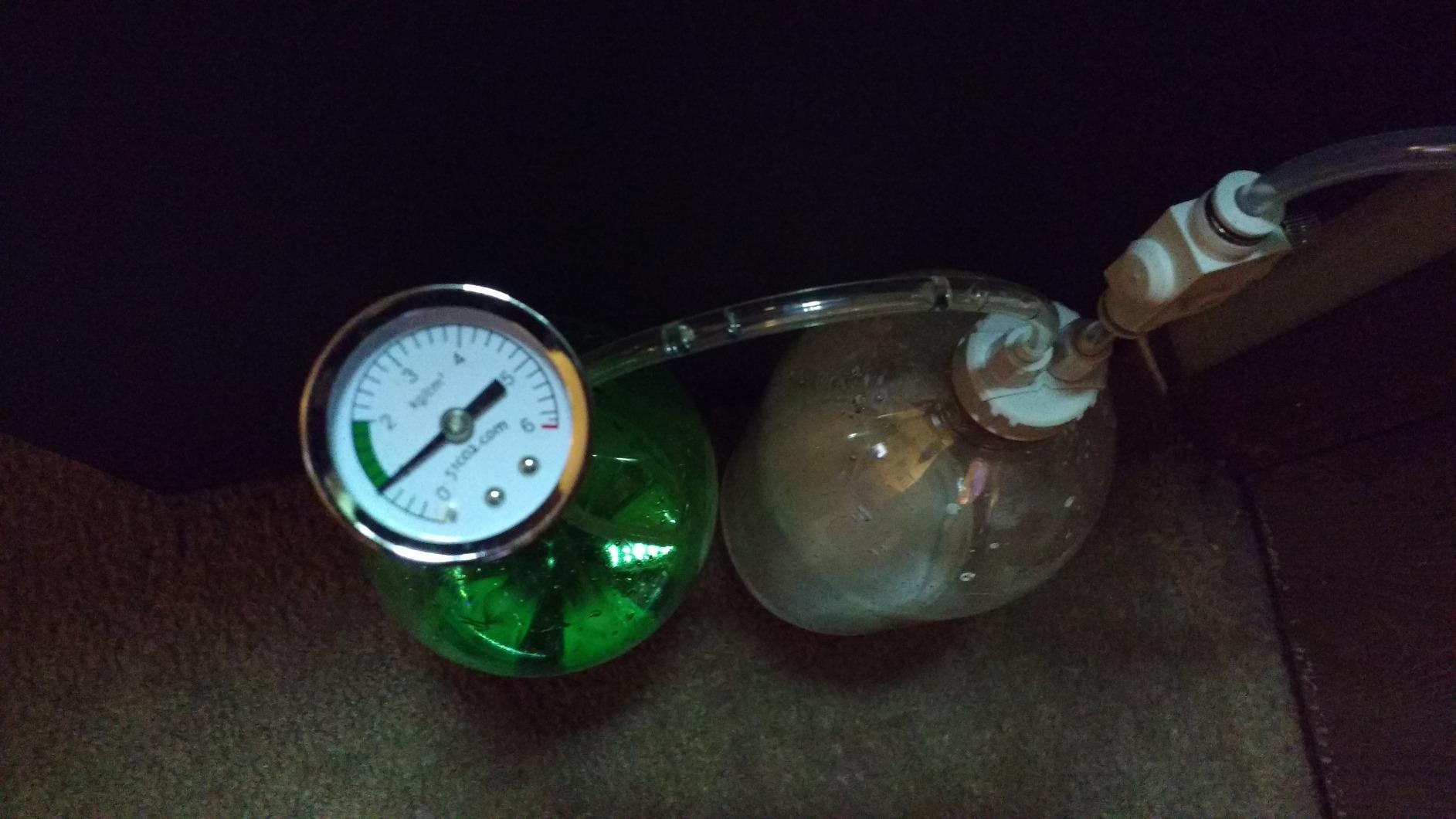
Package size is small at 7.4 by 5.28 by 1.85 inches, so it disappears behind a tank stand. For a first attempt at understanding how a CO2 system works, the parts layout teaches you the same chain you will later buy in metal.
Owners mainly praise the low outlay and the clear pressure display, and the caution that comes with both is procedural rather than electrical: get the assembly order right.
Best for a first build on a tight budget
If the goal is learning the components rather than owning the finest hardware, this kit teaches the same pressure gauge, valve and relief sequence that every bigger system uses. Step up later without changing anything you already understand.
What plastic caps cost you long term
The ABS cap and bottle interface is the weak point, and reviewers note less proven durability than stainless systems. A reversed check valve or a mis threaded fine tuning fitting causes an abnormal reaction, so follow the assembly order exactly and never use thread tape on these joints.
4. FZONE Pro Series Dual Stage CO2 Regulator
FZONE Pro Dual Stage Aquarium CO2 Regulator CGA320 for Aquarium Plant Tanks
- Output pressure holds as the cylinder empties
- Two independent needle valves for two tanks
- Quiet solenoid safe to touch
- Trims down to one bubble every 3 seconds
- Costs well above entry level regulators
- Needle valves remain sensitive to small turns
This is the reason dual stage regulators cost what they cost, and it is one of only two units in this roundup rated above 4.2 stars. Two pressure stages mean the output pressure stays stable as the cylinder contents drop, so you are not chasing a drifting flow across a two month charge.
Output is adjustable from 0 to 65 PSI and a built in safety valve releases above 100 PSI. The manifold block carries two independent high precision needle valves, so one cylinder can feed one tank properly or two tanks independently.
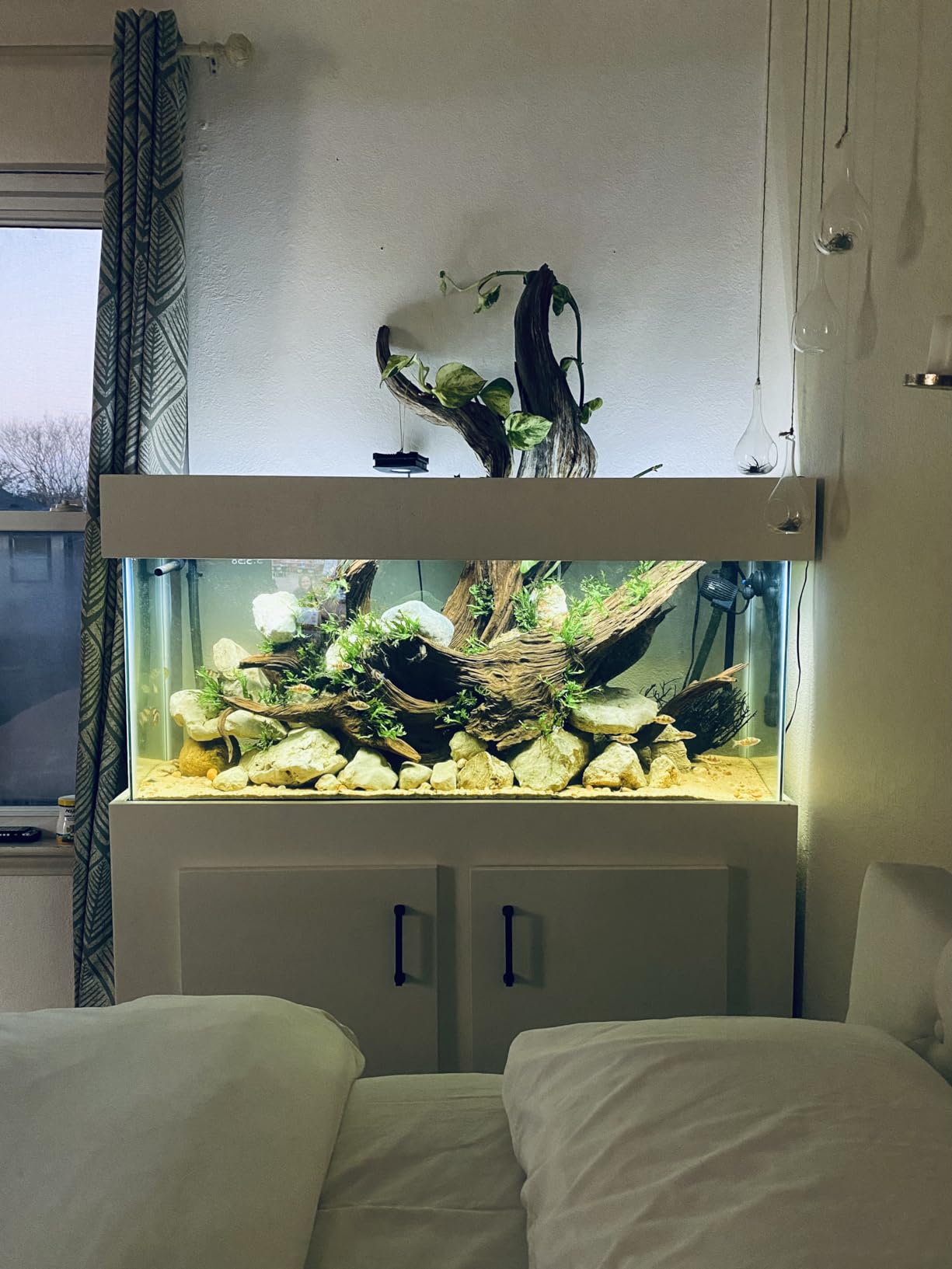
The 12V DC solenoid is quiet and safe to touch, which matters in a cabinet next to a bedroom. Installation tools for CGA320 cylinders are included, so nothing extra is needed to bolt it to a North American cylinder.
Reviewers note output can be trimmed to as low as one bubble every three seconds, which is what makes a dual stage unit usable on a small tank as well as a large one.
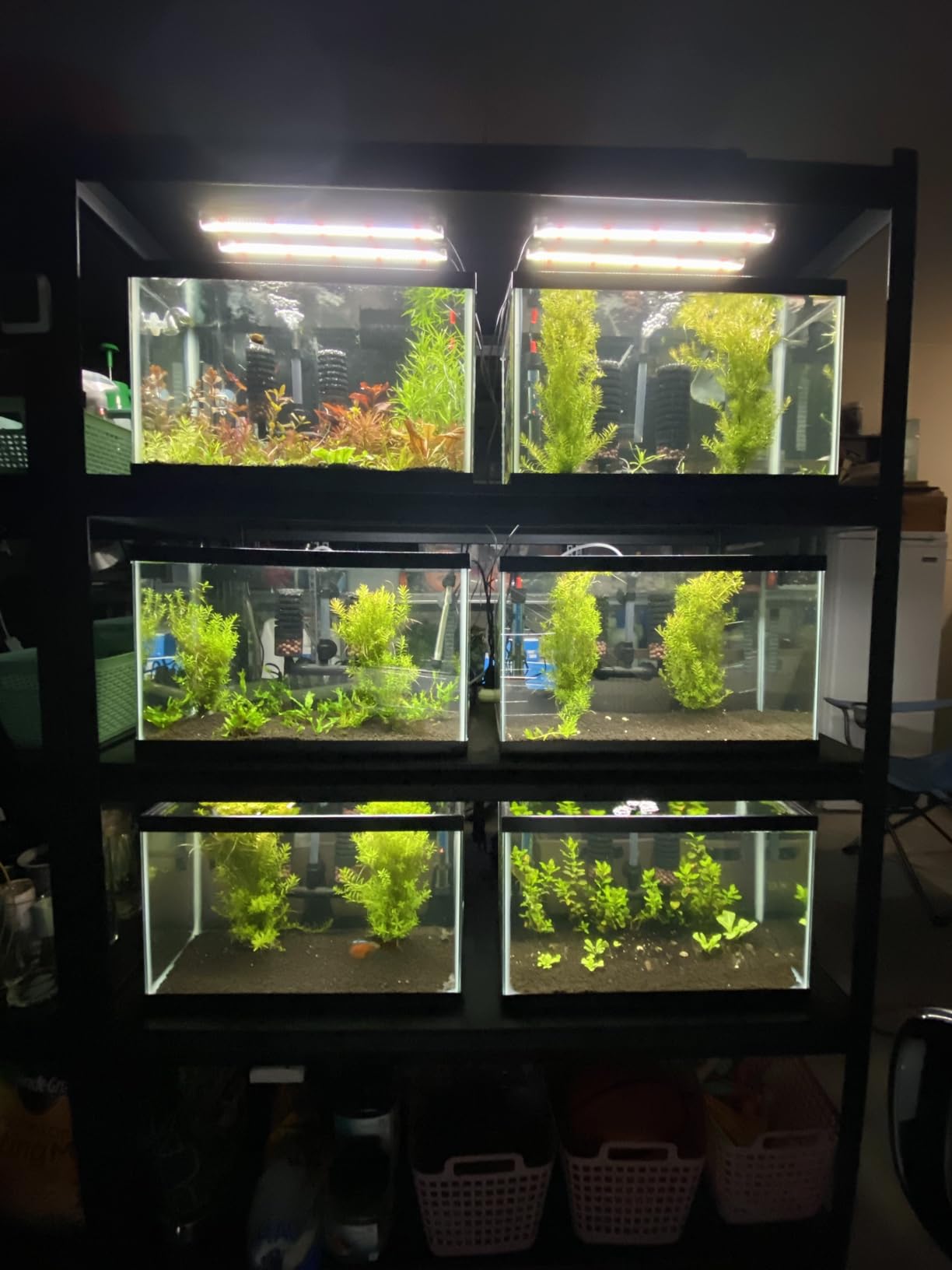
Best for two tanks and steady pressure
If you run more than one planted tank off a single cylinder, the two valve manifold is the reason to buy this rather than a single stage unit. Each tank gets its own needle valve and its own flow setting.
Where the price premium shows up
The cost jump from an entry regulator to this one is real, and the honest answer is that a single tank under 30 gallons rarely sees the benefit. Save it for larger volumes, a second tank, or a setup where you refuse to retune bubble rate every time the cylinder gets lighter.
5. ZRDR 2L Stainless CO2 Generator System
ZRDR 2L Aquarium Co2 System with Pressure Gauge for Aquarium Plants
- Steel bottle outlasts plastic bottle kits
- Relief valve plus waterproof solenoid
- Spares included with the kit
- Cheap powders keep running costs low
- Small print instructions and some bubble counter leaks
- Solenoid runs warm and knobs are sensitive
- Gauge can take hours to read pressure
For a nano or a small 20 gallon planted tank, this 2 litre stainless system is the size that actually matches the job. The 304 stainless bottle and automatic pressure relief valve at 30KG make it a step up from plastic bottle kits without moving to a full generator.
You get a 12V waterproof solenoid, a stainless steel atomizer for fine bubbles, and a long accessory list: spare sealing rings, a spare atomizer piece, a wrench, bubble counter, check valve, U shaped tube and funnel.
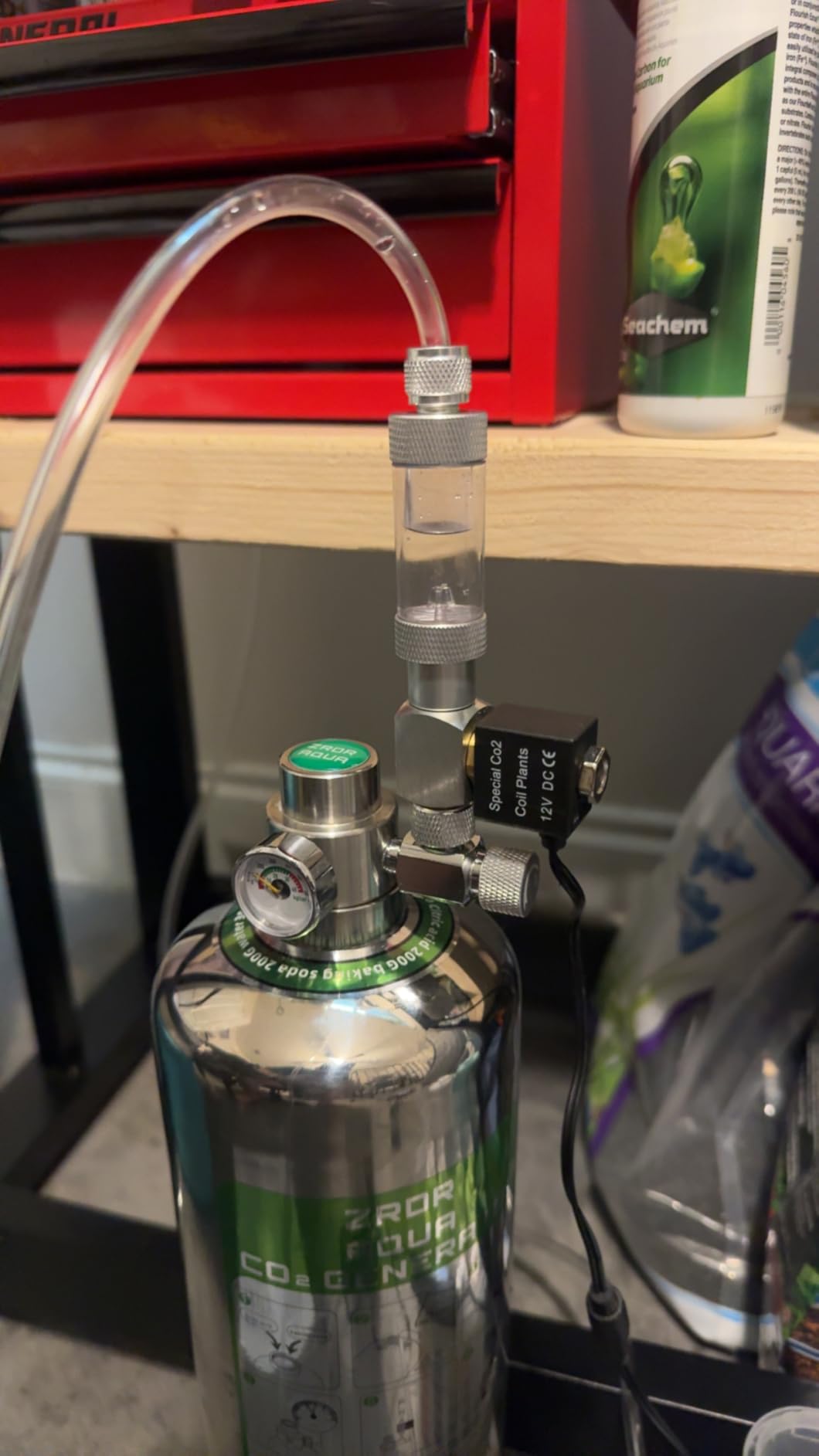
Owners who assemble it carefully report consistent output and visible plant improvement within weeks, and the running cost is very low once citric acid and baking soda are counted. The 2L capacity suits tanks of roughly 30 gallons or less.
Packaging is 14.17 by 8.27 by 7.28 inches, so it is compact enough for a small cabinet. A single gauge version and upgraded variants are available in the same family.
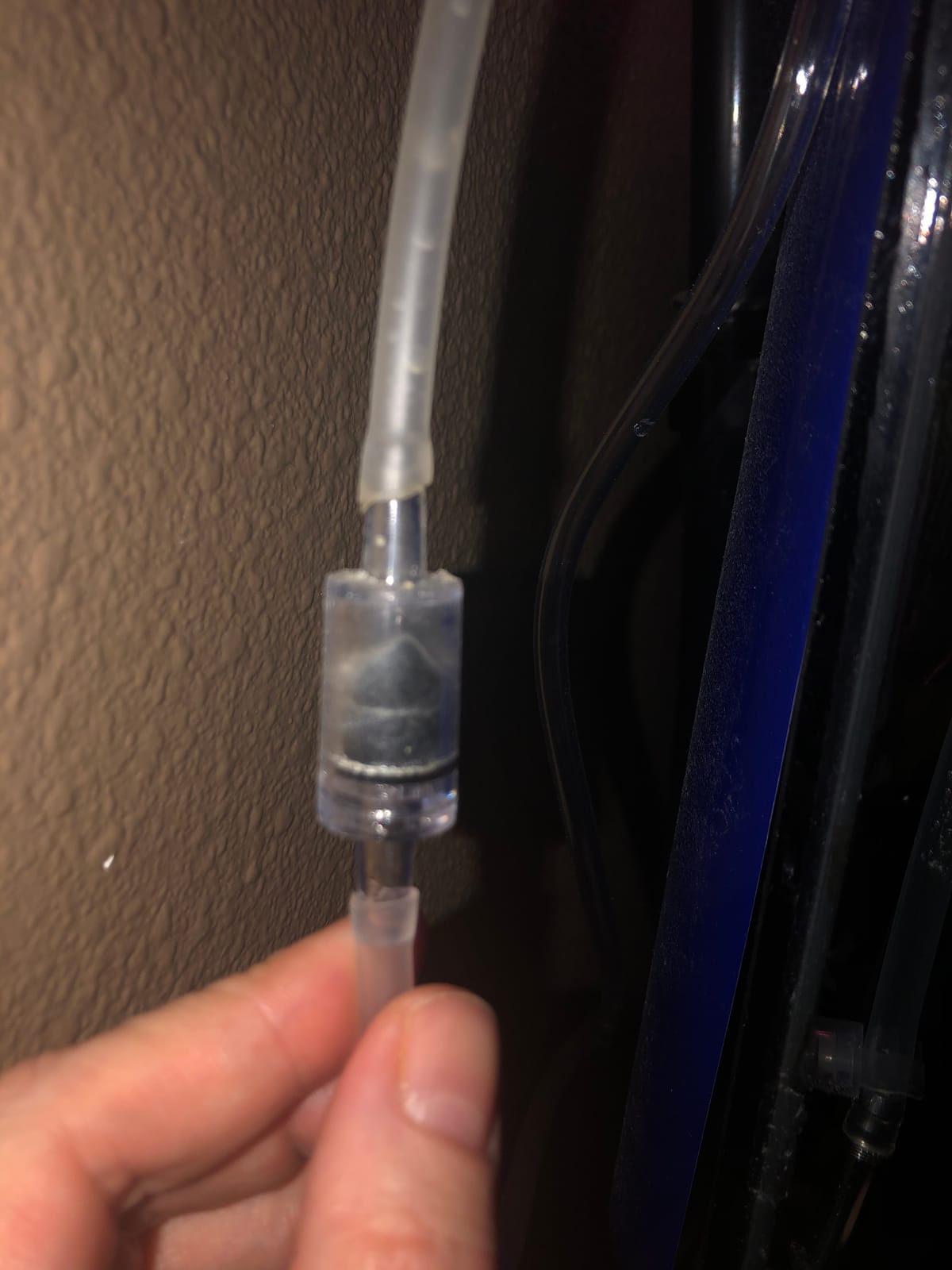
Best for nano and small planted tanks
Two litres is the sweet spot when you want steel, a solenoid and a proper atomizer but not the footprint of a 4 or 5 litre bottle. The spare parts in the box genuinely extend its life.
What the gauge lag and leaks mean for you
The gauge can take hours to register real pressure after filling, so do not judge the charge by the dial immediately. Some buyers needed to disassemble the bubble counter to stop leaks, the solenoid runs warm, and a few units had leaking main valves that shortened each charge.
6. MagTool 5L All In One CO2 Generator Kit
MagTool Upgraded 5L DIY Aquarium CO2 Generator Kit, Stainless Steel Bottle
- Bottle walls roughly 50 percent thicker
- Integrated solenoid reduces leak points
- Full accessory set in the box
- Quick replacement diffusers and seals
- Included diffuser is widely criticised
- Funnel too narrow for dry powder
- Bottle is large for a small stand
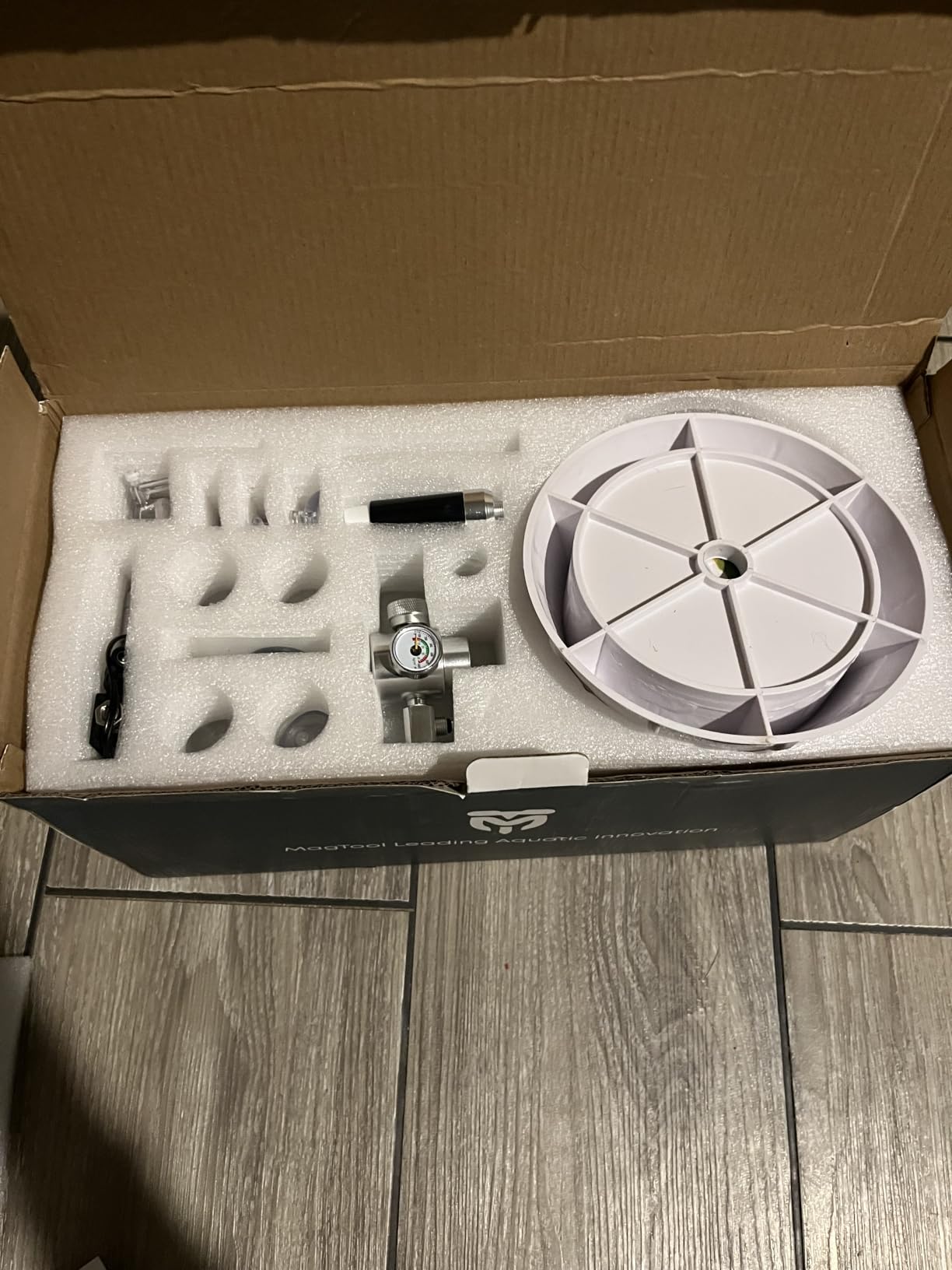
This is one of the most complete boxes in the roundup, and the design choice I like most is the integrated solenoid and bubble counter with a refill port. Fewer threaded joints means fewer places for a slow leak to start.
The bottle is upgraded 304 stainless, roughly 50 percent thicker than standard with a mirror polished finish and an external thread that stops residue from welding the cap shut. The 2.5L version holds 200-300g of material, the 5L holds 600-800g.
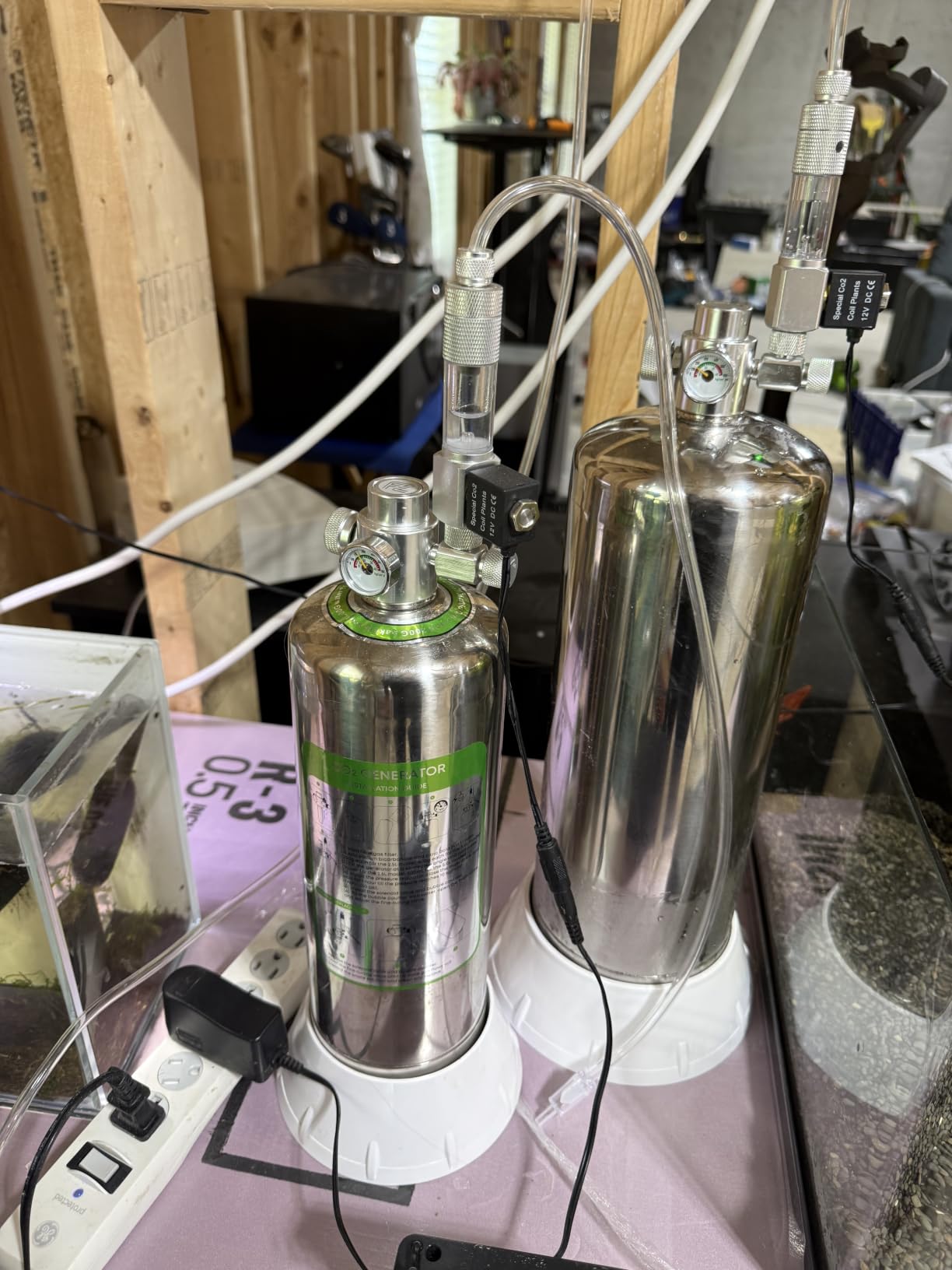
Dual safety comes as a manual shut off valve plus an automatic pressure relief valve. The accessory list runs to a diffuser, check valve, U connector, suction cups, tubing, funnel, syringe, ceramic disc, sealing rings and power adapter.
Customer service has been praised for sending replacement diffusers and sealing rings quickly, and key components such as the solenoid and regulator carry a one year warranty.
Best for a complete box with real safety hardware
Two independent shut off paths is a genuine advantage in a cabinet next to a wooden stand, and the external thread design means you will not be fighting a stuck cap at three in the morning.
Where the included parts fall short
The supplied diffuser is the most criticised part of this kit and many owners replace it, the funnel is too narrow for dry powders, and the solenoid can run warm. The endothermic reaction also creates heavy condensation around the bottle, so plan for a towel under it.
7. Clscea G700S 4L CO2 Generator
Clscea Aquarium CO2 Generator Double Runtime with Solenoid Valve 4L, G700S
- About twice the runtime of a 2L kit
- Triple stainless filter resists solenoid failure
- Quick connect fittings need no tools
- Every part sold separately for repair
- Flimsy solenoid clogs after refills
- Poorly edited instructions
- Sensitive needle valve and weak diffuser
Runtime is the headline here: 2.4 litres of physical volume giving a 4 litre equivalent gas capacity, which works out to roughly two months per fill. On a daily timer controlled schedule that is fewer refill chores than most 2 litre kits ask of you.
A triple layer stainless steel filter element with a self cleaning bubble counter is designed to keep solids away from the solenoid, and the thickened SUS304 cylinder holds consistent output from the first bubble to the last.
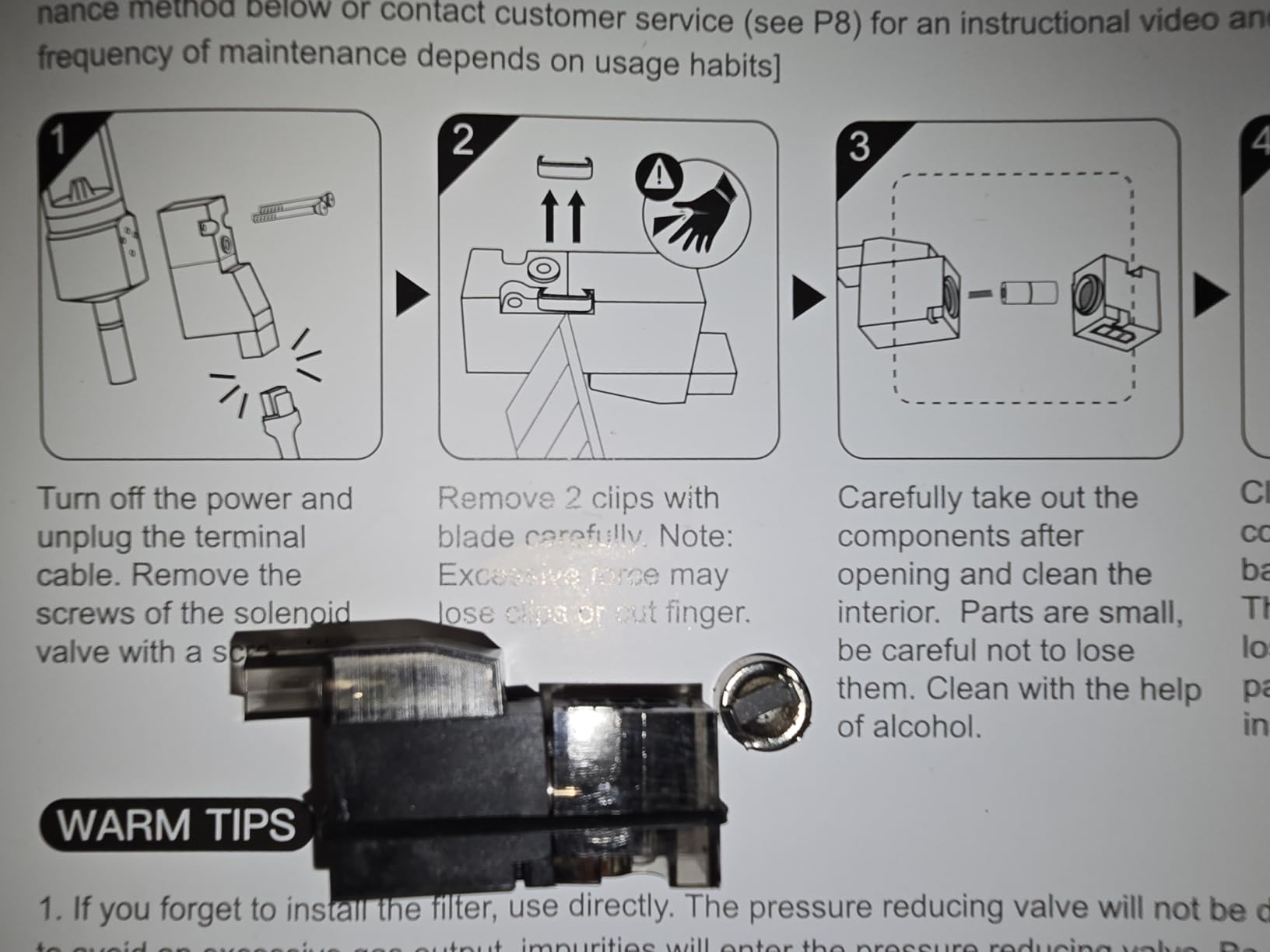
John Guest quick connect fittings snap tubing on and off without tools, which is a small thing that saves real time when you are recharging. Owners report stable pressure across weeks of daily use.
The repair not replace approach is unusual at this level: solenoid, bubble counter, drying bead and diffusers are all available as separate parts, which extends the life of the whole system.
Best for long runtime per fill
If your tank runs six to eight hours of CO2 a day, charge duration matters more than bottle size on paper. Two months per fill means you set a reminder twice a year instead of weekly.
What the solenoid and documentation cost you
The solenoid is described as flimsy with fragile wire attachments and can clog after refills, so keep a spare on hand. The written instructions are poorly edited, the residual mixture crystallises and needs hot water to clean, and the bubble counter water evaporates and needs frequent topping up.
8. Clscea G200 Bottle Cap CO2 Kit
- Most accessible first build in the roundup
- Test tube simplifies dosing
- Acid absorbing ball eases control
- Acid and hydrolysis resistant tubing
- You supply two 2L soda bottles
- ABS caps less durable than steel
- Needle valve is a set once control
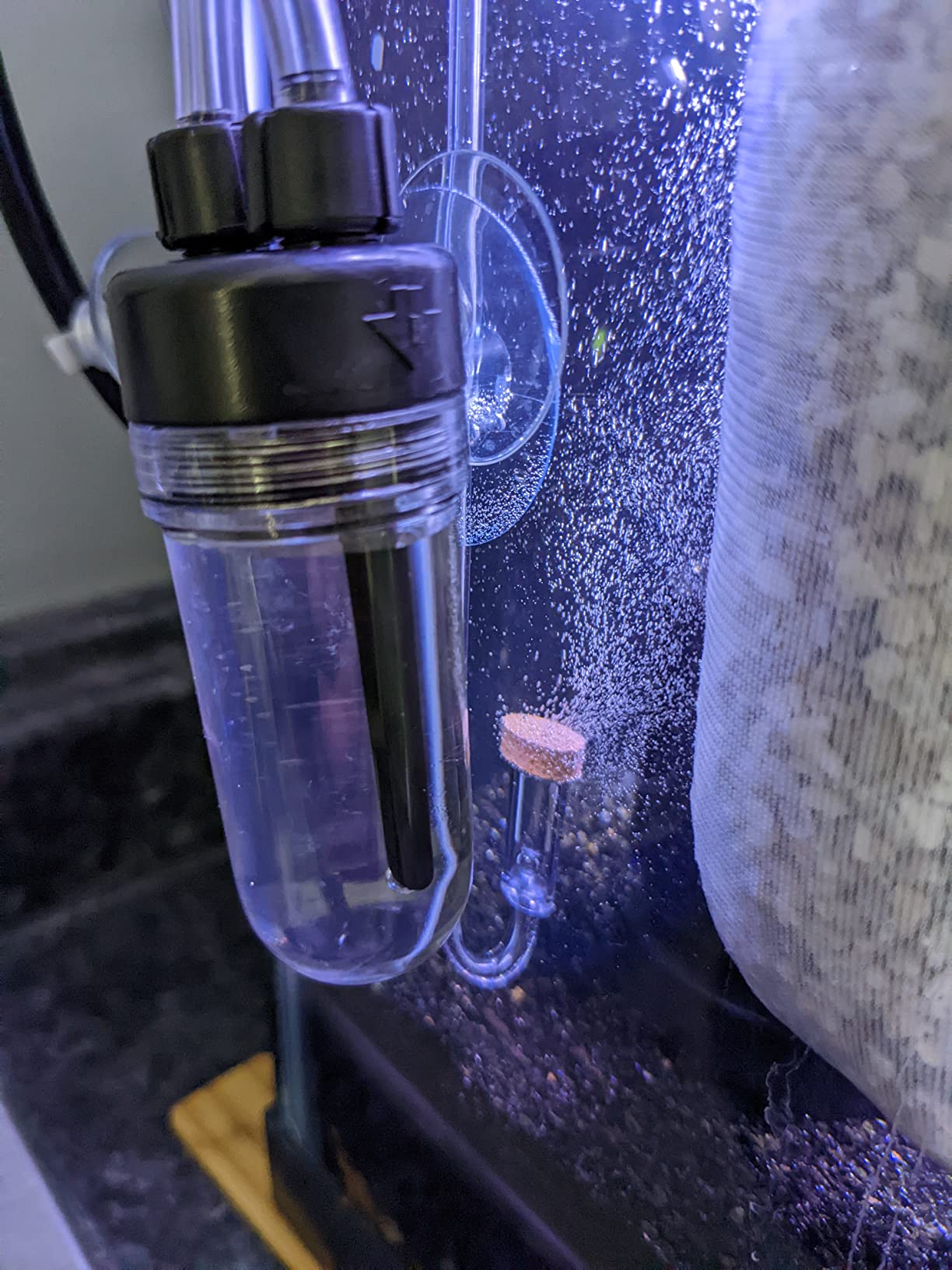
Two soda bottles and a small bag of powder later, you have a working CO2 system, which makes this the friendliest first build I found. The quick reaction test tube removes the guesswork from getting the citric acid to baking soda ratio right.
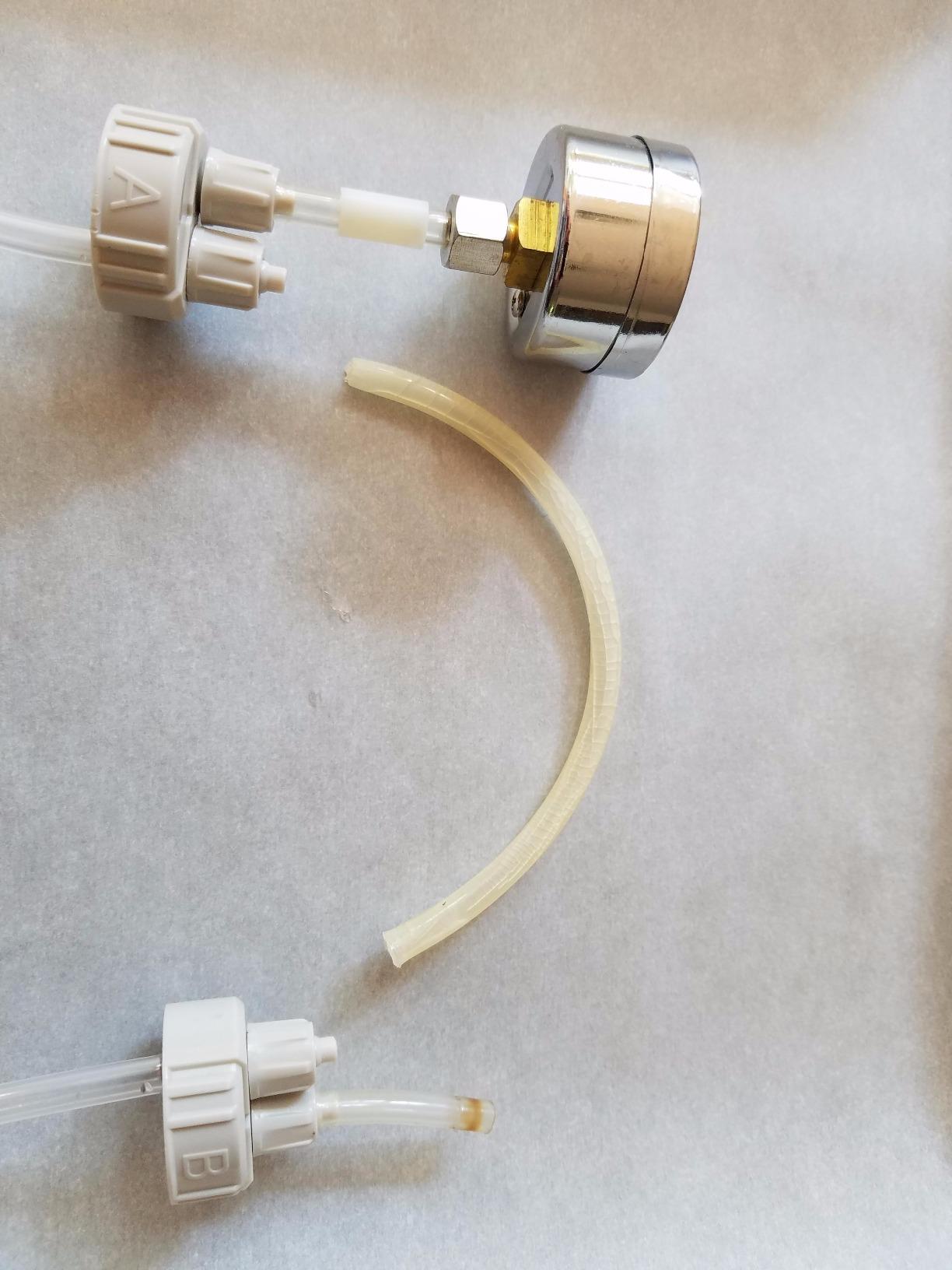
Most of the chain is included: caps, tubing, check valve, pressure gauge and a relief valve beneath it. The acid absorbing ball design lets you control how quickly the reaction consumes powder, which is the usual failure point on cheap kits.
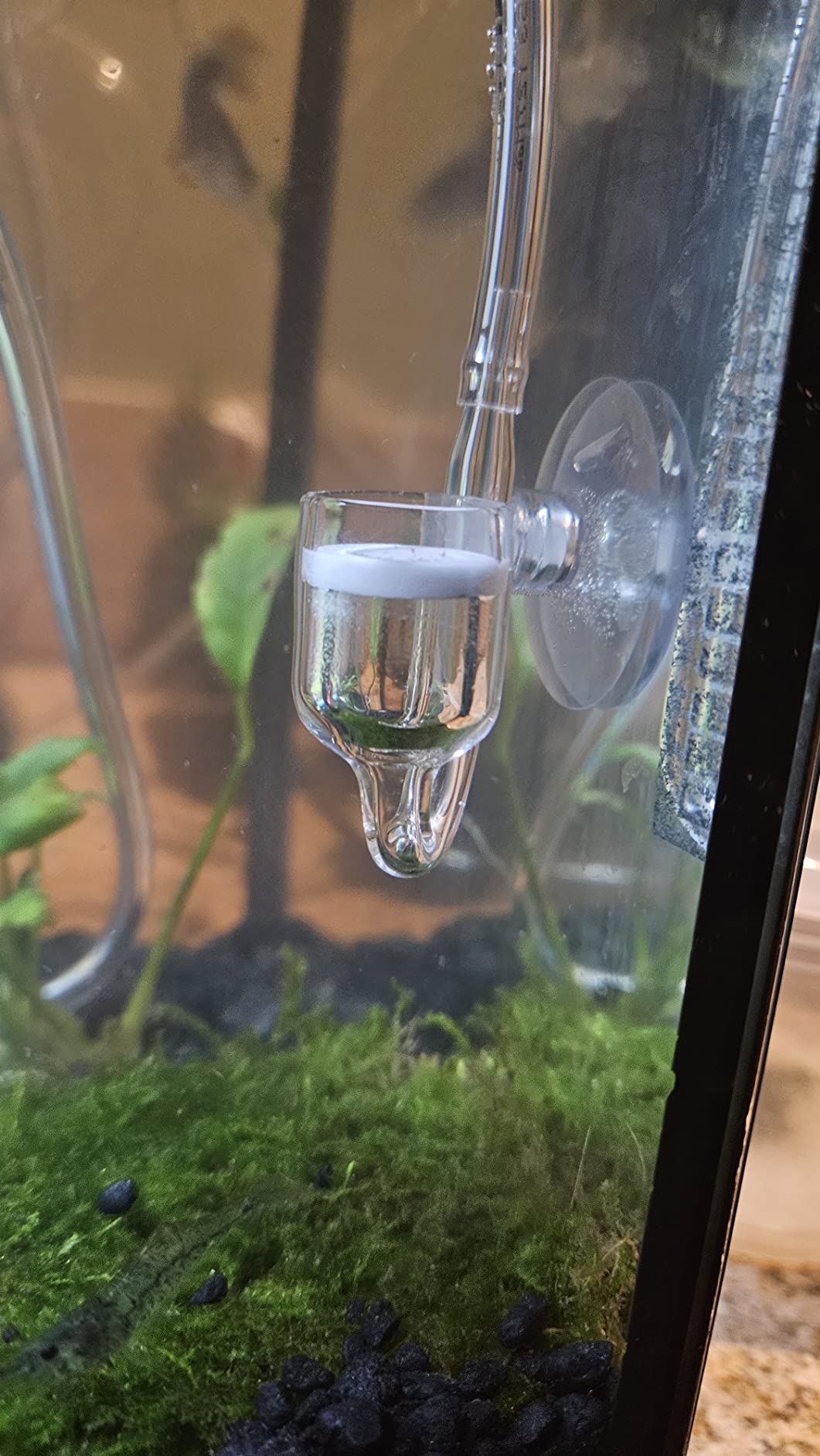
Tubing between the two caps is described as acid and hydrolysis resistant, and the caps use a non deformable ABS design with a stable structural profile. It suits tanks up to around 20 gallons.
The needle valve on this kit only adjusts output and should be set once, with the white valve handling daily on and off. That is a different control philosophy from the precision needle valves on the metal regulators.
Best for a soda bottle first attempt
It teaches the full chain, gauge to diffuser, at the lowest possible commitment, and the test tube means your first charge is not wasted. A good bridge before committing to steel or a cylinder.
Where the ABS caps and needle valve limit it
You have to source two 2L carbonated beverage bottles yourself, the plastic cap design is less durable than stainless systems, and a diffuser is not included in the base kit. Expect to upgrade once you outgrow a 20 gallon tank.
9. Aquario Neo CO2 Slow Release Kit
Aquario Neo CO2 – DIY CO2 Kit (Kit) for Freshwater Aquariums, Terrariums, Paludariums – Slow Release CO2 Kit for Aquatic Plants
- Simplest CO2 option available here
- Turns a low tech tank noticeably higher tech
- Small footprint for nano tanks
- No cylinders
- no pressure and no electricity
- Cannot be switched off at night
- Refill packs add up over the year
- Needs a full 24 hours before first use
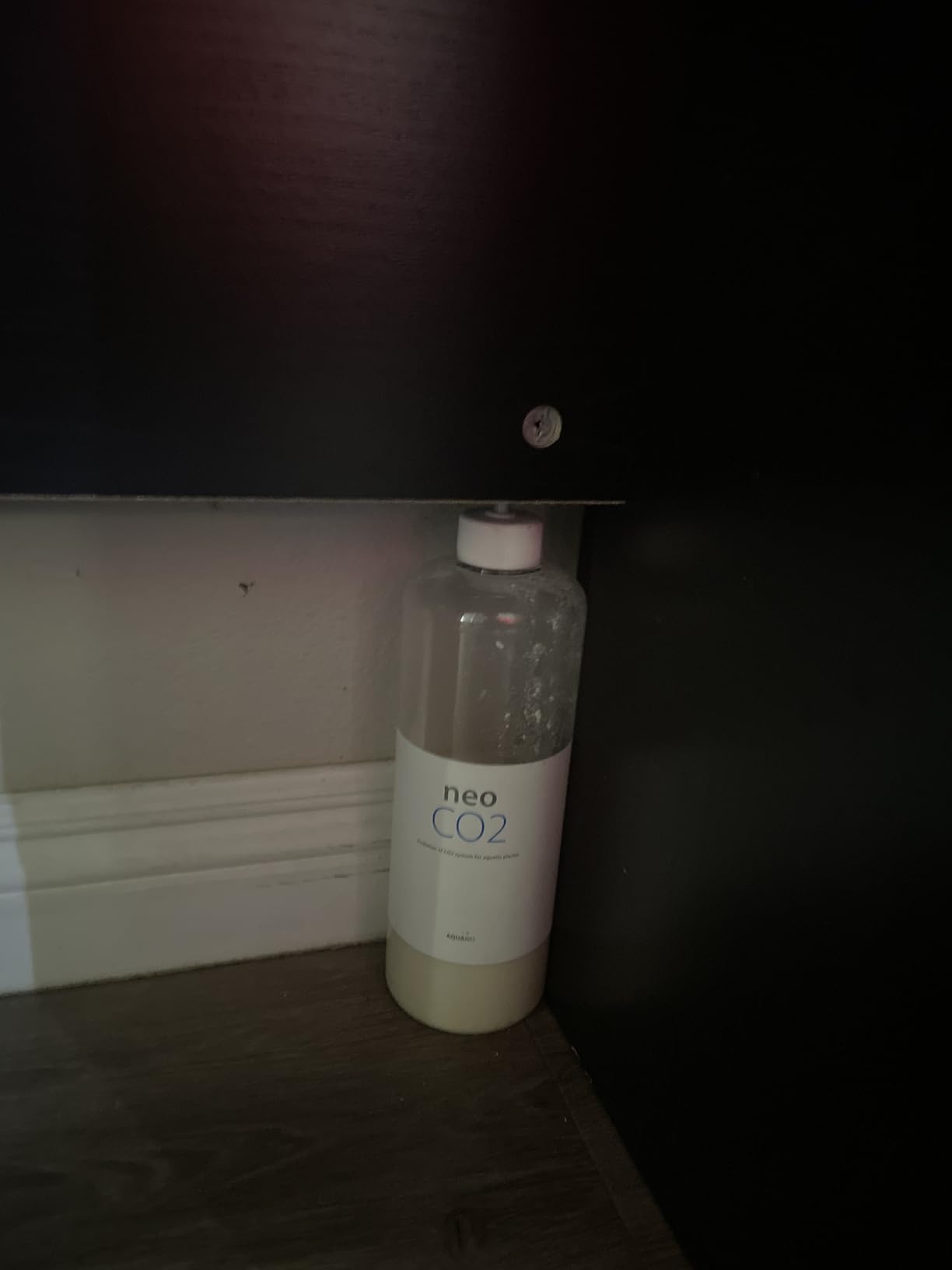
This is the only system here with no tubing, no cylinder and no electrical parts, just a slow release gel reaction in a compact body. Owners report visible pearling, stronger plant colour and very little algae within weeks of starting.
Everything you need is supplied except a thermometer, and the footprint at 3.15 by 3.15 by 7.87 inches suits a nano or a 10 gallon grow tank. There is no combustion, no pressure and nothing to leak.
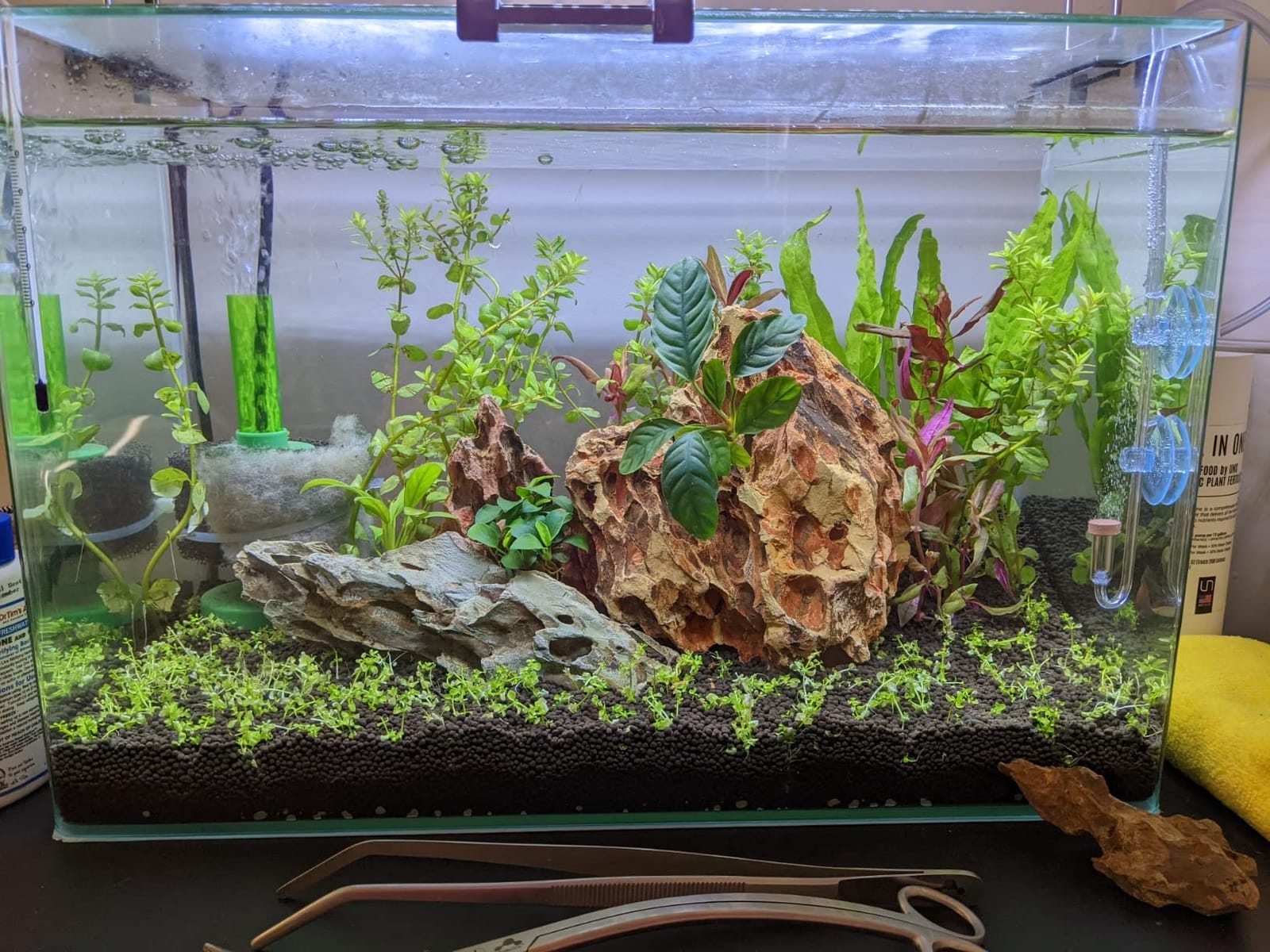
It is a genuinely modest outlay to move a low tech tank to a higher tech result, which is why it shows up so often in beginner advice. Refill kits are sold separately in the same family.
The catch is written in the manual and the reviews alike: give it a full 24 hours after assembly before you let it near a stocked tank. Skipping that wait is the most common early mistake with gel systems.
Best for tanks with no power outlet nearby
Unheated fish rooms, display cabinets and rented tanks where you cannot run a timer controlled solenoid are exactly where this earns its place. Nothing to plug in, nothing to set up.
Where the refill packs and the 24 hour wait bite
Because it cannot be switched off, fish and shrimp risk over injection in sensitive setups, and refill packs push the recurring cost above cylinder gas over time. Output is also not enough for true high tech lighting or larger tanks, and some units shipped with a leaking or blocked diffuser.
10. Hygger 2L CO2 Generator Kit
2L Aquarium CO2 Generator System, CO2 System Kit with Regulator and Needle Valve for Aquarium Plants Tanks
- Bottle holds pressure around 365 PSI
- Relief valve and solenoid for timer control
- Cheap powders last weeks to months
- Regulator shuts on power off so a timer works
- Supplied tubing is too soft and arrived kinked
- Check valve allowed water backflow
- Included diffuser produced huge bubbles then failed
A recent kit where the vessel is good and the accessory bag is not. The 1.2mm SUS304 stainless bottle is 20 percent thicker than standard and owners report it holding around 365 PSI, which is a solid foundation for a small tank.
You get an automatic pressure relief valve activating above 30-35KG and a 12V waterproof solenoid, though the solenoid itself is not the waterproof part. The regulator closes the valve when it loses power, so a basic outlet timer is genuinely enough to run it.
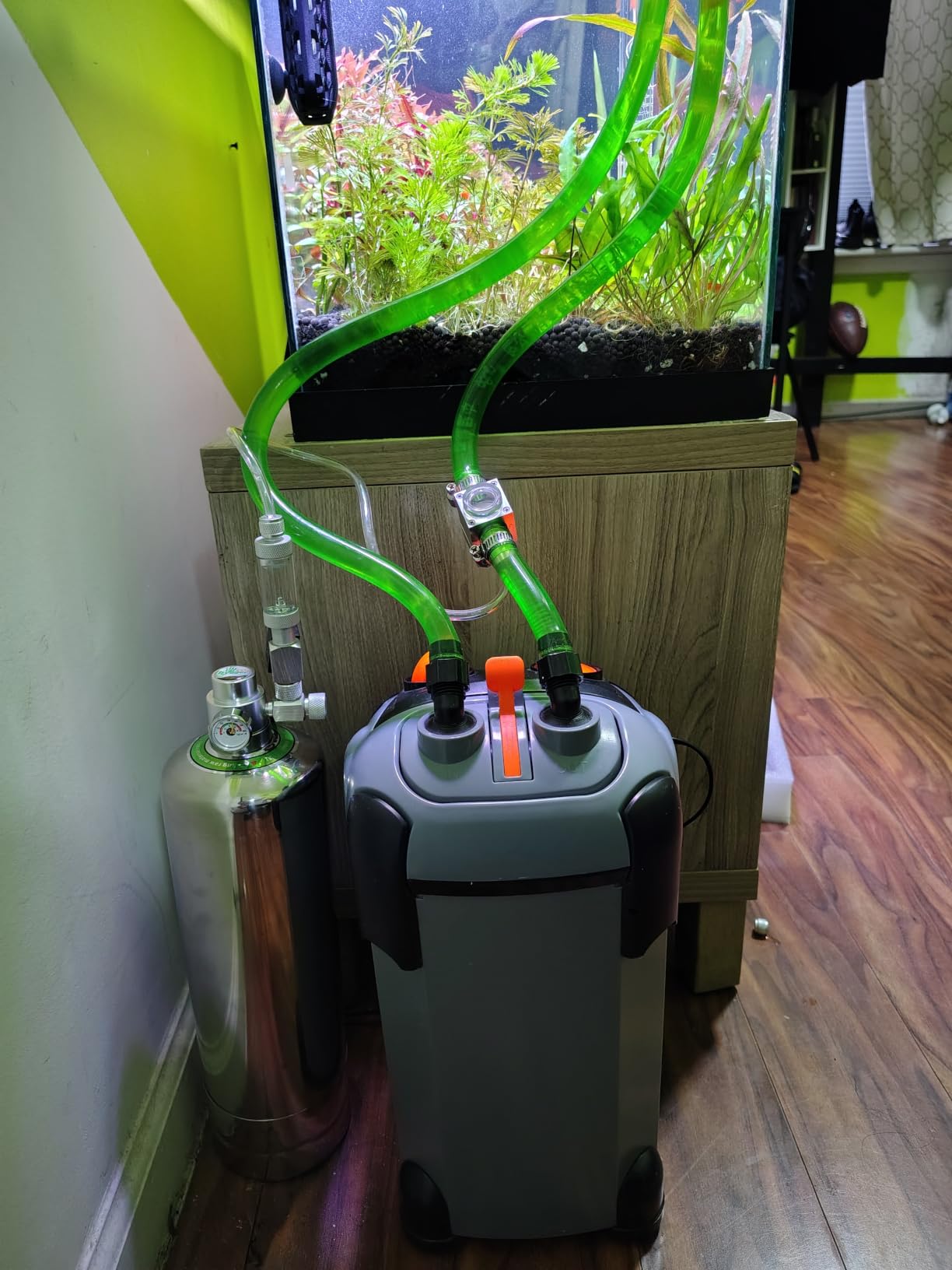
The 2L size suits nano and small planted tanks, and refills of citric acid and baking soda last weeks to months at very low cost. Reactant powders are not included, so budget for those separately.
Package dimensions are 13.62 by 7.09 by 4.88 inches at 3.48 pounds, which is compact enough for a nano cabinet. A 5L variant exists in the same range if you outgrow it.
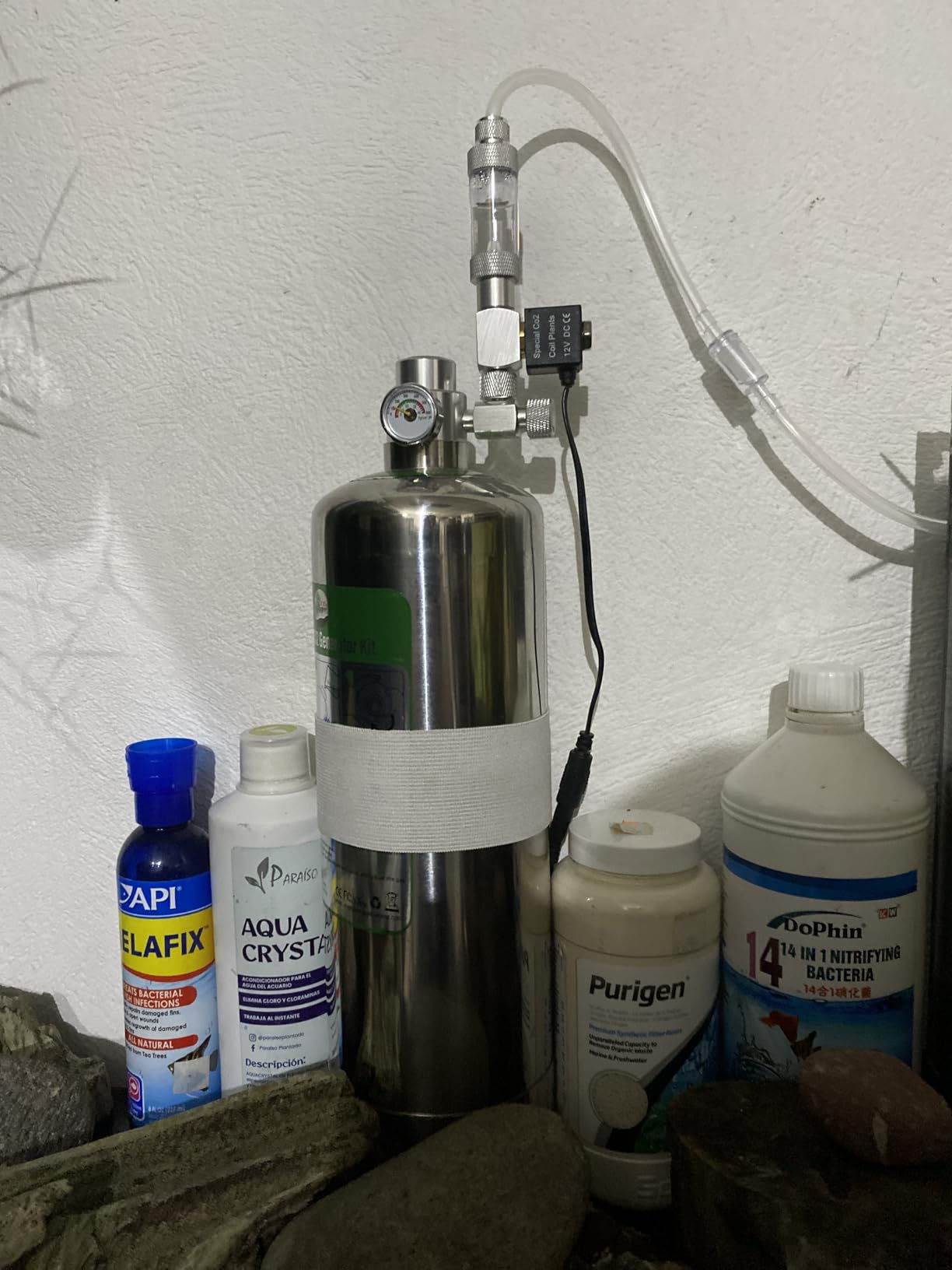
Best for small tanks on an outlet timer
The power off behaviour is the detail that makes this convenient: no timer with a built in DC output needed, just a cheap mechanical plug timer. On a small tank where you are chasing steady rather than high output, that is enough.
Where the accessory kit needs replacing
Reviewers replaced the supplied tubing because it is very soft for pressurized service and arrived kinked, and replaced the check valve after it let water backflow. The included diffuser produced huge bubbles and then stopped working entirely, and there are no assembly instructions in the box.
11. Hygger Dual Gauge CO2 Regulator
Hygger CO2 Aquarium Regulator with Dual Pressure Gauges, 12V DC Solenoid Valve, Bubble Counter & Check Valve – Precise Display for Aquatic Plant CO2 System
- Highest average rating in the roundup
- Clear dial scales with a green safe range
- Resists rust and stays light
- Bubble counter has a built in check valve
- No adjustment on the low pressure side
- Needle valve reacts to small turns
- CGA320 thread only
This regulator carries the highest average rating of anything I tested here at 4.5 stars, and the reason is legible dials plus a hard aluminum alloy body that resists rust. It weighs 1.1 pounds and measures 7.68 by 6.5 by 3.94 inches.
Two gauges give you cylinder pressure and output pressure side by side, with a green marked safe range, and the scale markings are easy to read at a glance. That matters more than it sounds when you are checking pressure in a dark cabinet.
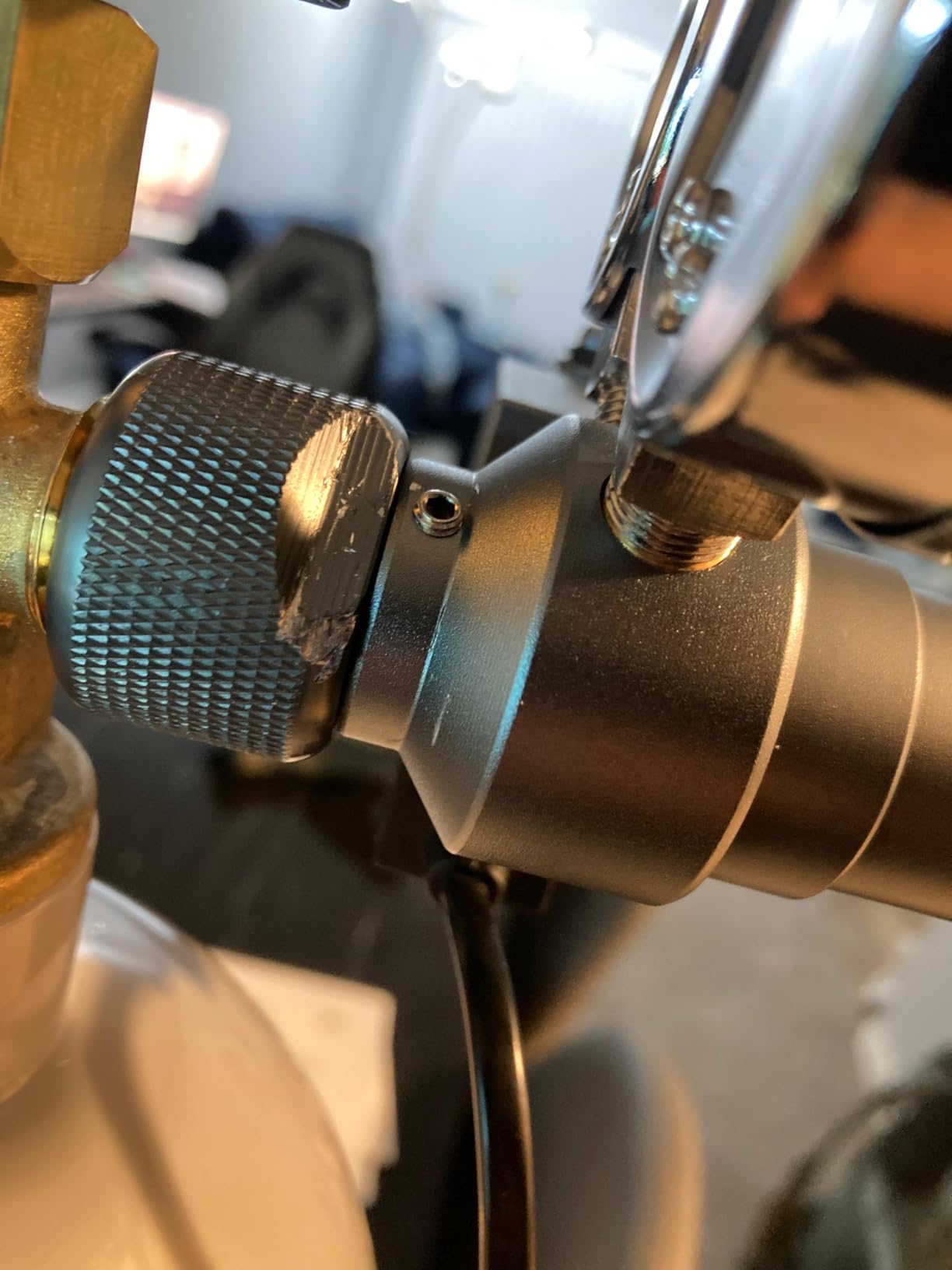
The thickened acrylic bubble counter has a built in check valve and a sensitive fine tuning valve for accurate, observable flow, and it works with most CO2 atomizers and diffusers. A two year warranty is the longest here, with fast replacement service.
It fits American standard CGA320 cylinders. The body is hard aluminum alloy that is both light and corrosion resistant, which is a better material choice than plated steel at this weight.
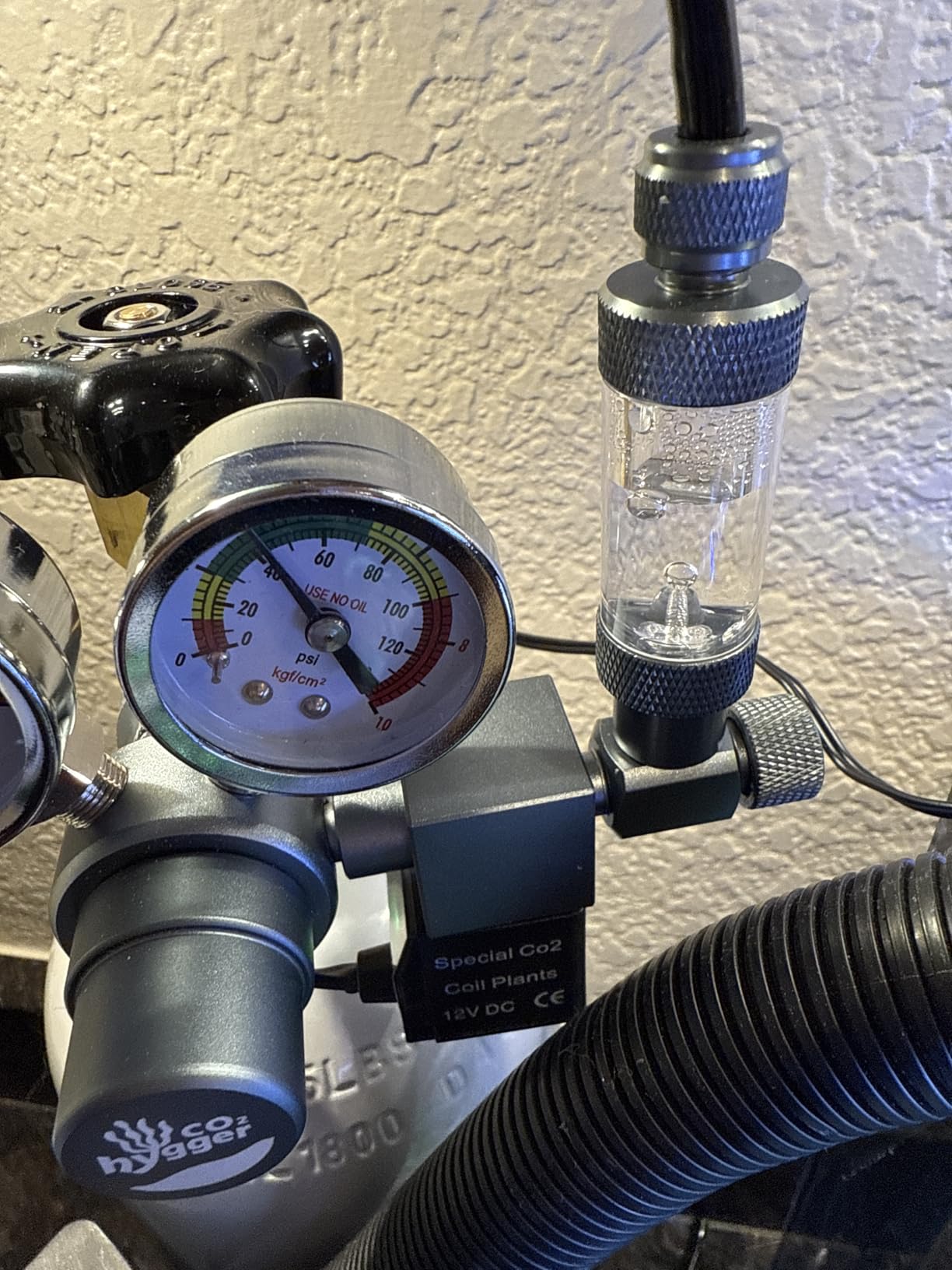
Best for reading tank pressure at a glance
If you judge CO2 by pressure and gauge readings rather than by watching bubbles, the dual dial layout is the feature you will use every week. You can see output pressure fall and know when a cylinder is nearly done.
Where the single stage limits you
There is no adjustment on the low pressure side, only a gauge, so it is a single stage design and will not hold large flow at very low tank pressure. The needle valve is sensitive to small turns, the bubble counter can need repeated disassembly, and CGA320 threading excludes Australian Type 30 bottles.
12. DaToo CGA320 CO2 Regulator
DaToo Aquarium CO2 Regulator with Bubble Counter Solenoid Check Valve Adjustable for Standard US Planted Tank CO2
- Entry level route to timed cylinder CO2
- Pressure reducing valve for stable output
- Cold touch solenoid reduces heat
- Works with most high density tubing
- Widest spread of experiences in this roundup
- Single gauge version lacks the second readout
- CGA320 only
This is the most affordable timed cylinder regulator I found that still includes a solenoid, bubble counter and check valve in one body. It is rated for 150 PSI low pressure and 2000 PSI cylinder pressure, with a pressure reducing valve for continuous output.
The body is high purity aluminum with a stainless steel diaphragm, and the cold touch solenoid technology is designed to reduce heat and is claimed by the maker to last three to four times longer than similar products.
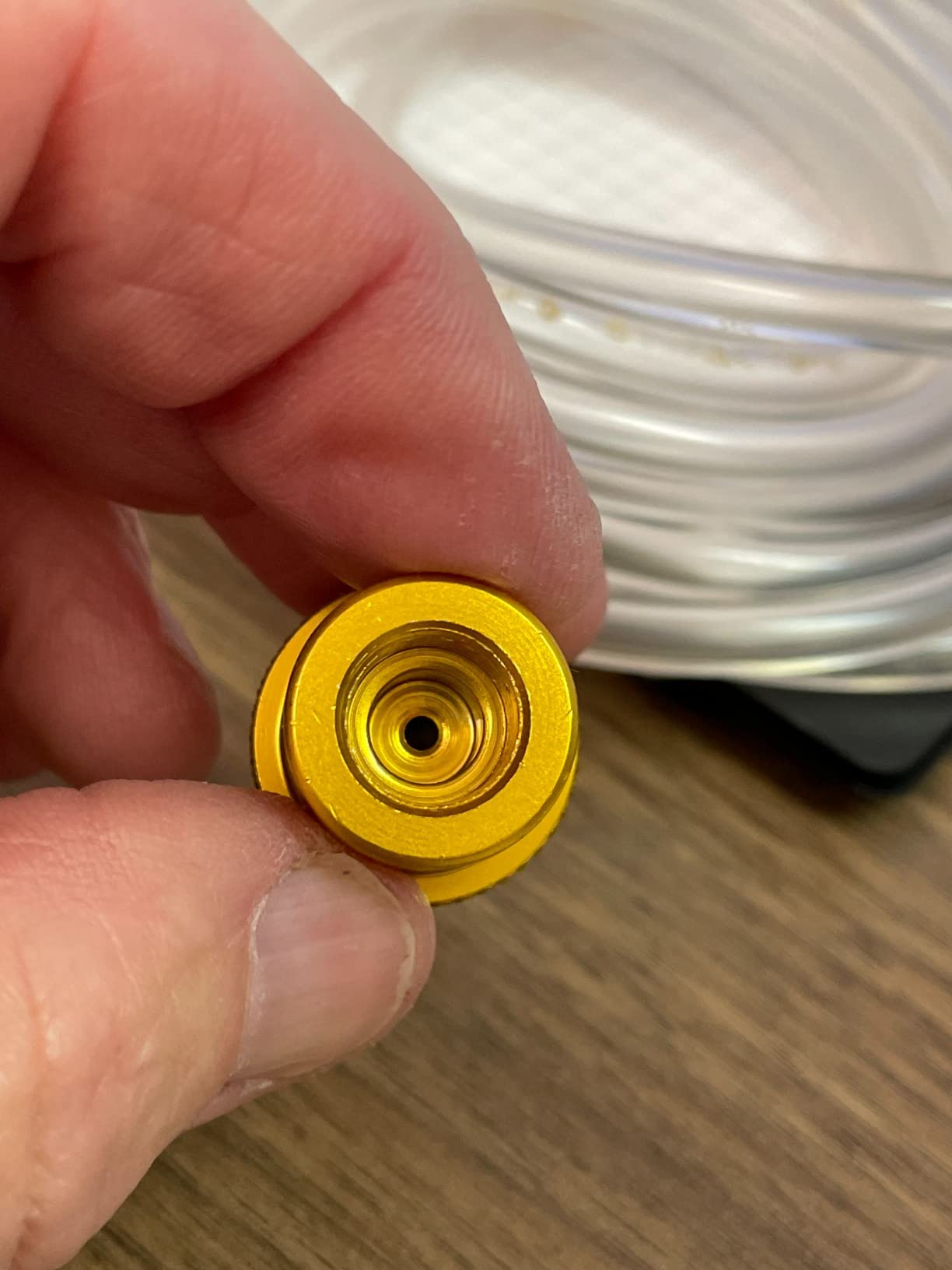
It works with CGA320 CO2 tanks and most high density tubing, and carries a one year warranty. Package size is 9.3 by 6.9 by 3.6 inches at 1.35 pounds, so it fits a small cabinet without drama.
Dual gauge and single gauge versions are available, which is unusual at this level and lets you pay only for the readout you want.
Best for an entry level timed cylinder setup
For a first cylinder system where the whole point is adding gas on a timer without a large outlay, this does the job. A dual gauge version gives you the same at-a-glance check the higher specification regulators offer.
Where the ratings spread wide
This carries a 4.0 star average with a 10 percent one star share, so expect some variance batch to batch. Owners like the cold touch solenoid and the solid metal body, but the single gauge version loses the second pressure readout.
How to Choose a CO2 System?
Single stage versus dual stage regulators
A single stage regulator drops cylinder pressure to one working pressure in one step, which is fine for tanks up to about 30 gallons. A dual stage regulator separates pre stage and output stage control, so it can push a steady low pressure into a large tank or a long tube run. That is the entire reason for the price gap, and it is the single biggest decision in this roundup.
On my 65 gallon, bubbles per second stopped being a useful measurement because the stream went continuous. If you are past that size, regulate by pressure and measure the water, not the bubbles.
Cylinder choice and where to refill
Paintball bottles are convenient and cheap to swap but hold very little gas, and hobbyists on r/PlantedTank describe them as wasteful for mid size tanks. A 5 lb or 10 lb cylinder is the standard for 20 gallons and up, and refills from welding supply houses, fire equipment dealers or homebrew and beer distributors run far less per year than disposable cartridges or refill packs.
Swapping a prefilled tank for your own empty cylinder is normal practice rather than a hassle. Keep the cylinder upright, secured and away from heat, and never use thread tape on a CGA fitting.
In tank diffuser or inline reactor
An in tank ceramic or glass diffuser is cheap and simple but wastes a lot of gas through large bubbles that rise out unused. An inline atomizer or inline reactor dissolves far more of the gas you send it, often roughly 50 to 100 percent more efficiently, which is why serious setups run the reactor in a sump or a canister filter.
Use a glass or ceramic diffuser in a small nano where there is no sump, and an inline reactor on anything with a filter you can plumb into. Pair the choice with our guide to aquarium LED lighting for planted tanks, since CO2 only pays off when light intensity supports it.
How to measure and target CO2 level
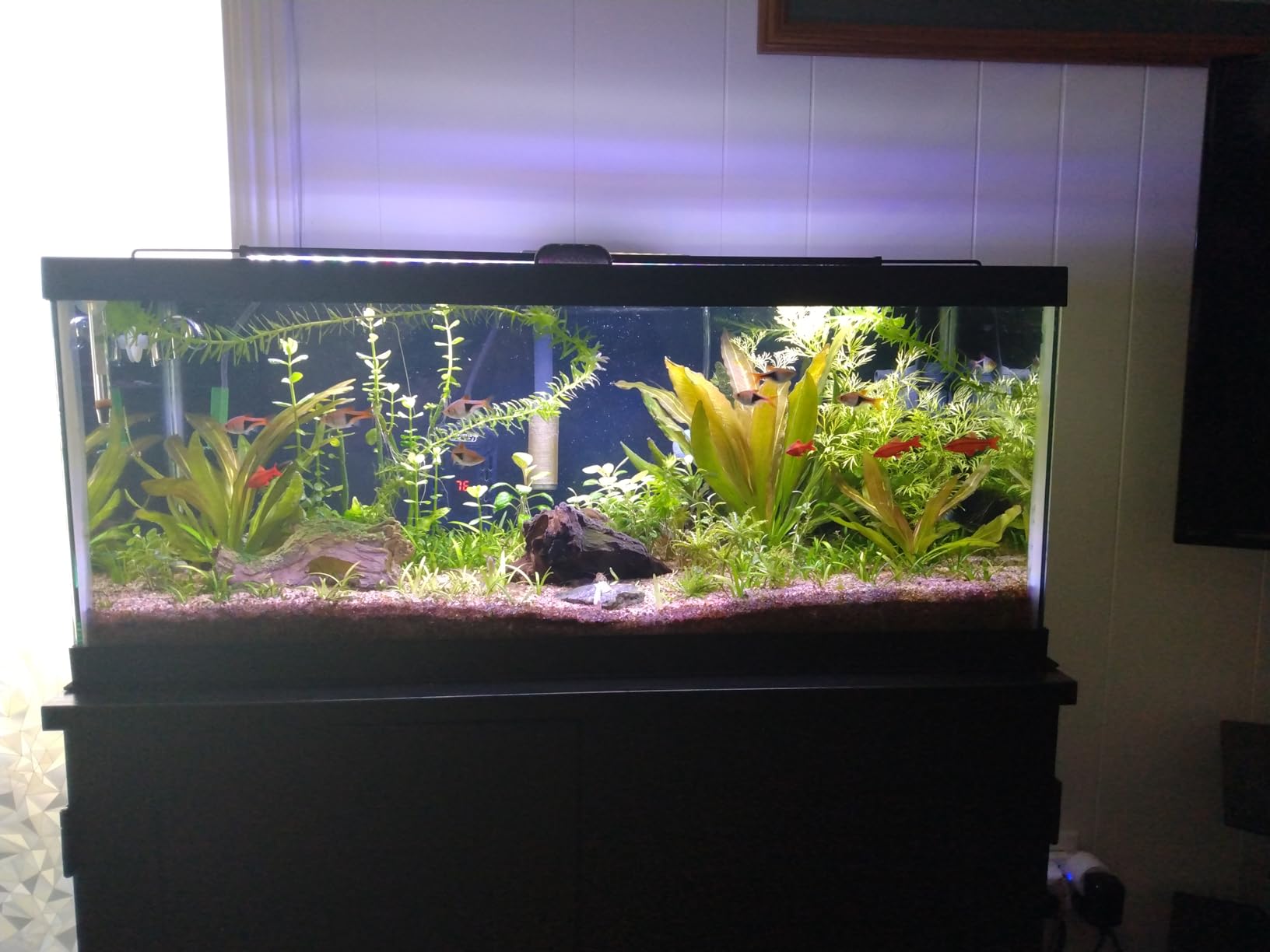
Target 25 to 35 ppm for a normal planted tank, and accept that 20 to 30 ppm suits sensitive fish. A drop checker is useful only below roughly 15 ppm and lags behind reality by 60 to 90 minutes, so a green drop checker is not proof of 30 ppm.
The pH drop method is the one I trust. Take a sample of tank water, aerate it to strip the dissolved gas, and record that degassed baseline pH. Then compare it to the tank pH: a drop of about 1.0 means roughly 30 ppm or more, and 1.2 to 1.4 means 40 ppm or more, with the exact figure depending on your KH.
Timing relative to the light cycle
Start CO2 two to three hours before lights on so the level is already high when photosynthesis begins, and switch it off one hour before lights out so it can off gas overnight. Plants respire at night, so daytime CO2 is what drives growth and pearling.
Run six to eight hours a day at first, then extend only if the pH drop method confirms you are still short. A DST controller or smart plug handles the schedule for a few dollars.
Signs of CO2 overdose and the emergency response
Watch for fish gathering at the surface and gasping, which hobbyists report around 60 to 70 ppm for common tetras and barbs, near 60 ppm for otocinclus, and as low as 40 ppm for discus. A pH crash of more than 0.4 in an hour is the other warning sign.
If you see gasping, kill the solenoid and aerate the tank hard. A 50 percent water change is the accepted emergency fix, and it is far more effective than waiting for the system to correct itself. Temperature swings make it worse, so add new fish while the CO2 is off.
Frequently Asked Questions
What is the best CO2 system for a planted aquarium?
For most planted tanks of 20 gallons and up, the best CO2 system is a pressurized setup with a CGA320 cylinder, a regulator that includes a solenoid, and a diffuser on a timer. Add a dual stage regulator and an inline reactor once you pass 40 gallons or run two tanks. Below that, a stainless bottle generator kit is a sensible alternative.
Is CO2 really necessary for a planted aquarium?
No, not always. A lightly planted tank under 20 gallons with anubias, java fern and crypts grows healthy plants with no gas, and CO2 adds equipment, running cost and a safety consideration you have to manage. Add CO2 when you want faster stem growth, better red colour, carpeting plants or a competition level aquascape.
Can I use DIY CO2 in my aquarium?
Yes, and many hobbyists do. Citric acid and baking soda in a sealed stainless bottle is the most controllable DIY route and pairs with a solenoid and timer. Sugar and yeast in a plastic soda bottle is cheaper but drifts with temperature. Budget for replacements, since plastic caps and bottles are the weak point in DIY kits.
How much CO2 do I need for my aquarium?
Target 25 to 35 ppm dissolved for a normal planted tank, and stay nearer 20 to 30 ppm if you keep sensitive fish. Do not estimate from bubble rate, because a large tank produces a stream too fast to count. Use the pH drop method against a degassed baseline instead, since a drop checker only reads reliably below about 15 ppm.
What are the signs of CO2 overdose in an aquarium?
Gasping fish gathered at the surface are the clearest sign, and hobbyists report distress around 60 to 70 ppm for common tetras and barbs, near 60 ppm for otocinclus, and about 40 ppm for discus. A sudden pH crash is the other warning. Switch the solenoid off, aerate hard and do a 50 percent water change straight away.
Bottom Line on the Best Aquarium CO2 Systems for Planted Tanks
For a first pressurized tank, the FZONE CGA320 DC solenoid regulator is the safest starting point, and the FZONE Pro dual stage unit is the upgrade for large tanks or two tank manifold setups. Where refills are a problem, a stainless bottle generator such as the FZONE 5.5L kit gives comparable control on powders instead of gas.
Match the system to the tank, run CO2 two to three hours before lights on and off one hour before lights out, and verify 25 to 35 ppm with the pH drop method rather than the bubble rate. When you are ready to size the rest of the setup, our aquarium heater guide for large tanks and stand picks cover the other pieces that decide whether a big planted tank works. Every recommendation here is current as of September 2026.