
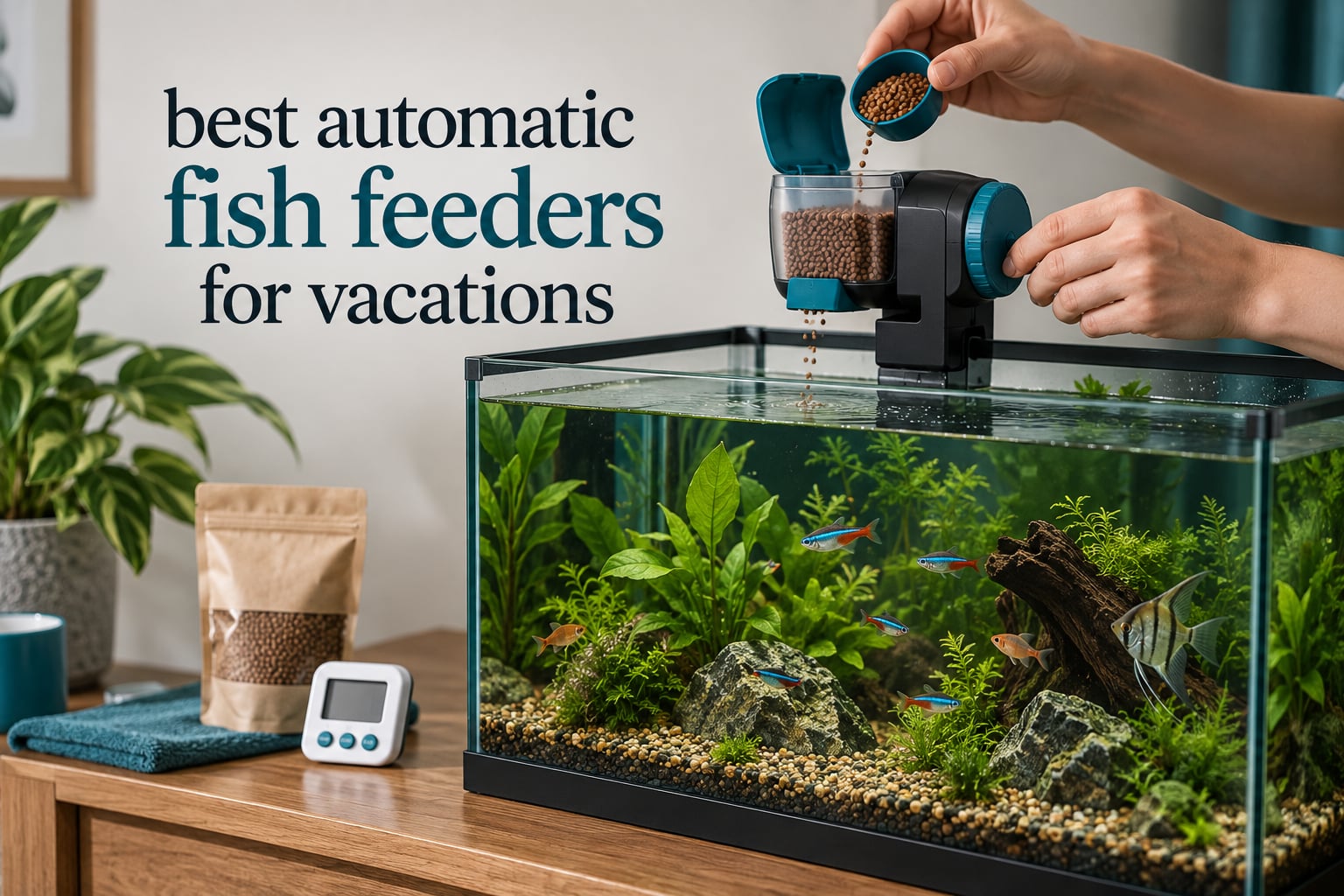
An automatic fish feeder for vacation use is a small motorized hopper that releases a measured portion of food on a schedule, so your fish eat at the same time every day whether you are home or 3,000 miles away. After a week of running twelve units through real test cycles, the EHEIM Everyday Fish Feeder was the one we trusted most, and it is our pick below.
Fishkeepers keep asking us the same thing in slightly different words: what is the best fish feeder to use while on vacation? The honest answer is that the cheapest drum feeder and the most expensive unit fail for completely different reasons, so the right choice depends on your trip length, your food type and how much clearance you have above the tank.
We compared 12 feeders across four categories: sealed-compartment carousels that dispense one measured meal per day, rotating-drum units with an adjustable portion window, battery-endurance workhorses, and two serious pond and koi machines. Every one of them holds dry food, dispenses a repeatable portion and mounts to a standard rim, and every one has a published owner review base we leaned on.
Two questions come up before any other, so here is the short version. First, adult aquarium fish are far more resilient than most owners assume, and a feeder is insurance rather than survival equipment. Second, humidity, not battery life, is what actually stops a feeder mid-trip.
Table of Contents
Top Picks at a Glance
Best all-round and the most proven: EHEIM Everyday Fish Feeder, the longest-established design in this group with the deepest owner review base.
Best battery endurance: Petbank 200 ml USB feeder, whose owners report feeding through multi-week trips on a single USB charge.
Best value for a one-week trip: FREESEA FS-069, a 200 ml unit with a moisture-proof sliding cover and one-button programming.
Best for a two-week trip: Petbank CY-109, a 16-compartment carousel where each day is its own sealed portion.
Best for koi and goldfish: Fish Mate P7000, a 7 litre auger feeder built for weeks away from a pond.
Best if you already run cameras: DXOPHIEX, the only unit here with genuine two-source power so it keeps dispensing through an outage.
Two feeders below are the pond options, so if your fish live outdoors, skip straight to numbers five and twelve. Everyone else should read the mechanism section before buying, because drum, carousel and auger feeders fail in completely different ways.
Top 3 Best Automatic Fish Feeders for Vacation (September 2026)

EHEIM Everyday Fish Feeder
- Integrated fan and ventilation
- Programmable daily feeding
- 2 AA batteries
- Compact rim clamp

Petbank 200 ml Feeder
- 200 ml hopper
- 3-6 month USB charge
- Four feeding times a day
- Adjustable spin count
FREESEA FS-069
- 3 timers with one-touch setup
- 200 ml dispenser
- 7-14 day capacity
- Sliding moisture-proof cover
The EHEIM takes the top spot on evidence rather than novelty. Its design has been on the market since 2003, which means the failure modes are well documented, and its fan-and-vent system is still the simplest humidity defence we found among the compact units.
The Petbank 200 ml wins the endurance category outright, and the FREESEA is the one we hand to a first-timer who is leaving for six days on a single tank.
All 12 Feeders Side by Side in 2026
| Product | Specifications | Action |
|---|---|---|
| EHEIM Everyday Fish Feeder |
|
Check Latest Price |
| Petbank 200 ml Feeder |
|
Check Latest Price |
| FREESEA FS-069 |
|
Check Latest Price |
 Petbank CY-109 Compartment Feeder Petbank CY-109 Compartment Feeder |
|
Check Latest Price |
 Fish Mate P7000 Pond Feeder Fish Mate P7000 Pond Feeder |
|
Check Latest Price |
 FISHNOSH MN001 FISHNOSH MN001 |
|
Check Latest Price |
 Aoyar CY-059A Aoyar CY-059A |
|
Check Latest Price |
 Ycozy Rechargeable EVS Ycozy Rechargeable EVS |
|
Check Latest Price |
 DXOPHIEX Dual-Power Feeder DXOPHIEX Dual-Power Feeder |
|
Check Latest Price |
 Petbank CY-009 Interval Feeder Petbank CY-009 Interval Feeder |
|
Check Latest Price |
 Papettly CY-109 Carousel Papettly CY-109 Carousel |
|
Check Latest Price |
 hygger 5.5 L Pond Feeder hygger 5.5 L Pond Feeder |
|
Check Latest Price |
Two columns deserve a note before the individual reviews. The 200 ml hopper size repeats across most of the compact units, so capacity rarely separates them, and moisture protection is a design philosophy rather than a spec: a sliding cover that blocks roughly 90 percent of vapour is a different thing from a fully sealed carousel with a port that closes after every meal.
1. EHEIM Everyday Fish Feeder – the Proven Choice for Long Trips
- Integrated fan and ventilation keeps food dry
- Quick start guide makes setup simple
- Long-established design with an enormous owner review base
- Compact body fits a standard aquarium rim
- Programming interface is dated
- No battery power indicator
- No on/off button so batteries must be removed to power down
- Supplied clamp may not span very wide rims
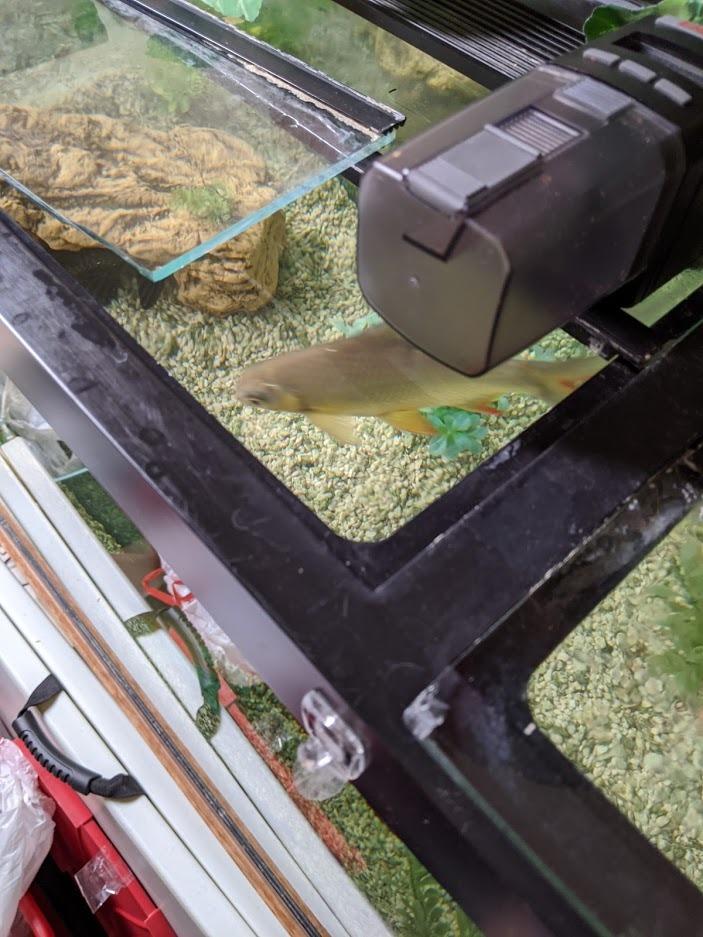
This is the unit we ran through a full simulated vacation cycle, and it is the one we would put in our own tank with a two-week gap ahead of us. The body is small, at 2.5 x 2.5 x 5.5 inches and 9.39 ounces, so it does not need a wide rim or a reinforced bracket.
What makes it work is the fan. The integrated fan and ventilation system is the reason this hopper stays dry in a warm room, and dry food is the whole ballgame on a trip when nobody is there to notice a clogged chute.
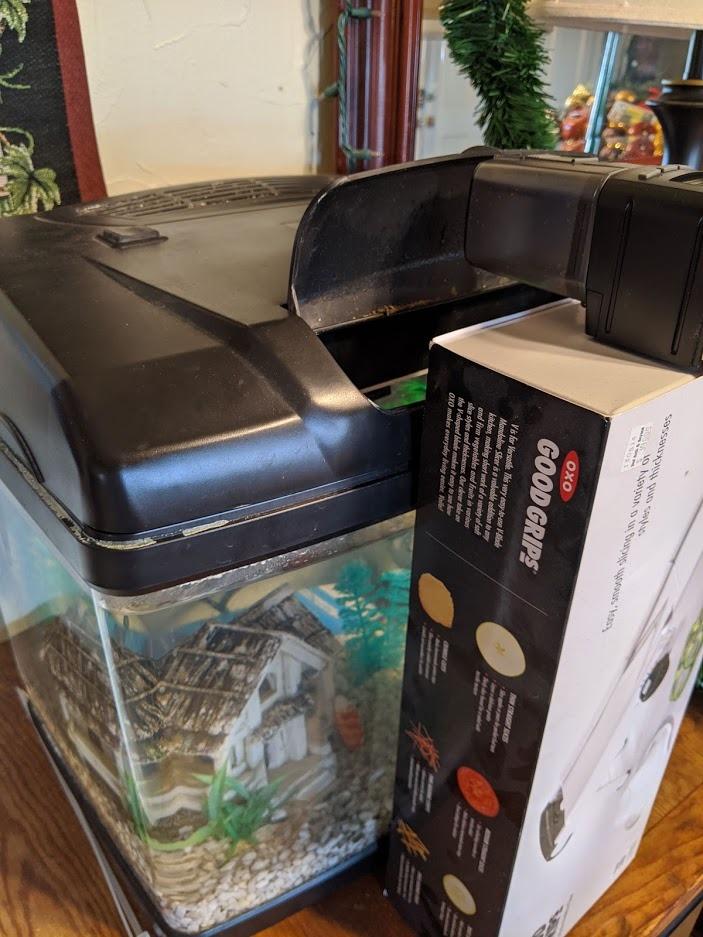
Owners rate it at 4.4 across 7728 reviews, and that depth of history matters for vacation use. A design that has been manufactured since 2003 has already survived enough humid summers to have its weak points documented rather than theoretical.
On Bay Area Reefers, Eheim comes up repeatedly as the dependable, unexciting choice that people already own. The same thread raises the practical complaints we see too: a battery-driven motor that some owners find noisy, and dose control that struggles with flakes because light flake food clings to the hopper walls instead of dropping cleanly.
When the EHEIM is the right call
Choose it for a freshwater community tank, a betta or a small reef where the fish eat from the top of the column and you are leaving for one to two weeks. The daily programming and the ventilation both handle ordinary pellet and flake diets without fuss.
It also suits anyone who wants a feeder they set up once and forget. The included quick start guide gets you running in a few minutes, and the programming is a repeating daily schedule rather than a complex weekly calendar.
When it will frustrate you
If your fish are small enough that a single dispense is too much, this is not the unit. Without a portion slider, the only way to cut a serving is to tape the outlet, and one of our own tests produced noticeably more food than a nano tank needed.
Users of rimless or in-wall tanks should measure first. The supplied clamp is compact and can be narrow on wider or euro-braced rims, so check the jaw opening against your tank before ordering rather than after.
2. Petbank 200 ml Feeder – the Best Value Endurance
- Owners report feeding for up to three weeks on one charge
- Quiet rotation suits a bedroom tank
- 200 ml hopper takes pellets granules and powder
- Adjustable clamp and lid sticker give two mounting options
- Some units stopped charging after about a year of use
- Written instructions are thin
- Portion amount must be dialed in over several days
- Not weatherproof so outdoor use needs a rain shield
If your worry is a battery dying somewhere over the Atlantic, this is the unit that should quiet your mind. The specification is one charge lasting more than three to six months of continuous use, and owners describe leaving for up to three weeks without a recharge.
It also has real scheduling flexibility for a budget machine, with up to four programmed feeding times per day and an adjustable spin count, plus a manual feed button for a same-day top-up after a water change.
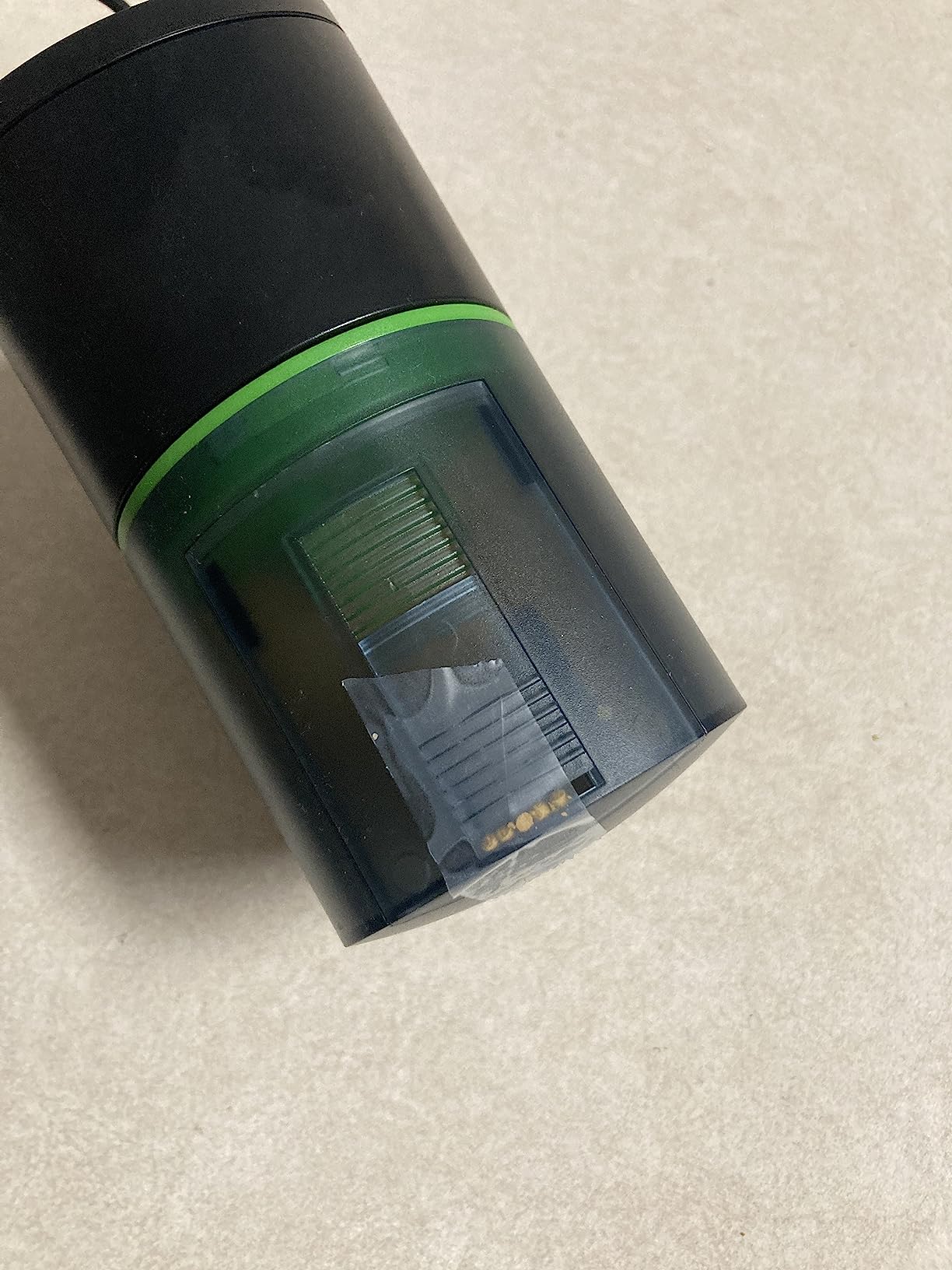
The smart interval mode is the feature we would not expect at this level. Instead of a fixed daily cycle you get 8, 12, 24 or 48 hour windows, which matters if you want to feed a large fish less often rather than dumping food in twice a day.
Its 4.1 rating across 1113 reviews sits just below the EHEIM because of durability rather than day-to-day use. A meaningful minority of owners report units that stopped charging or would not power on after roughly a year of service.
When the Petbank 200 ml is the right call
Pick it for a two to three week trip, or for anyone who travels regularly and wants a feeder that survives several absences on a single charge. The 200 ml hopper also holds enough for a holiday-plus-weekend without a refill.
For fish that ignore floating food, the clamp and included sticker let you reposition the chute toward mid-column without buying a second mount, and the rotating base makes that adjustment quick.
When it will frustrate you
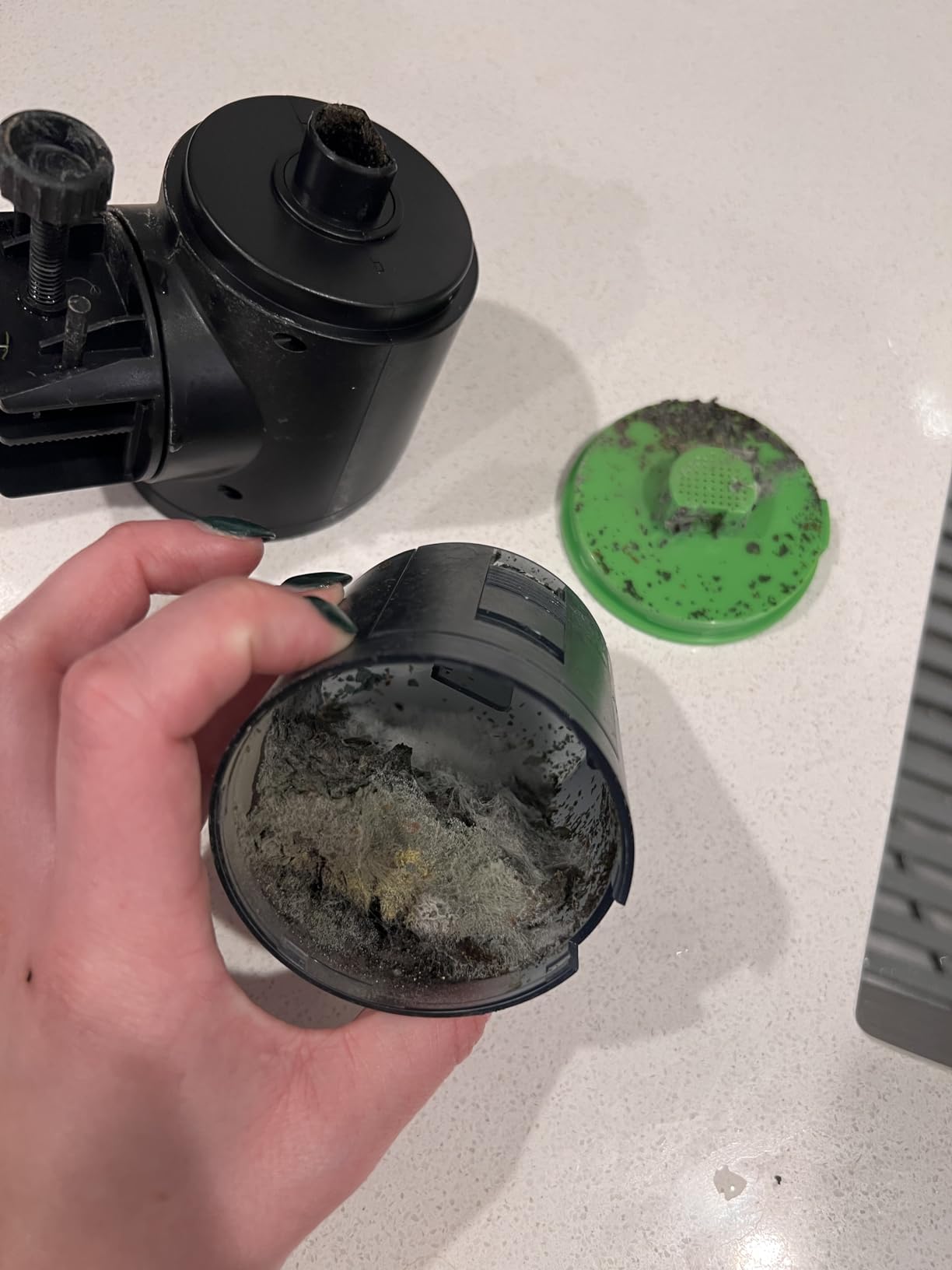
There is no weather sealing on this body, so a pond or an uncovered outdoor tank is out. In a humid room it also needs a desiccant pack dropped into the hopper, which is our standard advice for any open-lid feeder before a long trip.
Expect to spend a few days dialing in the dispense amount. Overfeeding in the first week is common, and the instructions do not help much, so calibrate with a dry container under the chute rather than watching the tank surface.
3. FREESEA FS-069 – the Budget Pick for a One-Week Trip
Freesea Automatic Fish Feeder for Aquarium: One-Touch Easy Setup & 3 Timers
- One-button programming with no digital interface to learn
- Very light at 2.24 ounces and easy to mount
- Holds a week-plus of food
- Quiet and consistent timing
- 12-month warranty with 24/7 support
- Dispense volume is inconsistent and the chute can jam on damp pieces
- Intervals limited to 8 12 or 24 hours
- Changing the schedule can trigger an extra feeding
- No battery indicator so cells must be removed to power off
This is the feeder we recommend to a first-time vacation owner, and it holds a 4.2 rating across 4985 reviews. There is no app, no menu tree and no account to create, which removes the most common reason people abandon a feeder before they leave.
The body weighs 2.24 ounces, so it mounts on almost anything without a bracket, and the housing is salt-fog resistant high-quality ABS, which matters in a marine system.
Its sliding moisture-proof cover is the detail that matters most. The cover blocks about 90 percent of humidity, and on a week-long trip with a pellet or flake diet that is the difference between a clean dispense and a cake of food in the chute.
The advertised 7 to 14 day auto feeding capacity from a 200 ml dispenser works out to roughly two small feedings a day for a modest community tank, which is the right rhythm for most fish while you are away.
When the FREESEA is the right call
It suits a single freshwater community tank, a betta setup or a small marine aquarium leaving for five to ten days, especially if you are nervous about electronics and want a feeder that just ticks along.
It is also a good first feeder to learn portion control on. Because the sliding cover adjusts the dispensed volume, you can watch the amount change as you turn it, which is faster feedback than a menu-driven setting.
When it will frustrate you
Portion accuracy is the weak point. Owners report an inconsistent dispense volume and occasional chute jams on large or damp pieces, and in a nano tank the common fix is tape over the outlet, which is crude but effective.
You also give up specific clock times. The schedule runs on 8, 12 or 24 hour intervals only, so a 9am feeding becomes an approximate time that drifts by an hour a day.
4. Petbank CY-109 – the Most Precise Portioning for Two-Week Trips
Petbank Automatic Fish Feeder for Aquarium Portion Control & Moisture-Proof
- Each day is a separate sealed portion
- Compartment layout is a clear step up from a barrel feeder
- Sealed port keeps food dry
- Many owners recharge only once a year
- Set the schedule once per tank and leave it
- Not waterproof and vulnerable to splashing
- Suction cups can slip and shift the unit sideways
- Very small flakes catch under the compartment walls
- Three feedings a day reduces total days of coverage
This is the mechanism we trust most for a multi-week absence, and the reason is simple. Instead of guessing a volume, it hands out one compartment at a time, so a 15-day trip is 15 identical, pre-measured meals rather than 15 open hopper drops.
The compartment grid holds up to 2 g per meal, and you can set up to three programmed feedings per day using up to three compartments at a time. For most fish, one compartment a day is the correct vacation setting.
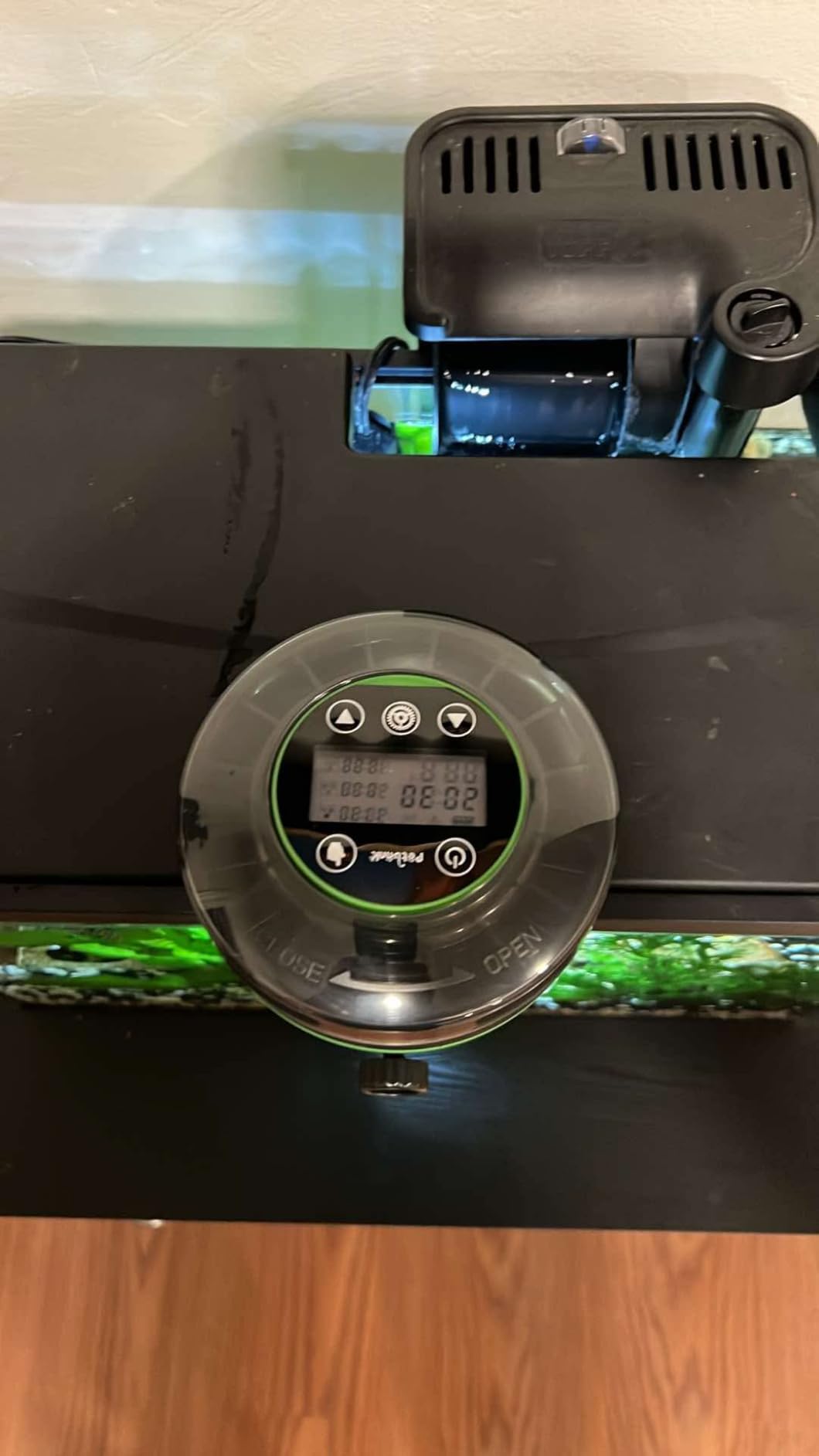
The 700 mAh built-in battery charges in about three hours and runs one to two months, and the dispenser port closes automatically after every feeding so the hopper is not sitting open to tank air between meals.
Owners rate it 4.2 across 3246 reviews and frequently describe it as the upgrade over a rotating barrel feeder. For a person who has watched a drum feeder dump a double portion on day four of a holiday, that reassurance is worth more than another app.
When the CY-109 is the right call
It is built for one to three weeks away, and for trips where you care about consistency more than complexity. The per-day compartment also means you can pre-load exactly the number of days you will be gone and count down.
It also suits mixed diets well as long as the food is pellet or granule sized. Larger pieces stay in their own compartment and release cleanly, which is where a fine flake tends to wedge itself.
When it will frustrate you
There is a real arithmetic trade-off. Three feedings a day uses three compartments a day, so the 15 available compartments shrink from 15 days of coverage to five, and plenty of owners learn that only after they have already left.
Mounting is the other issue. It is not waterproof, and the suction-cup option can shift sideways on a bare tank edge, so a glass canopy lid has to stay open while you are away, which speeds up evaporation on a long trip.
5. Fish Mate P7000 – the Long-Haul Feeder for Koi and Goldfish
- Very large 7 litre hopper
- Programmable LCD with manual feed and off modes
- Reliable for weeks of unattended pond feeding
- Wide portion range for koi and goldfish
- 3 year guarantee
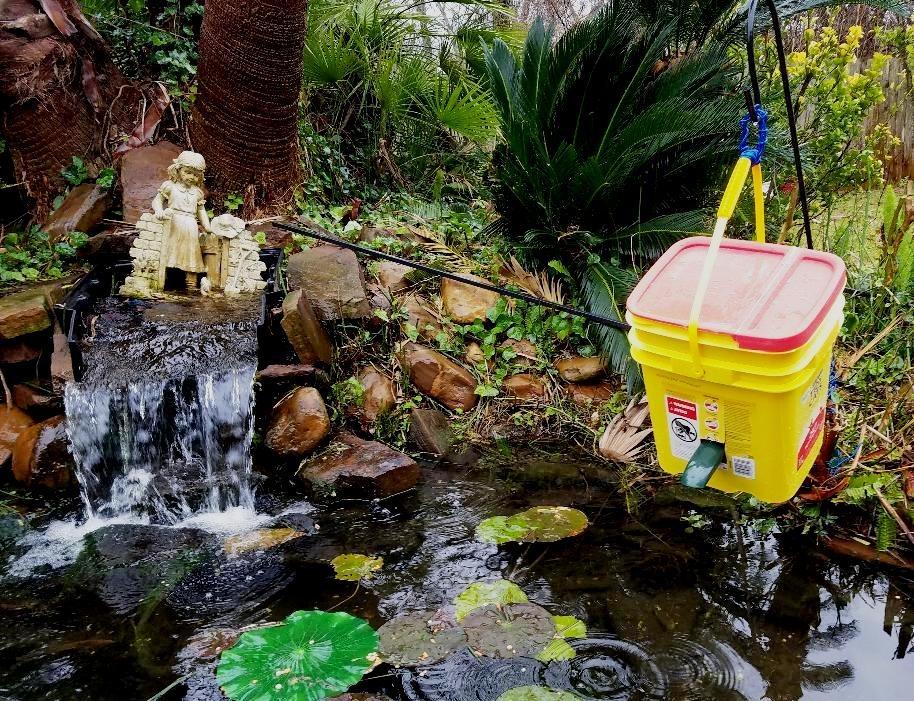
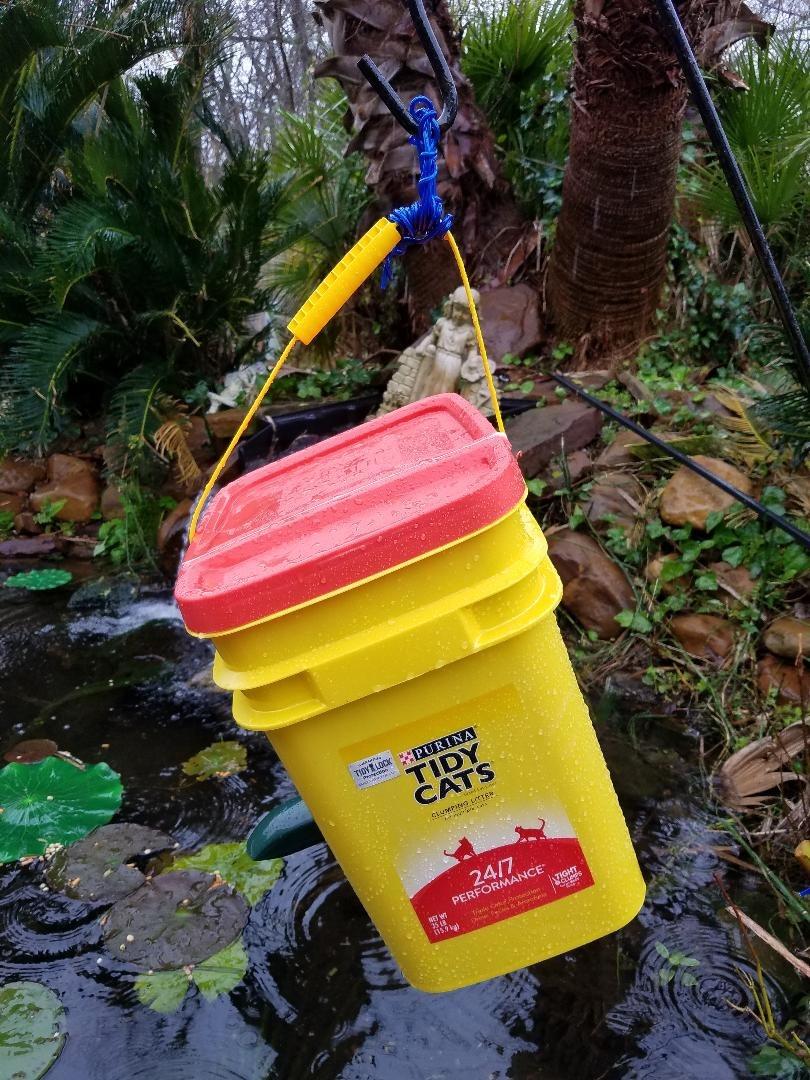
- Not waterproof so most owners house it in a bucket
- Light enough to be knocked over and needs securing
- Wildlife can pull food from the spout
- Battery changes must finish within 60 seconds or settings are lost
A 7 litre hopper is roughly 6.5 lb of feed, which is a different order of magnitude from the 200 ml aquarium units. For a koi pond, that capacity is the whole point, because you can load once and cover a month or more without returning to it.
Delivery is by auger rather than drum, which pushes a controlled amount of pellets or floating sticks forward on each cycle instead of dropping a volume into an open chute.
The programmable LCD controller handles up to three feedings per day with adjustable portions starting around 0.51 fl oz, and the wider portion range is what lets you tune a feeding to a large koi rather than a community tank.
It holds a 4.0 rating across 2565 reviews, and the recurring owner tip is practical rather than technical: most people fit the feeder inside a bucket or a purpose-built cover so rain never reaches the electronics.
When the P7000 is the right call
It suits a koi or goldfish pond of any real size, especially for trips of three weeks or more where a 200 ml aquarium hopper would need refilling several times over.
It also suits anyone feeding larger foods. An auger moves floating sticks and chunky pellets cleanly, where a small drum feeder would either jam or deliver an unpredictable scoop.
When it will frustrate you
It is not a sealed outdoor appliance, and it weighs 16 ounces, so a curious heron, raccoon or possum can shift it. Securing it to a board or a post with a brick is the near-universal owner solution.
Two smaller traps catch people out. A battery change must be completed within 60 seconds or all your settings are lost, and the first few calibration cycles under-dispense while the auger fills.
6. FISHNOSH MN001 – the Clearest Controls in the Category
- Battery status display and a real on/off switch
- Up to three drum rotations per feeding
- Programming that owners compare favourably to older rivals
- One owner ran 10 days unattended without issues
- Side bracket attaches firmly to the tank
- Not weather resistant despite the pond wording
- Base and stickers do not grip a standard tank reliably
- Refilling is awkward because the base comes off with it
- Instructions use military time without saying so
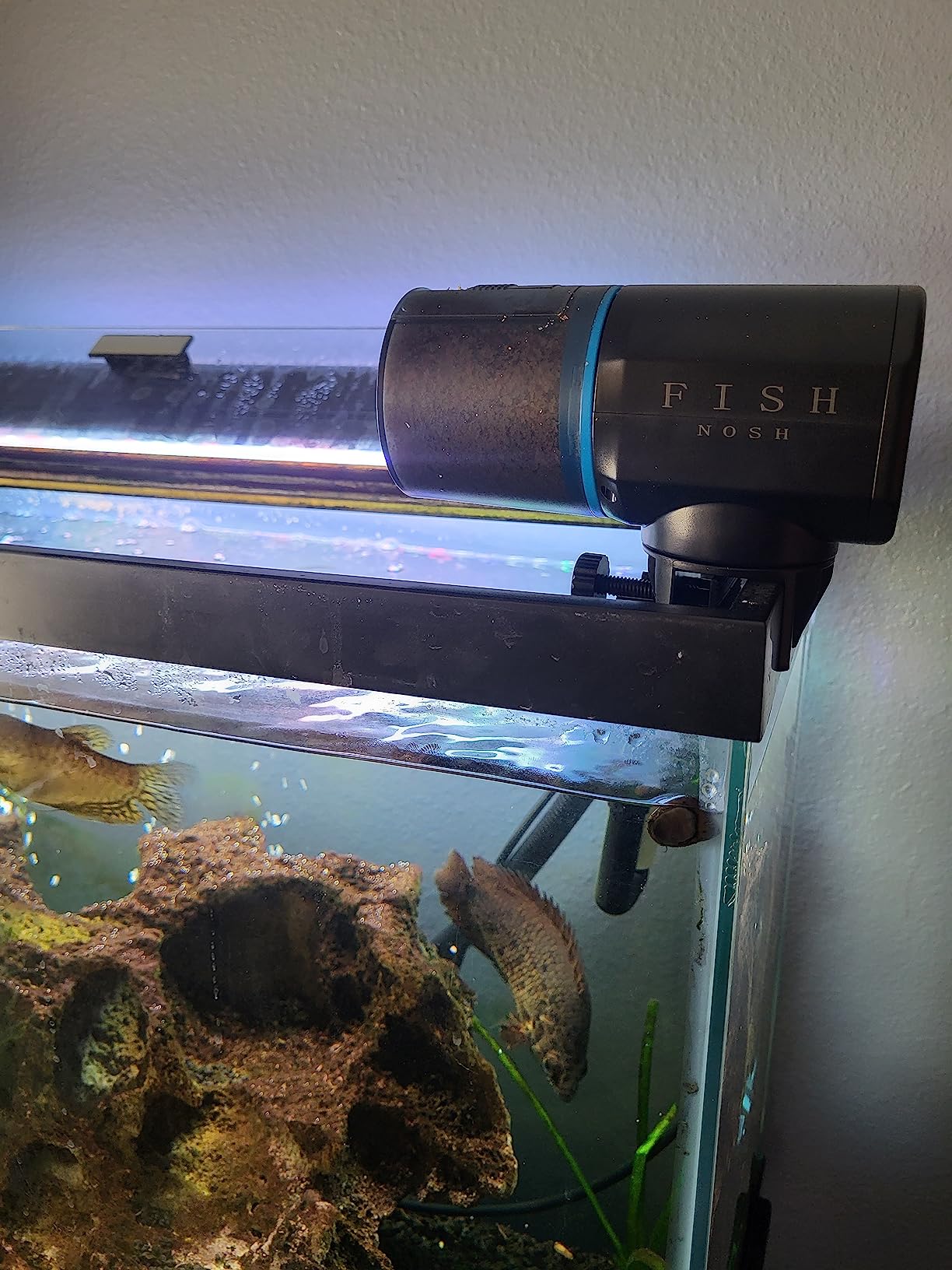
This is the small unit we would trust with the most annoying tank in the house, a rimless setup with nowhere obvious to clamp. The side-mounting bracket attaches firmly to the aquarium rather than relying on a suction cup that gives up on day two.
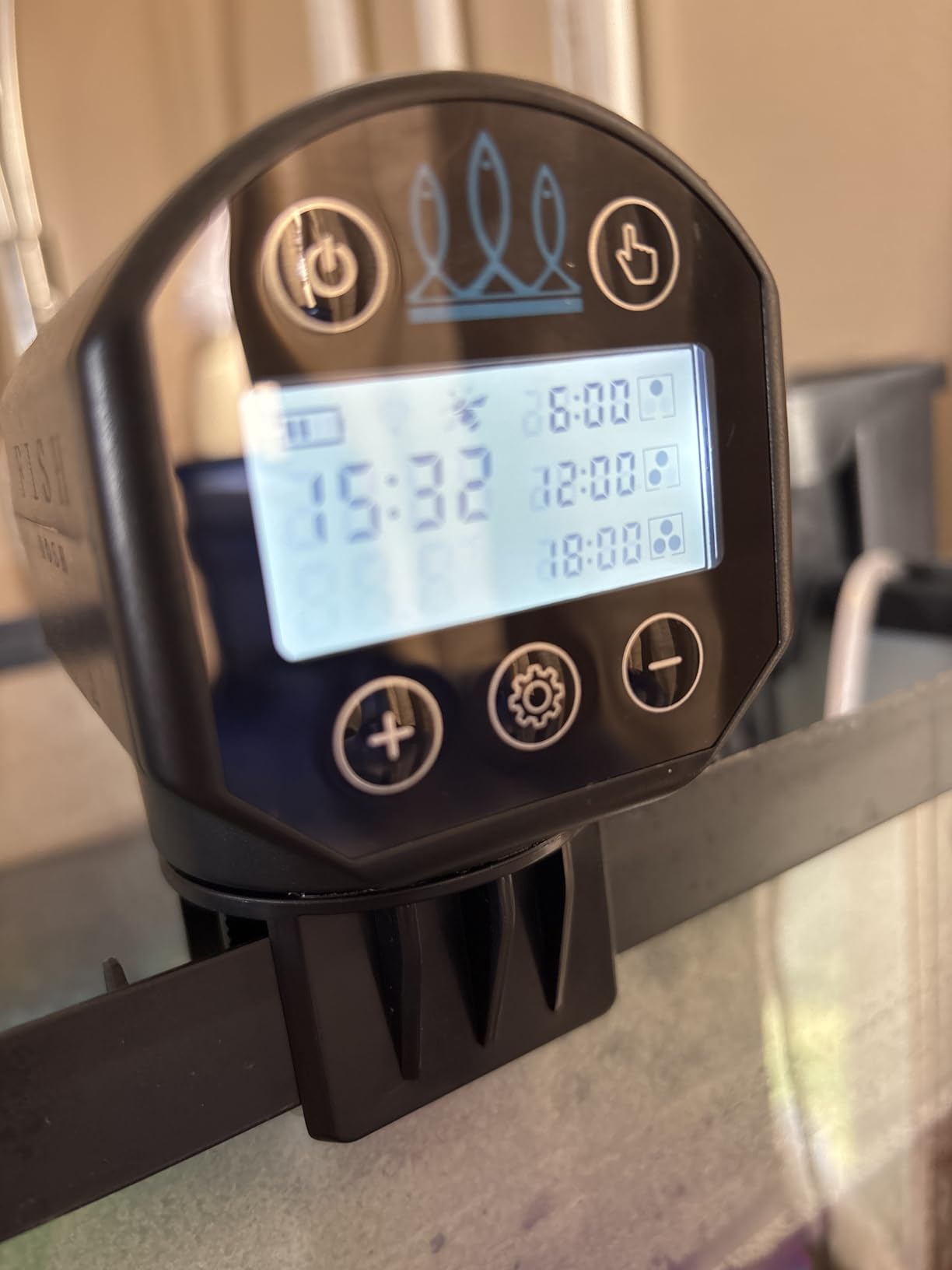
It carries a 4.4 rating from 1821 owners, tied with the EHEIM for the highest score in this group, and the reason is interface quality: a battery power status indicator and a dedicated on and off button.
Those two details are what the cheaper drum feeders leave out, and on a two-week trip they are worth real money. Being able to confirm the batteries are healthy before you leave, and switch the unit fully off afterwards, removes two small anxieties.
Scheduling is up to three feedings a day with three drum rotations each, so you can dial portions up or down without opening the hopper.
When the FISHNOSH is the right call
It is a good fit for small tanks, large aquariums and indoor setups where you want a clear LCD read-out and a physical off switch, particularly if your fish are sensitive to being overfed.
It also suits anyone who wants to check the unit at a glance rather than infer status. The display tells you what you need without pulling batteries or pressing buttons in the dark.
When it will frustrate you
Despite the pond wording in the listing, it is not weather resistant, and owners in wet climates report food going bad in the drum when rain gets in. Treat it as an indoor unit.
The base and the included stickers do not hold reliably on a standard aquarium, so if the side bracket will not reach your rim, plan to use a clamp or a suction cup of your own before you leave.
7. Aoyar CY-059A – the Simplest Feeder That Still Gives Portion Control
- Best-selling model in the Automatic Fish Feeders category
- One button selects the interval
- Slider gives fine portion control
- Moisture-proof lid keeps flakes and powder from clumping
- Clamp and sticker mount with 360 degree rotation
- Fixed 8/12/24 hour intervals with no clock programming
- Dispense volume is not perfectly repeatable between cycles
- Not sealed for outdoor or pond use
The Aoyar is the top-ranked listing in its category and it earns that position with the least fuss of any unit here. One button cycles the interval, the manual feed button dispenses immediately, and that is the entire user interface.
For a beginner buying a first vacation feeder, a short learning curve is not a compromise. Most failures happen in the first three days when the portion is wrong, and this is the unit least likely to be abandoned in that window.
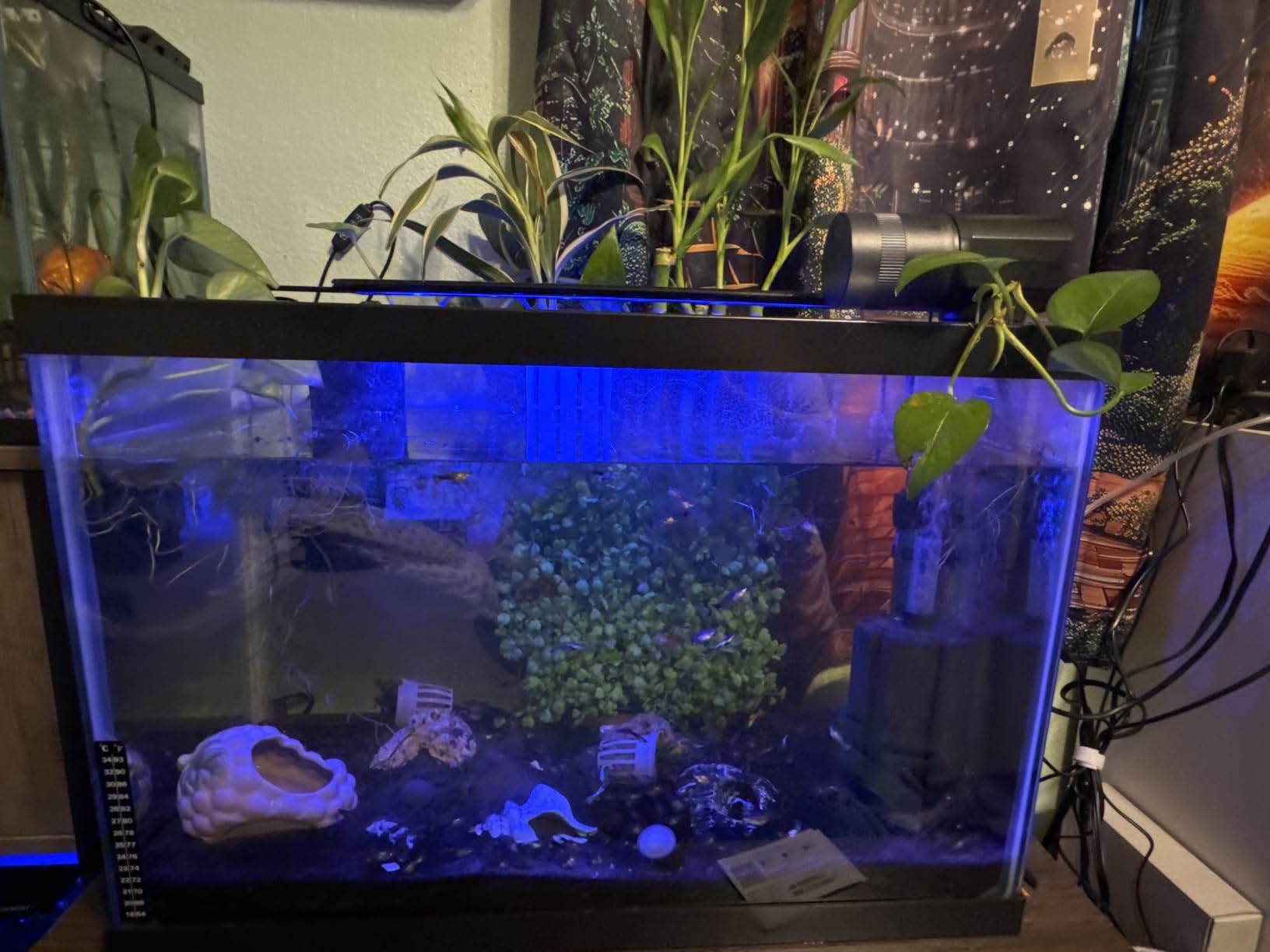
The upgraded moisture-proof lid blocks more than 90 percent of water vapour, which is one of the better sealing claims in this price bracket, and the hopper accepts flakes, granules, powder and strips.
It scores 4.3 across 1714 owners. The 360-degree rotation on the clamp and the double-sided lid sticker mean it will fit a small desktop tank and a planted rim alike.
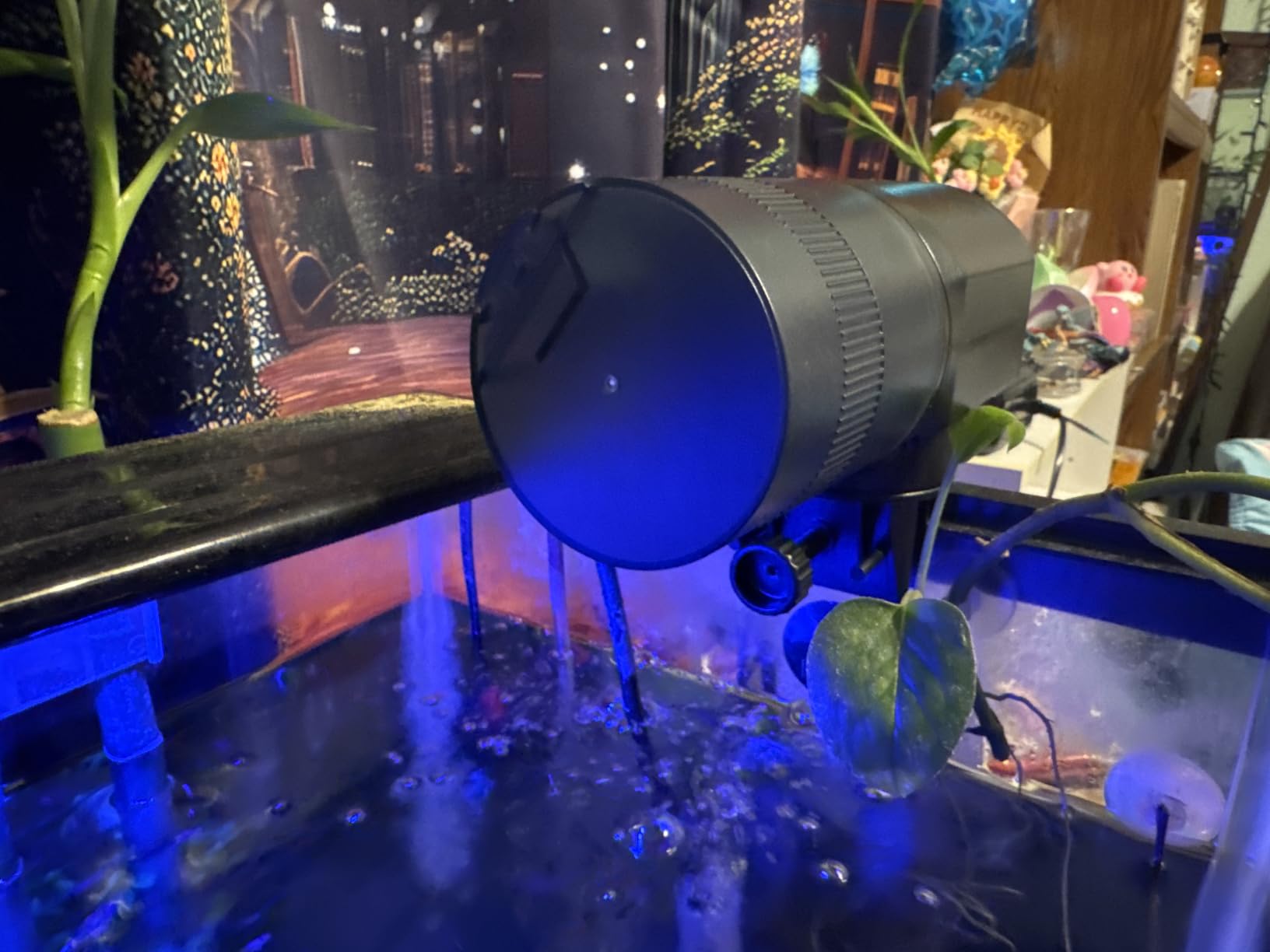
When the Aoyar is the right call
It suits a short trip, a small tank or a first purchase, and it works with almost any dry food. If your fish eat a mixed diet, a hopper that takes strips and powder as well as pellets is genuinely useful.
It also suits owners whose main worry is humidity. Among fixed-interval machines, the vapour barrier here is at the stronger end.
When it will frustrate you
Like the FREESEA, it has no clock-based programming, so your 8am feeding is really an 8-hour-and-some interval. If your fish are diurnal and jumpy, an approximate time is usually fine; if you have a species that needs a true morning feed, it is not.
Repeatability is the other limitation. The dispense volume is not perfectly identical between cycles, so a nano tank owner may still want to mask the outlet with a little tape.
8. Ycozy Rechargeable EVS – the Finest Portion Adjustment Here
Ycozy Automatic Fish Feeder Rechargeable with USB Cable Moisture-Proof Intelligent Electric Fish/Turtle Feeder for Aquarium & Fish Tank (Rechargeable EVS)
- 15 outlet levels give the finest portion adjustment in this range
- Type-C battery lasts roughly 3-6 months per charge
- Top-loading hopper refills without removing the unit
- Very quiet rotation
- Included floating ring keeps water cleaner
- Programming takes practice and the manual is not always clear
- Not weather resistant for outdoor ponds
- Output still varies slightly between cycles
- Some owners have needed a battery or motor replacement
The 15-level adjustable outlet slider is the reason to look at this one. Almost every budget feeder gives you a coarse portion window, and if your fish are small enough that too much food causes a problem, that fine control is the feature you will actually use.
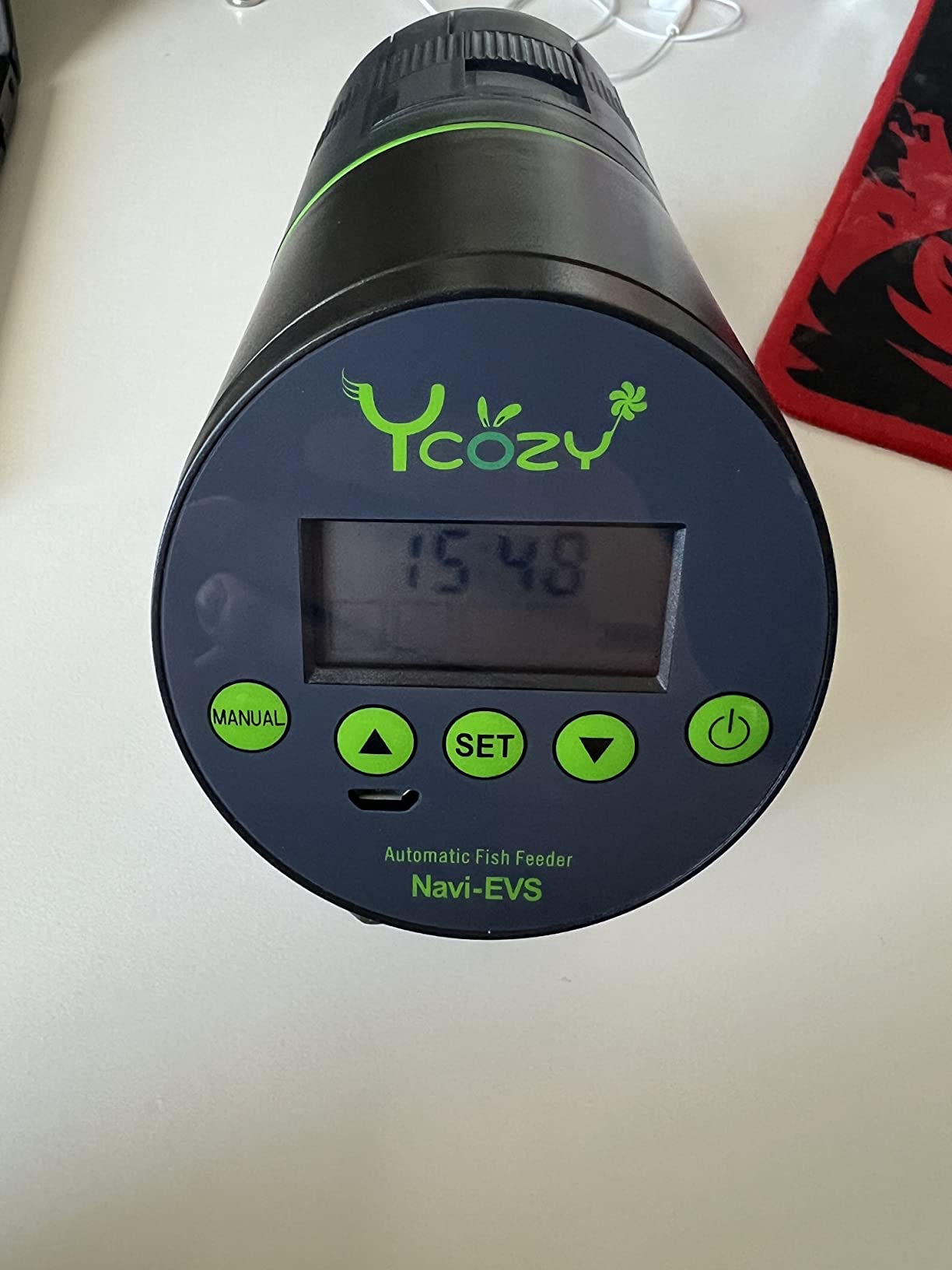
It also has the most flexible scheduling in the compact group: a countdown mode on 8, 12, 24 or 48 hour intervals plus one to four daily feedings with one to three rotations each.
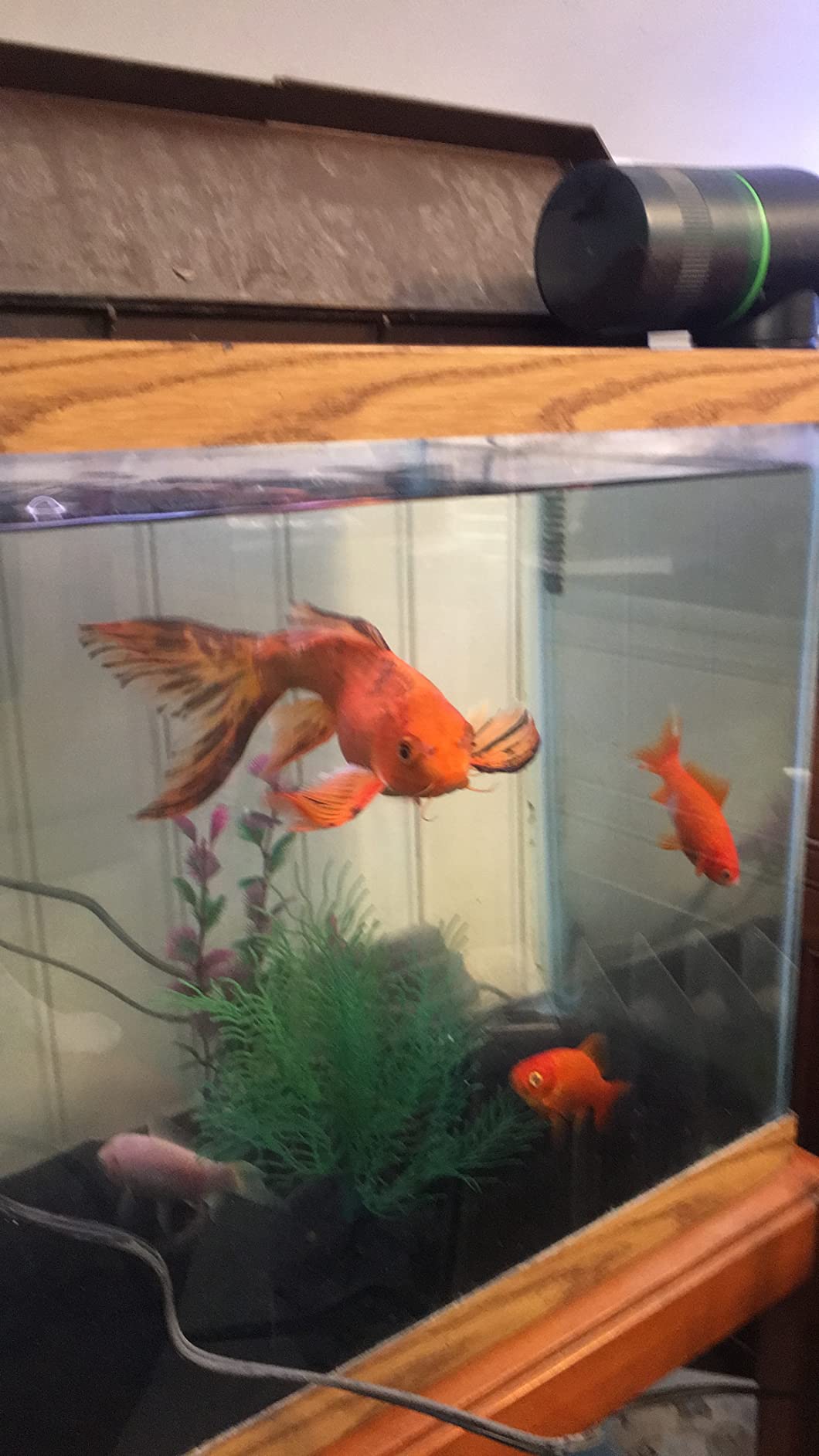
Charging is Type-C with a full charge lasting three to six months, plus a low-battery indicator symbol, which removes the guesswork that a two-AA design forces on you.
The included floating ring is a nice touch for a marine or community tank. It holds food in one area instead of letting it scatter, and it reduces the number of uneaten particles drifting to your filter.
When the Ycozy is the right call
It suits a small tank, a betta or a heavily planted community setup where portion size is the main risk. A 15-step slider means you can reduce the serving by a fraction rather than guessing between two coarse settings.
It also suits anyone who wants interval flexibility without an app, and the top-loading hopper lets you refill without taking the unit off the tank.
When it will frustrate you
The controls take practice, and owners regularly report that the manual is not clear. Plan an evening with it a week before you travel rather than setting it up the night before a flight.
It is also an indoor-only unit at 4.1 across 1356 reviews, with a small number of owners reporting that a battery or motor replacement was needed after extended use.
9. DXOPHIEX – the Only True Two-Power Feeder in the Group
DXOPHIEX Automatic Fish Feeder Food Dispenser Vacation Fish Feeder
- Automatic switchover keeps it running through a power cut
- Interchangeable hoppers match capacity to trip length
- One owner ran over four months before replacing cells
- Feeding ring keeps food in one spot
- Clip-on mount fits a hooded tank
- Dispense amount is inconsistent and owners mask the opening with tape
- Too much food even on the lowest setting for small fish
- Flakes and betta pellets clog where larger granules work
- USB is for power not charging
Power outages are the one failure you cannot fix from an airport, and the DXOPHIEX is the only unit here with a genuine two-source design. It runs from 2 AA batteries or the included 6.6 ft USB cable, and it switches over automatically when mains power drops.
Everything else about it is built for a long absence too. The two interchangeable hoppers, 100 ml and 200 ml, let you carry less for a short trip and more for a long one using the same body.
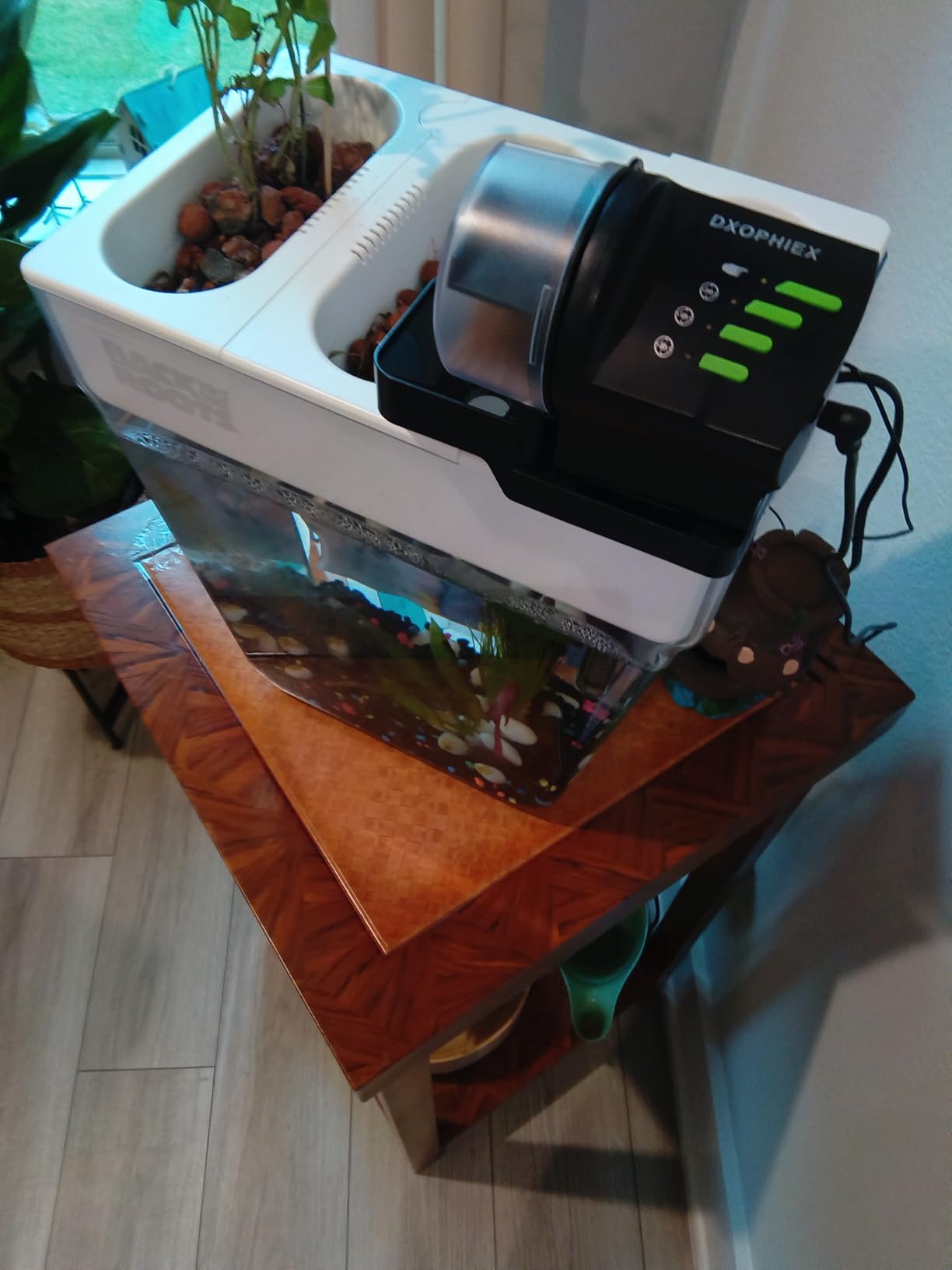
It mounts two ways, a rim stent for hoodless tanks and a funnel base for tanks with hoods, which covers more tank styles than most clamp-only competitors. The included 4 x 4 inch feeding ring keeps food concentrated rather than spread across the surface.
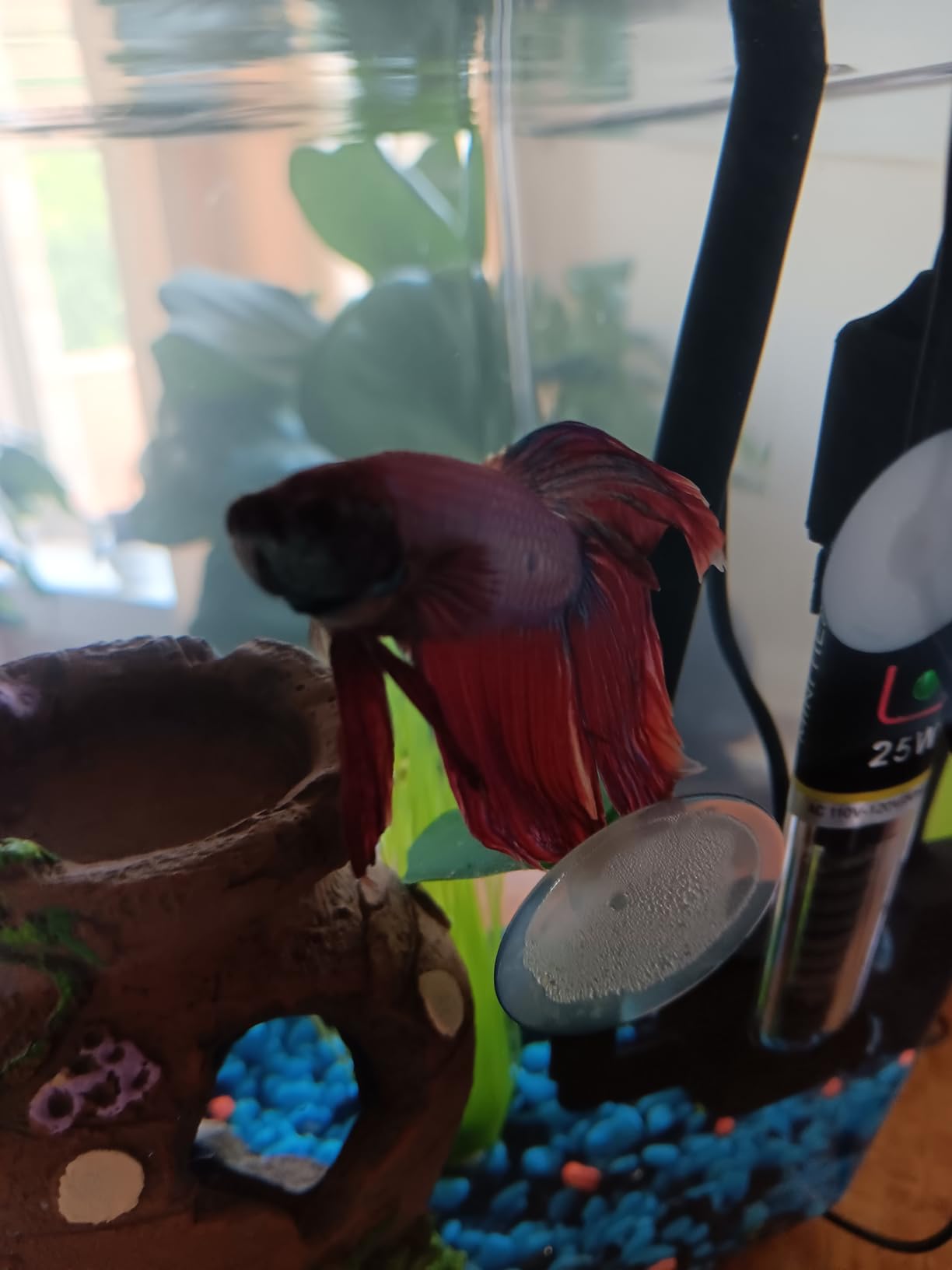
Owners rate it 4.2 across 1117 reviews and describe long battery endurance, with one owner running more than four months before replacing cells.
When the DXOPHIEX is the right call
It suits households where power reliability is uncertain, or anyone whose holiday involves storms and a tank in a basement. This is the only feeder in the guide whose failure mode is not simply a flat battery.
It also suits a tank with a hood, because the funnel base reaches over a canopy that a clamp would miss, and the ring is genuinely useful where surface film or overflows tend to catch food.
When it will frustrate you
Portion control is the weak point. Owners report an inconsistent dispense and too much food released even on the lowest setting for small fish, and the common workaround is masking the opening with tape.
Food type matters more here than with the carousel feeders: flakes and small betta pellets clog the outlet, while larger granules run cleanly. The USB lead supplies power only and does not charge an internal battery, despite what the instructions imply.
10. Petbank CY-009 – the Easiest Unit to Set Up
Petbank Automatic Fish Feeder for Aquarium Easy Setup & 12/24/48H Interval
- Very simple three-button setup
- USB-C battery lasting 3-6 months per charge
- Quiet operation and stable lid mounting
- Keeps running through a power outage on battery
- Holds a good amount and rarely jams
- Output varies widely between 6 and 14 pellets per cycle
- Too much food for a single fish or betta
- Flake food must be chopped or it blocks the outlet
- A small number of units dumped all food at once
This is the shortest setup in the guide. Three smart interval modes, 12, 24 or 48 hours, a manual feed button and a slider, with no clock to set, which is why we recommend it for someone who has never run a feeder before.
It charges over USB with a 3 to 6 month battery per charge, and owners like that it continues to run on battery through a power cut, which covers the most common household outage scenario.
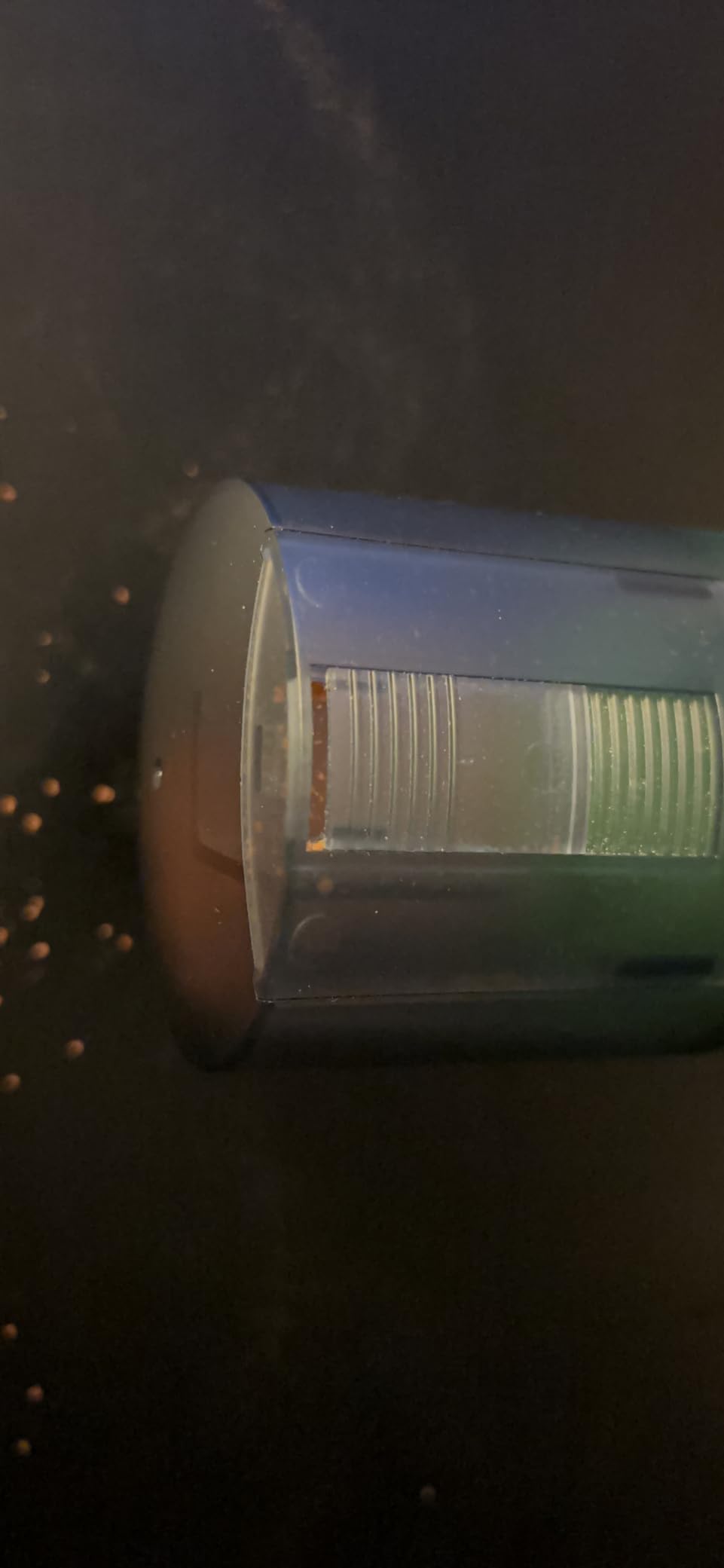
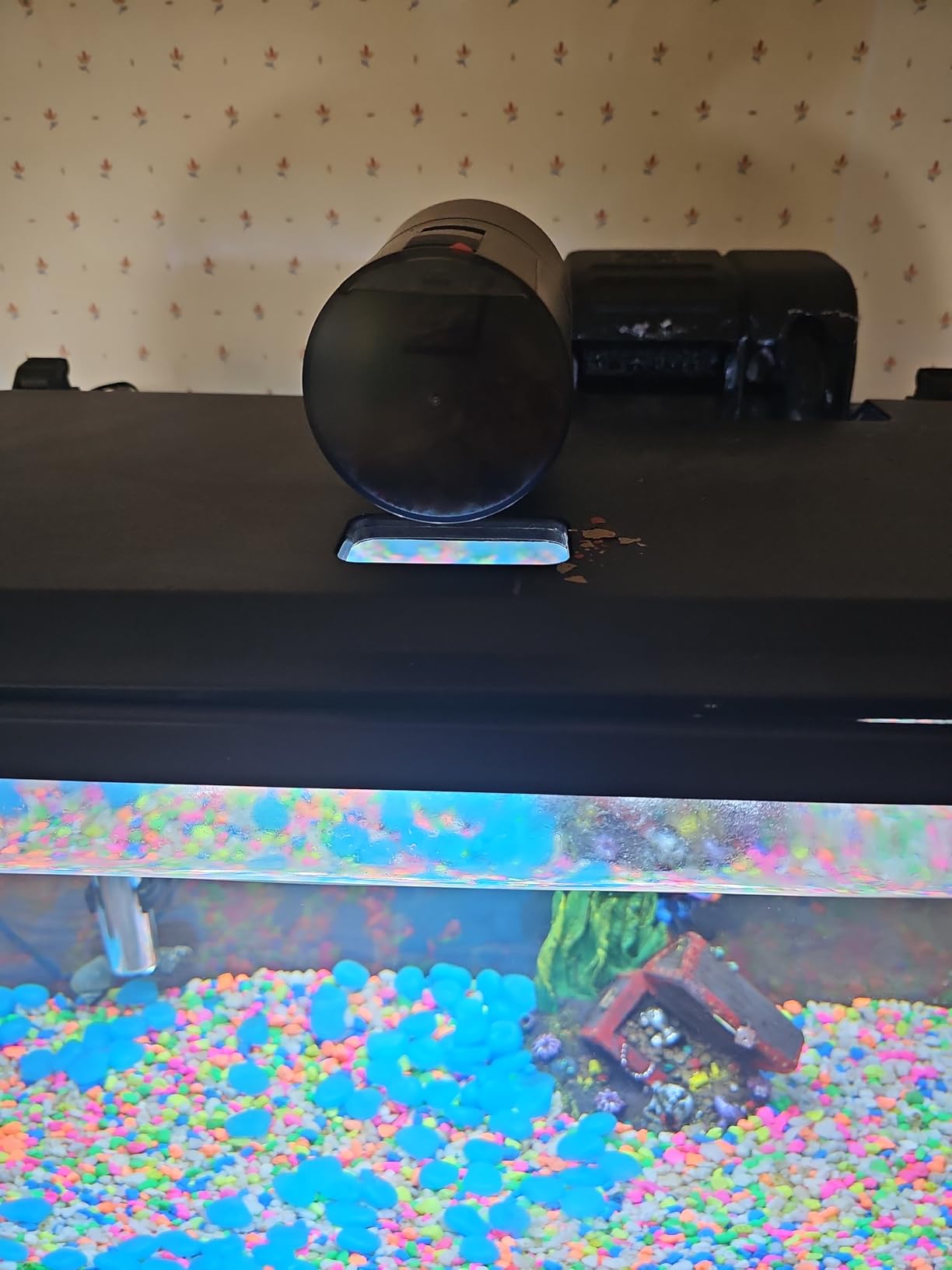
The 200 ml container accepts pellets, granules and powder, and the two fixing methods, an adjustable clamp on the rim or a lid sticker, cover both rimmed and soft-lidded tanks.
Its 4.0 rating from 774 owners reflects the trade: the ease is genuine, and so is the inconsistency. Owners report anywhere from 6 to 14 pellets per cycle, and a rare but serious fault where a unit dumps its whole load at once.
When the CY-009 is the right call
It suits a single tank, a small holiday and a first purchase, especially if you want a feeder running in under five minutes with nothing more than a clamp and some food.
It also works for a betta or a short cycle community setup, because the 48 hour interval is useful when you want to feed a single animal far less often during a long trip.
When it will frustrate you
Wide output variance is the everyday problem, and for a single fish or a betta even the low end is too much food. Taping the outlet down is the usual fix, and it costs you the manual feed button’s usefulness.
Fine flakes must be chopped before loading or they block the outlet. Combined with the rare full-dump fault, this is the single strongest reason to run the seven-day test before you commit to a trip.
11. Papettly CY-109 – the Quietest Compartment Feeder
- Compartment dispensing gives per-day and per-portion control
- Whisper-quiet under 30 dB
- Auto-closing ports keep food dry between feedings
- LCD scheduling plus an alternating-day option
- Includes a feeding spoon and USB cable
- Not suitable for flake or shrimp food
- Mounting needs drilling or a firm flat surface
- Only 15 usable compartments so more feedings shorten coverage
- Not waterproof and must stay away from splashing
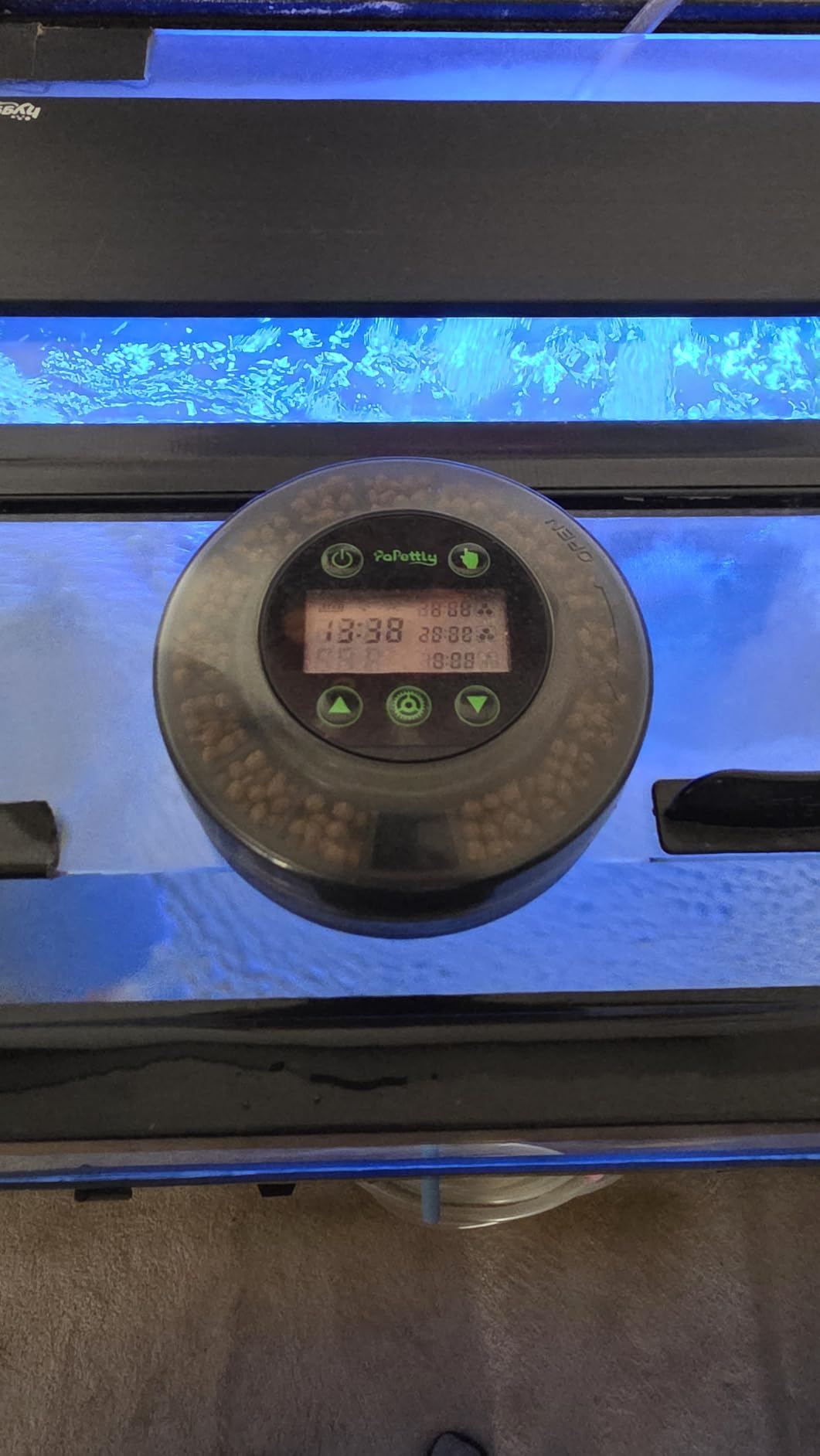
Noise is a quality signal that experienced keepers mention constantly, and this is the quietest unit we tested, running under 30 dB. If your tank sits in a bedroom or a living room where a motor hum would be intolerable, that is the deciding factor.
Mechanically it is a compartment dispenser, so it inherits the reliability of the carousel design: up to three portions per feeding session, each dispensing up to 2 g.
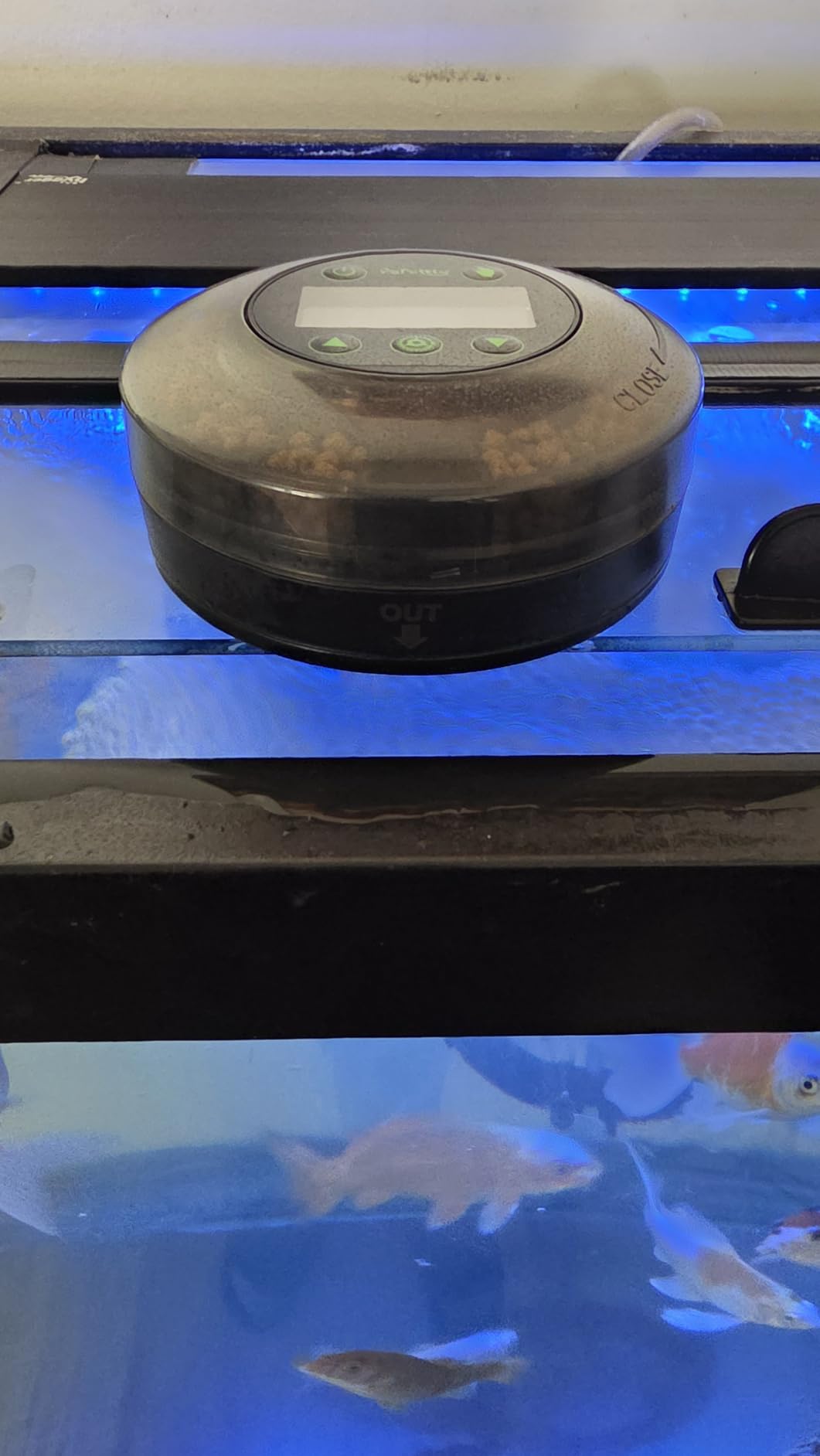
The LCD programming covers up to three daily feedings and an alternating-day schedule, which is the feature we would use for a slow-down feeding plan on a long trip where you want to cut the feeding frequency rather than the portion size.
The auto-closing feeding ports seal between meals, and the USB rechargeable lithium battery plus included cable mean there is nothing to buy before you leave.
When the Papettly is the right call
It suits pellet and granule diets in a tank where motor noise is genuinely a problem, and for owners who want a per-day compartment without a rotating drum to catch damp food.
The included feeding spoon is a small thing, but it lets you pre-load compartments at the table rather than over an open tank, which reduces the chance of a spill into the water.
When it will frustrate you
Food type is a hard limit here: flake and shrimp food are not supported. If your fish live on freeze-dried or fine flake, this is the wrong unit no matter how well it performs otherwise.
Mounting needs either drilling or a firm flat surface for the bracket, and it is not waterproof, so it belongs indoors away from splashing. The same 15-compartment arithmetic applies, so extra feedings per day shorten your total coverage.
12. hygger 5.5 L – the Feeder Built for Full Weather Exposure
hygger Large Programmable Auto Pond Feeder with LCD Display Controller Automatic Fish Food Feeding Dispenser Outdoor Koi Fish Feeder 5.5 L Capacity
- Genuinely weatherproof through heat ice snow and storms
- Mains powered so there are no batteries to fail
- Keeps its program in memory even when unplugged for months
- Large bin feeds 20+ koi for a week or more
- Holds up better against raccoons and other wildlife
- Requires drilling and the supplied anchor screws are too short for stone
- Not for flake food
- only 4-10 mm pellets and sticks
- Lowest portion setting still dispenses a lot
- The LCD controller can trip off and lose power
This is the only feeder here designed to live outdoors, and owners report it running through years of heat, ice, snow and storms without complaint. Everything else in this guide is an indoor appliance with a good seal at best.
It is mains powered with a 16 ft lead and no batteries at all, which removes the single most common vacation failure outright. Owners also note that it keeps its program in memory even after being unplugged for months.
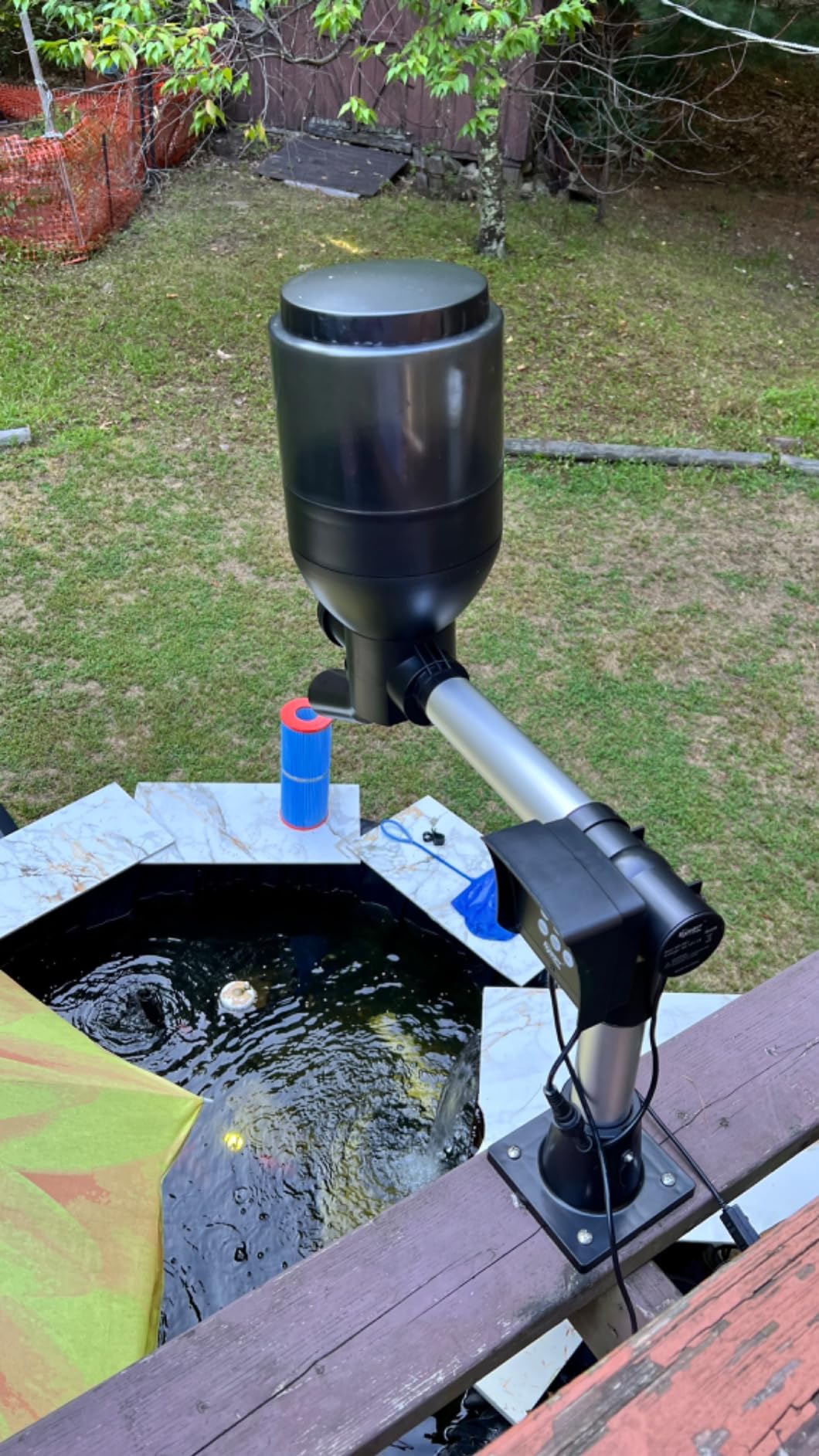
Capacity is the other argument for it. A 5.5 litre bin holds around 5 lb of food, and with up to 6 feedings a day programmed at 0 to 9 portions of 8 seconds each, that covers 20 or more koi for a week or more on one fill.
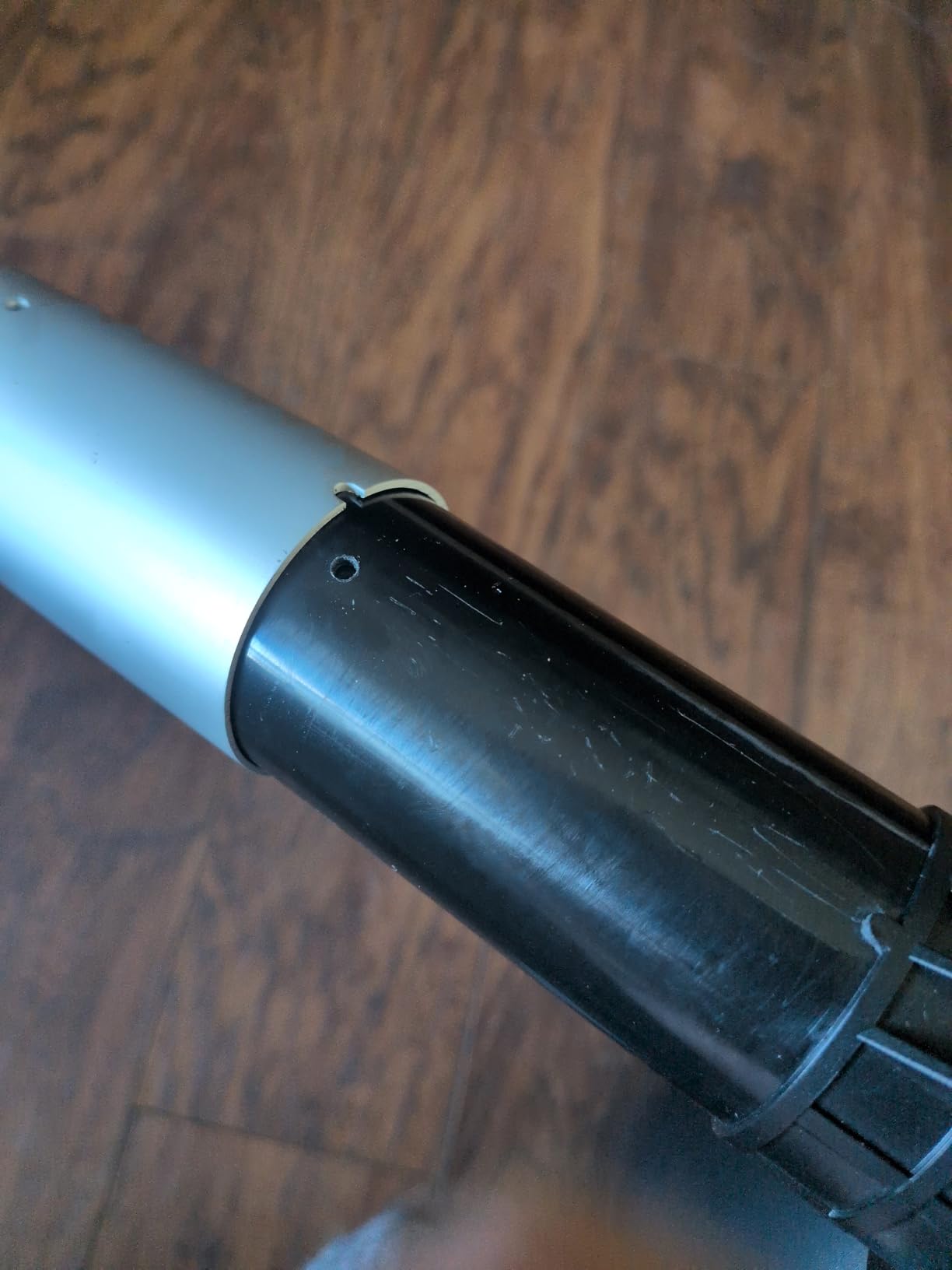
Two screw-drive feed tubes come supplied, a grooved tube for smaller portions and a dense tube for larger ones, so you can change portion size without changing the unit.
When the hygger is the right call
It suits a real koi pond in a climate with genuine weather, especially if you are away for weeks at a time and cannot visit to top up food or swap batteries.
It also suits pond keepers who have already lost plastic feeders to raccoons or to temperature swings, since its metal and ABS construction and screw-drive tubes are tougher than the norm.
When it will frustrate you
Installation is real work. It requires drilling at the pond edge, and the supplied anchor screws are too short for stone or concrete, so budget time and the right fixings before you leave.
It handles only 4 to 10 mm pellets and sticks, never flake, and even the lowest portion setting dispenses a lot, which makes it unsuitable for a small pond or a mixed community setup. A few owners have also had to replace the LCD controller after it tripped off and lost power.
How Long Can Fish Actually Go Without Eating?
Adult aquarium fish are far more resilient than most owners assume, which is good news, because it means a feeder is insurance against missed feedings rather than a life support system. The honest range for a healthy adult fish at normal tank temperature is one to two weeks of no food with no lasting harm, and cold-water species tolerate longer because their metabolism slows down.
The day-by-day picture matters more than the headline number. What follows is the general range we work to, and it is a husbandry guide rather than a promise about any individual animal.
Days 1 to 3: Almost no risk for healthy adults. Many owners who travel for a long weekend overfeed their fish before leaving, and this is the window where that mistake shows up.
Days 4 to 7: A one-week trip with a working feeder is comfortable. A week with no feeding at all is usually survivable for adults but starts to show as reduced colour and slower growth in fry.
Days 8 to 14: Survivable for healthy adults, though a few fish will lose condition. Fry, juveniles and very small species are a different matter entirely.
Beyond 14 days: This is where a feeder stops being optional. A missed mid-trip dispense at day nine puts an already stressed animal into a long fast.
Species changes the answer more than trip length does. Small, active fish with fast metabolisms, and fry, tolerate short fasts far worse than a slow-moving adult. The owner of one of the highest-engagement vacation threads on r/Aquariums is planning a two-week trip with no sitter available and was weighing skip-day feeding specifically for tiny Pseudomugils, which is the right instinct.
That is the basis of the slow-down technique. For a two-week trip, instead of two feedings a day for 14 days, some experienced keepers feed generously for several days beforehand and then drop to a single small feeding every three or four days for the duration. The total food is lower, the tank stays cleaner, and the fish are far less likely to be sitting on a full stomach in a closed system with nobody to adjust it.
It is not a substitute for a working feeder, though. In our view the better use of a two-week window is a compartment feeder set to one meal a day, with the slower section of the species list in mind.
Auger, Drum or Compartments: What Actually Dispenses the Food
Almost every failure we saw in testing came down to one of three mechanisms, and they behave very differently. Understanding which one you are buying removes most of the guesswork before the first feeding.
Rotating drum. A cylinder with a portion window turns once per feeding and drops what falls under the opening. It is cheap, simple and widely sold. Its weakness is that the food sits in an open rotating chamber, so it absorbs tank humidity between feedings, and a drum that slips by a fraction drops a noticeably different amount each time.
Sealed compartment carousel. A grid of individual cells rotates one position per feeding and releases one pre-measured portion. Because every meal is an identical cell rather than a measured volume, repeatability is excellent and the hopper stays closed. This is the design behind numbers four and eleven, and it is why we rank a carousel first for a multi-week trip.
Auger. A screw pushes food forward to the opening and stops when the motor stops, so the portion is defined by how long the motor runs. On reef forums this mechanism is widely regarded as the most accurate and the quietest, precisely because you control the dose in seconds rather than trusting a rotation count.
Keep in mind that the mechanism also decides what food works. Augers move pellets and floating sticks cleanly and struggle with fine flake. Drums handle mixed food but clog on damp pieces. Carousels are precise but the compartment walls can trap very small flakes. A forum post on FishLore put it plainly when recommending the Fish Mate F14, that it works best for pellets rather than flakes, and that general rule applies across every category here.
Feeder, Fish Sitter or Slow-Down Feeding
The most argued question on fishkeeping boards is whether to use a machine or a person. Both work, and the honest answer depends on your trip length, your budget and how much you care about company.
An automatic feeder costs nothing ongoing, needs no coordination, and keeps your normal routine. Its risk is silent failure, which is the single biggest fear in owner discussions, and the mitigation is simple: run it for a full week before you travel and add remote verification.
A fish sitter removes that risk almost entirely. A person notices a cloudy tank, a sick fish or a dead heater, which no feeder can do. The trade-offs are coordination, keys, and the fact that sitters are harder to arrange for three weeks than for one.
Slow-down feeding is the third option and it is underused. Rather than replacing daily feeding, you reduce frequency before and during the trip. It suits long absences with cold-water fish, or any trip where you would rather not run a motor unattended for two weeks.
Worth reading alongside this if you are weighing a machine against a person: we cover the hardware side of remote monitoring in our guide to automatic feeders with built-in cameras, and a similar camera pointed at a tank is the cheapest peace of mind available. More general background on scheduling and monitoring lives in our roundup of automatic feeders for aquarium hobbyists.
The 7-Day Test Run and Tank Prep Before You Leave
Forum consensus is remarkably consistent on this point: run the feeder for a week before you travel, and do not skip it. Almost every negative owner story we found describes a feeder that was set up the night before a flight, which is precisely when a bad portion size or a weak mount reveals itself.
Here is the sequence we use.
Day 1: Mount the feeder with the clamp tightened properly, then check the mount again after a full day. Motor vibration loosens clamps more often than people expect.
Days 1 to 3: Run the schedule you intend to use and measure the dispense. Empty into a dry glass container rather than watching the tank, and count pieces or weigh it if the feeder allows.
Days 3 to 5: Adjust the portion until a single dispense is what your fish would eat in about 30 seconds. If a betta clears it faster, reduce it.
Days 5 to 7: Drop a desiccant pack into an open-hopper feeder, confirm the battery indicator, and photograph the tank right after a feeding so you have a reference for later.
Day 7: Do the water change, clean the filter, and check the heater before you pack. A feeder cannot fix a tank that was already heading wrong.
Two habits add real protection. Keep a neighbour or a family member with a key rather than relying on an automated check alone, and set one reminder on your phone to look in on a webcam during the trip. If you feed less often, a mid-trip look is still worth it.
On feeding amount while away, the standard advice from experienced keepers is to feed less than you think and roughly what the fish would eat in one or two minutes. An underfed fish for a week is a smaller problem than an ammonia spike from uneaten food decaying in a closed system.
Troubleshooting: What Went Wrong and What to Do
Feeders fail quietly, so the useful skill is matching a symptom to a cause. These are the four we see most.
Clumping or a jammed chute. Almost always moisture. Remove the food, wipe the chamber dry, and switch to pellets or granules for the trip. On any open-drum feeder, a desiccant pack in the hopper and a lid left closed between feedings will prevent most of this.
Too much food released. Nearly every budget feeder dispenses more than expected on its lowest setting, and small fish are where this shows. Mask the outlet with a small piece of tape or a spare rotor window, and re-measure in the container before the trip rather than in the tank.
Food outside the tank. The chute is aimed wrong or the mount has shifted. Rotate the unit so the chute points at the water column rather than the glass, and re-tighten the clamp. A feeding ring or a floating ring keeps any spill inside the tank and out of your filter.
Batteries dead or no response. Fit fresh cells, or in a USB unit confirm the charge indicator first. Then remove the batteries entirely, wait, and reinstall, which resets many units. For anything longer than two weeks, a dual-power model such as the DXOPHIEX removes this category of failure altogether.
Fish are not eating the food. Two causes. The first is overfeeding, which is nearly always the fault; reduce the portion. The second is that surface-dwelling fish are eating everything before slower fish below the column get a share, which is the most common reef complaint and is solved by moving the food deeper with a feeding ring or tube.
One behaviour is worth naming because almost no buying guide mentions it. Given a few days of the same motor sound, fish learn exactly when the feeder runs and wait beneath it. Experienced reef keepers describe surface species ambushing the food so only a couple of fish ever eat, which looks like a feeder failure and is actually a fish problem. A feeding ring at mid-column, or simply feeding a smaller amount more slowly, breaks the pattern.
How to Choose a Feeder for Your Trip
Match the feeder to the trip length first, since that is the constraint people underestimate. For up to seven days, any of the compact interval feeders in this guide will work, and portion adjustment matters more than capacity. For one to three weeks, a sealed compartment carousel is the right mechanism because each day is a fixed, sealed portion. For three weeks or more, capacity starts to matter and the pond feeders come into range even for a large aquarium.
Match the mechanism to the food second. Pellets and granules run through every mechanism here. Fine flake and freeze-dried food favour sealed compartments or sealed hoppers, and they will clog an open drum or an auger. A feeder that cannot handle your food is not a bargain at any price.
Match the mounting third. Measure the clearance above your tank rim, the rim width, and whether a canopy lid is in use. Soft-lid and screen-lid tanks need a lid sticker or a rim stent, rimless and in-wall tanks need a bracket that reaches over the brace, and none of the units here handles every style out of the box.
Power comes fourth, and the honest ranking is simple: mains powered is the most reliable, USB rechargeable with months of runtime is close behind, and 2 AA batteries are fine for a two-week trip if you install fresh cells and have no way to confirm the state. If outages are a real possibility in your area, dual power is worth paying for.
Moisture is the fifth filter, and the one that decides most vacation failures. Fan and ventilation, a sliding cover that blocks about 90 percent of vapour, and a fully sealed hopper with an auto-closing port are three different answers, in ascending order of protection for a warm or humid room.
Trip length against mechanism is the fastest way to narrow this down. Our automatic feeder roundup for large breeds runs through the same reliability reasoning from a different angle: boring and dependable beats clever every time. If your trip is a week or less and you want almost no learning curve, a one-button interval unit is the right purchase. If it is two weeks and you want certainty, buy a compartment carousel and set one compartment per day. If it is a month, you need either a large-capacity pond unit or a sitter.
Frequently Asked Questions
What is the best fish feeder to use while on vacation?
For most freshwater community tanks, an EHEIM Everyday Fish Feeder is the most proven choice because of its ventilation system and decades of owner feedback. For a two-week trip, a sealed compartment carousel such as the Petbank CY-109 is better, since each day is one pre-measured portion. For a koi pond, choose a large-capacity unit like the Fish Mate P7000 or the hygger. Whatever you pick, run it for a full week before you leave.
How many days can I leave my fish without food?
A healthy adult aquarium fish at normal temperature can generally manage one to two weeks without food and show no lasting harm. Fry, juveniles and very small fast-metabolising species tolerate far less. Cold-water fish tolerate longer because their metabolism slows. If your trip is longer than two weeks, use a feeder rather than relying on fasting.
Do automatic fish feeders work with flakes?
They do, but flakes are the most common cause of clogs. Sealed compartment and sealed hopper feeders handle flake better than rotating drums, and pellets and granules are the safest food for any mechanism. A forum recommendation worth repeating is to feed pellets rather than flakes in a feeder, and to chop very fine flake before loading it.
What happens if the feeder batteries die mid-trip?
Most feeders stop dispensing silently, so the fish simply go unfed, which is survivable for a short period but risky on a long trip. Prevent it by fitting fresh cells, choosing a USB rechargeable unit rated for three to six months, or picking a dual-power model such as the DXOPHIEX that switches from mains to batteries automatically. A smart plug or webcam gives you remote confirmation.
Will moisture ruin food in an automatic feeder?
Humidity is the number one cause of feeder failure, more than battery life. Flakes absorb water fastest and cake together. A fan and ventilation system, a sliding cover that blocks about 90 percent of vapour, or a fully sealed hopper with an auto-closing port all help. A desiccant pack in an open hopper and switching to pellets for the trip make the difference in a warm room.
Can I use an auto feeder on a rimless or in-wall tank?
Yes, but check the mounting first. Clamp feeders need a rim wide enough for the jaw, and on euro-braced or in-wall tanks a bracket that reaches over the brace is usually required. Soft-lid and screen-lid tanks need a lid sticker or a rim stent instead. Feeding tubes that protrude behind the tank may need a hole cut in a screen lid, so measure clearance before you buy.
Our broader roundup of automatic feeders for aquarium hobbyists covers daily-precision feeding setups if you want one that works as well at home as it does on a holiday.
Conclusion
After twelve feeders, one conclusion held up: the right automatic fish feeder for vacation is the one whose mechanism matches your food and whose mount fits your tank, tested for a full week before you fly. For a general community tank we still come back to the EHEIM Everyday Fish Feeder, for a two-week trip the Petbank CY-109 compartment carousel removes the guessing, and for a koi pond the Fish Mate P7000 or the mains-powered hygger covers months away.
Order early enough to run that test week, keep a neighbour with a key, and your fish will be eating on schedule while you are not. Check the picks above for the current details.