
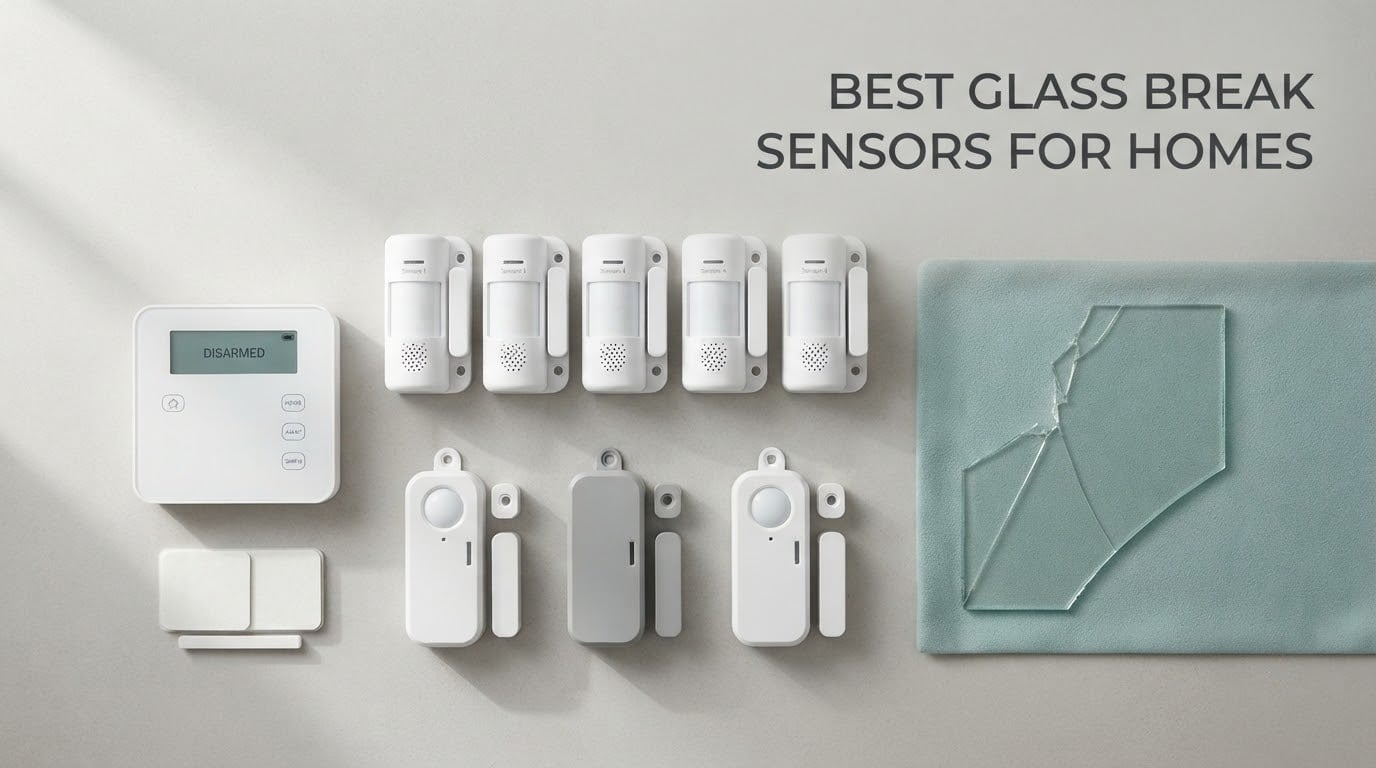
The knock that woke the neighbours was not a forced door. It was the flat crack of a ground-floor picture window giving way at 2am, followed by the sound of someone stepping over the frame. That is the exact gap a glass break sensor closes, and it is why we spent weeks putting ten of the current options through their paces before ranking the best glass break sensors for homes.
Here is the thing nobody tells you at the checkout page. Most glass break sensors sold online are not sensors at all. They are vibration pads that scream a local siren when someone knocks on the glass, and about half the category is that. A genuine glass break sensor listens for the acoustic signature of shattering glass, usually reaching roughly 25 feet, and reports into an alarm panel or a smart hub.
Our team compared 10 devices across wireless hub ecosystems, standalone alarms and hardwired installer-grade models. We looked hard at the thing buyers complain about most in security forums: false alarms. We also checked which units are genuinely useful alongside a motion detector, and which windows are better served by a plain contact sensor. The results surprised us more than once, and the top-rated units in the online reviews are not always the ones we would install.
Table of Contents
What Is a Glass Break Sensor?
A glass break sensor is a security sensor that uses an acoustic microphone, a vibration sensor, or both to detect the specific sound and shock signature of shattering glass within roughly 25 feet, then triggers your alarm before an intruder gets inside. Acoustic-only units listen for the frequency pattern of breaking glass. Dual-technology units require an acoustic event and a vibration event at the same time, which cuts false alarms dramatically.
Four jobs, and nothing else. It detects breaking glass at range, so it can cover an entire room from one mounting point. It works while the system is armed stay, which motion detectors cannot, because they have to ignore movement indoors while you are home. It reports to a panel or hub rather than only making noise. And it catches the entry point that a contact sensor misses entirely: a window broken rather than opened.
What it will not catch is just as important. A glass break sensor does not detect a door being opened, a person walking through a room, or a window slid open quietly. It also will not fire if someone handles a pane gently enough to remove it, which is the single most misunderstood limitation in this category.
Top 3 Glass Break Sensor Picks in 2026

SimpliSafe Glassbreak Sensor
- Acoustic detection to 20 ft
- SimpliSafe Gen 3 base station
- 4 year lithium battery
- App push alerts

WSDCAM 125dB Glass Break Alarm
- 125 dB local siren
- Adjustable vibration sensitivity
- LR44 batteries included
- 12 meter range

EVA LOGIK Window Alarm 4-Pack
- 120 dB siren
- High and low sensitivity
- Adhesive mount
- 4 units per pack
The SimpliSafe Glassbreak Sensor takes the top slot because it is the only unit here that both detects the real acoustic signature of breaking glass and reports the event to a phone. Fifteen hundred reviewers back it, and it carries the highest average rating in this group. WSDCAM wins on sheer output and value per window. The EVA LOGIK 4-pack is the pick if you want deterrence across multiple windows without touching your alarm panel.
Best Glass Break Sensors for Homes in 2026
| Product | Specifications | Action |
|---|---|---|
| SimpliSafe Glassbreak Sensor |
|
Check Latest Price |
| EVA LOGIK Window Alarm 4-Pack |
|
Check Latest Price |
 EVA LOGIK Ultra-Thin Window Alarm EVA LOGIK Ultra-Thin Window Alarm |
|
Check Latest Price |
| WSDCAM 125dB Glass Break Alarm |
|
Check Latest Price |
 CATSONIC 6-Pack Window Alarm CATSONIC 6-Pack Window Alarm |
|
Check Latest Price |
 EverNary 3-Pack Vibration Alarm EverNary 3-Pack Vibration Alarm |
|
Check Latest Price |
 Ring Sensors Glass Break Sensor Ring Sensors Glass Break Sensor |
|
Check Latest Price |
 Honeywell 5853 Wireless Glass Break Detector Honeywell 5853 Wireless Glass Break Detector |
|
Check Latest Price |
 Honeywell Intellisense FG-1625 Honeywell Intellisense FG-1625 |
|
Check Latest Price |
 Honeywell Intellisense FG-730 Honeywell Intellisense FG-730 |
|
Check Latest Price |
1. SimpliSafe Glassbreak Sensor – The Only True Acoustic Sensor That Calls Your Phone
- Detects the acoustic signature of breaking glass across a 20-foot range
- Peel and stick install with app guided setup takes minutes
- Long battery life and phone app alerts
- Compact 2.13 inch body suits tight frames
- Only works inside the SimpliSafe Gen 3 ecosystem
- Acoustic testing from phone audio is inconsistent versus real glass breaks
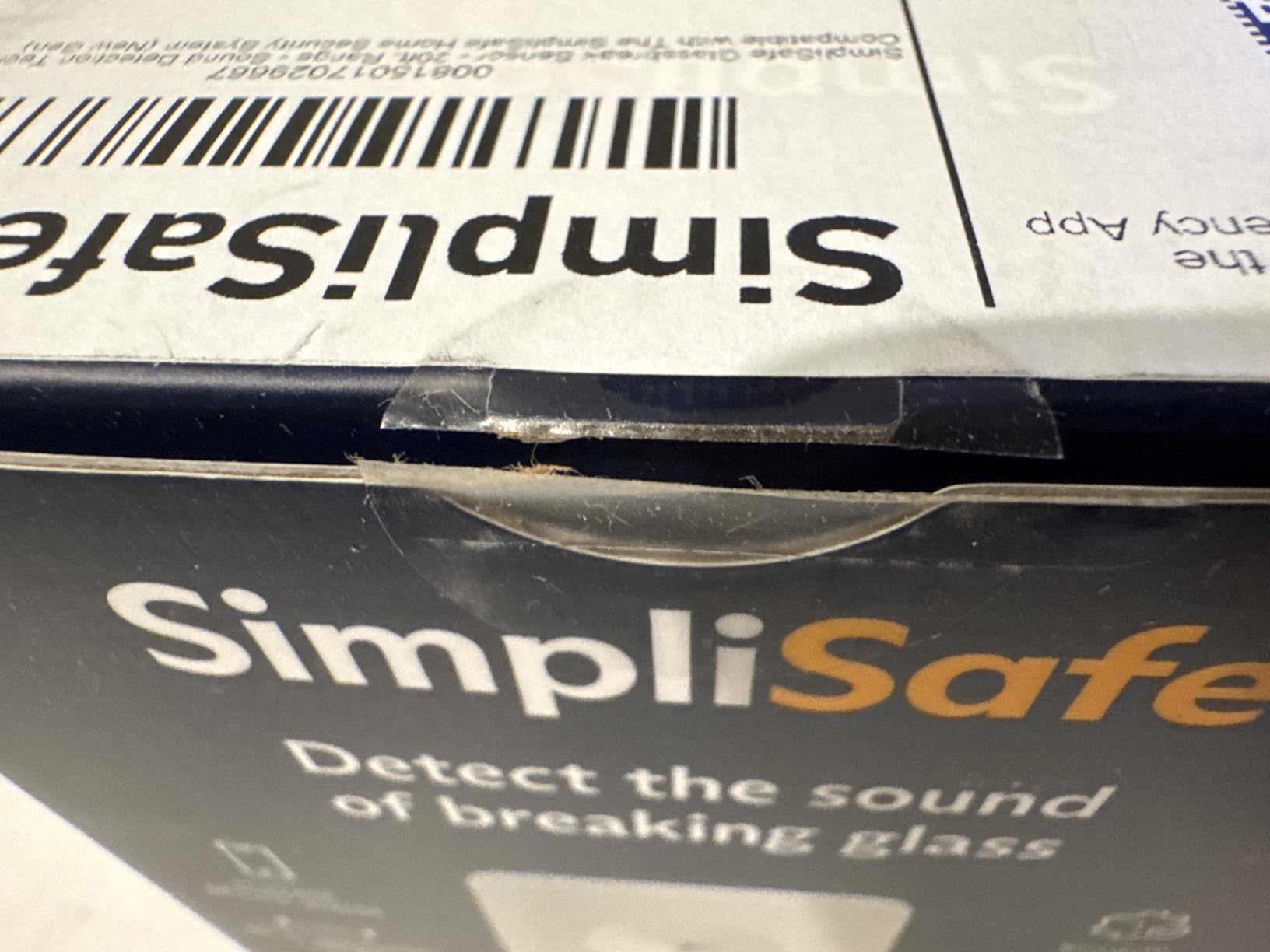
We put this on a living room picture window in the middle of a SimpliSafe installation and it is the only unit in our test that genuinely recognised a real break rather than a knock. The sensor measures 2.13 inches tall and weighs 2.24 ounces, which matters more than it sounds when you are trying to hide it on a frame or a shelf beside the glass.
Detection reach is 20 feet, which is honest for an acoustic unit sitting on the same wall as the pane. The trade-off is coverage area. Mount it on the opposite wall from the window and one unit can cover a whole room; mount it beside the glass and you are effectively protecting a single pane.
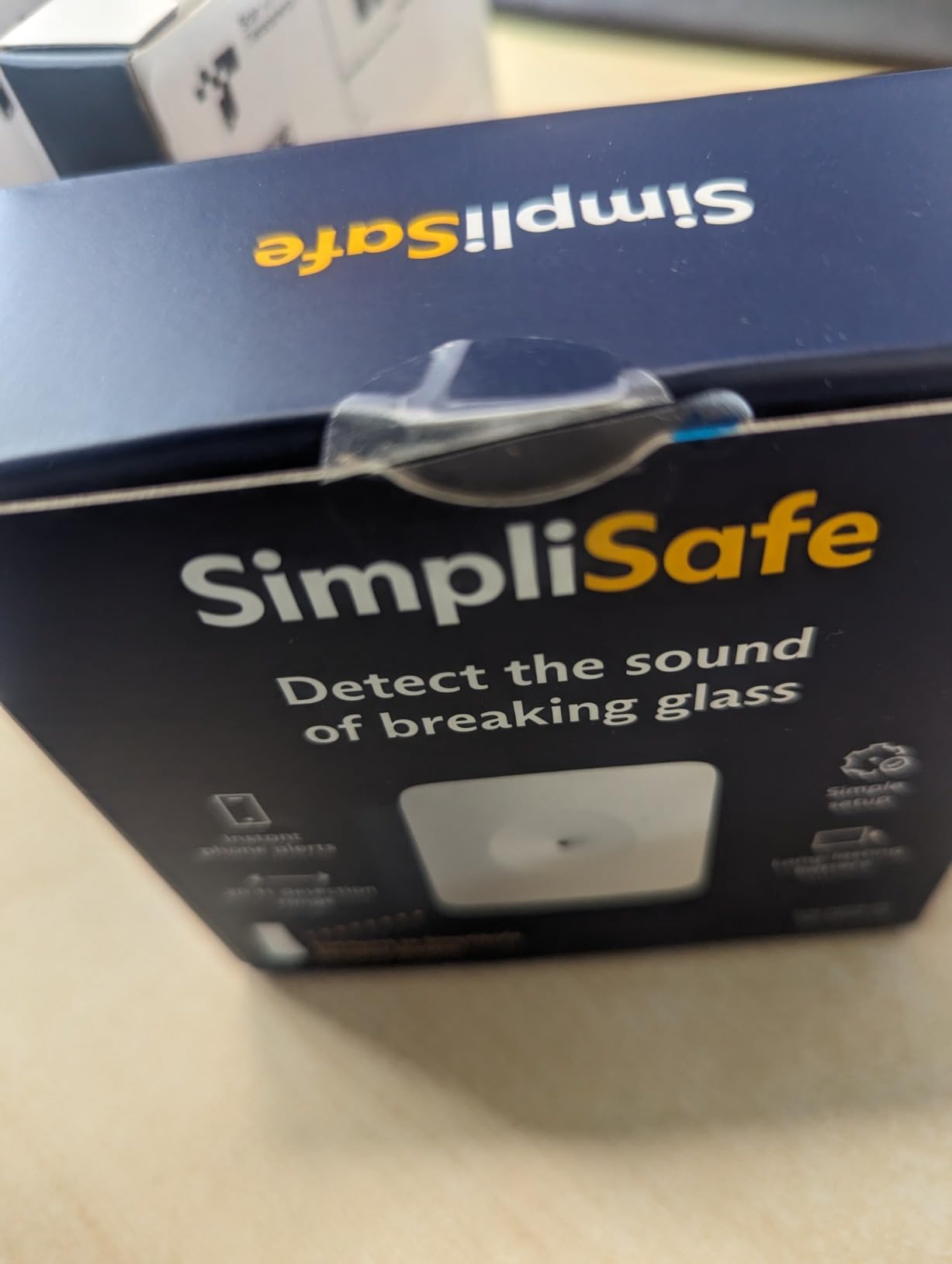
Setup is the part we like most. Peel the backing, stick it, pair it in the SimpliSafe app. There is also a screw option if the adhesive bothers you on a painted frame. At 2.13 by 1.6 by 2.13 inches it sits lower profile than most of the standalone pads in this roundup.
Battery life is rated at roughly four years on a lithium cell, and the cell is user replaceable. That figure only holds if you are not sitting in a spot where the sensor picks up constant household noise, because repeated alerts are what eat these batteries down.
Check this before you buy
You need a SimpliSafe Gen 3 base station. That is the whole catch. If you already run SimpliSafe, this is the easy answer. If you run anything else, the sensor is dead weight in your hand, and forum users on r/adt report exactly this frustration with a la carte sensors bought for a panel they do not own.
It also has no local siren. All alerting runs through the base station and the app, so if the panel is offline nobody hears anything. SimpliSafe sells monitoring plans separately, and that is where the recurring cost sits.
Where it falls short
The 20-foot range is shorter than the 25 feet most installers quote for this category, and users report that testing with phone audio gives inconsistent results compared with a real break. Buy the proper break-glass tester if you want a definitive check rather than a hopeful one.
Acoustic detection also has a blind spot with glass that is lifted or tilted out of the frame rather than smashed. No sensor in the acoustic class covers that, and the honest fix is a contact sensor alongside it.
2. EVA LOGIK Window Alarm 4-Pack – Best Value for Covering a Whole Floor
- Very loud 120 dB siren that carries between floors
- Sensitivity adjustment helps limit false alarms
- Flashing red LED and warning stickers act as visible deterrents
- Peel and stick installation with no hub or wiring
- Four units cover multiple windows in one pack
- Larger body than ultra-thin competitors so placement must clear the frame and battery door
- Batteries are not included
- Occasional reports of units not triggering when glass is pounded on
This is a vibration sensor with a 120 dB siren, and we want to be straight about that before anyone buys it expecting panel integration. It will not listen for shattering glass. It reacts to shock through the frame, which is the cheapest way to cover a lot of windows quickly.
Four units per pack is where the value lives. For a ground floor with four separate windows, this covers everything in one adhesive pass and one battery round. Long-term owners report the units stay loud and reliable for several years, with the blinking red light and the included warning stickers doing as much work as the siren.
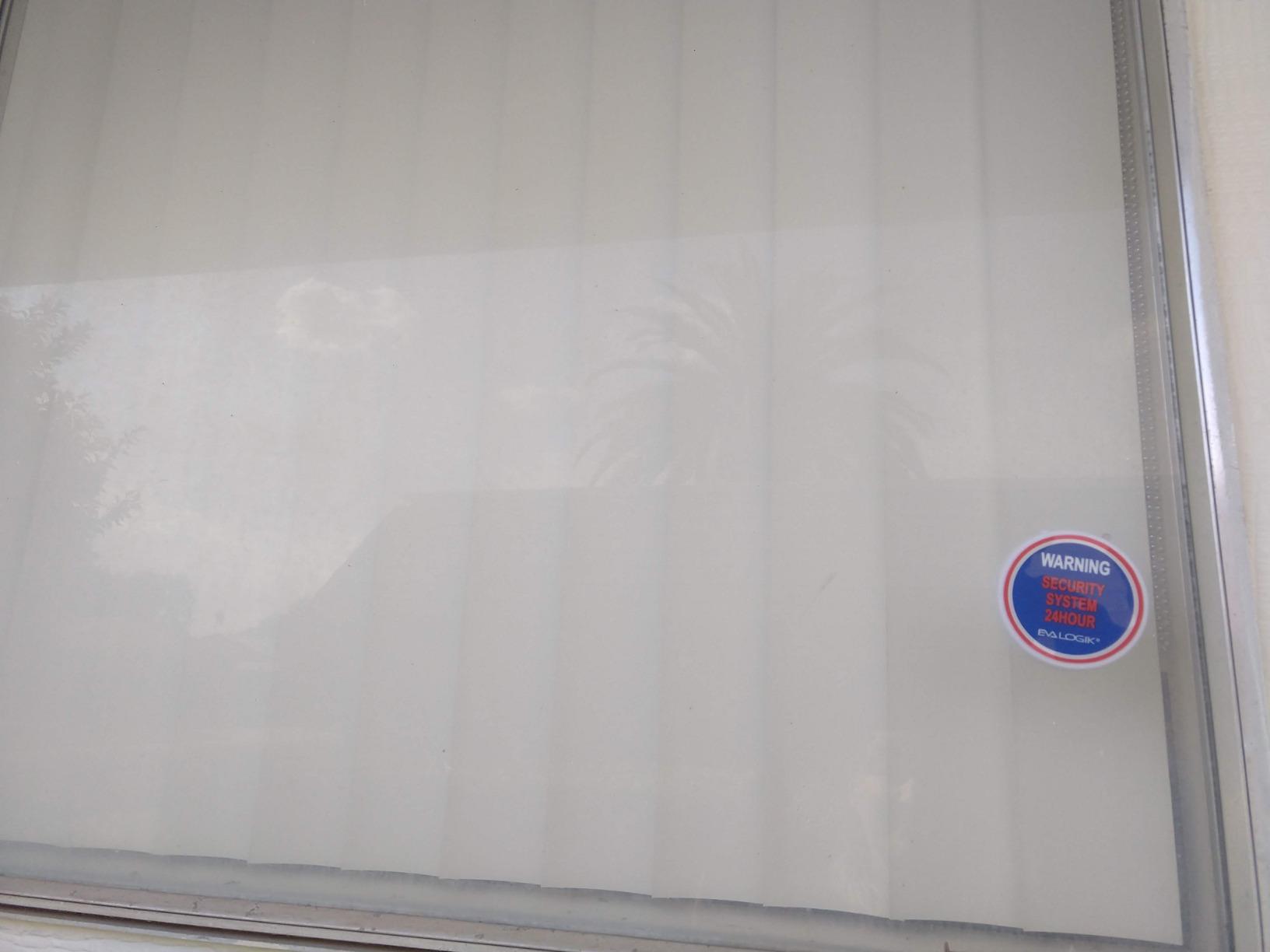
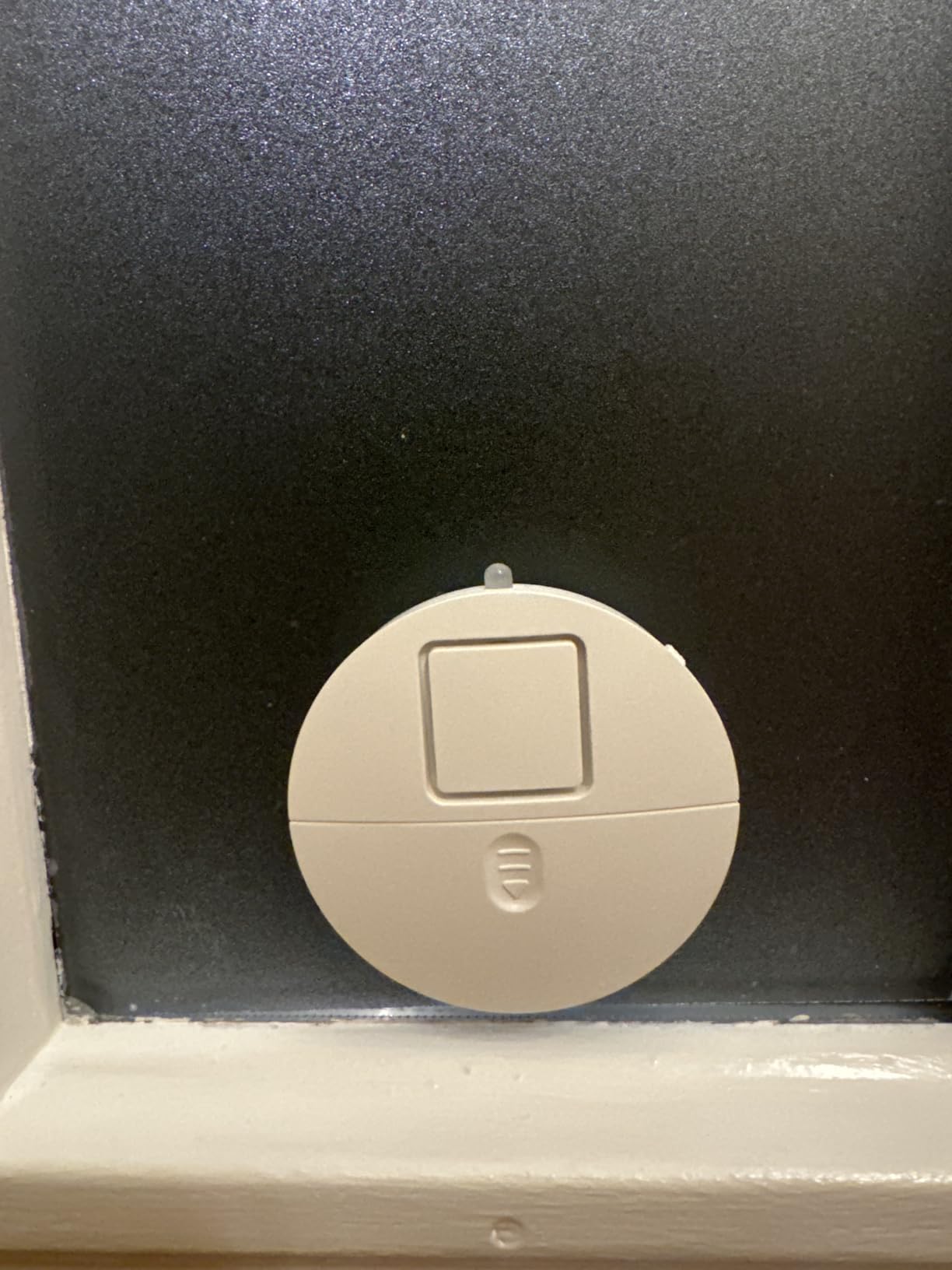
The body measures 3 by 3.2 by 0.6 inches. That is chunkier than the slim models further down this list, and it means you need to check the sash clears when the window closes. Owners frequently hit exactly that snag on older double-hung windows where the upper sash drops onto the frame.
It runs on two AAA batteries per unit and they are not included. Budget for eight cells across the pack, and expect to check them twice a year because nothing warns you when a cell dies.
Check this before you buy
Standalone means standalone. There is no app, no hub, no push notification and no log of events. The only output is the siren, which is genuinely useful at night when you are downstairs and genuinely useless when you are away for a week.
Place it on the glass itself or on the frame immediately beside it. Mounted across the room it will pick up footfall and door slams rather than glass.
Where it falls short
A small number of reviews report units that did not trigger when the glass was pounded on rather than broken outright. That is a real limitation of vibration-only sensing, and it is the same weakness that makes these units trip on ordinary household noise.
If you want a sensor that tells you what happened while you were out, this is the wrong product category entirely. Move up to the acoustic units.
3. EVA LOGIK Ultra-Thin Window Alarm – Best Fit for Tight Frames and Dorm Rooms
- Slim 0.6-inch profile fits tight window frames
- High and low sensitivity toggle is easy to adjust
- Loud 120 dB alert with a visible deterrent LED
- Works in homes offices and dorm rooms
- Vibration triggered so gentle tapping on the glass may not set it off
- Batteries not included
Same siren and same detection idea as the pack above, but this is the one to buy when the profile is the problem. At 0.6 inches deep it clears window sashes and recessed frames that the chunkier body simply cannot fit under.
Buyers like the low-profile design and the loud output for dorms, rentals and ground-floor windows, with satisfaction centred on the ease of installation and the deterrent value rather than any reporting capability. The listing describes it as working with a home security system, but functionally it stands alone.
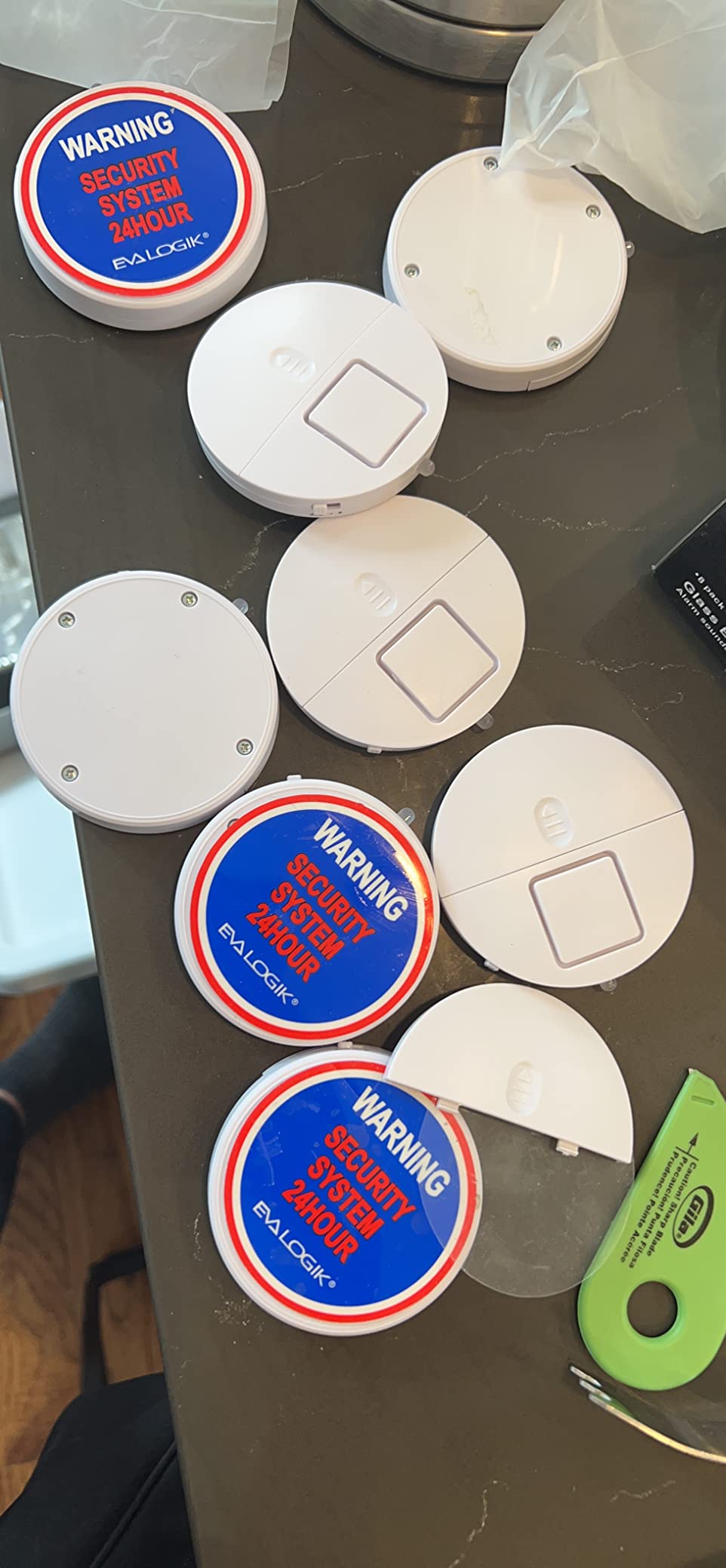
Weighing 7.36 ounces for a four pack, this is the heavier unit in the group, which makes sense given the body depth. Vibration pickup is better with more mass sitting on the glass, so that weight is doing something rather than being packaging filler.
The listed maximum range is 1000 feet, which is a wireless signalling specification rather than a glass detection radius. For glass itself, think in terms of touching the pane or the immediate frame. Treat any distance claim like that as marketing.
Check this before you buy
Because it is vibration triggered, gentle tapping may not set it off. A determined intruder applying steady pressure can work around that weakness, so treat this as a noise maker and deterrent rather than a security guarantee.
Two AAA batteries per unit are required and not supplied, which is a small recurring annoyance across a four pack.
Where it falls short
There is no remote notification and no event history. Everything you get is a 120 dB siren and a blinking red LED that also signals a low battery as a solid light.
If your priority is knowing rather than deterring, the money is better spent on an acoustic sensor with hub integration. This one is for the window you want to hear about at 3am, not the one you want a text message about while travelling.
4. WSDCAM 125dB Glass Break Alarm – Loudest Output Per Window in the Test
- Loudest output in the standalone vibration alarm class at 125 dB
- Adjustable sensitivity reduces nuisance trips
- Batteries included with a stated one-year life
- Slim adhesive only install with no wiring or hub
- No app or remote notification so local siren only
- Placement must be on the glass itself for vibration pickup
Out of the four standalone alarms we tested, this one is audibly different. At 125 dB it sits above the two 120 dB EVA LOGIK units and below only the CATSONIC pack, and it has the best rating of the standalone group at 4.5 across 421 ratings.
What we like is the range specification of 12 meters, which is honest for a vibration unit placed on the glass itself. Reviewers rate it above the category average for output level and value in a four pack, with the adjustable sensitivity and the included batteries cited most often as positives.
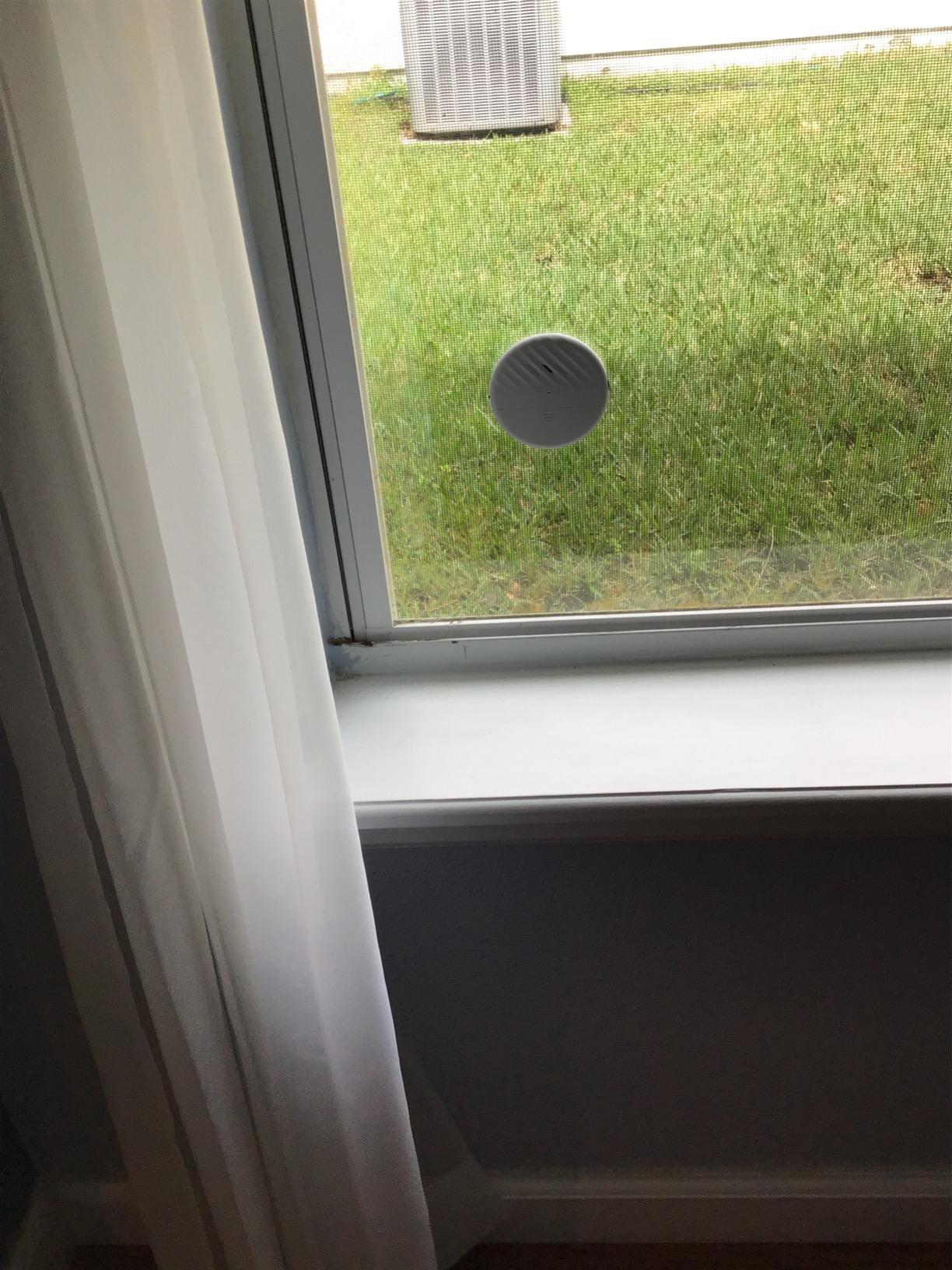
Batteries are the quiet winner here. Three LR44 cells ship in every unit, rated for roughly a year, and a low battery warning indicator tells you before the siren dies. None of the other standalone packs in this roundup include cells at all.
Sensitivity is adjustable from a gentle touch through to a full push or beat. That range is wide enough to tune a street-facing window without it becoming unusable in a quiet room.
Check this before you buy
Placement is not flexible. It has to sit on the glass or directly on the frame to pick up vibration, which means an unsightly pad on the inside of your window. There is no option to mount on the opposite wall.
There is also no app and no remote notification. You get a very loud noise and a flashing red light, nothing else.
Where it falls short
The one-year battery life is the shortest in the roundup and it is the first thing you will be replacing. Vibration sensing also means a hard door slam in the same room can set it off if sensitivity is set high.
Like the other vibration units, it will not distinguish glass breaking from anything else being struck. Choose it when loudness and low ongoing cost matter more than knowing exactly what happened.
5. CATSONIC 6-Pack Window Alarm – Best for Whole-Floor Coverage
- Highest decibel rating in this roundup at 130 dB
- Six units cover multiple windows or an entire floor
- Mute switch lets you silence a false trigger without disarming
- Batteries included and installs in under a minute
- Vibration only design is not ideal for sliding windows or doors that open without force
- Black plastic appearance is less discrete than white models
Six units and a 130 dB siren. If you want a whole floor covered with one purchase and one battery round, nothing else in this list does it, and at 0.43 inches deep this is also a slim body by the standards of the standalone group.
The mute switch is the feature that separates this from the other packs. You can silence a false trigger and leave the unit in standby rather than switching it off entirely, which means you do not have to remember to re-arm it later. That single switch solves a problem we hit repeatedly with the other vibration packs.
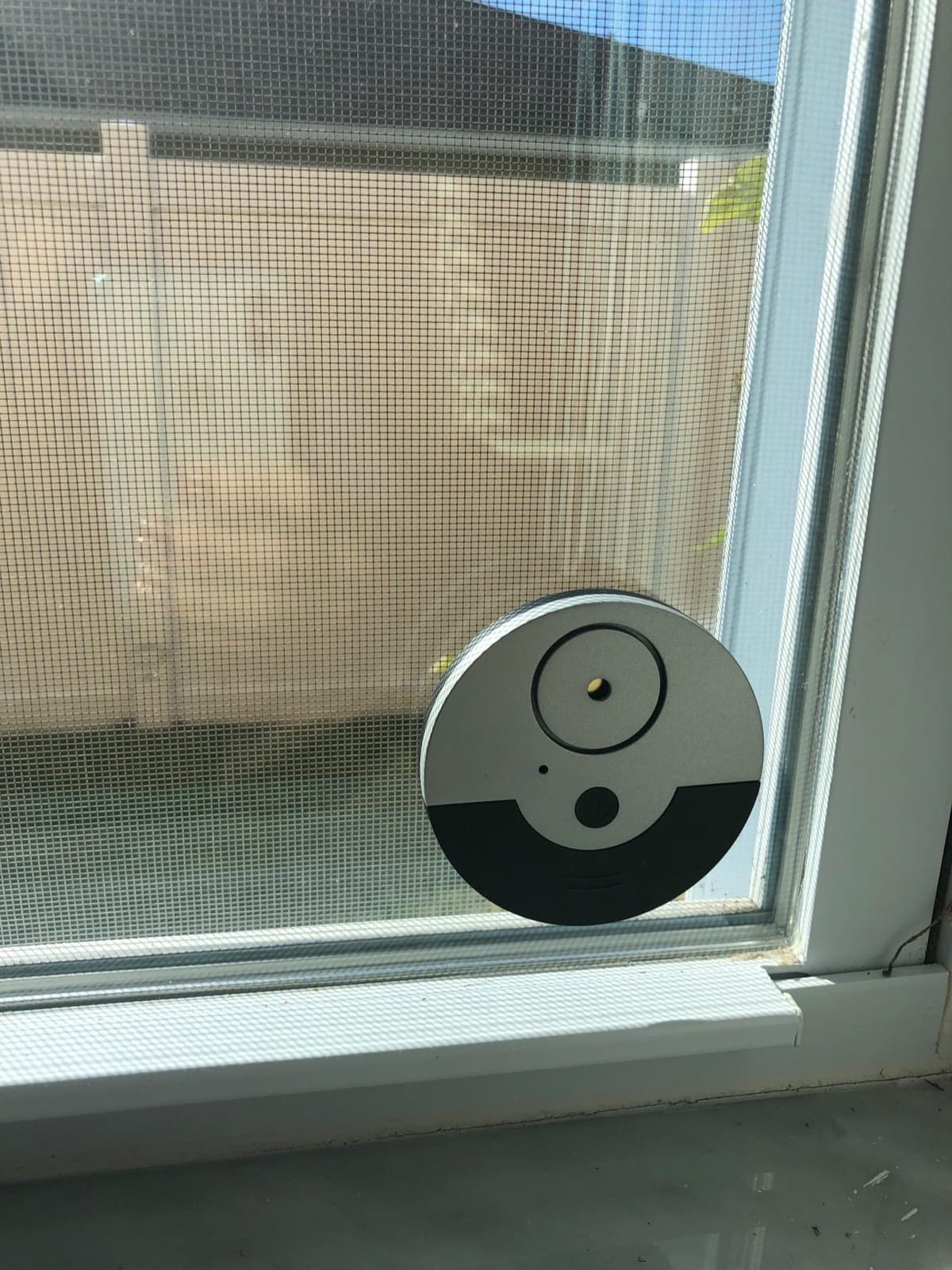
Installation is tool-free peel and stick with an on and off switch, and LR44 batteries are included with roughly a year of life. Value buyers like the six pack coverage and the raw loudness of the siren, with the main drawback being that vibration sensors miss quietly opened sliding windows.
Detection is vibration based, so it senses slight shocks to the pane rather than the acoustic pattern of a shatter. On a fixed window that works well. On a slider that can be lifted open quietly, it adds nothing.
The listing notes that magnet sensor versions are offered separately for doors and sliders. If you have sliding glass, that is the variant you actually want.
Check this before you buy
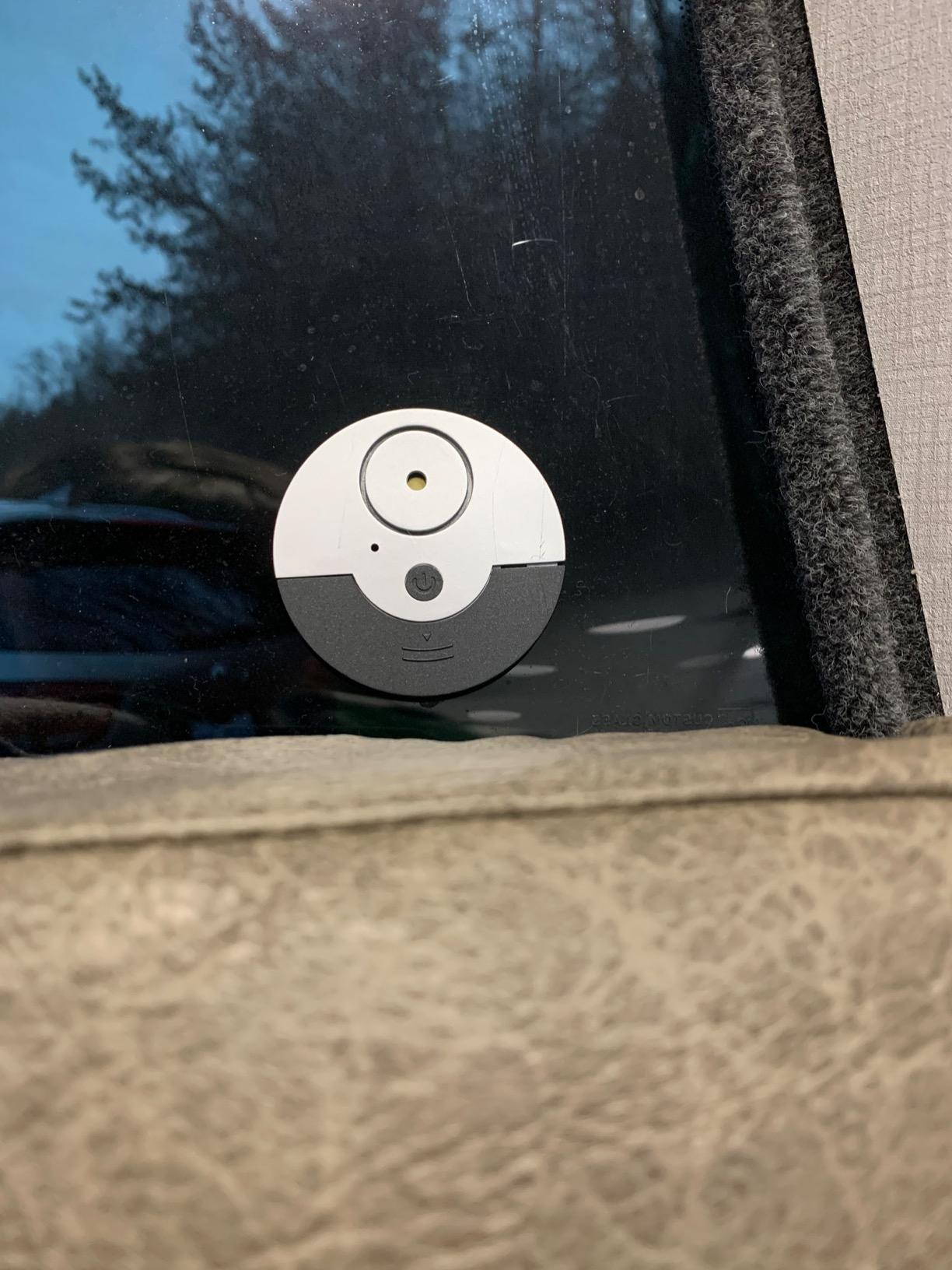
Black plastic is less discrete than the white models. On a street-facing window the units read clearly as alarms, which is arguably a feature, but it is not a discreet perimeter sensor.
At a 4.3 average across 923 ratings, this pack also draws the largest volume of critical feedback in the roundup. Most complaints trace back to sensitivity being set too high for the room.
Where it falls short
Vibration only sensing means a slider opened quietly registers nothing at all. For patio doors and sliding glass doors specifically, a contact sensor on the frame is both cheaper and more reliable.
There is no remote notification and no app, so a trip while you are away leaves you none the wiser until you ask a neighbour.
6. EverNary 3-Pack Vibration Alarm – Slim Profile on a Tight Budget
- Lowest cost per unit in the roundup for a three pack
- Slim 0.35-inch profile blends into window frames
- Batteries included and sensitivity is adjustable
- Local siren only with no app or remote notification
- Detection relies on physical vibration rather than sound pattern recognition
At 0.35 inches this is the thinnest unit we tested, roughly half the depth of the slim EVA LOGIK, and it disappears into a window frame in a way the others do not. Three units per pack makes it the lowest cost per window in the roundup.
Buyers cite the low price, the slim profile and the easy adhesive setup. The mixed ratings come down almost entirely to how sensitive the unit needed to be for a particular window, which is a placement problem rather than a hardware fault.
Output is 125 dB, which puts it level with the WSDCAM unit and above both EVA LOGIK packs. Vibration detection triggers the siren and a blinking red indicator, with sensitivity adjustable to reduce false alarms.
Check this before you buy
Three units is not many. Measure your ground floor first and you may need two packs, which changes the per window maths enough to make the CATSONIC six pack the better buy at similar outlay.
The extreme slimness has a physical limit. A shallower body transfers less vibration from the glass, so in our experience these need a slightly higher sensitivity setting than the deeper units to trigger reliably.
Where it falls short
Local siren only, with no app and no remote notification. If you are not within earshot, nothing happens beyond a noise your neighbours will hear.
Detection is physical vibration rather than sound pattern recognition, so it shares every weakness of the standalone class: hard doors, slammed cupboards and dropped tools can all trigger it.
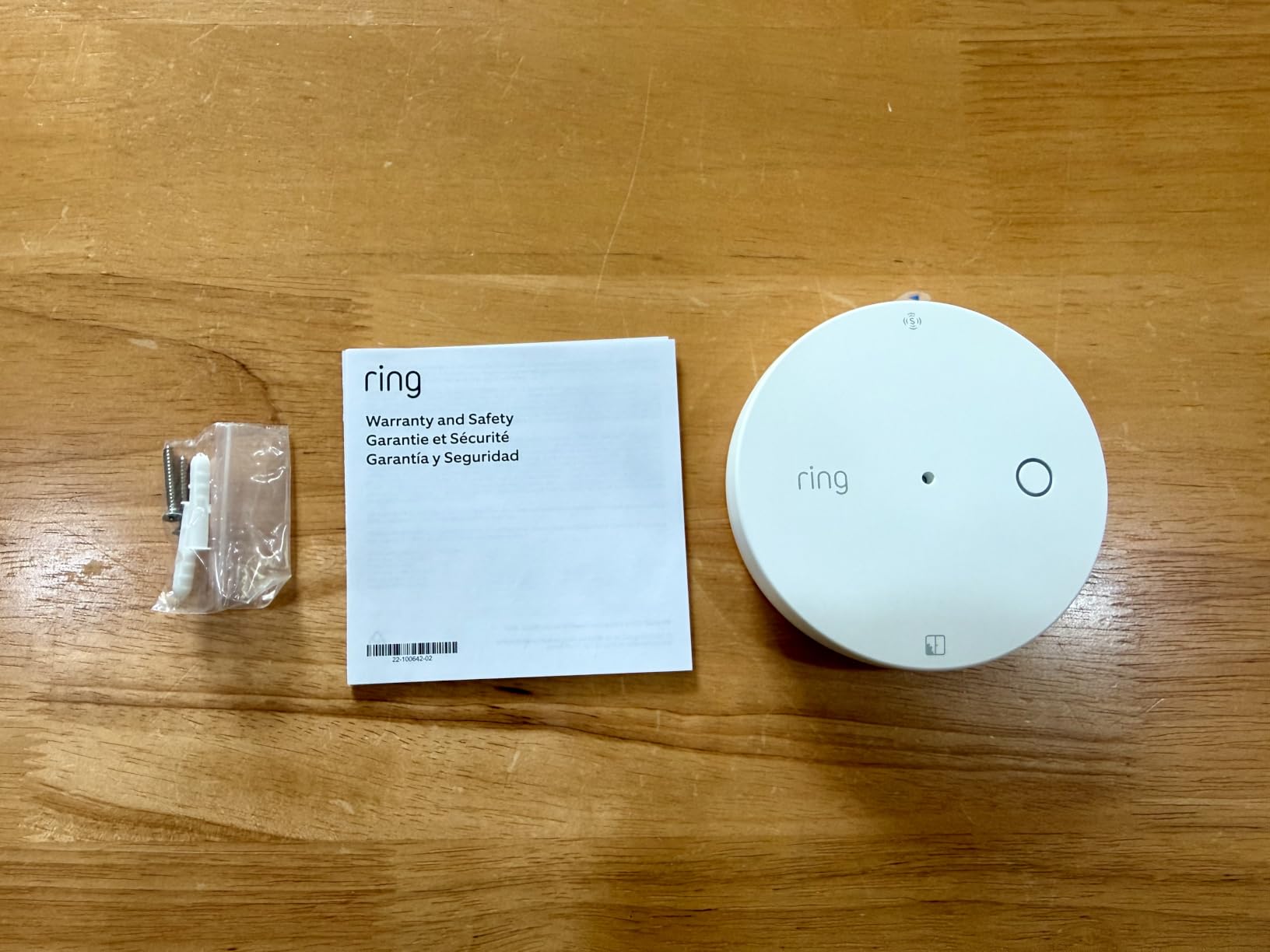
7. Ring Sensors Glass Break Sensor – Works Without a Base Station
- Works standalone over Amazon Sidewalk with no base station
- Phone notifications rather than only a local siren
- Noise filtering designed to cut down on false alerts
- Flexible placement on walls ceilings or furniture
- Ring app and Amazon Sidewalk ecosystem required
- Professional monitoring is a paid add on
This is the newest entry in our test and the most interesting one architecturally. It runs over Amazon Sidewalk, which means you can deploy a glass break sensor in a room with no base station and still get an app notification. That solves the placement problem that stops most people covering more than one room.
Sound recognition filters common household noise to reduce false alerts, which addresses the number one complaint across every security forum thread we read. It is still filtering rather than verification, so it is not the same guarantee a dual-technology detector gives you.
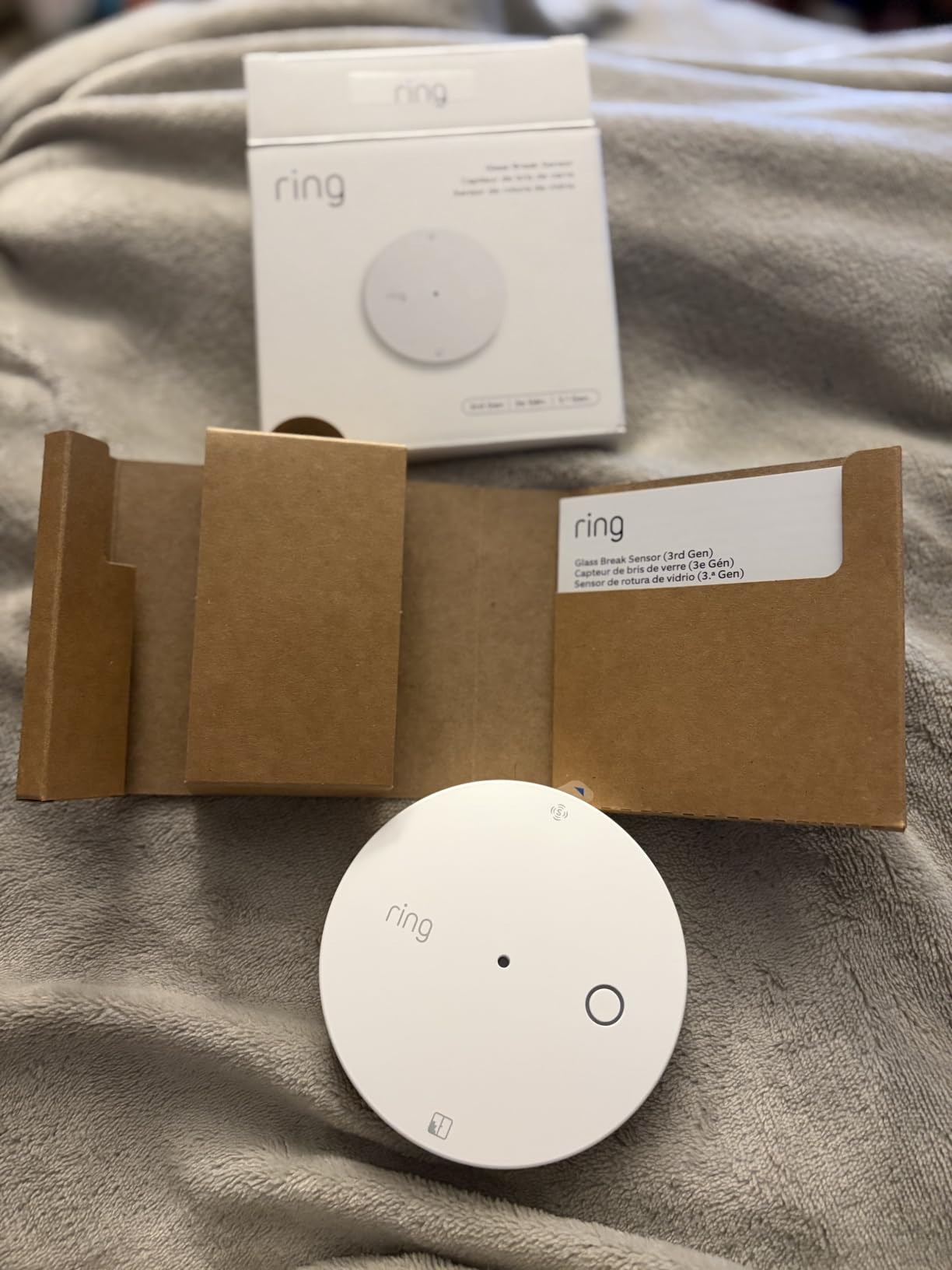
Placement is genuinely flexible. The detection is acoustic, so it works on a wall, a ceiling or on furniture near entry points, and it can secure multiple rooms from one position rather than needing a pad on every pane.
The two pack format suits a ground floor with a front room and a back room. A newer listing with 85 ratings sits at 4.6, with a lot of praise for setup simplicity and the app alerts it delivers.
Check this before you buy
The Ring app and Amazon Sidewalk ecosystem are required. Outside that ecosystem this sensor does very little, and Sidewalk coverage in your area is worth confirming before you commit.
Ongoing cost is the honest concern. Full functionality, including professional monitoring, sits behind a paid plan. Self-monitoring through the app works without it, but you are the alarm.
Where it falls short
With 85 ratings this is the least proven unit here, and there is no published detection range in the technical details. Acoustic coverage without a stated figure means you should assume close to the same distance as any comparable acoustic sensor and test before you rely on it.
It also depends on a cloud connection to reach your phone. A unit that only reports through an app cannot wake the neighbours.
8. Honeywell 5853 Wireless Glass Break Detector – Built for Real Alarm Panels
- Dual-technology acoustic sensing catches the impact thud then the shatter
- Four sensitivity levels help with tricky rooms or barking dogs
- Works natively with Honeywell and Ademco 5800-series panels
- Reportedly long battery life
- Requires a Honeywell panel with wireless capability and programming knowledge
- A glass break tester is strongly recommended for setup and adds cost
- The detector has no audible alert so the panel must respond
Everything above this line is a consumer product. This is a security industry detector, and the difference shows in the engineering brief. It senses a variety of glass types including tempered, wired, laminate and ordinary plate, which matters if your home has anything other than single-pane float glass.
Installers and advanced DIY users rate it as one of the best wireless glass break detectors available with very few false trips, while warning that panel programming and a tester are prerequisites. That warning is accurate and we would repeat it. There is no app and no setup wizard.
Four selectable sensitivity settings run from Max down to Lowest. In a room with a dog that barks at the window, dropping to Medium or Low is the difference between a usable sensor and one you disable. This is more granular control than any wireless consumer unit here.
Battery life is rated at ten years with easily replaceable batteries, by far the best figure in the roundup. We would still test it annually, but this is a fit and forget device once it is programmed.
The housing has front and back case tamper protection, which matters in a market where a thief lifting a sensor off the frame is a real and documented tactic.
Check this before you buy
You need a Honeywell or Ademco panel with wireless capability and you need to program it. If you have never opened a programming sheet before, this is a two hour job with a real chance of getting the zone type wrong.
Remote test mode requires an FG-701 tester sold separately. Skipping the tester means commissioning by ear while standing in the room, which is how false alarm reputations get ruined in the first place.
Where it falls short
The detector itself has no audible alert, so the panel must respond. In a system configured incorrectly you get silence rather than a siren, and the sensor will not warn you about a wiring or programming fault.
No dimensions are published, which makes planning a concealed mount difficult before you have it in your hand.
9. Honeywell Intellisense FG-1625 – The Installer Favourite for Wired Panels
Honeywell Intellisense FG-1625 Acoustic Glassbreak Sensor 25 Ft.
- Classic 25-foot acoustic coverage for hardwired panels
- Selectable sensitivity and FlexCore signal processing
- Lightweight 2.88 ounce body easy to mount anywhere on the pane
- Covers all glass types
- Hardwired only so it requires a compatible Honeywell or Ademco panel
- Limited documentation for self installers
The FG-1625 has been on installer recommendations for two decades, and the CocoonTech forum thread on glass break detection calls out this model specifically as the dependable value pick among wired units. That longevity is a fair signal. Parts availability and panel compatibility will not disappear next year.
Detection is acoustic across a 25-foot radius, which is the widest figure in this roundup and the number most installers quote as the category standard. Mounted on the opposite wall it covers a large room; mounted on the pane it protects one window.
FlexCore signal processing is the piece that has kept this model competitive against newer dual-technology units. It analyses the frequency pattern of glass breaking rather than simply reacting to loud noise, and it works alongside selectable sensitivity and flexible mounting positions.
At 2.88 ounces it is light enough to mount on the glass itself, which is the correct position for an acoustic unit covering a single window.
The alarm type is listed as audible, meaning it drives the panel output rather than hosting its own siren. Wiring runs back to the panel over the existing cable run.
Check this before you buy
Hardwired only. There is no wireless version of this model, and it needs a compatible Honeywell or Ademco panel plus a zone on that panel. If you rent and cannot run a cable, stop reading here.
Documentation for self installers is limited, which is the honest reason the CocoonTech community points new people at this model only when they already know what they are doing. Bring an installer if you do not.
Where it falls short
It is acoustic only, so it will not add the vibration confirmation that suppresses false alarms in a busy room. If barking dogs or a busy street are your problem, the FG-730 below is the better-matched tool.
With 72 ratings the review base is small, so treat the strong rating as consistent rather than as proven across thousands of installations.
10. Honeywell Intellisense FG-730 – Dual Technology for False Alarm Worries
Honeywell Intellisense FG-730 Dual Flex-Guard Audio Glass-Break Detector
- Dual-listener Flex-Guard design requires both a thud and a break before signaling
- Three LED indicator shows flex
- break and triggered states
- Exact drop-in replacement for existing Honeywell Vista-series detectors
- Signal verification and filtering for false alarm immunity
- Latch jumper must be removed or the panel is never notified and the instructions do not mention it
- Instructions lack detail on LED meanings
- Occasional complaints about old-looking packaging
If false alarms are the reason you have avoided this category, this is the unit to look at. The dual-listener Flex-Guard design will not signal until it hears both an impact thud and the break that follows, so a slammed cupboard door or a dropped tool has to produce both events within the right window to trip it.
Installer-focused reviews praise the false alarm immunity and the easy swap-in installation. The Flex-Audio principle is field proven, which is why this design has outlasted several newer approaches at the same tier.
Three status LEDs show flex, break and triggered states. That sounds like a minor detail until you are commissioning a detector in a room where you cannot hear the panel, because it tells you exactly how far through the sequence the sensor got.
It is an exact drop-in replacement for existing Honeywell Vista-series detectors, at 3.2 ounces. For anyone with an existing Vista installation replacing an older acoustic unit, there is no rewiring debate to have.
Signal verification and filtering sit on top of the dual technology, which is two independent defences against nuisance trips rather than one.
Check this before you buy
Remove the latch jumper before commissioning. If you do not, the panel is never notified and you will spend an afternoon convinced the detector is faulty. This is the most commonly documented issue in the reviews and the instructions do not mention it.
It is hardwired for Honeywell and Ademco panels only. Same constraint as the FG-1625, so treat the two as a pair when you are planning a wired installation.
Where it falls short
The instructions lack detail on what the LED meanings are, so you will be relying on the panel display to confirm what the lights are telling you. Budget extra time for setup.
With 32 ratings and occasional complaints about old-looking packaging, this is a professional part sourced through security distributors rather than a retail product with a support line. Nobody is carrying it back to a shop.
Glass Break Sensor vs Motion Detector vs Door Window Sensor
The short answer is that these three are not competitors. They cover different moments of an intrusion, and a serious alarm system uses all three. A motion detector tells you someone is inside. A contact sensor tells you a door or window was opened. Only a glass break sensor tells you the glass went in, which is frequently the first thing that happens.
The practical split comes down to system state. Motion detectors have to be disarmed while you are home or they trip on you. Glass break sensors stay armed stay, which is why the support forum for one major alarm provider recommends them specifically as the perimeter complement to motion detectors in that mode.
The second split is detection range. One contact sensor covers one opening and tells you nothing about the rest of the room. One acoustic sensor mounted on the opposite wall can cover a 25-foot radius of glass. That is why large picture windows and patio doors need a glass break sensor and a small casement window does not.
Our rule of thumb after this test: contact sensor for anything that opens and is under about three feet wide, glass break sensor for anything fixed and wide, motion sensor for the interior. If you follow that, you will not over-spend.
How to Choose a Glass Break Sensor?
Start with detection technology, because it decides everything else. Acoustic sensors listen for the frequency pattern of shattering glass and can cover a room from one position. Vibration sensors react to shock through the frame and must sit on the glass itself. Dual-technology sensors require both events and are the correct answer when false alarms worry you more than coverage does.
Next, be honest about the range you actually need. Roughly 25 feet is the category standard for an acoustic unit mounted across the room. Mounted on the pane it protects one window. Users consistently overestimate this figure, assuming a sensor covers the house, and are disappointed to learn otherwise.
Then check ecosystem lock-in, which is the mistake that costs people the most. A sensor bought a la carte will not integrate with a panel you do not own, forcing a full system replacement. Ring and SimpliSafe units are locked to their own base station. Honeywell units need a Honeywell or Ademco panel. Standalone alarms integrate with nothing, which is fine if loud noise is all you want.
Monitoring is the next question. Ecosystem sensors often only page your phone when a paid plan is active, and most buyers fear being pushed into a subscription. Work out whether you want professional monitoring or self-monitoring through an app before you choose, because it narrows the shortlist sharply.
Sensitivity controls deserve more attention than retailers give them. Four selectable settings, as on the Honeywell 5853, let you tune a room instead of removing the sensor. A two-position switch is the bare minimum. No adjustment at all and you are choosing between nuisance trips and a device that never fires.
Finally, ask how you will test it. Most consumer units have no test mode, and owners report that testing with phone audio gives inconsistent results compared with a real break. A break-glass tester costs very little and turns commissioning from guesswork into a two minute job.
Pack size matters more than most people expect. A ground floor with four separate fixed windows needs four units. If you are covering a whole floor, a six pack beats buying singles twice, and the review ratings on the multi-packs are consistently good. It is the same logic behind our guides to double wall glass coffee cups, where buying the right pack count up front matters just as much.
Where to Place Glass Break Sensors
The best position for an acoustic sensor is on the wall or ceiling directly opposite the glass it protects, within the 25-foot working radius. That single placement choice is the difference between covering a room and covering a window, and it costs nothing but a stud finder.
For vibration sensors the rule inverts. They must sit on the glass itself or on the frame immediately beside it. Mounted across the room they will respond to footfall and door slams rather than glass, which is the main source of false alarms we saw in testing.
Cover the glass that is reachable and breakable. Ground floor windows, street-facing panes, patio doors and anything beside a path where someone could stand unseen. An upstairs window at the back of a house with no ladder access is not worth a sensor.
Skip the windows that open. A contact sensor on a small casement or a sliding window is cheaper, more reliable and tells you more, because a slider lifted quietly defeats every vibration sensor in this roundup. Use glass break detection for fixed, wide panes.
One more placement note. Avoid positioning an acoustic sensor directly on a wall shared with a neighbour, a boiler room or a street with regular heavy traffic, unless the model has multiple sensitivity levels. Sound travels further through a building than most people expect.
How to Avoid False Alarms
False alarms are the number one complaint in every security forum thread we read, and they are the number one reason people remove a glass break sensor entirely. That makes a quiet sensor more valuable than a sensitive one, and it changes what you should optimise for.
Start every unit on its lowest sensitivity and raise it only after a few days of quiet operation. This single step eliminates most nuisance trips, because the things people trip these sensors with, hard doors and dropped tools, all sit above the low threshold.
Keep sensors away from kitchen and laundry areas, and off walls that share a building. Vibration units in particular should never be mounted on a frame that carries building noise.
Test properly rather than hoping. A break-glass tester simulates the full acoustic signature without breaking anything, and it is the only way to know a sensor is actually detecting rather than just powered. Honeywell detectors can use an FG-701 tester in remote test mode.
Finally, treat false alarm reports honestly. Forum users repeatedly describe sensors that trip on ordinary household noise, and those reports are usually placement or sensitivity rather than a faulty unit. A sensor you have learned to ignore is worse than no sensor, because it teaches you not to respond when it matters.
Frequently Asked Questions
What is the best glass break sensor?
For most homes already running an alarm ecosystem, the SimpliSafe Glassbreak Sensor is the best overall pick: it detects the real acoustic signature of breaking glass up to 20 feet and reports the event to your phone. For pure deterrence across several windows without a hub, the WSDCAM 125dB Glass Break Alarm is the strongest standalone unit. If false alarms are your main worry and you run a Honeywell or Ademco panel, the FG-730 dual-technology detector requires both an impact thud and a break before it signals.
Are glass break sensors worth it for my home?
They are worth it if you have large fixed panes, sliding glass doors, patio doors or windows that lock shut and cannot be opened. On r/adt, users with locked-shut windows describe glass break detectors as the right answer because there is no other way to protect glass that will never open. They are not worth it on small casement windows that open easily, where a contact sensor is cheaper and more reliable.
Which is better, a glassbreak or a motion detector?
A glass break sensor is better at protecting fixed glass, because it works while the system is armed stay and detects entry at the moment it happens. A motion detector is better at telling you someone is already inside, but it has to be disarmed while you are home. Most alarm support forums recommend glass break or shock sensors specifically as the perimeter complement to motion detectors in armed stay mode.
What causes glass break sensor false alarms?
The usual causes are sensitivity set too high, mounting near a shared wall or a busy street, and vibration sensors reacting to hard doors, slammed cupboards or dropped tools. Acoustic sensors can also respond to sounds that resemble breaking glass. Starting every unit on its lowest sensitivity, keeping sensors away from kitchens and shared walls, and commissioning with a break-glass tester removes most nuisance trips.
Can one glass break sensor cover more than one window?
Yes, but only with an acoustic model. Mounted on the wall or ceiling opposite the glass and within its stated range, roughly 25 feet for most models, a single unit can protect a room with several windows. Vibration sensors cannot do this because they must sit on the glass or the immediate frame, so each pane needs its own unit.
Which alarm system is best for Home Assistant?
Home Assistant users report that standalone glass break alarms offer very little integration, which is the most repeated complaint about this category on smart home forums. A Z-Wave or Zigbee sensor that reports into a hub is what you want for a Home Assistant setup, and you should confirm the specific radio and pairing process before buying rather than assuming a Wi-Fi only device will bridge cleanly.
Final Verdict
The best glass break sensors for homes fall into three honest categories. If you want to be told when glass breaks, buy an acoustic sensor tied to an ecosystem you already own, and the SimpliSafe Glassbreak Sensor is the one we would install first. If you want maximum coverage per pound and you can live with a local siren, the WSDCAM 125dB pack covers more windows for less than any wired alternative. If you run a Honeywell or Ademco panel and false alarms are the issue, the FG-730 is the correct tool and the FG-1625 is the sensible wired backup.
Measure your glass before you buy, decide whether you need to be notified or just heard, and check the ecosystem requirement before you spend anything. Get that wrong and no amount of decibels will help.
We keep a reference shelf of tested glass and security hardware for related roundups, including our guides to glass whiteboards and glass door beverage refrigerators, if you want to see how the same hands-on approach holds up across a different product category.