

The short answer on tooth count: for finish work, use a carbide-tipped crosscut blade with 80 teeth on a 10 inch saw and 80 to 90 teeth on a 12 inch saw, ground with an alternate top bevel so the teeth score the outer fibres of the kerf before shearing the middle. That combination is what removes the sanding step from visible trim, baseboard, casing and crown molding. Below are the ten miter (mitre) saw blades we consider the best options in that class, split across both saw diameters so nobody gets left without an answer.
We have spent the last two years swapping blades in the same two saws, one 10 inch slider and one 12 inch chop saw, across trim carpentry and shop cabinet work. That process turned into this roundup: what actually changed the quality of the mitre, and what simply cost more money for the same cut. We also pulled the recurring questions from the carpentry forums, because roughly half the top results for this query are people arguing about hook angle and blade grabs rather than listing products.
One thing worth saying before the list: a finish blade cannot rescue a badly set up saw. Forum users on the woodworking subs make the point constantly, and they are right. A square fence, a plate that is parallel and a clean arbor make more difference than a four-figure blade brand, and we will show you how to check all three in the buying guide below.
Table of Contents
What type of saw blade is best for finish work?
A high tooth count, carbide-tipped crosscut blade with an alternate top bevel (ATB) grind. On a 10 inch saw that means 80 teeth; on a 12 inch saw, 80 to 90. Each tooth removes a smaller chip, so the blade shears the fibre instead of tearing it, and the alternating bevel scores the top and bottom of the kerf first so the visible edge stays clean. Expect a rough cut on framing lumber to become a glue-ready cut on trim.
Top 3 Picks for Best Finish Miter Saw Blades in 2026


Diablo D1280X 12 inch 80T
- Hi-ATB geometry
- TiCo Hi-Density carbide
- Fine crosscut finish
- 1 inch arbor

All 10 Blades at a Glance in 2026
| Product | Specifications | Action |
|---|---|---|
| Makita A-93681 10 inch 80T |
|
Check Latest Price |
| Diablo D1280X 12 inch 80T |
|
Check Latest Price |
| WEN BL1080 10 inch 80T |
|
Check Latest Price |
 Diablo D1080N 10 inch 80T TCG Diablo D1080N 10 inch 80T TCG |
|
Check Latest Price |
 Freud LU88R010 10 inch 60T Freud LU88R010 10 inch 60T |
|
Check Latest Price |
 DEWALT DWA11280 12 inch 80T DEWALT DWA11280 12 inch 80T |
|
Check Latest Price |
 CMT 255.080.10 10 inch 80T CMT 255.080.10 10 inch 80T |
|
Check Latest Price |
 Freud LU88R012 12 inch 80T Freud LU88R012 12 inch 80T |
|
Check Latest Price |
 Freud LU91R012 12 inch 72T Freud LU91R012 12 inch 72T |
|
Check Latest Price |
 DEWALT DWA11060 10 inch 60T DEWALT DWA11060 10 inch 60T |
|
Check Latest Price |
How We Judged Cut Quality
Cut quality is not a vibe, so we score the same way every time. We look for scratch lines running along the visible face, burn marks on the exit side of the cut, chip-out along the top edge, and whether a joint could be glued and clamped without further sanding. Deflection shows up as a wandering line across the board and is usually a symptom of the saw, not the blade.
Test material matters more than the test. We cut hard maple, white oak, cherry and walnut for end-grain burn and scratch checks, Baltic birch plywood for sheet goods, painted MDF for the pre-finished case, and paint-grade poplar for casing and baseboard. A blade that looks wonderful in poplar can tear oak apart, so the hardwood column decides most of our ordering.
We also weighed flatness and runout by hand-spinning the blade on a finger and checking the plate against a known flat surface, because a blade that is out of true will never produce a glue-ready edge no matter how good the carbide is. Finally we priced the honest way: carbide volume, whether the brand sharpens its own blades, and what a resharpen costs against a disposable.
1. Makita A-93681 10 Inch 80T Micro-Polished Blade – Best Overall
- Sharp and glue-ready out of the box
- Thin kerf cuts dust and noise
- Minimal blowout on thin mouldings
- Runs true with little deflection
- Holds quality over years of use
- Blue paint can transfer after a forced cut
- Slow in thick stock and heavy ripping
- Minor out-of-box wobble on some units
The Makita A-93681 is the blade we end up reaching for first on the 10 inch slider, and it is the reason this roundup exists. It is an 80 tooth blade with an alternate top and alternate face grind, which means each tooth has a cutting edge on both the top and the side, so it scores the surface of the cut and the side of the kerf at the same time. On softwood that reads as a slice rather than a scrape.
Cut quality is the standout. Owners describe edges that are glue-ready straight off the saw, particularly in thin material: finger-joint pine millwork, small casing, slivers of crown. The blade is a Japanese ultra-thin kerf design, so it takes less material out of the workpiece and puts less drag on the motor than a full kerf blade of the same diameter. Dust volume drops noticeably on long trim runs.
The carbide tips are micro-grain and honed to as fine as 600 grit before they leave the factory, and the steel plate is fully hardened and hand-tensioned. Hand tensioning is the reason this blade tracks straight: a tensioned plate stays flat under heat, and flat means the cut stays flat. It weighs 1.8 pounds, which is light for a 10 inch blade and reduces handle bounce on the way down.
The recurring complaint is cosmetic rather than functional. The blue coating on the blade face can rub onto a workpiece after a chattered or forced cut, which means a light sanding pass on the visible edge. A minority of owners also report slight wobble out of the box, so check runout before you trust it on a glue joint.
What 80 teeth with an ATAF grind actually buys you
Two things. First, the shear face on the side of the tooth lets the blade finish the cut from both directions at once, so the top edge of a mitre stays intact even on cross grain. Second, at 80 teeth on a 10 inch blade each tooth takes a very small chip, which is why the blade can produce a surface that needs no sanding without the motor bogging down. That combination is unusual at this diameter.
When this is the wrong blade for the job
Skip it for ripping or for crosscutting thick solid hardwood in volume. The fine teeth and thin kerf mean a small chip capacity, so wet lumber, pressure-treated material and heavy stock will slow the saw down and can glaze the edge. If your work is mostly 2x lumber and sheet goods, look at one of the lower tooth counts further down instead.
2. Diablo D1280X 12 Inch 80T Hi-ATB Blade – Best for 12 Inch Chop Saws
Diablo Saw Blade for Wood – 12″ x 80 Hi-ATB Teeth, 1″ Arbor
- Splinter-free crosscuts on trim and moulding
- Big step up from factory 40T or 60T
- Thin kerf cuts waste
- Cuts walnut cleanly with minimal sanding
- Service life shortens in maple and oak
- Can arrive bent after shipping
- Freud-made so it sits high in the Diablo range
The D1280X is the 12 inch answer to the same problem, and it is the blade most people should buy first if their saw is a chop saw or a 12 inch slider. It carries 80 teeth with a high alternate top bevel geometry, which raises the bevel angle so the tooth points more steeply into the fibre and does more of the cutting work per tooth. More bevel angle equals a cleaner top edge on a crosscut.
What owners consistently report is a dramatic improvement over the blade that came with the saw. A new 12 inch miter saw often ships with something in the 40 or 60 tooth range, which tears moulding and burns oak. Moving to this blade, they say, produces clean splinter-free cuts in trim, moulding and pre-finished oak and pre-stained boards, with edges that need very little clean-up.
The build is conventional and good. TiCo Hi-Density carbide, a laser-cut super thin kerf, and a coating that resists heat, gumming and corrosion. At 2.5 pounds it is the heaviest blade in this group, which is normal for a 12 inch fine finish blade with a thick plate and worth knowing if you do a lot of overhead work.
Two things temper the enthusiasm. Blade life gets noticeably shorter once you start cutting maple and oak, which is expected but worth planning around. And the blade can arrive bent if it shipped in nothing more than a thin plastic sleeve, so inspect it flat on a table before fitting.
Whether 80 teeth is the right count for a 12 inch saw
It is the safe middle. More teeth gives a smoother top edge but cuts slower and holds less chip, and fewer teeth gives you a faster, more robust cut that can tear the visible edge. At 12 inches you can push to 90 teeth for picture frames and glazing work without much penalty, but 80 is where the balance between cut speed and finish quality sits for general trim.
Where this blade loses its edge fastest
Dense hardwood. Maple, oak and hickory generate heat and resin faster than softwood, and the teeth dull before the plate gives out. If your workload is mostly painted MDF, poplar and softwood trim, this blade will outlast a hardwood user. If it is mostly solid oak casing, expect to rotate it out sooner and keep a coarser blade in reserve.
3. WEN BL1080 10 Inch 80T Carbide Blade – Best Value
- Clean cuts on plywood and MDF baseboard
- Edges smooth enough to skip sanding
- Quiet with very little vibration
- Still sharp after heavy plywood ripping
- Some units show more runout than expected
- Bogs down in wet treated material
- Acrylic cuts can still melt at the edge
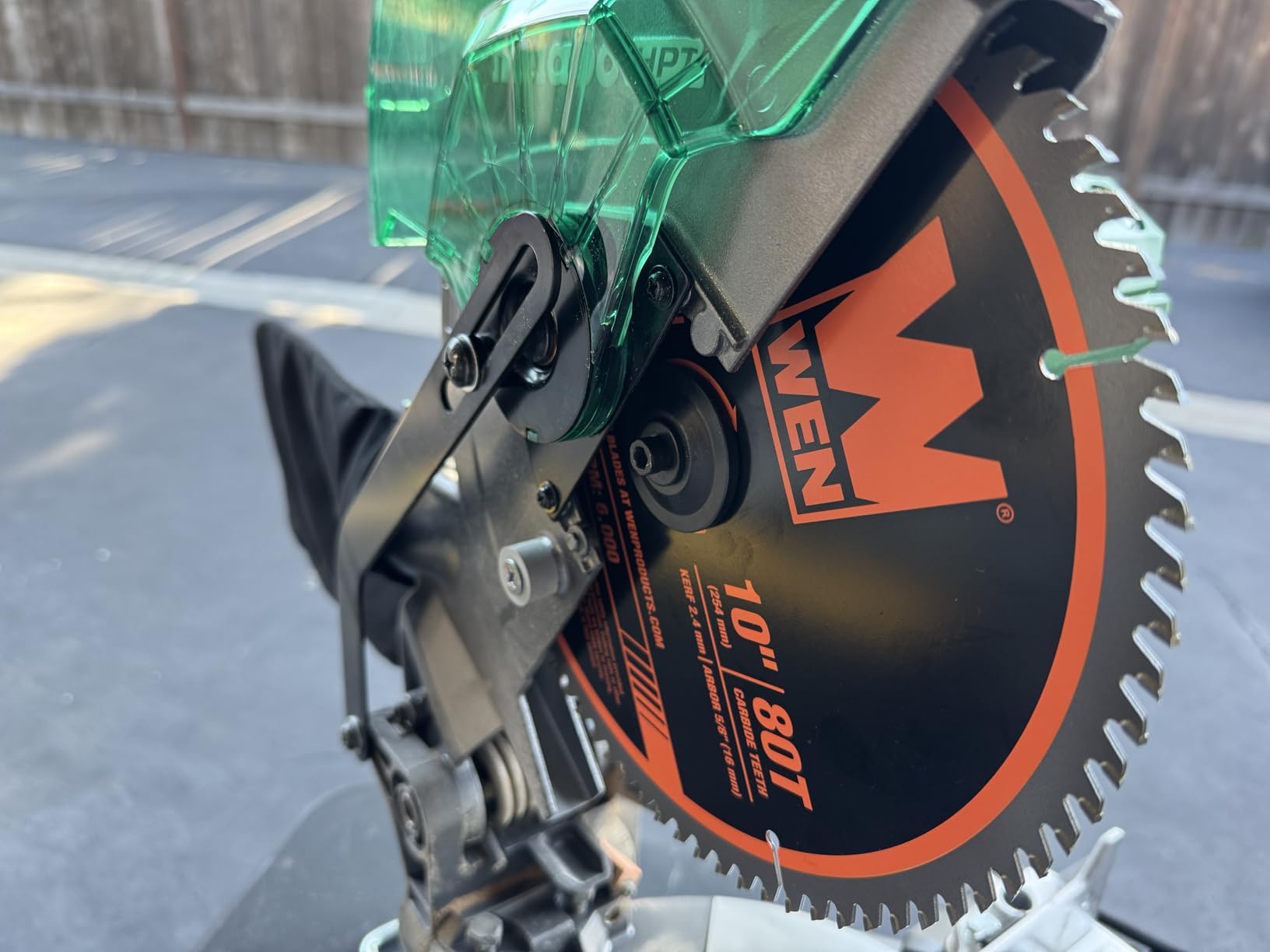
The WEN BL1080 is the one we recommend to anyone who wants a genuine finish blade without joining the premium tier conversation. It is a 10 inch, 80 tooth carbide-tipped blade with an ultra-thin one tenth inch kerf, rated to 6000 RPM, and it fits standard 10 inch miter saws, jobsite saws and table saws alike. For a first blade, or a spare for a site van, the value is hard to argue with.
Reviewers use it on baseboard, crown moulding, melamine and cabinetry, and describe cuts that are clean with minimal tear-out and edges smooth enough to need little or no sanding. One owner reported it still sharp after ripping roughly 50 sheets of three quarter inch plywood, which is a solid indicator of carbide volume for a blade at this level.

The blade is well balanced, running quietly with very little vibration, and the thin kerf means it feeds easily and takes less off the workpiece. That last point matters on sheet goods: every fraction of an inch of kerf you do not remove is another fraction of an inch of material waste across a stack of cut panels.
The limits are honest and minor. Some owners report slightly more runout than they expected, so check it before a critical joint. It will bog the saw down in wet or pressure-treated material, and acrylic can still melt slightly at the edge, which is a carbide trait rather than a defect.
Whether a lower-priced blade can match a premium one on trim
On softwood trim, painted MDF, melamine and plywood, often yes. Those materials are not hard enough to punish a mid-grade carbide, and the difference in edge quality is small enough that you will not see it after a coat of paint. The gap opens on hard maple, white oak and walnut, where carbide volume and plate tension decide whether the top edge stays intact.
What to check before you commit
Runout and flatness, in that order. Hold the blade against a flat table or a known flat surface and look for a gap, then spin it on a fingertip and listen for wobble. A cheap blade with a bent plate will produce wandering cuts no matter how many teeth it has, and that is the failure mode that gets blamed on the saw.
4. Diablo D1080N 10 Inch 80T TCG Blade – Best for Plastic and Non-Ferrous Work
Diablo Saw Blade – 10″ Diameter, 80 TCG Teeth, 5/8″ Arbor
- Burr-free cuts in melamine and ABS
- Clean cuts in thin aluminium plate
- Stabilizer vents cut noise and vibration
- Coating resists pitch build-up
- TCG grind is not an all-wood finish grind
- Mild melting on acrylic
- Fails fast on solid aluminium bar
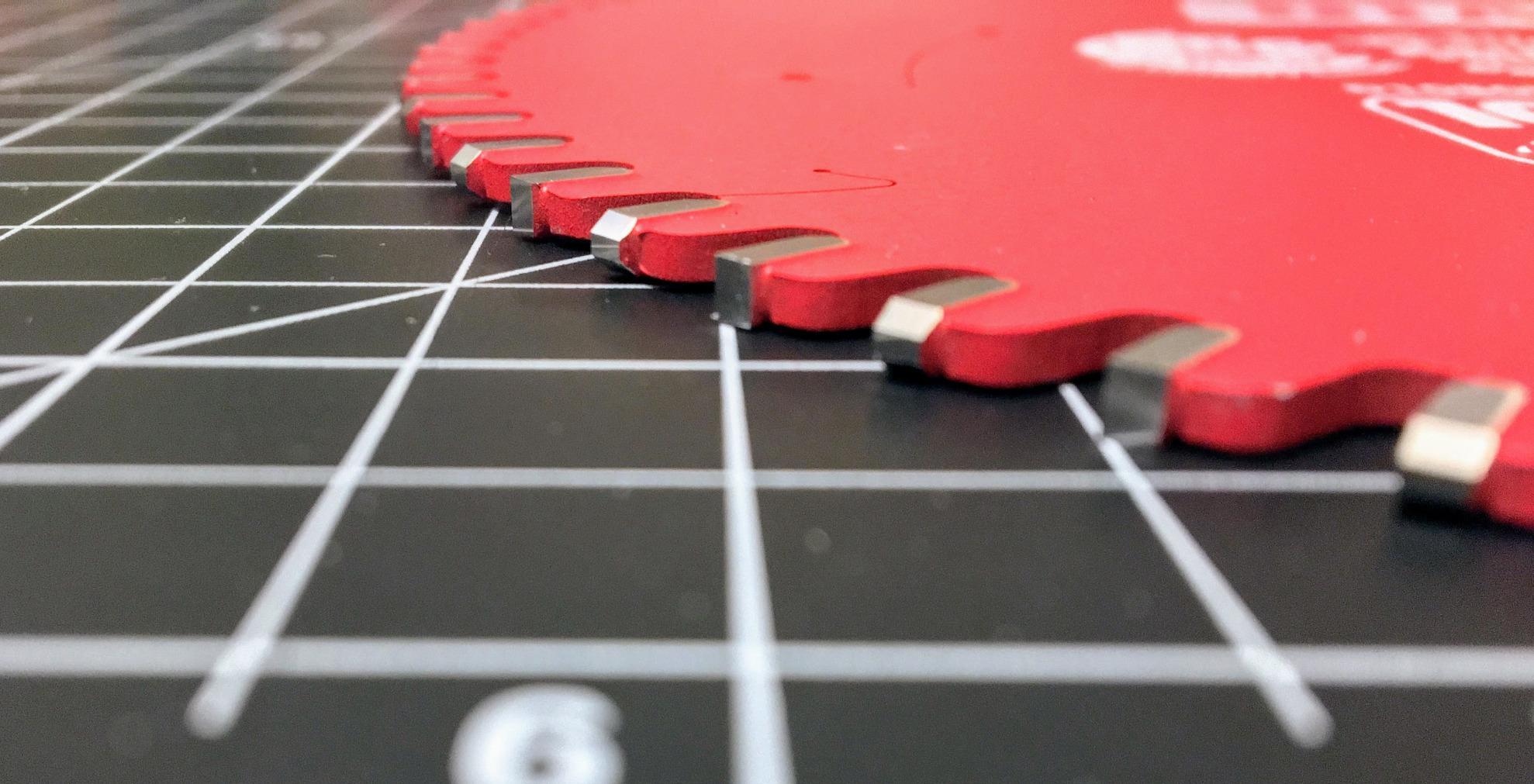
This one is not a general wood finish blade and we want to be clear about that before anything else. The D1080N uses a triple chip grind, meaning each tooth has three chamfered edges in a repeating pattern, which distributes the load and resists chipping in non-ferrous material. It is a specialist blade for aluminium, brass, plastic and composite panels, and for melamine it is excellent.
Owners treat it that way and rate it accordingly. Cuts in melamine, ABS sheet, plywood and plastics come out burr-free and dimensionally accurate, with little or no sanding needed, and thin aluminium sections including small lengths of 6060 extrusion cut cleanly. For a finish carpenter who occasionally fits aluminium trim or fabricates plastic panels, it saves buying a separate tool.
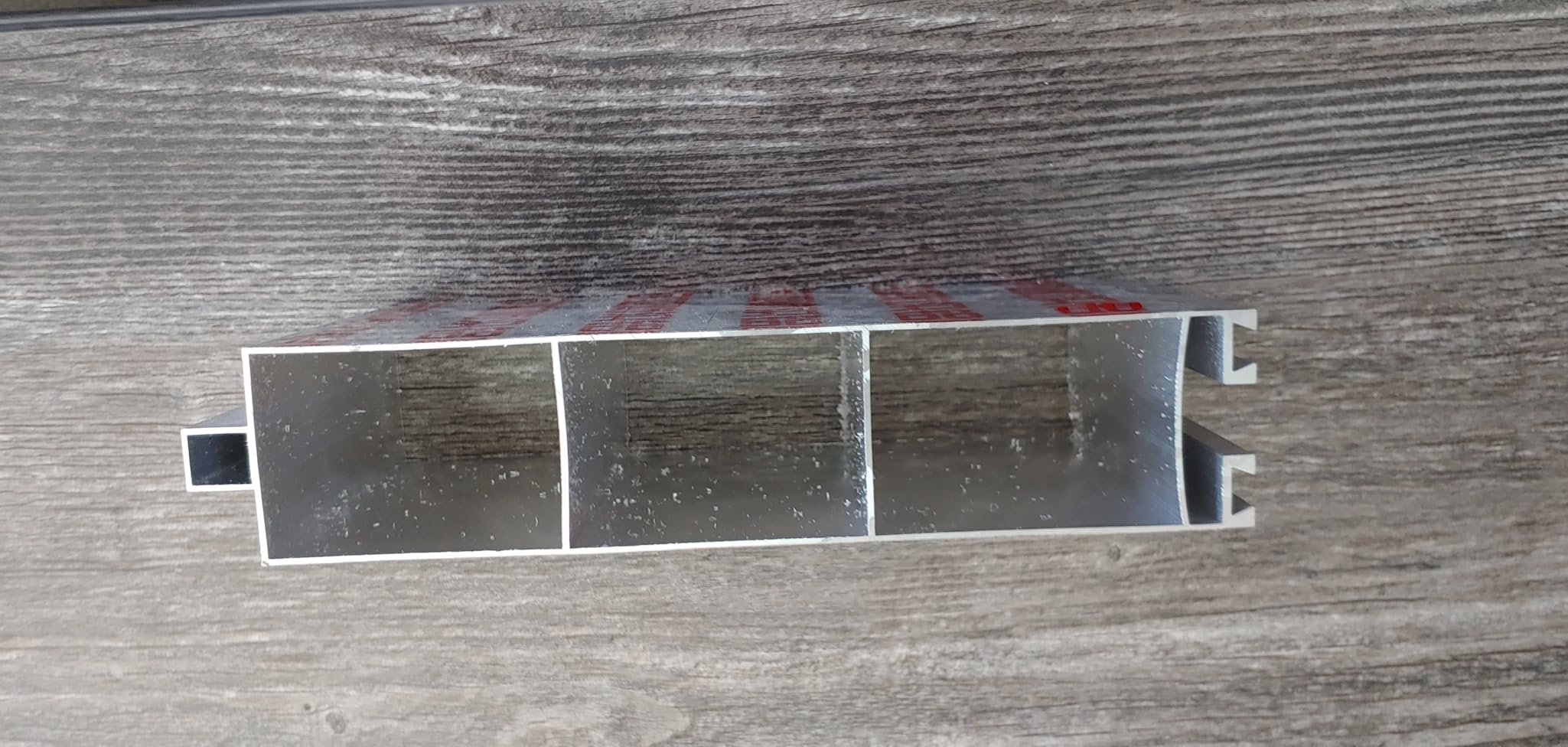
The construction is well suited to that job: TiCo Super-Density micro-grain carbide at a 0.094 inch kerf on a 0.071 inch plate, a coating against heat and gumming, and laser-cut stabilizer vents that trap noise and reduce vibration. The minus 5 degree hook angle gives it a strong pull into the cut, which is why it tracks so well in aluminium.
Know the failure modes before you buy. The triple chip grind is not an all-wood fine finish pattern, so on solid hardwood you will not get the tear-out control of an ATB blade. Acrylic can still melt slightly at the edge, and it will dull quickly on solid aluminium bar if you feed it hard. Square cuts in extruded aluminium also take practice and a rigid saw.
Whether this blade belongs in a finish carpentry kit
As a specialist, yes. As your only blade, no. If your work includes melamine-faced cabinets, plastic sheet, or any aluminium trim or flashing, this is the blade that handles those without melting or burring, and that is a category an ATB wood blade handles poorly. Keep a separate 80T ATB blade for the hardwood and moulding work.
How it behaves on wood sheet goods
Better than it has any right to on plywood, because the triple chip grind stays sharp on abrasive material and the stabilised body stays true. It is a reasonable plywood blade. On solid timber it is outclassed by every ATB option in this roundup, because the grind sacrifices the clean top edge for chip resistance in metal.
5. Freud LU88R010 10 Inch 60T Thin Kerf ATB Blade – Best Premium 10 Inch
- High-density carbide holds an edge well
- Thin kerf cuts waste and feeds easily
- Positive hook feeds fast and smooth
- Resists corrosion on long runs
- Costs more than most 10 inch blades
- 60 teeth is coarser than 80T for the finest edges
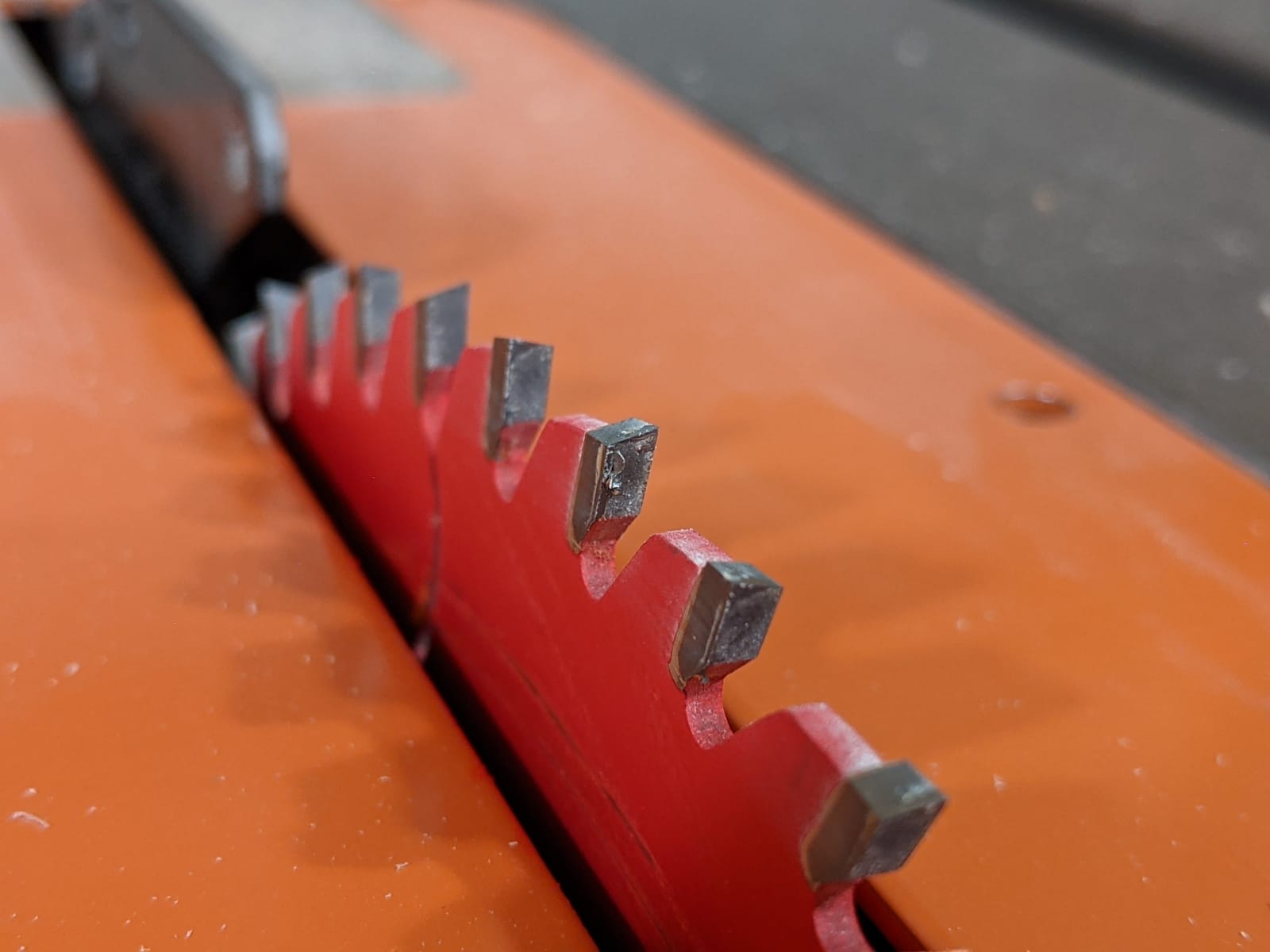
The LU88R010 is the Freud option for a 10 inch saw, and it is deliberately not the highest tooth count on the shelf. Sixty teeth at an alternate top bevel grind gives you a wider chip, more strength per tooth and a faster feed than an 80 tooth blade, while still cutting cleanly enough for visible trim. It is a finish blade that can take a knock rather than one that needs protecting.
Where the money goes is in the carbide and the finish. It uses a premium TiCo high-density crosscutting blend, which is why owners report good edge retention, and the Perma-Shield coating limits drag, corrosion and pitch build-up over long runs. The 0.090 inch kerf on a 0.071 inch plate keeps the cut light and the plate stable.
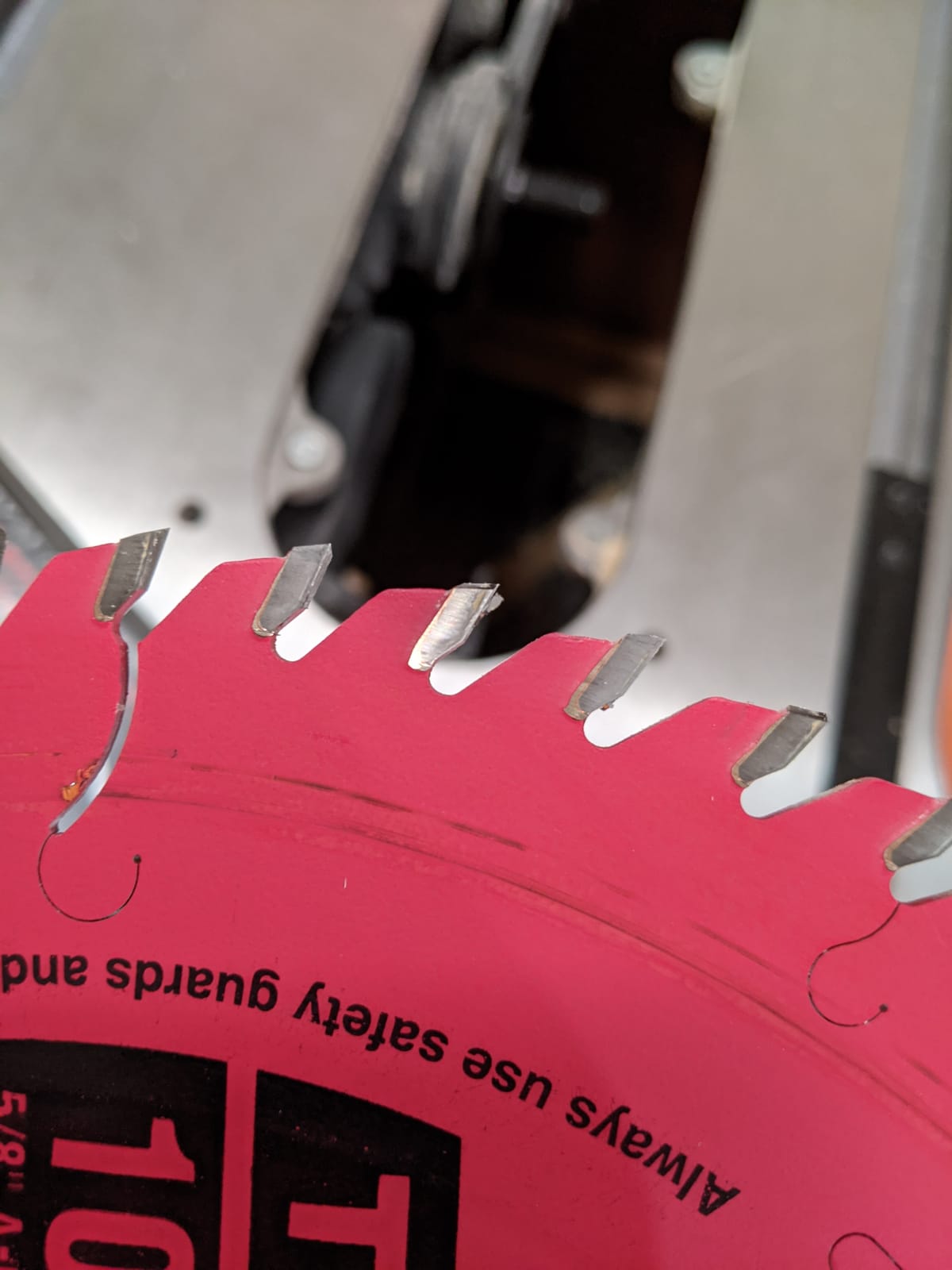
One specification deserves attention because it is the opposite of what most safety-minded buyers assume. The stated hook angle is a positive 15 degrees, which is what gives the blade its faster feed rate and smooth cut in crosscutting. On a chop saw with the workpiece held against a fence, that is fine. On a sliding compound saw with a thin or narrow workpiece, that much positive hook is the thing most likely to grab.
The two reservations in the reviews are consistent. It costs more than most 10 inch finish blades, and 60 teeth will not chase the very finest moulding edge that an 80 tooth blade delivers. If your work is painted trim and cabinet parts, this is comfortable. If it is picture frame moulding in walnut, you would rather have more teeth.
Whether 60 teeth is genuinely enough for finish work
More often than the forums suggest. A well-dialed saw with a competent 60 tooth blade produces good square cuts in painted trim and melamine, and forum users who work daily on MDF and paint-grade poplar treat 60 teeth as a competent choice rather than a compromise. Raise the tooth count only when the cut face is visible and you want to skip sanding entirely.
Where a positive hook angle will hurt you
On narrow stock on a sliding saw, and on anything where the workpiece can lift. Positive hook pulls the board upward into the blade, which means more load on the motor, more deflection on a bevel cut, and a grabby feel if the workpiece shifts. Keep hold-down pressure firm and never let the teeth cross the workpiece a second time.
6. DEWALT DWA11280 12 Inch 80T Fine Finish Blade – Best for Sliding Compound Saws
DEWALT 12 Inch 80T Carbide Circular Saw Blade, Fine Finish Saw Blade (DWA11280)
- Clean crosscuts in MDF and shiplap
- Runs true with no reported vibration
- Does not rub paint onto the work
- Large improvement over the factory blade
- A few units ring loudly at full RPM
- Costs more than aftermarket equivalents
- Longevity still unproven for many owners
The DWA11280 is the natural companion to a 12 inch sliding compound saw like the DWS780, and it solves a specific irritation for owners of that saw class. Owners report very clean, smooth crosscuts in softwood, hardwood, MDF baseboard and pre-finished shiplap, and specifically note that it does not rub paint onto the workpiece the way some other blades do after a chattering cut.
The body design is the reason for the quiet running. The patented body slot pattern is laser cut into the plate to absorb vibration before it becomes noise or wander, and owners on sliding compound saws report the blade runs true with no vibration or singing. Most also highlight how much better it is than the blade supplied with the saw.

DEWALT claims up to three times the blade life of a standard blade with optimized tooth geometry for accuracy. In practice the majority of reviews are about cut quality rather than longevity, since many owners bought it for a single project and have not run it hard enough to judge wear. The thin kerf also behaves well on wider boards in both the stationary and sliding positions, which matters when you are cutting long casing.
Two honest caveats. A small number of units produce heavy harmonic ringing at full speed and were returned, though most owners describe quiet running, so the noise seems to vary by unit or by saw. And at the price point it sits above most aftermarket 12 inch 80 tooth blades with broadly similar tooth counts.
Whether this is the right blade if you own a 12 inch slider
If your saw is a DEWALT sliding compound, this is a low-risk first upgrade with no fit issues and a 1 inch arbor. The pattern of owner feedback, clean on painted and pre-finished material with no paint transfer, matches what you want on site. If your saw is another brand, an aftermarket blade at a similar tooth count will do the same job for less.
What to watch in the first hour of use
Listen and look. If the blade rings harmonically rather than humming evenly, stop and check that it is seated flat on the arbor and that the arbor faces are clean, since a chip of debris under the flange causes exactly that noise. Also watch for chip-out on the exit side of the cut, which on a sliding saw usually means the workpiece is not held down firmly enough.
7. CMT 255.080.10 10 Inch 80T Hi-ATB Ultra Fine Finishing Blade – Best Ultra-Fine Finish
CMT Orange Tools 255.080.10 – Ultra Fine Finishing Saw Blade D=10 B=5/8 ß=Hi-ATB 30 K=0.110 P=0.071 a=5
- Hi-ATB grind gives smooth mitre edges
- Narrow plate resists deflection
- Suited to mouldings and finish carpentry
- Replacement warranty from the maker
- 0.110 inch kerf is wider than thin kerf rivals
- Smaller review base than leading blades
The CMT is the one we recommend to anyone chasing the absolute cleanest mitre edge on a 10 inch saw. It uses a Hi-ATB 30 degree alternate top bevel grind, which is the most aggressive bevel angle in this roundup, and it is also one of the few blades here with a clearly stated hook angle of just 5 degrees, a much more neutral geometry than the 15 degree positive hook on the Freud 10 inch.
At 449 grams it is the lightest blade in the group, and combined with the narrow 0.071 inch plate it resists deflection well. Owners describe smooth, precise results on trim and mitre work, with the narrow plate highlighted as helpful for clean cuts where a thicker plate would wander. It is also listed for engineered wood, which covers most of what a finish carpenter actually cuts.
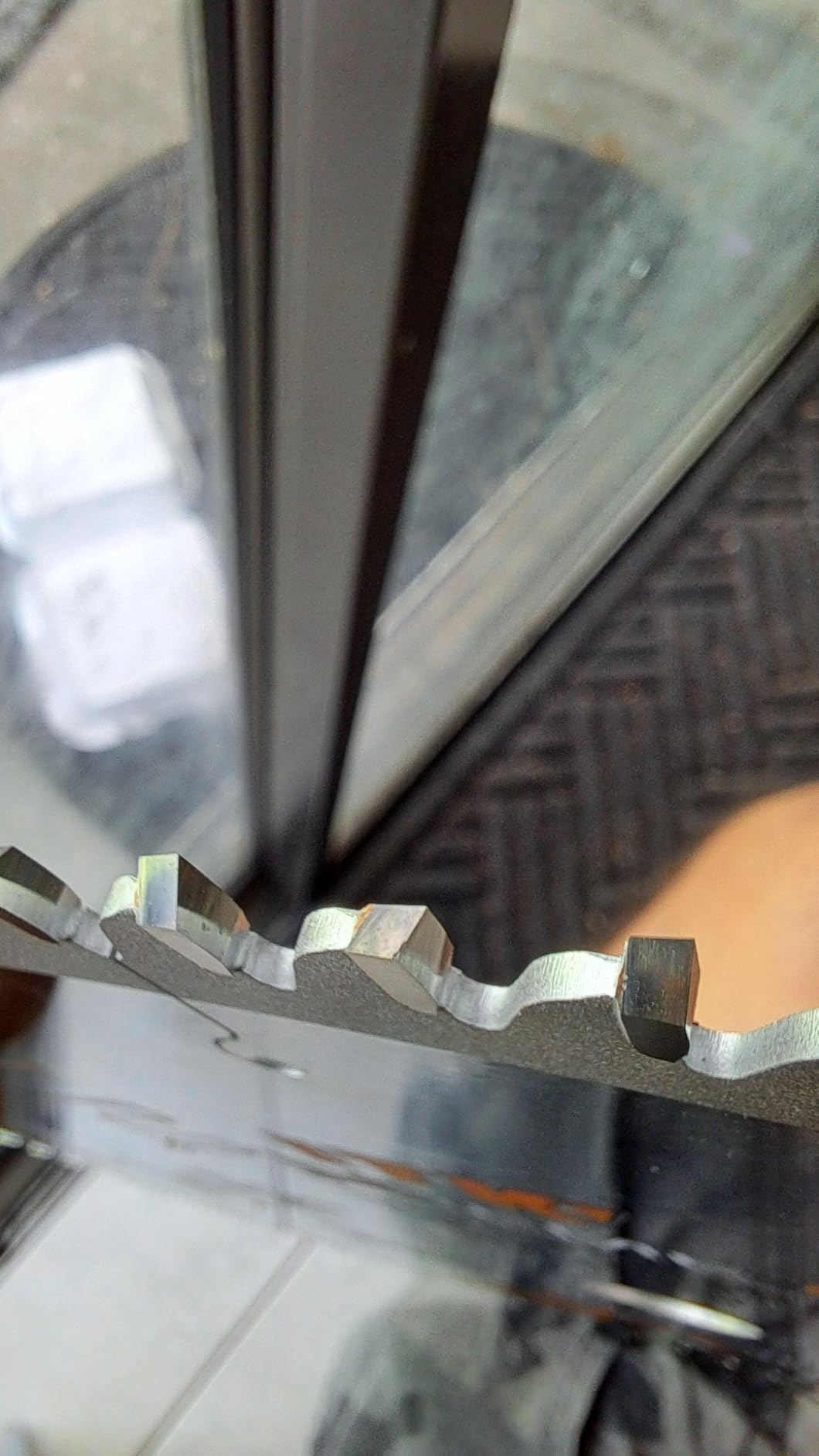
CMT is also the brand to watch for on resharpenability. Its warranty statement promises a full replacement if a blade used for its recommended applications does not perform, and the company resharpens its own tooling. Woodworkers on the woodworking subs describe CMT as having far more carbide than the value brands and being resharpenable at a comparable price, which changes the economics over a few years of trim work.
The trade-off is kerf. At 0.110 inches it is a wider cut than the thin kerf blades here, so it removes more material and puts a little more load on the motor. That wider kerf also makes it a calmer blade in a cut, which is part of why the deflection story works. The other drawback is simply that fewer people have run it, so there is less long-term feedback.
Whether a 30 degree bevel angle matters in practice
Yes, at the top edge of the cut. A higher bevel angle makes the tooth wedge into the fibre at a steeper angle, so more of the cutting happens on the bevel and the top corner of the kerf is scored before the blade has to break it out. That is the difference between a mitre face that is ready for caulk and one that needs filling.
Whether kerf width changes your cut quality
It changes the cut in two ways. A wider kerf removes more material, which matters if you are cutting expensive veneered panels and does not matter at all on solid trim. It also gives the blade more room, which reduces binding and deflection, so the 0.110 inch kerf here can produce a straighter line than a thinner blade in the same saw.
8. Freud LU88R012 12 Inch 80T Thin Kerf Crosscut Blade – Best for Thick Solid Hardwood
Freud LU88R012: 12″ Thin Kerf Fine Finish Crosscut Blade
- No burn marks in walnut and maple
- Minimal resin and pitch build-up
- Thin kerf cuts waste and feeds easily
- Beats many 80T alternatives for owners
- Costs more than most aftermarket 12 inch 80T
- Some report blade flutter in the cut
- Occasional tear-out on the exit side
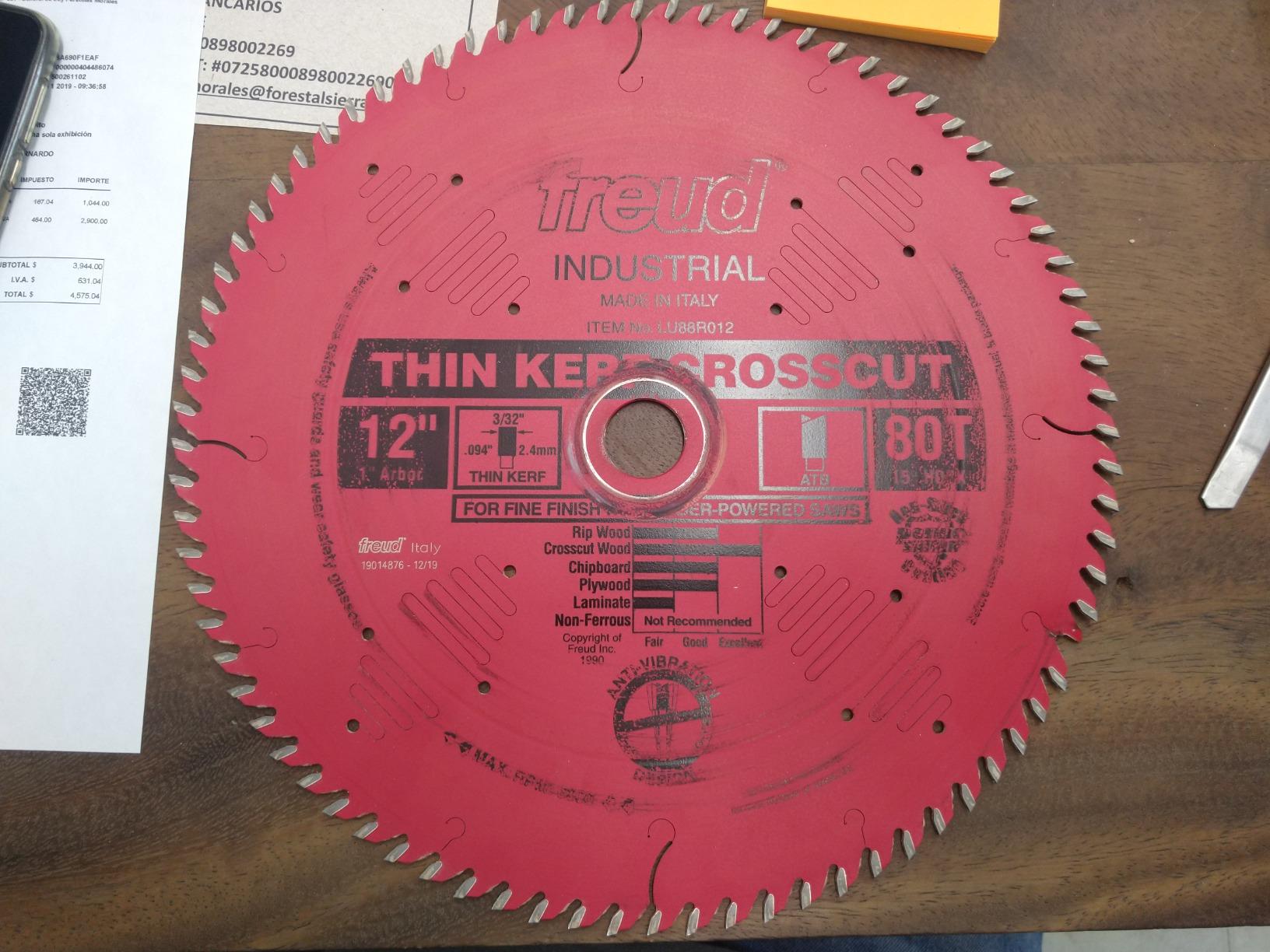
The LU88R012 is the 12 inch version of the same premium crosscutting blend, and owners rate it as the best 12 inch miter saw blade they have used. The headline result is no burn marks in walnut and maple, even on thick four by stock, and that is the specific complaint that drives most blade upgrades. Burn marks happen when a dull or under-toothed blade rubs rather than cuts.
Second on the list of praises is minimal resin and pitch build-up on the blade, which matters more than it sounds. Resin gummy on the teeth causes glazing, and a glazed blade cuts slower and burns more, so a coating that resists pitch over a long trim run effectively extends the life of the edge.
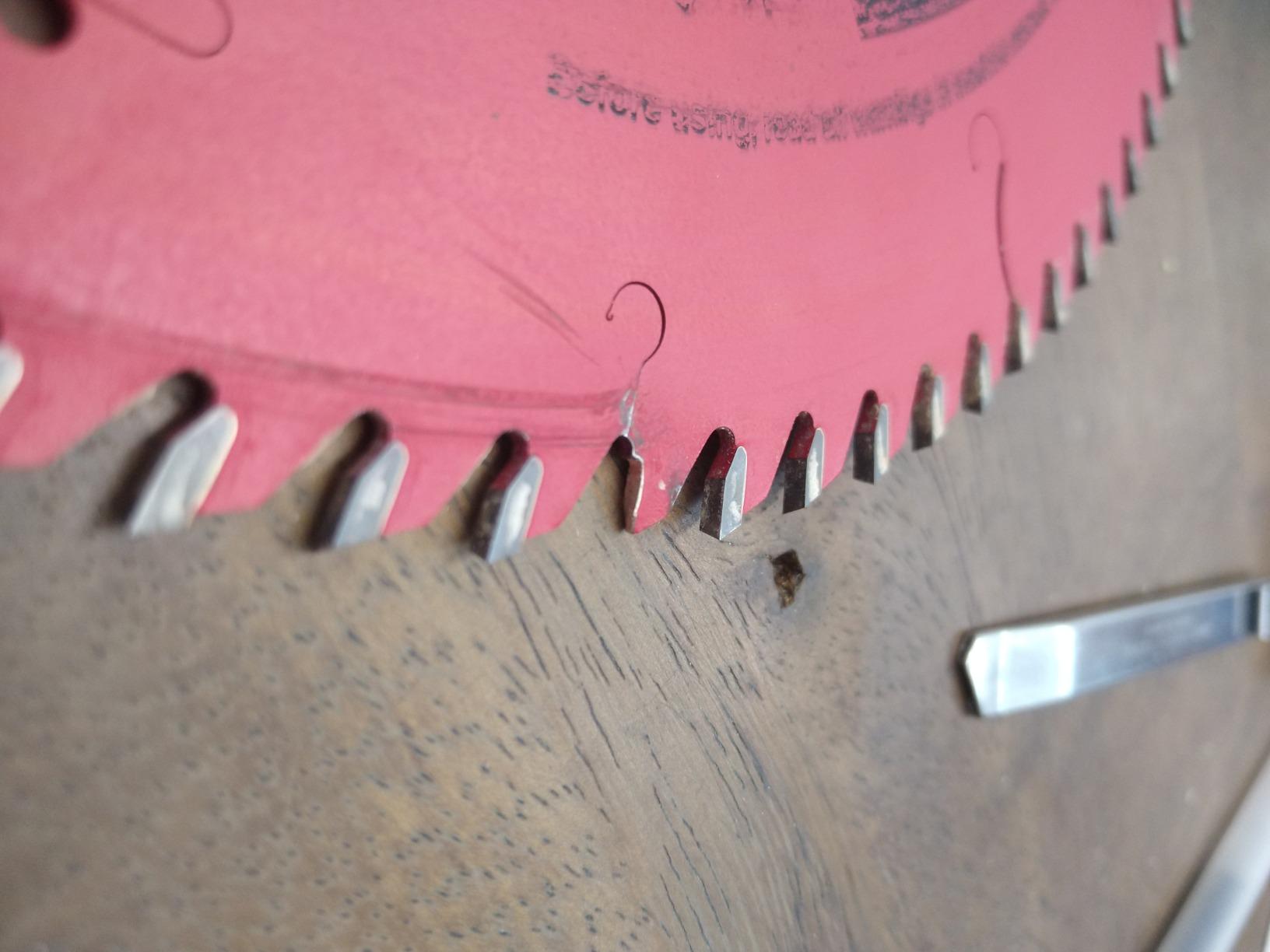
Many owners moved to this blade after running the DEWALT factory blade and 80T Diablo variants, and report beating both on cut quality rather than just on price. It holds its cutting quality over roughly two years of use with only occasional gum cleaning. Specification-wise it is an ATB grind, 0.094 inch kerf on a 0.071 inch plate, 1 inch arbor, and a 15 degree hook angle.
The reservations are real but minor. It costs more than most aftermarket 12 inch 80 tooth blades. Some owners see blade flutter during the cut on a miter saw, and there is occasional slight tear-out on the exit side of the cut. The 15 degree positive hook is the same geometry discussed earlier, so treat it with care on thin stock.
How to keep burn marks out of hardwood crosscuts
Three things, in order of effect. Feed at a steady rate that lets the teeth take a proper chip rather than burnish the surface, keep the blade clean, and make sure it is actually sharp. A dull blade cannot be fixed by feeding slower, because a slower feed on a dull edge just increases heat. If a burn mark appears on one piece and not the next, suspect a dirty or glazed blade before suspecting the carbide.
Whether this blade suits a shop that cuts mostly plywood
It works, but you are carrying premium carbide and a positive hook angle for a job an 80 tooth ATB wood blade handles at a lower cost. Reserve it for the hardwood and solid trim work where the no-burn result shows, and run a general blade for sheet goods days. Two blades in one saw is a normal setup and worth the extra storage space.
9. Freud LU91R012 12 Inch 72T Sliding Compound Blade – Best for Sliding Compound Work
Freud Thin Kerf Sliding Compound Miter Saw Blade with Premium Tico Hi-Density Carbide Crosscutting Blend for Maximum Performance – 12″ Diameter, 72 Teeth, ATB Grind – LU91R012
- Negative hook prevents climb and grabs
- No deflection on bevels in hardwood
- Cuts thick stair treads with little force
- Less handle bounce from lower weight
- Highest price among the 12 inch blades
- 72 teeth is coarser than 80T options
- Negative hook suits sliding work specifically
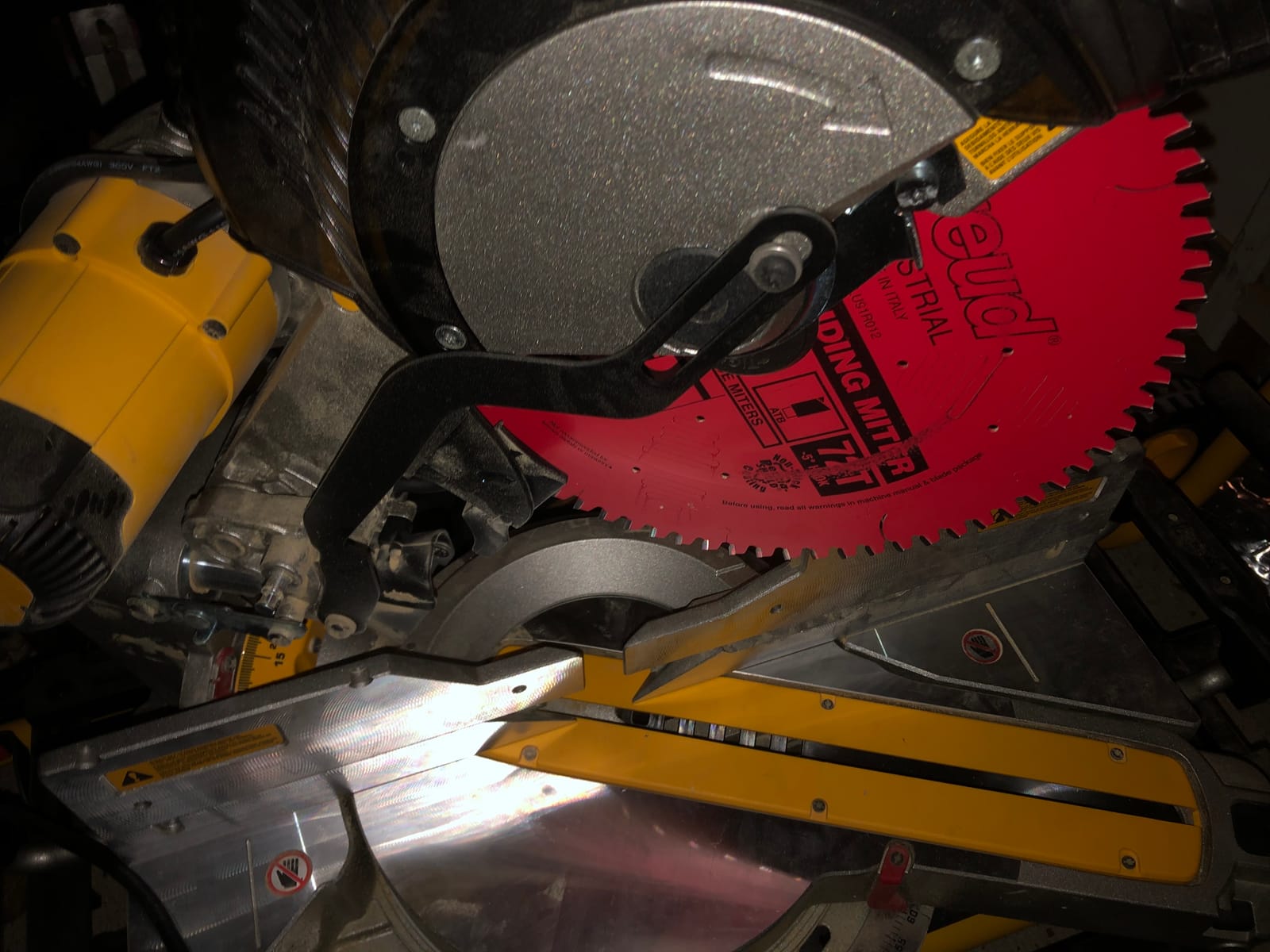
This blade exists because of a safety conversation. The LU91R012 has a 5 degree negative hook angle, which means the tooth faces slightly away from the direction of rotation and pushes the workpiece down and toward the fence instead of lifting it into the blade. Commercial trim carpenters single this out as the feature that eliminates grab and tear-out on a sliding compound saw, and several describe switching brands after trying it.
Second to safety is stability. Owners report no vibration and no blade deflection when cutting bevels in hardwood, and they cut oak, hickory and thick stair treads with almost no force. At 2.4 pounds it is lighter than the other 12 inch blade in this roundup, which shows up as less handle bounce when the saw starts its cut.
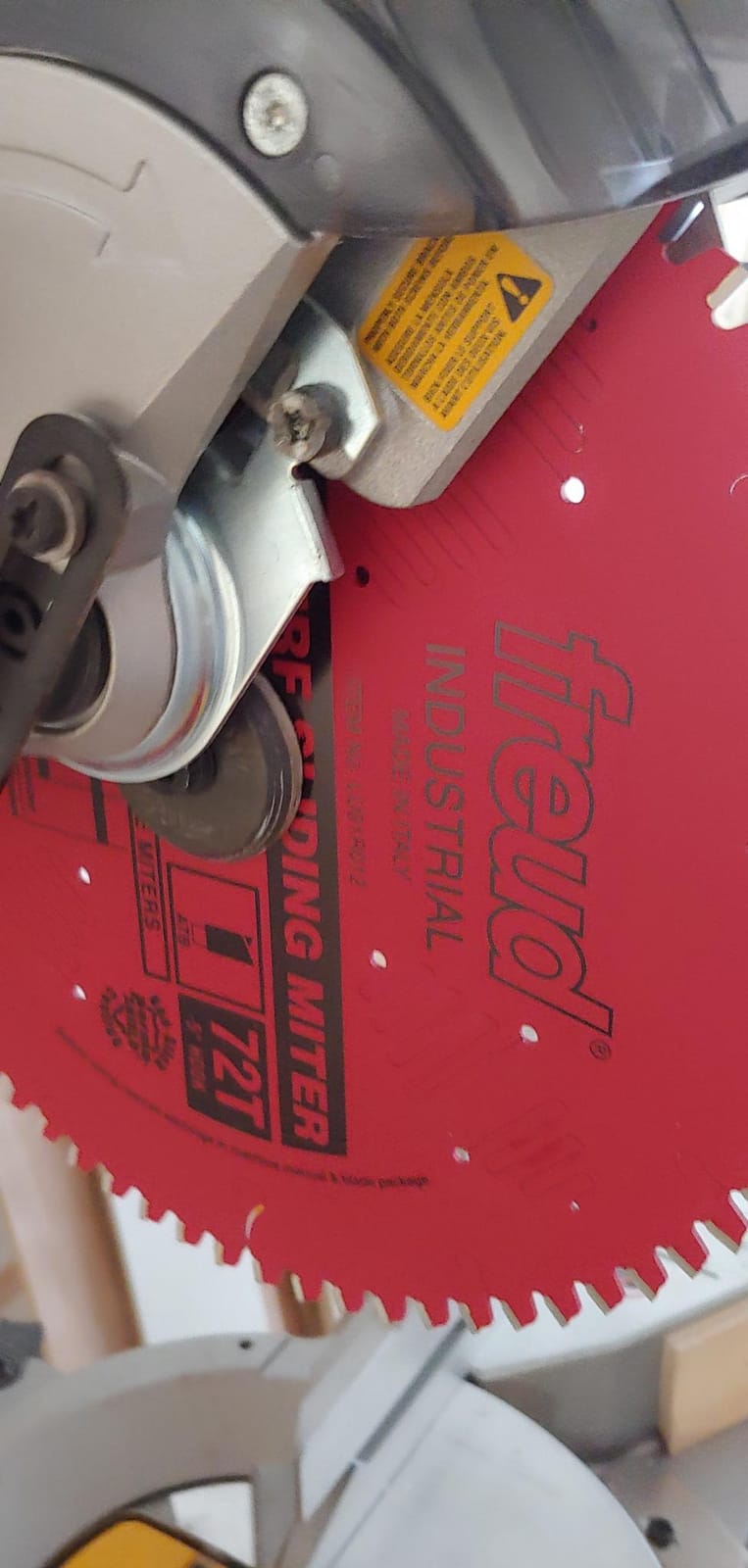
It is also a thin kerf design needing less horsepower, coated to reduce friction, heat and pitch, and built on the same premium TiCo high-density crosscutting carbide as the rest of the Freud line. Reviewers report it still holding an edge after hundreds of cuts on hardwood trim and stair parts, which is a meaningful number of cutoffs.
Be clear-eyed about the trade-offs. It is the most expensive 12 inch blade here, and 72 teeth is slightly coarser than the 80T ultra-fine options, so the very finest picture frame edges will be a touch rougher. Negative hook also feels different, because it resists being pushed and demands a firm, steady feed rather than a quick one.
Whether negative hook angle is worth changing your whole approach
On a sliding compound saw, frequently yes. You stop chasing cutoffs, bevel cuts stay flat, and the board stays put on the table. What changes is your feed: a negative hook blade will not self-feed, so if you are used to leaning into a positive hook blade you will need to push deliberately and evenly. That habit takes an afternoon to build.
What grabbed cutoffs and thrown timber actually are
When a blade with too much positive hook meets a workpiece that can lift, the teeth can pinch the wood and the blade climbs. The cutoff can then be thrown toward the operator. This is the highest consequence failure in this whole category and it is discussed at length on the carpentry forums, where users recommend negative hook blades specifically. Hold the saw head down until the blade has fully stopped before raising it.
10. DEWALT DWA11060 10 Inch 60T Fine Finish Blade – Best for Paint-Grade Trim
DEWALT Table Saw Blade, 10 in, 60 Tooth, Fine Finish, Ultra Sharp Carbide (DWA11060)
- Splinter-free cuts on trim and melamine
- Edge holds over hundreds of feet of oak
- Quiet and tracks consistently
- Fits 10 inch saws and table saws
- 60 teeth is coarser than 80T blades
- May not last in heavy hardwood work
- Costs more than some equivalent blades
The DWA11060 is the pragmatic choice for painted trim, melamine and softwood casing, and it has one of the larger review bases in the whole category, which means a lot of long-term owner feedback. Sixty teeth at a 5/8 inch arbor fits essentially every 10 inch miter saw sold in North America, so there is no fit risk.
Owners report clean, splinter-free crosscuts on trim, wall trim and melamine, and small business owners describe daily use with the edge holding over a year or more, including hundreds of feet of one inch oak. It runs quietly and tracks consistently, and the patented body slots reduce vibration the same way they do on the 12 inch DEWALT blade.
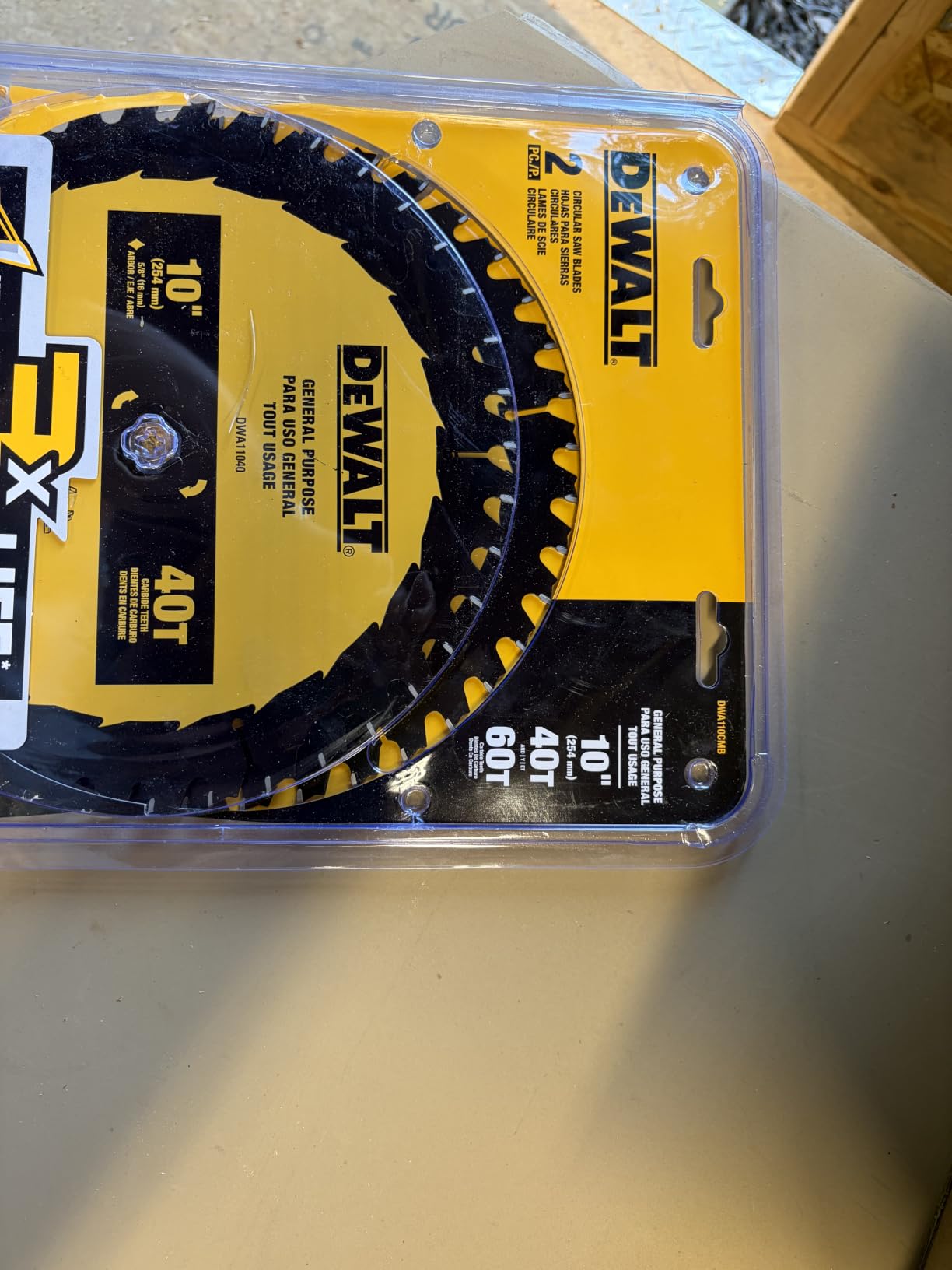
The honest way to read sixty teeth is that this is a fine finish blade that trades the last of the smoothness for chip capacity and speed. On a painted or pre-finished edge, the paint film fills minor tear-out anyway. On bare clear-coated hardwood you will want more teeth, and on thick stock the wider chips clear the sawdust much better.
The criticisms are all minor: some owners report more sawdust thrown from the back of the saw, it may not last as long as higher-end blades in heavy hardwood work, and a few buyers note it costs more than other brands at the same tooth count. For a residential trim carpenter cutting painted poplar all week, none of that matters much.
Whether 60 teeth is enough for painted MDF and poplar
Completely. MDF and paint-grade poplar are soft, uniform and abrasive rather than hard, and the wide chip of a 60 tooth blade handles the dust load that gums an 80 tooth blade. Since painted edges get filled and caulked anyway, the smoother cut of a higher tooth count buys you very little on this material. This is the blade to keep in the van for site trim.
When to step up to a higher tooth count
When the cut face is exposed and needs no sanding, which is the test finish carpenters use. Clear-coated oak, walnut and cherry, picture frame moulding and sash glazing all fall into that category, and there the extra teeth are what remove the sanding step. If you find yourself hand-sanding every mitre, the blade is the wrong tooth count, not the wrong brand.
Which Tooth Count Do You Actually Need?
Tooth count is the number everyone asks about first and the one most often answered wrongly. Here is the honest breakdown: a 24 to 30 tooth blade is a ripping or fast demolition pattern. A 40 to 60 tooth blade is general crosscutting that handles framing lumber and sheet goods. A 60 to 80 tooth blade is the finish window, and 80 to 100 is for cuts where no sanding is acceptable.
More teeth means each tooth takes a smaller chip, so the blade shears instead of tears, and the top edge of the cut stays clean. The cost is speed and chip capacity, because a narrow kerf slot clogging with dust will stall a saw and glaze an edge. That is why finish blades are generally kept to hardwood around one and a half inches thick or less, where friction and heat have somewhere to go.
How to read a blade label
Five things are printed on every blade and all five matter. Diameter tells you whether it fits your saw. Tooth count tells you the finish quality and the speed. The grind, written as ATB, Hi-ATB, TCG or FTG, tells you the tooth shape and therefore the material it suits. The kerf tells you how much material it removes. The hook angle, when printed, tells you how hard it pulls and whether it is safe on your setup.
What ATB, Hi-ATB and TCG actually mean
ATB, alternate top bevel, alternates a bevel from one side of the tooth to the other so the kerf is scored on both edges, and it is the standard crosscut pattern for wood. Hi-ATB raises that bevel to 30 degrees or more, cutting more aggressively on the top edge for the cleanest crosscut face. ATAF adds an alternate face, giving each tooth a second cutting edge on the side. TCG, triple chip grind, gives every tooth three chamfers and resists chipping in metal and abrasive sheet.
What kerf and plate thickness change
Kerf is the width of the slot the blade leaves. Thin kerf blades, roughly 0.090 to 0.094 inches, remove less material, feed more easily and put less load on the motor. Full kerf blades cut closer to half an inch wider per pass but clamp the wood less and resist deflection better. Plate thickness is the other half: a 0.071 inch plate flexes less, and less flex means a straighter line across a wide board.
Whether coatings actually matter
Less than the marketing suggests. Forum users describe PTFE and Teflon style coatings as take it or leave it, and we agree with the sentiment if not the tone. A coating slows heat and resin build-up, which extends time between cleanings, but carbide volume, plate tension and resharpenability are the levers that decide how long the blade cuts well. Treat a coating as a convenience, not a quality signal.
Resharpenable or disposable
A typical sharpness life on hardwood trim is around 2,000 crosscut feet per sharpening, which sounds low until you price it out. A disposable value blade that dies at 800 feet and a premium blade sharpened twice over 3,000 feet end up in the same place. Experienced woodworkers use a third path, buying a good mid-price blade and paying a specialist to resharpen it, then reporting you cannot tell the difference in the cut.
Thin Kerf vs Full Kerf on a Sliding Compound Saw
This is the most argued question in the forums and the one where the mainstream listicles are least honest. Thin kerf blades cut faster, waste less material and load the motor less, and on a chop saw they are simply better. On a sliding compound saw, a widely held belief among finish carpenters is that the thinner plate deflects more, and a wandering cut is what you notice on visible trim.
The mechanism is straightforward. In a sliding cut the blade reaches well past the workpiece and is unsupported at the far end of the arc, so plate stiffness matters more than it does on a chop. Several posters say they avoid thin kerf blades on sliders for exactly that reason, and others say they have run them without issue for years. Both experiences are consistent.
The fix, if you already own thin kerf blades and like them, is setup rather than buying. Check that the blade insert in the base of your saw matches the kerf, and reset the zero clearance to the new blade so the material is not being pushed into the teeth before the cut begins. A blade that is cutting into a zero clearance set too narrow will wander no matter what it cost.
Hook Angle, Blade Grab and the One Safety Rule Nobody Covers
Hook angle, also called rake angle, is the angle of the tooth face relative to a line perpendicular to the blade radius. Positive hook means the tooth leans into the direction of rotation and pulls the workpiece upward. Negative hook pushes down and toward the fence. That single geometry choice decides whether a blade climbs, grabs or holds.
The consequence of too much positive hook is not cosmetic. On a sliding compound saw, a lifted workpiece can be pinched between the blade and the fence, at which point the blade climbs and the cutoff can be thrown toward the operator. Forum users describe this happening, including one account of a blade built for a different saw class grabbing and throwing a cutoff hard enough to need stitches. That is why negative hook recommendations come up so often.
The rule that prevents most of it
Do not let the teeth touch the workpiece twice. Hold the saw head down after the cut until the blade has fully stopped, then raise it. If the spinning teeth pass through the offcut a second time on the way up, they can shatter the cut face or throw the piece. This is technique, not blade quality, and it is the single cheapest improvement available to anyone with a miter saw.
Matching hook angle to your saw
On a chop saw, where the workpiece is short and firmly clamped against the fence, a positive hook from about 10 to 15 degrees is efficient and safe. On a sliding compound saw with thin or narrow stock, a neutral to negative hook of zero to minus 5 degrees is the safer and steadier choice. Several blades in this roundup print their hook angle, and that number is worth more than the brand name.
Blade Diameter and Arbor: Get the Fit Right Before Anything Else
Nothing else matters if the blade does not fit. Look at the blade already in your saw and read the diameter off the stamp or the label. Ten inch is the residential default and covers most sliders sold for home use. Twelve inch is the professional default now and covers most chop saws, and 12 inch saws give you a taller, squarer cut for casing and plinth work.
The arbor is the second half of the fit. Most saws sold in North America use a 5/8 inch arbor, and 12 inch chop saws commonly use a 1 inch arbor. Many imported and European saws use a 20mm arbor, and buying a 5/8 inch blade for one of those saws means it will not mount at all. If your saw is a 20mm machine, confirm the diameter and the arbor before anything else.
A word on table saw blades, because several competing roundups mix them in. A fine finish table saw blade with a thin kerf can physically fit a miter saw and will cut, but it is built for a different duty cycle and a different arbor setup, and several of the picks in competitor lists are exactly that. If a blade is not sold for miter saw use, you are gambling on the geometry rather than buying a tested one. If you also run a table saw, pick a blade rated for both tools deliberately, as several blades here are.
How to Tell Your Miter Saw Blade Is Dull
The first sign is that you started sanding your mitres again. That is the honest signal, because the moment a cut face needs hand work to become presentable, the blade has stopped doing its job. Before that, here are four earlier warnings.
One, the cut takes more force than it used to and the motor sounds strained. Two, you see burn marks on the exit side of the cut rather than a clean break. Three, the blade starts to wander across a wide board, often after a bad cut knocked it out of flat. Four, resin builds up on the carbide within a few cuts instead of wiping off. If you have two of those, stop and replace or sharpen rather than pushing through a project.
What dulling actually does to the workpiece
A dull tooth ploughs rather than shears. It compresses the fibre ahead of the edge, then tears it when it breaks free, which is tear-out on the top edge and a fuzzy bottom edge. The friction also generates heat, and heat on hardwood leaves a burn mark that will show through paint or clear coat. Both problems get worse fast, because a chipped or glazed blade removes more heat from the carbide tip.
When cleaning is enough
Sometimes the blade is not dull, it is dirty. Glue, resin and pitch glazed onto the carbide look and cut like a dull blade. Soak a blade with oven cleaner, scrub the carbide with a stiff nylon brush, rinse and dry before refitting. Do it after every few hours of cutting pine or softwood, and you will get noticeably more life out of the same blade.
Saw Technique for Cleaner Mitres Than Any Blade Can Give
The best blade in this roundup still cannot out-cut a bad setup, and the forums are unanimous on this point. A well-dialed saw with an ordinary blade produces good square cuts, while a badly set saw with the same blade produces bad ones no matter what you spend. Check the fence with a square and a straightedge before blaming the blade.
On a sliding compound saw, make sure the workpiece is held down for the entire cut. The throw switch or hold-down should stay engaged until the blade has stopped, and the fence should be pushed firmly against the workpiece so nothing can lift. Firm pressure on the workpiece is what prevents chip-out on the top edge as much as tooth design does.
The four adjustments worth making
Set the zero clearance insert to match the new blade before the first cut, and re-check it whenever the blade changes. Square the fence against a machinist square and check the head at both ends of the travel. Run the saw at full speed before entering the workpiece. And feed at a steady rate that keeps the teeth cutting rather than burnishing, which means slowing down on hardwood and being careful not to rush thin moulding.
Support the workpiece properly
Long casing and crown need support on both sides of the cut line, and on a sliding saw the offcut needs to stay against the fence rather than dropping away. If you are cutting on site and moving between the saw and the wall, a good miter saw stand makes this dramatically easier and keeps the saw at a working height. A poor setup is the most common reason a good blade looks bad.
Best Blades for Crown Molding, Baseboard and Painted MDF
Crown molding is the hardest finish cut on a miter saw for two reasons. It is usually the widest moulding you will cut, which means maximum leverage on the workpiece and maximum deflection of the blade. And it is normally cut at a steeper angle than a right mitre, commonly around 31.6 degrees, so that the two pieces meet in the corner with their faces aligned to the wall and ceiling planes instead of forming a visible peak.
That steeper angle is why crown punishes a grabby blade. The workpiece is held at an angle to the fence and the teeth engage it at a compound, which means any tendency to climb is amplified. It is also why hold-down pressure matters more here than anywhere else. Which raises the other question on the forum: why 31.6 degrees. The answer is that a 45 degree square cut leaves a corner that projects or gaps on walls that meet at anything other than a perfect right angle, and the steeper cut keeps the profile intact in both directions.
For crown specifically, the blades to reach for are the ones with a high alternate top bevel and a neutral to negative hook. The CMT 255.080.10 at 30 degrees of bevel angle and a 5 degree hook, and the Freud LU91R012 with its negative hook on a 12 inch saw, both give the tooth room to score the wide face without pulling the moulding upward. For baseboard and casing, the 80T 10 inch options are the standard and cover most of the work.
Painted and pre-finished MDF is the other standout use case, and it behaves differently from solid wood. The face film or paint skin is already a cut surface, so the blade can tear it rather than shear it, and any chip-out shows immediately as a bare patch. A high tooth count with an alternate top bevel is the answer, because the scoring happens before the fibre breaks. On pre-painted maple trim, forum users make the same point: the 80T and 90T blades are for cuts where the cut face is visible so you do not need sanding.
If you are still choosing a saw rather than a blade, our guide to the best miter saws for finish carpentry covers the fence, bevel and hold-down features that decide how clean a cut can be. For working away from a bench, our miter saw stands guide covers support and height, which are the two things that most affect whether a crown cut survives the move from saw to wall.
Frequently Asked Questions
What type of saw blade for finish work?
Use a carbide-tipped crosscut blade with a high tooth count and an alternate top bevel grind. On a 10 inch saw that means 80 teeth, and on a 12 inch saw 80 to 90. The alternating bevel scores the outer fibres of the kerf first, so the top edge of the cut stays clean and glue-ready.
What is the best all-around blade for a miter saw?
The Makita A-93681, a 10 inch 80 tooth micro-polished blade with an alternate top and alternate face grind and a thin kerf. Owners report glue-ready edges out of the box, minimal blowout on thin mouldings, and stable cut quality over years of moderate use.
Should I use a 60 or 80 tooth blade for finish work?
Use 80 teeth when the cut face is visible and you want to skip sanding entirely. A 60 tooth blade is genuinely competent for painted trim, melamine and paint-grade poplar because paint and filler hide minor tear-out, and it cuts faster with more chip capacity in thick material.
Are CMT saw blades better than Diablo?
Both use carbide with anti-stick coatings at comparable tolerances. CMT publishes a replacement warranty for blades used on their recommended applications and resharpens its own tooling, which Diablo does not do. Diablo is the easier brand to source and usually costs less at the same tooth count.
Are Freud blades worth it?
The extra spend goes into a high-density carbide blend, a hand-finished face and a coating that limits pitch and resin build-up. Owners of the 12 inch LU88R012 report no burn marks in walnut and maple, which is the difference you actually feel on visible trim and hard to reach any other way.
Why 31.6 degrees for crown molding?
Crown is cut at a steeper angle than a right mitre so that when the two pieces meet in a corner the moulding faces align with the wall and ceiling planes instead of forming a visible peak. Because the workpiece sits at an angle to the fence, hold-down pressure and a blade with a neutral or negative hook matter more than usual.
Conclusion
If you want one answer for the best mitre saw blades for finish work, start with the Makita A-93681 on a 10 inch saw and the Diablo D1280X on a 12 inch saw. Both sit at 80 teeth with an alternate top bevel grind, which is the tooth count and geometry that removes sanding from visible trim across almost every material we tested.
Add the CMT 255.080.10 when you want the cleanest mitre face on moulding, and the Freud LU91R012 when you run a sliding compound saw and want a negative hook angle that will not grab. WEN BL1080 covers the budget end without dropping below finish quality, and the DEWALT DWA11060 is the right blade to keep in the van for painted poplar and melamine.
Whatever you buy in 2026, set the fence square, match the zero clearance insert to the kerf, and hold the saw head down until the blade stops. Those three habits do more for your mitres than any brand name on the box.