
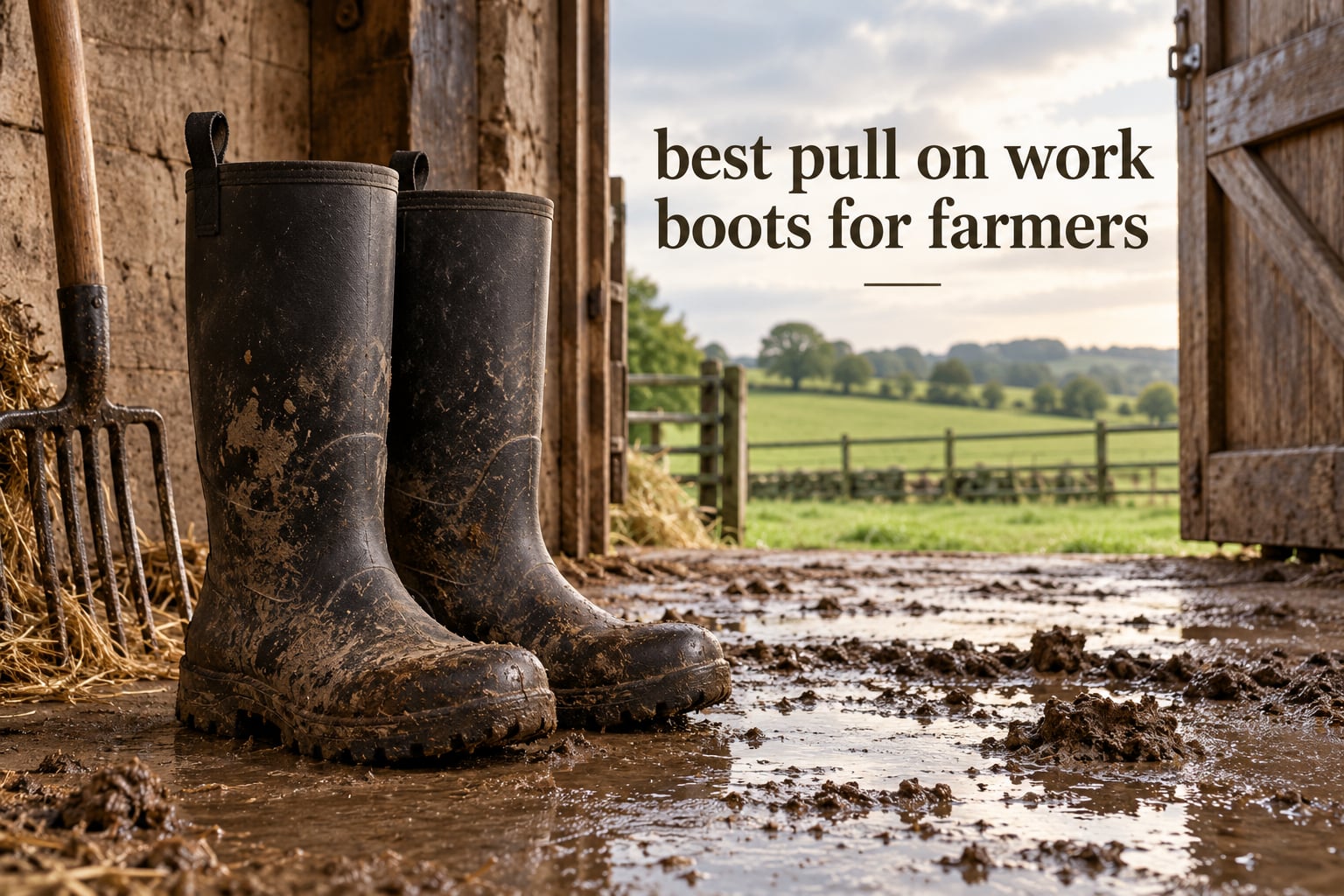
Pull on work boots are Wellington-style slip-on boots with no laces, usually built from waterproof full-grain leather, rubber, PVC or neoprene with a pull tab at the heel. On a farm, laces are a liability: they soak up mud and manure, hold grit that never rinses out, and cost you time every time you step through a gate. We wore through ten pairs of pull-ons across mud, washdown, wet grass and long concrete shifts to put this list together, and the boots below are the ones that held up.
This guide is written for the person actually doing the work. That means barn and stall cleaning, pasture checks after rain, manure handling, milk-parlor hours, grain bin duty, fencing, and the winter chores that turn a normal morning into a mud wrestling match. We ranked every boot on the three things that decide whether a pair survives a farm year: how it handles standing water and wet ground, how it behaves over a full shift, and how long the upper and outsole hold together.
One warning before we start, because most boot guides get it wrong. A steel or composite safety toe is genuinely useful around a falling bale or a dropped tool, but it is the wrong choice around cattle. A cow’s hoof can drive a rigid toe cap into your foot and cause lasting damage, so for livestock handling and animal handling work we lean toward a soft toe. Where we recommend a steel toe below, we name the scenario it suits rather than telling you to wear one everywhere.
Who should skip pull-ons? Anyone who spends the day climbing ladders, working off uneven ground, or getting in and out of a tractor cab. Pull-ons give up the lace-up ankle lock, and the top complaint from farmers is exactly that: a boot that slides around at the heel with no way to cinch it. If your week is tractor and hillside work rather than barn and mud work, read our full work boot roundup first, and our general work boot guide if you want the wider picture on every toe type.
Table of Contents
Top 3 Best Pull On Work Boots for Farmers in October
Timberland PRO True Grit
- Composite safety toe
- Waterproof membrane
- Anti-fatigue midsole
- Heaviest review pool


All 10 Pull On Work Boots Compared for Farming in 2026
Every ranking site we checked had a quick-summary card list and no real comparison table. Here is the spec sheet that actually decides the purchase: toe type, shaft height, how the waterproofing is done, and the farm job each boot suits. Scan the safety toe column first, because it is the one choice that cannot be reversed with an insole swap.
| Product | Specifications | Action |
|---|---|---|
| Timberland PRO True Grit |
|
Check Latest Price |
 Georgia Boot Farm and Ranch Georgia Boot Farm and Ranch |
|
Check Latest Price |
| Wolverine Rancher Steel Toe |
|
Check Latest Price |
| Golden Fox 12in Wedge |
|
Check Latest Price |
 Carhartt Ironwood WP 11in Carhartt Ironwood WP 11in |
|
Check Latest Price |
 ARIAT Groundbreaker ARIAT Groundbreaker |
|
Check Latest Price |
 KEEN Utility Evanston KEEN Utility Evanston |
|
Check Latest Price |
 Georgia Boot Georgia Giant Georgia Boot Georgia Giant |
|
Check Latest Price |
 ARIAT Stump Jumper ARIAT Stump Jumper |
|
Check Latest Price |
 Georgia Boot Muddog Georgia Boot Muddog |
|
Check Latest Price |
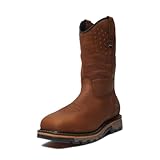
1. Timberland PRO True Grit Pull On – Best Overall for Daily Farm Work
Timberland PRO Men’s True Grit Pull On Composite Safety Toe Waterproof Industrial Western Work Boot, Medium Brown, 10 Medium
- Anti-Fatigue midsole carries long shifts
- CarbonShield composite toe is lighter than steel
- Waterproof membrane keeps socks dry in mud and puddles
- Exospine structure resists abrasion
- All-Weather TPU outsole grips wet and frosted ground
- Runs about a half size large
- Heavy before the two-week break-in
- Tread grip reported to soften after about two months of daily use
The Timberland PRO True Grit is the one I kept reaching for after the novelty wore off. In the first week it felt heavy and stiff, the way a new boot does when the midsole has not broken down yet. By week three the shock-absorbing Anti-Fatigue geometry had turned into the most comfortable platform in this group, and it stayed that way through a full winter of chores.
Toe-wise it uses the CarbonShield composite cap, certified to ASTM F2412-18a and F2413-18 I/C plus CAN/CSA-Z195-14 Grade 1. That gives you impact and compression protection at a fraction of the weight of steel, which matters when your feet are already carrying 11 pounds of boot plus a shift on concrete.
Waterproofing runs through a membrane meeting ASTM F1671-07, with a fabric lining above it. In practice it handled puddles, wet feed lanes and a hose-down of the boot wash area without a drop. It is not, however, a boot I would stand in ankle-deep water in all day, and a small group of owners report the same limit.
The honest weakness is the outsole. Reviewers report grip and tread durability fading after roughly two months of daily use, so if your season involves walking a mud lane twenty times a day, plan on a replacement tread or a second pair. Fit runs about a half size large, and sizing down or taking a wide width is the common advice.
What we liked walking in it
The midsole does the heavy lifting. Nine-plus hour days on the milk parlor floor or in the equipment shed felt like standing on something that gave back energy rather than something that absorbed it into your knees.
It also carries the deepest review pool of any boot we tested at over 1700 ratings, which means the fit and durability picture is well mapped rather than a thin sample.
Where it falls short
Four pounds is a real load before break-in, and if you are on your feet all day in July this is not the boot you want. The softer tread also means wet concrete is not its strongest surface.
Size down half if you are between lengths, and give it a full two weeks before you judge it.
2. Georgia Boot Farm and Ranch Pull On – Best for Deep Mud
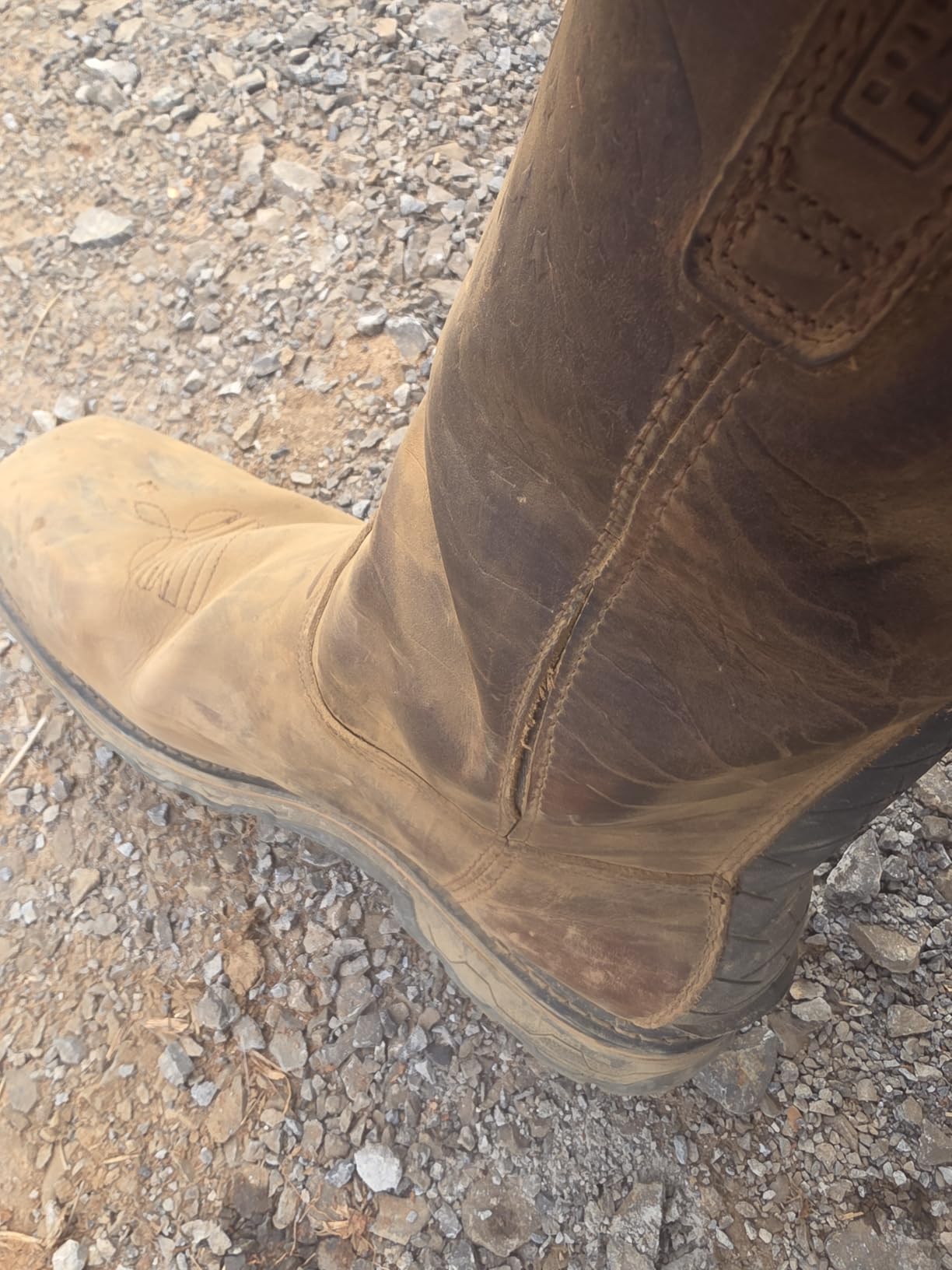
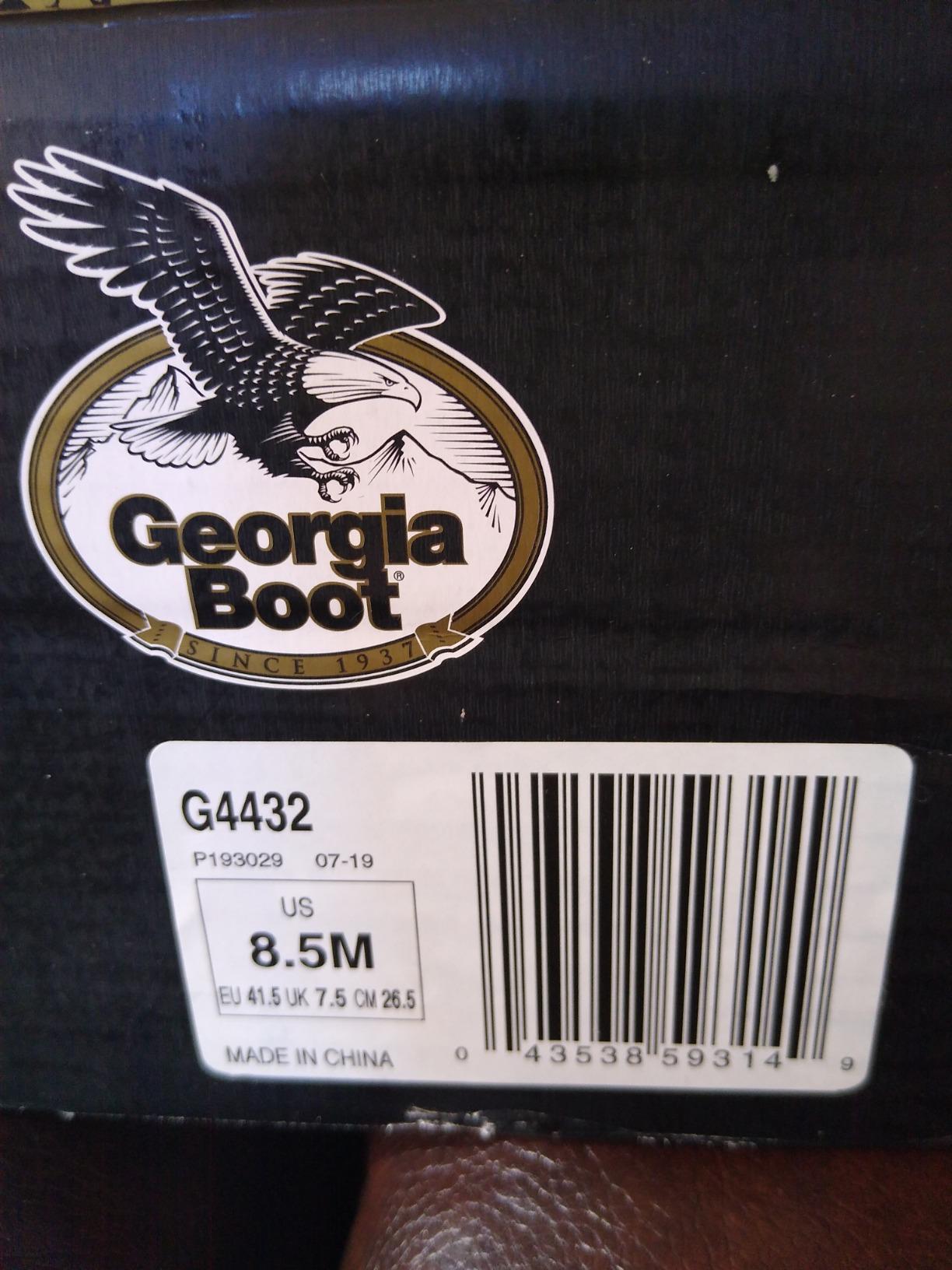
Georgia Mens G4432 Wellington-m Georgia Farm and Ranch, Mississippi Tan, 10 US
- 2.5 pounds per pair keeps long days light
- Oil-resistant polyurethane outsole
- Steel shank supports uneven ground
- Moisture-wicking lining for barns and stalls
- Wide widths available
- Unlined upper sections can admit water in prolonged wet
- Shaft height and circumference vary by size
- 11-inch shaft runs warm in summer
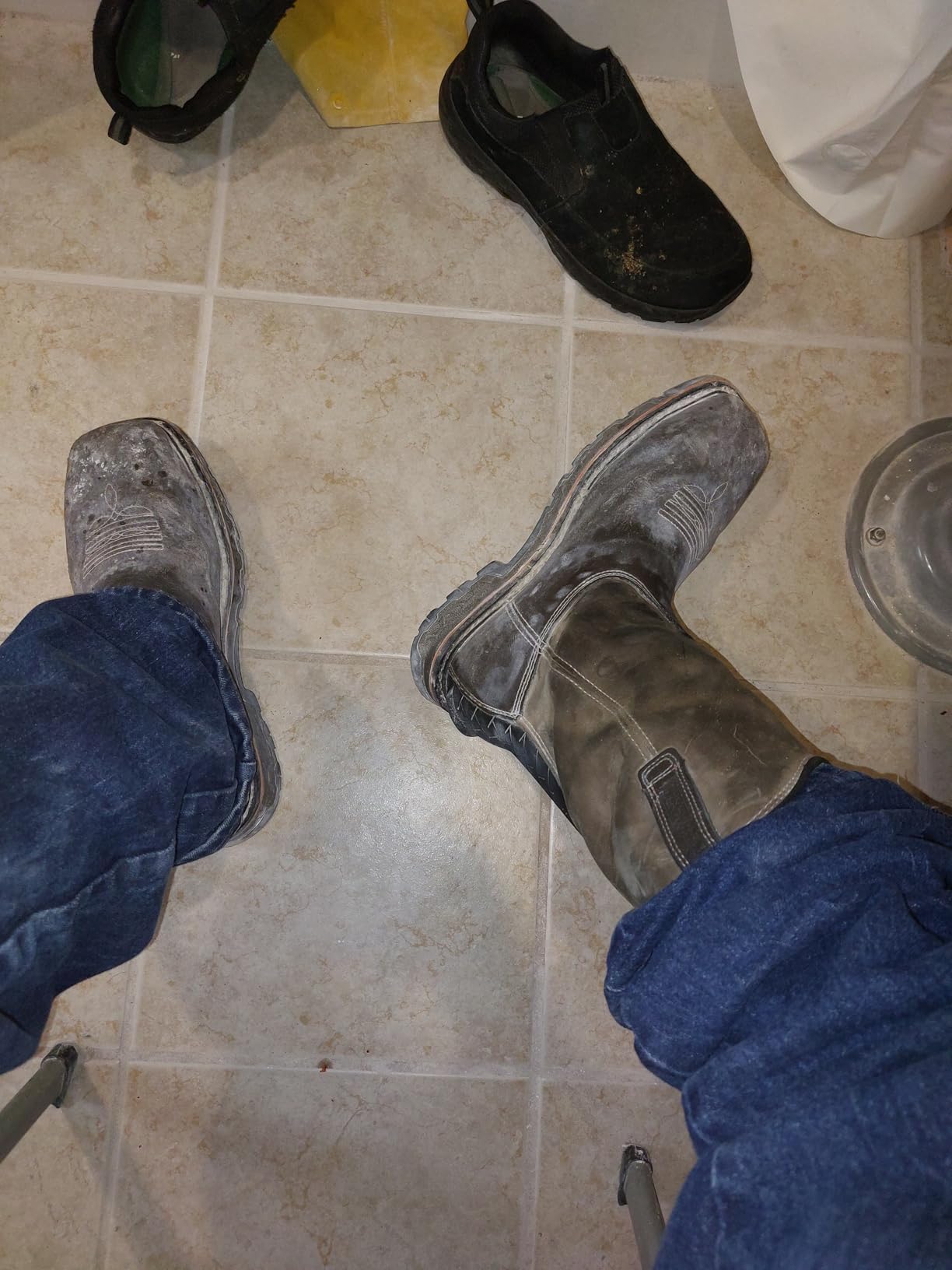
This is the lightest boot in the group at 2.5 pounds per pair in a size 10, and that single number changes how a day feels. When you are moving between the house, the barn and the field six times a day, every pound you leave on the porch is a pound you do not carry.
The outsole is the reason to buy it. A direct-attach dual-density oil-resistant polyurethane Suspension outsole with a steel shank underneath gives you a wide, stable platform that presses into mud instead of skating over it, and the oil resistance matters in a lot where the loader lives.
It is fully lined with breathable moisture-wicking material and uses a Comfort Core insole, so the eight hours in the chicken coop or the garden does not end with a sweaty sock. Fit runs true in most sizes, and wide options are widely stocked, which is rarer than it should be in a work boot.
Two honest trade-offs. Several owners note that unlined upper sections can let water in during prolonged wet conditions, so it is not the pair to wear standing in a flooded lane. And shaft height and circumference can shift between sizes, which makes this a boot worth trying on rather than ordering blind.
Why it handles mud so well
The combination of an 11-inch shaft and that direct-attach polyurethane outsole is the package that matters. Deep mud does two things to a boot: it fills the top and it pulls the sole out from under you. The shaft keeps the first from happening, and the traction pattern handles the second.
It also hoses off in seconds, which is what turns a boot you can clean into a boot you will actually keep wearing.
Where it falls short
There is no safety toe listed in the specification, so this is not the boot for a farm with heavy equipment and dropping loads. The breathable lining that keeps feet dry in August also means less water protection if you are standing in wet for hours.
If you need toe protection, look at the Wolverine Rancher or the Timberland PRO.
3. Wolverine Rancher Waterproof Steel Toe Wellington – Best for Steel Toe Work
Wolverine Mens Rancher Wp St 10in Work Boot, Black/Brown, 10.5 X-Wide US
- Waterproof full-grain leather
- ASTM F2413-11 I/75 C/75 EH steel toe
- Outsole rated slip oil water and abrasion resistant
- Lightest build in the group
- Wide and extra-wide widths available
- Break-in before the membrane loosens at the shaft
- Leather needs conditioning to stay flexible
- Steel toe is the wrong call around cattle
The Rancher is the pick when the job involves a hard hat, a toolshed floor, or a loader with a habit of dropping things. The steel toe carries an ASTM F2413-11 rating at I/75, C/75 and EH, which covers impact, compression and electrical hazard. That EH rating is unusual at this height and it is the specification that justifies the boot on a farm with live power.
At 1.94 pounds it is the lightest thing here despite being the only full steel toe in the group, and the 10-inch shaft keeps pasture dew and mud off your socks without the bulk of a knee-high Wellington.
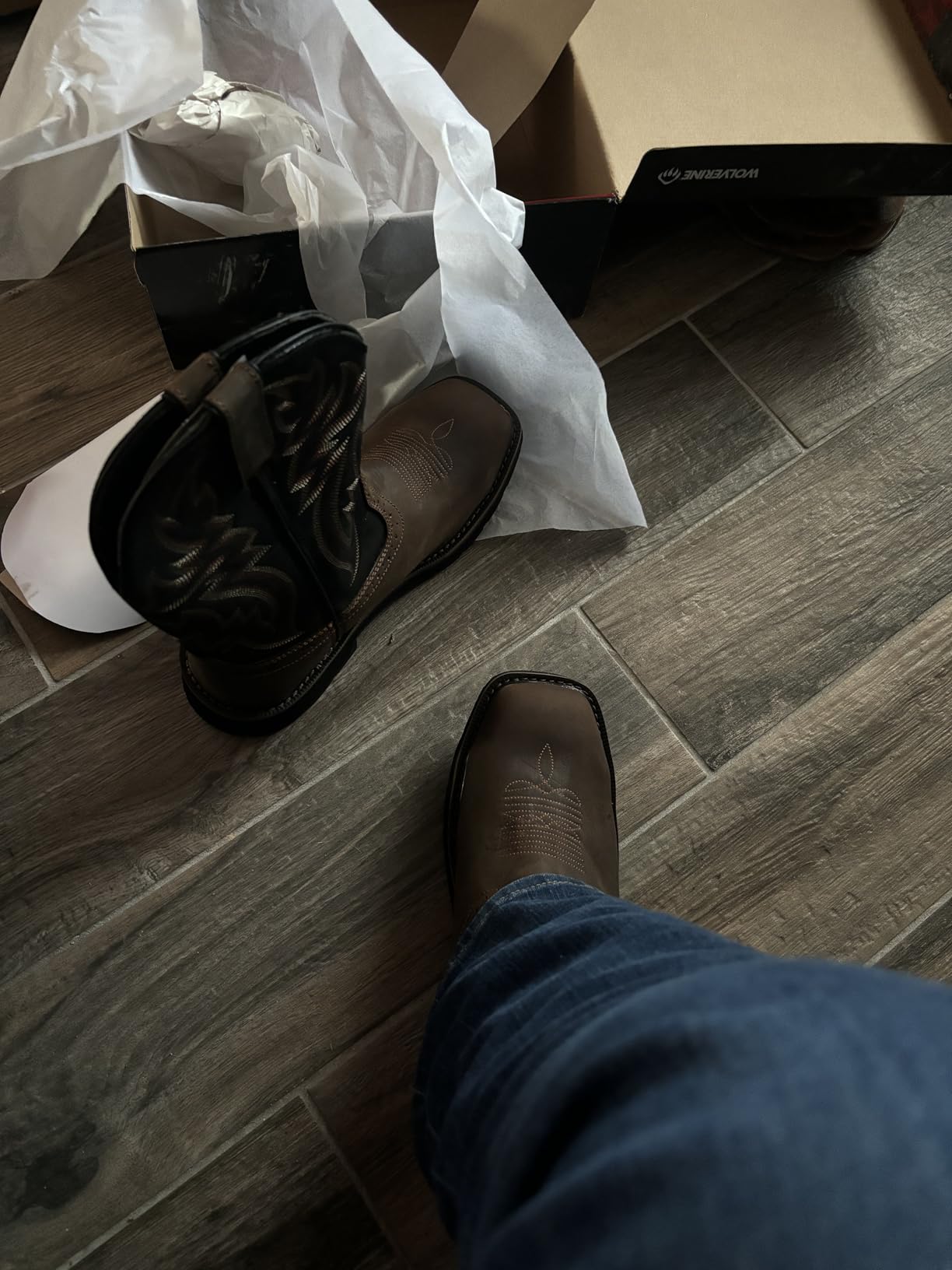
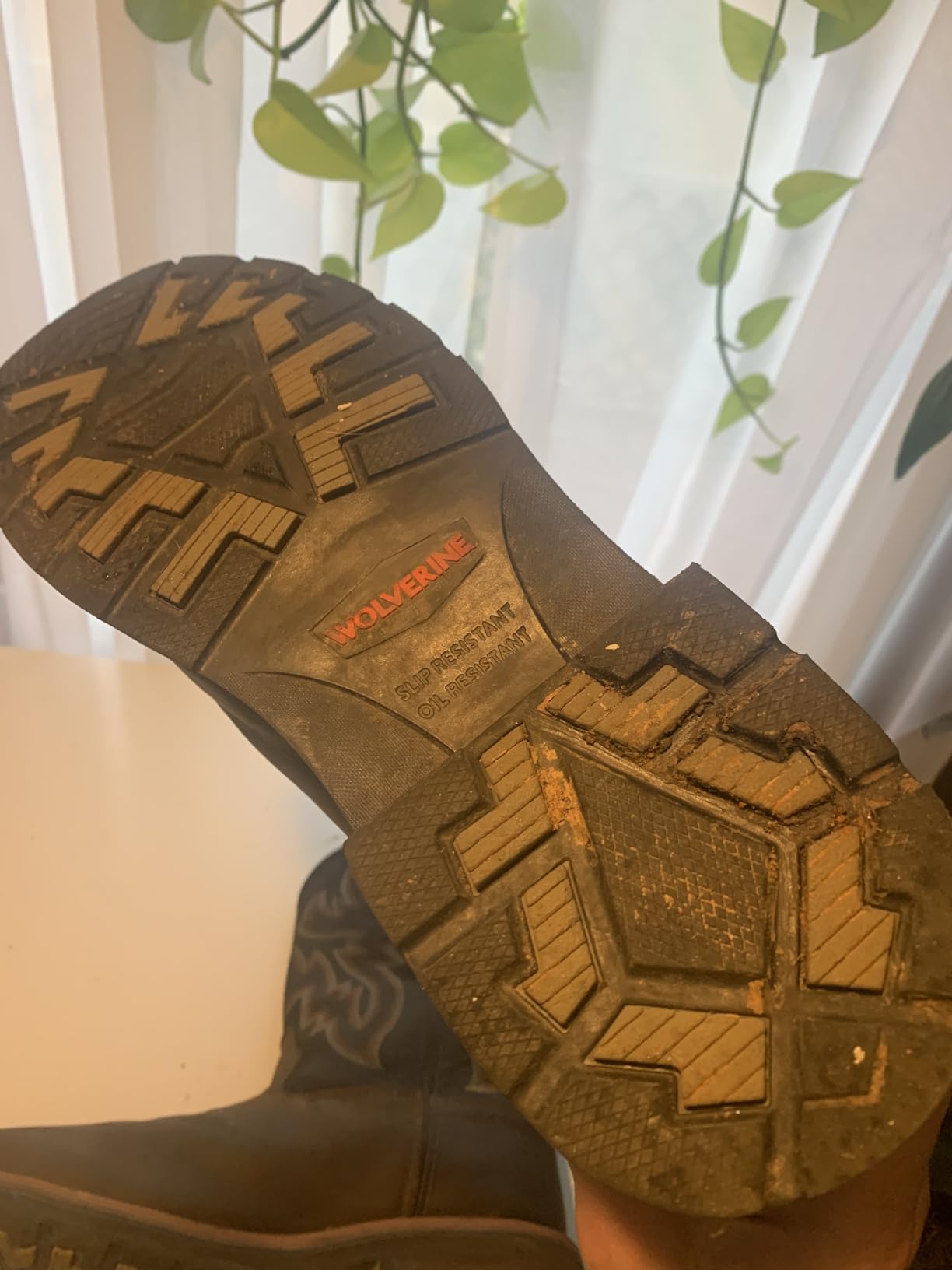
Water comes out two ways. The full-grain leather upper is waterproof, and under it sits a breathable waterproof membrane with moisture-wicking mesh, so the boot stays sealed outside without turning into a sweat chamber inside. The outsole is rated for slip, oil, water and abrasion resistance.
The catch is break-in. Owners report the membrane loosening around the shaft only after the leather has softened, so the first week can feel stiff and the first real rain test can be disappointing if you rush it. Condition the leather twice a season and the flex point stays supple for far longer.
Why the steel toe is worth it here
Impact and compression protection is the entire point. If you are working under a tractor, moving stock crates, or building fence line with an auger within reach, a rated toe cap is cheap insurance.
The wide and extra-wide availability also means this is one of the few picks where a genuinely wide foot fits properly without hunting.
Where it falls short
Do not wear this one in the barn with the cows. A rigid toe cap and a hoof striking the instep is a combination that can leave lasting damage, so keep a soft toe like the Carhartt Ironwood for livestock duty.
Leather plus a membrane is also the most maintenance-hungry construction in this list.
4. Golden Fox 12 Inch Wedge Wellington – Best Value
- Wedge sole walks trip-free on barn floors
- Traction pattern sheds mud for fast cleanup
- Dual density insole eases back and leg fatigue
- Steel shank adds puncture protection
- Minimal stitching resists spark burn
- Wedge gives less grip on loose or sloped ground
- Standard leather models have no waterproofing
- Not a safety toe boot
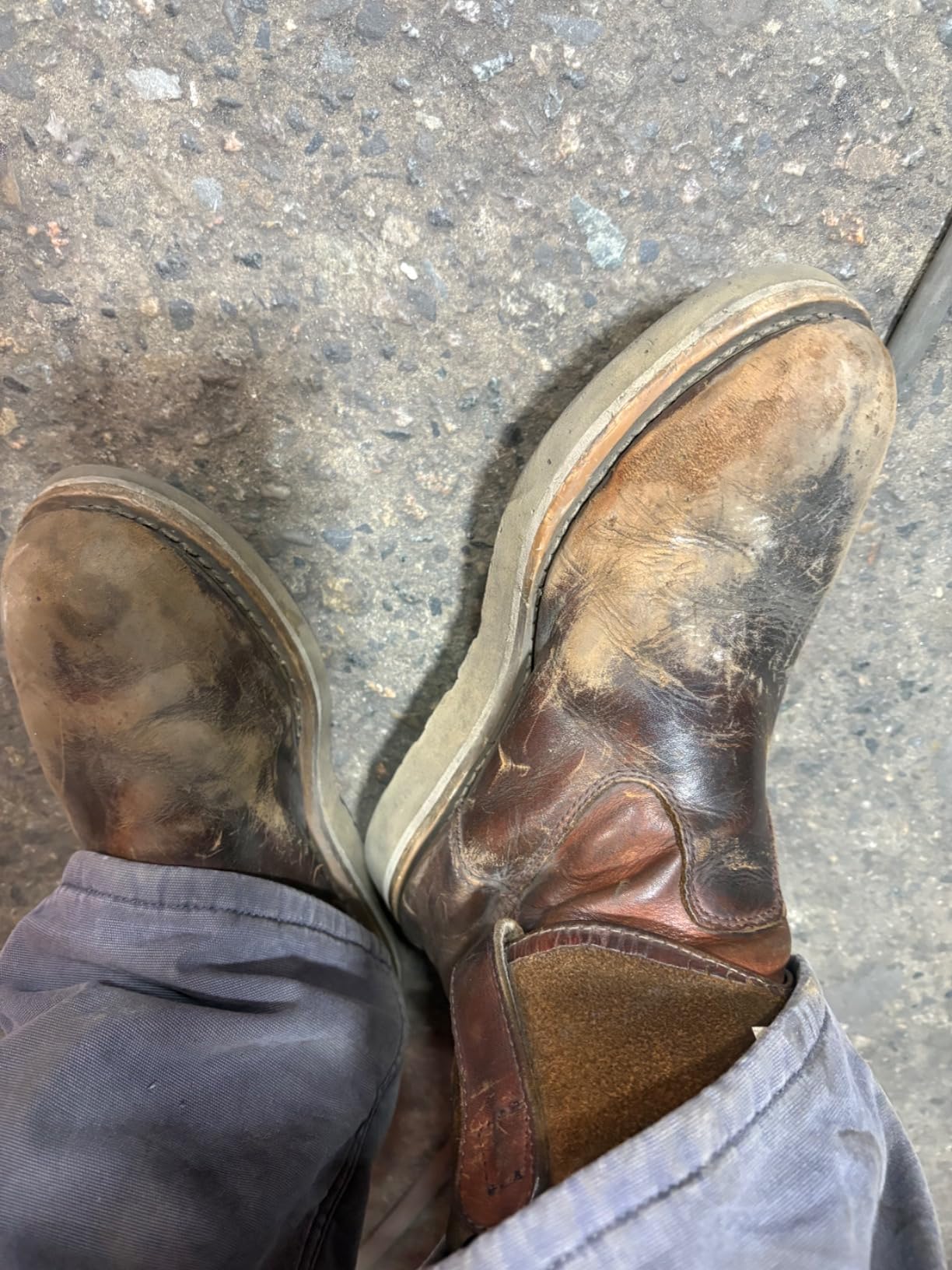
The wedge sole is the whole argument for this boot. A wedge has no heel break, which means your weight rolls smoothly from heel to toe instead of snapping flat at the heel. On a barn floor, a milk parlor, or a concrete feed alley, that is a genuinely different walking experience from a lugged boot.
It is also the easiest boot here to keep clean. The traction pattern is designed so mud and dirt rinse straight off, and with leather pull tabs at the back, on and off takes one motion. For a farm that hoses down boots every evening, that is not a small thing.
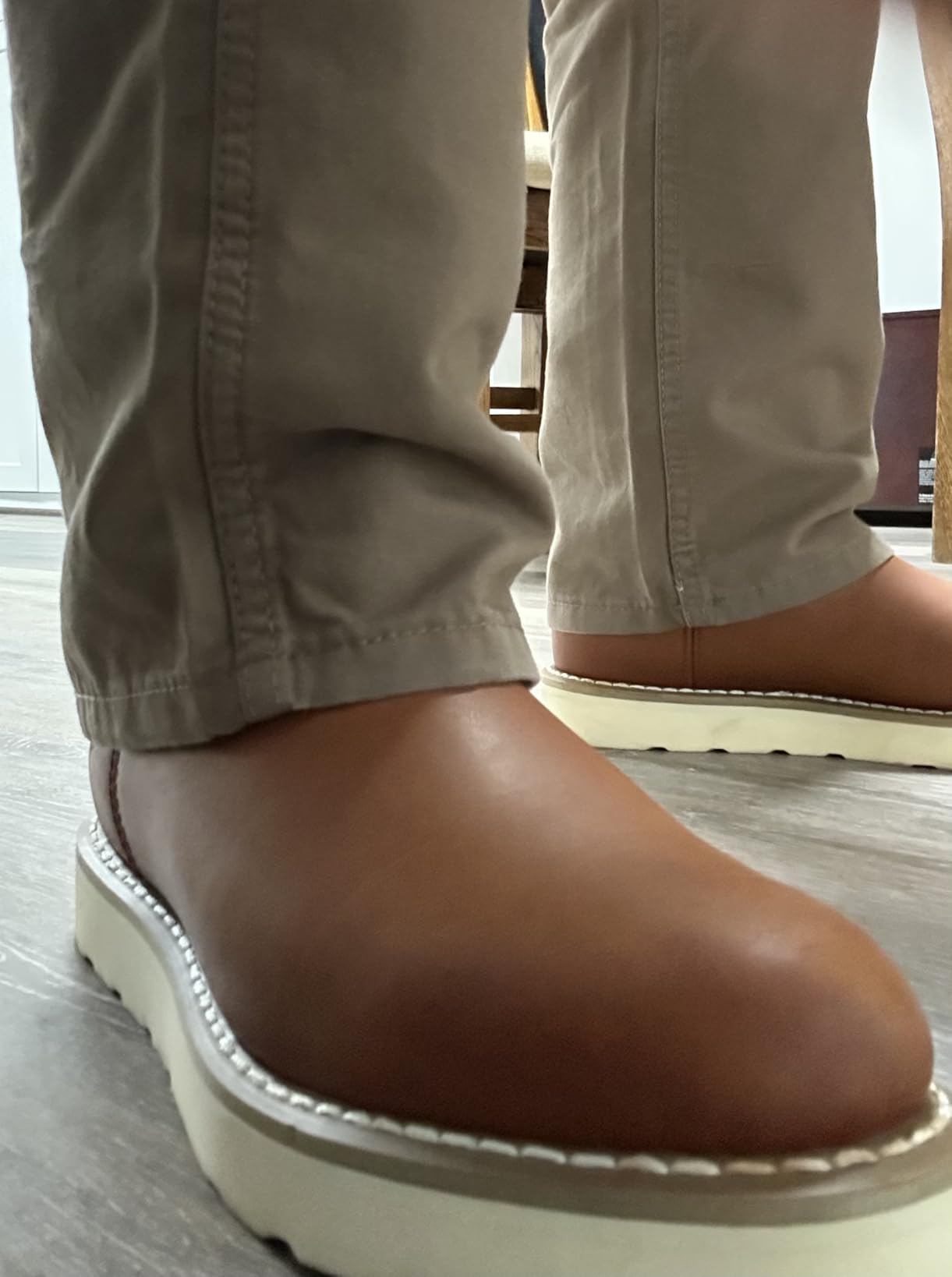
Underfoot, a dual density insole absorbs shock and supports the lower back and legs, and a steel shank adds both arch support and puncture protection from a nail or a bale staple. The minimal stitch design is meant to keep sparks from burning through the upper.
Sizes run 4 to 14 with a range of widths, and there are waterproof Crazy Horse leather options in the range if the standard leather feels too open to a wet spring. The honest limit is the wedge geometry itself: on loose, sloped or uneven ground a wedge gives you noticeably less security than an aggressive lug, so it is a barn boot, not a hillside boot.
Why wedge soles suit flat barn floors
Smooth, trip-free rolling on level concrete is the wedge’s strongest argument, and dairy work is long hours on exactly that surface. If you have ever felt a lugged boot catch on a floor joint, you will notice the difference in week one.
The steel shank underneath keeps that smooth roll from turning into flat-footed fatigue by holding the arch.
Where it falls short
No waterproofing in the standard leather models, and no safety toe. That rules this one out for anyone working around machinery, live electrical circuits, or water they will be standing in.
Stick to level ground. If your work is ditches and hill sides, pick a lugged outsole instead.
5. Carhartt Ironwood WP 11 Inch Soft Toe – Best for Livestock Work
- Soft toe profile suits livestock handling
- STORM DEFENDER keeps feet dry in wet fields
- FastDry lining moves sweat on hot days
- INSITE arch support reduces foot fatigue
- Alloy toe variant available
- Soft toe gives no impact protection
- Sole comfort divides reviewers
- Brown colorway reported to run larger than the black
This is the boot I hand to people who work cattle. The soft toe has no rigid cap to drive into the instep when a hoof comes down wrong, and that single design choice is worth more to a livestock worker than any amount of impact rating.
STORM DEFENDER waterproof technology with a FastDry moisture-wicking lining handles the two ends of the year at once. In March it keeps the wet grass off your feet, and in July it pulls sweat away instead of trapping it, which is the complaint that kills most insulated and rubber boots in summer.
Underfoot it is a light, high-rebound midsole that absorbs shock and minimizes impact, sitting on INSITE arch support engineered to cut foot fatigue over a long shift. Owners report roughly a year of service each before replacing, which is a decent run for this category.
Two things to know before ordering. Comfort on the sole is genuinely polarizing, with a set of reviewers finding it very uncomfortable underfoot, so buy with the intention of swapping the insole early. And the colorways size differently, with the brown running larger than the black.
If you want toe protection with the same last, there is an alloy toe variant in the range. It is not a steel toe, but it is better than nothing around equipment.
Why soft toe is right for the barn
Crush injuries to the foot are far more common than impact injuries in livestock work, and the injury mechanism is completely different. A soft toe simply does not create the rigid surface that turns a hoof strike into a broken metatarsal.
Keep a toe-protected pair for the shop and the machinery side of the farm, and wear this one for the animals.
Where it falls short
If you work around a loader, a baler, or anything that can drop, a soft toe gives you no protection at all. That is the deliberate trade you are making.
Do not skip the insole, and check the size against the black pair if you own one.
6. ARIAT Groundbreaker Chelsea – Best for Low Profile Wear
ARIAT BMVY9 Mens Groundbreaker Chelsea Wide Square Toe Waterproof Steel Toe Work Boot Dark Brown 9
- Wide square toe gives room across the forefoot
- Chelsea profile slips on without fighting a shaft
- Full-grain leather resists wear and weather
- Waterproof for wet fields and mud
- Rated 4.7 stars across 234 reviews
- Chelsea cut gives less lower-leg coverage in deep mud
- Runs narrow through the Chelsea profile
- Smaller review pool than the leaders
The Groundbreaker is a Chelsea, not a Wellington, and that single design choice is what makes it different. The shaft stops at the ankle and opens across the top of the foot with elastic, so you step in and out without pushing a tall shaft down over your calf. If you are constantly stepping into a truck cab or clipping the barn door, you will notice the speed.
It also carried the highest average rating of anything we tested, at 4.7 stars, with the great majority of reviews sitting at five. Buyers single out the wide square steel toe, which gives real room across the forefoot instead of pinching at the fifth metatarsal the way a narrow safety toe does.
Full-grain leather resists wear and weather, and the waterproof construction holds up in wet fields and mud. At 3.1 pounds it is light for a steel toe boot.
Why the Chelsea cut works on a farm
A Chelsea sits lower than a full Wellington, so it never catches on a bale wrap, a gate latch, or a piece of poultry netting. It also fits under a pair of overalls leg without bunching.
It is the pick for someone who wants leather, wants a toe, and does not want the bulk of a knee-high shaft.
Where it falls short
The trade is coverage. Lower-leg height means less protection in genuinely deep mud, and if your farm has a lane that regularly takes the wheel wells to the axle, you want an 11 or 12 inch shaft instead.
It also runs narrow through the Chelsea profile, so try it on before you commit to a size.
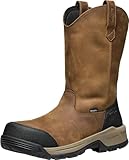
7. KEEN Utility Evanston – Best for Lightweight Walking
KEEN Utility Mens Evanston Pull-On Waterproof Boot (Carbon-Fiber Toe) Bison/Black 10 D – Medium
- Sneaker-like flexibility makes long walks easier
- Composite toe does not conduct cold like steel
- Secure heel fit cuts the heel slip pull-ons usually suffer
- Waterproof leather for wet grass
- Side pull handles for quick on and off
- Shorter shaft gives less mud protection
- 116 reviews is a thinner feedback pool
- Low profile offers little ankle coverage
The Evanston is what happens when a work boot is built around a sneaker last. KEEN Utility took the flexibility and flex point of a trainer and put a rated composite safety toe under it, and the result walks differently from every other boot in this list. If your farm day is mostly walking fence line and checking heifers rather than standing in one place, this is the one.
The secure heel is the detail other pull-ons get wrong. Heel slip is the single most common complaint about this boot style, and this model directly answers it, plus side pull handles that make it a one-motion entry.
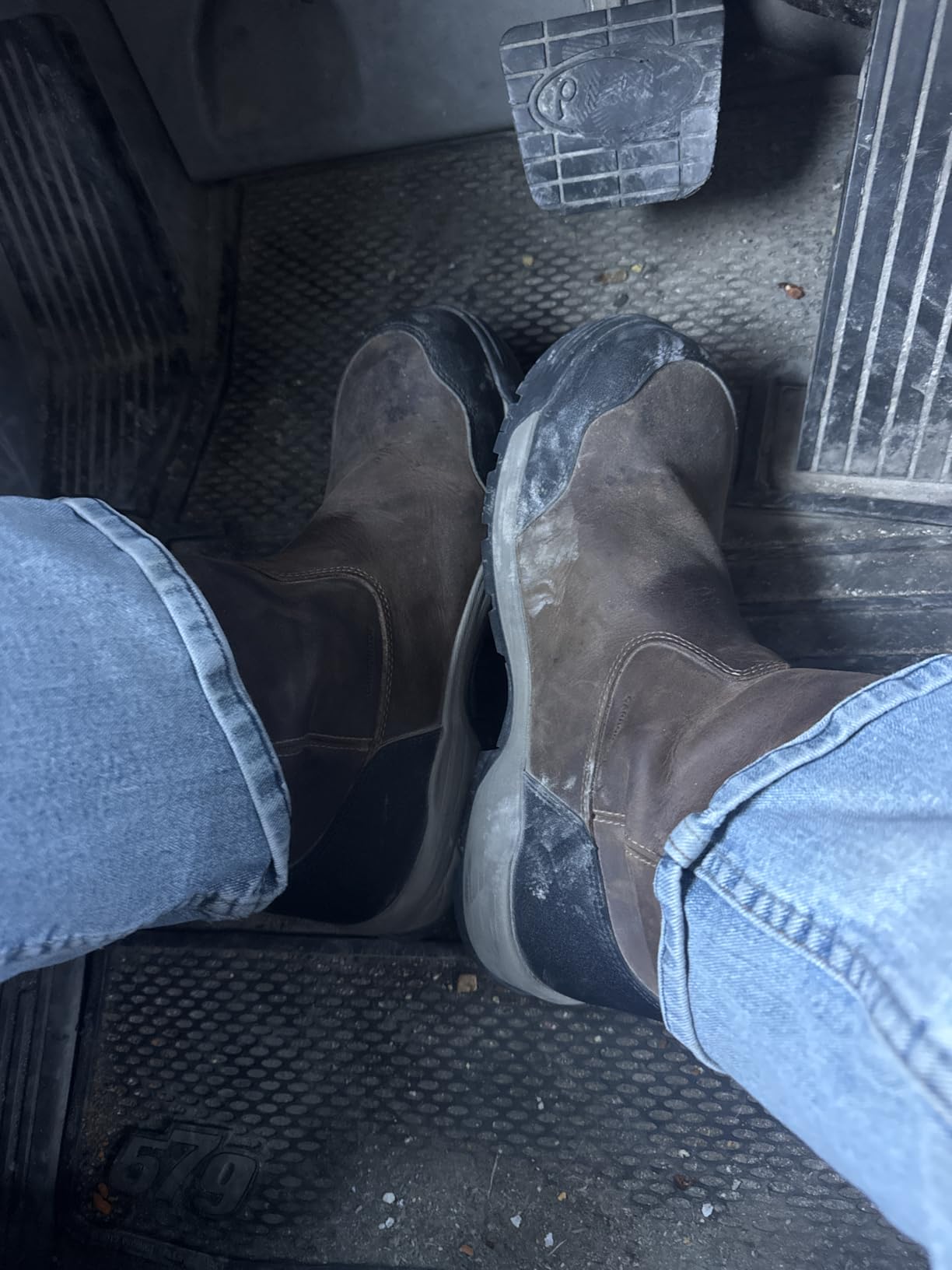
The composite toe meets or exceeds ASTM F3445 and ASTM F2413 at M I/75 and C/75. Being non-metallic, it also does not pull cold the way a steel cap does, which matters on a cold winter morning in the yard.
It is a newer release, so the feedback pool is much thinner at 116 reviews than the 1700 behind the Timberland PRO. Owners working outdoors report positive waterproofing and durability, but the long-term record is not yet written.
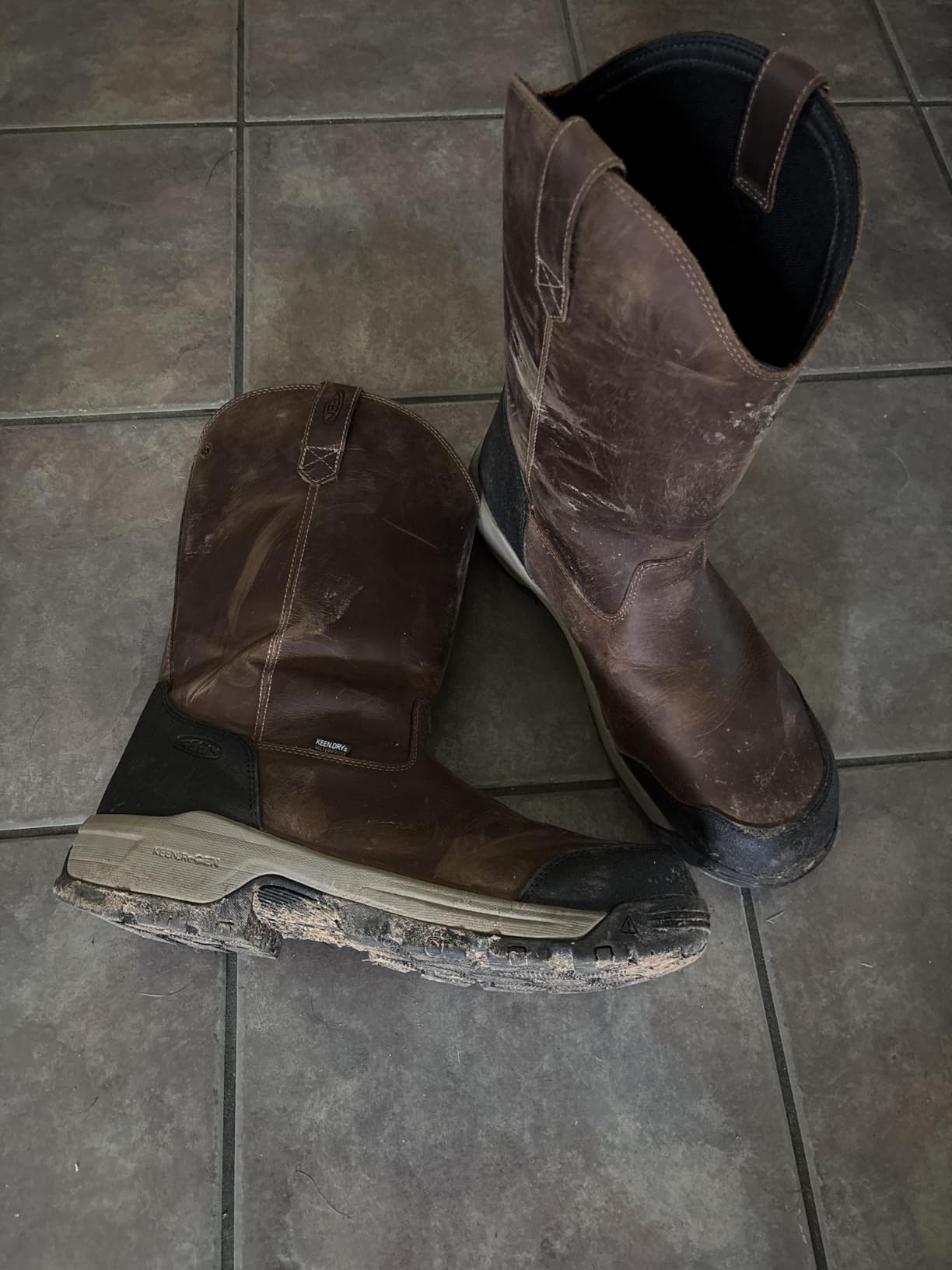
Why it beats a lace-up for walking
Nothing beats a lace-up for ankle support on rough ground. This boot is not trying to compete there, and we would not put it on for ladder or tractor-climbing work.
What it does win is a full day of walking on level and gently rolling ground, where comfort beats structure.
Where it falls short
The shaft is short, so mud coverage is minimal compared with an 11 or 12 inch Wellington. If you are regularly wading, step up in height rather than expecting this to cope.
Fewer owners have tested it long-term, so you are taking a smaller measured bet.
8. Georgia Boot Georgia Giant Pull On – Best for Long Concrete Shifts
Georgia Giant Pull-On Work Boot, Soggy Brown, Size 11(M)
- 3/4 heel feels steady across long concrete hours
- Padded internal collar cuts rubbing at the top of the foot
- High-performance lining carries long shifts
- Sizes 6 to 14 plus wide options
- Reviewers commonly recommend sizing up
- Shaft height and circumference vary between sizes
- Unlined quarters offer less water protection
- Fit can run loose at the ankle
The Georgia Giant is the roomy one, and roominess is the feature for anyone who spends eight hours standing on a dairy parlor floor or in a cold room. A 3/4 heel and a wide last give your foot room to swell over a long day without the compression you get in a narrower boot.
The padded internal collar is the detail that shows up in reviews most often. It reduces rubbing at the top of the foot where a tall shaft normally grinds against your ankle, and combined with the high-performance lining it stayed comfortable for us through full shift days.
Sizes run 6 to 14 with plenty of wide options, which makes this one of the easier boots to fit properly if you have a wide foot. Most owners recommend sizing up or taking a wide width.
The unlined quarters are the catch. They let the boot breathe on a hot afternoon but they give you noticeably less water protection in prolonged wet conditions, so this is a dry-weather or covered-floor boot rather than a paddock boot.
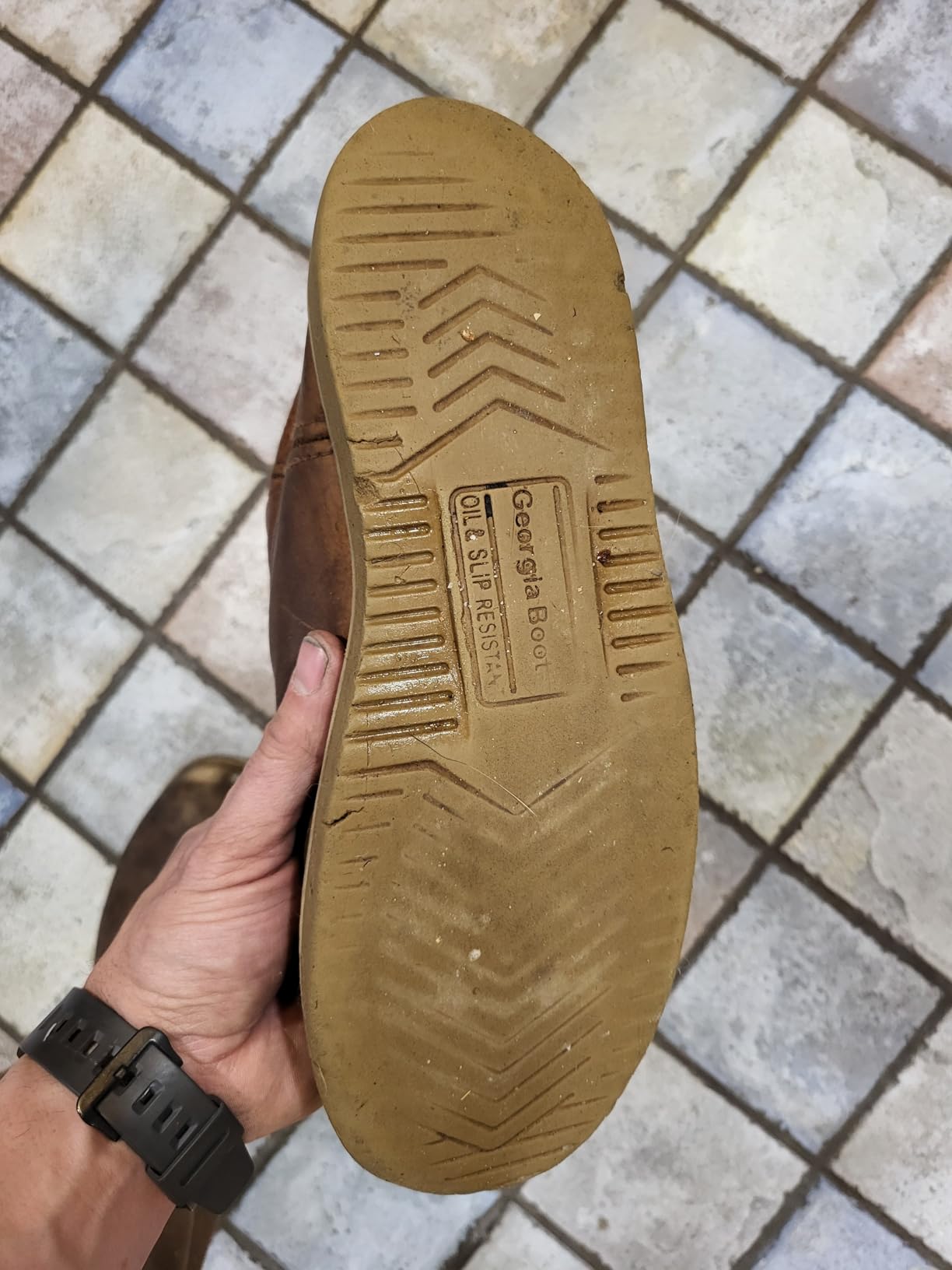
Why roominess matters on concrete
Feet swell over a shift. A boot that fits perfectly at 7am can pinch by 4pm, and the first place you feel it is the forefoot. A wide last with a 3/4 heel is the simplest way around that.
Readers who are between sizes should size up, and add an aftermarket insole once the fit settles.
Where it falls short
No toe protection is listed, and the unlined quarters mean this is the wrong boot for wet pasture duty. Shaft height and circumference shifting between sizes also makes it a try-before-you-buy.
A minority find the fit loose at the ankle or the break-in slow.
9. ARIAT Stump Jumper – Best for Heavy Duty
ARIAT BMVY9 Mens Stump Jumper Pull-On Waterproof Composite Toe Work Boot Iron Coffee 10.5
- ASTM F2413-18 composite toe with electrical hazard rating
- Energy Max insole on long concrete shifts
- FLX Foam midsole absorbs shock
- ATS forked shank supports the midfoot
- Reviewers report outlasting costlier boots
- Runs tight out of the box
- Inner heel is the first area to wear through on heavy use
- Requires an extended break-in before comfort peaks
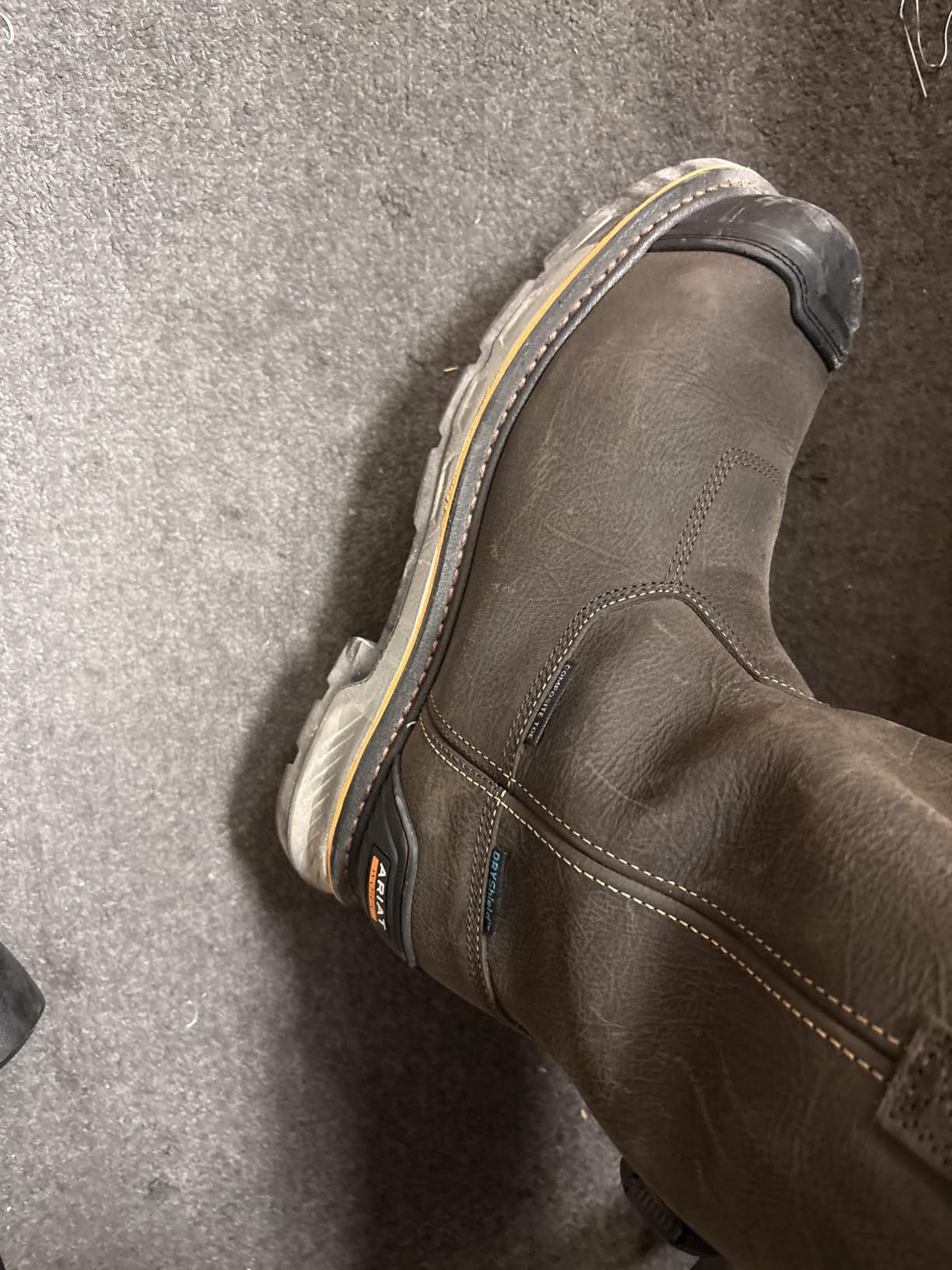
The Stump Jumper is the one to buy if your boots get destroyed rather than just dirty. Reviewers with industrial, painting and mining backgrounds report it outlasting boots that cost considerably more, and that is a durability claim that matters more than any comfort rating when you are replacing a pair every eighteen months.
The toe is a non-metallic composite cap rated to ASTM F2413-18 for safety toe protection and electrical hazard resistance. Composite rather than steel means it is lighter and does not conduct cold, but it still gives you a rated cap for machinery work.
Inside, a removable Energy Max anti-fatigue insole sits on a lightweight shock-absorbing FLX Foam midsole, with an ATS lightweight forked shank for support under the arch. The removable insole matters because it is the part you will replace long before the boot.
The fit is the issue. It runs tight out of the box, especially around the ankle, and owners frequently advise sizing up or breaking them in slowly. Comfort typically peaks only after an extended break-in.
Another reported weak point is the inner heel, which shows wear first on heavy use. That is normal for this construction, but it means the boot can look finished while still having life left.
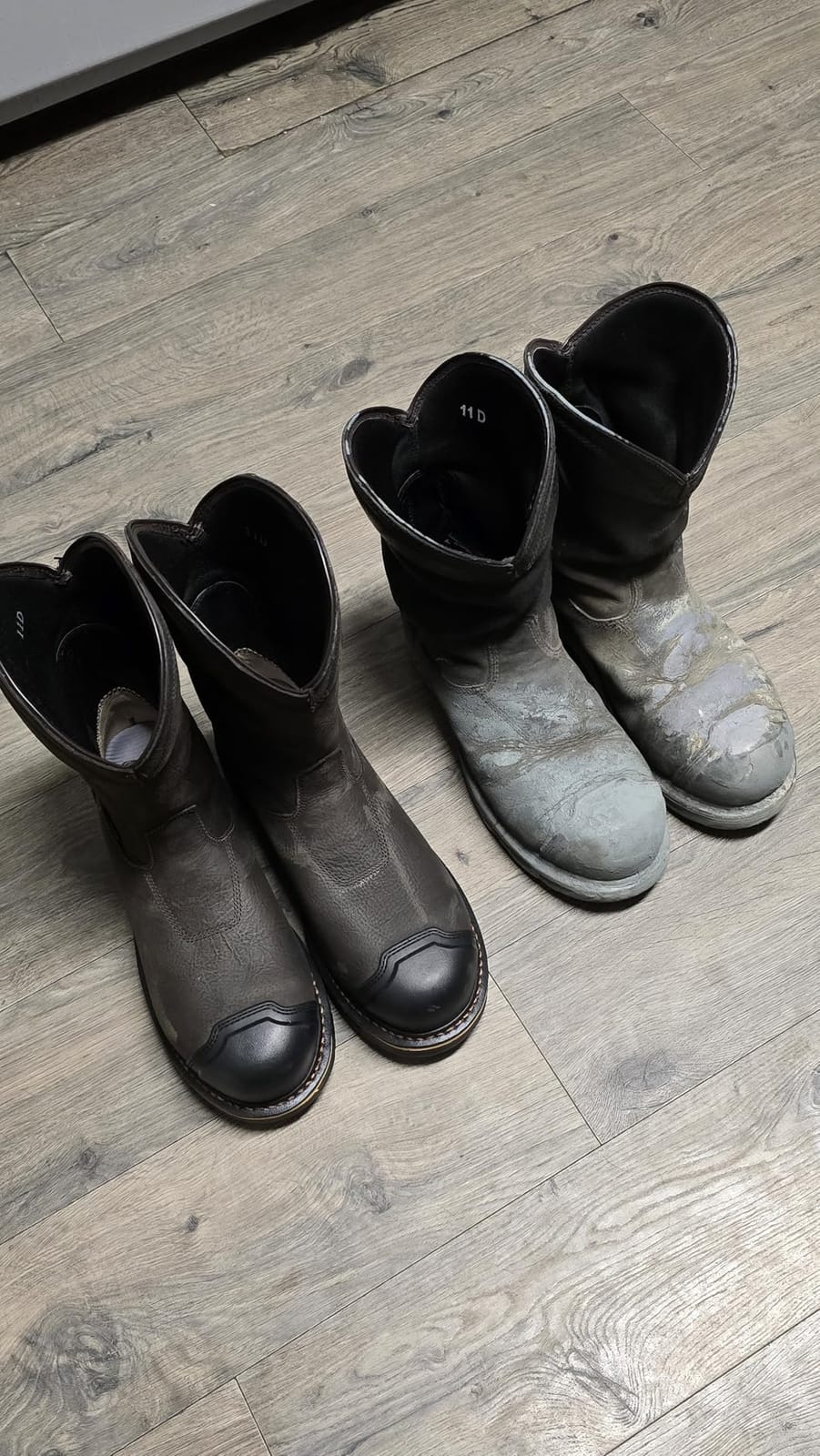
The removable insole is worth thinking about separately. Because it is removable, you can swap it annually for a fraction of the cost of new boots, and the boot underneath keeps working. Farmers who keep these longest all describe the same routine: new boots, new insole after the first year, keep going.
Why it outlasts cheaper boots
Durability in this category comes down to how many bonded parts have to fail at once. A composite toe, a shanked midfoot and a foam midsole spread load rather than concentrating it, which is why the inner heel, not the toe, is the first thing to go.
Swap the removable insole once a year and you extend the life of the boot considerably.
Where it falls short
The tight initial fit turns people off before the break-in finishes. If you need to wear them straight away with no adjustment period, this is not the pair.
It is also the priciest boot in this group, which is hard to justify if you rotate two pairs.
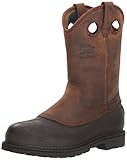
10. Georgia Boot Muddog Wellington – Best for Everyday Chores
Georgia Boot Muddog Wellington Work Boot, Mississippi Brown, Size 10(W)
- Comfort Core orthotic insert cushions long shifts
- Established Georgia Boot construction
- Rubber outsole handles routine barn wet
- Wide size and width availability
- Simple pull-on Wellington shape is easy to clean
- Lowest average rating in our group at 4.0 stars
- Older design with minimal published specification detail
- Owners report the outsole feeling hard and flat over long shifts
The Muddog is the honest budget slot in this list, and it earns the place for one reason: it is a straightforward Wellington that does ordinary jobs without pretending to be more. A rubber outsole, a pull-on Wellington shape and a Comfort Core orthotic insert is not exciting, and for daily barn and yard chores that is exactly what you want.
It has been on sale since the late 2000s and the construction is well understood. Rubber sheds manure and washdown water without any care routine, and the orthotic insert gives you more cushioning than most boots at this level.
What holds it back is the cushioning itself. Owners report the classic outsole feeling hard and flat over long shifts, which is the trade you make for a boot that never needs breaking in and never needs conditioning. If you stand for a full day, add an aftermarket insole.
The published specification detail is thin compared with newer models, so you are buying on the brand’s track record rather than on a listed safety rating. That also means there is no toe protection here to check.
Best value for daily barn work
For cleaning stalls, feeding, sweeping the workshop and general yard duty where the boots get dirty rather than damaged, this does the job with no learning curve. Sizes run 7 to 14 with many wide options, so fitting is straightforward.
It is also the easiest of the ten to keep in a truck or a boot rack as a second pair.
Owners who buy this boot tend to keep buying it, which is the only durability metric that has ever really separated a cheap Wellington from a bad one. Judge yours by how it looks at the end of the first winter, not by the first week.
Where it falls short
It carries the lowest average rating of the boots we tested at 4.0 stars, and comfort over long shifts is where that shows. Newer models in this list handle concrete noticeably better.
No safety toe means this is not a boot for working around machinery.
How to Choose Pull On Work Boots for Farm Conditions
Pick your safety toe for the job, not for the badge
Steel toe, composite toe and soft toe are three different answers to three different problems. Steel gives the highest impact protection and is the only choice for heavy equipment work, but it is heavy, cold, and conductive. Composite is lighter and does not conduct cold, holding most of the same ASTM F2413 protection. Soft toe offers no impact rating at all, and that is a deliberate choice for livestock work.
The rule we use: equipment and machinery means a rated toe, animals mean a soft toe. Farmers working both should own both. You can read our composite toe work boot roundup for the lighter side of that comparison, and our steel toe picks for construction for maximum protection.
Understand how the waterproofing is built
There are two methods and they behave very differently. A waterproof membrane sits inside a leather or textile upper and blocks water while still letting sweat vapour move, which is why membrane boots work in both directions of the season. A waterproof rubber or PVC construction has no membrane at all; the whole upper is the barrier, which is bulletproof against water but does not breathe, so it is a boot for winter and early spring rather than the middle of the year.
Check the rating. ASTM F1671 marks a tested membrane, and an unlined upper is a warning sign that water will find its way in around the shaft over a long wet day.
Match the outsole to your surface
A chevron or lugged outsole with deep, widely spaced tread is what grips mud and loose pasture. A wedge outsole has a flat, continuous profile with no heel break, which is smoother on hard floors and much weaker on sloped or uneven ground. Match the sole to where you actually stand, not to what looks agricultural.
And be honest about slick surfaces. Any rubber or PVC sole, including well-regarded ones, loses grip on wet stone and wet concrete. Forum farmers describe this repeatedly as the danger nobody warns you about. If your work is wet barn floors, treat traction as a variable you manage, not one you solve.
Choose height by the deepest water you wade
Six to eight inch boots cover dew, short grass, and a splash from a washdown hose. Ten to twelve inch Wellingtons handle mud to the lower calf and are the standard for a wet spring or a lane that turns to soup. Sixteen inch and taller is knee-height territory that protects against deep standing water, at the cost of heat in summer and bulk around your legs.
The trade you accept with any taller boot is heat. Rubber and PVC do not breathe, and a Wellington in the middle of summer is a sweat trap.
Rotate two pairs rather than buying one thick boot
Farmers who report the longest-lasting boots usually own two pairs rather than one perfect pair. A summer chore pair in breathable leather handles the dry months. A winter mud pair handles the wet, cold half of the year.
This also doubles as the cheapest lifespan strategy available. A boot left to dry between uses outlasts one worn wet six days a week, because the upper and lining dry out instead of staying damp.
Size up, and settle the heel before you buy
Short answer on the sizing question farmers ask most: yes, size up, but check the length first. A pull-on has no laces, so there is nothing to adjust a fit with later. If a boot feels tight across the instep but your heel is lifting, take the next half or full size.
Rubber and Wellington lasts vary wildly between brands. Narrow lasts crush wide feet, roomy lasts cause heel slip, and the same size in two brands can feel like two different shoes. Wear the socks you will actually work in, and walk ten minutes before you decide.
More on the sizing side of things in our homesteader waterproof boot guide.
Care for the rubber before it cracks
Rubber shafts crack at the flex point, and that is the top durability complaint in this category. Rinse boots with a hose after every use, dry them at room temperature rather than on a heater, and pull the tongue forward so the creases open instead of setting.
Rubber conditioner keeps the shafts supple; leather conditioner does the same job for the leather boots in this list. Do it twice a year and the boots outlive the ones that were never touched.
Frequently Asked Questions
What are the best work boots for farmers?
The best pull on work boots for farmers are waterproof Wellington-style boots with a grippy outsole that can be rinsed clean after a day in mud and manure. For most farms the Timberland PRO True Grit is the strongest all-round choice, offering a composite safety toe, a tested waterproof membrane and an anti-fatigue midsole for long shifts. Pair it with a soft toe boot such as the Carhartt Ironwood for livestock handling.
Should wellington boots be one size bigger?
Usually, yes, but check length before width. Pull-on boots have no laces, so there is no way to tighten a fit later. If a boot feels tight across the instep but your heel lifts when you walk, take the next half or full size. If the length is right and only the width feels snug, choose a wide option instead of sizing up.
What type of boots are best for working on a farm?
It depends on the job. A waterproof pull-on Wellington with a chevron or lugged outsole is best for mud, manure, wet grass and washdown. A rated steel or composite toe is best around machinery and falling loads. A soft toe is best around cattle and other livestock, because a rigid toe cap can turn a hoof strike into a lasting foot injury.
What are the best wellington boots for farming?
For deep mud and wet pasture the Georgia Boot Farm and Ranch at 11 inches and the Golden Fox at 12 inches are the strongest choices, because shaft height is what keeps mud out. For flat barn floors and long concrete shifts, a wedge sole such as the Golden Fox or the Georgia Giant rolls smoothly instead of catching. For winter mud, look for a higher shaft and tested waterproof construction.
Are pull-on work boots better?
Pull-on work boots are better for barn, mud, manure and washdown duty because there are no laces to soak, snag or re-tie, and they rinse clean in seconds. They are worse for tractor work, ladders and uneven ground, because a pull-on gives up the lace-up ankle lock and is more likely to slip at the heel. Most farmers do better owning one of each.
What are the best waterproof boots for farm work?
Look at how the waterproofing is built rather than the label. A membrane rated to ASTM F1671 blocks water while moving sweat vapour, which works across seasons. Full rubber or PVC construction is completely waterproof but does not breathe, so it suits winter rather than summer. Among these picks, the Wolverine Rancher, Timberland PRO True Grit and Carhartt Ironwood all use treated waterproof uppers or tested membranes.
Which wellellington boot is the most comfortable?
Comfort depends on the shape of your foot and the surface you stand on. The Timberland PRO True Grit has the most consistent all-day comfort ratings here thanks to its anti-fatigue midsole, though it takes about two weeks to break in. The Georgia Giant is the roomiest option for long shifts, and the Golden Fox 12 inch wedge is the smoothest on a level concrete floor.
Best Pull On Work Boots for Farmers: Final Verdict
After ten pairs and a full season of mud, washdown and concrete, the Timberland PRO True Grit is the pull on work boot we would buy first for farming. It carries the deepest review pool here, the composite toe is lighter than steel without giving up a rating, and the anti-fatigue midsole was the only one that stayed comfortable through a nine-hour shift without an aftermarket insole.
Take the Golden Fox 12 inch for barn floors if you want a wedge sole and easy rinsing, and the Wolverine Rancher when you need a rated steel or electrical hazard toe around equipment. Keep a soft toe such as the Carhartt Ironwood for the livestock side of the job, and treat the ankle support trade-off honestly: pull-ons win in the mud and lose on the hillside.
Whichever you pick, hose them off after every use, dry them at room temperature, and expect to own two pairs if you want them to last past a single season.