
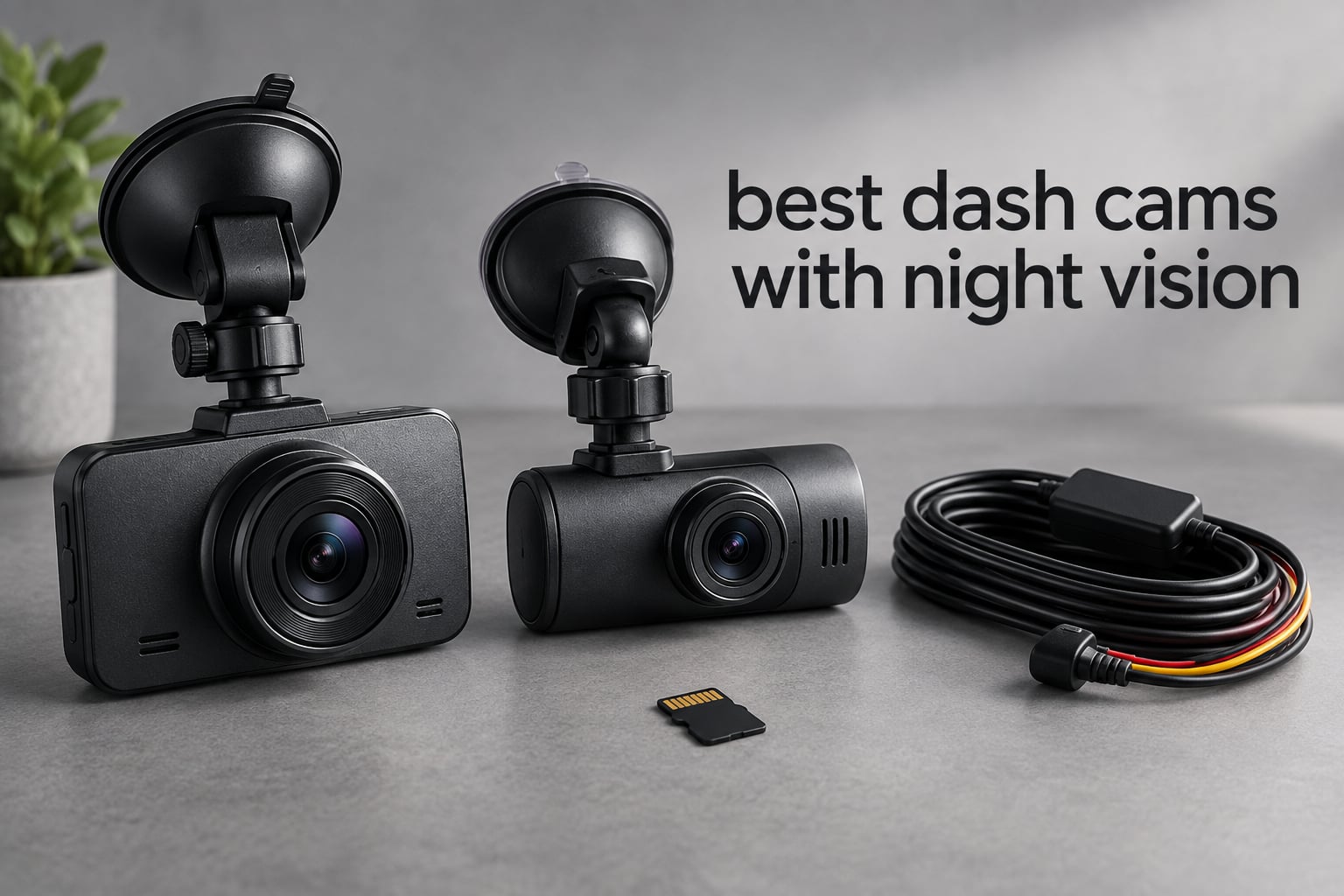
The ROVE R2-4K Dual is the best dash cam with night vision overall, because a Sony STARVIS 2 IMX675 sensor behind an f/1.5 lens delivers footage that stays readable after dark at a fraction of what the flagship kits cost, and this one pairs it with a genuine 1080P rear channel, built-in GPS and a bundled 128GB card. If your driving is mostly dark county roads, that combination matters more than any resolution upgrade above 4K.
Before we get into the picks, one thing needs clearing up. On a road-facing dash cam, night vision does not mean infrared. A dash cam with a road-facing lens uses no IR LEDs at all, because infrared light is invisible to the human eye and turns a normal scene into a washed-out grey ghost. What buyers are really paying for is sensor sensitivity, a wide aperture, and HDR tone mapping that holds detail in a dark road while a pair of oncoming headlights blows out the top of the frame. Infrared only makes sense on a cabin camera pointed inside the car, where a face needs lighting rather than a licence plate.
That distinction explains why sensor model matters far more than the marketing label bolted to the box. Words like Super Night Vision or Night Owl Vision mean nothing on their own. The number in the spec sheet does. A Sony STARVIS 2 back-illuminated CMOS sensor collects light differently from an older front-illuminated design, so it produces a cleaner, less grainy image at the same shutter speed, which is why a 5MP STARVIS 2 sensor frequently beats a higher-megapixel sensor without one.
So here is what I look for before anything else, in three criteria:
A Sony STARVIS 2 back-illuminated sensor in the front camera. This is the single biggest driver of low-light clarity, ahead of resolution.
HDR or WDR processing with a wide aperture (f/1.5 to f/1.8), so dark tarmac and oncoming headlights both survive in the same frame.
A supercapacitor instead of a lithium battery, because a parked car in summer will cook a built-in battery long before it damages a capacitor.
The twelve cameras below are the ones I would actually put in a car this year. Every one of them records a 4K or near-4K front channel, all of them use a supercapacitor, and all of them come from brands that owners on r/Dashcam name repeatedly. I have ordered them by how well they handle the dark, not by price.
If your night driving is mostly long-haul or heavy overnight work rather than commuting, you may want our picks for dash cams built for truckers and security dash cams for parked trucks instead, since those use cases reward different things.
Table of Contents
Top 3 Picks for Night Driving (October 2026)

ROVE R2-4K Dual
- Sony STARVIS 2 IMX675 sensor
- F1.5 aperture with HDR
- 1080P rear
- 128GB card included
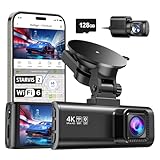

Vantrue N4 Pro S
- Triple STARVIS 2 IMX678 sensors
- 4K/2.5K/1080P channels
- PlatePix plate recognition
The Best Dash Cams With Night Vision in 2026
Twelve cameras, one consistent question: does the front lens still show a number, a shape, a lane line when the only light is your own headlights? Here is every pick at a glance, in the order I rank them.
| Product | Specifications | Action |
|---|---|---|
| ROVE R2-4K Dual |
|
Check Latest Price |
| REDTIGER F7NP |
|
Check Latest Price |
 IIWEY N6 IIWEY N6 |
|
Check Latest Price |
 REDTIGER F17 REDTIGER F17 |
|
Check Latest Price |
| Vantrue N4 Pro S |
|
Check Latest Price |
 VIOFO A229 Pro VIOFO A229 Pro |
|
Check Latest Price |
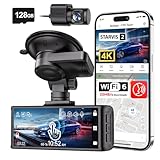 REDTIGER F7N Touch REDTIGER F7N Touch |
|
Check Latest Price |
 THINKWARE U3000 THINKWARE U3000 |
|
Check Latest Price |
 BOTSLAB G300H Plus BOTSLAB G300H Plus |
|
Check Latest Price |
 COOLCRAZY N8 COOLCRAZY N8 |
|
Check Latest Price |
 FAIMEE F6 FAIMEE F6 |
|
Check Latest Price |
 IIWEY Q5 IIWEY Q5 |
|
Check Latest Price |
How We Judged Night Vision
Ranking dash cams on night vision is harder than it looks, because most spec sheets are written by the same people who wrote the box. Rather than trusting resolution numbers, I judged these twelve on five things, and I compared them against the questions owners actually argue about on r/Dashcam and dashcamtalk.
Sensor first. I noted the exact sensor model where the brand discloses it. STARVIS 2 (IMX678, IMX675) scored highest. First-generation STARVIS scored next. A generic CMOS with no model number was treated as unknown, not as good.
Aperture and HDR next. An f/1.5 lens collects meaningfully more light than an f/1.8. Where a brand pairs the wide aperture with HDR or WDR, the camera can keep a dark road visible while stopping a headlight from clipping to white.
Plate readability at speed. The real test is not a parked car on a dark street. It is a moving vehicle ahead of you with its plate lit by your headlights. Reflective plate backgrounds bounce that light straight back at the lens, and that reflection is what turns a plate into a white blob. I gave the highest marks to cameras whose brands specify a sensor and HDR pairing aimed at that problem, and to the only camera here with a dedicated plate-recognition feature.
Heat tolerance for parked cars. If you intend to run parking mode, the power source decides whether the camera survives its second summer. Every pick on this list uses a supercapacitor, which is why none of them carries the lithium-battery failure pattern that has taken cameras off dashboards in parked vehicles.
The friction around the camera. App quality, WiFi behaviour, cable length, whether a card is included and whether parking mode needs a kit you have to buy separately. These decide whether the footage is still there when you need it, and they separate the good cameras from the merely capable ones.
One note on forum evidence: r/Dashcam owners repeatedly converge on the same rule, that any camera with a Sony STARVIS 2 sensor is a solid bet, and the Rove R2-4K in particular comes up again and again as having the best night vision per dollar. That claim matches what the sensor data predicts, which is why I am comfortable weighting it.
1. ROVE R2-4K Dual: Best Overall Night-Vision Dash Cam
ROVE R2-4K Dual Dash Cam Front and Rear, STARVIS 2 Sensor, Free 128GB Card
- 4.5-star average across more than 14000 ratings
- Strong low-light clarity from the STARVIS 2 sensor
- 20MB/s dual-band WiFi transfers
- 128GB card included and 1TB supported
- Built-in GPS with a desktop player
- Supercapacitor handles hot climates
- Front 4K mode is upscaled from 2.5K native
- Parking mode needs a separately sold hardwire kit
- Rear camera is limited to 1080P
The ROVE R2-4K Dual is the best dash cam with night vision because it solves the actual problem without the flagship price tag. The Sony STARVIS 2 IMX675 sits behind an f/1.5 aperture, one of the widest openings in this roundup, and the front channel records native 2.5K before upscaling to 4K.
Night footage from it is clean rather than merely bright. A back-illuminated sensor collects light across the full pixel instead of routing it through a wiring layer, so at the shutter speeds a dash cam uses in a dark road, the grain that turns competitors’ night clips into grey mush largely disappears. HDR is on board, so oncoming headlights flare but do not take the whole frame with them.
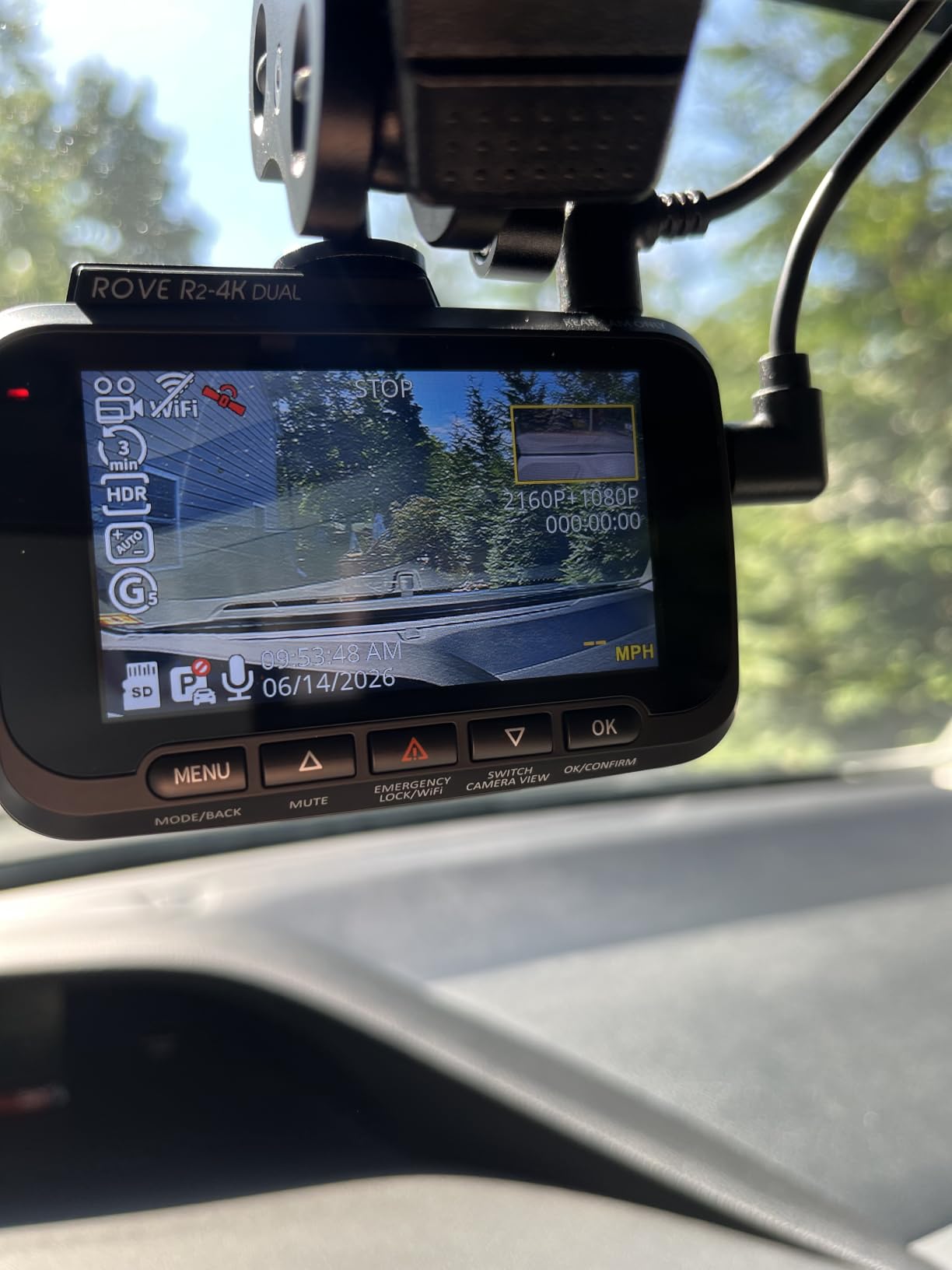
The rear channel records 1080P, which is the compromise in this kit, and it is the one spec sheet line to read twice if rear coverage is your priority. What you get instead is a threaded mount ring for an optional CPL filter, which is a real advantage for night glare, plus a 3-inch IPS screen showing live speed and compass from the built-in GPS.
Owners report a 4.5-star average across roughly 14,000 ratings, with about 76% of those handing over five stars. That is an unusual consistency for a dash cam, and it is the reason this kit sits at the top of my list rather than one of the more expensive flagships.
How the night footage actually looks
On a rural road with no street lighting, the front camera picks up the shape of an oncoming vehicle well before the headlight cone reaches it. The 150-degree field of view is narrower than the 170-degree lenses on some rivals, which means less fisheye distortion and a slightly tighter view of your own lane.
The f/1.5 front aperture and f/1.8 rear aperture split the difference sensibly. You lose a little on the rear channel compared with the 2.5K rear of the Vantrue, and you gain a front image that stays readable in a place where the alternative is a bright rectangle.
What you give up for it
The 4K label is the biggest thing to understand. The front sensor outputs 2.5K natively and upscales, so you get the file size and the crop of 4K without the genuine detail. If you crop into a plate at night, native 2.5K is the honest resolution you are working from.
Parking mode needs a hardwire kit you buy separately, and the 1TB card support is nice but pointless until you have a card that large. Neither is a dealbreaker, both are just costs people forget until the first weekend of overnight monitoring.
2. REDTIGER F7NP: Best Value Front and Rear Kit
REDTIGER F7NP 4K Dash Cam Front Rear, STARVIS 2 Sensor, Free Card Included
- Sharp 4K front and 1080P rear from a STARVIS 2 sensor
- Fast 5.8GHz WiFi transfers up to 20MB/s
- 128GB memory card included
- Supercapacitor resists heat better than lithium
- Built-in GPS stamps route speed and location
- The most reviewed dash cam in this roundup
- Parking mode requires a separate hardwire kit
- Rear camera is 1080P rather than 4K
- Menu options are thinly documented
The REDTIGER F7NP is the value pick here, and it is the one I would hand to a driver who wants a STARVIS 2 sensor without spending flagship money. The front camera uses a STARVIS 2 sensor behind an f/1.5 aperture with a six-layer optical lens, and pairs it with WDR and HDR night vision processing.
It is also, by a wide margin, the most reviewed dash cam on this list at close to 26,000 ratings. That volume does not make it better, but it does mean you can read a thousand owners’ complaints before you commit, and the pattern is consistent: image clarity in low light and fast app transfers are the strengths, everything else is housekeeping.
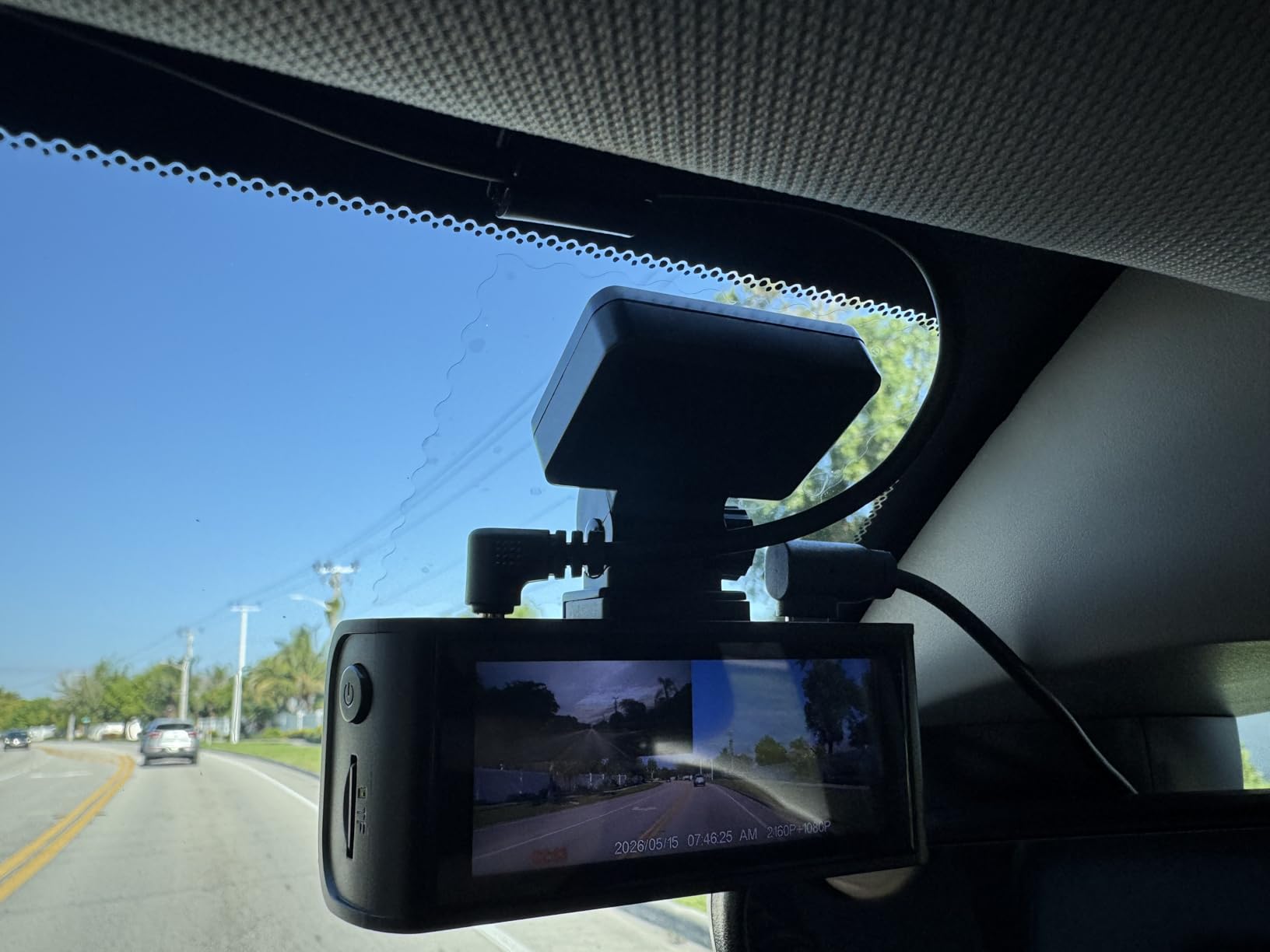
Two details make it a better fit for a hot climate than its price suggests. The supercapacitor means there is no lithium pack to swell or fail in a car parked in full sun, and the included 128GB card means the camera is recording the day you open the box rather than the day you find a card.
The 5.8GHz WiFi moves files at up to 20MB/s, so pulling a night clip off the card over your phone’s network takes seconds. That matters more than it sounds, because nobody hunts through a card for a dark clip over USB at 2am.
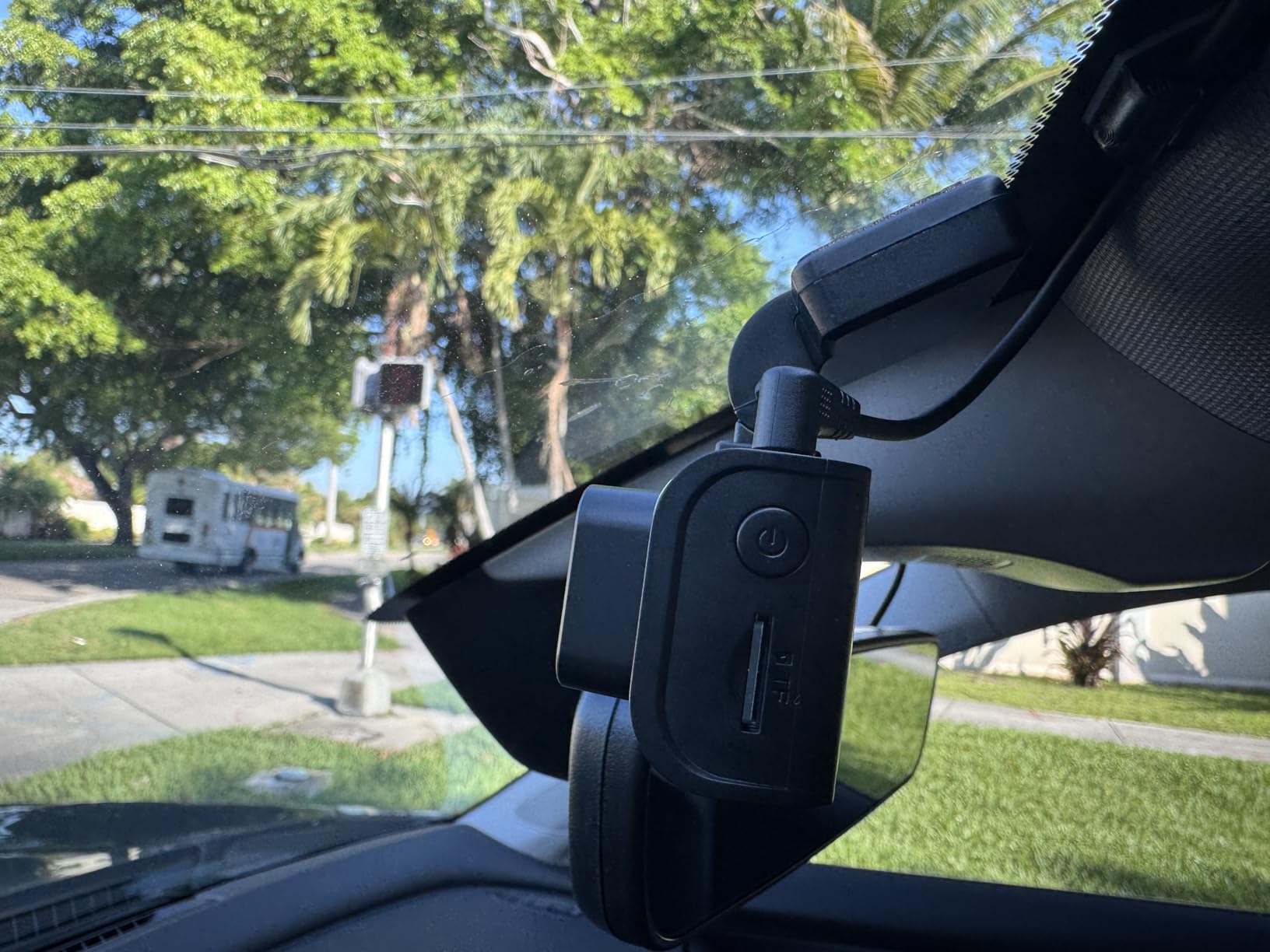
Where it wins after dark
The 170-degree front lens gives wide lane coverage, so a vehicle drifting toward you on a dark bend stays in frame earlier than on a narrower lens. HDR keeps the sky and the road in the same exposure, which is the difference between a usable clip and a black rectangle with headlights in it.
Reviewers repeatedly single out low-light clarity as the reason they kept the camera. For a vehicle that spends its life on unlit back roads, that is the only measurement that matters.
Where it falls short
The rear channel is 1080P. On a night clip of a rear-ending driver, you are working with less detail than the front gives you, and there is no upscaling trick to recover it.
Parking mode needs a hardwire kit, and the on-device menu does not explain itself well. Budget ten minutes with the manual, and turn the G-sensor down a notch if every pothole locks a clip.
3. IIWEY N6: Best for 360-Degree Coverage
IIWEY N6 360° Dash Cam 4 Channel, Free 128GB Card, 8 IR Lights Night Vision
- Four-channel 360° coverage in one system
- IR LEDs make the cabin cameras usable after dark
- Very fast 5.8GHz WiFi-6 transfers
- Sturdy build that has held up in hot parked cars
- Long rear cable makes routing straightforward
- 128GB card included
- All four channels record at 1080p
- SD card needs periodic reformatting or the timestamp drifts
- Adhesive pads struggle with the weight of the side cameras
- WiFi switches off automatically after about five minutes
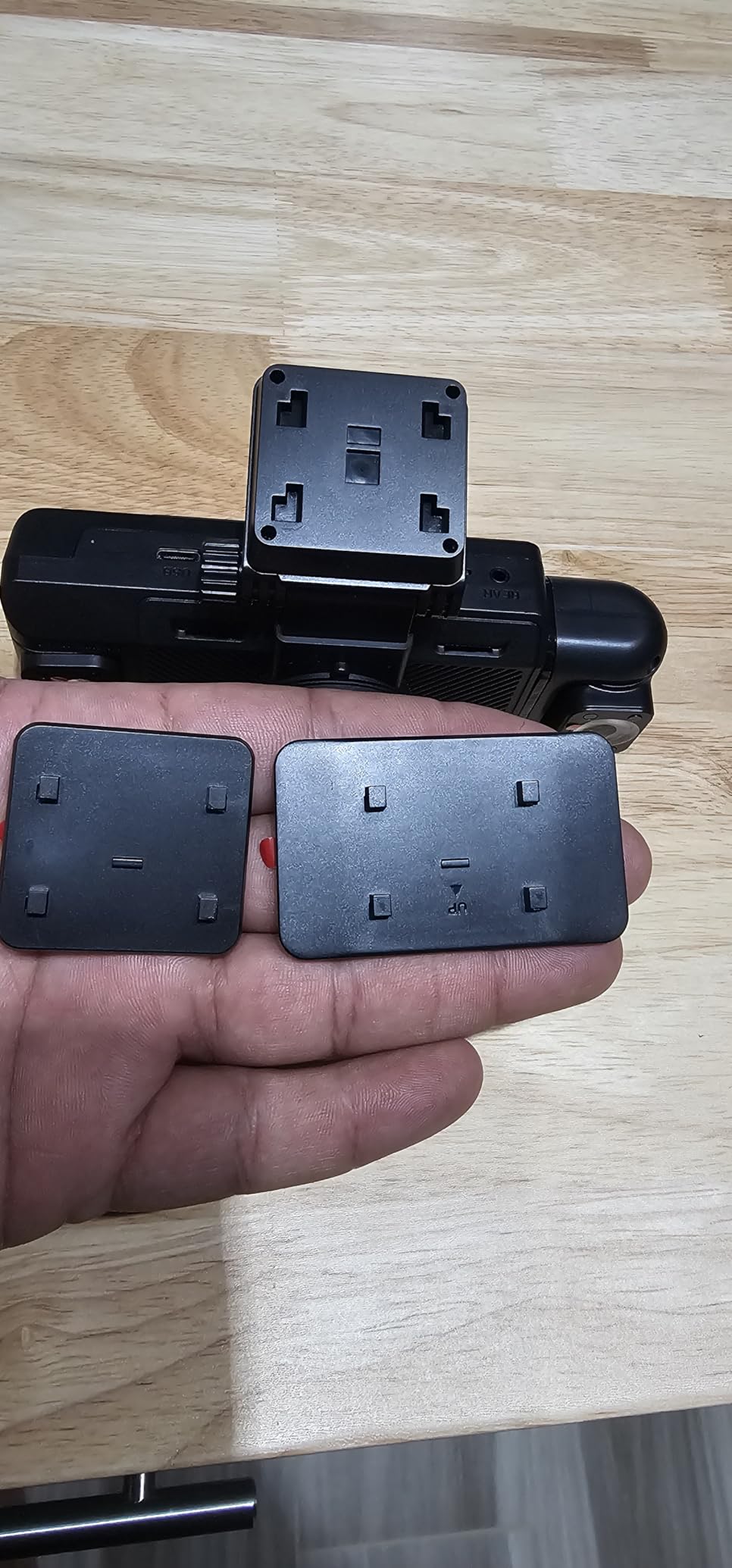
The IIWEY N6 is the pick if you want to see every direction. It records four channels simultaneously: front, rear and both sides, with 170-degree coverage on the front and rear cameras and 150 degrees on the swivelling side cameras.
Both of the cameras here with a cabin channel use infrared correctly. The eight infrared LEDs light the cabin and side views, which is exactly what infrared is good for: making a face or a door interior visible in total darkness. They are not aimed at the road, so they do not create the washed-out headlight ghosting that infrared-on-the-road produces.
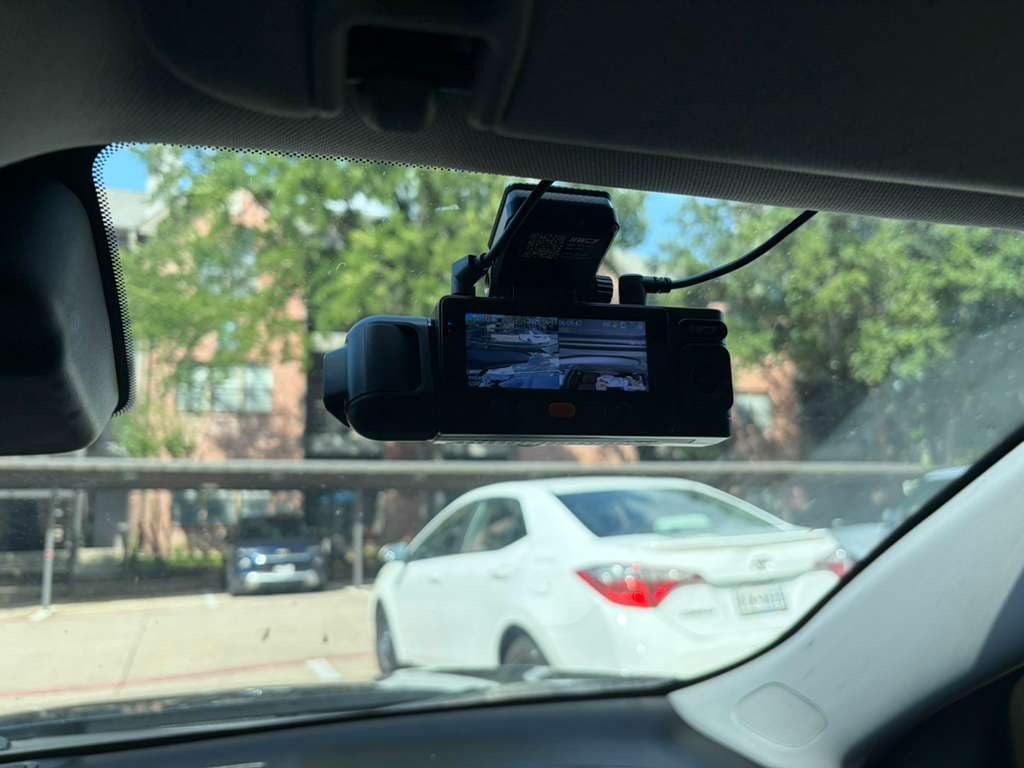
For a rideshare driver, a delivery van or anyone moving goods at night, that cabin channel is the reason to own one. It documents the interior with no street lighting anywhere near the car, which is a scenario no road-facing-only setup can address.
WiFi 6 on 5.8GHz pushes files at roughly 20MB/s, and a Vision Enhance mode targets plate and lane readability at junctions. There is a 3.18-inch IPS screen, built-in GPS with map playback, and 48 hours of parking surveillance in time-lapse or impact mode.
Why the cabin cameras are the reason to buy it
Infrared illumination is invisible to the driver and to anyone outside the car, so a cabin camera running on IR records the interior without lighting up the vehicle. On a dark pickup or an unlit driveway, that is the difference between seeing who is in the seat and seeing nothing at all.
The side cameras swivel, so you can aim one at a rear-quarter window rather than permanently at the road. Owners who run a van with blind spots say this is the feature they would not give up.
The trade-offs you accept
Every channel is capped at 1080p, which is modest for a system this complex. You are buying coverage, not resolution, and a plate two lanes away will be softer than it would be on a 4K front channel.
Two practical annoyances: the SD card needs periodic reformatting or the date and time stamp drifts out of sync, and WiFi switches itself off after about five minutes and has to be re-enabled at the camera. The adhesive pads also struggle to hold the weight of the side cameras on a bumpy road.
4. REDTIGER F17: Best for Rideshare Cabin Coverage
REDTIGER F17 4K 3CH Dash Cam, STARVIS 2 Sensor HDR, 64GB Card, 5.8GHz WiFi
- Three channels cover front
- cabin and rear
- Sharp footage on all three channels day and night
- Inside camera suits rideshare and child monitoring
- Screen saver cuts glare at night
- Adjustable G-sensor avoids locking clips on every bump
- Responsive customer service
- WiFi must be re-enabled at the camera each time
- Some cameras suffered random shutdowns from the 12V plug
- One owner reported repeated SD card auto-formatting
- Instructions are thin on menu settings
The REDTIGER F17 records 4K at the front, 1080P inside the cabin and 1080P at the rear, all at once. The front uses a STARVIS 2 IMX675 with WDR and HDR behind an f/1.5 aperture, so the dark-road performance sits in the same tier as the more expensive picks here.
Field of view is 150 degrees front, 160 degrees cabin and 155 degrees rear, which is a good spread. The wide cabin angle is what makes this useful for rideshare work, where you want the whole back seat rather than a face at the edge of frame.
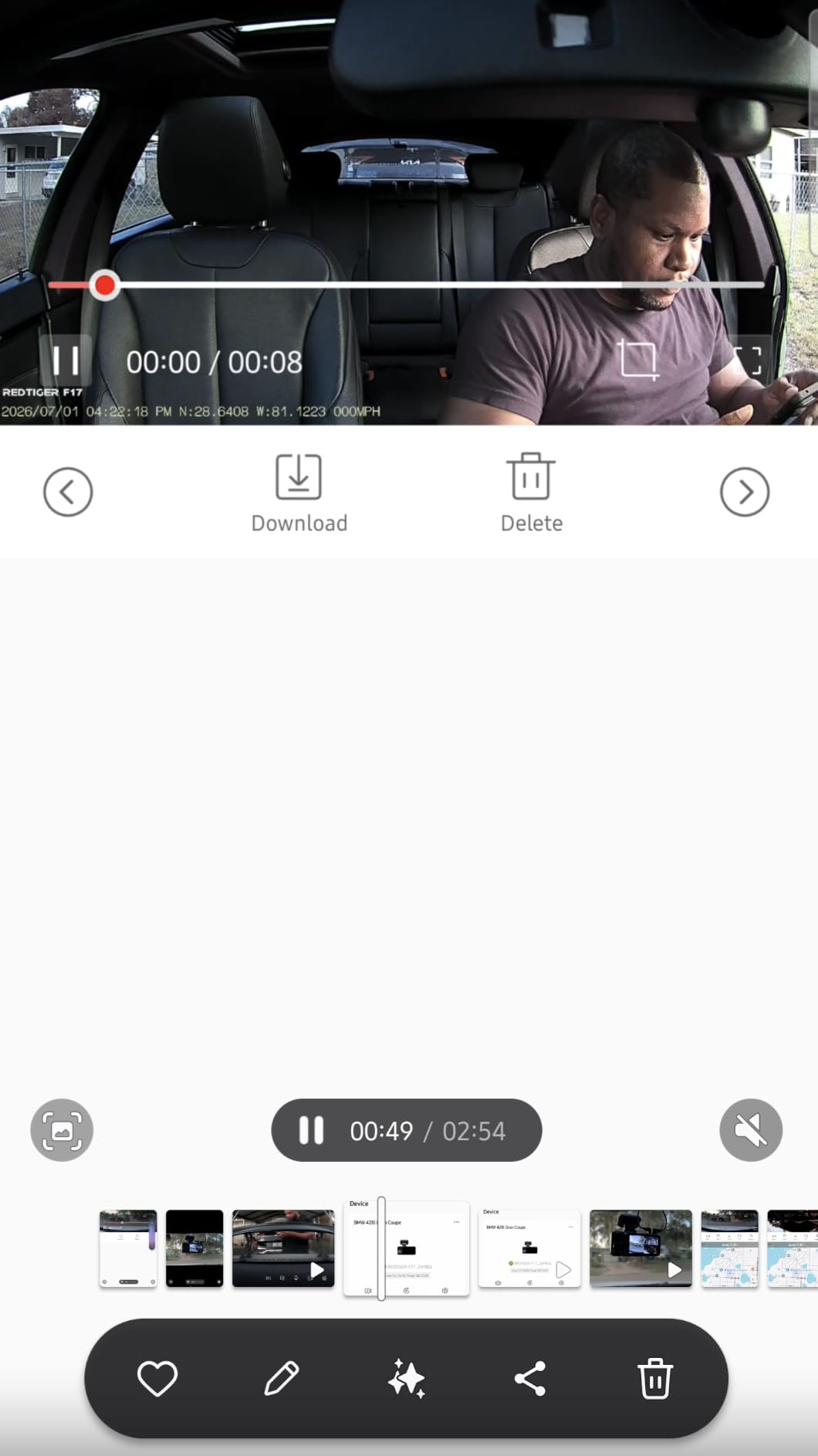
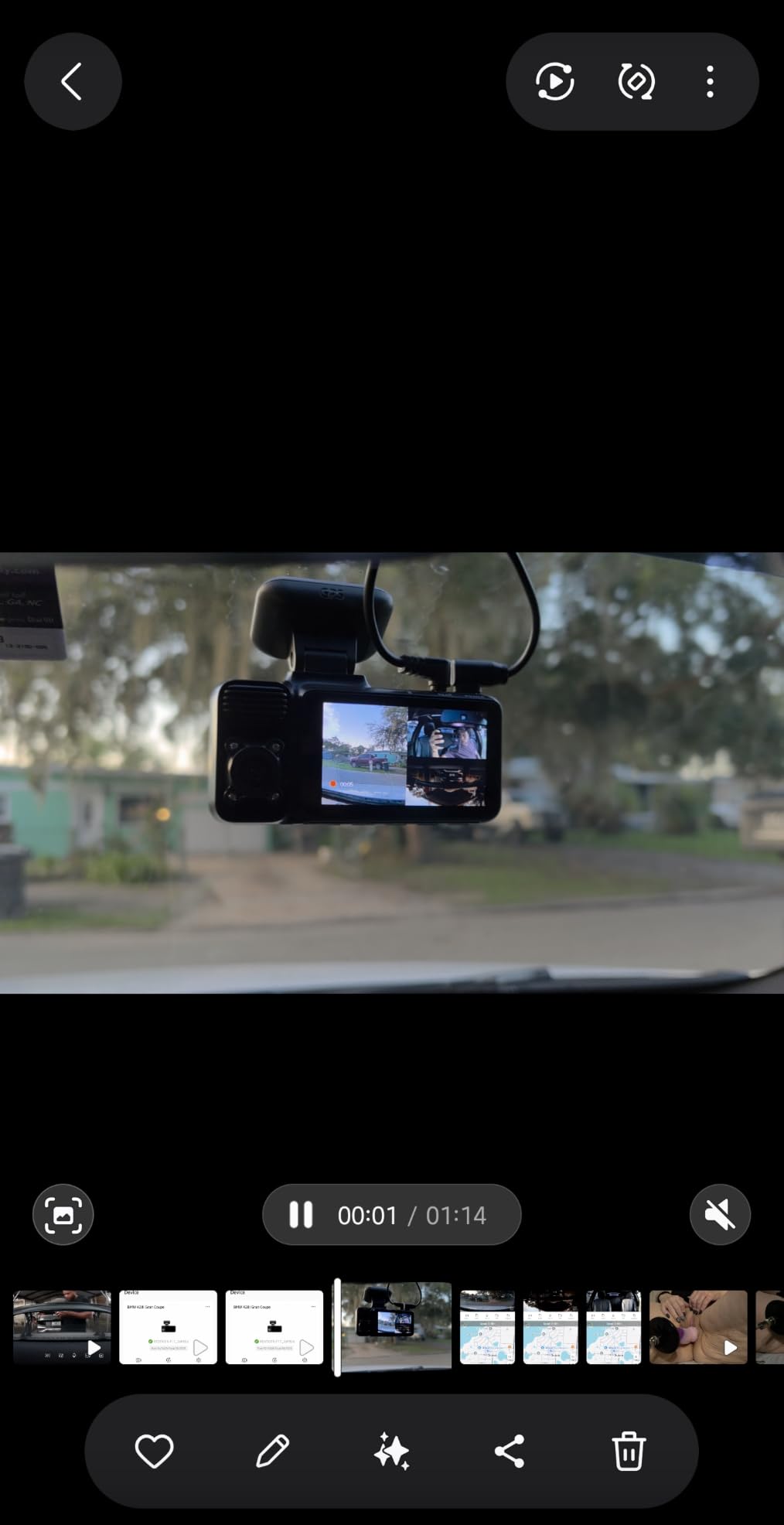
Two features stand out for night use specifically. Four infrared lights serve the inside camera, so passenger documentation works with no street lighting at all, and the screen saver switches the display off at night so the LCD does not become a glowing rectangle in your peripheral vision.
The G-sensor sensitivity is adjustable, which sounds minor until you realise that most cameras lock a clip on every expansion joint. Owners also report a front mount that does not wobble, and customer service that shipped free replacement adhesive pads.
Why it suits a night shift
A dual recording mode lets you drop to 2.5K front plus rear with the cabin camera off, or run 4K front with 1080P rear. Switching off the interior channel reduces the load when you are not carrying anyone, which is a small but real storage and heat saving on a long shift.
5GHz and 2.4GHz dual-band WiFi with a four times speed increase on 5GHz, plus map playback showing your route, makes finding a specific clip at the end of a shift manageable.
What to fix before you rely on it
WiFi has to be switched on at the camera each session, and some owners have to disable Bluetooth on their phone to connect. That is an annoyance every time, and on a camera you depend on it is worth knowing about in advance.
A minority of owners reported random shutdowns traced to the 12V plug losing contact over road vibration, and one reported the camera repeatedly auto-formatting the card and losing footage. Test both on a long drive before you need them.
5. Vantrue N4 Pro S: Best for Reading Plates at Night
Vantrue N4 Pro S 4K 3 Channel Dash Cam, Triple STARVIS 2 HDR Car Camera
- Records 4K front
- 2.5K rear and 1080P cabin
- Triple STARVIS 2 sensors with triple HDR
- PlatePix improves plate readability in dim conditions
- Rear camera rotates a full 360 degrees
- Front plus rear mode cuts heat by about 30 percent
- Buffered parking mode keeps pre-event footage
- SD card is not included
- Parking mode needs a separately sold hardwire kit
- Triple-channel 4K recording is storage hungry
- Large and heavy body with a 20ft rear cable
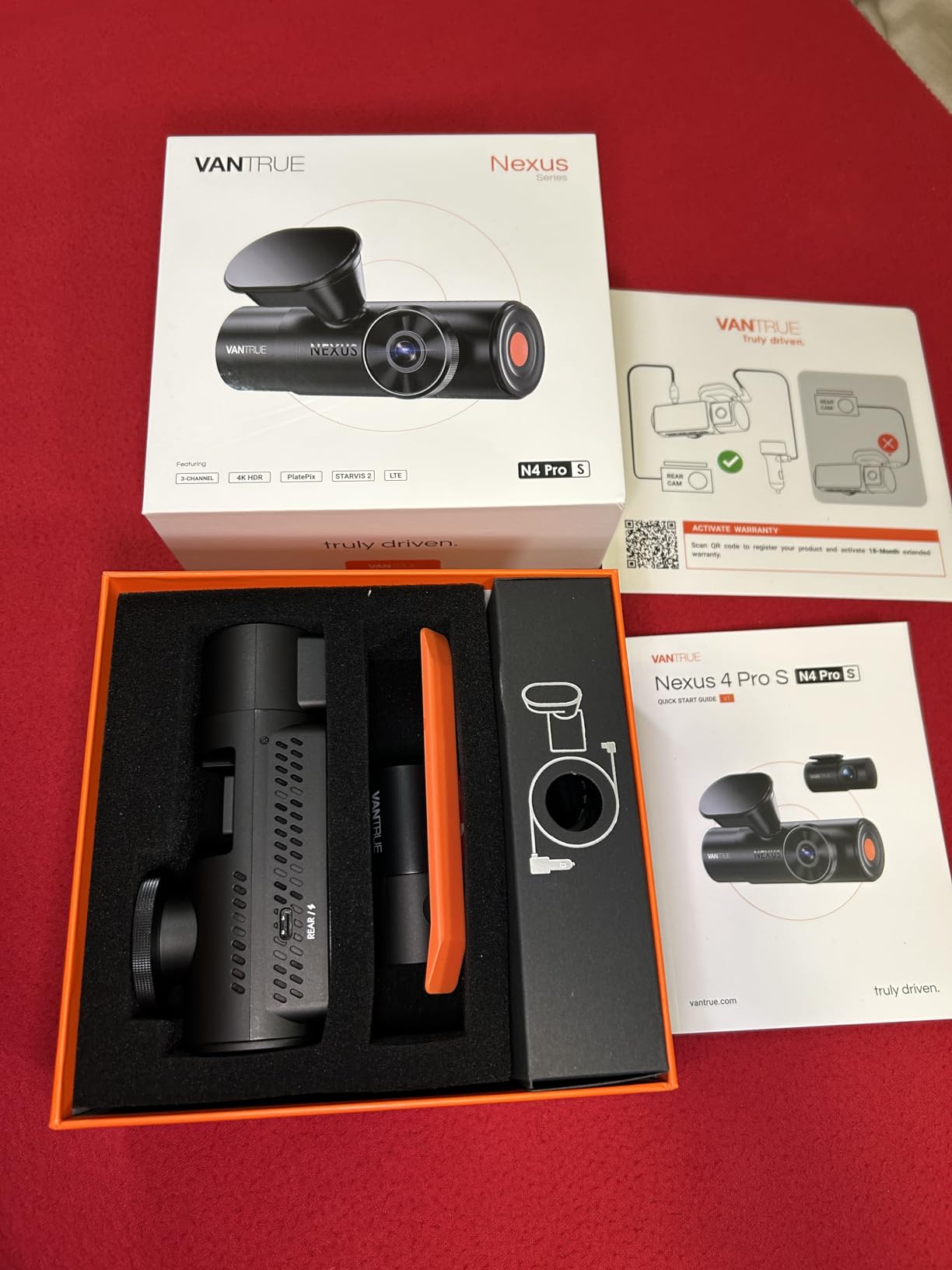
The Vantrue N4 Pro S has the most complete night specification in this roundup, and the reason is that it does not compromise on the rear. It records native 4K at the front, 2.5K at the rear and 1080P inside, with a STARVIS 2 IMX678 sensor and HDR behind every one of those lenses.
It is one of only two cameras here with a named STARVIS 2 part across every channel, the VIOFO A229 Pro being the other. On a dark road, the rear channel is the one you will actually need, because a rear-ending driver is lit by your headlights from behind and you want the resolution there, not just at the front.
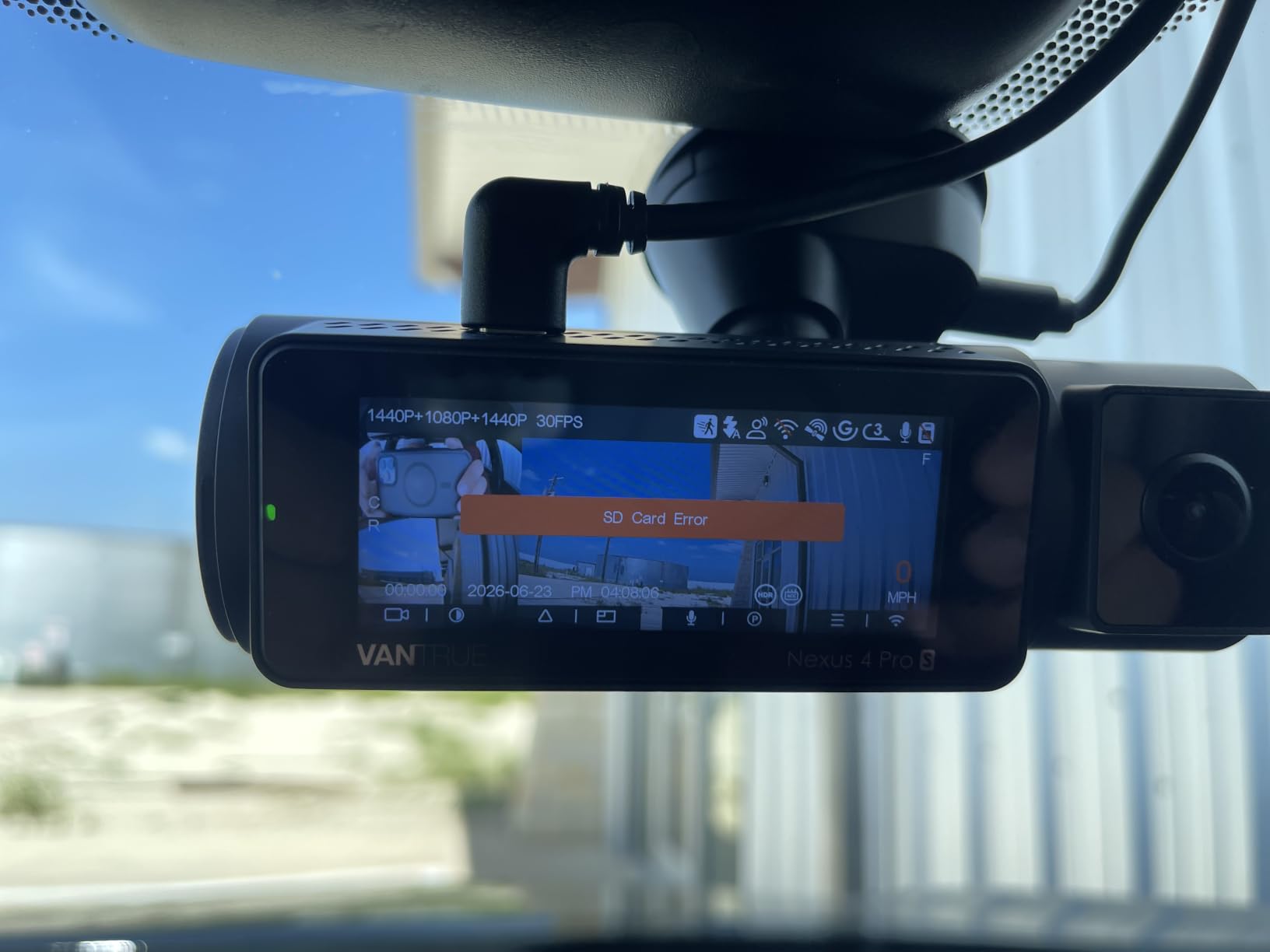
PlatePix is a processing mode aimed squarely at the reflective-plate problem. Vantrue claims roughly double the licence plate accuracy at night, and readable plates at speeds up to 31mph on lit streets. On unlit roads you should expect less than that, but it is the only dedicated plate feature in the group.
Field of view runs 155 degrees front, 165 degrees rear and 160 degrees inside, and the rear camera rotates a full 360 degrees so you can point it at the trunk or at traffic behind, not just out the back window.
What makes the night footage better
Three STARVIS 2 sensors with HDR means the cabin channel benefits from the same back-illuminated low-light behaviour as the front, rather than being a cheap afterthought. On an unlit residential street, the inside channel still shows a face rather than a silhouette.
Buffered parking mode is the other quietly excellent feature. It keeps all three cameras active and captures ten seconds before an event, which is the footage that actually proves what happened. A camera that only starts recording at the moment of impact misses the approach.
Where the compromises are
Triple-channel 4K is storage hungry. With 1TB support you get roughly 37 hours of recording, and you will need a genuine high-endurance card of that size to take advantage of it. No card is included in the box.
The unit is the largest and heaviest camera here at 240g, and parking mode still needs a separately sold hardwire kit. If you do not need a cabin channel, the Front plus Rear mode cuts heat generation by about 30 percent, which is the setting to run through a parked summer.
6. VIOFO A229 Pro: Best With an Included CPL Filter
VIOFO A229 Pro 4K 3CH Dash Cam HDR for Front & Rear & Inside with STARVIS 2
- 4K
- 2K and 1080P across three channels
- HDR on every channel for night footage
- Infrared cabin camera works in complete darkness
- CPL filter included to reduce glare
- Quad-mode GPS across four satellite systems
- Three parking modes with buffering
- Hardwire kit sold separately for parking mode
- No SD card included
- Rear and cabin cables can be short in larger vehicles
- App connectivity can be unreliable
The VIOFO A229 Pro is the pick for anyone whose night problem is glare. It ships with an anti-glare CPL filter in the box, and on a night commute through oncoming headlights that filter does more for readability than a resolution step would.
It records 4K plus 2K plus 1080P across front, rear and inside, with IMX678 and IMX675 STARVIS 2 sensors and HDR on all three channels under the Night Vision 2.0 label. The f/1.6 aperture is a touch wider than the Thinkware below it.
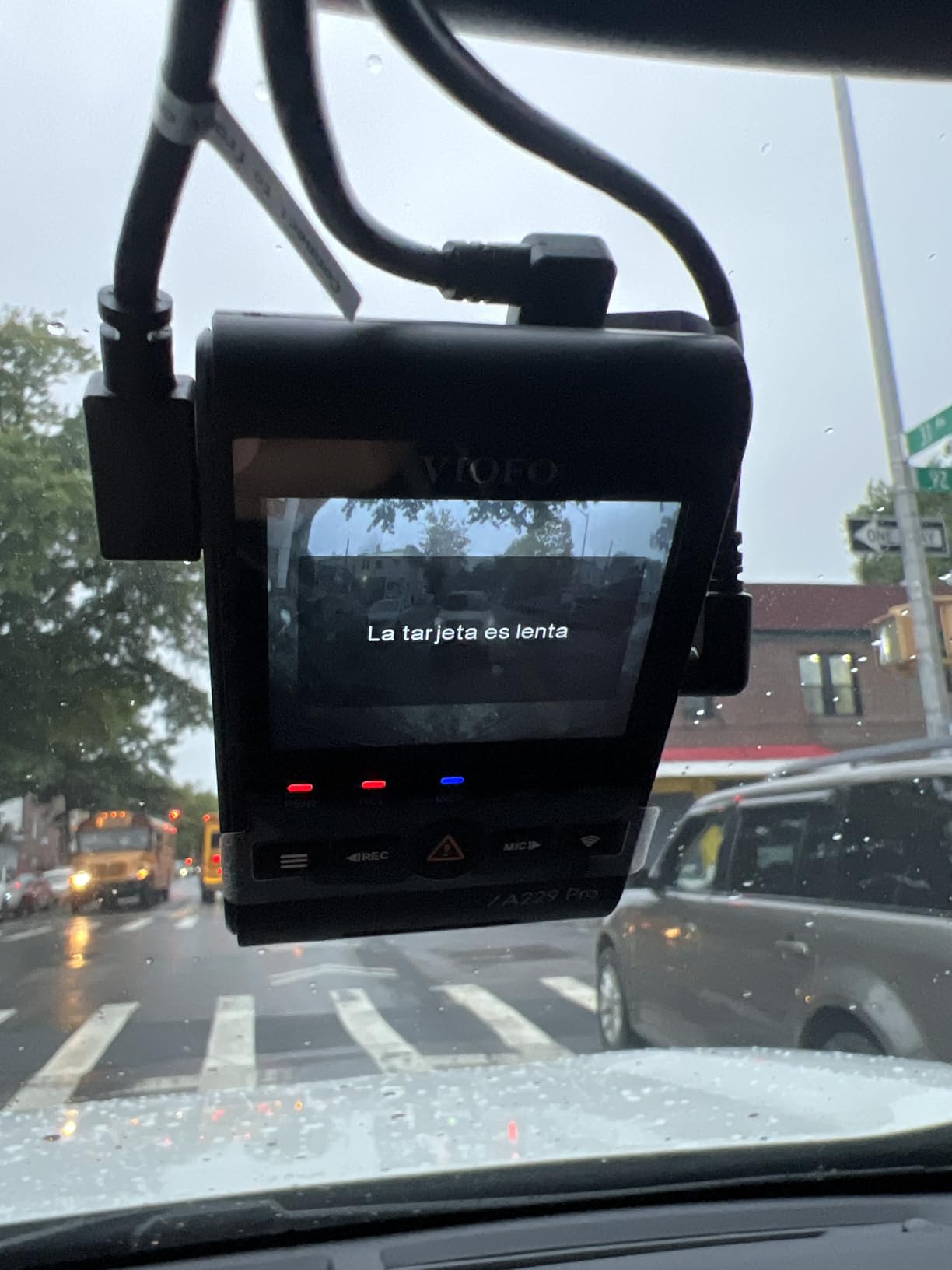
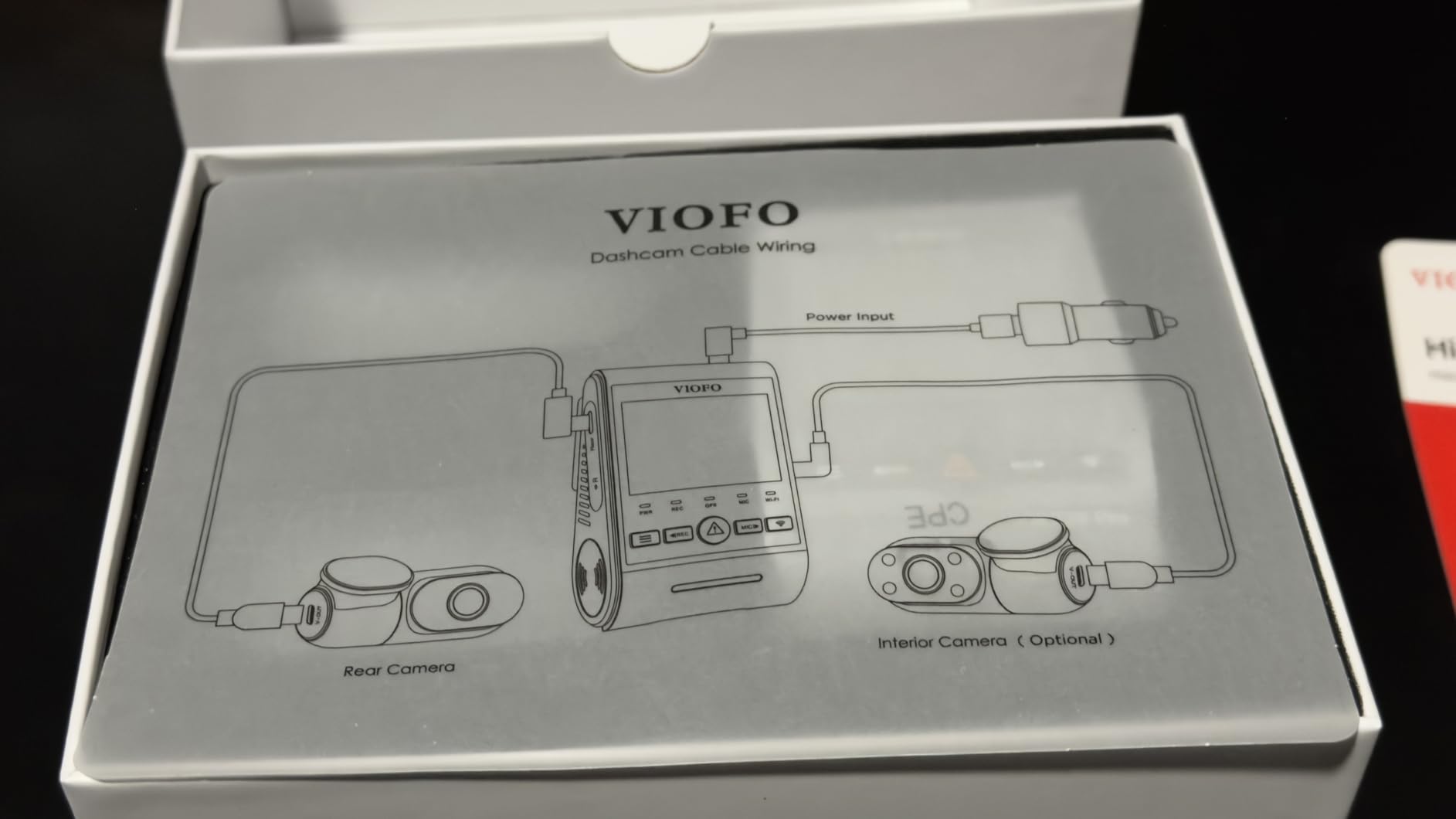
The cabin channel has four IR LEDs, so it records in complete darkness, which matters for anyone documenting a back seat at night. Voice control covers twelve commands, so you can save a clip without touching the camera while driving.
Three parking modes are offered, auto event detection, low bitrate and time-lapse, and all of them buffer. Quad-mode GPS covers GPS, BEIDOU, GALILEO and GLONASS, and the warranty runs 18 months with a further six months on registration plus lifetime technical support.
What the CPL filter actually does
A circular polariser rotates the light coming off the road and windscreen and cuts the reflected glare that washes a night scene out. On a wet road at night, or driving toward a line of oncoming traffic, it recovers contrast you would otherwise lose for good.
It is the reason this kit handles an urban night commute so well. On an unlit rural road with no reflections, the filter does less work and the sensor does more, which is why the STARVIS 2 pairing still matters here.
What to budget for
No microSD card is included, and the hardwire kit for parking mode is sold separately. Budget for both before the first night you want coverage, rather than discovering it afterwards.
The rear cable is 6m and the inside cable 1m, which is fine in a car and can be short in a large SUV or a van. Measure before you order if you drive something bigger than a saloon, and check the app on your own phone, as connectivity issues come up in reviews.
7. Thinkware U3000: Best for Radar Parking Mode
- Excellent 4K front and 2K rear video quality
- Super Night Vision 4.0 on a STARVIS 2 sensor
- Radar parking mode with low power draw
- OBD-II cable makes parking mode setup simple
- 64GB card and CPL filter in the box
- Red light and speed camera alerts
- Two separate apps can be confusing
- App footage retrieval is clunky
- No integrated screen so you need your phone
- Radar may not trigger at every distance
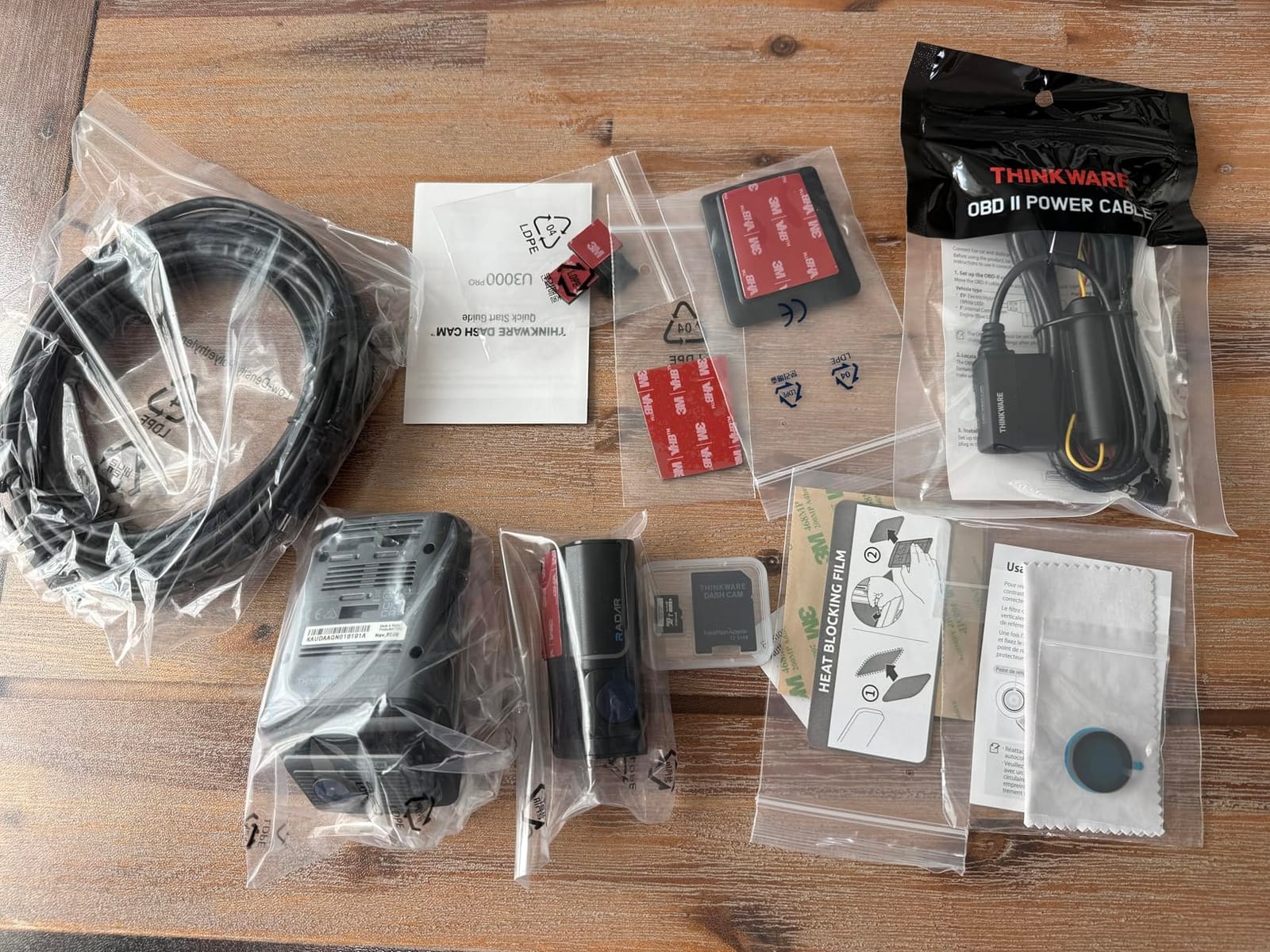
The Thinkware U3000 is the only camera here with a radar sensor built into the rear unit. Radar parking mode is a fundamentally better trigger than motion detection, because it measures distance and speed rather than guessing from pixel changes, so a pedestrian or a cyclist crossing a dark car park wakes the camera when tree branches moving in the wind do not.
Video is 4K at the front and 2K at the rear on a STARVIS 2 sensor with Super Night Vision 4.0 processing, across 156 degrees. That rear resolution is the second best in this roundup after the Vantrue, and for a rear-end incident on a dark road it matters.
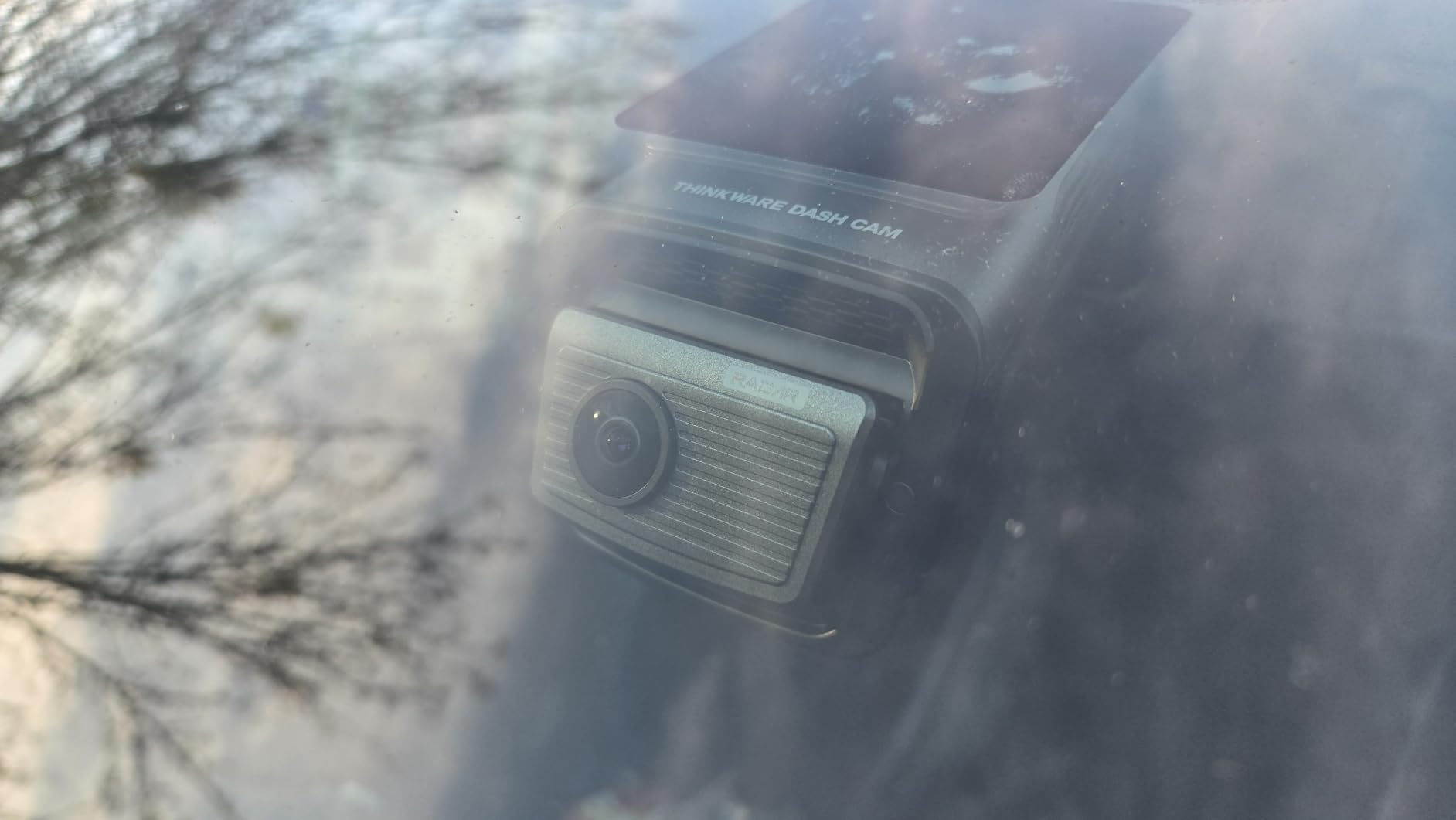
The box is unusually complete. A 64GB microSD card, a CPL filter, an OBD-II power cable, a heat shield, adhesive cable clips and a rear camera cable all come in the box, which means the only thing you have to work out is where to route the OBD cable.
That OBD-II supply is genuinely useful for 24/7 parking. Because the camera draws from the diagnostic port rather than the 12V socket, a car parked for weeks does not end up with a flat battery from a camera that misreads its own voltage cutoff.
Why radar beats motion detection at night
A motion-triggered camera on a dark street wakes for a shadow, an insect on the lens, or a reflection moving on a wet windscreen. A radar-triggered camera responds to something with mass and a closing velocity, so the clips you keep are the ones with an event in them.
Thinkware also rates this mode as low power consumption, and owners back that up. The Thinkware Connected app pushes alerts to your phone, and the camera gives red light and speed camera warnings while you drive.
What the software costs you
Two apps. One handles the camera and live view, the other handles firmware and setup, and owners find the split confusing until they learn which is which. Retrieving older footage through the app is clunky too, so budget time to download anything you may need.
There is no integrated screen, so live view means your phone. And some owners report the rear radar not triggering at every distance, which is worth testing yourself on your own street before you rely on it.
8. REDTIGER F7N Touch: Best With Touch and Voice Control
REDTIGER 4K STARVIS 2 Dashcam Front Rear, 5GHz WiFi 20MB/s, Free 128GB Card
- Crisp 4K front footage with readable plates at night
- Snappy touchscreen and useful voice commands
- Fast 20MB/s WiFi transfers
- Compact body fits neatly behind the mirror
- Generous cable length for clean hidden routing
- The app now requires an online account
- Some voice commands do not work reliably
- About ten seconds to power on and start recording
- Parking mode can auto-lock every clip
The REDTIGER F7N Touch is the pick if you want to operate the camera from the driver’s seat without an app. The 3.18-inch touchscreen locks clips, toggles WiFi and takes stills directly, and voice control handles the same functions hands-free.
Underneath, the imaging is competitive with anything else at this tier. A STARVIS 2 sensor with WDR and HDR covers 4K at the front across 170 degrees and 1080P at the rear across 140 degrees, behind an f/1.8 aperture. Owners specifically report plates being readable at night.
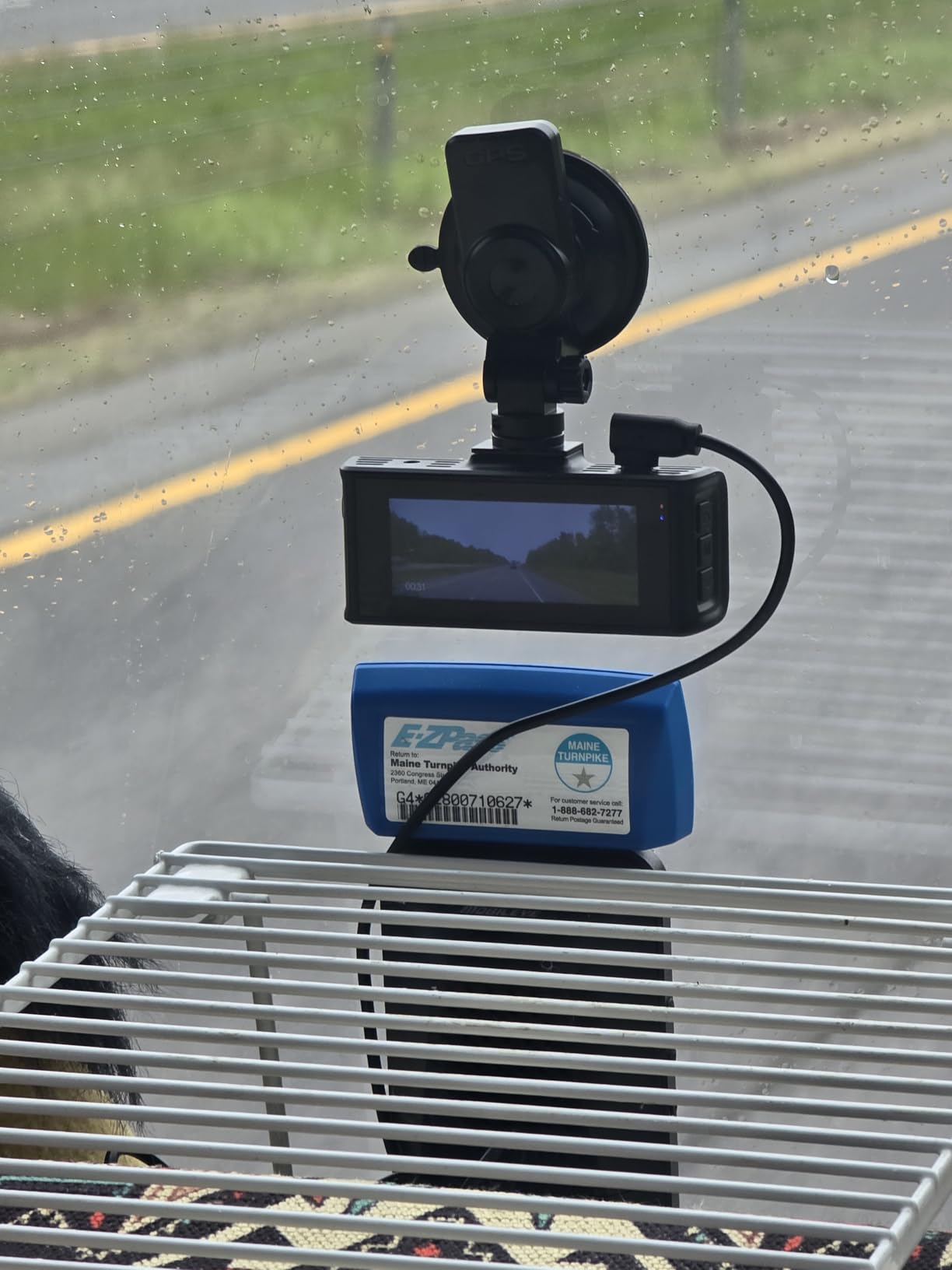
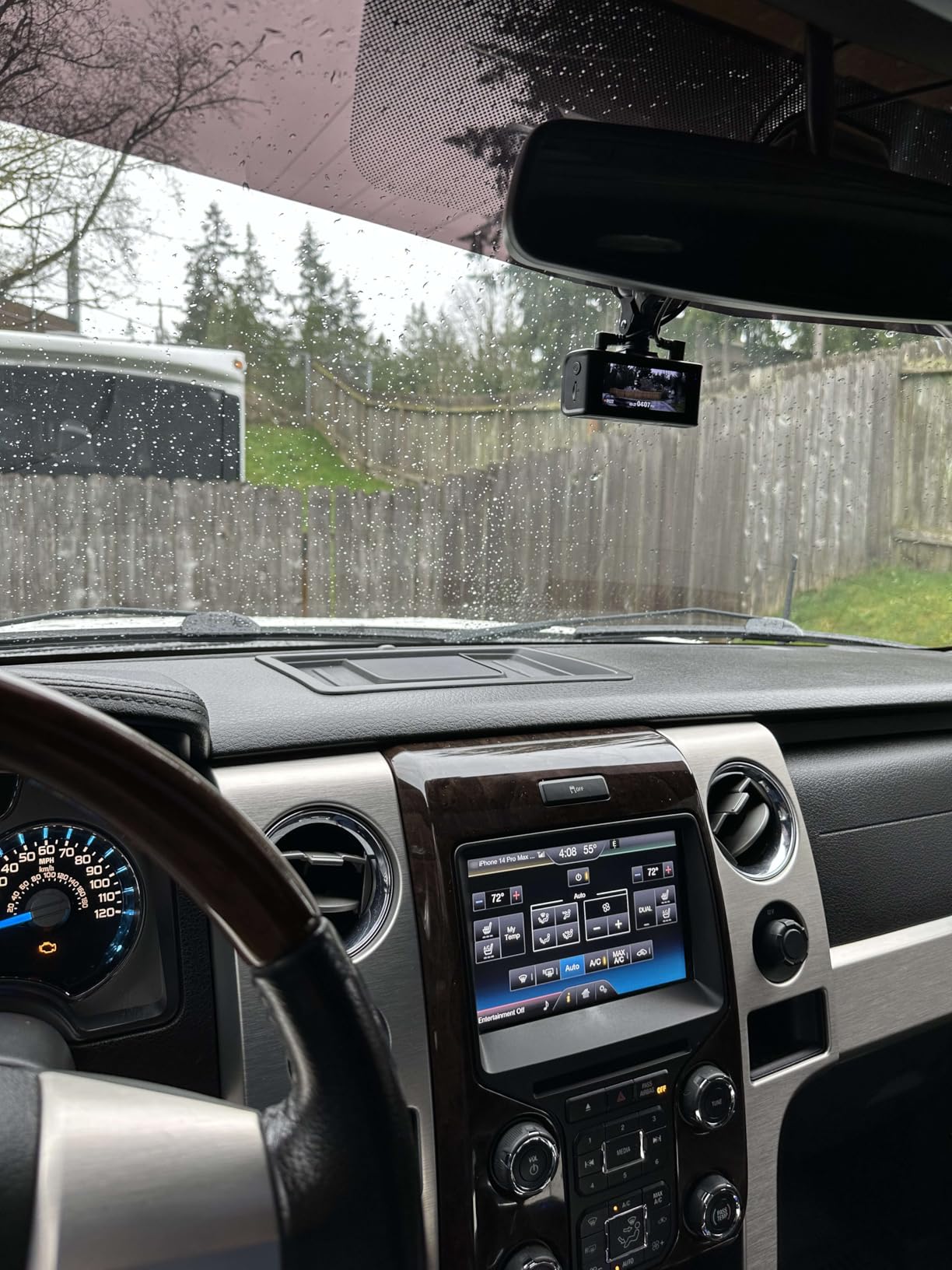
Voice control handles the core functions hands-free, and at 4 ounces the body sits neatly between the windscreen and the rearview mirror without blocking the sunshade. The cable length is generous, so you can route it into the trim for a clean install.
Built-in GPS stamps location, speed and route, 5.8GHz WiFi moves files at 20MB/s, and the supercapacitor design handles temperature extremes. A 128GB card is included and the warranty runs 18 months with 24/7 support.
Is a touchscreen worth anything in the dark?
More than most people expect, provided it does not become a distraction. The screen saver approach on the smaller F17 model handles the glare problem better. Here, a dark interface is the one to pick, and the screen saver function is worth turning on at installation.
Touch also removes one common night failure: the phone app refusing to connect when you need the footage. Locking a clip from the unit is a single tap rather than a WiFi handshake, and the clip is saved whatever the phone is doing.
The friction to plan around
The app now forces you to create an online account before the phone can reach the camera. That is an account, a password and a server in the path of a feature that used to work over local WiFi, and owners mention VPN conflicts and wireless CarPlay interference.
Allow roughly ten seconds for the camera to power on and start recording, some voice commands do not reliably perform what they say, and parking mode can auto-lock every clip it saves until you clear them. Test the voice commands you actually intend to use.
9. BOTSLAB G300H Plus: Best Entry-Level 4K Front and Rear
BOTSLAB G300H Plus 4K STARVIS 2 Dual Dash Cam Front and Rear[2026 Upgraded]
- 4K front from a STARVIS 2 sensor at an entry price point
- 170° front and 150° rear lenses give good lane coverage
- Supercapacitor handles heat and cold better than lithium
- Voice control for hands-free operation
- Peel-and-stick wiring keeps installation simple
- 64GB card included
- Only a 2-inch display
- Rear camera is limited to 1080P
- Some reviews report cameras not meeting expectations
The BOTSLAB G300H Plus is an inexpensive way into a STARVIS 2 sensor on a front and rear kit, and at this level most rivals drop to a non-STARVIS sensor. The front records 4K behind an f/1.5 aperture, the rear records 1080P behind f/2.0, and both are wide angle at 170 and 150 degrees.
That f/1.5 front aperture is doing the heavy lifting after dark. Combined with WDR night vision, it is the same light-gathering advantage that costs far more in the models above, and buyers cite the sensor’s low-light performance as the reason they bought it.
![BOTSLAB G300H Plus 4K STARVIS 2 Dual Dash Cam Front and Rear[2026 Upgraded] customer photo 1](https://www.requiemforadream.com/wp-content/uploads/2026/09/B0GSDTJQK8_customer_1.jpg)
The supercapacitor is rated from minus 20 to 70 degrees, which is a stated tolerance rather than a marketing adjective, and that is why this camera will keep working in a car parked in summer heat.
Voice control handles commands such as taking a photo and starting video, there is 5.8GHz WiFi with app control, built-in GPS, loop recording, 24-hour parking mode, and a 64GB card in the box with a car charger and USB-C cable.
![BOTSLAB G300H Plus 4K STARVIS 2 Dual Dash Cam Front and Rear[2026 Upgraded] customer photo 2](https://www.requiemforadream.com/wp-content/uploads/2026/09/B0GSDTJQK8_customer_2.jpg)
What the entry level gets you right
Sensor choice, aperture and power source are the three things that determine night performance, and this camera gets all three. Everything it saves over the cheaper options is spent on the sensor rather than on a screen.
The 170-degree front lens covers a wide span of lanes, which on an unlit road gives you earlier sight of a vehicle entering from a side junction. That is a genuine safety argument for the wide angle at night, not just a spec-sheet number.
Where the savings show
The 2-inch display is among the smallest here and is genuinely awkward for reviewing a clip without the app. If you are the sort of driver who checks footage on the unit rather than the phone, look at the 3-inch models instead.
The rating is 4.2 across roughly 1,770 reviews with about 65% five stars, the lowest five-star share in this group. That means a meaningful slice of buyers did not get what they expected, so budget for the possibility that you need an exchange.
10. COOLCRAZY N8: Best for a Compact, Lightweight Mount
- True 4K front with a STARVIS sensor at an entry price
- WDR processing cuts headlight and streetlight glare
- 5GHz WiFi for quick downloads and app management
- 3-inch IPS screen shows live speed and compass
- 64GB card included so it records out of the box
- Supercapacitor improves heat and cold resilience
- Rear camera is limited to 1080P
- Parking mode needs an ACC hardwire kit
- Lower review volume than the leading rivals
The COOLCRAZY N8 weighs 1.6 ounces and that changes your expectations of it. A camera light enough to barely register on the glass is far less likely to sag, rattle or fall off in summer heat, and windshield adhesive failures are one of the most common night-time complaints in this category.
Imaging-wise it holds its own. The N8 records 4K at 30fps at the front behind an f/1.5 aperture on a Sony STARVIS starlight sensor, and 1080P at the rear, with 170-degree and 150-degree lenses. WDR is the feature owners praise most, because it cuts the glare from headlights and streetlights that ruins an unprocessed night frame.
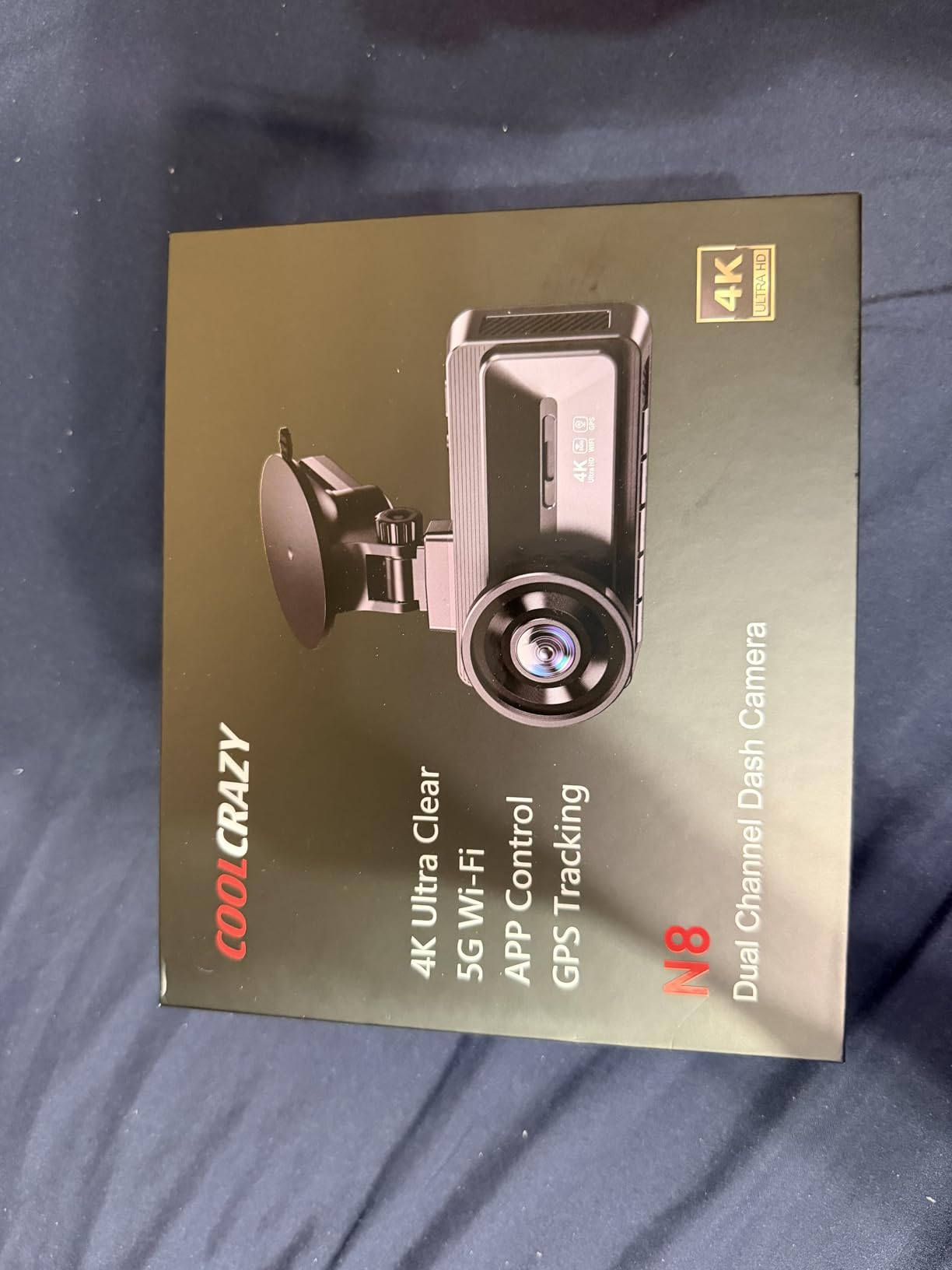
GPS is built in, with live speed and compass shown on the 3-inch IPS screen and speed stamped into the video itself. That stamp matters for evidence, since it establishes a vehicle’s movement independently of what anyone says afterwards.
5GHz WiFi handles app viewing and instant 4K downloads, a 64GB card is included and it accepts up to 256GB, and the supercapacitor power design is built for heat and cold tolerance. Support runs 18 months with 24/7 cover.
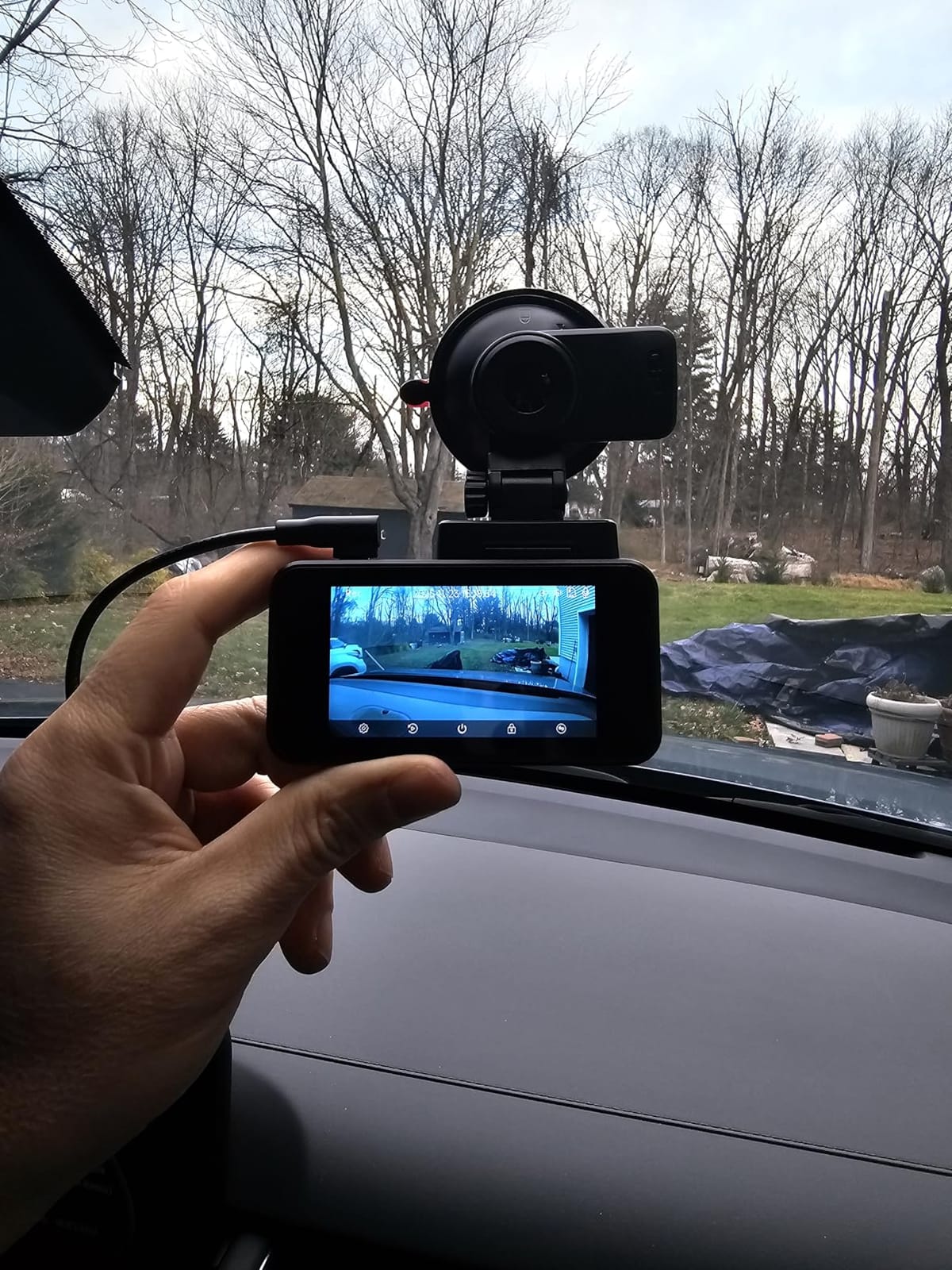
Why the weight matters at night
Mount sag is a night problem in disguise. A heavy body on old adhesive creeps down the glass in heat, the lens angle shifts, and the horizon tilts until the frame is half bonnet and half sky. A 1.6-ounce body simply does not have the leverage to do that.
There is a second benefit. A light camera means the adhesive pad and the windscreen share less stress at the edge, so it is less likely to creep in the first week after installation, which is when most mounts fail.
What to be careful of
The review base is the thinnest of the STARVIS-equipped kits here at around 1,290 ratings, so you have less long-term history to read than with the ROVE or the REDTIGER. Judge it on the sensor and the aperture, which are the parts that do not change.
The rear channel is 1080P, and 24-hour parking mode needs an ACC hardwire kit bought separately. The in-box card is 64GB, which fills faster at 4K than most owners expect.
11. FAIMEE F6: Best for Cars Parked in Hot Weather
FAIMEE 4K Dash Cam Front and Rear, Night Vision, WDR, Free Card Included
- Very light body
- less likely to sag on hot glass
- Keeps recording through 100-plus degree parked-car conditions
- Compact size fits behind the rearview mirror
- App and on-device menus are easy to navigate
- 64GB high-endurance card included
- Night footage will not reliably capture licence plates
- G-sensor can be oversensitive on ordinary bumps
- Rear cable routing in large SUVs is a long job
- Manuals and menu explanations are thin
The FAIMEE F6 is the camera in this group that owners report keeping alive through the worst summer heat, and several mention it by name as the unit that survived after comparable cameras locked up. It records 4K at the front and, unusually at this level, 2K at the rear.
That 2K rear channel is a step above the 1080P rear on most of the list, which is worth noting because the rear is the channel that matters most for a rear-ending claim. The front sits behind an f/1.8 aperture across 170 degrees, with WDR and night vision processing.
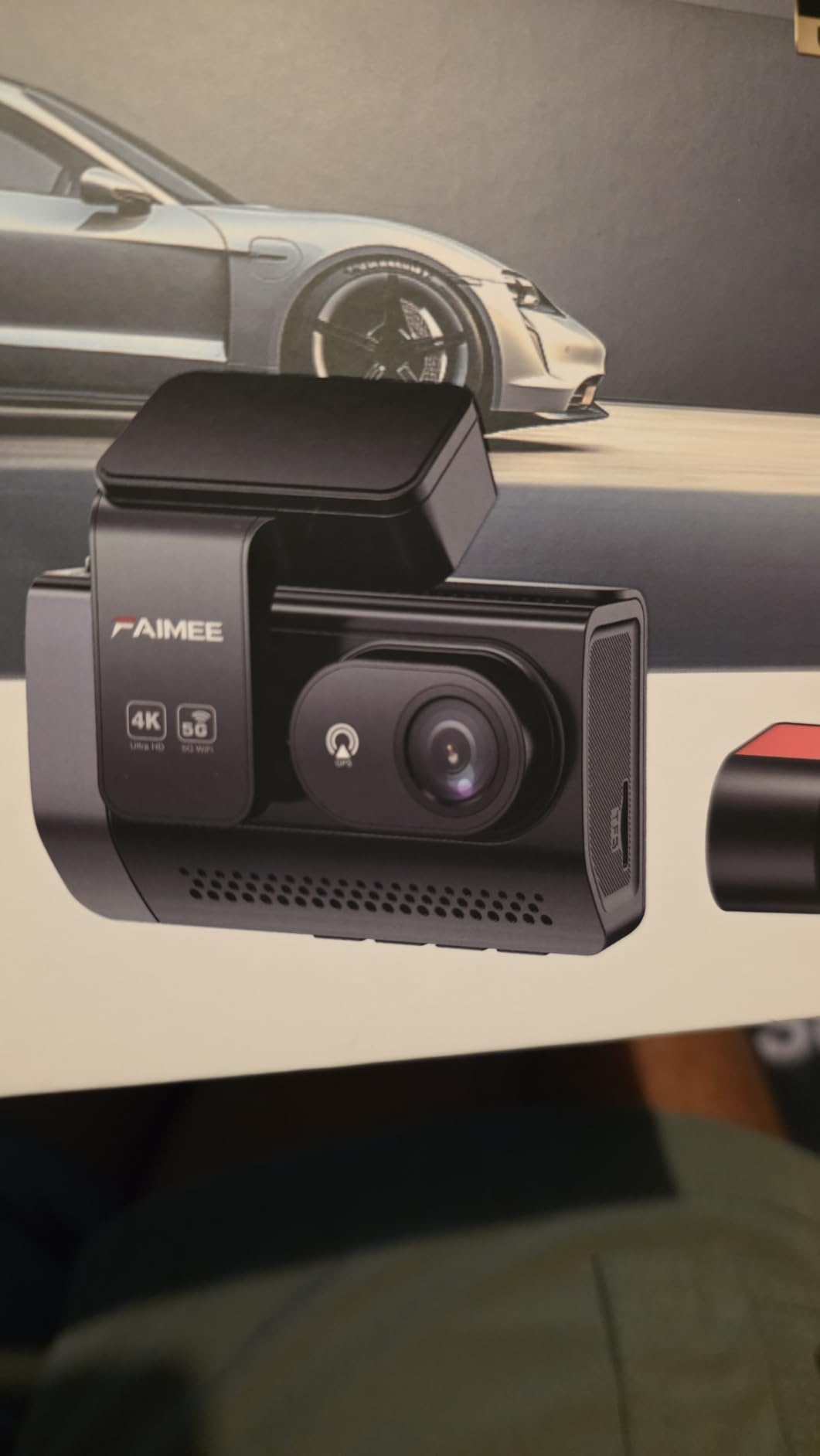
The body is very light, which is the mechanical reason it survives. Buyers specifically report that it handles 100-plus degree days without locking up, and that the light weight keeps it from sagging or falling off the glass in hot weather.
A 64GB high-endurance card is included, expandable to 256GB, and it uses an IPS screen sized to sit behind the rearview mirror without blocking the sunshade. Dual-band 5.8GHz and 2.4GHz WiFi, built-in GPS logging speed, route and coordinates, and an 18-month warranty round out a well-considered box.
The honest limitation on night footage
Here is the thing to weigh before you buy. Owners report that night footage from this camera will not reliably capture licence plates, which is a direct consequence of the f/1.8 aperture and a sensor that is described as STARVIS rather than STARVIS 2.
If your night driving is on unlit roads and you need plate evidence, this is not the camera. If you drive lit streets, want strong daytime capture and reliable heat endurance, the F6 is a better fit than its night-vision ranking in a list like this would suggest.
The smaller annoyances
The G-sensor can be oversensitive, locking a clip on every bump and pothole until you tune it down. There is no PC-based configuration menu, so settings changes mean the app or the on-device menu.
Rear cable routing in a large SUV is a longer job than in a saloon, and the documentation is thin on what each setting does. All of that is solvable, but plan for it during the install rather than after.
12. IIWEY Q5: Best for True 4K on Both Channels
- Only pick here recording true 4K on both channels
- 64GB card included in the box
- 5.8GHz WiFi for file transfers
- 3-inch IPS touch screen
- STARVIS sensors with f/1.6 on both lenses
- Dual-channel HDR night vision
- Hardwire kit sold separately for parking mode
- Suction mount may not hold as securely as adhesive
- Smaller brand with limited long-term data
- App has fewer features than premium-brand apps
The IIWEY Q5 is the only camera in this roundup that records genuine 4K on both the front and the rear, and it does so on STARVIS sensors with an f/1.6 aperture behind each lens. On paper that is the best night specification per channel of anything here.
Dual-channel HDR night vision applies tone mapping to both cameras at once, which is the part that matters on a dark road. A 4K rear channel lit by your own headlights gives you a far better chance of reading a plate in a rear-end clip than any of the 1080P rear channels in this group.
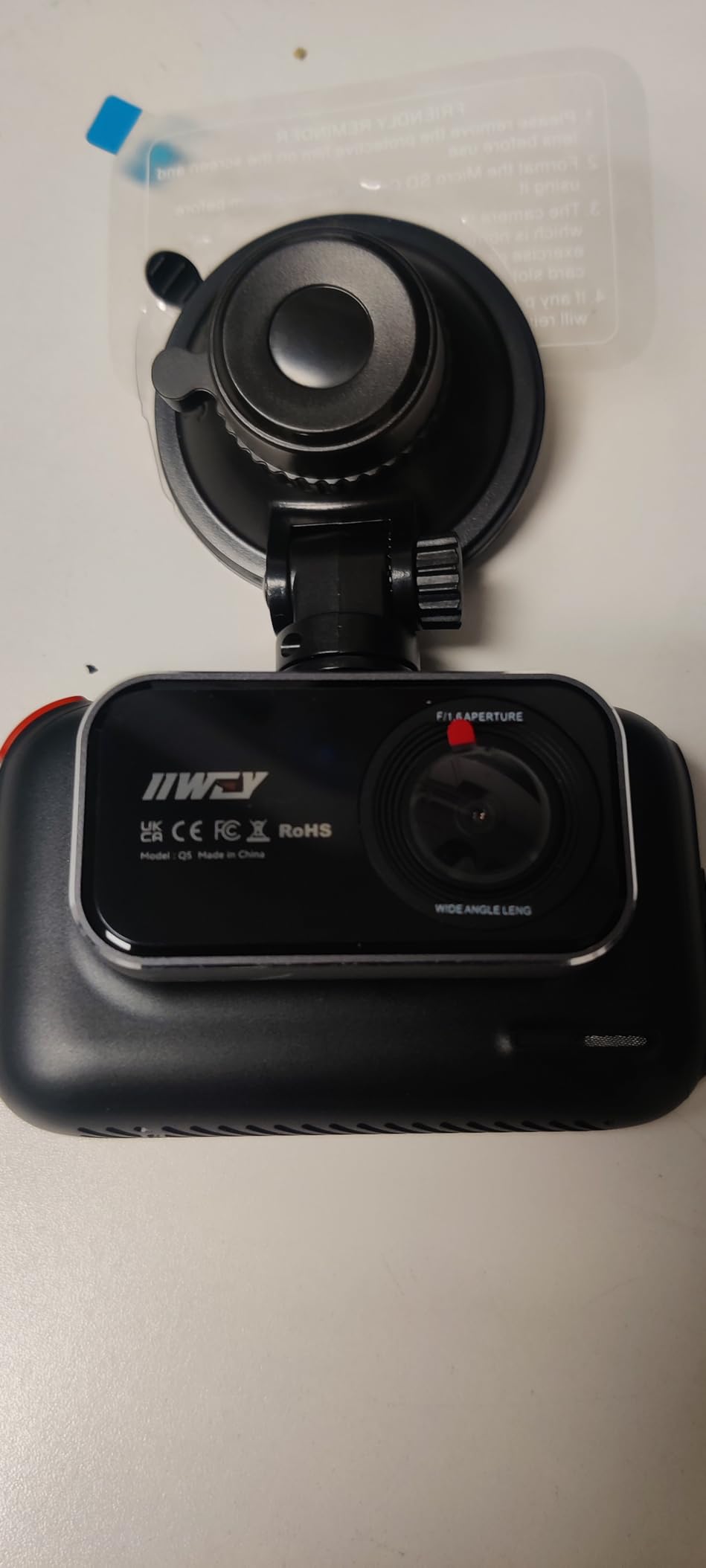
The 3-inch IPS touch screen is larger than most at this level, the 170-degree angle applies to both cameras, and 5.8GHz WiFi moves up to 10MB/s. A 64GB card is in the box, with 18 months of warranty behind it.
Be clear-eyed about the maturity here. This is the newest camera on the list with by far the thinnest review history, roughly 133 ratings. Early feedback is positive, but you are buying less proven hardware than the ROVE or the REDTIGER, and that is a real trade for the specification.
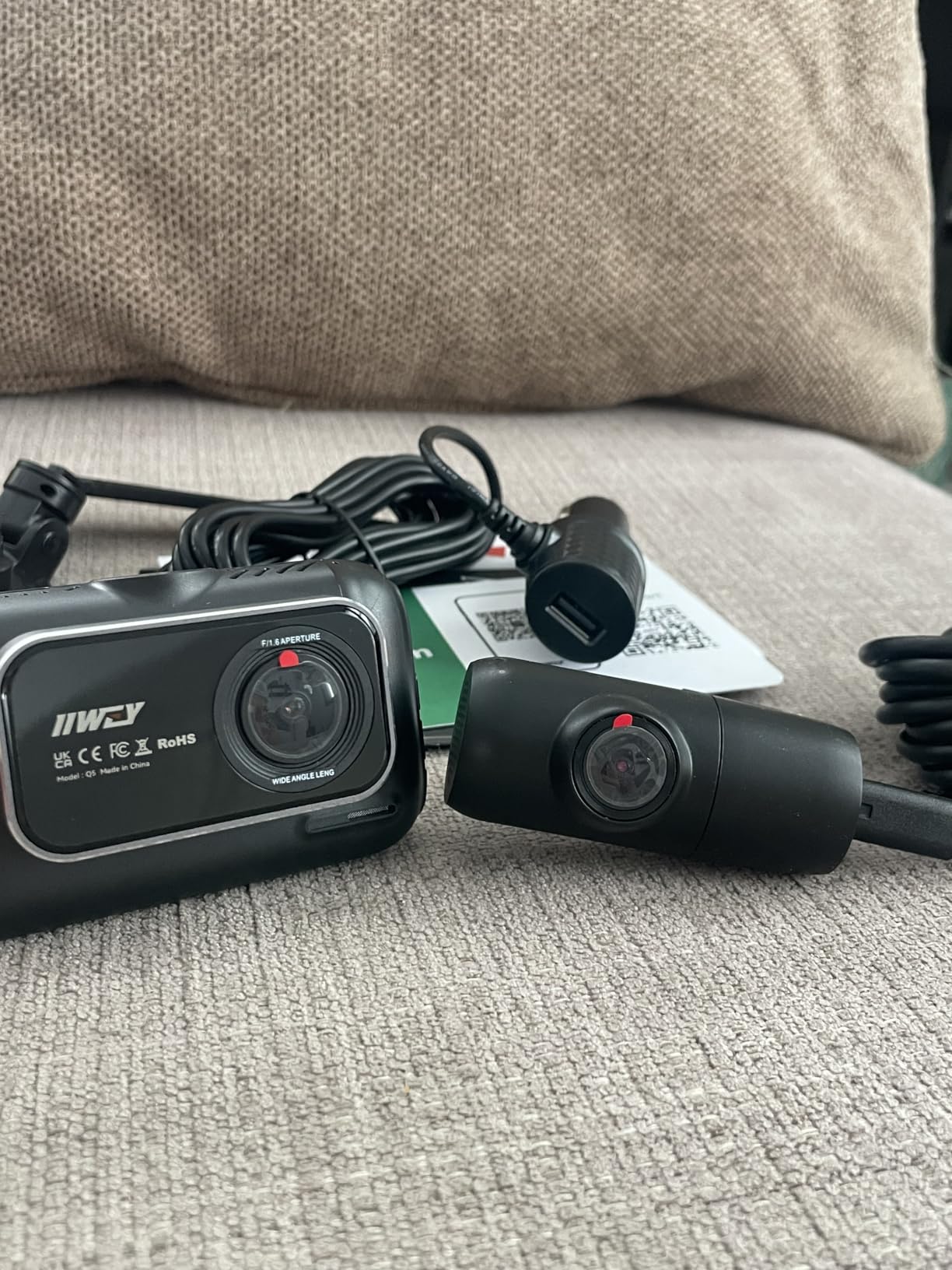
What true 4K on the rear is worth
Most dash cams in this roundup give you a high-resolution front and a 1080P rear. That is a reasonable allocation for a forward collision. For a rear impact, where the other vehicle is lit by your headlights and moving away from you, the rear channel is the one being judged.
True 4K plus f/1.6 plus HDR on the rear is a genuinely different proposition. It is also the reason this camera sits in the list despite being the least proven of the twelve.
Where to be cautious
The suction mount is the weakest link. It is convenient for moving between vehicles, but on a motorway run it can creep, and creep means a tilted horizon in the footage you were relying on. Check it after the first long drive.
Parking mode needs a hardwire kit bought separately, the app has fewer features than the premium-brand apps, and there is limited long-term reliability data. If you want a camera that has already survived three summers, buy the ROVE instead.
What Actually Makes a Dash Cam Good at Night?
Every night-vision claim in this category reduces to four things: how the sensor collects light, how wide the lens is, how the camera processes the contrast between a dark road and a bright headlight, and whether it can survive in a hot car. Here is how each one works, and where the marketing sits on top of the physics.
Back-illuminated sensors are the whole game. In a conventional CMOS the wiring layer sits in front of the light-sensitive photodiodes, so roughly a third of the light arriving at the sensor is blocked before it can be converted. Sony STARVIS moves that wiring behind the photodiodes. STARVIS 2, the current generation, improves on the first version in quantum efficiency and in handling small light sources.
This is why a 5MP STARVIS 2 sensor often beats a 12MP sensor without one at night. Megapixels describe how much detail the sensor can record when it is well lit. At 1am on an unlit road you are short of photons, not short of pixels, and the sensor that gathers more photons wins.
Aperture decides how much light gets in. The f-number is a ratio, and a smaller number means a wider opening. An f/1.5 camera gathers more light than an f/1.8 one, which shows up directly as a brighter, less noisy frame. The f/1.5 lenses on the ROVE, REDTIGER, BOTSLAB and COOLCRAZY sit at the wide end of the range in this group, while the f/1.8 lens on the FAIMEE sits at the narrow end.
HDR is what keeps a night frame readable. Without it, the camera exposes for the brightest thing in frame, which at night is always an oncoming headlight, and the road ahead turns black. HDR tone mapping takes multiple exposure ranges and merges them, so the road keeps its texture while the headlight is compressed rather than clipped.
IR helps the cabin and hurts the road. This is the point most product pages get wrong. Infrared LEDs emit light your eyes cannot see, so an interior camera running on IR records a passenger in complete darkness with nothing lighting the cabin. A road-facing lens on IR produces a low-contrast grey scene with headlight bloom, because the IR illuminator blasts the reflective plate and paint in front of it. If a road-facing camera advertises IR, it is not a feature you want.
And the failure everyone hits eventually is plate overexposure. A number plate is retroreflective by law in most countries, so it bounces your headlights straight back at the lens. Past roughly 25 feet, the plate clips to solid white no matter how good the sensor is. A CPL filter, HDR and a dark road behind the plate are what buy you extra distance, and the VIOFO A229 Pro and Thinkware U3000 are the two cameras here that ship with one.
How to Install a Dash Cam for the Best Night Footage
The gap between a good sensor and good night footage is often installation, not hardware. Six steps cover almost all of it.
1. Mount high and central, close to the rearview mirror. Higher placement reduces the amount of your own bonnet in frame and puts the horizon in the correct place. Keep the lens inside the top edge of the windscreen tint band, because tint darkens that strip at night exactly when you need light.
2. Do not rely on the adhesive pad in summer. Test the mount with a week of driving in heat before you trust it. A sagging mount tilts the horizon and pushes useful road out of the bottom of the frame.
3. Use a CPL filter if the camera supports it. Both the VIOFO A229 Pro and the Thinkware U3000 include one. On a wet road at night or in oncoming headlights, it recovers contrast that no amount of processing will bring back.
4. Turn off the beeps and driver alerts. ADAS lane departure and forward collision warnings are the most common thing owners disable within a day. They fire constantly in traffic and are a genuine distraction at night.
5. Set parking mode to time-lapse or buffered, not continuous. Time-lapse is far kinder to a card and to the supercapacitor. Buffered mode, where available, keeps the cameras rolling so you capture the seconds before an impact rather than after it.
6. Format the card in the camera, regularly. A dash cam writing 4K to the same card for months will eventually produce corrupted files. Formatting from the device resets the file structure properly, and it is also the fix for the timestamp drift some owners report.
On a dark rural road, a CPL filter and a correct mount height together recover more usable footage than upgrading one resolution step. Do those first, then decide the camera is not good enough.
How to Choose a Night-Vision Dash Cam
Sensor, aperture, HDR, power source. Those four decide night performance. The rest is convenience, and convenience matters a great deal once you are the one pulling files off a card at 3am after a night shift.
Sensor first, always. Look for a named Sony STARVIS 2 part number such as IMX678 or IMX675. If the brand does not name the sensor, assume nothing and judge the camera on reviews and sample night footage instead. A camera advertising Super Night Vision 4.0 without a sensor name is telling you about its software, not its light gathering.
Decide your channel count before you buy. A front-only camera is the cheapest way to get a good night image and it is all you need for a forward collision claim. Front plus rear covers the most likely incidents, since most insurance claims involve being rear-ended or sideswiped on a dark road. Three channels adds a cabin view, which is worth it for rideshare work, children in the back, and anyone documenting a parked interior overnight. Our picks for dash cams for truckers cover the long-haul end of the same problem.
Check the rear resolution, not just the front. Five of the twelve cameras here record 4K at the front and 1080P at the rear, and the ROVE records upscaled 4K over 1080P. The Vantrue N4 Pro S gives you 2.5K at the rear, the Thinkware U3000 gives you 2K, the FAIMEE F6 gives you 2K, and the IIWEY Q5 gives you true 4K. If rear incidents are your concern, those four are the shortlist.
For resolution, ask whether it is worth it at night. A 4K front channel is worth it because you can crop into a plate, a face or a number in the dark. It is not worth it if the camera raises the bitrate so high that a 256GB card lasts a weekend, or so much that the sensor is read at a frame rate that hurts low-light image quality. A camera that records true 4K from a STARVIS 2 sensor beats one that upscales 2.5K and labels it 4K, and the ROVE is honest about which it does.
Treat the card as part of the camera. Sustained 4K recording needs a genuine high-endurance card, class 10 or better. Most of the kits here include one, which is a genuine saving, while the Vantrue N4 Pro S and the VIOFO A229 Pro do not, so budget for that. Most silent recording failures are card failures, not camera failures.
Supercapacitor over battery, every time. Lithium-ion batteries swell in a parked car in summer heat, and a swollen battery behind a windscreen mount is a safety problem, not just an inconvenience. Every camera on this list uses a supercapacitor, and you should not buy one that does not.
Parking mode means a hardwire kit. Ten of these twelve need one sold separately. The kits are inexpensive and the install is straightforward, but factor it into the total before you compare cameras on headline specifications.
One last point on night vision, and it applies to the wider trail cameras with night vision category too. Infrared is a tool for a scene with no other light source, such as an interior or a forest at 40 metres. A road at night is lit by headlights and streetlights, and a sensor that sees in near-darkness will beat one that floods the frame with invisible light. Choose sensitivity over illumination, every time.
Frequently Asked Questions
Which dash cam has the best night vision?
The ROVE R2-4K Dual is the best overall, because it pairs a Sony STARVIS 2 IMX675 sensor with an f/1.5 aperture and HDR at the lowest cost of any kit here. The Vantrue N4 Pro S produces the best night image overall, with STARVIS 2 sensors in all three channels and a dedicated PlatePix mode for licence plates, but it costs considerably more and needs a memory card bought separately.
What is the best front and rear dash cam with night vision?
The ROVE R2-4K Dual is the strongest all-round front and rear kit, with a STARVIS 2 IMX675 sensor, an f/1.5 front aperture, HDR and a 1080P rear channel. If rear resolution matters more to you than cost, the Vantrue N4 Pro S records 2.5K at the rear and the IIWEY Q5 records true 4K at the rear.
Is there a dash cam that can record all night?
Yes. With a hardwire kit, parking mode records in time-lapse or on buffered event detection for as long as the car is parked. Every camera in this roundup uses a supercapacitor rather than a lithium battery, which is what makes overnight recording survivable in a hot car. The Thinkware U3000 draws power from the OBD-II port, which is the gentlest option on your vehicle battery.
Will dash cam parking mode drain my battery?
Properly installed, no. A hardwire kit with a voltage cutoff is designed to stop drawing power before your battery reaches a level that will not start the engine, and a time-lapse mode uses a fraction of the current of continuous recording. The risk comes from cheap kits with a badly set cutoff or a hardwire install with an in-line fuse that does not match the cable.
How do I get rid of glare on a dash cam at night?
Start with mount height. Place the camera high and central so the lens sits above the windscreen tint band, since tint darkens that strip. Add a circular polariser if the camera accepts one, which cuts reflected glare from wet road and headlights. Then turn off ADAS and beeping alerts, and confirm your exposure is not set manually. The VIOFO A229 Pro and Thinkware U3000 both include a CPL filter.
Is infrared night vision good or bad on a dash cam?
It is good on a cabin camera and bad on a road-facing one. Infrared LEDs illuminate a dark interior, where nothing else is providing light, and they do it without being visible to the people in the car. On a road-facing lens the same IR illuminator floods retroreflective plates and paint, producing a low-contrast grey image with headlight bloom. Choose a sensitive sensor rather than an IR light.
The Best Dash Cams With Night Vision, Final Word
After comparing all twelve, the ROVE R2-4K Dual is the best dash cam with night vision for almost everyone. A named Sony STARVIS 2 IMX675 sensor, an f/1.5 aperture and HDR at the front, a 1080P rear channel, built-in GPS, a 128GB card in the box and a 4.5-star average across roughly 14,000 ratings. Nothing else in this price range delivers that named sensor with that much owner history behind it.
Buy the Vantrue N4 Pro S instead if rear-channel resolution and plate reading are the deciding factors, and the VIOFO A229 Pro if your night problem is glare rather than darkness. For a parked car in summer, the supercapacitor in every one of these cameras is doing more for you than any specification on the box.
Whichever you choose, mount it above the tint band, format the card in the camera, and check the footage on an unlit road before you need it. That is the update for 2026, and it will hold.