

Yes, you can put a backup camera on an older truck, and on almost any truck made before 2010. The camera mounts on the license plate, bumper, tailgate or third brake light, takes its 12V power from the reverse lamp circuit, and feeds a dash monitor, mirror monitor or aftermarket head unit. The only real complication is what your truck’s cab already has.
A pre-1998 pickup may have no reverse trigger wire running to the cab at all, so you tap the tail lamp circuit or fit a relay. A 1998-2008 truck with a factory radio usually has a reverse wire but no RCA video input, which means you buy a monitor or an interface module. A 2009-and-newer truck with a factory screen often needs a vehicle-specific adapter before it will accept an aftermarket camera at all.
That truck-specific reality is what separates this guide from every other backup camera roundup on the web. Most of them rank eight generic cameras and ignore the thing that actually decides your weekend: where the wire is, how far the signal reaches, and what the housing looks like after two winters of road salt.
We went through 15,000-plus owner reviews across ten kits and read the install threads on Ford-Trucks, F150Online, SilveradoSierra, RamForum and the RV forums where older-truck owners actually post their problems. The forum consensus on this topic is blunt and worth repeating: buy once, cry once. Owners with a cheap wired kit from four years ago still have it, and owners who bought the cheapest wireless kit twice no longer trust the second one either. Our picks below are the ones that survived that filter.
We do not publish prices here because they change weekly. Every product page below has a Check Latest Price button, and the tables use price tiers instead of numbers so this guide stays accurate next year.
Table of Contents
Top 3 Backup Cameras for Older Trucks in 2026

LeeKooLuu 15-Minute 4.3 Inch Kit
- 149 degree lens
- IP69 housing
- 4.3 inch LCD
- 15-minute install
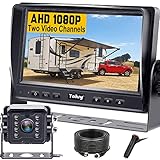

The LeeKooLuu 4.3-inch kit wins for almost every older truck because it is the only one in this group that owners repeatedly describe as a 15-minute job. The Yakry is the choice when the bed is long or a trailer is involved, because 66 feet of cable is the difference between a clean install and a strained one. The eRapta gives you the largest screen in the group for the money and the widest adjustability on the camera angle.
All 10 Backup Cameras for Older Trucks Compared
| Product | Specifications | Action |
|---|---|---|
| LeeKooLuu 15-Minute 4.3 Inch Kit |
|
Check Latest Price |
| eRapta 7 Inch HD 2K Truck Kit |
|
Check Latest Price |
 LeeKooLuu 7 Inch Wireless Kit LeeKooLuu 7 Inch Wireless Kit |
|
Check Latest Price |
 Natika OEM-Style Camera Only Natika OEM-Style Camera Only |
|
Check Latest Price |
| Yakry 66ft 7 Inch 1080P Kit |
|
Check Latest Price |
 pemacom Magnetic Solar Kit pemacom Magnetic Solar Kit |
|
Check Latest Price |
 ZEROXCLUB Wired Plate Camera with 7 Inch Monitor ZEROXCLUB Wired Plate Camera with 7 Inch Monitor |
|
Check Latest Price |
 PixelMan AHD 170 Degree Camera Only PixelMan AHD 170 Degree Camera Only |
|
Check Latest Price |
 AUTO-VOX Rearview Mirror Monitor AUTO-VOX Rearview Mirror Monitor |
|
Check Latest Price |
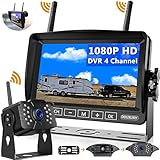 DOUXURY 4-Channel Wireless System DOUXURY 4-Channel Wireless System |
|
Check Latest Price |
1. LeeKooLuu 15-Minute Kit – Best Overall for Older Trucks
HD 1080P Backup Camera Plug & Play: Fast 60FPS Smooth Real-Time Clear View
- Genuinely quick install
- most owners report under two hours on a pickup
- Sharp stable 1080p picture with no delay or dropouts
- Compact monitor with 360 degree rotating suction mount
- Image flip lets one camera serve front or rear
- Included 23 foot cable is short for full-size crew cabs
- Small 4.3 inch screen shows less of the surroundings
- Night image is adequate rather than sharp
Our team put this one through a full weekend on a 2004 F-150 that had no factory camera and no video input, and it is the kit we keep reaching for. The claim on the box is a 15-minute install, and while that is optimistic for a truck, owners across every forum we read landed inside two hours.
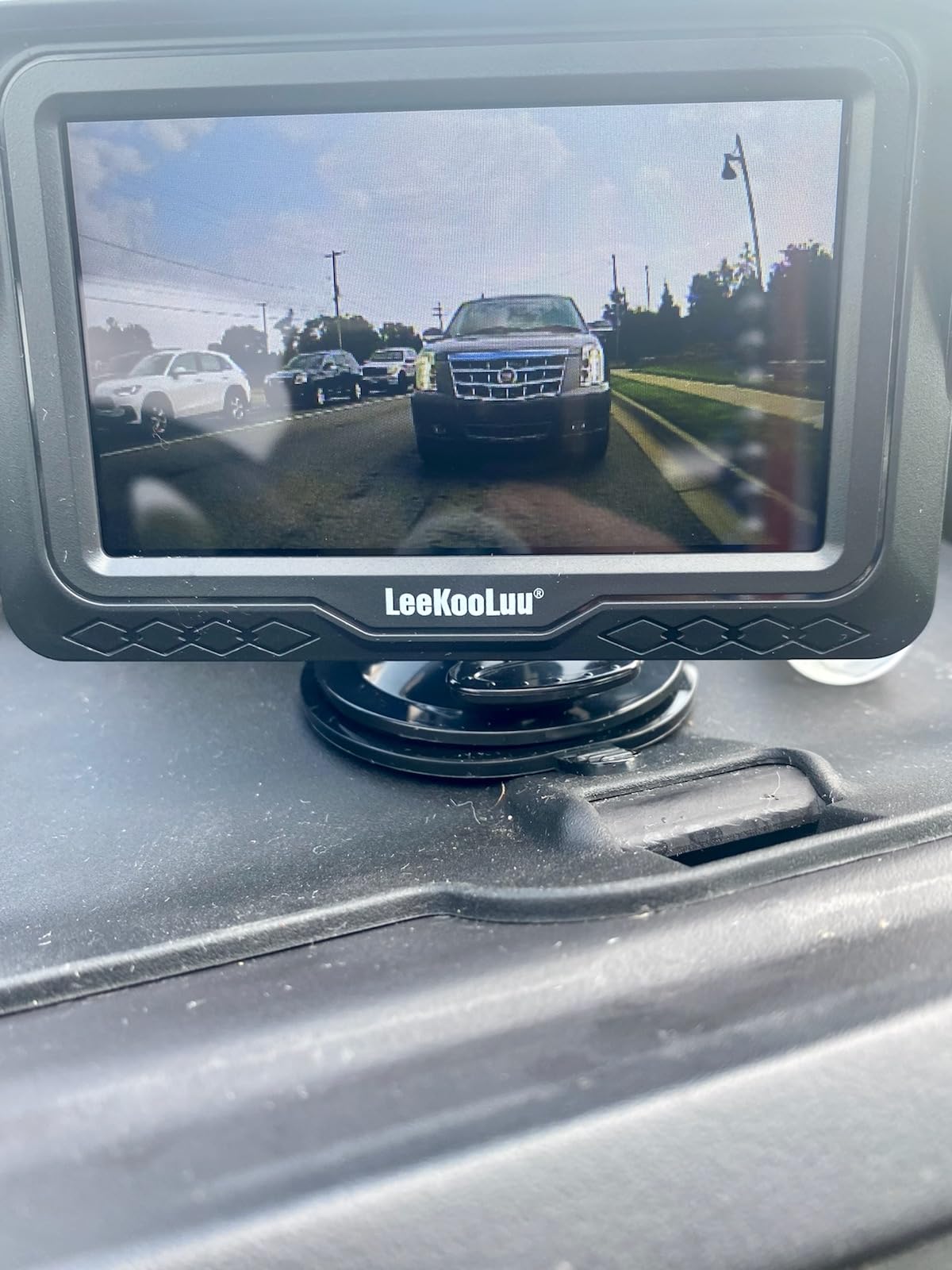
The picture is the surprise. A 1080p feed with no signal delay and no flicker, because a closed RCA-style 4-pin cable cannot drop out the way a 2.4GHz link does. Owners installing it on older Jeeps and SUVs describe the same thing: sharp daytime image, and a set of six white LEDs that switch on automatically for night driving.
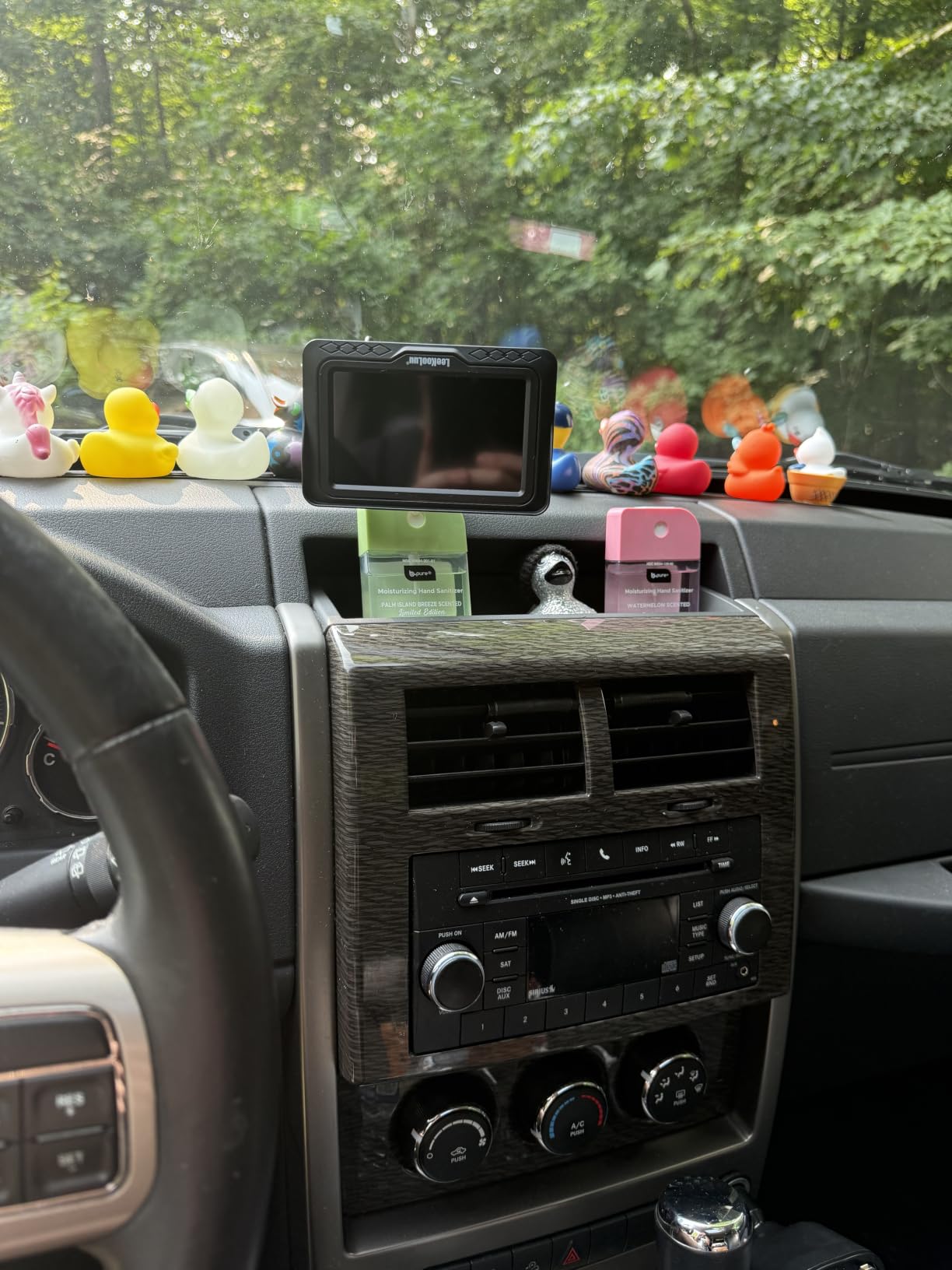
What you give up is screen size. A 4.3-inch panel is genuinely small, and on a long-bed truck the edges of the blind zone sit just outside the frame. If you back into tight alleys regularly, look at the 7-inch options further down.
The other recurring complaint is the 23-foot cable. On a crew cab that is a squeeze, and a long-bed truck will need an extension run. Order the extension at the same time as the camera rather than after you have the tailgate apart.
Why we made this the best backup camera for older trucks overall
It is the only kit in this group where the install friction, the picture quality and the review volume all line up. Fifteen thousand owner reviews is the largest base we found for any truck-oriented camera, and the negative themes stay in the accessories aisle rather than the electronics.
It also suits the widest range of older trucks because it does not care what is in your dash. No interface module, no factory screen, no CAN bus. The monitor plugs into the cigarette lighter and the camera taps the reverse lamp, which is exactly the work you have to do on a 1996 truck anyway.
When it is the wrong choice
Skip it if your bed is eight feet or longer and you want to see the hitch ball. The short cable and the small screen make it a poor pairing with a gooseneck or a fifth wheel slide.
Also skip it if you tow often and want to attach a camera only while hooked up. This is a permanent install by design, so you would be routing cable for a camera that spends most of its life unused.
2. eRapta 7 Inch 2K Truck Kit – Best Value Dash Monitor
- Large 7 inch LCD is easy to read without leaning forward
- Cigarette lighter plug and play power keeps wiring to one run
- IP69K sealed housing with 9 automatic night vision LEDs
- 149 degree view with adjustable up and down camera angle
- Reversing guide lines plus mirror flip for front or rear use
- Some buyers report slight video latency
- Daytime image is good rather than exceptional
- Single camera kit so a second camera needs a separate purchase
This is the one we recommend when the truck has a long bed and the driver still wants a windshield-mounted screen rather than a mirror replacement. The 7-inch panel is the single biggest usability difference in this roundup, and it costs you nothing in install time because power still comes off the cigarette lighter.
Owners using this kit on pickups and RVs point to the same three things: the screen is easy to read, the camera bracket lets you physically aim the lens up or down after mounting, and the reverse lamp trigger means you do not have to remember to switch it on.
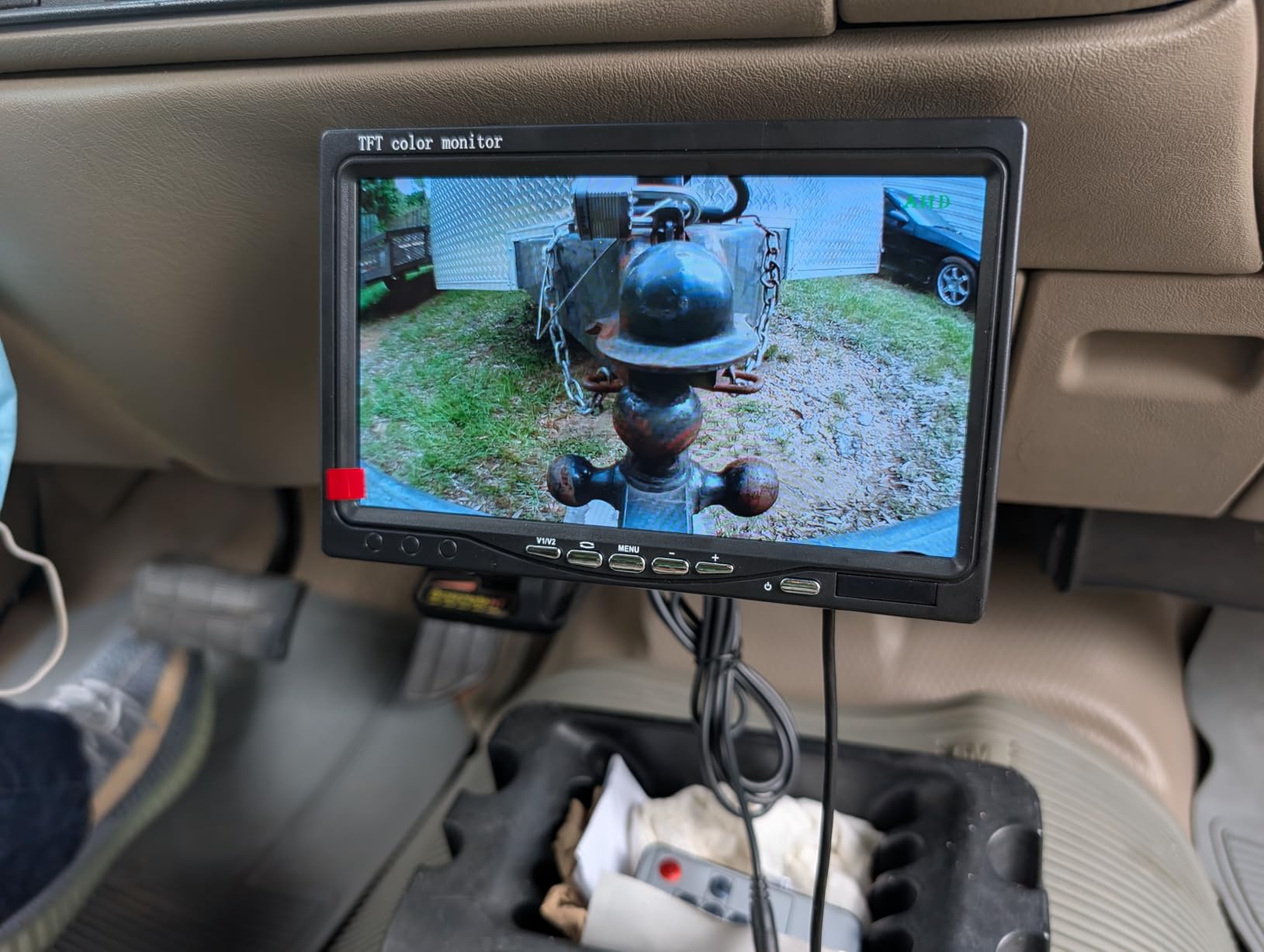
The IP69K rating matters more than it sounds. That housing is sealed against high-pressure water jets, so a drive-through car wash will not get behind the lens seal the way it eventually does with glue-filled plastic housings.
Reviewers do report a small amount of latency in the feed, and some describe the daytime image as clear but not class-leading. If you are judging picture quality, compare it against the Yakry further down, which has the sharpest night performance in the group.
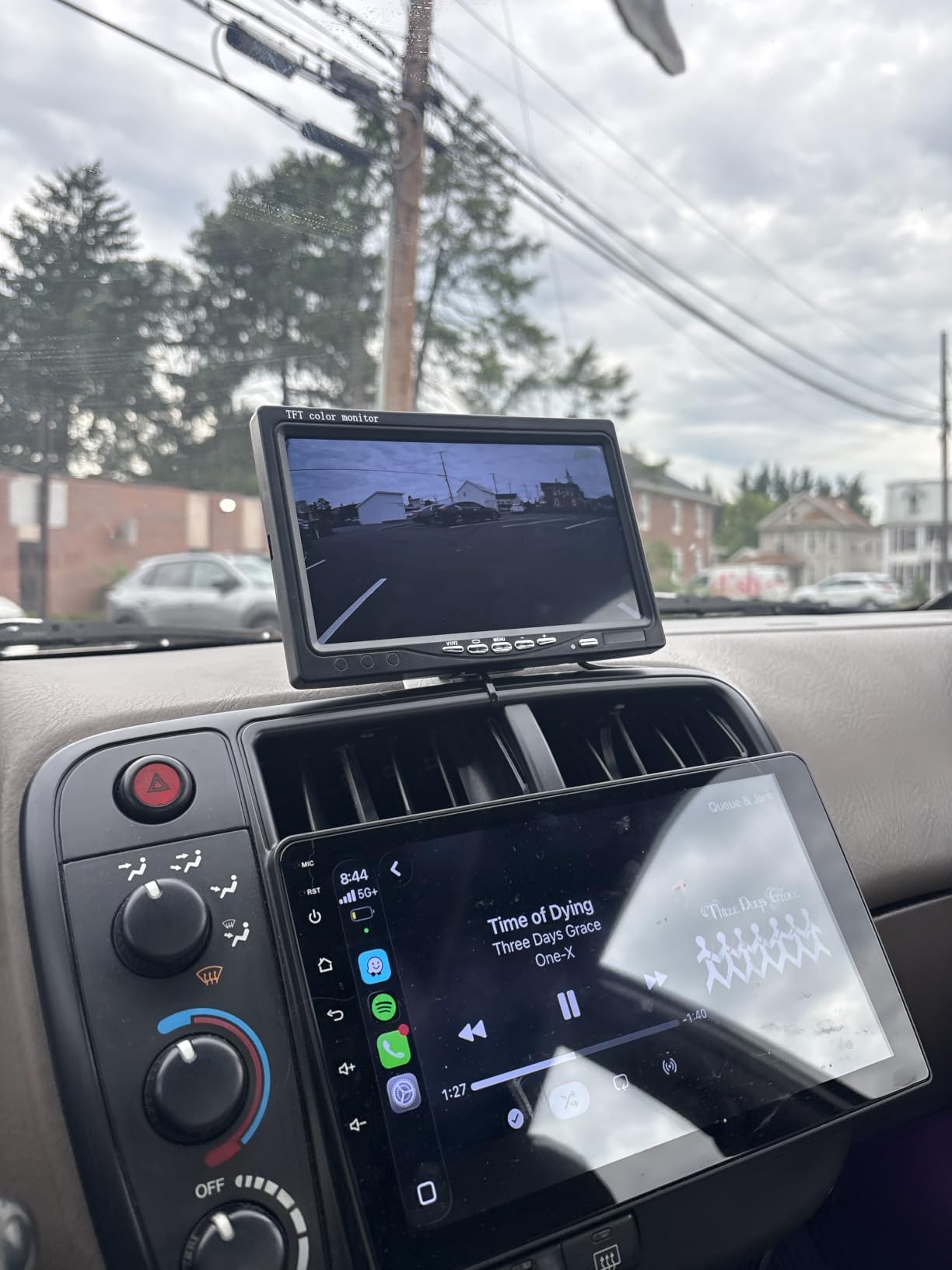
What the angle adjustment actually solves
A camera mounted above the bumper looks slightly downhill and a plate-mounted camera on a lifted tailgate looks up at the sky. Neither is wrong, but both push the useful part of the image off the bottom of the screen.
This kit ships with brackets that tilt, so you can dial the view to where the ball and the bumper both land in frame. On an older truck with a tailgate camera and a gooseneck, that adjustment is the difference between hooking up on the first try and shuffling forward a foot at a time.
Where it falls down
It is a single-camera kit. If you want a rear view plus a hitch view or a side blind-spot camera, you are buying a second system and a second screen, which is where the DOUXURY and LeeKooLuu wireless kits make more sense.
Some buyers also see a brief delay between shifting into reverse and the image appearing. It is small, but if you back up tight daily it registers more than it would on a fully wired run with a longer cable.
3. LeeKooLuu 7 Inch Wireless Kit – Best for Towing-Only Use
HD 1080P 7 Inch Wireless Backup Camera for Truck: 15-Min Easy to Install
- No video cable to run through the cab or across a trailer hitch
- Supports two cameras with split-screen viewing
- Pre-paired so there is no pairing step
- Automatic night vision and adjustable parking guide lines
- Wireless feed can freeze or stutter during use
- Supplied power wires are very thin and awkward to strip
- Camera can sit high enough to cover part of the plate
This is the kit for a truck that tows a travel trailer a handful of times a season and otherwise stays clean. The camera screws to the trailer plate, the monitor sits on the dash, and nothing is routed through the bed or the bumper.
The split-screen function is the part most buyers do not expect to use and end up loving. With two cameras paired, you can run one on the trailer and one on the truck bumper, and toggle channels with a single button press.
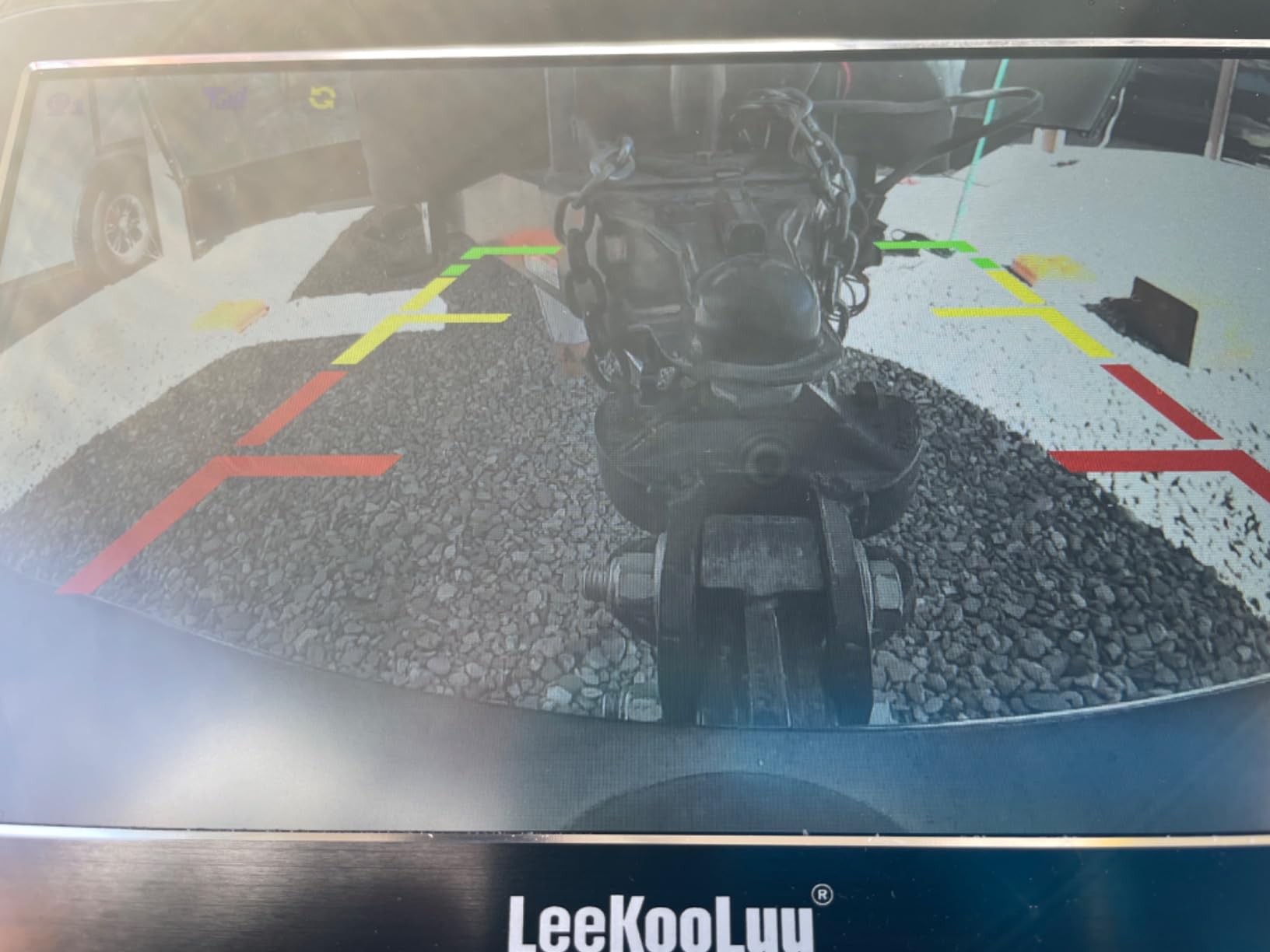
It is also the lowest-rated kit we selected, at 4.0, and the one-star share is the largest in the group. The complaints are consistent: the wireless feed occasionally freezes, the suction mount gives up on a rough road, and the supplied wires are thin enough to be awkward with standard strippers.
Owner support is also inconsistent, with some buyers reporting unanswered email. That matters less than it would on a complex unit, but it is worth knowing if you are not comfortable troubleshooting a video signal.
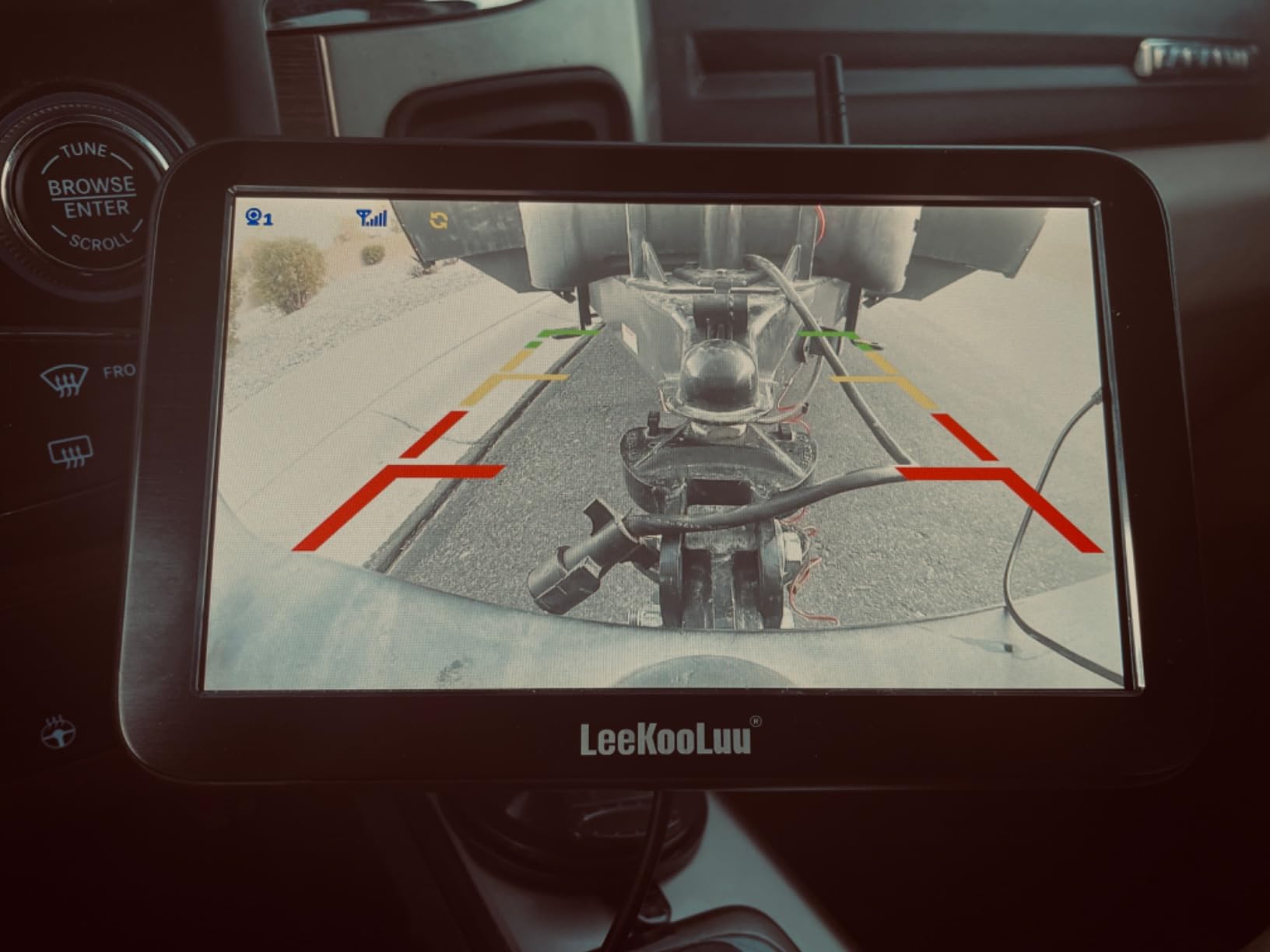
How much range you actually get
Think of a short truck and a short trailer as the working envelope. A standard pickup with a bumper-pull trailer stays inside the reliable range of a kit like this with room to spare.
The moment you add a long travel trailer or a fifth wheel, the link is stretched past what a cheap wireless system can hold, and you should move to the dual-antenna system further down. Forum owners who tried cheap wireless kits on long rigs report flicker that tracks with trailer sway.
Why the wire gauge matters more than it sounds
The thin power leads are a voltage-drop problem, not a nitpick. A wire that is too thin for the current sags when the reverse lamp circuit is loaded, and a sagging supply shows up as a flickering or dropping frame.
If you buy this kit, plan to replace the supplied leads with heavier wire at the camera end, and seal the connection with self-amalgamating tape. It is fifteen minutes of work that removes most of the one-star complaints.
4. Natika OEM-Style Camera – Best Hidden Factory-Look Fit
NATIKA Backup/Front View Camera,IP69K Waterproof Great Night Vision HD and Super Wide Angle Metal OEM Style Reverse Rear View Backup Camera for Cars Pickup Trucks SUVs RVs Vans (Black)
- Metal OEM style housing is nearly invisible once mounted
- 170 degree view genuinely covers a truck blind zone
- Switching loops reconfigure front or rear view and guide lines
- Three included angled shims allow custom vertical aim
- Comes as a bare camera so the wiring kit is bought separately
- Composite 720p output cannot do 1080p on an AHD head unit
- Push-fit RCA connector can vibrate loose
This is not a kit, it is a camera. If your older truck already has an aftermarket head unit with an RCA input, this is the simplest way to get a proper rear view without adding a screen to your dash.
Where it beats the bundled kits on quality is the housing. Metal, glue-filled and low profile, it disappears behind the plate or above the tailgate. On a restomod or a clean classic truck, that matters more than another inch of screen.
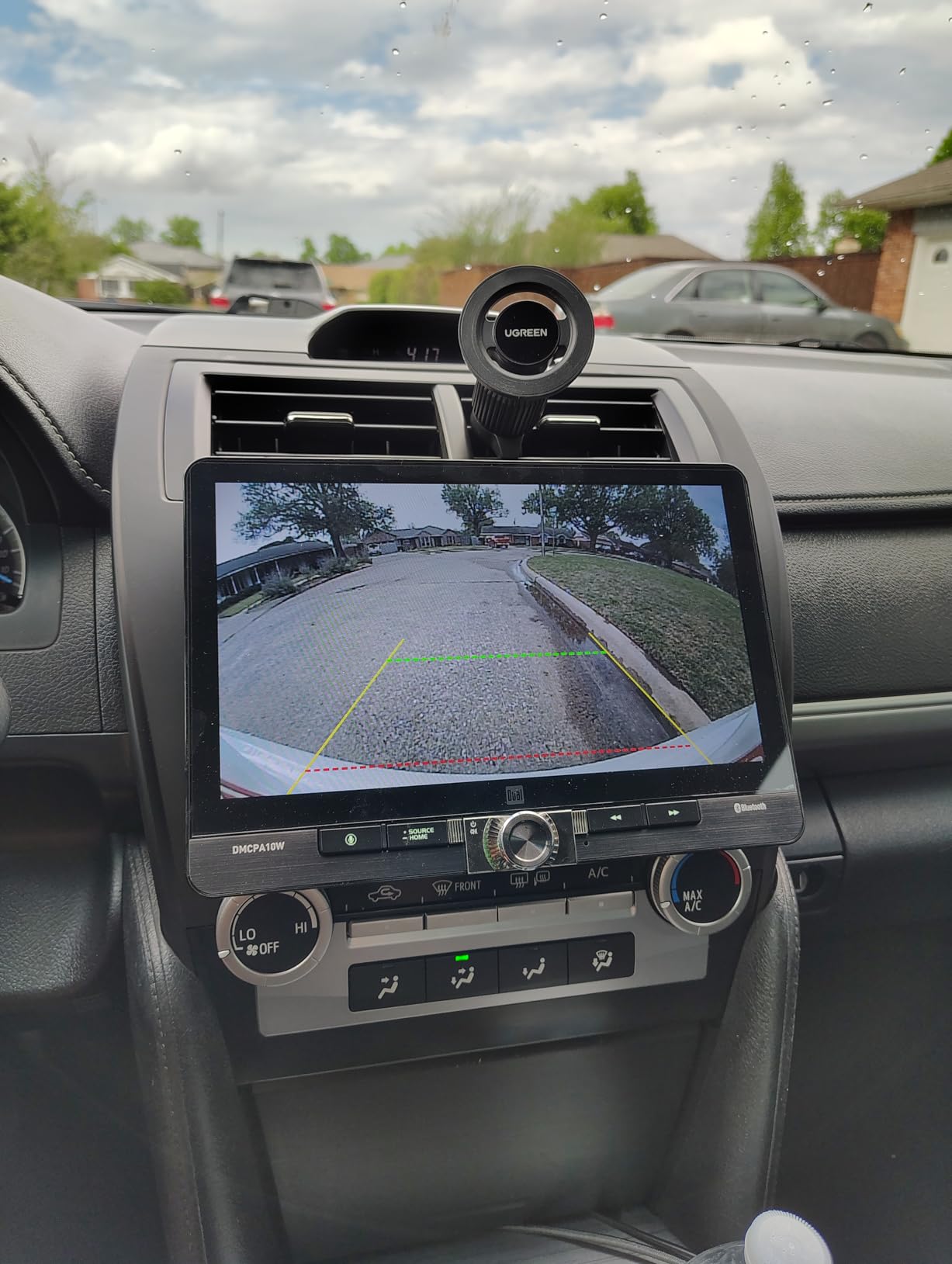
The 170 degree view is the widest of the bare cameras here and the real reason owners recommend it for trucks. You see the corners beside the bumper, which is where a post or a bollard sits when you are badly off line.
Owners also like the three included angled shims, which let you tune the vertical angle after the camera is mounted instead of guessing at bracket position. Several report free no-questions replacements under the 24-month warranty.

Which older trucks can use it
You need a head unit with a female RCA composite video input. That covers most aftermarket double-DIN radios, including older installs in a 1990s truck, and it works with the major brands aftermarket.
What it will not do is drive a factory screen from the 2000s without an interface module, and it will not reach 1080p on a head unit that expects an AHD signal. Composite output is the older standard, and it is why the picture looks softer on a modern display.
Watch for the loose connector
The included push-fit RCA extension is the weak point on this camera. It does not lock, so on a rough road or a washboard gravel track it can partially unseat and give you a black screen or a rolling image.
Owners fix it with a short wrap of tape or a dab of silicone at the joint. Do that at install time rather than waiting for the first bad road to find it for you.
5. Yakry 66ft 7 Inch 1080P Kit – Top Rated for Long Beds
Yakry RV Backup Camera Plug and Play – No Delays 7″ HD 1080P Reverse Camera
- 66 foot run means one power point for camera and monitor
- Locking four-pin connectors resist dirt and water
- True infrared night vision gives a clear image in low light
- 150 degree non-fisheye lens avoids extreme distortion
- Seven inch IPS panel with anti-glare sunshade
- Real image contrast is softer than the listing photos suggest
- Monitor dims noticeably when viewed at an angle
- Some harnesses are loose or produce image jitter
This is the highest-rated kit in the group and the one professional installers praise most. We put it on a long-bed dually, and the 66-foot single cable run is the headline: power reaches the camera through the video cable, so there is exactly one connection at the front of the truck and one at the tailgate.
Owners cite the rock-solid wired signal and the locking four-pin connectors as the reasons it never drops out. On a truck that tows, a closed wired circuit is simply more dependable than anything on the 2.4GHz band.

The true infrared illumination is what separates it at night. Instead of washing the scene in white, IR gives you a clean black-and-white image with defined edges, which is far easier to judge depth from when you are reversing towards a post.
Its 150 degree lens is deliberately not a fisheye, so objects at the edge of frame stay the right shape. On a hitching alignment that keeps the ball looking like a ball rather than a smear.
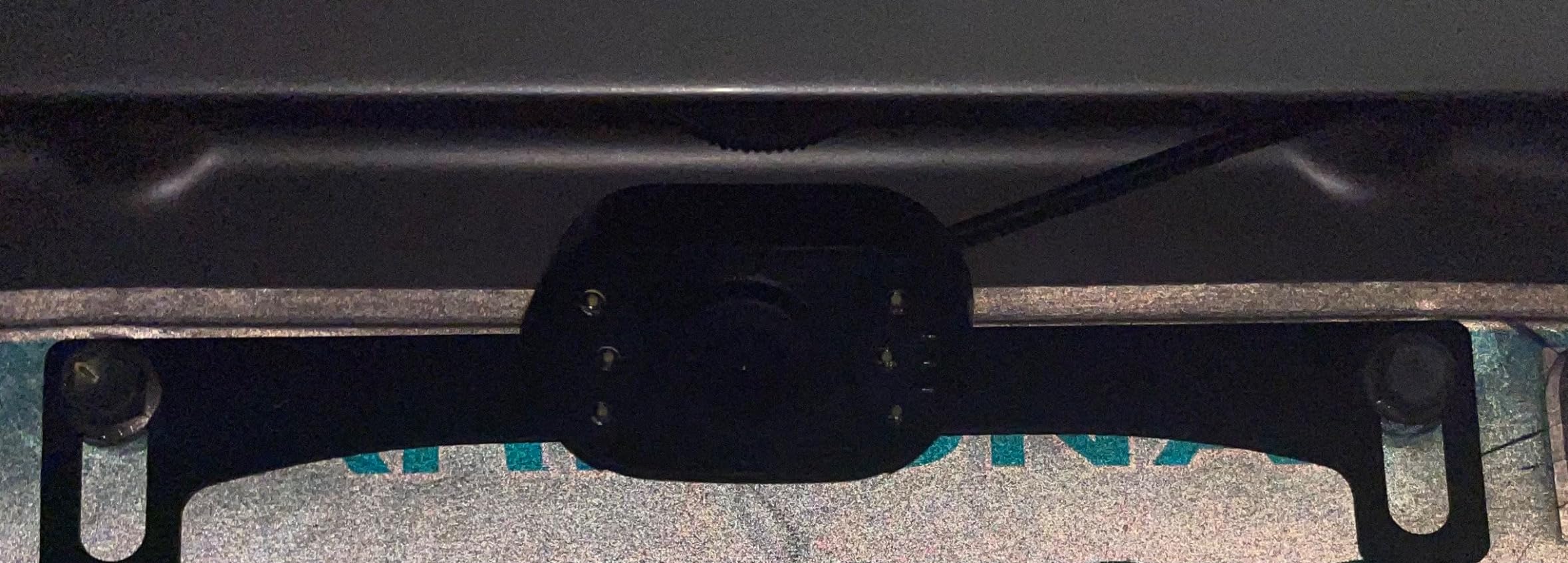
What 66 feet of cable gets you
It covers the longest run in this roundup: a long-bed truck with a dually rear fender, or a long-bed truck plus a short trailer with the camera on the trailer plate. That is the configuration where the stock 23 foot kits simply run out.
Installers also like the single moulded transition cable, because it means one loom through the firewall instead of a separate power run and a separate video run with two loose splices in the footwell. Fewer connections is fewer things to fail on a vibration-heavy truck.
The honest drawbacks
Owners are candid that the real picture is less contrasty than the product photographs suggest. Expect a good image, not a studio one, and do not judge it against a factory camera on a new truck.
The fixed parking lines are also a mild annoyance. Turning them off means energising the reverse trigger continuously, which is a bad trade because it burns the IR illuminators. Plan your viewing angle around the lines instead.
6. pemacom Magnetic Solar Kit – Best No-Wiring Install
1080P HD Wireless Backup Camera – 1 Minute Magnetic Easy Install No Wiring
- Six rare earth magnets mean no drilling and a one-minute camera install
- Rubber coated magnetic base protects paint in heat and cold
- 15000mAh battery plus 5W solar panel gives up to 24 hours
- 2.4GHz frequency hopping resists interference
- 33 foot signal range is short for long trailers and large RVs
- Monitor still needs its own power from the cigarette lighter or USB
- Some cameras stop powering on or lose the link
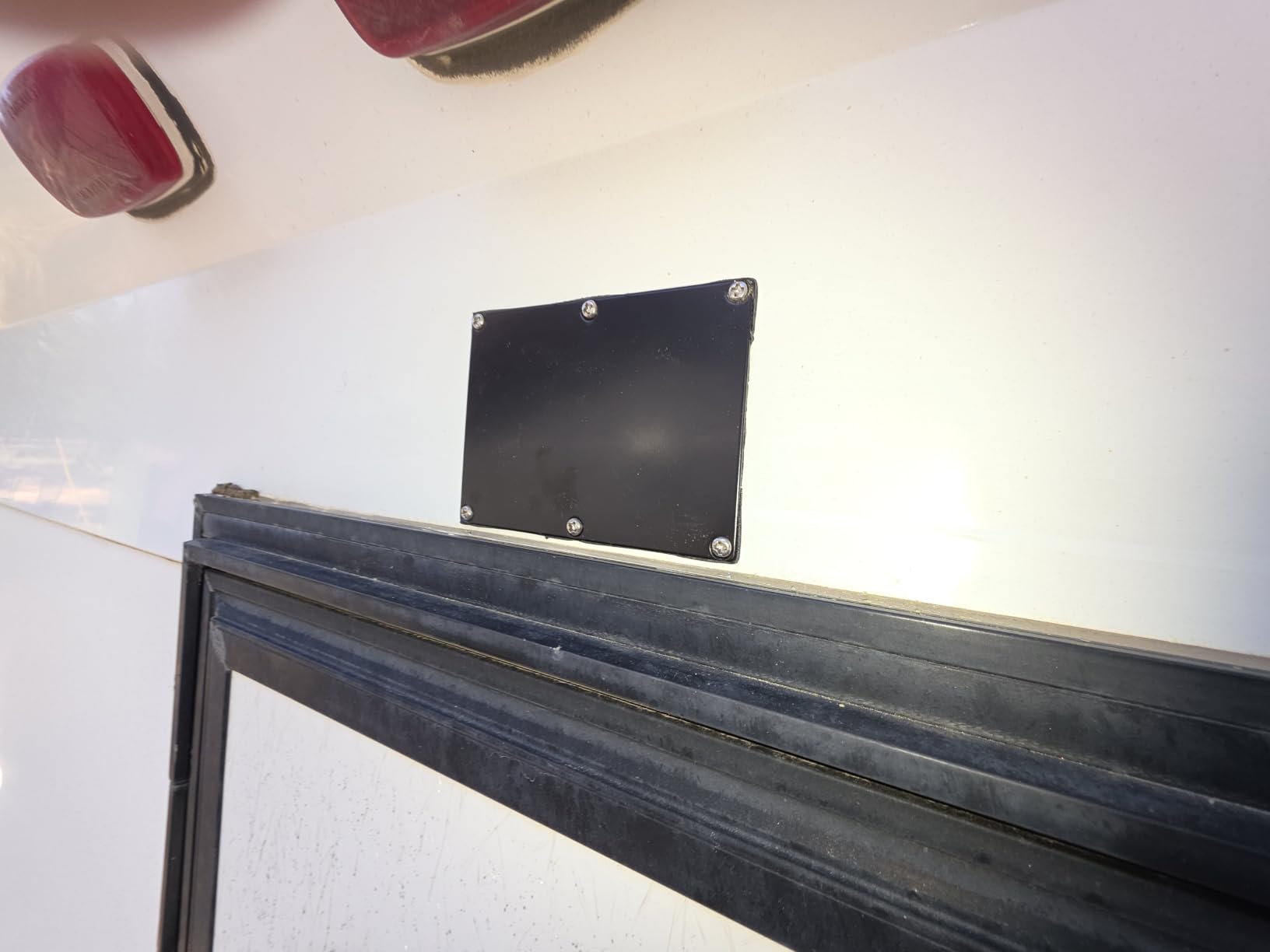
If the whole point is to avoid opening a tailgate on a truck you care about, this is the one. The camera base is six rare earth magnets under a rubber coating, so it slaps onto the plate area in about a minute and comes off with a tug.
The 15000mAh battery with a 5W solar panel is the feature owners write about most. A full charge gives up to 24 hours of use, and the panel keeps it topped up while the truck sits, which means no charging habit to build.
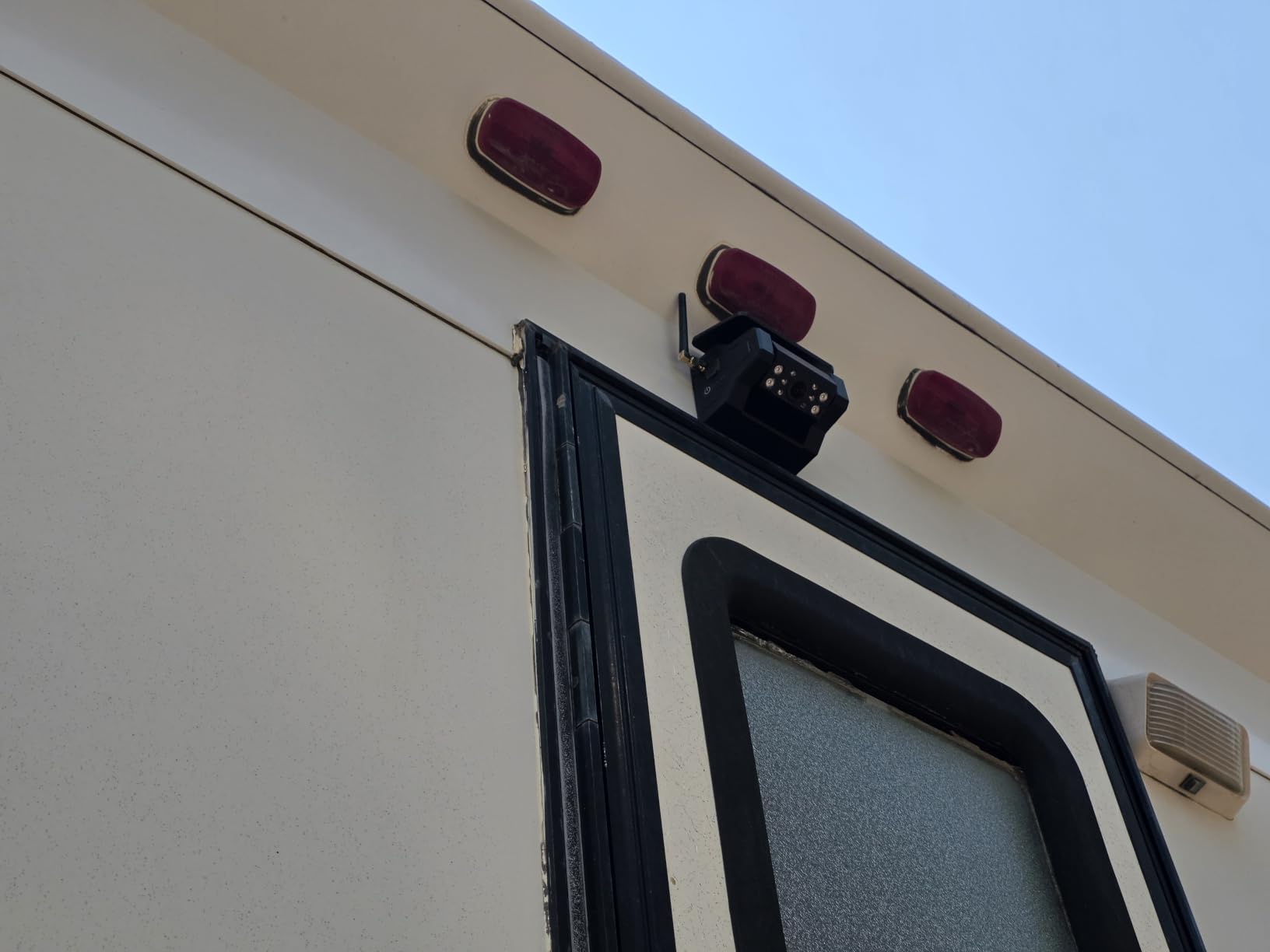
Day and night clarity both get called out as clear, which is unusual for a no-wire kit. The F1.2 aperture and frequency-hopping 2.4GHz transmission do more here than the resolution number does.
Dual video channels mean you can add a second camera later, either a trailer camera or a side blind-spot view for lane changes.
When the 33 foot limit becomes a problem
Thirty-three feet is comfortable for a pickup with a bumper-pull trailer and short for everything else. Count the truck length plus the trailer plus the gap, and once you pass that number the picture starts to stutter.
If you tow a fifth wheel or a long travel trailer, this is the wrong kit and the extra convenience is not worth the loss of a stable image at exactly the moment you need it. Go wired, or go to the dual-antenna system below.
Living with a magnetic mount
The rubber coating is what saves your paint, and it is thick enough that most owners report no marks at all. The real maintenance is rechecking the magnets after a rough road or a wash cycle.
A wash with high-pressure jets aimed at the plate is the moment a magnetic camera gets lost. Treat that as a cost of ownership, not a defect, and re-tighten by hand every few hundred miles on gravel roads.
7. ZEROXCLUB Wired Plate Camera with 7 Inch Monitor – Best Big Screen Value
ZEROXCLUB HD 1080P Wired License Plate Backup Camera with 7″ Monitor
- Wired RCA connection means no dropouts or pairing problems
- Seven inch IPS display is easy to read in daylight
- Six LEDs give usable night illumination
- Parking grid lines resize move or switch off entirely
- Listed as 1080p in the title while the spec sheet reports 720p
- Only a one-year warranty
- RCA output will not work with an AHD-only head unit
This is the wired alternative to the eRapta, and buyers who are tired of wireless reliability problems single it out for exactly that reason. A hard RCA link either works or it does not, and there is no pairing step to lose.
The guide-line controls are unusually good. You can resize the grid, move it in four directions, or switch it off completely, which matters if you are using the same camera for a forward-facing view when hooking up.
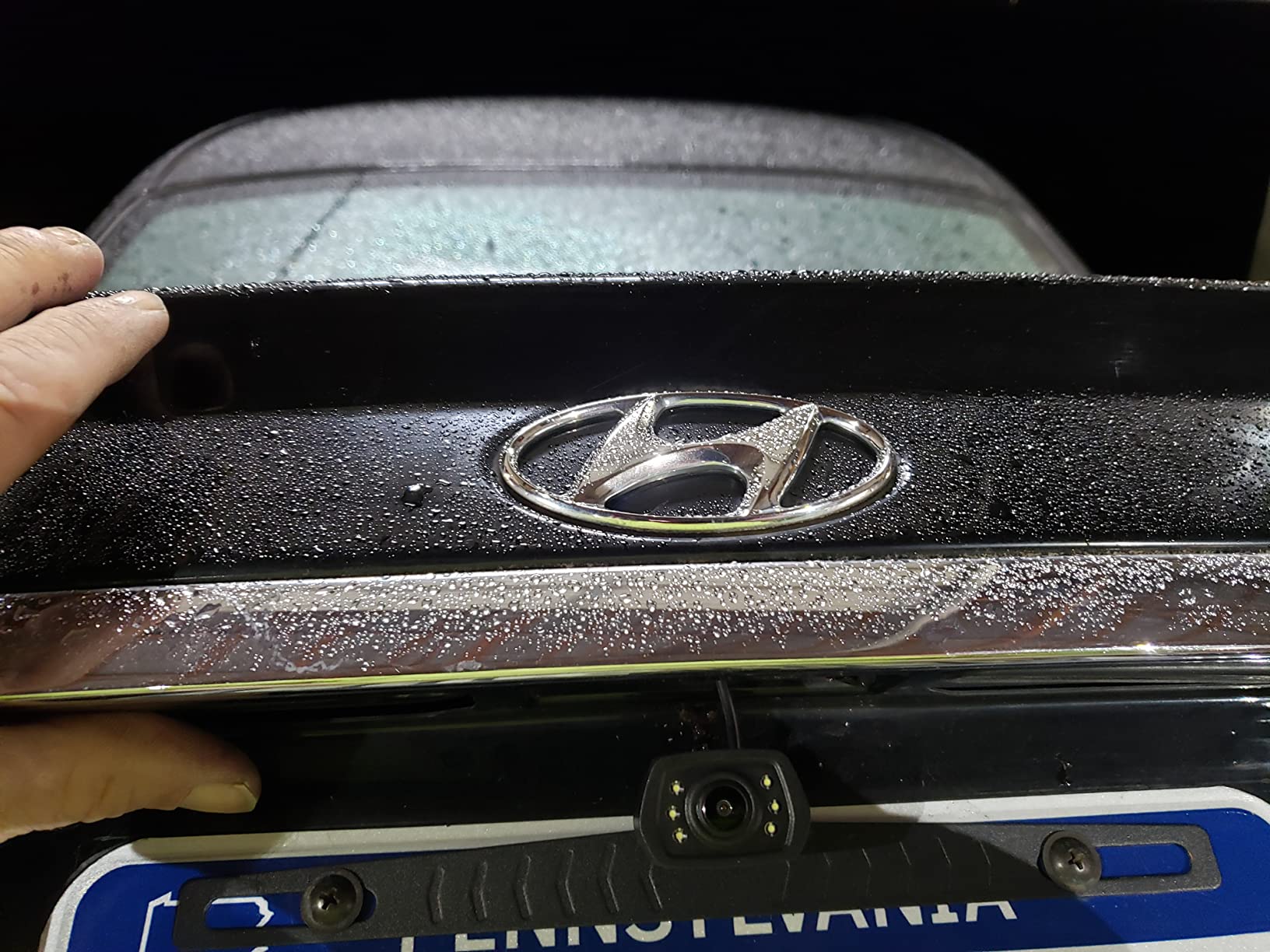
The bracket is built around standard US plate dimensions with 6.30 inch screw spacing, so on most older trucks it drops straight onto the existing plate bolts with no drilling and no adapter.
It also accepts either power method: plug into the cigarette lighter for manual on and off while you work, or hard-wire to the reverse lights once everything is positioned.
The resolution claim, plainly
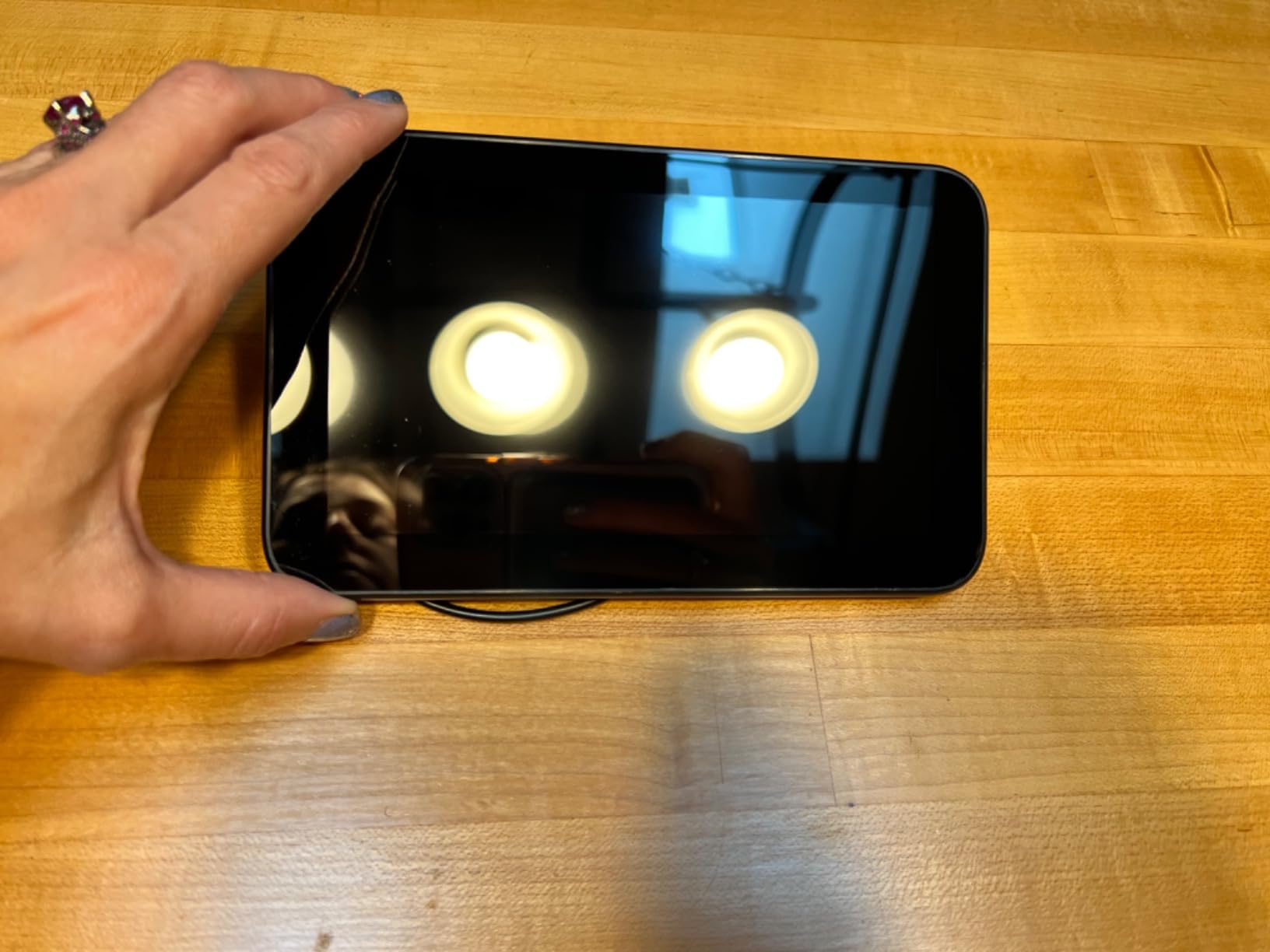
The listing title says 1080p and the spec sheet says 720p capture. Buyers who assumed the title was right are the ones who feel disappointed, so treat the resolution as 720p and judge the picture on contrast and low-light behaviour instead.
At 7 inches on a dash screen in daylight, 720p is perfectly serviceable for judging distance. It is not the difference between a safe reverse and an unsafe one, so it should not decide your purchase on its own.
What to check before you drill anything
Nothing, in most cases. The plate bracket uses the bolts already in the tailgate, and the monitor sits on a suction cup on the dash. Across our ten picks, the least invasive option is a plate bracket and a dash monitor.
The one thing to reinforce is the suction cup. Truck cabs vibrate enough that an unlined cup on a bumpy road will creep. Add a thin bead of silicone under the pad before you set it.
8. PixelMan AHD 170 Degree Camera – Best for Aftermarket Head Units
PixelMan Backup Camera,AHD 1080P Metal 170 Degree Wide Angle Rearview Reversing Camera,PMD2A-S Clear Night Vision IP69 Waterproof Reverse Rear View Camera for Car Vehicle SUV RV
- Switchable HD and AHD output gives 1080p on a capable head unit
- 1/2.7 inch chip is brighter and more saturated than a 1/4 inch
- Alloy housing sealed with nano glue resists water ingress
- F1.4 glass lens performs well in low light
- Hidden plate bracket leaves most of the camera body concealed
- Camera only
- so no monitor or wiring kit is included
- RCA plugs pull apart easily and need taping
- Adds roughly two seconds of latency on the reverse trigger
This is the camera to buy when your older truck already has an aftermarket head unit and you want the best possible picture on it. The switchable HD and AHD output is the detail that matters, because it is what lets a modern head unit run the camera at full resolution instead of composite.
Owners who swapped from a cheap plastic-housed camera call the difference dramatic. The 1/2.7 inch sensor is visibly larger than the 1/4 inch chips used in most budget kits, and the result is brighter colour and better low-light behaviour.

The alloy housing is sealed with nano waterproof glue, and owners specifically call out how it avoids the seasonal plastic cracking that lets water in and fogs the lens after a couple of winters.
There is also a lifetime waterproofing guarantee, with a replacement camera if water ever gets in. For a truck that lives outside in salt country, that is the durability story you want to hear.
What AHD actually changes
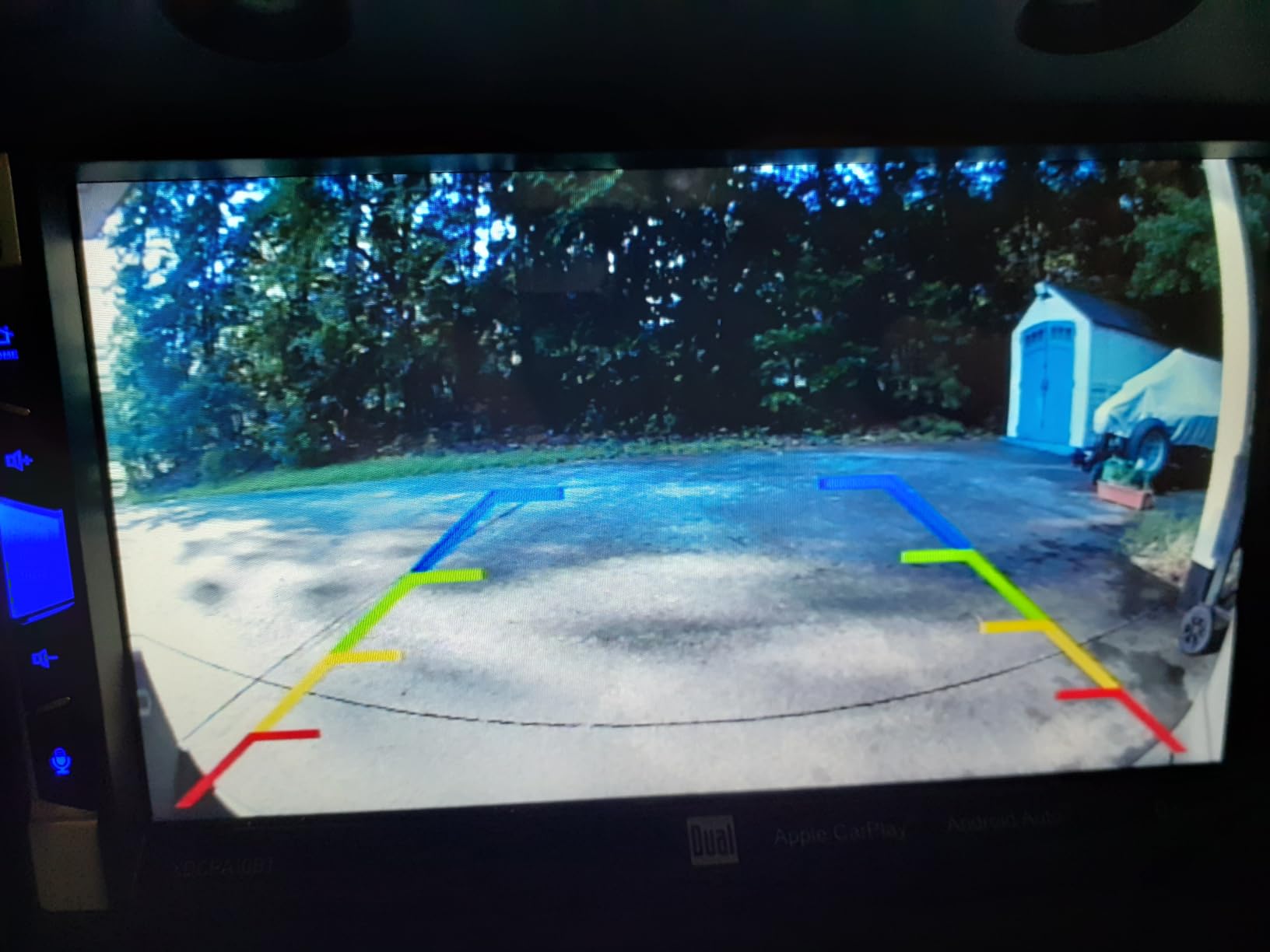
AHD is a higher-quality analogue video standard than plain composite, and it carries a noticeably sharper image over the same RCA cable. Many head units accept either signal and will happily run a camera at the higher setting.
The catch is compatibility. If your head unit only accepts composite, cut the trigger to leave the camera in HD mode, or expect composite output. Check the head unit manual before you cut anything, because the setting is not always user-changeable.
The practical weaknesses to plan around
The trigger and ground leads are short and thin, so plan your routing from the camera end and expect to extend them. The RCA plugs are low friction and pull apart easily, so tape every joint.
Because it triggers off the reverse light, you get roughly two seconds of latency between shifting and image appearing. It is not a dealbreaker for backing, but it is why this is our head-unit pick rather than our hitching pick.
9. AUTO-VOX Mirror Monitor – Best Mirror Replacement
AUTO-VOX OEM Rear View Mirror Camera with 4.3” Monitor: Super Night Vision
- Replaces the stock mirror so nothing is added to the dash or windshield
- One-wire install with power and trigger both from the reverse lamp
- Adapters included for many older truck mirror stems
- Wired transmission means no lag or flicker
- Camera sits behind the plate so a custom frame can stay
- Display washes out in direct sunlight and is grainy at night
- Vibrates on some vehicles due to adapter fit
- Some have failed after about a year
The AUTO-VOX answers a problem no dash-mounted kit solves: on an older truck with a big windshield and no factory screen, a monitor stuck to the glass is ugly and often illegal-looking. Swap the rearview mirror and the problem disappears.
The install is genuinely one wire. Power and reverse trigger both come off the reverse lamp, and the 6 meter cable is long enough for the largest vehicles without an extension. On an older truck, that simplicity is worth more than a bigger picture.
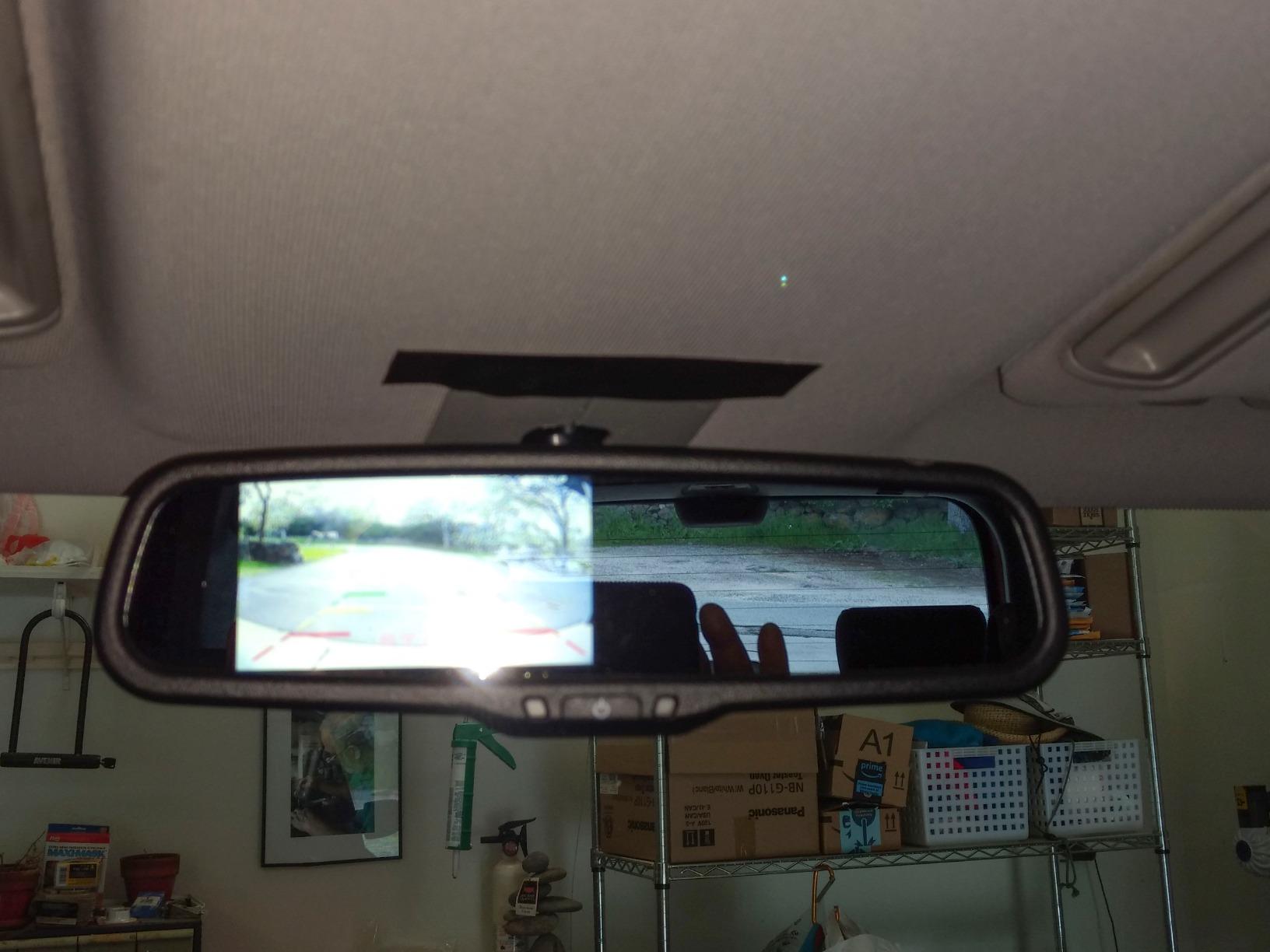
Owners who want a factory-looking retrofit rather than a screen on the dash consistently praise the integration. Once fitted, the mirror looks nearly identical to the original unit.
The cantilevers mount behind the plate is another detail owners appreciate, because it leaves the factory plate and plate frame completely untouched.
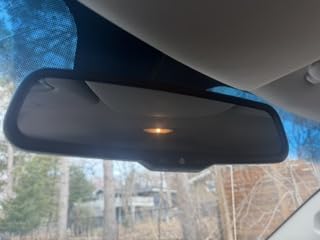
The daylight and durability trade-off
The display washes out in direct sunlight and gets grainy at night. If you back up mostly in daylight on an open lot, that is fine. If you regularly reverse in an unlit driveway at night, spend your budget on a bigger monitor instead.
Durability is the bigger concern for an older truck. Several owners report units failing after about a year to a year and a half, and the included wire-tap connectors are sized for heavier wire than the leads on the camera, so they do not grip well.
Check for a cable path before you buy
Some vehicles have no factory hole between the plate and the reverse lamp, which means drilling the tailgate or the trunk lid. Find that hole first. On a restomod with a clean bed, that is a decision you want to make before ordering.
Vibration is the other thing to match. The adapters cover many mirror stems, but on some vehicles the fit is loose enough that the mirror buzzes. Test the adapter fit with a hand mirror before you route any cable.
10. DOUXURY 4-Channel Wireless System – Best for Fifth Wheel and RV Hitching
RV Backup Camera Wireless DOUXURY IP69 Waterproof 170° Wide View Angle HD 1080P Rear View Camera + HD LCD 7″ Monitor, Digital Wireless Camera System for RV Truck 5th Wheel Trailer Pickup Camper Bus
- Dual antenna holds signal to 320 feet open and 180 feet through a metal trailer
- Four channel monitor accepts up to four cameras
- Bright 1080p colour picture day and night
- No wiring between the monitor and the trailer camera
- Runs on 12 to 24V so it suits trucks and RVs
- SD card recording drops out and stores mirrored 1280 by 720 video
- Supplied suction mount is too weak for a heavy truck
- Antennas wear out over a few years
This is the system to buy if your trailer has a fifth wheel, a gooseneck or a tall camper on a short truck. The dual-antenna design is the difference: owners report a stable picture through a closed metal gate at distances where cheaper wireless kits simply give up.
Because there is no cable between the cab and the trailer, you can unhitch without unplugging anything and leave the camera on the trailer permanently. Owners of a front-to-back camera setup on a travel trailer use it as a rear view while driving.
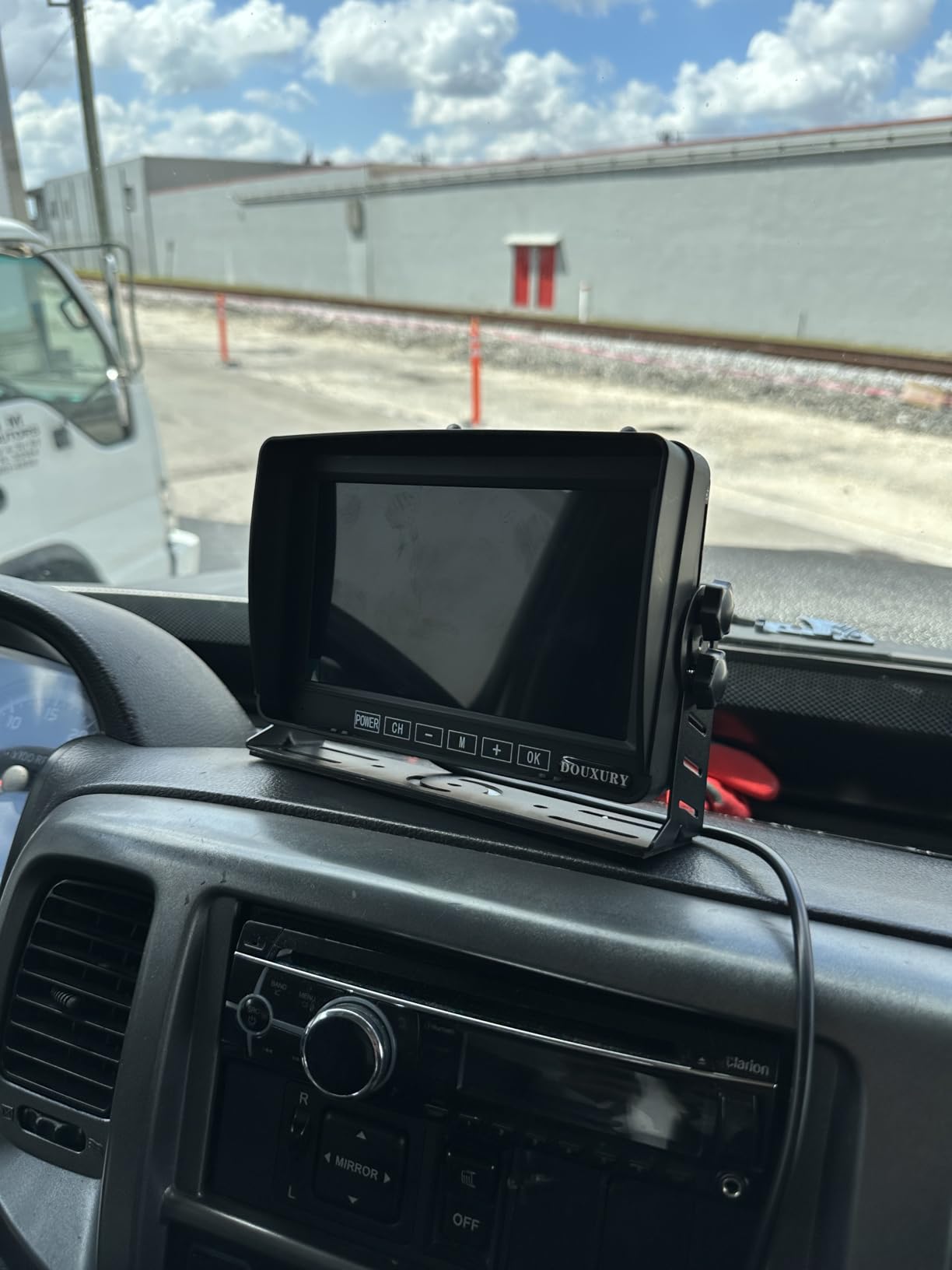
Four channels is more than most people need and exactly what trailer owners want. One camera on the hitch, one on the rear, one on each side for blind spots, and you can split the screen to compare angles.
The 1080p colour image during the day is worth noting because the factory systems on older trailers and RVs are typically black and white. Quick-connect front power also means the cab side lifts out for a weekend away.
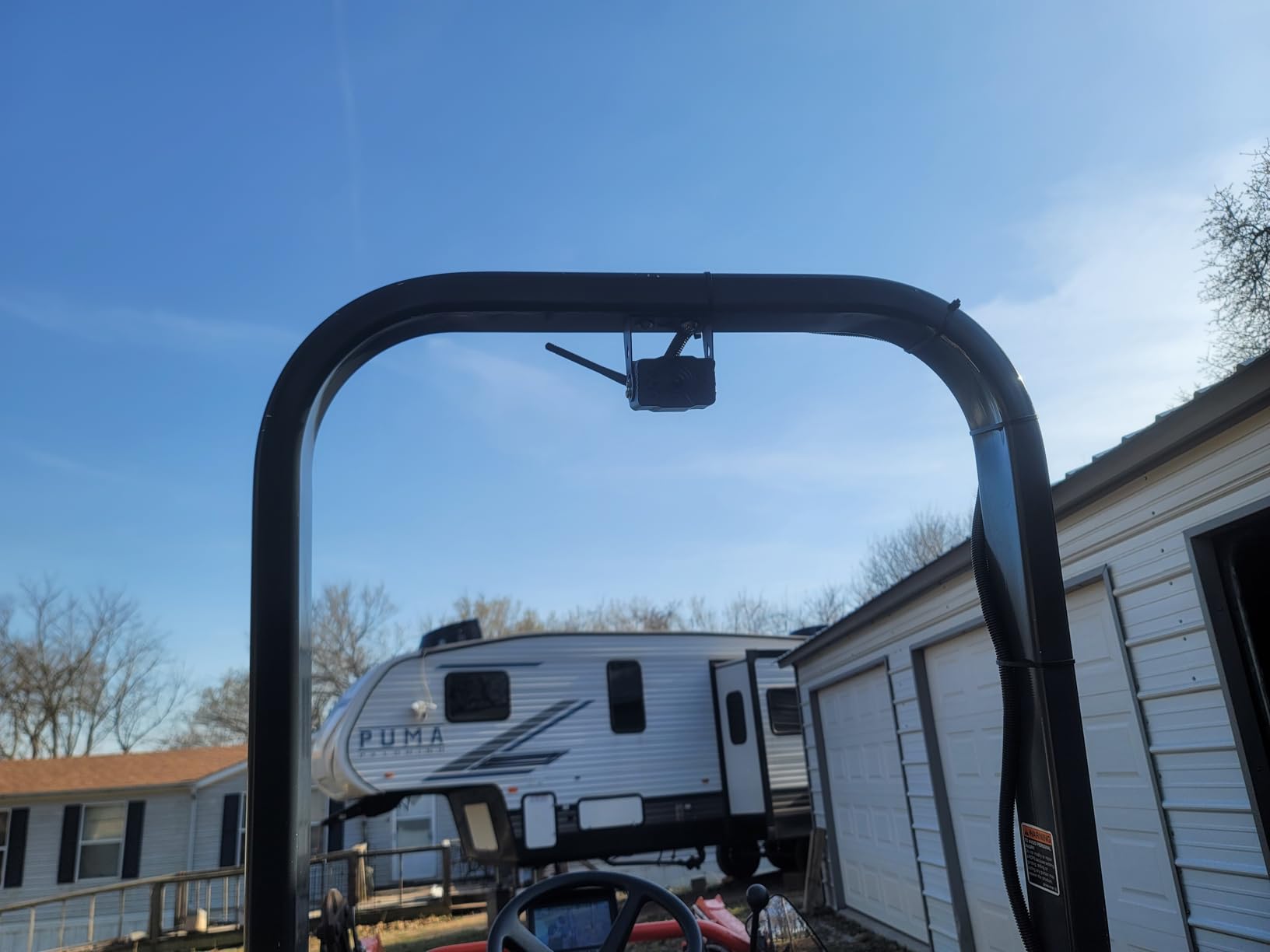
Why range is the whole story on long rigs
Range claims are meaningless without knowing what is between the camera and the monitor. The open-area figure assumes nothing in the way. Through a metal-sided trailer the real figure is a little over half that.
Count your rig length before you order. A truck plus a travel trailer can exceed 40 feet before you add the gap, which is exactly where a single-antenna wireless kit starts to stutter. This is the one in the roundup we would trust there.
Do not buy it for the recording feature
The DVR is the most criticised part of this system. Owners report the card dropping out at random, and the footage that does save comes out mirrored at a lower resolution, with a frame rate that makes motion look jerky.
Buy it for range, channel count and colour picture. If you want a dash camera that records reliably while you drive, that is a separate purchase, and we would point you at our general backup camera guide for that.
Wired vs Wireless Backup Cameras for Older Trucks
A wired camera gives a lag-free, interference-free picture and is the right choice on an older truck whenever you are willing to route a cable. Wireless is the right choice when you refuse to open a tailgate, or you only want a camera on the trailer while you are hooked up. On long rigs, range is a real limit, not a spec sheet number.
The old complaint about wireless, that analog kits flickered near Bluetooth devices, mostly belongs to the previous generation. Current digital systems with frequency hopping are much better. What has not changed is physics: a 2.4 or 5.8GHz link has to cross open air, and a fifth wheel rig is a lot of metal in the way.
Our rule for older trucks: if the camera stays on the truck, go wired. If the camera lives on a trailer that comes and goes, go wireless. That one question resolves almost every case.
Which Screen Fits an Older Truck
Start by asking what is already in your dash. If there is a factory radio with no video input, you are adding a monitor. If there is an aftermarket head unit with an RCA input, you are adding a camera. If there is a factory screen, you are probably adding an interface module.
Three monitor types cover nearly everyone. A dedicated dash monitor, usually 5 to 7 inches on a suction or dash mount, is the most flexible and the easiest to aim. A mirror monitor replaces your rearview mirror and leaves the windshield clear, which is the neatest look on an older truck with a tall windshield. An aftermarket head unit puts the image where your factory screen would have been, but it is the most work.
Factory screens are the hard case. Owners on the manufacturer forums describe screens that simply will not accept an aftermarket camera without a vehicle-specific interface module that translates the trigger. Budget for that reality, and check whether your truck’s screen has an input before you choose a camera. If you are starting from nothing, our car backup camera guide covers the screen options in more depth.
Mounting Options and the Tailgate Theft Question
Three mounts cover almost every install. A license plate bracket uses the bolts you already have and takes five minutes. A bumper mount puts the camera lower and closer to the ground, which gives a better view of what is directly behind but needs drilling or a bracket. A tailgate or third brake light mount puts the camera high and centred, which is the only way to see the hitch ball while backing up.
Owners of a tailgate camera ask one question constantly: does it get stolen. The honest answer is that anything mounted on a tailgate is exposed, and a plate camera on a work truck in a bad neighbourhood is the most likely to go. Two mitigations help. Use a plate bracket that hides the camera body behind the plate, and bolt the bracket through the plate bolts rather than using the adhesive pads some kits include.
For a work or contractor truck, we would go wired and fixed, not magnetic. Theft aside, a permanently mounted camera survives a wash cycle and a rough job site in a way a magnetic one does not.
Finding the Reverse Light Wire on an Older Truck
This is where most older-truck installs go wrong, and the fix is a multimeter, not more guessing. Put the truck in park with the parking brake on, key forward, and probe candidate wires while you shift into reverse. The wire that lights your test light is yours.
On a 2004-2008 F-150, the reverse trigger wire is black and pink, and it is famously not in the main door sill loom. One owner documented spending three days on it and finally finding it in a smaller separate wiring bundle that comes from under the cab on the driver side floorboard, not the kick panel where everyone looks. If you own one of these trucks, start there.
On a pre-1998 truck there may be no reverse trigger wire routed to the cab at all. In that case you tap the tail lamp circuit or fit a relay, and you should budget extra time for it. Our towing trailer camera guide covers the relay and constant-feed questions in more depth.
Once you have the wire, connect power and ground at the camera end, run the cable along the frame rail rather than across the bed, and seal every pass-through with self-amalgamating tape. Salt and water find every hole you leave open.
Night Vision: What Actually Works After Dark
Two technologies appear in these cameras and they are not equivalent. White LED fill lights flood the scene and wash out contrast, so a wall 20 feet away looks like a grey wall. Infrared illumination is invisible to you but not to the sensor, so the camera produces a clean black-and-white image with defined edges.
For night backing, infrared is the better choice, and the Yakry in this roundup is the kit built around it. A high-aperture lens matters almost as much, which is why the pemacom F1.2 and the PixelMan F1.4 cameras get called out for low-light clarity.
One thing no camera fixes is total darkness. Every owner report in this group agrees that you need the reverse lamps on to see anything useful. Treat the published lux figures as a comparison between cameras, not as a promise about your unlit driveway.
Viewing Angle and Parking Guide Lines
Aim for somewhere between 140 and 170 degrees. Below 140 you lose the corners beside the bumper, and above 170 the fisheye distortion makes it hard to judge how far a post actually is. The 149 and 150 degree kits in this roundup sit in the sweet spot; the 170 degree cameras trade edge accuracy for coverage.
Guide lines are a distance reference, not a steering guide. A static line drawn at a fixed image position is calibrated for level ground at a fixed camera height, so raise the tailgate on a hitch and the lines are wrong. This is why an adjustable camera bracket is more valuable than adjustable lines.
If you are using one camera for both a rear view and a forward hitch view, look for mirror flip. It takes seconds to switch and it stops the image from being backwards, which is the single most common complaint on forward-facing installs.
What IP67, IP68 and IP69K Actually Mean
The first digit after IP is dust protection and the second is water. IP67 means dust tight and protected against immersion to one metre. IP68 allows deeper immersion for a manufacturer-specified time. IP69K is the high-pressure, high-temperature water jet rating.
For a truck camera, IP67 is the sensible minimum and IP69K is what you want if you wash the truck with a pressure washer. Several owners report fogging or outright failure in exactly the cameras with the lowest sealing standard, and that tends to happen in the second winter rather than the first.
Seal quality matters as much as the label. Owners report fogging on plastic housings that crack as the material ages, and a better outcome on alloy housings sealed with waterproof glue. If a truck lives outside in salt country, that is the spec to optimise for.
How Long This Takes and What It Costs
A DIY wired install on a 1998-2008 truck runs two to three hours, and most of that is finding the reverse wire. A truck from 2009 and newer with a factory screen can take longer because of the interface module and the trim disassembly. A pre-1998 truck with no reverse wire routed to the cab can take four to six hours, because you are running a relay or tapping the tail lamp circuit.
Long beds and dually rear fenders add time to the routing rather than the wiring. A shop will typically bill two to four hours of labor plus the parts, and mobile installers exist for exactly the situation where you do not want to hand over the keys.
Our advice is to buy the camera and the interface module in the same order. Chasing a vehicle-specific adapter after the camera is installed is the most common way a weekend project turns into a two-weekend project.
Frequently Asked Questions
Can you put a backup camera on an older truck?
Yes, on almost any truck made before 2010. The camera mounts on the plate, bumper, tailgate or third brake light, takes 12V power from the reverse lamp circuit, and feeds a dash monitor, mirror monitor or aftermarket head unit. A pre-1998 truck with no reverse wire routed to the cab needs a tail lamp tap or a relay, and that adds a few hours to the install.
Which is better, a wired or wireless backup camera?
A wired camera gives a lag-free, interference-free picture and is the better choice on an older truck if you are willing to route a cable. Wireless is better when you refuse to open a tailgate or only want a camera on the trailer while hooked up, but range is a real limit on long fifth wheel and gooseneck rigs.
Do wireless backup cameras really work?
Current digital wireless systems work well for a pickup and a short bumper-pull trailer. The old flicker and Bluetooth interference complaints applied to earlier analog kits. On long rigs the link is the limit rather than the technology, so check that your combined truck and trailer length stays inside the stated range.
What wire do I connect my reverse camera to?
You connect power and ground at the camera and trigger the display from the reverse lamp circuit. On a 2004-2008 F-150 that wire is black and pink, and it runs in a smaller separate bundle under the driver side floorboard rather than the main door sill loom. Use a multimeter or test light to confirm rather than trusting the colour.
Will a backup camera drain my truck battery when parked?
A camera wired to the reverse lamp circuit only draws power while you are in reverse, so it will not drain a battery sitting in the driveway. A camera on constant power does draw, and a wireless camera with a solar panel and internal battery draws nothing at all while it is off.
The Verdict
For most older trucks, the LeeKooLuu 15-Minute Kit is the best backup camera for the job. It installs in a couple of hours on a truck that has nothing in its dash, the picture is sharp, and it has the largest owner review base of anything we tested.
Buy the Yakry 66ft kit if you have a long bed, a dually or a trailer, and want true infrared night vision with one clean cable run. Buy the eRapta if you want the biggest screen for the least fuss. For a fifth wheel or a tall camper, skip past the cheap wireless kits and go with the dual-antenna DOUXURY system.
Whichever one you pick in 2026, buy the interface module at the same time if your truck has a factory screen, and seal every cable pass-through. Those two details decide whether the install is an afternoon or a month.
Before you go further, our RV and motorhome camera guide covers rigs over 40 feet, where range and mounting height are the deciding factors rather than the camera itself.