
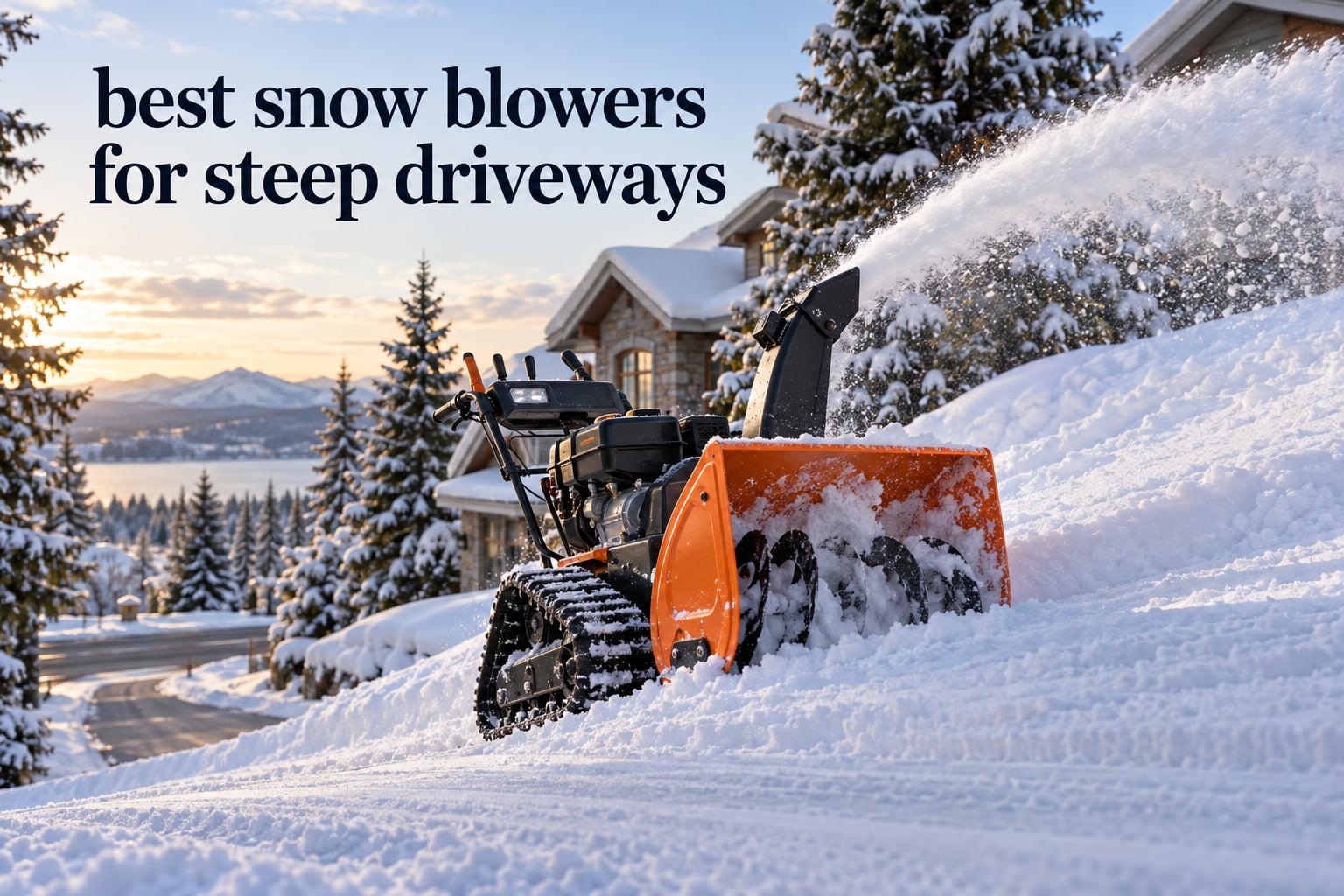
Snow removal on a steep driveway is not a convenience problem, it is the most dangerous chore most homeowners do twice a month. Gravity pulls the machine backward and sideways while the auger is lifting snow uphill, and on a downhill pass the operator is standing behind a running machine with nothing between them and the bottom of the grade. Roll-back is the word owners use for it, and it is the reason the best snow blowers for steep driveways are chosen by traction first and engine power second.
We spent weeks reading owner threads on r/Snowblowers, snowblowerforum.com, and wheelhorseforum.com, then matched what owners actually report against published specifications for eight machines. The consensus on those forums is blunt and worth repeating before any product list: stick with Ariens, Honda, or Toro, and treat unknown chassis as a gamble on a slope. The Ariens, Honda and EGO machines below are the three that fit that advice.
One honest note up front. Of the eight machines in this guide, only one is a true track-drive unit. That is the honest state of the retail category most buyers actually shop, and we would rather tell you which products have real slope credentials than dress up 13-inch wheels as hill equipment.
Table of Contents
What Type of Snow Blower Is Best for a Steep Driveway?
A track drive snow blower is best for a steep driveway because it spreads the machine’s full weight across a continuous rubber contact patch instead of two tire contact points, so it grips ice and packed snow where wheels spin out. Above about 15 degrees, tracks stop being a nice-to-have. Below 15 degrees, a quality wheel-drive two-stage with a lockable axle works well.
Track drive means continuous rubber belts driven in place of wheels, with cleats that bite into snow and ice. Roll-back is the term owners use when gravity wins and the machine slides downhill, usually dragging the operator with it. Sidehill clearing means traversing across the face of a slope rather than driving straight up and down it, and it is the single most debated technique in snow blower advice, which we resolve in the safety section below.
On a slope the limiting factor is almost never horsepower. It is how much weight you can put down over how much rubber, and whether the machine’s weight is biased forward enough to keep the auger engaged. Power matters for the snow itself. Traction decides whether you ever get to use that power.
Top 3 Picks for Steep Driveways in 2026

EGO Power+ SNT2807 Cordless 28 inch
- Two 56V batteries included
- 60 foot throw
- 28 inch path
- 21 inch intake
- heated grips
Ariens ST28DLE Deluxe SHO
- 306cc 4-cycle gas
- 55 foot throw
- 16 inch wheels
- 6 speeds
- electric start

PowerSmart 26 Inch 208cc B&S
- 208cc Briggs & Stratton
- 50 foot throw
- 2680 lbs/min
- hand warmers
- LED light
The EGO Power+ SNT2807 takes the Editor’s Choice because it is the only machine here that arrives ready to clear a grade, with two 56V batteries and a dual port charger in the box, a 28-inch path, and the longest throw in the lineup at 60 feet. On a slope, throw distance is a safety spec, not a convenience spec, because snow dumped too close to the lane slides straight back onto the pavement you just cleared.
The Ariens ST28DLE is our wet-snow pick. Owners report powering through 20-inch wet storms where lighter machines stalled, and on snowblowerforum.com a Boston-area owner of a 130-foot paved driveway described the same pattern: a wheeled Ariens is likely your best choice, but the wheeled Honda is likely a better built machine.
The PowerSmart 26-inch is the value pick and carries by far the largest review base in this guide at 705 ratings, which means its weaknesses are well documented rather than hidden. Read the traction section on it before you commit, because 13-inch tires are the honest limitation.
Best Snow Blowers for Steep Driveways in 2026: Full Comparison
Every pick below, with the specs that decide slope performance. Drive type, clearing width, throw distance and drive wheel size matter more on a hill than engine horsepower does.
| Product | Specifications | Action |
|---|---|---|
| EGO Power+ SNT2807 28 inch Cordless |
|
Check Latest Price |
 Honda HSS928 28 inch Two Stage Honda HSS928 28 inch Two Stage |
|
Check Latest Price |
| Ariens ST28DLE Deluxe SHO 28 inch |
|
Check Latest Price |
| PowerSmart 26 Inch 208cc Briggs & Stratton |
|
Check Latest Price |
 PowerSmart 24 Inch 212cc Two Stage PowerSmart 24 Inch 212cc Two Stage |
|
Check Latest Price |
 EGO Power+ SNT2400 24 inch Cordless EGO Power+ SNT2400 24 inch Cordless |
|
Check Latest Price |
 WEN SB209E 24 inch Two Stage WEN SB209E 24 inch Two Stage |
|
Check Latest Price |
 PowerSmart 24 Inch 212cc Two Stage PowerSmart 24 Inch 212cc Two Stage |
|
Check Latest Price |
Two columns in that list deserve a second look before you shop. Clearing width above 28 inches gets hard to turn around at the top of a drive, which is exactly the maneuver you need to make on a slope. And drive wheel size, not engine size, predicts whether the machine will hold a grade.
1. EGO Power+ SNT2807: The Cordless Machine That Handles a Grade
- Batteries and dual port charger included
- 60 foot throw pushes snow clear of the lane
- Handles heavy wet snow
- Heated handle grips
- Tool-free assembly
- No hill hold brake so it can roll downhill after release
- Batteries must be stored above 40F
- Tire chains not recommended
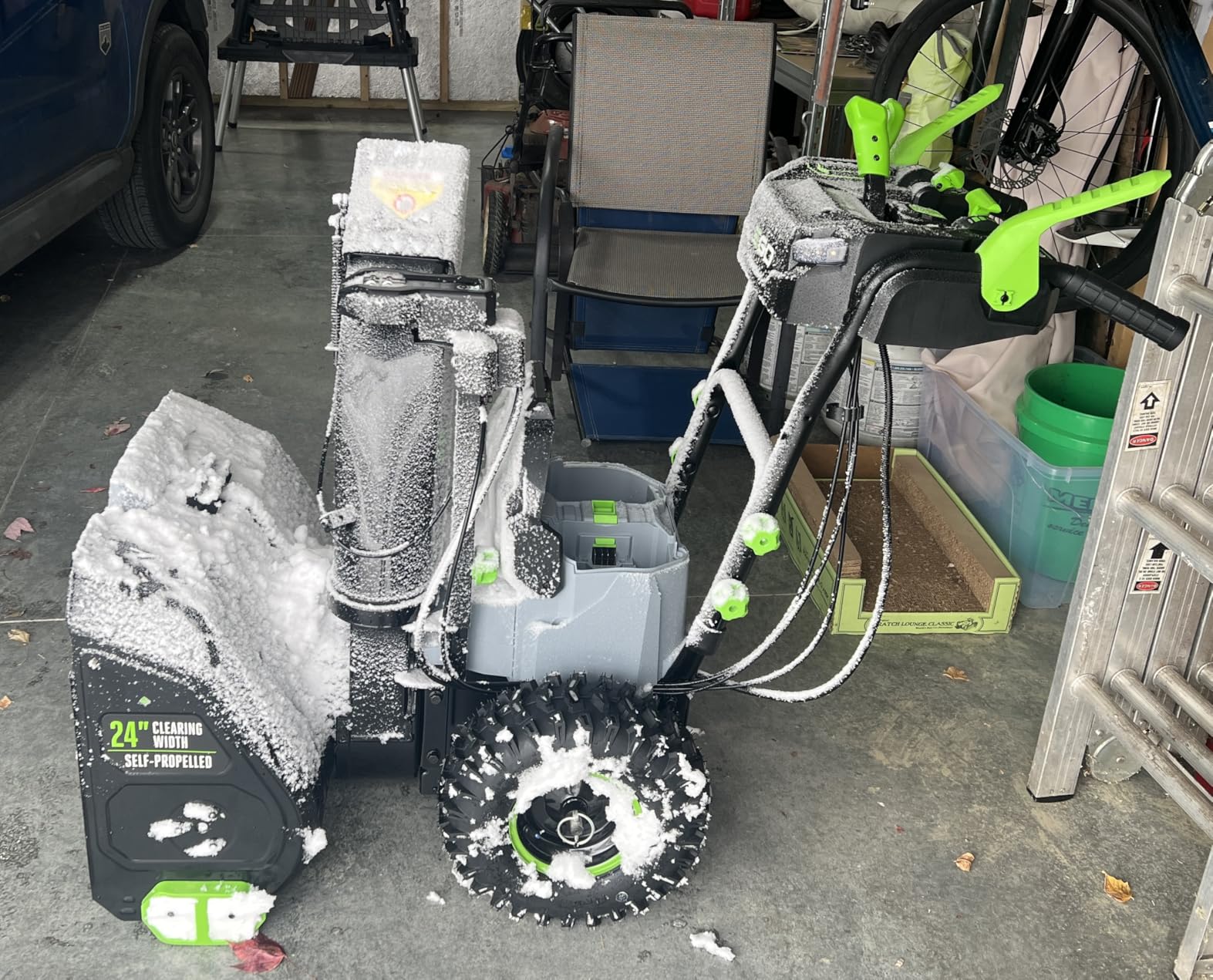
This is the machine we would put on a moderate hill. The 28-inch path, 21-inch intake and 60-foot throw put it at the top of this lineup for a reason, and the two 12.0Ah batteries in the box mean there is no separate battery purchase to make before your first storm.
What makes it work on a slope is the weight, and that cuts against the usual cordless pitch. At 250 pounds this is not a lightweight toy, and mass pressing rubber against a grade is the whole game. Owners also report clearing a 32-car driveway on a single charge, which on a steep drive usually means one pass up, one pass down, and a battery swap rather than a trip to the outlet mid-job.
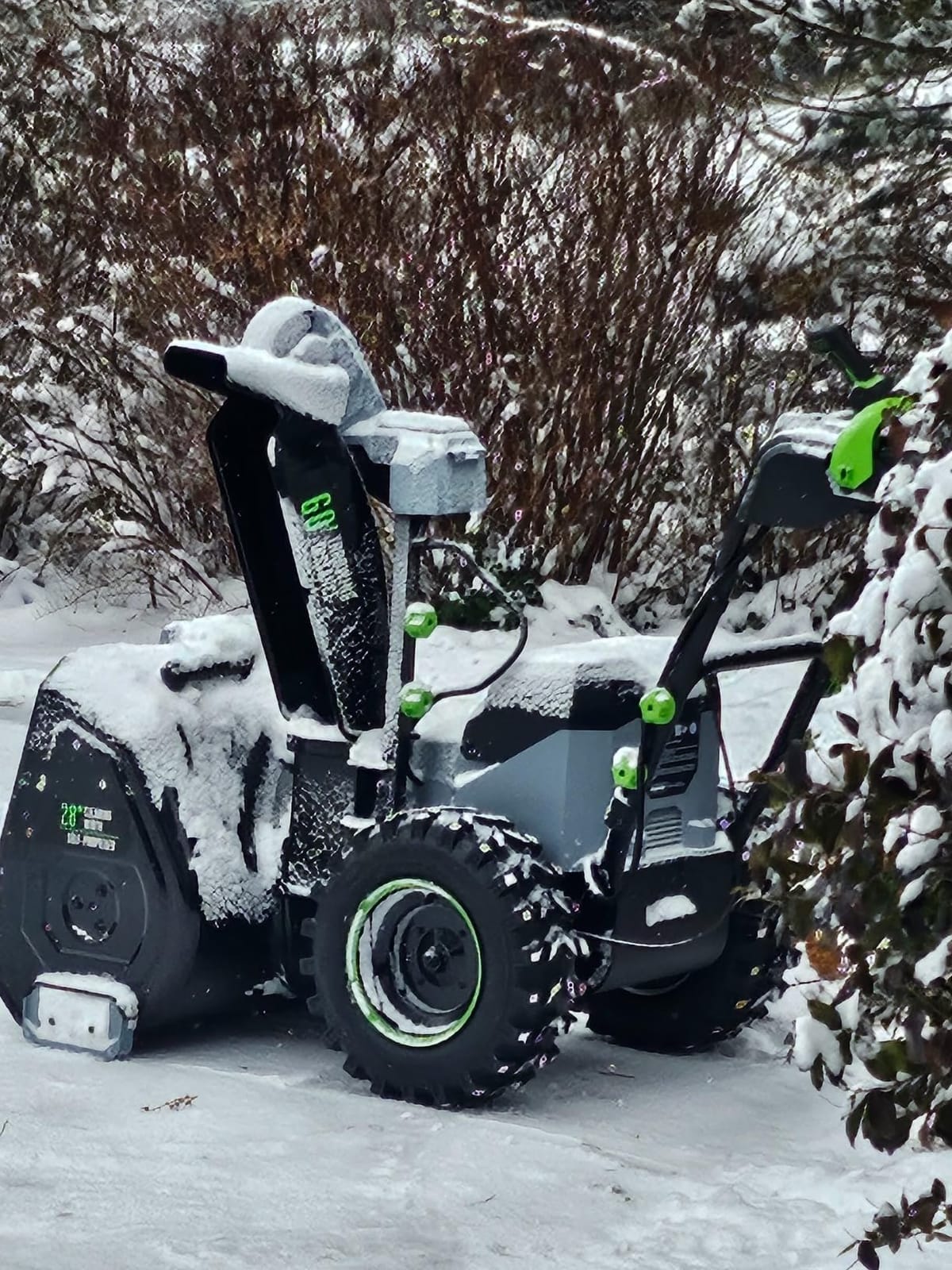
Peak Power technology combines the output of two EGO 56V ARC Lithium batteries, and the variable speed steel auger lets you feather the feed rather than forcing full width into packed snow. Trigger-controlled steering means you can slow the machine without letting go of the handle, which is the single control that matters most when you want to pause on an incline.
The one feature gap that a steep driveway owner should weigh heavily is the absence of an auto brake. Owners report the machine continuing to roll downhill after the speed lever is released, so stopping mid-slope means bringing it to a controlled stop rather than trusting it to hold. Tire chains are also not recommended for this machine, which closes off one of the usual traction add-ons.
What the 60 foot throw does for you on a hill
Throw distance is the overlooked slope spec. Snow thrown close to the machine lands on the edge of your cleared lane and, on a grade, works its way back downhill into the path while you are still finishing the pass. The 60 foot throw on the SNT2807 is the longest here, so more of what comes out of the chute ends up beyond the pavement entirely.
The 200-degree chute rotation with joystick deflection helps here too, because you can direct the stream downhill and away from the drive without stopping to reposition the chute. That matters more when the machine is heavy and awkward to swing around at the top of a slope.
Where the cordless approach falls short
Battery runtime drops in cold weather, and the charging rules are strict. Batteries must be kept above 40F and warmed before charging, so on a January morning the machine may not be ready to go when you need it. The batteries are also heavy and awkward to remove for storage, which is a real inconvenience if the machine lives in a garage you access through snow.
Owners note the machine is not as rugged as the gas unit it replaced and that the controls take practice. If your driveway runs past about 18 degrees, or if you clear several properties, this is the ceiling of what cordless does well rather than a machine to grow into.
2. Honda HSS928: The Only True Track-Drive Machine Here
- Tracks grip ice and packed snow better than any wheel in this guide
- Hydrostatic drive means no gear shifting on a grade
- Electric key start works in cold weather
- Ready to run with no assembly
- 3 year residential warranty
- Heaviest machine in the group at 358 pounds
- Only 28 ratings so long term feedback is thin
- 52 foot throw is shorter than several lighter machines
If your driveway is genuinely steep, this is the machine the rest of this article is measuring against. The dual track drive uses low-temperature rubber tracks with sure-gripping cleats, which is a mechanically different answer to traction from anything else here: the machine’s weight spreads across the full length of the belt rather than sitting on two small patches of rubber.
The hydrostatic transmission is the other half of why tracks work on a grade. Because ground speed is controlled continuously rather than through fixed gears, you can match travel speed to the slope without shifting, and the auger keeps turning at a steady rate regardless. Owners with 20-degree-plus driveways report being able to stop mid-slope and restart without sliding backward on track machines, and that is the specific capability a steep driveway demands.
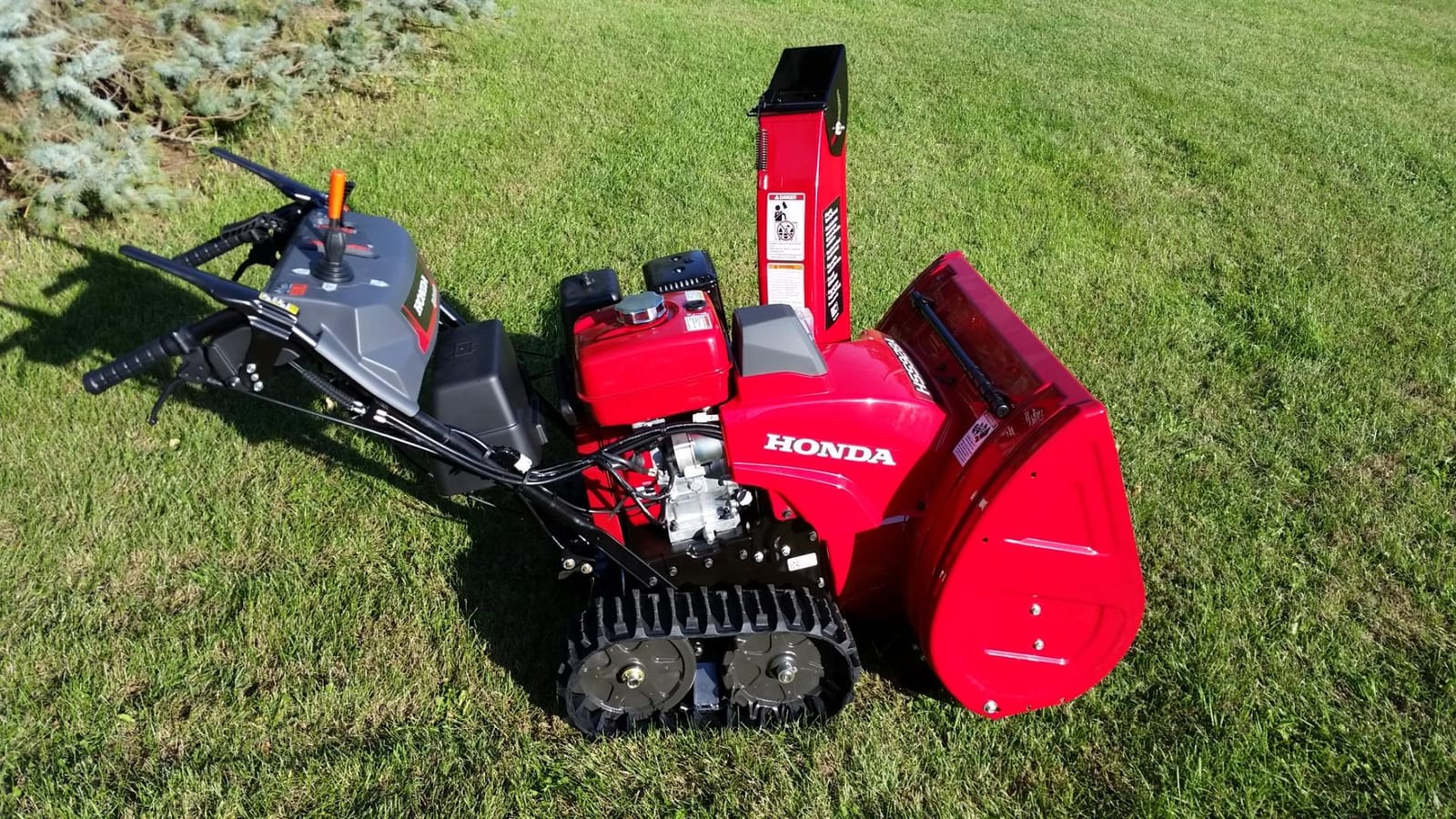
Underneath, it is a commercial-grade Honda GX270 OHV engine with an automotive-style DC electric key start, clearing up to 1900 pounds of snow per minute through a 28-inch path with a 21.7-inch clearing height. A thumb-operated auger height control lever lets you set the intake from the handle, and the machine ships ready to run with a 3-year residential warranty behind it.
Owners across the forums treat Honda as a durability purchase rather than a spec-sheet purchase. On snowblowerforum.com, a Boston-area thread on a 130-foot paved driveway put it plainly: a wheeled Ariens is likely your best choice but the wheeled Honda is likely a better built machine. That pattern, features versus build quality, shows up repeatedly. The caveat here is that track-drive Honda models are the ones owners report selling out before peak season, so buying early matters.
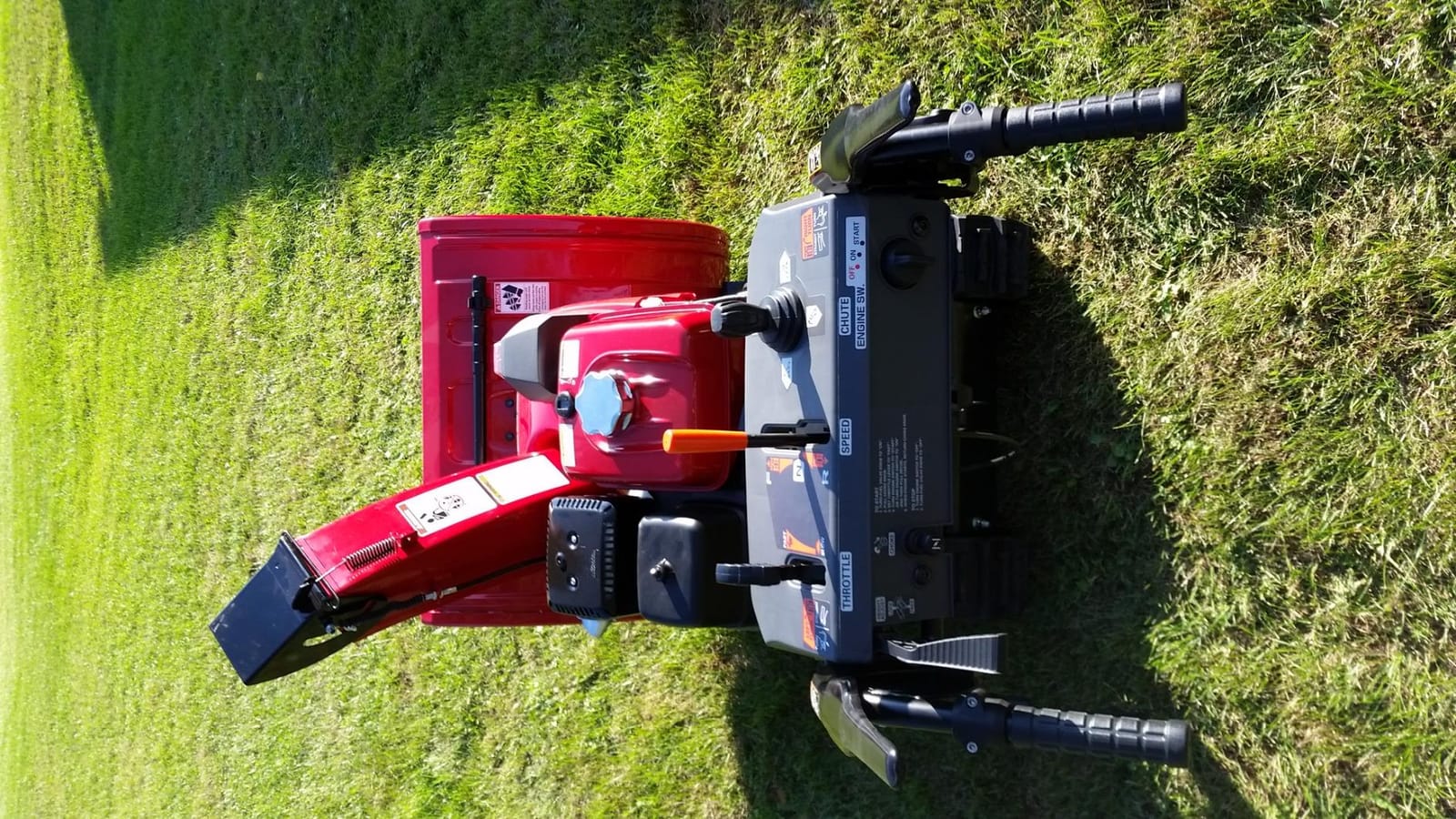
Where 358 pounds pays off and where it does not
Weight on a slope is a feature until the moment you need to reposition the machine. At 358 pounds this is the heaviest in the lineup, and turning one at the top of a steep drive or getting it into a shed requires a plan. Storage footprint and transport are the real costs, and for a lot of driveways a lighter machine that still climbs is the smarter buy.
The thin review count is worth understanding before you lean on it. At 28 ratings, sentiment is strongly positive, but that is not the same as a decade of owner reports. We are recommending this machine on its engineering and its forum reputation, not on the size of its review base.
What to verify before you buy
Track machines need periodic attention that wheel-drive machines do not. Track tension has to be checked and adjusted through the season, and the tension has to be right or the cleats stop biting. Confirm that a dealer near you stocks the parts before you commit, because a track machine with no local parts support is a very expensive driveway ornament.
Also test the steering before the first real storm. Both tracks drive together, so turning is slower and more deliberate than on a wheeled machine, and that changes how you plan your passes on a narrow slope.
3. Ariens ST28DLE Deluxe SHO: Premium Gas for Wet Snow
Ariens ST28DLE Deluxe SHO 28 in. Two-Stage Electric Start Gas Snow Blower
- Owners report clearing 20 inch wet storms
- Electric start is easy even in cold weather
- Improved turning compared with older SHO models
- Parts stay available for long term repair
- Plastic recoil housing cracked for one owner
- Throttle and choke knobs can freeze together in sub-zero weather
- Warranty service waits reported at three weeks or more
The Ariens is a 28-inch two-stage gas machine with a 306cc 4-cycle engine, six forward speeds and 16-inch drive wheels, and on paved driveways in the 10-to-15 degree band it handles itself well. The 16-inch tires are the most important line in that spec block, because tire diameter is the traction variable on a wheeled machine.
What owners consistently single out is wet snow performance. One detailed report describes this model powering through a 20-inch wet snowfall where a neighbor’s machine stalled, and that is the scenario that separates a serious two-stage from a light one. The 55-foot throw also keeps cleared lanes cleaner on a grade than shorter-throwing machines.

The electric start matters more on a steep drive than the spec sheet suggests. You are not looking forward to pulling a recoil cord while standing sideways on a grade, and this machine starts from a switch. Assembly takes roughly an hour per owner reports, and spare part availability is documented at three years, which is a genuine advantage of buying from a brand with a dealer network.
Long-term owners of the same SHO model rate it as a durable upgrade rather than a step sideways, and that continuity is why we keep recommending Ariens on forums. The engineering caveat is specific: the throttle and choke knobs can freeze together in sub-zero weather, and one owner had the plastic recoil housing crack within three months. Cold plastic on a machine you rely on at dawn in January is worth factoring in.
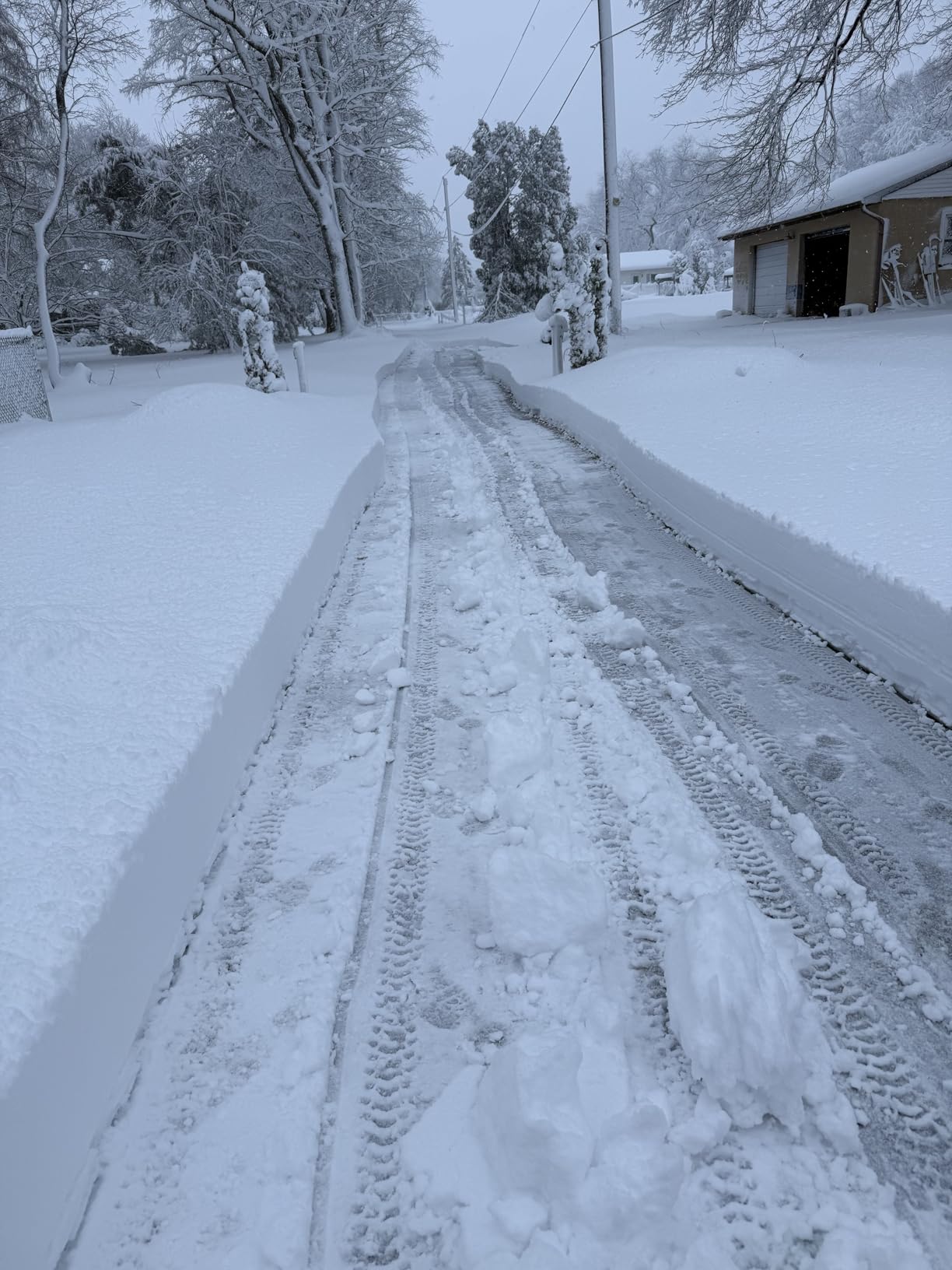
Why 16 inch wheels matter more than the engine
On a hill, a wheel is a lever. Bigger diameter and wider lugs mean more rubber surface engaged and less spin before the machine loses forward drive. The Ariens runs 16-inch drive wheels, which is the largest wheel in this guide, and that is a bigger slope asset than the extra displacement of a competitor’s engine.
The 6-speed drive across 6 forward speeds gives you fine control matching your pace to the grade. The lower the gear you can crawl in, the less momentum the machine has to lose when it meets a slick patch.
Where it stops being the right answer
This is a wheel-drive machine, so it belongs below roughly 15 degrees. On a shaded north-facing slope that has turned to ice, 16-inch tires help but they are still two contact points, and that is the entire difference between this machine and the Honda.
It is also one of the heaviest machines in the lineup at 267.5 pounds, so turning at the top of a drive is real work. If your driveway is steeper than 15 degrees, you are buying outside this machine’s design intent.
4. PowerSmart 26 Inch 208cc: The Best Value Pick with a Documented Catch
- Largest review base in this guide at 705 ratings
- Starts reliably to -20F on electric start
- Handled 20 inches of snow and plow slush
- Light at 147 pounds and easy to turn around
- Hand warmers and LED light
- 13 inch tires are the weak point on any grade
- Chute rotation and height adjustment are stiff while operating
- Heated grips do not warm gloved hands
This machine has 705 ratings, more than the rest of this guide combined, which is useful for two reasons. You can see exactly what it does well, and you can see exactly what it does badly, because that many people wrote it down. At 4.1 stars with 14 percent one-star reviews, the mixed signal is genuine.
The core numbers are respectable. A Briggs & Stratton 208cc 4-cycle OHV snow engine, 2680 pounds per minute of plowing capacity, a 26-inch path with a 20-inch clearing height, a 50-foot throw, and 6 forward and 2 reverse speeds. The 120V electric start has recoil backup and is rated to start at -20F, which matters when the driveway is steep and clearing it at 6am is the plan.
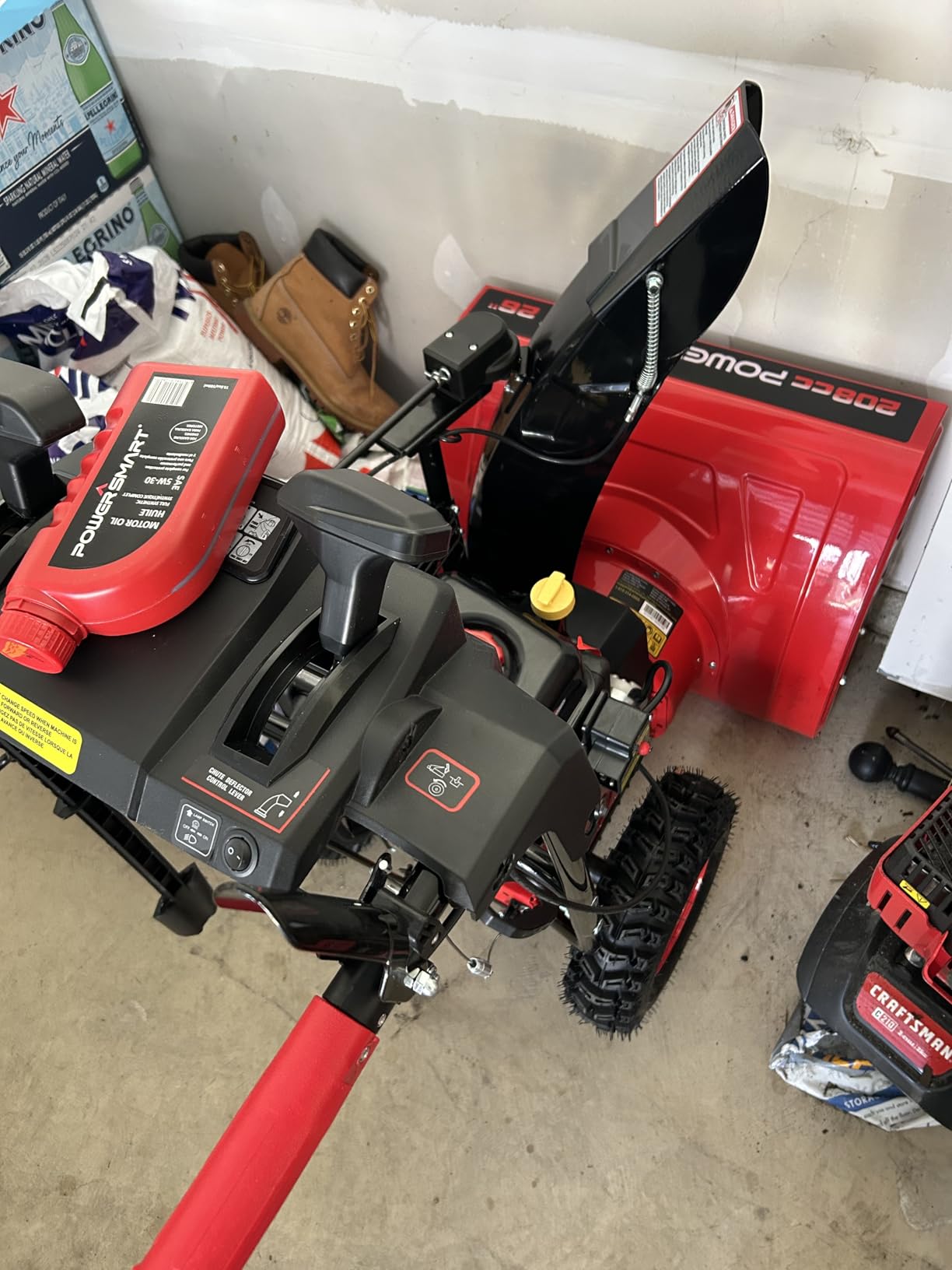
Owners repeatedly report it handling 20 inches of snow and frozen plow slush without bogging down, and several call out the hand warmers and LED light as genuinely useful in sub-zero and early-morning conditions. Adjustable skid shoes let you set it for paved or gravel surfaces. At 147 pounds it is also the easiest machine here to turn around at the top of a drive, which is a real benefit on a narrow property.
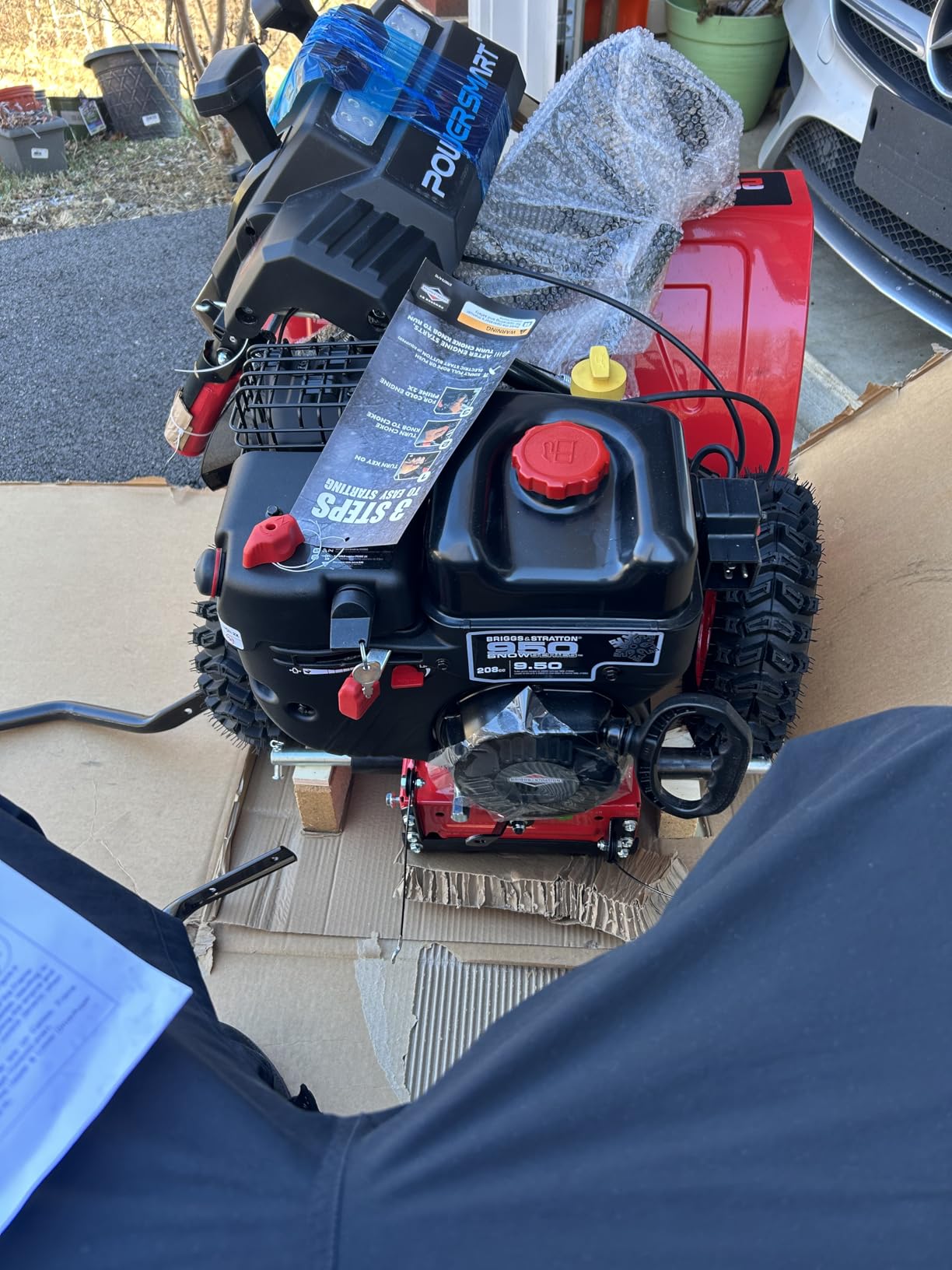
The catch is traction, and it is not subtle. Thirteen-inch tires on a 147-pound machine are thin rubber over a light chassis, and forum owners repeatedly steer each other away from exactly this specification on hills. This is a 10-to-15 degree machine on a paved or firm surface. It is not a gravel-and-ice machine, and if your drive is shaded and freezes, buy the Ariens instead.
Why the 147 pound weight is a real limitation here
Traction on a slope comes from weight pressing into a contact patch. At 147 pounds this machine simply has less of both than the Ariens at 267.5 pounds or the Honda at 358. That is why it turns so easily at the top of a drive and why it is the wrong tool on a grade past 15 degrees. Those two facts are the same fact.
Owners also report the chute and chute height adjustment being stiff and hard to move while operating, and the chute can creep to the right on its own when throwing heavy snow to the left. On a slope, a chute that drifts while you are concentrating on traction is a worse problem than it is on flat ground.
Who should buy this and who should not
Buy it if your driveway is moderate, paved or well packed, and your snow is normal lake-effect volume rather than wet coastal weight. The 26-inch path, the 20-inch intake and the 50-foot throw handle more than most people in this situation ever use.
Skip it if your drive is gravel, if it is shaded and ices over, or if it runs past 15 degrees. In those cases, spend up for more weight and bigger tires, because traction is the feature you are actually shopping for.
5. PowerSmart 24 Inch 212cc: A Narrower Cut for Deep Snow on Gravel
PowerSmart Self-Propelled 2-Stage Gas Snow Blower 24-inch 212cc Engine with Electric Start, Reinforced Steel Housing
- Powers through very heavy wet snow
- Electric start plus recoil backup starts in two pulls
- Reverse plus six forward speeds make tight turns easy
- Reinforced steel housing
- 187 pounds is manageable on a slope
- Chute rotation and height drift out of position from vibration
- Drive wheel cable slipping reported after a few uses
- Tank throat filter incompatible with some gas dispensers
The counterintuitive rule that comes up again and again on snow blower forums is that for snow over about 12 inches, go narrower so the machine does not stall. This is the pick built around that logic. At 24 inches, it takes a narrower bite per pass, and 2500 pounds per minute of clearing capacity means it has the engine to move what it takes.
At 187 pounds it is 40 pounds heavier than the 26-inch PowerSmart without being anywhere near the Ariens, and that middle position is exactly right for a gravel drive. Owners consistently praise raw snow-moving ability for the money, with several reporting it handles 4-to-5-inch and heavier wet events without trouble.
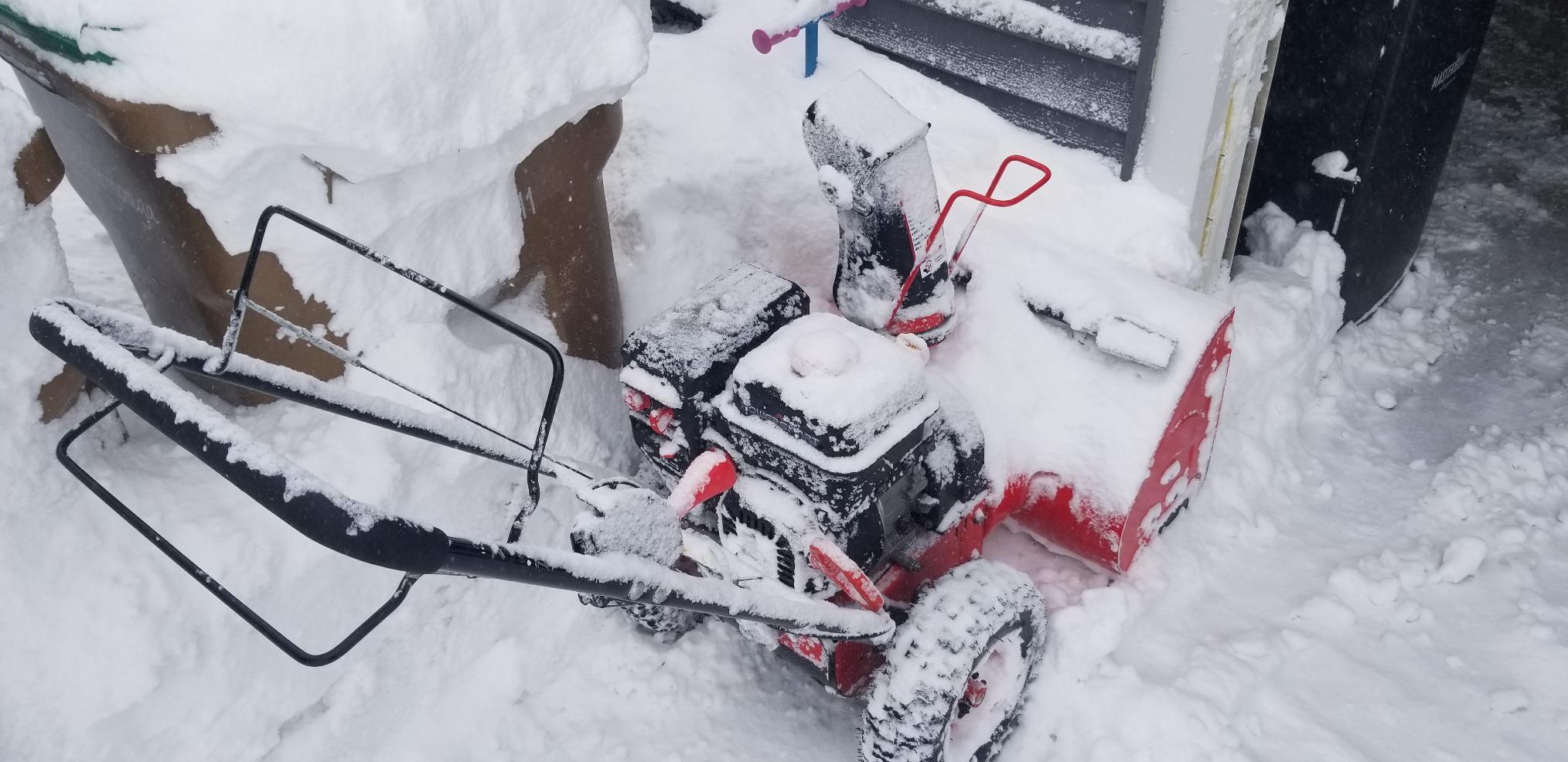
The reinforced steel housing is a genuine step up from lighter machines, and the 21-inch intake height is the second tallest in the lineup, which means you are less likely to leave a compacted layer behind on a repeated pass. Electric start plus recoil backup means you are never stranded on a slope by a failed starter. A rear-mounted snow removal tool helps clear built-up obstructions without a broom.
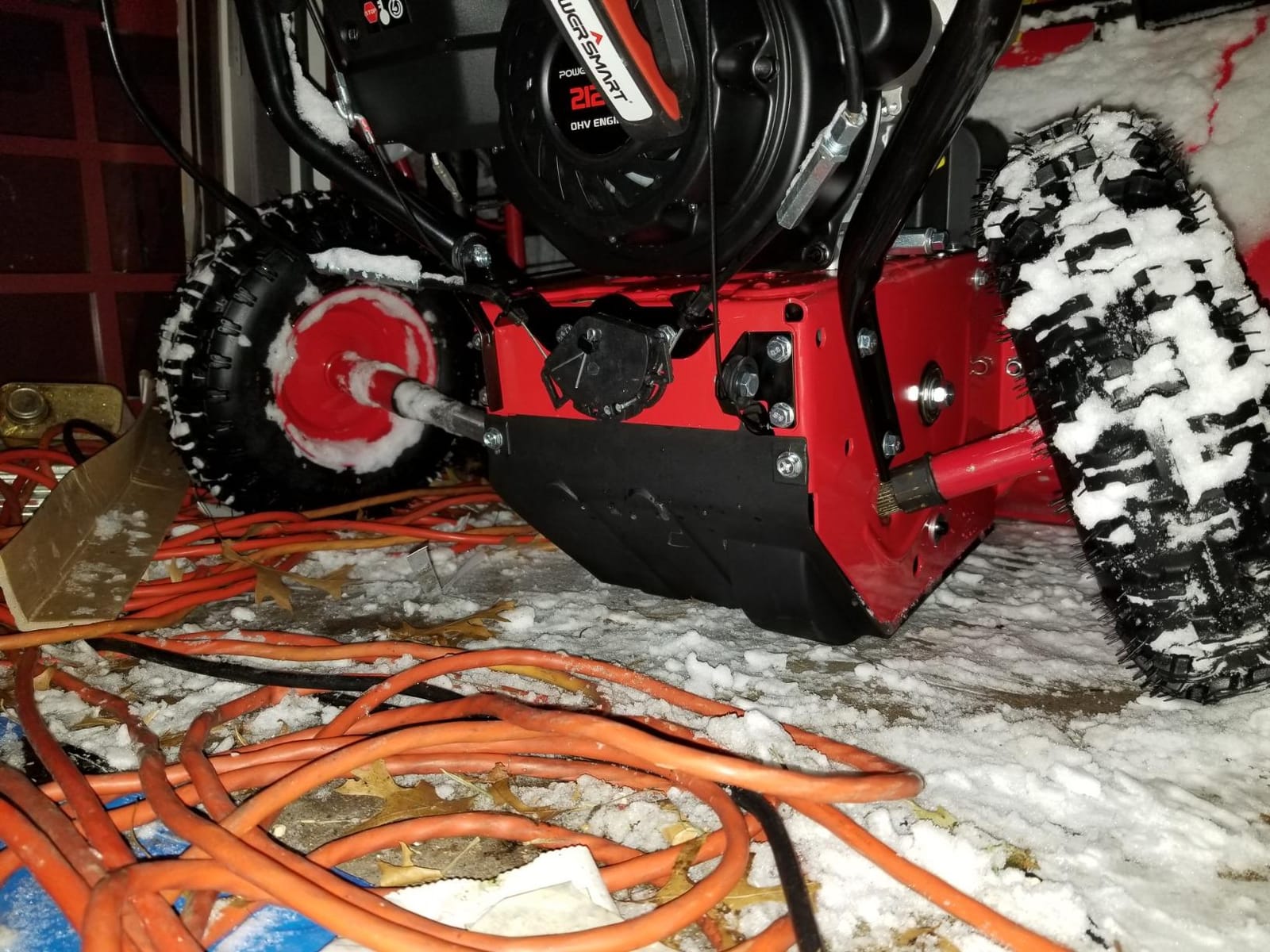
The durability complaints are worth taking seriously on a machine you will push hard. Several reports of the drive wheel cable slipping or failing after a handful of uses, plus chute rotation that drifts out of position from vibration while running. On a slope, a drive wheel cable that slips is a safety issue, not an annoyance, so if you buy this, check the cable engagement before the first storm.
Why narrower beats wider on a deep, steep drive
Every extra inch of path is more force fighting the incline and more time standing on the slope. A 24-inch machine clears a 300-foot steep drive in more passes, but each pass is more stable. Forum owners describe the tradeoff plainly: under 10 inches, go wider for speed; over 12 inches, go narrower so the machine does not bog.
The 21-inch intake is the number that matters most on a steep gravel drive, because the more snow you can take in per pass, the fewer passes you make standing next to a running machine on a grade.
The gravel caveat nobody mentions
Auger height matters more than anything else on gravel. If the intake rides low, the auger catches stones and the machine either stalls or gouges your surface. This machine has no dedicated auger height lever, so the setting lives on the skid shoes, and getting it wrong on gravel is the most common complaint owners have about this class of blower.
It ships with two-year manufacturer warranty coverage. A drive wheel cable and a tank throat filter that does not fit some modern gas dispensers are both small, but both are exactly the kind of thing that ruins a first week of ownership.
6. EGO Power+ SNT2400: The Lighter Cordless for Shorter Drives
EGO POWER+ 24″ Electric Snow Blower, Self-Propelled 2-Stage, Battery and Charger Not Included – SNT2400
- 373 ratings with 78 percent five star
- Quiet with push-button start and no pull cords
- 150 pounds is light for a two-stage
- 50 foot throw
- 5 year tool warranty
- Battery and charger not included
- Narrows to an 18 car driveway per charge versus 32 for the bundle
- 24 inch path is narrower than the 28 inch model
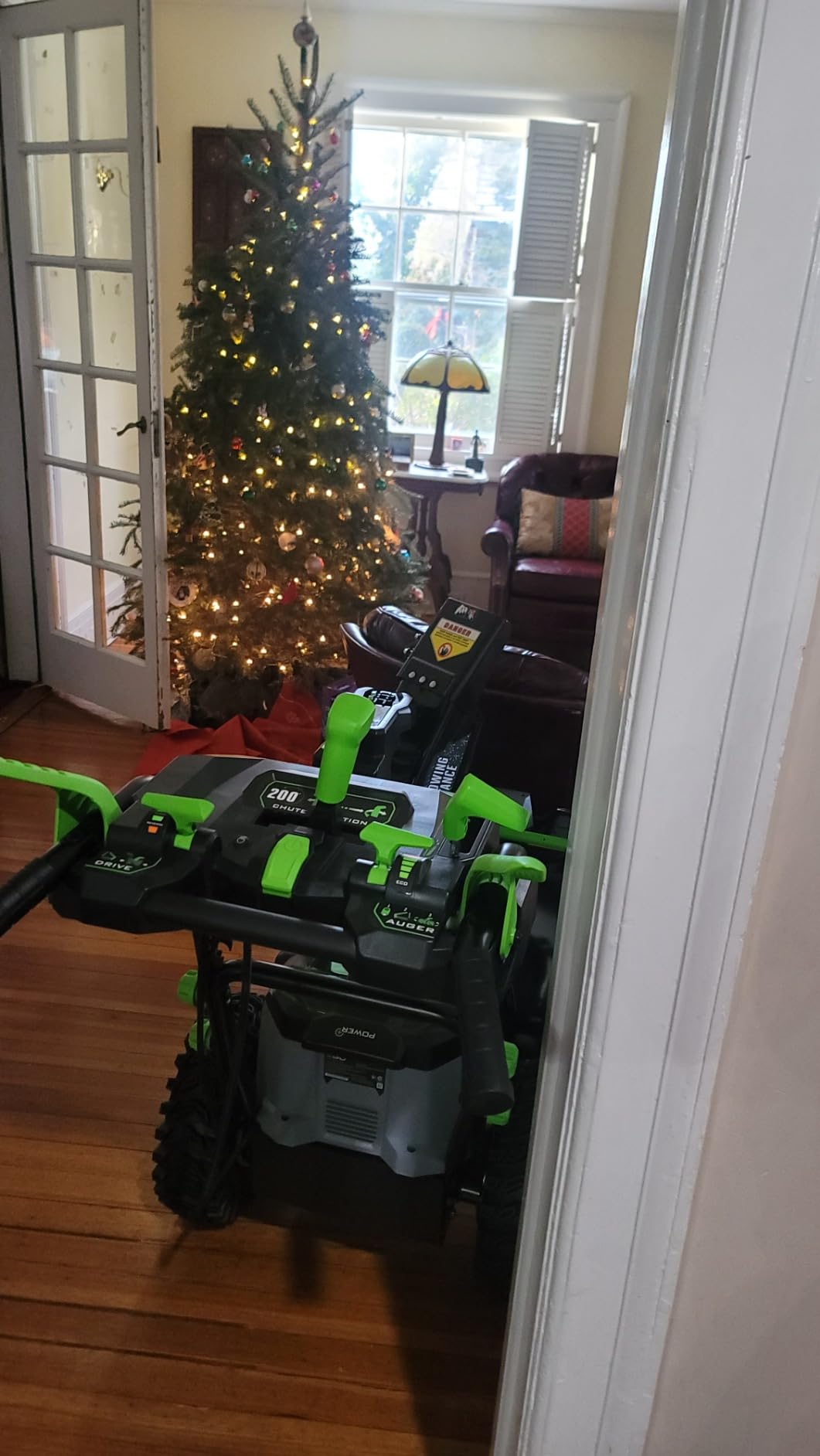
The SNT2400 is the same Peak Power platform as the machine above, in a lighter 24-inch body at 150 pounds. That weight is worth pausing on for a slope. It is light enough to reposition easily at the top of a drive and heavy enough to keep rubber engaged, which makes it a better slope fit than its weight class suggests.
It is also the best-reviewed machine in this guide by sentiment, with 373 ratings, 78 percent five-star and only 3 percent one-star. Owners emphasize power parity with gas, quiet early-morning operation and low maintenance. Quiet matters more than it sounds on a steep drive in a neighborhood where a 6am start is a social cost.
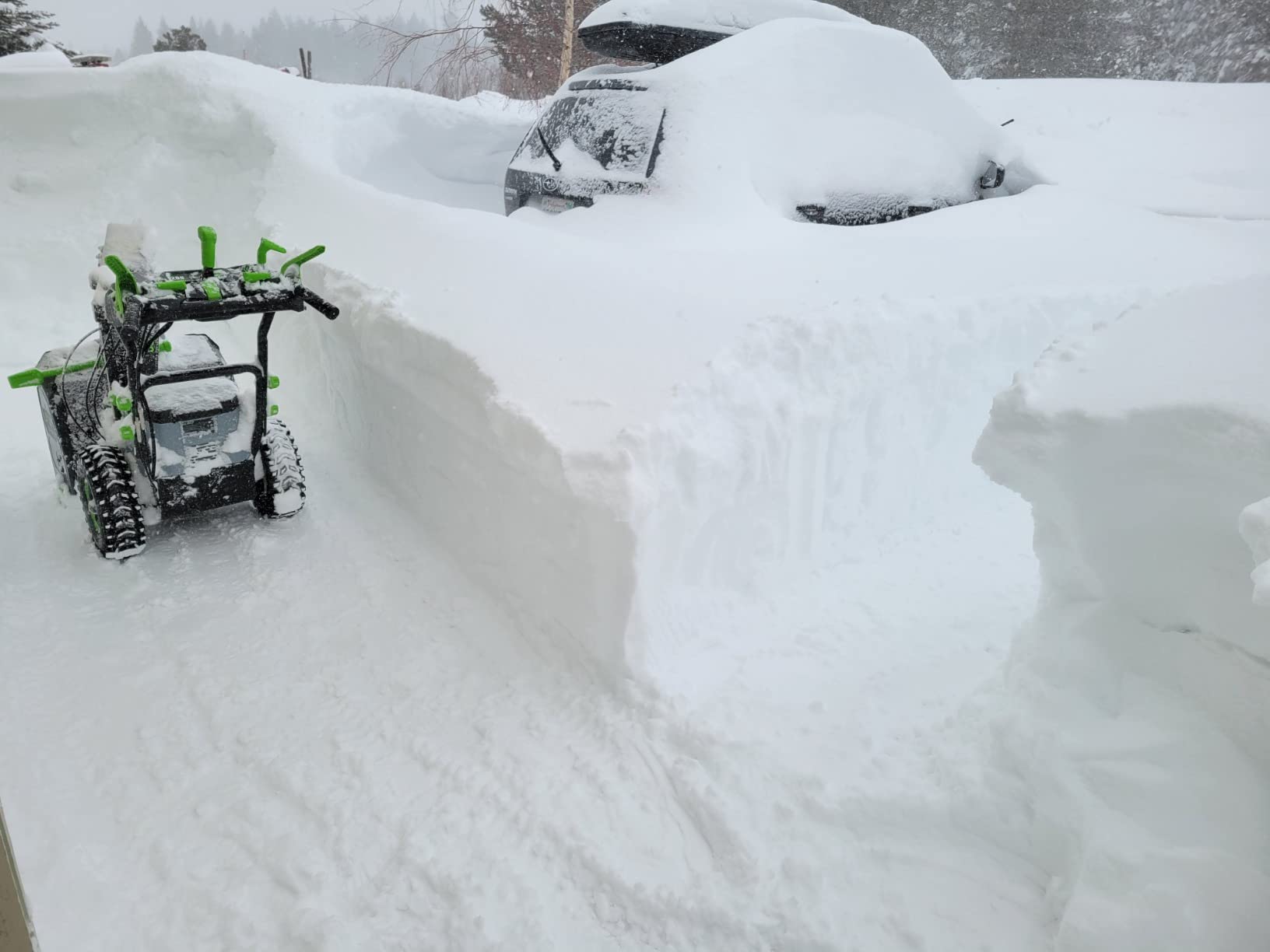
Four bright LEDs for nighttime visibility, directional chute control and variable speed self-propelled forward and reverse cover the operating basics well. Variable speed matters on a grade because it lets you creep without bogging the auger, which is the most common way operators lose control on an incline.
The catch is the bare-tool listing. The battery and charger are not included, so the number you see is not the number you will spend, and you need two 7.5Ah batteries plus a charger before this machine clears anything. On a single charge it handles up to an 18-car driveway, which is roughly half the capacity of the 28-inch bundle.
Where 150 pounds cuts both ways
Lighter is easier to control on the way down and worse at holding on the way up. Below 15 degrees, 150 pounds with 16-inch-class snow tires is a reasonable pairing. Past that, you are asking a lighter chassis to do what the Honda’s tracks do mechanically, and the answer is no.
Any cold-weather runtime penalty compounds the problem, because battery performance drops below 20F and a slope is where you least want a machine that quits partway up. Keep both batteries above 40F indoors between storms, which means you are storing 30-plus pounds of lithium in a heated space all winter.
Who this is right for
Buy the SNT2400 if you already own EGO 56V ARC batteries and charger from another tool, or if you want the quietest option on a moderate slope and can live with a 24-inch path. Our 5-year tool warranty note applies, and at 373 ratings this has the deepest and cleanest owner record here.
Pass on it if you are starting from nothing and your drive is over 15 degrees. The Honda or the Ariens is the honest answer at that point.
7. WEN SB209E: True Two-Stage Architecture at an Entry Tier
WEN 24-inch 209cc Two-Stage Self-Propelled Gas-Powered Snow Blower with Electric Start (SB209E)
- True two-stage machine at the lowest tier
- Push-button electric start plus recoil starter
- Steel construction with notched 4-blade steel auger
- Two year warranty included
- Shortest throw in the lineup at 30 feet
- Smallest intake height at 20 inches
- Fewer published reviews at 81 ratings
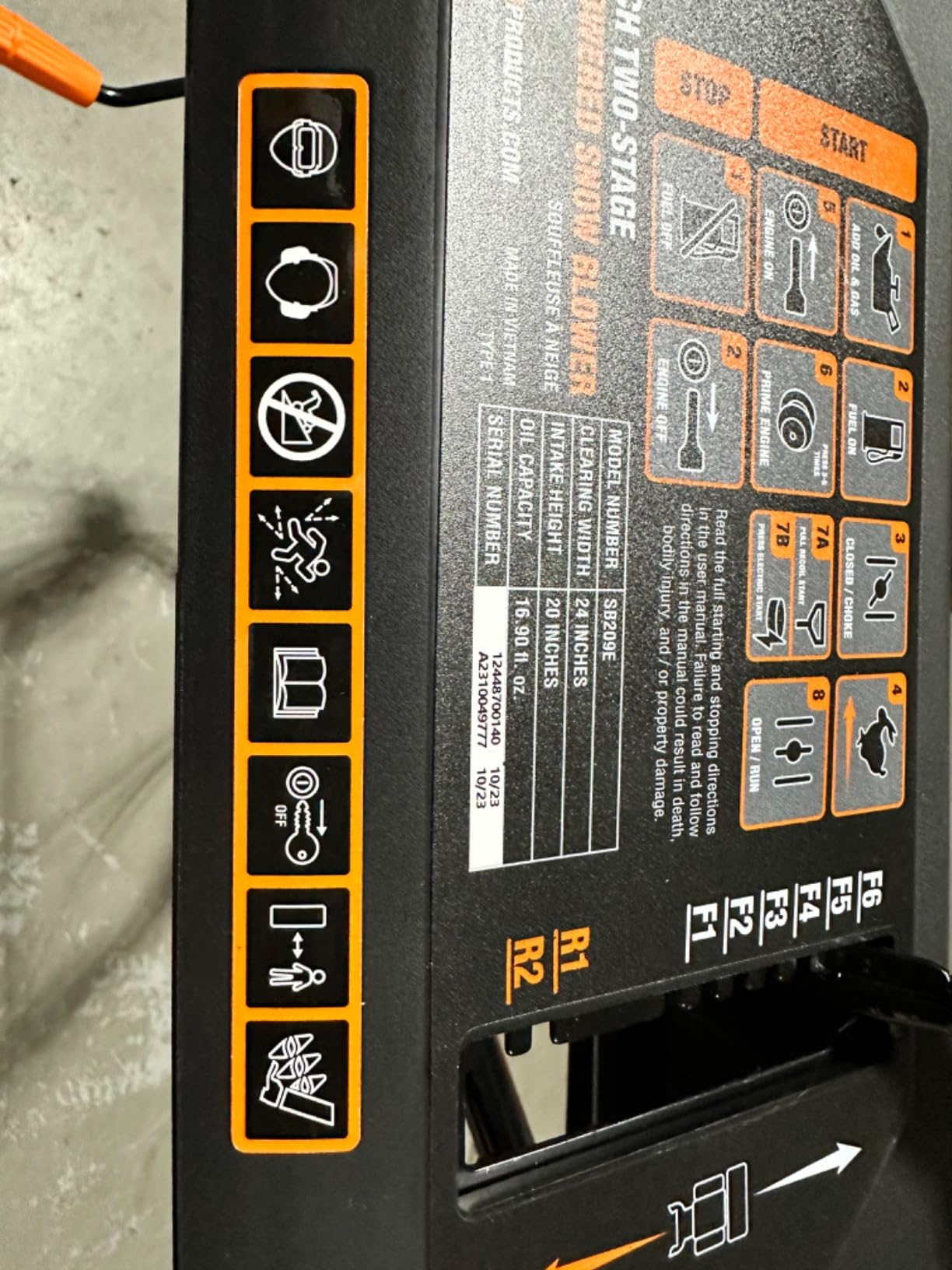
The WEN is included here because it is architecturally correct and priced accordingly. A real two-stage system, a 209cc 4-cycle engine, steel construction with a notched four-blade steel auger and a 24-by-20-inch clearing path. Single-stage machines are useless on a slope because they lack intake height and torque, and this is not one of them.
It clears over 2000 pounds of snow per minute, which is enough for ordinary snowfall, and the 6 forward and 2 reverse speeds plus a 190-degree adjustable chute give you workable control. Push-button electric start with a recoil fallback and a two-year warranty round out a complete package.
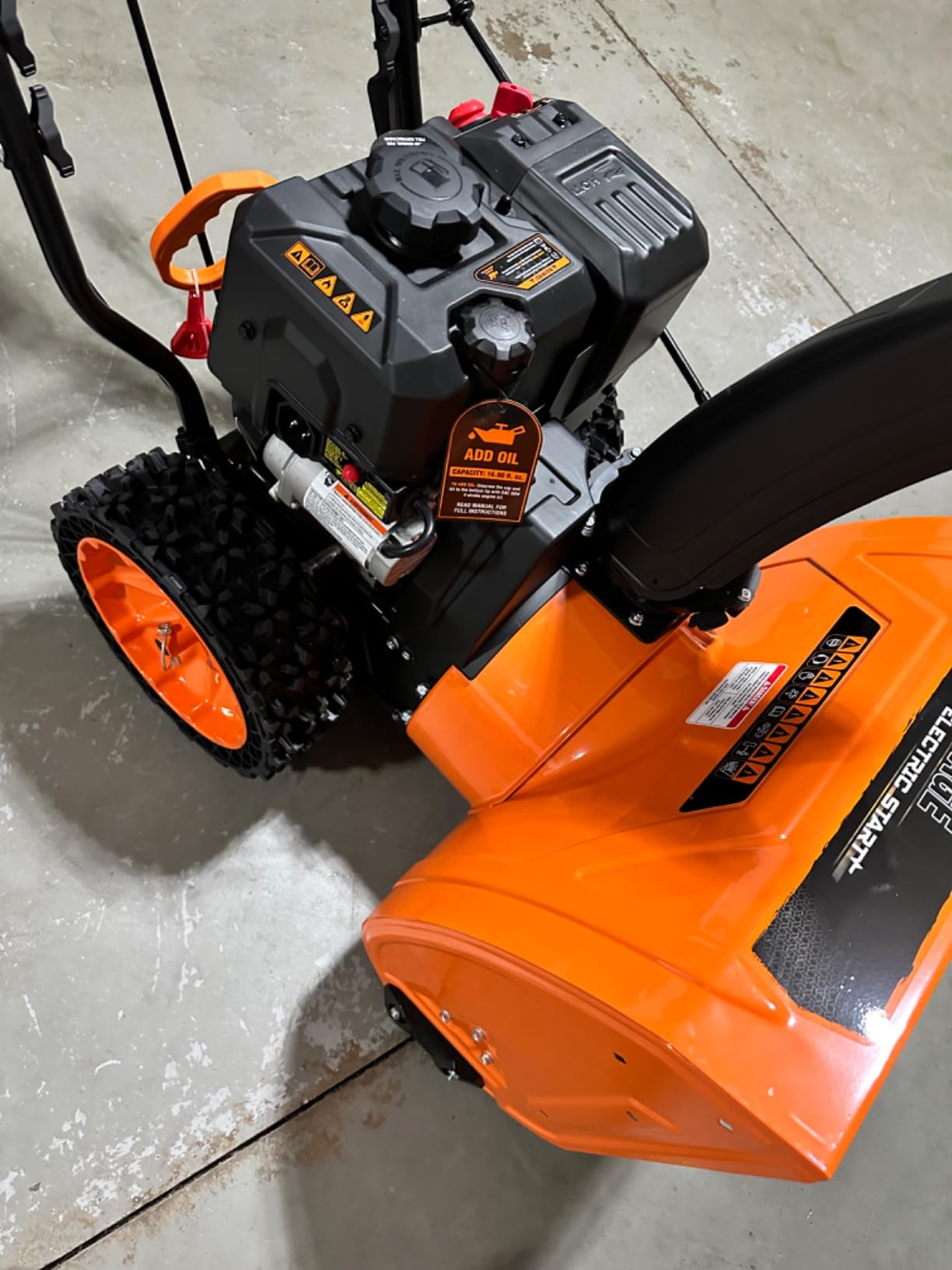
Here is the problem on a slope. At 30 feet, this machine has the shortest throw in the lineup, and throw distance is precisely the spec that determines whether cleared snow stays cleared on a grade. Snow dropped 30 feet from a machine working up a hill lands close to the lane and slides back into your path. You will be re-clearing.
The 20-inch clearing height is also the shortest here, so each pass leaves more behind than a taller-intake machine would. With 81 ratings the owner record is thinner than the rest of this field, so there is less long-term evidence to lean on, though the distribution is solidly positive at 66 percent five-star.
Where the entry tier still works on a grade
For a paved driveway in the 10-to-15 degree band with normal snow depth, this is a defensible machine. The two-stage architecture means the auger and impeller divide the work instead of asking one stage to do it, and 2000 pounds per minute is adequate for the job. Two-year warranty and steel construction are real value at this tier.
The moment your driveway is shaded, icy or past 15 degrees, the short throw and small intake become the reasons you are back out in the driveway an hour later doing the same lane again.
What to look for instead
If your budget lands here, save toward a machine with a longer throw rather than a wider path. A 30-foot throw is a slope problem, and a 24-inch path is not. The 50-foot models in this guide solve the issue that actually matters on a hill, and the extra reach pays for itself in saved effort every single storm.
8. PowerSmart 24 Inch 212cc: Simple Gas With One Honest Warning
PowerSmart 24-Inch Gas Snow Blower with 212cc Engine, Electric Start, and 6 Forward/2 Reverse Speeds, Two-Stage, Self-Propelled Snow Blower with LED Lights
- Easy assembly
- one owner reports about 15 minutes
- 120V electric start with recoil backup rated to -20F
- Reports of clearing 6 inch snowfalls with 2 foot drifts
- Adjustable skid shoes for paved and gravel
- Only 26 ratings so the record is very thin
- Drive wheel cable needed adjustment to engage after setup
- Most visible reviews attach to unrelated product variants
This machine carries a perfect 5.0 rating, and we want to be careful about what that number means. At 26 ratings it is the smallest review base in the guide by a wide margin, and the analysis on the listing notes that most of the visible individual reviews are attached to unrelated product variants, including a different electric blower and a nail gun. The score is clean; the sample is not fully representative of this model.
On the machine itself, the specification is sensible for a moderate grade. A 212cc snow engine with 2400 pounds per minute of plowing capacity, a 24-inch path with a 21-inch clearing height and a 50-foot throw. The 50-foot throw is what makes it a better slope candidate than its price class suggests, because it puts snow beyond the cleared lane.
Owner reports describe easy, quick assembly, starting on the first pull after adding oil and fuel, and clearing 6-inch snowfalls with 2-foot drifts. One owner handles a corner lot, sidewalks, their own driveway and a neighbor’s drive in a single session, which is a reasonable workload test for a machine of this size.
Electric start with recoil backup rated to -20F is the right feature set for a hill, because you never want to be pulling a cord on an incline. The 6 forward and 2 reverse speeds give you the low gear to crawl a grade. Adjustable skid shoes handle paved and gravel, which matters on the surface that combines badly with slope.
Why the drive wheel cable is the thing to check first
The drive wheel cable required adjustment to engage after initial setup on at least one unit. On flat ground that is an inconvenience. On a slope, a drive system that does not engage predictably is the difference between a machine that climbs and one that does not, so budget ten minutes to test full engagement in both directions before the first storm.
Two-year limited warranty coverage is standard for this tier, and the two-year figure is worth comparing against the Honda’s three-year residential warranty if you are shopping at similar overall outlay.
Who should look elsewhere
If you want a track-drive machine, this is not it, and no amount of adjustment changes that. If your driveway is gravel and past 15 degrees, the 13-inch tires rule it out the same way they rule out the larger PowerSmart.
For a moderate paved drive at a modest budget, it is a reasonable machine with a 50-foot throw and cold-weather starting. Just verify the drive cable and treat the 5.0 rating as provisional until the machine has a season of its own reviews behind it.
Buying Guide: Track Drive vs Wheel Drive on Hills
Everything in this guide reduces to one number: how many degrees your driveway actually runs. Once you have that, the machine type stops being a preference. Here is the band structure most owner experience supports.
0 to 10 degrees: Any quality two-stage works. Wheel drive is fine, tires barely matter, and you can choose on price.
10 to 15 degrees: Wheel drive still works, but weight and tire diameter start to matter. Look for 14-inch or larger wheels and 6 forward speeds.
15 to 20 degrees: Track drive becomes the recommendation. Below this, a wheeled machine with a lockable axle can hold, but you are managing risk rather than removing it.
20 to 25 degrees: Track drive, hydrostatic transmission, and a machine you can stop mid-slope. This is the reliable operating ceiling for consumer track machines.
25 degrees and above: A walk-behind blower is the wrong tool. Hire a plow or a service with a truck mount.
Track drive spreads machine weight across a continuous contact patch. Wheel drive puts it on two tire contact points. That single mechanical difference is why wheels generally cap out around 15 to 18 degrees safely, and why a machine marketed for hills with 13-inch tires is a contradiction in its own spec sheet.
Why does your snowblower have no traction? Five reasons, in order of likelihood: two-point wheel contact instead of a continuous track patch, too little machine weight to press the rubber down, shallow tire lugs on a small-diameter wheel, packed or icy surface the tire cannot cut into, and insufficient forward weight bias to keep the auger engaged and the front down. The track drive snow blower roundup we published covers the mechanical differences in more depth.
How to Measure Your Driveway Slope in Two Minutes?
You do not need a surveyor’s level. You need a tape measure, and the grade-percent method takes under two minutes.
Mark a point at the top of the drive and a point at the bottom, measuring the horizontal run between them with a tape, not the slope length.
Measure the vertical rise with a tape held from the lower point to the level of the upper point.
Divide rise by run and multiply by 100. That is your grade percent.
Convert to degrees: a 10 percent grade is about 6 degrees, 20 percent is about 11 degrees, 30 percent is about 17 degrees, and 40 percent is about 22 degrees.
So a driveway that gains 3 feet over 60 horizontal feet is a 5 percent grade, roughly 3 degrees, and any wheel-drive two-stage will handle it. A drive that gains 6 feet over 60 feet is 10 percent, about 6 degrees. A drive that gains 12 feet over 60 feet is 20 percent, about 11 degrees, and you are into tire-size territory. Past 24 feet of rise over 60 feet you are at 40 percent, roughly 22 degrees, and you need tracks or a plow.
If you would rather not do arithmetic, a phone inclinometer app does the same job in about a minute and is accurate enough for this decision. The average residential driveway measures around 10 percent, which is a common reason owners are surprised by how much tire diameter matters to them.
Gas vs Cordless on a Slope
Cordless is genuinely better below about 15 degrees and genuinely worse above it, and the reason is weight. The two EGO machines here weigh 150 and 250 pounds, which is real mass pressing rubber into a grade. The gas machines range from 147 pounds to 358, and the light ones give away traction long before they give away anything else.
The cold-weather penalty is the other factor. Lithium battery runtime drops roughly 20 to 30 percent below 20F, and it is worse on a slope because you are doing more work per minute. Both EGO machines need their batteries kept above 40F and warmed before charging, which is a real storage constraint through a northern winter.
Gas never runs out mid-slope, starts in deep cold, and has no charging rules. The trade is noise, maintenance and storage weight. If your driveway is moderate, cordless wins on quality of life. If it is steep, gas with real weight behind it wins outright, and a track-drive gas machine wins the category.
Our cordless snow blower guide covers the battery platform details, and the general driveway roundup is useful if your drive is closer to flat.
Steep Gravel Driveways: Skid Shoes and Auger Height
Gravel plus slope is the worst case, because the surface moves under the machine and the auger has stones to find. Four adjustments fix most of it.
Raise the skid shoes roughly one inch. This is the single most important gravel setting, and it keeps the auger housing above the stone line.
Set auger height from the handle if the machine has a lever. Leaving it on the skid shoes means the adjustment moves every time you cross a bump.
Choose a narrower intake, not a wider one. A 24-inch path fights rocks less than a 28-inch one and clears faster through deep snow.
Clear packed snow, not powder. Loose snow on gravel gets driven into the surface, and the packed layer is what a machine can actually remove.
On a very steep gravel drive, owners on wheelhorseforum.com consistently recommend dropping the walk-behind entirely and using a plow blade, preferring smaller blades. That is a real recommendation from people who clear such driveways, and it is worth taking seriously if your grade is at the top of the bands above. Our gravel driveway guide covers the surface question in more detail.
How to Safely Clear a Steep Driveway
Before the technique, the safety note. Guides contradict each other on sidehill clearing, and we would rather resolve that than pick a side. The reason they disagree is that they are answering different questions. Clearing across the face of a slope is a technique for a track machine you trust, on a grade below 20 degrees, with a slow deliberate pass. It is not a technique for a wheeled blower on ice, and it is not a technique for a 25-degree drive. Guides that say never clear sidehill are describing the general case correctly. Guides that say clear across the slope are describing a narrow one. Neither is wrong inside its own conditions, and reading either one without the conditions is how people get hurt.
Our resolution: drive up and down the fall line on anything you are not certain about, and treat sidehill passes as a track-machine technique on moderate grades only.
Clear early and often. Every pass on fresh snow is easier and safer than one pass on two days of accumulated weight. A heavy pack is the scenario that ends with a machine in a ditch.
Clear up and down the slope, not across it. Working the fall line means the machine’s weight fights gravity in a direction your hands expect. Use the slowest forward gear that still moves the machine.
Match speed to the grade. This is why hydrostatic transmission matters more than engine power. Variable speed lets you creep without bogging the auger, and creeping is control.
Both hands on the handles, chute control that does not require letting go. A joystick or trigger chute lets you redirect snow without releasing the machine.
Never leave a running machine unattended on an incline. A running blower with no operator is a projectile. Kill the engine before you set anything down.
Wear boots with aggressive traction. Your footing sets the limit, not the machine’s. If you cannot stand securely, do not start.
Chains on wheel-drive machines between 15 and 18 degrees. That narrow band is the one place chains are worth the installation hassle on a walk-behind.
Walk the drive first. Before the machine starts, walk the full length and note ice, drifts and where the pavement is weakest. Know your exit.
Two habits separate people who clear steep drives safely from people who have an incident. Stopping mid-slope is the moment of maximum risk, so practice it on a gentle grade first and know what your machine does when you let go of the lever. And throw the snow as far as you can, because on a grade the difference between snow in the ditch and snow on the road is often 30 feet of throw distance.
Frequently Asked Questions
What type of snow blower is best for a steep driveway?
A track drive machine is best for a steep driveway. Tracks spread the machine’s full weight across a continuous contact patch, so they grip ice and packed snow where wheels spin out. Above about 15 degrees, tracks stop being optional. Below 15 degrees, a quality wheel-drive two-stage with a lockable axle works well.
How do I deal with a steep driveway in winter?
Clear early and often so you never face a two-day accumulation. Work up and down the fall line in the slowest forward gear, both hands on the handles, matching your travel speed to the grade. Practice stopping mid-slope on a gentle grade first. Never leave a running machine unattended on an incline, and wear boots with aggressive traction before you start.
Why does my snowblower have no traction?
Most often it is mechanical rather than electronic: two tire contact points instead of a continuous track patch, too little machine weight pressing the rubber down, shallow lugs on a small-diameter wheel, packed or icy snow the tire cannot cut into, or insufficient forward weight to keep the auger engaged and the front down. On slopes past 15 degrees, wheel size and machine weight matter more than engine power.
What is the best snow blower for deep, heavy snow?
Look at clearing capacity in pounds per minute and intake height, not just engine size. A two-stage architecture divides the work between auger and impeller. Counterintuitively, go narrower when snow exceeds about 12 inches so the machine does not stall, and go wider for snowfalls under 10 inches. On a slope, intake height also cuts the number of passes you make next to a running machine.
Can snow be too heavy for a snowblower?
Yes, and a slope makes it worse because the machine works against gravity at the same time. Wet heavy snow at or beyond the machine’s intake height is the limit, and the deciding spec is pounds per minute of clearing capacity. On a grade, an underpowered machine stalls in the worst possible place, so match capacity to your typical storm rather than your average one.
What is the best snow blower to use on a gravel driveway?
Gravel plus slope is the hardest combination, so look for adjustable steel skid shoes and auger height control you can set from the handle. Raise the skid shoes roughly one inch to keep the auger above the stone line, and choose a narrower intake rather than a wider one. On a very steep gravel drive, owners consistently recommend a plow blade instead of a walk-behind blower.
Which snowblower is the easiest to use on a hill?
On a slope specifically, self-propelled with hydrostatic or variable speed drive is easiest, because you can match travel speed to the grade without shifting. One-hand or joystick chute control comes second, letting you redirect snow without releasing the handle. Electric start ranks third on cold mornings, since pulling a recoil cord sideways on an incline is its own hazard.
How steep of a driveway is too steep for a snow blower?
Consumer track-drive machines have a reliable operating ceiling of about 20 to 25 degrees, and wheel-drive machines generally cap out around 15 to 18 degrees. Past 25 degrees a walk-behind is the wrong tool, and hiring a plow service is the safer call. Measure first: a 30 percent grade is about 17 degrees and a 40 percent grade is about 22 degrees.
The Bottom Line on Steep Driveway Machines
The number that decides your purchase is your driveway’s slope in degrees, and 15 is the threshold. Below it, a quality wheel-drive two-stage with real weight behind it is enough. Above it, you need tracks, and the Honda HSS928 is the only machine in this guide that has them. Past 25 degrees, hire a plow instead of buying anything.
For most steep driveways in the 10-to-18 degree range, the EGO Power+ SNT2807 is our pick, because it arrives with batteries, throws snow 60 feet clear of the lane, and weighs enough to hold a grade without a track. Buy it before the first snow, not during it, and store those batteries above 40F.
Owners on r/Snowblowers, snowblowerforum.com and wheelhorseforum.com all point the same direction: traction first, power second, and buy from a brand with a dealer who stocks parts. If you are still choosing, measure your grade before you spend.