
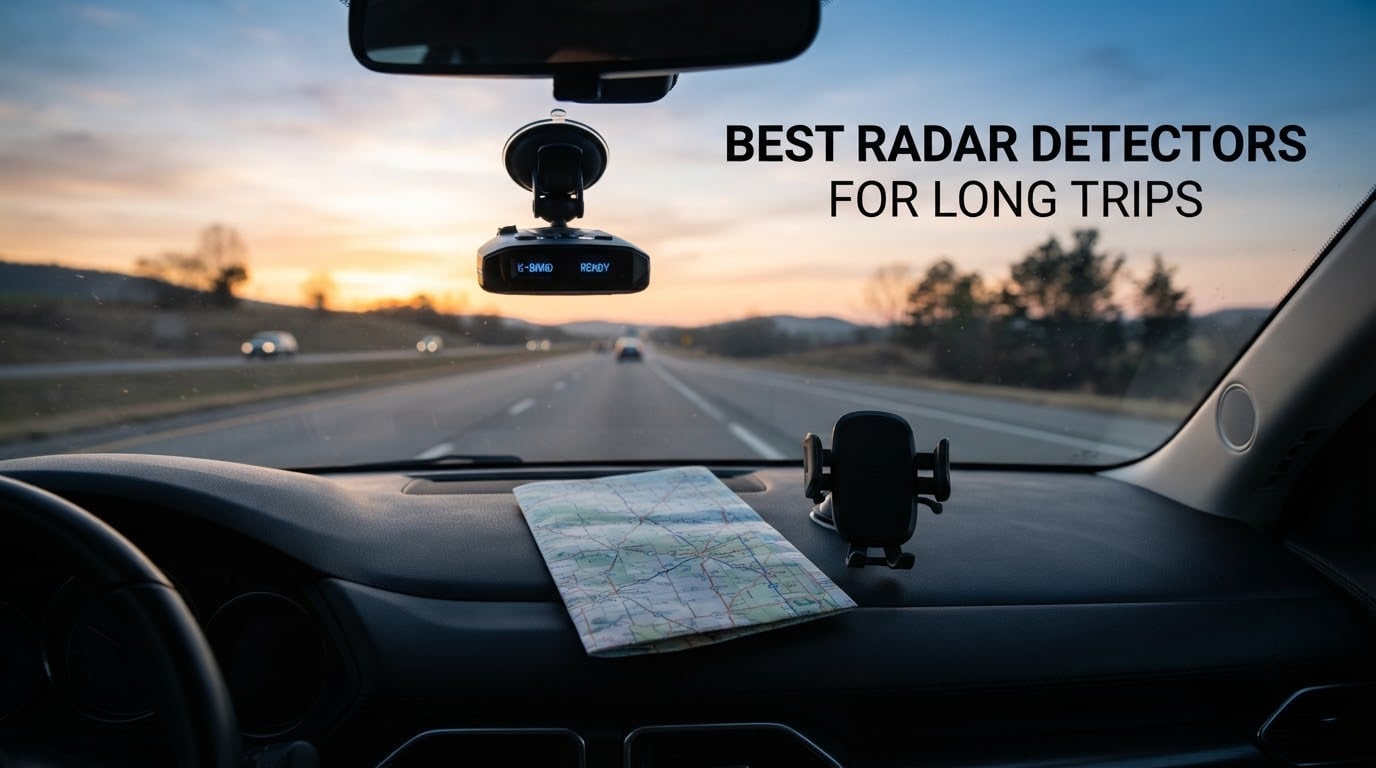
A 2,000-mile drive is not eight separate 250-mile drives. By hour six your attention is worn down, the traffic is thick with semis, and the detector that felt perfectly usable at breakfast is now beeping every few minutes for reasons you cannot see. That is the whole problem with picking a radar detector for long trips: almost anything detects a radar gun. What separates a good long-haul detector from a bad one is how much of the noise it removes across a full day of driving, and whether it still works at hour nine.
This roundup covers eight detectors judged on that standard. We looked at usable alert distance rather than manufacturer range claims, at false-alert behaviour in truck traffic, at GPS lockout capacity for a multi-state route, at how the power and mount hold up over 8 to 12 hour days, and at laser performance, which is honestly the weakest feature on any detector. If you want the short answer first, the general radar detector roundup covers shorter daily commutes, while this one is built around the road.
We also weighed what users report after real long runs rather than bench specs. On a 2,500-mile Ohio-to-Texas loop documented on rdforum.org, alerts fired roughly every ten minutes on average, and the longest useful alert came at about 3 to 3.5 miles from an officer positioned below a hill and around a curve. That figure matters more than any “extreme range” label, because 3 miles of warning is roughly a minute and a half of reaction time at highway speed. Read that alert distance as the real ceiling for everything below, not the marketing number.
One note up front: detectors exist to help you drive the posted limit, not to help you drive over it. They also have legal limits you should know before crossing state lines, which we cover near the end.
Table of Contents
Top 3 Best Radar Detector Picks for Long Trips in 2026
The Uniden R3 takes our top slot for sustained long-haul use because it pairs genuinely long detection range with the largest review base in this group, which means its behaviour in traffic is well documented. The Uniden R7 is the pick if you want directional arrows to sort real threats from blind-spot radar noise. The Uniden DFR7 delivers the same core filtering at a lower tier once you tune it in.
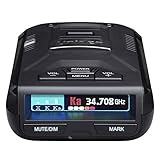
Uniden R3
- Single antenna long range detection
- GPS mute memory for repeat false alerts
- Multi-color OLED display
- Free firmware and camera database updates
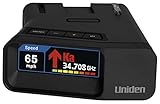
Uniden R7
- Dual antennas with front and rear arrows
- OLED shows up to four signals
- GPS self-learning with mute memory
- Customizable band priority

Uniden DFR7
- Wide band radar and laser coverage
- GPS mute memory and quiet mode
- Advanced K and Ka filtering for blind spot systems
- OLED with battery voltage readout
Quick Overview: All 8 Detectors Side by Side in 2026
Every detector below covers the standard police radar bands and comes with GPS memory, but they differ sharply on antenna count, filtering sophistication, and how much setup they demand before they go quiet. This table puts the whole lineup side by side.
| Product | Specifications | Action |
|---|---|---|
| Uniden R3 |
|
Check Latest Price |
| Uniden R7 |
|
Check Latest Price |
| Uniden DFR7 |
|
Check Latest Price |
 Cobra RAD 480i Cobra RAD 480i |
|
Check Latest Price |
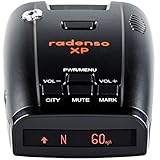 Radenso XP Radenso XP |
|
Check Latest Price |
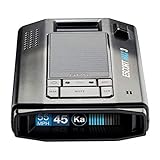 Escort MAX 3 Escort MAX 3 |
|
Check Latest Price |
 Escort MAX 360 MKII Escort MAX 360 MKII |
|
Check Latest Price |
 Valentine One Gen 2 Valentine One Gen 2 |
|
Check Latest Price |
How We Evaluated Detectors for Multi-Day Driving
Range is the easiest specification to quote and the least useful on its own. Every one of these detectors will pick up a stationary radar gun eventually, so we scored usable distance instead: the point at which the alert arrives with enough time to slow down calmly rather than react sharply. Where owner reports give numbers, we used them. Where they do not, we said so rather than inventing a figure.
False-alert filtering got the most weight, because it is the variable that changes with trip length. One noisy alert an hour is manageable. Ten an hour across a nine-hour day is 90 alerts, and 90 alerts train you to stop looking at the display. We paid particular attention to filtering against K band noise from commercial trucks and blind-spot monitoring systems in newer vehicles, which owners on r/radardetectors and rdforum.org describe as the single biggest source of fatigue on long interstate runs.
GPS capacity mattered too. A cross-country route passes through dozens of camera sites and permanent false-alert locations, and a detector that cannot store them will re-announce the same automatic door on day four. We also considered power draw and mounting, because a 12V socket plug that slips at mile 600 or a unit that drifts on the glass in July heat becomes a real problem on a multi-day run. Finally, we treated laser honestly: it is the weakest feature across this category, and any claim otherwise deserves scepticism.
Everything we cite comes from the manufacturer listing and from what owners report. Where a spec is missing from the data, we leave it out rather than filling the gap.
1. Uniden R3 – Best Radar Detector for Long Trips Overall
- Alerts reported a mile or more out on open road
- GPS mute memory handles repeat automatic doors
- Strong authentic Ka band detection
- Multi-color OLED shows band and strength together
- Free firmware and camera database updates
- Included suction cup mount is weak in heat or cold
- Needs band and filter tuning before K band settles down
- Single antenna gives no direction indication
The Uniden R3 is the best radar detector for long trips overall, and the reason is boring in the best way: it is the most documented detector in this group and it holds up. Owners report first alerts a mile out and several miles on open road, which puts it in the same usable band as the units marketed around extreme range. With 4.6 stars across nearly eight thousand reviews, its behaviour in real traffic is not a mystery.
What makes it work over a full day is the combination of range and GPS mute memory. Mute memory handles the automatic store doors you pass every morning on the same route, and once it has locked a location it stays quiet there. That is the feature that decides whether a detector still feels useful on day three of a trip.
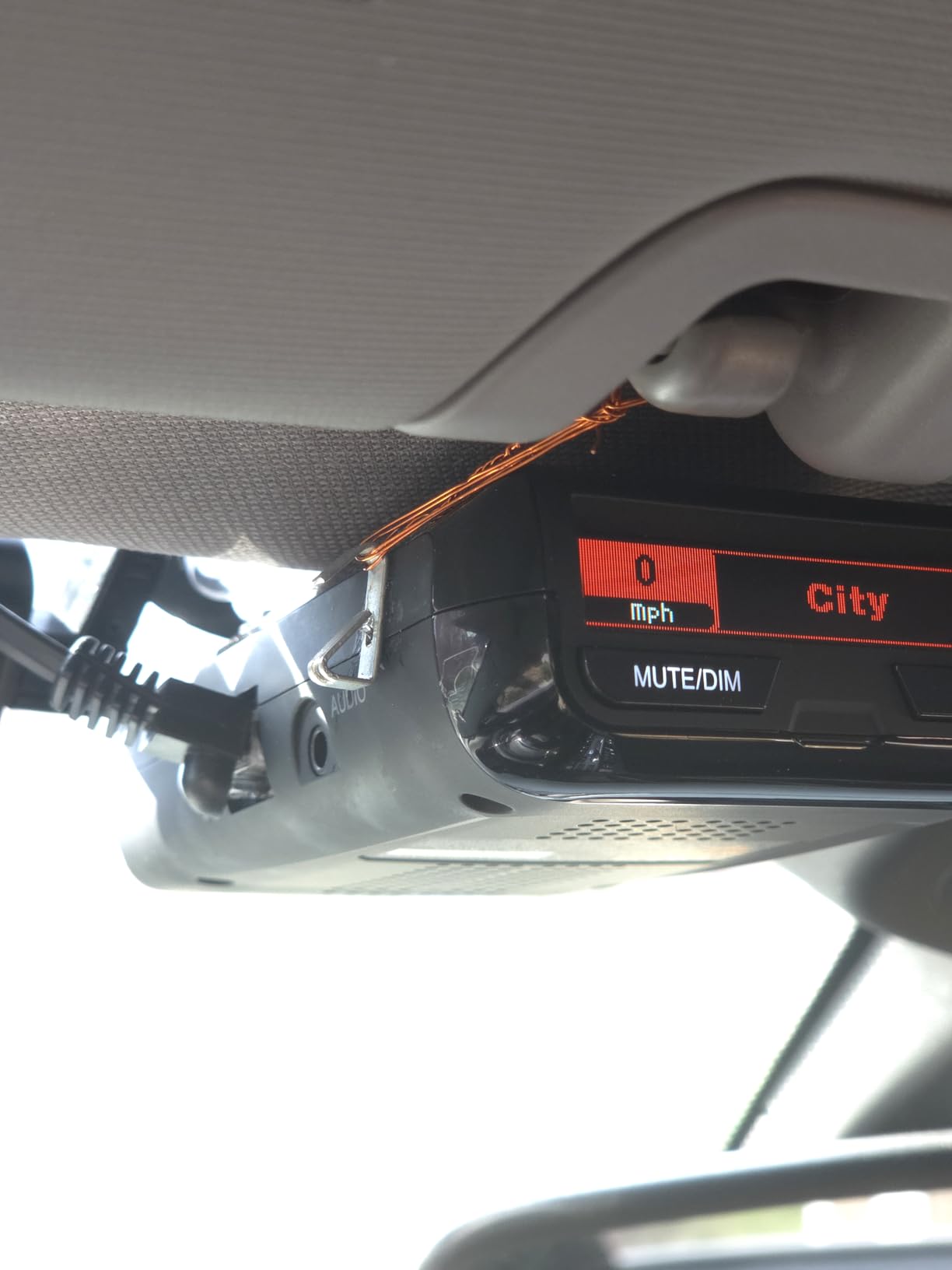
The multi-color OLED display shows speed, band and signal strength at the same time, so you can judge an alert without waiting for the voice to catch up. Free firmware and camera database updates keep the lockout logic and photo-enforcement locations current, which matters on a route you may drive again next year.
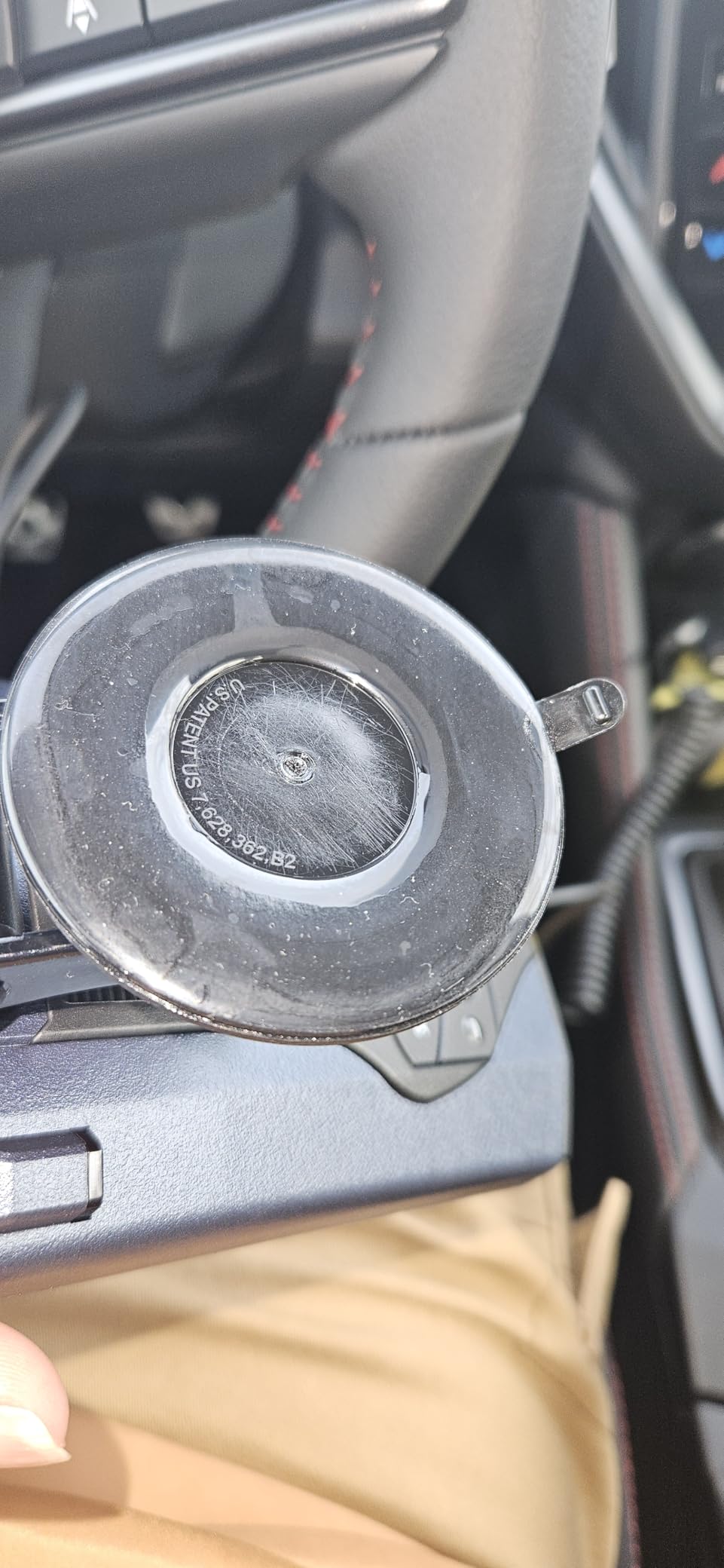
The one genuine annoyance is the mount. The included suction cup is weak and tends to let go in hot or cold weather, which on a long summer trip means re-seating the unit at every fuel stop. Budget a sturdier aftermarket mount. Owners also report that the unit needs band and filter tuning before K band noise settles, and that firmware updates matter because older Honda and Acura parking radar can trigger false alerts without them.
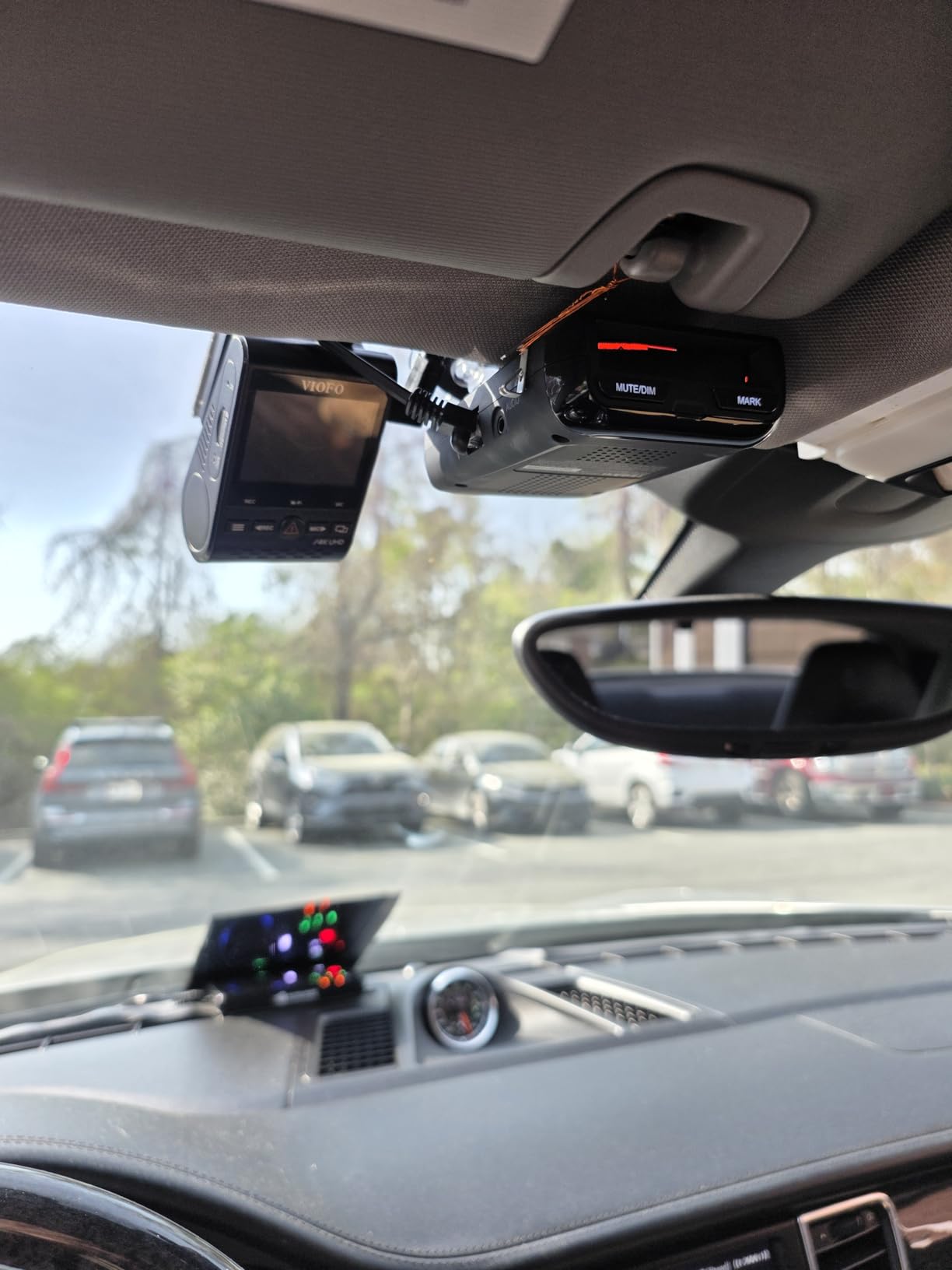
How the R3 holds up across a nine-hour day
The R3 stays useful because it does not need babysitting. Once the filters are dialled in, the alerts that remain are mostly real, and the ones that are not tend to be location-based and therefore locked out after the first pass. Voice alerts keep your eyes forward, and the single antenna keeps the install simple, which is one fewer thing to go wrong in August heat.
What you give up is direction. With one antenna the unit cannot tell you whether a signal is ahead or behind you, so you have to work out for yourself whether the alert came from a patrol car you are closing on or one overtaking in the other lane.
Who should skip the R3
Skip it if you drive a route full of heavy truck traffic and want arrows to separate a real patrol unit from a semi’s blind-spot radar. The filtering is good, but it is filtering by strength and pattern, not by direction. If you mostly commute in a city and rarely exceed an hour of driving, our radar detectors for cars guide covers lighter options better suited to short trips.
Also skip it if you want app-based firmware updates over Bluetooth. The R3 updates over USB from a computer, so plan that as a pre-trip task rather than something you do in a hotel parking lot at midnight.
2. Uniden R7 – Best Long Range Detector With Directional Arrows
- First alerts reported two to three miles out on open highway
- Dual antennas with arrows show which side a threat is on
- GPS self-learning cuts repeat alerts
- Large OLED shows up to four signals at once
- Band priority and tone settings are deeply customizable
- Advanced settings menu takes real study to configure
- No Bluetooth so updates need a USB connection
- GPS lock takes a moment to acquire on startup
- Arrows can occasionally misjudge direction
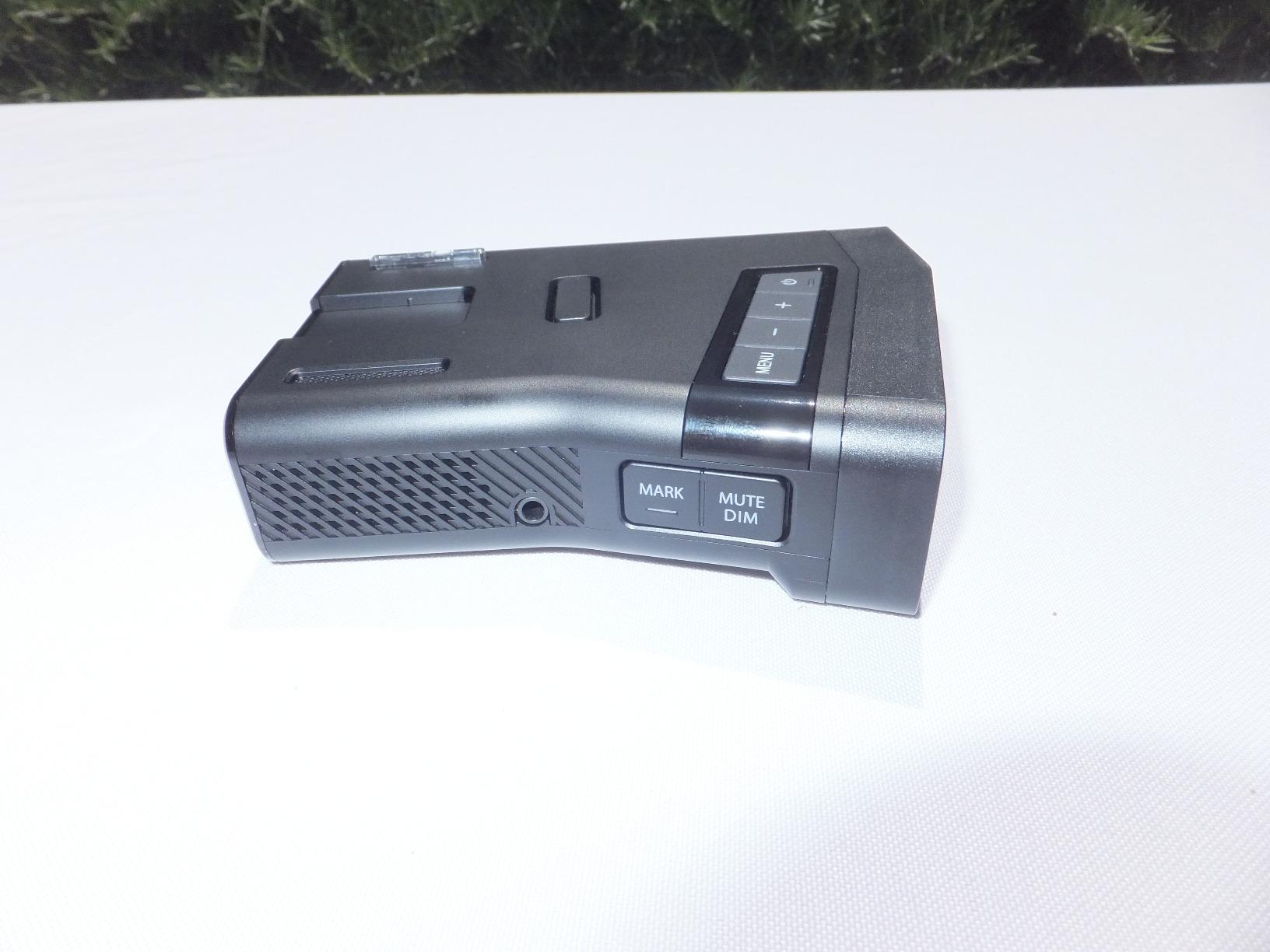
The Uniden R7 is the best long range radar detector when your route is mostly open interstate, and it is the one we would pick for a first cross-country run. Multiple owners report first alerts two to three miles out, and reviewers consistently describe it as standing up across varied terrain on multi-state road trips.
The dual antennas and directional arrows are the reason. Front and rear antennas report band and strength separately and show which side a signal came from, so a K band alert from a semi in the lane beside you looks different from a Ka alert dead ahead. On a long trip with constant truck traffic, that separation is worth more than raw extra range.
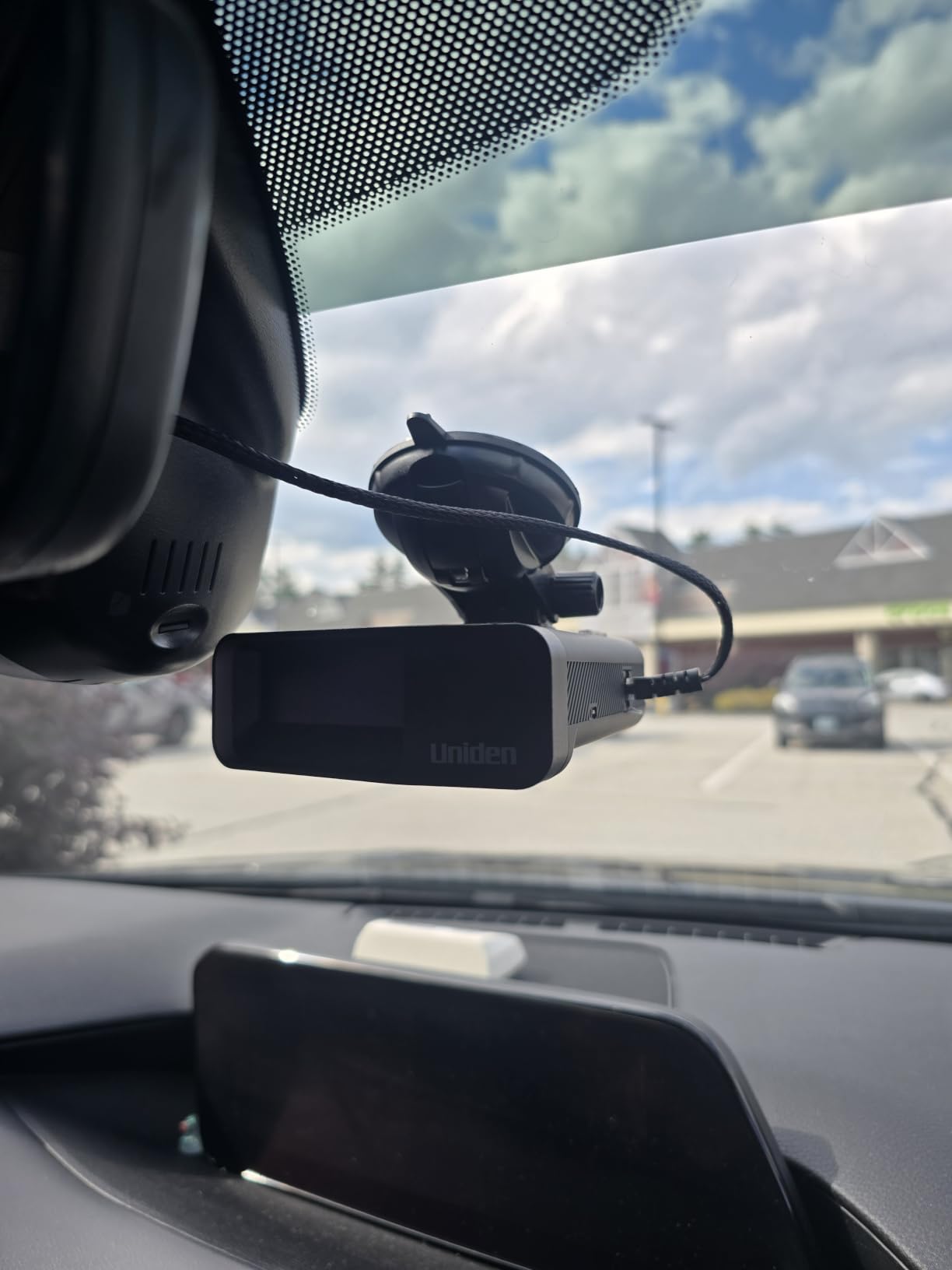
GPS self-learning and mute memory handle the repeat locations, and the large multi-color OLED display can show up to four simultaneous signals, which is exactly what you want when you are passing a toll plaza exit or an interchange where three things are happening at once. Band selection, alert tones and band priority are all adjustable, so you can tune the unit to your route rather than living with defaults.
The trade-off is setup effort and no Bluetooth. The advanced settings menu needs research and experimentation before it performs correctly, and firmware updates mean unplugging the unit and connecting it to a computer by USB. That is fine if you treat it as a pre-trip ritual and annoying if you planned to update while parked at a rest stop.
Why the arrows matter more at mile 800 than mile 50
Early in a trip you are alert and interpret every alert correctly. By the afternoon you are not, and the display has to do the interpreting for you. When an alert arrives with an arrow and a band, you can decide in a second whether it is worth slowing for. Without arrows you have to interpret a bare signal while your attention is at its lowest.
The arrows are not perfect. Owners report they can occasionally misjudge the direction of a signal, and the GPS lock takes a moment to acquire after startup, so give it a minute before you trust a lockout decision.
Where the R7 falls short
It does not detect radar detector detectors, so if you care about RDD-detectability in certain states, this is not the unit. The camera database also covers only the US and Canada, which matters if your long trip crosses a border. And if you prefer a physical control you can hit while driving rather than a deep menu, the R7 asks for patience.
If you spend most of your time in dense city traffic rather than open highway, check our radar detectors for highway driving guide for how those needs differ.
3. Uniden DFR7 – Best Value Detector for Highway Driving
- Picks up police radar roughly a mile down the road
- Advanced K and Ka filtering targets collision avoidance and blind spot systems
- Quiet mode and mute memory silence doors on familiar routes
- OLED shows band strength max speed and battery voltage
- Side by side testers rate it ahead of cheaper Cobra units
- Beeps constantly on default settings until tuned
- Bulkier body than slim newer models
- No Bluetooth so updates need USB
- Single antenna so no directional arrows
The Uniden DFR7 is the best value detector for highway driving, and it is the model we would hand someone who wants Uniden filtering without the top-tier spend. It picks up police radar roughly a mile ahead, and side-by-side testers rate it clearly ahead of the cheaper Cobra units.
The filtering is genuinely good once configured. Advanced K and Ka filtering targets collision avoidance and blind spot monitoring in other vehicles, which are exactly the sources that make long interstate runs miserable in newer cars. GPS mute memory plus quiet mode handle automatic doors and familiar blind-spot locations.
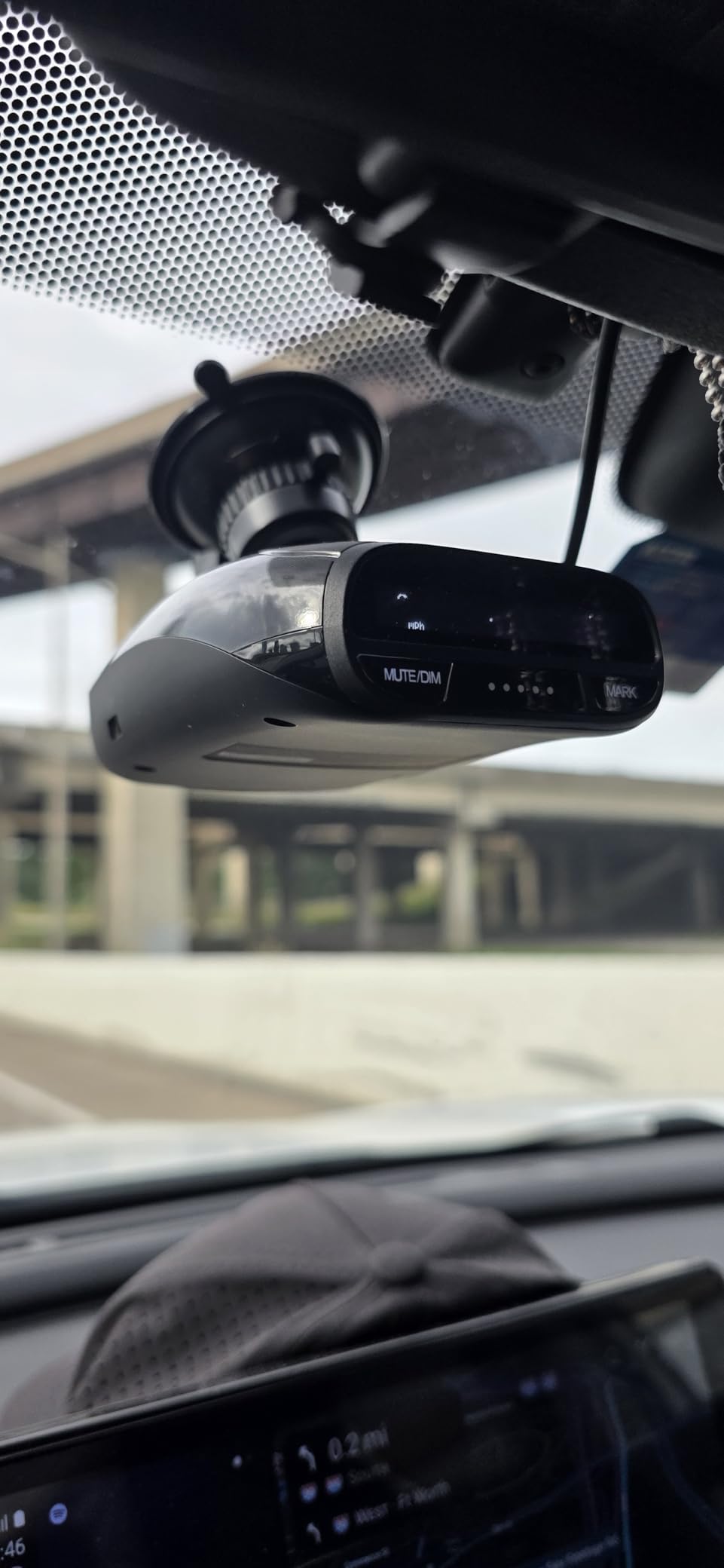
The OLED display is unusually informative for this tier, showing band, numeric signal strength, max speed warning and battery voltage. That voltage readout is quietly useful on a long trip: if the unit starts dimming as the alternator cycles, you know the 12V socket is the problem before the detector dies on a stretch with no services.
Out of the box it beeps constantly, and that is the honest headline. Band and filter tuning is not optional. Once quiet mode, mute memory and the filters are dialled in, owners report it becomes near-silent, but expect to spend a focused twenty minutes on it before you leave the driveway.
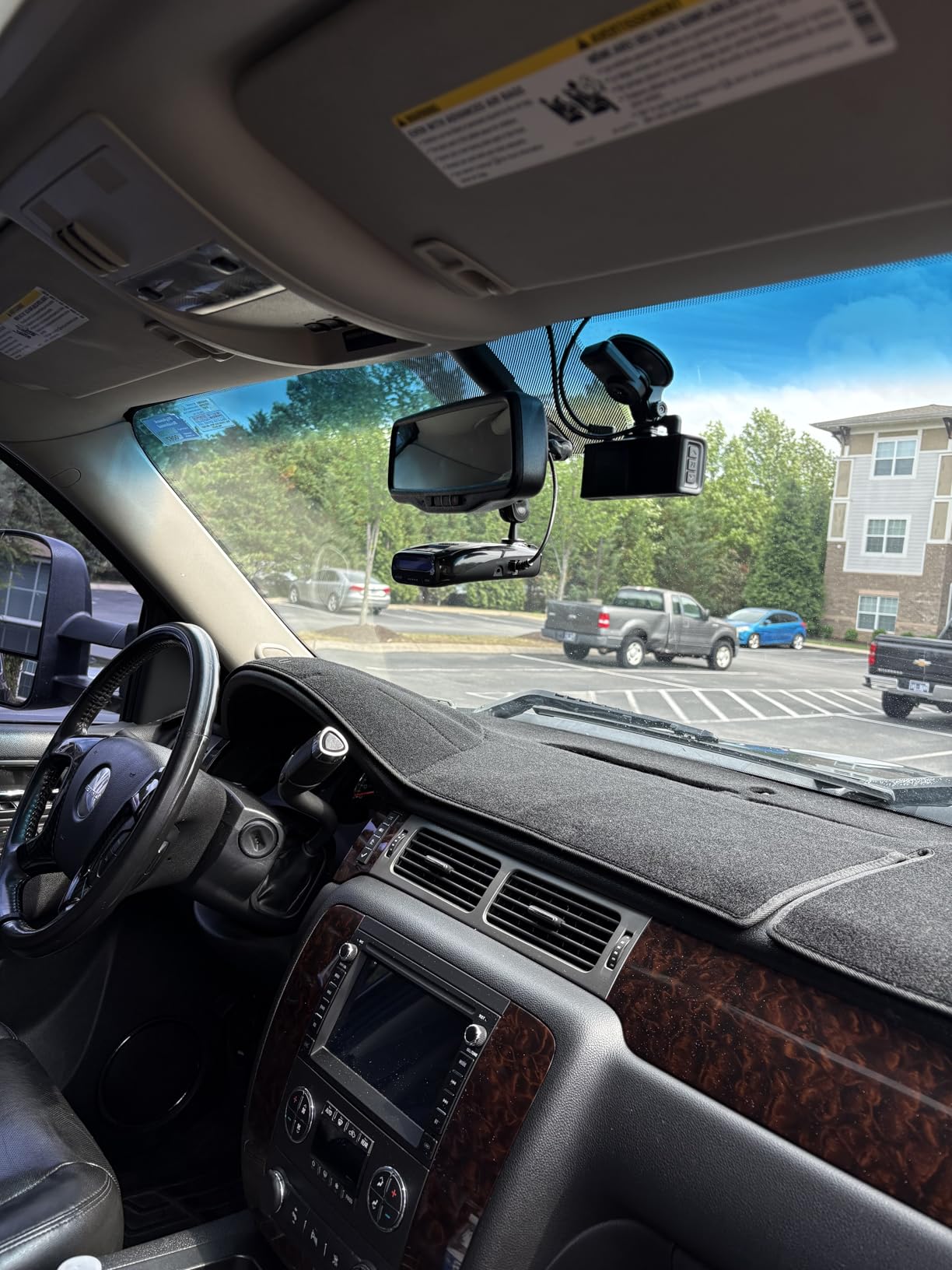
Is the DFR7 right for a multi-day route
Yes, with one caveat: you have to configure it before the trip, not during it. Lock in the filters, drive your local routes a couple of times so mute memory fills, then start the long run. Owners report it performing consistently once that work is done.
The bulkier body is the other thing you notice on day one and forget by day two. It is larger than slim newer models and takes a little more windshield space, which is a fair trade for the informative display.
What you give up versus the R3 and R7
No directional arrows, since it has a single antenna. You will also be updating firmware over USB rather than Bluetooth, and the speed camera database covers only the US and Canada. If arrows are non-negotiable for you because of constant truck traffic, spend up and move to the R7 instead of fighting with interpretation.
4. Cobra RAD 480i – Best Budget Detector for Road Trips
Cobra RAD 480i Laser Radar Detector, Long Range Detection, Bluetooth, Black
- Front and rear LaserEye detection across all directions
- Largest review base in the category at over ten thousand reviews
- Digital signal processing gives fast laser alerts
- Bright daylight display with an unobtrusive dark mode
- Suction mount holds through temperature changes and moves between vehicles easily
- Bluetooth app with shared community alerts and CarPlay support
- App pairing is unreliable for some owners
- Some units lose speaker audio after a year or two
- Range is serviceable rather than exceptional
- Power cord has no buttons so muting means reaching the unit
- Occasional false alarms on sliding and automatic doors
The Cobra RAD 480i is the best budget radar detector for road trips, and the reason is durability and record rather than performance. It is the best seller in the category with more than ten thousand reviews, and a lot of those owners keep it for years. If you want something that survives four summers of road trips without thinking about it, this is the safe pick.
Front and rear LaserEye detection gives you all-around awareness, and digital signal processing produces fast laser alerts along with modest, clear K and X band chatter. That chatter is the important word here: this detector is not quiet in the way the Radenso XP is, but what it does report, it reports cleanly.
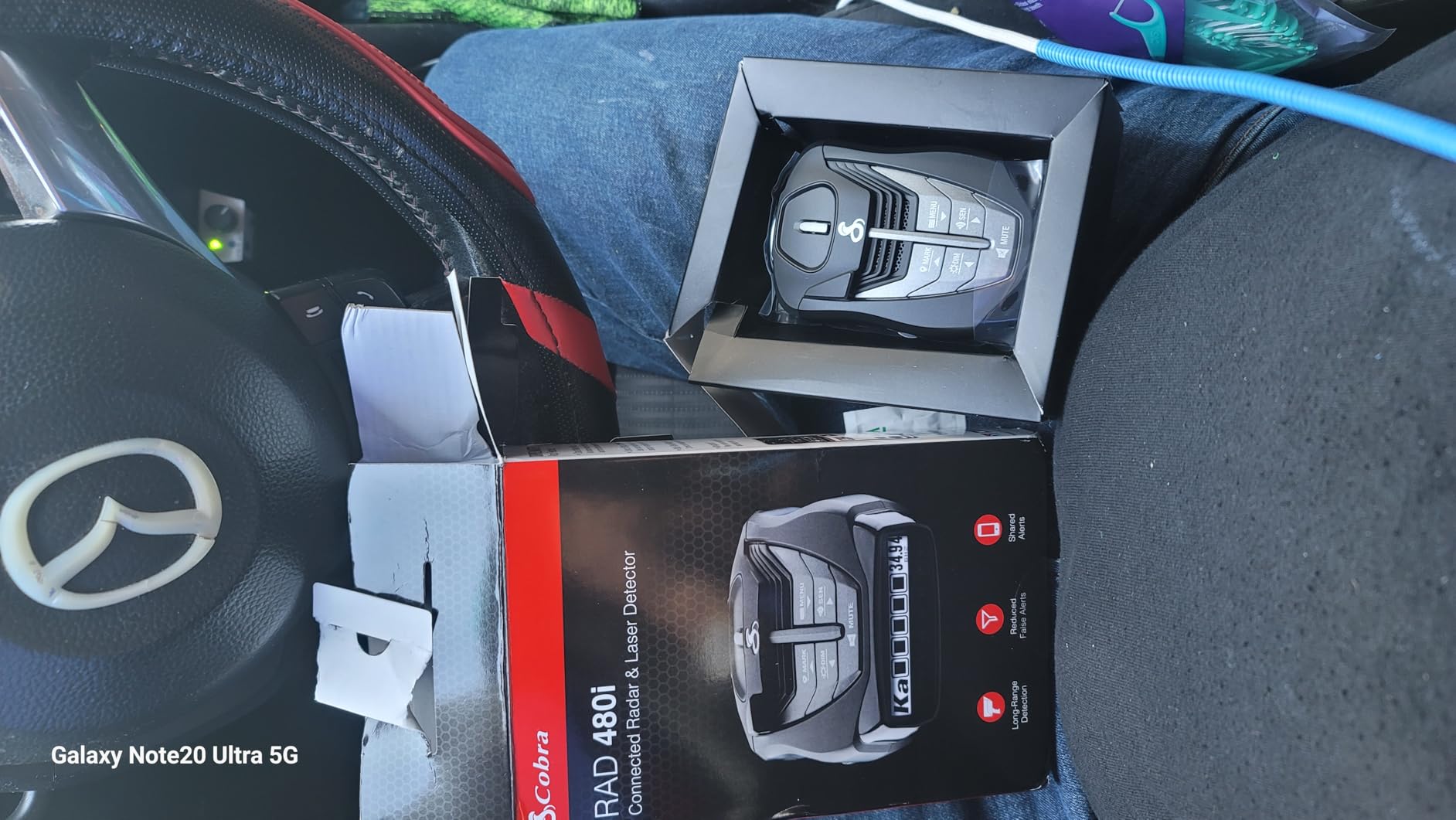
The Bluetooth app with shared community alerts and CarPlay or Android Auto integration is genuinely useful on a long route, because crowd-sourced speed trap reports from other drivers fill in some of what your detector misses. The bright daylight-readable display with a dark mode stays unobtrusive at night, which matters when you are ten hours into the day.
The compromises are real. Range is serviceable rather than exceptional, so it picks up closer than the premium long-range units. Bluetooth pairing is unreliable for some owners, the app sends frequent email notifications, and a noticeable share of owners report speaker failure or lost audio alerts after a year or two. The power cord also has no buttons, so muting means reaching over and touching the unit.
Where the RAD 480i wins on a long trip
Portability between vehicles and a mount that holds through temperature changes. If your trip involves swapping rental cars or moving equipment around, being able to unclip one unit and clip it into the next vehicle in a parking lot is a genuine advantage, and the included hook-and-loop dash fastener gives you a second option beyond the suction cup.
The included 12V power cord, suction cup windshield mount and dash fastener mean you have a complete kit out of the box, which is more than several competitors offer.
Where it costs you
Warning distance. On a long open run, serviceable range means you get your first alert later than you would with an R3 or R7, and that difference compounds across a day of highway driving. If your trip is mostly open interstate rather than mixed driving, spend more. If it is mostly town-to-town and stop-to-stop, this is the right unit.
5. Radenso XP – Best Detector for the Fewest False Alerts
- Owners moving from Escort and Valentine units report dramatically fewer false alerts
- Effectively no false laser alerts in modern BMWs and other driver assist cars
- GPS lockout with a simple press and hold
- Per band sensitivity adjustment for dense city driving
- Smart dark mode keeps the display black until an alert fires
- Works out of the box with no setup
- Shorter detection range than premium Uniden models
- Power plug mounts on the driver side adding cable clutter
- No printed instructions and vague website documentation
- Loud beeps and a user point mode that can be triggered by accident
- Laser can trigger on fire truck Opticom equipment
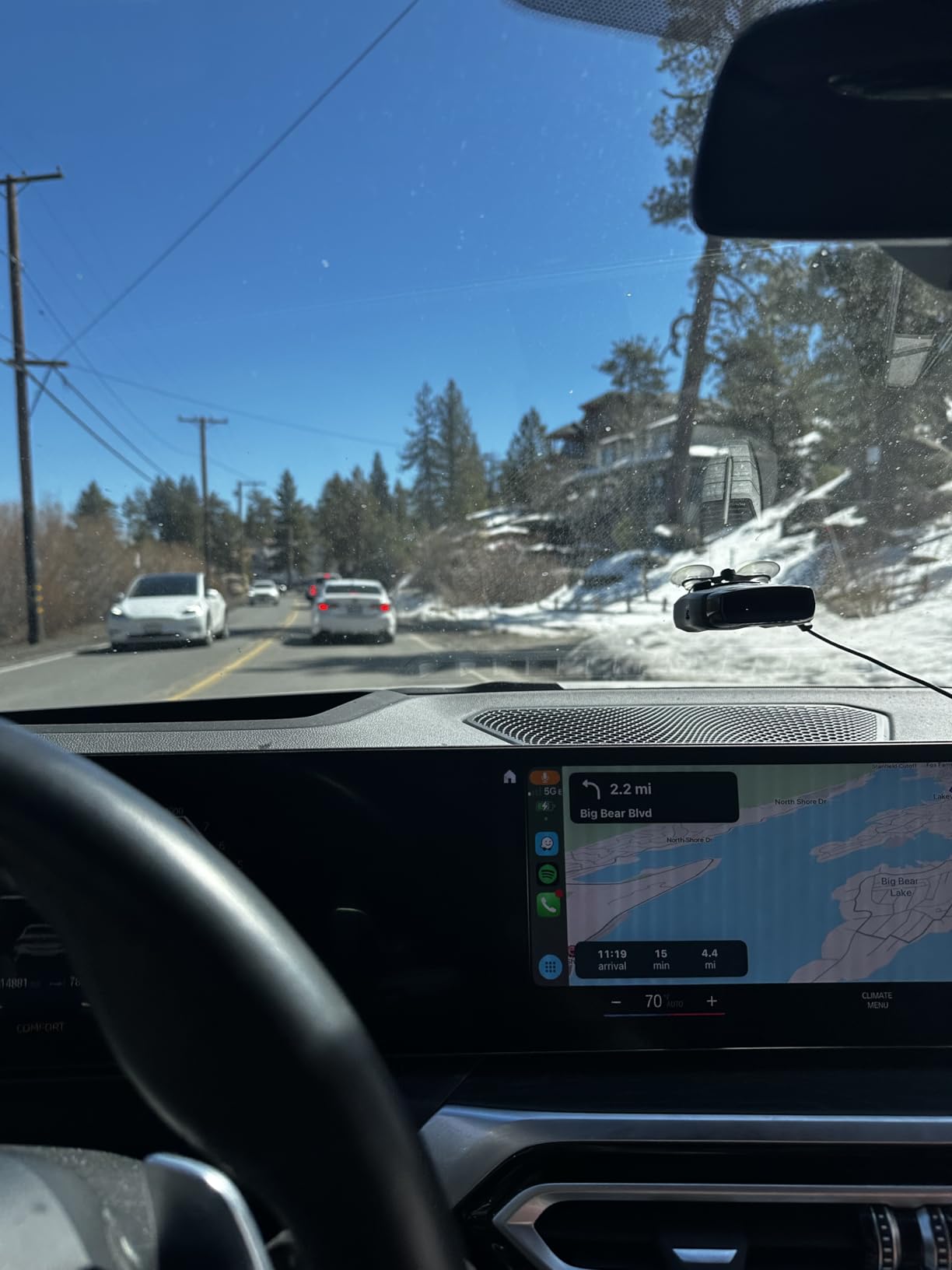
The Radenso XP is the best radar detector for the fewest false alerts, which on a long trip is not a minor feature. It is the feature. Owners coming from Escort and Valentine units report dramatically fewer false alerts, and the reviews single out how effectively it stays quiet around driver assist systems in modern vehicles.
That last point deserves emphasis. Blind-spot monitoring and collision avoidance radar are the newest and worst offender on current-generation cars, and the XP’s filtering is specifically effective at rejecting them, including in modern BMWs. On a nine-hour run in a newer vehicle, that is the difference between a usable detector and one you mute permanently.
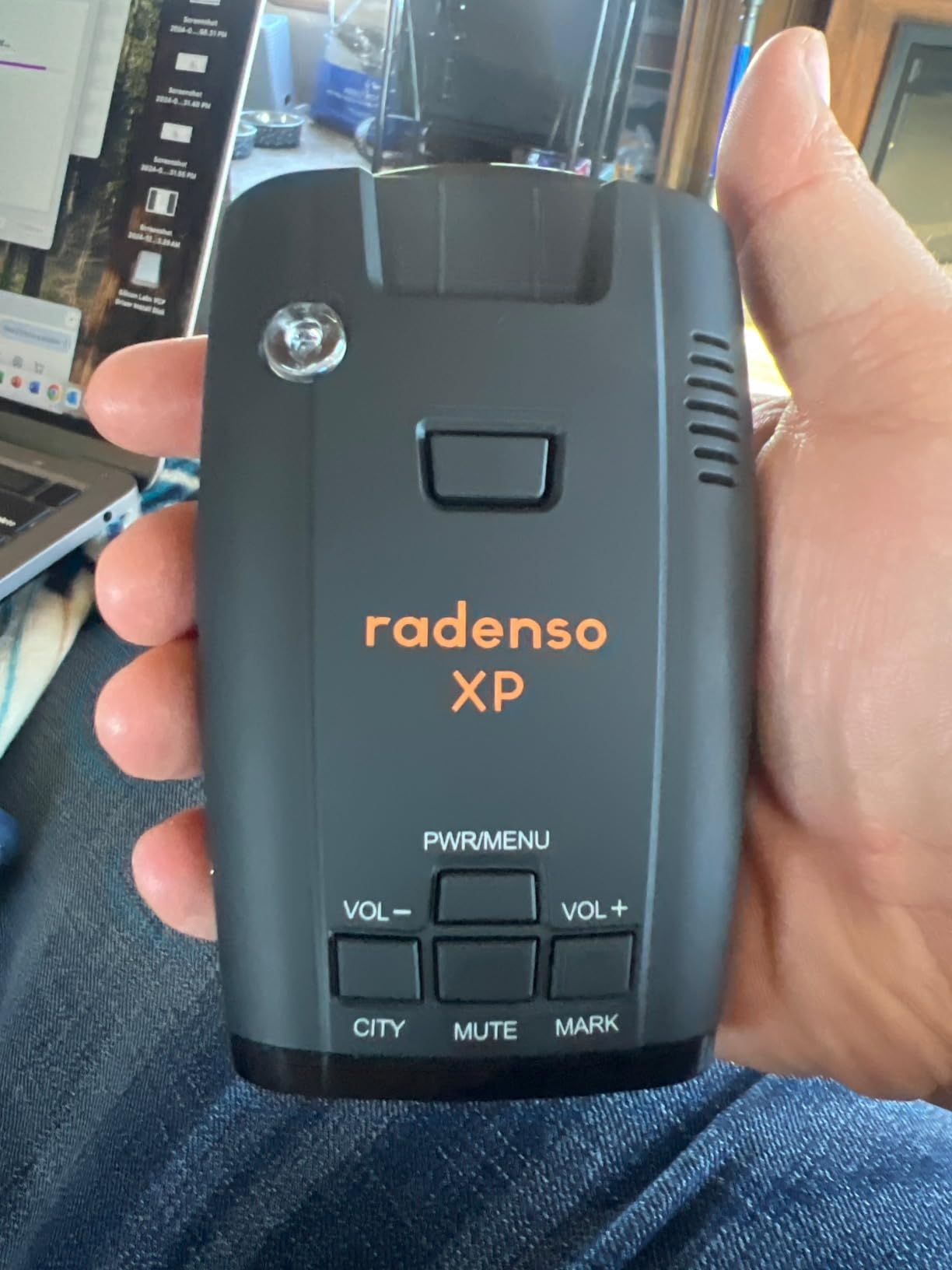
GPS lockout is refreshingly simple. Press and hold to permanently mute a false signal location, and you are done with that automatic door for good. Adjustable sensitivity per band lets you tune out electronic doors in dense cities without touching the bands you need on open highway, and low speed muting plus automatic sensitivity adjustment based on current speed keep it quiet where you do not need alerts anyway.
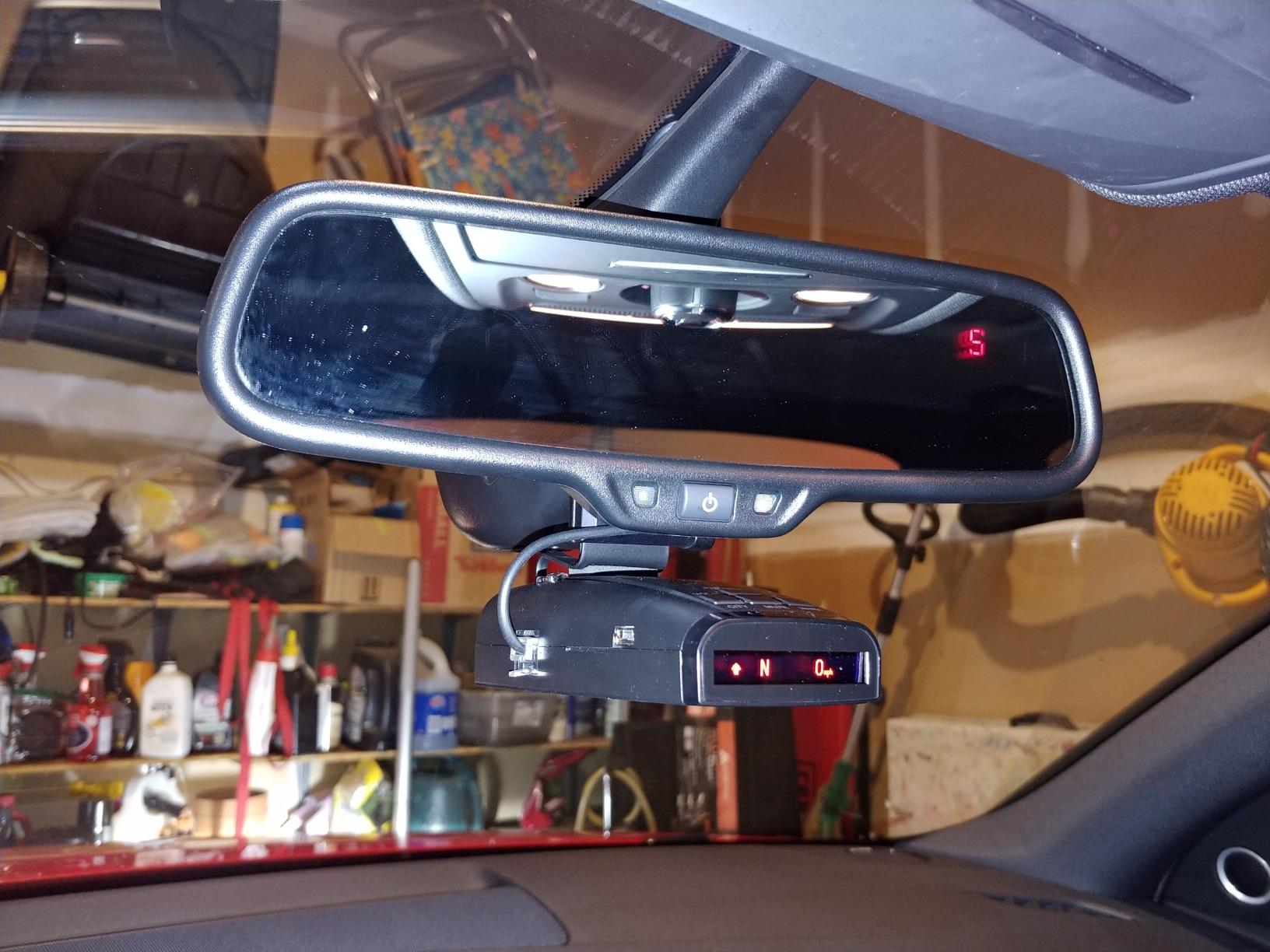
It works out of the box. No tuning marathon, no computer hookup, just mount, plug in and drive. Updates run through Windows or Mac software. Smart dark mode keeps the OLED black until an alert fires, so it does not glow at you through the night.
Is the trade-off worth it on a long haul
You are trading detection distance for silence. Owners are candid that the XP has shorter range than the premium Uniden models, so you will hear about a threat later than you would with an R3 or R7. For most long-trip drivers that is a fair swap, because a detector that reports early and constantly gets ignored by hour five, while a quieter one still gets listened to at hour nine.
Two smaller issues: the power plug mounts on the driver side, which adds cable clutter in your sightline, and the box contains no printed instructions. The website documentation is vague and does not always match the firmware menus, so allow time to figure out the settings.
Who this is not for
If you drive mostly empty rural highway at night and want maximum warning distance above all else, a longer-range model serves you better. The XP is built for people who drive newer cars in mixed traffic and want their detector to shut up.
6. Escort MAX 3 – Best Mid-Tier Detector With App Pairing
Escort MAX 3 Laser Radar Detector, Bluetooth Connectivity, Premium Range
- Consistently early warning of police radar well before the officer position
- AutoLearn learns your route after repeat trips
- Variable speed sensitivity cuts alerts as you slow down
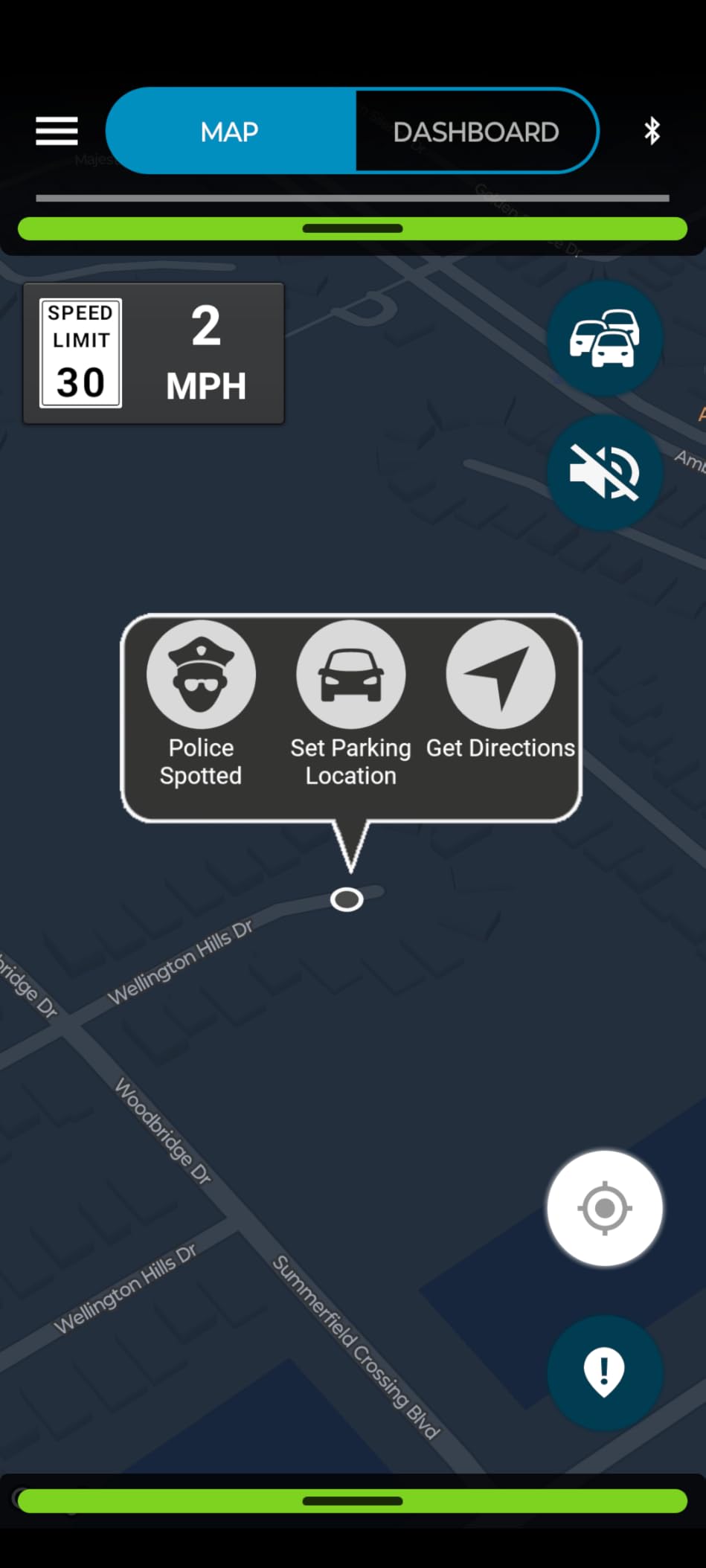
- Bluetooth app lets you band on and off and mirror alerts
- Two year manufacturer warranty and pairs with the Escort M2 dash cam
- Better blind spot filtering than older Escort models
- Single antenna with no directional arrows
- Some testers find scan speed slow against stalker guns compared with the Uniden R3
- Windshield suction mount slides off frequently
- Firmware and app setup takes some learning
The Escort MAX 3 is the best mid-tier detector if you want app control paired with long-term owner confidence. Escort has decades in this category, and owners who have used the brand for years rate the MAX 3 as a solid upgrade with early warning of police radar well ahead of the officer position.
AutoLearn GPS software learns your route after repeat trips and rejects location-specific false alerts, which on a long haul means each day’s drive gets quieter than the last. Variable speed sensitivity also reduces alerts as you slow down, so slow-moving city traffic does not produce the same noise as open highway.
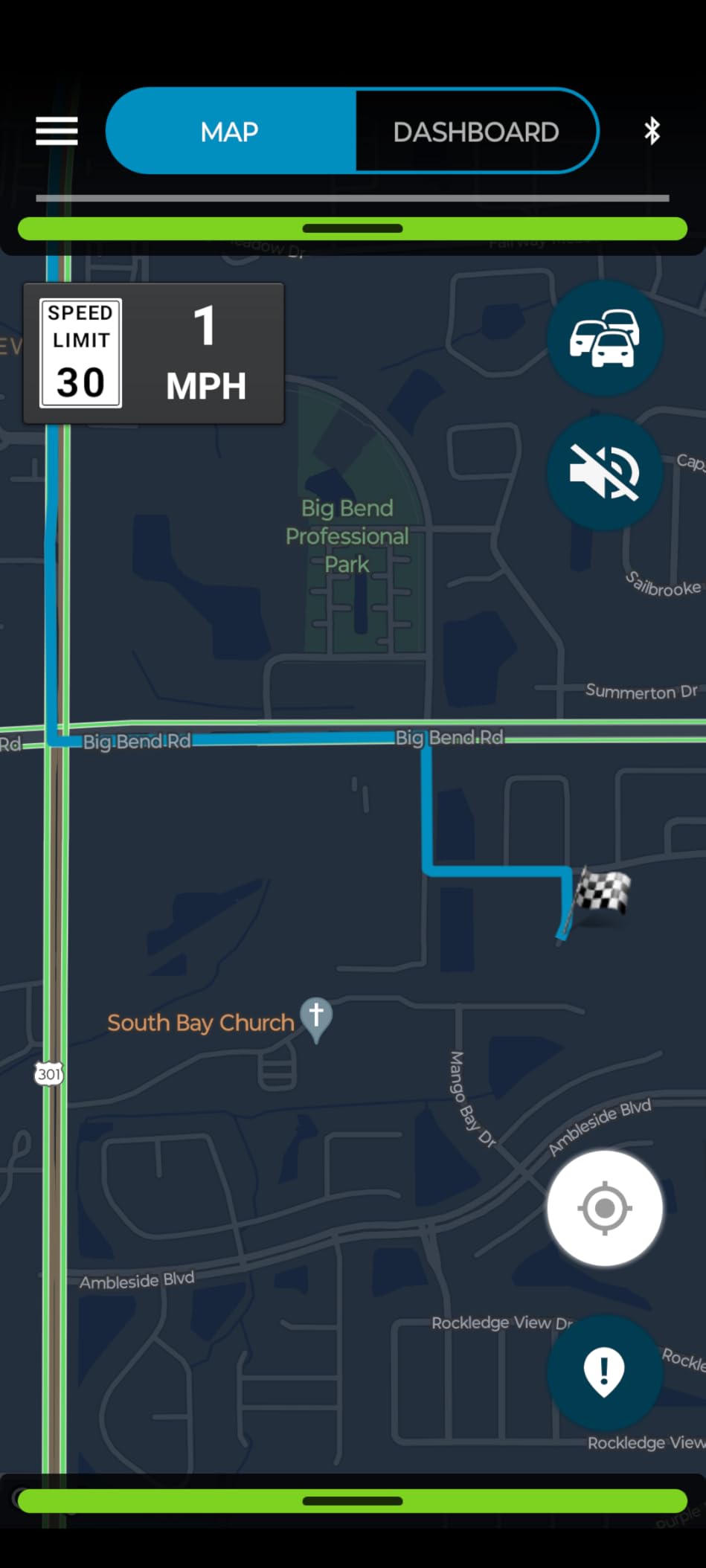
The Bluetooth app lets you turn bands on and off remotely and mirror alerts to the head unit, and the unit pairs with the Escort M2 smart dash cam if you run one. Two years of manufacturer warranty is the longest in this group. Owners also report better blind spot filtering than on older Escort models.
Two things temper that. It has a single antenna, so there are no directional arrows, and some testers find the scan speed slow, taking several seconds to react to a stalker gun compared with the R3’s instant response. The windshield suction mount also slides off frequently, which is the same complaint the R3 owners raise and the reason we would budget a better mount either way.
Is app control useful across a multi-state route
Yes, if you like adjusting settings while parked rather than at the wheel. Being able to band a frequency off when you enter a stretch of heavy truck traffic, without handling the unit, is a real convenience. Owners who prefer physical buttons will find this arrangement slower, and the M2 dash cam pairing only helps if that is the camera you already own.
Firmware and app setup takes some learning out of the box. Do it at home, not at a rest stop.
How it compares to the Uniden trio
Against the R3 and R7, you lose arrows and, by some tester accounts, instant-on responsiveness. You gain app-based control and a longer warranty. Against the DFR7, it is cleaner out of the box and easier to adjust remotely, which is why it suits a driver who does not want to spend a weekend learning a deep settings menu.
7. Escort MAX 360 MKII – Best 360 Degree Detector With Arrows
Escort MAX 360 MKII Radar and Laser Detector Bluetooth Enabled, Black
- Dual antennas give true 360 degree awareness of where a threat is
- Second generation platform claims roughly 50 percent more range than the original MAX 360
- Blackfin DSP chip processes legitimate signals immediately
- AutoLearn GPS learns routes and rejects recurring false signals
- Significantly reduced false alerts from collision avoidance and blind spot systems
- Bluetooth shared alerts plus CarPlay and Android Auto
- Highest price in this lineup with the lowest review count so durability is less proven
- A noticeable share of one and two star reviews suggests filtering is not flawless
- Multi-antenna design and OLED make it heavier than single-antenna units
The Escort MAX 360 MKII is the best 360 degree radar detector with directional arrows, and it is the Escort answer to the R7. Dual antennas cover all four directions with arrows, so you know whether the signal is front, rear, left or right rather than just that something is out there.
The second-generation platform claims roughly 50 percent more range and sensitivity than the original MAX 360, and the Blackfin DSP chip processes legitimate signals immediately for earlier alerts. AutoLearn handles route learning, and owners report significantly reduced false alerts from collision avoidance and blind spot monitoring systems, which are the two worst offenders on modern cars.
Connectivity is the strongest in this group alongside the Cobra: Bluetooth shared alerts, plus CarPlay and Android Auto display integration, so alerts land on your head unit instead of competing with the GPS for the same small screen.
The honest drawback is the evidence base. At 4.3 stars with a few hundred reviews, it has the smallest sample of any unit here, so its long-term durability across five summers of road trips is less well proven than the R3 or the Cobra. A noticeable share of one and two star reviews also suggests the filtering needs firmware tuning to satisfy everyone. It is also heavier than single-antenna units at 1.7 pounds, which you feel on a long hot day when the sun is loading the windshield.
Is it worth the premium over the R7
The two are the closest call in this roundup. The R7 has more reviews, no Bluetooth, and reports instant-on response faster by some testers. The MAX 360 MKII has app control, CarPlay integration, and a documented filtering improvement over collision avoidance systems. If your phone already runs CarPlay, the Escort fits into your trip kit more neatly.
If you are buying purely for range reliability and want the larger proven sample, the R7 is the safer long-haul bet.
Before you commit
Update the firmware before your trip and re-check filtering after. Several owners report that the first week out is noisier than the steady state, and a cross-country route does not give you slack to get used to it at mile 300. Confirm the shared alerts app is paired and the phone is charging, because an unpaired phone in a glovebox across a state line is not a plan.
8. Valentine One Gen 2 – Best Detector for Detection Enthusiasts
- Very long detection range with alerts a mile or two before an officer running always-on radar
- Rear radar antenna with directional indicator shows signal origin
- Sits quiet through everyday city driving so alerts stay trustworthy
- Learns recurring false signals and stops repeating them
- Super wideband Ka and Ku band coverage beyond basic X K Ka
- Simple uncluttered operation some drivers prefer
- Highest price point in this lineup and third-party sellers may not honour the warranty
- Learning the audio cues and app settings is a real time investment
- Reported gaps reacting to instant-on radar and certain stalker gun K band signals
- Less granular muting than GPS lockout models so some signals repeat
- V1 iPhone app configuration is complicated for some users
The Valentine One Gen 2 is the best radar detector for enthusiasts, and on r/radardetectors it is the name that comes up first when people ask for the absolute best plug-and-play unit. The community consensus across V1 Gen 2, the Escort Redline 360c and the Uniden R8w is consistent, and owners who came back to detectors after years of false alarms pick it for range and quiet.
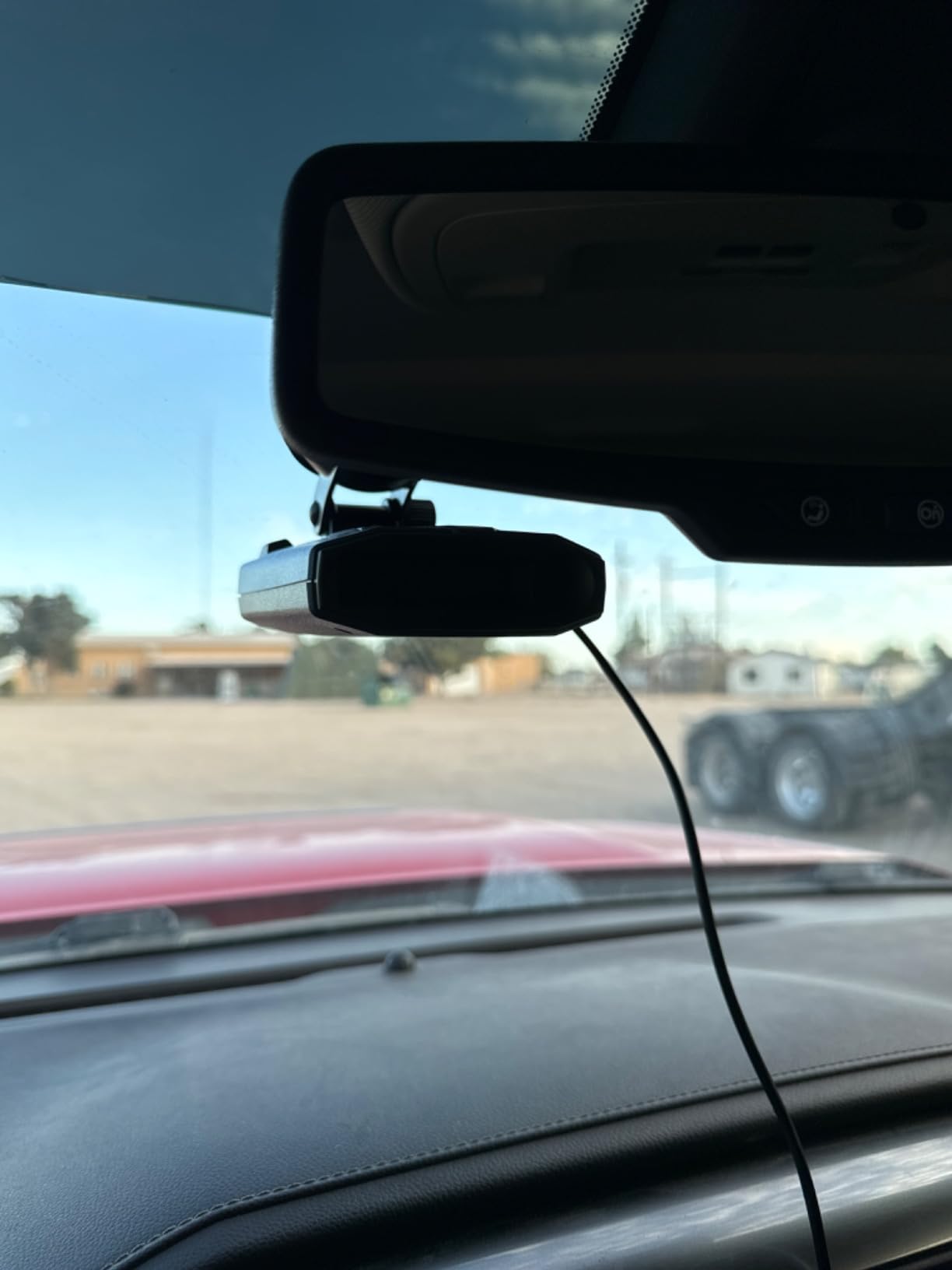
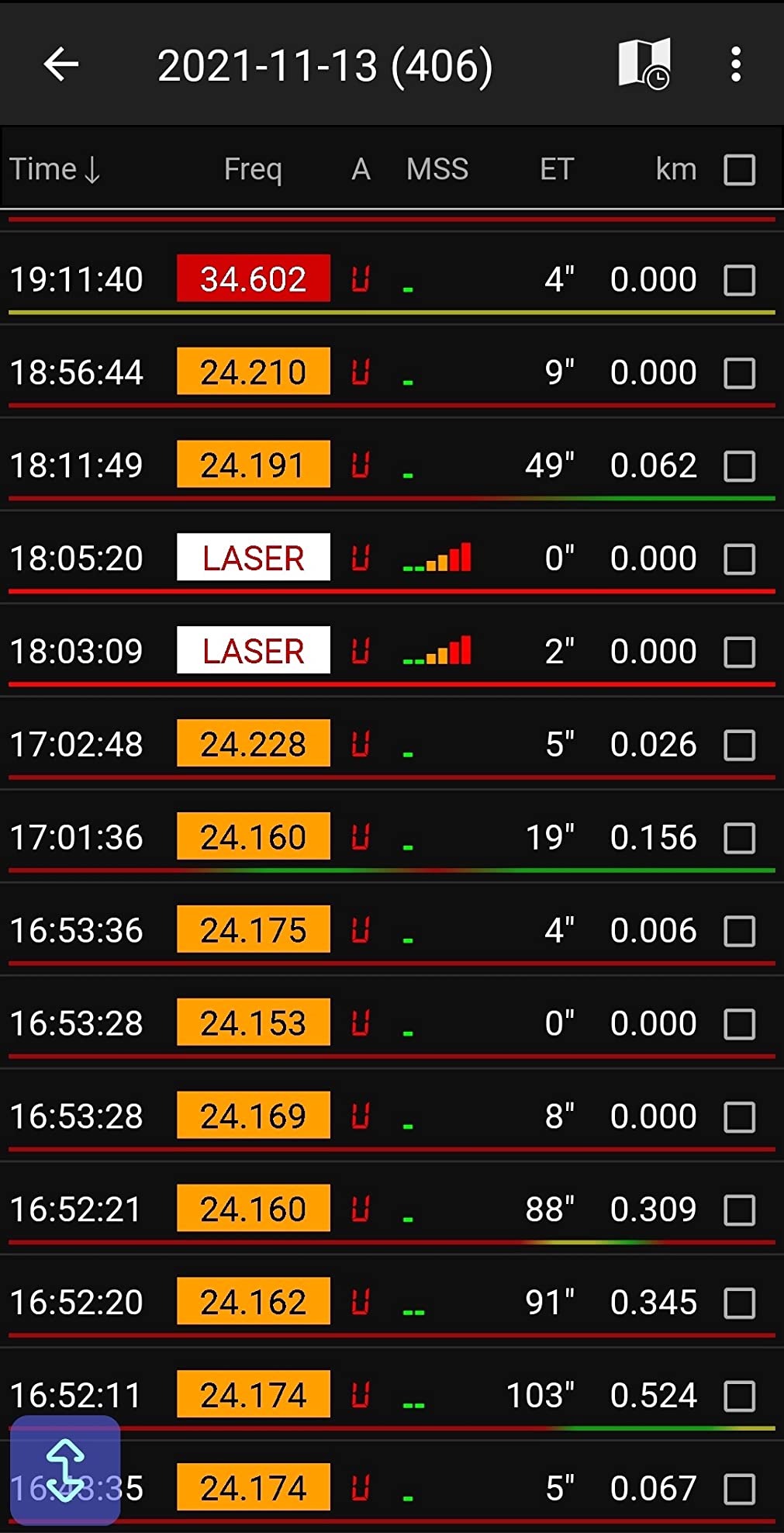
Range is the headline. Owners report alerts a mile or two before an officer running always-on radar, and super wideband Ka plus Ku band coverage extends beyond the basic X, K and Ka set. The rear radar antenna with a directional indicator shows which direction the signal is coming from.
More important on a long trip is that it sits quiet through everyday driving, so when it does alert, you believe it. That is the trait owners who abandoned detectors came back for. It also learns recurring false signals and stops repeating them, though the learning is not GPS lockout based, so some non-threatening signals repeat rather than being permanently muted by location.
The compromise is learning curve and cost. Audio cues and app settings take real time to understand, and the V1 iPhone app configuration is complicated for some users. Owners also report gaps reacting to instant-on radar and certain stalker gun K band signals, which matters more on long open highway than in town.
Is the V1 right for a multi-day run
It rewards drivers who treat the detector as a hobby rather than an accessory. The rear antenna and the wideband coverage mean it keeps finding signals that narrower-band units miss, and its quiet operation means you are not fighting the volume down by hour eight. For a driver who wants to understand what the unit is doing, that combination is worth the premium.
For a driver who wants arrows on a big OLED and phone integration, the R7 or MAX 360 MKII is the better tool, and the R3 is the better value.
What to know before buying
It is the highest price point in this lineup, and some owners caution that third-party sellers may not honour the manufacturer warranty. Buy from a source that handles the warranty. Also set aside an hour for the audio cues and the app before the trip, because arriving at a long route with defaults still dialling themselves is how a good detector becomes a frustrating one.
What Actually Matters on a Long Drive?
Range versus filtering is the tradeoff nobody explains well. A detector set to maximum sensitivity hears everything, including every truck blind-spot radar on the interstate, and you learn to ignore it. A detector set too quiet misses real signals. The right setting is usually high sensitivity on Ka, moderate on K, with the band priority ordering tuned so the first alert you hear is the one worth hearing. The R7 and DFR7 give you direct control over that ordering; the Radenso XP handles it for you.
K band truck falses are the single documented fatigue source on long interstate runs. One user described them as “Tons and TONS,” worst in Kentucky and Arkansas. They are unavoidable in heavy truck traffic, and the only real mitigations are a capable K band filter, IVT-style rejection, and GPS memory so a repeat location stops announcing itself. Expect a detector with good arrows to be the most comfortable, since you can at least see that the signal is not ahead of you.
Directional arrows are valued for exactly that reason. On a trip where half your surroundings are semis and newer cars with driver assist, knowing whether a signal is ahead or beside you is worth more than a few hundred extra feet of range.
Lockout planning matters because long trips cross many states and repeat familiar routes. Every detector here uses GPS memory, but the mechanisms differ: the R3, R7 and DFR7 use mute memory on familiar routes, the Radenso XP uses a simple press-and-hold permanent lockout, and the Escort units use AutoLearn to learn routes after repeat trips. Whichever you choose, run it on your local routes for a few days before a long trip so the database has something useful in it.
Windshield mount versus hardwire is a genuine long-trip decision. A suction mount is quick and moves between cars, but it drifts in heat and vibration, and cord routing across the footwell to the 12V socket is where cables snag. A hardwire kit solves both at the cost of an install and losing the ability to move the unit. For a single trip, the suction mount wins. For someone who drives long routes most weekends, the hardwire is the better system.
Power draw is worth checking before you leave. The DFR7’s OLED shows battery voltage, which makes it easy to catch a failing socket or alternator on a long stretch. Nothing here will meaningfully flatten a healthy alternator, but a detector left running with the engine off while you eat lunch in a parking lot will noticeably dim your battery.
How to Reduce False Alerts on a Long Drive
Most false alerts on a long trip fall into a small number of categories, and each has a specific counter. Truck blind-spot and collision avoidance systems fire constantly in modern traffic and are the hardest to remove entirely, so look for strong K and Ka filtering or IVT filtering. Automatic and sliding doors at retail sites repeat at the same coordinates, which GPS lockout and mute memory handle permanently once you pass twice.
Older Honda and Acura parking radar is a recurring complaint on the R3, and updating firmware solves it. Band priority ordering lets you push the noisy band down the list. Low speed muting and automatic sensitivity adjustment based on current speed, which the Radenso XP and Escort MAX 3 both offer, keep the unit quiet in slow city traffic without dulling it on open highway. And adjusting sensitivity per band rather than globally lets you reduce K in a truck-heavy state without losing Ka entirely.
Finally, set your mount and route your cord before you leave. A detector that slides around the windshield is not producing false alerts, but it is producing a driver who cannot trust the display, which has the same effect.
Pairing Your Radar Detector With Waze
Waze is not a substitute for a detector, and the reason is coverage shape rather than accuracy. On a 2,500-mile run documented on rdforum.org, detector plus Waze gave advance warning 80 to 90 percent of the time, but the user specifically flagged Oklahoma City to Tulsa as a stretch where Waze coverage simply was not there. On rural interstate between cities, crowdsourcing thins out exactly where you most want the warning.
What Waze adds is ahead-of-you reports that a detector physically cannot produce: a slow cluster near a curve, a crash ahead, a police vehicle parked short of a junction. Detector plus Waze gave 80 to 90 percent advance warning on that trip; either one alone gives you less. Download offline maps before you leave, since dead signal on a long stretch is the same problem as no users.
The Cobra RAD 480i, Escort MAX 3 and MAX 360 MKII all support app-based shared alerts, so they can surface crowd reports on the head unit alongside radar alerts. Download the app and pair it before the trip, not somewhere in the dark at a rest stop.
Where Radar Detectors Are Not Legal
Radar detectors are illegal in Virginia and Washington DC, and on US military bases. Commercial vehicles face additional restrictions in Illinois, New York and New Jersey. Radar jammers are federally banned outright. State law changes, so check the current rules for every state on your route before you leave. A detector is a tool for staying at the posted limit, not an invitation to use it.
Frequently Asked Questions
Can cops detect a radar detector?
They can in principle. In Virginia, DC and on US military bases, detector use is illegal outright, and in Illinois, New York and New Jersey commercial vehicles face extra restrictions. Radar detector detectors also exist, though none of the eight detectors here advertise RDD-proof operation as a headline feature. Rules vary, so check the current law for every state on your route before you leave.
Is there a radar detector that actually works?
Yes, and the eight in this roundup all detect police radar reliably. The difference between them is usable warning distance and how much noise they remove. On a documented 2,500-mile trip, the longest useful alert came at about 3 to 3.5 miles, which is roughly a minute and a half of reaction time at highway speed. Treat that figure as the realistic ceiling, not any extreme-range marketing claim.
Is a radar detector worth it?
On multi-day or high-mileage interstate driving, often yes, because the detector plus Waze gave advance warning 80 to 90 percent of the time on a documented 2,500-mile run. The value comes from reaction time and from cutting the noise that trains you to ignore the display. It matters much less on short city commutes. It is also illegal in Virginia, DC and on US military bases.
What causes radar detector false alarms?
Three sources dominate long trips. First, truck blind-spot monitoring and collision avoidance systems, which fire constantly in modern traffic and need strong K and Ka or IVT filtering. Second, automatic and sliding doors at retail sites, which GPS lockout and mute memory solve permanently once you pass twice. Third, older Honda and Acura parking radar, which firmware updates usually fix. Low speed muting also removes a lot of noise in slow traffic.
How far ahead can a radar detector alert me on the highway?
Real-world reports land around 3 to 3.5 miles for the longest alert, typically on an officer positioned below a hill and around a curve. Individual owner reports range from about a mile for budget units to two or three miles for premium dual-antenna models. At highway speed, one mile is roughly 30 seconds of reaction time, so the difference between tiers is real on a long run.
Is Waze better than a radar detector?
No, and it cannot replace one. Waze reports what is ahead of you, but its coverage thins out on rural stretches between cities, which one user on a 2,500-mile trip specifically flagged. A detector detects radar regardless of how many phones are nearby. Used together they gave 80 to 90 percent advance warning on that trip; download offline maps before you leave.
Should I hardwire my radar detector for a long trip?
For a single trip, a suction mount is quicker and lets you move the unit between cars, but it drifts in heat and vibration and the footwell cord can snag. A hardwire kit fixes both and is the better system if you drive long routes most weekends. Whichever you pick, route and secure the cord before leaving. The DFR7 shows battery voltage on its display, which makes a failing socket easy to catch.
Are radar detectors legal in every state?
No. They are illegal in Virginia and Washington DC, and on US military bases. Illinois, New York and New Jersey add restrictions for commercial vehicles. Radar jammers are federally banned. Because rules change and some cities use local enforcement, check current state and local rules for every state on your route before a multi-day trip.
Conclusion
The Uniden R3 is the best radar detector for long trips overall, because its range, GPS mute memory and free updates hold up across a full day of driving, and its review base is large enough that you know exactly what you are buying. Pick the Uniden R7 if directional arrows matter because your route runs through heavy truck traffic, and the Radenso XP if you drive a newer car and want the quietest ride in this group.
Budget or first trip, the Cobra RAD 480i is the durable choice that moves between vehicles easily. The Uniden DFR7 gives you the most filtering per dollar once you tune it, and the Escort MAX 3 and MAX 360 MKII fit drivers who want phone integration. Enthusiasts keep coming back to the Valentine One Gen 2 for its range and its quiet.
Whichever you choose, do the setup before the trip: update firmware, refresh the camera database, run local routes so lockouts fill, secure the mount and cord, download offline maps, and check the law in every state you cross. Drive to the posted limit, and use these tools to stay aware of what is around you, not to go faster.