
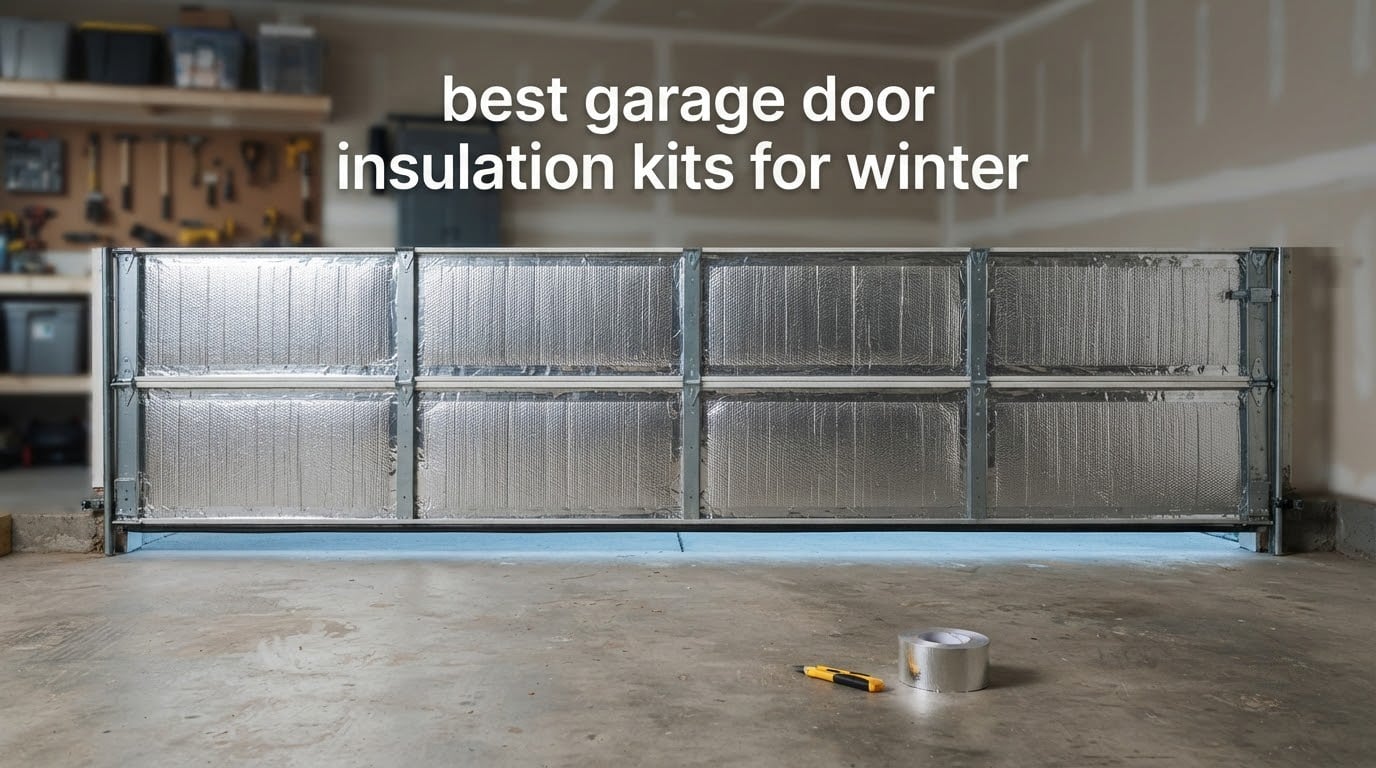
Yes, garage door insulation kits work in winter, and the numbers are not subtle. Homeowners with panels on the inside face of the door report garage temperatures holding 10 to 20 degrees closer to house temperature, and one measured test tracked a heater falling from 76F to 66F in 15 to 20 minutes uninsulated versus 45 to 50 minutes with insulation installed. The qualification is just as important: the panels slow heat loss, but air leaking around the header, jambs and bottom seal often outweighs what the panels do.
That is why this guide is organized around winter for 2026 rather than year-round temperature control. A garage door is a thin conductive steel or fiberglass skin, the largest single opening on most houses, and in a heating season it works as a chimney for your heated air. Every kit below was judged on five winter-specific things: how much conductive resistance it adds, how it behaves in sub-freezing install conditions, whether it traps condensation against the interior panel, how much extra weight it puts on your torsion springs, and whether the coverage in the box matches the coverage on the label.
One thing to sort out before shopping: radiant barrier and insulation are not the same job. Reflective foil pushes back infrared heat radiating off the door, which is a summer problem. Winter is a conduction problem, and only a real stated R-value answers it. Foil-faced kits that claim R-8 do achieve it, but only when the panels stand off the door far enough to create an air pocket. Pressed flat against steel, that same foil is close to decorative.
We also want to be straight about the limits. Insulating the door alone will not turn an uninsulated garage into a conditioned room, and no kit on this list will cut a heating bill dramatically on its own. If a bedroom sits above the garage, a garage heater runs all winter, or you park a daily driver in there, the door is the cheapest surface to fix first. If the door is rusted through, already factory-insulated, or scheduled for replacement within a couple of years, spend the money elsewhere.
Table of Contents
Top 3 Best Garage Door Insulation Kits for Winter (October 2026)
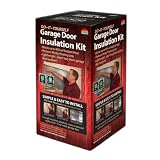
Reach Barrier 8×8 Reflective Kit
- 8 pre-cut 24x48 panels
- 0.16 inch bubble with reflective film
- Radiant and conductive control
- No special tools
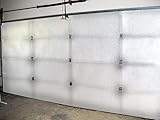
NASA TECH White Reflective R8 Kit
- R8 foam core
- 144 sq ft coverage
- Waterproof and fire code compliant
- Tape razor and squeegee included
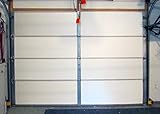
Matador X-Large Polystyrene Kit
- 1.25 inch polystyrene panels
- 8 panels per kit
- No tape glue or pins
- Vinyl faced and washable
All 8 Kits at a Glance for Winter
| Product | Specifications | Action |
|---|---|---|
| Reach Barrier 8×8 Reflective Kit |
|
Check Latest Price |
| NASA TECH White Reflective R8 |
|
Check Latest Price |
| Matador X-Large Polystyrene |
|
Check Latest Price |
 US Energy NASATECH R8 16 Panel US Energy NASATECH R8 16 Panel |
|
Check Latest Price |
 MYFAMIREA 6mm Double Bubble MYFAMIREA 6mm Double Bubble |
|
Check Latest Price |
 BlueTex Roll Up Door Kit BlueTex Roll Up Door Kit |
|
Check Latest Price |
 SmartGARAGE Reflective R-8 SmartGARAGE Reflective R-8 |
|
Check Latest Price |
 Frienda 24 Panel Double Bubble Frienda 24 Panel Double Bubble |
|
Check Latest Price |
How We Evaluated Kits for Winter
Most roundups rank insulation on thickness and star rating. Neither tells you much about January. We scored every kit here against five winter questions instead.
Cold retention. What is the stated R-value, and does the product create a real air pocket? A kit that only bounces radiant heat back out is solving a July problem.
Cold-install reliability. Adhesive tape needs a warm surface to bond. We looked hard at how much tape the kit includes, whether mechanical fasteners are supplied, and what reviewers say after the first month when the panels are still up or have fallen off.
Condensation behavior. Anything that seals the interior panel without a plan for moisture can collect frost against the steel in a cold garage. Lightweight foil-faced products sit closer to the door and stay warmer on the inside surface, which is usually the safer profile.
Door weight and balance. Added pounds hang on the same torsion springs that lift the door. A 3.3-pound kit and a 13.2-pound kit are very different propositions for a door that has not been balanced in eight years.
Door-size fit. Pan-style, roll-up and sectional doors take completely different products, and the coverage in a kit title is not always the coverage in the box. A few of these only suit one door type.
All eight products below carry published star ratings and review counts from the retailer listing, and the temperature figures we quote come from reported user measurements rather than lab tests we ran ourselves.
1. Reach Barrier 8×8 Reflective Kit: Best Overall for Winter
Reach Barrier Garage Door Insulation Kit, Reflective, 8×8 Single Door
- Pre-cut panels trim with scissors or a box knife
- Lightest kit here at 3.3 lb
- Installs without removing horizontal hurricane straps
- Reviewers report garages holding 10-20 degrees closer to house temperature
- Included adhesive pads are often reported as too few
- Panels arrive rolled and keep minor creases
- One kit covers a single-car door only
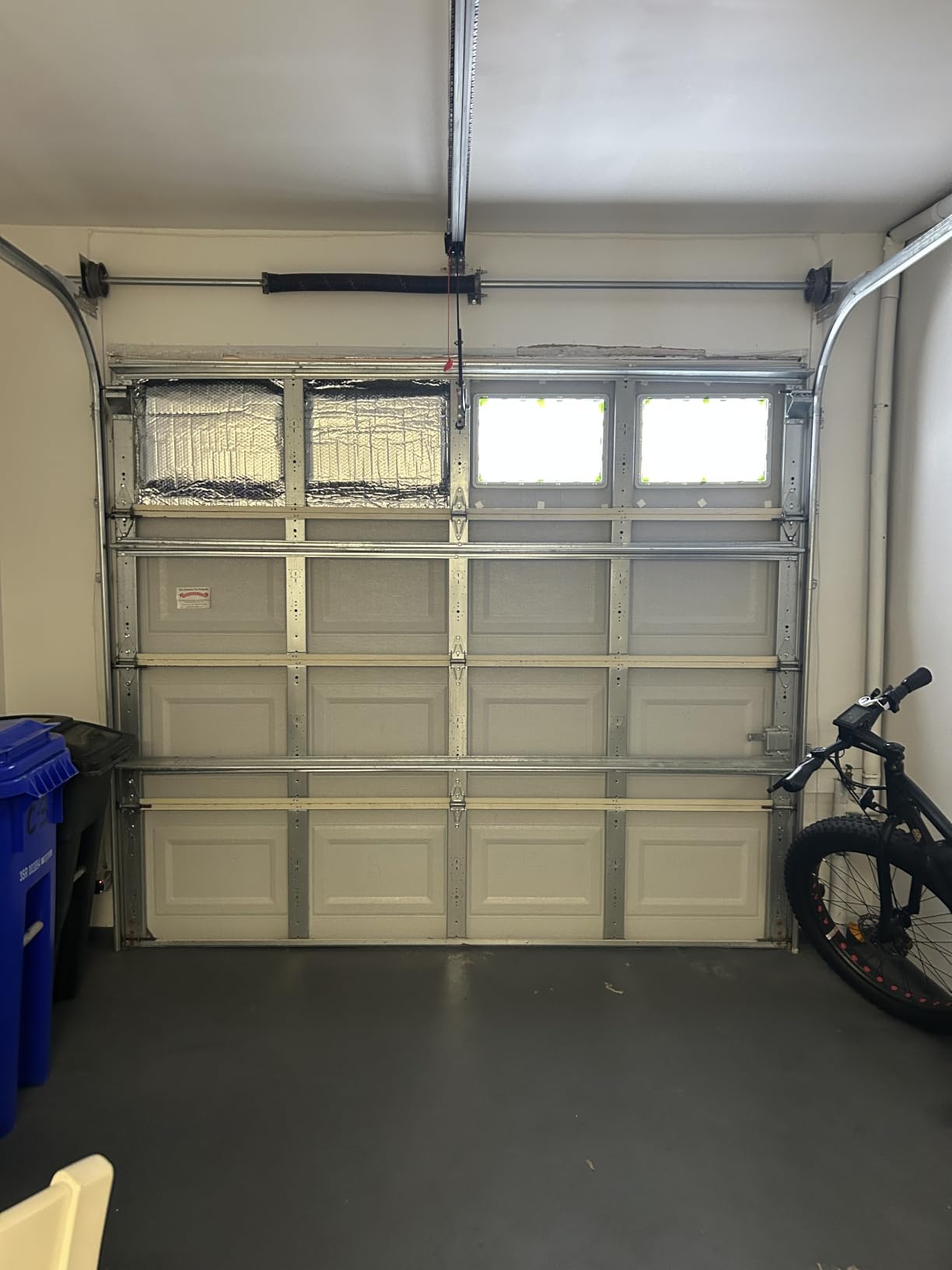
With roughly 4,800 reviews averaging 4.3 stars, the Reach Barrier 3009 is the most proven reflective garage door insulation kit in this group, and it is the one we keep coming back to for cold climates. The panel is 0.16 inch of bubble insulation with reflective film on both faces and two bubble layers, cut to 24 by 48 inches so it drops straight into a standard 8-foot by 8-foot single door.
The winter case for it is simplicity and low weight. The whole kit weighs 3.3 pounds, so the extra load on the torsion springs is close to nothing and most doors stay balanced without a service call. For a metal door in a cold region, that lightness matters more than it first appears, because a badly balanced door is a safety problem before it is a comfort problem.
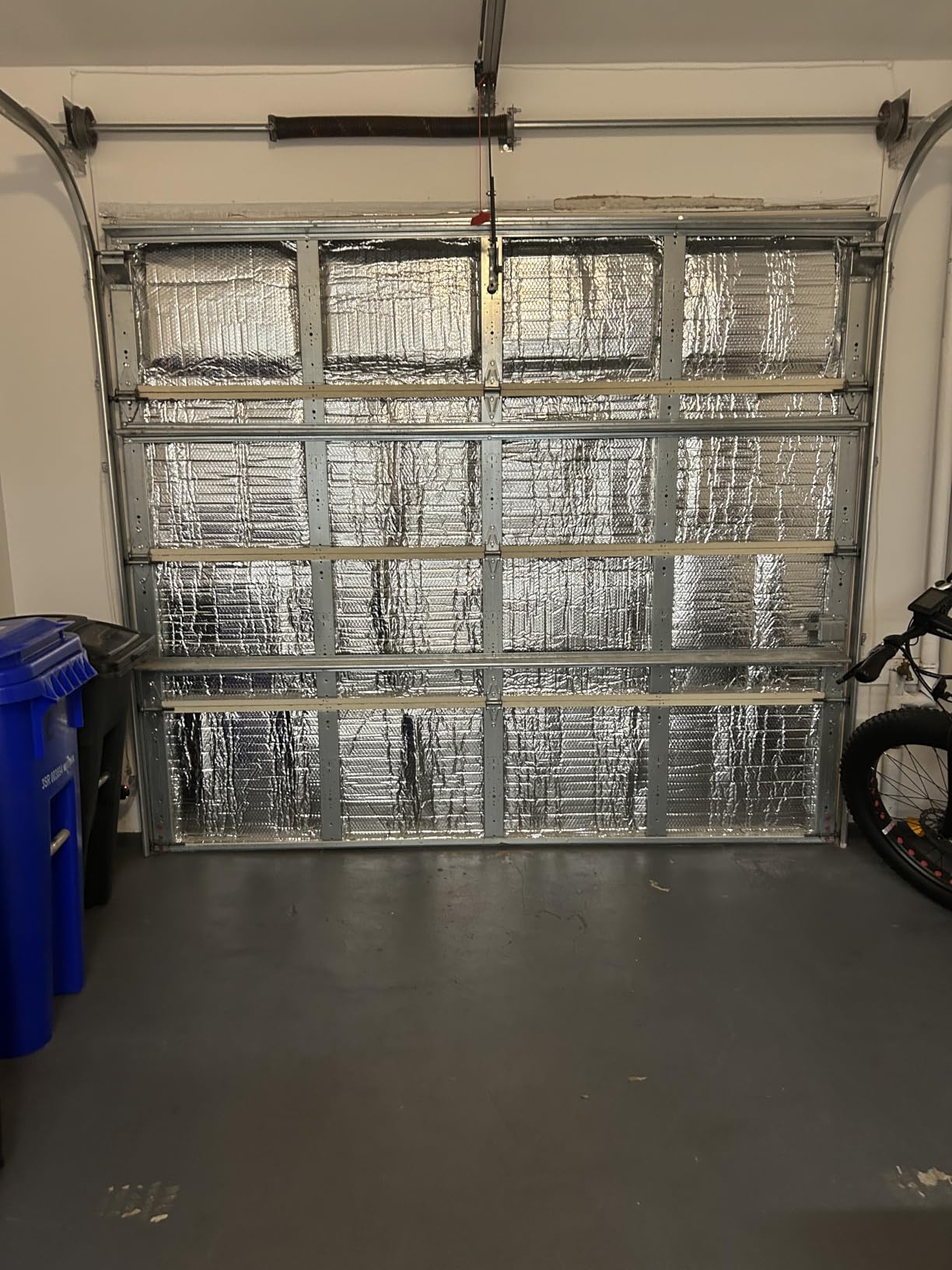
Reviewers consistently describe the same result: garages sitting roughly 10 to 20 degrees closer to house temperature in both directions, with the reflective face brightening the interior. A minority of buyers see only modest change, and that tends to be the case on doors with heavy direct sun where the panel is being asked to do a summer job.
Installation is genuinely quick. The panels trim with a box knife, and you can mount them without taking the horizontal hurricane straps off the door, which matters because removing and refitting straps is where a lot of weekend projects get abandoned.
What to check before you buy Reach Barrier
Measure your door first. This box covers one single-car door at 8 by 8 feet and 64 square feet. A 16-foot or 18-foot two-car door needs two kits, and reviewers show plenty of people buying one box and wondering why the top half of the door is bare.
Buy your own tape. The kit ships with 48 one-inch square adhesive pads, and the most repeated complaint in the reviews is that there are not enough of them and they hold panels loosely. Several owners substitute heavier double-sided tape and report the problem disappears. Do the same before you start.
Set a realistic expectation on R-value. The panel is thin polyethylene bubble with a reflective film, and it works primarily as a radiant barrier with a modest conductive contribution. If your garage is your only heated space, pair it with a bottom seal and header weatherstripping rather than expecting it to do the whole job.
Where Reach Barrier falls short
It is a single-door product in a box that reads like a general kit, and the adhesive inventory is the most common complaint across thousands of reviews. The panels also arrive rolled, so expect minor creases that show under overhead light.
If you want the finished look of a factory-insulated door, or you want a panel thick enough to create a meaningful air pocket, this is not that product. For cold retention measured in real R-value, the foam-core kits further down this list do more.
2. NASA TECH White Reflective Foam Core R8 Kit: Best Rated for Cold Retention
- Rated R8 with a foam core
- not just a foil skin
- Covers a full 18ft wide door in one kit
- Waterproof and weatherproof foam core
- Tape razor and squeegee all included
- Sold as rolls
- so more trimming than a panel kit
- Included tape can need extra time to tack up before pressing panels on
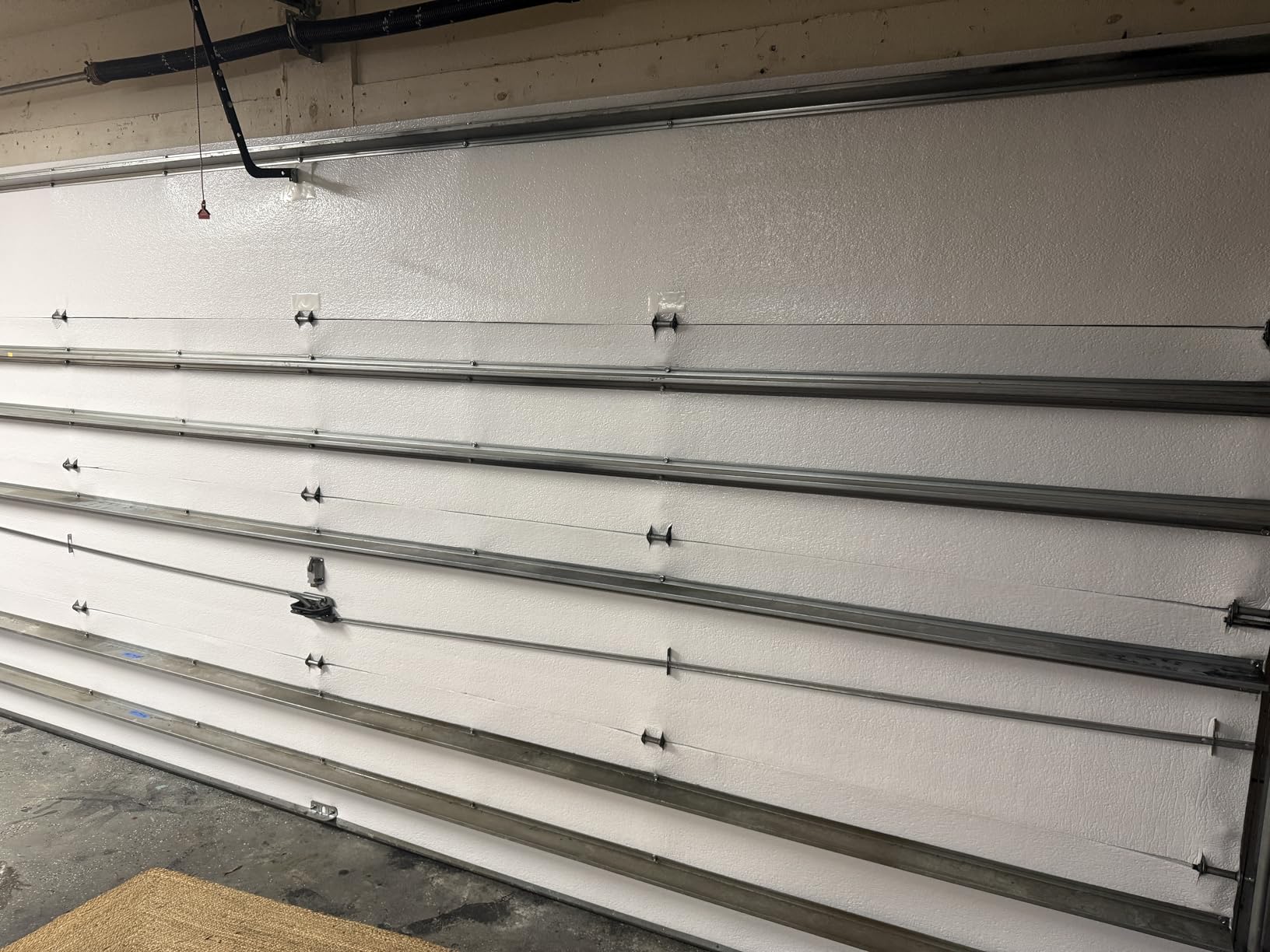
This is the kit we would point at for a two-car attached garage in a genuinely cold climate. The NASA TECH B074LR5QF5 is rated R8, and unlike a thin foil roll it gets there through a white foam core sandwiched with foil facing, so the air pocket is part of the product rather than something you have to build.
Coverage is the other reason it ranks this high. Four rolls of 2-foot by 18-foot material give 144 square feet, which handles an 18-foot-wide by 8-foot-high door in a single purchase. That removes the most common buying mistake people make with two-car doors, where one box is quietly assumed to cover the whole opening.
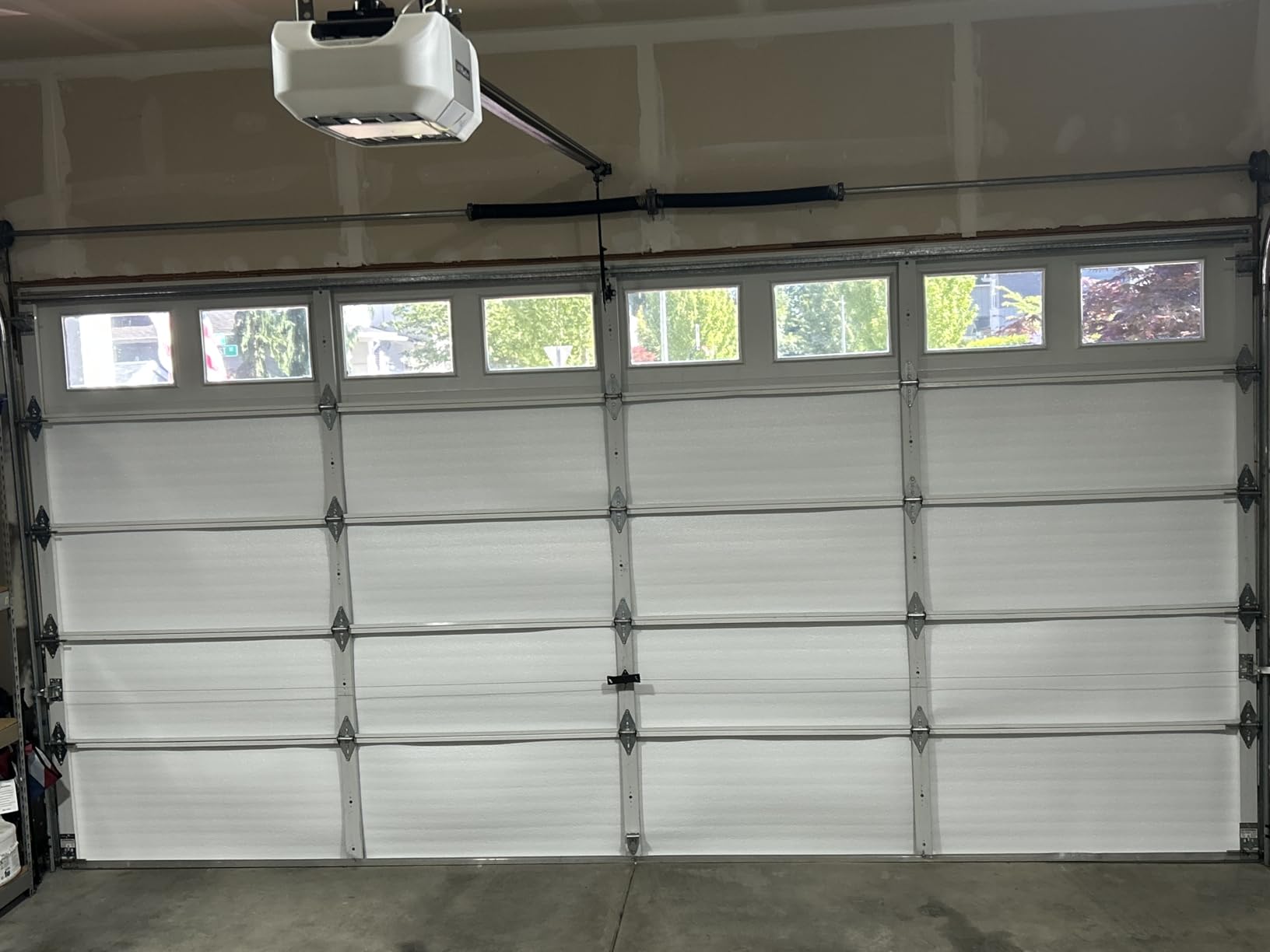
At roughly 3,900 reviews and 4.3 stars, with 68 percent of ratings at five stars, the feedback pattern is steady: owners report stable garage temperatures and like the way the white interior surface brightens an otherwise dim space. The manufacturer states the material is made in the USA and meets US and international fire codes, which matters if you are attaching foam to a door in a space you heat.
The construction is also the most winter-appropriate on this list. It is waterproof and weatherproof rather than a breathable foil paper, so repeated freeze-thaw cycles through the season are less likely to degrade it.
What to check before you buy the NASA TECH kit
It ships as rolls, not pre-cut panels, so budget more trimming time than you would with a panel kit. Homeowners applying foil tape around every panel edge on a two-car door report using 250 to 300 feet of tape and about three hours for two people. That is a realistic picture of the job.
Follow the tape instructions exactly. The manufacturer calls for peeling the liner and letting the double-sided tape tack up before you press the material down. Rushing that step in a cold garage is the fastest way to end up redoing panels in January.
Confirm your door height. This version is built for 18-foot by 8-foot doors and also fits 18 by 7, but a narrower 16-foot door means trimming more material off the roll, which wastes a piece of the kit.
Where the NASA TECH kit falls short
It is less forgiving to work with than pre-cut panels. Reviewers most often note that the rolls need more cutting, and that the included double-sided tape wants more time to set before panels are pressed on.
If you want the fastest possible install and do not care much about a stated R-value, the Reach Barrier or MYFAMIREA panel kits are less work. This one pays you back in cold retention, not in convenience.
3. Matador X-Large Polystyrene Kit: Top Rated for Thick Panels
- Thickest rigid panel in this group at 1.25 inch
- Best rated of the residential panel kits at 4.5 stars
- No tape glue or pins required
- Vinyl faced panels are washable and reduce street noise
- Heaviest kit at 13.2 lb
- so some doors need rebalancing
- Panels are not perfectly square and must be measured individually
- Cutting polystyrene leaves foam crumbs to sweep up
Every other reflective kit on this list is a foil-faced film. The Matador SGDIK002 is a rigid 1.25-inch polystyrene laminate panel, vinyl faced, which makes it a completely different proposition in a cold garage. The thickness is what creates the air pocket, and the air pocket is what turns a reflective surface into something that slows conduction.
At 4.5 stars across roughly 980 reviews, this is the best-rated kit among the residential door options, and 72 percent of those ratings are five stars. Owners single out the finish more than the numbers: the vinyl-faced panels look like a factory install, they are washable, and they cut down street noise noticeably.
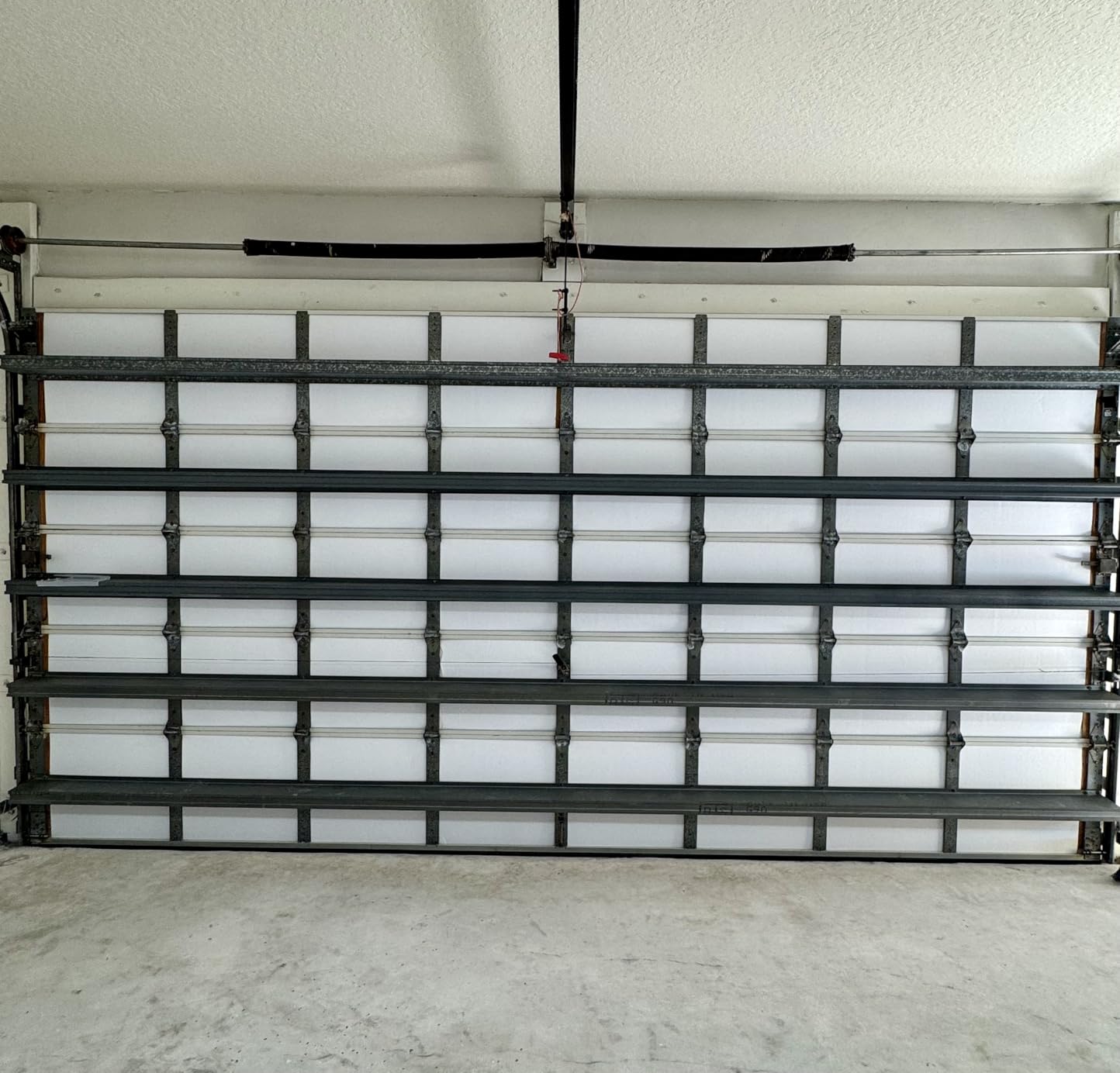
Installation is the simplest here by a wide margin. The panels are scored and snap into the existing framework of a standard pan-style door. No tape, no glue, no pins, and no adhesive to fail in cold weather, which removes the single most common winter complaint in this entire category.
The catch is weight. At 13.2 pounds for eight panels, this is by far the heaviest kit we looked at, and the added load sits on the same springs that lift your door.
What to check before you buy Matador
Confirm your door is a standard pan-style sectional door. The manufacturer states these panels fit most 8-foot and 9-foot pan-style doors and explicitly not after-market hurricane braces, so a door with added reinforcement is a problem.
Plan for a door balance check after the install. With this much added weight, some doors will not stay balanced halfway open by hand, and a door company may need to adjust the torsion springs. If your springs are already old or the door has never been serviced, get that looked at before the panels go on.
Measure each mounting location individually. Reviewers note the panels are not perfectly square, and the assembly is a snap-in system, so anything forced into a mismatched opening will not seat properly.
Where Matador falls short
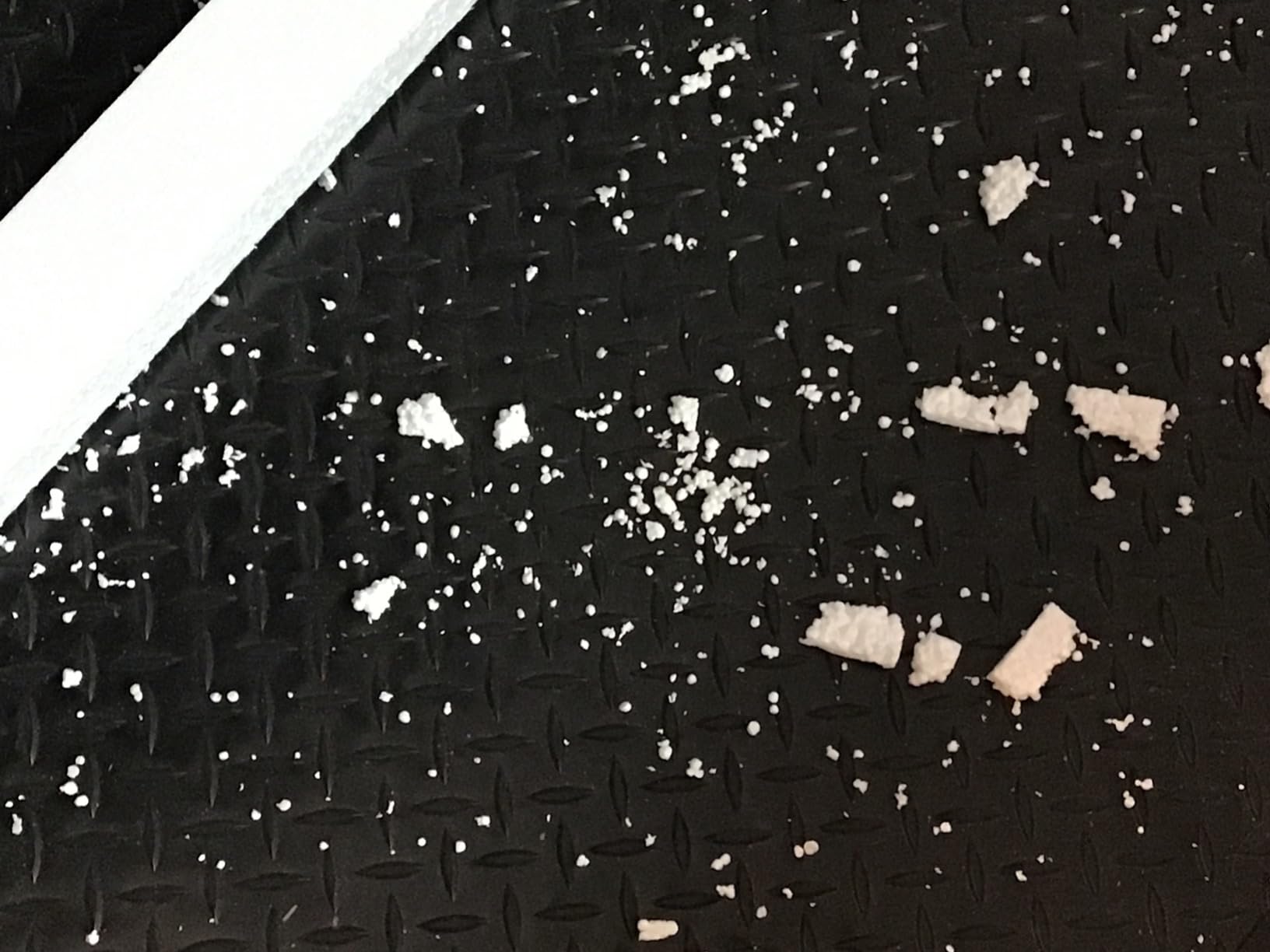
Cutting polystyrene is genuinely messy. Panels cut cleanly with a jigsaw or a very sharp blade, but you will be sweeping white foam crumbs for a while, and a bent or dented panel turning up in the box is a recurring complaint.
One kit may not cover a large two-car door without a second, and the instructions are thin on measurement detail. For a small single-car door, this is the most effective cold-weather product here. For a wide two-car door, the cost and weight start climbing fast.
4. US Energy NASATECH R8 16-Panel Kit: Best for a Two-Car Door
- Thicker 5/16 inch core than comparable foil kits
- Very light so it barely affects the door and opener
- Owners report 15-20 degree warmer garages on cold nights
- Reflective surface brightens the interior
- Despite pre-cut labeling the material arrives as large rolled sheets
- Thin foil facing can tear during cutting
- Included tape can run short on larger doors
This R8 kit from US Energy Products is aimed squarely at two-car doors, and the sizing list on the box is unusually clear: 16 by 7, 16 by 8, 18 by 7, and 18 by 8. That specificity alone puts it ahead of kits that leave you guessing whether you need one box or two.
The 5/16-inch foam core is the thickest of the comparable foil kits we looked at, and the manufacturer states the core is what creates the air pocket that produces the R8 rating. That is the difference between a reflective film and an insulating product, and in a below-freezing garage it is the difference that counts.
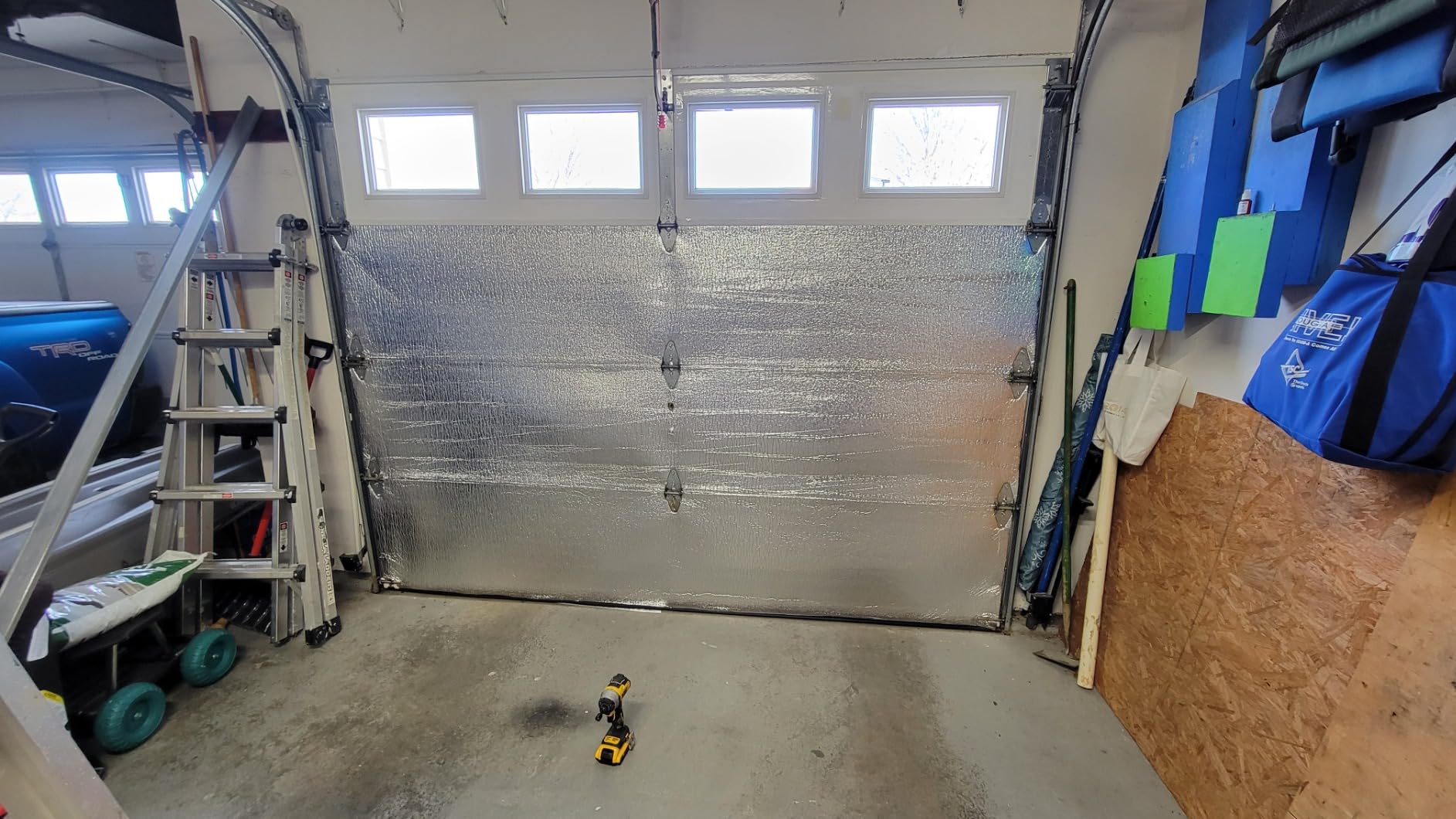
Owners report 15 to 20 degree warmer garage interiors on cold nights and roughly 15 degrees cooler in hot weather, and at roughly 780 reviews the feedback is consistent enough to trust. The material is also fiberglass-free and non-toxic, which is useful if you have pets or small children around a door they might chew on.
Lightness is the quiet advantage. This kit adds almost nothing to the door, so balance and opener performance are rarely an issue even on an older door.
What to check before you buy the NASATECH 16-panel kit
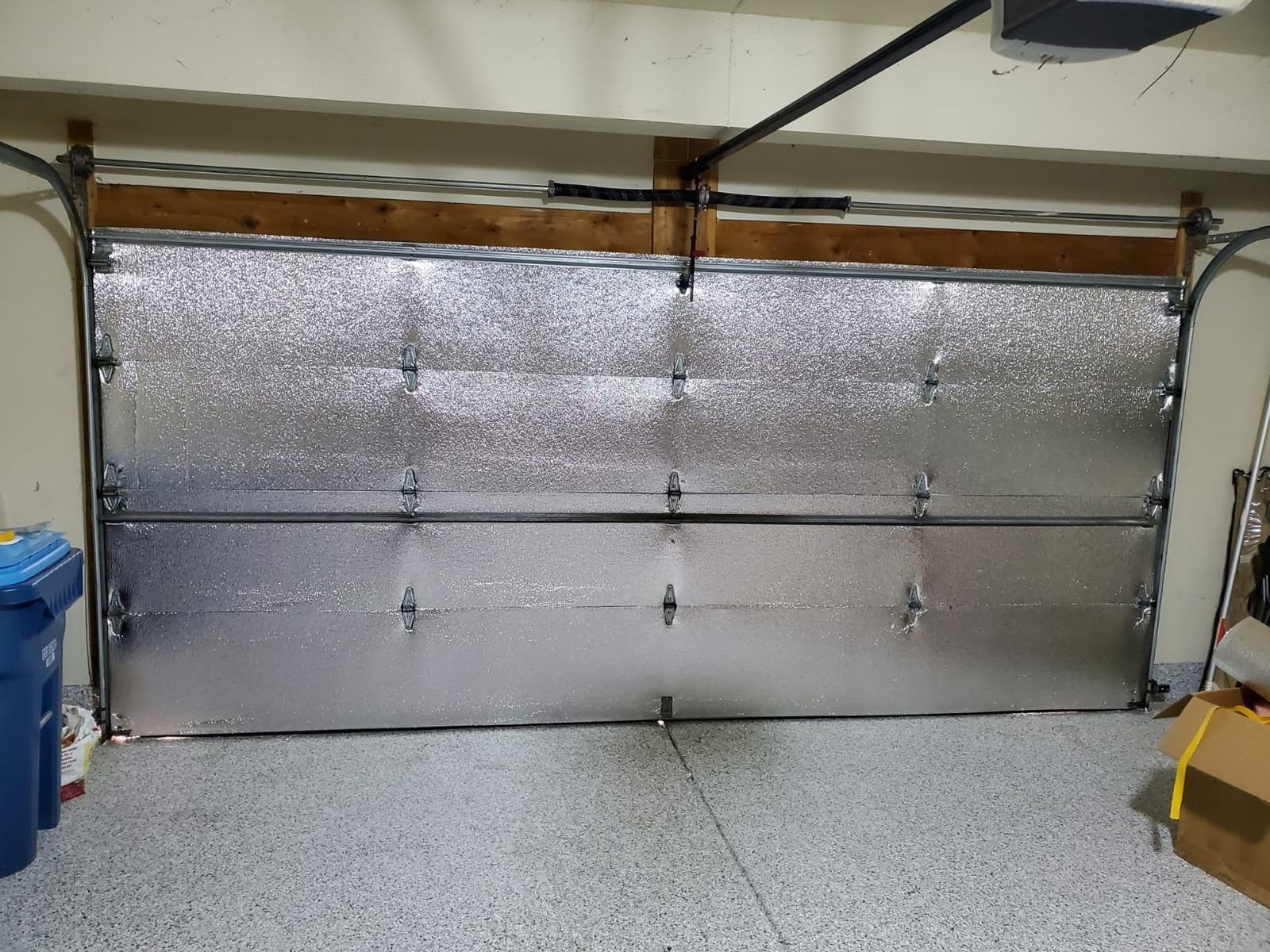
Despite the pre-cut labeling, reviewers report the material arrives as large rolled sheets that need substantial trimming. Treat it as a roll kit with a helpful size chart rather than a drop-in panel kit.
Buy extra double-sided tape. Reviewers report the included tape running out on larger doors and losing adhesion in high heat, and a few note that tape does not hold well on unfinished wood. This product is at its best on a sheet metal door.
Handle the foil facing carefully. It is thin enough to tear away from the foam while you are cutting or repositioning a panel, and a torn facing is a permanent-looking defect on the inside of your garage.
Where the NASATECH kit falls short
The thin facing is the main one. A 5/16-inch core is still a foil-faced product, so if your priority is maximum cold retention rather than a light install, the Matador polystyrene panels have a real thickness advantage.
Customer service is repeatedly praised as responsive, which is worth something if your roll arrives damaged. Manufacturer states are that damaged rolls are replaced, so it is worth asking before you start cutting.
5. MYFAMIREA 6mm Double-Bubble Panel Kit: Best for a Fast Weekend Install
- 6mm thickness resists tearing and holds shape better than 3mm rolls
- Includes 120 adhesive tapes
- more than most kits ship with
- Lightweight with no effect on door operation
- Also blocks sound vibration and drafts
- Panels arrive tightly rolled and need time to relax before mounting
- No written installation instructions in the box
- Panel sizing must be checked for your specific door
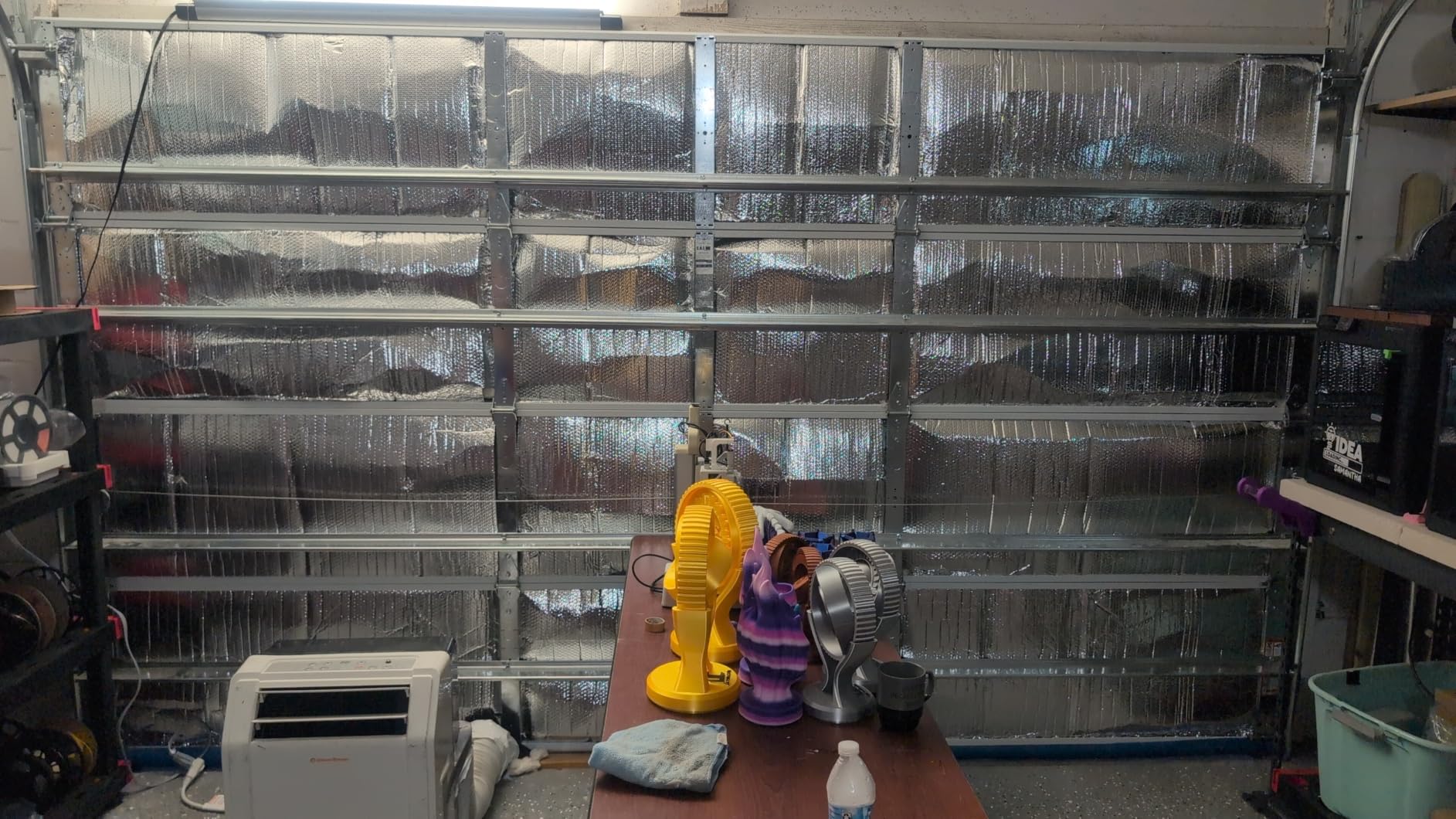
The MYFAMIREA 16-panel kit takes a simple approach: thick double-bubble reflective panels, cut to a standard size, with a generous supply of adhesive tape. At 6mm the panel is twice the thickness of the common 3mm bubble rolls, and the bubble core resists the tearing and deformation that makes cheaper foil films useless after a season.
With 553 reviews at 4.3 stars and 73 percent five-star ratings, buyers consistently point to that thickness as the upgrade over cheaper rolls, along with how easily the panels trim. The install is simple: measure, cut, tape.
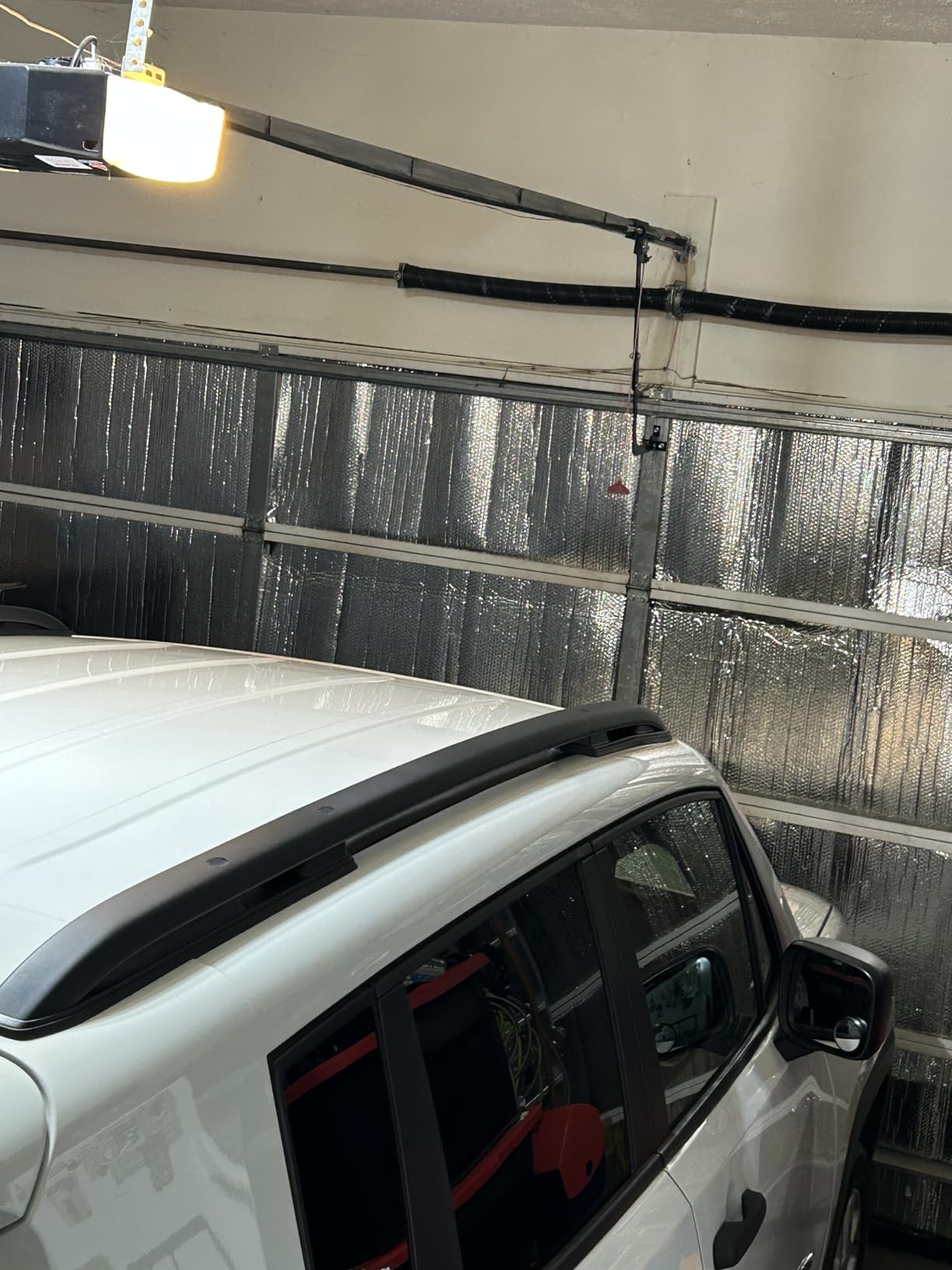
The tape quantity deserves a mention. One hundred twenty adhesive pads come in the box, and owners note that is more than most competing kits include, which directly addresses the number one complaint we saw across this whole category.
Reviewers also report that it blocks sound, vibration and drafts as well as heat, which makes it a reasonable pick for a workshop where a bare steel door thumps every time the wind picks up.
What to check before you buy the MYFAMIREA kit
Let the panels relax first. They arrive tightly rolled, so creases are common and roughly 15 minutes of unrolling before you mount anything saves you from taping a crease into place permanently.
Work out coverage before you commit. Sixteen 24 by 48 inch panels cover a good-sized area, but doors vary and you need to measure the actual section layout of your door rather than assuming a panel count.
Plan your own instructions, because none are included. The product is straightforward enough that most people manage without them, but budget extra for careful measuring and for sealing panel edges with tape in a cold garage.
Where the MYFAMIREA kit falls short
There is no stated R-value anywhere on the listing, so you are buying thickness rather than a rated performance figure. For a cold-climate buyer who wants a number to plan against, that is a real gap.
The product listing also markets it for windows, walls, floors, attics, roofs and air conditioners, which tells you exactly what kind of item it is. It is a general reflective panel, not a garage-specific assembly.
6. BlueTex Roll Up Garage Door Insulation Kit: Best for Commercial Roll-Up Doors
- Highest rated kit in the group at 4.6 stars with 82 percent five-star
- Slim 2mm profile still rolls into the header coil cleanly
- Complete kit with tape screws washers and a utility knife
- Woven PE core is tearproof and puncture resistant
- Built for roll-up doors
- so it will not fit a standard sectional door
- Requires measuring and cutting a full 37.5 ft roll
- Cleans to 150 sq ft of surface before tape will bond
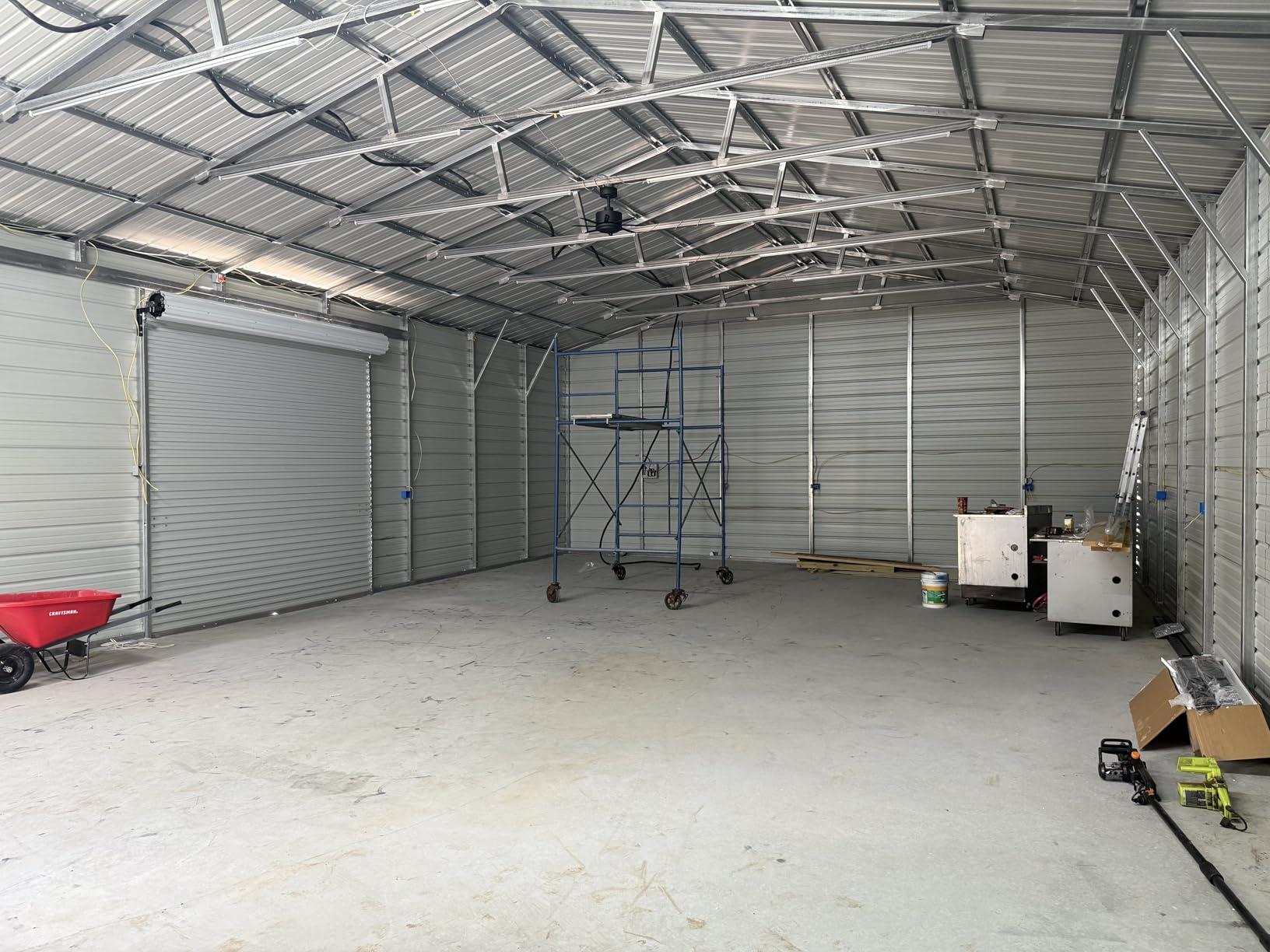
Everything else in this roundup fits a residential sectional door. The BlueTex 2MM150-50W-DOORKIT is for a roll-up door, the kind you see on a metal shop, warehouse bay, or a commercial storefront. If that is your door, this is the only kit on the list that fits it properly.
The specification is the strongest reflective performance we saw. The manufacturer states a pure aluminum foil surface that reflects 97 percent of radiant heat when installed with a quarter inch or more of airspace, over a tearproof woven polyethylene fabric core, and metal shop owners report immediate, noticeable temperature drops inside.
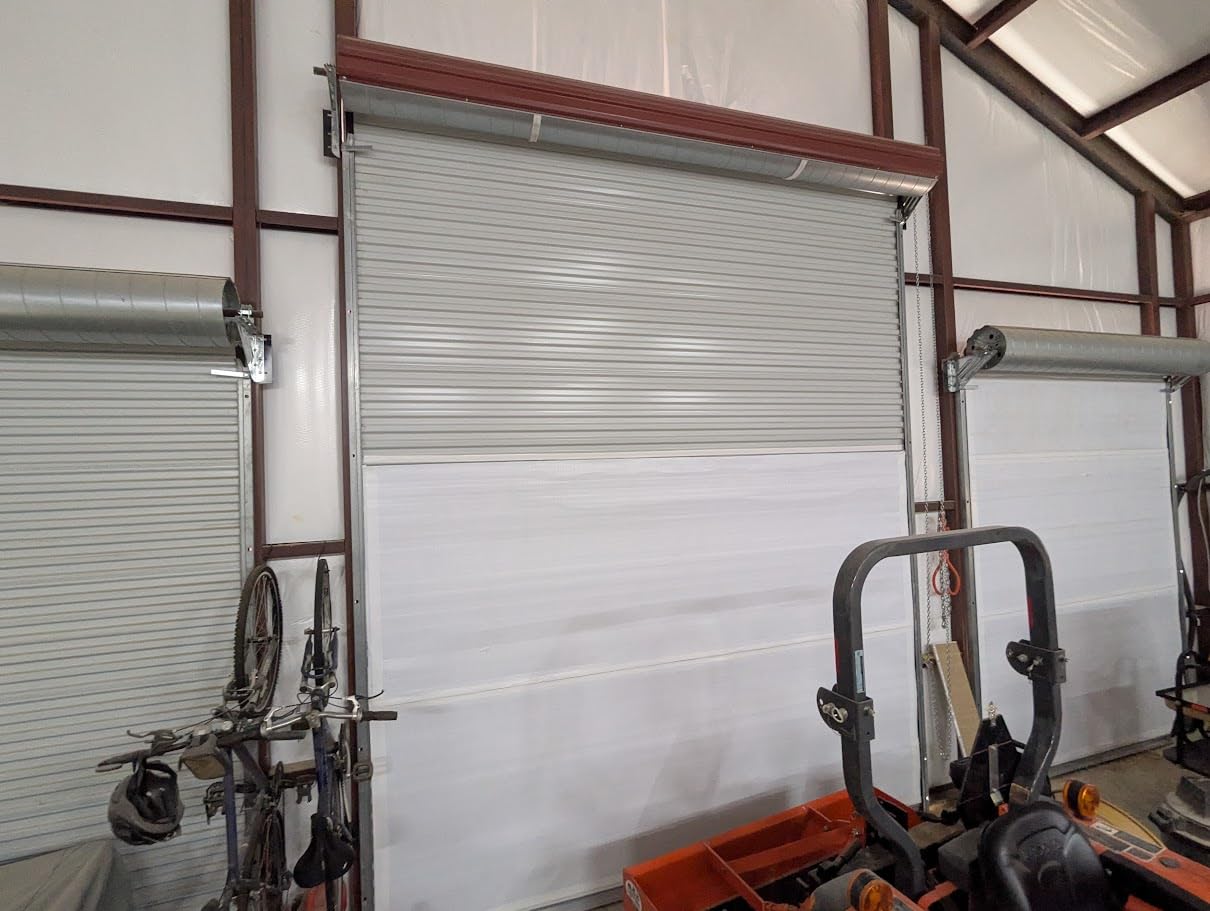
At 4.6 stars from 139 reviews with only 2 percent one-star ratings, this is the highest-rated and most consistent product we evaluated, even if it sits outside the residential category. The included hardware is unusually complete: double-sided tape, 3-inch white seam tape, screws and washers, and a utility knife.
That screws-and-washers inclusion is not a small detail in winter. Mechanical fasteners do not care about surface temperature, which is the failure mode that ruins adhesive-only installs in cold garages.
What to check before you buy BlueTex
Confirm you have a roll-up door. This will not work on a hinged or standard sectional residential door, and no amount of trimming will change that.
Allow real time for the install. You are measuring and cutting a 37.5-foot roll, which reviewers describe as taking patience, and working alone makes it worse. Plan a second pair of hands.
Clean the door surface thoroughly first. The manufacturer and reviewers both make the point that the tape will not bond properly over dust, grease, or a weathered coating, and a cleaned surface is what makes the 97 percent reflection figure achievable.
Where the BlueTex kit falls short
It is a commercial product with a commercial scope. For a homeowner with a standard residential door it is simply the wrong tool, no matter how well it performs.
It is also a 2mm profile, which is excellent for letting a roll-up door coil properly but thin for cold retention in absolute terms. Radiant reflection and winter R-value are different things, and this kit is built squarely for the first one.
7. SmartGARAGE Reflective R-8 Kit: Best for a Single-Car Door
SmartGARAGE – Reflective Garage Door Insulation Kit (Black)
- Manufacturer states 95 percent radiant reflection at an R-8 value
- Tape is rated for extreme hot and cold climates
- Measure tape and stick method with a scraper included
- Reported savings on cooling electricity after install
- One kit covers only a single-car door
- Tape is extremely tacky and awkward to handle
- Some owners report only about a 5 degree improvement
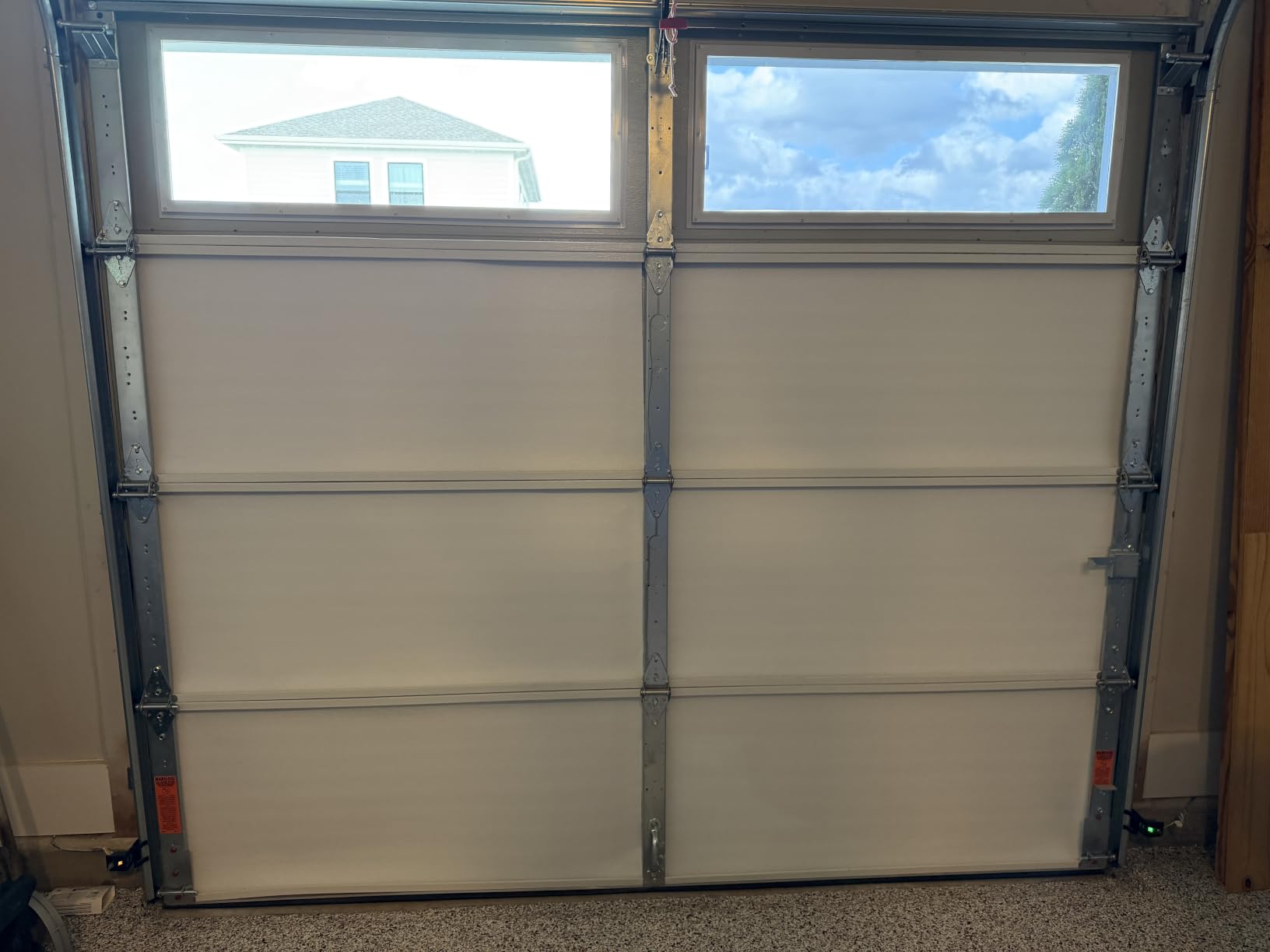
SmartGARAGE is the simplest single-car option here, and the manufacturer states an R-8 value from a 5mm closed-cell polyethylene core between reflective foil and black film. The included tape is rated for extreme hot and cold climates, which is the specific claim winter buyers should be asking about and almost never see.
With 131 reviews at 4.2 stars, the sample is small, but owners in hot regions report the largest drops of any kit here, from 110 to 120F garage temperatures down into the mid-to-high 80s. In a cold region the same reflective geometry works in reverse, slowing heat leaving the space.
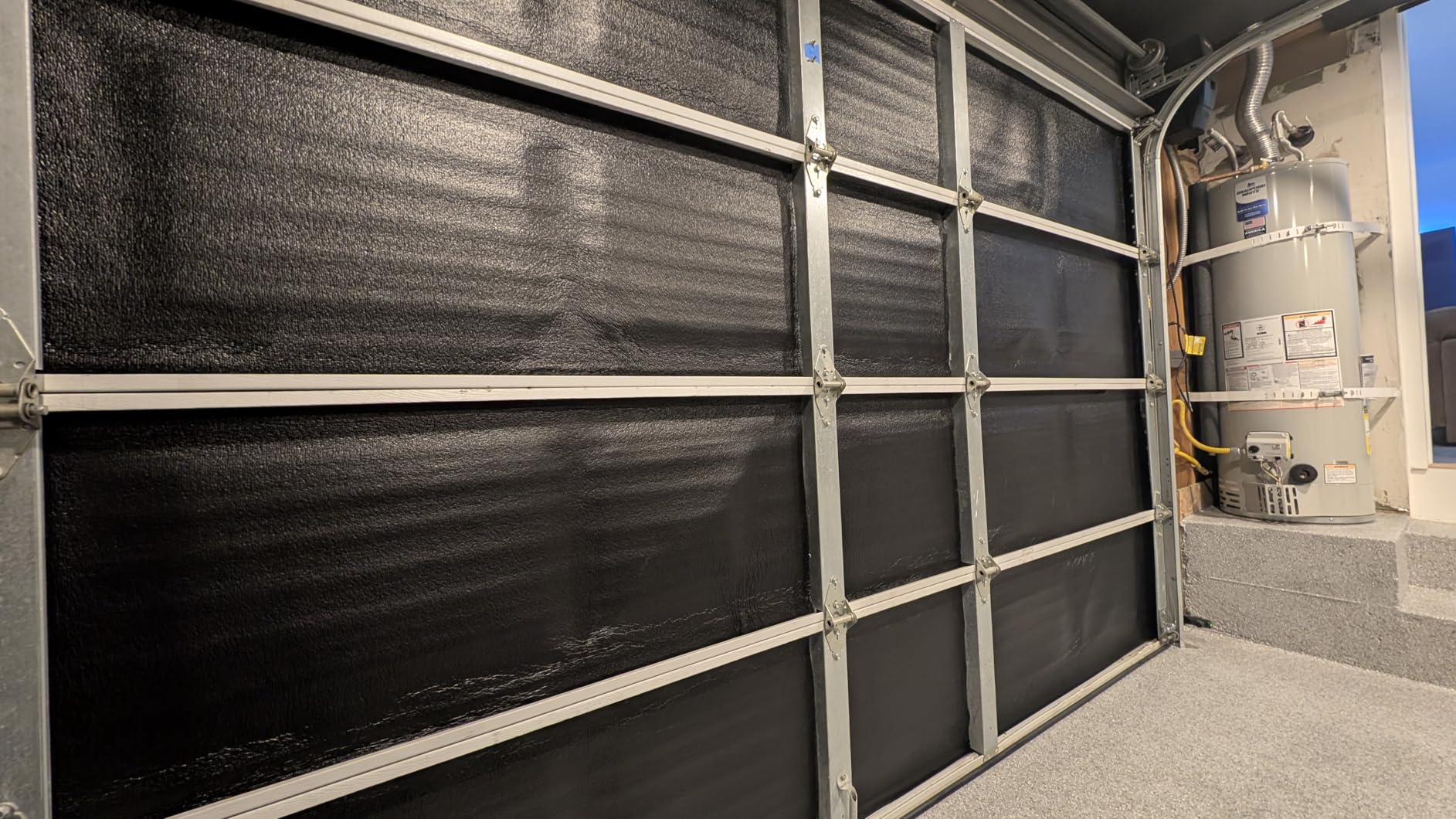
The box includes a 108-foot roll of double-sided tape, a 21-inch by 37-foot roll of foil foam insulation, a knife, a scraper, and instructions. That is a complete install kit with no separate shopping, which is not true of every option on this list.
Several owners also note the reflective finish gives a clean, professional look and cuts outside noise, and a few mention lower electricity use after installing.
What to check before you buy the SmartGARAGE kit
Count your doors. One kit covers one single-car door. Two-car and three-car doors need two and three kits, and reviewers report running out of the included tape partway through a two-car door before the material did.
Have gloves or a helper ready. Reviewers describe the tape as extremely tacky and awkward to handle, which sounds trivial until you are trying to position a 21-inch strip on a vertical door surface in a cold garage.
Read the R-8 claim with the air pocket in mind. The stated value depends on the foam standing off the door, so press the material into a proper air gap rather than smoothing it flat against the panel.
Where the SmartGARAGE kit falls short
Several owners report only about a 5 degree improvement, and the material feels thin when you unbox it. A minority of buyers are disappointed, and the review count is small enough that the ceiling on results is not fully established.
If you want a kit where the cold-climate claim is reinforced by a thicker core and a larger body of user history, the NASA TECH or Reach Barrier options carry more evidence behind them.
8. Frienda 24-Panel Double-Bubble Kit: Most Panel Coverage per Kit
- 24 panels cover a 16-panel two-car door with 8 remaining for doubling up
- Owners report door surface temperature dropping from about 139F to roughly 106F
- Very light so it will not strain the opener
- Soft and easy to cut by hand around windows and odd sections
- Panels are thinner than buyers sometimes expect
- Included adhesive pads are weak and panels can drop when the door lifts
- Some orders arrive with no tape at all
- Panels in a pack are not all identical
- so measure before cutting
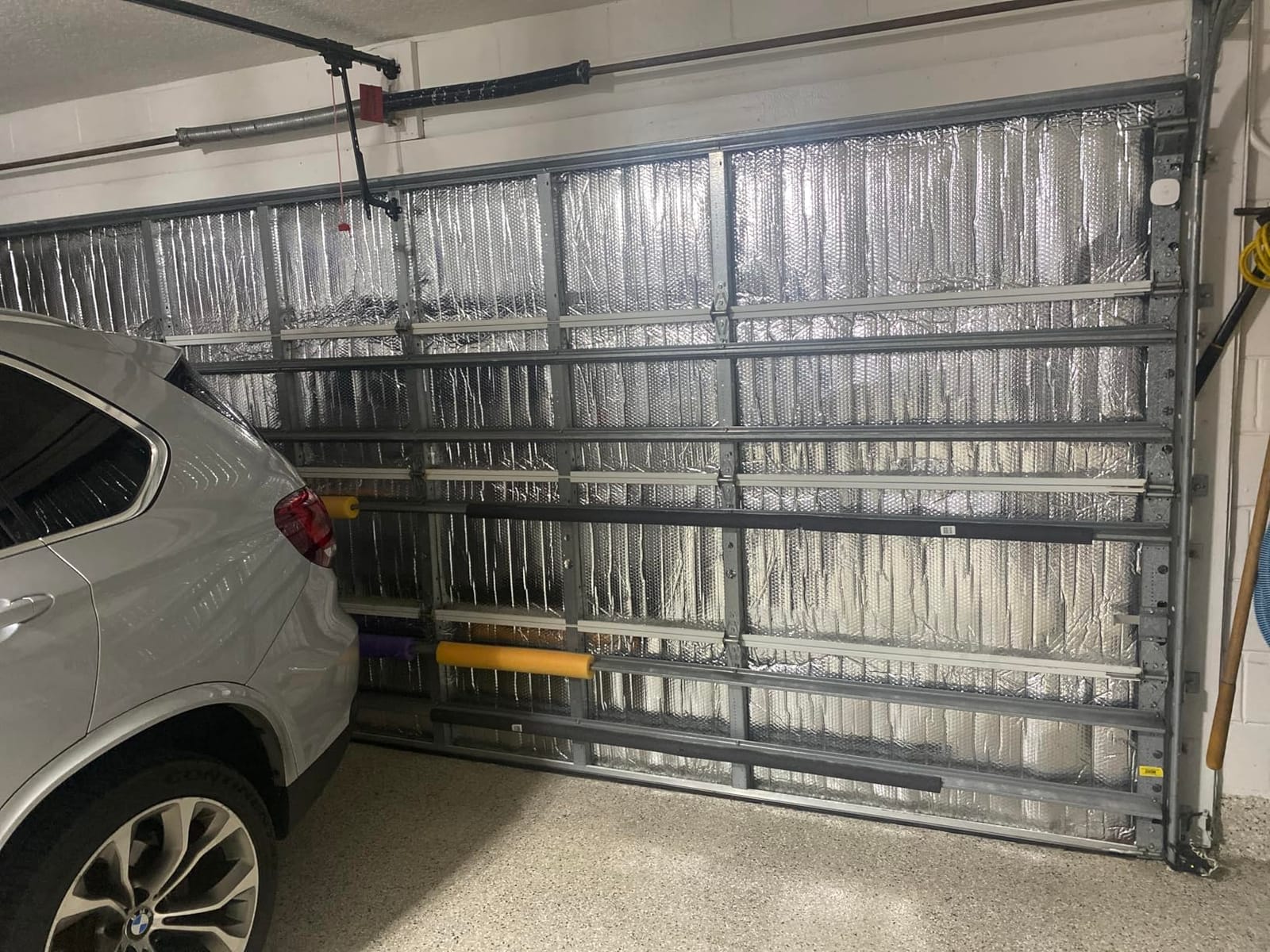
The Frienda kit is the volume option. Twenty-four 24 by 48 inch double-bubble panels at 7.1 pounds gives you enough material to cover a 16-panel two-car door and still have eight panels remaining, which is useful if you plan to double up on the sections with the worst drafts.
The measured results owners report are the most specific in this roundup. One buyer tracked the door surface falling from about 139F to roughly 106F after install, and winter users report garage temperature reductions of 5 to 15 degrees in both directions.
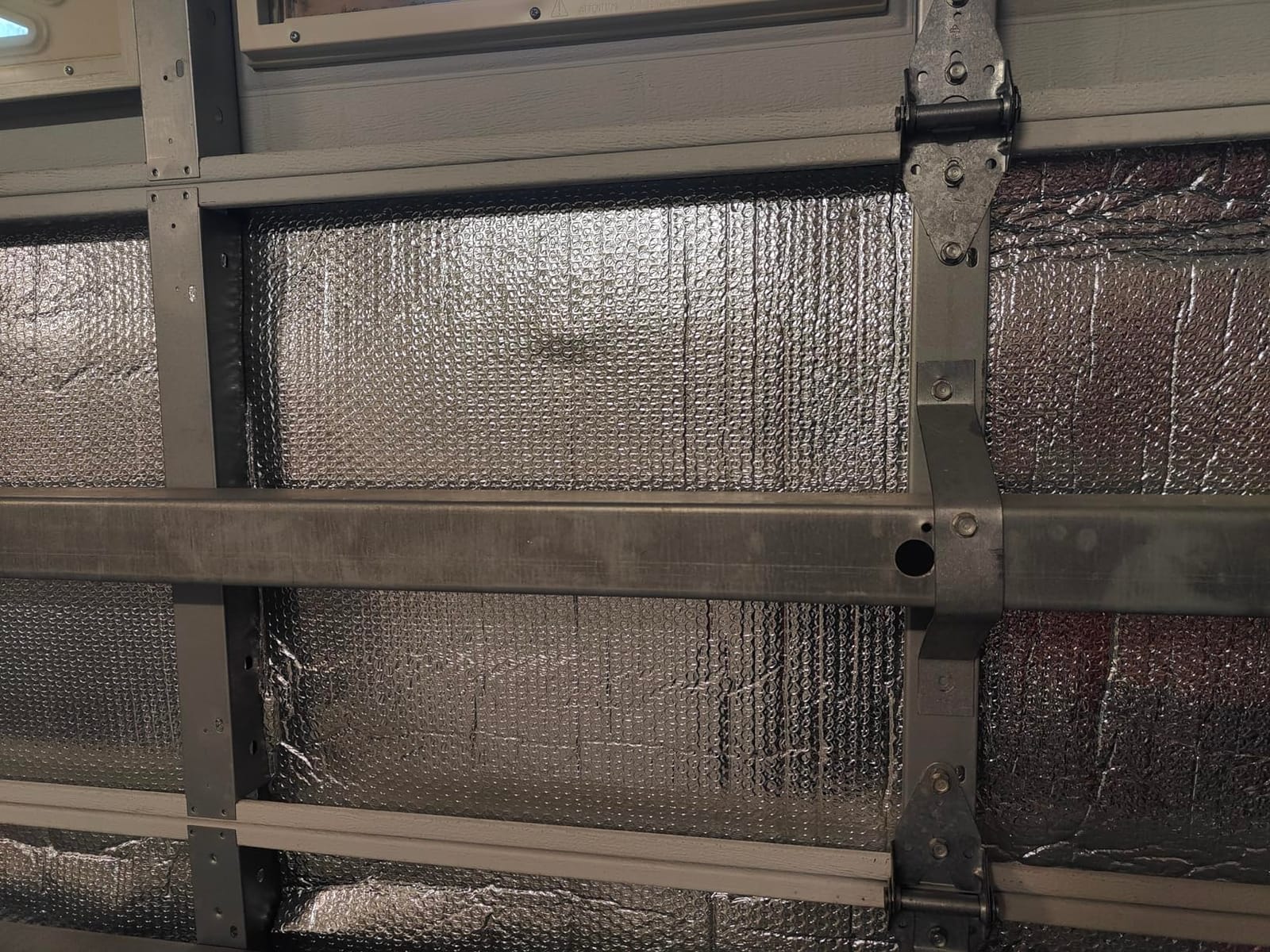
With 95 reviews at 4.2 stars, it is the least-reviewed kit here, so treat the numbers as directional rather than definitive. The double-sided aluminized film over double-layer bubble polyethylene is stated to block up to 97 percent of heat, and the material is soft enough to cut by hand around door windows and irregular sections.
It is also the most versatile of the eight, with listings covering garages, attics, greenhouses, warehouses, barns, roofs, walls, floors, ducting and cold storage.
What to check before you buy the Frienda kit
Plan your fasteners separately. This is the biggest warning in the reviews: the included adhesive pads are weak, panels can fall off when the door is lifted, and some orders arrive with no tape at all. Most successful installs rely on separately purchased double-sided tape or staples.
Staples are a good option in cold weather for exactly the same reason screws are on the BlueTex kit list. Adhesive is the fragile part of any cold-climate install, and a mechanical hold does not care about the temperature of the door skin.
Measure every panel before cutting. Pack contents are not always uniform, and assuming two identical sizes leads to gaps.
Where the Frienda kit falls short
There are no printed instructions, and the panels are thinner than some buyers expect for the size of the box. The fastening story is the deciding factor, and it is the weakest of the eight.
If you want a finished result without buying extra hardware, spend the time on a kit that ships with a proper tape supply and a clear install method. This one rewards buyers who are already planning to bring their own tape.
How Many Kits Does Your Garage Door Need?
This is the question people most often get wrong, and getting it wrong means either a half-covered door or a spare panel gathering dust. Count sections, not square feet, because kits are sold by panel count and each panel fits one section of a sectional door.
8-foot by 7-foot single door: one kit. The Reach Barrier 8×8 kit covers 64 square feet, which is enough, but the panel will be trimmed to fit a 7-foot height.
8-foot by 8-foot single door: one kit, no trimming on the height. This is the configuration the Reach Barrier kit is cut for.
16-foot by 7-foot double door: Two kits. Owners consistently report needing two boxes, with panels trimmed to fit.
16-foot by 8-foot double door: two kits, unless you buy the 18-foot-wide roll kit, which covers a 16-foot opening in one purchase. The US Energy NASATECH 16-panel kit is also designed for 16 by 7 and 16 by 8 doors.
18-foot by 7-foot or 18-foot by 8-foot double door: one wide roll kit, such as the NASA TECH 18-foot version, or the Frienda 24-panel kit. Do not plan on a single-car kit stretching to this width.
Roll-up commercial door up to 12 by 12 feet: the BlueTex 150 square foot roll covers one door of that size, and larger 210, 300 and 700 square foot rolls are available.
Two rules of thumb cover most cases. Buy by section count when the product is sold as panels, and buy by roll width when it is sold as a roll. And buy one more than you think you need, because offcuts from a two-car door are exactly what you use to patch the gap at the header.
What R-Value Do You Actually Need for Winter?
Target R-8 to R-12 for an attached garage in a cold climate. Below R-6 the improvement you feel is modest, and above R-12 the extra weight and cost stop making sense on a standard single-layer steel door.
R-value measures how long a material takes to conduct heat, and it is the only number on a garage door insulation kit that describes winter performance. A kit that lists a percentage of radiant heat blocked is describing a summer mechanism: infrared energy radiating off a hot door surface. In January you are dealing with a cold outdoor surface, a warm indoor surface, and slow conduction straight through steel.
That is why the air pocket matters so much. A foil-faced film pressed flat against a door panel is a mirror with an R-value close to nothing. The same film held a quarter inch or more off the door traps still air, and still air is what resists conduction. When a manufacturer states an R-8 figure, read it as a claim about the installed assembly, not just the roll in the box.
The NASA TECH 18-foot kit, the US Energy NASATECH 16-panel kit, and the SmartGARAGE kit all state R-8 from a foam core. The Matador polystyrene panels have no printed R figure but are the thickest physical material here at 1.25 inch.
Your door type also sets a ceiling. A single-layer steel door cannot be pushed much past the R-12 range before weight and cost stop being worth it. A factory-insulated sandwich door is already in that territory, which is why adding panels to one is usually wasted money.
Which Insulation Material Works Best in Winter?
For a cold climate, rigid foam board or fiberglass batt beats reflective foil. Foil reflects radiant heat, which is a summer problem, while cold retention needs thickness. That ranking is the single most useful thing to know before you shop, and it is why the heaviest kit on this list earns its place.
Reflective foil and bubble film. Light, washable, and genuinely effective against summer heat gain. For winter it contributes a thin air layer and a brightened interior, which is useful but limited. Best for hot climates, garages used only occasionally, and doors you want to leave visually clean. Watch out for adhesive that fails in cold and for ratings that assume an air gap you did not create.
Foil-faced closed-cell foam core. The middle ground, and where most winter buyers should look. A foam core between foil facings holds an air pocket on its own, which is how kits in this group can state R-8 while staying under a pound per door section. Watch out for thin facings that tear during trimming and for tape quantity on wide doors.
Rigid polystyrene panels. The best cold retention of the panel options and the best finished appearance, with a snap-in install that needs no adhesive at all. Watch out for the weight on your torsion springs and for the mess of cutting foam. This is our pick for a single-car door in a hard winter.
Fiberglass batt. The highest R-value per inch of anything you can fit in a door section, plus the best sound reduction. It is also the most fiddly, needs the door channels to support it, and is the material rodents are most likely to nest in. If you go this way, seal the edges carefully and inspect annually.
Spray foam. The highest R-value per inch of all, filling gaps and irregularities better than anything else, with no measuring or cutting. It expands as it cures, and on a garage door that expansion can bow panels and interfere with the door’s operation. It is a professional-adjacent job, not a weekend kit.
For most people buying this winter, the ranking for cold retention is polystyrene or fiberglass first, foil-faced foam core second, reflective film third.
Installing Garage Door Insulation in Cold Weather
Adhesive failure is the number one complaint across garage door insulation reviews, and cold weather makes it worse. Most panel tape is designed to bond above roughly 50F. Below that the substrate is cold, the adhesive is stiff, and the bond is weak from the first hour, which is exactly when a garage in a cold region gets used most.
Step one: measure and plan before you cut. Measure the actual width and height of each door section rather than trusting the kit title. A short panel is not a substitute for a tall door section, and a 16-panel set does not automatically cover every configuration.
Step two: clean and warm the door. Wipe the interior panel faces down and let the door sit closed for a while so the surface is closer to room temperature. Adhesive that bonds to a warm clean surface will hold when the garage drops to freezing. Adhesive that bonds to a frosted steel panel will not.
Step three: give the tape time to tack up. Peeling the liner and waiting before you press the material down is not optional. The manufacturer instructions for the NASA TECH kit call for exactly this, and skipping it is a common reason panels curl at the corners by January.
Step four: use mechanical fasteners where the load is real. In genuinely cold conditions, add screws with washers or staples over the supplied tape on at least the bottom row of panels. The heaviest load on an insulated door is the door itself moving up and down, and that movement is what peels adhesive loose. Kits that ship with hardware, like BlueTex, have this built in.
Step five: seal the perimeter. Panels slow heat loss; they do not stop drafts. Weatherstrip the header and jambs and fit a bottom seal, because air moving around the edge of the door often outweighs everything the panels do. This is the highest-return hour of work in the whole project.
Step six: disconnect the opener and re-check balance. Before returning the door to opener use, pull the emergency release and lift the door by hand. It should stay put roughly halfway up. If it slams or will not hold, added weight has changed the balance and the torsion springs need adjusting. That is a job for a door technician, and it is the one step on this list you should not skip. If the opener is also due for service, our picks for garage door opener battery backup systems and smart openers for two-car garages cover the units worth pairing with an insulated door.
Set aside three hours and a second pair of hands for a two-car door. Applying tape around every panel edge on a double garage takes 250 to 300 feet of tape and about three hours for two people, and that is a normal day, not a sign you did something wrong.
Condensation, Frost and Pests After a Winter Install
Condensation is the winter failure mode nobody warns you about. Sealing a warm, moist garage interior against a cold steel door can push moisture onto the interior face of that door, and in a below-freezing garage it shows up as frost. It is most likely in a heated attached garage, where you have raised the air temperature without raising the surface temperature of the steel.
Manage it with airflow rather than with more insulation. Run the garage door opener briefly on cold days to move moist air out, keep a gap at the bottom of the door so air can escape, and do not seal the door airtight to the floor before the panels go on. If frost appears on the inside of the door, more insulation is not the fix, because the moisture was already in the room.
On pests, the honest answer is yes: rodents will tunnel into fiberglass batts and foam board to nest, and a neatly sealed foam-board panel can make access easier rather than harder by creating a flat surface to run along. Foil-faced reflective kits discourage nesting better than exposed batts, and stapling or taping panel edges closed removes the entry line. Inspect the space between panels once a year, and if you see droppings, deal with the entry point at the threshold and around utility penetrations rather than only with the insulation.
One more practical note for attached garages: insulation on the door is most valuable when the rest of the boundary is not falling apart. If the bedroom above the garage feels warmer after the install, that is a real and frequently reported result. If it does not, check the rim joist and the ceiling drywall before you blame the door.
Frequently Asked Questions
Do garage door insulation kits actually work?
Yes, but the panels are only half the job. Owners report garage temperatures holding 10 to 20 degrees closer to house temperature, and one measured test tracked a heater falling from 76F to 66F in 15 to 20 minutes uninsulated versus 45 to 50 minutes insulated. Air leaking around the header, jambs and bottom seal often outweighs the panels, so pair any kit with proper weatherstripping.
Which garage door insulation kit has the highest R-value?
Among the kits reviewed, the NASA TECH White Reflective Foam Core, the US Energy NASATECH 16-Panel, and the SmartGARAGE kit all state R-8 from a foam core that forms an air pocket. The Matador polystyrene panels are the thickest physical material at 1.25 inch but carry no printed R figure. Foil ratings only hold when a real air gap exists between panel and door.
Will insulating a garage door keep cold out?
It slows heat loss substantially but does not eliminate drafts. A bare steel door is a thin conductive surface, and adding R-8 panels reduces how fast indoor heat escapes through it. Drafts that leak around the header, jambs and bottom seal frequently outweigh the panels, so sealing the perimeter delivers as much as the insulation itself.
What type of insulation is best for a metal garage door?
For winter, rigid foam board or fiberglass batt beats reflective foil. Foil blocks radiant heat, which is a summer problem, while cold retention needs thickness and a real R-value. Rigid polystyrene panels are the best compromise here because they snap into the door framework with no adhesive. Foil-faced kits suit hot climates or doors used only occasionally.
What is the recommended R-value for garage door insulation?
R-8 to R-12 is the right target for an attached garage in a cold climate. Below R-6 the improvement is modest, and above R-12 the added weight and cost stop being worth it on a standard single-layer steel door. A factory-insulated sandwich door is already in that range, so adding panels to one is usually wasted money.
What is the best garage door insulation kit to keep heat out?
For keeping heat out, a reflective foil or radiant barrier kit wins and costs less. But heat rejection and cold retention pull in opposite directions, and foil-optimised kits underperform in cold because they have little conductive resistance. For a garage that must also stay warm in winter, choose a kit with a stated R-value from a foam core or a thick rigid panel.
Do mice chew through rockwool insulation?
Rodents will tunnel into fiberglass batts and foam board to nest, and neatly sealed foam-board edges can give them an easier run rather than a harder one. Foil-faced reflective kits discourage nesting better than exposed batts. Seal every panel edge with tape, keep the bottom gap closed at the threshold, and inspect between panels once a year for droppings.
The Verdict for Cold Climates
For most people buying a garage door insulation kit for winter, the garage heater you are running and the drafts around the frame are where the money goes, and the door panels are the piece that makes both of those work harder. The Reach Barrier 8×8 kit is our pick: nearly 4,800 reviews at 4.3 stars, pre-cut panels, a 3.3-pound weight that leaves your springs alone, and reported garages holding 10 to 20 degrees closer to house temperature in both directions.
If you have a two-car door and want a stated R-value in the wall of the garage rather than a radiant barrier, the NASA TECH White Reflective Foam Core covers 18 feet in one kit and rates R8 through its foam core. If your door is a standard pan-style sectional and you want the best cold retention with no adhesive to fail, the Matador polystyrene panels are the answer, provided you get the door balance checked afterward.
Whichever kit you choose, the sequence matters more than the brand: warm and clean the door, give the tape time to tack up, fasten the bottom row mechanically, seal the perimeter, and re-test the balance before you hand the door back to the opener. If the springs need attention, our guide to garage door cable and pulley repair kits covers the parts side, and a technician handles the spring.
Check the latest listings for each kit before you order, and do the install in mild weather if you possibly can. A door insulated in autumn is still doing its job in February.