
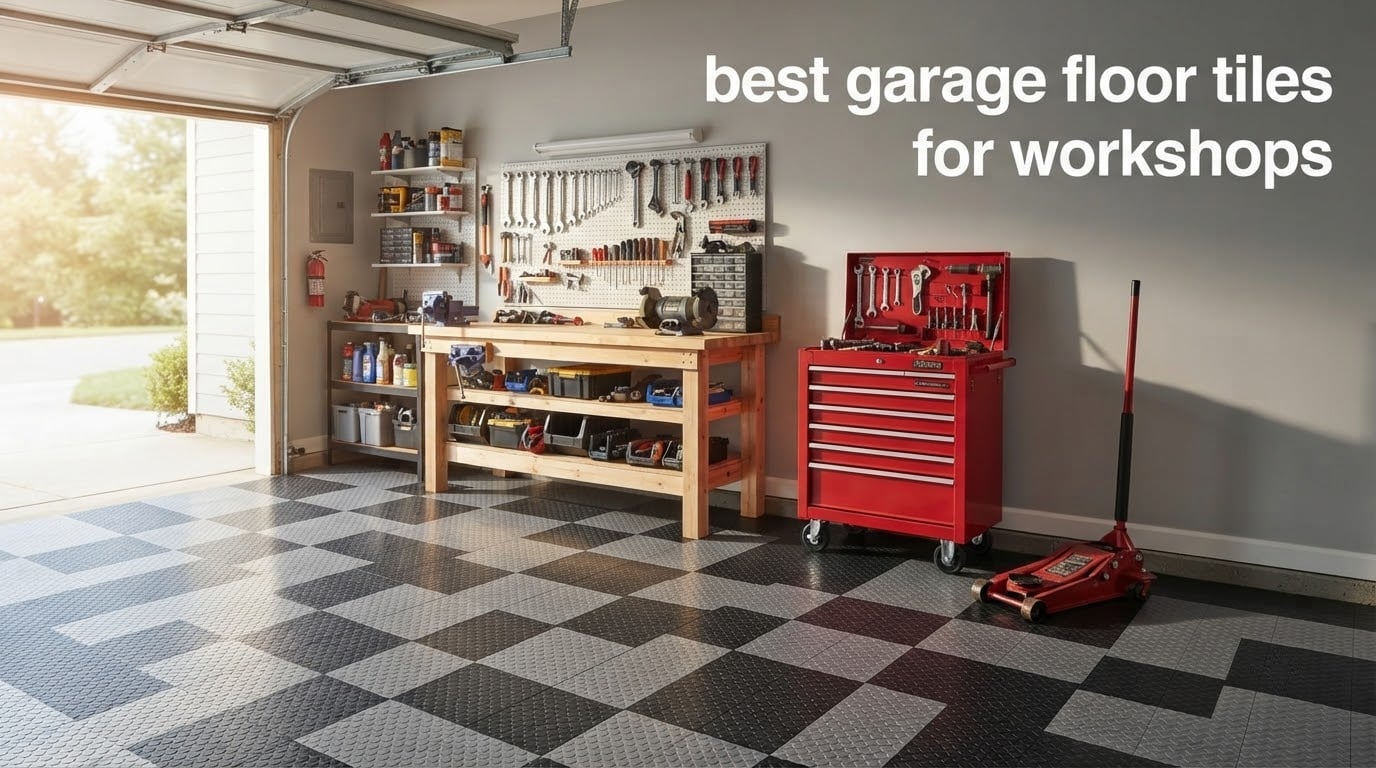
The best flooring for a garage workshop is a snap-together interlocking tile rated to at least 40,000 lbs of rolling load, with a solid or vented polypropylene surface that resists oil and coolant and can be lifted one tile at a time. That combination of load rating, chemical resistance and single-tile repairability is what separates workshop flooring from parking-only mats.
That question comes up constantly in workshop forums, and the answer is not the same one most garage flooring guides give. A shop floor is not a parking bay. You jack cars up on it, you drop a floor jack on it, you weld over it, you flood it with coolant, and you stand on it for eight hours at a time. Those demands reward a different set of products than the showroom-garage tiles that dominate search results.
We compared ten interlocking tile systems across the categories that actually matter in a working shop: rolling load capacity, tile thickness, drainage design, traction pattern, install effort and the number of reviews behind the listing. This guide covers the best garage floor tiles for workshops we could find, plus an honest look at where epoxy still wins and where it does not.
One practical note before we start. If your goal is a clean look rather than a working surface, our guide to the best garage floor tiles for car parking covers the smoother, flatter options. Everything below is chosen for a shop.
Table of Contents
Top 3 Picks for Workshop Floors in 2026
These three lead the group for workshop duty. All three are made-in-the-USA polypropylene systems with tool-free interlocking installation, and all three carry enough review volume to be worth trusting with a working floor.

SnapLock GarageTrac Alloy Tiles
- 40000 lb rolling load
- Diamond double-tread traction
- Tool-free PowerLock install

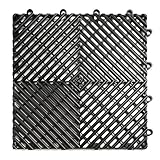
RaceDeck Free-Flow Vented Tiles
- 80000 lb rolling load
- Self-draining open rib
- 15 year warranty
All 10 Garage Floor Tiles Compared in 2026
All ten products below are modular interlocking tiles that install over an existing slab with no adhesive. Features, coverage and load ratings are taken directly from the manufacturer specifications for each product.
| Product | Specifications | Action |
|---|---|---|
| SnapLock GarageTrac 12×12 Alloy 48 Pack |
|
Check Latest Price |
| SnapLock GarageDeck 12×12 Coin 48 Pack |
|
Check Latest Price |
 VEVOR 12×12 Interlocking 25 Pack VEVOR 12×12 Interlocking 25 Pack |
|
Check Latest Price |
| RaceDeck Free-Flow 12×12 Vented 48 Pack |
|
Check Latest Price |
 Jocoevol 12×12 Drainage 60 Pack Jocoevol 12×12 Drainage 60 Pack |
|
Check Latest Price |
 Nitro Tiles Vented 12×12 52 Pack Nitro Tiles Vented 12×12 52 Pack |
|
Check Latest Price |
 VersaTex 18×18 Raised Coin 24 Pack VersaTex 18×18 Raised Coin 24 Pack |
|
Check Latest Price |
 Nitro Tiles Diamond 12×12 52 Pack Nitro Tiles Diamond 12×12 52 Pack |
|
Check Latest Price |
 Boldworks 12×12 Drain Tiles 48 Pack Boldworks 12×12 Drain Tiles 48 Pack |
|
Check Latest Price |
 SafeRacks Vented 15.75×15.75 48 Pack SafeRacks Vented 15.75×15.75 48 Pack |
|
Check Latest Price |
1. SnapLock GarageTrac 12×12 Alloy Tiles for All-Round Workshop Duty
SnapLock GarageTrac 12″x12″ Interlocking Garage Tiles, 48 Pack, Alloy
- Snaps together with no tools
- glue or extra hands
- Holds vehicle loads and loaded shelving without deforming
- Diamond tread pattern gives solid traction
- Surface wipes clean and resists oil staining
- Cuts cleanly for tight edges
- Peg-and-loop joints need a rubber mallet to fully engage
- Tiles are difficult to separate once locked
- Plastics clack underfoot without an isolation layer
We ran the GarageTrac Diamond tiles across a two-car bay that sees a daily driver, a floor jack and a rolling tool chest, and it held its shape. The 12-inch modules lock together with a firm press and the whole floor is drive-on the moment the last edge tile goes down, which matters when you are working around a deadline rather than decorating.
With 1,393 reviews behind it, this is the listing with the deepest owner base in the group, and the pattern holds steady: people like the install and the traction, and they flag the joints. Expect to reach for a rubber mallet, and expect the second pass over a seam to be the fiddly part rather than the first.
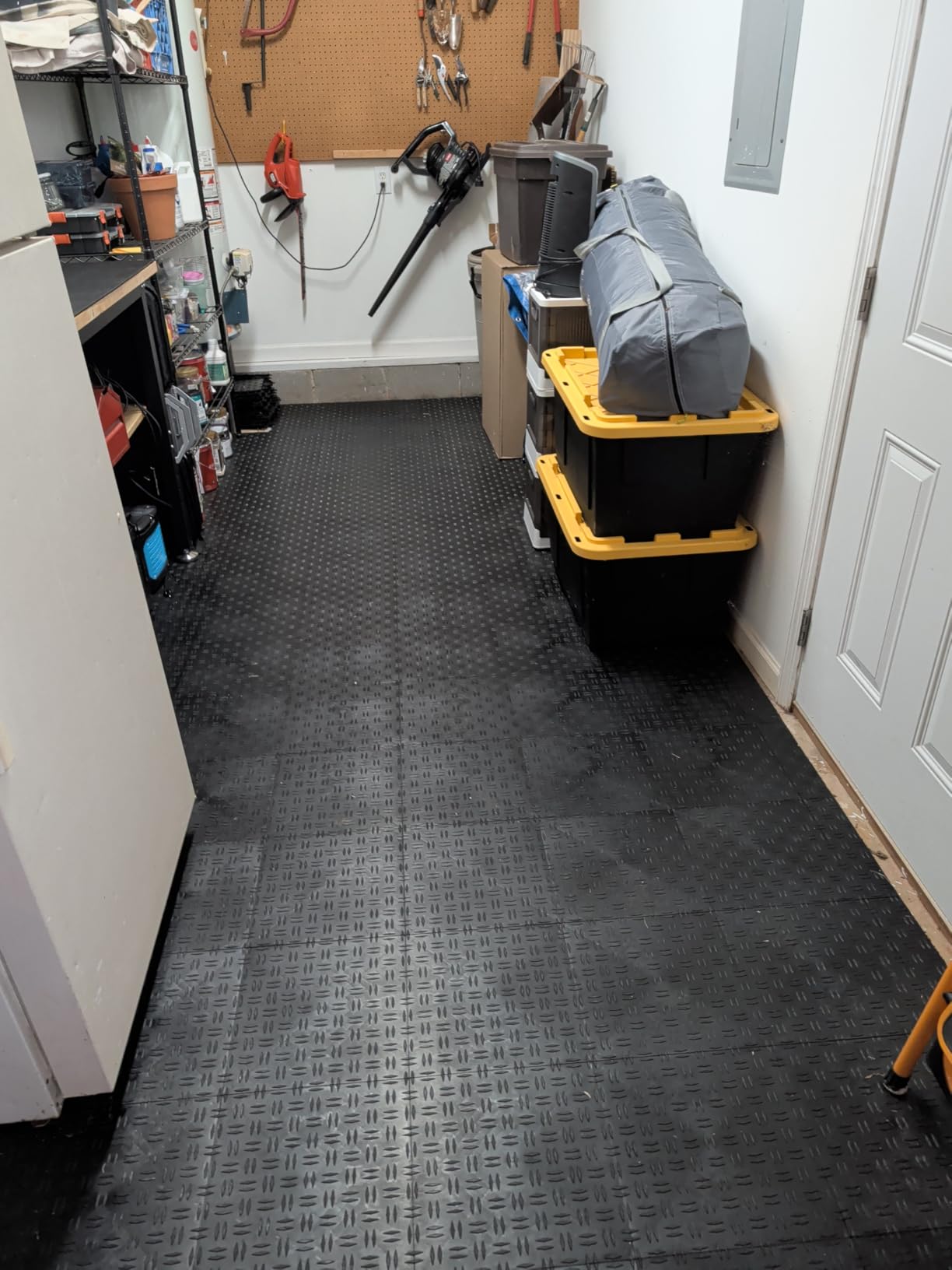
The 40,000 lb rolling load rating is the number that matters in a shop, and it is the reason this tile sits at the top of our list for general workshop duty. The patent diamond double-tread pattern is a real traction surface rather than a decorative texture, which is what you want when metal filings are on the floor and you are moving a jack.
Cleaning is straightforward. The surface is stain resistant and washable, so oil, dirt and shop dust come up with a mop or a shop vac without leaving a mark. That is the single most appreciated property in a working garage, because bare concrete never stops taking oil.
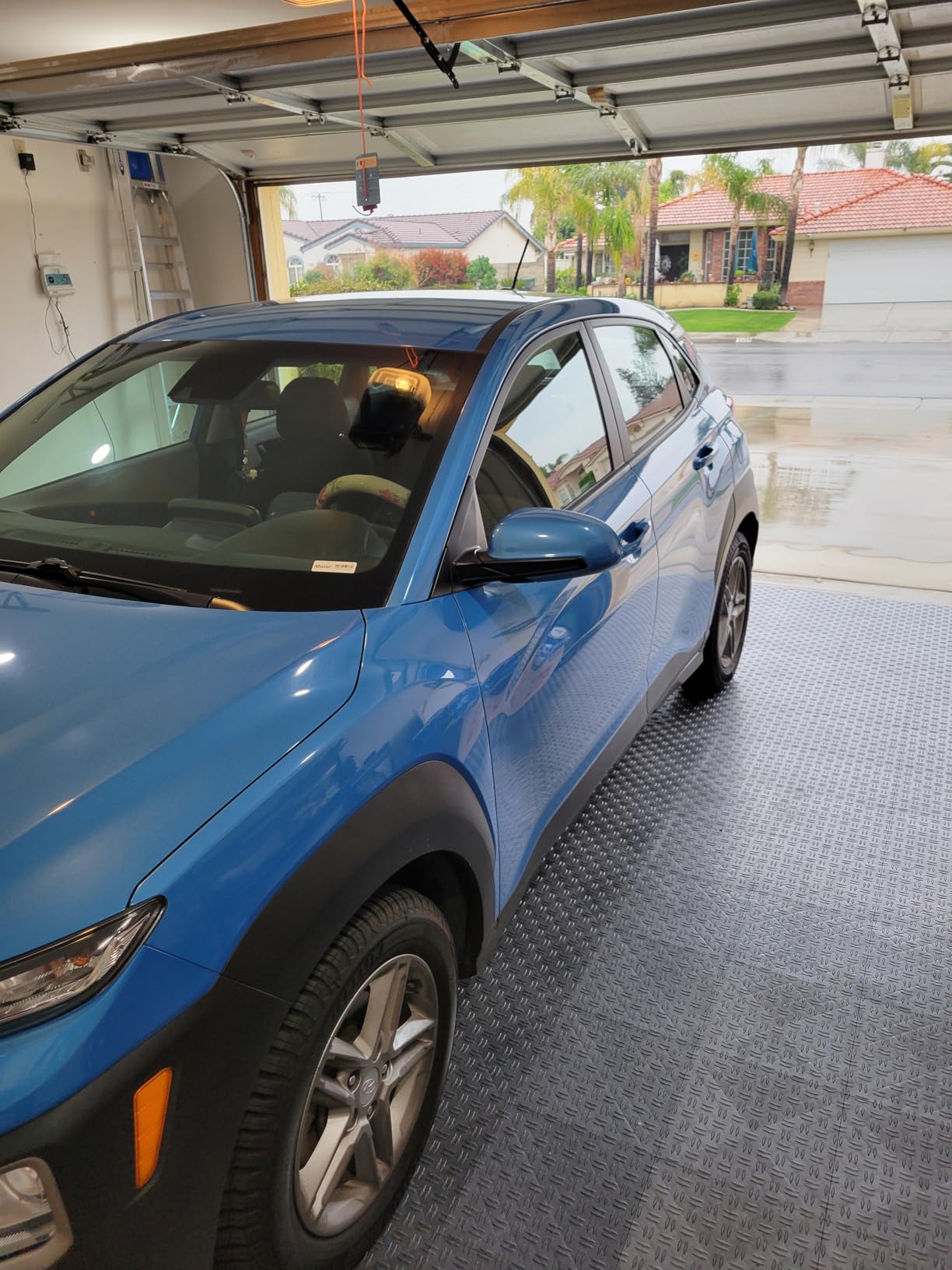
What you should check before ordering GarageTrac tiles
Leave an expansion gap around the perimeter, roughly a quarter inch, and let the floor move. Without that gap, tiles in direct sun can buckle slightly and push against the wall, and under vehicle traffic the assembled floor can creep forward and compress the edges.
Adding a weed-barrier fabric layer under the tiles is the other upgrade we would make. It damps the plastic-on-concrete clacking that owners complain about and it slows creep on a slab that is not perfectly flat.
Where GarageTrac is the wrong choice
It is a solid, non-perforated surface, so water sits on top until you move it. In a garage that sees tracked-in snow or a wet boot floor, that is a daily chore rather than a dealbreaker, but it is why we would pick a vented tile for a wet climate.
The hard plastic is also tough on knees during a long install. If you are laying several hundred square feet yourself, take that into account before you commit to a full bay.
2. SnapLock GarageDeck Coin Tiles for Traction Under Oil and Grease
- Coin-top texture grips well when wet or oily
- Resists oil
- grease
- antifreeze and household chemicals
- Mix colors for a custom professional layout
- Damaged tiles pop out and replace individually
- Solid under a parked vehicle and loaded shelving
- Pre-clipped 2x2 sections are very hard to pull apart for cutting
- Color can vary between production batches
- Rigid polymer does not conform to uneven slabs
The coin pattern is the reason this tile is the pick for greasy floors. Round raised studs read as a texture designed to be walked on in oil, and in use they stay predictable underfoot compared with a smooth diamond plate. If your shop floor is where engines get rebuilt, that texture is worth more than it looks.
Chemical resistance is the other headline. The material is specified as resistant to oil, grease, petroleum, antifreeze and most household chemicals, and the surface is described as non-staining. In a workshop where fluids land daily, that is the whole argument.
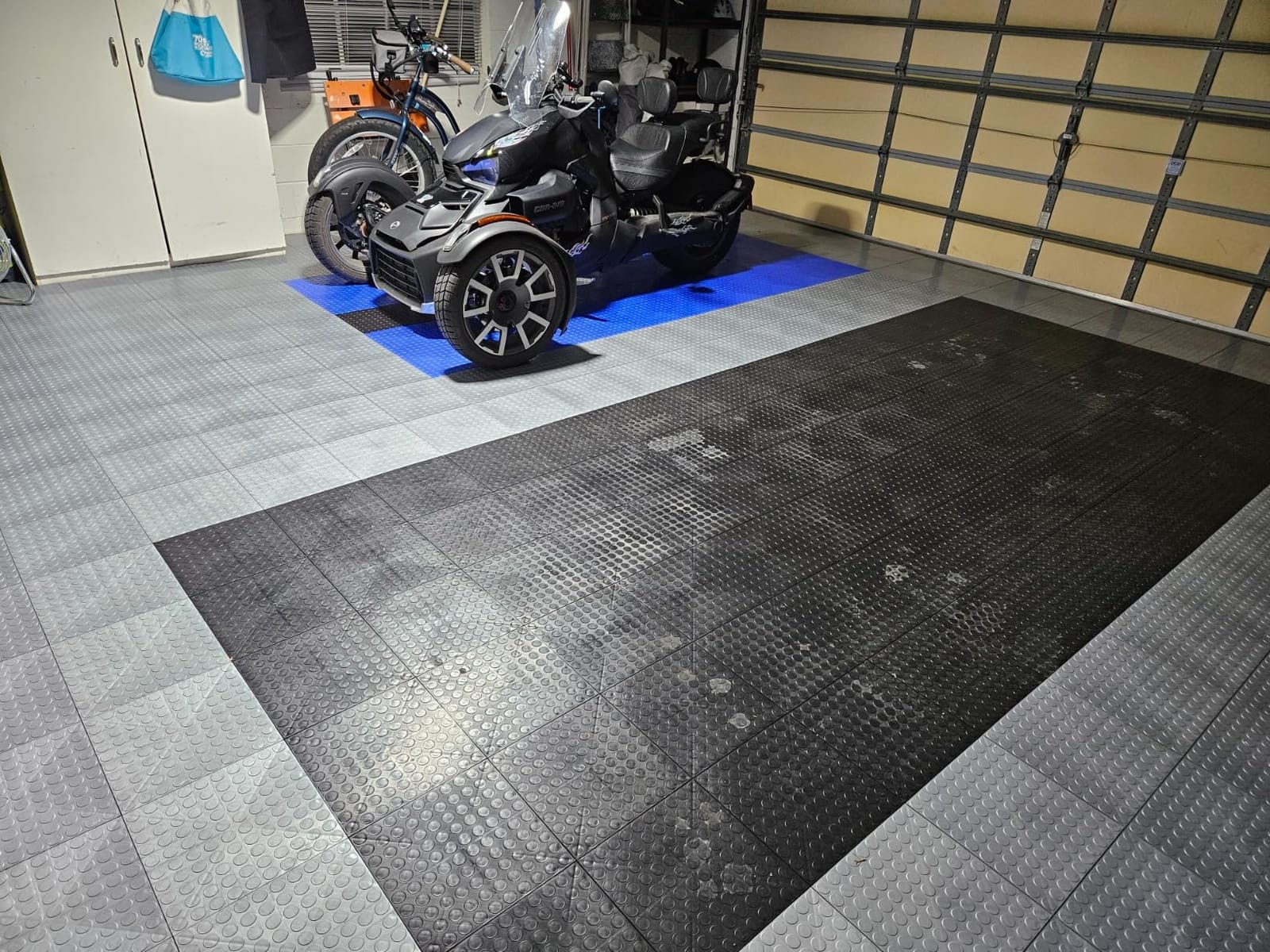
Like the GarageTrac, it carries a 40,000 lb rolling load rating across 48 square feet per pack, and the two share the same PowerLock interlocking approach. Owners frequently mix colors across multiple packs to build a showroom look for a fraction of the cost of a coated floor, and it is an easy effect to pull off.
Individual tiles can be popped out and replaced if one gets gouged, which is the repairability argument that draws most people to tiles in the first place. A forum user described the appeal neatly: if you spill something, you can pull a 12×12 tile up and hose out the mess underneath.
What you should know before cutting edge tiles
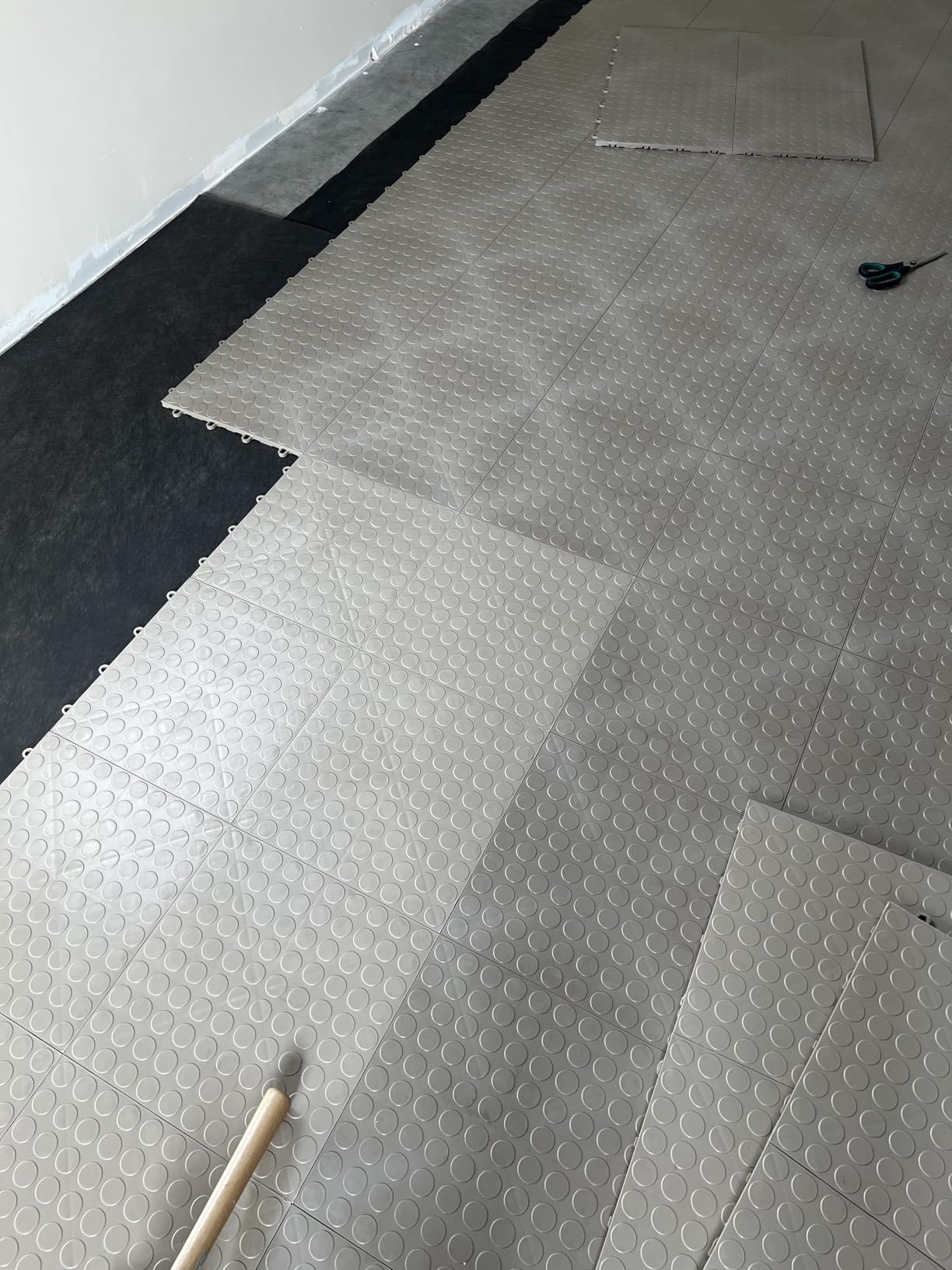
The tiles arrive pre-clipped into 2×2 sections, and separating those sections is genuinely difficult. Plan your layout so the seams land where the 24-inch module edges are, and save the cutting work for the perimeter rather than the middle of the floor.
Watch for batch-to-batch color variation if you are mixing packs. A checkerboard with a visible mismatch is a common complaint, so buy what you need in one order rather than topping up later.
Where GarageDeck falls short
Rigid polymer will not conform to an uneven or crowned concrete deck. On a slab with high spots you will feel the edges rocking, and no amount of cleaning fixes that.
Like all solid tiles, it sits over the slab rather than draining it, so standing water has to be moved manually. And walking on it produces the plastic sound that owners mention often enough to be worth expecting.
3. VEVOR 12×12 Interlocking Tiles for Budget Shop Floor Coverage
- Very low cost per tile versus premium brands
- Six-loop interlock locks without protrusions
- Cuts cleanly with a jigsaw or band saw
- Diamond-textured top grips and hides dirt
- Installs single-handed in minutes
- Hard plastic turns brittle and cracks in cold weather
- Sun-heated tiles can buckle even with expansion gaps
- Needs a powered saw to cut
- Strong rubbery odor when first unpacked
This is the tile for covering a large shop floor on a tight budget, and at 25 tiles per pack it is the most economical way to get a full surface in place. The 0.53 inch polypropylene profile is genuinely thick, and the six-loop interlocking system on the current model locks smoothly with no raised bumps to catch a caster.
The 4.1 rating across 933 reviews is the lowest average in this group, and the reason shows up in the distribution: 12 percent of reviews are one star. Read the pattern rather than the headline number, because the complaints cluster in two places.
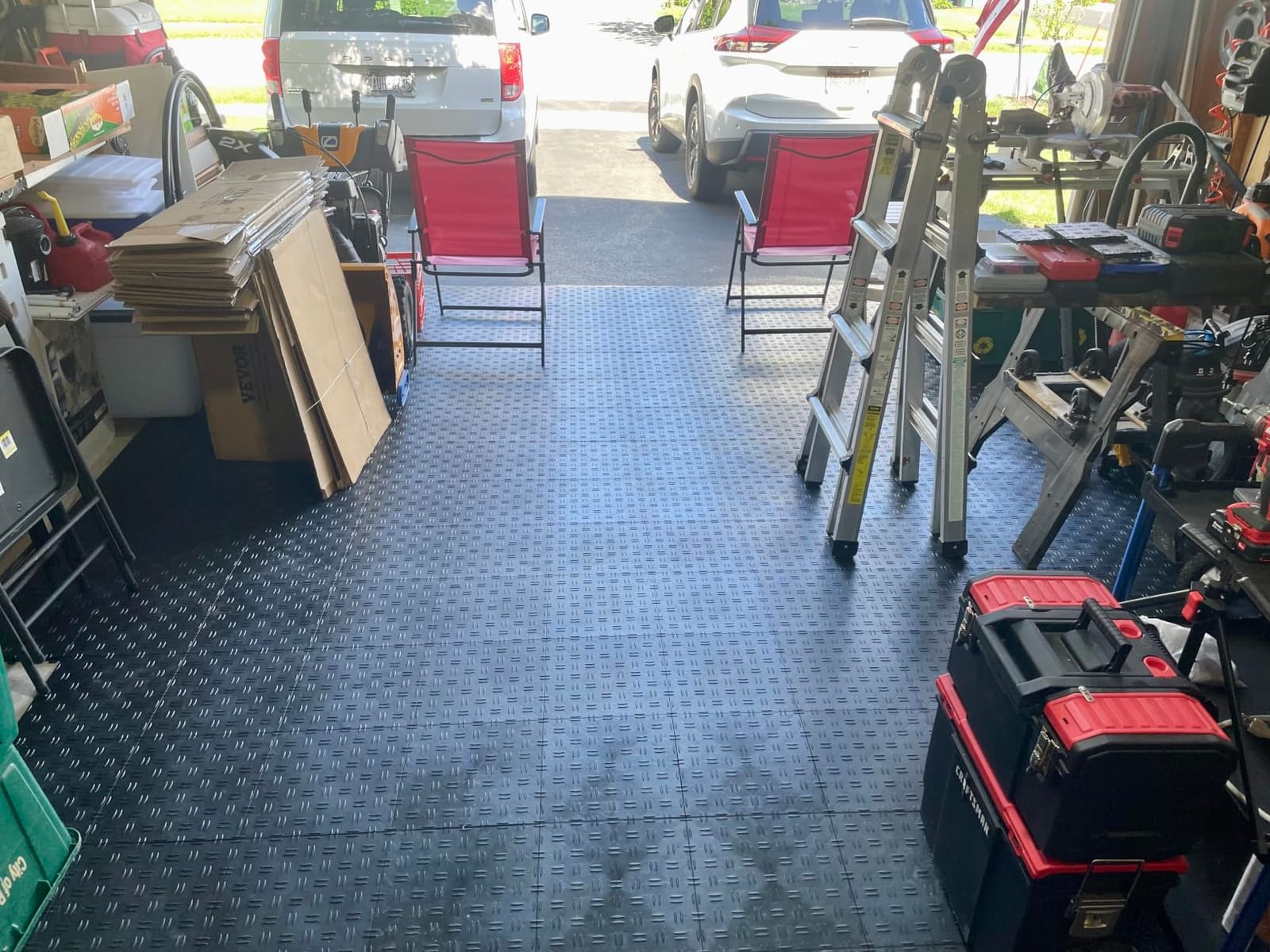
The listed load capacity is 5,500 lbs, well below the 40,000 lb rolling figures the SnapLock products carry. That makes it a sensible choice for a workbench area, a storage bay or a shop where a car is not parked over the floor, and a poor choice under a lifted vehicle or a heavy truck.
Cutting requires a powered saw. A jigsaw, circular saw or band saw all work, but scissors and hand saws will not touch it, so budget for tooling if you do not own any.
What to check in a cold or unheated workshop
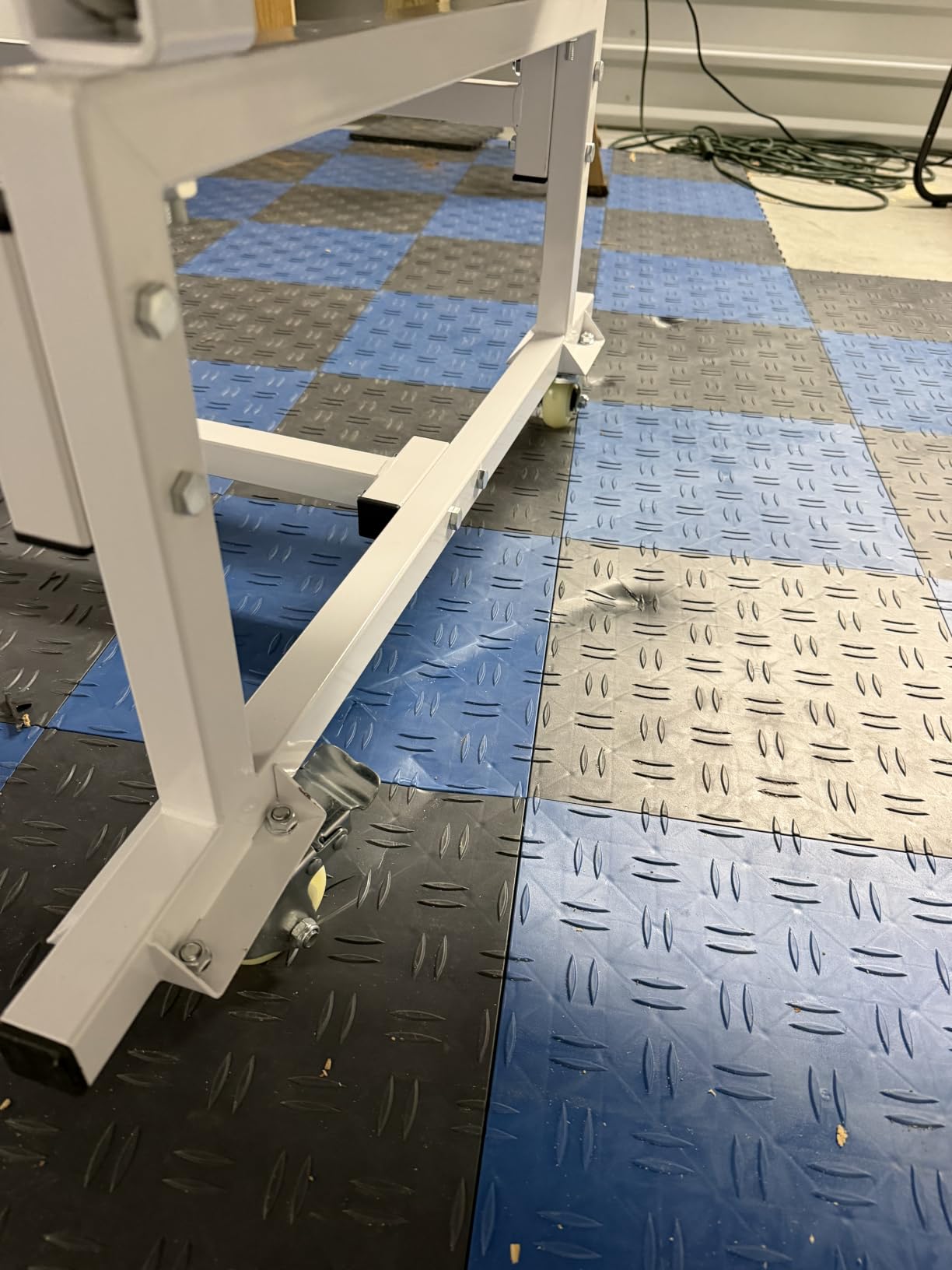
Cold-weather brittleness is the most reported failure. The material is described as impact resistant at room temperature, and owners in unheated spaces report cracking and even shattering once the temperature drops. If your shop is not heated, this is the reason to look elsewhere.
Thermal movement is the second issue. Tiles heated by direct sun can buckle and creep even when expansion gaps are left, so keep the floor out of a hard sunbeam through a garage door if you can.
Where VEVOR is the wrong choice
A strong rubbery smell arrives with the pack and fades after airing the tiles out for a day or two. Ventilate before installing rather than after.
There is also a compatibility note worth reading twice. Older production runs do not fit the upgraded interlocking system of the current model, so mixing old and new boxes on one floor will leave you with loose tiles.
4. RaceDeck Free-Flow Vented Tiles for the Heaviest Equipment
SnapLock RaceDeck Free-Flow 12″x12″ Interlocking Garage Tiles, 48pk, Black
- Open grid drains water and debris so the floor can be power washed
- Highest rolling load rating we found at 80000 lbs
- Stays cooler in sun than solid tiles
- Slotted design kills the echo and clacking of solid tile
- Lay mistakes can be undone and re-laid
- Hard on bare feet when walking
- Small screws and bolts drop through the slots
- Rolling jacks and wheeled equipment fight the ribbed surface
For a shop that takes a lift, a truck or an engine hoist, the RaceDeck Free-Flow carries an 80,000 lb rolling load rating, the highest figure in this roundup by a factor of two. It is a 0.5 inch industrial-grade polypropylene tile with a 15 year warranty behind it, which is the combination you want when something heavy and expensive will eventually land on the floor.
The defining feature is the self-draining open-rib design. Debris, dirt and liquids pass straight through the grid, so the floor can be power washed rather than scrubbed, and the understructure is described as anti-fatigue and impact absorbing, which softens the standing experience considerably.
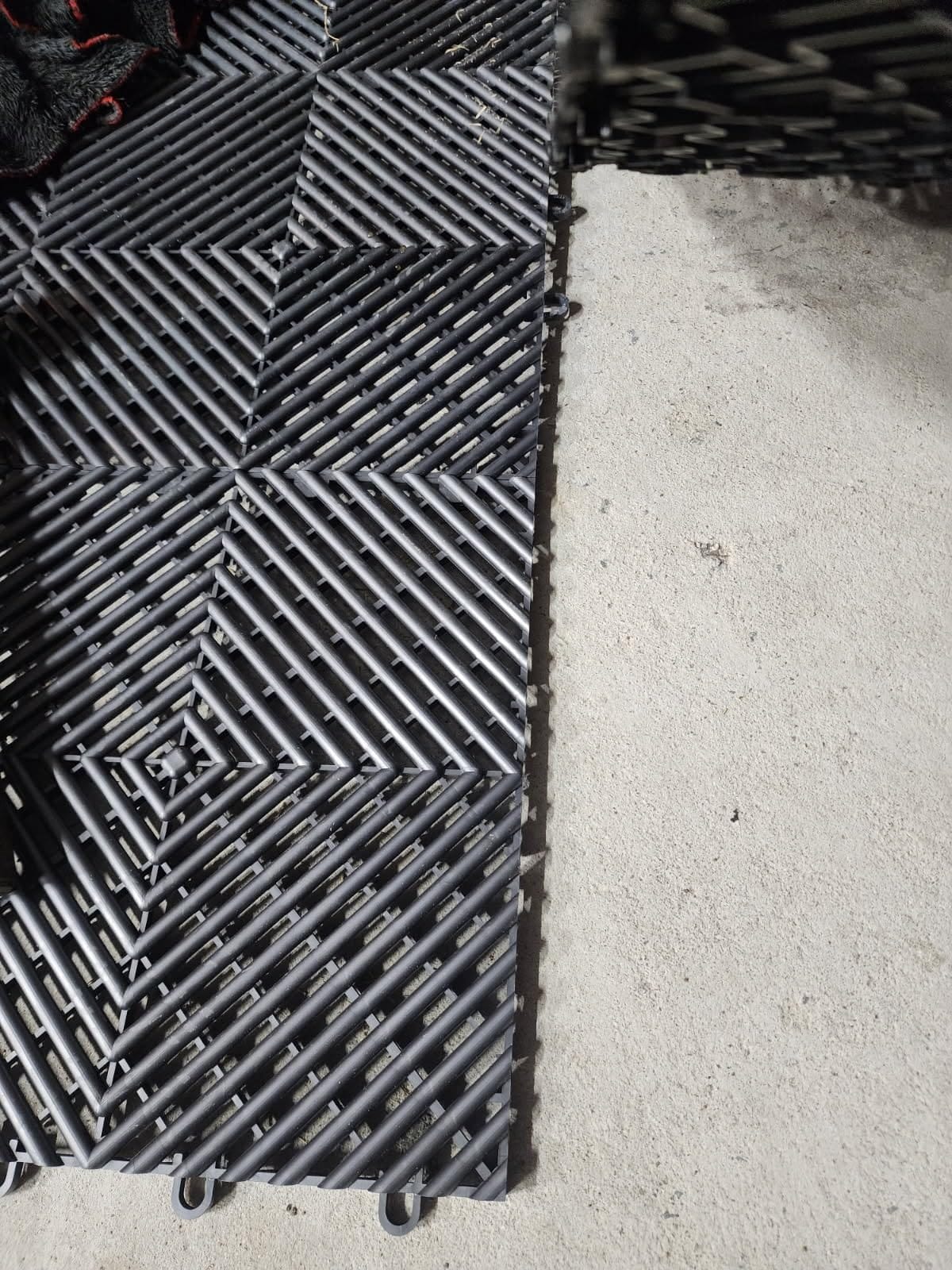
Owners in wet climates, around pools and on RV or boat applications rate it highly, and several note it is not slippery when wet and runs cooler in direct sun than a solid tile. The slotted profile also solves the plastic echo problem that makes solid tiles tiring in an enclosed shop.
Installation is forgiving. The tiles snap together without tools, cut easily with laminate cutters or pruning shears, and if you get the layout wrong you can lift the section and re-lay it rather than starting over.
What to plan around with a vented tile
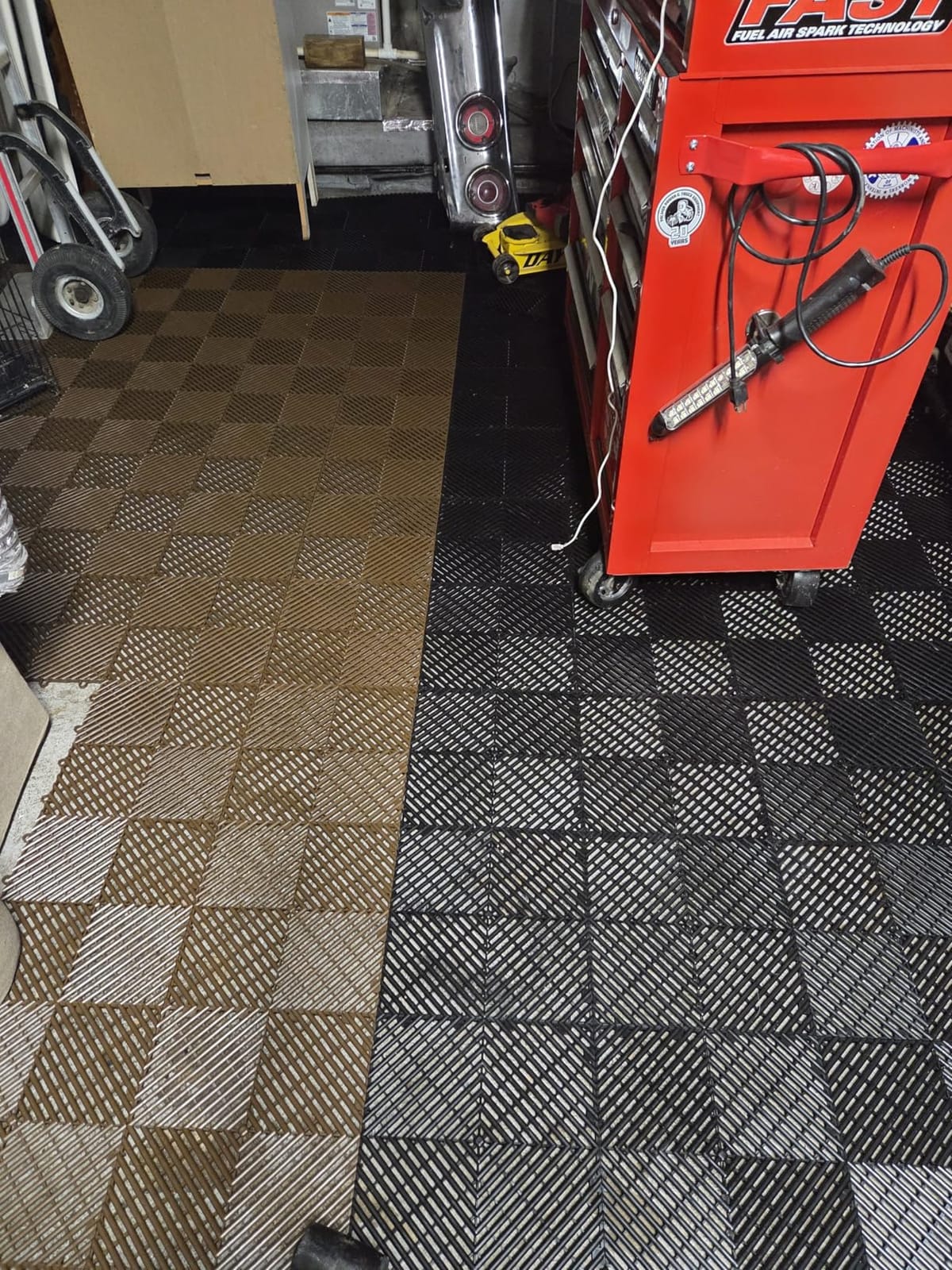
Plan where your jacks and jack stands live. Rolling equipment fights the ribbed surface, and a stand without a mat can mark the tile, so a rubber mat under each stand is a cheap fix that protects a floor you already invested in.
Keep a magnet or a leaf blower nearby. Small hardware dropped into the channels is the most common irritation with any open-grid design, and it is annoying to retrieve from under a tile.
Where the Free-Flow design is the wrong choice
It is hard on bare feet, and the slots give you nothing under thin soles. If your shop involves a lot of walking in socks or bare feet, a solid coin or diamond tile is more comfortable.
It is also a wet-floor solution more than a spill-containment solution. Fluids pass through to the slab, which keeps the tile clean but means your concrete underneath is still absorbing oil unless it is sealed first.
5. Jocoevol 60-Piece Drainage Tiles for Sheds, Patios and RV Decks
- Lowest cost per tile of the 60-piece format at 60 tiles
- Tool-free snap assembly in minutes
- Raised pegs drain water and let air circulate under the slab
- Works indoors and outdoors from garage to pool deck
- Rinses clean and resists fading and staining
- Some sets report tabs that do not lock consistently
- Soft pegs can flex on uneven ground and need extra pressure
- Thin profile gives less underfoot cushioning than solid tiles
This is the tile for a shed workshop or a covered outdoor bay rather than a main shop. Sixty 12-inch tiles in a single pack means you cover far more ground per order than most competitors, and the 0.65 inch support pegs lift the walking surface off the slab so water and grit drain through instead of sitting under your feet.
That raised design is genuinely useful in a damp outbuilding. Airflow under the tile reduces the musty smell that develops in unventilated sheds, and the same property protects a wooden subfloor from standing moisture.
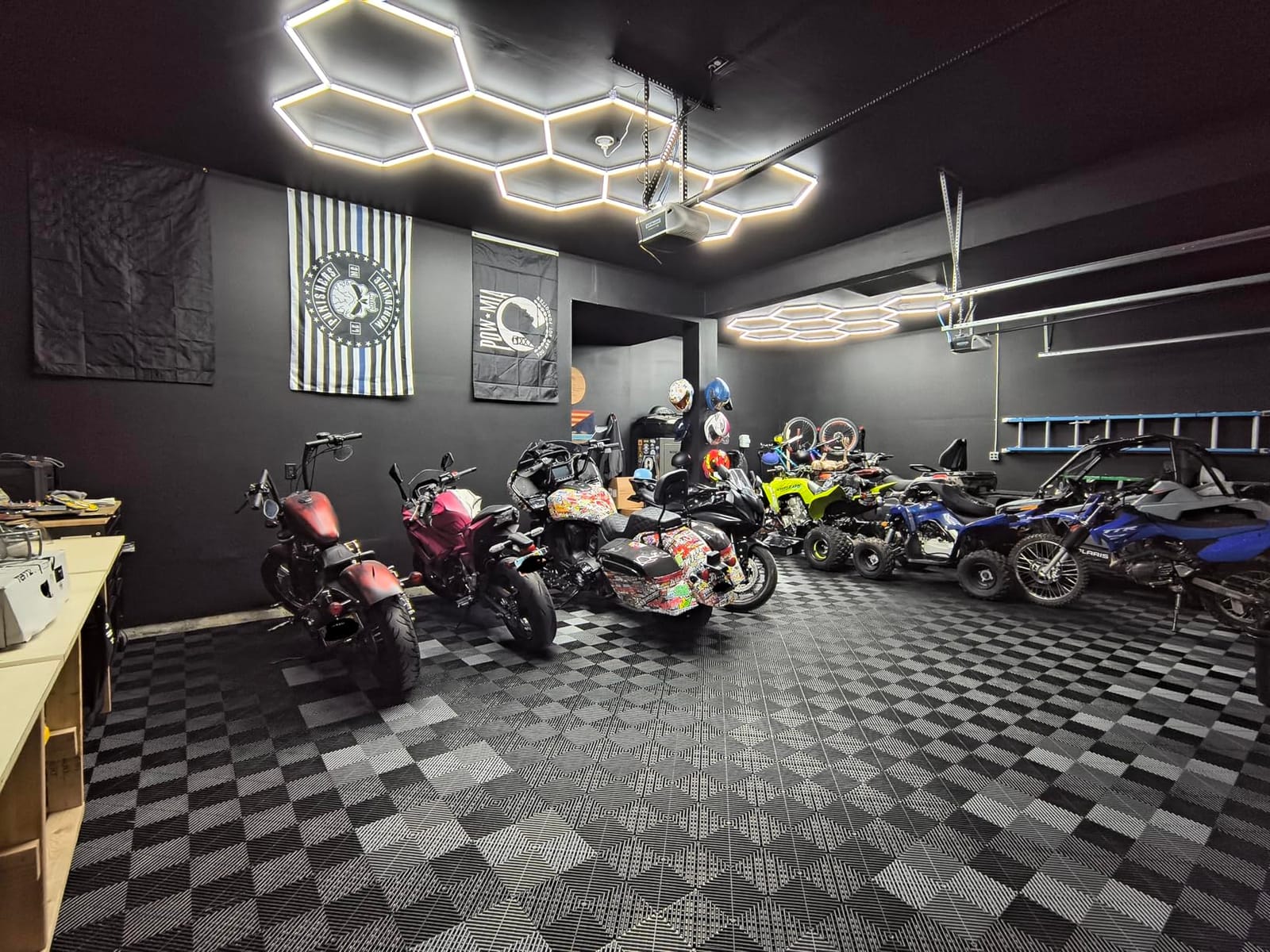
Installation is the simplest in the group. You align the edges and press down, with no glue, tools or extra hands, and the thick square tabs are specified to resist deformation under impact. On uneven ground the pegs can flex, so keep a flat offcut to push the connectors tight.
Owners use these across garages, sheds, patios, pool decks, RV under-bed storage and shower areas. The polypropylene is described as UV resistant, odorless and non-fading, and the surface is non-slip, which is the right combination for a space that gets wet.

What to check before you lay 60 tiles
Consistency of the interlocking is the thing to watch. A small share of buyers report tabs that do not lock reliably within a set, so lay a few tiles, walk on them, and confirm they hold before you commit the whole floor.
Check your ground is level. The pegs are designed for drainage on a flat surface, and on a sloping or rutted pad they can rock rather than seat.
Where this tile is the wrong choice
The peg design means a very thin walking surface with an open void underneath, so there is no cushioning underfoot. Standing for a full day on this will feel different from a solid 0.5 inch tile, and it is not designed for a vehicle lift.
It is the wrong pick for a shop where you need to contain a spill, since anything that lands on the surface runs straight through to whatever is underneath.
6. Nitro Tiles Vented for Wet Climates and Snowy Driveways
- Vented grid sends water
- snow and oil drips through instead of pooling
- Holds position under a pickup or golf cart
- Diagonal grooves channel water for wet grip
- Installs in minutes by stepping on the studs
- Tiles lift up so the slab can be swept underneath
- Can creep and buckle under slow vehicle steering
- Edge trim and transition pieces cost proportionally more
- Can feel slippery when wet
- Less rigid than thicker premium tiles
If your shop sees snow melt or a wet boot floor in winter, a vented tile is the correct answer, and the Nitro Vented is the version built for exactly that. The open-grid design is specified to let water, snow, oil drips and vehicle fluid spills flow through rather than pool, which is the failure mode that turns a garage floor into a hazard every February.
At 0.38 inch thick and 52 tiles per pack covering 52 square feet, it sits in the middle of the thickness range here. The chevron surface is the traction element, and the diagonal grooves are designed to channel water away from the contact patch.
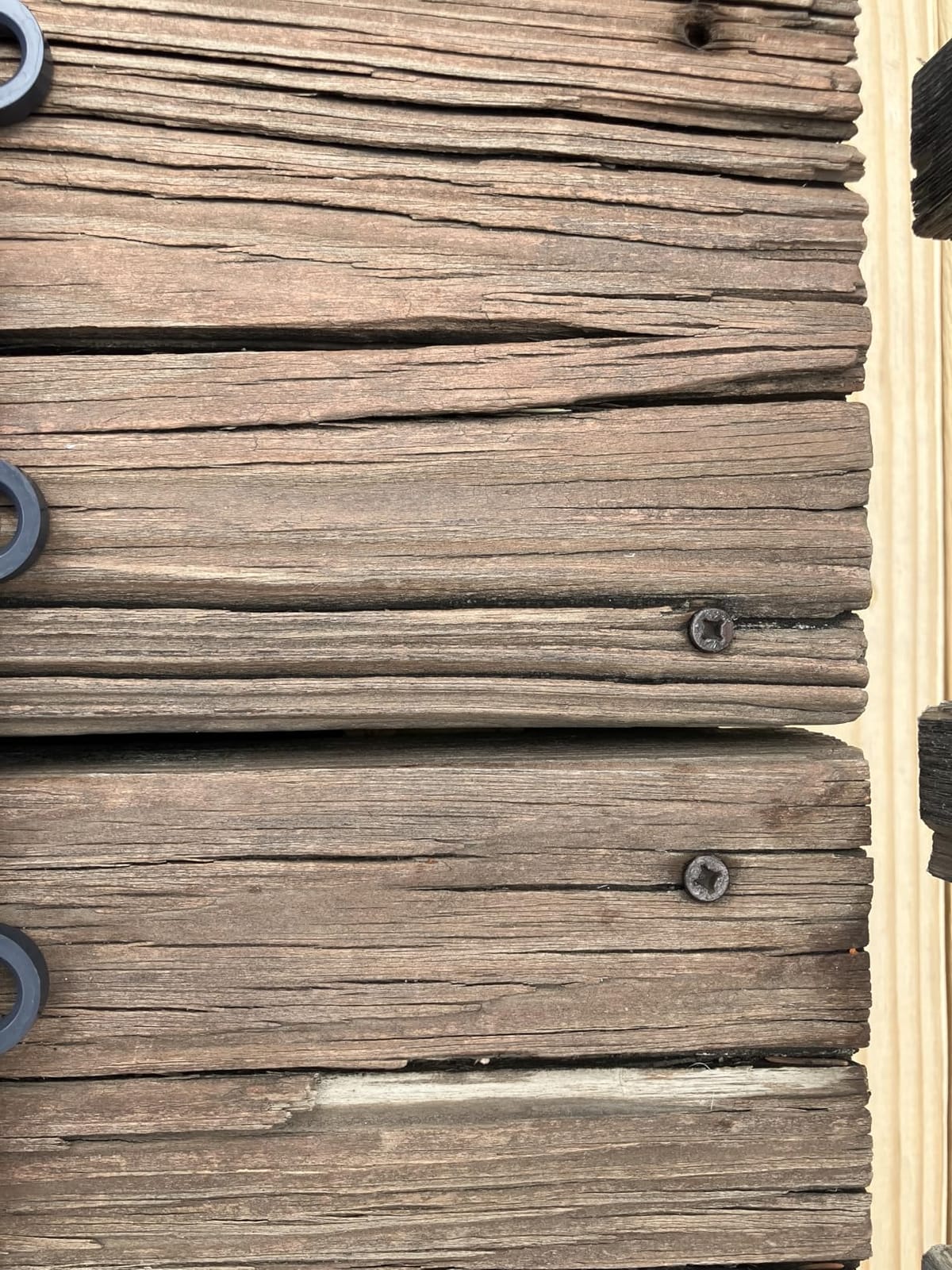
Several owners use it as a dirt-trapping walk-off zone at the garage-to-house transition, which is a smart use of a vented tile. Because each tile lifts out, you can pull up a section and sweep the slab underneath, then drop it back into place.
Installation needs no mallet if you step on the studs as you go. Tiles are also compatible with the Nitro Diamond and Coin patterns, so you can build a zoned floor: vented tile at the door where water comes in, solid tile under the work area.
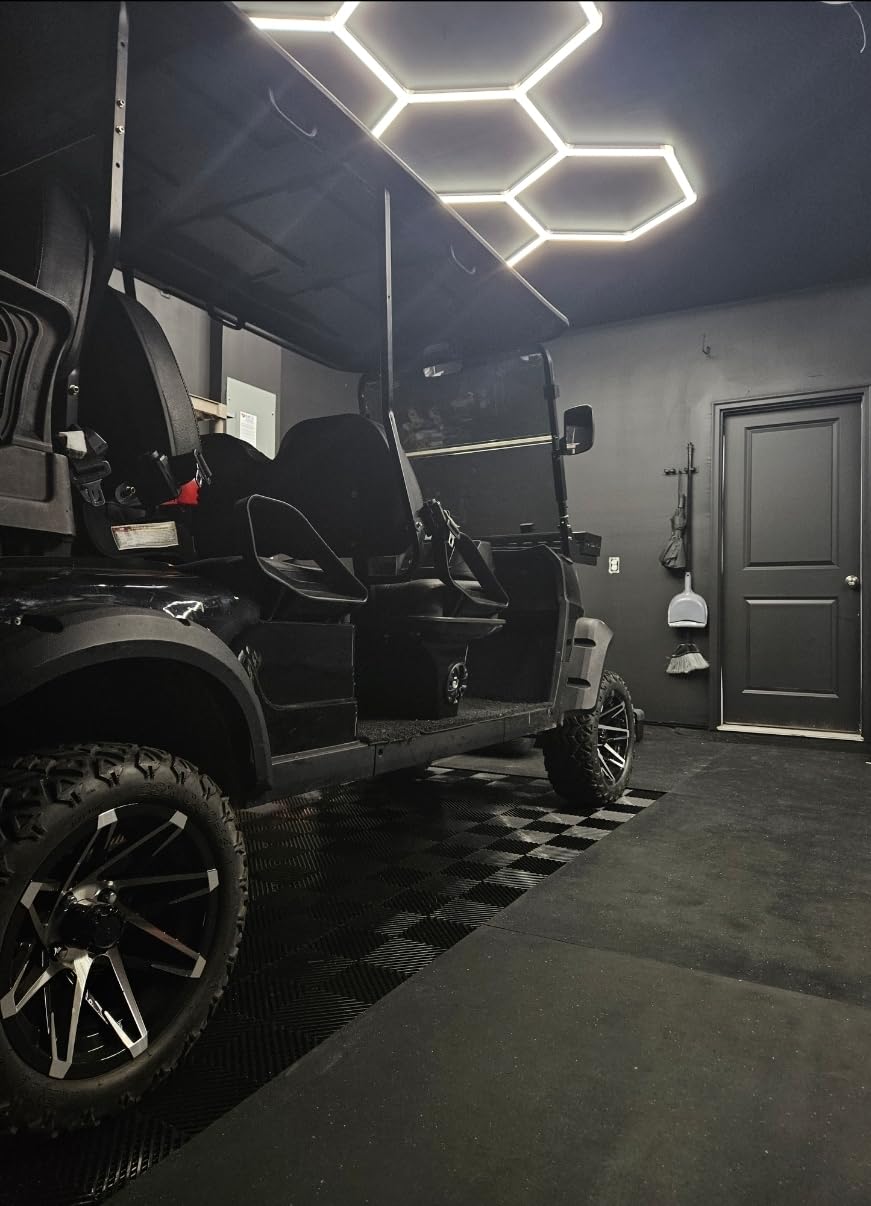
What to watch with vented tile in a working bay
Floor creep is the serious complaint here. Under slow vehicle steering on concrete, the assembled floor can move and buckle even when expansion gaps are left, and one reviewer reported that it can affect garage door tracks. If you park a car in the bay, drive across the tiles slowly and check your gaps.
Budget for the edge trim separately. Transition and trim pieces carry a higher cost per piece than the tiles themselves, and on a small bay the trim can add up faster than the field tile.
Where the Nitro Vented is the wrong choice
It can feel slippery when wet, which is worth factoring against the drainage benefit. Test it wet in the room before committing to a full floor.
It is also less rigid than the thicker premium tiles, so heavy rolling equipment can leave a mark. For a jack-heavy shop, a 0.5 inch solid tile is a better surface even if it drains less well.
7. VersaTex 18×18 Raised Coin Tiles for Home Gyms and Quiet Floors
- Largest tile footprint at 18x18 inches so installs go faster
- Dense rubber is softer and quieter than hard polypropylene
- Non-porous and waterproof so it does not absorb spills
- Lifts and repositions freely since nothing is adhered
- Works over wood
- laminate
- tile
- vinyl and concrete
- Thin 0.13 inch profile is weak under jacks and concentrated loads
- Less cushioning than thicker rubber gym flooring
- Not self-draining so water sits on the surface
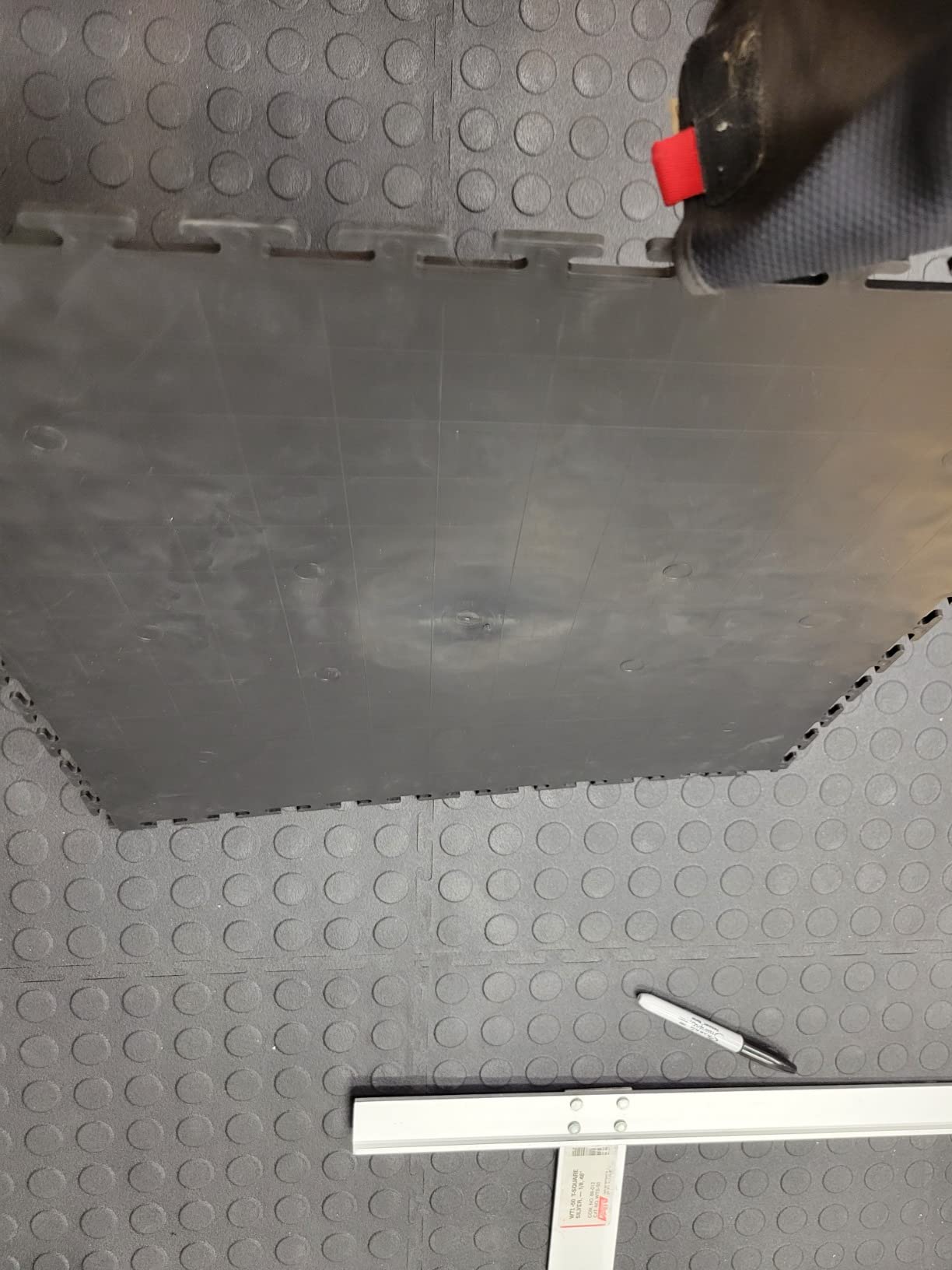
These are the tiles to buy if your workshop doubles as a gym or a maker space with a lot of standing. At 18 inches square, each tile covers 2.25 square feet, so a 24-pack gives you 54 square feet and a room that size installs in a fraction of the time a 12-inch system takes.
The material is dense recycled rubber rather than rigid plastic, and the difference is immediate underfoot. It is quieter, softer and more forgiving on knees, and because nothing is adhered you can lift and reposition tiles as your layout changes.
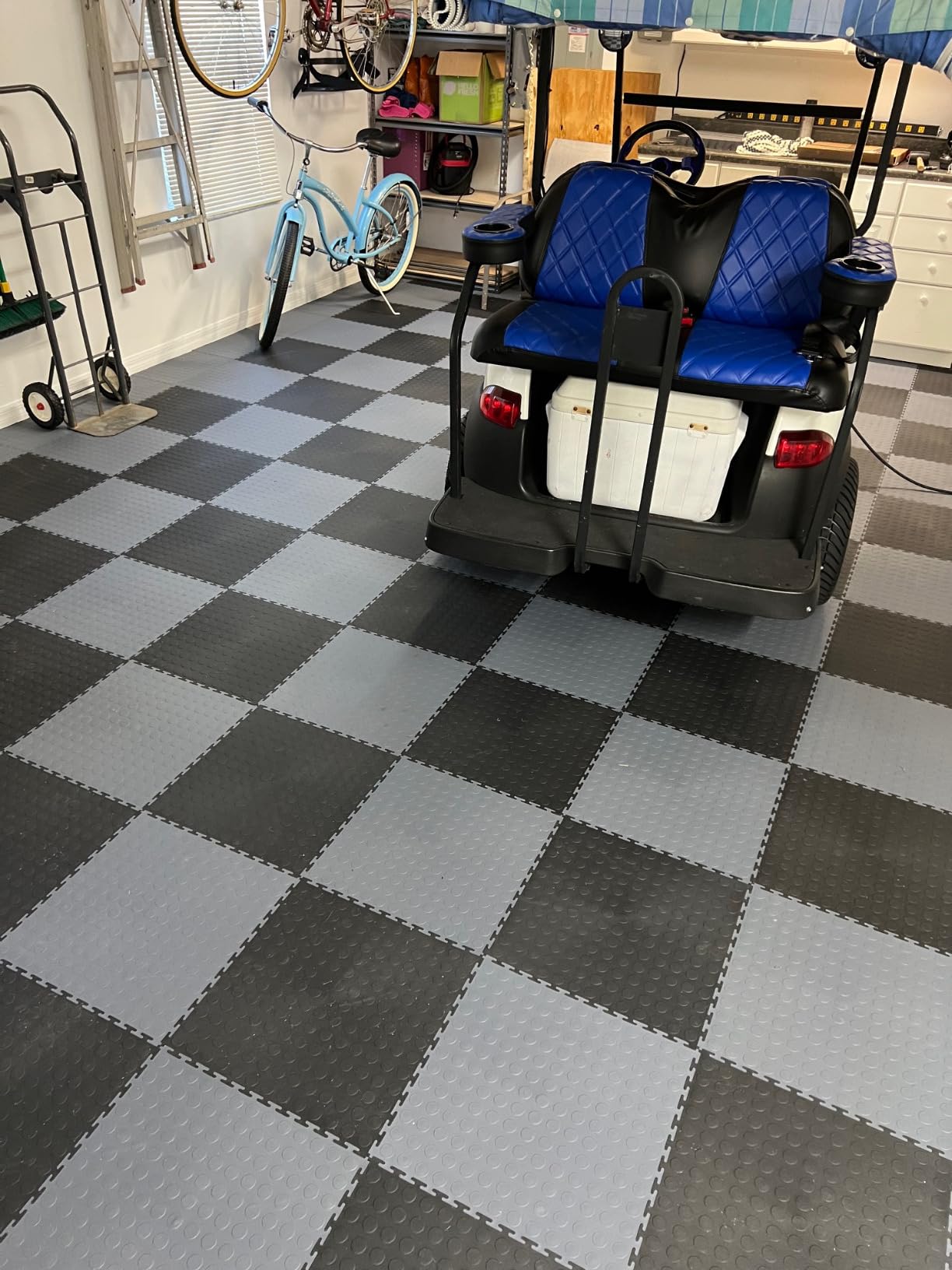
The construction is described as non-porous, impact resistant, puncture-proof and UV resistant, with resistance to household chemicals, oils, brake fluids and solvents. It is safe to drive over with cars, trucks or mowers, and it will not absorb sweat or liquids in a gym context.
It is also the most forgiving substrate tile in the group. Owners place it over wood, laminate, tile, vinyl, cement and other indoor hard floors, which solves the common forum problem of wanting a finished surface over a wooden garage subfloor.
What to consider about the 18-inch format
The bigger tile means faster install but a bigger penalty for a mistake. Once several tiles are locked, unclipping an 18-inch section is more work than freeing a 12-inch one, and perimeter cuts are less forgiving because you have fewer seams to work with.
Because the profile is only 0.13 inch, a heavily loaded corner of the floor can rock. Work out where your equipment actually sits before laying the whole room.
Where VersaTex is the wrong choice
It is the least capable tile here under point loads. A floor jack or a set of jack stands concentrates thousands of pounds on a small area, and a 0.13 inch rubber tile is not built for that. Keep jacks on a steel plate or move them to a bare patch of slab.
There is no drainage. Water sits on the surface and has to be wiped, and there is no open channel to hose through, so it works best in an indoor space rather than at a wet entry.
8. Nitro Tiles Diamond for Covering an Old Cracked Slab
Nitro Tiles by FlooringInc 12″ x 12″ Interlocking Garage Floor Tiles, Diamond Pattern Heavy Duty Polypropylene Flooring, Modular Snap-Together Non-Slip Floor Tile, Graphite, 52-Pack (52 Sq Ft)
- Made a 70-year-old patched concrete slab look new
- Snaps together with a rubber mallet and trims with a jigsaw
- Limited lifetime warranty at a mid-range price point
- Diamond texture grips and reads as a professional workshop floor
- Mixing colors creates a checkerboard or custom layout
- Surface is very shiny and can look like plastic
- Metal objects dragged across scratch or gouge the tile
- Sun-heated tiles buckle without a quarter inch expansion gap
- Occasional tabs arrive without a bevel and will not snap
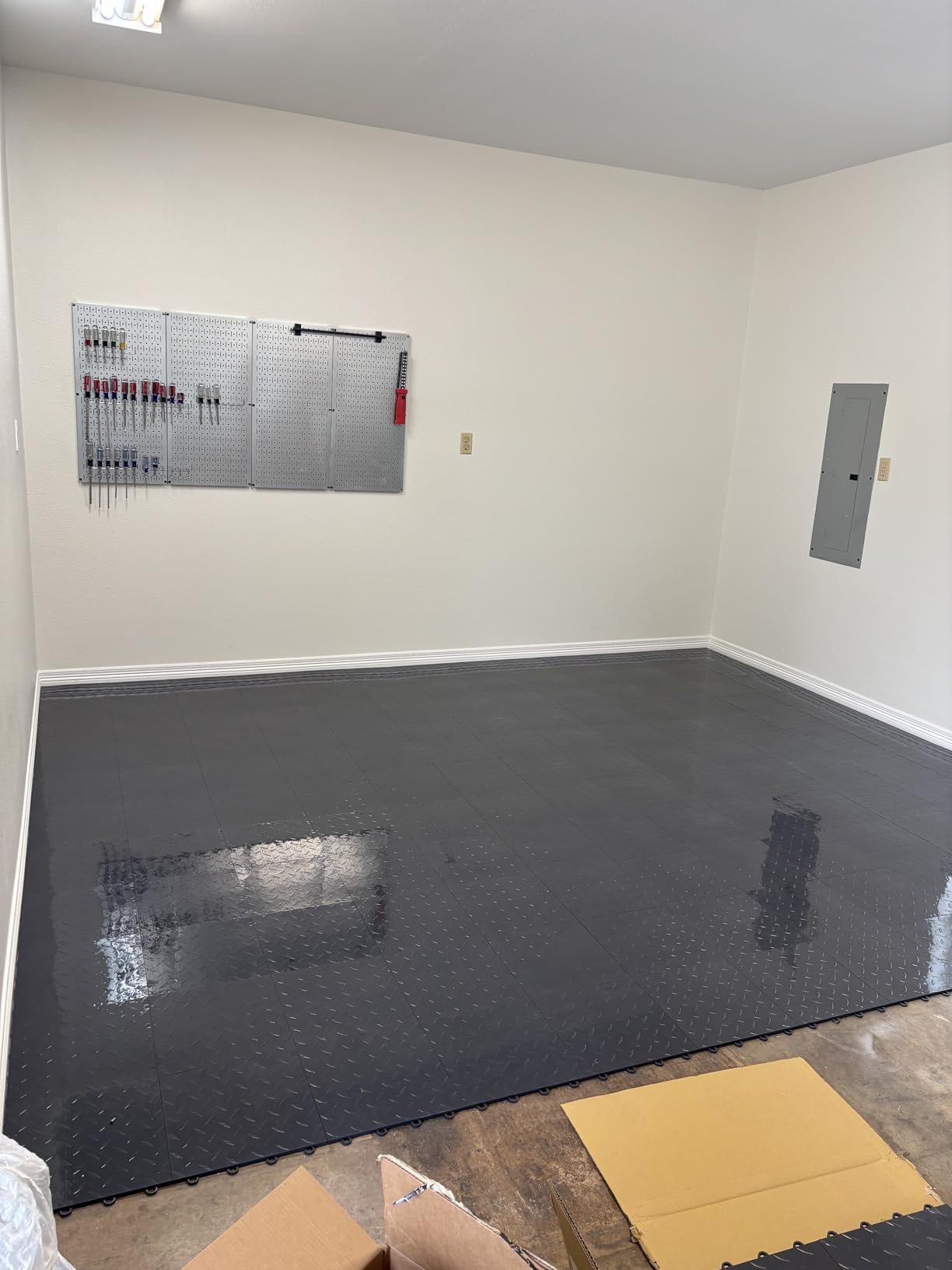
The most common reason people buy a tile floor is that the slab underneath is not worth looking at. A 70-year-old patched surface is the exact case owners describe, and a diamond-pattern tile hides cosmetic damage that a coating would immediately reveal as it wears through.
At 0.38 inch thick with a raised diamond texture, this is a solid, non-vented tile rated for parked vehicles, rolling tool chests and daily workshop traffic. It is chemically resistant to oil, gasoline, moisture and common shop chemicals, and it is waterproof and stain resistant.
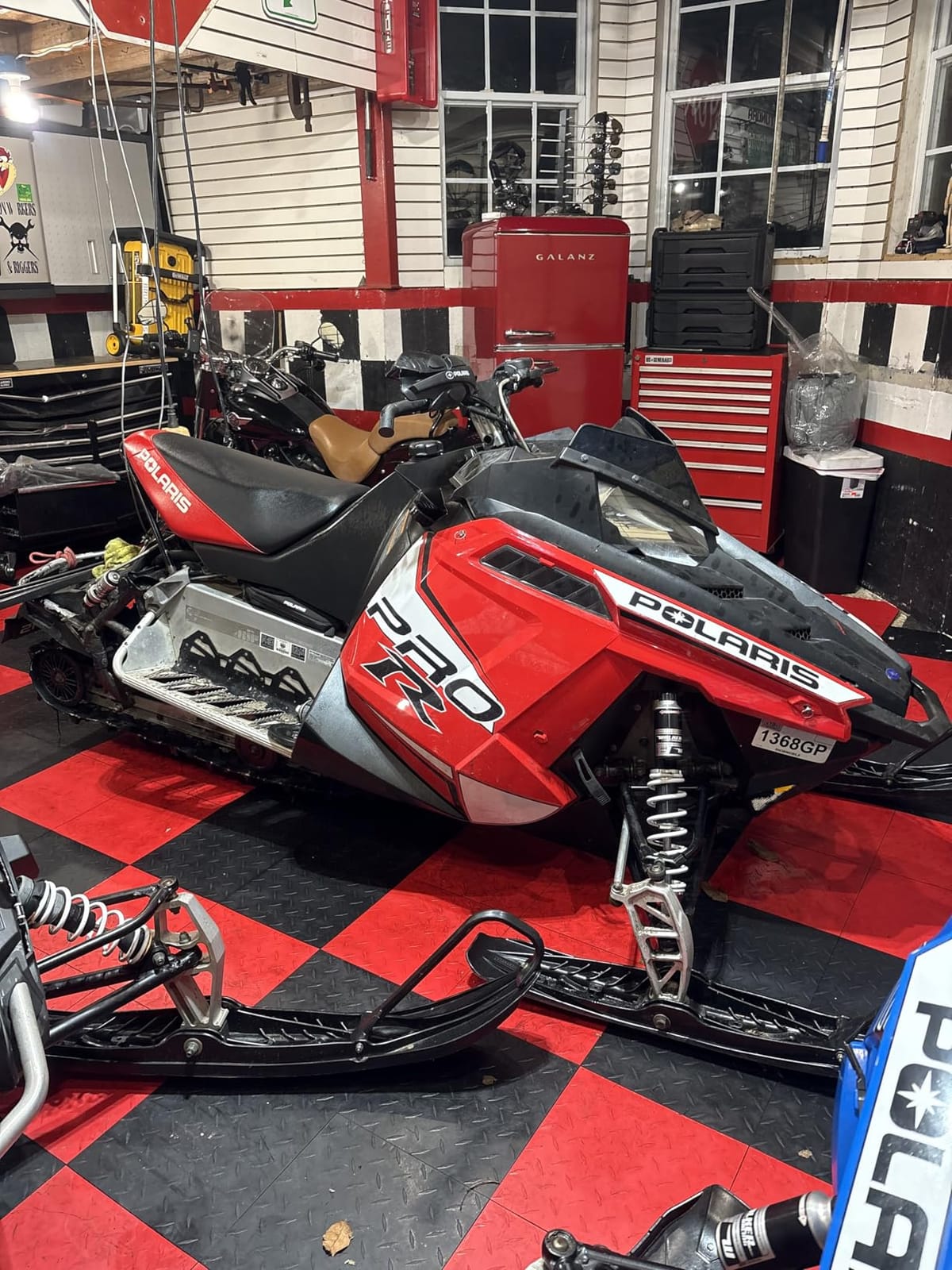
Install is fast with a rubber mallet, and perimeter pieces trim cleanly with a fine-tooth jigsaw. A limited lifetime warranty is unusual at this price point and is a reasonable reason to pick it over a cheaper generic tile.
Zoned layouts are easy because the Nitro Diamond, Coin and Vented patterns all interlock. Put the vented pattern at the door where water comes in and diamond tile under the vehicle.
What to check before ordering
Read the edge trim terminology carefully on the listing. Some buyers order a part called a transition when they needed an edge, or the reverse, and end up with trim that does not fit the profile. Match the trim to the exact pattern you are buying.
Inspect tabs as you go. A small number of tiles arrive with tabs that lack a bevel and will not snap without modification, so a quick check while unpacking saves a hole in the floor later.
Where Nitro Diamond is the wrong choice
The finish is glossy enough that some owners read it as cheap plastic, which is the most common aesthetic complaint about polypropylene tiles generally. If the look matters to you, expect a utilitarian surface rather than a showroom one.
It scratches. Dragging a metal toolbox or a car jack across the floor can gouge the surface permanently, and a solid tile will hold the mark rather than letting it fall through as a vented one would.
9. Boldworks Drain Tiles for Sunny Garages
- Roughly half the cost per tile of premium polypropylene brands
- UV coating and six loops target the sun-buckling problem
- 0.5 inch impact-resistant polypropylene rated to 40000 lbs
- Brick-pattern top gives traction and hides shop grime
- Oil
- stain and water resistant with routine mop cleaning
- A noticeable share of one-star reviews cite inconsistent snap-lock fit
- Drain-style ribs collect grit that needs periodic vacuuming
- Limited color range with only a single pack size listed
Sun is the enemy of every polypropylene tile floor, and this one is engineered around that problem. The UV coating is specifically claimed to address buckling under direct sun, and the six interlocking loops per tile are a step up from four-loop designs that owners report popping loose or buckling up.
At 0.5 inch thick with a 40,000 lb rolling load rating, the construction is closer to the premium tier than the budget tier. For a shop with a south-facing door that floods the floor with light all afternoon, that combination of gauge and UV protection is the whole point of the product.
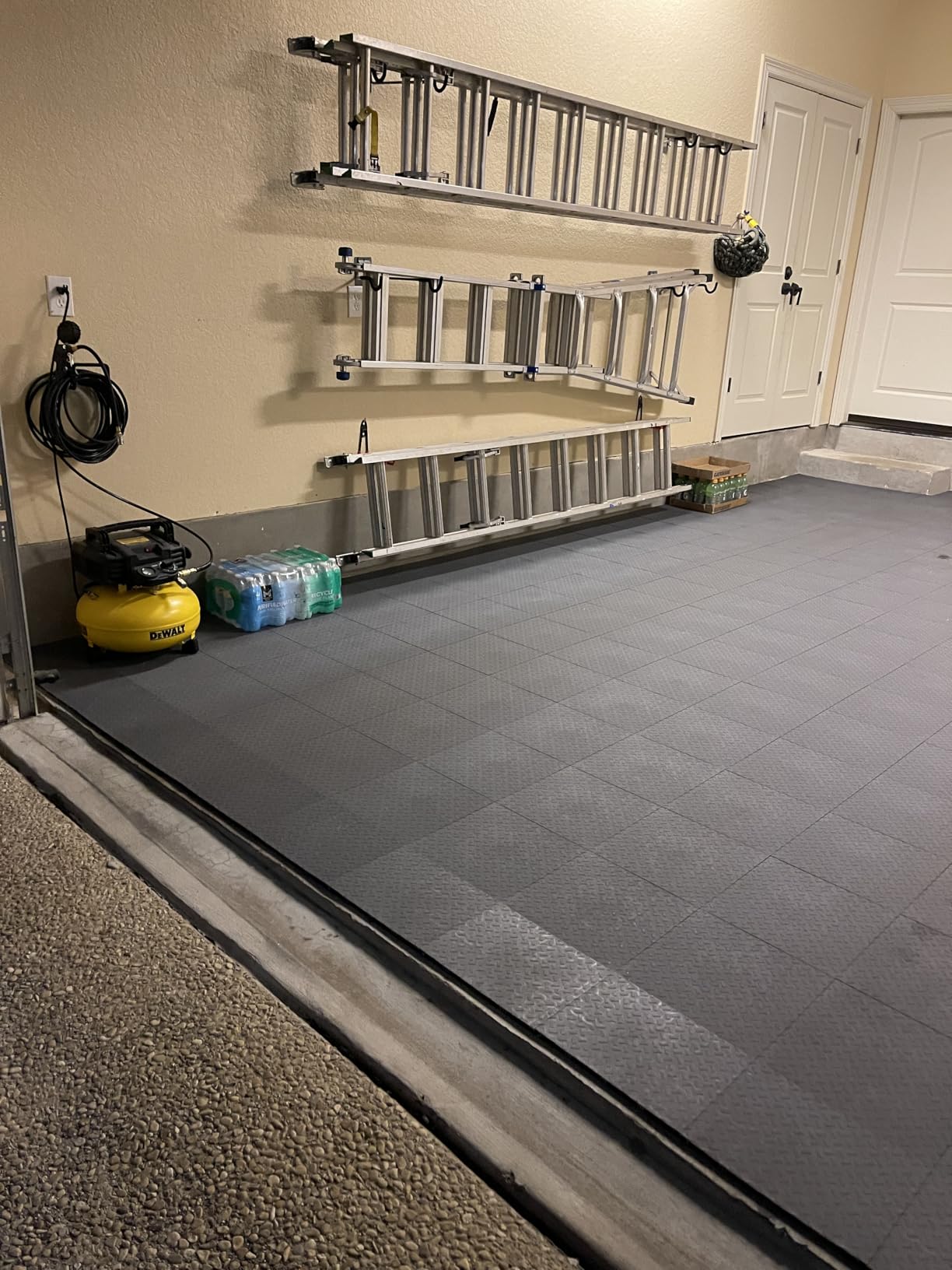
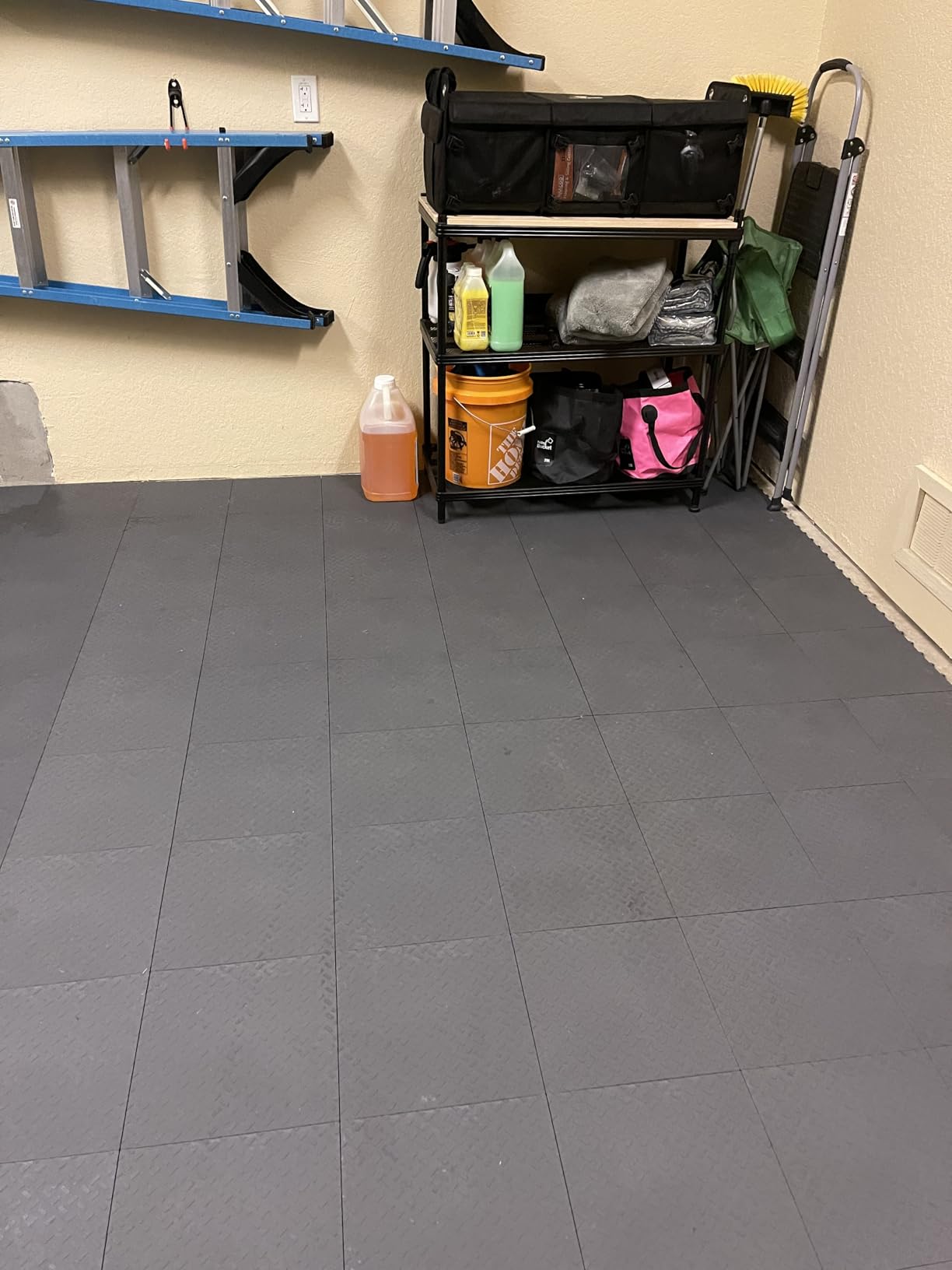
The brick-pattern top is a practical texture choice. It grips in a shop and it hides grime better than a bright smooth surface, so the floor still looks presentable after a month of work.
Cleaning is routine: regular mopping and vacuuming keeps it in order, and the polypropylene is resistant to oil, stains and water. Setup is tool-free via a snap lock mechanism, with no glue and no extra hands needed.
What to check on quality control
Fit is inconsistent across a small share of units, and some pieces need extra force to lock. Lay the first row, stand on it, and check that every tab is fully engaged before you build the rest of the floor on top of it.
Plan for the ribs. Because the drain-style channels collect grit, a shop vacuum every few weeks is part of the maintenance routine, and a floor brush will keep the channels from silting up in a high-dust space.
Where Boldworks is the wrong choice
The color range is narrow, with only black and grey available and a single pack size listed, so a custom two-tone or checkerboard layout is not really on offer here.
The listing also gives two different thickness figures, one of them very thin, which is worth ignoring in favour of the 0.5 inch specification used elsewhere in the same listing. We would confirm the physical gauge on arrival.
10. SafeRacks Vented Tiles for Covering Large Areas Fast
SafeRacks Vented Interlocking Garage Floor Tiles – Black, 48 Pack
- Highest rating in the group at 4.8 stars
- 1.72 sq ft per tile cuts install time dramatically
- Nearly 3/4 inch thick and rated to 4 metric tons
- Comfortable barefoot and easy to trim with a jigsaw
- Under-channel drainage keeps the slab dry
- Split locking tabs bend if the tiles are not lined up first
- Dropped hardware can fall into the under-channels
- Tiles are hard to disassemble for retrieval
This is the fastest way to cover a large floor, and the rating reflects it. At 4.8 stars the SafeRacks is the highest-rated tile in the group, and the format is the reason: each tile measures 15.75 inches square and covers 1.72 square feet, roughly 72 percent more than a 12-inch module.
One owner reported installing 575 square feet in about four hours with nothing but a jigsaw. That is the kind of number that changes the calculation for anyone covering a three-car bay or a double garage with a workshop area.
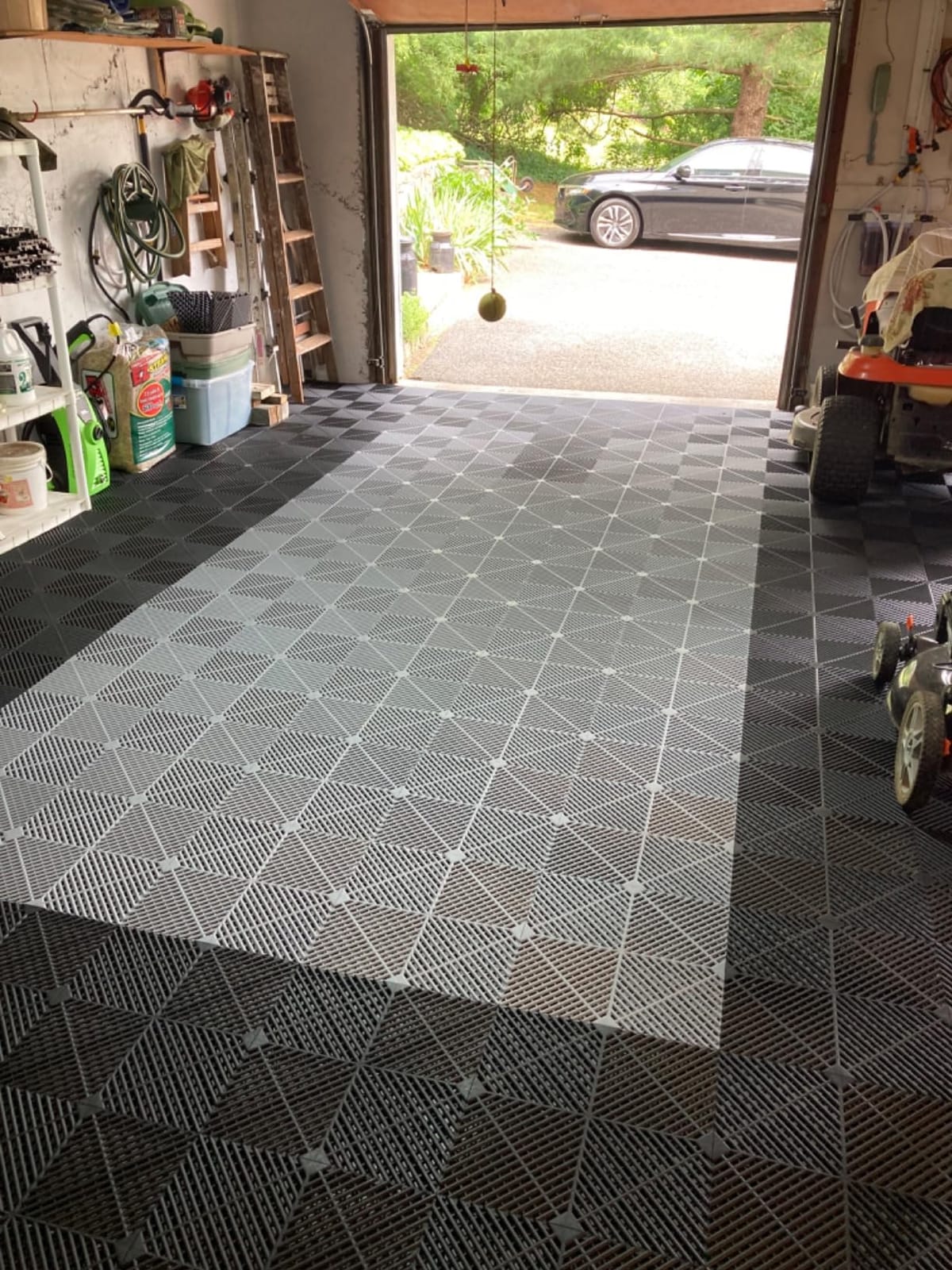
The gauge is the second headline. Nearly 3/4 inch thick polypropylene rated to 4 metric tons of load puts it among the heaviest tiles here, and the open-air channels underneath handle drainage and airflow so the slab below stays dry in wet areas.
It also disassembles cleanly enough to reconfigure, snaps together on any hard level surface with no tools or hardware, and is offered in black, grey, blue and red with 16- and 48-pack options.
What to check about the connector design
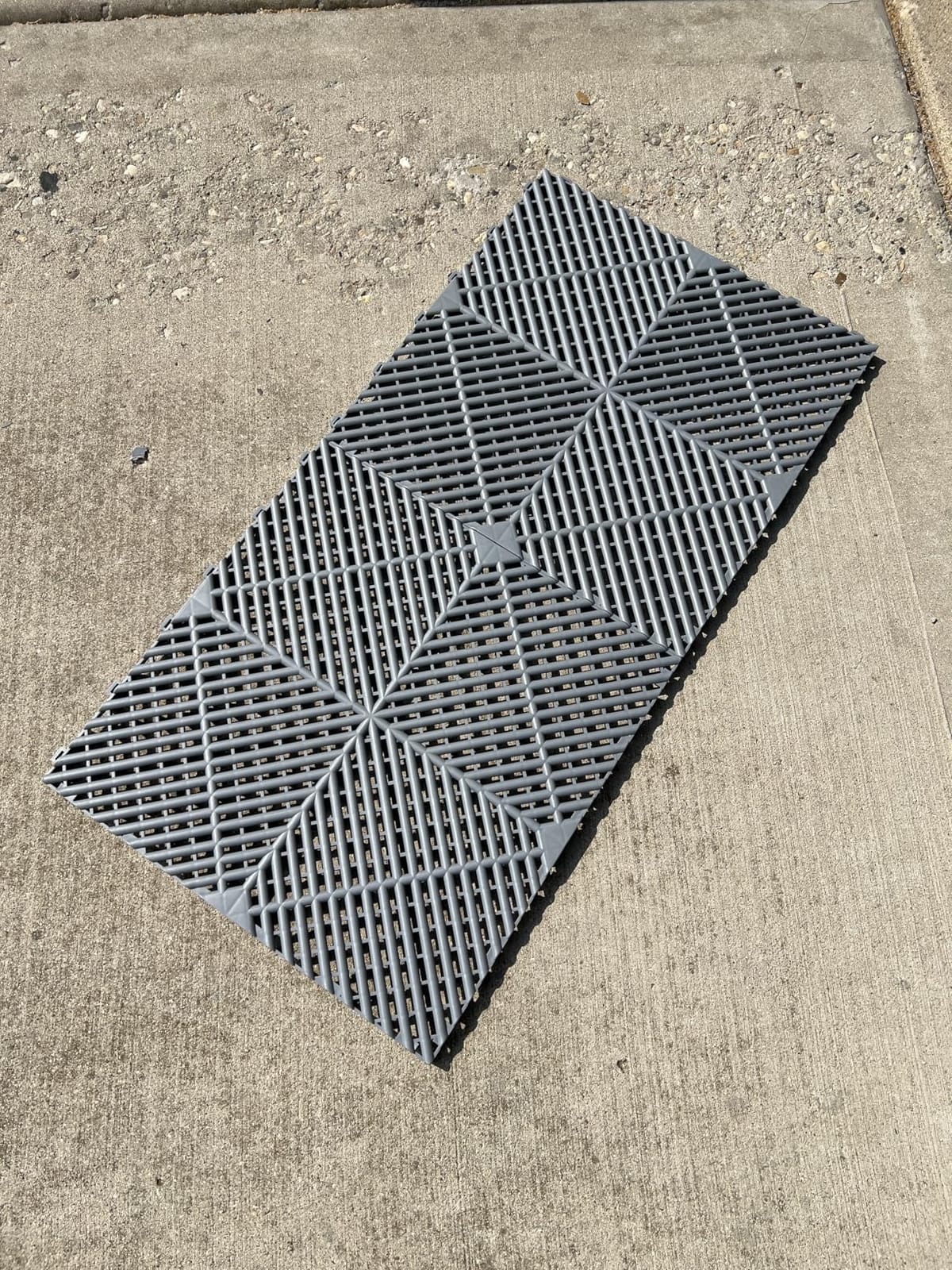
The split locking tabs are the one thing owners flag. They bend more easily than single-tab designs if the tiles are not lined up before you snap them, so align each one carefully rather than forcing it together.
Because of the open channels, keep a magnet or a leaf blower on hand for dropped screws and bolts, the same trade-off every vented design carries.
Where SafeRacks is the wrong choice
Tiles are hard to disassemble once connected, so retrieving a replacement from the middle of a finished floor is a job. If you expect frequent tile swaps, plan the layout so the tiles you are most likely to damage land at an accessible edge.
With 53 reviews, the owner base behind the 4.8 rating is thinner than most tiles here. The rating is encouraging, but it is less well tested over time than the listings with hundreds or thousands of reviews.
What Type of Tile Is Best for a Garage Floor?
Interlocking polypropylene tiles are the best type of tile for a garage floor because they combine a real load rating with a drainage or anti-slip surface, install over an existing slab without adhesive, and can be lifted and replaced one at a time. Rigid PVC and porcelain add durability but bring grout, adhesive and a much longer install.
That answer holds for most garages, and it holds more strongly for workshops. The reason is repairability: a coating that peels has to be cut out and redone, while a damaged tile is a ten-minute swap.
Ranking the workshop floor materials we considered, from most to least suited to a working shop:
Injection-molded polypropylene tiles – the strongest all-round option, with 40,000 to 80,000 lb load ratings, chemical resistance and individual tile replacement.
Vented or open-grid polypropylene – the same strength with drainage built in, best for wet entries and snow exposure.
Rigid PVC tiles – heavier and more chemically resistant than polypropylene, but stiffer underfoot and priced well above it.
Recycled rubber tiles – quieter and softer, ideal where you stand for long hours, but too thin for vehicle jacks.
Epoxy or polyaspartic coatings – the best appearance and a seamless surface, with peeling and no local repair as the trade-off.
Sealed concrete – cheap and durable enough, provided you keep brake fluid off it.
Porcelain or ceramic tile – hard-wearing but grout stains, cracks in freeze-thaw conditions and costs more in labour than the material suggests.
Vinyl roll or interlocking vinyl – good appearance, poor resistance to dropped tools and concentrated loads.
Our broader guides cover the coating and mat categories in more detail, including our picks for the best garage floor epoxy kits and the best garage floor mats for cars.
Tiles vs Epoxy for Workshops: Which Is Better?
Tiles win for repairability, install speed and DIY access. Epoxy wins for appearance, a seamless surface and a feel underfoot. In a working shop where you spill fluids and drop tools daily, most owners end up choosing tiles.
Forum users put the epoxy objection more bluntly than any spec sheet does. The most repeated complaint across workshop threads is that epoxy can look good but peel even with good prep, and that the grinding and acid etching involved is more work than most people want to take on a floor that is already dirty.
The other half of the epoxy objection is permanence. A forum poster framed the choice well: when a floor is not easily repairable with more chemical, grinding and extra flake, tiles are simply the better answer.
Here is the head-to-head for workshop conditions specifically.
Install time – Tiles interlock and are drive-on as soon as the last edge is placed. Epoxy needs cleaning, grinding or acid etching, two to three coats, and a cure period measured in days.
Slab condition required – Tiles tolerate an old, patched or imperfect slab because they float above it. Epoxy needs a properly profiled, sound surface or it will fail at the weak points.
Repairability – Lift one tile, clean underneath, drop a replacement in. A damaged coating means cutting, grinding and recoating the damaged area, which is the single most-quoted reason people abandon epoxy.
Appearance – Epoxy produces a continuous, glossy, showroom finish. Tiles show their seams and their pattern, and polypropylene can read as utilitarian.
Slip and drainage – Diamond and coin patterns give measurable grip, and vented tiles drain water and debris. A coated floor depends entirely on the anti-slip aggregate broadcast into it, and worn coatings get slippery.
Long-term reality – Sealed concrete holds up well in practice as long as brake fluid does not sit on it, which is exactly the failure point people describe. That baseline is worth keeping in mind if you want the cheapest durable option.
Our view: if your workshop is primarily a working shop, go with tiles. If it is primarily a display space and the slab is in good shape, epoxy is a reasonable choice. The workshop planning guides we publish cover the layout side of a small shop.
How to Test Slip Resistance in Your Own Shop
Test traction with a wet sawdust slurry before you buy. Sprinkle a handful of sawdust into a puddle of water, spread it across the tile surface, then walk across it in work boots. If you slide, the tile will not save you on a wet shop day.
The second test costs nothing: watch how an oil sheen behaves. Pour a small amount of used motor oil on the tile, let it sit for a minute, then step onto it. A coin or diamond pattern keeps its bite; a smooth glossy surface turns to glass.
A third check is the pedal test. Stand on the tile with a floor jack in position and shift your weight the way you would while raising a car. Any tile that moves under a load like that is not going to be comfortable for a long session.
Finally, consider the tile barefoot. Open-grid and peg-style designs are noticeably harder on bare feet, and a shop where people work in socks is one where comfort outranks drainage.
How Many Garage Floor Tiles Do You Need?
Work out square footage first, then divide by the coverage per tile and add 10 percent for cuts and waste. A standard two-car bay of roughly 220 square feet needs about 25 tiles at one square foot each, and closer to 130 in a 12-inch format.
On larger formats the maths changes. The SafeRacks tiles cover 1.72 square feet each, so the same 220 square feet needs roughly 128 tiles, and the 18-inch VersaTex tiles cover 2.25 square feet, which brings it down to about 98.
For perimeters, plan on a quarter inch expansion gap all the way round, measured from the wall rather than from the slab edge. That gap is what stops sun-heated tiles from buckling, and leaving it is the single most common install mistake we see described in reviews.
Odd gaps at the edges are the practical problem nobody solves cleanly. A chamfered tile edge or a ramp profile closes a 1 inch gap safely, whereas butting a cut tile straight against the wall creates a trip edge. We covered the same issue in our workshop equipment guides where it affects safety gear as well as flooring.
Buy your trim at the same time as your tiles. Trim and transition pieces carry a higher cost per piece than the field tiles, and on a small bay the trim line can approach the cost of the floor itself.
Five Signs You Are Buying a Low-Quality Tile
No stated load rating. If a listing does not publish a rolling load capacity, you are guessing. Treat the number as a filter, not a nice-to-have.
Thin plastic and a heavy load claim together. A tile that claims 40,000 lbs at a quarter inch is not the same product as one that claims it at half an inch. Gauge and rating should look plausible together.
Four loops where there should be six. Loop count is a crude but real quality signal. Six interlocking loops per tile resist popping and buckling better than four, and buyers notice the difference within a few months of sun exposure.
No UV protection on a dark tile. Polypropylene degrades under ultraviolet light, and an uncoated dark tile in a sunny bay will move more than a coated one. This is the most common long-term failure we saw in reviews.
Contradictory specifications. When a listing gives two different thicknesses or two different dimensions, assume the optimistic figure is wrong. Ask for the model number and check the manufacturer page before you commit.
The genuine quality markers are simpler than most counterfeit warnings suggest: a published load rating, a stated thickness in inches, a UV claim, a warranty, and a review count in the hundreds rather than single digits.
Frequently Asked Questions
What is the best flooring for a garage workshop?
Interlocking polypropylene tiles rated to at least 40,000 lbs of rolling load, with a solid or vented surface that resists oil and coolant and can be lifted one tile at a time. They install over an existing slab with no adhesive, tolerate an imperfect concrete surface, and any damaged tile can be replaced without redoing the floor.
What type of tile is best for a garage floor?
Interlocking polypropylene tiles are the best type for a garage floor because they combine a real load rating, a traction pattern, and individual tile replacement. They install over an existing slab without adhesive and tolerate an imperfect concrete surface that a coating would fail on.
What is the best material for a workshop floor?
Ranked from most to least suited to a working shop: injection-molded polypropylene tiles, vented or open-grid polypropylene, rigid PVC tiles, recycled rubber tiles for standing comfort, epoxy or polyaspartic coatings, sealed concrete, porcelain or ceramic tile, and vinyl roll or interlocking vinyl.
What type of flooring is best for a shed workshop?
Vented or peg-style drainage tiles suit a shed workshop best. They let water and grit fall through, allow airflow underneath to reduce damp, and cover large areas quickly. A shed floor rarely sees vehicle loads, so drainage and moisture control matter more than rolling load capacity.
Is there anything better than epoxy for garage floors?
For repairability, install speed and DIY access, yes. Interlocking tiles need no grinding or acid etching, are drive-on immediately, and a damaged tile can be lifted and replaced in minutes. Epoxy still wins on appearance and produces a seamless surface, so the honest answer is that it depends on whether your shop is a workspace or a display space.
What are the common problems with porcelain tile garage floors?
The recurring complaints are grout staining and the maintenance that comes with it, freeze-thaw cracking in cold climates, a cold surface underfoot, and labour cost that erases the material savings. Workshop users generally find grout upkeep to be the deciding factor and choose plastic tile instead.
What is the best DIY garage floor coating option?
Interlocking tiles are the best DIY option, despite not technically being a coating. They need no grinding, no acid etching and no curing wait, and you can drive on them as soon as the last edge is placed. A DIY epoxy kit is the better pick only if your slab is sound and you want a seamless finish.
Are garage floor tiles slippery when wet?
It depends on the pattern. Coin and diamond textures hold their bite when wet or oily, while open-grid vented designs channel water away from the contact patch. A glossy solid surface with a smooth finish is the slippery option. Test any tile wet with a sawdust slurry before committing a full floor.
Conclusion
The best garage floor tiles for workshops are the SnapLock GarageTrac Diamond tiles for all-round duty, supported by the GarageDeck Coin tiles for greasy floors and the RaceDeck Free-Flow for the heaviest loads. All three install with no adhesive and can be repaired one tile at a time, which is the deciding advantage over any coating.
If your shop is wet or snowy, move to a vented design. If you stand all day, look at the rubber format. If you are covering a large bay on a budget, the larger-format tiles cut install time more than any other choice you make.
Whatever you choose, leave the expansion gap, buy the trim in the same order, and test the traction wet before you commit. Those three steps decide whether the floor still works for you in year three.